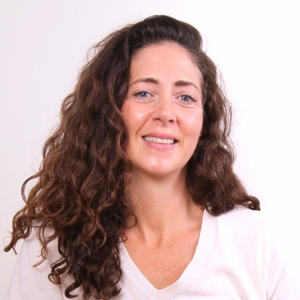
[00:00:10] Ray Latif: Hello, friends. I'm Ray Latif, and you're listening to the number one podcast for anyone building a business in food or beverage, Taste Radio. This episode features an interview with Cori Deans, the founder and CEO of Small Town Cultures, a mission-driven brand that markets premium fermented foods. For a brand with a diminutive name, Small Town Cultures has big ambitions. Based in upstate New York, Small Town Cultures was founded by entrepreneur Cori Deans in 2017. The company uses regionally sourced ingredients to make fermented foods that contain no vinegar nor added sugar. Packaged in clear glass jars with minimalist labels that are designed to showcase the vegetable's natural color and crispness, Small Town Cultures markets Red Onions, Turmeric Kimchi and Traditional Sauerkraut, among other probiotic-rich products. The brand is distributed nationally at a variety of natural, conventional, and independent retail chains, including Whole Foods, Price Chopper, Earth Fare and Central Market. Cori, who created the brand after struggling with a personal illness and later realizing the health benefits of fermented foods, has sought to build Small Town Cultures as a company that can expand the appeal and accessibility of gut-healthy products among consumers across the country. In the following interview, I spoke with Corey about how her passion for probiotics led to the development of Small Town Cultures and how she sought to create a brand that stood out from both legacy and upstart players. She also talks about her response to Jessica Alba's DM on Instagram, how she manages the complexity of both production and sales and marketing, and how she assesses new retail and distribution opportunities for fermented foods. Hey folks, it's Ray with Taste Radio. Right now I'm honored to be sitting down with Cori Deans, who is the founder and CEO of Small Town Cultures. Cori, great to see you.
[00:02:18] Cori Deans: Hi, Ray. Thank you for having me. This is exciting. Isn't it? Yeah.
[00:02:21] Ray Latif: We're here in the studio in Marina del Rey at Nosh Live Winter 2024. I'm so happy you're here. You were already upstairs listening to some of our main stage content. Anything in particular that you saw that was interesting?
[00:02:33] Cori Deans: You know, it was just nice. We're a mission-based company. We're looking to expand the appeal and the accessibility of probiotic rich fermented foods. I was listening to Jennifer Gardner speak, and she was just talking about how everything kept coming back to the mission, how her team, every single person was bought in. And when a decision had to be made, it was made. based on that. And I feel like that's something we've been trying to do and to hear somebody who has taken their brand so far and still has so much more they want to do and to hear that they're kind of implementing the same concept. It was refreshing. It felt good. I felt seen. Yeah. So, so far, so good.
[00:03:07] Ray Latif: Yeah, Jennifer Garner, one of the co-founders of a brand called Once Upon a Farm. We're on stage with the CEO of the company and co-founder John Foraker. Before we hopped in the mics, you said you passed by her. Didn't have a chance to hand her a jar, did you? No.
[00:03:20] Cori Deans: I didn't. No, no. Next time I see her in the hallway, yeah.
[00:03:22] Ray Latif: I got to think though, she's probably senior product at Whole Foods.
[00:03:25] Cori Deans: I certainly would hope so. I mean, we try to have branding that kind of sticks out and draws your eye to the fermented food set. So I would hope that she has noticed us and hopefully seen us.
[00:03:35] Ray Latif: That is the number one reason why I was interested in your brand when I first saw it. Just spectacular, beautiful packaging. Your products come in these 12 ounce glass jars with a white cap. They're clear glass jars. You can see the delicious food that you make. I'm holding in my hand your wild ramp kimchi which I just want to just get a spoon right now and start eating out of the jar. I assume I have the same kind of story that you hear from a lot of consumers in that the packaging just drew my eye.
[00:04:08] Cori Deans: Yeah and you know we just kind of looked at the category and did the opposite. Everything was in squat jars. Everything had this big, large label. Everything had farm branding. Now the categories move more towards plastic bags and plastic tubs. So we really wanted to stand out and we really wanted to kind of show value visually. You can see the value of the product without me being there telling you about it. I'm telling you right now, like our products are delicious. They have value. You're going to love them. But how do we speak to a customer when I'm not there selling it? So that was kind of the whole thing was to relay that in a minimal clean process.
[00:04:43] Ray Latif: That is one of the best explanations of what great packaging design is all about. I'm communicating the value of what we're selling without me actually being there to tell you that this is really good. You can see the ingredients. You can see now this is the sliced Red Onions product that you have, which is this like just gorgeous pink color. And you have the ingredients on the front. It says Red Onions, water, salt, sumac, berry and white tea. That's it. And my mouth is watering and whenever that happens, that's a good sign. But you pick it up and you're like, OK, you know what? I'm going to take a shot on this because It looks good. It probably tastes good. It's going to be good for me. And for me, that's all you need to sell me on.
[00:05:23] Cori Deans: Yeah. And you know, some of our other products are, we do sliced jalapenos. We do cut carrots. So you can look through the packaging and you can know what to do with it. And that is kind of part of our mission. When you think of accessibility, it doesn't just have to be on the store shelf where you shop. It doesn't just have to be at a price you can afford. You also have to know what to do with it. So when you look at a sliced jalapeno or Red Onions, you just top things with it. Like you know instinctively what to do with it. So we're kind of trying to lower that barrier to try fermented foods and to get the deliciousness as well as all the probiotic benefits.
[00:05:56] Ray Latif: Were you always in charge? I mean, we'll back up a little bit and talk about the origins of the brand, but was this always your package design?
[00:06:03] Cori Deans: Yeah, you know, the packages design definitely morphed over the years. We've always been in these 12 ounce tall glass jars. We've always wanted to have this transparent label. We used to have kind of a label that went over the front of the jar, whereas a small label and went up and over the jar with the ingredients on the back. But, you know, having the customer be able to see through and get hungry just looking at the product was always very important. So it has more, you know, once we went to the transparent label, our logo we had designed and we wanted it based on Nike, right? What better logo to base your logo on than Nike? Because it's iconic, right? And you don't have to know anything about Greek mythology or Nike. You just see it and you know it's Nike. Now, like our logo is a vessel. It's a bowl that has movement. It has life and it has bubbles coming out of it. It's a bowl of bubbles, but I don't care if you know if it's a bowl with bubbles. You might think it's a whale or Tweety bird or stomach, but you know it's Small Town Cultures. So that was like very important to kind of come up with a logo that was totally different from everybody else and, you know, communicated the modernness of our brand.
[00:07:10] Ray Latif: There is something Nike-ish. There's something bowl-ish. There's definitely something that speaks whale to me. But I hope this doesn't offend you. It kind of looks like a gut almost. Yeah. And you know, is that, was that intentional?
[00:07:21] Cori Deans: No, no, it wasn't intentional. I asked for a modern looking bowl with movement and bubbles and to be based on Nike. And then I wanted it so that we could put other colors or textures with it. You know, I wanted it to be versatile. So as we continue to evolve as a brand, we can do different things with it. And on my hat, I made it into a yin yang. So we just want something versatile that we could play with and have fun with.
[00:07:43] Ray Latif: I like it. I like it a lot. Your interest in fermented foods. I talk about this with entrepreneurs all the time. Yes, you might enjoy eating something. You might enjoy drinking something. Does that mean you have to start a food company or a beverage company? In your case, it meant yes.
[00:07:58] Cori Deans: Yeah, so I was very sick. I was very sick with Crohn's disease. I had a foot of my intestines taken out. I was on gnarly medication. I was just always, always- A foot of your intestines taken out? Yeah, small and large appendix.
[00:08:10] Ray Latif: Wow.
[00:08:10] Cori Deans: Yeah. I have the scars to prove it. It's like, I was always sick and my doctors, all they wanted to do was get me to remission. They were never looking for actual health. It was always just like, make her not feel as bad.
[00:08:22] Ray Latif: Something to address the symptoms versus solve the problem.
[00:08:25] Cori Deans: Exactly. And they told me after the surgery, when I got a foot of my intestines taken out, that it could easily come back. It's going to come back right where the scar is on either side. And I was like, Oh, great. So I get to look forward to doing this again. And I get to be in fear from now until then that this is going to happen again. And I was just like, there's no way to live. So then I decided to heal myself with probiotic rich fermented foods. With these, you kind of get like this full colony of probiotics, not just the main ones you might get in a pill, but like full colony probiotics. And it worked. And then, you know, because it worked, I got myself off the surgery cycle. I no longer have Crohn's. I don't take any pills because of that or any medication. I adopted it into my diet. And it was at that time that I was like, oh, I don't actually like fermented foods at all. I was just eating it for the health benefits.
[00:09:16] Ray Latif: Wait a minute. Now I have to back up. You started out not enjoying fermented food. No, not at all. Was it because it was just a vinegary thing or?
[00:09:24] Cori Deans: Yeah. So this is a while ago, right? So at the time- How many years, just for context? 13.
[00:09:29] Ray Latif: Okay.
[00:09:30] Cori Deans: At the time the market was a lot different. You would get soggy sauerkraut in bags. Yes. You would get very traditional kimchi that I now love, but at that time it didn't speak to my flavor profile, my palate. I was a picky eater. So I didn't like it then.
[00:09:44] Ray Latif: The term fermented wasn't nearly as mainstream as it is today. So that probably was, I think, part of your hardship, we'll call it, in finding something that was palatable.
[00:09:56] Cori Deans: Yeah, it didn't work with my basic diet. And you know, the term fermented, it always is kind of wild to think about you're eating a lot of little tiny microbes, like intentionally, right?
[00:10:05] Ray Latif: Yeah.
[00:10:05] Cori Deans: Billions. And you're, you're doing it intentionally, but I mean, we evolved with that. We've moved past it now, but it was something to kind of get past, but you know, that's why I started making mostly single vegetable ferments because that's what I enjoy eating fermented Red Onions or pickled Red Onions. Like that's easy. You can put that on anything. I made them for myself and for my family for a number of years. So I didn't start the business for a while. And I was always waiting for someone else to do it. I was like, why is no one else expanding the product line? Why is it always sauerkraut, kimchi and pickles? Like that's not what I feel like eating every day. I want more variety. I want the things that I'm making at my home to be able to buy at the store because it takes a lot of time to make fermented foods. And then there's always, am I doing it right? Like, I feel very comfortable with that now. But when you're fermenting at home, you know, there's some trial and error. You're learning. So I was waiting for someone else to do it, and no one did. So I was like, fine, I'll make it. And I had these recipes. And anything I do, I do tend to overdo. So like, when I was coming up with the recipes initially for myself, because nobody else was making them, I would like make four iterations of something in four separate jars and I would try them all. And I'd be like, okay, I like this one. And then I would make four iterations of that. So by the time, you know, years rolled by, I felt pretty good about what I was making because I had spent so much of my personal time and energy trying to make something that I could feel proud about. And I could share with friends and family and kind of like share the word of probiotic rich foods.
[00:11:30] Ray Latif: What year was it that you said Small Town Cultures, here's my brand.
[00:11:33] Cori Deans: Yeah. So 2017, I think we started, it started small, mostly still research, buying packaging, defining the recipes, trying to get certifications and things like that. 2018 kind of entered the market, I think. And I feel like doors open before when I'm like one or two steps back, they're opening ahead of me. So I'm always kind of going through doors before I think we're ready, but it seems to be okay. So like I made some stuff, I brought over to a local nice market and I gave them samples. It's like, Hey, would you consider carrying these as a local brand? I was a customer. So they said, sure. Like they were very familiar with me that they would at least consider it. So they put them back in the fridge. And then I guess randomly this distributor, a regional distributor came in and And they were doing a tasting and she let him taste it. And then he was like, Oh, I've been looking for this. So he was saying like this, he said he had been looking for a product like this and they did specialty cheeses, imported meats, things like that. So a boutique brand regional did fit in with something he would like. And he said he was looking for something like this and he would reach out and he did. And we had a distributor before the store even brought us on. Like I was like, okay, let's go. We've got a distributor. Let's start selling.
[00:12:52] Ray Latif: That's outstanding. But you know what? It started with you being proactive and going to a store, a local store, that you knew the owners or at least you knew the operators there and saying, hey, can you take a chance on my brand? So it wasn't happenstance. It was more that you created the opportunity by being proactive.
[00:13:10] Cori Deans: And there was, of course, years of work beforehand as well. Like it didn't just materialize. Like I had thought about it a lot. We had done a lot of the work before I even made that first introduction, but it still was a little bit wild. I just remember manufacturing this first much larger order than we were capable. And my parents were there putting on the tamper evidence seals and my sister was there and like we all were in it and we were doing it and we're getting the product out and we did it and we felt so accomplished.
[00:13:39] Ray Latif: And to be clear, you were not in your home kitchen doing this. You had a facility. Do you have a shared kitchen, a commercial kitchen at the time?
[00:13:45] Cori Deans: Yeah. So my sister owned a vegetarian lunch restaurant. It was tiny. It was the best use of space I've ever seen. I would say it's about the size of this set. And it's like a hallway kind of restaurant.
[00:13:57] Ray Latif: Perfect place to open a fermented foods brand.
[00:14:00] Cori Deans: Yeah. Well, I mean, I needed something and it was free. And I had a baby recently and she said I could use her kitchen in off hours, which meant seven at night until seven in the morning. And then all day Monday, she was closed on Monday. So I had access to a free commercial kitchen. I had recipes, I had a distributor, I just had to stay up all night and produce the stuff. And that's what I did probably for the first year was just work every single Monday and then stay up overnights to get the product out.
[00:14:28] Ray Latif: At what point did you say we need more space?
[00:14:30] Cori Deans: obviously right away, but we actually got asked to leave using this kitchen for free because we weren't really on her lease.
[00:14:38] Ray Latif: And the landlord asked you.
[00:14:39] Cori Deans: Okay. Yeah.
[00:14:40] Ray Latif: The landlord asked, your sister's like, get out of here.
[00:14:43] Cori Deans: No, no. The landlord was like, Hey, we didn't agree to this 24 seven operation thing you have going on. machinery and stuff, you know, cutting machines. So yeah, we did get asked to leave. And that was when we renovated the first floor of my house. And a two car garage, the two car garage became our warehouse. So half of it was cold storage. And the other half was where we stored our packaging materials. And then the first floor of the house became our commercial kitchen. And we were there for a couple years, probably two years.
[00:15:13] Ray Latif: Why did you feel like you needed to manage and control production? Why not outsource it?
[00:15:17] Cori Deans: Oh boy, I tried. I tried so many times to find a co-manufacturing partner. They either wanted to ferment in plastic or put us in plastic packaging wise. Our standards of production just didn't fit with what they were doing. And you know, there is a bit of a control thing. I want to make sure that the product's fresh. I want to make sure that our ferments are exactly the way we intend them to be. So far, we're still manufacturing in-house. We plan to continue to expand our manufacturing in-house, but it doesn't mean that every year I don't visit looking for a partner to help us manufacture it. And you know, as we move, we're based in the Northeast. As we move and start selling more on the West coast, shipping from the Northeast to California, cold storage does not make a lot of sense. So we will continue to revisit that.
[00:16:08] Ray Latif: more than anything you want to have faith and trust in the partner that you have. So sometimes that's not something that happens overnight. That takes a lot of time to find the right person, to find the right team, to say you're going to make the same thing that we make and that we've been making since 2018. Yeah.
[00:16:26] Cori Deans: With fermented foods, one of the things people that don't, haven't already adopted them ask is like, well, what do I do with them? How do I use them? Right. So there's that education. And we are looking to expand the market for fermented foods. And we're looking to kind of push it out and offer fermented foods in more convenient ways so that it's not on the customer to know how to use it. We want to present that to them. by partnering with other companies to make it easier. So for instance, like a salad company, like a salad kit company, like how great would it be to be in a salad kit where you're getting your probiotic and then you also, you know, it tastes delicious.
[00:17:02] Ray Latif: And all this is because Small Town Cultures is growing really, really fast. And you are expanding into retail. You said you're doubling in sales every single year. But when you started out, did you have a target consumer? Did you do an analysis of the market? Did you understand the category as well as you do today? And that's obviously, that's kind of a leading question. Obviously you didn't, but how much of the category did you feel you understood versus how it has evolved since?
[00:17:32] Cori Deans: Sure, sure. So I think that I was the target market at the time. We didn't have the data we have today, right? So like data is amazing.
[00:17:40] Ray Latif: Do you buy data?
[00:17:41] Cori Deans: We have in the past, mostly now we're using the distributor, retailer and internal. But it has given us a lot of insight into our customer and where we're going and where we want to pursue. I think I know that I'm not very good at most things. But then when I am good at something, I should pursue that. And I think I'm good at seeing white space. So I think I can see where the problems are, where there's not something. And I think I can come up with a decent solution. When we're looking at target markets, I think it's still me. I am the target market. I am middle income. I'm not affluent. I shop at conventional stores as well as natural stores, and I'm a value customer. And that is what we're trying to do is bring a product that will speak to a broader audience, not just people who already love fermented foods, but people who maybe have heard of them, maybe are fermented food interested or curious, and speak to them and have them try it for the first time.
[00:18:36] Ray Latif: There's a lot of nutritional value. There's a lot of health value in these products. Are people willing to pay the price? What's the price point per trigger?
[00:18:44] Cori Deans: Our SRP is $6.99. There's one of our natural retailers has us at $7.79, I think, $7.89. We have a little bit of a gap. We are competitive within our space. So we would be competitive within the refrigerated pickle and fermented food space. We're actually kind of a bit lower for our quality. than some of our other competitors. I would say if you're looking at a fermented Red Onions and comparing it to a pickled Red Onions that's pasteurized on a store shelf, we're double that. So we're not really competing there yet.
[00:19:15] Ray Latif: Where are you regionally in terms of retail?
[00:19:18] Cori Deans: So right now, regionally, we're mostly in the Northeast. We're with Price Chopper and Tops and Whole Foods in the Northeast.
[00:19:24] Ray Latif: That's so interesting that you're in Price Chopper.
[00:19:26] Cori Deans: Oh, that was my goal. That was always, well, I'm the target market and Price Chopper is Northern New York conventional and they have a gorgeous produce section. You walk in the produce section and it's beautiful and you're like, oh, you can start planning your meal for your family there. So it was actually, it was my target. If you would have talked to me like two or three years ago, like on my porch, you know, it's just me and you talking, you know, like it would have been like, oh, we're going to be in Price Chopper. Now we want to repeat that success.
[00:19:51] Ray Latif: Did you advocate for the brand to be in produce or was that something? Okay. So how did that conversation come about?
[00:19:59] Cori Deans: Fermented foods had many homes. I think when we first started, everybody wanted us in dairy and deli because, you know, you make sandwiches with it, I guess, or hot dogs or whatever.
[00:20:09] Ray Latif: And I think it's also kind of a high volume part of the store. Maybe they're looking to enhance the traction for those types of foods, velocity for some of Whole Foods, but that might be my guess.
[00:20:20] Cori Deans: You know, I just, I didn't actually ask. I just always was like, we're going to be merchandised in produce where people make those healthy decisions for their family. I think that dairy and deli, it's cold. It's behind glass. Produce, well lit, colorful, fresh, like produce is our jam. Yeah, we love produce.
[00:20:39] Ray Latif: So I think sometimes that conversation about where your brand, your product should be merchandised can be a tough one because your retail buyer at the end of the day or the merchandising director is going to say, thanks, but I'm going to put this where I think it's going to sell best. How do you get them on board? How do you get them to see what you see for the brand?
[00:20:55] Cori Deans: We'll provide our numbers and our sell through and we'll, I think, just honest conversations and passion. We do have data, I haven't looked at it in a while, between what we were doing in dairy when we first started compared to what we can do now. I think produce actually really likes us because we have a one year sell by date. And, um, you know, our jars are tall and thin. You can squeeze them in a set. And that is something you don't see in produce a lot. You see big bulky packaging, big bags of lettuce, things like that. And they have to turn those things really quickly. Now we'll turn, but we don't spoil. So.
[00:21:30] Ray Latif: Well, I interrupted you when you said Price Chopper. I was just so interested in the fact that you were there, but Price Chopper, Whole Foods, mostly in the Northeast. You're also out here in California as well. Are you looking at middle America as, as a target for the brand? Are you there already?
[00:21:42] Cori Deans: Yeah, we're in Whole Foods in the Rocky Mountain region and the Southwest, and then we're doing natural and independent in the Midwest as well, and going down into Texas. So we're slowly, strategically kind of working our way west. Essentially, Whole Foods, when you go under category review with them, you tell them, almost like what you were saying about merchandising, like, where are you going to be merchandised? You tell them where your strategy for where you'd like to be and how it works best for you, and then they just pick the SKUs they want and put them where they want.
[00:22:12] Ray Latif: I know you have to do a certain number of demos at Whole Foods, but I think what they're hoping for is that you're going to do as much support for the brand on shelf as you can. What is your brand support strategy for retail? Because again, this is something where, yes, the beautiful packaging might sell it, but a scoop in someone's mouth will really seal the deal.
[00:22:31] Cori Deans: Yeah, no, we definitely love demos. We love Whole Foods because they make it easy to do demos and to support your brand. Outside of that, because we are kind of trying to relay the value, we strongly believe that if somebody tries it once, they will continue to buy. So we just needed to get it in their hands that first time. So it could be a demo, but often it's going to be just that sale tag, man, that sexy sale tag with that like dollar off. It gets somebody to try it for the first time. And then they're like, oh, actually, I like this, you know, like I can see myself eating this. I know exactly what to do with it. So we do a lot of in-store, in-store TPRs. And we even do some like dangler coupons and stuff like that. So I think that for us, we've made the decision to just represent the value of the product and that really is our marketing at the moment. So we're not doing paid influencers, we're not doing anything. We just are putting trust in that people will continue to like the brand once they try it. So that is, that's what we're doing as an emerging company. I know there's a lot of ways we could be spending money. That's the direction that we see the lift, that we see the plateau afterwards, after the lift, and we like what we see. So we're just going to keep doing that. I know that we need to get out there more with education, with partnerships, things of that nature, getting this in front of people's eyeballs in other ways. But so far, just getting it in their mouth has been really effective. That's kind of where our marketing dollars go.
[00:23:59] Ray Latif: Yeah, going back to how to use the product, I think that's where influencers, paid or otherwise, can be really, really helpful. When do you think that that is a part of your marketing strategy that you will engage? Or how has your marketing gotten to a point right now where people are like, oh yeah, this makes a lot of sense. I know how to use this better than I did in the past.
[00:24:19] Cori Deans: Yeah. So I think that so far we do actually get a lot of influencers talking about our brand, showing how to use Small Town Cultures. We get a lot of traffic from that. And I think that goes back to people that perhaps are interested in fermented foods are also really interested in their community and they want to provide value to their community. So we're not paying them. Sometimes we'll give them free product, of course, but like, I feel like they want to share with their community the benefits of fermented foods, how they're actually cooking for their families. So far, we haven't had to pay for it. I know we're going to have to, but so far, so good. And you know, we've even had like Jessica Alba reached out. I got a DM from Jessica Alba one day. Yeah, that was a really awesome thing to wake up to.
[00:25:00] Ray Latif: You're like, oh, what did she say?
[00:25:02] Cori Deans: She said she loved our Turmeric Kimchi and she wanted to find it in Whole Foods on the West Coast. It is not yet. We're under category review.
[00:25:10] Ray Latif: Corey's looking at the cameras right now. I think that would go a long way in your presentation to the category manager saying, hey, Jessica Alba wants us out here.
[00:25:19] Cori Deans: So our number two bestseller, you know, we have gotten a lot of traction, interest. Even it was fun, like I said, listening to Jennifer Gardner speak. We've had celebrities reach out that are interested in becoming part of our brand. We haven't gone in that direction yet. I think I just want to like build a really solid base. I want to have a really strong understanding of our product, our direction, our mission. And then I want to blow it up and then I want to go everywhere and be everywhere. But we have to like make sure that we're on solid footing first. And a lot of that goes back to manufacturing. So even, you know, going too big right now with manufacturing ourselves does not seem smart. We have to be strategic with who we partner with.
[00:26:00] Ray Latif: Do you have an operations manager?
[00:26:02] Cori Deans: Yes, his name is Alex Morrison. He was our founding employee. So he has been with me since the beginning. Before we kind of started this chat, we did talk about how I am a solo founder and how that is a little bit challenging and how I really, really wish I had a co-founder, somebody else where we could divide and conquer, somebody else that was in the trenches with me. Aside from having a co-founder, I do have my head of operations who has been there since the beginning.
[00:26:27] Ray Latif: Well, I think it's so important to have someone who can run that part of your business, especially when they're two distinct businesses, manufacturing and sales and marketing. Trying to manage both can be very, very challenging. It almost sounds like throughout the course of this conversation, if you really, really could outsource production, it would be a good thing. But I almost feel like that's such a valuable part of who you are and what you do. And I think it's probably of interest to some investors as well in that you own your own manufacturing. Do you feel like it would be a loss if you completely outsource it?
[00:27:02] Cori Deans: I think we control our quality. We can control the different iterations of our product as we learn from our customers. We can act quickly. I really do enjoy the actual act of the manufacturing of it. And we keep saying the word manufacturing, but fermenting is like magic. We get in raw produce that is teeming with microbes on it. They're soil microbes, right? We don't add any starters. We don't add sugar or vinegar. So we just take this raw produce. We top and tail it. We cut it however we want it. And then we put it in an anaerobic environment where there's no oxygen. And those microbes eat the sugar. in the plants and create lactic acid and carbon dioxide and create the final product. So the actual really cool stuff in the manufacturing process, we don't do, we don't even see it. So we're just like prep cooks for this vegetarian army and it's a cool process to be part of. And it like feels great to put some Red Onions into a fermentation vessel and then you open it up and it looks bright pink and they're tender and they're tangy. So I don't know, I like the act of making things. So, you know, maybe part of the other reason that we haven't gone in the direction of co-manufacturing is because like, it's enjoyable to do. It's cool. It's tangible. I feel proud.
[00:28:12] Ray Latif: It's certainly something you can share with consumers too. This is our product. We make it. No one else is touching it, but us. And I love, you should use that in your marketing, by the way, we're prep cooks for a vegetarian army. I love that. Have you said that before? I love that.
[00:28:26] Cori Deans: I say it when I'm hiring people because I think people don't know when they come to work for us in the manufacturing portion, nobody comes to us with vegetable fermentation experience. Maybe they come from beer or dairy or maybe they're like chefs already at a restaurant, but nobody comes with commercial vegetable fermentation experience. So I always try to like help them get to understand what the job is actually like.
[00:28:49] Ray Latif: Yeah, I've mentioned investors a couple of times, and I think at the size and scale of your business right now, you would be looking to raise some money. Are you, at this point, trying to raise a new round?
[00:29:01] Cori Deans: Yeah, we're looking to raise a seed round, mostly to scale our manufacturing, automate, kind of really bring our cogs down. And I'm out here selling the ferments into retailers. Yeah, we got to make sure we can make it profitably. So like, that's the goal right now. So we are in the process of raising. We are angel backed. We work with a really great mission-based angel group called Point Positive. They're dedicated to helping companies in the North Country of New York expand outside of the North Country. So I pitched to them a couple of years ago and they've been very supportive. But we need to now bring on the right partners with the right experience network to get us to that next level, right? We need to get to that next level. And I definitely know that I don't know anything. So like bring on people who have that institutional experience and the right partnerships is so important.
[00:29:51] Ray Latif: You know a few things. I'd say you know more than a few things. I think going back to your point about I do two things really well. You don't know what you don't know, which is really important as an entrepreneur. But also, I think you know yourself and you know your passion for the brand. And I think that goes a long way. I almost feel like that gets forgotten sometimes by entrepreneurs. It's like, you forgot why you did this in the first place. You know, you love for the brand, you love for manufacturing per se, you love for fermentation. And throughout this entire conversation, Cora, I can just feel your excitement, your energy, and it feels like it's so much a part of who you are and it's embedded in the brand, which is so great to see.
[00:30:28] Cori Deans: Thank you. Yeah. I mean, that's honestly true. I wake up every day probably too early because I have so much I want to get done. So it is exciting. I think the most exciting thing for me about entering this space, running a fermentation company, growing a fermentation company, is that I really didn't know anything about it. So every day I'm learning. And that learning process and that sense of accomplishment, because you're constantly learning something new, you're trying something new, and maybe this didn't work right, but you're trying something else. Like that sense of accomplishment and ability to improve my skills as a human is super satisfying. It is very fun and it's very rewarding and it's very stressful.
[00:31:09] Ray Latif: Well, at the end of the day, I'm not an entrepreneur. I sometimes dream about launching a fruit and beverage brand. And I think the most rewarding moment, even if my brand didn't actually work out, was seeing someone who actually picked up a product, saw value in it, and bought it, paid money for it. Talk about magic. If you go into a store and see someone buying your product, that's got to be so rewarding.
[00:31:28] Cori Deans: Yeah, no, it feels really good. I really am proud of what we're making. And, you know, going back to why we manufacture in-house, we've always had this idea of like, well, is that something I want to feed my family? And there are certain things I don't feel comfortable with. And I don't even want to talk about them here because other brands in the space do that. There's things I don't feel comfortable with that I don't want to go in that direction. So I do want to make sure that we keep our standards high and that I feel very good every day about the product we put out, about the good it's doing for people. And that's another thing we didn't touch on is that we do constantly get emails. and DMs of people saying, hey, this helped me or my child loves your fermented carrots. So, you know, we're getting kids to introduce this great food, all these nice probiotics into their system at a very young age, and they're going to have that taste for it growing up. So like there always is that kind of constant reward, too, where it's very easy to get Small Town have your walls feel small and your manufacturing facility feel small. And you're just caught up in the day to day of all the different things you have to accomplish. But when you step back and you're like, man, this is helping people and this makes people feel good and they enjoy it. Because I always say, like, you can go to your store and you can buy a jar of sauerkraut. You feel really good about that purchase. And then you don't eat it and you leave in the back of your fridge and it does your body no good. So you don't get any benefit from the health food you buy, but don't eat. So our goal is to make food that is really fresh tasting and crunchy and just has this gorgeous flavor profile that has a mild acid. So not a vinegar sharp acid, but this mild acid quality. So you keep coming back for more. And we're launching in ShopRite. So like this is it's the direction I want to go. And like I said, we just need to keep providing that value to customers so that we have to be at the right price point. So we're going to continue to try to make sure that we're able to do that. I want people to be able to afford us. I want them to enjoy our products.
[00:33:24] Ray Latif: I just have a really good feeling about. this brand and what you're doing with it. So I really, really appreciate the time. I know I'm taking away from you being upstairs and watching some of our content up there, but it's all being recorded too. So you can watch it afterwards as well. Thank you so much. Thanks for coming out here. Thanks for making the time for me. And thanks for making this amazing brand.
[00:33:43] Cori Deans: Thank you for the invitation. And, you know, I'm really enjoying the Nosh Live event. I look forward to coming to the summer event and what a great experience, you know, the one-on-ones, everything that you guys are doing here. It's just, it's so curated. So thank you.
[00:33:58] Ray Latif: That brings us to the end of this episode of Taste Radio. Thank you so much for listening. Taste Radio is a production of BevNET.com, Incorporated. Our audio engineer for Taste Radio is Joe Cracci. Our technical director is Joshua Pratt, and our video editor is Ryan Galang. Our social marketing manager is Amanda Smerlinski, and our designer is Amanda Huang. Just a reminder, if you like what you hear on Taste Radio, please share the podcast with friends and colleagues. And of course, we would love it if you could review us on the Apple Podcasts app or your listening platform of choice. Check us out on Instagram. Our handle is bevnettasteradio. As always, for questions, comments, ideas for future podcasts, please send us an email to ask at Taste Radio. On behalf of the entire Taste Radio team, thank you for listening, and we'll talk to you next time.
[00:34:48] Cori Deans: you