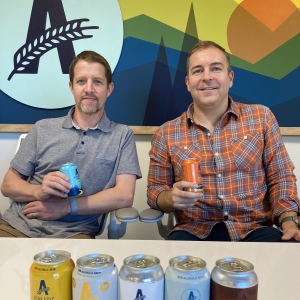
[00:00:10] Ray Latif: Hey folks, I'm Ray Latif and you're listening to the number one podcast for the food and beverage industry, Taste Radio. This episode features an interview with Bill Shufelt and John Walker, the co-founders of pioneering non-alcoholic beer brand, Athletic Brewing. When they started working on their first batch of non-alcoholic beer, Bill Shufelt and John Walker knew they were onto something. They may not have realized, however, that their pilot system was brewing a revolution. Founded in 2017, Athletic Brewing has emerged as one of the fastest-growing beverage companies in the U.S. and is leading the charge for a burgeoning cohort of alcoholic alternative brands. According to industry trade group The Brewers Association, Athletic is the 13th largest craft brewery in America and the leading producer of non-alcoholic craft beer. Its products are distributed in all 50 states and available at over 50,000 retail stores nationwide including Walmart, Costco, Publix, Target, and CVS. Amid surging demand for its beer, Nielsen data from March showed annual dollar sales of the brand up 94 percent. Athletic has invested heavily in production. The company operates brewing facilities in Milford, Connecticut and San Diego, built in part from the $173.5 million in outside capital the company has raised, including a $50 million investment from Keurig Dr. Pepper in November of 2022. In the following interview, I spoke with Bill and John about Athletic's role in the evolution of alcohol-alternative beverages and its influence on how consumers perceive the products, why it's in the company's interest to support competitors and how it does so, how they evaluate new retail and distribution opportunities and where resources are best utilized, and how they stay grounded amid continued growth and industry hype. Hey folks, it's Ray with Taste Radio. Right now, I'm honored to be sitting down with the co-founders of Athletic Brewing Company, Bill Shufelt and John Walker. Gentlemen, great to see you. Great to see you. Thanks for coming. That's John.
[00:02:22] East Coast: Thanks, Ray. Yeah, we're really excited to be here. John and I have both been huge fans of the entire BevNET ecosystem and Taste Radio, longtime listeners from our early business planning days. So it's really exciting to be back on.
[00:02:35] Ray Latif: It's very exciting to be here with you at the Athletic Brewing facility, the East Coast branch, as it were, here in Milford, Connecticut. I just got a wonderful tour of the manufacturing plant and I guess of your office as well. Just beautiful. It's remarkable how much you've grown. I mean, as I mentioned, this is your East Coast facility. You also have one in San Diego. And I saw your three-barrel system. I'm sorry, was that what you were dealing with?
[00:03:04] Athletic Brewing: Yeah, that was our three-and-a-half-barrel system, which was a step up from our five-gallon Gatorade system.
[00:03:10] Ray Latif: And it's still used for pilot batches as in small and experimental kinds of beer, right?
[00:03:16] Athletic Brewing: Absolutely. We've got four new brands coming out for our Oktoberfest this weekend.
[00:03:22] Ray Latif: Very cool. You know, for context, I know production in Athletic Brewing industry is measured by barrels, but for folks who aren't necessarily familiar with the size of barrels or the amount of liquid that, you know, barrels hold, you know, I had asked how many cans total you produce a year. And the number kind of blew my mind. At least the number that you gave me for last year's production, that was.
[00:03:45] East Coast: I think we came to over 50 million cans last year.
[00:03:48] Ray Latif: 50 million. And you're expecting to do 50% more than that this year.
[00:03:53] East Coast: Yeah, we don't formally give guidance, but in scan data, we're up definitely healthily over 50% this year.
[00:03:59] Ray Latif: Incredible. Incredible. Did you ever think that you'd be where you are now?
[00:04:04] East Coast: I'd say John and I definitely knew the direction the category was going. I don't know if we connected all the dots along the way of like how much we'd actually have to build to make The Brewers to be a significant part of that category. I think we always had faith about what the 20, 10, 20 year vision of the category looks like. I just don't think we'd connected all the steps.
[00:04:26] Ray Latif: Well, people love your beer. I mean, people love the branding. People love the fact that you can drink it when you want to. I mean, I see people drinking Athletic Brewing the middle of the day. I see people drinking athletic on a plane where, you know, you don't necessarily want alcohol sometimes on a plane because I mean, I'm always surprised when people get banged up on planes. It just blows my mind. It's like, why would you do that? Shocking. It isn't.
[00:04:50] East Coast: Two months ago, John and I did a, we bought a JetBlue flight from New York to LA. We bought them around, and John and I sampled up and down the aisles. Wow.
[00:05:00] Ray Latif: And it was actually really well received at about 9 a.m. I imagine it would be. I mean, it's a refreshing thing to have at 9 a.m. And I hate drinking coffee on planes too. Well, I mean, aside from the fact that the water is not very tasty and that's what they're using to make the coffee, but refreshment is key for me on planes. But getting back to the point about, you know, drinking too much alcohol on planes and in general, I think, you know, that's one of the reasons people are so attracted to your beers. But my friends who are also big fans of athletic beer, claim that after three, they feel a little buzz. And I'm like, you don't feel a buzz. This is all in your head. And I want to just state here on the record that they are not getting buzz. There's no, it's almost impossible for that to happen.
[00:05:47] East Coast: John Craven probably layer in some science behind what I say here. I've personally not been a drinker for about 10 years, and one of the biggest unlocks for me when I stopped drinking was that I actually didn't miss the alcohol as a functional ingredient whatsoever. It occurred to me that alcohol was not really a part of, like, the feeling I was going for in beer. Alcohol often hits you two, three hours after the fact. And so, when you, after a stressful work day, sit down and crack a beer or you're with friends and family, there's so much more to that moment relaxing you and giving you this, like, this whole ecosystem of placebo effects, essentially. It's the people you're with. It's the moment. It's what you're doing. It's cracking The Brewers, smelling the malt and the hops. And the way that infiltrates your senses, you know, people have been drinking beer in relaxing situations for like 5,000 years. And I think that really carries through generations as part of a tradition and immediately puts you in relaxing mode. My guess is that's what your friends are feeling. But in terms of actually getting drunk off non-alcoholic products, almost everything in the grocery store, you know, most people think of things that contain alcohol or alcoholic adult beverages, maybe fermented beverages like kombucha and stuff. Really, I would venture to say an extremely high percentage of all foods in a grocery store, like 80% plus, even solid foods have alcohol in them. The likelihood anyone's getting buzzed off our beers is de minimis, I would say.
[00:07:22] Athletic Brewing: For the record, I can say that we've got some incredible teammates that guarantee that there is no possibility for people to feel inebriated from our products. Though I will say, you know, similar to tea and like apothecary treatments, you know, people feel a sense of relaxation and relief when they ingest things that have the properties like hops do. And, you know, that refreshing kind of burn on the back of the throat from carbonation. So, you know, they feel good.
[00:07:49] Ray Latif: Well, you know, my friends are bright people, but they're not very bright when it comes to I guess math, because what they do is they say, oh, well, this has 0.5% alcohol or less. So if I drink four of them, that means I drank 2% alcohol. And it's just like, no, stop, stop, stop. Okay. So anyway, we flushed this out, I think.
[00:08:09] East Coast: Yeah, that math would also assume that we're brewing to the exact upper band of it, where almost every beverage people drink, if anything, has any flavoring. Flavoring sparkling water, sodas, things like that, are all in the same range there. So, yep.
[00:08:24] Ray Latif: There you go.
[00:08:26] East Coast: It does kind of go back to like the whole why behind the category and like athletic though is like we wanted this to be one of the best parts of people's day and just like put them immediately into relaxing mode, be a reward for a day, be an uncompromising social celebration and drink that people are psyched to have in their hand. And we see it in hundreds of customer emails every month that basically is the same realization I had that alcohol was not actually what they were looking for in those favorite moments. It was just the moment, the ritual, the celebration and stuff like that that they're after.
[00:09:01] Ray Latif: You know, I think that mindset encapsulates a lot of why people are into non-alcoholic beverages, specifically alcohol alternative non-alcoholic beverages. And it feels like that trend has been growing and has been something that people are adopting into their lives that retailers are starting to pay a lot more attention to. And in your position right now as the leading non-alcoholic beer company in America, it feels like you can almost influence the trend and its development in ways that no one else can, at least no one else that's currently participating in the industry, no other brands that is. That's a pretty big, I don't want to call it burden, but I mean, it's a, it's a pretty big responsibility that you have. So when you are looking at the overall trend and saying, we want to direct it in a certain way, I mean, do you, do you ever think that way? Do you ever think, you know, we can change the sort of trajectory of this trend?
[00:10:02] East Coast: I think the word responsibility is definitely kind of right on point there, and we definitely view that. And from the start, John and I have known that we've had to, A, brew a totally differentiated product. And I'm pointing at John in this because we are like very complimentary in our skills and what we bring to the business. But we've also known from day one, it has to be equally as much about the branding and how the category is positioned. to take it out of its 1930s prohibition-era roots and actually make it healthy, aspirational, a lifestyle beverage. And, yeah, our goal is alcohol occasions in the modern life over the past, call it 50 years, have gone from all sorts of occasions, you know, the local corner independent pub being a multiple night a week type thing, to, you know, it's getting boxed down into tighter and tighter occasions every year, seemingly, where it's like, Thursday night happy hour one drink on Friday and we want to take those awesome moments back to a full slate of occasions throughout the week and we've seen that adopted in all different speeds and all different channels, but in the generation now becoming legal drinking age, you know, we've talked about this a lot where this generation coming up to legal drinking age is
[00:11:17] Athletic Brewing: Yeah, they're going to grow up not knowing that alcohol is necessarily an ingredient in beer. And they're going to think of beer as just an expression of these three or four primary ingredients. And that's it. Alcohol is sometimes a byproduct that accompanies beer, but not necessarily always. And so that's a really exciting cultural shift and cultural mindset that people are going to just have as their vocabulary going forward.
[00:11:42] Ray Latif: That's an interesting point. And you bring up legal drinking gauge, and I'm sure you get this question a lot. Is there a future in which non-alcoholic beer companies will market to people who are under 21?
[00:11:55] East Coast: I think we're not really interested in that. Sure, it may evolve into that over time. But our real thing is, kind of as John said, as people become legal drinking age, they're drinking for the appreciation of the ingredients, not necessarily just for the ABV on the can. What John was saying too is, you know, as that first cohort of legal drinkers comes of age and opens a menu and you can get, for the first time in U.S. history, the options on the non-alcoholic side of the page are just as exciting as the alcoholic side of the page. And so, are people still going to choose those options with a 100 to 1 frequency on the alcohol side? I don't think logic would support that. People are not drinking alcohol 99 plus percent of the time they're awake. So why would it be 100 to 1 the other way? Alk versus non-alk? logic would point to 10, 20% plus of those occasions. People are just swapping in non-alcoholic beverages and likely drinking at a much higher frequency than they had previously because, you know, John, I think has been living experience of this, but like probably drinks more beer than he ever has. Yep.
[00:13:05] Athletic Brewing: Yeah. That's my, my cheesy tagline is since athletic, I drink a lot more beer and a lot less alcohol.
[00:13:12] Ray Latif: Well, you started out in Athletic Brewing industry at a microbrewery in New Mexico. We were chatting about this before we hopped on the mics and I know you, you came together. It was a, it was a long search where Bill got a lot of doors slammed in his face before he convinced you to hop along on this journey, no pun intended. You know, what convinced you as to the potential for this company and, and how, I mean, are you going from, you know, managing something that was relatively small to something that is just exponentially growing?
[00:13:42] Athletic Brewing: So on the size, you know, we actually stepped really far back in terms of volume. And so we scaled things back when we were doing our initial R&D and I went from, you know, a 10 and 20 barrel system down to a five gallon system. And so I guess that gave us a little comfort, but it was fun to explore on that smaller system. And when you're creating something brand new, it's always kind of safer and easier to trial things on a much smaller scale. In terms of what inspired me to join forces with Bill, I think honestly it was Bill himself. You know, we met in person in Santa Fe and meeting him in person and seeing his passion and enthusiasm for what he aimed to do, which was really be truly innovative in The Brewers world, which I loved. That was super exciting, but also seeing the impact that we could have in the craft beer community in general, but also in the world was really exciting. I grew up drinking, not drinking non-alcoholic beer, but it was always in my father's fridge. And, you know, he would drink it after a run and tell me about how refreshing and replenishing it was. And so I kind of understood it. And when Bill brought this idea to the phone call, the initial phone call, where he dropped the non-alcoholic bomb on me, you know, it clicked, it kind of made sense. And, you know, I was kind of blown away by the fact that nobody had innovated in the space to date.
[00:15:01] Ray Latif: I mean, this is not your father's non-alcoholic beer. And I think that was the challenge for Bill, for Athletic, for you, is trying to create something that tastes amazing. And people talk about how amazing tasting athletic beer is, but as you're growing, you know, maintaining that flavor, maintaining the quality is just as important as when it was for the first can that you made. Harder, I would think, but is it? I mean, how do you maintain the quality and the focus that you initially sought to achieve when you are producing 70, 80 million cans a year?
[00:15:41] East Coast: Yeah, even before we talk about how incredible the team is making quality at scale, I think it might be relevant to zoom back to the beginning first. You know, most CPG companies are, they farm out production. So not just talking about non-alcoholic beer. For sure, most of non-alcoholic beer is contract brewed and farmed out. Ours is brewed entirely in-house, but most CPG in general is farmed out to a beverage or co-pack or formulator, and then they co-pack and co-man. And the difference with what we've done in athletic is just so focused on quality. John said when we first teamed up, we are never going to market if this isn't true award-winning craft beer. He was like, I don't care if every single batch goes down the drain, it's not going to the market. And I agreed to that. And then we still have made really tough quality decisions across the whole spectrum of our company brand, putting a lot of beer down the drain, but also investing in a ton of equipment, lab equipment, really talented microbiologists and food safety regulatory teammates. And so quality has always been an enormous over-index on our part where that actually is very often an afterthought and farmed out from the start with CPG companies.
[00:16:54] Athletic Brewing: Yeah, and our teams are really in love with what they do. And they focus every single day on making the product better. And we don't ever consider our products or ourselves, you know, a finished good, because there's always room for improvement. And as we're changing and growing in scale, you know, you run into different things that you have to validate and different ingredients, different providers that you kind of have to work with. And it's a constant effort, but it's really enjoyable at the same time.
[00:17:22] Ray Latif: During the tour, Bill, you had mentioned that you try to do everything in-house. If not, you do everything in-house, and that includes customer service. And I think, you know, over-indexing on quality, it seems like you also over-index on customer service. Why is it in-house and why is it such a, I guess, integral part of what you do?
[00:17:42] East Coast: Yeah, we try pretty much everything we try to do in house at athletic and things that have been out we try to get in over time also. Our general thought is that for each element that is external in the company or is farther away from the action, there's probably a, you know, 25 to 50% drop off in quality from what a in house teammate who's actually interacting teammates could offer.
[00:18:04] Ray Latif: So have you experienced that by? you know, going outside of the company. Is that, has that been from your experience or is that just a general analysis of the industry?
[00:18:14] East Coast: So we had not product, but we have from time to time tested outsourcing different things. And we, we ended up keeping it in house and investing and doubling down in almost every chance. So, and for our agency partners who we do work with, we try to make them feel like a hundred percent part of the athletic team also.
[00:18:34] Ray Latif: Speaking of quality, unfortunately, it seems like for all the hype, the excitement and the interest in non-alcoholic beer, there's quite a few brands that aren't really cutting it. And this is just me talking when it comes to quality. And, you know, they talk about, they, people talk about how a rising tide lifts all boats. but that boat can be sunk pretty quickly if people are drinking bad beer and have that experience, one or even two experiences, and they're just like, this just isn't for me. How are you, I guess, advising and working with your competitors to make sure that what they're selling to the public is at the level that you expect it to be for your own brand?
[00:19:17] East Coast: Yeah, I will say as just an underscore too is small business is really hard. And I think a lot of people are approaching the category from positive intent. But yeah, we, John and the team have really tried to be leaders on food safety and quality and passing back lessons that we've learned and speaking very publicly at Craft Brewers Conference, we helped start and form ANBA, the Adult Non-Alcoholic Beverage Association. The team's been filming all sorts of different webinars and providing those for free to ANBA members, different things we've paid and learned tough lessons to do. So definitely trying to like give people the playbook to safely get products to the market and be of higher quality. I do think there's a opportunity for, you know, people see the market and get to know the market or maybe get to know athletic. And there is a temptation to draft really close to things we or other people in the category are doing. And I don't necessarily blame people. It's like, I think the VC world encourages this also where it's like, They want something that looks like another thing or draft as close as possible, whether it's like packaging designs or things like that. And unintentionally or intentionally, we wish, we're investing a lot coming at beer in a very differentiated way to talk about it than it ever has before. And I wish more customers as this exciting category emerges, sorry, not more customers, more brands would come with their own unique voice, point of view, packaging designs. You know, there is a brand with the exact same colors and flavors of our brands out there on the market.
[00:20:55] Ray Latif: I met your general counsel on the way in. I assume he's deeply involved in that scenario.
[00:21:00] East Coast: Yeah. It's kind of a head-scratcher. And there are definitely small-minded tactics going on in the category. And, you know, we all saw Craft Beer maybe start to think smaller over the years rather than really open the aperture and invite everyone into the category, speak authentically to bigger and bigger audiences. We really would encourage this category and all CPG categories really to approach the world from a positive some mindset. This is a category in the first pitch of the first inning. It's 1% of beer, it's likely going to 20 plus percent of beer. Rather than looking to the side and fighting and thinking small ball, as a company and athletic, we're generally trying to pick people up, build the category the right way, think long term. We're kind of like a horse with blinders on. We're very much focused on our goals, our customers, our road ahead. When you take those blinders off and look at the side too much, the horse falls over. So we are definitely trying to keep the category moving forward in the right way and wish everyone took that approach. Sorry, that's a longer answer to this question than I intended. I do think overall the CPG venture capital ecosystem encourages this type of behavior too. So I don't necessarily encourage brands, but When we started, for example, we totally struck out with VCs because people looked and they're like, oh, that's not a proven market yet. Like, what are you trying to be? And it's much easier if people point to a brand like Athletic and are like, we're going to do that and speak to that market to get funding. than it is for someone like Athletic to be like, this market is zero now. We think it's going to be a tens of billions of dollars market. This is our unique approach to build it. You have to have faith in us as founders that we're going to strive tirelessly to get it there and build a community and stuff. And I think there has to be more of that mindset of looking at the NVIDIA founder has an awesome saying called zero billion dollar markets. And that's all they want to attack at Nvidia is things that they know will be huge. They don't exist today. And that's kind of what we're trying to do.
[00:23:06] Ray Latif: Bill, when you mentioned, you know, you're really focused on your customers, your customers have changed over the years, right? I guess the pool of customers has grown over the years. And, you know, initially I think for anyone who was new to athletics would say, Oh, it feels like a fitness centric beer company or fitness centric non-alcoholic beer company. But there are plenty of people who, are not necessarily overly athletic or exercise often, but just want to be around a Sunday watching the football game and they'll turn to athletic. How do you evaluate the opportunities to reach new consumers? How do you think about marketing in that respect?
[00:23:48] East Coast: Yeah, I'd say there's always the temptation to smash the easy button, to pump digital ads. agencies, all sorts of things, farm things out that seem easy and scalable. And I would say the consumer can sniff through inauthentic things from miles and miles away these days. And so John and I did a presentation to our marketing team last week where we just stressed doing unscalable things over and over again. You may talk to an audience one one-hundredth or one one-thousandth the size, but you're very likely to directly connect where you may have a very small hit rate. Otherwise, for example, the, this weekend and the prior two weekends, I've been at different kinds of like race finish lines and stuff, still handing out beers. This Sunday, I'm going to run a trail half marathon. I'm going to start probably an hour and a half before the rest of the field. So I finished first. And then just stand behind the booth and hand out beers for three hours. And then we're going to host an Oktoberfest at The Brewers and talk to hundreds of customers in person over special angles of Oktoberfest beers. But it's that kind of like talking to people in person, community building, sharing a beer that I think is really scalable. And I think the last five years especially has been a huge temptation for everyone just to like. Make nice pictures, scale them on digital advertising, optimize, optimize, optimize. And I think people are finding out more and more that you kind of have to get back to the roots of marketing and advertising and a little bit more heavy lifting and high touch things.
[00:25:22] Ray Latif: When it comes to beer in general, I think there have been a lot of people that have abandoned the beverage for one reason or another. I think in craft beer, we definitely have been seeing a significant drop in consumption habits. And it feels like Athletic has a way in to bring people back to the category via the liquid and the branding and just the whole ethos of what you guys do. John, I mean, do you ever think about you know, people who were not beer drinkers or those who gave up drinking beer and how to kind of bring them back into the category via formulation.
[00:25:56] Athletic Brewing: Yeah, definitely. And that's kind of why, you know, we have this array of beers right in front of you right now. And, you know, we've got four that are full time and fully differentiated. And so that was part of the thought behind when we're creating our processes, how do we make this unique? How do we make it taste amazing? And how can we create variety so that more people can enjoy this? Because, you know, there are your IPA lovers who only drink IPAs. There are stout lovers who will only drink stouts. And so how do you create a process that will allow you to provide all of those different products for different people? And so that's exactly what we did. And, you know, our teams on both coasts are brewing on the pilot breweries seven days a week, creating new products, new flavors. In front of you, you've got an Oktoberfest. a salt and lime athletic light, we've got an athletic light, free wave hazy IPA, an upside down golden, you know, you name it, we got it. And so I think if we can provide all of the different flavors that are under the craft beer umbrella, then we can invite pretty much anybody in.
[00:26:57] Ray Latif: My mouth is watering right now, and I almost feel like cracking one of these open, actually. May I?
[00:27:01] Athletic Brewing: Absolutely.
[00:27:02] Ray Latif: Okay, I have not had the Free Wave Hazy IPA, and I probably should put this into a cup, but, you know, I'll just drink it straight from the can, you know?
[00:27:09] Athletic Brewing: I'm not shy about drinking from cans. Okay, here we go.
[00:27:12] Ray Latif: Is it cold? Yeah, it's cold.
[00:27:14] Athletic Brewing: One thing on, you know, talking about quality and safety, you know, delicious, by the way, you know, athletic has done a very good job, I think, in our team is really well versed in terms of quality and food safety. What we go out and provide mostly is the discussion around food safety, because at the end of the day, we need people to be producing products that are safe. Craft beer has a forgiving culture. Not every beer tastes great, and you're not going to love every beer that every brewer makes. And so the quality can improve over time, and everybody will always be trying to improve quality, but safety is an absolute necessity. And so that's where we spend most of our time out in public and encouraging The Brewers to approach this with safety in mind, first and foremost.
[00:28:01] Ray Latif: For sure. And, you know, food safety has been in the news for different reasons. A lot, it feels like, over the past few months, and it can get overlooked. But when you are getting as big as you are, it feels like consistency of flavor might be top of mind for most consumers. It requires strategic planning for not just the months ahead, but years down the line. How do you demand plan? How do you think about, you know, the next stage of development for athletic when you are growing at 50% year over year? I mean, that's gotta be pretty challenging, no?
[00:28:35] East Coast: It's a bit of finger in the air for sure, but we're getting better and better at it every year. It was definitely riskier bets in the beginning to secure our supply chain. Like I think you saw our can supply during COVID that we had to commit to.
[00:28:49] Ray Latif: And for context, if you can tell our listeners how many cans you had to buy during COVID to make sure that you had adequate supply.
[00:28:56] East Coast: Yeah, we were keeping a supply of 12 to 15 million cans at a time in our warehouse in San Diego. But to the quality, I've really been a part of it, obviously, but really watched John and the team scale their capabilities. And one of the cool things is, As we scale as a company, our quality is getting better and better. You know, the equipment's getting better. The people are more and more talented and more experienced brewing non-alcoholic beer. We're learning all the tips and the tricks over a longer time horizon. And so really every year, athletic beer is getting better and more consistent, and that's pretty exciting.
[00:29:36] Ray Latif: As far as the next retail and distribution growth that you see for Athletic, does it remain in places where it currently is? Grocery stores, liquor stores, you know, or what channels can you say or what channels are you looking at this point that are untapped opportunities for the brand and for the category as a whole?
[00:29:57] East Coast: Yeah, and we're right up there with, it's Athletic and Heineken who are head and shoulders ahead of the rest of the category and category share. And Athletics' top brand, Run Wild, is still only about 30% distributed. And most of our brands are 10% to 15% distributed, if that. So there's a lot of expansion and just very straightforward beer channels to go to. And there are entire channels with almost no penetration. The convenience channel, for example, is about 40% of all off-premise beer that has basically no non-alcoholic penetration. So there's a ton of opportunity in places like that. On-premise is growing and growing. It's about, it's a double digit percent of our business growing triple digits, but there is a ton of customer introductions that could happen at the on-premise. And it is exciting to see, sure, non-alcoholic beer was 0.3% of The Brewers category when we started. It's probably about 1.4% of overall beer now, but with some of those big channels are zero effectively. In certain channels, you know, we had always pointed to Europe being 5 to 10% of The Brewers market was non-alcoholic beer. There are plenty of channels and stores and national chains in the US where non-alcoholic beer is already more than 10% of beer. So if people in the industry or retail chains or channels keep sleeping on non-alcoholic beer, there will be a time in the not-too-distant future where people turn around and realize that, wow, these other retailers may have a 10% to 20% bigger beer category than they do because they've leaned into this category. And we are seeing that in the spring where all of a sudden non-alcoholic beer is going to be in the cold box in a major way come spring 2024, which is exciting.
[00:31:43] Ray Latif: Going back to the convenience store channel for a second, we had chatted before we hopped on the mics about the opportunity there and whether or not the C-Store channel was ready for athletic and ready for non-alcoholic beer. And Bill, you had said, yes, it is. But it's just a question of, are we going to test there? Are we going to hit the ground running? How do you know when you're going into a new retailer, when you're going into a new channel? that it isn't going to be, you know, let's roll the dice and see where it goes versus, you know, we want to be flying off the shelf.
[00:32:14] East Coast: Exactly that. Customer insights, retailer conversations, distributor conversations, and just standing in stores in the market and asking people what they think, you know, gives us a good pulse on if the channel is ready for non-alcoholic beer yet. And, you know, equal to distribution, athletic has a awareness building responsibility. You know, if we're going to ask a retailer and a distributor to commit to putting our beer on the shelf in a very high velocity, valuable square footage situation. We want to make sure the athletic awareness and marketing investment is there to support the retailer. And we have a lot of commitments on that front in terms of building awareness and stuff, but we personally don't feel the awareness is quite there yet to launch that channel in a big way.
[00:33:01] Ray Latif: Do you know if some of your competitors are already there yet or no?
[00:33:04] East Coast: It's really very small, non-alcoholic beer and convenience.
[00:33:08] Ray Latif: Well, it feels like, and I shouldn't say it feels like this because you wrote this, I saw it on your wall in your brewery that no matter what you do, you want to be the best at it. And I'm just going to read from the poster, I guess, that I saw, which said that, you know, we want to be number one in NA beer sales. We want to be number one in the community in action and accountability inside our walls and quality and sustainability. And you know, I was thinking about that because why wouldn't you want to be the best at something? How do you really hammer home the point that you do want to be the best to your entire team and make sure that they're all striving to that goal as well?
[00:33:44] East Coast: Yeah. I mean, I think the world's and yeah, definitely not being preachy. I've been there. I have slept, walked as much as I can in a career historically in my life. My default mode has always been action and to work very hard, but I've definitely been in place of lack of fulfillment and working as little as I can from time to time also. And, you know, we, we've really built our team on culture, emphasize that community, both inside and outside our walls is super important to us. And we're very lucky to work with 240 plus people who are really energized and psyched to walk in the door every day, collaborate, challenge each other, throw out bold ideas, build on them. And so there's a mentality where you can either walk in with a storm cloud over your head every day and make 20 people's day a little worse by interacting with you. Or you can pick people up and lift them up and Yeah, I think that kind of bleeds through a lot of what we do. But yeah, I think going back to like building things internally versus outsourcing them really does flow through every part of our company. You know, we have a big sustainability arm of our company and our environmental grant part of that, you know, John's done an incredible amount in the facilities on sustainability also. But our two for the trails program is something we built from day one which is 2% of sales up to 2 million dollars a year go to trail and park cleanups and That was a insourced program that we built from the ground up. We designed the logo the concept for it and everything Rather than write a single check to the environment for a year and send it somewhere We have a teammate who oversees that with a committee of 12 people we donate almost 2 million dollars a year to that per year, but It's not one check this year, we're going to write over 200 checks. Probably across nearly all 50 States and multiple countries outside the U S and it's because we got hundreds of applications. We read them, we grade them, we evaluate them. We see where we can have the most impact. And then we write tons of small checks everywhere. And I think that level of focus and investment, uh, what we're doing ladders up to like being number one and everything we do. Cause like everything we do is with that kind of care.
[00:35:57] Ray Latif: And the question of being the best NABer out there in terms of quality and meeting consumer expectations falls quite a bit on you, John, if not entirely on you. And when you're talking to your team about best practices and executing as flawlessly as you can every single day and every time you're on a shift, production can be kind of mind numbing work. How do you keep everyone motivated? How do you keep everyone interested in that goal of being the best?
[00:36:27] Athletic Brewing: Well, I think, you know, improving is constant. You know, it's a constant option. You can always stop and settle and say, you know, today's the day where we call it quits and we're going to make this thing exactly it is forever. And that's where things get boring for teammates. But if you're constantly talking about, hey, you know, how can we improve this process? How can we improve this yield? How can we improve this aroma? And you've got all these experiences and tests that you can accompany with those thoughts. It inspires the team to look and kind of do research and look outside of their comfort zone. And so you're creating an exciting environment for people to expand their career and their general mindset. And again, I think it goes back to passion. And, you know, you're talking about the mediocrity. I think mediocrity falls when there's no passion behind something. And we all have a passion to make this incredible product for people and make it the best we can. And people take that to heart.
[00:37:23] East Coast: Yeah, and in terms of the opportunity too, we are a national and becoming more international brewer as well. And we've had a high number of teammates work on both coasts for Athletic Brewing, so change of geography, change of tanks. We have a lot of teammates have gone from 20 barrel tanks up to 800 barrel tanks, and could be brewing on something totally different in two years also. So the opportunities within our walls are changing every year, and that's very similar on the sales side too. You know, it may seem like a salesperson who's been overseeing one state for four years, that might not look like career growth. But that person's business is probably about 500% of what it was five years ago. And they are a big priority for that distributor now too. And so the roles in each position in our company are growing every year significantly.
[00:38:13] Ray Latif: How much does the entrepreneurial mindset trickle down to your teammates? I mean, you were both entrepreneurs, but, you know, they are your coworkers, but how much do you try to incorporate this idea of let's build a business as if it was your own to your teammates?
[00:38:30] East Coast: We are enormous believers of decentralized authority and building businesses within the business. So every single one of our teammates is a shareholder from day one. So there is an ownership mindset to the company. But also, John and I know less very often about what any single person in the company is doing than what they are working on.
[00:38:50] Ray Latif: Is that a good thing?
[00:38:52] East Coast: It's a great thing. I mean, we're learning all the time and it's very mind expanding. You know, we were spending time last week with our UK marketing and sales leader in person, and I was just learning constantly from them. They are the experts and CEOs of that realm. And that's really exciting. Yeah.
[00:39:08] Athletic Brewing: And that flows through, you know, into our facilities as well, which is really exciting and allows people to think outside the box. And, you know, if they're looking to one person for all the ideas, the idea stops there. And that's not very exciting and it's not healthy for a business.
[00:39:23] Ray Latif: Yeah. I spoke to an entrepreneur once who said. If we're not failing all the time, we're not working hard enough. And it took me a second to like, think about that. And clearly what he's saying is, we need to keep trying, we need to keep improving, we need to keep doing things differently. Otherwise, we're not going to do anything, well, anything different.
[00:39:41] Athletic Brewing: Yeah, and I think internally, one of the things that our teammates are really excited about is creating this business, creating this environment of growth. And right now our team is, we're big enough now that we're creating apprentice programs so that we can bring new people in, so that we can create this pipeline within our ecosystem. And it's really exciting culturally and developmentally for the team as well.
[00:40:04] East Coast: One of John and I's goals every day is to be like the keepers of culture and fighting bureaucracy. And in that, you know, in a bureaucracy, you know, all ideas are safe ideas, not challenging. And, you know, people are scared to challenge other people, suggest new, exciting things. In a world where exciting ideas don't make it to the forefront is a company that makes no progress. So you may carry forward existing momentum for some time, but that is essentially the moment when an organization does start to die. So we're very cognizant of that.
[00:40:40] Ray Latif: Bill and John, you seem both like very even keeled people, quite grounded. But with all the growth that we've been seeing with Athletic, and frankly, with all the value that you're building here, you know, there is potential to sell Athletic, right? You could sell the company, it could be acquired, and you could walk away with a nice chunk of money, I would assume. But you're not doing that. And that is always out there though. And how do you just remain focused on what you want to do in building this company while that's basically right in front of your face?
[00:41:13] East Coast: Yeah. I mean, we've seen some crazy things pretty much every day for six years. John and I have been working together for over six and a half years now on Athletic so far, and we launched about five and a half years ago. And, you know, something breaks every day, and that's kind of our mindset we've had is kind of the obstacle's the way. And, you know, just keep tackling the day's problems and with the expectation that things are basically never going to go right. We try to smooth out both the peaks and the valleys for our team, you know, not let us get too high on the highs and also encourage the team to keep going and pick them up on the lows, which do, you know, we often have five peaks and four valleys every single day. And, but John and I talk about like every so often too, is like, We would miss it so badly if we weren't constantly intellectually stimulated and working with such great people all day, every day. And we're really thinking about the business really long term. We're very confident this healthy drinking movement is still in the first inning. More and more generations come of legal drinking age with better options. I think the step jumps in this category are going to be really big and exciting. And we just see no reason to get off those off ramps. So we want to be a big part of that and be the driver of that change in the world. And it would probably be the biggest mistake in our life if we weren't. The industry is a great place. It's super small. We know basically everyone in the industry. And so it's an industry we want to work in. But we're, yeah, at the same time, have every option out in front of us on the road and are excited to build something really long term.
[00:42:54] Ray Latif: You have goals. And I know entrepreneurs talk about this, even if they don't necessarily talk about this on podcasts. But do you have financial goals that you talk about between each other and with the team?
[00:43:06] East Coast: Entrepreneurship has evolved a lot and I think it's going back towards a more normal business building mindset. I think, call it from 2010 to 2021, 2022, there was like such a venture capital hype cycle that kind of got people trained to like, building a business was a three year thing. And, you know, if you read any meaningful biography of someone who's built a successful business, or like listen to a Charlie Munger and Warren Buffett podcast about business. Almost all big things that happen in business are over very long time horizons. And so we've always been really cognizant of how we structure our company, how we build our cap table, investment time, her eyes, men of investors and things like that. So yeah, we're looking to build something really big and exciting and drive this movement for some time to come.
[00:43:57] Ray Latif: Yeah, and Warren Buffett likes profitable companies too, from what I understand. And profitability got thrown under the rug for a long time too.
[00:44:05] East Coast: I think that was also lost also. And I know it's rich for us to say that because we have been unprofitable and investing a ton in our business. I think what is different is when you read about $20 million Series A's, a lot of times when you ask people, what are they building with that? it's digital ads where Athletic built, we've built four breweries in five years, basically. So, yeah.
[00:44:31] Ray Latif: It's incredible. Bill, John, this has just been a tremendous conversation. I really appreciate you guys taking the time. I know how busy you are and how much work goes into running the business every day. Congratulations on everything that you've done with Athletic. It is incredibly remarkable to see how you've not only built a brand, but built a category in so many ways. You know, I always go back to this. I think about seeing Bill at our conferences and him, you know, just being so upbeat and so positive about the potential for this category where no one. maybe one person at Eric Eder, there you go. John just poked, just pointed at himself. One person actually really believed it. And here we are now sitting in your hundred plus thousand facility, in a Squarefoot facility, you know, doing almost a hundred million cans a year. It's just, it's, it's incredible.
[00:45:26] Athletic Brewing: Thank you very much. And yeah, thanks for all the support over the years. It's been incredible.
[00:45:30] East Coast: Yeah, we really appreciate not only the voice BevNET, Brewbound, Taste Radio lends to people who are in the up and coming in their journey like we were, and you guys always handed us the microphone way earlier than we deserved it, so I really appreciate that, but also Just being able to attend your events and listen to your content in person is like just unbelievable entrepreneurial lesson. So that was a big part of like why we are so excited to catch up today is to try to pay that forward to the other people that were just like us coming behind us. And, you know, John and I've learned every lesson and. We'll continue to learn a lot of lessons on the road ahead. So yeah, definitely happy to be an ear for anyone who's in the moment of building or thinking about quitting their job or has something exciting they want to talk about. John and I are hugely passionate about entrepreneurship.
[00:46:20] Ray Latif: Well, thank you so much for that. Thanks for paying forward all the insights that you've acquired over the years. I know how valuable it is to our audience and I really appreciate it. Thank you. Thank you.
[00:46:30] East Coast: I'd say we know just enough to be really dangerous. Definitely take any of our advice with a grain of salt. Yeah. But thank you so much.
[00:46:40] Ray Latif: That brings us to the end of this episode of Taste Radio. Thank you so much for listening. Taste Radio is a production of BevNET.com Incorporated. Our audio engineer for Taste Radio is Joe Cracci. Our technical director is Joshua Pratt, and our video editor is Ryan Galang. Our social marketing manager is Amanda Smerlinski, and our designer is Amanda Huang. Just a reminder, if you like what you hear on Taste Radio, please share the podcast with friends and colleagues. And of course, we would love it if you could review us on the Apple Podcasts app or your listening platform of choice. Check us out on Instagram. Our handle is bevnettasteradio. As always, for questions, comments, ideas for future podcasts, please send us an email to ask at Taste Radio. On behalf of the entire Taste Radio team, thank you for listening, and we'll talk to you next time. you