[00:00:00] Sabeena Ladha: BevNET Live, the premier event for beverage industry executives, is coming up fast on June 10th and 11th in New York City. Hundreds of beverage founders, investors, and retailers are already confirmed. Don't miss your chance to build momentum mid-year and set yourself up for a strong finish. Early registration pricing ends Friday, April 24th. Register now and save $100 at BevNetLive.com.
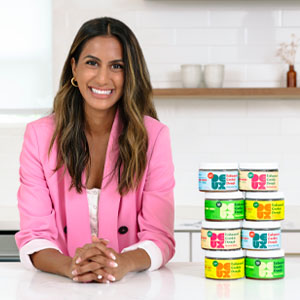
[00:00:39] Ray Latif: Hey folks, I'm Ray Latif and you're listening to the number one podcast for the food and beverage industry, Taste Radio. This episode features an interview with Sabeena Ladha, the founder and CEO of Doe, a fast-growing brand of better-for-you sweets best known for its vegan and gluten-free cookie dough. Doe's first three years in business reads like a case study on how to scale an emerging brand. Cultivate a community of loyal and engaged consumers who adore and frequently buy your products and leverage D2C success to land distribution at national retailers. Leading with the tagline, the snacks you love with the ingredients you deserve, dough, which is spelled D-E-U-X, markets refrigerated cookie dough, dessert spreads, and donut holes, all of which are enhanced with functional nutrients and vitamins and contain no preservatives nor artificial colors, flavors, or sweeteners. Founder Sabeena Ladha launched Dough in November 2020 with the aim of giving consumers good-for-you options in traditionally unhealthy food categories. Out of the gate, Doe's positioning, striking package design, and appeal among social media influencers helped the brand establish awareness and elicit trial among its target consumer base, that of millennial and Gen Z females. In 2021, the brand landed a spot on Shark Tank, and although Sabeena didn't come away with the deal, Doe's appearance on national television bolstered its following and online sales. Dough has since picked up retail placement at over 1,200 stores, including Whole Foods, Sprouts, The Fresh Market and Target. While a majority of the brand's revenue still comes from D2C business, Sabeena expects that brick-and-mortar retail will become the primary driver of dough sales in 2024. In the following interview, I spoke with Sabeena about why she credits prior work experience for Doe's fast start, the reason that indulgence is promoted first and foremost, the collaborative nature of its social media and influencer strategy, and the challenge of managing three product lines. Hey folks, it's Ray with Taste Radio right now. I'm honored to be sitting down with Sabeena Ladha, who is the founder and CEO of Doe. Sabina, great to see you.
[00:03:00] Founder Sabeena: Great to see you.
[00:03:01] Ray Latif: How is your day going?
[00:03:03] Founder Sabeena: you know, just the chaos and christmas. So it's g it's entertaining and I'm a little mini break soon a lot of people ordering d for christmas. Specifically we get a nice little spik for gifting and then our if you will, our Valentin
[00:03:30] Ray Latif: Gotcha. You know, I was on your Instagram or Doe's Instagram page the other day, and I was shocked, absolutely shocked to find out that you have launched a collaboration with a wine brand called Jumbo Time. As of this recording, this was like five days ago, but I'm kind of a wino myself.
[00:03:51] Shark Tank: Oh, you are.
[00:03:53] Ray Latif: Yes, not in a negative context. So a wino in that I appreciate wine. I hope I made that clear to the audience. I don't know why I would say that. But anyway, but how did I just find out about this? I mean, this is crazy. This is such an amazing collaboration. Folks who are interested in this, you should definitely go to Doe's Instagram page because it's a beautiful looking collaboration. It's a beautiful looking bottle.
[00:04:13] Founder Sabeena: Yeah, it's delicious. It's interesting, because we like to do kind of unexpected collabs. We'll do some collabs in the food space that make quote unquote make sense. But we really think about what our consumer is consuming outside of just dough. And Jumbo Time specifically is interesting because they're a natural wine. They're SoCal based, as are we, and they just have a really funky, you know, almost homegrown branding that really feels like what Joe felt like maybe a couple of years ago, you know, before we got a proper designer and a proper brand bug, but, but it just, it feels really authentic. You know, I'm friends with the founder, Jonathan, and we were chatting about what we could do. And we were talking about the different consumption habits. of both, their consumers also heavily female. And we concepted this Girls' Night In bottle. So if you look at the packaging, the label, it's actually, it's like a grape who's sitting, laying on the couch rather, drinking her wine and having her cookie dough right out of the jar. So it's a perfect kind of, and anyone can have it, but we called it Girls' Night In for the kind of like cheeky aspect of it.
[00:05:19] Ray Latif: Do they incorporate any dough into the wine itself or is it just?
[00:05:23] Founder Sabeena: No, no, no, it's just it's curated by our team. And then the label itself is a dough. But the gift box is for the holiday. So we're almost all the way sold through. But the gift box is a bottle of wine in the middle and then four jars of cookie dough. So you get, you know, two and two different flavors. And it's a perfect kind of like gifting mechanism, too.
[00:05:45] Ray Latif: Absolutely. It's also not your first wine, or at least your first attempt at wine. I saw a can of wine a year or two ago on your Instagram.
[00:05:56] Founder Sabeena: Yeah, I guess we really like wine.
[00:05:58] Ray Latif: The team really likes to drink.
[00:06:00] Founder Sabeena: So we did on our first birthday, We were celebrating, we had a block party in New York City at the Elk, if you're familiar with that coffee shop. It's lovely and it's been selling our products from the very beginning. It was one of our first retail customers. So we had a block party in New York in the summer, which of course is just wonderful if you've ever been in New York City. in the summer, and we wanted to do something to celebrate. So we had these custom canned, we call them doze. And it was when Rose, it was a couple of years ago when Rose was more of the thing. Now it feels like orange is kind of taking over that. But we had doze that we were giving out. And then we thought, why don't we sell these? So we do merch, we do kind of like the traditional, we have a golden spoon that everybody loves to get with their cookie dough. But some of the things that we do that are kind of outside of that are happen to be wine oriented, apparently.
[00:06:48] Ray Latif: I think it's a perfect collaboration. I mean, I love wine with cookie dough, specifically your cookie dough. I love wine with your donut holes, some of which I have right here, which are delicious. And I've been saving these for this conversation, by the way.
[00:07:02] Founder Sabeena: Oh, I'm surprised you could save them. Those are really good.
[00:07:04] Ray Latif: You know how much willpower it took me, Sabina, to like save these for our conversation? It's almost impossible not to rip these open and eat them all at once. And I mean every single bag all at once. So they're addictive, for sure. But, you know, I want to go back to your Instagram account for a sec. I mean, I found myself going down this rabbit hole where I think I spent like two hours on your Instagram page. Because it's so, yeah, I mean, well, there's so much great content. For someone like myself who is really enamored with a brand's ability to create compelling content, I guess I'm not surprised that I spent that much time on it. And I'm very curious, and I think this is something that a lot of listeners would want to hear about. How are you so damn good? You have 91,000 followers.
[00:07:49] Founder Sabeena: I know, it's a little outsized for our size.
[00:07:52] Ray Latif: Yeah, you're about three years old. But I mean, let's hold that for a second. Because as I mentioned, you're three years old. October 2020 is when you launched the brand, correct?
[00:08:02] Founder Sabeena: Yeah, smack in the pandemic, baby.
[00:08:05] Ray Latif: Right in the midst of the early stages of the pandemic. Three years, though, must feel like a lifetime, because I feel like there's just so much that's happened with dough since that time.
[00:08:14] Founder Sabeena: Yeah, it's crazy. I mean, we're a completely different business than when we started. We were direct-to-consumer mostly when we started. We were a cookie dough company when we started. Now our fastest growing product is our donuts product. We're in multiple channels. I mean, we're in food service now, which I never thought we would get into. It's a big chunk of our business. So yeah, it's a completely different business. It's a fresh team even. as you grow, you kind of I'd say like need different talent, especially as you go retail. So yeah, it feels like it's been but also my background is so deep in food and beverage that, you know, it feels like I've been working my whole life to get to this almost. So it feels fast and slow all at the same time, which is kind of confusing.
[00:08:57] Ray Latif: It's interesting to me hearing about your background in corporate, because you spend quite a bit of time in corporate settings. And then I think about Doe, and Doe feels like the anti-corporate kind of woman. It feels really renegade and fresh. But it definitely helps to have a background, to have experience in a corporate setting, yes?
[00:09:19] Founder Sabeena: Yeah, I mean, no, I love corporates. Look, like we're right now in Grupo Bimbo's accelerator program and even working with their team and almost talking that talk that I used to be able to, you know, on Consumer Insights and how, you know, shoppers intentions vary and You know, eating in different day parts and and almost that like deep analysis and strategy that comes with with working with corporates it's so it's fun for me to go back and do that in this program but yeah i mean i i credit. startups that are successful have unfair advantages. So part of it's luck and opportunity and part of it's a lot of it is hard work. But my unfair advantage is that I worked within big CPG and I was classically trained on the rules of brand and retail and how to manage a P&L and how to do a Super Bowl commercial and the structure, the intense sales team it takes to run an organization like that. I learned all the rules, so I can break them now. But if I didn't learn those rules, then I wouldn't know the full system and know now intuitively what I should break and what I shouldn't. So I credit that kind of foundation to PepsiCo, Frito-Lay, and Diamond Foods, for sure.
[00:10:40] Ray Latif: you alluded to this earlier, when you launched dough, I think it was very much a functional cookie dough brand first and foremost. And then it became a refrigerated functional cookie dough because, well, you can talk about this, the shelfability of the product wasn't really
[00:11:00] Founder Sabeena: I thought it was. It wasn't. We started shipping product. Well, because everything in the ingredient panel is shelf-stable, but that doesn't necessarily make a product shelf-stable. We have a food scientist on our cap table, which he quickly informed me about that. But yes, we were shipping product without cold shipping it, which we didn't intend to make a refrigerated product, but here we are.
[00:11:25] Ray Latif: Well, I would call dough a brand that is successful in a lot of ways, you know, in terms of revenue and profitability and, you know, long-term potential, you know, remains to be seen. But out of the gate, if you had told me that I'm creating a functional cookie dough and just left it at that, I would say, okay, A, vegan at that as well. A, why does the world need a vegan cookie dough? And B, why does it need a functional vegan cookie dough. I mean, clearly you were right. And other people who might have laughed at you were wrong. But what did you see that they didn't? What do you see that I might have missed?
[00:12:01] Founder Sabeena: Yeah, no, it's funny. We had a lot of that at the beginning. So I think what was missed was that that description, functional vegan cookie dough, it sounds crazy. It's like, why would somebody eat that? Whereas what we're solving and I would say our brand pyramid in what we're solving is the emotional territory at the very top of the brand pyramid is cloud nine, that's what we call it. And really what that means for her, and I say her because our consumer is a Gen Z or millennial female, for the most part, what that solves for her is making her feel good about what she's consuming. So it's a little bit existential. And these brand pyramid exercises are kind of funny because, you know, it's like, how do they become practical? But really what we were trying to provide is a product that she can consume and not feel guilty about eating. And there's this Unless maybe you've been a female who grew up in the 90s, you don't necessarily realize the kind of diet culture that's been shoved down your throat your entire lifetime with 100 calorie packs and baked products that are only 90 calories and eat less and be smaller. You kind of throw nutrition out the window because you're just trying to eat as little calories as possible. That's all to say she's had this guilty conscience around sweets specifically, around any indulgences, a cookie, you know, a piece of cake, a cupcake. It's like, oh, you probably heard a mom, sister, friend say like, I can't eat that. Or like, I shouldn't touch that. Or, you know, there's some kind of weird relationship and emotional strain with that food. And so we started with, you know, a line of cookie doughs that are, I now just say better for you. So if you want to get into the details of like what's in the product, then we'll explain it to you. But I just say better for you cookie doughs. We've now expanded to donuts. We've expanded to our drip product, which is like a Nutella. All of those categories are things that are impermissible or were impermissible to her. She wasn't going to Krispy Kreme and buying a donut because she felt bad about it. And if she did, there was guilt for days about why she ate that donut. So that's all to say we we we communicate the kind of product attributes is it's better for you, especially now that we're in places like Target and we're more. I would say spread nationally. We say it's better for you if you want to know the details, which a lot of women. If you think about how women consume beauty products, they do want to know what types of ingredients like you know, is there a vitamin C in there? What does that vitamin C do? Is it for brightening? Is it for spots? So they do like to get into the weeds of the ingredients and they find that fascinating and like to. feel good about what they're putting on their skin or putting in their bodies. So if you want to go that level deeper, it's like, okay, there's the functionality. Okay, it's dairy free. I'm eating less dairy because it makes me inflamed or it's gluten free. I maybe don't have celiac, but when I eat gluten, I get a flare up of my eczema. I'm making all this up, but she's very in tune with her body. So to have these attributes there for her, If she wants to take them, if she doesn't, then it's just a better free donuts product that tastes really good, you know? So I think that's been what I've been trying to explain, you know, outside of just the cookie dough as well.
[00:15:09] Ray Latif: When you say that she, as your consumer, is very in tune with her body, are you basing that on your personal experience and those of your friends and family? Or is it very much based on research that you've been able to incorporate into your business strategy?
[00:15:24] Founder Sabeena: Yeah, a little bit of both. Because we're D to C forward, and I say forward because retail is slowly becoming, I mean, next year it's going to take the cake, like retail will be 70% of our business next year. So we're D to C forward in that we are talking with our consumers all day long. Whether that's our NPS surveys, we do them periodically. You'll probably get one from us once a quarter on either a new product launch, on where you're buying the product, on how you're consuming the product, what else in your repertoire, whether that's beauty, fashion, what brands we should collab with, what you're doing. We know her very well. through those NPS surveys. But then as well, I mean, all the way down to Sarah, who's our customer service rep, who's a hoot and a half. She's a mom from Nebraska, a mom of four, and she's not a typical customer service person at all. So she actually has these conversations with our consumers. And we have a whole channel on our Slack just to like hear about Sarah's customer service conversations. We're getting all of these nuggets of insight. That's why I love direct-to-consumer, because you can't do that in retail necessarily. So we're able to connect with her and we're able to understand her. Now, it does also help that I have almost an all-female team of seven. So they are all ranging from age 22 to 40, and that does help you have kind of a focus group in your own right, but we are really, really close with our consumers and we do kind of understand her psyche almost.
[00:16:51] Sabeena Ladha: Vibrant Ingredients is the natural ingredient partner powering food and beverage innovation, delivering flavor, function, and protection through a science-backed portfolio. Vibrant delivers purpose-driven solutions that help brands create extraordinary experiences. Discover what's possible with Vibrant today. Visit VibrantIngredients.com.
[00:17:19] Ray Latif: Indulgence is the primary reason why people buy your products. It's the primary reason why I love your doughnuts. But in this package of doughnuts that I have here, this is your, well, doughnut holes more specifically. It's your cinnamon sugar variety, and it's infused with B12 and L-theanine. And on the upper right-hand corner of the logo, upper left-hand corner of the logo, it says energy and focus blend. I would eat this without any functional ingredients, and I would love it without any functional ingredients. I appreciate the functional ingredients, but it's very low in the totem pole for me in terms of why I would buy this product. So why include this? I mean, you know, for a focus group of one and saying, you know, like, it matters, but not that much to me. I mean, I'm not going to pay an extra dollar just because the functional ingredients are in there, but why keep them into the products?
[00:18:10] Founder Sabeena: Yeah, so there's a couple of reasons. I will say, I will start by saying it's a conversation we constantly have internally. So I would say marketing usually leads by conversation, but do we need them? Are they adding enough value to the consumer? Are we now, I don't even want to say we're established because we're still so young, but are we established enough with our specific Gen Z and millennial female consumer that we could take those out and she would still think, okay, this is good for me. Cause the functions take you, you know, in theory from better for you, which is just maybe lower sugar, cleaner ingredients to actually good for me. Like I'm actually doing something that's helpful for me. So you take absence of negatives and then presence of positives. So it has that extra presence of positives. I will say outside of that, outside of the consumer, it is really helpful in having buyer conversations. And you know, if I'm being super transparent, we have not gotten a no on that specific product. yet from every buyer conversation that we've had. We're at 100% acceptance rate, and they've seen a ton of donuts. They've seen a ton of better for you donuts, especially over the last year. They've been popping up right and left. And what they say to us, one, is yours tastes the best, which is, you know, that helps in getting a product in. But then two, the functionality adds something to their category because they see dozens and dozens and dozens and dozens of products. Like, okay, there's a little bit of differentiation. you know, in addition to our branding, I would say for a natural foods product is a little brighter and more out there and just a little bit more compelling, but they do, you know, harp on that piece from a buyer perspective. So that's from a sell-in, but then from the consumer, it's really that absence of negatives and presence of positives. It's like, it takes her over the edge, but you know, I am open to feedback and I do know internally, it's a little bit of a back and forth of like, do we keep them? What does the future in a few years look like? Do we even need them in a few years?
[00:20:06] Ray Latif: Is it hard to walk that line in between better for you and good for you?
[00:20:10] Founder Sabeena: Yeah, I mean, because everybody's definition is so different. I grew up on the standard American diet. I grew up on Kraft Mac and Cheese and Hamburger Helper and Oreos for breakfast. And that's, you know, I grew up in a lower socioeconomic household. So my definition now is a little different because I live in a bubble called Los Angeles. And my husband works for a bubble called Air One. And so maybe it's a little bit different now. But if I go back, my sisters try to eat healthier. They live in Texas. Their definition of better for you and my definition of better for you, or even good for you, is completely different. And so we even try to kind of like stay away. We do in our little bit of our DR, like our direct response ads, we do touch on it, but it is, it's really hard because people will say, well, you're still a sweet, like you're still a dessert or you're still, you know, an indulgence. You can't be better for you. You are not allowed to be better for you. And it's like, well, if you compare our nutrition, our cookie dough nutrition facts to like a Clif Bar, it's It's actually better if not the same, because our ingredients are more whole than a lot of bars out there. And so you get, not to have my tip on the shoulder about the indulgence of space, but you get a bad rap automatically, because people are like, oh yeah, you can't be good for you, because you have a little bit of maple syrup. We sweeten with maple syrup and coconut sugar. You have a little bit of maple syrup in there. So that's kind of the fight we're trying to fight. But it is, I would say broadly, as long as we can make her feel good about her decisions, that's kind of the emotional territory that we care about.
[00:21:37] Ray Latif: Well, this is a perfect segue because people have to try our product to understand how good it is. And people have to try our product to realize that it is going to be perhaps a better snack than you say Clif Bar, so I'll say Clif Bar. I'm not going to say that Clif Bar is a bad snack for sure, I'm just saying.
[00:21:58] Founder Sabeena: Love them, there's a place in the world for them.
[00:22:02] Ray Latif: Absolutely. You know, when you were starting out and selling DTC in the midst of COVID, you know, and selling jars of vegan gluten-free cookie dough with functional ingredients, How did you get people aware of the product? And then how did you get them to try it? And I assume there's still a lot of that strategy incorporated in what you do today, because you're still primarily DTC. I know it's going to change next year, but what is your trial strategy?
[00:22:28] Founder Sabeena: Yeah, I mean, that's where that Instagram presence that really comes in. It's digital is in our blood, like it's in our veins. Everybody asks us about agencies and, you know, outsourcing social or even outsourcing design. We never have and we won't. And owning that piece of marketing is really important for us because That's how you're able to kind of tell a story with our different, you know, marketing tactics that we use. So an example of it is recently we had a sprinkle mess up. I don't know if you saw that, but you know, we, we had the wrong sprinkles and they were fading when we were mixing them with our cookie dough, because they were the wrong type of sprinkle, which if anyone wants to get into sprinkles, I know way too much about that, but they're supposed to be red and green for, for peppermint sugar cookie. And they turned out white. So half of them are white, half of them are red and green. So we have, you know, we're sitting on a ton of product. It's our one big holiday flavor. We could throw it away. That's our options. We could donate it and get a little bit of a write off, but essentially kind of similar to throwing it away. And then there's kind of like brand degradation that comes with that. Or we could sell it and tell consumers the story of what happened. And that That mindset of doing that third piece allows us to create content that not only goes viral, but it brings people into the brand and makes them really engaged about what the hell we're building, you know, and there are brands I think now startups. build really publicly, and there are some that do incredibly well. And our, you know, kind of cheeky element of making the TikTok and saying, we effed up, is actually really entertaining for the consumer. And they're intrigued, and they love that you didn't throw away the product, because that's wasteful, and it's bad for the environment, and it's bad for everyone to do that. So I'd say first is our content, so bringing consumers into the fold. The second is our deep, deep relationships with influencers. So, you know, I would say the word influencer is kind of thrown around all the time now and brands are struggling too with what to do with them because there's, you know, there's a lot of people with a lot of followers and not a lot of engagement or there are, you know, it's hard to figure out what influencers will work for your brand and what influencers match with your brand. And we started gifting pretty early on. So our target influencer is, you know, a female, usually she's got some sort of like a podcast and an Instagram presence. She is beloved for her personality. People listen to her. They care about her taste. They care about her recommendations. And finding people like that to work with, who genuinely really love the product, they will DM us on our Instagram and ask us to send them. They're like, can we get the new flavor? Are your donuts sweet? really sold out, like, could you send us a package? So they really, really love the product and getting them to talk about it just as added value. There's no, nobody wants anything out of the relationship aside from just sharing a product that has been, you know, one of the biggest like pieces of acquisition for us. That's, you know, meta is relied on often too much, especially now. And our, our biggest spend has always been with influencers.
[00:25:34] Ray Latif: When you say your biggest spend has been with influencers, are you paying influencers or is it just sort of a trade in terms of product?
[00:25:43] Founder Sabeena: So both, so we essentially have a tiered influencer approach. I don't know if this is too in the weeds or if people care.
[00:25:49] Ray Latif: No, it's not at all.
[00:25:50] Founder Sabeena: Essentially, we have a seeding. Seeding is our base layer. So we'll seed micro to macro, very big influencers. We'll send people. We monitor. We're really, really good about monitoring if and when people post. And when they do, do we see anything out of it? Is there an increase in our email list? Is there an increase in traffic? Is there, and obviously the ultimate is, is there an increase in Shopify revenue? And usually you can see, and there are a few that I can think of off the top of my head, where I remember looking at my Shopify like one evening and being like, what the, like, were we, did our Shark Tank re-air? Or like, were we on the Today Show? Like, it was crazy. And then you go to Instagram and you see it's this, you know, woman with 500,000 followers that left a glowing review and she has such an impact on her consumers that they made like 300 purchases overnight. And so that, you'll see that. Then we say, okay, We need to do a paid partnership with this person. They love the product, their audience is meant for us, like we should do something there. So they'll graduate to paid and that kind of that audience, you know, will do between three and five paid influencers a month about right now and we'll scale that probably as we grow. And then the ultimate partnership with our influencers is if we do a collab flavor with them. And we don't do it often. We probably did a little too many this year. We did a lot of collabs. We were a little collab heavy, but that's when we know the audience is a fit. We want to build content with them. We want a deeper relationship. I'll probably, if they have a podcast, I'll go on their podcast. So that's kind of the ultimate relationship of actually building a collab flavor that's authentic to them.
[00:27:30] Ray Latif: You also gotta watch out for influencers who are, I'll just say it, jerks.
[00:27:36] Founder Sabeena: Yeah, we have a no-jerk policy. But it's hard because sometimes there'll be someone who really converts and is seemingly authentic to their audience and then you'll get behind the scenes and kind of peel the onion back and you're like, oh shit. I don't necessarily want to work with you or get in bed with you so yeah it's hard and it's hard to kind of like turn those people down as well because you know in theory they make a great partnership but I am really involved in that process and the reason It's interesting because I don't know that a lot of founders are super involved in marketing per se. A lot of founders are maybe product people. They created the product and they really kind of focus on that. I come from a brand team at PepsiCo. I was in brand management. So I care a lot about our marketing and I'm a marketer by nature. So if they're getting to the level of being a paid partner, I've probably had a conversation with them. If they're getting to the level of a collab, then we've had many conversations. And so I kind of have that personal relationship there, which, you know, it helps. It makes it more human because I think the reason they're jerks sometimes, and not to defend all influencers, but I think the reason they're jerks sometimes is also because they have such transactional relationships specifically with brands. Brands get mad when you don't post or they'll make you redo a video seven times even though it's probably fine. Sometimes brands are also jerks to influencers. our deepest relationship is with the Skinny Confidential, with Lauren and Michael. And they're investors in the brand personally, they're investors through Dear Media, and then we also have really big collab flavors that we do with Lauren. And I've had many conversations with her in person, on the phone, on Zoom, on email. And when we got in bed, it was fully bedded because I was so involved in it. But now the relationship is so deep because it's so fully bedded that you know, she'll do us favors. I'll do her favors. Like we really want each other to win. And those are the best relationships. I think once you treat it transactionally, I think you can both ways. You can kind of piss people off. You can piss the brand off. You can piss the influencer off.
[00:29:44] Whole Foods: Do you want more repeat buyers on Amazon? Well, this free resource in collaboration with Straight Up Growth will help your brand turn first-time buyers into long-term subscribers. Download Winning the Repeat Purchase Game on Amazon now at Taste Radio slash SUG. That's Taste Radio slash S-U-G to start building retention-driven growth for your brand on Amazon. Scaling a beverage brand into major retail comes down to operational readiness. From packaging lead times to co-manufacturing strategy, the details can make or break a launch. In a new e-book in collaboration with Octopi and Asahi Beer USA, industry leaders share what they've learned in helping brands scale. Download it now at Taste Radio slash octopi.
[00:30:34] Ray Latif: I'm going to ask you a question that's a general question, but you might have a more specific answer. I'm not going to ask you for specifics, but I think you can see where I'm going with this. For someone that is listening and says, OK, well, I want to dedicate a certain part of my marketing budget to paid influencers. What percentage should that be?
[00:30:52] Founder Sabeena: That's a good question. One, I would say influencers don't work for everyone. Supplement brands, definitely. Every influencer is hawking a supplement. So there are brands that work really well for that. There are some brands that are just not made for influencers. So one, I would say figure that out if your brand is, and you can do that just by even seating and seeing the reception. Typically, if it's a difficult product, if you have to make it or if it's an ingredient that's a little bit more difficult for influencers, the reason our product is a bit ready to eat, you can bake it in eight minutes, so it's a little bit easier. But I would say of our marketing budget, we spend about a third of it on seating, paid partnerships, and that includes the revenue or the commission that comes from a collab product. So all of that together, we spend about a third of it on that. And then our ROAs, so for DTC Brands, Return On Investment, for all other brands, just your ROI, our marketing ROI on paid has to be above a 4X. So that includes influencers. Now, influencers are tricky because, again, this is getting a little bit in the weeds here, but we're pretty analytical with how we do it. They might only return you like a 2x return on ad spend, but you're not counting all of the retargeting that comes from their first exposure. Because the classic marketing rule of seven is you have to see something seven times before you actually buy it. So there will be you know, a ton of people who buy it immediately when the influencer says, but then you have, you know, the, I would say three to six weeks after where you're retargeting them on meta and they're actually buying because they first saw it on that influencers page. So we, we go for a blended Forex, but that's where the budget I think matters less. It matters if you're actually getting an ROI from it. And I've seen, I've seen brands that just like spend, spend, spend on influencers and they just don't, they don't do anything. So I think that's what you have to keep track of.
[00:32:49] Ray Latif: Are you managing the accounting of your social media spend internally or is that something you outsource?
[00:32:57] Founder Sabeena: So we manage it internally. We work with Propeller. The D2C thing, starting D2C really helps because you're so analytical and mathematical about how you spend. And you quite literally one day, if you overspend and your return on ad spend is lower than your bogey, then the next day you pull it back. We have an agency that does the ad buying, but we manage that internally.
[00:33:21] Ray Latif: Again, all this works only if people pay attention to the content that you're producing. And then going back to my point about how damn good you guys are at social media, and the proof is in the pudding, 91,000 followers on Instagram, 30,000 followers on TikTok. We talked about this last time, we spoke about how social media content for Doe is a collaborative process. How is it collaborative? How does it work across your team? And, you know, what is your specific role in content creation?
[00:33:55] Founder Sabeena: Yeah, I know. I have a lot of, I have a lot of friends who are like, can I just hire like a 19 year old person to like take over?
[00:34:05] Ray Latif: Other brands do it.
[00:34:07] Founder Sabeena: Yeah. And sometimes it works. Like it's, you know, sometimes it works. I don't know about for us if that would necessarily work. But that was the mindset to even when I was at Frito Lay, I was the first, you know, the youngest person on the team when I joined. And so I just automatically like they were like, here's But at the time it was it was revolutionary for a brand to have a Facebook account so like here, can you please make it the Facebook and tweet on Twitter for us and I was like okay I don't have. But okay, so it's off now so ours is collaborative in that we have. you know, planning meetings where we are, they're kind of mind melds. And, you know, not only is it the marketing team, but our ops team is pretty, it's kind of interesting. It's not a typical ops team. They also have the mindset of like, how can we spin this? Or how can we use this for marketing? That's why the sprinkles thing happened, right? We had this kind of a similar situation with our oopsie oatmeal product. last year where we bought the wrong mesh size of oat flour, just slightly the wrong mesh size, and it made more of an oatmeal texture. And so our ops team, if there's a mess up or if there's an opportunity, they will sometimes crack the joke of, well, can marketing make anything of it? And usually the answer is yes. So It's a little, it's collaborative in that sense, but then as well, I kind of take a role, and I haven't done this in a minute, so I need to, I usually have time blocked on my calendar every week to film TikToks and to film content, and I am not a front-facing founder by choice. I don't love it. I didn't set out to do that. I'm very private actually, but now I do it because not only is it good for the business and it does well on social platforms, but it also builds this connection that you're just unable to build with a brand without a human persona. And so now I've, you know, I've sucked it up and gotten used to it. And I can, I can actually, I'm very good at actually filming TikToks now, which at my age is a feat. But that, that piece of telling the founder story, Even like, you know, after Shark Tank, you know, telling that story of what happened and, you know, the Sprinkle story, all of that, it really does build that connection and people want to know the founder. So I am pretty active about my role in creating content with the team.
[00:36:21] Ray Latif: Yeah, I mean, you are front and center. I think every third post that I see on your Instagram account, it features you on your website. You know, if you open it, if you go to eatdough.com, and for folks who don't know how to spell dough at this point, it's D-E-U-X. If you go right on your homepage in the lower right hand corner, you pop up. It's a small, short video. It says, hi from our founder. How do you get over, I guess, the privateness or the introverted part of you to become this face of the brand?
[00:36:51] Founder Sabeena: Yeah, well, when I filmed Shark Tank, it was like, it was like six months after we launched. They reached out in three months after we launched, and then I filmed three months later. When I filmed, I kind of had it in my head of like, okay, you're going to be on national television. You kind of have, well, actually you have a 50% chance of being on national television. Fun fact, not all of Shark Tank. If you film Shark Tank, you don't necessarily air. 50% of brands actually air, but you have a chance of being on television. You have a decision to make. Either you can you know, go public on Instagram, you know, start doing interviews, like this is the start of a PR machine. Or you can stay private, you know, the brand is forward. And early on when I launched, I did, I remember doing interviews and people, people would ask me about like my morning routine, or like, you know, what products I liked, and I would recommend and I always thought that was so weird. I was like, why do you care? It's not about like, don't you want to talk about the business?
[00:37:52] Ray Latif: You became a force influencer.
[00:37:53] Founder Sabeena: Yeah, exactly. I was kind of like coerced, yeah, voluntold into being an influencer, but I would get those questions and I was like, oh, okay, that's interesting. And whenever I would do one of those interviews or podcasts, people would, we saw a spike in sales and people were very interested in the person behind the brand. And so when I was making that decision about Shark Tank, it was like, okay, I know that this is probably good for the brand. So, you know, you basically, it's a fork in the road, either you do it or you don't. And I decided to do it. And I am still, I mean, you've met my husband, he's pretty private as well. So I'm still pretty private about the things I wanna be private about. But when it comes to, you know, doing the Today Show or Good Morning America or Shark Tank or this, like, it helps in sharing your experiences. It helps in telling the brand story. But then it also, I think, I'm probably a little bit more real with our wins and our losses and maybe like how difficult it is to be a founder when I talk about it. And so I think that also, I've had a lot of founder outreach from that, saying like, thank you for being honest. So I think that knowing that it helps people too, that kind of keeps me going and not just wanting to like cocoon in my house in LA.
[00:39:06] Ray Latif: How much does copy matter in these posts? I see this all the time where people are still using hashtags and so on. I mean, how much of that really matters?
[00:39:14] Founder Sabeena: Yeah, we don't necessarily believe in the hashtag, but copy matters a lot for us. So that's really where we get our sense of humor across. So if you've ever been on our email list, or you can just go through our TikTok and our Instagram, that's usually what people respond the best to. And being funny is first and foremost in our brand personality, and you get that across with words. So yeah, it matters a lot. And everyone on the team could probably write a Doe caption, like they know how to embody it. And you know, our snack break, which is our sub stack, which is kind of completely separate from Doe, that is written in a very colloquial, but very, you know, witty, quick, funny voice. So yeah, when you when you join the Doe team, you kind of have to have to learn that voice a little bit.
[00:40:02] Ray Latif: So from what I'm hearing is that engagement really comes from the copy and being funny in your posts more than the video or the image itself.
[00:40:13] Founder Sabeena: you don't need a high production value. I think that's the misconception. It's like, I can't do video because it has to be shot perfectly. And it's like, that's not actually it. People care about what the content is in the video. I mean, our most viral video on TikTok has maybe seven and a half million views now. It was grainy. It's like kind of grainy and like bad quality. And it didn't matter. It was the story that we were telling over the video.
[00:40:38] Ray Latif: That's the one where you almost lost $30,000. Yeah. Because of the messed up formulation, or what was it? The flour you used was- The oat flour, yeah.
[00:40:47] Founder Sabeena: The Fresh size was slightly too, they're like a speck, it was slightly too large.
[00:40:52] Ray Latif: Yeah. Just quickly going back to influencers, when you have a paid partnership with an influencer, are you prescriptive about the content that you want to see, or do you sort of leave it to them to create that content?
[00:41:04] Founder Sabeena: Not at all. So we, we find that the less prescriptive we are, the better the content. And that actually is the same when we do our collab flavors, the less involved the contract, the more the both of us just crumple it up and put it in a drawer and have, and we create magic. Like we're not just going back to the contract being like, you were supposed to do this, or you were supposed to say this, or you're supposed to post this. So we try to keep it super hands off with our influencers.
[00:41:31] Ray Latif: One post that I noticed from May 8th of this year that really stood out to me was about Whole Foods. And you were encouraging your followers to clear out the shelves on Whole Foods. It said, urgent. There's a photo, there's a slide of photos here, but the first one says, urgent, clear out the shelves. And on the sixth slide, it asks your audience to help out. And they ask you to clear the shelves if you live in a certain area in the Southern Pacific region of Whole Foods, and if you don't, to call Whole Foods. And I'm just going to put the number here, and it says 1-844-WFM-TALK, Whole Foods Market Talk, and request dough in your local Whole Foods Market. We swear this actually works. Does it?
[00:42:16] Founder Sabeena: It actually works. I won't spill the beans too much because I don't know when this comes out, but yeah, it actually works.
[00:42:27] Ray Latif: Read between the lines.
[00:42:28] Founder Sabeena: I know, I won't spill the beans, but I'm going to spill the beans. It's funny, we had an investor, Animal Capital is an investor of ours, and Marshall, who is a partner there, he called and he said, the woman said they have gotten so many calls for And they were like, what is happening? Like, why is everybody calling? And he was like, I don't know, but I just wanted to put in a request and he hung up. And so it does work. And it did actually, we had our highest velocities ever. The reason we did that is because we were leading up to a review. So we actually sent an email with the same call to action. And again, like no brand, no like normal brand would tell their consumers we're up for review at Whole Foods. an internal thing to tell a consumer. And we're like, what if we just told them the truth? Like we're up for review, our velocity have been growing, but we want to just like clean out out of stock where their Whole Foods is like, what the hell just happened? So what if we just told them and we told them and they did it. I mean, you could probably tell by the engagement in that, in that post, people called, people went and bought, they were telling their, you can see the comments. People are like, I called my, you know, aunt's cousin in LA and told her to go to the one in West Hollywood, so that was actually a pretty fun campaign, and Whole Foods loved it.
[00:43:43] Ray Latif: Yeah, a ton of engagement, thousands of likes. But one of the things that really stands out for me on that sixth slide is that you gave the post, you gave that slide a voice. At the very end, it says, I don't want to hear about your phone anxiety. Again, then you list the number. It's like this post is talking to me. It's like I have, it feels like I already have a relationship with the person. It feels like we're having a conversation here. And it's really effective.
[00:44:09] Founder Sabeena: Yeah, everyone has phone anxiety. First of all, I think COVID made everybody, nobody, everybody just slacks and texts, like nobody will just pick up the phone anymore, except for Christina, my head of ops, who's just, I love her. She just picks up the phone. But yeah, we knew we were like, that's what's the excuse of what people will say, why they wouldn't, or like why people wouldn't do it, break that barrier for them. So if you break the barrier, they're like, now I'll call.
[00:44:33] Ray Latif: Sabina, earlier in our conversation, you said you did too many collabs this year. You've done quite a few, and they're all brilliant. I mean, everything that I've seen is fantastic. But how do you determine the right fit for a collab? Is it similar to that of an influencer? Is it similar to your influencer strategy?
[00:44:49] Founder Sabeena: Yeah, similar to that, but we also, we've been doing a bit more with brands specifically, which is kind of interesting. So sometimes it's just testing. Like we did a Summer Fridays collab. If you don't know, Summer Fridays is a very big beauty brand sold in Sephora, but founded by two influencers, and it's got a cult following. And we were launching the first ever beauty cookie dough. And we didn't know that that would work. That was more so intuition, knowing our consumers really love that brand. So that was a test in doing it. Yeah, it's pretty similar in how we vet our influencers. We also sometimes look at basket analysis. So we don't get a ton of that data, but we do get if you are, and this is not a plug, but if you subscribe to Air1's dashboard, you get access to a basket analysis and you can see what other brands are in your basket. So you actually get even more of a sense of where there's there's overlap or, you know, close sentiment. So like Chamberlain Coffee is one that we knew that there was this overlap. That's the cinnamon sugar doughnuts that you have. And that product obviously tastes amazing. But we we knew from both in store and the Internet that that collab would work well.
[00:45:57] Ray Latif: What did the Internet tell you about it?
[00:45:59] Founder Sabeena: So we do these stories where we ask questions of, you know, like who should we collab with next or like what brands and we had talked about our donuts. And if you look at the responses, the number of consumers of our, you know, 90,000 followers saying Chamberlain was completely over indexed. And then when you look at, you know, our audience being I would say ranges from like young Gen Z. So like maybe in college, all the way to the millennial mom. Now we've kind of expanded that used to be a little skew a little bit younger, that audience. I mean, Emma Chamberlain, again, and again, and again, and again, is their number one celebrity, right? Even over, like, she's a YouTuber and influencer, but even over, you know, like a typical celebrity, if you will, like a, you know, a Britney Spears. I'm so old. I'm saying Britney Spears, like Selena Gomez. a typical celebrity like that, that that's who they resonate with. So we knew that that because of that age range too, that would be a strong overlap.
[00:46:57] Ray Latif: Sabina, I've really enjoyed every second of our conversation. I don't want to take up too much of your time, but I'd be remiss if I didn't ask you about your three lines of products, your three product lines. You have your dough, cookie dough. You have your drips, which are described on your website, not as drips, but they're described as dessert spreads, I believe. And then your donut bowls. How do you prioritize or do you try to prioritize one or the other? I mean, how much of this is We want to give each one equal due, but one is outselling the other by 50%. So how do you think about prioritizing each one?
[00:47:32] Founder Sabeena: Yeah, it's hard because the cookie dough is like 80% of our business right now, maybe closer to 70% of our business now. And then our drip line is really strong in food service. Our Better For You Nutella, we sell at Smoothie King. So it's in 1,400 Smoothie King locations and it's used as a topping. So it's very strong cash wise. And then the donuts product is the one that's been, I would call it like the hottest. So I don't want to say that it's our new hero product, but if I had to put money on it in 18 months, I would say that that product will be even bigger. Part of it's because of the channel strategy. So you can put that little donuts product in convenience. You can drop it in 7-Eleven, but you can also make a big bag and sell it at Costco. So it's a little more channel agnostic, whereas the cookie dough, it does really well at Whole Foods. It does really well at Sprouts. It does well at Target. So It's more of like when you're shopping for groceries, it's an at-home, take-home eating occasion. And then our drip, we, the nut butter set scares me a little bit in the grocery store. I call it the Wild Wild West. We're working on a unique packaging that could potentially make it stand out in that set. Cause I think if you just got a normal jar, it's just very hard to win there. So we have this unique packaging we're working on, but that's become our food service product where, you know, it's used as a topping on, on frozen yogurt, on smoothies. So that's been the focus there and the delineation between the three and the different channels.
[00:48:54] Ray Latif: How much does the retailer inform you about, you know, ways that you can be innovative in merchandising and placement of these products? Because again, on D2C, you can be very specific and show the product in its best light. In center store, in a cooler, it's not as easy. Even though you do have great branding and great packaging, you know, it's still pretty easy to be overlooked.
[00:49:18] Founder Sabeena: Yeah, no, it's hard. I mean, those off-shelf displays. So our head of sales, who started recently, came from Clio, which is another refrigerated snacking brand. And she is the queen of figuring out how to get off-shelf displays. And that, the flavor innovation that we do, because we do, we have, I mean, you go to our website, we have s'mores, we have, you know, Texas sheet cake. We have pretty interesting, almost like Jenny's, like pretty interesting flavors. That allows us to get that off-shelf in the cooler. So we launched s'mores with sprouts as an in and out over the summer, and we were in a display for the entire summer. And so that sort of, it's almost like how do you finagle, there's limited cooler space. How do you finagle your way into the limited shelf space there is? The other thing we've been working on is how to have, you know, Center Store gets all the cool displays. They get the Super Bowl, like, you know, all of the beverages get to make a big football for February, the Super Bowl. We don't get that. So how do you create that same, not same, but similar kind of experience off shelf and actually have some sort of like collateral or shopper marketing or something that can tell more about the brand? So yeah, it is hard. Retail, retail is a lot less. Demos have been, we slowed down a little bit, but we used to do 50 demos a month. And so that helped in getting our brand ambassadors out there and actually getting people to try and taste the product.
[00:50:36] Ray Latif: I promise this is my last question because I know how busy you are. No, go ahead. Again, going back to your packaging, this is something we touched on throughout the conversation. Your packaging is great. Your branding has to be great for that consumer to recognize it and be interested in even learning more about it. In every package, I believe, in every label, you have vegan and gluten-free as two keywords on that front pack. So this has been consistent I think since the beginning of the brand. How much impact do those keywords or terms have on a consumer's decision to buy the product and also a retailer's decision to bring it into their stores.
[00:51:12] Founder Sabeena: Yeah. So, so funny. We're transitioning into packaging, which we're producing it in January that actually changes the hierarchy a bit. And we don't say vegan anymore. We say dairy free. I had this hunch about vegan and I don't remember what it was. It must've been like something I was listening to or like a podcast or something. And I was like, vegan, is that off? Like my Texas self, my old Texas self. Is that off-putting to people? Do people think vegan things taste like shit? And I texted her a group chat, and I was like, can we run a survey on this? Can we figure out what people... So we did it on stories, and we got a ton of engagement and opinions on it. And lo and behold, people think vegan tastes like shit. At least our consumer does. So we need to change that to dairy-free because most of the time when people are eating vegan, they're not necessarily, maybe in LA it's different, but The Fresh of the country it's because they're avoiding dairy because of whatever reason. And then gluten-free is very important to the consumer, especially people, even if they have a little bit of sensitivity to try to eat gluten-free. So those two are actually smaller on our new packaging and the biggest call-out is the percent less sugar. So it's, you know, that donuts that you're holding is 40% less sugar and that's the biggest call out now. Sugar and protein matter the most, maybe different for other consumers, but for our consumers, sugar and protein matter the most. And then vegan and gluten-free are important for those who need that. And it gives a little bit of the help halo, but don't need to be as big as the other. So that's, we're actually rejiggering it a little bit.
[00:52:36] Ray Latif: Good to know. I'm glad I asked. We are way over time, but I feel like we could keep going on for like another hour or two. So perhaps we can set up a part two of this in 2024.
[00:52:46] Shark Tank: Oh, I love it.
[00:52:47] Ray Latif: Sabina, thank you, thank you, thank you so much for taking the time to sit down with me. So much incredible, relevant information that you share with our audience. I know they're grateful, as am I. Thank you.
[00:52:57] Founder Sabeena: Of course. Thank you for the thoughtful questions. I appreciate it.
[00:53:03] Ray Latif: That brings us to the end of this episode of Taste Radio. Thank you so much for listening. Taste Radio is a production of BevNET.com Incorporated. Our audio engineer for Taste Radio is Joe Cracci. Our technical director is Joshua Pratt, and our video editor is Ryan Galang. Our social marketing manager is Amanda Smerlinski, and our designer is Amanda Huang. Just a reminder, if you like what you hear on Taste Radio, please share the podcast with friends and colleagues. And of course, we would love it if you could review us on the Apple Podcasts app or your listening platform of choice. Check us out on Instagram. Our handle is BevNetTasteRadio. As always, for questions, comments, ideas for future podcasts, please send us an email to ask at Taste Radio. On behalf of the entire Taste Radio team, thank you for listening, and we'll talk to you next time.