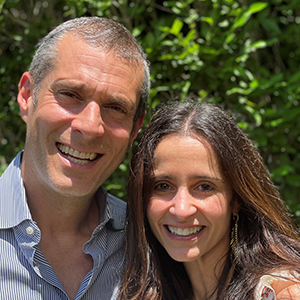
[00:00:10] Ray Latif: Hey folks, I'm Ray Latif and you're listening to the Top Podcast for the food and beverage industry, Taste Radio. This episode features an interview with Chloe Epstein and Michael Sloan, co-founders of Chloe's, a pioneering brand of better-for-you frozen pops. Just a reminder to our listeners, if you like what you hear on Taste Radio, please share the podcast with friends and colleagues. Of course, we would love it if you could review us on the Apple Podcasts app or your listening platform of choice. Entrepreneurs will likely recognize the process that led to the creation of Chloe's. Founder Chloe Epstein and Sloan need that wasn't being met by current products on the market, so she developed a concept to address that need. In her case, it was a lack of clean ingredient, better for you frozen yogurt. But when her original idea, a chain of cafes that sold fruit-based soft-serve, proved to be an expensive and complex endeavor, she, along with co-founders Michael Sloan and her husband Jason Epstein, undertook a major pivot that would reshape the company and, in the process, establish a new set of better-for-you products within the frozen novelty category. Today, Chloe's markets an expansive portfolio, including its flagship line of fruit-based pops, a first-of-its-kind line of frozen bars made from oat milk, and a no-sugar-added line of frozen pops. The brand is represented in over 10,000 retail doors and also boasts a licensing deal with Marvel in which comic book characters from The Avengers and Spider-Man boxes of its most popular flavors. In the following interview, I sat down with Chloe and Michael for a conversation that pulled back the curtain on the company's founding story, the decision to shift its focus from food service to packaged goods, the leap from a slow and steady growth strategy to one that embraced a national distribution plan, and why Chloe's is not shy about putting a target on the back of big CPG. Hey folks, it's Ray with Taste Radio. Right now, I am on a call with Chloe Epstein and Michael Sloan, the co-founders of Chloe's. Chloe, Michael, thank you so much for being with me today.
[00:02:12] Chloe Epstein: Thank you for having us.
[00:02:14] Ray Latif: Thanks for having us, Ray. I'm so excited because I had my very first Chloe's Bar last night. I don't know why it's taken me so long to bite into one of these things, but they are magnificent. Speaking of biting into these things, I have eaten popsicles my entire life and fruit bars and things like that, and I never know when the right time to bite into a bar is. Is there a right time? With Chloe's last night, I just bit right in. I basically bit the whole thing, and I felt weird. I felt like I should have enjoyed it a little bit more, but it was gone within, I don't know, four or five bites.
[00:02:49] Chloe Epstein: I don't think there's a right time. I mean, for me, I like to kind of have a little test and see how long I can resist taking that bite. But if you do it properly and you let the pops thaw before diving in, really there's no wrong time to take that first bite. It should just, it will be soft and rewarding and delicious.
[00:03:08] Ray Latif: It was all that. The cookies and cream variety. Okay, man, you guys have a hit on your hands. That thing is amazing. I almost ate two, and this was kind of late in the evening. It was around 10.30, and I had that 10.30 craving. I know, I stay up late. And it was so good, I was thinking about, okay, if I have one more, I'm probably gonna have another one after that. So I should just stop at one. I think I'm going to try a new one every day of the week until they're all gone. Unless my daughter has something to say about that. She actually had one before I did. She's a big fan. So thank you again for sending those. Oh, good. Absolutely. Yeah, yeah. So why don't we start from the beginning? Chloe, you know, prior to launching the brand, You had an interest in criminal justice, got your law degree, focused on criminal justice and became an assistant district attorney for Manhattan. And when you started was a pretty tumultuous time in New York City. Talk a bit about your interest in law.
[00:04:07] Chloe Epstein: Yeah, so I started law school, I think, with an interest in entertainment law. And I remember my first day of law school, the professor saying, you know, raise your hand if you are interested in criminal law. And the entire class raised their hand. And by the last day of school that first year, no one wanted to go into criminal law. I mean, it's a contract and entertainment. And I quickly learned that I liked being in the courtroom. And I, throughout law school, took advantage of opportunities at the DA's office, working with Barry Sheck's Innocence Project, where you work to, you know, to help wrongly convicted criminals from through DNA testing to help exonerate. And then I ended up working for a judge. And after that, I was kind of hooked. And I was fortunate enough to be able to work in Manhattan at the DA's office to start my career. But yeah, the switch to starting my own business was definitely extreme, not just because it was different industries, but because for me, I was just not a natural born entrepreneur. It just wasn't in my blood. I was more of a planner, I like to know my path, and I think that's really just the antithesis of what it means to start a business. So it was a big change for me in more ways than one.
[00:05:24] Ray Latif: Why didn't you stay in law? I mean, did you just feel that your passion had faded or was it something else?
[00:05:32] Chloe Epstein: It was more timing with my just scheduling and having kids. It was extremely challenging in terms of the time commitment for weekends and the schedule. And it was something that I wasn't necessarily thinking I would leave for good. I thought potentially I would go back, but at the same time kind of had this idea for Chloe's and that became all encompassing and I really just couldn't kick it. It was something that I couldn't shake and kind of just felt passionate about it and determined to make that transition and make that my new life.
[00:06:10] Ray Latif: Yeah. Well, I guess the irony is as an entrepreneur, I'm sure you have even less time.
[00:06:14] Chloe Epstein: Yeah, it's different. You're more in control of it. The hours and the schedule of the DA's office is amazing. It's so exciting. It's constant, but you're doing middle of the night shifts all the time, and it just wasn't at that stage of my life where I wanted to be.
[00:06:33] Ray Latif: Yeah, yeah. Michael, are you from New York City? Are you originally from the city?
[00:06:38] Michael Sloan: So I'm actually from Maryland, outside of Washington, D.C. Chloe's husband and I are best friends forever. And we actually live on the same street together.
[00:06:46] Ray Latif: Your background is in private equity, also seemingly a challenging and complex and keeping you busy kind of job. How long were you involved in in that business? And I guess, you know, how did it prepare you for entrepreneurship?
[00:07:02] Michael Sloan: Before private equity, I was actually an entrepreneur. So like his husband, I started a telecom business where we wired office buildings with fiber optics and sold high-speed internet access. We were 27 years old. We raised $100 million. We had 250 employees in 12 cities in three countries. It was kind of the go-go days of the internet. And that whole transition, we can leave for another story, another interview. But We ended up working for a family office, one third real estate, one third corporate credit, and one third private equity. And so I spent 10 years there. But I really missed being an entrepreneur. I always wanted to be an entrepreneur. And so that's what led me back to this concept that Chloe and I kind of built together with Jason, her husband. And that's what started this whole thing initially as a side hobby. And then it went to full on my day job. So it's been a pretty awesome ride. to be partners with Chloe's husband first, in a really easy way, and then for Chloe and I to build our direct partnership, which has been awesome. But we have such a long relationship, it's been special.
[00:08:04] Ray Latif: Yeah, Michael, based on your LinkedIn profile, it looked like you continued with your job in private equity for years after the launch of Chloe's. Is that accurate? Did you keep your day job, essentially?
[00:08:17] Michael Sloan: So when we first started Chloe's, I was doing it as a hobby. So we spent two and a half years, which was just a fun side project. And until then, Chloe, Jason and I funded the whole business ourselves. When we went to raise third party capital, we realized that nobody would invest in our hobbies. And that's when I quit my day job to go full time into Chloe's. And that's when it was a third party capital that instigated that movement out of the private equity firm. But we actually started Chloe's and ran it from the private equity firms offices for many years.
[00:08:47] Ray Latif: I imagine that you realize now that entrepreneurship is not a hobby. It's not really something that you can do as a side hustle. That being said, an idea and going after the idea, regardless of whether you put your full effort into it or otherwise, is still amazing. Entrepreneurship is a remarkable thing, you know, and a lot's been written about the inspiration behind Chloe's and Chloe, you talked a bit about that. It's one thing to have an idea. It's another thing to execute upon that idea. Talk about the planning. Talk about the business planning that went into launching this brand, this company.
[00:09:25] Chloe Epstein: Yeah, so I mean, I think like many food concepts, our journey began in the kitchen, and just experimenting on all of the appliances in the kitchen. And like Michael Sloan, we would meet in the kitchen at 10 o'clock every night after work after the kids were asleep. And the inspiration behind it was so essentially, I was trying to like kick my froyo habit, we were looking for something that was alternative to the artificial ingredients of frozen yogurt. And we just didn't Because we were new to the industry, we really didn't understand what we could and couldn't do, and we were willing to do things unconventionally. So that's really how we started was, you know, just experimenting in our kitchen and then transitioning to big commercial soft serve machines. We enlisted the help of a food scientist to help us kind of calibrate these machines that were totally foreign to us. We also had the help of a food consultant who helped us kind of understand more of the retail industry. But I think it was a perfect combination of not knowing anything and kind of Being willing to experiment and do things our own way, but then understanding that we didn't there were things We didn't know we needed to surround ourselves with those who were more knowledgeable than us and in certain areas That was really how it all started Did you have a business plan or did you see the opportunity and kind of go after it? We had a loose business plan amongst the three of us in the beginning. And the business was completely focused on this retail store. And it was a pretty small idea. We definitely didn't envision shifting into CPG. And there was always talk of possibly franchising our stores, but the CPG was definitely a shift in our business model. And eventually then, yes, we had a formal business plan.
[00:11:18] Ray Latif: Yeah, we'll get to CBG in a second. It's interesting because you launched Chloe's in 2010. And if I have my dates accurate, that's right around when Pinkberry started to become pretty popular. Tasty Delight had still been this cult hit in New York City, but the hysteria around that was starting to fade a bit. Did either of those companies, did either of those chains factor into your thinking about the potential for a Chloe's retail store or retail chain?
[00:11:47] Chloe Epstein: Like I said, the inspiration was to just to move away from the tasty delights of the world, which were a huge part of my life. People were more educated and I was more concerned with, you know, getting rid of that all the artificial stuff. And so tasty was falling out of favor and and places like Pinkberry were growing in popularity because they were. incorporating the live active cultures into their frozen yogurt, but they were still really playing with artificial ingredients using malodextrin and fructose. And so we were very aware of what was going on around us and we knew we needed to distinguish ourselves from both of those concepts. And by just working with the fruit, water, cane sugar, we felt we were doing that. And there was nothing else like us out there for a soft serve and then the pops.
[00:12:33] Ray Latif: I see. I didn't know that. I didn't know that at Pinkberry. I guess I didn't do my research back then that they were using artificial ingredients. Is that the sort of differentiating factor that you tried to focus on when you were marketing Chloe's at the outset?
[00:12:45] Chloe Epstein: It was really about minimal ingredients and not using anything we didn't need to use. Fruit is delicious and sweet on its own. So we were really trying to promote the idea that you can eat fruit at any time of the day in any form. educating children on how you can enjoy your dessert and it still be better for you. So those were all important messages for us. But yes, I think we really distinguish ourselves by just focusing on minimal ingredients, nothing artificial. And then we ended up getting a lot of attention for being allergen free, because our soft serve was free of all the eight major allergens. And so we would get constant feedback from parents who were very appreciative that their children could now, you know, enjoy in these moments of celebrations where their kids couldn't necessarily, whether if it was because of dairy or nuts or whatever the allergy was, we were really offering something that, you know, everyone could enjoy.
[00:13:42] Ray Latif: You guys are way ahead of your time. Minimal ingredients, salad and free. Yeah. I can see why the brand has become the hit it is today. That being said, I assume there were some stumbles early on. And from the time when you launched the retail store to the time you launched the CPG brand, there were a lot of learning lessons. Michael, what were some of the things that really tripped you off that you really didn't expect when you launched Chloe's?
[00:14:09] Michael Sloan: There's a business of food production where you make food, and there's a business of retail sales where you sell food. And when you look at most businesses, they're either a producer or a seller. So if you want to open up a yogurt store, you'd buy your yogurt and you'd go sell it. When we first started, I don't think we quite realized the challenge of doing both. because we were making our own soft serve in the basement of our store. And then we were trying to sell it. So we were a manufacturer and then also a retailer. So we had manufacturing challenges and logistical issues and we had retail issues. So it was like literally starting almost two companies at the same time. And I think we greatly underestimated that challenge. What I'll say is that our naivete gave us the confidence to go after it. If we had known we know now, we might not have ever tried.
[00:15:00] Ray Latif: I don't know how many times I've heard that speaking with entrepreneurs, probably, I don't know, at least 150 times on this podcast, at least.
[00:15:07] Michael Sloan: We can tell you now all the reasons of all the problems and all the challenges. At the time, we knew enough to be dangerous, and we thought we saw a vision and opportunity, which we did, and we figured it out. But we definitely had absolutely no idea what was entailed in terms of opening the store and making the mix or the production distribution. We didn't know what level 3 SQF was from a production point of view, so we can take it through the different iterations of how we learned and grew. But it was a pretty crazy process. Knowing now the complexities on frozen distribution cold chain, we dream every day about a shelf-stable product with a long shelf life.
[00:15:42] Ray Latif: That would be innovation, a frozen shelf-stable pop. If you guys can pull that off, I think you'll be billionaires the following year. Although they do have, what is that called? The moon ice cream that they sell at museums of sciences and things like that? Yeah, yeah. It's not exactly the same though. So yeah, no, no.
[00:16:06] Jason Epstein: Guessing your margins? That's risky. Belay Financial gives CPG brands the clarity to scale smarter, faster, stronger. Get your free inventory ebook by texting TASTE to 55123 and start making data work for you. Vibrant Ingredients is the natural ingredient partner powering food and beverage innovation, delivering flavor, function, and protection through a science-backed portfolio. Vibrant delivers purpose-driven solutions that help brands create extraordinary experiences. Discover what's possible with Vibrant today. Visit VibrantIngredients.com.
[00:16:53] Ray Latif: When you launched the Pops, they launched in Texas. Now, Texas is a warm state, so I assume that the Pops did pretty well. But you guys are based in New York, New York City. Why not launch in your backyard, Michael?
[00:17:07] Michael Sloan: First of all, I'd say New York is the hardest place to be in the groceries business. New York is a series of co-ops. It's the most expensive slotting and price to pay. And what we were able to do is use our relationships and connections. And we actually got to a buyer who took an interest in us and our concept and really helped us develop it. And so getting a buyer on board and having them help create the product means they help make it successful. And so we just happen to have relationships of somebody who was in Texas and was able to get us over to H-E-B and to build that relationship with them. And so everything that you're going to hear throughout the rest of this interview, it's all about relationships and it's all about getting people to care and to take an interest in it and to do something that might not be economically interesting initially, but has the potential to grow. And that we've done a really nice job. And it's, you know, we didn't have any grocery store experience. So Chloe is in Manhattan, D.A., myself as an entrepreneur. Our CFO, Todd, is a self-signed investment banker for eight years. We never sold the CPG product. So we brought people around us who did have that experience and had those relationships. And so it was a perfect combination of our lack of experience in this industry, but really good at problem solving and their experience base that allowed us to make that pivot.
[00:18:23] Ray Latif: Michael, you said something kind of interesting there, and I think a lot of folks listening are going to want to know the answer to this. You said, we got the buyer on board. How do you get the buyer on board as a relatively unproven brand, at least in CPG?
[00:18:38] Michael Sloan: We were a totally unproven brand, and we had a vision that you didn't have to have chemicals and junk and stabilizers and products in pops, and that you can make pops out of just fruit, water, and cane sugar. And at the time, you know, 2014, that was revolutionary. No one was doing that. And so it was a simple ingredient. It was all of the successes that we did in our retail store that we were applying to grocery that had us ahead of our time. And the buyer, we were able to use a relationship to get a meeting with the buyer. And then once we got the meeting, we convinced them on this opportunity, and then we worked on a collaborative effort. So I never sold CPG products before, but I understand how to sell. I understand how to listen when part of the sell process. So you hear what people want, and then if we have the tools and resources to deliver it, that's what was able to make us successful. And then we built off of that success.
[00:19:30] Ray Latif: So if I'm hearing this correctly, the ATV buyer helped you create a product that would fit in their stores.
[00:19:38] Michael Sloan: So we had the products, they helped with the packaging. Our first packaging was bilingual. It literally had Spanish and English on it for that H-E-B customer. And then we went national, we made it all English and customized it for national rollout. But that was literally the foundation of how we started.
[00:19:54] Ray Latif: Let's talk about going national, because that wasn't part of the plan. From what you told me, slow and steady, inch wide, mile deep was the idea. And then a pretty big retailer came knocking.
[00:20:07] Michael Sloan: 100%. So I mean, every investor and advisor that I've spoken to was very clear, you know, focus your marketing money, get the best bang for the buck and efficiency out of it. And that's easy to do in a much more controlled area. And so that was our plan. And the next thing that happened is Kroger accepted us on a national basis. And so that meant we weren't going to say no, we were going to become a national brand. And so we actually attacked the opposite way. Most people would go into the natural channel. We went in through the natural side of conventional business. So this is when they had these better for you sets and they're really trying to compete. And we were able to service that need. And so we built the bones of our business on the natural side of conventional.
[00:20:51] Ray Latif: You could have said no though, right? I mean, if you're not ready, why do it? Why did you say yes?
[00:20:58] Michael Sloan: We were actually ready and I knew that we could do it. So the first thing is by going into food service before grocery we had fixed our supply chain. So at that time we had secured a Level 3 SQF co-packer to make our product. So we knew we could handle and facilitate the growth. And then we knew that we had the new packaging and that it looked good and it would be able to be rolled out to the Kroger's. And we figured this was our chain our chance. And so we took it. and we went after it and then we tried to fill in around the Kroger distribution. So Kroger put us in their two-door natural sets. So we then said, okay, where are those sets? Who are the distributors? How are we going to do it? And then we built out around those as our anchors and then went from there.
[00:21:40] Ray Latif: Did you knock on their door or did they find you? We knocked on their door. And were you expecting, I mean, was your pitch to go national or was your pitch, you know, to go regional and then maybe if they accept you nationally to accept that? Or I guess in a nutshell, what was your pitch to Kroger?
[00:21:57] Michael Sloan: So at the time, the natural desk and the conventional desk were separate. So we met with the natural buyer and we pitched to go into select divisions and their natural set. And they put us in more divisions that we asked for. So they recognize the business, they saw the opportunity, and they leaned in as a wonderful partner for us. They're always looking for what's innovative and what's new and what's cool, and we deliver that to them. And so this was before there was a whole proliferation of fruit bars. And so we've been able to kind of battle through that as the leading innovator of non-dairy stigmalities.
[00:22:32] Ray Latif: The first year is really important with the retailer, especially when you go national. I don't know, it could be a shorter time frame these days. It could be six months. How do you support that relationship? How do you support the brand in store that first year with Kroger so that it's mutually beneficial and more so for both companies?
[00:22:54] Michael Sloan: So we had capital. We were adept at raising money. You know we started by investing our own money and bringing on what we call institutional quality investors who invested personally. And so once we had that capital we actually had the money to support it. So then it became a game of listening listening to our brokers listening to the buyers. How should we best support you. We didn't even know MCBs and we didn't know the terminology of the industry. So we learned. And they said oh you know this thing I think was called Don Humby at the time. Now it's 84 51. And so we leaned in heavily into their marketing tools that supported their game. you know, if you look at a marketing funnel, we knew we had to spend all of our money at the bottom. We weren't going to drive people to the frozen aisle, but once they were at the frozen, we wanted them to choose Chloe's versus the other opportunities out there. So how do we get the message that it's simple ingredients, fruit, water, cane, sugar, dairy free, et cetera. And that's the messaging that we worked on, how to execute. And it was a lot of testing and learning. We're still learning. We're still testing. And we're still working on that mix. But we were fortunate to have the funds to invest and to support the product. And then we also added demos and sampling. And we had a vision of getting pops in people's mouths. So a quick story. We went to look for experiential agencies that were going to do a series of demos. And for the budget we had, they were going to do 10 days of demos. And we said, OK, we're going to bet our entire company on a third party doing 10 days of demo? No way. So instead, we hired our own people. We developed three, we got three zip vans because it came with the insurance and the gas. We wrapped it and we took these employees and taught them how to cut and sample pops and gave them coupons. And we hired a friend of ours who used to manage the music business and take musicians around the country, you know, giving away merchant or selling merchandise. and said, hey, help us manage our experiential team that's going to go around and give away merchandise and give away samples and coupons. And so that's what we did. And so as opposed to betting on a third party that was going to do it, we figured out ourselves and did it much more effectively. And we had, instead of 10 days of actual samples, we had over 100 days that summer of actual samples. And it was those decisions that I think allowed us to be successful.
[00:25:17] Ray Latif: What are the metrics you look for when you're running an experiential campaign like that? Because I think that's probably why you one of the reasons you hire out something like that is because they can tell you exactly what they got out of the campaign. Were you able to get those metrics and get those results?
[00:25:33] Michael Sloan: What I'll say is that today we have a much better understanding of data and we are able to access more data than we did back then. So at the time we didn't have data analytical tools that we have now, such as market six access and that. It was just, you know, we could see what our sales levels were. we couldn't tell you if it was the price promo or the demo or what was causing the sales, but we knew that we were selling above the threshold that would mean we wouldn't get discounted and we could entertain our new skus. So it was that level of success. It was make it or break it. It wasn't where we are today, where we're really looking at, OK, what is our velocity? OK, we did this promo. Is it two for six better or two for seven? And what's the lift here versus there? And trying to really fine tune our efficiency of spend. Back then it was get pops in people's mouths and let them try. What's the most efficient way to do that? How do we get that done? And that's what we were able to execute.
[00:26:26] Ray Latif: For sure. Going back to Kroger for a second, were you able to take the blueprint, I guess, for how you succeeded in that retailer and adapt it to other major national retailers?
[00:26:42] Michael Sloan: We took it to Albertsons and Safeway. We took it to Harris Teeter. We took it to Publix, all of which have their own tools. Publix wants a BOGO. So there's different things that you learn and feel off of them, but that's how we're successful. So it's that initial concept of selling by listening and like, OK, retailer, what do you want? What buckets do you need filled up? And so now we listen and we kind of give back to the buyer what they need so they can say yes to our SKUs and get us the shelf space that we need.
[00:27:12] Ray Latif: And the sets become quite more competitive, as you mentioned, a lot more fruit pops, better for you pops in stores these days. How have you been able to maintain that sort of first mover advantage and stay current with existing consumers and new consumers? What's that like within a growing set?
[00:27:32] Michael Sloan: So the first thing I'll say is over the last five years, everyone thought they could sell a pot. It's just, I make it at home, I can commercialize it. And it's not quite as easy. And there was a lot of other people trying to copy the same mom story that Chloe has about being a mom with three kids and a former Manhattan VA and trying to get something better for you. And so we saw a lot of me too's. And so at that point, we had a head start. We understood how to invest and partner with retailers. And we knew the number one thing we had to do was to innovate. And until 2017, we thought innovation was new flavors, new varieties. And in 2017, we were part of the Trabant Incubator, and Hamdi sat us down and said, guys, new flavors is not innovation. You actually have to innovate. And so it took us 18 months from that point. But then we took our non-dairy pops and we dipped them in a non-dairy blood chocolate. We then got the first Kids Better Feed licensing with Spider-Man and the Avengers. And then we launched the first oat milk novelties in the country. So it's always pushing forward something that's new and different, because retailers want what's new and different. They want the innovation. They want that capture, that coolness that we're able to try to push forward and to give these, oh, I haven't seen that before. And recently we just launched a no sugar added stew using allulose, right? It's these things that are just constantly pushing and being ahead of where consumers are through our feedback loops, through being in the community. And because we're only customers, I have two kids, Chloe has three kids, Todd has two kids, most of our sales people have kids, or we just understand who our users are. And then you can think through, okay, what would we want? How would we want to look at it? And that's what we've been able to build a business.
[00:29:18] Taste Radio: Do you want more repeat buyers on Amazon? Well, this free resource in collaboration with Straight Up Growth will help your brand turn first-time buyers into long-term subscribers. Download Winning the Repeat Purchase Game on Amazon now at Taste Radio slash SUG. That's Taste Radio slash S-U-G to start building retention-driven growth for your brand on Amazon. Scaling a beverage brand into major retail comes down to operational readiness. From packaging lead times to co-manufacturing strategy, the details can make or break a launch. In a new e-book in collaboration with Octopi and Asahi Beer USA, industry leaders share what they've learned in helping brands scale. Download it now at Taste Radio slash octopi.
[00:30:08] Ray Latif: One retailer that's really well known for its interest in new products, trends and innovation is Whole Foods. And it's interesting that for a natural, better for you brands like Chloe's, we haven't mentioned Whole Foods yet. When did you launch in Whole Foods and talk a bit about how you got into that retailer?
[00:30:27] Michael Sloan: So it's actually a really interesting story. We used to make all of our products in an incubator in a shared organic kitchen in Long Island City. And at that time, the person, the forager from New York was very excited about us. They wanted to bring us in. We were really close. And then we realized as a brand, we had to get level three SQF COPAC. And there isn't in New York City. So we found this out in the Midwest. And once we did that, the forager says, oh, they can't bring us in anymore because we're not local to New York. So we then called the Midwest and said, hey, we're local. Can you come in? And at that time, each of the Whole Foods regions had their own rules for local. So they asked us if our mangoes were grown in Chicago. And we said, no. So we weren't local for the Midwest either. So we really didn't find a home. We found one buyer in the North Cal region who was a reverend and didn't really care about the rules. And they brought us in as a local brand in the North Cal division. And that was our home for many, many years until this year. For the last three years, we've been trying to pitch global and pitch Whole Foods on our licensed pumps. And we said, OK, Spider-Man Avengers. And they said, we don't allow that in our novelty set. And we said the reason you don't allow it is because until today there's never been a novelty company that met the Whole Foods standards of the free from that could actually be sold in a Whole Foods. We're the first one that does it. So it's not that you don't allow it. You don't allow anyone who violates your ingredients. It's not the characters you don't allow. And so finally this year, they embraced us. They brought us in. And so we have our first global acceptance of our Spider-Man and Avengers SKUs. And they just announced us as part of their top growing trends, the whole plant-based marketing to kids, better for you opportunity. And so they're so excited about this. We're so excited. Now we have an audience with Global in Texas that we never had before being a global brand. So we're very excited about this opportunity. And we built our brand on the natural side of conventional. And then we got the sprouts and then we got the Whole Foods.
[00:32:33] Chloe Epstein: It's very different than the traditional path and Whole Foods is usually the first question we get. You know where can we? Can I find you in Whole Foods? So to finally be able to say yes is a big deal.
[00:32:45] Ray Latif: Absolutely. I think when natural consumers or natural product consumers are looking for better-for-you brands, they're not necessarily looking at Publix first. They're not necessarily looking at H-E-B. But it is great to have your brand in those retailers because it makes it more accessible. It gives consumers an option they may not have had in the past. And it's interesting when you mention the licensing deals, because typically when you saw those licensing deals, they were done with big companies, major companies that had a rep that could afford the licensing deals. And unfortunately, they were made and those those characters were slapped on products that were not better for you, had artificial ingredients. And just it's not and hasn't been in the past a good situation for consumers. And, you know, one of the things that you guys are very outspoken about is that the fact that you're going after those big players, you're going after big CPG, which is something that might scare some small businesses. Why put a target on their backs?
[00:33:53] Michael Sloan: Listen, big CPG has better for you products. They have pops, which they don't market to kids that has fruit or simple ingredients. But they only take the most unhealthy products they have and license it to kids because they can get the lowest price. So we have an opportunity which is our mission to try to make this work. We can make this successful and prove that consumers want better free choices for their children. And they want this with the same marketing that makes the kids say oh mommy daddy I want this. then big CPG will clean up their act and offer healthier products. And we will have won at being able to elevate the industry and the choices that are out there. I don't like it when my kids walk into a store and are naturally drawn to the best characters out there, Spiderman, Avengers, and it's with a product that's inferior. I want them to want the better product. I want them to want the healthier one. And so the licensing companies want better for you products, but it's up to us to prove that better for you products and licensing can actually pay the bills. And so right now, Disney and Marvel have one not better for you partner and us as the better for you partner with these Avenger licenses. So in Spider-Man, so we're hoping that we can kind of accentuate this and be successful and prove this model out and really take it to the next level.
[00:35:13] Chloe Epstein: Yeah, it's hopefully will inspire a shift in both the brands that are licensing as well as the other CPG brands. We just want to make better for you all over the supermarket, just so it's easier for everyone.
[00:35:26] Ray Latif: The brands that have licensing deals, a lot of times they do market products that are, I'll just say, garbage. And they're made with cheap ingredients. You guys, I would assume, have significantly higher ingredient costs. So how do you reconcile the cost of a licensing deal, the cost of the ingredients, and wanting to be more accessible and price accessible to consumers?
[00:35:56] Michael Sloan: It's been one of our biggest assets. So if you remember back in the story we moved to level three SQF copacking very early on before we were in our first grocery store. And by doing that we actually were able to get very efficient prices. And so even though we make a better for you product with high ingredient costs our polling fee is actually not terrible especially compared to the industry. And so we're able to take our size and our scale on the better for you products and we're better for you, but we're not organic, for example, like, you know, it's non GMO project verified. It's simple ingredients, but by not being organic also, which would have driven the cost up even higher. we're able to achieve that balance because we think it's important for this to be democratized. It has to be an affordable product. It just is not something that people can't afford. So what we do is in our size our kids pops have 10 pops whereas the big CPG would have 18. So the boxes on the shelves are similar prices. But if you look on a per ounce it's a lot more expensive for ours because ours is more expensive on a per ounce. Our ingredient costs are more than theirs. Packages cost on a per ounce basis. So that's how we're able to find the balance. You are paying a little bit more on a per ounce basis but you're able to get the trial for the same price. as the experience and then our pitch to grocery stores is by moving customers from big CPG over to Chloe's for that better for you product, they have to buy more. So you're going to incrementally grow your category. You're not just shifting from one product to another. They have to buy twice as much or 50% more of ours to get the same number of servings on the other product. So as a grocery store, you're going to create value for your category.
[00:37:41] Ray Latif: And I think a lot of this also comes down to taste, right? I mean, you're selling to parents, but at the end of the day, it's the kids that are eating these products. Chloe, what have you learned about marketing to kids and getting the products to taste right for children who grew up on the not-so-great stuff?
[00:38:02] Chloe Epstein: My kids have been invaluable in that sense. They are always willing to give me feedback, both good and bad. And, you know, their opinions are really just very helpful. We were surprised in kind of moving into oat milk, which we didn't think would be something that was, you know, for kids. That was more, you know, the kids pops or the kids pops. And dipping, we thought, could kind of cross over to both demographics, but we thought the oat was a little sophisticated. getting the feedback from my kids of when we were going through the R&D process of what appealed to them really helped us. And I think it's staying away from something that's too drastic and unharsh and shocking. They like a little more of a subtle experience and then kind of giving feedback as to what flavors are exciting and interesting to them. Is very helpful I think hearing from them about the packaging as well was a big learnings for us because we we wanted to create this elevated product that wasn't as Michael Sloan not pricing out of where we want to be but really. portraying an elevated experience. So that goes into your packaging and your look and feel and just how it talks to you from the show. I think the kids' input and their feedback on the licensed ones and which licenses speak to them and what ages they're appropriate for is very helpful. I mean, for us now, we truly understand that the licenses we want to go after are the ones that really cover a broad spectrum of ages. You know, you don't want to find a license that's too specific to the younger set. You want something that has more duration and less, you know, like Revengers, my friends love, you know? So I think that's been a big part of us selecting our licenses. And it's, you know, just the, my son recently saw the box in Whole Foods and he pointed it out and he was like, mom, wow, your box really pops. And I was like, okay, thank you. Mission accomplished.
[00:40:05] Ray Latif: When you get validation from your kids, it's everything for sure.
[00:40:08] Chloe Epstein: That's it. That's all you need.
[00:40:10] Ray Latif: Yeah. One relationship and we've been again, Michael, you brought this up. I mean, we've been talking about relationships with everyone from retail buyers to consumers to your manufacturers. And let's talk about your manufacturers a little bit more, because at the end of the day, they're the ones responsible for making these really great tasting products safely and getting them to specification, the specifications that you guys want. How do you get them on your side? Because co-packing and relationships with co-packers and co-manufacturers, can sometimes be the most difficult part of the process.
[00:40:45] Michael Sloan: Our CFO and partner Todd runs our co-packing business as well as another job he does. And he's done an amazing job getting people to believe the same way we get our buyers to believe and Chloe gets our consumers to believe is the co-packers are partnering. They're investing in you and taking a major chance on you. like financial chance, long-term capital, opportunity costs. And so once you understand the dynamic of that relationship and you realize they're investing, if you sell them and make them believe in what you believe in and can figure out how to grow together, you know, had we owned our own plant, we never could have fulfilled our level of growth. The only way we filled our growth was we had amazing co-packing partners who could grow with us. Our first co-packer, we did 32 days, 79 days, and then 120 days of production. in three years in a row. And then they said, we can't continue to grow with you. We have to bring other partners in. So it's been an amazing experience. And today, coming off the heels of COVID, there are major co-packing challenges in this industry. Big CPG is under major stress right now. And so we actually are in a great situation with awesome partners who really believe in us and want to keep working with us. And it's having those relationships. And one of the things that Todd talks about is, He's been our co-packing relationship from day one, and he's still there today. Whereas with other companies, that position often changes out. And so it's that continuity, it's that believing in us, believing in Todd, Chloe, myself, our mission, our team, being there, and the passion that we have. Our co-packers love our products.
[00:42:24] Ray Latif: You know, we covered quite a bit, and I'm so glad that we did, because this is such a remarkable story about entrepreneurship and perseverance and making a great idea accessible to so many people. And I thank you so much for taking the time to be with me. As I mentioned at the top of our conversation, Chloe's Everything I've tried to this point, even though it's been one product, has made me a believer in the brand. Thank you so much for taking the time once again to be with me today. Good luck with everything going forward. Let's please stay in touch for the next evolution of the brand.
[00:42:57] Chloe Epstein: Absolutely. Thank you so much.
[00:43:03] Ray Latif: That brings us to the end of this episode. Thank you so much for listening, and thanks to our guests, Chloe Epstein and Michael Sloan. As always, for questions, comments, ideas for future podcasts, please send us an email to ask at Taste Radio. On behalf of the entire Taste Radio team, thank you for listening, and we'll talk to you next time.