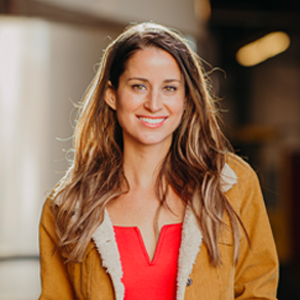
[00:00:10] Ray Latif: Hey everyone, I'm Ray Latif and you're listening to the number one podcast for the food and beverage industry, Taste Radio. This episode features an interview When Bridget Connelly, the co-founder and CEO of hard kombucha brand Luna Bay Booch. Just a reminder to our listeners, if you like what you hear on Taste Radio, please share the podcast with friends and colleagues. And of course, we'd love it if you could review us on the Apple Podcasts app or your listening platform of choice. When Bridget Connelly started Luna Bay Booch in 2018, the hard kombucha category was just a blip on the radar and consisted of a handful of brands, most positioned as alternatives to craft beer and focused on distribution in Southern California. For Luna Bay to distinguish itself, Bridget decided to take a different tack. A former social media strategist for Lululemon, Bridget swathed the brand with an ethereal vibe and incorporated design elements that highlighted Luna Bay's premium ingredients, better-for-you attributes, and proprietary blend of Yerba Mate tea and seasonal fruits and herbs. Bridget, who had no prior experience in the beverage alcohol industry, also set roots in Chicago and emphasized retail placement in the Midwest. While the hard kombucha category is now represented by dozens of brands, Luna Bay's differentiated look and distribution strategy has supported the brand's expansion into retail stores nationwide, including those of Target, Mariano's, Trader Joe's, and Jewel Osco. In the following interview, I spoke When Bridget about her inspiration for Luna Bay, including the origins of its name, why brand story is a key asset when meeting with retail buyers, how the pandemic influenced consumer awareness and interest, why investment in the category is a two-sided story, and why she credits mentors as critical to the brand's development. Hey folks, it's Ray with Taste Radio. Right now, I'm very excited to be sitting down When Bridget Connelly, the co-founder and CEO of Luna Bay Booch. Bridget, great to see you.
[00:02:25] Bridget Connelly: Great to see you too. Thank you so much for having me.
[00:02:28] Ray Latif: And thanks so much for joining me. It's been a while. I wish we could have done this in person, but Zoom still works. I think the last time I saw you was, geez, was it two and a half years ago in Santa Monica?
[00:02:39] Bridget Connelly: Yeah, yeah, in 2019. Yeah, that was just, you know, a drive by with my surfboard, I think in the car or something.
[00:02:45] Ray Latif: That's right. You gave me a ride, actually. Yeah. And I think we have to get the surfboard out of your passenger seat for me to get in.
[00:02:52] Bridget Connelly: Yes.
[00:02:53] Ray Latif: Are you getting much good surfing in?
[00:02:54] Bridget Connelly: Back and forth. Last weekend, I went in California, but this today I'm in Texas. So it just depends on where I'm going.
[00:03:01] Ray Latif: Is there, can you surf in Texas?
[00:03:03] Bridget Connelly: Not really, but you can paddle board. So anything is good. I went swimming in the lake on Sunday. So if I can find water, I feel good.
[00:03:10] Ray Latif: Which lake is that?
[00:03:12] Bridget Connelly: I went to Lake Austin.
[00:03:14] Ray Latif: Yeah.
[00:03:15] Bridget Connelly: Yeah, it's great.
[00:03:16] Ray Latif: Yeah, when I was in Austin, I saw lots of people paddling down the river. It looked really cool. It seems very strenuous, but I could just be completely out of shape. Who knows?
[00:03:25] Bridget Connelly: Yeah, no, it's definitely, you have to be committed to the cause, but I am, you know?
[00:03:30] Ray Latif: Yeah, well, you know, you're also committed to the cause of hard kombucha and, you know, you started the company in 2018, but we first met in 2019 at the Winter Fancy Food Show in San Francisco. A colleague of ours introduced us and we met in the press room and you brought out these little 50 milliliter bottles of your hard kombucha. And I'm like, wow, okay, this is cool. These are like the secret vials that people always talk about at these trade shows. They pull them out of a backpack and there you have it. And I remember it was like, it was a really great tasting beverage, regardless of what it was. But I think the thing that was most striking to me was the branding and what Luna Bay Booch represented to you. And I think that is one of the most interesting parts of the story. But let's start from just getting into the business of hard kombucha. Because in 2019, it was almost a non-existent category, even though there were a couple of brands in the space. So what really motivated you to launch a brand in this incredibly nascent segment of hard kombucha?
[00:04:35] Bridget Connelly: I mean, that's a memory that will forever be in my mind. I think that was my first trade show and really a moment in time where I was bringing the concept to life of what Luna Bay was all about. And it made it feel more real. And I was so grateful for your time there to be able to try it and believe in it and give me you know some feedback on it and that was just a really exciting moment for me because it started to feel more real we are still in the ideation phase of everything where. Every day feels like a challenge and you can't really understand if it's going to happen or not, and I think after leading after that conferences started things started to really flow so. We'll never forget that moment. But, you know, for me, I was in 2018, you know, living in San Diego and really in the heart of all these other brands that started to develop at that time and seeing what was happening and seeing how my friends were drinking it and how big the category was coming in in that bubble that I was there in. was for me the moment that I realized that this is going to be something. I noticed that people were drinking it, people are looking for different options, people are caring more than ever what they're putting in their bodies. And so for me, I wanted to take that concept and start building it and growing it. With my background in branding, I created the brand and the story of Luna Bay first before I really nailed down the product. part. So you tried some of the first samples there that eventually evolved into what we have now. But then I took that and brought it back to the Midwest where I'm from in Chicago before anyone else did. And no one thought it would be anything in Chicago anytime soon. They told me to come back in five years in 2018. But one year later, we launched it, and it's still our best-selling market.
[00:06:20] Ray Latif: Well, I mean, I think that's a really interesting part of the story, right? Is that, you know, you were in San Diego when you were inspired to start the brand, yet, you know, Chicago is your home base now. Although I think, you know, if you're thinking about hard kombucha, it's still very much a coastal kind of beverage category. I could be wrong. So, you know, what made you think that you could actually, you know, grow in scale in the Midwest?
[00:06:46] Bridget Connelly: Yeah, you know, so my background is in branding and marketing and I worked for Lululemon for a number of years, which I'm so thankful for that really shaped my life. Um, and so much of what we would do and my position was the marketing storyteller was figure out what new cities would make sense to bring, you know, Lululemon to, and to tell this brand story. And my big project was Chicago. And there were so many things happening in Chicago and Lululemon came up with their first experiential store. which has a bar in it and has a workout facility and meditation room, and really kind of change the experience of shopping and they pick Chicago out of any market in the US to do their first one that really kind of shows that Chicago is a place that are people really resonating to with health and wellness. And so for me, I already knew that Chicago kind of gets pigeonholed or stereotyped into deep pizza and beer. And I knew that, you know, there's more than that to the city and it's a very actually health conscious city. So even though every beer distributor, we didn't believe it. And maybe even some of our investors, I felt in my bones that, you know, this was going to be something big in the Midwest. And so I kind of took that leap of faith and we actually launched the product at the Lululemon store opening, which is a really cool moment for me to bring both of those like worlds together that were pretty life-changing for me and it kind of just took off from there.
[00:08:11] Ray Latif: Yeah, clearly it's working and I think they have you to thank or clearly the category has you to thank for really getting it into the heart of the country. You know, it's interesting when I think about Chicago, I also think about cold weather and, you know, beefy meals and things like that. And Luna Bay has this beautiful breath of fresh air. When I think about it, it just feels like the ocean. It feels like. you know, sand and sunsets and things like that. But I wonder, is there a real Luna Bay? I was looking up the name on the internet and the only thing I could find was there was a fictional place called Luna Bay in like the sequel to that movie, The Lost Boys, you know, the one about the vampires.
[00:08:52] Bridget Connelly: Yeah, no, I didn't even know that. I've actually probably never Googled that. I probably should.
[00:08:56] Ray Latif: Yeah. So where did the name come from?
[00:08:58] Bridget Connelly: Honestly, this is like my favorite part is just creating stories, creating, you know, branding. I cannot tell you how many days and nights I spent at coffee shops, redoing the cans and thinking of new names for it. And I would wake up in the middle of the night, probably like every night in 2018 and write down a note in my phone and be like, Oh, I think it's this one. I think it's that. And it was just a moment that was like, this is the name actually. And for me, it was, yeah, we were thinking of like Luna Tides or Tully Tides or Konakai, like we made up so many different things. But for me, the Luna is the moon, like feminine energy, which, you know, founded and rooted in women by women, which is our, you know, whole leadership team now. And then Bay, little wave on the bottom. And I was living in, before San Diego, I was living in Australia and spent some time in Byron Bay. And really, you know, that Australia has been a very transformational place for me as well. definitely influential in it. And then the four stars on the can are from the Chicago flag. So very much a mixture of like city and coast. And that's kind of where the vision came to light. But I like what you said. It's very like that light, effervescent. And I think people gravitate towards that in the Midwest, even in the cold, you know, they're like, give me some of the, you know, warm coastal vibes, too.
[00:10:19] Ray Latif: I never knew that the four stars had a connection to Chicago. What's that all about?
[00:10:24] Bridget Connelly: Yeah, so the Chicago flag has four stars on it. And so, and I actually have the tattoo on my arm of the stars of the Chicago and Chicago's, you know where I'm born and raised and it's you know such a big part of who I am and and the team really now I mean most of our team is based in Chicago and it's, Um, yeah, I think it's a really important part of what Luna Bay is all about. So it does have that mixture of like the city and the coastal inspiration to it, but we are born in Chicago and, um, that's, you know, most of our team is too.
[00:10:57] Luna Bay: Guessing your margins? That's risky. Belay Financial gives CPG brands the clarity to scale smarter, faster, stronger. Get your free inventory ebook by texting TASTE to 55123 and start making data work for you. Vibrant Ingredients is the natural ingredient partner powering food and beverage innovation, delivering flavor, function, and protection through a science-backed portfolio. Vibrant delivers purpose-driven solutions that help brands create extraordinary experiences. Discover what's possible with Vibrant today. Visit VibrantIngredients.com.
[00:11:44] Ray Latif: You know, there's a Miss Luna Bay on Instagram. And I looked her up. She has like a million followers. I assume there's no affiliation.
[00:11:53] Bridget Connelly: No, no, there's no way.
[00:11:56] Ray Latif: I was gonna say I was wondering if you could like coax her to giving it to you.
[00:12:00] Bridget Connelly: Yeah.
[00:12:01] Ray Latif: But she has like a million followers. So I think that might be kind of hard.
[00:12:04] Bridget Connelly: Maybe she could be a brand ambassador. I should DM her or something.
[00:12:08] Ray Latif: Yeah, well, check out her stuff first before you make that move.
[00:12:12] Bridget Connelly: Let's make sure it's on brand first.
[00:12:14] Ray Latif: Yeah.
[00:12:15] Bridget Connelly: No affiliation. Yeah.
[00:12:17] Ray Latif: So I read an article recently about you and Luna Bay Booch, and the author described your brand as a hippie-ish alcohol brand. And it was strange to me, because I don't get a hippie vibe, and no offense, I mean, maybe you do, but I wouldn't describe it that way. And you've described the brand in a number of ways, but when you're talking to people about it, how do you present Luna Bay Booch? How is it positioned in your mind?
[00:12:45] Bridget Connelly: Yeah, I think that's an interesting point to be more hippie-ish. But I think for us, maybe that comes forward with getting back to the basics. And I think for Luna Bay, we actually are one of the only hard kombucha brands that actually adheres to the standard of identity of hard kombucha. So KBI, Kombucha Brewers International, came out with the standard of identity of what is kombucha, what is hard kombucha. And we really try to adhere to that. And Joanna, our head of production and operations, you know, she's, this is her craft. This is like her baby as well. And so she really cares so much about following that. She's a, you know, a scientist. She has her PhD. She like the science behind it is so important to it. Like every can she feels her name is on it and she wants to make sure what she's putting forward resonates with what she, what she's, her background is in. So for us all along has been, honesty and real ingredients. And so we use, we're the only ones to use pure Yerba Mate tea, non-GMO in our products with all of our ingredients, and really getting to know the farmers we work with behind each of our products. And so All of those things really kind of tie into why maybe that's more that hippie-ish. And we really care about the, the quality and the people that make up the products with us. And I think that Yerba Mate is more of that earthy essence, maybe hippie-ish undertones to it. We have on our team registered dietitian, a holistic health coach, yoga teachers, all of us kind of really live by those same principles, like mind, body, spirit, wellness aspects to it. And I think that really comes forward in the product that we put forth.
[00:14:22] Ray Latif: And it's on your can as part of the copy on your label. It talks about how to enjoy nutrient-dense libations and give back to our body, mind, soul, and earth. On one panel of the label, however, in pretty large font, it says vegan, non-GMO, and female-founded. Is that the hierarchy of what you want to present to folks, that it is vegan number one, non-GMO number two, and female-founded number three?
[00:14:47] Bridget Connelly: I'm yeah you know it's interesting we're finally at a place where we can play around with more getting those certifications has been very time consuming. So we want to finally be able to showcase that. But I think female founded really is something that we want to push forward the most, and not because you know, any gender, anything. I mean, I really believe that, you know, we're all just doing our best and I, you know, applaud all of my male counterparts in the space, too. But I think it is really cool and amazing to see what we have accomplished in an industry that, you know, historically hasn't had a lot of women in and especially in the beer space. And even Joanna, as our head of production, she's so incredible what she's been able to accomplish in her career and really forge the way for women in brewing. And so I think for us like to really push champion that and push that forward is really special and unique for what we've been able to accomplish together and kind of just kind of break the mold of what has come before and pave the way for future females in the alcohol industry. So I'd say that's first and foremost. And then non-GMO, I think is something that we don't talk enough about of why that is important and the ingredients that we put in our products. And then vegan as well. You know, we all like some of us eat meat on the team. It's not like we're only, you know, just all vegan, but it's in the same sense. I think it's something that separates us from some of our competition that uses honey in their product. So I think that is something with we we do work with some vegan restaurants like that is something that we like to share.
[00:16:18] Ray Latif: You know, you talked about how important the female founded aspect of Luna Bay Booch is and We talked about this sort of ethereal vibe that the Brandt Gehrs off. And I think all that lends itself to appealing to a female consumer. That said, the last time we spoke, you talked about how Luna Bay has reached a broad range of consumers and that there's a wide variety of people that drink this product. And a lot of that happened during the pandemic. Can you talk about who your customer base is and why they're drinking your brand?
[00:16:54] Bridget Connelly: Yeah, it was so interesting when we first started Luna Bay in our little vials, and we'd go around to all these different accounts and investor meetings and what have you. And they're like, well, you know, when I'm out golfing, I want to drink 12 Coors Lights, but I drink 12 Luna Bay. And I'm like, well, you know, I don't know if you should drink 12 Coors Lights, but you know, I don't know if there's like in any maximum for these things.
[00:17:16] Ray Latif: Alcohol distributors, my goodness.
[00:17:18] Bridget Connelly: Yeah, so I'm like, okay, same, same. But, you know, as far as with Luna Bay, I think that we kind of, because we are female founded and we share that on our product and because the packaging is a little bit more feminine in some aspects, there was like, oh, you're just for your women's drink. This is just for women. And I think it's really cool because I do think more men are getting in more into their femininity in some ways. And I think it's a really, like, I think it's a really great thing. It's not a women or a male drink. It's for anyone. It's for anyone that cares about this category that really, you know, there's very much tones of sour beer in some of our products. There's tons of like champagne. We use champagne yeast. So it's almost can be just like light effervescent, you know, rosé almost. So there's something I think for everyone. I think it's just getting it into the hands of the consumers and the trial, which really did work against us in 2020 with COVID. We never really had a chance for samplings. So now going into this year with more festivals happening, venues happening, our first venue for sports last year, was the White Sox stadium and if you know where the White Sox stadium is the South Side Chicago you know and everyone's like, oh, this is not going to do well there I mean this is this is a hot dog and a Bud Light place this is boots What is why when you want bitch. And it was so well out the gate and they had to reorders their second week and they doubled their orders. They just placed their first order for opening day right now and we're seeing men drink it women drink it and it's just getting into the hands of more consumers to understand it's not just. sour or acidic drink that maybe that gets kind of pigeonholed into what is kombucha even. But I guarantee it's like almost, nothing gets me more excited than someone trying, saying they don't like kombucha and then they try at least one of our flavors and they're like, I think I like this. And you're like, see, I knew we could get you there. So it's definitely become because of the opportunities we're getting into with venues and festivals, we're seeing more and more people drink it of all ages and both male and female.
[00:19:30] Ray Latif: Trials really important. So is education about the benefits of the drink versus say other alcoholic beverages. On the retailer front, have your retailers helped you educate consumers about hard kombucha and the brand itself?
[00:19:44] Bridget Connelly: Yeah, I think that's been a huge one for us because, I mean, when we started Luna Bay a few months before, we really got into distribution in the fall of 2019, and then, you know, COVID was in March, and that was the only market we had launched really before that was Illinois. And so all of our other markets really we launched during COVID, and so the trial was you know, slim to none. And so the way that we've been able to grow has been building relationships. And that's, I think, what we're really good at. None of us came from alcohol. None of us knew what a chain, you know, how to manage chain accounts. And we've really just figured it out on our own, which I really applaud to this, you know, strong team of women. And I think for us, We've been able to make amazing relationships, you know, with the Albertsons and with Kroger and with Whole Foods and they are continuing to grow the category. And I think that's something we've got a lot of pushback on is like how big can the hard kombucha segment get? Can it get to the White Claws? Can it get to the hard seltzers? And for us, we're seeing it and we're seeing that H-E-B is getting behind it, and Publix is getting behind it, and Whole Foods, Mary and Candice there have been so incredible to us. And they've been expanding the footprint for hard kombucha in their stores, both in the stores themselves and then growing around the country. So that awareness and that shelf placement that we keep gaining has been huge for trial. And they're running promos and having people try it so they can get kind of understand what the hard kombucha category is all about.
[00:21:13] Ray Latif: You know, your retail footprint is pretty impressive and you mentioned a number of big retail chains and you talked about the importance of relationships. And I think this is the point I want to flesh out a little bit. How do you develop good relationships with retail buyers? How do you get them to believe in the brand as much as you believe in your own brand?
[00:21:33] Bridget Connelly: Yeah, it's a great point. I think for us, like at the end of the day, like, you know, Luna Bay has been my dream, you know, and I've, you know, been creating this and, you know, and I love it. And I think that once people feel that and they feel the authenticity behind it, and now it's, you know, Julie's dream and, you know, it's, it's always been Claire's dream and Joe's dream. And we all care so much about this, what we're doing. And it's like, it's in our blood, you know, like, and we're a family and we really are. I mean, these, the women and the men on this team, we are family and I think that when they see what we're building, they first get sold on the brand and then they try the product and they love it and then they meet our team and they see what we're doing and how much passion and how energizing we all are when we get to talk about it because we care so much. I think that really resonates and I think to, you know, it's not a TV stream it's not public stream it's like we want to get to know the people behind it we want to become, you know, we actually genuinely want to become their friends and we're in this industry together and we want to help each other. I think to it's not just like all about Luna Bay it's like, who are you as a person like can I get to know you and what what excites you like what's your, what's your dream. So I think for us is like not losing sight of. We're all humans we all have struggles we all have our own things that we want to dream and accomplish and really not forgetting that in the process of it and. And it's exciting what we're doing, but at the end of the day, it's relationships, it's family, it's health. Those are the things that matter more than the company. And I think that we share that with one another and we feel that for each other and then we feel it for those relationships we're building. And I think that's why we've been given a shot and it's been really life-changing for us.
[00:23:24] Ray Latif: Well, for some retail buyers, their hopes and dreams are to validate the shelf space they give you, right? So they have to be like, look, I'm allocating a certain amount of shelf space for hard kombucha, for Luna Bay Booch, where I could be giving it to some other category or brand. How do you help them validate what you're doing? Obviously sales, you know, that's the baseline, but I mean, what else is really making them get excited for the category and the future of your brand?
[00:23:53] Bridget Connelly: Yeah, I think that we didn't know alcohol sales. None of us, we never knew anything about alcohol and we didn't know sales really actually, but we knew how to market. We are marketers, we're branders, we like to create and come up with really innovative ideas and that's what we're good at. And I think when they see what we can create, for example, Mariano's Kroger in Illinois, we had no business getting into Kroger when we got into, they told us no actually. And then we, we don't take no for an answer easily so we went found another route and then we kind of bombarded them as they're doing their sets and showed up and talk to them in person and they're like wow these girls are never going to leave us alone so maybe we. And so they ended up bringing us on last year and then we came back and like what if we did. And we branded it and we made it so easy and simple for them. And we said, this is how you order them. This is what it looks like. This is why we think the velocities will increase. And then they brought, you know, 30 plus refrigerators into all these stores in Mariano's and they have huge dedicated sections now all over Illinois. And that was just an idea we came up with. And we're working with Whole Foods on another thing. And we just come up with these ideas and then we execute on them. And then we can use them as case studies you know we come up with what sky's the limit what's the worst they can say is no, and you know we can come up with something really fun and creative and then if they are like okay well we'll invest you know a couple thousand in this to generate you know 10x of that so let's try it. I think we have that. Joe is so good at strategy and even though her background is production, she is definitely strategy. I'll come up with the creative aspect and then Julie can execute on it. I think we're a good triple threat balance and then we show what we can bring forward for them. I think too is because we're pretty relentless in getting the deal done that I think they're open to giving us a shot or they know that we won't stop.
[00:25:52] Ray Latif: I've heard the story of persistence a number of times from entrepreneurs, and I think there's a fine line between persistence and annoying the buyer. Actually, it's funny because I interviewed one of the founders of a brand called Skinny Dips, which make coated almonds and other kinds of nuts.
[00:26:08] Bridget Connelly: I eat them every day.
[00:26:10] Ray Latif: It's such a great brand, such a great product. And she talked about how their first retailer basically said yes because she and her other founders would just kind of bum rush the store and wouldn't leave until they got a yes. With Kroger, I think that's probably not exactly what you guys did, but how do you convince a buyer, being persistent without being pushy or annoying?
[00:26:33] Bridget Connelly: Yeah, I think for us, like, you know, we have, you know, it's a fine line for sure. And I definitely crossed the line before. Please stop emailing me. But we have, I think that there's a thoughtfulness behind it that can go into it too. I mean, anyone can get an email, but if you can write a handwritten note, send a package, like follow up, like, you know, really get to know them, like I said before. And another way we've kind of gone about things is Going back to like the storytelling aspect of it, you know, everyone thinks like their dream is the best or their, you know, kids or whatever it is, and I think, you know, I can say blood blue in the face like our team is so amazing and you know our story so unique and there's a million other founders, same thing. But what I think for us, I really wanted to find a way to tell that story and to tell it impactfully and not take up too much of their time. Everyone's very busy. Everyone has lives. Why Luna Bay? So I started documenting a lot more of, you know, our team and as we're traveling and behind the scenes, I mean, we're the ones, you know, Joe and I are out there, UPCing, stickering, doing things like we're all, you know, schlepping around, you know, no one's above anything. And I think as we've started to develop this team and we've been creating more content around it. We did a little documentary last year, winter, about our team. It's a very short, it's just a few minutes, but it's a reason who we are, what our personalities are like, what's the brand like, and why should you give us a shot? We've been sending that reel out to a lot of buyers. It's a quick way to feel it, get to know it, be like intrigued by it, and then potentially give us a shot. So that I've seen also be helpful in telling our story.
[00:28:23] Ray Latif: That's really interesting. How long is the real?
[00:28:27] Bridget Connelly: It's about four minutes, we have versions of it. But we had a we had a filmmaker actually come in and, and document us for a little while and do interviews. And it's been, it's been Yeah, I think that's what I love to do is create and tell stories. And I was like, how can we do this in a more impactful way than try to hound someone for You know, that's why Trader Joe's gave us a shot. You know, they got to see the product and they got to see the story. And they're like, this is really interesting and different. Like, maybe we should give him a shot. And so our best account in California.
[00:28:58] When Bridget: There you go. I love it.
[00:29:00] Bridget Connelly: Thank you.
[00:29:01] When Bridget: Do you want more repeat buyers on Amazon? Well, this free resource in collaboration with Straight Up Growth will help your brand turn first-time buyers into long-term subscribers. Download Winning the Repeat Purchase Game on Amazon now at Taste Radio slash SUG. That's Taste Radio slash S-U-G to start building retention-driven growth for your brand on Amazon. Scaling a beverage brand into major retail comes down to operational readiness. From packaging lead times to co-manufacturing strategy, the details can make or break a launch. In a new ebook in collaboration with Octopi and Asahi Beer USA, industry leaders share what they've learned in helping brands scale. Download it now at Taste Radio slash octopi.
[00:29:51] Ray Latif: The category of hard kombucha as a whole has been growing and there has been some significant financial investment in the space. I think you mentioned a couple of the brands or you mentioned that a couple of brands have really picked up quite a bit of funding. Those include Flying Embers, Juneshine. You know, what's driving investor belief in this space?
[00:30:14] Bridget Connelly: I mean, I think it's immersing, I think, market research in it and what the consumers are looking for. And I think several of the top is, you know, being able to resonate with the story behind the brand. Like, who are the people? Is it not just the big names, the big houses? Like, there's more humanness, going back to that human connection, which I think People are really resonating towards with the June shines with us, with others. And then 1% for the planet, just environmental issues that continue to happen. I think that really being behind a brand that supports and donates to causes that are important to the consumer is something and is important to us as a company is really resonating. And then just better for you ingredients, I think it's more and People are coming out of maybe the seltzers actually aren't that good for you or maybe there are things being added to products that we are okay to put out there that actually isn't organic or isn't, you know, why is this approved and I think for us, you know, that better for you healthy category in some way with alcohol is something that people are really looking for. And I think chains now that are getting on board with it, as Whole Foods expands their footprint with it, as like I said, Kroger and Albertsons and more markets that haven't even had it yet. And we have an amazing relationship with GoPuff as well, and Foxtrot, and we're seeing that they're expanding in the category. And I think if we look to the leaders in the space, I mean, the elbow industry is changing. you know, like it can't continue on the way it's been before. People want more access. People want more transparency. And I think companies like Gopoff or Foxtrot that are able to get into the hands of the consumer quicker are only going to continue to see that more streamlined, efficient process of alcohol consumption and delivery. And those are big companies that are getting behind the hard kombucha category and really championing for us. So I think that's why we're seeing more investors and more belief in the category as those big corporations are also taking chances with it too.
[00:32:17] Ray Latif: A few episodes back, I spoke with the founders of Beckin Ice Cream, which was launched by two female founders. And as part of our conversation, they had brought up the fact that only 2% of female-led brands get to a million dollars in revenue. And that statistic hasn't changed in 25 years. And it's an insane stat and it's an embarrassing stat. And it really speaks to the fact that female founders are just not getting the kind of support or investment as their male counterparts. And I'm not sure even what to say at this point, because it's like, how are we not making any progress on that front? And it's even worse because you told me a story about the fact that you got traction, you got more people interested in the brand when you brought on two male advisors to Luna Bay, which I don't even know what to say at this point. I'm trying not to chuckle about it, but I'm not even sure, I'm speechless. So I guess, how do you deal with that fact on a regular basis? How do you continue to move on and push on when it seems like you're at such a disadvantage as a female founder?
[00:33:35] Bridget Connelly: Yeah, it's a great question. I think that there's times where I have felt so defeated and so frustrated in the process of fundraising and the process of, you know, because I think about it, right, like, you know, I'm running a company, we're launching new markets, I have 10 direct reports, I, you know, all these things, and then you're raising money. And it's like, how can you actually do your job? when you're being pinged and you're asked for questions and then you're going in circles having the same conversations and you know that, you know, your other male counterparts might be doing this so much faster and then they get back to running their business and growing their business where it's really hard to grow your business, if you can't get that access to funding you need and you're constantly you're trying to do both and it's and it's burnout and it's your mental state, it's hormones as a woman it's all these things that like you just you can't you can't operate at 100% every single day and without feeling like you're gonna you know and I don't think people talk about it enough I mean there's burnout of course for men and women but it's it's really really difficult to you know and like have a family and have kids and do all these things and run a company and try to get fundraising and so I hope that, you know, there are changes happening. I have been talking to a lot of funds as of late that are really supportive of minority brands, female brands. There is change coming and with retailers as well. But, you know, I think that the biggest thing is like having a support system and having people that, you know, you find that one person that believes in you and It changes everything and I don't I would not be here today without Julie and Joe and Claire and some of our advisors and that you know you feel you have these moments of like, why are we even doing this like we're never going to get what we need to keep going, you know, and then, You get a shot with Whole Foods or you get a shot with an investor you, you know, and it's worth it to me because if all this hard work is for more women to understand and to have your resources or if one day I'm able to be able to help with funding for people and you know for women like that to me is worth it and. It's so empowering. Once you get a distributor to listen to, once you get an investor to listen to, once you get that opportunity, it's bigger than us. It's bigger. We're doing something that's very meaningful. And to me, that's what keeps me going. Because I could get frustrated and beaten down any day over something. I think, you know, the people that we surround ourselves with and what we, it's all about outlook, you know, and I think we all have a very intrinsically joyful spirit and that's something that is really contagious and it's that joyful and hopeful spirit that keeps us going but. Um, not to say that I don't have days that are really tough and really, you know, yeah, defeating, but, um, yeah, it is embarrassing and I'm grateful that you've been able to talk to so many female founders and kind of understand what we've all faced to make more noise about it. So there is change happening and, you know, that will help other future women in this space.
[00:36:33] Ray Latif: You know, bringing it up as a founder and talking about it on a podcast is important. It's also important for the investors to talk about it, right? It's also important for the retailers and the distributors to talk about it. Do you bring it up in conversations with these industry gatekeepers that are, you know, the lifeblood really of our industry?
[00:36:52] Bridget Connelly: Yeah, I do. And you know, it's there's for every nine out of 10 are incredible, you know, people that want to really champion for women that are excited by the category, they're excited about the changes that have daughters themselves that, like, you know, see that in us. And, you know, and I'm so thankful for that. But you do have the 10th that is condescending, or, you know, using money as power, or, you know, and I feel so thankful that, you know, when I grew up in Chicago, you know, I have a very, you know, blessed life, but I do, you know, I have a thick Midwest skin, I think, and I have three brothers that really kept me humble and always put me, keep me humble to this day. So I feel thankful that, like, I have the ability to see through that, and I don't buy into it, and I don't, money is money. I don't want someone's money that is going to try to use that in any way over me or can talk down to me or anyone on my team. Like that's a shut door goodbye. So I think for me, I feel grateful that I can go into those feeling really empowered where maybe a few years ago I would have been a little bit more shy. And I'm so protective over my team. and what we're doing. And if there is anyone that I feel might threaten that or talk in a certain way that I don't align with, that's a goodbye for me. So I think that if we can empower more women to feel that too, like you don't have to get into any, you don't have to take anybody's money that does not feel like it's not something that makes you feel empowered and excited about what you're building. Cause you will get what you need if you have enough, you know, resources and hard work and dedication, but don't, don't take someone's money that doesn't feel aligned with you. So I think that's something that I've learned along the way and hopefully can help other women with.
[00:38:41] Ray Latif: I think you will. And I think there are people that will listen to this podcast and reach out to you and be like, When Bridget, I would love for you to, you know, work with me and help mentor me as an early stage founder, men and women, I think, because this has been such great information and such great insights into how to build a business. You know, that being said, I think mentors are such a critical part of building any business. When it comes to finding mentors, how do you approach people that you think can help Luna Bay Boots, and what specifically do you ask of them?
[00:39:11] Bridget Connelly: Yes, that's a great question. You know, for me, I have, you know, I think like writing out your priorities, like what are, what are the things that you need the most support in? If you're really good at branding, don't worry about marketing, like worry about, do you need help with fundraising? If you are trying to figure out distributors, if you're trying to, you know, figure out how to build a business plan, like, you know, really looking at where your networks, because nine out of 10 times too, I've I have asked for help. Someone is willing to help. Someone has been there. Someone has been in your shoes. And if they don't know, they know somebody else that might be able to. And it's like putting your ego aside and just putting yourself out there time and again of, you know, do you know anyone? I'm struggling in this sense. You know, vulnerability is so bonding and is so, you know, people can relate. Like we all have something that we're going through. So if you, if you're just don't feel like you have to carry the weight on your own and that you have to have the answers. Nobody has answers. Everybody is trying to figure it out in any position that they're in. So I think for you just being able to be transparent with what your current struggles are and if they know anyone to help you with that. even if it's truly like, I feel like I'm having a mental breakdown each week. Does anyone have a good therapist? Like there are people out there that will be able to help and connect you to the right people. And so, you know, for me, I have an amazing advisor that came from RxBAR. And for me, that was important because they were with a startup and then they went through an acquisition. And what were those changes like? And even Internally, our team that has started, we've been a core team for three years, and we're entering a new wave of bringing on new talent and bringing new people. And what does that look like? Because there is this uncomfortability at first. We want all the help we can get, and then you get the help. And it's like, hey, wait, we've been doing it this way. Who are you people? And it's like, how do you transition to this next wave? And how do you all feel aligned? And are we going in the right direction? My own mentor has a mentor that actually just started coaching our whole leadership team because he thought that would be a great person for us and we like adore him. So there's so much hub out there. I mean, I have an advisor from Heineken that has been really helpful with distributor contracts and making sure we're asking for the right margins. And we meet monthly. I have someone at Constellation we meet quarterly and that's to talk about innovation and product. And all of this just came from, can I have five minutes of your time to talk about X I've seen in your history, you've done this. I'm really intrigued by it. And sometimes it goes somewhere, and sometimes it doesn't. And it's cool because life is cool. I mean, meeting you, Ray, three years ago, who would have thought we'd be here chit-chatting about food? And I'm so thankful. So I think that everything is connected, and it's worth putting yourself out there to see where it leads to any time.
[00:41:56] Ray Latif: Absolutely. And I am really grateful that we met three years ago. And I'm grateful that our colleague introduced us. And, you know, I think those introductions from someone, you know, are always really helpful because it's like, I trust this person to make an introduction. And I trust this person to make an introduction to someone who they think can help me. But, you know, has just cold emailing or LinkedIning been just as effective for you?
[00:42:22] Bridget Connelly: Yeah, oh totally yeah I mean God I can't even sorry to everybody I've ever linked and I will do it so yeah I think linkedin is really effective, but not just saving like can I have five minutes of your time like really. Knowing who the person is what have they done in their career, and why do you want to talk to them and then sharing what you what you're hoping to get out of it because, like I said everybody's busy everybody's overscheduled everybody's overworked so you can be really direct and transparent about why you're interested in communicating with them and and how much time do you need? I wouldn't recommend an hour for anyone because I think everyone's like, ah, that's too much time. So just say 20 minutes. Can I just brief you on something and build that? And then if they feel, oh, maybe I could, maybe this could be a better, a bigger conversation. I would start there and then ask like your current resources. friends, family, people in the industry, your parents, you know, whoever it might be, there's always someone, you know, that can probably connect you to somebody else to have a conversation.
[00:43:27] Ray Latif: Bridget, I've enjoyed every minute of our conversation, and I thank you so much for taking the time to sit down with me. I know how busy you are, and, you know, this is such an exciting time for Heart Kombucha and for Luna Bay, and I know it's a roller coaster. But I hope that people listening get a lot out of this. I think they will. And they'll realize that for as much hard work as you put into this, it's the passion, it's the excitement, it's what you bring to the table every day in terms of just being happy and being happy to do what you do. And it came through so clearly in our conversation. Thank you so much again. And I really hope that we can meet up soon in person. It's been too long, way too long.
[00:44:09] Bridget Connelly: We will, Ray. Thank you. It really means so much to me. I'm so grateful to be here talking to you. It's very surreal for me. I'm very full circle. And yeah, we are actually launching Luna Bay on tours. So we'll be taking a van across the country. I leave in two weeks, and I will be in Boston, and I'll be up the East Coast. So at the very least, come take a cruise in the van. It's much more spacious. We can fit the surfboards in the back. So don't worry.
[00:44:35] Ray Latif: Sounds good. I don't have anything else to bring. I'll just bring my sports coat.
[00:44:39] Bridget Connelly: Perfect. Yeah, you'll be good.
[00:44:41] Ray Latif: You'll be fine. Okay. Brigitte, once again, thanks so much for taking the time and I'll see you in the van.
[00:44:47] Bridget Connelly: Okay. Sounds good, Ray. Thank you.
[00:44:48] Ray Latif: Thank you. That brings us to the end of this episode of Taste Radio. Thank you so much for listening, and thanks to our guest, Bridget Connelly. As always, for questions, comments, ideas for future podcasts, please send us an email to ask at Taste Radio. On behalf of the entire Taste Radio team, thank you for listening, and we'll talk to you next time.