[00:00:09] Ray Latif: Hello, friends, and thanks for tuning in to Taste Radio, the number one podcast for anyone building a business in food or beverage. I'm Ray Latif, the editor and producer of Taste Radio, and I'm with my co-host for this episode, John Craven, Jacqui Brugliera, and Mike Schneider. In this episode, we're joined by Michelle Razavi, the co-founder of Alavi, and how the Better For You snacking brand landed a dream deal with Costco. and has since sold one million of its protein brownies and counting at the club retailer. You're going to want to hear this episode. They're two of the biggest hustlers there are. I mean, Nikki Elliot and Michelle Razavi, the co-founders of Alavi. For sure.
[00:00:51] Michelle Razavi: Yeah, their social content is on point, too. I love following their journey on TikTok, on Instagram.
[00:00:57] Better For: If you want an authentic journey, that's the one because they're, they're giving you the ups and downs, the play by play, you know, sitting behind the pallets at Costco, trying to take meetings and get stuff done while they're demoing. I mean, it's, they're, they're a small, lean, nimble team with some tasty products.
[00:01:15] Ray Latif: Yeah. They've been at it for a while. And we chat about the evolution of the brand and their hustle and the hard work that it takes to go from where they started to where they are right now. So very excited about that.
[00:01:26] Michelle Razavi: Yeah, I think on their TikTok, I saw that they actually ran into the CEO of Costco while they were demoing. So the hustle is real and I guess it pays off.
[00:01:35] Ray Latif: Yeah, and I guess I'm very lucky, according to Mike, to have landed some of these Alavi protein brownies.
[00:01:41] John Craven: Cook us up.
[00:01:42] Ray Latif: Come on, come on. Sweet but mighty. They are vegan, gluten-free, and contain 10 grams of protein per brownie. Sorry, Jackie, but I'll hand one to Mike and to Mr. Craven over here.
[00:01:53] Better For: I've been waiting quite a long time to try these.
[00:01:55] Ray Latif: Yeah, actually, they've been in my storage locker for two years now, so I hope they're still good.
[00:02:00] Better For: They're probably sprouted. Perfectly aged. Sprouted.
[00:02:03] Ray Latif: We should have these at Bevanite Live, should we not?
[00:02:05] Better For: We should. This would be great to have in your pocket because you're, you know, if you're trying to get your, what are you trying to get, Ray? About 150 grams of protein a day, one per pound. So yeah, this would be a great way to just snack on some of that protein that you need.
[00:02:18] Ray Latif: One per pound, huh?
[00:02:19] Better For: I like that. Nice.
[00:02:21] Ray Latif: Nice.
[00:02:21] Better For: Yes. You're a light ray.
[00:02:23] Ray Latif: I'm a light ray. You're a lean and mean ray. Yeah.
[00:02:25] Better For: I love this little call out. It's a kettlebell. The protein's on a kettlebell. It's so cute.
[00:02:30] Ray Latif: Did you see how I was trying to slip BevNetLive into the conversation? Yeah, and then Mike just shut it down. Just destroyed it. Yeah. All right. Let's try again. Let's make it less slipped in. Okay, well, we're talking about BevNET Live, and we are T-minus 20 days as of the publication of this. Three weeks. Less than three weeks, I don't know. Yes, from BevNET Live Summer 2025, June 11th and 12th in New York City. We have a stack lineup of speakers. We've been talking about this for a while. Y'all know who's coming. Folks from Olipop, folks from Chobani. Polar. Folks from Polar. The biggest names, the biggest brands. Everyone's going to be at that show. If you're in any way associated with beverage industry, you kind of want to be there. Not kind of, you want to be there.
[00:03:14] Michelle Razavi: Definitely want to be there.
[00:03:15] Ray Latif: Absolutely. I mean, we're going to be there. I asked about this earlier. the sampling opportunities. Can people still bring their products to be sampled? Of course you can.
[00:03:25] John Craven: You just gotta sign up and fill out the little form and just bring your stuff or ship it or whatever they tell you.
[00:03:32] Ray Latif: Okay, for a more detailed explanation, Jackie, please take it away.
[00:03:37] Michelle Razavi: I mean, registering unlocks a lot of opportunities. So if you register, you get the links to all the things that you can do, including sampling. So we do have our sample fridges. We have sampling for also cannabis at our happy hour. We also have retail one-to-ones, which we just announced. We have Stop and Shop and H-E-B coming on for meetings as well.
[00:03:59] Ray Latif: Yes, indeed.
[00:04:00] Michelle Razavi: But those meetings are limited. So you want to register now so you can have access to the signup form.
[00:04:05] Ray Latif: I love that Jackie made that all very clear. She's like, look, you can do sampling. You can sit down with Whole Foods, H-E-B, Stop and Shop, The Good Smart, Circle K. You can do all these things as long as you register. It's almost like she's good at marketing or something. What's your title again? Director of marketing. There it is. Absolutely right. Registering gets you into so many different places that to show if you want that opportunity to sit down with an H-E-B, with a Whole Foods buyer, if you want investors, retailers, distributors, consultants to be able to taste your product, get in those coolers, you got to register for the show. It's very easy to do so. Go to bevnetlive.com and you can navigate your way into the show. I mentioned this a couple of weeks ago. If you're on the fence, you're wondering about your own travel time, you know, any kind of associated things that are going on in your life with your business and Thinking about going to Bevan & Lye but not 100% sure, still have questions, reach out. Let us know, we can answer those questions for you. Send us a note to ask at t3du.com. Reach out on LinkedIn, Instagram. We will get back to you in very short time. I think this might be the highest number of M&A and strategic financing deals that we've seen in years. Perhaps even since I've been at BevNET, I haven't seen this many. And we had two more happen in the past week. First, Chobani acquired Daily Harvest. Daily Harvest, as everyone knows, is a maker of Better For you foods, including smoothies and meals. They started out as direct to consumer. They are now sold in a variety of retailers. I don't know if anyone saw this deal coming, but the deal or the terms of the deal were undisclosed. And then we also saw a brand that is so beloved in this office. And I continue to buy their stuff every week. A Dozen Cousins. A Dozen Cousins, a maker of Better For you, pouched beans, rices, seasonings. They were acquired by Via Verde Valle.
[00:06:17] John Craven: Well, let's go back to the first thing you said. I mean, I think, first off, I'm not sure that this is like the most deals that we've seen. I think this is sort of a unique time for deals where, you know, what's missing from the market right now that we've seen in other years is just the flood of like small, you know, I don't know, call it like million dollar-ish to $3 million-ish like fundraisers. And instead, you know, what we're seeing are brands that normally wouldn't have exited exiting, you know, something like a Dozen Cousins, for example. But I think, you know, to answer your question about Jabani, I mean, I unfortunately don't think Daily Harvest and Verde great company. I think it was a cool product with a very interesting value proposition. And, you know, it unfortunately had, you know, some bumps along the way. I guess just to be blunt, what Chobani probably gets out of this is a really low risk way to expand into the freezer aisle. I would guess that long-term they could care less about D2C and are more, you know, going to use this as a way to see if they can have a product in another part of the store. And I think that also provides, you know, a reasonable off-ramp for those who were involved in Daily Harvest that You know, it's not like the product just closed up shop or sold to some, I don't know, like random PE firm. Like selling to Chobani is something that, you know, again, that's a pretty solid way for the brand to exit and live on. So, you know, that's, that's my read on it.
[00:08:02] Better For: It's like a frozen section starter kit. You know, the brand, as John said, was stressed. We talked a little bit, uh, you probably already listened to the CPG Week episode this week where they talked a little bit about, just the reasons that Chobani might've wanted to go into the freezer section and some of the, you know, the advantages to buying a distressed brand and, you know, just their manufacturing might and their marketing might that they could put behind a brand like Daily Harvest to get some of the, you know, the stigma that might still be with it because of the digestive issues that people were having and things of that nature that are probably kind of forgotten at this point because it was, that was like in what, 2022?
[00:08:43] John Craven: a little while ago, but yeah, I mean, Treboni obviously is a world class, I mean, in terms of product quality and manufacturing, like they've put in the time and the money, you know, even recently we were covering a massive new production expansion for them. You know, I think this is again, an opportunity for them to maybe take this thing and, you know, it's kind of maybe malleable and turn it into something that is like best in class, which again, I think for all parties involved is a great outcome for the Daily Harvest and Verde my opinion. And I think, you know, the other acquisition that you mentioned, the A Dozen Cousins, I mean, I think it's similar, but also not the Sample Your know, I would imagine that for a brand like A Dozen Cousins, the ability to sort of scale that up where, you know, that brand, which, I mean, they make phenomenal products, you know, that started out as a real sort of small batch type of thing and now they're in all these retailers where I think taking these steps up in terms of like, well, how do you produce this and how do you market this and all these things like synergies with another company that's a little bigger that, you know, the founders staying on with the company. Right. So, you know, I think that just is, it's almost like an alternative to like, Hey, let's go raise some, I don't know, VC money since that's pretty difficult to do right now anyway. But I think that's sort of like different in that it seems like a little bit of a vote in an entrepreneur and their idea and hopefully, you know, providing them with the ability to scale and perhaps, you know, not have to focus and worry about like actually making the product.
[00:10:26] Better For: It also could be an opportunity for the acquirer to, again, get some of the best practices of Ibrahim and his team because they make a product that is, you know, the package is extraordinary first. What's inside is not only tasty, but good for you and also convenient. So there's just a lot of the ingredients that you'd want in a company that you acquire in a Dozen Cousins for a strategic.
[00:10:52] Ray Latif: Yeah, I mean, I think it totally makes sense. And it's in line with what we've seen from some of the acquisitions this year, where the founder of the company was on the verge of, or in a place where they need to raise a lot more money for the company to continue to scale and grow. And instead of raising that money, they took an off ramp to a strategic acquirer. And they did that in this case of a Dozen Cousins, or I should say, Ibrahim Basir, who Pass The founder and CEO of Dozen Cousins, who was amazing.
[00:11:19] Better For: One of the nicest people you could ever want to meet.
[00:11:21] Ray Latif: Yeah. So just a reading from the Nosh article and just to offer some context here, Verde Valle claims to be the first brand to introduce beans in a pouched format, making the business combination a natural fit for a Dozen Cousins lineup of ready to eat beans, rice and seasoning sauces. And, you know, Ibrahim talks about this in a press release about how this deal is going to dramatically strengthen the supply chain and make it easier to share our products with more people.
[00:11:46] Better For: So, I feel like they shortened that quote because every time I hear Ibrahim talk, it's sandwiched in gratitude. There's gratitude on the beginning and the end, like it's a gratitude sandwich.
[00:11:55] John Craven: Well, look, I think, you know, the only other thing I'd add to this is that seeing deals like this is pretty interesting and maybe encouraging to a certain degree in that I think on some level, you know, we were, and maybe the peak of fundraising was really easy or as easy as it gets, maybe not easy, but It seemed like there was kind of only one path, which was like start a company, grow it, and then try to scale it to the point where you get the mega exit. And to be honest, I think that's not the journey that most entrepreneurs are signing up for or what they're passionate about. And certain ideas, just the reality of going from like being able to start it, to grow it, to really blow the doors off on it are like very different skill sets. And now if there's a path to like, you know, fine, home run exits are great, but a sort of reasonable win and exit is something that would be great for, you know, I think the CPG ecosystem.
[00:12:59] Ray Latif: Agreed. And who knows, you know, if a Dozen Cousins did raise another big trench of capital and maybe they get to that place five, six years from now where a Kraft or General Mills is interested in buying the company, maybe Abraham's just, that's not my path. Maybe that's not the journey I want to be on with this company. My journey, my goal was always to see a Dozen Cousins in more places, make it more accessible to more people as quickly as possible. And this seems like a good way to do that.
[00:13:29] John Craven: It definitely does. And it also probably takes it out of the traditional, like, you know, the timeline of fundraising is, you know, venture capital sort of operates on its own, you know, need to close out funds and whatever else that they do that I think a lot of times we've seen just does not line up with the reality of how long it takes an emerging brand to actually get to the size that it needs to.
[00:13:51] Michelle Razavi: Yeah, it also seems like there's just great options for founders as far as finding people and partners that align with your mission or your quality of products. I know in that article, Ibrahim was saying that their products are just as tasty. They're just different. And I think that there's a lot of alignment on that front. And he seemed very particular in who he wanted to partner with.
[00:14:13] Ray Latif: Congratulations once again to Ibrahim. I have a ton of respect for him and his team and really excited to see a Dozen Cousins in more places. I mean, killer products, you know. Their black beans, Cuban black beans are a staple in my home. Same. Yeah.
[00:14:27] John Craven: Time to try some products.
[00:14:28] Ray Latif: On to new products. I gotta talk about one before anyone goes anywhere. Okay. So, everyone knows I love candy bars, Snickers bars in particular. We know. You know, we saw Gigantic come out with a Better For you type of Snickers bar, Harkin's Sweets. The floodgates are opening here. That looks like Justin's. He found another one. Justin's. Justin's, the maker of peanut butter product, well, best known for their peanut butter products, has launched a new dark chocolate peanut caramel nougat bar. These things are insane. Mike John, why is there a little one and a big one because I get the big ones you get a little no So they have to package sizes or they have They have a bar, which is 1.4 round you were storing in that bag and they have mini bars But the mini bar is literally half the size it's 0.7 ounces, okay, okay
[00:15:21] John Craven: I mean, I don't even need to try this to know that it's going to be good. Yeah. And I'll save it for later.
[00:15:26] Ray Latif: It's not just good. It's not just good. It is amazing. All right. I got it.
[00:15:32] Michelle Razavi: I'm excited that Justin's is getting into like the candy bar game. I mean, anything they do is delicious. So I'm I'm excited to try these.
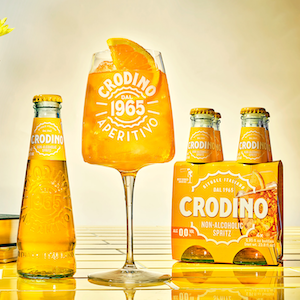
[00:15:40] Ray Latif: Yeah, I think in general everything I've tried from Justin's is pretty damn great. Yeah, this is I don't know when the ideation for this product came about but I do think that when you see brands like Harken and what they're doing and you see bigger companies like a Justin's, I, they might've noticed and said, Hey, we should get into this business as well. And again, this is a tremendously delicious product. So you're ready to wash down something. Yeah. Let's wash it down. So Campari. Give it the intro, right? The Amaro, the very, very famous Amaro. And, I mean they make Aperol too, don't forget. And Aperol. They're also a strategic company that owns a lot of different brands. Grupo Campari. Grupo Campari. They're somewhat over the line too. They have a non-alcoholic. Campari-ish product that is a bright orange. It's like neon orange.
[00:16:35] John Craven: What's it called? It's called Cordino. So it's a, um, it's a non-alcoholic spritz. They've had this in, uh, Europe. I think it was created in the 1960s as a soda. And you know, it's, it's interesting seeing some of these bigger companies that have had NA options kind of free flowing elsewhere, but have been a little hesitant to do it here. And it's not bad. I mean, it feels a little more bitter than I would have liked it, but.
[00:17:04] Ray Latif: So I think the bitterness is to my liking.
[00:17:07] Better For: To mine too.
[00:17:08] Ray Latif: It definitely doesn't feel like a soda. It feels like a non-alcoholic cocktail or spritz.
[00:17:13] Better For: I'm with you, Ray. Any less bitter and you're just, you're just like a little bit of a bitter soda.
[00:17:18] Ray Latif: Yeah. It would have tasted like more of a crush.
[00:17:21] John Craven: I mean, I do wish they just made this a little more clear that it was part of the Compari portfolio, but I don't know. Maybe that's just something industry people care about and consumers won't.
[00:17:33] Ray Latif: I will say that the neon orange concerns me a bit. I don't know if that's coming from FD&C. whatever.
[00:17:41] Michelle Razavi: It can be a little off-putting seeing neon colors and liquid.
[00:17:45] John Craven: Well, funny you should mention that because the other thing, have you tried this yet? The Santa Grecia's Phony White Negroni?
[00:17:52] Ray Latif: I think so or is that brand new?
[00:17:54] John Craven: Those are good. This is clearly a bit of a preemptive move to have a product without coloring since their core product is like bright red. Okay. But I mean this is Probably. I mean, I don't know. I've been a big fan of everything that Santa Cruz has done on the NA front, I guess, as well Pass The A front too. The A front? Alcohol. Right in the A. I don't think you mean on the front. I feel like this is their best one yet.
[00:18:23] Michelle Razavi: Really? What is it?
[00:18:24] John Craven: Oh damn, it's a non-alcoholic, Phony White Negroni.
[00:18:28] Michelle Razavi: Are you sure? This is phony? Okay, so it's just white.
[00:18:30] Better For: This is a Negroni. It's just white.
[00:18:32] Ray Latif: It's clear. What's the typical spirit in a white Negroni, aside from Capare? Gin? Luxardo? Gin? Yeah. But what makes it white is what Jackie was asking.
[00:18:41] John Craven: Oh, yeah, you just sub with some other bitter liqueur. Bitter Bianca is a really good one.
[00:18:46] Ray Latif: There you go.
[00:18:47] John Craven: Some people use that Suze stuff. I don't really like that, but there's a million different clear or clear-ish spirits you could use.
[00:18:54] Ray Latif: Yeah, this is, again, a 10 out of 10. This you would, that stuff's amazing. With an ice cube, a slice of orange, you really wouldn't know the difference.
[00:19:05] John Craven: Not to crap on Crodino, but I'd rather have the Santa Cruz, this Phony White Negroni.
[00:19:12] Better For: Seven days a week. I don't mind the Crodino. It was pretty good, but yeah, the Phony White Negroni tastes like a Negroni. It almost scratches the Negroni itch.
[00:19:20] John Craven: I mean, I don't know. The obvious thing Campari's got to do is just NA RTD Aperol Spritz.
[00:19:28] Ray Latif: Uh, yeah, but it would probably look and taste kind of similar to that.
[00:19:31] John Craven: Just put it in a can, who cares?
[00:19:33] Ray Latif: Maybe. Well, okay, so we're talking about two products here in the Justin's Peanut Caramel Nougat Bar and the Santa Gris's Phony White Negroni, where I feel like these are holy grail type of products. No compromise, Better For you ingredients and doing right by consumers because consumers want clean label. They've been talking about this forever and it's come to a head this year, I think for a lot of different reasons, but I'm really happy we're in this place right now.
[00:20:04] John Craven: Can I throw one more in here that I've been meaning to bring out? This is Instant Energy gum.
[00:20:12] Jacqui Brugliera: Oh no.
[00:20:12] John Craven: It's got 100 milligrams of, just in case you want one. 100 milligrams? Remember those like gum that had like a liquid center? Yeah. That's kind of like what this is. Met these guys.
[00:20:25] Better For: It's almost like a gusher.
[00:20:26] John Craven: They were at the startup CBG event in LA and I brought this back, but it's, It's pretty good. It's just, you know, you want caffeine fast. Don't have time for Mike to make you a crappy latte. Have a little Instant Energy gum.
[00:20:38] Ray Latif: Oh, okay.
[00:20:39] Michelle Razavi: 100 milligrams. Just straight.
[00:20:41] Ray Latif: Sour apple. I love sour apple.
[00:20:42] Michelle Razavi: It's kind of tasty.
[00:20:44] Ray Latif: I'm going to try this.
[00:20:45] John Craven: Kind of tasty.
[00:20:46] Ray Latif: Although this is the first time I've ever chewed gum on the podcast.
[00:20:49] Better For: Yeah. What's going on here?
[00:20:50] Michelle Razavi: Aren't you afraid of your dental work? You're afraid of your teeth? So it's just gum. So you don't swallow it.
[00:20:56] John Craven: Correct look at the contemplation you kind of get the caffeine from the liquid. I think that's in it.
[00:21:01] Michelle Razavi: Okay.
[00:21:01] Ray Latif: It has a little Yeah, the gusher liquid center. Yeah, are you amped yet, right? Start jumping on the table shaking his fists I can imagine that the Caffeine is getting into my bloodstream much faster than it's like you just had a Red Bull put in a piece of gum.
[00:21:24] John Craven: Yeah Jitters
[00:21:26] Ray Latif: All right, what do you got for us out of there, Mike?
[00:21:28] John Craven: We got rekt. We got rekt, bro. R-E-K-T. Yeah. It's a krypton thing you wouldn't understand.
[00:21:35] Better For: Yeah. Founded by Ovi Farouk, Mombo, and Keyboard Monkey. You know, very famous. Wow. I mean, I probably met those guys at some point back in the IRC days when I was named Caps Lock.
[00:21:49] John Craven: I kind of prefer Wen Lambo to Wreck, but... Sorry, bad crypto joke.
[00:21:54] Michelle Razavi: I think this is a whole other language that I don't understand.
[00:21:57] Better For: There's a lot. When I got my hands on this, I was, like, just scouring the label for THC or Kavo or Kratom or something. It has none of that in it.
[00:22:07] John Craven: It does look like it, but it's just a sparkling flavored water. You know, there's kind of this meme that goes with this that... They've been selling it exclusively like DTC, kind of in this drop model. But it's, I don't know, it's kind of cool. I like the look of it. It feels like it could be a fun brand for a functional product of some sort.
[00:22:27] Better For: It tastes good. That's the thing. Like the liquidated lime is good. I was like... Your palate is not wrecked. No, it doesn't wreck your palate. It doesn't wreck you. It's like Mike's serial playbook of everybody's afraid to confuse, but when people get confused, they look twice. And so that's, you know, that's the secret of going viral. And, uh, these guys, I mean, they accomplished it at least by making you look two or three times for what's in the thing before you drink it. And the ingredient panel's not too bad either, and the flavors that we have in front of us are liquidated lime, and probably because they sold their crypto, and then abstract apple, which is powered by an agency called Abstract out of UK.
[00:23:14] Michelle Razavi: So it's just sparkling water. There's no like functional.
[00:23:17] Ray Latif: Correct. You'll be better at selling crypto or buying perhaps maybe something like that. Yeah. Yeah.
[00:23:25] Better For: All right. Okay.
[00:23:26] Ray Latif: And now that we've gotten the caffeinated gum and crypto water out of our system, Jackie, what do you got over there?
[00:23:32] Michelle Razavi: I have more caffeine over here, but I have Better For you caffeine, which is hitting that hot trend. The first one I have is finest known or FKT, which makes me want to say fuck tea.
[00:23:48] Better For: These kids today, you know, numb tea, fuck tea.
[00:23:51] Michelle Razavi: Yeah. So this is tea based energy. It's using Japanese green tea. This one has yerba mate and then Louisiana honey. So it's like an interesting mix of different things. It is based in New Orleans. That's why they're using Louisiana Phony And then they also have this one, which is their sweet tea version. So it's still green tea based yerba mate, Louisiana Phony And lemon. So it's definitely like Japanese style branding. Interesting mix of ingredients. I'm curious to try it. I'll try it right now. But I love green tea based. It's interesting seeing them mix like green tea and yerba mate.
[00:24:27] Ray Latif: Yeah, that's interesting. I think I would want a smaller can Pass The Japanese do when they're drinking their tea out of cans.
[00:24:36] Better For: Never heard anybody say sweet tea. I'm usually hearing sweet tea.
[00:24:40] Michelle Razavi: Sweet tea.
[00:24:41] Better For: Sweet tea.
[00:24:42] Ray Latif: Please continue, Jackie.
[00:24:44] Michelle Razavi: And then I also have Fuzzee Coffee, Fuzzee Coffee. These are functional coffees, so obviously they have the energy component, but they also have lion's mane, L-theanine, and ginseng. So kind of like some of those coffee powders you've seen, functional coffees, where they're trying to help you not get the jitters or the crash. It has some other mood-boosting benefits. Very playful, like, kind of Gen Z branding on this. No lint, though, or anything like that.
[00:25:14] Better For: The only thing I would say is no pile in there or anything.
[00:25:18] Ray Latif: No pile no pile fleece or lint or something like that The only thing I would say about that is that it's a little too close to fuse because it's built a fuzie So hopefully there's no issues That's like when you launched Google with extra I created it a rugal like praise Google rugal and It was shut down the next day. Yeah, probably. Probably for the best. All right. It's time to get to our featured interview for this episode. That's with Michelle Razavi, the co-founder of Alavi, an innovative brand of high-protein brownies and dessert-inspired cashew butters. In this episode, Michelle reveals the strategic roadmap that helped Alavi land a million-dollar deal at Costco just four months after the debut of its protein brownies. Hey, folks, it's Ray with Taste Radio. Right now, I am honored to once again be sitting down with Michelle Razavi, who is one of the co-founders of Ilavi. Michelle, great to see you.
[00:26:30] Mike Schneider: Thank you so much for having me, excited to be here.
[00:26:32] Ray Latif: This is the third time you're a three-timer on Taste Radio. The first time we sat down was back in 2022 at Expo West, and then we followed up about a year later talking about a brand refresh. And it's just been amazing to see the growth that you guys have had, you and your co-founder, Nikki Elliot. Just in a general sense, talk about where La Vie is right now in its development.
[00:26:54] Mike Schneider: Yeah, so we're entering into our four and a half, five years feels like a million and one year at the same time, just at the speed. But yeah, we're really excited with our newest product launch of our high protein brownies. And they have quickly taken off and launched early this year in Costco. have been absolutely crus year really marks that ex especially as we go into
[00:27:25] Ray Latif: Yeah, it's been a huge hit at Costco. I'm looking at a post on Nosh.com right now. The title is, the lobby takes a big bite out of Costco with 1 million protein brownies. That was published in January of this year, 82 Costco locations in the Southeast. You know, people who are listening, I would say the majority of them love Costco, would love their brands to be in Costco. And for an emerging brand like yours, I'm sure there's some amazement at the fact that you're there and some terrifying days that you're there as well. Let's start with the beginning. How do you get that conversation started? How do you talk to Costco as an emerging brand?
[00:28:06] Mike Schneider: Yeah, Costco, first of all, is the best in class partner to work with. It's an absolute dream for a brand. Costco is just really that brand that everyone loves. And so naturally, when you work with them, it's such a fantastic opportunity because the volume and the scale and the visibility that they bring a brand is unmatched. And there's no clear one way to get into Costco. Sometimes people use brokers. Sometimes people, you know, get discovered by Costco organically. Sometimes you meet them at a trade show. For us, we went to Sweets and Snacks for the first time. It was our first trade show. We kind of didn't know what to expect. And we had walked a bunch of other shows. And so since it was a smaller show and we are a sweet snack as a protein brownie, we figured, you know, we'll find some targeted buyers and just get our feet wet in the expo world. And so we ended up meeting our Costco buyers there. They actually got to try our products before they launched in market. So we soft launch our protein brownies last May, and they fell in love with the product. They said that it was exactly what they were looking for in their category. They appreciated the innovation because their first in market to be a protein brownie that's gluten-free, plant-based, no added sugar, shelf-stable. And that's kind of where it started. And with the innovation, they quickly jumped in and offered us a rotation in all 82 locations in the Southeast.
[00:29:36] Ray Latif: When you say they were looking for this type of brand in their category, what category were they talking about?
[00:29:41] Mike Schneider: Yeah, so this is the protein snacks, protein bar category. And that encompasses your more wholesome snacks, like your breakfast bars, and then also protein bars, which is one of the fastest moving categories in Costco. If you go to a Costco, you notice that protein bar section is right by the register. And that's by design because consumers are buying protein snacks, protein bars are stocking up in bulk. And that's a fast-moving category that they really like to invest in. And that's where they invited us to be a part of.
[00:30:12] Ray Latif: I'm guessing it wasn't as simple as, hey, here's a free ticket to get into Costco. You still needed to win them over. What were the key points in that meeting that convinced them that you could be a brand that could not only sit on their shelves, but thrive at Costco?
[00:30:25] Mike Schneider: Great question. First and foremost, we had already done two Costco rotations with another product line. And we did a roadshow prior to that. So it wasn't like zero to 100, we went with Costco, they saw us perform really well as a supplier with another product line. And they saw us really prove ourselves with a roadshow, which I highly recommend for any brand. It's kind of like a farmer's market meets a Expo West in terms of your sampling and selling for, you know, weeks on end to really prove yourself to Costco before you get invited to sell your products in rotation.
[00:30:59] Ray Latif: So basically, just to, I'm sorry to interrupt, but just to clarify that the roadshow is you going to different Costco stores in a particular region and Sample Your product day after day for a certain amount of time.
[00:31:11] Mike Schneider: Yeah, it feels like a traveling circus, honestly. And it's very exhausting, long hours, but the data and the validation and the proof point that you can get is so valuable. And it's usually how Costco likes to test an emerging brand before bringing them in. So we had already done that with another product line, our dessert cashew butters. And so our Costco buyers already knew who we were. we already were approved Costco vendor. And so that made the conversation much easier in terms of this is our second product line. We're coming back with even more innovation to Costco. So that's first piece of advice is do a roadshow if you get the opportunity and also if you haven't been able to do that. opportunity, show them other compelling data. So we had retail distribution with our other product line. We had a very strong Amazon presence. And even though this particular protein brownie line was new, the momentum around it of us already having pre-orders was compelling to them. And so whatever traction you can show your Costco buyer is super important to show that what they're betting on will materialize into success for everyone. The second piece of advice I have is once you get that meeting with your Costco buyers, do your research. So Nikki, my co-founder and I, we actually flew to the region that we would potentially be launching in and we took photos of all the products in our set. We looked at every single price point, pack size. We brought up measuring tapes and we measured everything. And so we were super, super prepared and well-researched of What are we entering into? Who are competitors? What are they priced at? And we developed this very comprehensive deck for our buyers saying, hey, here's where we land on price. Here's where we land on offer. And really just showing them our knowledge of the entire set. So we really were able to make that compelling argument of why we belonged there and what we would bring to the table. And I think they were very impressed by that when they saw photos of their set and us plugging ourselves in and how we story told around that. And yeah, just showing that you're putting in the research and time to develop a value proposition that no other brand can provide. So I'd recommend those two things is show your traction in other locations, and then do your research of the set that you want to enter and why you're best equipped and what value you can provide that retail buyer.
[00:33:27] Ray Latif: I would think that some founders might be a little gun-shy going back to Costco because you were already in there once and it sounds like it didn't work out as well Pass The protein brownies are working out right now. Did you feel any hesitation? Was there something that you had to refine when it came to your pitch?
[00:33:42] Mike Schneider: No. So the first rotations were actually very successful. It's just the protein brownies just ended up picking up more traction. We just decided to double down on that. So the success in that other product line was just so compelling that Costco knew we're not just a one hit wonder and that we can continue bringing innovation to them. And so The thing with Costco that's really exciting is they want to be in that forefront of innovation. They're looking for premium products, Better For you products, products that can satisfy that treasure hunt that they like to provide their members. And so they're always looking for products that are unique and differentiated and can provide value to their members.
[00:34:22] Ray Latif: It's great to get into Costco. You're in 80s used stores. That's fantastic. I think that's always the first step. probably the easiest step in hindsight, right? The harder part is making sure that the product is moving. How are you supporting the brand at store level? And how are the brownies, why are the brownies resonating with the customers there?
[00:34:42] Mike Schneider: Yeah, so a couple things. One, we personally went on site to visit as many locations as we could. We flew across the country. We're based in LA and our products are being launched in Florida, Georgia, the Carolinas. So that's a long trip to make, which a lot of people would probably call us crazy for doing that. But we knew inherently that being on site in the field, meeting the managers at Costco, meeting the members, helping sample and demo the products would be instrumental to our success because it allowed us to storytell, to understand questions, pain points, understand what is optimal merchandising, and just seeing our product there allowed us to sell better and then train and equip brand ambassadors and the demo staff to sell Better For that boots on the ground approach is so integral and core to our DNA and how we activate a region. And it's also a great content opportunity. You go to our social media and it's by design. We like to show the behind the scenes because in this day and age, people buy from people. And the storytelling and the highs and lows of launching in a massive retail like Costco is actually really interesting for people to see because it's so unique and different. And so we definitely leaned into that and we showed the crazy parts of, you know, when a demo no showed on us and then we jumped in with our hairnets and demoed ourselves. And kind of these behind the scenes snippets really allowed people to kind of feel this endearment to the brand. And that was a really fun way to bring people along the ride. So we activate both in person and online. And obviously, of course, Costco is the demo capital. It's very, very heavy in demos. And so sampling is such a huge thing for us to support that. And then lastly, packaging, you know, when you think about Costco, it's just, it's so big, right? And I'm not sugarcoating that. So you have to putting so much time into the engineering of your not only your cell unit but also the tray it goes into and then the palette and we've spent hours and hours visualizing planning designing how does our product look and One key thing I want to call out is that we design our packaging to capture someone's attention in 0.5 seconds. And we do that by showing a protein brownie front and center so that people can visually see what the product is. And we lead with protein brownie at the top. We put our logo on the bottom by design because we know consumers care more about what they're buying versus the name of our brand. They'll find that out later they'll remember it later. And so that reverse engineering of our packaging of putting a very delicious looking brownie and telling consumers what is it really have to stand out on the massive shelves and also contribute to our success.
[00:37:32] Ray Latif: Yeah, I love the front of pack and I'm glad you brought that up because the brownie itself, it looks moist, it looks fudgy, it looks delicious first and foremost. And yes, if you're looking for a functional benefit, more protein out of your sweets and snacks, this definitely seems like it fits the bill. The pack size, you're in 12 packs at Costco, if I'm not mistaken, people aren't necessarily going to see the inside or the wrapped brownies themselves. Who did you go to? How did you get good advice about what a larger pack size should look like?
[00:38:03] Mike Schneider: Yeah, so this was a team effort between our packaging designers and really bringing our vision to life, advisors and investors who already have their products, and Costco operators that really ingrained in us that think big, think much bigger than you normally would. Take your product into a Costco shelf, set it on the shelves, take steps back, walk even further back and see, okay, can I notice my product? And those kind of small details is how we thought about it. And so it was a lot of engineering and design and kind of just also paying attention to the competitive set, right? We went and walked the aisles multiple times, took photos, went back and did a debrief for like, this is what we like, this is what we don't like, this is what we notice and pops in our set. And then when you're looking at your competitive set, notice the colors, right? If you see a lot of blacks and whites and blues, maybe hit it and go towards a lighter tan with a pop of pink. And so we were very intentional of trying to own our own color too, so that when we were on the shelves with our competitors, we really popped.
[00:39:05] Ray Latif: You know, when I first met you guys, you and Nikki, Alavi was a very different kind of brand in terms of what it sold and what it looked like. But I think throughout it all, your original vision and mission has remained the same. How do you stay true to those values of the original concept? and what you wanted to provide to consumers that wasn't currently out on the market. How do you stay true to that when it comes to innovation, messaging, promotion, and making sure that what you're doing, again, is very much the plan from the outset?
[00:39:45] Mike Schneider: Great question. From day one, Alavi was built on the belief that you shouldn't have to compromise between health and satisfying your cravings. And for us as consumers, we created this brand to really help solve not only our pain points, but the pain points of many others. And while we've evolved with different product lines. The mission has always been the same which is to bring integrity back into the packaged food system from a sweet snack protein snack perspective as we felt abandoned as consumers and really noticed that there was a white space in creating a product that didn't use sugar alcohols, that didn't have gluten or dairy or artificial ingredients that would ultimately make us feel sick. And so that ingredient transparency, that integrity, that fight for not only having particular ingredients, but also not having particular ingredients, has always remained the same. And we have never wavered from that. We have, if anything, just evolved to the consumer, to the growing market demands. And I think that's actually our superpower as a brand, is that we're not afraid to take a step back, release our ego, and really listen to feedback from our consumers, from our community, from advisors, and deliver a product that consumers are looking for, that they're wanting, and are solving problems for them. And I love her story because for anyone who feels defeated or that it's this uphill battle to expand their brand and to really, quote, make it, it isn't overnight. And it's OK to take a step back, evaluate, pivot, make a change. Your first draft might not always be your end product. And that's OK. I think there should be more permission, especially in entrepreneurship, to make mistakes and to, adapt and evolve. And that's very much our story, right? We didn't get it right the first time. We also launched during a global pandemic. So there are other factors outside of our control. But I think that resiliency and that openness and that adaptability is really a core, you know, facet of our brand. And it allows us to be vulnerable and share, hey, we might not get it right the first time, but, you know, our heart is in the right place to deliver a product that really helps people. And I think that integrity really shines through.
[00:42:11] Ray Latif: Again, quite a bit of evolution since the outset from packaging to color scheme to products. What would you say is the biggest or most important lesson that you've learned over time?
[00:42:23] Mike Schneider: So many lessons in terms of packaging, keeping it simple was a key lesson for us. So often we want it, especially as operators and founders, we want to word vomit every single great benefit.
[00:42:36] Ray Latif: Did you say word vomit? I don't know if I've heard that term yet.
[00:42:39] Mike Schneider: Yeah, you just want to literally word vomit everything like a paragraph of like, here's why you should buy this, it's so great. But here's the thing, consumers, just people in general, can at most retain one to two, maybe three things at a given time. So allowing us to just keep things simple and strip away anything that was just extra, allowed us to focus on, okay, what are the key things consumers want when they're making a purchasing decision, when they're looking for a product? And so bringing that focus and that simplicity was key in delivering in the front of the pack, protein count, sugar count, being gluten-free, key attributes that consumers look for, product front and center. What am I buying? What is the product? So keeping things simple was a key lesson for us. And then on the back, if they want to look more, we have a little blurb about our story. That's been key. Second lesson is bringing the vibrance and color that is so key and packaged foods because in our beginning stages of a lobby, we had this like black aesthetic. We're trying to be sleek and modern. And that just wasn't us because you meet Nikki and I and we're very vibrant. We are part-time fitness instructors. We personally ourselves are very colorful people. And there was a mismatch between us Pass The brand evangelists and the founders and the packaging. And I think making sure that there's this very clear connection between the messaging, the product, and the packaging is so clear. And it took us a while to get there. And that has been key for us to really let our personality shine and let our product's personality shine as well in tandem.
[00:44:19] Ray Latif: The last time we spoke for the podcast, you and Nikki talked about a package revamp. This is in 2023 that was executed in two weeks and cost about $200. And I encourage folks to go back and listen to that episode. But in hindsight, do you think that was something that was in the long term helpful for the brand or was it just another learning lesson for you on the way to where you are right now in terms of your package design?
[00:44:50] Mike Schneider: That was necessary at that time. So just for context, we did a massive quick sprint rebrand for a couple hundred bucks. We crowdsourced it online and at that time we had no resources and we also didn't have as many insights going into our product, our positioning, our consumer demographic. I think the key thing that really moved the needle for us to have so much confidence to invest in a design agency to revamp all of our packaging and truly, truly revamp our entire brand identity was when we did our Costco roadshow. And we were sampling, right, to like 70,000 consumers across four weekends, chatting with so many customers. And sharing our product, sharing our mission, sharing our story. And the feedback that we were getting helped us inform, OK, we need to lean more into this. This is a commonly asked question. This is something that we need to make sure we prioritize in our packaging. Let's change this flavor name. And so all the data points that we would get, we would then download into a Google Doc and notate it and go back and forth. And while that information was fresh, we were keeping in mind in the back of our brains, hey, we need to do a brand refresh. Let's get all this data now so that when we take it to a brand agency, we know with clear conviction what we want, what we don't want, and that vision to then translate into packaging. And so if a brand can do anything of that sort, whether it's a farmer's market or just polling their friends or allowing themselves to really gather a lot of feedback before going to a brain agency. I highly recommend that because usually designers have their own idea of what they think you should do. And I think a brand owner should be backed with so much data and consumer insight so that they can inform that and collaboratively work with the designer so that it's creating something that truly hits the mark. I think it's also a couple of years of experience that we just needed to get being in the market, noticing other products, noticing what worked for us, what didn't work for us. And so it's just kind of this timeline of nothing happens overnight. And it's just this amalgamation of data and inputs that you eventually get to create the end result.
[00:46:56] Ray Latif: And it seems like in the end, hiring a design agency, even though it can be pricey, Pass The right thing to do.
[00:47:03] Mike Schneider: Absolutely. And they allowed us to really drive the key things that we wanted to bring forward. But they also pushed us a little bit, too. So if you recall, our previous logo had ELAVI all caps. And we were very glued to that and stuck with that. And they pushed us to explore capital E lowercase. And these are so small and nuanced, I realized, just to talk about. But they really helped push us to expand beyond what was in front of us. bringing colors and archetypes and icons that we never even pursued or thought about. And so design agency, the right one, can be great to expand what you're considering and expose you to new concepts and ideas that could be even Better For your brand.
[00:47:50] Ray Latif: Yeah, and I think they did a really good job in making the package, the protein brownie package, feel a bit gender neutral. It skews feminine a little bit, but I think your previous packaging skewed feminine in a much more significant way. And clearly that brownie on the front, you know, there's a lot of protein this or protein that. I think a few years ago, protein donuts were the big thing. And at the end of the day, you know, sometimes the packaging just didn't look great. You just didn't wanna get into it. And then certainly when you did get into the packaging, there were some that were, I'll just say better than others. What you sell looks great, tastes great. And I'm glad you got here because it's not easy. And I'm sure every entrepreneur who's listening right now has had that feeling. I can't do this anymore. You know what? It's not working. I've given it all I've got, I gotta stop. And you and Nikki have had that moment. What kept you going though?
[00:48:45] Mike Schneider: I like to joke around that we're like the cockroach that just doesn't die. Well, I say that in joke because yeah, this is really hard and this is not for everyone and you have to sacrifice a lot. And I think a lot of people look at entrepreneurs or think about entrepreneurship as this very glamorized romantic thing. And it's really not. It's a lot of hours, a lot of working for very little pay. You're barely paying yourself to extend your cashflow and runway. And it feels like this constant grind. And so what gets you motivated to do this over and over again? What gets you out of bed? What allows you to sleep at night? And for us, it's the mission. It's our community. It's, you know, every day we're getting consumers reaching out saying, I enjoy food again. I can't eat anything else. But you know, this allows me to satisfy my cravings. I struggle so much with XYZ or I'm struggling to get my kids to eat or my mom is diabetic and I'm trying to get her to eat more protein and cut sugar and this product is helping them do that. And it's these messages that keep us fired up and keep us going is that we're truly changing lives and we're truly helping people. And I don't think any consumer product good founder would be doing this unless they truly felt mission driven to create better products. And that's so cool to create an idea, to start with an idea and then create a product. It's unlike anything you can ever experience. It's definitely the most challenging, difficult time of my life in terms of doing everything at this pace, at this speed and scale, but it's also the most rewarding and fulfilling. And that's what I have to continue reminding myself is, hey, I chose to do this. I remember dreaming about this moment five years ago, 10 years ago. And there's this quote that I love is, remember when you wanted what you have now. And that quote, for anybody, is such a great perspective shift of this is really hard, you're in the grind, but hey, you wanted this five years ago. And this is something that you've been working for. And so just kind of having these systems and frameworks and support system in place to remind yourself that this is the path you chose, that this is very challenging and difficult, but you can do this. And if you brought it this far, then clearly you're well-equipped to keep going. And I would recommend every founder to have their key non-negotiables in terms of really managing their mental health, whether it's movement, working out, you know, taking time to spend with their friends and family to get perspective, journaling, therapy, whatever it is, because entrepreneurship can chew up and spit you out. And I think anybody who chooses this has to be a little bit crazy, honestly. But at the same time, it's such a beautiful journey to not only build and create, but also as a human to watch yourself evolve as your company, your baby ships. So do you. And that's such a cool thing to experience.
[00:51:48] Ray Latif: Yeah, throughout your explanation of how you keep going, I was thinking of a couple of recent episodes of Taste Radio, including one that featured the co-founder of RxBar. And Jared Smith is an investor in Alavi. He's one of the co-founders as well. But I'm talking about Peter Rahal. And when I sat down with Peter, I asked him about happiness. And I said, you know, At the end of the day, you want to be happy as an entrepreneur, right? And he goes, well, no, happiness is irrelevant. You should expect pain and challenge any time that you're starting a business because that's what it is. But on the other hand, I was thinking of a quote from an episode I did with Gail Becker, who's the founder of Kali Power. And Gail said, and this is along the lines of what you were talking about, When I see how we've changed people's lives and made dinner easier and bring people joy, that's what has to satiate founders. If that's not why you did it, then stay the hell out because it will never be satisfying enough. And I think that's the key to keep going is you really have to believe in what you're doing and really believe it's actually changing lives. And again, I know, because we've talked about this, you had that evening, maybe it was more than one evening, where you sat down and were like, can we just stop doing this and do something else? But what motivates you throughout all that change, throughout all those heartaches, is that you're actually seeing it, your products benefit the lives of others.
[00:53:16] Mike Schneider: Yeah. And look, let's go through the alternate. This is an exercise I've done in therapy and with other mindset coaches. Let's go through the alternate. Let's say we stop everything right now. We stop doing this. What would you do? And I asked myself that question. I'm like, I would still do this because I love growth. I'm a naturally curious person. I think as humans, we are designed to build and create. That's how we evolved. And that is really the way I kind of shift myself back into it of, you know, if this was to all go away tomorrow, I would actually miss it. I would miss building the journey that the kind of growth that that happens and I kind of liken this to, just given my fitness instructor background, to going to the gym. It's uncomfortable at first and you might not want to go at first but once you're there, once you kind of see the growth that happens over time, the evolution, it's so rewarding and you keep want to come back because you reap the benefits and I just reframe everything as this is growth. This is all part of our growth journey as humans, as entrepreneurs, as leaders. And no matter what, we're all going through our own experience. Everything is going to be hard. And at the end of the day, I'd rather build for my own dreams than for someone else's. So that's what keeps me going. Of course, it's so fun and exciting when you hit these milestones, but during the tough times, you really have to do a lot of personal mental work to build yourself back up. And I think that is what everyone should be practicing, is how do you bounce back from the hard moments. And with each step that you take, kind of like a video game, you get better and better, and you progress to the next level, and you come out of it as a stronger, more resilient person.
[00:54:58] Ray Latif: Outstanding. Michelle, I'm so glad that we had this opportunity to sit down. It's amazing. Cause I met you and Nikki, I think it was about four or five years ago when you just got started. And to see where you've come, you know, to go through all the challenges that Alavi has gone through. And it's not necessarily like something where, you know, this is a brand that has had the rockiest of roads, but it is a brand where it took work. It took time. And to get where you are right now and to see what you're doing in Costco is amazing. So congratulations to you and Nikki. Thank you so much for taking the time and talking to us about your journey and what's worked, what hasn't, and offering some really great advice, I think, to founders about not only how to get into Costco, but how to think about your evolution while staying true to your vision and also the personal growth and the personal work that you need to do as an entrepreneur to get to where you are today. So really appreciate everything.
[00:55:56] Mike Schneider: Thank you so much for having me.
[00:56:00] Ray Latif: That brings us to the end of this episode of Taste Radio. Thank you so much for listening. Taste Radio is a production of BevNET.com, Incorporated. Our audio engineer for Taste Radio is Joe Cracci. Our technical director is Joshua Pratt, and our video editor is Ryan Galang. Our social marketing manager is Amanda Smerlinski, and our designer is Amanda Huang. Just a reminder, if you like what you hear on Taste Radio, please share the podcast with friends and colleagues. And of course, we would love it if you could review us on the Apple Podcasts app or your listening platform of choice. Check us out on Instagram. Our handle is bevnettasteradio. As always, for questions, comments, ideas for future podcasts, please send us an email to ask at Taste Radio.com. On behalf of the entire Taste Radio team, thank you for listening. And we'll talk to you next time.
[00:56:50] Jacqui Brugliera: you