[00:00:00] Ad Read: This episode is sponsored by PacTec, delivering beverage multi-packing you can trust. PacTec's handles are made from 100% recycled plastic and are fully recyclable, helping beverage brands reduce waste and support a circular economy. With a minimalist design, durable performance that prevents product loss, waterproof functionality, and custom color options, PacTec keeps products secure while letting your brand shine on shelf. Trusted by leading beverage brands globally. Learn more at Taste Radio forward slash PACKTECH.
[00:00:52] Ray Latif: Hello, friends, and thanks for tuning in to Taste Radio, the number one podcast for anyone building a business in food New Beverage. I'm Ray Latif, the editor and producer of Taste Radio, and with my co-host for this episode, Jacqui Brugliera, Mike Schneider, and Melissa Traverse. In this episode, we revisit conversations from Taste Radio San Diego Meetup, featuring Shawn Hamilton, the Chief Commercial Officer of the fast-growing juice shot and wellness brand Salty, along with the founders of several innovative emerging CPG brands, including Recoup, Interbloom, Hydrate, Ervo Bruco, and Lixer. Once again, I surprised Melissa with my game show studio voice when I said, hello, friends, and I started to perk up. I just can't help but sit up at attention. Did you notice that he downgraded our friends, though? Usually they're dear friends. Now they're just friends.
[00:01:45] Jacqui Brugliera: Yeah, I know. I don't know if that was my influence.
[00:01:49] Ray Latif: No, they know they are dear friends. They are dear friends. And to the company, and to the world at large, I would say. If you listen to Taste Radio, you're generally a good person and considered to be a good friend. Yeah. A dear friend. A beloved colleague. Beloved colleague. I like that as well. A VIP. A VIP. A VIP. A VIP. Yeah, sure. At least to Jackie and me. Well, Jackie, Mike, and I are back from London, and I just can't thank the London community enough for just welcoming us with open arms and appreciation for what we're doing. And it just seemed like our event, which was held at Trip headquarters in Notting Hill, was just full of energy, excitement, enthusiasm, and just general happiness about what's going on in Other Foods New Beverage space out there. And I think in the U.S. as well, there's a lot of founders interested in bringing their brands and products to this part of the world, and they're already doing it. I mean, we spoke with three founders at the event, Olivia Ferdi of Trip, Catherine Brickin from Delicious and Olly Dixon of Something and Nothing, all of whom already have a presence or whose brands have a presence here in the States. And I think the audience really enjoyed hearing from them about what it takes to make that leap, so to speak. And also generally how to run a business, a successful business in this crazy industry we call CPG. So. Yeah, I would try to name highlights, but I know you guys can, but they were just so many. Definitely had some highlights. I mean, I really enjoyed the chance to sit down with Oli over lunch and talk about his life and then also where New Beverage is heading. And we got to try the new Mandarin something and nothing, which is Orangina, but Kalina. I mean, it's so good. We actually came back to some in the fridge too. Class move, Ollie. So you got to try this, Melissa. Yes. Sorry, Jackie, but... Jackie tried it. It's okay. I tried all of them at the event.
[00:03:45] Jacqui Brugliera: Okay.
[00:03:45] Ray Latif: Oh, good. Yeah. I loved his talk too.
[00:03:48] Jacqui Brugliera: He's so like down to earth and real. He was saying that his beverage was being sold in Erewhon and people were telling him and he was like, what is Erewhon?
[00:03:57] Ray Latif: Like, what is this store? That was hilarious. Wait till you hear this interview. It was pretty funny. Yeah. It's really good, Melissa, right? This is delicious. Yes. So Something and Nothing, to be clear, is a maker of premium sodas. They're low calorie, low sugar. This one is their orange and mandarin variety. It contains 60 calories and 13 grams of sugar. And this is just real sugar. It's not any kind of non-nutritive sweeteners like a stevia or a monk fruit. When we tried this at lunch, Mike and I were like, OK, this is what everyone wants an orange to be. Yeah. Yeah. It's so tasty. It's so light and refreshing. They have a really good model too where you'll go into bodegas or you'll go into restaurants in Both London and like New York and next is Chicago for them and you just see it sitting there And you're like look at this beverage. It looks awesome The flavor cues are there and you almost can't help but just go Oh add that add that and I did all over London. It was awesome Yeah, you know Olivia Ferdi Sitting down with her and you're gonna hear all these images in a future episode of Taste Radio. So I'm not gonna Spill the beans yet, but my goodness what an entrepreneur so poised so well-spoken They just hit a hundred million in sales and they have some really really big news coming soon. So stay tuned they have a really remarkable stat that you'll hear on the podcast, which is just Your Grinch heart will grow three sizes when you hear it. Yeah, and we can't reveal this, the details. I mean, we can reveal it over there, but we can't really yet because this is an embargo. So anyway, stay tuned. You'll hear all about it. And then Catherine Brickin from Delicious, which is a maker of frozen novelty treats. They make a gelato bite that's surrounded by cookie dough. Doesn't that sound freaking incredible?
[00:05:41] Ad Read: It is really incredible.
[00:05:42] Ray Latif: Yeah. They also make, they just introduced this new line of baked cookie skillets. So you can take a small little cookie that they give you in a package and you either put it in the air fryer or your toaster oven and you have this warm, gooey, chocolatey cookie skillet, which is delicious. And Catherine shared a whole bunch of information about the origins of her brand and how she's scaled in the UK and beyond and is really making waves now in the US. She was also really vulnerable at the end of our conversation, which everyone appreciated. A lot of people came up to me at the end and said, wow, I'm so happy she got into that and talked about that. So teaser, teaser. So stay tuned for that. We're also talking about charismatic founders that we met and we spent some time with Fan Yang, who is the founder of Other Foods, which is a brand of mushroom snacks. And a few months ago, she approached me to talk about making her own podcast. She has an aspiration to be the Amelia de Moldenberg of CPG. She wants to do Chicken Shop Date. And I was trying, I was like, don't do it. It's a lot of work. You already have this brand. You have, you know, you've got all kinds of things that you're, you're doing in your life. And she's like, nope, this is my passion project. I want to do it. And so we actually got to sit down and do it. Cause she's had a few episodes. She had, um, our dear friend James Ren on the podcast. for me. It's pretty cool what she's doing. She's got Amelia de Moldenberg's, both her charisma and also herself, her self-deprecating personality too, so I think she can make it work. Yeah, and she accurately identified Mike as a Yang of Other Chelsea Football Club, which was appropriate. I walked off the show. You did walk off the show. That was pretty funny.
[00:07:23] Mike Schneider: Check it out on- Ray gave three laughing emojis.
[00:07:26] Ray Latif: Yeah. That means Ray was LOL. If you want to see all of that, go to BevNET Mike's Instagram page. Or the Off Brand with Fan Instagram page as well. And last but not least, I got to shout out an incredible entrepreneur by the name of Veronique Mbida, who is the founder of Bantu Chocolate. Bantu Chocolate is described as a bean-to-bar Bantu Chocolate and cocoa pulp juice maker based in the UK. They specialize in single origin, slave-free cocoa products. Their bars just taste amazing. They're beautiful. They look ultra premium and they are a brand that you can feel really good about and also just mouthwater every single time you see it. She handed me a bar and I was like right into it. It's so good. Yeah. Tasty. Yeah. Well, that wraps up. What would we do? Seven, seven meetups in 2026? Yeah. Seven meetups in 2026. Apologies to anyone that we didn't mention because there were so many more brands there and just amazing, amazing time. Yes, absolutely. Shout out to everyone who came out to our London meetup. It was just so amazing to see you. The tour's over for 2025. We're going to pick it up again in 2020. Good question, Melissa. So we're putting together our schedule and we're doing that over the next two, three weeks. And I'm sure it'll be longer than that even. But if you have any suggestions for cities that we should visit, if you have, a facility that is large enough to hold perhaps 100 people, if you have a venue that is large enough to hold 100 plus people, or have connections to a venue like that, let us know. We'd love to visit your community. We just need a venue, a couple sponsors, and we already have a request from Jen from Popoff to go to Vancouver. I mean, the DMs are already flowing in. Oh yeah, I mean, Asheville, Atlanta, Cleveland. Cleveland's been asked for by our dear friend Tina Latouf from Terranian, who sent us some product as well. We got to get to that, but we will. Yes. But if you have any suggestions, send us an email to askattasteradio.com.
[00:09:25] Jacqui Brugliera: And in the meantime, we will be at our winter events in December. So you can find us there at Nosh Live, BevNET Live, and Brewbound Live, which are pretty much the year-end summits for Other Foods, beverage, and beer industries. If you want to learn more about those, head to BevNET.com slash events. We'll be there. We'll be recording podcasts, doing Elevator Talk interviews, doing all the content.
[00:09:50] Ray Latif: And introducing you to your next potential partners and making sure that you get all the hardest questions that you have that are keeping you up at night answered. This is the last month for the early registration discount. It is. It ends October 24th.
[00:10:03] Jacqui Brugliera: So, you know, if you want to save, you should register now.
[00:10:08] Ray Latif: So I mentioned this in our VIP newsletter, which went out this morning. If you would like to subscribe to that newsletter, go to Taste Radio slash VIP. So in my interview with Michael Lombardo, who's the co-founder of a better for you iced tea brand called Halfday, he revealed that he met his lead investor at BevNET Live. And he said that he wasn't, and this is exact quote, I wasn't going to go to BevNET Live that morning, but I jumped in the car last minute. That's where I met our lead investor. So yeah, for sure. I mean, it was a- He was like he had an inkling or something. Yeah, it was an inkling for sure, but it was real serendipitous decision Dixon of Something that he thought could actually make a difference in his business. And it did. And this is not an isolated story. This is not a unique story. People who come to our events meet the people they want to meet. It isn't, but it's an important story. And we're just delighted that those kinds of things can happen at the event. Yeah. Yeah. So I mean, if you want to know more, if you're on the fence thinking about coming asking, you know, wondering who's going to be there, you know, what are the benefits that I'm going to get out of this show? Because for sure it's an investment. But if you want to know more, if you are saying, hey, if I go there, I want to meet this person, this person, this person. Yeah. We will do our best to make that happen. Beautiful things happen to everybody who comes to the event too. So just, just come to the event. If you're shy about events. Yeah. Well, if, if you want to come to multiple events, we'd love that. But when you come to BevNetLive or NoshLive or BrewBoundLive. If you're shy about networking, find Jackie, find me, find Melissa. We can help you. Ray will probably be on stage. He'll be busy. Ray won't help a damn bit. As usual, Ray's not very helpful. But it's not quite fair because Ray is helping all the brands who are, you know, pitching on stage, giving them like boosts, giving them confidence, you know, making sure they're prepared and making sure that they're just like, they can go up on stage and deliver the best possible presentation. So it's really not fair to say Ray doesn't do anything. I appreciate you saying that. Sorry, Melissa, for hogging all the time talking about London, but speaking of people who can really help you scale your business and can give you the right insights and advice to do that without tripping over yourself and falling into those pitfalls. Can you fall into a pitfall? You can absolutely fall into a pitfall. It's like a, like a, um, pothole. Okay. Sure. Okay. Sure. In all seriousness, Melissa has really been at the forefront of helping our readers, our listeners, our viewers, when it comes to all content across DevNet platforms. as an educator, really. I mean, I've seen your content. And storyteller. And storyteller, and doing so much for this community. And so thank you so much for everything that you're doing. Yeah, Melissa, thank you so much. You guys, it is such a great honor. There are so many smart, ambitious people out there who are just working day in, day out, killing themselves. And it's such an honor to be able to work with all of them. collaborate, try and deliver the help that they need from folks who have already done it. We are actually working on another component of Nonbase that will even further that mission. So definitely keep your eyes peeled to nonbase.com. Just to be clear, this is, you know, maybe the second or third time you've heard Taste Radio and this is the first time you're hearing from Melissa. Melissa is BevNET's director of community and the operator, director, what is the term of Director of Community. Director of Community. But what would you say is your position when it comes to Nambase? The owner of Nambase. Editor and producer of Nambase. Yeah. Editor, producer of Nambase.
[00:13:52] Ad Read: There you go.
[00:13:53] Ray Latif: Yeah. And Nambase is? So Nambase is the place where everything that we do here at BevNET, CPG Media intersects. So this is where Brewbound, BevNET and Nosh all come together. We have our unified press hub. We have our partner directory. We have the non-base podcast, which I host and produce. And we are also working on an educational series. There it is. I mean, I know I'm excited about everything that we do and everything on non-base, but this is going to be a truly fantastic series to really go in and answer the specific questions that brands have about everything from pricing to innovation to fundraising and from the people who have done it and done it successfully. So definitely keep your eyes peeled for that on nambase.com.
[00:14:47] Jacqui Brugliera: Yeah. And a lot of those people you mentioned, I think you've also been featuring in your new newsletter, right, Melissa?
[00:14:53] Ray Latif: That's right. We have a non-base newsletter now. So definitely sign up for that. If you're not signed up, go to nonbase.com slash newsletter. And so it's another way to feature the folks that we have on the podcast and the educational series. And it's a little bit more lighter hearted. So we get some of the, um, like, oh no moment, and like some of the funny stories behind the things that turned out successfully, some of the steps that didn't go so well, and then some of the things that did go so well after that. So definitely sign up for that, nonbase.com slash newsletter. You peel that BevNET CPG media onion back and you have a lot of, there's a lot going on in there. There's a lot in there. You can pretty much get anything done, really. Slack community, you got so much going on. Oh my goodness. Thank you so much, Melissa. Oh, it's my pleasure. Yes. One of the other questions I always hear about is gross margin. You know, what does my gross margin need to be? What does velocity look like in a specific category? What is repeat rate all about? And why is that so important to a CPG brand? So again, I know a lot of these folks who are listening, a lot of folks who are listening have these questions. Head to Nombase.com to get the answers. Saw this in the news. on BevNET.com recently. It was a headline titled Numerator. What is Numerator, Melissa? It's a consumer insights firm. Yes. So Numerator, a lot of people use Numerator to get some specific data about categories and just consumer trends. And so the headline is Numerator colon Gen X now leads purchasing power in the U.S. Get in. Yes. Club and C-store purchases rising across generations. But Gen X purchasing power. Yes. The oldies, Jackie.
[00:16:42] Jacqui Brugliera: Not for long.
[00:16:43] Ray Latif: Yes. Congratulations, Melissa. Melissa's part of it, too. Jackie and I are just, you know, lowly, lowly folks. Raise Gen X as they come. Come on. I don't know about that. He's solidly in Gen X. I smell something fishy. I don't know. I lost my Def Leppard t-shirt many, many years ago. Raise the world's oldest millennial. I see. No, in the story, which was penned by our very own Zoe Licata, who's actually on the Brewbound team, GenX consumers, which are described as born between 1965 and 1981, now account for the largest percentage of consumer packaged goods, general merchandise, and quick service restaurant sales, usurping boomers for the first time. GenX households contributed 34.1% of total sales in the last 12 months. I mean, it's interesting, right? I think people always look at younger generations for, I guess, driving influence and driving trial, but slightly older generations, Gen X and older generations like boomers actually spend the money, spend a majority of the money. So they're probably giving some of the money to the Gen Z and Gen A.
[00:17:51] Ad Read: Right.
[00:17:51] Ray Latif: But it's a really interesting... Let's say paper routes or AI businesses. No, but it's a really interesting point. In that, I think brands are always like, okay, we got to market to the Gen Zers, the Gen Alphas and Millennials and so on and so forth. But perhaps you're missing an opportunity to reach those older generations who actually have the money to spend. So for the full story, go to BevNET.com. We also share a bunch of data in this piece by Zoe specific to different categories and channels. So there's a boatload of information. If you're not a subscriber, if you're not an insider, should I say, of BevNET and Nosh, it's very easy to do so. And then you can read the article in full. Go to BevNET.com slash insider. There are some tasty little nuggets of data in there. Oh yeah. I would say they are very tasty. Dare I say delicious. Dare you say delicious. Dare I say delicious. Dare I say gigantically delicious. Gigantically delicious? Speaking of gigantically delicious.
[00:18:47] Jacqui Brugliera: Did you see that? You like that segue?
[00:18:49] Ray Latif: I like that segue. Well done. Smooth. All right. Mike has got the newest iteration of Gigantic Candy. Gigantic Candy is a maker of better for you candy bars. Now these, there are four boxes that you have and they look like, um, how would you describe these, these, these boxes? Almost like cigarette boxes. They're right. They are like cigarette boxes. And if you're, if you're a Gen Alpha consumer who's listening and you have no idea what a cigarette box is, good for you.
[00:19:16] Jacqui Brugliera: Stay away from tobacco. It almost looks like a vape box. I don't know. Oh, there we go.
[00:19:20] Ray Latif: Talk to you, Sean Rosenberg. The millennial jumping in here to save us. Crack open the vape box and inside of it are three or four candy bars you stole you stole I stole a few and I gave some of the Melissa You've probably got full boxes because you're hoarding yours, but I'll share some with you I'm gonna say they're four and they're mini candy bars. They're slimmer and shorter than there's somewhere in between like Snickers and you know like the the bites you get on Halloween I love the size and I love the galactic design Yes. It's almost like a graffiti font that they're using. It actually looks, I think that's, it is all, it's like a graffiti inspired package design and it describes itself as Gigantic Candy deluxe. Ooh, salty peanut. Oh my.
[00:20:08] Melissa Traverse: Next level.
[00:20:09] Ray Latif: Oh, that's delicious.
[00:20:10] Melissa Traverse: So is almond horchata. It's very, very awesome.
[00:20:12] Jacqui Brugliera: Yeah. Gigantic's always delivered on the flavor of their products. It's cool to see them go on a different route with like the branding and packaging.
[00:20:20] Ray Latif: Yeah, so Stu Davidoff, who we were introduced to a few years back, he was one of the pioneers of this better for you candy bar space. Obviously, we've seen a lot of new entrants since Harkin is a good example. Justin's has introduced some really delicious candy bars, better for you candy bars as well. But Stu had told us that this new iteration, this, I guess, revamp, we'll call it that, has been in the works for some time and here it is. And he was very kind to send us some samples. So I'm going to try the salted peanut as well. Gigantic Candy deluxe. Have a little thrill on the side of panel. And the flavors are salted peanut, crispy coconut, double dark mint, and almond horchata. I have the almond horchata so far. It's very good. Melissa was eating salted peanut. Ray, Ray is sampling. Oh my God. And? Fantastic. I love the size too. Yeah. It's just enough. It's portion control. Each bar is a hundred calories. Just so you guys know, Ray got his own box and of course he's sampling mine. Not each one is 100 calories. One variety that the crispy coconut is 90. But stew solves what I thought was the only thing I would try to fix, which is the texture. Now it is very on par with what you would expect from a candy bar in terms of its texture. This is phenomenal. That salted peanut is going to make me never miss a Snickers again. There's a there's a real difference between the two in that he's using dark chocolate as opposed to milk chocolate and It feels like you're eating something healthier by eating dark chocolate And I feel like it gives you more society as well like you don't feel like you need to eat the entire box of salty peanut candy bars even though I probably Would enjoy that I'm gonna have to look that word up Yeah, well Stu, thank you so much for sending these congratulations on this just fantastic Evolution of you. Oh my gosh. That's so decadent. I'm gonna take all of Mike's I'm gonna show this at the company right you guys share that with me He asked me to so I will all right Melissa's got some candy over here as well some chocolate bites I have some candy, and this is part of a larger theme of mine lately. I am obsessed with fiber. Okay. So like, you know, protein is the thing everyone's obsessed with. And I think fiber is also coming hot on the heels. If you don't get enough fiber, the protein's kind of meaningless. Yeah, exactly. So I do have some candy here. This is Dirty Bantu Chocolate. This was actually, this is a sample from an event that we co-hosted with Startup CPG, I believe on the very night that you had the London meetup. So we had that here in our Newton headquarters, and this was one of the brands that we had here for that. So this is Dan Berlin. He's the Dirty Gut Dan founder. He's going to Babson College. He's in his early 20s. It's the coolest thing. Does he take a bite out of each of the chocolates? They all have a bite out of them.
[00:23:27] Jacqui Brugliera: That's weird.
[00:23:27] Ray Latif: He did mention that that was one of the most difficult parts of running a business is eating all that chocolate. No, I'm just kidding. He doesn't do that. But yeah, it's really cool. So he has probiotics and postbiotics in each of the pieces of chocolate. He also has fiber in here and it's very low sugar. It's two grams of sugar in each bite. So I thought this was super cool. I also am completely in love with this Royo Bread. Have you guys heard or seen this at all? No. R-O-Y-O. R-O-Y-O. So this was completely D to C up until very recently. They just got into Whole Foods Market nationally. And listen to these macros. So for one slice, 30 calories, 11 grams of fiber. Wow. In one slice of bread. Wow. It's going to be a serious PBJ if you eat one of those.
[00:24:19] Jacqui Brugliera: I know.
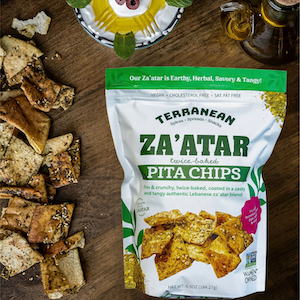
[00:24:20] Ray Latif: I know. What takes the P in PBJ? I know. I missed that. Anyway. What starts with P-Ray? I'm so serious about fiber. Oh, gosh. It's a really... It's a really good source of insoluble and soluble fiber, really clean ingredients. And I also have to talk about Zesty Z's pita chips. These are also very high in fiber, six grams of fiber. And these are incredibly delicious. A very satisfying snack from- Alexander Herrick.
[00:24:54] Jacqui Brugliera: Alexander, exactly.
[00:24:55] Ray Latif: One of the chillest and hardest working dudes in our industry. Totally, totally. We have two of the best pita chips. that we've tasted in the studio right now between Zesty Z and Terranian. I mean, what happens when you get two of the best kinds of pita chips in the same room.
[00:25:13] Jacqui Brugliera: Is this studio going to blow up? We need to bring over a couple dips and just have a dip party. Yeah. Yeah.
[00:25:20] Ray Latif: Yeah. Get, uh, get some Yaza in here and get their new Muhammara and their Baba Ghanoush and, uh, and the labneh and have the pita chips. And we've got like the perfect situation. Can we just end this show now and do that? That's a great idea.
[00:25:34] Jacqui Brugliera: I'll have my own over here. I knew it was going to be that kind of party.
[00:25:36] Ray Latif: We've got a few more things to talk about. Jackie's got a whole bunch of stuff.
[00:25:40] Ad Read: Let's finish this, though.
[00:25:41] Ray Latif: I was saying before that our dear friend Tina Latouf from Terranian, also out of Cleveland, sent these to us. And I mean, these are just phenomenal. These are twice-baked pita chips, and then we've got the spicy za'atar version of these pita chips here. They're both za'atar spice chips. And the thing about these is that they're dangerous. If you pop one, you can't help but pop 20. They're very tasty. Yeah. And the seasoning is profound. It's very good. Yeah. These are next level. Do you know what profound means? I do. I don't have to look that one up. There are Other Foods on the show today that I have to look up. Not that one. Jackie, what do you got?
[00:26:21] Jacqui Brugliera: Yeah, I have Huel's latest products, which are their daily greens beverages. I have three flavors right here. Apple, cucumber and mint, peach and hibiscus and blueberry, lemon and thyme. I'm jealous. Most people know Huel as protein, you know, protein shakes with a bunch of other functional ingredients in there. So it's interesting to see like a departure from that with this daily greens line where on front of pack it's all about the vitamins, the super greens, the adaptogens, they have lion's mane mushroom, they have fiber, electrolytes, antioxidants. It's like all of the buzzwords, all of the functionality on front of can. I haven't tried it yet, but. It's going to be interesting to see what people think and if they're going to associate Kewl with this functionality and greens or if they're just going to be expecting this to be a protein jig.
[00:27:12] Ray Latif: They've done a phenomenal job with the packaging, at least, because it's green. They made it as green as possible. And then there's a little ring on it that tells you what the differentiator is for the flavor. But they're all clearly trying to differentiate from the white packaging that they use for their protein and their meal replacements.
[00:27:28] Jacqui Brugliera: Yeah, I mean, it's very light considering all the things that they pack into this thing. I was expecting it to be maybe a little bit more like a shake consistency or heavier or not as tasty, but it's very light.
[00:27:42] Ray Latif: Nice nice indeed, and then you've got one more looks like those granola bars by your side Yeah, I have true bar.
[00:27:50] Jacqui Brugliera: They have a new kids line nice so true bar They have tasty protein bars and this one specifically for kids. It has a little fun like Guy on front of pack. He's a little protein bar. That's running around with googly eyes. Oh, I like the car I I love that like front of pack I think the most important thing with kids these days is that it's school friendly so your kid can put it into their lunchbox and it has like no allergens, no peanuts, no tree nuts.
[00:28:17] Ray Latif: And a googly-eyed mascot.
[00:28:19] Jacqui Brugliera: And a googly-eyed mascot.
[00:28:21] Ray Latif: Who doesn't love that? That's fun. Exactly. Yeah, exactly. All right, one more thing, right? More things to dip or to use with dips. I don't even know if you need to dip these. And also I think, uh, I don't know if someone leaving snacks on your desk when you're out of town isn't love. I don't know what it is, but like Kia has left me these full size bags, probably to share with everybody, but of their incredible, incredible potato chips, Bombay spice and black salt. This is, to be very clear, this is a brand of Indian cuisine-inspired potato chips, and the name of the brand is Kiyas. K-E-Y-A-s. Right, another great Desi brand. Striking package design. Beautiful. I mean, the hierarchy is just really phenomenal. The description of the flavor, potato chips, at the top of the bag, and then the middle of the bag has, I believe, a picture of the founder. At least the caricature of the founder also the swag is really cool, too Because she uses these marks also for her stickers, and you can't just help but put them all over everything so yes all right You're gonna break those open some bomb Which one would you like? Yeah, I have my own. I just want you to open yours because I don't wanna I want to save mine, put them in a closet.
[00:29:32] Ad Read: You can go first. You don't like it when I dig.
[00:29:34] Ray Latif: No, I gotta, I gotta sanitize. I gotta sanitize. Well, I want you to sanitize. Have you had that around? Yes. So, um, so she was another attendee at the event and she said, I have to leave Mike some samples. Can you please show me where his office is? So she was very adamant about making sure that she left chips in your office and Other Foods in the office. They're so good. Yeah. Yeah, the black salt and the Bombay's. Oh, they're so good. I mean, someone might describe these as kind of niche because they're Indian inspired or Indian cuisine inspired chips. When this goes mainstream and it will go mainstream, people are going to be eating these by the bag. I mean, you won't just have a few chips. That is just phenomenal flavor.
[00:30:20] Jacqui Brugliera: It's like
[00:30:20] Ray Latif: Dishoom, tie-abs, cricket, and a bag. I mean, just a little bit of, on a potato chip.
[00:30:25] Jacqui Brugliera: Did he rinse the chips?
[00:30:26] Ray Latif: Yeah, we're going to rinse these chips. Yeah. No, but it's really funny. I think this is something that would never have existed 10 years ago. And it goes to show that the evolution of our industry in food New Beverage has been so beautiful to see. And the industry has been so wonderfully inclusive and diverse, the evolution of it. It's so good to see. And I really do think there's a really long runway for this brand. I'm not qualified to comment on authenticity, but I do feel nostalgia for all of the great Indian food that I've eaten when I eat these. And I bet you that's what she's going for here. This is just like so thoughtfully done just from product through to package. And, you know, there's a lot of times where you'll see you'll have the package isn't perfect or the product isn't and the package is perfect and the product isn't perfect. But I think this is just like This product feels perfect. And good flavor is universal. No matter how niche the ingredients are, if it tastes good, then that's what matters.
[00:31:23] Ad Read: Do you want more repeat buyers on Amazon? Well, this free resource in collaboration with Straight Up Growth will help your brand turn first-time buyers into long-term subscribers.
[00:31:33] Jacqui Brugliera: Download Winning the Repeat Purchase Game on Amazon now at Taste Radio slash SUG. That's Taste Radio slash S-U-G to start building retention-driven growth for your brand on Amazon. Scaling New Beverage brand into major retail comes down to operational readiness.
[00:31:53] Ray Latif: From packaging lead times to co-manufacturing strategy, the details can make or break a launch. In a new e-book in collaboration with Octopi and Asahi Beer USA, industry leaders share what they've learned in helping brands scale. Download it now at Taste Radio slash octopi. If you're developing a cannabis beverage, formulation choices matter, especially early on.
[00:32:18] Jacqui Brugliera: Source Technology's free guide shares practical insights on stability, dosing, and scale-ready development.
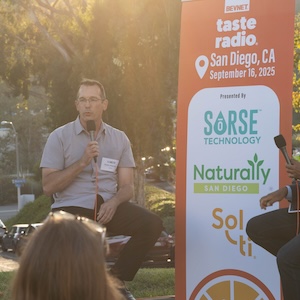
[00:32:24] Ray Latif: Download the ins and outs of creating a cannabis beverage today at Taste Radio slash cannabis. Alright, it's time to get to the featured interviews from Taste Radio's San Diego Meetup, held at BevNET's West Coast office. Our lineup includes a compelling conversation with Shawn Hamilton, the Chief Commercial Officer of Sol-ti detailed how the Wellness and Jushot brand scaled from a Southern California startup into a national powerhouse, now available in over 15,000 retail locations, and recently secured a major deal with Starbucks. I also connected with the founders of several exciting emerging brands, including Erva Bruko, a fresh take on yerba mate, Innerbloom, a startup crafting canna-based tonics for mood and focus, Hydrate, a mission-driven water brand supporting veterans, Lua Coffee, which offers bold Vietnamese-style coffee infused with MCT oil, Bertie, a new sparkling tea brand with standout branding. Recoup, a gut-healthy hydration drink and a former winner of the New Beverage Showdown. And Lixer, a brand reimagining mead for the modern drinker. All right, let's get started. You've heard enough from me. Let's hear from our featured guest, Shawn Hamilton, who's the Chief Commercial Officer of Sol-ti. Come on up.
[00:33:58] Mike Schneider: Hey Ray, how are ya? I'm doing well. Brought you a little ginger shot to get everything started.
[00:34:02] Ray Latif: Okay, I am going to crush this momentarily, but I want to make sure that I can speak later. These are pretty powerful shots. Who here has had a salty shot tonight? All right.
[00:34:13] Terry Wynn: Thank you.
[00:34:13] Ray Latif: Yes. Okay. We see a lot of raised hands. I'll just accept it. That was like 250 raised hands. At least. At least. You and I were chatting before we hopped in the mics about this brand because Solti was where everyone else was seven or eight years ago. When I first met the founder, Ryan O'Donnell, I went to his facility. He's like, hey, I'm starting this better for you cold press juice company. It's called Salty. You should come out and visit. So we went out to their facility. I'm like, interesting stuff. Got an interesting safety method for it's not high pressure processing. It's UV light, UV light, which was kind of different from what everybody else was doing. And like a lot of founders I met, I'm like, amazing stuff. Good for you. You know, let's see where this goes. And where it's gone is pretty incredible. Solty is distributed everywhere. You have a lot of different products. You are in Starbucks. Just in general terms, if you could talk about the origins of the company, what you're all about, what the mission is, where you're sold.
[00:35:08] Mike Schneider: Yeah, absolutely. Thank you, Ray. I appreciate the intro. So Solti is a San Diego-based brand founded in 2014. Our headquarters and manufacturing facility is actually located just a few miles from here. And that's where we bring in fresh produce and ingredients from around the world to make the super shot, the ginger super shot that you're enjoying right now. I am getting healthy by the second. I can see it. Yes. I can see it. Yes. As well as our SuperAid lineup, which I have right here, Lavender Magnesium, which will be launching in sprouts next month. But we're bringing in fresh organic ginger from Peru, fresh organic turmeric from Fiji, organic Granny Smith apples from Washington. So we're just really bringing in the best, highest quality ingredients we can from around the world. We're grinding, pressing every single day fresh produce and putting it in glass packaging because glass packaging is what preserves the freshness and the vitality and the nutrient density of the products.
[00:35:59] Ray Latif: And I remember when I first saw Solti, it was primarily here in Southern California. Now I can buy it at my Whole Foods in the Boston area. You're national.
[00:36:08] Mike Schneider: And what retailers are you national with? We're in over 15,000 retail doors across the country. So, you know, in the grocery channel, mass, natural, virtually almost every major retailer carries Solti products today. We're also in over 12,000 food service locations with one particular food service operator in particular. Wendy's. This doesn't happen by accident.
[00:36:44] Ray Latif: You don't just get into 15,000 stores by accident. You don't get into all Starbucks stores by accident. Just talk about the business strategy. What has been most effective for what you do? Is it from the innovation front? Is it just really focusing on distribution? Marketing? And again, we talked about the fact that Solti does pretty limited marketing. So how do you get to 15,000 stores? How do you get Well, we'll get to Starbucks in a sec, but what has been the primary focus of your business strategy?
[00:37:11] Mike Schneider: Yeah, really, it's pretty simple. It's just making the highest quality products, best tasting products that we possibly can in a unique and differentiated package. So if you're in a grocery store, there's multiple ginger shots or turmeric shots available to you. So if you picture yourself standing in front of that beverage case, I mean, there's a lot of products in there. And so from a consumer's point of view, if there's two or three or sometimes even four ginger shots that are all probably line priced or priced about the same, but one is packaged in glass, that really stands out. And it signals like, hey, this is a premium product and a premium packaging. Again, at the same price, why wouldn't you try it? So we get the trial that way. And then with the flavor, we get the repeat and then we're in.
[00:37:53] Ray Latif: Glass is difficult though. Glass is heavy. The kind of glass you use, that thick walled glass, it's not the easiest package to work with. But why is it so important to what you do?
[00:38:02] Mike Schneider: Glass is definitely not easy for all the reasons you said. It's heavy. Freight is difficult. Our products also require cold chain distribution. So it's not only is it heavy, it's refrigerated and it's heavy. So those are costs that add up when you're transporting across the country. But really, glass is core to the brand. Our products have always been in glass, it's never been plastic, and we go through all the trouble of sourcing these organic premium ingredients from around the world, going through the trouble of grinding, pressing, you know, every single day on a basis, and then why put it in plastic? So, a premium ingredient should be in a premium package to help it stand out. And there's also just the sustainability story. We're trying to be an example of how other brands can get away from single-use plastics. And from a consumer point of view, it's the first point of differentiation they see and what, again, drives that initial trial with the brand.
[00:38:51] Ray Latif: Differentiation is really important. I've talked about this in a podcast with a thousand different entrepreneurs. But at the end of the day, the retail buyers, the distributors and really the investors want to see velocity. Velocity is so important. So when you go to a retail buyer and say, hey, we have this really differentiated brand, it's in glass, we use the highest quality ingredients. This is something that you need on your shelves. This is something that's going to bring incremental value to this category and people are going to buy a lot of it.
[00:39:16] Mike Schneider: So we make a few items. In addition to our super shot item that we're talking about, we make super aids and actually a line of powdered hydration sticks. We call them our super sticks lineup. But velocity is really what it's about. Especially on any retail shelf, but especially a refrigerated retail shelf, you know, that space is limited and that's the first thing, that's the first objection from a retail buyer is, you know, where am I going to put it? What am I going to take out? So we've got to turn faster than something that's already on the shelf. When we look at our, you know, spins, our syndicated data, we're the highest velocity brand in our category. And again, it comes back to, you know, what we just spoke about a few minutes ago with this product differentiation, quality ingredients, you know, premium taste, you know, all of those things are what drive that velocity. The wellness shot category in particular, has just been one of the few refrigerated beverage categories that's just had some really tremendous growth over the past few years. And I would say accelerating growth. So when I look at our 12 or 24 or 52 week numbers, performance numbers at retail, they're accelerating for the entire category. So we happen to be, we're in the right place at the right time. And then we're also the brand that's the most differentiated and just really bringing a shopper into the category that's not finding something that they currently like because they're looking to avoid single-use plastic packaging or ingredients that aren't as premium.
[00:40:32] Ray Latif: So it sounds like a lot of what you're doing is intuitive to the customer that's looking for these types of products, that's buying these types of products. I feel like you still need a marketing component to what you do, though. I mean, what is consumer education? How much of that is a part of your overall strategy?
[00:40:47] Mike Schneider: Yeah, we are, from a marketing point of view, our organization is extremely lean.
[00:40:52] Ray Latif: You've gotten away with it, but it seems like it's pretty difficult for a lot of folks to be able to build a brand without consumer education. But is being lean in that respect, in that regard, been a positive, been an advantage for you?
[00:41:04] Mike Schneider: Well, keep in mind, it's also taken 11 years, you know, to get to get where we're at now. So perhaps if there were bigger investments in marketing earlier in terms of, you know, consumer education or, you know, category or product that it perhaps would have come sooner. But there was just real intentional decisions really to focus on the product and then just build the brand organically through, you know, starting here in San Diego. You know, our founders spent the first three years literally going door to door, you know, selling out of a refrigerated, you know, van or small truck and, you know, slowly getting acceptance with retailers like Glasson's or Bristol Farms or Mother's or Gelson's. And it wasn't until maybe year four or five that we started to get the bigger national authorizations with retailers like Whole Foods or Publix or Target or Walmart for that matter.
[00:41:49] Ray Latif: Because you can show a lot of good data from those small retailers and say, hey, we're doing this well in here. And do these numbers relate? Or can these numbers be what they are here, but also in Target? Can they grow exponentially in a larger retailer? And it sounds like that's been the case.
[00:42:05] Mike Schneider: That's exactly been the case. And I would say there's probably two other factors, at least when it comes to the shot category that retailers maybe initially expressed concern about, but I think has definitely, you know, gone away. And that was, you know, regionality like, Hey, is this just a California or coastal, you know, type of product, you know, for retailers or consumers on the West Coast or West Coast. And it's not, this is, this is every retailer in the country. I mean, Walmart is really one of the fastest growing retailers in the functional beverage and the wellness shot category.
[00:42:34] Ray Latif: Yeah. Look, if you're a great brand, people are going to notice. If you're doing well in one retailer, people are going to notice. And then you might start getting phone calls from folks that you might not expect to get phone calls from, including the folks perhaps from Starbucks.
[00:42:48] Mike Schneider: Yeah, that's what happens. So a lot of regional and independent coffee shops have a grab and New Beverage set where they're selling bottled water, juices, or kombucha, other things. Several of them already were carrying a wellness shot, maybe a regional local regional one or another national one. Starbucks is not always first, you know, in every category, but they made the decision that they wanted to bring in a wellness shot. So they looked at the category, the brands that were out there, they reached out to us, obviously, we happily took the call and responded. And as they looked at the category for them, they were looking for items that were incremental or weren't necessarily you know, cannibalistic. So they're crafted beverage, right? So they would never want someone coming in and buying a packaged beverage item instead of a handcrafted, you know, Frappuccino or tea item or something like that. So shots are perfect. They're highly incremental. And the reasons they chose us were one, just the performance data. You know, they saw the velocities in retail. So, you know, there's the proof of concept that, Of all the brands out there, this was the one that consumers were buying the most where it was available. And then the packaging, just from their own purchase intent, wanting to get away from single-use plastics and have products and packages that were more sustainable. So we launched on May 20th in 12,000 Starbucks stores across the country. That's both corporate stores as well as their licensed stores, which are typically in like airports or hotels or colleges and universities, things like that. Pre-launch, they gave us a forecast of what they thought that they would sell. Week one on shelf, they doubled the forecast. The week after that, they called us again, and they're like, we need to double it again. And so we have a standing call with them. And I think every time we get on the phone with them, they're bumping up their forecasts. And that consumer is just really gravitating toward this item. And for the category, it hasn't just been validating for us as a brand. It's really just validated the shot category. It's a mainstream item. It's not just, again, coastal item or a seasonal item when you're just not feeling well. This is an everyday item for everyday people.
[00:44:44] Ray Latif: Isn't that amazing? I think when we started first seeing two shots come out 10 or 15 years ago, it wasn't necessarily something that you expected to see everywhere. Certainly not at a Starbucks. And I think that it's such a positive sign for folks who have innovative concepts here in our audience today. It may not be a mainstream concept today, but stick with it, stick at it. Hopefully, there'll be folks that can help the frenemies of the world as there were, folks who can help fill that category, help you build awareness for what it is that you're doing. And eventually, you may end up being the next Salty.
[00:45:17] Mike Schneider: A hundred percent. I mean, in the case of Starbucks, I mean, obviously I'm glad it's us, but all shop brands benefit from having a shop brand in a retailer or an operator like Starbucks. So it benefits everyone.
[00:45:27] Ray Latif: Absolutely. Sean, I can't thank you enough for sitting down with me. Thank you so much for taking the time. Thanks so much for bringing all of your amazing wares here to our Taste Radio Meetup. Really appreciate it. Thank you, Ray. Thank you. All right, I definitely want to talk to folks who are here in the audience. And I think one of the most amazing things about my job is meeting folks when they're in that early stage. And then eventually they get to a place where they are a poppy or a health aide or a lesser evil or an Rx bar. And don't discount that you could all be in that position one day. All those founders started somewhere. And sometimes an elevator pitch, meeting someone, an investor, a retailer in an elevator is all it takes. And I would just say that if you take two minutes with me right now, it's not only good practice, but it's good awareness to everyone who's attending here and then anyone who's listening to the podcast later on. So the first person I want to bring up is the first person who raises their hand. And that person is, oh, OK, come on up. We have Tiffany Scalia. Am I pronouncing that last name correctly? Well done. Round of applause for Tiffany. Thank you. Tiffany comes from a fantastic brand called Erva Brew Co. What is Erva? Tell us all about your brand. The best tasting cold brewed yerba mate on the market, made with only real whole food organic ingredients. And so yerba mate, I've been seeing a lot of new brands come to market. Obviously, there is the large player in this space, but what makes your drinks, what makes your yerba mate different from everything else? I think as Salty was talking about the quality of the ingredients and the respect that we maintain for the herb. We cold brew the herb fresh weekly for our farmers markets and music festivals and then when we cold brew it for retail, we use a very similar process. So it's not a yerba mate extract, we're not adding caffeine to the yerba mate, we're not trying to create an energy drink. We are introducing people to, in South America it's called tereré, it's the cold method of drinking yerba mate down in South America. By respecting that tradition and honoring those roots, we're seeking to actually spread the culture of yerba mate through the sharing of this joyful beverage. So I think that was the interesting thing about my introduction to erva, which is that it's not an energy drink per se. It can be used for refreshment. Obviously, there is a little caffeine in it. But how do you educate consumers? What is your pitch? Is it really about the flavor? Is it about the active ingredient? Is it about the tradition? I think we really focus on flavor. We always give samples because many people still have no idea what it is, or they think it's pronounced yerba mate. There's still so much. Consumer education represents the huge opportunity that there is for this market. So We focus on flavor first, like just try it, it's incredible and it truly is incredible. The cold brew gives it a light, bright flavor and then we add the organic fruit, citrus. Some flavors have organic cane sugar, some don't and we're hitting it right at that spot where it's not too sweet. We like to say we use sugar the way a chef uses salt to bring the flavors together. It's not an overly sweetened dessert beverage. That's pretty much the pitch that I give when I'm at the shop, but then I also let people know that it will give you a boost. It's got 70 milligrams of caffeine, so a little bit less than a cup of coffee, more than a cup of tea, but it's also got theobromine and a bunch of vitamins and minerals, so you get that boost of energy, but you don't get The jitters are the crash at the end. It's very calm and sustained. For me, it gives me optimism, so I share that with people. We started in 2014 and I wouldn't still be doing this with so much excitement every day if I didn't have Yerba Mate by my side. Well, my pitch is taste it. And I hope you brought some products here, because every single time I've ever encountered Erva, from the first time when I met you guys at DevNet Live to the last time I've had, I mean, it is just one of the most incredible tasting beverages out there. It really is. Tiffany, thank you so much for being with me. I really appreciate it. Thank you so much for having so much to me.
[00:49:36] Ad Read: Thank you. All right.
[00:49:38] Ray Latif: A couple more. You, sir, come on up. Hi, how are you? Hey, how's it going? Good to see you.
[00:49:44] Melissa Traverse: And you are? Suresh with Innerbloom. With Innerbloom. I'm not familiar with your brand. What do you guys do? Well, it took us about a year and a half to make. We launched about a month and a half ago. And we're a non-alcoholic drink brand. We realized that the crux of drinking is that you try to feel good, but a lot of functional alcohol drinks either are pumped full of sugar or try to get you messed up in different ways. It took us a little bit longer to get there, but we are the first kana-based social tonic in the nation. And your next question is, what is kana?
[00:50:12] Ray Latif: What is kana?
[00:50:13] Melissa Traverse: Yeah, so kana is a succulent from South Africa. They use it traditionally to chew on as a heart opener. And it's a serotonin adaptogen, which means that it does scientifically make you happier. And it also activates your parasynthetic nervous system, which means that makes you calm. So you can imagine you go out to a bar, whether you're dancing or you want to go hit on someone, right? You get nervous. And all these other sugary drinks, a pump full of Red Bull, double down on the anxiety. So this is the true differentiator to our product. It has magnesium, electrolytes, l-theanine, all things that are good for you. So we're the first one in the nation to do it. There's also gummies out there in the market, but we're the first one to fully launch here in the States, at least. And we're being picked up by clubs, festivals here in San Diego, one called Same Same But Different, about 8,000 attendees every single day, which is coming up in two weeks. And we are their premium non-alcoholic beverage of choice.
[00:51:06] Ray Latif: And so you're really positioned as an alcohol alternative more than you are as a refreshment beverage or anything else like that.
[00:51:12] Melissa Traverse: Yeah. I mean, the real focus is to create something that allows people to be present in their truest, highest form of self, right? A lot of other drinks out there are pumped full of sugar, taste great, cost you 13 bucks, but you don't get any alternative effects. The ones that you do get alternative effects to tend to keep you out of your truest zone of being able to be articulate, maybe dance well, whatever your intentions are, right? So this is the real true catalyst to maybe have alcohol at lower buzz rate, but without having to do that at all, you could pick Inner Bloom and have the same effects.
[00:51:45] Ray Latif: Well, I got to tell you, if Inner Bloom could maybe dance better, I need it by the case, my friend, because that's going to take a lot of product for sure. So price point, what do you guys sell for?
[00:51:55] Melissa Traverse: Retail in shops right around $5 and in clubs and different highly elevated cocktail bar might be around $8. Okay.
[00:52:02] Ray Latif: Outstanding. Well, I'll have to start looking for it because of all the reasons you mentioned and the fact that it isn't intoxicating because sometimes you need a break for sure. Thanks so much for being with me here on the Taste Radio Meetup Studio. Really appreciate it. And yeah, if there's some inner bloom out here in the audience, can I get a can?
[00:52:19] Melissa Traverse: Yeah, absolutely. All right. Fantastic. Thanks so much.
[00:52:21] Ray Latif: Appreciate it. Thank you. All right, we got time for two more folks. Come on up, please.
[00:52:27] Jacqui Brugliera: Hi, who are you? Hi, I'm Amy McNally. I lost my name tag, but I'm with Hendry.
[00:52:32] Ray Latif: Yes, I know you. So Amy and I sat down actually and it's a little bit difficult because we have a program called Elevator Talk. It's a series that's part of Taste Radio where we meet with early stage entrepreneurs from all different walks of life and from all different parts of the industry. And so we sit down with everyone for about 10 minutes and they hear feedback and advice from a co-host who's on the show, who's an investor, a retailer, someone who's an expert in the industry. So if you're interested in participating in a future episode of Elevator Talk, Just come out and see me after the show or after we hang up the mics here, and I'd love to have you on the program. But Hydrate.
[00:53:06] Jacqui Brugliera: Yes, and I highly recommend it. It was a fantastic experience.
[00:53:09] Ray Latif: I got to do it with my father. Yes, I remember.
[00:53:11] Jacqui Brugliera: Because we started the company.
[00:53:13] Ray Latif: It's a premium patriotic domestically sourced bottled water, and we have two different kinds. We have American artesian water. naturally alkaline, so if you think of water that's usually the South Pacific instead of that, we have perfectly great aquifers here. In fact, I have some over there in your office.
[00:53:32] Jacqui Brugliera: I didn't come early enough, so I couldn't find a secret squirrel spot, but you'll see a bunch all over the ledges. so you can grab those, and then also a high pH, 9.5.
[00:53:43] Ray Latif: We won a golden ticket last year at Walmart, so we are now in the Walmarts in Nevada and here in California, and we're in commissaries, and we're being reviewed by a lot of people because we're fortunate. We give 10% of the proceeds to the Gary Sinise Foundation. My intern didn't know who he was, so I asked her if she had seen Forrest Gump.
[00:54:04] Jacqui Brugliera: She asked if it was a band. But for the majority of people who are military affiliated, they know who he is, and he does really great charitable work.
[00:54:13] Ray Latif: So this is a passion project for myself. Yeah. Gary Sinise, Lieutenant Dan. Lieutenant Dan. From Forrest Gump. But he's raised over $400 million for his organization, which helps disabled veterans. And it's amazing that you're contributing some of your revenue to that nonprofit. It's really amazing. Now, is that the primary reason people are buying Hydrate? Or is there another reason? Because you clearly source good water, but what is the reason people are reaching for your bottles?
[00:54:39] Jacqui Brugliera: Well, yes. The main reason is because 61% of Americans have a nuclear family member that served in the military, especially here in San Diego.
[00:54:46] Ray Latif: I mean, it's a military community. So we made sure to have, when you look at the bottle, it's very prominently patriotic, just proudly supporting U.S. heroes, because he also does work with first responders now too.
[00:55:00] Jacqui Brugliera: But then we do use great water. We made sure to source from aquifers around the country that have a 7.6 and above pH. And then it is affordable. I didn't want to have it be so highly priced that active duty military that aren't known for having like the most exceptional salaries can't afford it.
[00:55:20] Ray Latif: And what is the price point?
[00:55:21] Jacqui Brugliera: So for a one liter, it's $199 to $239.
[00:55:23] Ray Latif: Okay, that's a great price point. And can you find it here in the San Diego area?
[00:55:28] Jacqui Brugliera: Yes, you can. So if you go to Walmart or if you're in the military, you can go to the commissary. You can get it there too. Walmart is doing the artesian because with their Made USA Great, they wanted to, instead of promoting certain imported artesian water, they're pushing ours out there.
[00:55:45] Ray Latif: In fact, we are doing so well with our velocity that my father and I were invited to go next month to go meet with him in Bentonville to talk about rolling out into more stores, which is exciting. It's really great. Yeah, very, very cool. Well, congratulations, Amy.
[00:55:58] Jacqui Brugliera: Thank you.
[00:55:59] Ray Latif: Very well done. And thank you so much for creating a brand with such a great mission.
[00:56:02] Jacqui Brugliera: Yes. Well, thank you.
[00:56:03] Ray Latif: Thank you. All right. Round of applause for Amy. Well done. All right, Terry. I talked to Terry earlier and I was like, we got to get Terry up here. So this is Terry Wynn from a brand called Lua Coffee. Terry, how are you? Round of applause for Terry. You want to stand? Yeah, we can stand. There you go. Okay. So this is a brand that I'm not familiar with, but it looks so amazing. Lua Coffee. It's described as a Vietnamese-style coffee. What is a Vietnamese-style coffee?
[00:56:30] Terry Wynn: A lot of people love Vietnamese coffee right now, but Vietnamese coffee they drink with condensed milk.
[00:56:36] Ray Latif: Right.
[00:56:36] Terry Wynn: So I'm making the one that's premium, no condensed milk in it. So it's coconut MTC oil with it.
[00:56:45] Ray Latif: Coconut MCT oil. That sounds like a bulletproof type of coffee. Does it have that same effect or is that oil mostly sort of to replace... For healthy people.
[00:56:53] Terry Wynn: For functionality.
[00:56:54] Ray Latif: Yeah. So Lua Coffee, I've seen a few different Vietnamese style coffees out there. Are you finding that more and more retail buyers are familiar with what it is? And is it sort of an easy thing for them to understand what it is that you're doing, even though it doesn't contain condensed milk?
[00:57:09] Terry Wynn: Yes. The reason they like it, I make it like the taste like Vietnamese coffee. So we are in the 11th state right now.
[00:57:15] Ray Latif: Can I take one? Yes. There we go.
[00:57:18] Terry Wynn: Yeah, so we not only make the Vietnamese style, but we make the oatmeal style and also the cold brew. So we have three flavors right now.
[00:57:26] Ray Latif: So when people are reaching for this on the shelf, do they know what they're getting into? I mean, is this something where, you know, you feel like there is a lot of consumer education that you need to invest in to get people to know what Lua Coffee is all about? And if so, what's the first thing you want to talk about? What is the first thing you talk about when you're introducing someone to Lua Coffee?
[00:57:47] Terry Wynn: So the reason we want to do it like premium, so people, when they drink it, it's less calorie. So the regular one is going to be more calorie.
[00:57:57] Ray Latif: So I think calorie count is really, really important. I think taste is really, really important too. What should people be expecting? Is it a really sweet beverage? Is it something that's akin to say a Starbucks Frappuccino or is it something a little bit less sugary than that?
[00:58:10] Terry Wynn: A little bit sweet, but it's not that sweet.
[00:58:13] Ray Latif: Okay. And what's the price point for Kin?
[00:58:15] Terry Wynn: So five to seven.
[00:58:16] Ray Latif: Five to seven. These comes in 12 ounce slim cans.
[00:58:19] Terry Wynn: Yes.
[00:58:19] Ray Latif: Very cool. And where are you sold locally?
[00:58:21] Terry Wynn: Seaside market, the butchery, other places here. I don't remember. We in Texas, we in a state in Midwest and we in Arizona, Florida, Atlanta. So 11 state right now.
[00:58:36] Ray Latif: Amazing. Amazing. Very, very cool. Can I keep this one?
[00:58:38] Terry Wynn: Yes.
[00:58:38] Ray Latif: OK. I was hoping I could.
[00:58:39] Terry Wynn: Yes.
[00:58:40] Ray Latif: Terri, thank you so much for coming out. And this has been really great. Thank you for such a great introduction to Lua Coffee.
[00:58:45] Terry Wynn: And also we donate back to St. Jude's Hospital.
[00:58:48] Ray Latif: Oh, God bless you guys. That's such a wonderful organization to donate to. Terri, thank you so much. Really appreciate the time.
[00:58:54] Terry Wynn: Thank you.
[00:58:54] Ray Latif: Thank you. All right. Round of applause for Terri. I'll hold this. Thank you very much. All right. I think we've got time for two more. So we'll start with you and then we'll end with Susan. Birdie is the name of the brand and Gene Kim is the name of the founder, I would assume. Gene, how are you? I'm doing great. Thanks for having me. Round of applause for Gene. Bertie, what do you guys do? Bertie. So Bertie is a sparkling tea business that we just launched yesterday. And we're very excited to be here.
[00:59:20] Melissa Traverse: Congratulations.
[00:59:21] Ray Latif: And we have two variations, peach oolong tea and apple jasmine tea. And it's 35 calories per can. These are just Thai teas, but they're sparkling teas. Sparkling teas. OK, very cool. You know, a sparkling tea is something that I've always enjoyed, but it feels like the category has not really had a player that's really stood out so much. I feel like Bertie could be that. You have amazing branding. Thanks so much. Talk about the origins. I mean, why did you want to come out with a product like this? Why sparkling tea as opposed to still? Yes, so we have four founders. I know it's a big team, but we grew up drinking a lot of tea since an early age. And all of us are quite obsessed with sparkling water as well. We drink a lot of Spindrift when we make money that month, and we drink La Croix when we don't. So that's how we came up with the concept.
[01:00:13] Melissa Traverse: We wanted to start originally with a matcha business, but that was not really scalable and it was very saturated at the moment. And we wanted to try something new, add some fizz to some tea extracts.
[01:00:26] Ray Latif: So we experimented with a lot of different ingredients. We tried adding nootropics, adaptogens, reishi mushrooms, all those kinds of different ingredients that are very trending currently. But we decided to stick to the roots and make them plain and simple without any additives, low calorie and not too sweet. So it's like a spindrift but for sparkling tea? Is that what I'm sort of hearing here? You can say that, but I do believe we have our own kick. The tea flavor is very prominent in the sparkling tea. I got to ask about the branding because this is really, really cool. It's differentiated. I mean, this is the kind of thing that if I saw this on the shelf, I'd want to pull it off the shelf and no one in a more. How'd you come up with your with your product design? Oh, wow. We don't have enough time for that. It's a lot of trial and error. Working with designers has been very difficult, but we rebranded about four times over the last eight months. And you just launched, though. And we just launched. We were finally satisfied.
[01:01:22] Melissa Traverse: And as you probably all know, it's very hard to be satisfied with design. Someone out of 100 people will not like your design, right? No matter how good it is. Sure. So, you know, we're happy with what we have right now.
[01:01:34] Ray Latif: We wanted to create something modern while also making sure this is sparkling tea.
[01:01:40] Melissa Traverse: So that's how we came up with this design.
[01:01:43] Ray Latif: Very cool. And what would the price point be when you start getting into retail stores? So a can of 320 milliliters is $2.99 in retail. MSRP is $2.99. And we just launched our online store yesterday. And excuse me if I have a dark circle. We didn't get much sleep last night launching the website.
[01:02:01] Mike Schneider: I didn't notice. Appreciate that.
[01:02:03] Ray Latif: What's the website? It's drinkbirdyt.com. Very cool. Well, I'm really glad you're here, and I'm really glad we're getting to introduce Birdie to so many people here at the Taste Radio Meetup. Gene, thank you so much for taking the time. I really appreciate it.
[01:02:16] Melissa Traverse: Thank you so much, Ray.
[01:02:17] Ray Latif: Thank you. That's for you. This is for me? Birdie, well done. All right. Susan, come on up. I think folks might be familiar with Susan. How many people are familiar with Riku? Okay, quite a few.
[01:02:28] Jacqui Brugliera: That was everyone, I think.
[01:02:30] Ray Latif: That was pretty much everyone. So I've known you for some time. I think the first time I met you was part of a virtual Pitch Slam competition that we hosted in 2020. It was our New Beverage Showdown. And Recoup has iterated a number of times since. But for folks who are not familiar with what you guys do, tell us all about it.
[01:02:45] Jacqui Brugliera: Sure. We are a gut-healthy hydration beverage. We have clean ingredients, so we're proud to be the first regenerative organic certified beverage brand. And our three key ingredients are prebiotic fiber, electrolytes, and ginger. And those electrolytes come from maple tree water. So really differentiated product source, but delivering your daily dose of resilience, whether you're running miles or running errands.
[01:03:08] Ray Latif: So an active consumer, but not necessarily a fitness consumer.
[01:03:12] Jacqui Brugliera: We find wellness-minded, fitness-minded consumers definitely gravitate towards us. I mean, we sell very well on the natural channel and we sell extremely well in hot yoga studios and Pilates and fitness. So that kind of thoughtful, mindful exercise and not someone chugging a Gatorade, but someone who's really conscious of what they're putting in their body, but wants refreshment and wants replenishment.
[01:03:34] Ray Latif: this is not an easy business, and CPG in general is not easy. Being in it for five years means you're doing something right. How have you kept going? What's been your guiding light? What's been your north star? How have you just navigated all the challenges in this industry?
[01:03:49] Jacqui Brugliera: So I think both of our founders, so Siwat and myself, are really committed to the product and really believe in the product, and you need that in order to go through the daily dramas that happen when you're in the CPG world. We have iterated. in terms of format and a little bit of functionality, but the core of this ginger-based hydrating recovery beverage has always been in there. It's just the nuance of, you know, should it be sparkling in a can? And that took us a little while to get there, but once we did, it's really taken off. And so that was a June 2024 launch, and we're now in over 700 doors. I'll give you an exclusive, we're launching in 500 Target locations. Oh, amazing. Congratulations. Well done. Yes, thank you. And so we've just, we've hit product market fit, and we were probably more patient than some, but that's because we really believed in what we had.
[01:04:42] Ray Latif: Well, I think that's the point, right? I mean, if you really believe in something, patience is key and it does take time. It's probably more sleepless nights than you ever expected, but it just goes to show when you continue to just stay on that path, good things can happen. Obviously, there's a lot of hard work and there's also a lot of refinement in terms of how you pitch. You've won a lot of pitch slam competitions, including ours, including the New Beverage Showdown in December at our LA events. What's your secret?
[01:05:09] Jacqui Brugliera: I have to thank BevNET for being the first in that series of wins. So we went on, we won the Pitch Lamb at Expo West and we just won the San Diego Angel Conference and that came with a nice investment. The biggest thing is being authentic and telling your story as your authentic self and bringing the enthusiasm that gets you up and gets you through a lot of the hard days in CPG and in startups and kind of taking that to the stage and letting the audience be a part of that story and a part of that journey.
[01:05:36] Ray Latif: We're over time, but everyone says, you know, be authentic. But what does that really mean? I mean, how do you define authenticity when you're up there on stage?
[01:05:43] Jacqui Brugliera: I think for me, it's the enthusiasm. It's a little bit of that story and connection with the audience and trying to tell them the information that they are looking for and they're interested. So if it's a pool of investors, it's a little bit different than if it's in the industry. And I know, I think for me, that's just coming from the heart.
[01:06:00] Ray Latif: Yeah, I think that's true. It's speaking from the heart, but also speaking truths. What is working? How do you amplify what's working? How do you replicate what's working? And how do you do it in a really smart and strategic way? And I think all those things really represent what you've been doing with Recoup. Congratulations on everything that you've done to this point. Thank you. 500 target stores. That's not easy. Excited to see where it goes from here.
[01:06:22] Jacqui Brugliera: Thank you. And you mentioned it's been a little bit of a long road, so it's not like it was an overnight success. But we stuck with it, and we're very happy that you've been a part of that journey.
[01:06:31] Ray Latif: I appreciate you saying that. Thanks so much, Susan.
[01:06:33] Jacqui Brugliera: Thank you.
[01:06:33] Ray Latif: All right. All right, we got one more. Are you guys going to stick around for one more? Yes? All right, fantastic. My dear friend from a brand called Lixer is now making his way to the stage. And I really appreciate everyone sitting down here and listening to everyone's stories. It's so important to support each other as entrepreneurs, as founders. We just talked about with Susan, this is a really, really difficult business. Everyone needs each other. You know, sometimes you're going to be competing with people from different categories or from different parts of the industry. But at the end of the day, if one of you wins, you all win because it shows that entrepreneurship and the effort of entrepreneurs actually matters and can do really good things for this world. All right. Lixer is the name of the brand and you are? My name is John McKenna. John McKenna from Lixer. I just had some of your delicious libations. What do you do? So we take honey and turn it into a better for you spritz. It's ultimately a modern mead, which is the oldest known alcohol. So turning that into a new category called hard honey. Kind of positioned between a seltzer and a kombucha, but we're building that out as a natural step up from both of those. I imagine the most difficult part of what you do is explaining what you do. How do you create a concise message, something you can tell someone in 10 seconds or less? So hard honey as a category really sums up what we do. I feel like people are already accustomed to hard seltzer, hard kombucha, hard tea, hard lemonade. So the hard alternative space is really growing and us creating or really branding it as hard honey. People know that that is fermented honey. So if you're not familiar with mead, which most people aren't, I feel like that gets it across. But if you are familiar with mead, you know, it kind of sums it up as being like something a little different than what you're used to. But there is some education involved and hopefully with the brand name and what we're doing, that's enough. Is the point of reference, if they don't know mead, is the point of reference hard seltzer? I would say so. It's probably closer to a hard seltzer than anything else, just with better ingredients. So we really say like instead of a malt liquor, low quality spirit, it's a regenerative organic honey seltzer. So you're almost saying better for you, even though you can't say better for you because it'New Beverage alcohol. Right. But it's sort of intuitive in that when you say regenerative, when you say honey, all these things would, I would assume, tell a person that it is indeed better for you. Right. Exactly. I didn't know we can't say better for you fully.
[01:08:46] Melissa Traverse: Oh, yeah. I mean, we'll take that one out.
[01:08:48] Ray Latif: I believe the FTC would have some letters to send you if you start calling us better for you. Yes. Okay. Yeah. Lickster, where does the name come from? So lyxer comes from the ancient tradition or I guess story behind mead. So mead was in Greece known as nectar of the gods. Bees were messengers of the gods. And they said that, you know, they discovered alcohol that way and then also would drink honey wine, mead as a, I guess, like a medicine. So in a lyxer. So lyxer of the gods kind of plays on both of those, but yeah. You've also got to be careful calling something medicine as well. Yeah, we took off the E, so it's a new version. And that also, you know, gets a point across too. Now, one of the other things I really love about your brand is that your branding is on point and you are always wearing the Lixer gear, so to speak. Is that a part of your marketing as well? It just feels like it's a lifestyle brand as much as it is New Beverage brand. Yeah, it's been more giving out gear, to be honest, than selling it. And that's kind of led to people buying it as well. But I mean, we're, you know, if we give out hats, we have like the elixir hats that become pretty well known. People are wearing those and, you know, it's walking billboards. So everyone becomes their own rep. And yeah, we do a lot of merch for that reason. And I do highly recommend it. Yeah. Last question. Where are you sold? What's your price point? So we're sold right now in mainly Southern California, Total Wine, Whole Foods, Jimbo's, Mother's Market. We just got in another exclusive with All Sprouts in California.
[01:10:08] Ad Read: Right on, congratulations.
[01:10:09] Ray Latif: Yeah, so 200 plus locations. Thank you very much. And price point wise, it's pretty on par with other hard seltzers that are more elevated. So roughly like $15.99 for a six pack, $11.99 for a four pack. Yeah, like a high noon would be, or a June shine. Very reasonable. Right. And a very delicious product you make. If you haven't had a chance to try some of Colin's delicious Lickster, he's got a table. He created his own table out there, actually.
[01:10:32] Ad Read: I did, yes.
[01:10:33] Ray Latif: Well done. Colin, thanks so much.
[01:10:35] Ad Read: All right. Really appreciate the time. Appreciate you guys.
[01:10:37] Ray Latif: Thanks. Thank you. That brings us to the end of this episode of Taste Radio. Thank you so much for listening. Taste Radio is a production of BevNET.com Incorporated. Our audio engineer for Taste Radio is Joe Cracci. Our technical director is Joshua Pratt, and our video editor is Ryan Galang. Our social marketing manager is Amanda Smerlinski, and our designer is Amanda Huang. Just a reminder, if you like what you hear on Taste Radio, please share the podcast with friends and colleagues. And of course, we would love it if you could review us on the Apple Podcasts app or your listening platform of choice. Check us out on Instagram. Our handle is bevnettasteradio. As always, for questions, comments, ideas for future podcasts, please send us an email to ask at Taste Radio. On behalf of the entire Taste Radio team, thank you for listening. And we'll talk to you next time. you