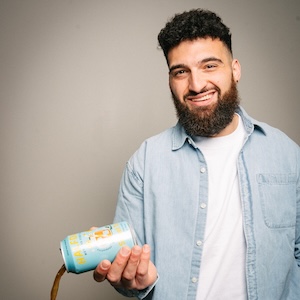
[00:00:10] Ray Latif: Hello friends, I'm Ray Latif and you're tuned in to Taste Radio, the leading podcast for entrepreneurs, makers, and innovators in the food and beverage industry. What does it take to reinvent a legacy category for the modern consumer? In this episode, Mike Lombardo, the co-founder of Better For You iced tea brand Half Day, shares the journey of transforming a college side hustle into a fast-growing challenger brand. Fueled by a mission to improve gut health without sacrificing flavor, Mike and his co-founder set out to reimagine iced tea for today's health-conscious consumer. Mike opens up about the brand's early missteps and why putting flavor first became a non-negotiable product principle. He also shares how Half Day secured coveted shelf space at Whole Foods, partnered with one of New York City's most influential distributors, and how a last-minute decision to attend BevNET Live led to a major investment that helped propel the business forward. Hey folks, it's Ray with Taste Radio. Right now, I'm honored to be sitting down with Mike Lombardo, who is the co-founder of Halfday. Mike, it's great to see you. Yeah, great to see you, Ray. Thanks for having me. I love the name of your brand. I've always loved it, and I'm actually surprised. Whenever I hear or see a great brand name, I'm always wondering, how is that not already taken? Where'd you come up with the name, and what does it mean?
[00:01:39] Mike Lombardo: Yeah, I, I'm glad you love it, man. I can't take credit cave on my co founder, he came up with it when we were brainstorming, I guess we're doing like this name storming exercise, we were just writing anything that we thought could be associated with iced tea into a spreadsheet, or something that just might be fun or made up words like we just had this list of dozens and dozens of names. And yeah, there was actually another one that we had looked at, but it was taken. And so that is part of the process is like when you finally find a handful that you like, it kind of comes down to which ones are available. But half day was essentially was inspired by when we used to drink iced tea as kids. So we were thinking about, you know, how we were coming out to reinvent this category and thinking back to when we used to consume iced tea a lot and wanted maybe a little bit of nostalgia as well around the name. And, you know, growing up, we would have these half days from school that led up to summer in particular, where we'd walk home from school, stop at the corner store, grab an iced tea, go to the park with friends, like hang out and drink iced tea. And so when we were kind of coming up with the name, we thought that had a really nice ring to it. And it just sort of felt like it flowed off the tongue when we said half day iced tea. I just felt like there was a good vibe that came with the name. And so we just ran with it at that point. All right, but I got to ask, what was the other name? So we were thinking about the nostalgia component. And one of the names we had floated around was heyday. Oh, for sure. Yeah. Yeah, it was taken. So there's a there's some fun ones in that list, man. There's, there's some crazy ones. I don't even know like if they would have ever worked. But yeah, we were just thinking to like iced tea consumption occasions and when it would make sense to drink an iced tea and trying to like tie that in with a fun brandable name.
[00:03:18] Ray Latif: This is a perfect segue because it shows that you guys are thoughtful and patient. I mean, I'm assuming you were patient, but thoughtful in how you wanted to present the brand and willing to take the time to get it right. And I think that's true of the development, the initial genesis of Halfday and what you wanted to do. I mean, you mentioned you wanted to reinvent the iced tea category and you took some time, years if I'm not mistaken, to figure out how you wanted to do that. Talk about the origins of Halfday and the work that you put in before launch, pre-launch.
[00:03:56] Mike Lombardo: Yeah, for sure. And thank you for thinking I'm patient. I don't know my team would probably otherwise, but I do try to be patient with that. Some things take time, right? Some things you don't want to force through or rush. And I think branding is one of those things. I think if we go back to the origins, you know, it depends how far back you want to go. You know, if you think back to when Kayvon and I originally had this idea, it was like 2017, 2018. We were in college. I was going into my senior year. Those were the real early days. Actually, it kind of happened because I was going into my senior year of college, and I hadn't had an internship yet. And I kind of felt like I didn't really love the internships that were being offered. And then Kayvon one summer, you know, obviously, this was all derived from his gut health journey and his backstory there. but he was mixing prebiotic ingredients into tea that he was making every day. It was usually hot tea. He would make hot tea, mix some, you know, honey or whatever, prebiotics, and then he offered it to me a few times, and I was like, I didn't love hot tea at the time, so I would say no. And one summer day, he shared an iced version that he made, and I was like, all right, it's hot out, let me drink this. And I remember being blown away, because I liked iced tea growing up, and I was like, this is good for me, like, what's up with this? And that was the summer of 2017. And at that point, I hadn't had that internship. And I kind of looked at him and he said, my brother thinks I should bottle it. That was what he said. And I said, I think we should. And we just started working on it. That was in July that year. And I was like, dude, we, you know, this could count as like an internship. It would look really good on our resume. If we made something set up at a farmer's market, just gave out iced tea, we could make a couple grand, maybe, you know, I had my spreadsheet with five line items. I was like, dude, we're going to be rich. We'll make a couple thousand dollars this summer, go back to college, have a great resume. And I guess throughout that process, we kind of realized it's still kind of tough to even set up at a farmer's market. So we were like, why not go the extra mile and be able to sell it on retail shelves? And so that was early, early days. Almost none of that carries over to what half day is now, except for the one concept of a better 4-UHT that had these gut healthy ingredients in it. That led into my senior year of college where we started using it for school projects. And I had gone to my professors and most of them I was able to convince to let me use it for whatever class project we had for that semester. It was senior year, so there were capstone classes with marketing plan projects where you had to make up a company and do a marketing plan. And so I was like, I'm already gonna have to do this for my business. Can we use this for school? And then we ended up getting to the point where we had some professors who, they were in the entrepreneurship department. And they had classes that I thought looked really good to take. And so we actually got them to let us into their classes and some of them had prereqs. So we were able to take the prereq course at the same time. So I was taking, I think, six classes my senior year, which isn't too crazy, but you know, it's more than the four, I think, that I needed to graduate. But we were just trying to get pen to paper and all the help we could to build a real idea. And so that's kind of the longer backstory. I don't share all that all the time, but I figure, you know, this is a good forum to do it.
[00:06:53] Ray Latif: I love that you're sharing that, because I always wonder about how much the academic transfers to the actual, right? So you can do a school project, you can have a thesis, you can have a business plan, you can present all that, and people will clap and say, this is amazing, this is really cool, this is going to work. Or people are like, this will never work. And I think in some cases, the thing that never worked actually does work. And the thing that everyone thinks is going to actually be successful never stood a chance. And so I wonder from your experience, taking those classes, you know, speaking with professors of entrepreneurship, how much of that actually fed into or relates to where you are right now with Halfday?
[00:07:30] Mike Lombardo: Part of me wants to say almost none of it. And then there's part of me that's like, you know, it really mattered as part of the process. And so, you know, a lot of it didn't really carry over. We were just, it was a completely different product, branding, liquid. Everything was completely different. The way we thought about scaling it, the original versions we were making in college, we were hand bottling out of the back of a local brewery and self-distributing it to local Whole Foods stores. So we were in like eight stores by the, well, this was by the end of Kayvon's senior year. He's a little younger than me. What year was that? So that would have been 2019. By the end of 2019, we were in eight, actually got to 10 Whole Foods stores locally throughout South Jersey and Philly. And we were driving around, delivering out of the back of our car with coolers filled with ice, you know, because everything had to be cool. We were borrowing Rowan's like in the summer months, they had their teacher kind of lounge areas and whatnot. And we were borrowing their refrigerators. I have pictures of a fridge literally just full of our old version of the product. That's just us in there. They couldn't even fit their lunches in there. And we were like, thanks, guys. We need to store this cold. The way we were making it was not scalable at all. I bet you're having the time of your life, though. We were. There were some tough moments I remember that were really pivotal in how we make the step from going from what that was to like a scalable beverage brand. But we were having so much fun doing it, man. I mean, Kayvon, we'd be demoing in stores, standing at Whole Foods. We used to have a spreadsheet. I can't find it anymore, but I tried to find it. I had 200-something demos logged over the course of the year that were all done by me and Kayvon. We would write our notes. We'd track how much inventory we moved through, all that. And it would be crazy. Kayvon was still in his senior year. I had just graduated. And he would leave in the middle of a demo. He'd be like, I got to go take finals or do midterms or whatever exam he had to leave for. And I'd be like, cool, I got it. I'll hold down the demo. And we were just doing that. Dude, it was small time stuff, but it was a lot of fun and you just learn so much. We did well on demos, but you know, it was a very different product and we had people, they would spit it out in front of us. They were doing this. And I was like, we had plenty of people buying it. So I was like, it can't be that bad, dude, but you're a little dramatic, but you know, it wasn't the right product. It was very tasty. Some people were dramatic, but it was, you know, it was higher in sugar. It had 13 grams per bottle. We weren't highlighting the prebiotic or gut health components. We didn't realize at that time how prominent that would be. It was a part of the product. It was important for the story, but we thought that. People didn't necessarily care so much about gut health. And you know, that was early days. We thought it was just a little more niche at the time. And so we learned so much. People actually loved what we were talking to them. They loved when they found out that there were prebiotic components to this. They didn't necessarily love that it had 13 grams of sugar. It wasn't really sweet for the amount of sugar that it had, but you know, all that lends itself to how we just kept iterating on the product and the brand. All these things really mattered being able to get in front of the consumer like that.
[00:10:20] Ray Latif: was promoting the probiotic, the gut health benefit, one of those pivotal moments that you were talking about. How did you go from those eight, 10 stores to, hey, we've got a chance to really scale this brand?
[00:10:32] Mike Lombardo: First of all, it's such a small industry and there's so many people that have impacted us along the way that we're just so grateful for. And some of it's serendipitous. And I'm like, I can't believe that that happened. We had a college graphic design class make the original version of the logo. They used it for some of their senior projects. And, you know, so we had a nice logo to go to market with in 2018-19 in Whole Foods. And about, I guess, by September of 2019, we went to our first expo. We went to Expo East. It was in Baltimore at the time. And randomly, I think the second morning, Kayvon and I were sitting there eating breakfast, and this guy came up and asked if he could stand there and eat breakfast with us. There wasn't really much space at the other tables. We're like, yeah, sure, man. What's going on? We started chatting with him. It turned out it was Ian Wishingrad from Three Wishes. And he was like, I'm launching this cereal brand. And I was like, oh, that looks really nice. And he showed us pictures of it. And he's like, what do you guys do? And we showed him this very rudimentary version of the product and brand that we had. And he's like, I think the idea sounds really cool, but the design sucks. Oh, thanks, man. I can fix this. What do we do? And he was like, you should chat with our designer. And we met with her and she made the next iteration of it. And I always appreciated his honesty. And that next iteration is where we started putting prebiotics and gut health onto the packaging. It also really stood out on shelves, it really popped. And I think that that was a super important piece of it. Because even though it still wasn't the right brand or the right product, we definitely saw an inflection. You know, it was a clear step up for sure in terms of what we were delivering to the consumer. And that all happened, you know, that was late 2019. And eventually that led into COVID, which is where we kind of wrapped up that version of what we were doing. So when COVID happened, we realized, you know, this thing isn't a scalable brand, it's cold chain, you know, the price point and the margins weren't there. All the elements we had learned over the last couple of years weren't really in place to scale this thing. And we then realized also, if we weren't standing there in stores hustling ourselves, you know, the product sold fine, but it didn't sell at the velocity numbers of like a true scalable beverage brand. And so we were like, we need to go back to the drawing board and rethink this thing. And that was when we had the kind of aha moment of let's sweeten it with stevia. Let's reduce the sugar from 13 grams. The goal was like, can we be five grams or less per can? We weren't using this one inulin component that Kayvon was using a lot for his own microbiome and wellness routine. So we started putting that in the product as well and just updating the prebiotics. And so that was a really important thing. Like when COVID happened, it was kind of like, this isn't going to work through COVID. So we might as well just use this as an opportunity to go back to the drawing board, lock ourselves in the kitchen and just reformulate and revamp the whole thing.
[00:13:01] Ray Latif: I bet there are people listening right now who are a couple of years in, they're in a handful of grocery stores, but they're probably wondering, is this ever going to really work? Is this ever going to be a scalable brand to the point where it could be regional, national? Why am I still banging my head against the wall?
[00:13:20] Mike Lombardo: Did you guys ever feel that way? Oh, absolutely, man. That was all of 2018 through 19, all the way up until COVID. And then even through that, you know, even through the whole process of revamping everything, I think that feeling, you know, it's an important one to notice. Part of it's like, you got to grind, give things time, you got to see if it works, right. But then there's also like, okay, the time's been put in. Is this working or not? What changes can we make? Let's look through our notes and just everything we've gathered. What information can we sift through and figure out what changes to make that could improve this thing? And I mean, not to get into like the advice side of things, but I always tell people, don't be afraid to take a step back, to take several steps forward because we did that several times. I mean, this is our technically, if you want to get really like technical with it, like before we were on anybody's radar and before it was even called half day, we had three versions of that product and branding. And then we had three more to get to here, right? So we're on round six, and it's the last one, but that's how many iterations and at bats it took to get to this. So I always, I know that feeling, it's not always the most fun feeling, but I think it's, it's an opportunity to, you know, maybe take a step back and make some changes that can really launch you forward.
[00:14:30] Ray Latif: Yeah, I mean, this is the fourth year, I think you've been, I mean, essentially the restart happened in 2021. And it's amazing how far you guys have come in such a short amount of time. This is a very, very difficult business, the beverage industry and scaling a brand. It's very time intensive, resource intensive, and certainly money intensive. When I talk to you, Mike, I get the sense that you're good at fundraising. You're very personable. You come across as honest. You're certainly a hardworking guy based on everything that you've talked about. But fundraising isn't easy. Again, I think for you, I can see someone wanting to invest in you specifically. But when you were initially raising money, AngelSeed, you know, and beyond, how did you sell the idea? How did you sell this notion that you could, again, in your words, reinvent the ICT category?
[00:15:20] Mike Lombardo: There was one key insight that was definitely what we really leaned into in our messaging. And that was this idea of reinventing the category for the modern consumer. And when we created this us versus them chart, it was very clear that we were the winner if you compared us to the incumbent brands. I think that was a big enough selling point. When investors wanted to, I think some investments can be you know, step increases and whatnot. But I think most VC wants to invest in things that are like overturning a category, especially in beverage, because it is so it is so challenging. And these things need to be able to reach the masses for them to work. And so you need to kind of reinvent a category and not always. But I think like in our case, that was what investors really that's what really stuck with them was the fact that this was, you know, such a large category that's ripe for disruption. You know, the average ice tea brand is like almost 50 years old. If you look at all the legacy players, We looked at adjacent categories as kind of signals that the same thing was about to happen to iced tea. If you looked at carbonated soft drinks, that category, very similar. It was kind of stagnant, maybe even declining for the incumbent brands. And there was kind of an opportunity there that these functional soda brands found where they were able to kind of skyrocket to the top because the consumer wanted something different. and we're starting to see a similar trend in iced tea, where the incumbent brands there, you know, high sugar, their diet versions don't have the cleanest ingredients. So there's parallels. And so I think that gets people excited. And then when you can draw the parallels to, hey, this has happened and worked really well in other categories, we're about to do the same thing in this category, people really, you know, they get excited about that.
[00:16:55] Ray Latif: One thing that's kind of hard to show in a PowerPoint presentation or a deck is the fun aspect of what you do. And our CEO, our founder of BevNET, always talks about the fun in beverages and the fact that founders should recognize that people drink. beverages and love beverage brands because of the fun that they bring, the joy they bring to people. I see you talk about the legacy brands out there, and I think, you know, they do offer some bit of joy, whether it's in their branding or their flavor or their marketing. How did you try to project fun for half day? How and was that important to you guys?
[00:17:34] Mike Lombardo: Definitely. Actually, that was one of our, I guess, arguably one of our key insights. We felt like that the old school brands, you know, they were having fun, like Snapple facts and all that. So there was a lot of fun. And then I felt like the, you know, the up and coming natural brands tended to lean more on the. I guess, wholesome wellness sort of vibe and direction of their brands. And so we always thought like, why can't healthy be fun too? We thought a lot about what Kayvon went through. You know, he was 18 when he was diagnosed with ulcerative colitis. And so he was hospitalized for three months. He lost 80 pounds in that first bout of it. And you know, it's a disease that he'll live with for the rest of his life. And that that was the first time that was 2015 when he was hospitalized. And you know, then it happened again throughout COVID. And it's something he you know, he battles with every day. It's a permanent thing for him, unfortunately. But I always felt like he took such a horrible thing to happen to anyone, but especially, you know, even at 18, such a young age, and he turned it into such a positive thing. He just started making things that helped him. And then we worked on creating something that we thought would help other people just that they could enjoy in general, but also like benefit from their gut health. And so I think fun was super important. And I always felt like his attitude was very glass half full. And so we actually leaned into that terminology when we're going through this rebrand. You know, the brand needs to be fun, you know, to anyone who remembers the old version of the brand. We tried to bring some of that fun to life with a fun illustrative style. We had these like cartoon characters on the back. But at the end of the day, it didn't totally serve the purpose of what we were doing. It didn't speak to our core audience as well as we had hoped. But at the same time, it had this fun element. And so we just were like, when we go through this rebrand, we want to make sure we capture that. You know, one of the core tenants was just this glass half full mentality of the brand and being positive about a lot of things. And I think Kayvon did that super well. And it's kind of baked into the culture here because of what he dealt with. I mean, it's, It's incredible that he's been able to turn this into a real business that people get behind and enjoy.
[00:19:32] Ray Latif: Flavor is another huge component of or reason why people buy a product and buy it over and over again. And I had this conversation with the founders of Olipop and they have certainly talked a lot about the functional benefit of their products and how important that is to their customers. But at the end of the day, I think a lot of people just love their flavors and I'm still wondering, I mean, how much or how does it work, I guess, for half day in terms of, do you have a sense of why people are buying your product? What is their top reason for even pulling it off shelf for the first time? Is it the low sugar? Is it the fact that it has cool branding? Is the fact that your flavors look pretty mouthwatering or is it the functional benefit? How do you rank that, you know, that list of attributes?
[00:20:21] Mike Lombardo: flavor is definitely first and foremost. So I look at it as like, can our packaging capture someone's attention and speak to them enough to get them to go look at it and pick it up off the shelf? And then the, you know, a very important component of this rebrand was communicating flavor and refreshment. That's the number one reason people consume iced tea in the first place. So if we can deliver on that, but reduce the sugar and have functional benefits, we're just, you know, we're really set up for success. So it's always, it's flavor first, I would say low sugar is really important to people. Flavor and low sugar, it's kind of tough to pick between the two. But like, I think if it was low sugar, and it didn't taste great, people wouldn't care. So we always try to lead with flavor, especially on innovation. And whenever we're formulating, it's like flavor first. And you know, our guidelines are like, well, we're willing to go up to five grams of sugar if it maximizes flavor, let's get it as low sugar as we can, but we're willing to go up to five grams, because we think people are willing to compromise just a few grams of sugar for something that tastes substantially better. And that's what we found. And then the functional component is like a, it's like a cherry on top, you know? People drink it on different occasions than I think you would expect for iced tea, because there's a functional piece. So I think that's always a really great thing too. What occasions have you found them drinking it? I just think like there's seasonality. You see a nice tea and we don't necessarily get impacted by that as much because it's almost like starts to enter and play into that supplement space a little bit where you're better off drinking it than you were not drinking it. You know, you get this fiber intake.
[00:21:51] Ray Latif: Interesting. Yeah, well, I can't recall seeing people drinking half day in New York City in the middle of the winter, but getting into New York City and aligning with the distributor like big guys, there is no easy feat. I mean, first of all, you've got to convince them that this product can turn. Second of all, you've got to sell a lot of product. There are brands, independent brands, that have made it onto their trucks and then they're not on their trucks six months later. When you were thinking about a big distribution deal like that, what went into your thought process and how did you develop a strategy such that you could be successful with a distributor like Big Geyser?
[00:22:30] Mike Lombardo: So one of the things that mattered for sure is that Ice-T kind of started in New York. So there's already a pre-existing market for it. So we knew that there was at least a baked in consumer. I think the other piece was there was excitement from big guys around it. You know, they really liked the rebrand. They really were big fans of the liquid and we've known them for a few years and we're just looking, we were looking for the right time to do it. And, and so the timing felt right with the rebrand. We made sure that they were loaded up with only the new version of the product when we knew it was coming. We wanted to make sure that we really had the team and everything in place to really support it. I think that's super important, too. But I think the biggest thing is just knowing that the category is there, the timing is right. You know, they were seeing a lot of success with other prebiotic beverages in the better for you space, and it was kind of a good signal. You know, they believe in the iced tea category as a whole. And so the timing felt right to get on their trucks and go tackle New York City.
[00:23:20] Ray Latif: You've talked about team a number of times, and particularly when it comes to launching a new market like New York City, it's certainly important to have people on the ground and supporting the brand. It can be very expensive. How do you think about building your team as an emerging beverage brand and trying to be frugal, but yet doing what's best for the brand?
[00:23:43] Mike Lombardo: I think you have to balance hiring people in markets, you know, the timing of when you need to hire certain people for certain markets, if that makes sense. So we are national in Whole Foods, so it's like, what can we get done with a small team but still cover as much of the country as possible? I think that's always the challenge. I think one of the things we did that was super important is we hired an amazing guy, Sean Lynch, who has a great resume. He's been at tons of brands, Red Bull, Liquid Death, by Calafia Farms. So he's been around the block, he's seen it, he knows he can find the right talent and all that. And I think that was really important. It was knowing that like, hey, it's about to be go time. And there's a guy who also has been around the block and knows what's going on, and also has identified that it's about to be go time. And so he was willing to jump on the team and start building that out with us. And I think that was super important too, because, you know, Kayvon and I were first time founders, right? So we've been in the trenches and we've learned a lot. But as you scale a business, you definitely rely a lot on your team having that expertise, especially specific expertise in certain areas, like I've done everything from operations to marketing to sales. but to be an expert in any one of those areas, you kind of become a jack of all trades with maybe a little bit of an area that you focus on the most as a founder, but really rely a lot on people with specific expertise as the Brandt Gehrs in those channels.
[00:25:02] Ray Latif: Mike, I'm so happy that we had this opportunity to sit down and chat. Thank you once again for being with me today. I know our listeners are gonna love this story.
[00:25:11] Mike Lombardo: Yeah. Thank you, man. I'm glad I got to share it. So I hope it, uh, hope it helps inspire anybody. And yeah, we're excited. We'll keep in touch on all the good things happening over here.
[00:25:20] Ray Latif: Yeah, of course. Well, you're in L.A. now, and we're going to see you at BevNET Live Winter 2025 in L.A., for sure, right? Of course.
[00:25:26] Mike Lombardo: Yeah, of course. I'll be there. Actually, there is a quick side story, if you don't mind. I'd love to share. Yeah, of course. Please do. Yeah. Dude, not to shout out BevNET. Obviously, we're on here, but like what you guys do with that show is so important. I don't know if we'd be here if it weren't for it, because I met our lead investor. I genuinely mean this. I met our lead investors at BevNET in New York City, actually, a couple of years ago. not to get all sentimental, but I remember I wasn't going to be able to make it that day. And Jon Landis sent a message. We had some product there. He's like, hey, everybody should you should really consider swinging by because everybody's drinking your product. It was like seven thirty in the morning. I was like, screw it. I'm going up to New York. It's like a two hour drive from where I live. I'll get there. And by the end of that day, During the happy hour, I was getting ready to leave and a guy walked up to me and introduced himself and they went on to become our lead investors in the brand. And so that's a great show, man. So appreciate what you guys do to bring everyone together. Well, thank you so much for sharing that.
[00:26:20] Ray Latif: Obviously, you know, that makes us look great. But I think it's also a lesson, you know, take your shots. take advantage of those opportunities because you never know. And I mean, just on a whim, like what if you decided, oh, I'm just, you know, I'm going to sleep in this morning and not that you would ever sleep in, like, but, you know, let's sleep in or something like that. It's possible. Yeah.
[00:26:40] Mike Lombardo: You might not be here today. We might not be talking. Who knows? Totally, man. It was I remember that day so vividly, man. What a lesson that was and just getting out there and just stick with it. You know, you never know what's going to happen. So appreciate what you guys do. And I'm glad I got to share that story. I don't think I ever got to share that with anyone.
[00:26:57] Ray Latif: I'm going to bring it up with Landis and he's going to have the biggest damn smile on his face.
[00:27:04] Mike Lombardo: It's so great, man. Yeah, that was very clutch that he sent those texts. Awesome, man.
[00:27:09] Ray Latif: Thank you so much once again for being on Taste Radio and I can't wait to see you in person. All right, see you soon. Thank you. That brings us to the end of this episode of Taste Radio. Thank you so much for listening. Taste Radio is a production of BevNET.com Incorporated. Our audio engineer for Taste Radio is Joe Cracci. Our technical director is Joshua Pratt, and our video editor is Ryan Galang. Our social marketing manager is Amanda Smerlinski, and our designer is Amanda Huang. Just a reminder, if you like what you hear on Taste Radio, please share the podcast with friends and colleagues. And of course, we would love it if you could review us on the Apple Podcasts app or your listening platform of choice. Check us out on Instagram. Our handle is bevnettasteradio. As always, for questions, comments, ideas for future podcasts, please send us an email to ask at Taste Radio.com. On behalf of the entire Taste Radio team, thank you for listening, and we'll talk to you next time. you