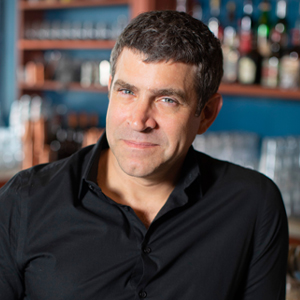
[00:00:10] Ray Latif: Hey folks, I'm Ray Latif, and you're listening to the number one podcast for the food and beverage industry, Taste Radio. This episode features an interview with Marcus Sakey, the co-founder of leading non-alcoholic spirit brand, Ritual Zero Proof. What compelled Diageo, one of the largest CPG companies in the world, to invest in Ritual Zero, which at the time of the funding deal was a pre-launch brand operating in a nascent category? The short answer is that it gave them, and more importantly their consumers, options. Launched in 2019, Ritual Zero Proof is a brand of non-alcoholic spirits crafted from natural botanicals and designed to mimic the flavor and burn of a classic spirit. The brand markets gin, whiskey, tequila, rum, and aperitifs and is available nationally at retailers including Total Wine and Binny's Beverage Depot, as well as select Kroger banners and Hy-Vee locations. Shortly before the debut of Ritual Zero Proof, the brand received a minority investment from global beverage alcohol company Diageo via its partnership with Distill Ventures, a venture capital firm and accelerator that invests in disruptive distilled spirit companies and non-alcoholic beverage brands. In a press release about the deal, Ritual Zero Proof co-founder Marcus Sakey noted that, quote, Americans want more choice and that non-alcoholic spirits represent an endurable shift in consumers' ability to choose what and when they want to drink, a statement echoed by executives at Diageo and Distill Ventures. In this interview, I spoke with Marcus about the impact of Ritual Zero Proof's business strategy, liquid and branding, and how Distill Ventures evaluated the company. He also spoke about how the brand became an anchor in an increasingly crowded category, the evolution in how it markets to retail customers and end consumers, and how he assesses challenges from and advantages over new and existing brands. Hey folks, it's Ray with Taste Radio. Right now, I'm honored to be sitting down with Marcus Sakey, who is the co-founder of Ritual Zero Proof. Marcus, great to see you. It's great to see you. Thanks for having me, Ray. I got to ask you right off the bat, I saw that you're a Michigan alum. I don't know if you're a big fan of their football program, but they're doing pretty well.
[00:02:36] Marcus Sakey: Doing pretty well. Doing pretty well. Yeah, it was fun going to undergrad there. Every game day, the entire town changed tenor.
[00:02:43] Ray Latif: Yeah, I've been to Ann Arbor once and it's a beautiful town. I haven't been there during a football game, but I've seen the stadium and it is breathtaking. It is so big. I think we can fit like 100,000 people in there. I think it's 106, if I recall.
[00:02:58] Marcus Sakey: They were really proud of that last six. It's a madhouse. It was always fun as an undergrad. The streets all closed down. Everybody's walking down the middle of the freeway. It was good.
[00:03:07] Ray Latif: I don't know if they still ban alcohol in the stands at college football games. I think they allow it during bowl games and other places like some places, but I think for most cases you can't drink alcohol in the stands. But I was wondering, could you drink Ritual Zero in the stands perhaps? I'm not sure. Have you been able to get your products in the stadium there?
[00:03:28] Marcus Sakey: We are in process on that now. The great thing with Ritual Zero Proof is you can drink it anywhere. It is completely non-alcoholic. We're actually launching in Dallas right now at Cowboy Stadium and intending to expand quite a lot from there.
[00:03:42] Ray Latif: You're also in a new restaurant chain or you're new to a restaurant chain that's based here in the Northeast. It's called Pizzeria Uno.
[00:03:49] Marcus Sakey: Yes. Pizzeria Uno really was kind of visionaries in the space in that they're a national chain of about 100 locations that is going to be serving Ritual Zero Proof not only behind the bar, but on the menu in three separate cocktails in every restaurant. We are in several thousand restaurants, but Uno is one of the first national chains to recognize the importance of serving customers that may just not want a cocktail that evening.
[00:04:13] Ray Latif: Is it the largest restaurant chain you're in right now?
[00:04:15] Marcus Sakey: It is the largest restaurant chain that we're in right now. And most of the restaurant chains are still a little, are moving a little slowly into the space, but they're also seeing the absolute necessity of it. What we find is that zero-proof options are a positive, they're an and. Our thing has never been anti-alcohol. I love a cocktail. Sometimes I want it to have alcohol in it. Sometimes I don't. What Nielsen recently discovered is that people who buy non-alcoholic spirits actually spend far more in the total alcohol category than those who only buy alcohol. So it's a net positive. Restaurants are starting to see that.
[00:04:50] Ray Latif: Well, it's certainly timely. This announcement came out this week and we are right at the start of Dry January, which before we hop in the mics, we refer to as the Super Bowl for your category. Are you participating in Dry January this month?
[00:05:04] Marcus Sakey: I am not participating in Dry January for the, for the whole of the month, but I always take it as a moment to kind of reset and balance out the consumption.
[00:05:12] Ray Latif: Can you talk about the origins of going from, hey, I like the idea of having a drink when I want one and not having one I don't, to I'm going to create a brand of non-alcoholic spirit alternatives.
[00:05:26] Marcus Sakey: Yeah, it's not the most obvious movement, is it? The ritual came from my decision to check my own consumption. No dramatic horror stories. I just, I love a good cocktail. But when I started this, I was in my mid-40s. I had a daughter who at the time was six years old and had boundless energy. My energy, a little less than boundless. And I realized that an awful lot of what I wanted when I was making a drink was really the ceremony of the It was cutting and mixing and matching, pairing with food. And then it was the way that it marks the moment that you mix up a cocktail and you sit down with a book and a drink. Far more than I actually wanted the alcohol, I wanted that celebration. I wanted about Ritual. So I'm a passionate chef, amateur, but passionate. And I went into my kitchen just to see if I could find something that would serve as that backbone of a cocktail. And that was me playing with peppers and teas and extracts. And I got to tell you, Ray, it was awful. What I made was truly awful, but it also proved concept. Within that, I could tell that someone who was more skilled at it could do it. So that kicked off my best friend and co-founder, kicked off a year's worth of development for us working with Master Distillers and chefs and flavoring chemists and going through literally more than 500 iterations of each recipe, because our goal was to get as close as possible to a traditional spirit. It needed to have the tasting notes, it needed the nose, it needed that bite, and it needed to be able to convince you in a cocktail that you were having an alcoholic drink.
[00:07:08] Ray Latif: Well, I have three bottles in front of me right now. And on the back of each, it describes the product as the liquor replacement. Is it intended to be a one-to-one replacement?
[00:07:22] Marcus Sakey: Yep. It is intended to be a one-to-one replacement because we don't think that consumers want to change their cocktail. They want to change their ingredient. So you can use the same recipe, whatever is your preferred drink, the same proportions. And in a mixed drink especially, and they really are designed for mixed drinks, it will fool you. It's been quite exciting to watch people try it and not realize that they're having a non-alcoholic until we reveal it afterwards.
[00:07:49] Ray Latif: I mean, that's a pretty bold statement for some folks who are listening and saying, OK, well, you know, I know what a Manhattan tastes like or I know what a gin and tonic tastes like. And if I could have about Ritual Zero Proof instead of my traditional alcohol, my traditional liquor and not know the difference. I mean, that's groundbreaking and game changing.
[00:08:06] Marcus Sakey: Right. I will take the Pepsi challenge with any of your listeners in a mixed drink, especially like you highlighted a gin and tonic. That is a perfect example. You mix a gin and tonic and you squeeze a lime in there. It is very close to indistinguishable, especially if you're not focusing on it. Now, am I going to tell you, I'm a bourbon drinker myself. Bourbon drinkers are snobs. Am I going to tell you that poured neat is going to compare to your favorite, to a mixers? No, it's not. But if you mix it in a cocktail, you'll be startled. And our whole thing is that we aren't anti-alcohol at all. We just think that people should have the choice to be able to have it however they want. Have a margarita at lunch, have three. Have a margarita with traditional tequila and then three with ritual. It's a way to keep the party going and stay out and remain part of things while moderating your own consumption, your calorie intake, making sure that you're feeling your best and strong for the next day. It's really, it's very much a win all the way across the board.
[00:09:05] Ray Latif: Obviously you thought enough of the opportunity to create a brand and strategic companies are also getting into the game. In fact, a strategic company that you're aligned with got into the game even before you guys launched with you as a partner. Diageo is your strategic partner through their incubation arm, Distill Ventures. How did that relationship come about?
[00:09:28] Marcus Sakey: When we started developing Ritual Zero Proof, there were no direct spirit alternatives on the market. Nothing. There were non-alcoholic beers, and they were starting to get pretty good. And there were non-alcoholic wines. Some of them are there, the sparkling ones especially. But there was nothing that was a direct replacement. So the opportunity seemed pretty obvious, but we also knew that it would be a very complex process. We knew that once the game started, once people started selling options, that it would be an explosive category. And it has been. It is the fastest growing category in beverage per Nielsen. So our thinking was that Probably some of the players in the spirits industry were as aware of that as we were. You start at the top. Diageo is the world's largest liquor distiller and we approached them with this sort of mentality of you should date who you want to marry. We knew that we would want to end up in Diageo's portfolio. So we started exploring them. We found Distill Ventures, which is a tremendous organization that focuses on drinks innovation in a broad space, not specifically to non-alcohol. And what we did really is probably best described as stalking. We stalked them. We saw a conference that several of the heads of Distil were going to be seeking out. My business partner put on a suit and flew down and charged the stage pretty much as soon as they were done with their panel and pitched the idea. And they said, we're all over it. We've heard this idea. We get 30 of these a month. And we said, well, you haven't gotten ours yet. So they agreed. They tried the liquid. They saw how good it was. And we entered into an arrangement with them. Took another year of development to finalize the flavors and get them all the way to where they are. And then we sold our first bottles in 2019.
[00:11:17] Ray Latif: This is not common to get a strategic company, whether it's through their incubation arm or otherwise, to invest in a pre-launch brand, pre-launch concept. What were some of the keys besides stocking them, besides bum rushing them, besides the great liquid? How did you agree upon terms and conditions of the partnership and in making sure that whatever the deal was, you were being taken care of as founders, because the last thing you want to do is give up too much equity, give up too much control of your brand before you even have a chance to sell a bottle.
[00:11:50] Marcus Sakey: Diageo have been tremendous, tremendous partners. So the way that it worked without getting too deep into the details is that their incubation arm, Distil, exists as a as a guidance and as a pipeline for products that will eventually join the Diageo family. So the initial investment from Diageo was really not a lot more than operating capital. It was to truly prove concept to manufacture early, you know, early vault quantity to sell. And then the metrics were business metrics. I think one of the reasons that our relationship with them has been so strong is that we always treated this as a business and we always treated it seriously. And the first time in 2019, the first time we were talking about this, everyone's first question was, why would you do that? Why would I want tequila without the alcohol in it? We had to answer that question every time for about three years, that was the first question. But it was never a question that we took lightly. We believed in the category. We had faith in people's desire to have things how they wanted them. And I think that was a big part of what Diageo saw, that we weren't anti-alcohol, we were pro-options.
[00:13:02] Ray Latif: As you noted, there are so many brands coming into this space. What was it about the brand itself? I mean, how much of the brand identity and the packaging was that already established and how much of that impacted Diageo's interest in Ritual Zero Proof?
[00:13:18] Marcus Sakey: That's a great question, Ray, and I think that I would say to anyone who's an entrepreneur in this space, but really in any space, you have to believe in what you're creating. It can't simply be that you think it's something that will make you lots of money. It has to have a personal stake, and then you have to kind of be able to see it. You have to be able to envision it. It starts there, and then you have to make sure that other people can see it. So an awful lot of the identity was well established the name the basic tagline the approach that we were going to take who we would and wouldn't be marketing to how we saw the strategy those things were all planned out and i think that was very important to see that we're playing at a higher level.
[00:14:00] Ray Latif: You talked about the marketing and communication. How has that evolved since 2019? I know you've talked quite a bit about what you try to market to consumers, what you try to communicate them and the consumers you're trying to reach and those that you're not. But how much have you learned about the category and your brand and how consumers perceive both?
[00:14:19] Marcus Sakey: It's interesting to be on the evolution of a new category, which is what this is. It's truly new, so it's not a space where it's a zero-sum game and one brand's success comes at the other's failure. That has been very liberating on the marketing and the outreach because what we're really trying to do is tell people that this exists and help them connect how it might apply to their lives. The responses have change so much in the last four years that it's hard even to communicate it. In the beginning, it was basically face first into the internet buzzsaw. Everyone hating the very notion of what we would do, like we were there to take their guns. And the whole point was this is the option this is a piece of your life over the last couple of years we changed completely and especially over the last year what's been great is we don't ever have to answer those questions anymore first of all people understand But if anyone does raise them, our fans in our community and the large community of people who recognize that non-alcoholic options have a place in their lives, they explain it so that it becomes this sort of genuine grassroots movement, which I think is one of the reasons that this category has grown. so fast. As I mentioned, Nielsen lists non-alcohol as the fastest growing category in all of beverage. That's exciting. But then you think, what does that mean? How big can that be? Well, right now, it's a pretty small portion of total alcohol, right? It's 0.6% of total alcohol. But in the United States, total alcohol is 260 billion. And by 2027, it's expected to be 4%. So 4% of $260 billion, that's not small to me. And in fact, at that point, when it reaches 4%, that's going to be bigger than the entire gin market. This category is here to play, and it's kind of a joy to create the outreach that puts it in front of people.
[00:16:18] Ray Latif: As fast as the category is growing, are you running just as fast? And I ask that because I spoke with the CEO of a competing brand who talked about the importance of speed, speed to market, speed to new markets, and being an anchor for the set at as many places as can be, whether it be a grocery retailer, a liquor store, a hospitality, a bar or restaurant. And, you know, I think, and just from having seen Ritual Zero Zero in so many places, it does feel like an anchor brand for the nascent set. But there's so many people coming at you right now and so many new entrants coming and other established players. Are you feeling the pressure to be really, really fast in getting the product and the brand distributed in as many places as possible?
[00:17:04] Marcus Sakey: I think I know who you're talking about. And I would say that we have a different business strategy, he and I. Of course, there's importance to being the anchor. I'm proud to say Ritual is the number one in the United States by a wide margin. One in four dollars spent in the category is spent on us. The nearest competitor that is a direct spirit is one in ten. So when I say that I have a different approach is working. And for me, yes, speed is important, but not reckless speed, not just getting out there no matter what, not always launching new products, not always launching new countries. We're building a category here and it's going to be here for decades. I think it's important to treat that with care to make sure that the partners we work with benefit from it, that when Chain, whether it'Uno Pizzeria Uno or Total Wine or Walmart, takes a gamble on a new category and launches a non-alcoholic set, all of which have, that they see the profit in it. They aren't the only ones taking the gamble. So we move fast because we recognize the category is incredibly important, but we move much more carefully than some of our competitors because we think supporting those who are building this and the retailers and the restaurants that are building this category is the most important thing we can do.
[00:18:20] Ray Latif: What's an example of that? Let's talk about Pizzeria Uno as an example. I mean, what are you doing to support the brand in those restaurants?
[00:18:27] Marcus Sakey: UNO is a great example. And it's interesting, like Walmart is another. These are places where you might not have guessed it would jump out. People hear non-alcoholic spirits, they think, oh, California, you know, it's going to launch in vegetarian restaurants first. And there's plenty there. But UNO, which is a fairly traditional family-owned brand, had, you know, heard about us at one of the events that we attend, opened a dialogue just to start the conversation. Within that, our CEO, my business partner, and one of our head of sales flew out to sit down with them when it wasn't even a pitch, walk through what it might work. demonstrated how we support. So for a restaurant group, for example, we will help them build the custom cocktails, we'll help them adapt the ones they already have. We tell them the best ways to put it on the menu and we show them how that is a direct driver of revenue. So that by the time they're done with that, they don't feel like they're taking a risk because they're not. So with Uno, when we are launching actually, it launched yesterday with Uno and 100 Restaurants. We're putting out a press release covering it, we're helping them with all of the menus, and we are doing our best to drive our pretty significant social media following to visit and to order it. And to me, these are just things that a brand should do. The whole move fast and break things has always irritated me. Move fast enough and build something.
[00:19:50] Ray Latif: I think about comparisons between the non-alcoholic spirit category and, say, plant-based meat, and it feels like there's quite a few parallels between the two. I think the danger in those parallels is that skepticism is often addressed by taste, number one, and ingredients, number two. In the case of plant-based meat, there's a heavy dose of skepticism about the ingredients. The tastes, I think most people agree. It's pretty good. But when it comes to the taste of your products, how do you talk to someone who can't serve a cocktail, like a person at Walmart? How do you talk to their category buyers and help them, you know, get consumers to make that decision? Because it is a relatively high price point, you know, for most people. I mean, what is the price point for a bottle?
[00:20:37] Marcus Sakey: It's an MSRP of $30 a bottle.
[00:20:39] Ray Latif: $30. So at a Walmart, how are you helping the retailer convince their customers to shop for your product and give it a try, give it a shot?
[00:20:48] Marcus Sakey: That's a trick, but I also think it's our responsibility. The product is priced at not only a spirits price point, but a fairly premium spirits price point. And the reason is that it is a premium product. It's made with natural botanical flavors. It's very complicated to make. It has the bite of a spirit. It is meant to be used one-to-one. There's no price gouging on it. It's a premium product. But you have to maintain that mentality all the way across. It's in your outwards communications. It's in how you talk about Ritual in the press. It's in your marketing. It's in your social. It's on your website. It's in real transparency with your audience about how this works and in respecting them. So what happens is by the time that you're talking to a Walmart, I don't think it's as much about discovery. I think people in Walmart have already discovered it. They've recognized that there's a need for this in their lives. They're just thrilled they can find it at Walmart now. The recipes themselves took an enormous amount of work, right? premium ingredients. But what we are trying to do is replicate something that is very fundamentally different. The plant-based meats comparison is an interesting one. The one I like more is dairy alternatives because no one thinks oat milk or almond milk tastes exactly like milk, like classic dairy milk. But they're pretty delicious. And I'll tell you what, they're never leaving Starbucks. And that's the way, that's the truth of these things. Our spirits are meant to be used in a cocktail. That's where they shine best. But that's also where most spirits do. I always find it funny in the early days, we'd have people grab a bottle and open it and glug from it warm. And It's like, when was the last time you did that with a bottle of gin?
[00:22:39] Ray Latif: Well, I think there would be, because of the alcohol, there'd be a little bit tougher, for sure.
[00:22:43] Marcus Sakey: It would be a little bit tougher, but that's the point. It is made to be really designed to work in a cocktail. I obviously enjoy them. I think a couple of them, the rum and our pear tea alternative, are both such strong contenders that they actually work great on the rocks. But it's a matter of comparing what it is you're actually comparing. A glug of warm gin straight from the bottle isn't all that pleasing either. Mix this thing with care, you'll be blown away. As far as the recipes, like every company, we're always trying to improve. But these aren't works in progress in that way. Massive award winners. We just took a double gold from the San Francisco World Spirits competition. We've got gold and platinum medals from every ratings agency, and that's with the fact that there's kind of a snobbery around, not out versus out. So I think for me, long answer to your question, I want to hear what works. I want to hear what people's thoughts are, and we definitely do work on revising the flavors to get them, to improve them if we feel like there's a need. By and large, the community seems to feel like they're great, and I do too. So for me, it's more about maintaining that quality, never getting cheap with it, never trying to save pennies, never trying to shave off anything of the experience, because we're still growing category. There's responsibility there.
[00:24:00] Ray Latif: I'm trying to think of a consumer, a specific type of consumer that would be chugging a bottle of gin, non-alcoholic gin, that is. And I think, okay, it feels like someone who's probably in their twenties. But who, who is your average consumer and how are you attempting to take that or broaden the interest from that target consumer or that primary consumer to many more people?
[00:24:26] Marcus Sakey: That's an enormously fun question to answer, right? So I'll start with the most obvious, which is everybody talks about, of course, Gen Z and their consumption habits. And it's true. Gen Z has, according to Gallup, the lowest interest in drinking recorded in history. That's thing. And it's worth pointing out that Gen Z, only a third of Gen Z is even of drinking age. And yet the industry is seeing the impact. However, it's really not just Gen Z or the millennials or Gen X, me or the boomers. The truth is that every age demographic has a need for this in their lives. That's not me speaking as a founder. That's me looking at the data of our sales data. We don't have a single ideal demographic. We perform well in every age group for different reasons. So Gen Z, it is a cultural shift in that generation away from alcohol. That's simply a fact, and I don't know that I see that ever changing. With millennials, you're also talking about people who are, and to be very honest, they're trying to have a baby or they're parents of young children. Same as you get into Gen X and as you go onwards, it's medication or overall lifestyle or just recognizing there's a need to slow down. But we have the happy place of thinking about something where we're not against anything. We're saying, here's an option. You can have it, you can find its place in your life, and I'll bet you it has a place in your life. It's Quite exciting to not have to say, don't drink that, don't feel bad about yourself. I bet it has a place in your life. And it's been exciting to work alongside brands like, say, Athletic Brewing or Guinness Zero. who are making tremendous products that aren't, they're tremendous on their own merits. They're not pretty good for a non-alcoholic beer. Athletic makes great beer. Guinness Zero tastes like Guinness. And I think that is also central to the growth of this. You have to not be asking a consumer to sacrifice. But I'll tell you a brief story on that front. We were at Diageo, the headquarters in New York about two months ago for a party, and it was about five o'clock. They have this breathtaking bar in there on the 41st floor, the Free World Trade Center. And they are pouring $100 a shot Japanese whiskeys, and they are pouring our aperitif, Ritual Zero Proof Aperitif Alternative Spritz, just that with some soda water. two-hour event. At the end of it, I went up to the bartender and said, hey, listen, how's the breakdown? And he said, oh, I'd say four out of five drinks were the aperitif at Diageo headquarters. And the reason is, first of all, it was made well, they knew it was good, but people would have, you have that $100 Japanese whiskey, you have one, you have two, but your boss is right over there and your co-workers, And you want something in your hand, and it's not a Diet Coke. And it's just like to watch people's eyes, people who we hadn't been working with, for them to see the utility of it, to see everybody wandering around the party holding a non-alcoholic spritz. It was a great validating moment. And that's what you're going to see more when we say that 10% of the total alc market is going to be non-alc. We're not saying nobody's going to drink. We're just saying these are premium experiences, and there's more than one way to have them.
[00:27:43] Ray Latif: That's a great story. And it's so interesting. That is something you saw at Diageo headquarters. Hopefully I get to attend one of those events. That sounds like a really fun one, actually, where you have a hundred dollar shot of Japanese whiskey in the one hand and you have about Ritual Zero Proof aperitif in the other. The best part about Ritual was my boss is probably not going to be there at the time. So I, I don't necessarily have to worry as much, but my breakdown would probably be pretty similar in terms of what I'd be drinking. No, in all seriousness, Marcus, this has been so great speaking with you. I'm really glad I had an opportunity to. I saw Ritual Zero Proof when it came out. And frankly, I was skeptical like a lot of people were. And to see the development of the brand, the progress that it's made, the ability to have that anchor set and have other brands say, wow, they did it or they're doing it and I can do it as well. It's really validating. And you should be congratulated on what you've accomplished to this point. I know there's a lot more to come, but for now, thank you so much for taking the time and hope to meet in person one day.
[00:28:42] Marcus Sakey: No, this was great, Ray. Thank you so much for the time. Really appreciate it.
[00:28:48] Ray Latif: That brings us to the end of this episode of Taste Radio. Thank you so much for listening. Taste Radio is a production of BevNET.com Incorporated. Our audio engineer for Taste Radio is Joe Cracci. Our technical director is Joshua Pratt, and our video editor is Ryan Galang. Our social marketing manager is Amanda Smerlinski, and our designer is Amanda Huang. Just a reminder, if you like what you hear on Taste Radio, please share the podcast with friends and colleagues. And of course, we would love it if you could review us on the Apple Podcasts app or your listening platform of choice. Check us out on Instagram. Our handle is bevnettasteradio. As always, for questions, comments, ideas for future podcasts, please send us an email to ask at Taste Radio. On behalf of the entire Taste Radio team, thank you for listening, and we'll talk to you next time.
[00:29:38] Marcus Sakey: you