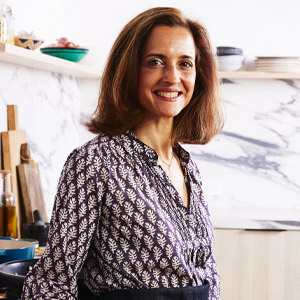
[00:00:10] Ray Latif: Hello friends, I'm Ray Latif and you're listening to the number one podcast for the food and beverage industry, Taste Radio. This episode features an interview with Maya Kaimal, the founder and Chief Culinary and Creative Officer of Maya Kaimal Foods, a groundbreaking brand of Indian-inspired sauces, condiments, and ready-to-eat dishes. In the two decades since launching her eponymous Indian-inspired food brand, Maya Kaimal has introduced zesty simmer sauces, spicy rice dishes, and piquant condiments to millions of Americans. And while she has achieved a level of scale and success that few thought possible, there were lean times when she faced the prospect of bankruptcy and selling her house. A former photo editor for Saveur Magazine, Maya started Maya Kaimal Foods in 2003 because she believed that Indian cuisine needed new context. Her vision was to make accessible and easy to use products so that consumers would have more opportunities to eat flavorful and healthy Indian food at home. The brand scored early wins at specialty retailers and later Whole Foods. A pivot from refrigerated to shelf-stable formulations and a robust innovation pipeline helped the brand gain distribution at thousands of new retail locations nationwide, including Safeway, Albertsons, Costco and Target. Throughout the process, however, there were unexpected challenges and missteps, including some that in retrospect could have been avoided. In this interview, Maya explained how focusing on placement in the perimeter of the store supported consumer education and trial, the brand's major inflection point, how the company operates and innovates at the intersection of data, trends, and retailer needs, and what she's learned about hiring the right and wrong people. Hey folks, it's Ray with Taste Radio. Right now, I'm honored to be sitting down with Maya Kaimal, who is the founder of Maya Kaimal Foods. Maya, great to see you.
[00:02:15] Maya Kaimal: Hey, great to be here.
[00:02:17] Ray Latif: I love your setup. It looks very comfortable, but also quite professional.
[00:02:22] Maya Kaimal: Oh, it's a, it's a house. We rent a house here in, in Red Hook, New York. And yeah, it is very comfortable. I love that it has a big kitchen and we do our testing in there and it just feels like, yeah, it feels like home.
[00:02:34] Ray Latif: Nice. Is Red Hook Brooklyn?
[00:02:37] Maya Kaimal: No, it's Red Hook, New York. So it's upstate. It's the town next to Rhinebeck, which is the town where I live. And so, yeah, I know it gets confusing to Red Hooks in New York, but yeah, we're in a very rural setting, very different from Brooklyn.
[00:02:52] Ray Latif: Yeah. Well, you lived in New York city for some time, right?
[00:02:54] Maya Kaimal: I did. Yes. I lived there for a whole bunch of years. I had a whole separate career in publishing and met my husband there. So yeah, I love New York.
[00:03:06] Ray Latif: Yeah. It's a fantastic town. Although I found out that you, you actually grew up in Boston. I did not know this until I did some research. How long did you live in the city?
[00:03:15] Maya Kaimal: Yeah, so we were in Boston, we were actually in Belmont for like the first 10 years of my life. And then we moved to Boulder, Colorado, because my father, his work took him there. He's a physicist, and he worked for NOAA and their headquartered National Oceanic Atmospheric Administration. They're headquartered in Boulder. So we moved there. And Yeah, and then I went to New York after college. So yeah, so then I and I've been there ever since or in the state ever since and in the city for about 15 years or so.
[00:03:51] Ray Latif: Well, Belmont isn't too far from our headquarters here in Newton, Massachusetts.
[00:03:56] Maya Kaimal: Oh yeah.
[00:03:56] Ray Latif: And I have lived in the Boston area for quite some time. And like you, I grew up watching The French Chef with Julia Child, who actually filmed those episodes in Cambridge, Mass.
[00:04:10] Maya Kaimal: Yeah, exactly. Great. It was like happening just, you know, just a few miles away, which was exciting.
[00:04:18] Ray Latif: Yeah, I mean, it was really fun growing up on those shows, you know, watching chefs cook and doing it in a very approachable way and based on love and passion and just a real interest in teaching people. Julia Child, was she a big influence on your life?
[00:04:34] Maya Kaimal: Oh my gosh, huge, really. My mother just completely was enchanted by her. Just, you know, I think a bunch of things appealed, you know, I mean, the personality and as you say, the approach You know, my mother had grown up on very like Yankee cooking, right? She's from New England. My father's from South India. But my mother, you know, she grew up on like salt cod and, you know, like all the good New England dishes. And so Julia was eye opening for her. My mother had gone to Europe and also had had experience of food firsthand and was like kind of blown away by European style, French style. And so the Julia, connection really sort of underscored that. And I think one of the things that she really loved about Julia was like the way that she celebrated conviviality around food and this idea that you're eating with people, you're having wine, you're like, it's conversation, like it's just, there was this idea. And this is what my mom saw too when she was in Europe was just like, oh, people are really enjoying themselves around food. And so that idea of like food is, is equated with so much pleasure was a huge takeaway for my mom with Julia. So she was cooking out of mastering the art of French cooking, like my, my whole life growing up and referencing her constantly. And, you know, it was, uh, she, she was an important touchstone for my mom.
[00:06:05] Ray Latif: So your mom clearly knew how to cook. Did she know how to cook Indian food?
[00:06:09] Maya Kaimal: Well, she did learn it from my dad. She could cook pretty much anything. She was teaching herself to make Japanese food and she had Joyce Chen's cookbook. She was cooking Chinese food. She was, you know, very adventuresome. She was eager to kind of grow past her New England roots. So hence she married a South Indian man and she learned, yeah, she learned to cook from him too. But his approach was really, different from hers. He was really all about the alchemy of food. You know, he wanted to really break it down, understand it. I mean, he thought like the physicist that he was, right? It was science. It was like it needed to be replicated, you know, every time. So you had to get every detail right. And that was amazing for me because I really got to inherit these perfectly written recipes. And so many people, I think, you know, try to get their parents to explain what they're doing in the kitchen. You know, I was like, well, I don't know, I do this, I do that. Well, my dad was really documenting it in great detail. And his results were really flavorful, really like fine tuned, like he had a good palate. So, so between the two of them, There was a lot of conversation about food, a lot going on in the kitchen. They were having dinner parties and enjoying just a lot of great food.
[00:07:36] Ray Latif: Although I imagine your dad would have been happy with you becoming a physicist as well. I'm sure he's quite proud of the fact that you are a cookbook author and a food entrepreneur. Speaking of cookbooks, I mean, you, like Julia Child, wrote your own. You've written three. Your first in 1996. What motivated you to do so?
[00:07:57] Maya Kaimal: Yeah, so I had this binder full of my dad's recipes that I would cook and make for friends in New York. And I think there was this way that people's kind of mind and eyes opened up when you made Indian food, when you cooked homemade Indian food for people. And my dad's recipes, they were really good. And so I felt like that people didn't understand what Indian food could be and had these preconceptions about it. And so I wanted to try to, you know, help change the conversation about Indian food and bring some of the South Indian flavors that my dad was making all the time, bring some of those more into the forefront and bring more of this kind of, yeah, the home cooking approach. I was eager to share that because I felt like the associations that people had, if they had any, were of North Indian food or of North Indian restaurant food. So I just wanted to try to help more people want to fall in love with Indian food. You know, I think that's kind of been the through line for me, right? And it started at that point with sharing these family recipes.
[00:09:13] Ray Latif: I would think that It helps to change perception if you can try the food first before you make it. And it seems like just in general, perception just wasn't there because the, I guess the flavors and the culture wasn't as ubiquitous as it is today.
[00:09:34] Maya Kaimal: Oh, sure. It's true. Yeah. The Indian culture wasn't nearly as visible then. I mean, it was, yeah, you had to go searching for it.
[00:09:44] Ray Latif: Was that one of the reasons that you wanted to start a food brand to make it a little bit more accessible and easier for people to at least start making the kinds of food that you grew up with and that your dad made?
[00:09:55] Maya Kaimal: I do think it was a logical extension of that. I really don't think I would have started a business though if I hadn't gotten laid off from my publishing job. I thought I was going to stay as a photo editor for my whole career.
[00:10:10] Ray Latif: When did you get laid off?
[00:10:11] Maya Kaimal: I laid off the day I got back from my honeymoon. It was in early 2002. Okay. So yeah, that was a big surprise. And it was, and that was a time when, you know, a lot was changing and publishing and ad sales were way down and layoffs were happening kind of more and more often and magazines were starting to fold. And so. It was the right time to consider doing something different, but it was having a really good friend who was in food retail in New York City that kind of nudged me towards doing it because he. he had eaten my food and he's like, God, I can't put anything interesting in my stores. And why don't you do something? Why don't you make a sauce? I'll sell your sauce in my store. So between his kind of gently pressuring me and then the support of my husband, who did have a job and still had a job in publishing, you know, I felt that I had the kind of support and like, I could see what the first step would look like, right? Because I had this friend just said, you know, just I'll help you find a manufacturer, or I'll, you know, kind of point you towards some, some people and you, you know, you see what you can see if you can find some a good match. So yeah, and then it was like, okay, well, now I don't have to show people recipes in a cookbook, I can just make it for them and make it that much easier for people to discover how incredible this cuisine can be.
[00:11:49] Ray Latif: Gee, you know, it just sounds so easy. I mean, just to start a brand and someone's going to point you in the right direction. All you have to do is fill up some containers and put a label on them. And there you go. You got a multimillion dollar business.
[00:12:01] Maya Kaimal: Yeah. Nothing to it. Oh my God. No, that's been a interesting path with a lot of, you know, missteps and surprises and yeah, boy. And it was hard in the beginning. I mean, I was really lost when I got laid off. I just didn't, I didn't understand like how to find purpose in my day. I'm like, I just need a boss. I just want someone to tell me what to do. So I am really not kind of a natural entrepreneur. I had to really like work myself into like getting comfortable with that because I was sort of used to just All right, understanding what I needed to do and doing that and then all of a sudden I had to sort of figure out. Okay. Well, how do you find a manufacturer or how do you work with the manufacturer to achieve the results that you want and then figure out the packaging and. you know, find a label maker and find a distributor. And I mean, like, you know, it was a struggle in the beginning to really, like, get everything lined up. But we had an idea that was, you know, I guess the word is disruptive. There was no word like that back then. But it kind of what we did was really very different from what was happening in, you know, the quote, ethnic aisle and the Indian set.
[00:13:21] Ray Latif: Yeah, back in 2003, anything that was disruptive was probably specialty or described as specialty or ethnic. And now you can certainly find specialty and ethnic foods in all areas of mainstream and mass retailers, which is pretty amazing to see. But when you launched the brand, I was actually kind of surprised to hear and to learn, because I wasn't aware of this, that it was a line of refrigerated sauces. And I'm just thinking about all of the complexities associated with doing so. One, it's refrigerated, so it's perishable, which makes it a really, really difficult business. And then second, and probably even bigger than that, is where do you put it in the store? You know, back then, A refrigerated sauce wasn't necessary. I can't even think, was there a brand that sold like a refrigerated tomato sauce? Maybe there was, but would you put like an Indian starter kit next to it? No, I mean, I don't know.
[00:14:11] Maya Kaimal: There was, there was a Boutino or something, but yeah. So the Indian section of the store was like, you know, a grocery ghetto. Like it was a pretty depressing part of the store and I think As I started to dig in and start talking to people in kind of the food world and some people at the Specialty Food Association, I got thinking that the way to do an elevated Indian brand, which is what I wanted to do, was to not be in the center of store. I did want to be in the perimeter of the store where people were buying pestos and tapanas and interesting cheeses. seemed like that environment would be where the right kind of mindset, you know, right? The people who were open to this kind of a product would be shopping. So, I mean, this, we were all kind of figuring this out by feel. I wanted it to be fresh when we were selling it to specialty stores in New York City. So that was a lower bar in a lot of ways than trying to do something in center store, right? There was no slotting. There were no planograms. they could just, you know, move over jars of pesto and stick us in there if they wanted to. It was, and the manufacturer we're working with was doing like fresh pestos anyways. And he, so it was all just in time manufacturing. So we didn't even really need a big investment upfront to get going. We were just getting our POs and he was making it. And then, you know, we were getting paid and we were paying him. And it was all kind of like, it was, actually very manageable to be a small business in the, you know, refrigerated section of the specialty stores. Yeah, it just allowed us to establish this idea that there could be a premium Indian brand. So it felt really important to not be in center of store. We wanted to lend a little more urgency, right, to our products. Like, you're going to buy this and you're going to cook it really soon, you know, instead of get it, stick in your pantry and forget about it for a year.
[00:16:26] Ray Latif: Just to back up for a second, what kind of sauces were you making specifically? And, you know, when I think about pesto, it seems like it's relatively intuitive as to what to do with pesto and people know essentially how to use it. How much education did you have to invest in to get people to understand how to use your sauces?
[00:16:49] Maya Kaimal: Yeah, so we were making, we made three sauces. We made a tikka masala, a vindaloo, and a coconut curry. The coconut curry was, there was nothing really like it in the market at all. It was going back to my South Indian roots. And I wanted to share those flavors of like fresh curry leaves and, you know, ginger, fresh green chilies and coconut milk. That's such a magical combination. And I wanted to replicate that as faithfully as I could. So we just made up the name Coconut Curry. And it sort of captured it and it became like a really big seller. So those were the three flavors and we called them simmer sauces. And honestly, you know, I wrote a little story on the back about like the tie back to my family, you know, family recipes or some what region of India it came from and tried to sort of give a little context for each sauce. And they were each from a different region. But, you know, I think that the title Simmer Sauce told people what to do with it. Super simple recipe on the back. We didn't really do a whole bunch of education. We didn't we didn't have a website for the first few years. There was obviously no social media, but the consumer figured it out and they figured out that we were solving dinner for them. And that was just really working. And then also they're very brightly colored. So they really they were kind of eye-catching because I just am madly in love with the way Indians use color and combine it in surprising ways. And I grew up with a, you know, in a family that loved art and, and we had Indian textiles around all the time. So I just really, I wanted that label to reflect how rich I saw India.
[00:18:43] Ray Latif: I'm sure you get this question a lot. Why name the brand after yourself?
[00:18:49] Maya Kaimal: Oh boy, yeah. Not the first choice, not even the second choice or third choice of names.
[00:18:55] Ray Latif: What was the first choice?
[00:18:56] Maya Kaimal: Oh, but they were terrible. They were, I mean, well, we had the name of my cookbook. My first cookbook was Curried Favors, right? So it's kind of like a play on currying favor. That's not terrible. I like that. It worked as a cookbook, but it didn't really, nobody's really liking it as a name. We had, oh, we had this, we met this Harvard Business School student, she was Indian, and she took on our brand, this is like way before we even launched it, as a kind of like a, you know, project, right? We became like her paper for the semester. And she put us in these focus groups so we could test some things like packaging and name and flavors and things like that. And nobody liked any of our names. Curried Favors, Malabar Spice. And so we were coming up with like nothing. And then a friend who was in marketing just said, well, You could just use your name. I mean, it's Indian, but it's not Indian in a way that feels too foreign. And so I guess I guess it works. I guess it works.
[00:20:05] Ray Latif: Well, it's worked out quite well. And I think people love the name of a brand, especially when they can associate it with a person. I think there's more trust in a brand if the person is literally standing in front of the brand. Well, not literally, but standing in front of the brand, in front of its label. It's not just your company. It's your company in a much more personal way. It's my name on every single label.
[00:20:32] Maya Kaimal: Yeah, I agree with that. There is a trust factor. And that was important, just for people to connect this to know that there's there's someone who has their heart and soul in this, right? It's not sort of faceless corporation. It's like it's a it's a person who started this brand who cares about this cuisine. So yeah, I think it did work for us. And in the end, But yeah, it wasn't, I didn't set up about like, okay, I'm gonna start a company. I'm gonna name it after myself.
[00:21:04] Ray Latif: Well, now that you say that, I wonder, I'm not gonna say any names of big food companies, but I can see a big food company coming out with like a new snack brand called Curried Favors. And it'd be like, their marketing department would be over the moon. They'd be like, oh, we have this great new Indian snack. It's called Curried Favors.
[00:21:19] for Saveur: So anyway.
[00:21:21] Ray Latif: I imagine that, and based on how you described it, I imagine that there were a lot of people in New York City at the bodegas, at the specialty food stores, who were really interested in your brand and bought it on a regular basis. But beyond New York City, even beyond Metro New York, I think about the scalability of a refrigerated sauce brand and the investment that you would have to make in production and in education, in slotting fees and all these other things. And I wonder about investors. When you were looking to expand and grow, you know, how do you sell that story in so many ways to investors? How do you sell that scaling potential to an investor?
[00:21:59] Maya Kaimal: Yeah, well, it helped that we were really resonating in natural. So we were, Whole Foods was an early customer of ours and it did very well. I mean, we had with the fresh stuff, we had great turns. We had like seven units per week. I mean, per store per week, it was like kind of nuts. But it was also starting to resonate in conventional and also resonated in the club. Costco did really well with our fresh sauces in their sales department. Yeah.
[00:22:30] Ray Latif: Was this all regional or was this, I mean, were you going national at this point?
[00:22:32] Maya Kaimal: We were going national. So we started out in New York Metro and then this cheese distributor we were working with called The Cheese Works, they had a relationship with Whole Foods nationally. So they, they were fairly, early days, able to get us region by region into Whole Foods nationally. And then they just started going after some of the, you know, smaller regional chains. And so it was working. And this was while we were all still only fresh, which was true for like the first seven years. That's all we did, fresh sauces.
[00:23:10] Ray Latif: And just for context, where were you merchandised in these stores? Where were you merchandised in Whole Foods and versus Club versus Mainstream?
[00:23:17] Maya Kaimal: Usually in the cheese set and not necessarily like right next to cheese, but as I mentioned before, like Pestos, sometimes Hummus. I mean, this, it was a challenge though. Stores were like, you know, we're not quite sure where to put you. There was a little bit of that, but then there was the flip side of that was like, they couldn't say they already had too many fresh Indian sauces.
[00:23:41] Ray Latif: I guess that's true.
[00:23:43] Maya Kaimal: Yeah. So they found a spot, but then back then there wasn't really like a big kimchi set or, you know, like that sort of fresh ethnic set that now is a little more robust. It didn't exist. So we, we pretty much ended up somewhere in the vicinity of cheese.
[00:24:01] Ray Latif: Well, eventually you made the decision to go shelf stable. And it feels like that is a major decision, but it also became a pretty big inflection point for the brand. Talk about that decision and how much of it impacted, you know, the velocity and growth that you had, because you had said you were adamant about not being in center of store.
[00:24:20] Maya Kaimal: Right.
[00:24:20] Ray Latif: So for you, it had to be, I mean, a real personal decision.
[00:24:23] Maya Kaimal: We were adamant about not launching in center of store.
[00:24:27] Ray Latif: Gotcha.
[00:24:28] Maya Kaimal: I do believe my husband and I always felt the plan was once we could establish the sort of premiumness of the brand, we would need to go into center of store because it just wasn't going to be scalable as a fresh brand only. And if we wanted to end up in, you know, conventional stores across America, it was going to have to be shelf stable. And so I was hoping that the two lines could sort of coexist for a long time, and they did for a bunch of years. But, you know, eventually stores would decide that they would have one or the other. And it just became, I mean, the refrigerated shelf space is at such a premium that, you know, that was the one that got sacrificed. And Once they put our shelf-stable sauce in, they often took out the fresh. So that was fine. We were fine with that. And we just saw so much more potential with shelf-stable. We felt we could still keep the same customers that had once carried our fresh and gain a whole lot more and, you know, get Safeway, Albertsons and Target and some of those bigger accounts. And that's what happened. And we've tried to play in other categories too, with some being more successful than others. But the sauces, you know, those are our flagship line, our summer sauces, and continue to be so.
[00:25:58] Ray Latif: At the time, the grocery store was evolving. I mean, not as quickly as it is today, but it was evolving and there were trends, data trends out there showing where consumers wanted to shop, what they were shopping for, the kinds of flavors they were looking for. And I imagine you're getting this data and trying to incorporate it into your growth strategies. And again, early on, it might be kind of. difficult to understand what to trust and what to put your faith and money in, frankly. How do you operate at that intersection of, you know, data trends and your own vision for the company when not everything is as defined as you might want it to be?
[00:26:36] Maya Kaimal: Ah, yeah. Well, it's funny, right? Because if we looked at data when we launched this company, we never would have launched a fresh sauce business. So I think you have to do that combination of looking at the numbers of what's trending and listening to your gut about what you believe in and what and what you see is is missing. So we have these tailwinds which have been there all along and And it's because this, you know, the makeup of this country is changing and diversifying and social media has completely changed the way we're exposed to other cultures, other cuisines, and created an excitement around it. So I think for us, it's taking our knowledge base of the cuisine and marrying it up with, you know, how do Americans eat? What do they want to eat? Where are they ready for some Indian flavors? We know they're ready for them in their kind of entree, right? Dinner, use a tikka masala sauce with your chopped up chicken and have some rice. And there's your dinner. We've played in snacks and actually had some success in the snack space. We're playing in soups right now and finding success there too. So I'm taking the overall sort of trend of. interest in ethnic growing as permission to play in a lot of different parts of the store. And we'll see what, you know, we'll see where we end up. It really does for me come back to like, you have to trust your gut. It's funny. It's like you have to trust your gut, but you can't be in an echo chamber. And that's something that we have to check ourselves on too, because we get so like We can sometimes get caught up in an idea, but that's why I think they're panel testing. What does my friend call it a disaster check? Right? Like, you make sure that, you know, like, really go down the wrong road and it's good to have that as a sort of safety measure.
[00:28:48] Ray Latif: It seems like you could use that term for a lot of things in the food and beverage industry, disaster check. I feel like some entrepreneurs wish they would have done that when they were vetting investors.
[00:28:58] Maya Kaimal: Oh yeah.
[00:28:59] Ray Latif: Because there has been a few of those disasters, at least for entrepreneurs who've lost control of their company. And I bring this up because it seems like Maya Kaimal Foods has a pretty solid partner North Castle Partners, which invested in the brand in 2019. How did you know that that was going to be a good alignment with you personally and with the company?
[00:29:22] Maya Kaimal: Yeah, it has been a great partnership. I'm so happy that we have partnered with them because, well, first of all, to answer your question, I met them, you know, years before and it was through the shows as you do, right? But there was a there was sort of a personal connection with one person there that made me really stop and talk to them more. And so we didn't want to take any investment for a long time. We bootstrapped it just as long as we possibly could until we couldn't anymore. And at that point, they were the ones that we reached out to. They see the potential in this space, this category. They want to be a part of it. And, you know, I'm grateful they felt like I was the right one to take a chance on. But we had some experience with some much smaller investors in the past and it didn't go well. And so it's very, it's a very, ah, it's a tricky thing. You know, when it doesn't go well, it's like everything's on the line. You feel like we had no thoughts of like, oh my God, we might have to sell our house. Like we were really like right up against like, are we gonna go bankrupt? Like, you know, we've been through all of it. Like it's, it's been a ride. But it makes me that much, you know, more grateful that we did land the right investor and found the right home.
[00:30:55] Ray Latif: You said you had bootstrapped as long as you could before you couldn't anymore. And, you know, thoughts about selling your house or concerns about going bankrupt. You're certainly not the first nor going to be the last entrepreneur with those concerns. But did you ever find yourself in a place where you were desperate for money? And I ask that because it seems like that's a bad place to be. And if you got into that place, I mean, you know, how do you avoid it if you can?
[00:31:22] Maya Kaimal: Boy, oh boy. I think for us, in our case, you know, so my husband and I, neither of us were business people. My husband's a journalist, great at his work. And, you know, I was like an art, art major. So, you know, we, Tended to have a narrative in our heads that like, oh, we don't really know what we're doing. We're just sort of. Going through this, and it seems to be working, but it's all kind of lucky and and then, you know, and after. That for a few years, this company got to a certain size and we're like, well, we really need some management in here and I think that we reached. like kind of grasped for people who had the like more big corporate company experience, thinking that that would be helpful and relevant when in fact it was not. It was, you know, the playbook for a massive corporation that had nothing to do with a small, just scrappy little business that had to had to spend really super smartly and not spend on like big salaries for, you know, a whole new team. So when you need help, I think the important thing is to find someone who understands your size business and the needs of that business, because otherwise, you get way over your skis, and you start spending money as if you're bigger than you are. And that's when the trouble starts, right? That's when you've kind of lost control of things. And yet you sort of trusted that this person was much more experienced than you knew what they were doing. And maybe they don't, you know? Maybe they've got the exact wrong approach and end up like, you know, spending all the money.
[00:33:18] Ray Latif: So- Even the money you don't have.
[00:33:20] Maya Kaimal: Yeah. Yeah. The money you don't have, exactly.
[00:33:23] Ray Latif: It sounds like there were some pretty raw times, but I'm happy you've gotten past them. And I just want to go back to one point you made earlier in our conversation, which is about not wanting to be a boss, wanting someone to tell you what to do, sort of not being comfortable as an entrepreneur at the outset. What's given you confidence in your ability to lead a company? Was there a specific moment when you realized that you had to take the reins and you had to get control of it and that no one was going to tell you what to do except for you?
[00:33:56] Maya Kaimal: Well, there was definitely that point when I realized we absolutely had to get rid of the management that we had. And it was just it was going to be me like there wasn't some other person that was going to do this for us. But this has been one of the like issues, challenges, you know, it's just I know my skill set. Right. And I feel really confident about the fact that I can make great food and I can make packaging that pops and I can tell the story of the brand and communicate what we're all about. But, but I do need support in the running the other parts of the business and connecting the dots between, you know, ops and sales and marketing. And like, I need help with the strategic vision. So I don't, I've never felt like I can do it all, you know, I'm a born CEO and I see how it all needs to go. I need a partner in that. I need like another cohort that kind of completes me. So we figured out early on, like, you know, wasn't going to be my husband and me, like he needed to have his career and I needed to run the business and we need to find someone for me to partner with. So through the years, we've had these different sort of partner relationships. Some have been Successful some have been really unsuccessful and when I say partner, I don't mean that they were a part owner. I mean, that they were like, you know, we brought them in to work for us with us, but I also. I think gained some confidence in myself through some of the less successful partnerships, realizing that, you know, really, I know what this can be and I know how we need to get there. And that's why finding North Castle was was the biggest boon possible, because then I had. I had their help in kind of building out the team and people were drawn to being a part of it in a different way because we had private equity investments. So it's like, you know, you can attract a different level of talent and there's a different kind of promise when you have a backer. Right. It's like, OK, there's there's going to be an exit here, you know, and it's it's a it's an exciting proposition to people. And so so with them, we really brought in, I mean, we had some great people here, but we needed some more great people. And, you know, we needed a great ops person and sales and marketing and direct VP and president. So those were the pieces we were able to put in place once we had the investor in place.
[00:36:44] Ray Latif: Well, a path always has to start somewhere and the path can get rocky. Sometimes you need to reset the path and pave it in a way that's going to take you to a better future. And it sounds like you are currently on that better paved path. So I'm really excited for you personally and for the company and the brand. And I've really, really thoroughly enjoyed this conversation. Maya, thank you so much for taking the time to be with me. Thanks for being so candid. I know it can be hard to open up about building a business and I know it means a lot to me and I'm sure it's going to resonate with our audience. So thank you.
[00:37:19] Maya Kaimal: Oh, thank you. It was a pleasure, Ray.
[00:37:24] Ray Latif: That brings us to the end of this episode of Taste Radio. Thank you so much for listening. Taste Radio is a production of BevNET.com, Incorporated. Our audio engineer for Taste Radio is Joe Cracci. Our technical director is Joshua Pratt, and our video editor is Ryan Galang. Our social marketing manager is Amanda Smerlinski, and our designer is Amanda Huang. Just a reminder, if you like what you hear on Taste Radio, please share the podcast with friends and colleagues. And of course, we would love it if you could review us on the Apple Podcasts app or your listening platform of choice. Check us out on Instagram. Our handle is BevNetTasteRadio. As always, for questions, comments, ideas for future podcasts, please send us an email to ask at Taste Radio. On behalf of the entire Taste Radio team, thank you for listening, and we'll talk to you next time.
[00:38:14] for Saveur: you