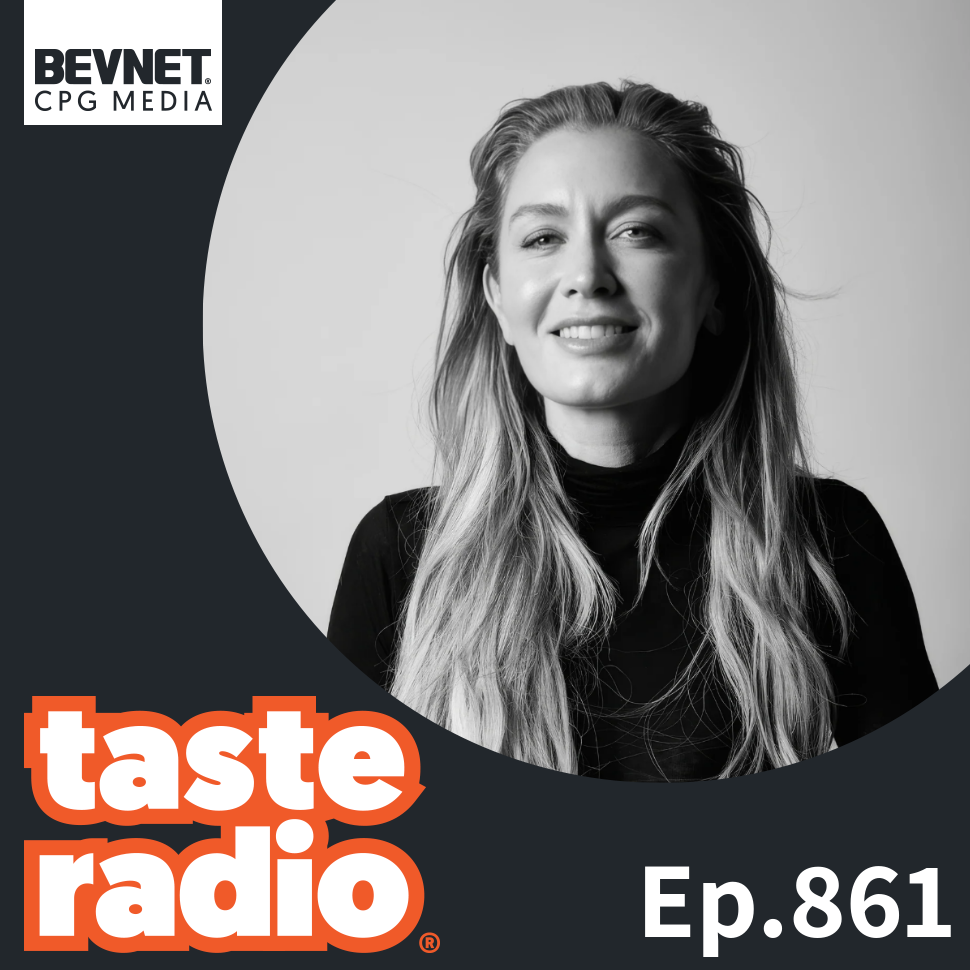
[00:00:10] Ray Latif: Hello friends, and thanks for tuning into Taste Radio, the number one podcast for anyone building a business in food or beverage. I'm Ray Latif, the editor and producer of Taste Radio, and with my co-host for this episode, John Craven, Melissa Traverse, and Mike Schneider. This episode features a conversation with Katie Lefkowitz, the founder and CEO of Harkin's Sweets, A brand of better for you candy bars that are sold In There checkout aisle of thousands of Walmart stores just months after the brand's market debut. We are surrounded by dumplings and bao. Yeah. Where are these from?
[00:00:47] John Craven: That's because Nadia Leo Spellman, who is the founder of Dumpling Daughter, stopped by, dropped these off for us. And I think would like to be on the podcast at some point, Ray. I would love to have her on the podcast. Not a bad idea, right? They're local. Not a bad idea. Local, legendary, started off as a restaurant and now doing CPG.
[00:01:09] Ray Latif: That was the sound of John Craven dipping into his dumpling. With saucy dumpling, you've got sauce all over your plate. What kind of sauce Is That? What kind of dumpling Is That? Alright, well more a pork pork dumpling.
[00:01:20] John Craven: Okay, and the sauce you're using looks like a pork and chive This is a secret sauce spicy sweet soy chicken and cabbage and I could use some that sauce and some and a roasted pork Bao She also gave us veggie dumplings as well, but I did not have time to prepare everything. Okay, In There's a ginger soy over there Melissa
[00:01:39] Melissa Traverse: Good, I just ate a piece of that dumpling and it was absolutely delicious. Whenever we get to order from Dumpling Daughter for Tuesday team lunch, it's always a big, exciting Tuesday lunch.
[00:01:51] Ray Latif: Do you get yours steamed or do you do them pan fried?
[00:01:53] Melissa Traverse: Do I have to choose? I guess pan fried if I had to choose, but I really just love a dumpling any old way.
[00:01:59] Ray Latif: Well, yeah, you know what? It's not really choice paralysis because there's only two choices, so you can't really go wrong.
[00:02:05] John Craven: Spicy, sweet soy sauce. Excellent. John has the ginger soy over there. I think he's going to drink it.
[00:02:11] Mike Schneider: Ate the whole plate. Very nice. You know, we're not just unpaid spokespeople, we're customers too. We are, it's true.
[00:02:17] Ray Latif: Yeah, we are. Do we have any Dumpling Daughter coming with us to BivNet Life? Well, you know, I mean it's just something daughter make a beverage. Can you turn these into a smoothie? No, but I'm saying, you know, we the happy hours and so on so the lunch hours We could have some dumplings being passed around.
[00:02:31] Mike Schneider: No, I mean we could but we don't that would be delicious. That would be delicious
[00:02:35] Ray Latif: Perhaps we can think about that for the winter. We can work on that. Yeah. But as we've talked about so many times In There last few weeks, BevNET Live Summer 2024 is right around the corner, June 12th and 13th at the Metropolitan Pavilion in New York City. There are over 550 people already registered for this incredible event, one that you cannot miss. If you are thinking about going, do not wait another second. Register now, bevnetlive.com. I'm excited to hear from Charlie New. Charlie New is the Global Category Manager for Refrigerated Beverages at Whole Foods Market. We also have Max Crowley, who is the VP of merchandising for GoPuff. GoPuff, Whole Foods. I feel like these are two retailers that you want to be in business with. Melissa, am I wrong? I mean, you used to work for Whole Foods, so you're probably a little biased, but I mean, come on.
[00:03:31] Melissa Traverse: I mean, yeah, I got to say, I'm pretty excited to hear from Whole Foods, but I mean, overall, the show is looking really exciting. I want to ask you guys, what's your favorite part of BevNET Live? And I'll start. I love being at registration on the first day and just like greeting people as they come in, because everyone looks so excited and sometimes like a little nervous, which is, you know, the line between nervous and excited is a fine one. And then I also love when people are on their way out and just hearing about how much they enjoyed the event, especially for the folks who are coming for the first time. Those are kind of my two favorite pieces of BevNET Live. Just love hearing how much people enjoy it.
[00:04:14] John Craven: I think it's awesome to see you at registration just greeting everybody. You seem like really happy doing it and that's awesome. It's just like our whole team is really happy to see everybody just coming up because we know what's going to happen over the next couple of days. You're going to learn a lot about the industry. You're going to find partners. You're going to get deals done. My favorite part though, I think is anointing the pen of judgment. judging the new beverage showdown, but like, it's just like a little bit more favorite than meeting people and sampling and just talking to everyone about their hopes and their dreams and what they're going to do next. We also, Melissa, did you know we have a panel that springboards off of your community call on angel investment? We've got three angel investors during beverage school who are gonna talk about just the ins and outs of angel investment.
[00:05:08] Melissa Traverse: That's going to be such a great segment. It was, you know, hugely popular when we did it on Community Call. And obviously it's something that so many brands are, you know, struggling with right now and trying to find a solution for. Is That'll be incredibly helpful for so many people.
[00:05:25] John Craven: We're hearing a lot of companies that are raising angel rounds right now. So certainly listen to the community call, come to bed, not live, make sure you're there for beverage school. It doesn't really matter what, what level you are either. I mean, there's some great refreshers In There. You get to meet folks after, have a chat with them, ask them your hardest questions. Just get started the right way. Drink from that fire hose.
[00:05:47] Ray Latif: And of course, the retail one-to-ones, when you have an opportunity to sit down with a retail buyer, merchandiser, executive from a variety of retailers, as I mentioned, Whole Foods, GoPuff, the Goodsmarts, Lowe's Foods. So if you are registered, you can apply to participate In There one-to-ones. Obviously, if you are a brand owner or a brand operator, why wouldn't you want to do so?
[00:06:11] Melissa Traverse: There's nothing like having an opportunity to meet face-to-face. I've certainly been on the side of emailing the same buyer a number of times, In There's just nothing like having that time face-to-face.
[00:06:24] Ray Latif: Absolutely. Once again, BevNetLive.com is the way to register. Hope to see you there. If you want to meet up, just send any of us an email, DMS on the Instagrams, because we want to hang out. We want to meet up. We want to chat. You'll see us there.
[00:06:40] John Craven: I mean, if you're a shy networker for say, and you're like, oh, I don't know if I can go to BevNetLive because I'm a shy networker. We'll help you up that game. We'll show you just how easy it is to walk up to somebody, ask a question, and next thing you know, you're in a great conversation.
[00:06:54] Melissa Traverse: That's also one of my favorite things is sort of like matchmaking because we know all these fantastic people and we want them all to know each other.
[00:07:02] Mike Schneider: Although trying to find Ray is like trying to stalk like I don't know YouTube before they go into their concert. You know I'm like that.
[00:07:10] Ray Latif: I'm like untouchable once I get inside they got goons I know I'm a little busy, but I always try to find people during the networking breaks lunch hours and chatting with them In There taste of your studio like the Bukhara sack of Bev net
[00:07:24] John Craven: He's In There pub mobile.
[00:07:25] Ray Latif: I did skip over Melissa's question about favorite moments for BevNET Live. You know, handing over that trophy to the winner of the New Bedward Showdown is always a great moment. Yeah. I don't know. It's probably the biggest smile I have in my face during the events, Is That's always nice. I won't ask John what his favorite moment is because every second of every day of BevNET Live is his favorite moment.
[00:07:49] Mike Schneider: Just adrenaline rush from start to finish.
[00:07:52] Ray Latif: Yeah. It's just like, you know, BevNET Live is your heroin.
[00:07:56] Mike Schneider: No, I'll echo what you guys are trying to say outside of the heroin references I enjoy meeting all of the Entrepreneurs and everyone that's coming to the thing. It's just a great time to be able to chat with people and You know get to know different members of the community or reconnect so there for it all I know we've got Some different sorts of heroines on stage.
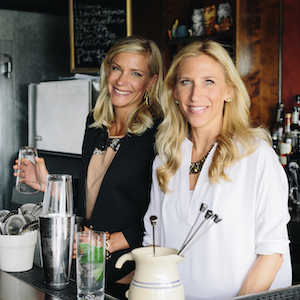
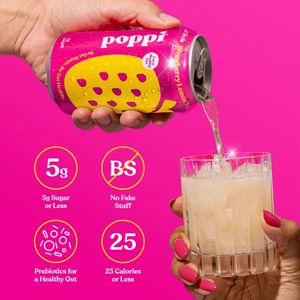
[00:08:28] Ray Latif: I mean you guys You know what that's called that's called a homophone Well, we did have a fantastic entrepreneur on stage last year. One may call her heroine. It was Alison Ellsworth, who's one of the co-founders of a brand called Poppy. Everyone knows Poppy. The better for you soda that is positioned as a prebiotic soda. That positioning has gotten the company in a bit of trouble. As reported on BevNET, a class action lawsuit filed this week is taking aim at one of the central claims behind Poppy's prodigious rise, its purported gut health benefits. The suit was filed The U.S. District Court for the Northern District of California alleges that the 2 grams of prebiotic fiber in a single 12-ounce can of poppy is too low to have a meaningful impact on gut health, rendering that positioning as a probiotic soda as null and void. John Craven, we've seen this story before. How does it end?
[00:09:37] Mike Schneider: Well, okay. First, let's talk about how it begins. Yeah. That's the most important part. I think that's actually pretty useful for pretty much every CPG company out there, which is, you know, first and foremost, I In There's this general sense of like, you know, you start doing something and like no one does anything, then you're like In There clear. So, you know, a lot of companies, I think when they start out, you know, their reason for being and what they, you know, promote as the benefits of their product are kind of under the radar because no one's really paying attention. And, you know, the folks who file class action lawsuits are after money. So when you have no money, they're not really worried about you, generally speaking. So I think, you know, it's just one of those things where, you know, a lot of times I think companies that end up in this spot, who've had success are just doing what they've been doing for a long time and all of a sudden someone has an issue with it. And again, it's just the target isn't big enough. Just, you know, you got to remember that. I think the second thing Is That... And this will segue to how it finishes is, you know, what a lot of times is the foot In There door for a CPG company like Poppy. It's only reason for existing In There beginning was gut health, right? Becomes sort of irrelevant In There massive success and ultimate outcome that this brand probably will have. And I think as we've seen and talked about. you know, starting with when they did this in Canada, with no mention of gut health on the product because they couldn't, it seems that Poppy's kind of at a crossroads anyway, where that is going to slowly fade away anyway. And I think, you know, at Beverage Forum in LA back at the, end of April, Rohan Oza, who's, you know, their key sort of, or the face of their investors, I guess you'd say, talked about how Poppy pivoted from gut health to just selling fun, that fun's a bigger opportunity. And I think how this ends is probably that, like any class action lawsuit in this situation, there's a settlement and this just gets, you know, put in a drawer and they move on. I think it also to me is another sign that I think with some of these class-action lawsuits as we've seen In There past, they often strike when the company seems to be sort of in play, right? Because of course Koch's not gonna write this big Check The there's a a class action out there. And to be honest, this thing getting settled probably at least gives Coke, you know, some peace of mind that the class action is not going to be against them once they buy this brand. So, you know, it probably ends up with some sort of settlement. I mean, sometimes companies fight these and take a lot of time and money, but... I'm not really sure that Poppy wants to take a lot of time, if you know what I mean.
[00:12:29] Ray Latif: You mentioned Coke a few times Is That.
[00:12:32] Melissa Traverse: Yeah. You know something we don't?
[00:12:33] John Craven: Just speculating. Okay. Just speculation. All right.
[00:12:37] Melissa Traverse: Seen a few things.
[00:12:38] John Craven: When these things happen, it's a sign that you're doing something right because people are noticing and now they want a piece of it. This is a way for them, as John was saying before, for them to get a piece of it through a class action lawsuit. Poppy doesn't need gut health, as John was also alluding. I mean, it's a fun brand. It's better for you. It tastes good. People love it. They don't need that benefit to sell poppy. It's sort of similar to buy. They didn't need the coffee fruit benefit to sell buy. They also didn't need the five.
[00:13:10] Melissa Traverse: Absolutely. I think that people drink poppy because it tastes good.
[00:13:14] Mike Schneider: And it's a cool, fun brand, you know, that relates to you and is more approachable than certain other legacy brands In There eyes of that, you know, demographic that they're after.
[00:13:24] John Craven: And if they get to meet Allison, you get to meet one of the kindest, most supportive founders there is. Copy me, copy me, do what I'm doing. You know, she's great, gives great advice. I mean, there's just, yeah, heroin. There's so many, there's so many good things about Poppy. They'll survive this.
[00:13:41] Mike Schneider: No problem. Obviously survive.
[00:13:42] John Craven: Yeah. They'll survive this.
[00:13:45] Ray Latif: They are being sued. As I mentioned, the aggregate claims In There suit amount to more than $5 million. So for Poppy, that's a rounding error and a mega deal. It seems like a rounding error. In There were a mega deal to happen, John Craven seems to think that there's one right around the corner. I don't know.
[00:14:04] Mike Schneider: They'll spend more on the Salvatore steak dinner. Okay, that's terrible.
[00:14:08] Ray Latif: Oh my goodness.
[00:14:09] Mike Schneider: Oh my good. No. I don't know okay I mean, how do you think Rohan Oza likes to party a guy had guy at 50 cent at his wedding? That'Is That's impressive. I mean it was an investor and how come you're invited to that thing? I was there, Ray. No, I was In There.
[00:14:24] Ray Latif: You were in Marrakesh?
[00:14:26] Mike Schneider: Uh, no. No, never been.
[00:14:28] John Craven: Would like to go, though. The thing is, Rohan, for all his pomp and circumstance, he does still use snail mail to mail invitations. John's got lost. Ah, yes, that's totally it.
[00:14:37] Ray Latif: Bummer.
[00:14:37] John Craven: The post office is pretty rotten right now. A lot of people are experiencing issues.
[00:14:42] Ray Latif: Well, this lawsuit reminds me of a conversation I had with Justin Prochnow, who is a well-known regulatory and patent attorney in CPG, and talked about how there are lawyers out there, class action attorneys, who will go into a boardroom with a whole bunch of products that they bought. at any grocery store In There U.S. and intentionally look for things that they can sue these companies over. And it sucks. It's one of the most challenging parts of being a brand founder and entrepreneur, but It'll happen. Lawyers are looking for opportunistic moments like that.
[00:15:29] Mike Schneider: On the other hand, it is, you know, the whole notion of consumer protection, like there are merits to that, right? I don't know In There's any merits to these guys. No, I mean, are you saying they're ambulance chasers, Ray? To some of what we're trying to do with that, you know, like companies shouldn't be able to make outrageous claims, but I In There's a very broad sort of gray area of what, you know, these claims are and what they're intended to mean. And again, I think, you know, In There case of a lot of CPG products, like my guess, if you looked at 10, like really emerging upstart brands, like probably half of them have some sort of potential, you know, claim or language issue, you know, on it. So I think it's just like one of those things that founders should be conscious of as they get bigger, even the things that like, you maybe have gotten comfortable sort of having as part of your brand's DNA to get it started. And, you know, we Is That a lot, like Kombucha kind of had that problem too. There was a lot of, you know, gut health type stuff. You know, health aid ended up in one of these things.
[00:16:35] Melissa Traverse: Just last week in our Slack community, we hosted Shelly of Gargla and she posted the top five labeling claim issues that brands typically run up against. Definitely Check The out if you haven't. Slack.BevNET.com.
[00:16:50] Mike Schneider: Yeah, no, I mean, I think that's exactly the type of thing that it never hurts for brands to just take a look In There mirror at that stuff.
[00:16:58] Ray Latif: It also helps when your ingredients have clinical backing. There is some sort of actual proven benefit to a particular ingredient or functional claim that you're making. i.e. what you can gain if you include or incorporate a muse into your food or beverage. Amuse is the presenting sponsor of this episode of Taste Radio. Now more than ever, consumers looking for ways to boost their immune systems and Amuse gives them that edge. Amuse is a dietary and food ingredient clinically shown to stimulate immune function at the cellular level. Incorporate Amuse into your innovation strategy and help your consumers optimize their health throughout the year. Learn more at amusehealth.com. That's I-M-M-U-S-E health dot com.
[00:17:51] John Craven: Ray. Yes. Twrl Milk tea. You like Twirl, right?
[00:17:54] Ray Latif: Of course.
[00:17:55] John Craven: Twirl's a great brand. We know Pauline Ang and Olivia Chen are the great founders of Twirl, and they've got a new product, Popping Boba. Oh my gosh. Lychee Popping Boba, Strawberry Popping Boba, and Honey Popping Boba. I can make your own bubble tea.
[00:18:10] Ray Latif: This isn't the Starbucks boba, is it?
[00:18:12] John Craven: This is not Starbucks boba.
[00:18:14] Ray Latif: What are they called? What is Starbucks called?
[00:18:15] Mike Schneider: The summer refresher thing? No, what's it called? The blue thing.
[00:18:19] Ray Latif: I don't know. The blue drink. Starbucks has caused a bit of controversy. What's new?
[00:18:25] John Craven: This is the real deal, Ray. I can't wait to put this in some tea. Is That what you put it in? Yeah, you put it in tea or you can put it in- Make your own milk tea, basically? A yogurt smoothie. Yeah, you make your own milk tea. Can I get a look? Yeah, you sure can.
[00:18:38] SPEAKER_??: Here.
[00:18:38] Melissa Traverse: Mike, is it a kit? What do they give you?
[00:18:41] John Craven: They give you a box, and In There box are ready-to-eat pouches. So you just, you open the pouch and just toss it into your beverage. Yeah. Nice. And then you just get pop, pop, pop, pop, pop, pop. This box kind of reminds me of a baking soda box for some reason. It does look a little like a baking soda box, but you know what? When you open it, you're going to be surprised to find popping boba. Can I just eat the boba?
[00:19:02] Mike Schneider: You can. I mean, the boba's a good part of boba. Yeah, you can.
[00:19:03] John Craven: Of course you can just eat the boba. Why not? You going to go for it?
[00:19:07] Ray Latif: No, that seems like a bad idea. I mean, I want to, but... I'm excited to try this because you can put it pretty much in anything. You can put it in a drink or dessert, as the box says. Ready to eat, no cooking required, which makes life even easier when you're trying to have a boba beverage.
[00:19:22] John Craven: Yeah. Pop it into a fruit bowl, put it on top of, you know, it looks like there's some cupcake toppings here. That's kind of cool. Plant-based, dye-free, and gluten-free. Yeah, they're clear. Yeah. Better for you boba from Twirl. I mean their milk tea is so good, but it's Ridiculously hard as everybody knows at this point to put boba into a can and have it just Survive and then also to drink it out of a can too. Yeah, because you need to have the straw So yeah, I mean if you got got the tea you've got the straw now here now you have the boba It must be clear these are popping boba and not popping pearls Starbucks does the boba explode Rocks like what's the popping for seriously a pop in your mouth it pops in your mouth, and it does kind of explode Yeah, this is right there on the side. What is popping boba?
[00:20:12] Ray Latif: You'll get to try it. Bursting boba. I need to try popping boba.
[00:20:16] Melissa Traverse: My kids would love that.
[00:20:17] Ray Latif: We'll try this after lunch. Here, so everyone can completely understand what we're talking about here. It says it on the side of the package here. What is popping boba or bursting boba? Small balls filled with fruit juice that pop when bitten into. Don't. The outer layer is made with seaweed extract, 100% vegan. Yes, you can elevate any soda, juice, iced tea, milk tea, or cocktail. Bonus, if you can't finish the whole pouch, store in a fridge in a sealed container for up to two weeks. I mean, how about that?
[00:20:45] John Craven: They've had boba before, their boba's phenomenal. This is just like, I think this is new skews and now it's popping.
[00:20:52] Ray Latif: There you go. It's really a good idea. Next level boba.
[00:20:54] John Craven: Next level boba, yeah. And I would have prepared it, but it just came in like 10 minutes ago. So I want you to just get it onto the show.
[00:21:01] Ray Latif: I'm disappointed, Mike. I don't think so. I think you- We'll do Instagram, we'll do some Instagram, don't worry. Then we're gonna grab Is That'll happen. from pop to hop. What do you got there, Melissa?
[00:21:11] Melissa Traverse: Ooh, a nice transition. I know that was pretty, that was smooth. I've got Fieldwork Brewing's hop water right here. I tried this last night. It's brewed with Mosaic and Nelson hops. I thought it was tasty. It was lighter than other hop waters that I've had. So Is That's what you're looking for, it's. you know, a bit on the lighter and more refreshing side. And I was curious because hops sort of have that, they have a flavor that makes me wonder if they're good for you. So I, you know, checked it out online and hops have been attributed with health benefits that include anti-inflammatory benefits, antimicrobial. digestive. But I don't know. Have you seen any hot water brands touting the health benefits? And, you know, we just finished talking about labeling claims. Maybe that's sticky territory. But yeah, I haven't seen that.
[00:22:02] Ray Latif: No, I haven't either, but I would prefer my hop water to have full Nelson hops, not just Nelson hops, because, wait, what? You know, just gets you right around the neck, you know? Just lock you in. I just don't feel the intensity. What is this, a 1984 wrestling reference you got going here? Sure. I'm not a half Nelson kind of person, full Nelson all the way.
[00:22:28] Melissa Traverse: You want your hop water to put you in a headlock.
[00:22:31] Ray Latif: Yeah, I can understand. I'm not a Ryan Galang guy either. No, nobody. If anyone gets that reference, and by the way, I am Ryan Galang, but if anyone gets that reference, email me, I'll send you a t-shirt. All right, let's get to our featured interview for this episode. As I mentioned at the top of the show, Katie Lefkowitz is the founder and CEO of Harken Sweets, an upstart brand of plant-based, better-for-you candy bars. Prior to launching Harken, Katie was the Chief Operating Officer of Caulipower, helping the cauliflower-centric brand generate $100 million in sales annually within four years of its launch. In 2022, she set her sights on the confectionery space with the goal of creating a brand that rivaled legacy players like Snickers in terms of Taste Radio texture, but with significantly less calories and sugar, and was enhanced with functional ingredients. Harken Sweets the result. The brand debuted earlier this year and comes In There varieties. The Crunchy One, the Gooey One, and the Nutty One. Harken has already landed placement In There checkout aisles of one of the biggest retailers In There world, Walmart. Last month, Walmart added Harken candy bars to 3,500 of its locations across the U.S. In this interview, I spoke with Katie about how a personal crisis led her to create Harken, how she drew upon her professional experience to develop the candy bars, and how she secured and prepared for a pitch meeting with Walmart. She also explains why the category buyers said yes almost immediately, balancing a healthy margin with a reasonable everyday price, and how the company is supporting sales growth at Walmart. Hey folks, it's Ray with Taste Radio. Right now I'm honored to be sitting down with Katie Lefkowitz, who is the founder and CEO of one of my favorite food brands, Harken Sweets. Katie, great to see you.
[00:24:28] Katie Lefkowitz: Thank you so much for having me. Great to see you too.
[00:24:31] Ray Latif: I think I mentioned this on Elevator Talk when you appeared on the show a few weeks back. I should be more objective when it comes to saying what my favorite products are, but Harken makes just this phenomenal candy bar that I've always dreamed of having and seeing one day, and here it is in my hand. This is the Crunchy One variety. Loyal listeners of the show know that I'm a fiend for Snickers bars. And man, this is, this is a Snickers bar in better for you form. So thank you so much for creating this.
[00:25:05] Katie Lefkowitz: Thank you for enjoying Is That is all I ever want in life.
[00:25:09] Ray Latif: You have a pretty amazing background in this industry and that you were the chief operating officer for Kali Power, which has been a rocket ship for so many years. So you have the experience in food, you have the experience working for an entrepreneurial brand, but where did this desire come from to create a Better For You candy bar? And where do you start?
[00:25:31] Katie Lefkowitz: Really, I created Harken as a fellow lifelong Knickers obsessive who had to give up this stuff after a diagnosis, unfortunately related to colon cancer. So as you can imagine, this really turned my life upside down and put gut health at the forefront. It was at that time I really dug in to start understanding, you know, the concept of food is medicine. and all of the products, you know, you can have to really help prevent that terrible outcome. And it was at that point where I really switched my career, which at the time is actually In There biopharmaceutical space. I was focused on launching different drugs aimed at treating chronic illness. And I just realized that, you know, so much of These illnesses can actually be prevented through changes to your diet. Is That's really the overall picture of how I went from, you know, this. Basin bio pharma into the food world and how I got to making parking here today. But In There interim, which you mentioned is really my role. that I played with Kali Power. So I In There very early days. We were just getting into some national distribution. And in my role there, kind of as the first chief operating officer of the brand, we were able to go gangbusters, as you said, if we grew from zero to over 100 million in four of the craziest years of my life, at least at the time, and really think it's a testament to what us little guys can do In There traditional comfort food categories that haven't seen that revitalization.
[00:27:31] Ray Latif: When I see Harken, I see a brand that is similar Is That people have been asking for lower sugar, better ingredients, real chocolate candy bars for a long time, but just couldn't get them. And the process of probably creating such a bar when you originally thought of this concept must've been pretty challenging at the outset.
[00:27:58] Katie Lefkowitz: Yeah, absolutely. I mean, I think that is one piece of it where my experience on the operations side of the business at Kali Power really came in handy. Just being able to navigate the wild west of the co-packer environment out there. I mean, I can't even tell you how many folks said no, said it wouldn't work. You know, I am kind of a science engineer at heart and I'm a big believer in Making stuff happen, which is easier said than done in a lot of ways, especially as it relates to manufacturing. So once I came up with the concept of work and write like a gut healthy, lower calorie. no sugar added candy bar, you know, after experimenting with my kitchen, working with certain food scientists, really scaling it. I mean, that's certainly the hardest part. In There's lots of components to the candy bar. There's the date caramel, which is really our feature. There's the chocolate coating itself. And then there's the nougat layer. And each of those three components are their own R&D beasts, including incorporating them all into one candy bar, which is why I think it really took me over two years to get the formulation right and get the manufacturing right to the place where we would be able to scale.
[00:29:24] Ray Latif: I think for me, the most important part of Harken Is That I mentioned at the outset of our conversation, which is this is a Snickers bar and better for you form in particularly your Crunchy One variety Is That there's no compromise. It tastes like what you expect it to taste like. And the texture, the sweetness level, the nuttiness of it is all there. And I think one of the hardest parts about being an entrepreneur is really being honest with yourself about the taste of your product, the texture of your product, and whether or not It is actually something that consumers will want, appreciate, and have a point of reference for. And the point of reference for it should, in my opinion, be at the same level in terms of taste, texture, et cetera. So, you know, getting to that point and getting to that place is really difficult. How many times, like talk about the process of getting it right and making sure that you are being honest with yourself and your consumers about the fact that it is exactly what you describe it to be.
[00:30:30] Katie Lefkowitz: So when I created this product, I couldn't agree more. It was really important to me as a Snickers obsessive myself that we really reflected the product that I was seeking to replace within my own diet. And I think it's something that oftentimes I'm sure a lot of entrepreneurs maybe forget to do, right? You focus so much on the product that you're creating that you might forget to continue trying it head to head comparison of the product that you're really competing with on shelf. And my drawers at home were filled with different varieties, samples of Harken products. And they were also full of Snickers products and Hershey products and Mars products, just to make sure that we were able to compete with them from a taste perspective. And I think that's a big part of the reason that, you know, we'll talk more about Walmart, but part of the reason that they're comfortable putting the product on shelf right next to the big boys is, you know, they know that when their consumer goes to try it, they'll be just as delighted with the Taste Radio the texture and all of those great components. And the fact that it happens to be better for them, well, that's just an added bonus.
[00:31:49] Ray Latif: You know, it just looks like your traditional, typical candy bar. There's nothing about Is That's screaming better for you, functional, using better ingredients or whatnot. I think for me, it just looks like an elevated, slightly more sophisticated, even perhaps a lot more sophisticated candy bar than you've seen. How do you take into account the packaging, the name, the labeling, all these different things? that you've done to make it feel like a mainstream conventional type of product?
[00:32:21] Katie Lefkowitz: Absolutely. So for me, I mean, the name just to kind of talk through that a little bit, the point of the brand is really to allow people to harken back to a time when they could enjoy as much candy as they wanted, but not feel terrible about it afterwards. And what's been really interesting since launching on shelf is we're getting tons of consumer feedback, just emails. Truly, these people are amazing. They just find us and they email us even though they're buying the product in store. And they say just that. They say, I picked this up because it looked like it tastes good. It looked interesting to me. It looked nostalgic. And then I ate it. And then I looked at the nutritionals and said, huh, That's actually really good for me. And I was having this as sort of my cheat day candy bar. But once I flipped over the package, it turns out I can actually have these every day. And that's something you only really learn when you have the product on shelf. But that hierarchy, if you will, where taste comes first, was really important to me in designing the packaging. And so far, it's been resonating really well with our customer base.
[00:33:40] Ray Latif: Did you think about who your retailers would be or who the retailers you were going to go after when designing the package? I think a lot of people, founders, early stage founders just automatically defer to the natural channel and say Whole Foods or specialty channels. And don't really think about that big mainstream opportunity until a few years down the line. Were you thinking about that big opportunity and going after a Walmart early on?
[00:34:11] Katie Lefkowitz: So when it comes to the packaging design, the one thing I was really focused on was creating a product that was for immediate consumption. So a caddy that goes on shelf that someone can just buy one of and dry. And interestingly, that Is That helped me narrow down the retailer set more than anything. And if you look at where product is sold at Impulse, at the checkout, I mean walmart does more of that than anybody else and that's really where I saw us, you know, being able to achieve this dream of providing folks a better option than what's out there and so in focusing on walmart as the. obviously the biggest retailer In There country, it really enabled our merchandising to match her packaging, which to me was the perfect blend of what I was hoping for in launching Harken.
[00:35:10] Ray Latif: So were you still looking at, you know, all the opportunities that might be available to Harken or again, was this, hey, let me look at where I can have the biggest impact with the brand at the earliest point of its development?
[00:35:25] Katie Lefkowitz: I certainly have had conversations with the big natural retailers as well. And hopefully we'll have some good news there soon as well. But I mean, I think a lot of early stage entrepreneurs will maybe avoid Walmart or avoid those big retailers. And at least in my experience with Harken and with Kali Power, I should say as well, I mean, we had a really big presence in Walmart earlier on than I think your typical company is. If your buyer Is That category understands your product and your brand and your story, I mean, amazing things can happen. And I will say when I went down to Bentonville to pitch the buyer at the time, a woman named Jenny and her assistant, Melanie, They understood it right off the bat. And to me, that's one of the most important pieces, right? Just the corporate strategy aligned with what you're trying to do. Because if you're fighting against those sorts of headwinds throughout, I think you'll have a lot harder time executing.
[00:36:33] Ray Latif: Yeah, let's unpack that buyer meeting a bit. First, how do you get a buyer meeting with Walmart, especially as a founder who has been working on their brand for a couple of years and it only recently launched? And how do you prepare for that meeting?
[00:36:52] Katie Lefkowitz: Yeah, that's a great question. So I mean, in order to get the meeting, to be totally honest with you, I still don't know exactly which connection of the dots landed it. But I have spoken to tons of people in Walmart, like anybody that I've had connections to, specifically a woman named Andrea Albright has been a great mentor to Harkin from the very early days. And really, it's about like finding people that you have connections with, To get in front of these folks and what I will say is preparing for that meeting I mean. Months really just getting all of the numbers right making sure that the product I'm presenting to them I know that I'm able to really scale because when you launch with that, you know, it can be huge. And really to that point, I mean, kind of a crazy story. I went down there truly on a lark. I did not know how things would end up. We were still such early days that didn't know what to expect. And so I went there kind of thinking, oh, let's hopefully I'll be able to get a handful of doors to do a testing. And I start telling them the whole Harkin story. you could tell they really understood it, like I said, right off the bat. And In There middle of the meeting, Jenny, who was the buyer at the time, stopped me and said, you know, I've only ever done this once or twice before, but I'm so excited about Is That I'm awarding you the business on the spot In There room. And I want you to be in 2700 doors. which I nearly fell out of my chair. I was so excited and ecstatic about. And again, a way higher store count than I could have ever dreamed of. But it really spoke to how excited they are about this product opportunity and just how empowered their buyers really are. I think it speaks volumes to what Walmart is doing. Since that meeting, we have a new buyer, her name is Callie, who actually, she worked very closely with the Caulipower brand as her role, with her role in frozen pizza. And she too, I mean, these buyers are really empowered to own their sets in a way that's unlike, honestly, what I've seen in a lot of other retailers.
[00:39:18] Ray Latif: So she was able to get Harken in before a category reset, Is That what I'm hearing?
[00:39:23] Katie Lefkowitz: She was able to tell me In There room that we were accepted Is That we had the time to get everything set up, whereas most brands wouldn't find out until maybe weeks, months after the meeting. By her giving us the go ahead In There room, we were able to get set up with all of their backend systems to make sure that we could meet the very heavy demand that was coming out of that.
[00:39:50] Ray Latif: That's really helpful. And I want to talk about that in a sec. I want to go back to your preparation. You said you've been preparing for months. When did you first know about the meeting? And then what are some specifics that you felt like would really impress the buyer? And what are some of the things that you were kind of surprised by In There meeting? Aside from, you know, being awarded the stores on the spot, you know, what are some of the things that kind of surprised you In There meeting?
[00:40:16] Katie Lefkowitz: Yeah, I mean, in terms of the preparation, like I said, I mean, so much just like research going into really understanding their consumer and how they operate one of the pieces that I remember she said. she was really excited about was just like how I understood the route to market. So for the checkout aisle, it is a little bit different than the rest of the Walmart store. In There's a lot of different distributors you kind of have to have conversations with beforehand to make sure that, you know, my margin is protected. The Walmart margin is protected. I think those sorts of conversations take a really long time because it's playing with, okay, how can we present pricing to them? What can we do on the manufacturing side to make sure that, you know, Our financials are all in a really good place, but again, I mean, just understanding what walmart's overall objectives are as a company and, you know, within better for you chocolate candy. There really are not many options out there. I think we've seen the explosion within the non-chocolate candy space of, you know, alternate healthy options and having a product that really filled a significant white space for them really helped within the meeting and beyond it to be able to help them understand kind of the value that Harken and our shoppers could be bringing to their set. I think that if you get the meeting and you're going In There, there's a reason for that, right? There is something about your brand that's really resonating with them because they're not taking thousands of meetings, right? They've already really narrowed down their set. So I would say just have a lot of confidence in what you are building and match that as much as you can to what their goals are as a merchant team.
[00:42:03] Ray Latif: Did they evaluate Harken In There context of the explosion of weight loss drugs that we're seeing on the market? You know, the GLP-1 weight loss drugs like Ozempic. Is That something that is affecting how Walmart is evaluating brands?
[00:42:21] Katie Lefkowitz: You know, it's a great point, and that did actually come up a bit in our conversations. This is right around the time that some of the reports were coming out from Wal-Mart, where they have the ability, because they have the pharmacy business, to track how consumers are behaving In There stores when they're on these different GLP-1 modulating drugs. And what they've seen really is those folks that are on these drugs are buying fewer calories. But specifically, the question Is That types of calories are they buying? And that's where you really unpack that these folks are buying treats and kind of the less, the typically less healthy products, but being much more thoughtful about how they're spending their money on these products. And I believe, you know, no one's ever told me in any official capacity, but I believe that that trend within the kind of weight loss drug space has really helped Harkin In There sense that we offer a functional benefit and that's exactly what these consumers are looking for.
[00:43:34] Ray Latif: You mentioned price. and what consumers are spending their money on. Now, if I go to a Walmart, my expectation for the price of a Snickers bar is, I don't know, $1 to $1.50. I assume the price of a Harken candy bar is higher than that in a Walmart. How do you take into account the needs to have a sustainable margin while taking into account the expectations for consumers to be able to afford, you know, a candy bar?
[00:44:08] Katie Lefkowitz: Absolutely. So we're sold for $2.74 at checkout, which is higher than the more traditional products out there. But I think what's interesting about it is our premium, our functional premium only really comes down to somewhere between $10 and 15%. There's a 10 to 15% premium on the functional benefit and the ingredients that we provide, which to date, since we've seen the data on shelves, has not been a big challenge for these customers. And I think it comes down to, they're buying less frequently. So if they're buying less frequently, they have a little bit more money to spend on that treat than maybe they did on a per-use basis before.
[00:44:56] Ray Latif: Earlier, you said there's a lot of demand happening at Walmart stores. You're in 3,500 Walmart stores, according to your LinkedIn post from a couple of weeks ago.
[00:45:04] Katie Lefkowitz: Yes. And I should say it increased. It did increase quite a bit since that meeting all those months ago in Bentonville, just to square that there.
[00:45:12] Ray Latif: Which is even better news. I think after that meeting, I might be extremely happy, but also kind of freaking out because if I find I'm going to be in 2,700 or 3,500 Walmart stores and know that I have to supply those stores and market in those stores to make sure people know what the product is, why they're paying a certain price, what's different about the product, do all these different things, demos. There's a lot involved. On a positive note, it might be easier to talk to an investor and say, hey, you know, you should invest in this brand so we can ramp up production to fill all these stores and do all the things we need to do to be successful in Walmart. But again, once you got the yes, How did you go about saying, okay, here's what we're gonna need for production. Here's how we're going to support the products and the brand in store. Talk about that process.
[00:46:03] Katie Lefkowitz: Yeah, I mean, a very big undertaking. I think that was one of the moments where, again, I felt very fortunate to have had the experience that I did with Kali Power because Kind of overnight ramping of, you know, things from production to marketing is something that I at least had that background. And so immediately just focusing on making sure we can make this product. at the level of scale that we need. And having the confidence at that point to really be placing these large purchase orders with some of the different suppliers that we needed to in this space. And then it really became, you know, on some of the other items outside of the manufacturing, just having lots of conversations. I mean, the one thing I will say about this industry is I'm blown away every day by how unbelievably helpful. Everybody is. And if you haven't had the experience, somebody else has. And I love the way that everybody is so generous with their time. And it's not that kind of like cutthroat competitive environment. There's so many Slack channels and things like that, where you're not shouting into the void, you really get great help from entrepreneurs who have done it In There past.
[00:47:20] Ray Latif: That is really a great benefit of our industry Is That people are willing to help each other when they can and trying to find a reliable supplier of certain ingredients. can sometimes be challenging trying to find a reliable co-packer or a backup co-packer can be really difficult. But I mean, I think that's one of the great things about, I think something that we do is we do our best to try to make those introductions as much as possible and to tell the stories like we're trying to do right now of how to be successful when great things happen for a brand. And I really, really appreciate you sharing so much about your journey and experience to this point, Katie. I want to touch on one more thing, which is your education. As I mentioned before we hopped on the mics, you have a minor in consumer psychology, which sounds pretty amazing for the job that you're in. How do you analyze the modern consumer and how do you Is That analysis? How do you Is That information to help build your brand? you
[00:48:25] Katie Lefkowitz: On the consumer psychology side, I think that the key to everything I ever learned from a educational standpoint on it is, it is so important to get into the mindset of your consumer. That means following what they follow, walking the store like they would walk the store and really just living their day-to-day decision-making as much as possible. That's really what led me to create the brand In There first place is finding this need within myself and then realizing that folks across the country also have the same need state right they want to have a treat. They want to feel good about themselves afterwards and having those connection points with your consumer is just so, so, so, so important. It's not necessarily just about blasting everything on Instagram and. It's about really connecting. I mean, to this day, I answer every DM, every email that comes in to Harkin on any of our channels. And the reason for that is to have those connection points. And the feedback that I get from folks because I do that is worth its weight in gold. I will never give that up because there's no better way to really understand the psychology of what people are up against every day.
[00:49:55] Ray Latif: I love that. Walk In There shoes, understand what they're thinking as best as you can, what they're buying, all really valuable information that helps you craft your message to existing consumers and new ones as well. Katie, thank you so much. This has been such a great conversation. I'm so excited to see how Harkin continues to develop. I'm excited to see Harkin in Walmart stores. I don't frequent a lot of Walmart stores because there's not a lot in my area, but I'm excited to visit one soon and see Harkin on shelf. I'll be buying more than a few at the checkout.
[00:50:32] Katie Lefkowitz: Thank you. Thank you. Yeah, no, it was a privilege truly of a lifetime to see it on shelf myself for the first time. I definitely, had a few happy tears that moment. So the more folks can see In There, the happier I am and really excited to see where the journey takes us.
[00:50:50] Ray Latif: Absolutely. Once again, Katie, thank you so much and look forward to staying in touch.
[00:50:54] Katie Lefkowitz: Thanks.
[00:50:59] Ray Latif: That brings us to the end of this episode of Taste Radio. Thank you so much for listening. Taste Radio is a production of BevNET.com, Incorporated. Our audio engineer for Taste Radio is Joe Cracci. Our technical director is Joshua Pratt, and our video editor is Ryan Galang. Our social marketing manager is Amanda Smerlinski, and our designer is Amanda Huang. Just a reminder, if you like what you hear on Taste Radio, please share the podcast with friends and colleagues. And of course, we would love it if you could review us on the Apple Podcasts app or your listening platform of choice. Check us out on Instagram. Our handle is bevnettasteradio. As always, for questions, comments, ideas for future podcasts, please send us an email to ask at Taste Radio. On behalf of the entire Taste Radio team, thank you for listening, and we'll talk to you next time.
[00:51:48] Mike Schneider: you