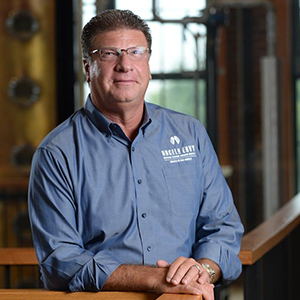
[00:00:10] Ray Latif: Hey everyone, I'm Ray Latif and you're listening to the Top Podcast for the food and beverage industry, Taste Radio. This episode features an interview with Wes Henderson, the Co-Founder Chief Innovation Officer of Angel's Envy, who chronicled the history and development of the revered whiskey brand and how the company rapidly scaled while staying true to its values. This podcast also includes a conversation with the founders of two innovative brands that focuses on how each landed placement in their dream retailers. Teresa Tsou, the co-founder of Better For You snack brand Pipcorn, and Andrew Suzuka, the founder of organic tomato sauce brand Otamat, discussed their respective paths into Whole Foods and Sprouts, and revealed key steps along the way. Just a reminder to our listeners, if you like what you hear on Taste Radio, please share the podcast with friends and colleagues, and of course we'd love it if you could review us on the Apple Podcasts app or your listening platform of choice. We begin the show with Wes Henderson, the co-founder of Angels Envy, a highly regarded and awarded craft distiller of small batch whiskeys. Launched in 2010, Angels Envy began as a passion project between Wes, a longtime industry consultant and advisor, and his father Lincoln, a master distiller with decades of experience producing premium whiskey for spirits conglomerate Brown Foreman. Lauded for its innovative approach to barrel finishing, Angel's Envy is best known for its core products, a Kentucky straight bourbon finished in port wine barrels and a rye whiskey finished in Caribbean rum casks. Just five years after its debut, the company was acquired by rum producer Bacardi for an undisclosed sum. Post-sale, however, Wes remained with Angel's Envy as its chief Innovation Officer, and now works alongside his sons Kyle, Andrew, Connor, and Spencer, who continue upon the family's legacy. In the following interview, Wes opened up about the inspiration behind Angel's Envy, intertwining family and business, and the story behind the brand's iconic bottle. He also discussed how the brand scaled rapidly while maintaining its identity and positioning, the emotional aspect of selling the business, how he's involved in the next stage of development for Angel's Envy, and how his passion for civic service and flying helped him become a better leader. Hey folks, it's Ray with Taste Radio. Right now I'm on a call with Wes Henderson, the co-founder of Angels Envy. Wes, how are you?
[00:02:34] Wes Henderson: I'm doing great, Ray. Thank you so much for finding some time to chat with me this morning. It's really exciting. I'm out of my COVID cave and I'm ready to rock and roll.
[00:02:46] Ray Latif: Yeah, everyone's been in for a while. I think a l So it's good to see that y although for folks watchi backdrop is of your dist is that right?
[00:02:58] Wes Henderson: It is. That nice long shot of the dist of the distillery towards So if I move my head a little bit, you can see the stills up against that back wall, up against that back window on Main Street. And you have the fermenters and the cookers like on each side of me there. And it's a great view. It's one of those, you know, picturesque views. And when the sun starts to set, it's almost got like a church-like with all the big windows in there, the way the light filters in. It's a beautiful setting and it's a great place to come and visit.
[00:03:33] Ray Latif: Yeah.
[00:03:34] Wes Henderson: How many visitors do you normally get a year, you know, COVID aside? I think this year we'll probably, well, this year, I don't know how things are going to end up, but somewhere around 80,000 visitors, I think, you know, we're, we're also undergoing a, uh, an addition to the brand home. So that may restrict us a little bit, but the end game is to increase our ability to cater to fans of the brand as we expand and, but do it in a way that still keeps everything personal. We're a very personal brand, but I'm really excited to see what's happening with the expansion.
[00:04:05] Ray Latif: Yeah, me too. I'm sure there are folks listening who have had Angel's Envy in their liquor cabinets, drawn upon the brand when they're ordering a cocktail at a bar. And when I think about Angel's Envy, I think about Manhattan's. And I got to ask you, though, you know, where do you stand in terms of your favorite cocktail? Because that might give a little hint in terms of where Angel's Envy is best used in a brown cocktail.
[00:04:33] Wes Henderson: First of all, I recommend that everyone listening has a bottle on their bar, maybe on the kitchen counter and another one somewhere that's readily accessible in the case of an emergency like a hurricane or storm or anything like that. cocktails made by some of the best mixologist in the world, all around the world. Every day that I'm out in the field, I get to experience something fun. But I go back to one of the classics and, and some people say it's a very simple cocktail, but I don't think it is. I think it's one of those cocktails that can either be hit or miss. But with our bourbon, I'll drink an Angel's Envy Whiskey Sour. I like egg white for the texture. I think that just is a great way to top it off. With our rye whiskey, which is a totally different animal, I like an Angel's Embry rye old-fashioned. And some people think it's almost blasphemous to use the rye in a cocktail, but once you taste the rye in that old-fashioned, then you do have to back off the sugar a little bit. Once you taste it, you'll never go back to anything else. It also makes a really good Sazerac. So, you know, those are kind of the three places I go, but normally I will try stuff neat for the first time. I want to experience the spirit as it was created and how it was meant to be tasted. And then I'll go from there and go down whatever rabbit hole I feel like that day.
[00:05:50] Ray Latif: Well, I think you've come up with some great ideas for folks who are listening and want to experiment with Angel's End because I never would have thought of a whiskey sour and that sounds pretty, the way you describe it sounds pretty amazing. It's really good. Wes, can you talk a little bit about the foundation of the brand? What inspired you to launch Angel's Envy with your dad?
[00:06:14] Wes Henderson: Looking back now, actually looking at it at the time, was probably a really crazy idea. It really was. A friend of mine had come to me, who was in the spirits industry, and he said, Wes, just out of curiosity, you know, your father's retired, world-renowned master distiller, you've done a lot of stuff in business, why have you never done anything with your dad? And I told his guy named Jay Maltby, I said, Jay, honestly, I don't know the answer to that. I thought about it, but I just kind of left it at that. But the wheels were turning and I flew up to Kentucky from Florida. I was living in Florida at the time to talk with dad and tell him what I wanted to do. I said, dad, I want to start this bourbon brand as a family. I think it'd be great for the boys to be involved. What do you think about doing that? And dad immediately said, sure. And neither one of us knew what we were getting into. That I do know. We just knew that at that time, we were going to give it a shot and see how we could pull it off. So it was a pretty simple start. Now, things got complicated quickly thereafter. Now that we've talked about doing this, now that we've agreed to do this, we have to bring it to life in a very competitive market. We were going against some huge companies. One of them my dad used to work for. I think that we didn't know what we didn't know. So because of that, we weren't scared. Failure really wasn't an option. We just said, look, we can pull this off. We know how to make whiskey. We've got some great ideas. Let's go for it. And that's really how it all began.
[00:07:50] Ray Latif: It's amazing how quickly things can move once you are inspired to do something and once you have the belief that we'll be successful.
[00:07:59] Wes Henderson: It is. And I don't, I don't look back on it enough as I probably should because we're so busy now. But if I think back, it's like, you know, having six kids, it's the same type of thing. A lot of it's a blur because there's so much going on, but it's really good to go back and not just celebrate those accomplishments, but draw inspiration on, you know, think about the things that, that, you know, like label approvals, goofy things like that, that we do now that we have, experts to do and lawyers to do. Well, I did all that stuff myself back then. If there was a pallet of product that needed to be moved from our warehouse to the producer or to the distributor, I arranged that shipment. I'm on the phone with the trucking company. Everything related from the day one of this brand, as a group, we did together. So now, Having that experience, if there's something that comes up now involving those things, I'm like, well, hell, we did this. We know exactly how to do it. We can work around it. And we did it on zero budget. We did it on a shoestring. So having those experiences, looking back on those experiences, it's really valuable information going forward.
[00:09:08] Ray Latif: Absolutely. Now, I mentioned that you're the co-founder of Angels Envy. You co-founded this company with your father. And I wonder, it can be difficult to work with family sometimes, from what I understand. Was there a real church and state kind of element to how you operated or how you founded the business with your dad?
[00:09:28] Wes Henderson: I think it's really hard to keep those relationships unfettered. I don't know if that's a great word or not. I would assume that some businesses may create that demarcation. You know, this is all business. This is all family. But I just don't know. Even if you can do that on paper, you still have the emotional aspect of it. So I really believe it's very difficult to separate the two. And Angel's Envy is really our life. So it's a natural thing that we're talking about. you know, work and talking about innovations and talking about things that that we see on the horizon. We do it as a family all the time. It could be argued that maybe we should do less of that. But so far, it really hasn't been an issue where I think it causes conflict in the family. So my dad and I always got along very well, you know, in all aspects of everything we did. So it wasn't really difficult keeping those together with some families. I'm sure you have to keep those things separate. If you're not able to deal with the emotional aspect of it, you probably need to have that church and state separation. But, you know, we don't have those levels of emotion. So, you know, I mean, we have passion, but we don't have to the point of conflict. So it's worked out great. It really has been. There have been certainly moments where I think more so with the boys, the brothers, you know, that competition between the brothers. more than anything. So, you know, we have to kind of keep a, you know, talk about that and try to modulate that where we can. But, you know, I'm blessed to be able to work with those kids and they work together well, and I really wouldn't have it any other way.
[00:11:07] Ray Latif: You're talking about your sons who are still in, who are involved in the business.
[00:11:12] Wes Henderson: That's right. I have six sons and the four older. Wow. Yeah, I know. Don't ask. I don't know how it happened. One day we're boom, we have six kids. And it really is a blur, by the way. I was talking about that with someone the other day. I was at dinner and the family had four kids. I'm like, I don't know how we did it. And that was two less than what we had, you know, little kids. Yeah, that part of my life. I don't know whether that's your brain blocks that out to protect you or what. But the so the four oldest work at the distillery in different capacities, Kyle, Andrew, Connor and Spencer, they all contribute equally to what what we have going on in different capacities. So it's a great thing to see them at work and see them grow in the company.
[00:11:56] Ray Latif: Absolutely. Yeah, six kids, especially six boys, I can imagine that can be a little difficult. I myself, there's 11 kids in my family, eight boys and three girls. So yeah, I understand what it's like to grow up in a chaotic household, chaotic but loving household.
[00:12:13] Wes Henderson: Well, that's it. I mean, that's exactly right. I mean, that's the way it's always been with us. It's very, it's always very supportive. And we're always laughing about something. Everybody's giving somebody crap about something, but at the end of the day, you know, you don't, you pierce that family unit and, you know, God bless your family. I can't imagine 11. Although, you know, once you've got six, what's, you know, just throw them into the mix.
[00:12:37] Ray Latif: I'll ask my parents about that. At six, does it really matter that you had five more or is it kind of the same thing?
[00:12:44] Wes Henderson: Look, it's all about, it's like UPS, it's all about logistics. It's getting the troops from point A to point B without leaving any man behind or any woman behind. Make sure they get fed, make sure they have clean socks and shoes. And beyond that, I guess you're good.
[00:13:00] Ray Latif: Yeah, I just think about, okay, so that's probably like an extra couple dozen eggs, another gallon of milk at least, maybe two more boxes of spaghetti. But yeah, okay, it's all from the same shore, right? It's just, you know. It's all relative, man. Yeah, exactly. Guessing your margins? That's risky. Belay Financial gives CPG brands the clarity to scale smarter, faster, stronger. Get your free inventory ebook by texting TASTE to 55123 and start making data work for you. Vibrant Ingredients is the natural ingredient partner powering food and beverage innovation, delivering flavor, function, and protection through a science-backed portfolio. Vibrant delivers purpose-driven solutions that help brands create extraordinary experiences. Discover what's possible with Vibrant today. Visit VibrantIngredients.com. You and your dad both had significant experience in the whiskey business prior to launching Angel's Envy. Was that really helpful in getting the brand off the ground and in what ways?
[00:14:15] Wes Henderson: I mean, certainly dad's experience, you know, being a Hall of Fame Master Distiller in 40 years of round forming was crucial, especially as we were crafting the direction we wanted to go with the spirit. And, you know, and as I was doing the blends, creating the different flavor components, having dad's viewpoint and validation and recommendations was huge. I think that my experience outside of the spirits industry and building businesses and marketing and the other things I did were probably more influential than the time I spent in the spirits industry before Angels Envy. So it's those formative things that bringing them back in, coupling it with Dad's experience and the experience of our partners that we brought in as well who were extremely talented individuals in their respective areas. Those are the things that all. So I mean, it's kind of an odd answer to your question is, once again, it's not so much my experience in the industry, it's the experience I gained outside of the industry that really, I think, helped. So that and the bottle shape and a lot of other things we did. And look, the other thing too, Ray, timing. Timing is everything. You can't discount the fact that we came in 10, 12 years ago, right at the beginning, right at the cusp of what was happening in the bourbon industry, and we were fortunate enough to be one of the first to add.
[00:15:29] Ray Latif: You say you were fortunate enough, but was the launch of Angel's Envy timed with this explosion of, I'll use a term that has been used quite a bit, craft spirits?
[00:15:42] Wes Henderson: Nobody knew. I mean, if anybody says that they did, then they're crazy. I wanted to do a family brand with my father and with my kids, a small, and we use the word craft. Craft gets thrown around a lot, and it means a lot of different things to different people. but a small badge, once again, another phrase that means a lot of different things to different people, but a family brain. We had no preconceived notions about how big it would be, how we were going to grow it. I don't think anybody saw, except maybe for Woodford when, when dad created Woodford and Owsley Brown and Brown Foreman, you know, and that's 10 years even before that, 10 or 12 years before that. I think Woodford was the first of many whiskeys that had been brought back from the dead, meaning, you know, an old distillery refurbished, you know, a small, really small crafted brand. So they had that. But truthfully speaking, I don't think anybody saw it coming. Now, the key, though, was is recognize that once we saw it, you know, but to say we planned it ahead to time it at this precise moment, like a train would get to a certain place at a certain time. I certainly can't take credit for that and say that we did, but we did recognize when we were in the midst of it, what we were in the midst of and how big of a renaissance this was going to be and how this was our moment. You know, it's being able to seize the moment when you find out that that's the moment. That's what I think makes an exceptional business or a business exceptional or a business that's just, you know, average and just does OK.
[00:17:14] Ray Latif: Seizing the moment, absolutely. I think you nailed it. A lot of folks say that luck is the intersection of timing and opportunity, but executing upon that timing and opportunity is critical. And one of the ways that Angel's Envy was able to stand out and really appeal to a lot of folks is the bottle shape. You mentioned this, the bottle shape has become iconic. What went into that process? What went into the design process for that mold? And how was it intended to fit with the liquid itself?
[00:17:44] Wes Henderson: The design process of the bottle was relatively simple once we knew the direction we were going with the name. You know, we loved the concept of the angel share. So everybody involved in the project and some of the creative people that we got involved in the project, you know, who we did a deep dive with them into just the history of bourbon and the process of making bourbon and everything related to bourbon. Everybody seemed to really like the angel share component of the business. For folks who are not familiar with the angel share, could you explain what that means? For sure. The angel share is what evaporates out of the barrels as they sit in a warehouse. And we lose three to 5% a year to evaporation in Kentucky. That amount is different depending on what the climatology is. But three to 5% a year goes into the air. We say we're sharing that with the angels. So just the notion of that is just a great story by itself. And we wanted to incorporate that into the brand. So when we started thinking of the Angel's Share, we love the thought of angels. And we think of angels' wings, I believe, when we think of angels a lot of times. And I'd always wanted something on the back of the bottle. And really, it could have been anything on the back of that bottle, depending on what we decided the brand was going to be about. I just like being able to look through that bottle and see something on the back. I just think it's a cool look. And we minimalized the decoration on the front of the bottle so you could see those wings as much as possible. So I was fixated on having wings on the glass and then the shape of the bottle conformed to the shape of the wings. It was that simple. There were two versions. There was a version that was a little taller, a little more slender, which I didn't like because I felt like it was just too tall and slender or any other way to describe it. I wanted them to make the shoulders a little more broad, which is what I said to the design team. So they really just kind of pushed the bottle down a little bit, made the shoulders a little more broad. And that was it. So we only did two Lucite models of the bottle design. The original one I just told you about that was the thinner one. And then the final Lucite model, which a Lucite model is a pre-production hard plastic model of a bottle. You don't have to do Lucite, but I'm very tactile. I wanted to hold that bottle and see it, you know, the physical bottle as much as I could before we decided to do a mold. Then we were off to the races. You know, once we keyed in on that and we knew we wanted the wings, we knew we wanted that bottle shape, it was risky. Nothing like it. Nothing like it out there at all. And it was scary back then. Beginning of the craft movement, you know, we're going up against the old traditional bottle shapes, the old traditional companies, but we just dove in. You know, we said, all right, we're going to do this. You know, we've got a bottle. It's sexy. It's got a lot of weight to it. It's super premium. And we just felt like it was time for that.
[00:20:47] Ray Latif: Well, the bottle certainly stands out on a retail shelf or on a back bar. And I think it communicates something special. It communicates something in some ways small, because you just don't see that bottle shape anywhere. At least you hadn't seen anything like that bottle shape anywhere else. particularly within the whiskey segment. Speaking of small, I think you started out as this small craft distillery. I think people knew you as a specialty producer, if I can use that term. But you grew so quickly. You scaled so quickly in terms of retail and distribution. How do you scale small, if I'm correct, how do you scale small while still developing the brand in a way that's going to expand it, expand awareness and sales to whiskey consumers?
[00:21:40] Wes Henderson: I mean, the brand definitely grew quickly, but we grew in a very restrained way. We never outkicked our coverage. We never went into markets. We resisted the temptation, and I was the worst about it, by the way. Somebody would call me from, God bless the state of Wyoming, which doesn't sell a ton of whiskey, but you know, the liquor control board called me and it's, Wes, we really want Angel's Envy. God, we'd love to have some. We're shipping maybe two cases a month there, but still, you know, that's an example. I wanted that presence there. And you know, anybody that called, I wanted to put Angel's Envy in their hands, but our team was a lot more disciplined an extraordinary amount of discipline. And when I talk with other brands that are in growth mode, I beat this point really hard, is that you cannot out cook your coverage. You've got to grow and is controlled of the way as you can. You only got to launch one time. Going back and doing a relaunch because you put it someplace that you weren't ready to put it. It's just not the right way to go. So we made sure we had people in the markets before we launched. I would personally go launch these markets with the distributor. We had to identify the right distribution partner. We were fortunate to be able to select the distribution partners we wanted to work with. And we had some fantastic partners. We resisted that urge to get it everywhere. Believe it. I was the one that wanted to get it everywhere. So my team had to strap me to a chair sometimes and gag me so I don't, you know, say, hey, you can have it. Now, the next phase is, is that, you know, how do you, as we get even bigger and we're in all 50 states now, we're international. How do you keep the magic? And how do you keep that feeling that you created from the very beginning? And you have to be careful in doing that. We still do the same things the same way now that we did at the very beginning. With respect to production, it's on a little bigger scale. All the process is the same. The family, we're all still 100% invested in, well, first of all, the creation of innovations, the monitoring of quality. To me, and we mentioned the word craft earlier, I mentioned the word craft. I get asked a lot, what is craft? Is it a number? Is it a number of bottles? Is it how big your still is? What is craft? And I've come down with my definition of craft is that craft is a mentality. You can be craft and be 500,000 cases a year. You can be craft and be 5,000 cases a year. It's how you go about running that business. And we run it the same way that we ran it from the very beginning. But it is a challenge. It always is a challenge. We talk about it all the time. We recognize that. And you have to preserve the magic. You really do.
[00:24:21] Ray Latif: Part of preserving the magic does come from maintaining a sense that you are still a limited kind of production distillery, that you are still producing the whiskey in small batches. That being said, I think the perception might've changed a little bit given that the company was sold a few years ago. I don't feel that way. I don't even know if people know that the company was acquired a few years ago, but I have a feeling that probably played into the decision-making process when you decided to sell Angel's Envy. Can you talk about that process from an emotional and rational standpoint? What went into that decision?
[00:25:06] Wes Henderson: there's always a danger in an acquisition of losing the magic. Big companies are notorious for screwing up small companies. You know, you, you bought this really nice little new toy and you know, everybody wants to play with it. Everybody wants to put their own name on it. Before you know it, somebody breaks it. The relationship and the acquisition by the Bacardi family has been incredible. The family is amazing. They're the largest privately held spirits company in the world. They've been making rum for 160 some odd years now and doing it very well. They recognize the family aspect of Angel's Envy. And the last thing in the world they wanted to do was to get in the way of what had made us successful. They were there and continue to be here to support the business, any way possible. And they've funded these incredible expansions, our distillery, all these things in order for us to keep doing things the way we were doing them. And it also frees up time for us to do what we're really good at, and that's innovation and monitoring the quality of our ongoing endeavors. And really, the dollar figure was less important to us than how the business was going to be continued, and the family involvement in the business going forward, and our ability to continue to do what we had done so well. And one thing Facundo Vicardi said to me right after the closing, he said, Wes, I want you to continue to do what you have done. And don't let anybody change that. And if anybody tries to change that, you come and talk with me. And I took that in a very heartfelt manner. I've never had to make that call because everybody's been fantastic. But that just reinforced to me how important it was at the highest levels of the company. that we do what we do well. And we're a proud member of the Bacardi family. What an amazing portfolio of brands. And the company, especially post-COVID, has done some amazing things in the industry. And I'm just really super happy to be part of that family.
[00:27:19] Ray Latif: Well, it sounds like Facundo Bacardi really understood the heart and the essence of Angel's Envy because the brand has been known for its limited edition and experimental efforts. And you've led those efforts. When you are considering innovation, how do you balance the need for more scalable concepts versus ones that are one-off or brand building?
[00:27:42] Wes Henderson: I think a lot of that is still evolving. It really is. You know, we have, Three, well we have two SKUs that are out there all the time, unless we're out of stock or people, well, we're out of stock because people buy them too fast, but, and thank you for that. We have our bourbon and we have our rye whiskey. We also have our cask strength version of our bourbon, which we release once a year. The other special releases, there's really not a cadence to those. We release them as, you know, as they're ready. I've always felt like, I don't want to say anything unless I've got something that's worth saying. So by saying something, I mean, a new release or a special release is saying something. You know, I always want to be part of the conversation, but I only want to be part of the conversation if it's contributing, you know, to the industry or helping the brand or whatever it may be. So we're really still evolving that cadence of special releases. But I like that notion. I never want to see five or six different Angels MVSTUs on the shelf. at one time. Now, eventually somebody may disagree with that, but I don't really see that happening in my lifetime. I like having our core brands out there. And then we look, we could add another one, one of these days, who knows. But the unique nature of our special releases and all of which have been received as being some of the top spirits in the world, every year they're released consistently. That adds excitement that gives friends of the brand something to look forward to. And so I kind of like that model, which is still growing as we speak. So, you know, I wish I could say we had a calendar to show exactly when everything's coming out, you know, but we really don't. And truthfully, also, it's ready when it's ready. You can't rush quality. We've never been asked to rush quality. We never will be asked to rush quality. And we'll never take something to the market before we believe that it's perfect. It's not finished till it's finished. And we use that a lot. And not just because we finish products in a secondary barrel, but we're not going to meet some arbitrary deadline to have something out the door because we want to meet a goal or a number or whatever.
[00:29:53] Ray Latif: That's such a wonderful statement. You can't rush quality. Do you think that's specific to the whiskey business, or do you think that would apply to any consumer product?
[00:30:04] Wes Henderson: In a way, it probably applies to any consumer product, but particularly in the spirits industry where time is such a big component. I mean, it is possible to put products out. In some cases, products come out in less time than I think they deserved. to give them the best possible chance to be the best they could possibly be. Most often, that's done for economic reasons. Some of our craft producer friends, you know, you've spent all this money on stills, all this money investing and creating new brand. There's this push to get things out the door. In that push, I think sometimes things get out that would be much better if they waited a little bit longer. So time is, without a doubt, very specific to our industry.
[00:30:49] Ray Latif: One of the things I learned about you, or I guess two of the things that I learned about you, Wes, prior to our interview is that you're a volunteer firefighter and also a certified pilot. Let's start with the firefighter aspect of what you do. I think you received a couple of text messages about your firefighter service, or I think it was your son. Is your son also a volunteer firefighter?
[00:31:11] Wes Henderson: So there are three of us that are state certified firefighters, and I'm kind of winding of stuff because I'm getting older. I'm 55 now, you know, going into... You're still a kid. You're still a kid, Wes. Come on. I'm a kid. I've had eight operations and going into a house that's on fire. Okay, that might be a problem. It adds a different perspective to life. So three of my sons are already certified firefighters. And then one is in the fire recruit class now. So yeah, so several of us are involved in the fire service in one way or another. And like I said, I'm moving over to more emergency services stuff. And I just got a text, like you said, a little while ago, on alert for my son's department. So he had a structured fire run. So I'm always paying attention to where they're going to because we're at different departments. And very often, we'll see each other on the same scene because the departments cooperate with each other. They're all in the same county. So we're always working together, but it's not unusual for me to see one of my kids out on a run that I'm making or vice versa. It's really a joy to be able to work with them there as well. And it's definitely been a challenge during COVID as, you know, first responders have really been asked to step up. and put ourselves in more in harm's way than normal. I mean, you're always in harm's way when you're out doing a lot of the things that are done in emergency services. But during COVID, it added another dimension to it. But I'm really proud of them. I'm proud of our team who made hand sanitizer that my department used during COVID to protect ourselves. So they're great kids, and they really give back to the community. So it's very gratifying.
[00:32:59] Ray Latif: Yeah, it's definitely an honorable profession and one that you should be proud of. Are there certain aspects of being a firefighter that you can apply to being a business person? I mean, are there any lessons that you can draw upon from that service that make you a better leader for your company?
[00:33:16] Wes Henderson: I think always the team aspect of working in emergency services is so critical. You're working around people that you have to trust completely. Is that person literally able to save your life if it needs to be saved or whatever the emergency might be, you know, and certainly I've been in emergencies where that are that dangerous so you want to be surrounded by the best possible people so informing my teams, I think, in terms of who do I want to be in the foxhole with. because I'm going to be there with them. I want to make sure they've got my back as well. So teamwork is so important. Operating in an environment of controlled chaos, businesses can sometimes be like that. You know, it's like being strapped to a rocket ship a lot of times. So I think it really has been. This business has been like that. So I think experience in emergency services allows you to prioritize, to live in those moments of chaos and control them. I also look at things, oh, this is good or bad or not. A lot of times I'll look at things in terms of how they can go horribly wrong, because I see it all the time. Not to the point to where I'm pessimistic or not willing to take risks, but it means you're always evaluating the situation. You're always evaluating how something can go sideways and how to immediately react if that happens. And once again, that was a good lesson during COVID, especially at the beginning. We had to rapidly react to quickly evolving situations with a pandemic, with our people, with closings, with protecting our team, all those things. So I know it's a long-winded answer to your question, but all those things together, I see that with people from the military that work in business. I think there's a very similar mindset as well. So there are some great things that that service brings to the business. Maybe sometimes a dose of pessimism that's not great, But I think that's unavoidable when you're confronted with a lot of the things that we're confronted with. But I'm the eternal optimist. I really am. We're going to figure out a way out of this. We're going to figure out a way to do it as a team. And we're going to come out on the other side stronger than how we went into it.
[00:35:22] Ray Latif: Yeah. And I don't think any of that is really, could be construed as pessimistic. I think it's more preparing for the unknown or preparing for the inevitable in some cases. And I think that might also apply to being a pilot too, right? Is, you know, when you're in the air, I mean, it's not, unless you're the most experienced pilot in the world. And even then, I think there are things that could go wrong that you just have to be ready for.
[00:35:48] Wes Henderson: Well, I mean, you're always training as a pilot, you know, and it's very much like emergency services. You're training for, you know, when things go sideways, you know, what do you do? And unfortunately, like you said, there are some things that even the best pilots on the planet, you know, if your wing falls off, there's really, you know, there's really not a lot you can do about it, like a catastrophic failure like that. But we've seen a lot of examples of pilots land planes that nobody thought they would ever be able to do. I think that one of the lessons I bring back from flying to business is that flying is a very technical function. It's very reliant upon procedure. It's very reliant on checklists. It's very reliant on a high degree of technical competency and bringing that into the business and bringing that into the spirits industry, which we are a scientific business. We are a technical business. Those things are helpful. But many of those things, like you mentioned, in flying and emergency services are very similar in how you train and how you prepare. But being a pilot, especially a private pilot, is more of a solo type of thing, even though you may have passengers. I think it's less of a team sport than working in emergency services. But I enjoy doing all of those things. I really do. And, you know, I think it keeps my mind as sharp as it can possibly be, you know, right now. I can't imagine not doing them, but eventually I got to wind down, right? I don't know. I mean, if it keeps your mind and body healthy, why not keep doing it? The mind is willing, the body sometimes not so much. Um, you know, I'm sorry, I'm only 55, but after as many knee operations I've had and everything else, but, but it's, it's all good. You know, I am buoyed by getting up every day and walking out the door to meet amazing people who love bourbon, who love angels and be. who want to hear the story of Angels Envy. I have a team that is the best on the planet, who support everything I do, who really make things easy for me. You know, I'm like, you set them up, I'll knock them down. And they do. And most of the time, I think I do. So it's a true blessing to be able to do what we do and do it with the people I do it with and the hospitality industry. you know, who have suffered more than anybody, I think, through COVID and who we all really need to support. And look, I mean, I'm doing an interview with you, you know, I mean, that's cool. I mean, there's interest in what we're doing, and I'm very grateful for that.
[00:38:14] Ray Latif: And I'm really grateful for you saying that. I think you're right about the hospitality industry and that it might be easy for some people to forget that so many folks were out of jobs and that they were really struggling. And restaurant owners and small businesses were in a very, very challenged environment for the last 12, 15 months. And I hope that we can all support them in any way we can and every way we can going forward. And so thank you for saying that. And I'm so grateful that I had this opportunity to speak with you, Wes. It's really an honor for me. You know, Angels Envy is a really remarkable brand and having this opportunity to sit down with you and talk about it has been really great for me. So thank you.
[00:38:53] Wes Henderson: Thank you so much. My pleasure.
[00:38:54] Ray Latif: All right. We continue this episode with Teresa Tsou, the co-founder of Pipcorn, and Andrew Suzuka, the founder and CEO of Audemot, who joined us for a discussion about how they got their brands into their dream retail chains. In an interview featured on social media platform Clubhouse and recorded for this episode, Teresa and Andrew spoke about the vision for and launch of their respective brands, how they initially secured a meeting with retail buyers from their favorite chains, the keys to curating their pitches, and how they're supporting the brands in store. I'm Ray Latif, the editor and producer of BevNET's Taste Radio podcast. I'm with Jacqui Brugliera, who's our marketing manager for BevNET Notch and Taste Radio. And we're joined by Teresa Tsou and Andrew Suzuka, Teresa being the co-founder of Pipcorn and Andrew, the founder and CEO of Audemont. Teresa, Andrew, once again, thanks so much for joining us. Great. Thanks for having us. And just coming into the room right now is Mike Schneider, who is BevNET's CMO. Mike, how are you?
[00:40:00] Teresa Tsou: I'm great, Ray. I'm fired up.
[00:40:03] Ray Latif: Right on, right on. I mentioned, Andrew, the name of your brand, which is, how do you pronounce it? I say Otamat. It's Otamat, Otamat. It's kind of like potato, potato, whatever. Yes, but tomato is spelled backwards, right? Correct. Yeah, we wanted to flip what's happening in the sauce category to start. And we thought, hey, if we're going to put the ingredients on the front, really focus on the nutrition, then what happens if we were to turn the name around as well? And it happened to be pronounceable to some degree. So there you go. We went with it. Fantastic. Now, the focus of this conversation today is about how you got into your dream retailer. But for folks who aren't familiar with Audemars or Pipcorn, let's start with a little brief history about each brand and company. Andrew, we'll start with you. Tell us about the inspiration behind this brand. Sure. So the inspiration was very simple and genuine. I have a family. I have two kids, a daughter, Evelyn, and my son, Liam. And as a dad, you just want to give the best to them. And I simply want to make a healthier meal for my daughter one night. It was one meal one night. And I found a bunch of leftover veggies that we had. And I ended up making a pizza sauce that had anything that was red or reddish in color. And that was really where it started. It didn't start, Audemars didn't start with an intent of building a business or an intent of making more than one meal that night. And things just took off from there. I decided, hey, what if we actually tried to make this into a brand? What are other parents struggling with this challenge that I am? Well, there you go. And Teresa, tell us about Pipcorn. What was the idea behind Pipcorn?
[00:41:51] Andrew Suzuka: Yeah, I was actually laughing hearing Andrew talk about how he named Audemars, because I'd like to have corn's a similar story, right? Like we launched this heirloom popcorn. We were trying to bring to market a different popcorn. And so we landed on Pipcorn. We just changed the O with an I. So it's kind of funny to hear him talk about that. But So my husband and my sister-in-law are my two fellow co-founders, and Jeff and Jen actually discovered this delicious heirloom kernel that was just not commercialized. It created the best-tasting popcorn that we had ever had, and we were like, the popcorn aisle is growing. We can bring to market a differentiated product versus what else was on the shelf at the time, which was essentially corn all from the same farmers. All made out of the same co-manufacturers, no one was doing it different and better. And so we felt like with this heirloom corn partnered with two family farms, we could bring to market essentially what popcorn is supposed to be and intended to be. Launching that business in 2012, we've really grown from there. We've taken that heirloom corn as a base across all of our products. So from popcorn all the way into cheese balls, corn dippers, snack crackers, our heirloom corn is really the secret sauce behind all of the products that we have in market today.
[00:43:09] Ray Latif: Let's start out by figuring out why you saw a particular retailer as the right fit for your brand or did you see a particular retailer as the right fit for your brand and what was that retailer?
[00:43:20] Andrew Suzuka: When we launched our business in 2012, we launched it at Smorgasburg, which is a food market based in Brooklyn, and we were selling our heirloom popcorn and hand-stamped bags directly to the customer. And so when we were thinking about wholesale distribution, Whole Foods was one, I would say, the retailer that Jeff, Jenna, and I loved. We were those Whole Foods customers that would walk around the store for hours, literally, not even with a purpose and leaving after spending, we'd spent $200 and we didn't know why. And so we felt like Whole Foods was a great opportunity for us to mirror how we'd launched our business, talking directly to consumers, but doing it in a store environment. And so through Smorgasburg, we actually were able to get on shelf at the Union Square Whole Foods in New York City. And we just did exactly what we did at Smorgasburg. We would demo and talk directly to consumers and essentially sell our heirloom popcorn, have them sample it. And all the people we met basically had the same reaction I think we initially did when we launched our business, which is like, holy cow, this is the best tasting popcorn I've ever had. And so that's really why Whole Foods was the retailer that we started with and then have really grown our business alongside with them being a great partner to our brand.
[00:44:37] Ray Latif: And Andrew, what was the retailer that you most wanted to get into and why? Actually, the first major retailer that we were looking at was Sprouts. This is back in 2019. We looked at which retailers we appreciate, what type of demographic shops at that retailer, and if it's a match for us. And we just felt that Sprouts would be a really great fit for us. Now, let's talk about the initial pitches and the initial conversations that you had to get into these retailers. Actually, I should back up for a second, because before you can actually have a pitch, you need to have a meeting, right? So, Andrew, what was your path to getting a meeting with the retail buyer at Sprouts? Yeah, so it was actually a windy road a bit. So we, a few months after launching in 2019, we had our first expo was called the Plant Based Expo. It's a new expo that started up that year. And we happened to be visited by a bunch of people. And there were a couple investors from a company called The Factory, which is, Teresa knows really well, based in Pennsylvania. We got a call a couple days later after that expo saying, hey, Andrew, we saw your product. We'd like to invite you to something called an Innovation Summit that's held in Arizona at Sprouts. We're going to present a whole bunch of brands. I asked them, I think, three or four times, is there any fee involved? Are you sure there's no fee involved? They're like, no, just get out here. Just fly out here. So that was how we had our initial meeting. The meeting with the Sprouts buyer at the time happened just a few months later, and we had just launched. And so things happened pretty quickly. Why it was a windy road is that we actually didn't get placed. They weren't ready to take us on. We were still new. We didn't even have broker representation at the time. It wasn't until a year later, which is just honestly a few months ago, that Sprouts reached back out a new buyer saying, hey, we want to take all your SKUs on. Can we get going with this? So that was pretty cool to see that all come back around. Were you constantly reaching out to that buyer? Were you constantly reaching out to the team, reminding them of your brand and the fact that you wanted to be on shelf at Sprouts? I think every couple of months, we eventually a few months after that meeting or several months actually after that meeting, we ended up bringing a broker on board and that broker would stay in touch more than me with the buyer or the buyers over there. Every few months, you have to be politely persistent, I'd say. You don't want to be that brand that just, you know, they're hitting delete on that email, but just checking in, let them know you're alive, let them know what about the new innovations that you have coming up. And then eventually the timing was just right. And they asked us to officially, you know, submit the product again.
[00:47:20] Whole Foods: Do you want more repeat buyers on Amazon? Well, this free resource in collaboration with Straight Up Growth will help your brand turn first-time buyers into long-term subscribers. Download Winning the Repeat Purchase Game on Amazon now at Taste Radio slash SUG. That's Taste Radio slash S-U-G to start building retention-driven growth for your brand on Amazon. Scaling a beverage brand into major retail comes down to operational readiness. From packaging lead times to co-manufacturing strategy, the details can make or break a launch. In a new ebook in collaboration with Octopi and Asahi Beer USA, industry leaders share what they've learned in helping brands scale. Download it now at Taste Radio slash octopi.
[00:48:10] Ray Latif: So it sounds like there's a delicate balance between communication via the broker, via you guys, your company. How do you manage that so that you're not overwhelming the buyers at Sprouts? Yeah, I mean, internally, first, I think you just have to have clear responsibilities on your end, meaning our end, between us and our broker. So we will, in that case, have our broker lead the conversations, set their own reminders of when to reach out, and just make sure that we're aligned on how often we're communicating and what we want to say and at what time we want to say it. So, yeah, it's just staying in sync with your team and making sure that you're aligned on what you want to pitch, when you want to pitch it, and then just getting out there and getting it done. Yeah, let's just dive into that a little bit. What did you want to say? What did you want to say versus what you thought the buyers wanted to hear? Yeah, I think what we wanted to say is what we were seeing happen, which was that there's a lack of innovation in this category, similar to how there's a lack of Innovation Officer there was until Pipcorn came around in the in the popcorn category. The sauce category in the shelves are a sea of sameness, right? You have everything from your Ragu over to your Rayos, but that's it. There's no functional sauce. There's no sauce that really elevates the game or that focuses on nutrition. and as a parent and just as a human being that wants to consume better for me foods there's a void in there in one of the most popular and most ubiquitous categories globally right pasta pizza etc so what i wanted to make sure that the team at sprouts understood was our positioning and also the consumer mindset like what's happening what trends are happening and that people especially in the past year and a half, are really gravitating more towards better-for-you foods, better-for-you snacks, and then eventually I guess the message got through and they take a chance on you. And Teresa, let's talk about the communication that you had with the Whole Foods buyers. First of all, getting as a handful of stores is one thing, you know, getting into regions, getting in nationally is another thing. How do you navigate the sort of buyer, I guess, matrix at Whole Foods?
[00:50:24] Andrew Suzuka: Yeah. I mean our story getting on top when you ask the initial question like how did you get the meeting with the buyer. Our story is a little bit different. Our first meeting was actually with the customer. I mentioned that you know be through Smorgasburg. We're able to get popcorn into the Union Square Whole Foods. We just built our business regionally. I think Whole Foods at the time you know we could do that. Obviously things have changed. But from 2013 to 2016 we were just essentially proving ourselves through driving velocity. You know we were able to one demo but then to I think get the support of the regional buyers to take our products and put it off shelf. So in the salty snack category, I think these off-shelf displays is one that allows us to potentially drive triple the velocities at times. And we were able to partner with Whole Foods and actually not pay a dime for them. And so building us regionally in 2016, national or global Whole Foods basically saw what we were doing in the numbers. And I remember getting an email from global teams saying, Pipcorn, we're going to take your, you know, three skus nationally. And we thought it was like spam because we were just so shocked. You know, we had kind of behind the scenes been sending samples of Pipcorn every couple of weeks to the global buyer. We had never even had a sort of in-face meeting. They just saw what we were doing in the four regions and then launched us nationally. And so, you know, I think your question was kind of like navigating the buyer universe of Whole Foods. It definitely was a switch for us. you know, now that we were a global brand in 2016, you know, there were clear lines of us having to only talk to the buyers and the team in Austin. We really weren't able to do as much regional things, which is what our brand was used to, you know, the three years prior. And so that was something that we had to kind of figure out how to navigate. And through 2016 to today, I think what has allowed us to be successful building our relationship with Whole Foods is kind of seeing them as a part of our company. You know when we go into our category review meetings we're just literally throwing every idea that we've talked about internally and having a dialogue about what we think is the future of the salty snack category. They were intimately involved in us building this heirloom snacks platform. You know from a meeting that we had in 2019 where we just told them this idea. We had brought in mock up bags that Jeff had made himself and we really had this like hour and a half conversation like brainstorm session. And so I think what we've loved about working with Whole Foods is the buyers there truly are very entrepreneurial. They want to be a part of the journey and they want to buy into what we're doing. And so I think for us, when we go into these meetings, we always want to make sure we're coming in, telling them something fresh and new, whether it's product Innovation Officer what we're doing on the sustainability front, what we're doing from a social mission standpoint, like who we are as people. I think for us building our relationship with Whole Foods, that's been a super integral part of kind of getting us from the upstairs back corner of the Union Square Whole Foods in 2013 to where we are today, which is, you know, 10 SKUs, National Whole Foods, I think a really great partner and one that we're just excited to see where we're going to grow the business from here.
[00:53:53] Teresa Tsou: You said that there was a big change from going from regional to like corporate. How was the onboarding process and how did they outline what that relationship should look like. Is that coming from you internally being like oh we have all these amazing ideas or are they asking you to come to the table with ideas.
[00:54:11] Andrew Suzuka: It actually depended I think a little bit on the buyer. I don't think it was like a set rule in place when we went national. You know they didn't send us an e-mail and say don't talk to your regional buyers anymore. But I think it was kind of building with the you know at this point we've gone through four different global buyers through our relationships. They've all been kind of different. And I think what they've wanted is just you know, they have ultimate responsibility for the brand. And so it's just active communication, not that we can't work with the regions, but they really want to make sure they're the touch point. I think the other thing that we did when we went national Whole Foods is we did bring on a broker. So we signed Advantage Solutions to come in, and they brought a lot of education as well for us about how to navigate Whole Foods, who the right players were, how to activate sales nationally when we were really used to doing it at a regional level.
[00:55:03] Teresa Tsou: That brings up another question that, I mean, Andrew, you were talking about having a broker. When did you decide that you needed to bring on a broker in your process for both of you guys?
[00:55:13] Ray Latif: So we decided probably six months after launching. We were just starting to field email, more and more emails from questions from distributors like KE and Unify. Meeting people at Fancy Food Show is our next even larger show in the summer of 2019. And speaking to other CPG founders, there was just a lot to learn. And we essentially didn't have time to go to CPG school. My background is really in marketing and not in growing a CPG brand or launching one, for that matter. So I needed experienced support to help build this company. And there were retailers that we wanted to meet with, Sprouts, Whole Foods, the whole nine yards. So it was important for me to bring in someone that I felt was like-minded and a team that can help us really get to the next level fairly quickly. Teresa, it was interesting hearing about innovation and sitting down with the Whole Foods buyers about what the plans are for new product development and brand expansion. But I'm trying to figure out if you could nail down one, and maybe you can't, but what was more important to Whole Foods? Was it velocity or was it innovation?
[00:56:21] Andrew Suzuka: Hmm. Great question. I mean I think it's both and I think that they're both intertwined. Right. So I think with Whole Foods the partnership has been incredibly valuable to them. And I would say outside of Whole Foods when we think about retailers the ones that we've been the most successful is where we have a buyer there that truly wants to partner. And what that means is have a dialogue. They don't want to just see us when there's a category review. They want to be a part of what we're doing throughout the year. And so I think for Whole Foods that is vitally important in terms of making sure that they know what's next. I think we've been very focused on making sure that we show Whole Foods. We talk with Whole Foods about how we're thinking about growing popcorn outside of popcorn. Right now we're in salty snacks and crackers. We have a whole host of ideas that we can do with heirloom corn. And so we've had all those discussions with Whole Foods and the buyer. And so I think that's been really important. However at the end of the day you know they are a retailer. They have their own P&L that they have to be responsible for. So velocity I would say is one that is equally as important. But because of I think the way for us it's been successful to kind of talk about innovation but make sure it drives velocity is because it is a dialogue. So our corn differs is a great example. We essentially created that in partnership with Whole Foods. We had told them that we had this capability. The buyer at the time actually said that he saw that as white space. No one in natural was doing a better for you Frito scoop. So through that conversation, we launched that product about a year and a half ago, and we've been able to see the velocity because one, we have this innovation aligned with our brand, but two, the Whole Foods as a retailer saw a gap in the market. So it kind of, I think with that example, kind of shows how it really is both, but kind of nailing innovation allows you to drive the right velocity. That was a hard question, Ray.
[00:58:28] Ray Latif: I guess a trigger for me in this conversation is that Whole Foods is a partner and you've had them as a partner. Having a partner means that they have some kind of control over your creativity or releases or things of that nature. How do you balance that with your own vision for the company and part one and part two is what happens when you decide we need to dominate the world and bring in other partners and how do you kind of balance the needs of another partner with the needs of somebody that's really important like a Whole Foods.
[00:59:08] Andrew Suzuka: Yeah I think in our experience you know I think what's made Pipcorn successful is the authenticity behind what we've built. And so there have been other conversations that we've had with our Whole Foods buyers. They've wanted us to launch other products that you don't see those on shelf. And so I think they do respect that you know. And There's a lot of brainstorming and the corn dippers just worked out where it was something that Whole Foods needed and saw an opportunity for. But it was also an item that we were behind the scenes R&D as well. I think in terms of building a relationship outside of Whole Foods it's a great question. I think it's like a delicate dance for us. What's worked out is I do think Whole Foods sees like the lift that they would get at the retailer if we are also available in other stores. And so there's always been an openness for us to grow. And also I think support and cheering behind the scenes of Pipcorn growing outside of the Whole Foods stores because they see that that just gains more visibility of our brand and then more people buying our products than Whole Foods. I also think it's a little bit easier with showing them Innovation Officer because Whole Foods is a retailer that is willing to launch products that they see in mockup form that may not be in production. And so they're willing and they've had the experience to kind of get stuff on shelf as the first retailer. You know I don't think that that's true across the board with other retailers. And so that also kind of makes it easier as a brand to show Whole Foods things first.
[01:00:45] Ray Latif: Well, it seems like Sprouts is rapidly catching up to Whole Foods in terms of their product selection and bringing innovative brands to shelf. And my next question is for Andrew, which is, you know, when you are talking to the buyers or your buyer team at Sprouts, do you have similar conversations to the one that Teresa has with her buyer partners at Whole Foods about innovation and what's next for the brand? I mean they certainly want to know what's next and then you're pushing the category and really expanding the aisle and bringing new concepts and new ideas to them. I think that that really goes across most forward thinking retailers like a Whole Foods like a sprout. So it's certainly a conversation. and one that's it's it's honestly fun to have so when you have the the right relationships and then what I've seen happen with Odomod is that we can present new SKUs or new other completely different category concepts and then working with the buyer you'll collaborate on it so it's it ends up being kind of a joint concept or joint innovation session where you start thinking well what if we pivot this and we do this this way and then it kind of feels like you're creating something new together so you both you and your category buyer start to get pretty excited about what's next and then receive receiving those samples in the mail, hey, here's a V2, here's a V3, here's a V10, and then finally aligning on what you both feel is like a great next product to bring in. So I think, and any forward-thinking retailers are about that, Sprouts Whole Foods are great examples of it. And how do you find alignment when it comes to supporting the brand on shelf? Because, again, getting on shelf is one thing, getting turn is another. What do they want to see out of you and your team in terms of getting more folks to become customers of Odumat? It's sort of like you're invited to the dance, but then you actually have to dance, right? So you're invited to the shelf and you have your products on the shelf, but then you have to show up and sell. So what a retailer would expect is, if I were the retailer, what I would expect, which is, you know, make sure that you're socializing the brand, you're getting it out there, you're driving trial, you're driving awareness. First, it really starts about driving awareness about the brand. I think we're actually pretty lucky that it took us over a year to get onto the Sprout shelf. Because had we gone national with Sprouts within only a few months of launching, I think it would have been a bit tough. to really drive velocity because so many people didn't know about the brand yet and still there's so many people that need to learn about it as well. So we haven't always on even before we launched Otamat I hired a PR company made sure that we're starting to lay the groundwork the foundational work for building a brand and more than just a sauce brand. So as the buyers expectations are build the brand promote the brand drive people to the store drive trial and what we found is that when people do try Our products that they tend to be customers for life and there there's a big value there so think about someone switching from oreos, which is eaten for five or ten years whatever and then switching over to a new sauce Brandt Gehrs it's a really important factor because it just means that person's gonna come back that person's gonna tell a friend. And there's all different sorts of ways. I mean, my background's in marketing. So honestly, the creative and the marketing and the advertising side of it is actually really interesting to me. And it's where it's the space that we do play a lot in. I'm sure promotional pricing has a factor, is a factor in building awareness and getting to trial. Teresa, when it comes to Whole Foods, some of my favorite brands I have bought through promotional pricing and I've learned about through discounts. How does it work with your team in terms of that calendar, that schedule of, you know, promotional pricing schedule?
[01:04:37] Andrew Suzuka: Whole Foods is a retailer that doesn't offer a lot of shopper marketing opportunities. And so you're completely right. Trade promotions, I think, are the biggest impact to generating a new customer and then retrial. So the way our promotions work is we actually start by creating a promo cadence with our distributor. So when we were regional, we were able to go direct to retailers. As a national brand, we utilized Unify nationwide to get our product onto shelf. And so starting kind of with their promotions that we offer that distributor, we then build a promotion cadence for the entire year. Salty Snack is a very promotion-heavy category, so we probably run like 16 weeks of promotion at Whole Foods. Whole Foods the one avenue is you know there are standard TPRs where you're just seeing a you know a sale on shelf. But then also they give you off shelf opportunities. So I think I mentioned like earlier in the in the clubhouse about the impact of being on secondary. Whole Foods has been a great partner to us where we've been able to secure you know one off shelf a year. Give them a really great hot trade price, you know, promo price. And that for us has been a great way to generate new people into our brand. And then once they try it, they taste how delicious our products are. We really do see that customer coming back and have a really high repeat afterwards.
[01:06:02] Ray Latif: Now, I know the title of this Clubhouse Room is How I Got Into My Dream Retailer, but any retailer you get into, I'm sure, is a dream at some point. I guess what I'm asking is, how do you try to keep everyone happy when it comes to working with buyers and working with retail chains? How do you dance that dance? You know, for Audemars, we do have meetings with all these buyers. I mean, it's a totally valid question. I think you always have to hold back a little bit. So you never show all of your cards and all your cards are not fully baked yet anyway. Right. So your meetings are not going to happen on the same day. Typically, they're going to happen months apart. Reviews are going to happen at different times of the year. And so at least so far naturally when meeting with Kroger's or Sprouts or Whole Foods or any of these chains, Albertsons, we typically will have something new to show them at that time. And you also don't want to, what I found, you don't necessarily want to, and the buyers don't want you to wait until that last minute to show them. You don't want to wait until that review date. If you have a good dialogue and relationship, like Therese mentioned with her buyers, they want to speak to you. They want to hear from you often, so you don't have to wait until your official round 12 review. You can mention to them a few months or any time throughout the year, hey, I have something new going on. I want you to just check this out. Not that they'll slot you early, but at least gets you into their heads, right, that you have something new going on. And that being said, sometimes they will slot you early. We've had SKUs pulled in early to reach retailers because they get excited about what's happening. So you have to keep people aware. You want to give your biggest retailers almost a right of first refusal at times. Say, hey, I have this going on. I know it's not time for a review. Just want to share it with you, just so you don't have to have that uncomfortable dialogue later on, which is, hey, why don't you tell us about this, Andrew?
[01:07:54] Andrew Suzuka: Yeah, we've had the same experience. I think one of the things that we do, which I think has really helped build relationships outside of just Whole Foods, you know, and any of the retailers are in is like our marketing team will put together a one pager and maybe even once a month, we send over the press that we've gotten through our great agency COVID and we'll send, you know, the results we're seeing through iBoda, which is a digital couponing platform. It almost seems like when you're so in it with your brand and you're operating you think like everyone knows about like all of these shopper marketing tactics. And it's actually not true. Like the buyers what we find is like they're really interested to make. Oh tell me more about I bought it because their day job is looking at you know what they have in stores. And so then I almost feel like that's helped us build the relationship, which is they want to learn from us as well, like what we're doing on the influencer front, what we're doing through our social media tactics, even through direct to consumer, what are we seeing and what are the trends? So the way for us, I would say in the early days, we almost didn't realize like, oh, we actually know a lot that buyers might be interested in outside of just product and velocity. Those conversations have actually been, I think, really helpful just kind of like throughout the month as you're waiting for them to formally review their sets.
[01:09:13] Ray Latif: When you're talking to your buyers about innovations, are they pushing you like two or three stages into the future? And what happens if it goes to an uncomfortable place? Because, you know, I know that most buyers they know the categories really well and they do a really great job of picking what they think should be on the shelves. But you know many of them haven't run their own companies. So and they don't know exactly what your position is in terms of your investment in terms of your team in terms of you know just where you are as a company. So what happens if things get uncomfortable and how far do buyers generally push you.
[01:09:51] Andrew Suzuka: I think that's a great question. We've noticed buyers are now asking more questions about like what is your fundraising like. You know who is kind of like supporting you from a capital perspective. Probably because Mike to your point they've had a lot of brands say yes yes yes we can do that and then not follow through. You know in our conversations I think we are as honest as possible about what we can do because I think the worst thing you could do is agree to do something and then once it comes time for the reset you can't deliver. So with you know Whole Foods which is for us the retailer you know I think our best partner largest retailer right now what I think we've been able to build with them and be successful is one our innovation ideas that align with what they want to see in this all the snap category and where the market is going. But I think too is like follow through anything we bring to them you know whether it's in a mock up format or it's just a rough idea when it comes to go time like we're ready. It tastes good. It's on shelf. It looks good. The messaging is right. We have the marketing behind it. So I do feel like in those conversations, they can get a little bit hairy, but I do feel like when you kind of bring it back to, like, we need to just make sure we can execute this for you, that I think kind of brings people back to reality.
[01:11:10] Ray Latif: I can't thank you guys enough. Teresa, Andrew, this has been so much fun and so informative. I really appreciate you guys taking the time. Thanks for having us.
[01:11:18] Andrew Suzuka: Thanks, Ray.
[01:11:19] Ray Latif: Thank you. That brings us to the end of this episode. Thank you so much for listening and thanks to our guests, Wes Henderson, Teresa Tsou, and Andrew Suzuka. As always, for questions, comments, ideas for future podcasts, please send us an email to ask at Taste Radio. On behalf of the entire Taste Radio team, thank you for listening, and we'll talk to you next time.