[00:00:10] Ray Latif: Hey folks, thanks for tuning in The Taste Radio, the number one podcast for the food and Beverage Infuser. I'm Ray Latif, the editor and producer of Taste Radio, and I'm with my BevNET and Nosh colleagues, John Craven, Jacqui Brugliera, and Mike Schneider. In this episode, we feature interviews with two innovators in their respective industries. Stephen Caldwell, the co-founder of Swiss Rosti, a brand of stuffed potato and cheese bites, and Brent Elliot, The Master Distiller of acclaimed bourbon brand Four Roses. Just a reminder, if you like what you hear on Taste Radio, please share the podcast with friends and colleagues. And Of Course, we would love it if you could review us on the Apple Podcasts app or your listening platform of choice. What is it? We're about 10 days removed now from Expo West 2022. How's everyone feeling? Oh, almost back to normal, Ray.
[00:01:05] Specialty Coffee: Yeah, almost recovered.
[00:01:07] John Craven: Yeah, mostly recovered. It took a while. I mean, I hadn't done that in a while, so put in a lot of miles every day. It was fun. Good to see everybody. Good to, you know, see innovation again and just be with people.
[00:01:21] Ray Latif: Now, Expo West was obviously a monster of a show. We produced a ton of content in the form of video interviews, trend focused roundups, product galleries, product image galleries, that is. And it's all on BevNET and Nosh. Check it out today. Insiders have access to all of that content. And obviously, if you're not an insider, we highly recommend that you do become one. Now, because we can't get enough of these food and beverage expos, we're going to be heading to another one next month in April. The Specialty Coffee Expo is coming to Boston. It's hosted by the Specialty Coffee Association. It'll take place from April 8th to the 10th. There'll be coffee roasters, retailers, consumer brands. It's a pretty exciting event. Mike and I have been there before. I think, John, this is going to be your first time attending, right? I think I've been before. You have been before. OK.
[00:02:14] John Craven: I think so. Yeah. It was at the Heinz Convention Center in the old days, right? Yeah, way, way back in the day.
[00:02:19] Ray Latif: I don't even know if they use the Heinz Convention Center to host anything anymore. This one's at the Seaport Convention Center on the waterfront in Boston.
[00:02:28] Specialty Coffee: And are they going to have a latte art competition?
[00:02:32] John Craven: Yeah, they sure are, Jackie.
[00:02:34] Specialty Coffee: Who are you going to enter?
[00:02:36] John Craven: Pros only. They don't have Juana Barista's like me there. No amateurs? In The Taste, nice companies like La Marzocco and Slayer and Rancilio have let me touch their machines. So that's nice. I get to pull some shots, make some latte art, but I am just, I'm not ready for that kind of competition, Jackie. It would be for laughs. They'd be like, hey, we allowed a clown to enter this year and Mike.
[00:03:04] Ray Latif: While Mike likes making coffee for folks, I enjoy sitting down with coffee for folks, and what better place to do so than at a Specialty Coffee expo. If you happen to be attending the show, please let us know. Send us a note to ask at Taste Radio. Switching gears to the beautiful, wonderful, crazy world of Twitter, John, you've been hosting a number of conversations on Twitter Spaces of late, focused on NFTs, the Web3 community as it relates to food and beverage. You know, this is such an interesting space, and I think one that a lot of folks are not familiar with, kind of afraid to talk about, honestly. What are some of your general takeaways from these sessions? And, you know, what's the frequency of these sessions? It seems like once a week, right?
[00:03:52] John Craven: Yeah, we're doing them every Wednesday, 11.30 a.m. Pacific, 2.30 p.m. Eastern. I'm hosting them with my friend Perrin from LA Eats. And, you know, basically, we're, you know, honestly, a lot of it is just we're trying to learn about what companies are doing. And, you know, Twitter Spaces is kind of a good way to, you know, almost have a public interactive Zoom meeting, if you will, just audio, Of Course. I think we're at a point where there isn't a playbook yet. So, it's pretty different than other areas that we focus on at BevNET and Nosh and Taste Radio, and largely just having discussions with, you know, various projects and entrepreneurs that are starting up in that space or, you know, this week we're talking to Dave Greenfield from Dream Pops. He's someone who's done a bunch in the space and obviously has an existing successful food company. So kind of all over the place, but I guess you can follow me on Twitter, BevNET Craven, and you'll get notifications for them.
[00:04:59] Ray Latif: I think a lot of folks that talk to me about this subject are wondering, you know, why it's important to pay attention to, you know, this evolving space, this evolving sphere of NFTs and web three. And I, I'm kind of embarrassed sometimes cause I can't give them a straight answer. I mean, is there an answer right now or is it just like, just pay attention to it because there is a lot of potential, you know, for the growth of this community, this growth, the growth of this space.
[00:05:25] John Craven: Well, I think, you know, in a lot of ways, where we're at right now, people who are in it are kind of the trailblazers that are helping figure it out. And some people would argue that Web3 is a bigger shift than, you know, that point in time when social media became a thing. But turning back the clock a bit, I think, you know, a lot of the questions people have are, at least for me, reminiscent of the early days of social media, where it's like, well, why should I do that? What's the purpose of that? And, you know, eventually we figured out kind of what the reasons were for it. And some brands became really early adopters of that. Others didn't, some still aren't good at it. But I think that's kind of where we're at right now with this. It isn't some like, oh my God, you have to be on there right now. But I think it certainly is a way to connect with consumers in a different way. And I think that's something that, again, there's no playbook yet for how to do this for food and beverage. There really isn't kind of a good playbook for most of it aside from selling expensive JPEGs. Yeah, I mean, I think that's kind of the reason to do it. Some brands want to be bleeding edge. And if that's part of your brand's DNA, then it might be a place that you want to explore. If not, hey, no rush. I think to your point, Ray, there isn't a great answer for why you should be doing it right now. It is certainly a thing to pay attention to because it's exciting. Unlike in the early days of social media, the risks are higher here because there's a lot more that can go wrong and you can lose money, where in the early days of social media, you would mostly lose time and perhaps lose face and create a PR issue for yourself where now there are bigger risks with Web3, higher rewards potentially.
[00:07:19] Ray Latif: Yeah, we also got an investor's perspective on the subject in last week's episode of Taste Radio, which also featured an interview with Troy Aikman, the NFL Hall of Famer, who's a co-founder of a new low-calorie beer brand called 8 Beer. different subject, but on the subject of NFTs and Web3, I sat down with Maxine Kozler-Koven, who is a co-managing director of a venture capital firm, private equity firm called LDR Ventures, and got her take on the space and how she's evaluating brands that are incorporating a Web3 strategy into their business planning. It's a really interesting topic, and she has a really interesting take on it. I highly recommend folks listen. Jackie, I caught you on Instagram or I saw you on Instagram chowing down on some seafood over The Taste week. And I'm happy to see that because I know you, that's one of your vices. That's one of your vices is seafood because you're mostly a vegan consumer.
[00:08:21] Specialty Coffee: Yeah, mostly vegan. I would say weekends are my cheat days. You know, I do live in San Diego. There's some great seafood here. So you can find me. you know, eating a fish taco here and there.
[00:08:37] John Craven: Aren't you just garbage cans of ceviche on every corner?
[00:08:41] Specialty Coffee: Yeah. You go to the farmer's market and just, you know, you just like bring a ladle with you everywhere you go and you get some ceviche.
[00:08:48] John Craven: Oh, gross. John Craven's dream.
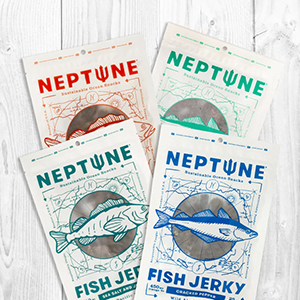
[00:08:52] Ray Latif: Well, I want to make sure that this time next year you are in the Boston area because this is when they typically hold a convention called the Seafood Expo North America, which is described as North America's largest seafood trade exposition. I actually attended the show last week because I'm a fiend for expos and can't get enough of this stuff, but it was pretty amazing. There were about 1300 exhibitors representing 49 countries all under one roof. And it's mostly exhibitors that are representing suppliers of fresh and frozen seafood. But there's also there were also a number of consumer brands represented at the show. Two that I really, really loved were Scout Canning and Neptune Fish Jerky. Now, Scout is a maker of premium tin seafood, including trout, lobster, mussels. I have one in my hand right here. As you can see, folks watching the video, this is their package. This is their package to Canadian lobster. The company states that their mission is to become the most trusted seafood brand in North America. It's a pretty ambitious goal, but they source from regional partners that meet the higher standard in seafood sustainability, noting that that includes reduced bycatch and minimal ecosystem impact. The mission is amazing. The products are phenomenal. The packaging and branding is really top-notch. I actually spoke with our design manager for BevNET, who saw that I posted this on Instagram. He's like, oh, I bought some of that stuff last year because the branding looked amazing and seemed to represent a really high-quality product inside. And that's exactly what he got. He also mentioned that he loved the branding that I saw from Neptune Fish Jerky, who also has a similar mission in terms of sustainability. Their mission is, quote, restoring humankind's healthy relationship with the sea. They make fish jerky in four varieties, including a sweet citrus ginger, a cracked pepper, a spicy Cajun, and a sea salt with juniper. The sea salt with juniper is the one that I tried, and it is phenomenal.
[00:11:04] Specialty Coffee: Yeah, it was actually cool because Neptune Snacks at Expo West, so they were everywhere. They were hitting both coasts. And I got to try the product too, and I thought it was really interesting just how they focus so much on traceability. And you can literally look at where the fish is coming from as far as the fishery and the fishermen. And each variety is a different type of fish, which also is interesting to me and a little bit different than other fish jerkies that I've seen.
[00:11:31] Ray Latif: Now, Jackie, it wasn't just seafood that you were talking about on Instagram over The Taste week. I saw some pretty fantastic products on your feed. You got any with you by any chance?
[00:11:42] Specialty Coffee: I do. I've been snacking on them. So I have Tudaloo, which is a line of functional trail mix. And it's interesting because I was looking at the ingredients and there's ingredients that I don't even, I had to Google what the function was. So for example, I don't know if you've heard of Makuna, but it's velvet beans and they have, they're high in dopamine. So they are like a natural herb native to Africa that helps with mental health. There's reishi ashwagandha, just a bunch of really great adaptogens in here. And there's no sugar added. It's just really simple ingredients, really tasty. And each SKU has a different function. So this one is slow your roll. So it's about relaxation, stress management. There's other ones that are focused on immunity, energy. I love the packaging's really fun and whimsical. It's cool. They have little characters on the back. They're based out of Austin, Texas. So it definitely gives me the Austin vibe.
[00:12:44] John Craven: Jackie, did you have to actually Google what Toodaloo means? Because that is a Grammyschneider word right there.
[00:12:51] Specialty Coffee: I knew actually on their website, they play with the word and they're saying, say toodaloo to refine sugars and all of the things.
[00:12:59] John Craven: Yeah, it means goodbye.
[00:13:00] Ray Latif: Grandma Shannon would be like, toodaloo.
[00:13:02] John Craven: Whenever we were leaving.
[00:13:04] Ray Latif: I remember seeing that brand at Erewhon when we were in LA for BevNET Live and Nosh Live last year. Yeah, the branding is striking. And I do like the term to-loo as well. There's actually, there's a famous episode of The Sopranos. It's titled to-loo, but they drop an F-bomb in between to-loo and loo. So yeah, good stuff.
[00:13:27] Stephen Caldwell: Love it.
[00:13:29] John Craven: Grandma Schneider, Angeline, she would never say it like that.
[00:13:32] Specialty Coffee: No.
[00:13:34] John Craven: She's so sweet and so short. She's so tiny.
[00:13:40] Specialty Coffee: Yeah. And I guess also looking at the packaging, they also have call it's for climate friendly and plastic neutral, which I'm starting to see on more brands moving forward. I think there's, you know, still needs to be a clear definition of what that means, but I think consumers are going to start looking at that to just look at packaging and look at, you know, the environmental impact brands have. And I do have one other brand called Shaman Raman. Adaptogens are all the rage. So it's Adaptogenic Superfood Ramen.
[00:14:14] John Craven: Does it contain ayahuasca? Shaman Raman?
[00:14:17] Specialty Coffee: It doesn't. It looks like it might.
[00:14:19] John Craven: Careful.
[00:14:21] Specialty Coffee: It even has little crystals on the packaging, but it's really the main items in here that are functional are it has ashwagandha and it has lion's mane and it has ginger and turmeric. It was pretty tasty. It was pretty much, you know, like your standard instant ramen where you have just noodles and broth. There wasn't much else to it. So I would say it would be a good base for something, but it's cool that they have that functional aspect and it's really easy to make. And I haven't seen that in an instant ramen before.
[00:14:52] John Craven: I tried Up To You Recover ray, which I got to try the beverage and they have two flavors, blood orange and peach mango. And it's a recovery Beverage Infuser after you, you know, after you work out, after you go for a run, 17 grams of protein, almost a thousand milligrams of electrolytes. It's tasty. I, I enjoyed it and I felt, felt good after, after my workout. So kudos to them.
[00:15:17] Ray Latif: It's called Up To You Recover. Up To you. I like it. I like it. Nice. I recovered recently from a soccer game that I played in on Sunday using some Wet Hydration. Wet Hydration is Wet Hydration beverage launched by entrepreneur Spencer Altschul who recently underwent a rebrand or undertook a rebrand for Wet Hydration. They come in four varieties. The one I'm holding in my hand is their peach pineapple, or it's made with peach pineapple flavor. Also has aloe vera and vitamin D. These are great tasting beverages. I love the rebrand. And I love that each bottle only has about seven ingredients. Really well done by Spencer and his team at Wet Hydration. So kudos on what you guys have created and what you guys are continuing to do. That stuff is definitely tasty. Yeah, absolutely. Also, thanks to Maxine's Heavenly, which recently sent me some of their new crispy cookies. Maxine's Heavenly is a maker of homestyle cookies that are sweetened with natural sugars. They had a chewy or fresh line of cookies. I don't know why I would call it chewy. It's soft, right? Soft bake is the way to describe it. But now they released these new crispy ones. They have a chocolate chip variety and a cinnamon speculoos crunch. Is that how you pronounce that? S-P-E-C-U-L-O-O-S? Is that speculoos? You can pronounce it that way.
[00:16:47] Specialty Coffee: Speculoos? Oh, speculoos, yeah.
[00:16:49] Ray Latif: Speculoos, yes. We'll call it that. You know, normally I'm a fan of softbake versus crispy, but Maxine's Heavenly has created something that I'm really enjoying as an afternoon snack with some tea or some coffee. That sounds good. Right? Doesn't it sound good? Yeah. That does sound good.
[00:17:05] John Craven: And I haven't had a chance to try Maxine's Heavenly yet, but speaking of softbake, you know who I can't stop thinking about is Brune Kitchen. You have to try them at the Startup CPG event at Expo West. And those cookies are to die for.
[00:17:21] Specialty Coffee: Tahini cookies. So good.
[00:17:23] Ray Latif: Tahini cookies. Yeah, Brune Kitchen. It was great to meet those folks. Actually, I spoke with those folks in a Twitter Spaces chat Expo West. We were talking about new products that people are going to be launching at the show. And it was great speaking with the founders. Great packaging too. Fantastic all around.
[00:17:39] John Craven: Great packaging. It's really unassuming, pretty packaging. And when you open up and you get to take a look at the cookie, you're just like, deer in the headlights because it looks delicious and it pays off.
[00:17:52] Specialty Coffee: Yeah, it definitely has the experience of like a fresh baked cookie.
[00:17:55] Ray Latif: It was quite a good find. Yeah. As folks who listen to this show on a regular basis know, we love Clio Snacks. Clio Snacks recently introduced three new additions to its lineup, including chocolate Greek yogurt bars, vanilla less sugar yogurt bars, and vanilla almond and granola and yogurt parfait bars. I tried them all. They're so good. I mean, like I think we talked about this as like Clio bars could be in literally in any time food. You can have it for breakfast, morning snack, lunch, midday snack, dessert. It just fits the bill for any occasion. They're so good.
[00:18:37] John Craven: It is an interesting snack because they are literally for any use occasion, which is very rare for any food or beverage.
[00:18:44] Specialty Coffee: And I love their parfait bars. I mean, I grew up eating, you know, McDonald's parfaits. And it's cool to see just like that evolve and can be like a grab and go thing, you know, for breakfast.
[00:19:01] Ray Latif: And the fact that these bars are all high in protein just makes them that much more desirable. I mean, the new vanilla almond granola and yogurt parfait bar has 10 grams of protein. The Greek yogurt bar has eight. The less sugar yogurt bar has seven and only one gram of sugar. Does Cleobart, do they do anything wrong? I think they do everything right, is what I'm trying to say.
[00:19:24] John Craven: I don't think so. I don't think so. Speaking of grab-and-go, Ray, we did get to meet up with our friends that have the weed-ish packaging, the Glownuts crew. I didn't get to meet them, but Jackie did. At Expo West. That was a highlight of mine from Expo. I'm so sad that I missed Kristen.
[00:19:39] Specialty Coffee: Yeah, I got to meet Kristen. I love seeing brands and how they, especially when they're backpack brands, um, how creative they get so that they stand out on the floor. And she had, um, a little satchel made out of her packaging and had like a cooler on her other shoulder, like just slinging glow nuts. It was awesome.
[00:19:58] John Craven: She did also send some to the office and I got The Taste them and those are, they're tasty. They are dense.
[00:20:05] Specialty Coffee: Very dense.
[00:20:06] John Craven: Very dense. Lots of flavor in each bite. Yeah, they're good.
[00:20:10] Ray Latif: Yeah, also a low sugar product. I think there's just under one gram of sugar per serving. But the thing I've loved about Glow Nuts over The Taste few weeks is their little videos, the founders videos that they do, that they produce on Instagram.
[00:20:24] John Craven: Eyes and Glows.
[00:20:25] Ray Latif: Eyes and Glows, is that what the series is called? Yeah. It's really entertaining. Like, it's just, I can't even explain what the vibe is. I think it's like, hilarious and awkward, but intentionally so on both fronts.
[00:20:42] John Craven: You just have to experience it because they try to keep a straight face. Monotone. Yes. One Of Course employees decided to tell me after the weekend, You're Kristen, you look tired. Well, yeah, I am tired. And then the kid in the background is like her daughter in the background is just crying and crying and crying through the whole thing.
[00:21:04] Ray Latif: It's just a really creative and different way that I've seen founders talk about their products, you know, on Instagram or Twitter. And I think people always want to say they always say, oh, I want to meet the founder. I'd love to know more about who the person is who's created this brand, so on and so forth. But they do it in a really disarming.
[00:21:20] John Craven: It's a cool way to go behind the scenes, too. They're not, you know, they're giving you like these little snippets without just kind of overdoing any of it. And you get a sense of what it's like to be a founder and the challenges. And then you get a sense of what people are saying about Glownuts. And it's cool. And I think it'll be fun if they actually, you know, go down the rabbit hole of, oh, these are what people didn't like about Glownuts. They did that a little bit. They actually did a little bit of when they took what could have been a negative and turned it into a positive. Like people were complaining that glow nuts were broken because they had a machine issue. And they came up with that little idea about glow nut collaborations, which led them to talk about other brands who have, you know, they've since met so, or talked to. So that that's, that's cool. What they're doing is really cool.
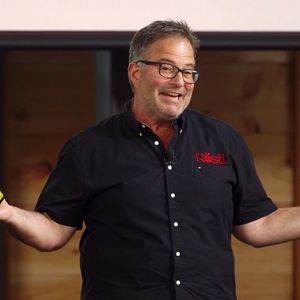
[00:22:06] Ray Latif: Okay, just before we get to our interviews for this episode, I want to talk about a pretty sleek device that we recently received here The Taste Radio. Now, infusing smoke into cocktails is typically something you see mixologists perform at high-end bars and restaurants. There are various methods for smoking cocktails, but the Student Studenglass Gravity Beverage Infuser takes it to another level. A countertop unit that functions similar to a hookah, the infuser features a design that is sophisticated and complex, yet simple to use. A hose attached from the infuser to a high-quality glass cloche imparts cooled smoke via a 360-degree gravity system to deliver a rich and smoky flavor to any cocktail. Now, we tested the infuser last week and it operated beautifully. I did, however, accidentally break the glass cloche, and so we'll be giving it another test in the near future once we have a new cloche. The video Of Course first attempt of the infuser in operation will be available at Taste Radio. In the meantime, stay tuned for more updates in future episodes. All right, now it's time to get to our featured interviews. We begin with Stephen Caldwell, the co-founder of Swiss Rosti. Launched in 2019, the company debuted with Eurosti, a brand of handheld, crispy-filled potato snacks that are based on a traditional food called Rösti, which is commonly consumed in Switzerland and other parts of Europe. Swiss Rosti's initial business plan was heavily reliant on in-store demos. However, the company was forced to shift its strategy due to the pandemic. An unexpected lift came from direct-to-consumer television platform QVC, where Steven performed cooking demos with uRosti and introduced viewers to the brand. The resulting awareness and sales helped build a foundation for Eurosti, which is now sold nationally at Whole Foods and is also available at Kroger, Gelson's, and Safeway locations, among other retailers. In the following interview, I spoke with Stephen about the origins and development of his first-to-market brand, how he landed his first appearance on QVC and the keys to driving trial and sales, and why he's bullish on food service and a new cheese-based line. Hey folks, it's Ray The Taste Radio. I am in Anaheim, California at Natural Products Expo West 2022. Sitting in front of me right now is Stephen Caldwell, the founder and creator of Swiss Rosti. Stephen, how are you?
[00:24:52] Mike Schneider: I'm doing great, Ray. Thanks for having me.
[00:24:54] Ray Latif: So great to speak with you. So great to see you in the flesh. Exactly. The Taste time I saw you in the flesh, I believe, was the Winter Fancy Food Show in 2020.
[00:25:03] Mike Schneider: Correct.
[00:25:05] Ray Latif: And I think the first time I met you was at the New York show, the Summer Fancy Food Show in 2019. And the reason I met you and the reason I found you is because one of the halls smelled incredibly good. And I was like, this is the best smell that I've ever encountered. Now, I know this all sounds like hyperbole, but it's not. This is the best smell I've ever encountered at a show like this. I have to find out where it's coming from. And I get to this booth. and you guys are making these delicious little potato, pancake, latke kind of things that you guys call U-Roasty.
[00:25:46] Mike Schneider: Correct.
[00:25:47] Ray Latif: Tell us all about your brand, the genesis of this, because this is such an interesting, innovative product. And the idea of Roasty, Roasty has been around, people know what it is, but in the form factor that you guys present it, it's really cool.
[00:26:02] Mike Schneider: It is, and it's something that I had no intention of actually creating until I tasted it. I actually was involved in another business several years ago when I was traveling in North America of all places, and I had been invited to a dinner catered in my honor. There were two gentlemen who were Portuguese in Brazil. One was a engineer that had spent nine years in Switzerland, and the other one was his cousin who had just recently graduated from culinary school. So Carlos asked his cousin who is the engineer? What should I do? And he said, you know what? I just spent nine years in Switzerland and I've been eating what they call a Swiss Rosti every single day where they shred potatoes They fry it they cover it with cheese or different sauces. So they figured out that instead of covering it in They filled these big entree size, so they would fill shredded potatoes in the bottom of a pan, fry them, and then load it with meats and cheeses and vegetables, and then cover it with shredded potatoes. They would fry it on both sides. Well, interestingly enough, it resonated with me when I tasted it for the first time. So I continued my travels, and when I got back to Portland, I told Lori, I said, I tasted this thing. Laurie being your wife. Laurie being my wife, exactly, my partner. And I said, you know, she goes, it sounds like a stuffed hashbrown. I said, that's exactly what it is from a descriptive standpoint. But passively I started trying to figure out, because I couldn't find them anywhere, that it actually had roots from Switzerland. And so the more digging I did, I found out that it originated in the canton of Bern, Switzerland in the early 1800s as peasant food, where wives would do exactly that. They would shred potatoes because they were cheap. They would hold leftovers from supper the night before. They would then fill it and then cover it with shredded potatoes, fry it on both sides. Well, that was sustaining the men in the fields all day. And it would also bring friends and family around the table as like the true comfort food, right? Crispy potatoes with cheese and meats and everything else. So I decided, you know what, I'm going to give this a shot. And that's how it all started.
[00:28:05] Ray Latif: bite-sized versions of the Swiss Rosti. It is incredible. These are, I mean, here we are at Expo West, and I feel like, once again, when people smell this, especially in the middle of the day when they're all hungry and they just want something that's indulgent but quick and on the go, like, that is the booth you want to be at. Exactly. So, when you had this idea, I mean, I think commercializing this concept, especially because, as you mentioned, you didn't see a product like this on the market before, how did you set about starting your business? Because it seems like if there's no mold, literally, cyber product, you know, what's your first move?
[00:28:44] Mike Schneider: I got to tell you, and that was the question I asked myself. It was daunting. And Lori said, how are we going to do this? Because I woke up one morning and said, you know what, we're going to do this. And so we right off the bat, I started engaging with the Oregon State University Food Innovation Center, which is just down the street from where we live in Portland, Oregon. So Sarah Massoni called me back and said, you know, I hear you're trying to fill a potato. And I said, yes, I am. And so I went and met with her, Lori and I did. And she said, so how big is it going to be? Well, I got to tell you, I tried to find a mold. that was small enough to where it would give a good portion, but not too small or too big. So I was able to locate that, and I started just making these in a two and a half ounce, 75 gram. So she just said, hey, listen, I'd like to commercialize it with you. I'd like you to work with my food scientists and our chefs at the university and come up with something that you can commercialize. And that's how it started. We went into ideation in October of 2018. We were able to create five flavors that we launched eight weeks later at her winter tasting event at the university in Portland, Food Innovation Center, and the line was out the door. And, you know, I really wanted to know if I had something, right? I wanted to know if it resonated. And the event was over at 7. The line was still out in front Of Course booth at 8.30. And Sarah came by and said, listen, we've been closed now for an hour and a half. So I had to respectfully say, hey, thanks for coming. The very next morning, I had vendor agreements from two chains, local chains in Portland, totaling 31 stores that said, we want to put you on shelf. And at that point, I said, I think I've got something here. And then we ended Up To Fancy Food Incubator Village in January 2019.
[00:30:32] Ray Latif: Well, score one for OSU Food Innovation Center. I mean, you know, these food incubation programs that are all over the country, I feel like so many ways they're underutilized because they offer so much to early-stage entrepreneurs in terms of support, in terms of guidance on formulation, packaging, etc. But what was the most impactful part of working with OSU?
[00:30:56] Mike Schneider: The most impactful part was how easy it was once I made the decision to utilize their expertise to build something like this, because as soon as I got there, they had a team of food scientists and chefs that just said, show me how you've been making it so we can take it from there. And within a week, They were making it. They were creating exact formulations. They were creating exact filling size and exterior size and really educating me on how all of this works to be able to do this. It was amazing.
[00:31:34] Ray Latif: Have you been able to maintain the recipe that they gave you as you've scaled?
[00:31:39] Mike Schneider: Absolutely. We've maintained the flavors that they've created that we decided to launch. And we've taken the same formula to create our newest flavor, our melty three cheese, and taking the same formula that we use with the Swiss raclette and the twice baked potato that we have on shelf currently to use the same ratios. And we've increased some of the seasonings on the outer or the shredded potato part and have done some different formulations on the inside from just tweaking it from a flavor standpoint using some focus groups, but for the most part, everything that happened at OSU has carried forward and has made almost seamless as we move into different co-packers to produce it.
[00:32:21] Ray Latif: Well, you got one hard part done, which is actually formulating a product that didn't exist prior to you guys launching it. The other hard part is introducing the brand and educating consumers about the brand. What was your approach to educating people about how to use the product? Was that as difficult as it might seem?
[00:32:42] Mike Schneider: If I have people in front of me where I can actually get people The Taste it, the best thing that happened pre-COVID was being able to get in stores and get it in people's mouths, just like we did at Fancy Food Show, right, when we first launched. As soon as they bite into it or taste it, they immediately beeline to the freezer section. But that moment between the education where I can't be in their kitchen or I can't see them at a show was a bit difficult explaining what a Swiss Rosti is because most people don't know what a Swiss Rosti is. And so as I describe it in social media and when I'm talking to people at a demo, hot demo, You know, a Swiss Rosti is a crispy, shredded, filled potato, like a stuffed hash brown or an oversized tater tot filled with melty cheese. As soon as I describe it like that, people get it. They understand that it's like a stuffed hash brown. It's got its own roots. You had mentioned earlier, it's like a latke. It's like an empanada or a croquette. It's truly a shredded potato, which was even part Of Course IP. We have a utility and design patent on a filled potato. was how to process the potato to be able to keep that consistent crispy shred and not be mashed or, you know, underdone. And that's where we really nailed it. But it's explaining it to people all in the same breath, where it's a crispy, shredded, filled potato, stuffed hash brown, oversized tater tot, if you will.
[00:34:08] Ray Latif: You know, this brings up a good point about demos and the idea of educating the consumer via demos. And pandemic, two years, we couldn't do demos. You couldn't do demos. But there was a way that you could still be in a kitchen, show folks how this product is made, talk to them about what it's all about. And that was via QVC, which is such an interesting channel, such an interesting alternative retail channel. What did you see as the benefits of being there?
[00:34:39] Mike Schneider: Well, we had just left Incubator Village in January of 2019 and had our first booth to ourselves, Rosti Booth, in June of 2019 in New York. QVC and their executives had gone to that show to look for new innovation, and they came by us after smelling the hallway, all smelling of this crispy potato goodness. They came by and The Taste it and we talked to them for a little bit and they said, you know what, we've never had anything like this on air. And we believe with your ability to present it as not only the founder creator, but having the experience to be able to show people on camera, on set. how to get it in their mouths and how to really build a business on this, we'd really like the opportunity to have you on air. So it was about four months later, it was October of 2019, that my very first airing was on their number one show on television, which is In the Kitchen with David. And David, oh my gosh, what a daunting individual, but he made me feel so comfortable. Even my kids said, oh my gosh, Dad, you look so small next to him. But it was amazing. I got the happy dance. The Taste it on air. It's really the expression and the feeling you get when you have something so good and the anticipation of tasting it, and then the after effect blew people's minds. We sold out that episode and the phone started ringing with representation on people wanting to represent me for that channel.
[00:36:07] Ray Latif: How much of the benefit of being on QVC is about the marketing, the promotion, the ability for people to see your brand, Swiss Rosti, for the first time versus the revenue component?
[00:36:18] Mike Schneider: I got to tell you, it's twofold. Number one, it's all about the cheese pull, because you can't touch it, taste it, or smell it through the television. But if you can have a visual that is so delicious and so compelling, and so if you look at all my QVC episodes that are now living on YouTube, every single one has a cheese pull competition. And you're breaking it in half and pulling it apart. Exactly. We're breaking it in half, pulling it apart on air. And it's one of those things that as soon as you see that, the sales, the ticker, as it were, just really starts to jump up. And people all of a sudden recognize that when that camera zooms in on that crispy shred on the outside with that cheese just flowing on the inside, it just grabs you.
[00:37:06] Ray Latif: Every retailer has, it seems, distinct advantages and disadvantages, whether it be a Whole Foods, a Walmart, a Costco, a QVC. What do you see as the biggest advantages for folks listening right now? What are the biggest advantages of being on QVC? And what are some of the things that you wish you could change if you had the ability to do so?
[00:37:28] Mike Schneider: I would say number one, margins. A product has to be able to come in because the algorithm on QVC, it's a whole nother planet. It's not retail, it's not food service. It's literally its own way of being in studio and their algorithms, you really have to fit into it. It took us about two months to figure out if it was really profitable for us in a way that made sense. And so it takes a while and it's not for everybody. I've had people come to me over The Taste couple of years saying, can you help me get my product on QVC? Can I be introduced to your, you know, representation? And I mean, I love, I mean, one of my, I feel key skills is actually recognizing innovation and in something just as I did with the Swiss Rosti, but it's really for the few, products that you can get on there that you can present it well, that you can show it well, and get that person's taste buds at home to recognize what it is because it's not going to be the least expensive, right? It's not a competition between people going, seeing it on QVC and running out to Whole Foods. We have completely separate offerings where we're offering 24 and 36 pieces and or 30 pieces, 10 of each flavor. We really customize it for them that makes sense for both parties. There's a lot of work that goes into that. But once that particular SKU is signed on and signed off on, and I get on air, everybody recognizes that, if this is gonna win on this airing. And I get only, you know, I get seven, sometimes Up To 12 minutes, depending on how the sales are going in that particular episode. And I've got the producer in my ear the whole time, like, keep talking it up, keep pulling that cheese. You know, she's loving it. And that's what it's really all about. Every single episode, some we sell out on. Those are big wins, you know, for us. Some I get on on a Wednesday afternoon at 7 o'clock Eastern. We may not do as well. But the bottom line is, She, and I say she because even when you go into the QVC studio, 99% of QVC buyers are women. And to be able to recognize that they're either moms at home looking for an alternative that they can get in the mail, put in their freezer and pull out and quickly make these for their, you know, for their children as after school snacks, for breakfast, for lunch, for a side at dinner, for the ball game. This is an everyday product that resonates and it's been resonating on QVC ever since.
[00:39:58] Ray Latif: How many times have you been on QVC? How many episodes?
[00:40:00] Mike Schneider: North of 40. I haven't counted them all, but I'll be hot again next week when I get back from the show.
[00:40:06] Ray Latif: You're in Whole Foods nationally, hundreds of stores. What's interesting is that you're with QVC or you sell your products on QVC. non-traditional retail, alternative retail, if you want to call it that, natural retail. You're also in food service. A pretty big deal recently came your way. And I always feel like food service seems to be the sweet spot for you guys. Although with everything going on, I wonder how you manage that process. How are you managing three distinct channels? And why is food service right for the brand now?
[00:40:42] Mike Schneider: That's a great question. And the short answer is because it just works. It's a crispy potato. I decided to hold off on creating a food service product when COVID hit because we really needed to focus on the retail that we were in. We weren't able to be doing in-store demos. Food service is something that I decided to commit to about a year ago, and I knew I wanted to do it because of the attention that we had been gaining from the C-Store channel, from restaurants, from campus universities that have been serving the same thing for years, tater tots, hash browns, and french fries. Those aren't going away. You know, it's a $23 billion industry for these fried potatoes, right? We just recently signed an agreement with a division of Circle K called Holiday Markets in Minnesota. So we will launch in June in 525 stores. And we not only are going to launch in their breakfast set with a ham and cheese, but we were able to get the attention of the lunch set person, Sarah, and she took us in her lunch set as well. So it was kind of a one-two punch. We're doing ham and cheese for breakfast and we're doing cheese and jalapeno for their lunch set.
[00:41:58] Ray Latif: You know, it's one thing to talk about how great your products Taste Radio how they perform as an anytime snack, but investors want to see velocity. Investors want to see something that has a long runway for success. How are you talking to that segment of the industry? How are you talking to investors about what you're doing now and what you plan to do in the future with this brand?
[00:42:24] Mike Schneider: What I'm showing with investors today is that launching just over two and a half years ago on shelf from a napkin, creating something that's never been done before in a channel, which is the second most consumed food in the world, potatoes, right? to be able to take that to a level of sales and velocity. And back to my point about using Whole Foods as the perfect platform to test and learn. Right out of The Taste, it took us about three months to get set in all national stores. So they launched this in July nationally, but it was really late September that we had been set in all the stores. Interestingly enough, going into fall, all the Northeast stores, right out of The Taste, no promos. 9 to 11 units per SKU per store. We were doing in the mid-20s and low-30s right out of The Taste, and nobody even had heard of us before. Same happening in the Midwest. So there's some seasonality, and then there's some geographic places where the data of regions eating potatoes in the Midwest and the Northeast are much higher, right? But it really proved to us that You know, we need to prove that out and that's what we're doing today because the standard is to really be at three skews per store per skew per week Right and we're about there and we've only you know, we've only been national for just under six months So that's really where we're proving it and we want investors to know that that's my absolute focus
[00:43:55] Ray Latif: Stephen, I love speaking with you because you speak with such passion and commitment to what you're doing. And I think from the first time I met you, I saw you, you know, behind a booth at Fancy Food Show, and you're just like, come on, come one, come all, try this product. And it wasn't very hard, because again, your product smells so good. But you bring such passion to this industry, and I love it. And I love seeing it. And for someone who isn't as passionate as you, they should be, because this is fun. As much as it is, challenging and crazy and frustrating all at the same time. But if you're not having fun while you're doing it, maybe you should check your reasons for being in the business in the first place.
[00:44:35] Mike Schneider: Exactly. Absolutely agree with you.
[00:44:38] Ray Latif: Well, Stephen, it's been so great sitting down with you. Thank you so much for taking the time. Really excited to see where the brain goes from here. And now I need some Rusty.
[00:44:45] Mike Schneider: Stop by first thing in the morning. We'll have him out for you. And I appreciate the opportunity. I've been listening The Taste Radio, and I respect every part of what you bring to this industry. And I really, really thank you for this opportunity.
[00:44:57] Ray Latif: Thank you so much for saying that. And I will be first in line tomorrow morning.
[00:45:01] Mike Schneider: Sounds great. Thank you, Ray. Thank you.
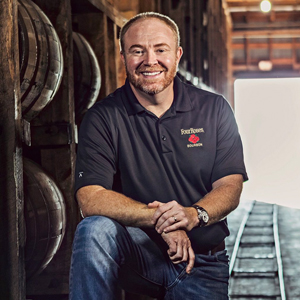
[00:45:05] Ray Latif: Next, we're joined by Brent Elliot, The Master Distiller for Four Roses, a highly awarded whiskey brand known for its Kentucky straight bourbon. Established in 1888, Four Roses didn't always have the cachet that it does today. The brand's renaissance began in the mid-1990s, when now legendary Master Distiller Jim Rutledge took the reins at Four Roses Distilling and Warehousing Operations in Kentucky. Brent, who was educated as a chemist, came to Four Roses in 2005 and was named the brand's Master Distiller a decade later. In the following interview, I spoke with Brent about Four Roses' evolution over The Taste 25 years, aligning innovation with the brand's standards for quality and consistency, and his take on the growth of RTD cocktails and non-alcoholic spirits. Hey folks, it's Ray The Taste Radio. Right now I'm excited to be sitting down with Brent Elliot, who is The Master Distiller for Four Roses Bourbon. Brent, how are you? Doing great, Ray.
[00:46:10] Swiss Rosti: How are you doing?
[00:46:11] Ray Latif: Doing fantastic. I can see you're calling from what looks like your office. I see a whole bunch of bourbon back there, so I guess it could be your home, but I think you're in your office, right?
[00:46:21] Swiss Rosti: Well, I have a similar setup at home for these types of events now that virtual is kind of the new norm. at least till COVID passes over. But yeah, this is the office. I'm here in Lawrenceburg, Kentucky, right here at Master Distiller.
[00:46:35] Ray Latif: Brent, you've been with Four Roses for 17 years. The brand itself has evolved quite a bit over The Taste 25 or so. Back in 1995, when your predecessor, Jim Rutledge, took over as Master Distiller, the brand didn't really have the cachet that it does today. Can you talk a bit about the history of Four Roses and how it has become this bourbon brand of prominence today?
[00:47:00] Swiss Rosti: Yeah, you're absolutely right. It's kind of a weird history that we've had. It's pretty unique because at one time we were a prominent brand, a prominent bourbon brand in the U.S. and we have a long history. We began, we were trademarked in 1888 and we were sold in the U.S. since then, even during Prohibition. the Paul Jones Company, the Frankfurt Distilleries, they had a license to sell bourbon for medicinal purposes. So we've been on the U.S. market continuously up until The Taste 50s. And while you could still get Four Roses in the U.S., at that time, it was shifted to a blended whiskey. So it was an American blended whiskey, kind of in the style of Canadian-style blended whiskeys. And that was all you could get on the U.S. shelves from The Taste 50s up until 2002. And meanwhile, we were exporting the bourbon to Europe and Japan. So we were always kind of well-known and still are in these overseas markets. But here in the U.S., the reputation of the brand and the quality, the perception, it all declined from that period in The Taste 50s all the way up until 2002. And at that time, we were purchased by Kirin, the Japanese beer company, and they brought us back. And it's been nothing but growth and sort of recapturing that past glory since then. Because we've always known we had a fantastic bourbon, just the problem was you couldn't get it in the U.S. Obviously, we're back now, and every year we're growing steadily. We're basically getting more people to try our brand. And that's really, I think, all it takes. The awareness is one thing, but the awareness and then actually being aware of the quality, the variety in Natural Products. I think once people cross that threshold, the brand really, people embrace it, and the brand just kind of propels itself.
[00:48:53] Ray Latif: You've always had a great bourbon, known for quality, and you started out in the quality assurance department, right?
[00:49:00] Swiss Rosti: Yeah, my backgrounds in chemistry, I never really thought I'd be, well, one, in a quality control environment, or especially making bourbon, but it just so happened that things lined up perfectly for me, and that's exactly where I started out, utilizing my experience with different analytical techniques that are used in the industry.
[00:49:20] Ray Latif: You know, I think this is something that might surprise people. I did speak with The Master Distiller, excuse me, The Taste blender for Redemption Rye, Dave Carpenter, a few months back. And he also talked about how there's a lot more chemistry involved in major distilling operations. And a lot of people from chemistry backgrounds and educations working in the industry, how do you align formal education, formal chemistry education, with the on-the-job training that your predecessors have been perfecting and refining for so many years?
[00:49:56] Swiss Rosti: You know, if you look at the science of how bourbon is made, you know, that's really remained unchanged. What's happening on a molecular level, you know, through fermentation, distillation, aging, all that was kind of figured out before anyone really understood the science of it. So at that time, it was essentially just an art, and it was a practice that was handed down, and it was not really a formal type education. It was just sort of an apprenticeship for anyone. This was when a lot of people were making it, when you had somewhat like a moonshining type environment, or it wasn't necessarily an industrial process at the time. But through all the many experiments, it just kind of evolved as people continued to work the process, and it kind of found its way you know, where it is today. A good example of that is like the sour mashing process. You know, that was done prior to us even understanding why we did it. You know, distillers realized they took a little bit of The Taste batch and put it in with the new batch. It created more consistent and better whiskey. And we know now many of the reasons why that is. My point is there's always been science underneath everything that's done. Today we're fortunate with the technology and the increased attention to the process and increased understanding of the science behind it. We can monitor the processes. We really understand what's going on to a degree. I mean there's so much going on that it's impossible to know and control every little bit of the process. Science will take you so far. And some of that's not really changing anything that was done before, but understanding it and making it more consistent. But there's always a lot of room for art, a lot of room for that handcrafted experience to come in and play a role. And again, it's because there's so many variables that go into every single barrel that comes out Of Course warehouse. And it begins with the grains, for example, different growing seasons, different weather during fermentation, different fermentation profiles. distillation. We have all these controls to make it exactly the same each time, but it's not always exactly spot on. And that's why we always have to have that human interaction. It starts with the smelling and tasting. So that's done all through the process. But we have the capability of pulling samples, and we do, to test how the fermentation is going, what the compounds that we created through the fermentation and were passed through the distillation. And we can look at all that and tell you exactly what's in there at what concentrations. So there's a lot of science, but really for the final quality of bourbon, and that's what's interesting, you know, when you talk quality control about bourbon, it means a lot of things that sort of, that it shares with other industries, but at The Taste of it, when you're talking quality of bourbon, you're talking taste, you're talking smell. So there is that, inherent link between science and art that goes into it. Science will take you so far, but you still have to have that experience and that art and that love the spirit to really make sure that what you're producing is as good as it can be.
[00:53:07] Ray Latif: So from what I'm hearing, chemists make great distillers, but it's not necessarily something where a chemist can be a great distiller without the apprenticeship that you were talking about.
[00:53:20] Swiss Rosti: It's a little bit of both. It helps to have an understanding of both sides of it. You can have all of the understanding of the science and the world behind it, but then without an apprenticeship or without working in that environment, there is still a lot of that hit and miss until you really understand the art of it. And the flip side is true, too. You can work on the art side of it, and that would be probably strictly blending without understanding why the different flavors are created through the processes. And you can approach it that way too, but to have them both, that really just gives you a deeper understanding of the entire process.
[00:53:58] Ray Latif: I'm always amazed by folks like yourself who have to create a consistent product from one batch to the next, especially if you are producing at the volume that you're producing at. What are some of the ways that you've attempted to maintain that nose, that palette, the mouthfeel of Four Roses that end consumers are expecting from batch to batch?
[00:54:26] Swiss Rosti: Okay, well, I'd say, you know, as an industry, the consistency is greatly improved, and that's thanks to, you know, the technology, the tighter controls over the process. For us, and you bring up a good point, consistency is so important. You can have a great whiskey, but if you pick one up off the shelf this month, and six months later, you pick another bottle off the shelf, and it's not the same, you're disappointed. You know, better, worse, whatever, that's, we're missing the point there, because we want the consumer to be able to expect that same profile all the time. And fortunately for us, the way we do that, again, because there's so many variables all through the process that we can't rely on any two barrels or two batches to come out exactly the same. So we produce 10 different recipes. And this is also part of what makes us so unique. We create 10 different bourbon recipes. Each one has its own flavor profile. With that, we have a palette of these 10 different flavors that we can use in different proportions, different recipes for our different products. And by doing that we can control that final flavor of what's in the bottle by tweaking and changing those proportions and percentages. And we've done that forever. That was really sort of a Seagram's philosophy that was carried on to us. The quality is consistency. And we still do that today. But, you know, we've taken the 10 recipes one step further. And instead of just using them for consistency only, we also use them to create variety across Natural Products. So if you're tasting our Four Wheels Bourbon versus Small Batch versus Small Batch Select and so on, each one of those, there are some differences in proof and age. But more fundamentally, the differences are in the recipes that are used for each of those. So, and I can go more into that if you want later, I'll probably go through the products and explain why they're different and what recipes create those different flavors. But that's for us how we achieve that consistency. And so as someone blending, now it's important to know what that final flavor profile is supposed to be. And it's important to know what all those base recipes are supposed The Taste like at five years, six years, seven years, eight years, because you have to bring all those together And this is a continuous process because that aging, it's a moving target. You know, I can have a barrel or a batch sample from the warehouse today and make notes and decide where it needs to go. But six months from now, that profile is going to be different because it's aged an extra six months. So we're always having to pull samples, adjust the ratios and the different formulas and bottle that accordingly.
[00:57:06] Ray Latif: You know, when I think about your role and your position within the company, I think about you being as much The Master Distiller as you are a steward of the brand. You know, you mentioned that the brand Four Roses has a long history and certainly over The Taste two or three decades, that heritage has become even more storied and important. How do you consider your role as a steward of the brand
[00:57:37] Swiss Rosti: That's a good question. I take that very seriously because we do have a long history, a lot of heritage. The people through The Taste 130 plus years that have worked to bring Four Roses to where it is, that sort of makes it a daunting task because it's a brand that has a lot of equity. It's very well respected. And especially since The Taste 20 years, we've come a long way to kind of reclaim that position of respectability within the the Kentucky straight bourbon whiskeys. So, I mean, I feel a sense of pride for that. You know, all the people that are here and many people here have been part of that growth, that resurgence in the Brad Avery The Taste few decades. And I think we all feel a sense of responsibility for that. And, you know, in particular, because I am The Master Distiller, I understand that people, especially in my role now, because In the modern masters, masters or a lot of that role is talking to people it's out talking about the brand it's representing the brand where you know 3040 50 years ago that wasn't so much The Taste.
[00:58:41] Ray Latif: Now, Brent, when you're out and about meeting people, I have to think that you're meeting a lot of younger consumers as well, folks that are not familiar with bourbon, that never really considered bourbon as a beverage of choice. And there's as much convincing as there is talking about why Four Roses exists and tastes the way it does and the history behind the brand. How are you attempting to attract new consumers to the whiskey category? What's moving the needle for them, these new and younger consumers?
[00:59:11] Swiss Rosti: You know, that's a question I ask sometimes because people are just coming to the category. The Taste thing I am is a salesman. And I'm happy about that because honestly, I don't ever have to sell for us. And I don't try to, like, if I'm out talking to people or visiting with people that are here at Master Distiller, I'll tell them exactly how we make the uniqueness. And I'll explain to them, I'll say, you know, this, the way we do things, you know, it's unique and it creates this flavor profile and know, Of Course, it's my personal favorite. But if you go to some other distilleries, you're gonna find different flavor profiles. And it's all about finding what you like the best. Fortunately, I feel like as long as people try the Four Roses, you know, they tend to buy it again, or they gravitate to it. So it kind of sells itself. So really, what I offer is maybe the story, which is very unique and very interesting, the history, and then talk about the uniqueness. And then, fortunately, When The Taste it, that's kind of the selling point. But I don't ever feel like I'm trying to sell the brand. I'm just answering questions, representing the brand to talk about how special we are or how unique. And then ultimately, I think the liquid speaks for itself.
[01:00:23] Ray Latif: Well, one way you can certainly extend the story is to create new products, bring new products to the Four Roses brand. This is something you mentioned earlier. You've introduced a couple different expressions of Four Roses. Can you talk about how those relate to not just the present state of the brand, but its past and future as well?
[01:00:46] Swiss Rosti: With the new products, that's always interesting because it kind of goes back to thin recipes again. When we're creating a new product, you know, we do it for like for a limited edition, for example, we do it for the obvious reasons, because the consumers want to try something new from Four Roses. They want to see what we can do differently each year with some extra age product at barrel strength, not chill filtered. But we also choose to use that platform to kind of illustrate our versatility with the 10 recipes. So we're always trying to create something different. And that was also true with our small batch select, which we released in 2019. That was on that same small batch platform. That's the platform we typically use to use the different recipes and different combinations to create something totally unique. And when doing that, we have our standard products that are all fantastic. There's an array of flavors, something for everyone in there. But the limited editions, those are the kind of bourbons that just by nature, whether it's us or someone else producing, we can't really do a high volume because these are extra aged, the most premium, most mellow aging barrels that we have, hand-selected and mingled together to create that perfect blend. So that's kind of the special release that does call some attention to the brand because those are the ones that typically win awards or create a lot of buzz. Something as a whole, it elevates the perception of the brand as a whole, brings some excitement to the brand. And for me personally, it's like the most fun I have each year is pulling all these old batches together and sitting down in the lab for a couple of weeks and trying to hammer out something that's totally unique, that's mellow, that's ultimately just delicious. It's a great platform and it's a great product and that's really when you talk about new products, those, and then we also have our private barrel program, which is not really a new product. It goes back to 2007, 2008, I believe is when it began, but those are single barrels. So that's more about just pulling the curtain back and letting consumers see what we're always talking about. The uniqueness for our 10 recipes, you can taste it in all the different products, but to actually really be able to see on a granular level, just what we're talking about. We talk about 10 recipes, you know, the private barrel program gives people the opportunity to try those individual recipes. So that's also very exciting for the brand. It really helps promote the uniqueness and it gives the consumer something very unique and something very Four Roses.
[01:03:25] Ray Latif: Now, one of the hottest trends in spirits is ready-to-drink cocktails. We're seeing seemingly a new one come out every two, three minutes, if at least it feels that way. We're seeing big companies get into the space, upstarts launch new products. What do you think in general of this rise in ready-to-drink cocktails? And did we ever expect to see Four Roses jumping into the space?
[01:03:51] Swiss Rosti: I think they're fine. I've tried a couple. They're not personally my thing. I've said it before, and I've tried something like, oh, well, that's surprisingly good. I'm not just opposed to it on principle or anything, but I think it's in many ways good for the category. I wouldn't want to do it at Four Roses, but I don't have any problem. If anyone else does, I don't think, oh, they're ruining the brand or that's detrimental to the brand because I don't see how it could be. I think the people that if I'm out of my position and I'm just a casual drinker of bourbon brand X. And then I see that bourbon brand X has a canned version of brand X and cola. I'm not going to all of a sudden think, oh, well, this must not be that good if they're having to do that. Or I wouldn't come to any conclusion other than, oh, they're still going to be making their straight brand X. And then I guess they're also going to do this for another segment of drinker to whether it's, you know, to fill a whole summer gap in their portfolio somewhere else, or again, to be positive, maybe bring more people or introducing more people into that spirit through that vehicle. I would see it that way. So I don't really see it as danger for the category. I think most people understand that there is a clear line between, in this specific example, an RTD and a bourbon. Now you start getting into flavored whiskeys and some of that. Sometimes the lines might get blurred, and there could be some detrimental side effects to that as far as perception, what people understand, and blurred lines within the category. But for the most part, at least especially with RTDs, I think people make a clear distinction. That's one thing, and straight bourbon whiskey is another.
[01:05:41] Ray Latif: Well, I can think of a brand or at least a couple of brands that are into the RTD space with those types of bourbon and colas or whiskey and colas. And they're, you know, relatively broke brands. I don't think anyone's going to be surprised if the brands are like Crown Royal and Jack Daniels. You know, we've even seen smaller batch brands like Jefferson's introduce a bottled Old Fashioned as well, or I think that might be a bottled Manhattan. But I haven't seen too many brands tap into another I guess I won't call it a hot trend but a trendy talking point for the industry and that's non-alcoholic spirits. Now this is something where I feel like it could be very frustrating to Master Distiller like yourself because the idea of non-alcoholic spirits is just it's totally antithetical to what you do. And going back to this notion of the story of the process, of the history of the brand being really important, I think changing the way that you do things, or at least changing the way that you do things, even for one product, pretty significantly affects that story, just as it does, I think, with new technologies like rapid aging. which basically, and correct me if I'm wrong, removes the barrel element from the aging process. Have you looked into rapid aging at all? I mean, do you know much about that process? And I guess, what are your thoughts on it?
[01:07:14] Swiss Rosti: Yeah, I know that's something that as an industry we've been trying to do for years because that's our biggest challenge is waiting. But I personally think that even if someone found a way to successfully rapid age, you know, make an eight-year bourbon in six months. There might be a market for it, but most of the people, it kind of goes back to what I was saying, what people appreciate about bourbon these days is that it is unhurried. It's time-honored in the way we make it. So I think a lot of the people that actually love bourbon for those reasons, they want their bourbon aged. They like the idea that that spirit had to sit out in a barrel out in the countryside for six summers, seven summers, seeing all four seasons every year just gently developing those flavors. You know, there's something to that. Financially, it's terrible. It's the cost of warehousing, barrels, the taxes paid. It makes no sense in any way except sort of the romantic identity of what bourbon is. But, you know, I know some of the things that are tried out there, you know, Of Course, like the smaller barrels, there are ways to try to oxygenate to create some of the reactions. There are a lot of different ideas, a lot of things being practiced out there, and I've tried some. And I've seen some, you know, I don't know if I'd call them some forward or somewhat positive results, but I haven't seen anything that really captures what we capture with pure time in the wood. And I think there are reasons for that. I think, you know, if you, for example, small barrel, you will get some of those barrel notes quicker just because of the volume to surface area ratio. You're going to have more contact with the wood per unit volume of liquid over any given period of time. So you're going to get some of that color, some of those wood notes a little bit faster. But some of the things that you're not going to speed up are some of the reactions that take place. In that time in the barrel, there's a lot that goes on. You have reactions. from the original compounds in the distillate with the original compounds in the wood, and you have the air that gets in, you have those reactions. So there's a lot of little things going on very slowly that you have to have patience for. They're going on in that liquid through that aging. And I think those are some more nuanced flavors that really make bourbon special. And that's, again, I was mentioning that art part of the processes, you know, we have, we can have two barrels side by side. And same liquid went in the barrels received the same day from the same coverage. And yet eight years later, we pull them out, and they're different. And we may never understand why, you know, I don't know if it is it worth going in and analyzing every bit of that wood in every way possible. And all the temperature variations all through that barrel, the amount of oxygenation that's taking place. There's so much that goes into all those little differences. But my point is all those little things that happen are so important. And those reactions, those time dependent reactions are a big part of it.
[01:10:30] Ray Latif: Brent, once again, so great speaking with you today. Thank you so much. And I look forward to seeing how Four Roses evolves over the next, well, you've been there again, 17 years, over the next 17 years.
[01:10:41] Swiss Rosti: Well, thank you, Ray. It's been a pleasure. And yeah, again, I look forward to meeting you in person.
[01:10:45] Ray Latif: Thank you very much. All right, that brings Up To the end of this episode of Taste Radio. Thank you so much for listening, and thanks to our guests, Stephen Caldwell and Brent Elliot. As always, for questions, comments, ideas for future podcasts, please send us an email to askattasteradio.com. On behalf of the entire Taste Radio team, thank you for listening, and we'll talk to you next time.