[00:00:08] Ray Latif: Hello, friends, and thanks for tuning into Taste Radio, the number one podcast for anyone building a business in food or beverage. I'm Ray Latif, the editor and producer of Taste Radio, and with my co-hosts for this episode, John Craven, Jacqui Brugliera, and Mike Schneider. In this episode, we're joined by Babak Bina, co-founder of Boston's BCB3 Hospitality Group. From fleeing revolutionary Iran to washing dishes at 13, Babak shares how a dedication to hospitality and passion for cultural cuisine fueled his journey to building some of the city's most celebrated restaurants. We had a fantastic meetup last week at Torchy's Tacos at their Escarpment location, which is pretty far south in Austin, further south than I think I realized. I think Escarpment is, uh, means middle of nowhere. It's not that far. But it was pretty close to Sovereign Flavor's new facility. Sovereign Flavor's being a partner for the event and one of the leading flavor companies in America. And I was actually kind of happy. They were like, our new facility, our new manufacturing facilitating R&D lab is only about 15 minutes away from the venue. And so when I sat down with David Ames for a conversation at the meetup, people were like, this is fantastic. I mean, we could just go over there right now and take a tour and sneak peek. People seemed really receptive to that idea actually.
[00:01:36] Babak Bina: It also wasn't too far away for that guy who parked his Lambo in two spaces to get there on a full tank of gas.
[00:01:43] Ray Latif: Yeah, okay. There were some expensive cars.
[00:01:46] Babak Bina: I mean that was just amazing to have an event at Torchy's Tacos. I've been going to that place since it was a truck and it was really good to hear you sit down with Mike and hear a bit about his journey.
[00:01:55] Ray Latif: Yeah, Mike Ripka, the founder of Torchy's Tacos, has built a pretty impressive chain of restaurants, over 140 at this point and more to come. Torchy's a great partner for the event, as well as Matriarch Wealth Management, as I mentioned, Sovereign Flavors. Better Sour, great to see Bella Hughes. Always. skew Shauna Golden key ingredients. I sat down with Bella for a conversation, as well as Steven Santangelo from Matriarch, David Ames, as I mentioned, Andrea Hernandez. That was a crowd going. She's the founder of Snack Shot. And of course, Michelle Breyer, the CMO of Skew. We're going to be featuring interviews or those interviews in particular at the end of May. Stay tuned for that. But in addition to those folks, I love seeing so many of the up and coming and emerging, well, founders of emerging brands based in the Austin area. Jimmy DeCicco, obviously the founder, one of the co-founders of Super Coffee. Great to see him there. David Jakobowitz, who is the founder of Nebula Snacks. Do you get to try some of his?
[00:03:05] Babak Bina: These are great. Yeah. And Christine Tran from Nuffs was there as well.
[00:03:10] Ray Latif: Yeah. Christine, so great. Nuffs, what a fantastic brand. Love seeing her there. Hema Reddy, the founder and CEO of Wonder Eggs. I got to catch up with Hema. She's the best. Hema is the best. I think overall, I know we mentioned him last episode, Madhu Sharaf, who is the founder and CEO of Kimbala, which is the maker of Chai. Jackie Stone from Afia, who is the CMO of Afia. Yasin Sebai, he's one of the co-founders of the brand. I've only mentioned a handful of people, but out of that entire group, it just felt like the number of awesome, really interesting, differentiated brands was fully on display at the event. Yeah, good stuff there. The conversations were really good. Yeah, absolutely. So our next event will be in Chicago in August. August 16th, I think we have it down for. So stay tuned for more details on that. Now, some folks would probably say, hey, Ray, if the front man from Red Hot Chili Peppers and the 13th lead from that movie Point Break with Keanu Reeves, everyone knows that movie. His name is Anthony Kiedis. If he were coming out with an RTD coffee company, that should be your lead for this episode, shouldn't it? What's the price point? Is it free? Because I hear he likes to give it away, give it away, give it away.
[00:04:31] Hospitality Group: Oh my goodness. Here we go. Number two.
[00:04:34] Ray Latif: I can't even classify that as a dad joke. That's weird.
[00:04:39] Babak Bina: As my dear friend. I love the chili peppers, man. So I can do more chili peppers.
[00:04:43] Ray Latif: As my dear friend, Tony Cataldo, who is born and bred in Boston, he would have said that that's weird. That's very weird. Kid, that's weird. Yes. No, Anthony Kiedis. has alongside his celebrity friend, Shane Powers, who's a podcaster and former Survivor contestant, they have created a new RTD canned coffee brand called Jolene. Who sings that song, Jolene? Is that Dolly Parton? Jolene, Jolene, you know, nobody? Crickets. Anyway. I didn't know it was going to be named that too. So Jolene launched on May 12th, that would be Monday of this week, with a two skew line that includes a black cold brew and an oat milk latte. Both are packaged in 8.4 ounce slim cans. The trademark tagline is everything happens Super Coffee. So they have some prominent partners as well. Concert and event company, Live Nation. John Terzarian, who's the founder and CEO of restaurant and nightclub company, The H Wood Group. And celebrity spirit company, Global Brand Equities are all investors in Jolene. And guess what? We're going to get to hear much, much more about this brand. at BevNET Live, because you know who's going to be at BevNET Live talking about this brand, Jolene? It's Anthony Kiedis himself.
[00:06:05] Hospitality Group: Come on, dude. Are you serious?
[00:06:07] Ray Latif: I am serious.
[00:06:08] Hospitality Group: Oh, that's awesome. You'll get to go up to him and sing all his song lyrics.
[00:06:12] Ray Latif: How do you not know about this? You're the C.R.M.O. I knew it was him making lattes. I knew, right? Come on. Oh, that was good. Good acting. Well done, Mike. Because you got all red in the face. And I thought you were like, I mean, I can't believe it. It's pretty awesome to hear it, though. It is pretty awesome to hear it. And you're the man who made it happen. Not exactly. Not true. Not exactly. No, it's not. It's not true. But I think if you had your choice of making such things happen, then...
[00:06:42] Babak Bina: I mean, when I heard that it was happening, it's not like I was like, oh, yeah, should we do that?
[00:06:46] Ray Latif: Yeah. Well, I got to tell you. One of the guys who did make this happen is James Morrissey. He's the founder and CEO of Global Brand Equities. And I interviewed James a couple of years ago for Taste Radio, and he has partnered with a number of celebrities and musicians to launch brands, including folks like Kevin Hart and A$AP Rocky. So if you want a little bit more insight into how that company works and its partnership with pretty prominent people, check out our interview on Taste Radio. You can also access it on Spotify and Apple Podcasts and so on and so forth. Also, at BevNET Live, recently announced, this is very exciting news, Kurt Seidensticker of Vital the founder of Vital Proteins. Vital Proteins was very famously sold to?
[00:07:34] Hospitality Group: Nestle?
[00:07:36] Ray Latif: Nestle is correct. Hold on, Jackie. No, no, no, no. Okay, sorry. I'm going to do it anyway. Hundreds of millions of dollars. He is also the founder of a new private equity firm called Starshot Ventures. He's going to be on stage at BevNET Live alongside the president of Olipop, Melvin Landis, no relation to our dear friend Jon Landis. Both going to be on stage. I got to tell you, between Anthony Kiedis, Kurt Seidensticker, and Melvin Landis, I mean, just those three guys on their own, you would want to come and hear from them at BevNET Live, and meet them at BevNET Live.
[00:08:13] Babak Bina: I mean, we also have more, too. I know, we've been talking about it. We've got Scout Brisson, and we've got Megan Jo Cline, we've got so many great people on stage. Ralph Crowley.
[00:08:21] Ray Latif: Oh my gosh. From the Polar Company. It's not really called the Polar Company, but you know what I'm talking about. No, not at all. What's it called then? Polar Beverages. Polar, jeez, you guys are all on top of this. I should pay more attention. We're beverage people.
[00:08:33] John Craven: We like to live edit you, Ray.
[00:08:37] Ray Latif: I should say this, look, if you're the founder of an emerging brand, and you're looking at Pivotal Live and you're thinking about the cost and so on and so forth, you have questions, let us know. Pour red hot chili peppered ponds. Yeah, that too.
[00:08:48] Babak Bina: Send them to ask at Taste Radio.
[00:08:50] Ray Latif: No, but if you do have questions, if you have some concerns about anything, just let us know. You can reach out to any one of us. On LinkedIn, you can reach out to us on Instagram. You can send a note to askatasteradio.com, rlatifatbevnet.com, any of us, and we will try to answer those questions for you, help you out in any way we can. But just know that if you want to go and you're a little bit on the fence and you need a little bit of help, point in the right direction, reach out, talk to us.
[00:09:16] Hospitality Group: And no matter what stage you're at, there's always going to be someone there that's a stage or two ahead of you that you can talk to that have been, you know, in the trenches, been going through what you've been going through and probably have answers to some of your questions right now.
[00:09:30] Babak Bina: And we heard directly from the brands that that's what you want. So we, we try to get a really nice cross-section of the industry there. I mean, if everybody wants to come, sure.
[00:09:38] Ray Latif: If you want to get into Whole Foods and you want to talk to Whole Foods buyers, there is an opportunity to do that at the show. There will be several Whole Foods buyers at the event and they are there for you. They're there to see you. They're not just there to hang out and hear the content on stage. Certainly they're going to do some of that. They're there for that too. But they're really there to meet and talk to founders of interesting differentiated brands. Plus additional retailers. Absolutely.
[00:10:05] Hospitality Group: Yeah. Plus Circle K, GoodSmart, and we have a couple more that we'll be adding.
[00:10:10] Ray Latif: I got to say this. I got to share this. So Brandt Gehrs, who is on our brand team, he posted this on Slack. I'm just going to read it. Thought I'd share this great feedback that I got from a beverage brand founder on a call recently. He said, quote, attending BevNET Live, was far more valuable than any Expo West show that I had been to and quote, if I didn't go, I would never have been able to launch my brand successfully and have the progress I do now. I mean, that's from a, that was supposed to be a mic drop right after that. Oh, sorry.
[00:10:42] SPEAKER_??: Yeah.
[00:10:43] Ray Latif: Okay, on to slightly less positive news. Uh-oh, slightly. Yeah, so, okay. Okay, so we had this headline story come out on May 7th, penned by our very own Shauna Golden. And the headline is, drum roll please. Mushroom Cloud, after $450 million invested, Meati, M-E-A-T-I, to sell for $4 million. Meati, if you recall, is a mycelium-based alt meat producer that was once valued at $650 million. And yeah, it's done. Well, it's not done. It was sold for $4 million. I don't know what the $4 million is for. Maybe for the brand name or trademark, probably for the intellectual property, maybe some of the team remaining assets that hire some of the, you know, it's called act hiring.
[00:11:41] Babak Bina: I mean, the thing is, is this happens all the time.
[00:11:43] Ray Latif: Whenever you see, you see what happens all the time after $450 million.
[00:11:49] Babak Bina: It's not as common at that level, but in tech, certainly you see a lot of companies that they'll go insane in the investment. And then they, usually don't report on the number though. That's kind of interesting that the number's been reported on.
[00:12:04] John Craven: And I think this is a company that, you know, Mike making a parallel to or comparison to tech is pretty relevant in that a lot of these kind of plant-based companies had really big R&D lifts that needed substantial funding. And then there was the question, a secondary, maybe more important question of, can they actually commercialize it in some reasonable amount of time? You know, I think that's something that's been a struggle for that category. I don't know. Part of me wonders if we'll at some point see similar type stories in the non-alcohol world of companies doing massive R&D to, I don't know, make, make an NA wine that tastes exactly spot on. Right. You know, there's other places you could see that happening.
[00:12:52] Ray Latif: Perhaps, but I mean, $450 million to create an NA wine.
[00:12:57] John Craven: I'm saying to truly replicate the flavor. I'm just making up a hypothetical. Something that seems like it has a big pot of gold if you nail it, but you might not nail it, and the consumer might not accept it in the form that you try to commercialize it, and I think that's kind of what we see with a lot of these plant-based meat offerings.
[00:13:17] Babak Bina: And this was an opportunity to try to spin that up really fast too. And to create like a world-class research, you know, world-class research, world-class marketing, world-class sales, world-class, you know, branding, all that kind of stuff. That's what goes into the creation of a technology-based company like that is trying to get an edge on others who see this trend as, as John and Mike, I like the pile of gold at the end of the rainbow kind of thing.
[00:13:41] Ray Latif: Yeah, I think, well, John, you mentioned...
[00:13:42] Babak Bina: It's hard to stand on a rainbow, though.
[00:13:44] Ray Latif: You mentioned plant-based meat, and I think that's kind of where I'm going here, what I wanted to talk about, because the day after it was announced that meaty was sold for $4 million, Beyond announced its Q1 earnings report, and despite the fact that they pulled in $100 million in new debt financing, the company had a bad quarter. Sales slipped 9.1% year over year, and there was an 11.2% decrease in volume. Net revenues, 68.7 million compared to 75.6 million in Q1 last year. It's certainly not the only bad earnings report that we've seen from beyond. And it seems to be something that we're seeing more often and in every part of the plant-based meat category. So my question to you guys is, is there a future for plant-based meat?
[00:14:39] Hospitality Group: I think there's a future. I think this is almost like a recalibration. Like there was a big boom and plant-based meat was everywhere. And we had finally like one-to-one almost replacements. But then there's like this other side where the consumer is getting more educated on what's actually going into these plant-based meats. And there's a lot of skepticism now with especially like Impossible and Beyond of like, how many oils, like what's going into these. These are, you know, very manufactured Proteins and Melvin are trying to eat a lot simpler. And with these like overly manufactured meats, there's a lot of like, you know, maybe gut issues and allergies and things that are also coming up. So I think there's like, like I said, like a recalibration of rebuilding some trust with the consumer of these plant based meats and then also looking at like the ingredient profile.
[00:15:29] John Craven: Again, I'd make maybe a little bit of a comparison to the NA market again. And, you know, we've talked about this a lot that there's kind of a bigger opportunity for like a sober curious than someone who wants full sobriety. And I think to some extent, a lot of these plant-based meat companies have almost the same challenge of like, they're not going to convert millions of people quickly into eating a fully plant-based diet and giving up meat. But clearly a lot of people trialed these things, which I think, you know, is part of the reason why brands like Beyond and impossible were kind of like quick out of the gate but I'm not really sure that there was like a compelling reason and maybe that the product quality was at a point where someone was like man I want to just keep eating this and you know some of the stuff that Jackie said I think for certain consumers is true but you know on the most basic level like they're not a true one-to-one replacement. Well, that's what they were intended to be, right? They were, but I think to answer your original question, is there a future? I think the answer is yes, but the timeline that there's going to be adoption for these products is clearly much more extended than any of these companies thought. The original rush to this was like, you know, we, we tick the box, we made plant-based stuff that looks like a, I don't know, a chicken nugget or a ground beef or a sausage. And that was good enough, but it wasn't. You know, like, I think the product quality, there's still kind of like a gap there. I mean, I think the other question with it is, do consumers really want, like, or how many consumers really want something that is trying to look and taste like meat as opposed to it just being... you know, there's plenty of ways to just eat plant-based without the stuff, right?
[00:17:15] Babak Bina: There's also the whole idea of, you know, as much as we like to talk about how friendly the industry is and it's a big kumbaya, you know, once the meat people start to see the amount of money that's put into plant-based meats, the future of meat, you know, of course they're going to fight back and it's not going to cost them as much as all the R&D either to do a bunch of marketing campaigns and, you know, you see a lot of trends like people healing their gut with juicy steaks and things of that nature that are pretty easy to just put into the marketplace to counter all of the alleged benefits and then also the whole idea of, you know, as Jackie was saying before, you know, just smearing all the crazy processing and ingredients that go into plant-based meat or the unnatural idea of growing it in a tube, you know, or something like that.
[00:18:00] Ray Latif: I certainly hope the best for these brands, you know, beyond an impossible. I think they definitely service a part of the market that wants an alternative to animal-based proteins. And for one reason or another, just to, you know, people who don't eat meat, but really love meat to going back to Jackie's point, it's really a question about. transparency, education, and whether or not they can convince consumers that this amalgamation of 16 ingredients is just as...
[00:18:36] John Craven: But I think what you just said there, the people who don't eat meat but really love meat, I think that's just a small-ish kind of opportunity is what some of this is showing, at least for right now.
[00:18:51] Ray Latif: You might be right. And I guess that's the biggest question for me is all the research, all the data that pointed for an opportunity, huge broad opportunity for plant-based meat when these companies launched in 2016, 2017, were they just completely off?
[00:19:05] John Craven: I don't know, but I think it's times have sort of evolved, you know, I mean, I guess as someone with some vegetarians in their household, like, I don't know, at least in my world, they're not looking for stuff that looks like meat, you know? That might almost be like, I don't know, people who don't drink alcohol but really like alcohol? You know, is that a thing? I don't know. A lot has changed since these products launched and since they had large or long tail R&D cycles that were capital intensive, you know, their ability to, on whatever point they take that money and start doing the R&D, develop a product that's for the taste of, I don't know, however many number of years it takes them to get to that point. That's a moving target. So I'm sure this is not the end for plant-based meat. It's just the retrenching, right?
[00:20:01] Ray Latif: Well, stay tuned for much more coverage about plant-based meat, including companies like Beyond and Impossible on Nosh.com. If you want all the details, you got to be an insider. Go to taste. Well, I don't think you can go to Taste Radio slash insider. I don't think you can now. You can go to Nosh.com slash insider or BevNET.com slash insider. Switching gears completely, I got some gin. Oh yeah, you do. I got some gin here. This is The Botanist. A brand new Islay dry gin. It's forged from island botanicals distilled from 100% grain neutral spirits. It was conceived, distilled, and handcrafted on the Isle of Islay. Where is Islay, John Craven? Scotland Scotland do they play pickleball in Scotland I wonder I'm not sure but I'm asking that question because The Botanist Man, what is this? Whoa? It's the official ball.
[00:20:58] John Craven: They sent Prince pickleball calm down calm down With the holster for The Botanist which shows how serious?
[00:21:04] Ray Latif: Hold on Yeah, The Botanist which is the official gin of pickleball has partnered with Prince. Prince is the icon Well-known brand. I was gonna say not Prince the uh, not Prince. Oh, wait. What was he? RIP right so Prince the best, you know Prince because they are a maker of Tennis gear very well-known paddle sports in general. They're really big on paddles and rackets. Oh Yes, and The Botanist and Prince have a drink and sip collection that is a celebration of iconic 90s sportswear with a modern twist, including a custom pickleball tote, paddle, and balls. Are you kidding?
[00:21:46] Babak Bina: Prince pickleball?
[00:21:47] Ray Latif: Let me see that. Paddle balls. I'm sorry, paddle rackets. Is that what you call them? These you're not having. I just want to see it, right?
[00:21:56] Hospitality Group: So those are supposed to go with The Botanist? This is crazy.
[00:21:59] Ray Latif: No, this is the bag that you use to play pickleball. And then inside or outside the bag, you've got this great little pocket. You just bring a whole bottle The Botanist to mix cocktails.
[00:22:10] John Craven: No, just shots of gin. That's pretty good quality stuff there.
[00:22:13] Ray Latif: It is pretty high quality stuff. And it's pretty fantastic stuff, I would say. And you can go to prince.The Botanist to get your Drinktini set. I'm sorry, Dink-tini-set. Not drink. Dink-tini-set. Nice. Sorry. Now, John has... I've got two things that you love dearly. We were chomping at the bit to get to this next product. Perhaps the weirdest product we've had in 2025.
[00:22:41] John Craven: This is the Utz Lemonade Flavor, naturally and artificially flavored with other natural flavors. That is the worst disclaimer, by the way. I hate that that's all over everything. With other natural flavors, just in case you missed the first part. Some lawyer decided we need to really be redundant. No, because they were flavoring the flavor with flavor. Anyway, this is a collaboration with Alex's Lemonade Stand.
[00:23:05] Ray Latif: Which is a brand of lemonade.
[00:23:06] John Craven: Yes, you got it. Yes. It wasn't obvious from The New.
[00:23:09] Ray Latif: It's not me. You can think else. Let me see.
[00:23:11] John Craven: I'm like a church. I'm going to let you write. I'm not going to touch. Come on. I just opened the bag.
[00:23:17] Babak Bina: You got to taste. It's a virgin bag. I don't have enough. I just need just hand sanitize. Now I don't sneeze and I don't want to sneeze directly. Oh my God. We don't care. I mean, yeah. Doesn't kill you makes you stronger.
[00:23:29] John Craven: All right. I guess Mike. Will you indulge in that fair? Why not? I mean a potato chips here. Oh boy.
[00:23:34] Ray Latif: That's me Okay, so how does it taste John Craven it's just a hint of lemon or sweet sweet Okay, getting all those artificial flavors get an artificial lemon. Oh my god It's weird.
[00:23:49] Babak Bina: I Mean lemon potato. I don't know.
[00:23:52] SPEAKER_??: I
[00:23:53] Babak Bina: Nothing.
[00:23:54] Hospitality Group: Could you crush like a whole bag of it?
[00:23:55] Babak Bina: I don't have barbecue chips. They taste like barbecue chips without the kick. Oh, what? They've got like the sweetness of barbecue chips and some of the, like the citrus quality of that's in barbecue sauce.
[00:24:07] John Craven: Needs the naturally and artificially with other natural flavors, mesquite flavor.
[00:24:11] Ray Latif: Okay, all right. I love Utz, great brand.
[00:24:14] John Craven: I don't know, this is a very- I mean, look, I will say in collaborations of salty snacks that we've tried, lemonade, definitely one of the less offensive Flavors with that.
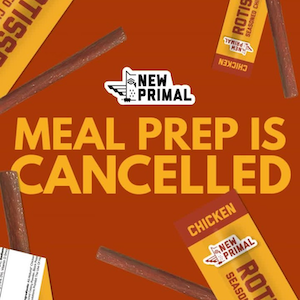
[00:24:27] Ray Latif: Okay. Can we talk about that? Okay. We talked about plant-based meat. Can we talk about animal meat? Yes. So The New Primal A maker of meat jerky and meat snacks has just released a new rotisserie seasoned chicken stick. This has zero sugar, all natural chicken, 10 grams of protein, 60 calories per stick. So it tastes like rotisserie chicken. I had one the other day. It's quite delicious. The New Primal is just one of those companies that I've respected for a long time. Jason Burke, who is the founder and CEO, we've had him on Taste Radio a couple of times. I've seen chicken sticks before, but I think what has always lacked is the flavor. You know, sometimes it's kind of a bland. They try to add some spice here and there. It just doesn't really taste right. This actually does taste like a rotisserie chicken, which is pretty phenomenal.
[00:25:15] John Craven: I mean, if you're going to call it rotisserie. should probably taste like it.
[00:25:18] Ray Latif: Yes. Also new from a well-known jerky and beefsteak company that if Archer, formerly known as Country Archer Provisions, has released a new beefsteak with prime rib style seasoning. It's made with grass-fed beef, also zero sugar. They also have a beefsteak with pepperoni style seasoning, also grass-fed beef. and a beef taco style one. Guess what? Also made with grass fed beef. So talk about a fast growing, booming category. Meat 6 seems to be on fire and shows no signs of slowing down.
[00:25:55] John Craven: All about that protein.
[00:25:56] Babak Bina: We tried a great one at the Austin event, but I'm saving that one for when hopefully they're going to send some. So we'll save it for tasting on the show. I like that. I like that too. Speaking of Austin, The founder of Kesho showed up at our office the other day for the Startup CPG event with Cambridge Naturals, Startup CPG Grocery Run event. Kesho is spelled K-E-S-S-H-O. Founder is Liang Wang. And she has many, many different SKUs of delicious chocolates, tea flavors like matcha. I've got guava lime here. Porcini, Hojicha, which is a white chocolate, which we argued a little bit about whether white chocolate is or is not chocolate in Chinese. And, uh, also Ray, your favorite, lamb skewer. Lamb skewer, lamb skewer chocolate. You trying to start meeting it. It's got goat milk in it. Goat milk but lamb? Go for it, John Craven. I'm nervous about this one.
[00:26:59] Ray Latif: Goat milk but lamb. I don't know. There is a disconnect, Jackie. Jackie's very confused, as she should be.
[00:27:07] Babak Bina: Why lamb skewer? That's confusing.
[00:27:08] Hospitality Group: Too many different animals going on in that chocolate. This is just a goat milk chocolate bar.
[00:27:11] Babak Bina: It's a barnyard of chocolate in there. It's delicious and very strange. It's got chili powder in it. I'm just saying, John. Yeah, here he goes. There he goes. He's going in.
[00:27:21] Ray Latif: Adding to the confusion.
[00:27:22] Babak Bina: He's going in.
[00:27:23] Ray Latif: I have no idea. I've lost control of the show. I don't know what's going on here. Can we please get back? Jackie, what do you got over there? John's eating it. We're going to come back to him because he's got food in his mouth. Yum. There you go.
[00:27:35] Hospitality Group: I'll get us back on track over here. I have some beverages and the first one is Avsome. A-V-S-O-M-E. And this is a line of avocado seed tea, which I haven't, I don't think I've ever seen an avocado seed tea, but it claims that it has a bunch of different benefits. I was Googling it to try and figure out more, but Yeah, really interesting. It's a whole line of avocado seed tea. They have hibiscus berry, they have lemon, they have a bunch of different flavors. I think in general, they could maybe help the consumer. You know where you can meet the founder of Absinthe? Where?
[00:28:13] Babak Bina: BevNET Live, because they will be in The New beverage showdown.
[00:28:18] Ray Latif: OK, you're revealing too much. That's all you can reveal. You're not supposed to talk about that yet.
[00:28:23] John Craven: It's fine, it's fine. No, no, we're not going to leave that in. We're going to cut Mike entirely, Joe. Joe, cut me out of the show. Let's see. No, just replace them with static. It'll be more reveal. We're going to reveal the other 11 semifinalists in due time. Can I call out one more lemonade product? Yeah, please. I mean, it's kind of weird that I was drinking a lemonade beverage with lemonade chips. But this is The New hop water, iced tea and lemonade. I mean, it's basically like a half and half with a little little hops to it, which is I don't know, not a combo that you would think would work, but it does. Nice. Tasty. I like it. Nicely done. Hop water.
[00:29:02] Ray Latif: Very good.
[00:29:02] John Craven: There's no lamb in it. No skewer.
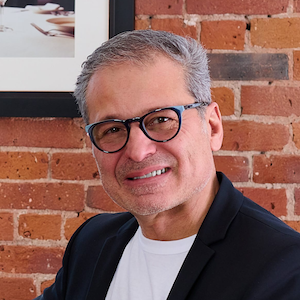
[00:29:09] Ray Latif: All right, it's time to get to our featured interview for this episode. That's with Babak Bina. A towering presence in Boston's culinary scene for nearly four decades, Babak is a renowned restaurateur whose influence stretches far beyond the dining room. Known for his unwavering focus on hospitality and a bold commitment to innovative, globally inspired cuisine, he has helped shape the city's food culture in lasting ways. In this episode, Babak shares insights into how he educates diners without alienating them, why pushing a city's culinary boundaries matters, and what it takes to craft experiences that go well beyond just great food. His leadership philosophy? Lead by example. Whether it's mopping the floor or busting a table, Babak believes culture starts at the top, and he lives it every day. Hey folks, it's Ray with Taste Radio. Right now I am honored to be sitting down with Babak Bina, who is one of the co-founders of BCB3 Hospitality Group. Babak, great to see you.
[00:30:11] Jacqui Brugliera: Good morning.
[00:30:11] Ray Latif: Yeah. Thanks for coming out here to Newton, Massachusetts. Not too far from your home, I assume.
[00:30:16] Jacqui Brugliera: Yeah. Yeah. We've, we moved to Boston just recently. We're empty nesters, my wife and I, so we're in the heart of downtown Boston.
[00:30:23] Ray Latif: Nice. I don't know whether to congratulate EmptyNesters for getting to this point or what should I be saying here?
[00:30:29] Jacqui Brugliera: A friend of mine just had a baby Sunday and I said, welcome to the tribe that will never stop evolving. And we have a 19 year old in New York City and we have another one in Boston that's about to graduate. So it's an interesting trip that that really never ends, it appears.
[00:30:47] Ray Latif: Yeah. It's, uh, it's interesting when I talk to folks who I have a friend who, uh, who's 45 and he just had his first child and he's, he's like, wow, it's so tough. It's so difficult. And I'm like, yeah, it's for two reasons. One, you have a newborn and two, you're 45 years old. You've been in the Boston area for some time. Talk about how you came to this city, this amazing city. And I mean, your contributions in terms of the culinary scene are pretty much unmatched at this point, but what drove you to Boston? Thank you. I appreciate the compliments. Keep them coming. You know, I'll try. I'll try. I have a few written down here.
[00:31:23] Jacqui Brugliera: I came about the business, the hospitality business, in a somewhat different way than a lot of people, I would say. We had to flee the 1979 revolution of Iran. And my mom scurried me out of the country, although my dad had been saying for months, everything's going to be fine, everything's going to be fine. And I vividly remember the last day that she said, this is it, was when there were people fleeing the police and the military, and they had scaled our boundary wall of about 12 feet and we're running over our flat roof and they were being shot at. And that was it. My mom said, I'm out of here. You can stay here if you want, but I'm taking my son and we're leaving. And we ended up leaving shortly after on May 7th or 6th, I think if I remember correctly, 1979. And my sisters were going to university here. So it was a natural place for us to come to. We did think it was going to be temporary, but obviously decades have gone by and it has not been temporary. It was difficult. My dad passed away my freshman year and he was just 16. He had just finally gotten here and he passed away shortly after. So I took off a year and money was tight, you know, and I started as a dishwasher going back to how I got into this business. But 1981, I started as a, as a dishwasher in Pino's pizza in Cleveland circle.
[00:32:41] Ray Latif: I, uh, I go to Pinot's every so often. Yeah.
[00:32:44] Jacqui Brugliera: I just wanted to fit in with the rest of the kids and Phil Petrucciolo, who was also an immigrant, obviously, the owner, his son was one of my best friends. So he gave me a shot. Minimum wage was 325. I think back then I was getting under the table, don't tell anybody, 290 or something. But yeah, BU was great in a sense that it allowed me to, get the education that I, that my family wanted, that I wanted. But at the same time, it allowed me to expand my mind as to what potentially could happen, but I really didn't know what I wanted to do.
[00:33:15] Ray Latif: Didn't want to be a dishwasher your whole life, I'm sure. But I mean, the restaurant scene and being inside a kitchen, I think can be thrilling or it can be terrifying. What was it for you?
[00:33:26] Jacqui Brugliera: Let me just say, Ray, that today if someone tells me, what do you do? I tell them I'm a chief dishwasher and my bigger boat is actually named the chief dishwasher. I'm proud of that start. I'm proud of the staff that make the restaurant business what it is. It couldn't possibly happen without them. Every person in the restaurant contributes in a big way. It's not about me, frankly. It's actually more about them and what they do in our restaurants and has always been. The oldest staff member we have has been with me for 35 years now. And he started as a dishwasher. He's a sous chef and has worked at many of our restaurants. I don't know if I answered your question.
[00:34:04] Ray Latif: I think you did. It's, it's, it is thrilling because there is so much opportunity to be there and to be with people who really care about food and are passionate about food. On the other hand, when you go into the restaurant business and I've seen the back of certain kitchens and it's hot, it's busy, it's crazy and it's fun, but it's not for everyone. Where did you see the opportunity for yourself? Where did you feel like the passion to open your own businesses came from?
[00:34:34] Jacqui Brugliera: I think a lot of people in the business call it the bug, catching the bug. And you know, I had caught the bug. I had caught the bug with the camaraderie that I felt, the family sense, the sense of family that I had at Pinot's and with these fellows from the North end, many of them that commuted to Brookline to work. And, you know, there was discipline, even in a pizza place. You couldn't go near the pizza table. If you were a dishwasher, you know, first of all, you were hazed, you know, go get the elbow grease and kept describing what the elbow grease was. And what was the elbow grease? It's metaphoric, it doesn't exist.
[00:35:10] Ray Latif: I know, but I guess, how are you hazed, I guess is probably the board's word.
[00:35:14] Jacqui Brugliera: You know, they would send me down to look for the, you know, the can, the jar of elbow grease that's down there, it's on the second shelf, I'd come back up, they'd say, Did you find it? I'm like, no. They're like, it's a blue can. It's sitting on the second shelf. We just got a delivery yesterday. Go, go back now. So, you know, as a 13 year old did, 14 year old did that. Wow.
[00:35:34] Ray Latif: They were like, back then you could work in a restaurant at 13, 14.
[00:35:37] Jacqui Brugliera: No, of course you couldn't, but you know, come on.
[00:35:40] Ray Latif: Under the table. Okay. Yes.
[00:35:41] Jacqui Brugliera: Yes. We've mentioned it a couple of times.
[00:35:42] Ray Latif: Yeah.
[00:35:43] Jacqui Brugliera: The sense of family and camaraderie. It brings a lot of misfits. It brings a lot of brilliant people that can't really function elsewhere, perhaps, because they can't find their place. And the restaurant industry is just incredible. 17, 18 restaurants later, I can tell you that it's incredibly thrilling. It's a Greek tragedy every day, and there are highs and lows, and I try not to really get hung up on the two highs and too many lows, because they can be really, really, at this point in my career, they can mess with your head. What was the most important business lesson that you learned when you were starting out? Being able to change your trajectory yourself. Deciding that you're going to self-impose what you want to do. and then sticking to it no matter what. Because I think that endurance, being flexible and changing paths as outside factors come in and being able to do it with grace, do it with Hospitality Group it with compassion. Those are things that you will eventually learn if you stick it through, but you have to have the perseverance.
[00:36:56] Ray Latif: When we talk about hospitality and we've mentioned Hospitality Group thousand times on this podcast, it's sort of an industry term. I think general guests, consumers don't necessarily know what it means. What does it, what does hospitality mean to you?
[00:37:08] Jacqui Brugliera: You know, we're from about the same part of the world. Sure. And I think that It's a little bit difficult for Westerners because since I was little, it was instilled in me when your guest comes to your home and how you take care of them. And it is thousands of years in the Persian culture to take care of your guests. It is embedded in us that if your enemy shows up at your door front and wants water, you give them water. So these are things that are really, some people have it in their blood. You can kind of tell when you're talking to them and you're interviewing them. And some people, they can't get it. And so for us, we want to hire staff and have people on our team that truly understand hospitality. That is that they want to give up themselves. more than they might receive in return. I believe that you certainly receive a lot, but I think that you have to put it out. You have to go the extra mile. You have to think about the other person first, and then hopefully you will get it back. I believe you get it back for sure. I've been so lucky because of that, because of doing first for others, and then it's come back tenfold.
[00:38:27] Ray Latif: Great food, great hospitality, I would think are keys to a great restaurant. You can't say both, but what would be more important? It sounds like you're so passionate about hospitality and I can feel it. And I've seen in your restaurants that hospitality has to be the most important part. But what would you say between great food and great hospitality?
[00:38:46] Jacqui Brugliera: Well, I'll turn the table on you and ask you a question. Okay. If you go to a restaurant and you have an incredible meal and your server is rude, your server is dismissive, and the host that greeted you or didn't say goodbye to you when you left, are you inclined to go back necessarily? Second question, if you were to enter a restaurant and you were greeted like you were visiting your best friend's home and the server made you feel welcomed and would almost anticipate your needs before you would even ask for that steak knife that was missing at the table and showed up with it. and made your experience great, but you were like, you know what? This pasta was overcooked or that steak was a little bit overdone. Would you go back to that restaurant?
[00:39:41] Ray Latif: Probably. I can't say for sure, yes, but probably because I think I can overlook a slightly overcooked steak more than I can overlook rudeness. You got it. That's the answer.
[00:39:53] Jacqui Brugliera: And I think that some chefs might disagree, but most chefs of, you know, the caliber that I have my business partner, Jamie Bissonette, agrees that it is, extremely important for people to be taken care of. And that's where Hospitality Group us is that it glues us together. And you're going to have bad nights, you're going to have a bad meal that might come out. But if you dealt with it in a hospitable way, and if you put the guest in the front, and you made sure that they were taken care of, ultimately, they'll come back, they'll give you another chance, but not if you were not hospitable. And if you turn the tables on them and made them feel awkward or bad,
[00:40:34] Ray Latif: you can sense it, or at least I can. And if you're watching the video, you can sense it. Babak is very, very serious about hospitality and the importance of it. And I think customer service in general is one of those things that has really fallen off in every aspect of life. And so to be able to walk into a restaurant or, I don't know, call your credit card company and actually have great customer service, it really does mean a lot. I mean, I have a Discover card and it's so funny because I get ragged on all the time. Everyone gets, you know, You don't need anything to get a Discover card. What do you need? I'm hating on Discover while trying to say I love Discover. But anytime I call up the credit card company, they answer almost immediately. It's a human being. I can talk to them and they answer my questions and boom, it's done. Some other companies, complete opposite. Some restaurants I walk into, they're like, thank you so much for being here. Others are like, Do you have a reservation? No. Okay. You're gonna have to wait a little bit. Sit down over there. I'm like, I'm giving you money. I'm giving you a lot of money, actually, in some cases. Why am I being treated this way?
[00:41:36] Jacqui Brugliera: Well, you know, the funny thing is when you go to any business, name it, you go to the building department of any town or city. It's like the most boring place, right? And the most difficult place to deal with certain things. They're great public servants. Don't get me wrong. I'm not trying to knock anybody, but You get somebody that walks up to you and smiles and says hello and asks what it is you need. Nine out of 10 times, they'll turn around and say, oh, you're in the restaurant business. Yeah, I used to be a bartender. I used to serve. During college, I did this, I did that. And these things are, again, you don't have to work in the restaurant business to be hospitable. You go to a doctor's office. I went yesterday or a day before yesterday and you know, the receptionist was not very kind. You know, it's, it's my annual, it's, yeah, it's like a little bit weird. And, and it's my first doc, first time that I'm seeing this doctor and there's no skin off of our nose to smile. There's no skin off of our nose to be kind. And my wife and I have a foundation for children and young adults with disabilities and we use horses to help them. That's where you see challenges, right? We are so lucky. We are so lucky to be most of the time able-bodied, and those who are not have their challenges, but they put one step in front of the other, and they achieve things on a daily basis that are a breeze for us, and we do it without thinking. So I think that the world would be a better place if we were just kind to each other, and we were, again, hospitable to each other, because it doesn't have to be in the restaurant business. I walked in, you offered me something to drink, and that's hospitable. That's greeting people in a kind manner and welcoming them.
[00:43:28] Ray Latif: I would agree. And I think in today's world, we definitely need a lot more Hospitality Group top down. Going back to food and great food, and your restaurants are known for top quality food in every regard, the presentation of the meals, the food itself, the ingredients, merging different cultures. It's just, it's all done so beautifully and seamlessly. And I think partnerships with people who can help deliver and help create, in one way or the other, these delicious meals is critical. And I talked to Jamie about this a couple of weeks ago. How do you form, how do you foment great partnerships such that with your suppliers, you're getting consistent supply of the food that you need with your social and marketing teams that they are delivering on what you expect from them to promote what you're doing in the restaurants? What's the key to partnerships in your 30 years of doing this?
[00:44:30] Jacqui Brugliera: Communication, honesty, compassion. We're all human beings. We have bad days, we have good days. Forgiving each other if something goes wrong. You know, a lot of times we take things personally and it doesn't need to be that way. We're all trying to work towards a goal. Identifying someone that believes in those same goals and wants to have the same passion that you have. It's not easy, but surrounding yourself with smarter people than yourself, surrounding yourself with people that are willing to do the hard work... That's where we're lucky. That's where we have thrived. And certainly it used to be my sister and I that we put in hours and hours and we surrounded ourselves with great staff. And now it's my two business partners, Andy Carden and Jamie Bissonnette. And then you can widen that circle, right? It's our general managers who are compassionate like us. It's the people that are then under them or alongside of them. We lead by example. When things go wrong, Let's figure out why it went wrong. But more importantly, who do we need to make sure that they're okay in the process? I do want to say that the pendulum has gone a little bit to the other way in, I'm not saying coddling, right? Don't get me wrong. We have a business to run at the end of the day, but we still need to be compassionate. If my driver comes in delivering whatever product it may be. I smile to them. I welcome them. And I offer them a glass of water. I tell them where the bathroom is. This is the first time at the restaurant. they'll remember that. I'm not doing it for them to remember it, but I'm doing that because that's, that's just my innate nature of doing that. And we, when our staff see that, they will emulate that. And so having partners that think in the same way, I'm very, very lucky that I've had partners that think the same way and behave the same way. And, um, yeah, we're having a lot of fun and, and, you know, we, we did not want to do, what we've done at BCB3 without first talking through all this stuff and agreeing that we're going to have rough patches and I don't need to do this. I do this because I love doing this. And it's the same thing for my partners.
[00:46:46] Ray Latif: I think about the cuisine and the variety of cuisines that you have introduced to the Boston area via your restaurants. And it's amazing, right? I mean, when you think about a restaurant like Lala Rock, which one of the most celebrated restaurants, I think over the last 50 years in Boston. Thank you. And Persian cuisine. I don't know, were Boston area residents ready for that? How did you get them excited about it? Wow.
[00:47:12] Jacqui Brugliera: I don't think the show is going to be long enough to talk about that. Uh, Lala Rook was, was very, very dear to our heart. And to this day, there, there aren't There are people from around the world that will contact us and say, we heard about The New Basque restaurant, Zurito, you opened. Well, what about Lala Roque? Why don't you open another Lala Roque? And everything has its time and place, and we were ahead of its time for sure. We conceived up the idea some 30 years ago.
[00:47:42] Ray Latif: And just for context listeners, 30 years ago in Boston is very, very different than it is today. Boston is a completely different city than it was back then. I think all the movies that you see now that characterize the Boston resident or a Boston person as having the accent and, you know, blue collar worker who is kind of crass. I think the majority of those characters existed 30 years ago, not today.
[00:48:10] Jacqui Brugliera: I think that Boston has kept its name as the Beantown for a reason. And in fact, Lala Roque, the space that it was in, the restaurant that was in there was called... So just before Lala Roque, just so people can maybe remember this far back, there was a restaurant run by Odette Barry called Another Season. Uh, Lala Rook was there for nearly 25 years and then Odette Berry was there with another season for about 20 years. Prior to that was a restaurant called Au Beauchamp and going back to 1905, there was a restaurant that was called Boston Bean and it was literally just a counter and it was below a hotel that served, you know, simple American fare, Boston fare. And so the trajectory of what Boston's gone through is pretty amazing. When Azita opened Toscano on Charles Street, nobody knew what risotto was. Nobody knew what focaccia was. They were like, where's the spaghetti and meatballs? This can't be an Italian restaurant. It's certainly not if you're in Beacon Hill. And we've come a long way. People know a lot about food. When the Food Network came around, we were like, oh my gosh, really? and then celebrity chefs. And so we've come a long way, and most of it certainly for good. When you have a lot of, obviously, restaurants opening, like it's New York City, but you don't have the population to support it, it becomes difficult. People coming from outside of Boston and opening 700-seat restaurants, and that pulls... It creates a vacuum. But yeah, Lala Rook was an amazing restaurant and we imported all the ingredients thanks to our mom, who went back and we actually were smuggling. Again, don't tell anybody, but when there was an embargo, we would ship it to Canada and then we would drive it from Canada here. We went through crazy stuff. to get the ingredients. And we always promised that we would not substitute anything that's grown here. And the reason for that was the authenticity that we wanted to create in the flavors that existed in the Lala Rook food that exists in Persian home cooking. You know, the same way A grape varietal, Chardonnay, would taste different from Napa versus Sonoma. Nevermind the sub, you know, terroirs that may exist. It's the same thing with the ingredients that you would want for your food. So we wanted it to be as close to the way we grew up eating it as we could make it.
[00:50:38] Ray Latif: Did you feel like you had to have a point of reference for your customers, for your guests? Again, for the reason that maybe people weren't as familiar with the flavors or weren't as adventurous as guests might be today. How did you get them interested in the cuisine?
[00:50:55] Jacqui Brugliera: You know, every restaurant is different as to why you do what you do. The core of what we've always done to this day with BCB3 is we want to familiarize Bostonians and visitors alike to food that would not normally exist in Boston. So, I mean, we opened Somak and people might say, well, there are other Korean restaurants. Sure. But, you know, once you taste food that Jamie and his mother-in-law soon have created for the restaurant and the recipes, those are really homestyle recipes. Those are the way she grew up eating and the way Song, Jamie's wife, grew up eating. And so that was the impetus for it. We wanted to create that. And so for us, it's about, finding the unique things that don't exist here and having it be an experience. So it's not just a food. It's not just a hospitality. Obviously what you see with your eyes are also very, very important. And what you hear when you walk in with the music, it's complicated. It's difficult to nail it. And it's difficult. You could have actually the perfect of everything. And then there are outside factors that change it. But Going back to why Lala Rukh, or why we... We felt that Beacon Hill, with the well-traveled residents, would understand it, would appreciate it. People who've been to Iran, have had Persian food, maybe in their friend's home, understand how delicious and how unique it is. There may be 12 different ingredients, and it's like a chemist's lab. You have to make sure that the ingredients, as volatile as they may be as raw ingredients, they could be more flavorful or less flavorful than the last batch. So you have to constantly be tasting, adding more. You know, we have one of the oldest recipe books that is a couple hundred years old, and you could see that it's a smidgen of this, a pinch of that, a hint of that. It's not a spoon. It's not a cup, because that's not how Persian food is made and so that's what made it actually very, very, very difficult because it's the constant tasting and certainly great chefs do that with any other cuisine as well, don't get me wrong, but it becomes much more integral when you add all these different herbs, spices, nuts, fruits, meat, and then you're marrying them together to create something on its own that doesn't exist on its own. It's the sum of all the parts that make it so unique.
[00:53:22] Ray Latif: I love that you have been introducing new cuisines, new cultures via food to the Boston area, and you're doing it again with Zerito. You mentioned SOMAC, but Zerito is a Basque-inspired restaurant, and the dinner I went to in late March that was a collaboration between Zerito and Sushi at Temple Records was a really, really amazing collaboration in that You merged Japanese cuisine and Basque cuisine in a way that I had never thought possible, and it was amazing. Again, Basque food. What is that? I think you ask the average Bostonian what Basque food is all about, they really don't know. You ask the average Boston resident what sushi is all about, they'll be like, oh, spicy tuna. And certainly that's not, you know, what we got at that dinner, but, um, getting people educated and getting people excited about something they don't necessarily understand. How do you do it in a way that makes them feel comfortable? Sometimes education is hard. It can make people feel a little on edge. You're like, I don't want, I don't want to learn too much about this. I don't want to be too immersed in, you know, the, the background of all of us where this came from. I just want to eat good food. But how do you get, what's the, what's the hook?
[00:54:34] Jacqui Brugliera: That's a tough question to answer. It is almost foolish what we do or what we've chosen to do. You know, it'd be almost easier to just cookie cut these restaurants, right? And just find a great one and then just multiply it. But I think that for at least my partners and I, there is a part of our brain that would not be satisfied. And that's why we've done all The New concepts. And we want to make sure that we are challenging people and hopefully we're not missing the mark in how challenging it's going to be for them. We don't obviously want it to be over the top and SOMAC or Temple Records or Sushi at Temple Records, these three concepts, just like you said, Ray, it, you know, okay, so sushi, big deal. But you go in there and you have what Kenta, our chef, is creating there. And it's nothing like you've had before. Yeah.
[00:55:30] Ray Latif: Shout out to sushi at Temple Records. Cause it is, I mean, there's sushi and then there's sushi ad.
[00:55:38] Jacqui Brugliera: He is really spearheading creating something that Boston has not had. And again, no disrespect to our peers and everyone has contributed to what Boston has become. And our part of our contribution has been, is, and will always continue to be, How do we inch this forward? Maybe before it was feet, we were moving the city's culinary direction. Now it's perhaps a slight direction this way, a slight direction that way. You know, I'll use J.M. Curley as a, as a example of what I thought at the time. A gastropub in Boston that you built. Yeah. And J.M. Curley, named after the infamous politician, James Michael Curley, is an example of... I got mad, actually. We had created an incredible restaurant called Bina Osteria and Bina Alimentaria, a side-by-side gourmet food shop and restaurant at the Ritz-Carlton in the North Tower. And of course, the bottom in the world fell out in the economic world. And we hung in there, but it was very, very difficult. It was beautifully designed by by another Tehrani who is this incredible designer architect. And it was so unique, so avant-garde, so forward that it didn't fit Boston. I think if the economy hadn't collapsed, we could have gotten people to come along. But I said, fine, you want down and dirty, great food. And so The New place, JM Curly, we built with going to Lowe's and picking up the fixtures and, you know, designing it myself, going back to the original sort of way that I started. And it was a huge hit because people really wanted no frills. And the staff also didn't want to get dressed in tuxedos and fine dining sort of attire. And we crushed it. And then we created a little speakeasy behind it called Bogey's Place, which is doing really, really well still and keeps going up against the big boys and winning best steakhouse in the city. And then finally, a few years ago, I opened the Wick Shop, which is a cocktail lounge next to all of those. walking by the wigs in the store every day for a few years, I kept saying this would make a great cocktail lounge that you would find somewhere else in London or New York or something. And ultimately, just as we were coming out of the pandemic, I saw the opportunity and luckily I was able to take over the space and convert it into what it is today. Oscar Somoza, our spirits director, joined us and has created some incredible cocktails like nobody else in town. And he was in fact nominated for James Beard award as a semifinalist. So we're very proud of that as well.
[00:58:18] Ray Latif: We talked about this before we hopped the mics. I mean, you're in your restaurants almost always. And I think that says something, you know, leaders who are there, even if your team might not want you to be there sometimes, but leaders who are there, I think help to remind everyone that they're going to do the work too. But hold on. Yeah.
[00:58:37] Jacqui Brugliera: They do want me there. You know why? Because I'll bust the tables. I'll pick up that broken glass on the floor and mop the table if I need to, because I'm not above anybody else. At the end of the day, I'm the chief dishwasher. That's what I do. That's why it's about building the culture that I'm not better than you. You're not better than me either. And we're here to achieve a goal. And that goal is to make that guest happy. And even if it, you know, I've been doing this for a long time. And when I realized that I've overdone it is when I get home and I take the shower and my knees are hurting, my back is hurting, my feet are hurting. And I'm like, why? It's like, well, I'm getting up there in age. And I just put in 14 hours, third, fourth day in a row. I'm energized by it though, right? Once I walk in the restaurant, it's like that energizer bunny that gets hooked up with the juice, I'm ready to go. The busier it is, the happier I am. And I'm not thinking about the dollars because that's the other thing that people get a little bit confused about. You have to be happy yourself. You have to create that environment that makes you happy and then make other people happy around you and have them create an environment that is this infectious happiness that when guests come in, they feel that as well. Because if you're not happy... And you and I are having a fight and then we turn around and we smile, guess what? That energy is going to translate. That energy is going to come out. And so that's not going to do any good. So you can't fake it. You cannot absolutely fake it whatsoever. So you have to figure out a way to make yourself be happy. as best you can because we can't always be happy every day. That's just, you know, it's a farce, but you can try and you could figure out what that's going to be. Is it going to the gym? Is it going for a walk? We tell the staff, the managers, you know, if you're having a hard time, just go outside for five minutes, get some fresh air, break that cycle so that it doesn't translate to it spinning others into a different situation, but creating that culture, which we didn't talk about, but hospitality comes from the culture that you want to create and And we try to work on it every day and talk about it weekly, daily, hourly.
[01:00:57] Ray Latif: Well, I think in a sense you did talk about culture. You talked about the fact that your staff, your team, you yourself need to always constantly remind yourself that you are serving people food, that you are trying to make their evening because they might've been waiting a week to come into your restaurant and have a good meal. And your experience serving them food or welcoming them into your restaurant can have such a huge impact. And so everyone needs to be on the same page. And I think, you know, the leadership starts from top down. If you're willing to do the hard work, if you're willing to be there, you're creating a culture where everyone is responsible, where everyone is moving in the same direction. Because if you're willing to do it, well, then anybody else should be willing to do it as well. Yeah. So a hundred percent. Yeah. You know, we talked about happiness. I'm so happy, Babak, that we had this opportunity to sit down. Thank you so much for coming out. My pleasure. I feel like I've learned quite a bit from you just in this hour that we've been chatting and I know our audience is going to love it as well. Anytime that you want to come back, if you have an opportunity, I know how busy you are. Please stop by because I'd love to continue this conversation.
[01:02:06] Jacqui Brugliera: It's been a pleasure, really. to talk about what we do and get other people enthusiastic about it and think about the way they can make our community, their community Better Sour an important factor that we need to talk about more and more. Absolutely. Once again, thanks so much, Babak.
[01:02:22] Ray Latif: My pleasure. That brings us to the end of this episode of Taste Radio. Thank you so much for listening. Taste Radio is a production of BevNET.com, Incorporated. Our audio engineer for Taste Radio is Joe Cracci. Our technical director is Joshua Pratt, and our video editor is Ryan Galang. Our social marketing manager is Amanda Smerlinski, and our designer is Amanda Huang. Just a reminder, if you like what you hear on Taste Radio, please share the podcast with friends and colleagues. And of course, we would love it if you could review us on the Apple Podcasts app or your listening platform of choice. Check us out on Instagram. Our handle is bevnettasteradio. As always, for questions, comments, ideas for future podcasts, please send us an email to ask at Taste Radio. On behalf of the entire Taste Radio team, thank you for listening, and we'll talk to you next time.
[01:03:16] Mike Schneider: you