[00:00:10] Ray Latif: Hello, and thanks for tuning into Taste Radio, the number one podcast for the food New Beverage industry. I'm Ray Latif, the editor and producer of Taste Radio, and with my co-host for this episode, John Craven, Jacqui Brugliera, and Mike Schneider. This episode features an interview with David Garci-Aguirre, the Master Miller and vice president of operations for Corto Olive, who reveals everything you needed to know about olive oil, but were afraid to ask. Dumb. Get access to limited swag and exclusive content by becoming a Taste Radio VIP. It's easy for you to join that group of very important people. Just head to Taste Radio slash VIP and take one minute to sign up. I'm excited to see all our VIPs in New York City. If listeners recall, John Craven is offering anyone who is a VIP a free Negroni or two. Sure to bring your official laminated Taste Radio VIP card okay there you go if you don't have one just hit up John John Craven at Bev net.com Was it one or two degrees
[00:01:17] John Craven: I think you just said one.
[00:01:18] Jacqui Brugliera: Why are you trying to make the offer get better? Just one. One for me, one for whoever. One per $100 card. All right. BevNET will never charge you to be a VIP. Just saying.
[00:01:29] Ray Latif: VIP is free. Anyway, we will see you in New York City VIPs on June 14th and 15th at the Metropolitan Pavilion. That's when BevNET Live Summer 2023 is happening. Look. I always tell people this, I've always talked about this in the podcast, save money. Early registration ends on May 5th. You're running out of time to save loot. And who doesn't like to save loot, especially in our industry? That's a good question. Apparently no one. Yeah. I don't know.
[00:01:57] John Craven: Why wouldn't you want to save some money? And if you're an insider, you save even more. So multiply those savings two times the savings.
[00:02:04] Jacqui Brugliera: There you go. It's complicated math.
[00:02:07] Ray Latif: Now, as of this recording, I have not yet been the emcee for the Naturally San Diego Pitch Slam. That's happening in a couple of days. But I feel like it's going to give me good prep for New Beverage Showdown 25, which is also happening at BevNET Live Summer 2023. Highly encourage folks to apply for that. The deadline, Jackie, is May 12th.
[00:02:30] John Craven: May 12th. Yeah. Lots of deadlines coming up in May.
[00:02:33] Ray Latif: Yes. If you're looking for tips on what you should be expecting if you are accepted to participate in New Beverage Showdown 25, we just had a fantastic Community Call where we had two past winners and a semi-finalist offer some great insight into what it's like to be up on stage.
[00:02:50] Jacqui Brugliera: And one of the winners actually was one of the judges too, Allison Ellsworth from Poppy. That's right. Formerly known as Mother Beverage. Right. She gave some great advice on, you know, what the judges are looking for and a little bit about the process and, you know, just what's important to the judges.
[00:03:08] Ray Latif: I always tell people before they go up on stage be memorable and John Craven can attest Mike you can attest to because There are 12 brands up on stage. Everyone's got different stories I mean typically we're on stage for what you know 70 80 90 minutes, and it's easy to get forgotten frankly so be memorable Just like I forgot Jackie was a judge That was a good piece of humble pie Sorry, Jackie Especially because I advocated for you to be a judge, and I still advocate for you to be a judge Anywho be memorable
[00:03:43] John Craven: Yeah, I was gonna say, I was on the judging panel with Allison from Poppy. And we had a lot of conversations in the judges room just talking about branding, identity, their founder stories. And in that Community Call, Vasa from Perfie really talked about his story and his pitch. And then Max from Plink provided some insight into his product and his pitch as well, and how he really wanted to get to the second round to have his co-founder be on the stage. Yeah, it was just really interesting in the judges room to just talk about what is a brand, what is going to resonate with consumers, and is the product good? Does it taste good? I think those are the keys to your pitch.
[00:04:22] Jacqui Brugliera: One of the questions was, am I ready? Should I be in a smaller competition? And the answer is, you're probably ready. It's a safe place to pitch. You want to be up on stage. You want to get the feedback from the judges. You want to get feedback from people in the audience. So many times you hear things like, Allison was right, or Jackie was right. And a potential partner came up to me and told me how I should get things done. And, and, uh, you know, there's been times people like, oh, Mike was wrong. We do it this way. And all of that stuff is valuable feedback that you're going to get from being on stage and doing the New Beverage Showdown.
[00:04:54] John Craven: And you're also joining a community. The founders talked about how they're part of a cohort now and they're checking in on each other's progress. When you pitch on stage, you join that community, you get that feedback. It's not all about winning. It's about the connections and tapping into that beverage community.
[00:05:10] Ray Latif: Just to follow up on Mike being wrong, Mike was big time wrong about Liquid Death, didn't even get into the finals. Huge mistake. So wrong. No, in all seriousness, it's also about awareness, you know, introducing yourself to New Beverage community. So we just published an episode of Taste Radio that features Jake Bullock, who is the co-founder and CEO of Canne, the micro-dosed social tonic brand. Jake and his co-founder, Luke Anderson, won the competition in 2019, New Beverage Showdown 17, Summer 2019. And he talks about how the competition, New Beverage Showdown, quote, set the trajectory for the company. I think, you know, coming to BevNET Live as an early stage entrepreneur also gives you the opportunity to meet people that you really need to meet in this industry, who can answer the questions that you've had since day one about ingredients, about packaging, about distribution. We have experts aplenty, service suppliers, ingredient suppliers, all these folks who can help you get your brand to the next level, get your products ready, not just for market, but ready for primetime. And they'll all be there at BevNET Live Summer 2023. One company that's loaded with such experts is AFS, Applied Food Sciences, the presenter of this episode of Taste Radio. AFS is the leader in innovation for functional organic ingredients in the natural products industry and is built on the belief that quality is transparent from seed to label through organic farming, ethical sourcing, and sustainability. Learn a lot more about Applied Food Sciences at AppliedFoods.com.
[00:06:42] John Craven: You can also learn more about them and meet them at BevNET Live because they will be there ready to talk to you.
[00:06:47] Jacqui Brugliera: Bring them your hardest questions. They have the answers.
[00:06:50] Ray Latif: They really do. Yeah. I mean, those guys, I mean, they can answer almost any question and it's not just even limited to ingredients. I think they have such a good understanding of New Beverage industry that they can advise on, well, any aspect of New Beverage brand or company.
[00:07:04] Jacqui Brugliera: If they don't know the answer, they will know who knows it. I hear they also like to buy people, you know, a Negroni or a cocktail. Or so I've heard from Ray and Adam Stern, who don't invite me to their gatherings.
[00:07:17] Ray Latif: Oh, goodness. We've, you know, from time to time invited you, and you're just too busy.
[00:07:22] Jacqui Brugliera: I'm still waiting for my invite to another round of Lugers. I've been invited to one of those gatherings, and it was awesome.
[00:07:31] Ray Latif: We have a nice time. Yes. I'm surprised no one's mentioned my cap, my baseball cap. What are you, in high definition today? Yeah, what is it? I can't see it. What is that cap? It's a black cap. It's not my typical Pops whiskey.
[00:07:43] Jacqui Brugliera: Is it Millwall, Ray?
[00:07:45] Ray Latif: No, it's not Millwall. I don't even know. I found this cap. John, nobody is going to wear Millwall. No, don't wear Millwall. I mean in Newton I found this cap in the office. It has a gold logo. I think it says it doesn't say AFS I know that for sure, but it's energy drink. Oh for crying out loud
[00:08:07] John Craven: Anyway, did you forget your hat today, right?
[00:08:09] Jacqui Brugliera: You just know I wanted to wear a brand you have no idea what it is No, you have a Taste Radio had at least I got it beyond brand even in the studio.
[00:08:24] Ray Latif: I love it I we could have at least put a sticker on your hat Well, the reason I wanted to change it up is because I've been watching all these awesome social videos that we've been putting on Instagram and And I'm the only one who's literally wearing the exact same thing every single time.
[00:08:38] John Craven: You're consistent.
[00:08:39] Ray Latif: I'm consistent, but I think that's also why Amanda Smerlinski, who's our, uh, social marketing manager. I think that she has an even better title than that. Doesn't she, Jackie? She's a product marketing associate. Product marketing associate. I think that's why she doesn't use me as like the cover for each of these videos. Cause it just looked like. Blue shirt guys, blue shirt, blue shirt. Every single one is the same. Wall of blue shirts. Radio account so but does anyone does anyone post to the wall anymore. I mean personally I haven't He means posts yeah, right, but the Facebook No one says that anymore.
[00:09:09] Jacqui Brugliera: No, and I mean like probably your grandma says that you know No offense sorry anyone Remember when umbrellas were invented
[00:09:32] Ray Latif: What do they call umbrellas in the UK? Bollies? Umbrellas. Yeah. Well, in the UK, speaking of the UK, John Craven, you just got back from London, England. More than just London.
[00:09:42] Jacqui Brugliera: You were all over the UK. I just went to Edinburgh, Scotland and London. That's, is that all over? I don't know.
[00:09:50] John Craven: I mean, that's good enough for one week.
[00:09:51] Jacqui Brugliera: Yes. I don't know. I just sat on a train for a couple hours, looked out the window.
[00:09:55] Ray Latif: You've already talked a lot about your travels to London. What was Edinburgh like? Chill. Yeah?
[00:10:01] Jacqui Brugliera: Yeah. I don't know, it's like, there's lots of old stuff. They got a castle. I don't know, what else? Oh, they're really, they take claim for Harry Potter having started there. I'm not sure if that's true or not, but. I didn't realize J.K. Rowling was Scottish. She's not. But it was based in Scotland? No, I think she lived there for a little while when she wrote some of the books or something. I'm not a huge Harry Potter fan. My kids dragged me to some Harry Potter stores and We saw a few things that were harry potter s there, but I was more interested in the Scotch Lag. You know just yeah It comes out of the faucet there. You know nice Just got one handle. You know here. We're the hot in the cold. I got the eight year in the 12-year Great
[00:10:51] Ray Latif: Well, you know on slack yesterday John mentioned that he was gonna head home early because of jet lag, but it's yeah Perhaps it was the Scotch perhaps it was
[00:11:05] Jacqui Brugliera: I had two little tasters of scotch I went into Looked up like what the best store to buy Scotch Lag in Edinburgh And I ended up in this place, and you know I'm like looking around for something like I can't just get at the liquor store at home There's some weird stuff, but anyway You know they they give you like little tasters in the store which was kind of dangerous for like three o'clock in the afternoon, but I That's the only scotch I had. I don't know. No offense to scotch, but like I didn't go to like the sort of northern part of the Country Archer you can go to like distilleries. I'm just in a shop. So there's kind of no benefit to buying scotch in a shop there versus shop here. It's not like fresh scotch is better right so take the Ron Swanson tour to Lagavulin. I mean, I'd love to do that I'm just impressed. Thank you fresh scotch. I feel like that's a tongue twister right there. It is yeah, yeah, I mean so Yeah, I did not drink a lot of scotch Okay, but I was a little tired that I went to this terrible terrible place on the way home. It's called JFK Airport Five hours there. That place sucks. Oh, dude, it's the worst.
[00:12:10] John Craven: Five hours.
[00:12:10] Jacqui Brugliera: It's the worst.
[00:12:11] Mike Schneider: I hate that place.
[00:12:11] Jacqui Brugliera: It sucks. It sucks.
[00:12:12] John Craven: Isn't there that cool lounge there now, though, at JFK?
[00:12:16] Jacqui Brugliera: I mean in terminal five they literally have birds flying around and everyone is angry I Went to LaGuardia recently LaGuardia is much nicer than it had well. I just got a that kind of major makeover Yeah, not been there in a long time But sounds like JFK is do if you didn't have global entry by the way the wait time to get through customs at JFK said 278 minutes Good times yeah four and a half hours.
[00:12:42] Ray Latif: That's not I would just yeah, I
[00:12:44] Jacqui Brugliera: No.
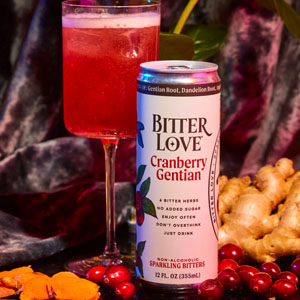
[00:12:45] Ray Latif: No. Okay. Well, glad you got enough scotch in you. Yes. You know, I, uh, I feel like I didn't get enough beverages in me at the BevNET meetup, which we had here a couple of weeks ago, but I do want to talk about some of the amazing brands and founders that we met. I'm going to try right now a brand called Bitter Love. That's yummy. This is described as a Bitter Love of gentian root, dandelion root, Angelica root, is that how you pronounce it? I'd say so. Turmeric, ginger, and ashwagandha. And they have a sister brand too, called Sonder.
[00:13:45] Jacqui Brugliera: Sonder? Which is the one I have in my hand.
[00:13:48] Ray Latif: I love the name Bitter Love. I feel like that really expresses everything that you want to get out of a modern beverage brand. I like Bitter Is and I like things that make me feel happy. Love. I prefer adaptogens, but you know, hey.
[00:14:03] John Craven: How Bitter Is it?
[00:14:05] Jacqui Brugliera: It's not as Bitter Is I thought it was gonna be. It comes later. When I drank that one, I had the same idea about that particular flavor, and the more you drink it, the more Bitter Is gets. Okay, I can start to feel that. Yeah, I had that stuff at the meetup. It was quite tasty. I would, that's right up my alley. That stuff is good, and I wouldn't judge how bitter, well, the other two SKUs are a little more bitter than that one, but that one's tasty.
[00:14:32] Ray Latif: No, this is delicious. I am a huge fan already. I feel like this is something where. I could just have this on its own. I could have this with a sandwich for lunch. I could have this as an evening beverage. I feel like this is pretty versatile. I mean, maybe I'm just New Beverage nerd and this appeals to me, but I think this has a pretty nice runway.
[00:14:50] Jacqui Brugliera: It's nice. And the sister brand, Sonder, I think we've talked about it before. This one's the orange cream. S-O-N-D-E-R. Drink Sonder on Instagram. Orange, vanilla, Jackie's favorite, Lion's Mane, maple syrup and bubbles, 40 calories, or this one's 60 calories, actually. They also have a cola. It's nice, nice prebiotic soda. I got this at the meetup. Not a small brand anymore. Athletic Brewing. Athletic. This is a lemon radler from their pilot program. Nice. Pretty tasty. It's kind of... A non-alcoholic radler. Interesting. Yeah, I mean, it's kind of soda-like, I'm not going to lie, but it's pretty crushable. I have no idea how many calories are in this or anything, but it doesn't seem to be on the can, so... Oh, sample.
[00:15:34] Ray Latif: Yeah. Interesting.
[00:15:36] Jacqui Brugliera: Tasty.
[00:15:37] Ray Latif: I have my hand a brand that was also at the meetup and it's called Swing Tea. It's an iced tea drink made with green tea and also made with apple sugar. That stuff's good. I don't know what apple sugar is.
[00:15:50] Jacqui Brugliera: Apple sugar is next gen sweetener. Pretty good stuff.
[00:15:53] Ray Latif: Well, in the ingredients it says filtered water, apple juice concentrate, which I assume is the apple sugar. That it is. Natural flavor, decaffeinated green tea. Decaffeinated green tea. Nice. Citric acid or organic Panax ginseng extract.
[00:16:07] Jacqui Brugliera: Apple sugar is having a moment in Europe. We just, it just hasn't, hasn't hit here yet, but there might be a drink coming out with it. Might be a drink coming out with it. Well, there is one right there. There might be a big one. Rumor has it. Can't confirm.
[00:16:24] Ray Latif: I'm not getting a ton of the tea flavor. I'm getting some of the apple sugar, which also almost tastes like honey in this. Yes, it does taste a lot like honey. It might be the fact that I drank that or I sipped it right after I drank the Bitter Love, which is messing with my palate. So who knows? I did not see a brand called Macca at the meetup, but Macca is actually based in Virginia, or at least manufactured in Virginia. It's M-A-C-C-A.
[00:16:50] Jacqui Brugliera: Yeah, with two long lines over the A's. Is it Macca?
[00:16:53] Ray Latif: No. And I asked Brian Hill, who's the founder and CEO, who appeared on Elevator Talk a couple episodes back, if it was Macca, and it's not. It's Macca. And Macca is a brand of wheatgrass superfood beverages. Now, when you think of wheatgrass, what's the first thing you think of? Not tasty, right? No, right. I like the taste. Speak for yourself. Really? But I asked Brian about this and he's like, look, people love our beverage and we're doing pretty well because we are positioned as an energy slash functional kind New Beverage. But yeah, people need to realize that this is going to taste great. And this is my first sip of mocha. This is their hibiscus passion fruit variety. Let's see if Brian was telling the truth here. That is outstanding. That's a really good tasting beverage.
[00:17:37] John Craven: Yeah. Speaking of meetups, they're actually at our San Diego meetup. So definitely try to also agree that it's really tasty and not what I was expecting, considering I have taken many wheatgrass shots and those make you pucker.
[00:17:49] Jacqui Brugliera: I have avoided it because it says wheatgrass on it. So that's a mistake.
[00:17:55] Ray Latif: Yeah, it's really good. It's made with 90 milligrams of caffeine per 12 ounce can There are four varieties lemon coconut pineapple and mango Thanks to Brian's team who dropped off a whole bunch of samples earlier today.
[00:18:09] Jacqui Brugliera: Can I try this? Does it need to lead with wheatgrass? Mango is that I'll take mango. Thank you. Let's see going down a rabbit hole here.
[00:18:16] Ray Latif: Yeah, yeah While Mike's going down that rabbit hole. I want to call out a brand called Lost Art All right, call out Lost Art. He's back. Okay, let's talk about Lost Art. Is that ghee? No, it's kraut chi. Oh, sorry. Geez, I was way off. Now, Marie Lafontaine is the owner of Lost Art Cultured Foods. She was at the meetup as well. Lost Art was founded in 2015. They are makers of organic cultured veggies. The product I have in my hand right now is their kraut chi. This is a blend of unique mixed veggies with toasted Indian spices. Lost Art Cultured Foods are made in Charlestown, not too far from here, Charlestown, Mass, that is. I have not dipped into this. I don't think I'm going to open this right now in the studio because that kimchi aroma might linger. Shall we say?
[00:19:07] Jacqui Brugliera: That'd be awesome.
[00:19:08] Ray Latif: But it was fantastic to meet Marie. She was so kind to leave us some samples and I'm so excited to try this product.
[00:19:15] Jacqui Brugliera: Last time I was here, and I don't know if you edited this out, I promised I would bring these plant-based scallops, which I have prepared for you guys. These are from a brand called Mind Blown. They looked browned. Yeah, you take them out of a little bag, you dry them off, you put this little magic powder on them. I don't know what's in that, no ingredients. And then you and then you cook them We have already tested these to determine that they're safe, but has had many of them With those little sticks I feel like I'm at a cocktail party from 1983 Here we go
[00:20:01] John Craven: The texture is pretty good.
[00:20:02] Jacqui Brugliera: I don't know if I'm gonna be able to make it over there.
[00:20:04] Ray Latif: I want to throw you one No, just catch it in your mouth. All right, that is weird. I Think I think they need to be warm for us.
[00:20:10] Jacqui Brugliera: Yeah, they definitely need to be warm It definitely tastes like scallops weird. I mean, it's weird that I'm going for another one.
[00:20:17] John Craven: They mimic the flavor It's like the first one you're like skeptical of and then you just keep eating them, you know You just don't realize that they're all gone you guys this does not suck.
[00:20:27] Jacqui Brugliera: These are good. I
[00:20:28] John Craven: Yeah, and they cook just like a scallop, so you literally just can pan fry them. And they're really tasty. They're a great alternative for people that just don't eat seafood.
[00:20:38] Jacqui Brugliera: All right, so Country Archer Fuego Smoked Sausages. Nine grams of protein, zero grams of sugar. Country Archer, one of my favorite meat sticks. I'm going in.
[00:20:51] John Craven: Good?
[00:20:52] Jacqui Brugliera: Oh yeah, DNS. These are great.
[00:20:54] John Craven: Spicy? Fuego?
[00:20:57] Jacqui Brugliera: They are spicy. what I would call an amusing kick, but a lot of people would just be like, this is fire. It's good. We got this one too. Zero sugar, which I don't normally, is there normally sugar in a meat stick? There's sugar in a lot of jerky and a lot of meat sticks and they've pried themselves on being no sugar. I like it.
[00:21:16] John Craven: Yeah.
[00:21:16] Jacqui Brugliera: They have the full flavor. I mean, like these are legit. This is good. You should try it. Eh, I'm okay. I don't really do meat. I know you're not a meat stick guy, but you like this one.
[00:21:25] John Craven: Yeah, I have something less meaty. I have spudsy sweet potato scoops.
[00:21:30] Jacqui Brugliera: That is a lot less meaty than this, which is a meaty treat.
[00:21:35] John Craven: These might be a little lighter, but it says classic cheddar and sour cream and onion. And I have dove into the sour cream and onion already. Nice and crunchy, but let's see.
[00:21:46] Jacqui Brugliera: Those are epic.
[00:21:47] John Craven: Yeah, I mean, everyone loves a good scoop. You know, you can put a lot of dip on this.
[00:21:51] Jacqui Brugliera: Yeah, I was like, what's the right dip for that thing? Do you remember when Ashley Rogers was on stage at Pitch Slam, and she was talking about, like, how she was gonna dominate the supermarket with her little spud army? And we were all like, that's ambitious. And look what she's doing, yeah.
[00:22:07] John Craven: Mm-hmm. Yeah, I mean, maybe a hummus would be nice. Or like, some sour cream-based dip would be good, because it's sour cream and onion.
[00:22:15] Jacqui Brugliera: How about some Ithaca Hummus? That'd be amazing.
[00:22:17] John Craven: Yeah, that'd be good.
[00:22:19] Jacqui Brugliera: Or the Ithaca salsa.
[00:22:21] John Craven: You can hear that crunch.
[00:22:25] Jacqui Brugliera: Jackie's crunching, I'm snapping on sausages over here.
[00:22:30] Live Summer: Do you want more repeat buyers on Amazon? Well, this free resource in collaboration with Straight Up Growth will help your brand turn first-time buyers into long-term subscribers. Download Winning the Repeat Purchase Game on Amazon now at Taste Radio slash SUG. That's Taste Radio slash S-U-G to start building retention-driven growth for your brand on Amazon. Scaling New Beverage brand into major retail comes down to operational readiness. From packaging lead times to co-manufacturing strategy, the details can make or break a launch. In a new ebook in collaboration with Octopi and Asahi Beer USA, industry leaders share what they've learned in helping brands scale. Download it now at Taste Radio slash octopi.
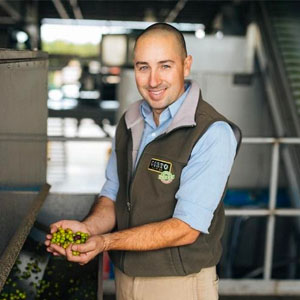
[00:23:20] Ray Latif: Alright, let's get to our featured interview for this episode. As I mentioned at the top of the show, David Garci-Aguirre is the Vice President of Operations and Master Miller for Corto Olive, a super premium brand of extra virgin olive oil that emphasizes freshness from harvest to plate. Admired by chefs for its commitment to high-quality standards, Corto is part of a new generation of olive oil companies that are attempting to recast the ingredient from an overlooked kitchen staple to one revered for its utility in creating delicious and healthy meals. I spoke with David about how Corto has aligned its business units to consistently produce and package fresh olive oil and how the company communicates the value of its process and standards to its customers. Hey folks, it's Ray with Taste Radio. Right now, I'm honored to be sitting down with David Garci-Aguirre, the vice president of Operations and Master Miller for Corto Olive. David, great to see you. Yeah.
[00:24:21] Mike Schneider: Thank you, Ray. I really appreciate the time.
[00:24:23] Ray Latif: How did you get into this business? I'm curious about that. How does one become a Master Miller of premium olive oil?
[00:24:30] Mike Schneider: purely by accident. I don't think anyone, you know, at least here in the US, not many of us grow up thinking I'm going to be a Miller someday. I studied philosophy in college at UC Santa Cruz. I was trying to break into the professional ranks of soccer at the time. I actually did sign a contract, so technically I guess I would be a professional, but I did get injured and wanted to do something totally different. So I actually had always done metalworking, fabrication and things like that kind of on the side and decided to start my own shop in Davis, California. And one day my neighbor came over and asked me if I wanted to build a mobile olive oil processing plant. And that was in 2009. And so I built that and we ran that for four years. And then Cordo hired me in 2013.
[00:25:20] Ray Latif: That's such an amazing story, actually. It may not sound like it to you, but it makes it clear that you can really create any business in America, right? I mean, you can create your own income. You can have a sustainable, reliable business if you're doing something that, one, you're skilled at, and two, that you love. And it sounds like both were the case in your career, at least to this point.
[00:25:43] Mike Schneider: To be quite frank, I was really bad at running my own business when I had my shop. I would underbid everything and realize that I had a lot to learn. And this came along at a good time when I decided that I would make this my business and then I would do art on the side for fun. And it's worked out really well.
[00:26:02] Ray Latif: So you're an expert and I don't think, um, it's not, that's not hyperbole. You're an expert at olive processing, using olives to make olive oil. But growing olives is another huge part of what you do, corto that is. Talk about, you know, the different parts of the company and how they all intersect to create this high quality product.
[00:26:26] Mike Schneider: Sure, and I'd like us to keep the framework of olives are a fruit, because like I said, that is the right way to think about fresh, high-quality olive oil. Olives are a fruit, and like any fruit, there's an optimal time to harvest that fruit. So, you know, Cordo, we have a team that's focused research and boots on the ground kind of field team that is working with our own acreage, our family acreage, and any acreage that anyone's growing with for us. And they're out there every day, you know, ensuring the quality of the fruits, they're making sure we get a good fruit set, which is going to determine our yields. But most importantly, they're the ones that say, okay, the fruit's ready, let's go. And you know, our entire harvest happens in about 40 days, 24 seven. And it's because that window, when you can harvest olives to make ultra premium oil is so short. And so we have to mobilize everything in that very short window. So our grower team, they are, you know, people always ask me what my job is as a Master Miller. And the reality is, it's not that hard. If I get good fruit, I can make good oil. And so really, the heroes of this story are the field team that's ensuring and all of our growers that are ensuring the quality of the fruit that arrives to the mill.
[00:27:46] Ray Latif: There's a lot of reliance on the farmhands to grow great olives. There's a lot of work and resources that goes into processing the olives. It seems like the third part of that is the marketing, the, you know, how you talk to your customers about Corto, how you explain the process, the transparency, the heritage that goes into the brand. Talk about that story. Sure.
[00:28:15] Mike Schneider: I'd summarize that by saying that we put all of our energy into getting our oil. Like essentially having the right people, chefs, taste our oil. So what do I mean by that? So what is the right chef for us? We're expensive. Like our product is, we command a premium. So it's going to be a chef that cares about the quality of the ingredients that they're putting in their products. And they're willing to pay for that difference. And some chefs already know high quality olive oil. So when they taste our product, they're like, Wow, okay, I didn't even, you know, number one, I didn't realize this was available in food service. And number two, you know, we're scaled to a point where we're actually Yeah, we're more expensive than the other stuff in food service, but we're way cheaper than your $50 bottle of ultra premium oil, right? So we're coming in at kind of a, you know, a mid rain mid price range. It's really if you want to think about it, it's a cheap, ultra premium oil is what we make. And so some chefs know that instantly they taste it and they're like, Oh, yeah, okay, I know what this is. Wow, that's a really great price point. I'm in other chefs don't know yet. And for us, that is the opportunity, because we get to be the ones educating the chef. So if there's a chef that we know is willing, we look at their, let's say you look at the other ingredients they use and they're using premium ingredients because they know already, but they have a cheap olive oil. We'll go in and we'll say, chef, here's the story with olive oil. We got to think about it different, right? We have to think about it like fresh pressed juice. the quality of the oil is only ever going to be as good as the quality of the fruit that went in it and all of the energy that it took to get it to you. And so what we do is we sit down and we do a side by side tasting with whatever oil they're using. And more often than not, and honestly, it's the conversion rate is extraordinary. They have that aha moment where, you know, like for me, I've had the aha moment with chocolate, with coffee, with micro brews. It's like, oh my gosh, Like this is what it's supposed to be like. If you can trigger that aha moment, you have a lifelong customer. And really, that's our strategy is find the chefs that are willing to pay a little more because they want to express themselves through their food and tell them our story, which is that fresh oil is is it's here for the first time. And this is what it tastes like.
[00:30:45] Ray Latif: But getting to that tasting can sometimes be difficult. Getting someone to sit down with one of your representatives, getting into that, you know, into that room is the hardest part, I would assume. Everything else, once they're in that room, sounds like it's not easy, but it's a gateway to an eventual sale. And I think that when it comes Corto Olive oil, a lot of people hear the term extra virgin olive oil and they think, okay, it's high quality. What's the big difference between one versus another? So, you know, how do you talk about what you're selling, which is extra virgin olive oil versus, you know, the dozens, if not hundreds, if not thousands of other brands that market, essentially what they're saying is the same thing.
[00:31:31] Mike Schneider: Yeah, so great point. So I'll preface that by I'll preface the next bit by saying that extra virgin is like getting a D in school. By definition, right, there's two parts of something being graded extraversion, it goes through a sensory panel, which actually tastes the oil. And then it goes through a chemistry like a chemical parameters that are designed to match the sensory. And by definition, all an olive oil needs to have in order to be extra virgin is zero defects. So there's nothing wrong with it. And with chefs, I was I was liking that to like, imagine going to your fishmonger. And there's these beautiful boats of fresh fish coming in. And you go to your fishmonger, and you're like, you know what, give me some fish, make sure there's nothing wrong with it, right? So they go to the back, they get something that's four or five days old, they hand it over. And they're like, here you go. It's not quite defective yet. That's what extra virgin basically means, right? So our quote unquote top grade means that it hasn't gone rancid. It is totally not a celebration of the fruit or of high quality product. That's a whole different conversation. And the challenge, as you're alluding to, is that right now everyone's looking for extra virgin, which the reality is any A or B level oil is in fact extra virgin, but C's and D's aren't gonna give you the health benefits or the flavor or any of the other reasons that a consumer is going out to buy olive oil.
[00:33:03] Ray Latif: But the C's and D's, you know, they're out there and a lot of people have grown up with them and they've come to expect that C or D flavor, even though they don't know it's a C or D flavor. And you know, yours, I would think, tastes significantly different. Do people ever say, Oh, this is not what olive oil is supposed to taste like. It's supposed to taste like the C or D. And then, you know, how does that discussion go?
[00:33:29] Mike Schneider: Yeah, all the time. In fact, UC Davis in, oh gosh, maybe 10, 12 years ago, did a study where they took an ultra premium California oil, a beautiful oil, won best in class at a bunch of competitions. And then they took a quote unquote, supermarket extra virgin commodity oil. And they did a AB consumer preference test, blind, didn't say anything about it. And 69% of people preferred the rancid oil. It's interesting because the, you know, rancidity is so prevalent in our food and we've grown up with this association of that flavor with premium in olive oil that you're absolutely right. We can't just put our oil out there without a story. It has to go out with the context, with the story. And when people taste it side by side with the story, it's a no-brainer. It clicks, right? But if you just put it out there, people don't know what to do with it because it does taste different. It tastes like fresh things. It tastes like a garden, herbs, and it smells like fresh-cut grass. And it's a little bitter because it has natural antioxidants in it. And a lot of times, you're absolutely right. Consumers don't know what to do with that.
[00:34:36] Ray Latif: In consumer products, brand owners and brand marketers often talk about things like fresh. They talk about things like transparency. I mentioned the word heritage a couple of times in our conversation. That's the third piece I think that Corto Olive on when they're talking about the brand and sharing the story about Corto. How does heritage play into what you do? Is it a big part of your communication? Does it really move the needle as much as freshness and transparency?
[00:35:06] Mike Schneider: Yeah, you know, it does. So we we like to joke, unfortunately, it's not a joke. But we like to say that olive oil is the one ingredient that farm to table forgot. So like, farm to table closed the loop on ingredients so that that consumers now had a face behind the ingredient. They knew who was producing it, where it came from. They knew what they stood for. And olive oil, as I said, everyone's brokers. So there's, you know, a given bottle of olive oil on the supermarket shelf has like 40 different producers in it from 10 different countries. So there is no thread, there's no story there. So for us, the family story and the fact that we are California farmers and we've grown other things, and we always try and focus on producing quality products, because we believe that the quality products at the end of the day are the ones that build the best brands. That thread is really prevalent in a lot of our marketing and sales and language and messaging.
[00:36:08] Ray Latif: The other part of Corto that's really interesting is the innovation factor. Getting all oils pressed and processed and into the package as quickly as possible to maintain the freshness of that oil is really important to you. But once it's packaged, I think, and I've had this experience with olive oil, the flavor starts to disappear as soon as you open it. Anyway, the flavor starts to disappear. The color starts to disappear if it's in, you know, a clear bottle. I know a clear bottle is a no-no for you guys, but, um, you know, innovation has come into play in terms of packaging.
[00:36:44] Mike Schneider: This whole process for us started with the user experience. So we started at the end and worked our way back. So what is the end? The end is the very last drop of oil that comes out of a package. That drop of oil needs to be as good as it was when we made it. It has to meet specification. So from there, we worked our way back. So early on, we did a big packaging shelf life study. And we compared, you know, tins, bottles, bag and box cans, we compared everything. And there was a clear winner. And the clear winner is, is because it blocked from the three main enemies of fresh olive oil, which are light, heat and air. And the only package that does that all the way to the last drop is what we call flavor lockbox. So we developed our own, you know, bag and box system Corto Olive oil. And the cardboard blocks the light. Cardboard makes a great insulator. But the really big differentiator at this point is the bag itself keeps oxygen out. And as you're dispensing it, that bag collapses. So oxygen never gets into the product the entire time you use it. It's really the only package available that we can guarantee fresh oil through the last drop. And that's, you know, it's, it's got its own challenges. I mean, you think about boxed wine and the perception there, but the, the customers, and again, once we get the context out and they get why we do it, it's a no brainer.
[00:38:11] Ray Latif: What's the shelf life though? I mean, the shelf life has to be a consideration.
[00:38:16] Mike Schneider: I mean, the reality is it's like asking what's the shelf life of lettuce? It needs to be as fresh as possible. So in order to be able to keep fresh oil in the marketplace under ideal conditions, if you're making a premium oil, that oil has to be consumed within 16 months. And that's ideal conditions.
[00:38:33] Ray Latif: I can feel how passionate you are about the subject. You're talking about fresh oil, you're talking about fresh lettuce, you know, it's essentially the same thing. Although lettuce doesn't necessarily have a shelf life of 16 months. I get what you're saying. Yeah. David, I think the Lost Art of what I want to talk about here is something you've brought up a number of times, which is price point. Korto is not inexpensive. You called it cheap in comparison to other super premium olive oils or premium olive oils. But as it stands, you know, we are looking at just prices going through the roof across the board, whether you're at a restaurant or shopping for groceries. It's becoming more and more difficult, I think, to explain to consumers why they're paying so much more for things. Does your story have to change at all? Does your approach to that price point have to change given that we are sort of, I think at a tipping point in terms of what people are willing to pay for premium products?
[00:39:38] Mike Schneider: That's a really good multifaceted question. And I'm going to speculate a little because what I can tell you is that our, we have taken significant price increases. We've had to not just because of raw materials, but also because our sales have just been growing so fast. We're outrunning supply. So the problem we have is that our sales aren't slowing down. And I don't know about retail shelves, but definitely in food service, what's happening is that the reference point. for quote unquote, extra virgin olive oil, it's not holding strong for our product. I almost, how can I put it? I almost think chefs see us as a new category. And we're the entry point of this new category. So that's one part of it. And then the other part of it is that the olive oil in, especially in restaurants, Olive oil touches more than just about every other ingredient in there. And the bang for buck that you get with a fresh olive oil, the improvement, the way it elevates food, right? That aromatic experience, the flavor, the way it impacts food is pretty dramatic. And when you think about it by dish, You're talking about a couple of cents per dish when you're putting an $8 protein on there and then putting rancid oil over the top of it, it puts it into context. So if you can make your food better for three to five cents per dish, most chefs are like, heck yes, please.
[00:41:12] Ray Latif: Most chefs, yes, but do the large restaurant groups, are they the one? I assume they're, well, I don't know. Are they your customers, those large restaurant groups? No, you send them mostly to independent.
[00:41:22] Mike Schneider: And by design, we know, because that's a race to the bottom. They're always going to be trying to drive prices down. And we believe, and our data shows, that there are plenty of independent, high-quality restaurants and small chains in food service to support a very significant olive oil brand in food service.
[00:41:43] Ray Latif: Yeah, I was thinking the operators at a large restaurant group were saying, no, we, we want that 5 cent decrease per plate. How can we make that happen? Maybe they use a lesser olive oil instead of Corto. But knowing who your customer is and knowing what they want, knowing how you can improve, how you can be that trade up option for them at a reasonable cost seems to be your sweet spot.
[00:42:05] Mike Schneider: Yeah, absolutely. I mean, again, those large operators, they, of course they want our product, right? They're just, they're not going to pay for it.
[00:42:13] Ray Latif: I am so glad that I had this opportunity to sit down with you. I've learned so much about a subject that I thought I knew something about and clearly I didn't. And I think your audience is going to appreciate this conversation very much as well. Hope to see you soon.
[00:42:26] Mike Schneider: Yeah. Thank you, Ray. Appreciate it.
[00:42:31] Ray Latif: That brings us to the end of this episode of Taste Radio. Thank you so much for listening. Taste Radio is a production of BevNET.com Incorporated. Our audio engineer for Taste Radio is Joe Kratchy. Our technical director is Joshua Pratt, and our video editor is Ryan Galang. Our social marketing manager is Amanda Smerlinski, and our designer is Amanda Huang. Just a reminder, if you like what you hear on Taste Radio, please share the podcast with friends and colleagues. And of course, we would love it if you could review us on the Apple Podcasts app or your listening platform of choice. Check us out on Instagram. Our handle is bevnettasteradio. As always, for questions, comments, ideas for future podcasts, please send us an email to ask at Taste Radio. On behalf of the entire Taste Radio team, thank you for listening, and we'll talk to you next time.
[00:43:21] Jacqui Brugliera: you