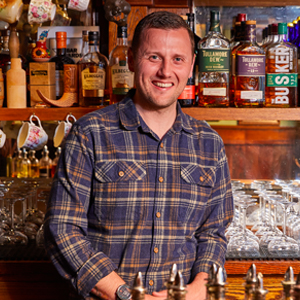
[00:00:10] Ray Latif: Hey folks, I'm Ray Latif and you're listening to the number one podcast for the food and beverage industry, Taste Radio. This episode features an interview with Jack McGarry, the Co-Founder Managing director of globally renowned bar, The Dead Rabbit. Just a reminder to our listeners, if you like what you hear on Taste Radio, please share the podcast with friends and colleagues. And of course, we would love it if you could review us on the Apple Podcasts app or your listening platform of choice. He's one of the most influential figures in the bar business, a description that Jack McGarry may have coveted at one point in his life. In The Dead since Jack and his partners opened The Dead Rabbit in Lower Manhattan, he's experienced career pinnacles and personal nadirs, the former making him an industry celebrity, while the latter elicited a shift in his values and belief system. The Dead Rabbit is, as it has always been, an internationally celebrated bar known for its exceptional beverage program and exuberant evenings. Yet Jack has abstained from alcohol for several years and in that time has emphasized the focus on moderation and carrying on the tradition of Irish pubs as a communal gathering space. He's also been a leading voice in highlighting mental health and education throughout the bar and restaurant industry. These priorities will be incorporated into The Dead Rabbit expansion, in which the bar will open new locations throughout the U.S. beginning next year in Austin and New Orleans. The overarching goal is to champion authentic Irish pubs by incorporating modern art, music, and other cultural elements into each bar. In the following interview, I spoke with Jack about his journey as an entrepreneur, the hollow experience of chasing and receiving accolades, how he's using his influence to spread awareness about mental health and sobriety, and the ways in which he's aligning modernity and authenticity in his bars ambiance. He also weighed in on no and low alcohol spirits and cocktails, and the reason that he's bullish on both, and why his meaning of strategic partners may not be what you think. Hey folks, it's Ray with Taste Radio. Right now I'm honored to be sitting in front of Jack McGarry, the Co-Founder Managing director of The Dead Rabbit. Jack, thanks so much for having me here.
[00:02:43] Jack McGarry: Thank you for waiting for me. Sorry that I was late again. You have a good excuse. You have a good reason. I know. Well, my wife just bought a house. We just bought a house, so I had to go and check it out this morning, but I'm still late, so I apologize.
[00:02:55] Ray Latif: No, it's okay.
[00:02:56] Jack McGarry: What do you need to check out? Is there a, we have a team of contractors. We signed for the house last week and my wife had a whole team of contractors there. So we were there to make sure they're all doing what they're, what they're meant to be doing. We have two young sons, so we need to get out of the city as quickly as possible because two sons and a husband and wife in a New York city apartment does not It's not great. You know, it's very tight. What neighborhood are you currently living in? We live in the back of this building. So we're in a downtown, we're in the financial district. Our building is on the Francis Tavern historical block. So obviously Francis Tavern is on the block and this whole building I think this block is the oldest block in Manhattan. So our building, it's five stories high. I live on the top two floors on the backside of the building. But you can imagine these buildings aren't super, they're not known for their square footage and space. So it'll be good to get out and have a backyard and trees for the kids to hug and all that stuff, you know? Yeah. You don't have any pets, do you? We have a very small dog. We have a Maltipoo. Okay. So she's not, she's not, she's very much not the problem. It's the kids and the millions of toys and everything else.
[00:04:03] Ray Latif: I know people who are like, okay, well, we have all this stuff. We need to go to the container store and buy all these things to put all this stuff. And I'm like, let's just get rid of this stuff. How about we do that? You know? So anyway.
[00:04:14] Jack McGarry: I'm excited to move in and not have to worry about going to the bathroom during the night and hitting the toy that makes noise and waking the kids up, you know. So I'm excited for that. That's like my number one that I'm excited about right now. Can't you come here and just chill out? Well, I do. I come here every day and do my work. I used to look at my weekend as like, that's where I got to relax. And I very much realized that by The Dead of Sunday night, I can't wait to get into work. Because it's like, that's where you relax and work, you know.
[00:04:42] Ray Latif: Well, there's a lot going on here. You're in the middle of a sort of reinvention in so many ways for The Dead Rabbit. I mean, talk about what's changing.
[00:04:50] Jack McGarry: So I took over leadership of the company at the beginning of this year. And we've essentially, in my view, we've restored the company to where it was meant to be in terms of championing Irish culture. Because The Dead Rabbit gang was created in the 19th century and they were essentially established to advance Irish interests. And to me, that's what The Dead Rabbit is for Ireland. You know, we are all about championing the Irish makers throughout whisky, beer, art, music. furniture like every aspect of like even if you go into our bathrooms our soaps are made from an Irish partner that's what we do throughout everything so it's been really restoring the bar to where it should have been and champion Irish makers so that's basically refreshing and refurbing a New York store while simultaneously designing Austin, which we're opening up in March to April of next year, and designing New Orleans, which is open in June, July of next year, while looking for stores in the likes of Savannah and Nashville, because our whole goal, like as much as I want to advance Ireland in the store here, I also want to challenge the misconceptions of what an Irish bar can and cannot be, and really demonstrate what the culture of Ireland is today, as opposed to what it was 40, 50, 60, 70 years ago, you know, because I feel like a lot of the Irish pubs in this country specifically are very shamrocks or very potty wackery. They're very that like synthetic representation of Ireland, you know.
[00:06:19] Ray Latif: Yeah. It's interesting you mention that because I just recorded an interview with the founder of a company called Tacombi, which operates Mexican restaurants, fast, casual Mexican restaurants. And, you know, one of his biggest goals in launching the company was to reshape the narrative or at least introduce a new narrative around Mexican cuisine and culture. And I think, you know, shamrocks and Irish bars are ubiquitous, but it is not what the traditional Irish pub looks like in Ireland, I'm assuming. Is that that's what you're saying?
[00:06:48] Jack McGarry: No, correct. I mean, to a degree. So the Irish pub in Ireland is synonymous with hospitality, not necessarily synonymous with So be synonymous with hospitality, be synonymous with community, like the Irish pub very much in Ireland is the third place. So you have your home place, you have your workplace, and then you have the third place where you go to rejuvenate. For some people that's a church, for some people it's a gym or whatever. But obviously for a lot of people, and particularly in the bigger cities, it'Best Bars and restaurants. In Ireland, that's what the Irish pub is. Sometimes the pub functions as a DIY store. There's pubs in Ireland that are Undertakers are one section of the space and then they have a pub or they've got a, you know, it's just, it's crazy. It's a post office and a bar, you know, it's just very, it's very surreal, but they're not synonymous with like elite level service or elite level offering. So that's what happens in Ireland. So that part of the equation I want to challenge because I think Irish pubs then are synonymous with like dive bars or subpar experiences. Whereas when you take it to the flip side of over in America, it's just inauthentic you know it's it's top of the morning to you it's uh corned beef sandwiches it's all of those things whereas when you go to Ireland none of that is accurate so it's infusing the the tradition and the heritage of the Irish pub with the modern veneer of contemporary Ireland through our abundance of culture, the musicians, the comedians, the furniture makers, mill workers, craft people, distillers, brewers, you know, it's just such a vibrancy and a diversity and dynamic nature of Ireland. And that's really what I want to celebrate. You go into a lot of these old bars and you'll see a picture of somebody that was dead 60, 70, 80 years ago, who was a Gates or Luke Kelly, who was important to Irish culture. But, you know, we have to recognize those giants. But at the same time, I want to tell the story of like the next Yates or the next Luke Kelly or the next U2, you know, that's really what we want to do. Can you come to Boston? I'm based in Boston.
[00:08:48] Ray Latif: We are, yeah. Are you?
[00:08:49] Jack McGarry: Okay, cool. So our plan is to, the whole goal is to spread our love of the Irish pub and Irish culture. So we're As I said, we're addressing a lot of these elements in New York, and then that's going to set us up for everything that we do moving forward. But our plan is to open next year, we're opening two next year, three in 2024, three in 2025, and three in 2026. So we're going to be opening up and Boston is definitely going to be one of the cities that we open up within that nine to 10, like we're planning to get to 15 to 20 stores, you know, within the next couple of years.
[00:09:22] Ray Latif: That's amazing.
[00:09:23] Jack McGarry: Yeah. So fortunately for Boston, they have great heritage Irish pubs, but again, I don't think they properly tell a story of like the younger generation that are coming through. And obviously the Irish culture in Boston as well is extremely pronounced, you know.
[00:09:36] Ray Latif: It sounds like you have a good idea, a vision for what you want Dead Rabbit to look like across the country. When I ever thought about The Dead Rabbit in the past, I'd always associate it with being a strong brand, having a strong brand. But when you do open up new locations, is it very much about telling the story that has always existed for the company? Or is it very much like, okay, we need to incorporate some of the culture that exists, already exists in the cities that we're entering?
[00:10:02] Jack McGarry: So as you said, the strong brand, it was for me, the bar before we pivoted was built on The Dead Rabbit gang leader, who was John Morrissey. And obviously all of that rich 17th, 18th and 19th century history of The Dead Rabbit Irish gangs, which is obviously particularly pertinent to the 19th century and the Kingdom of Mixed Drinks throughout the century. Like it was all historically driven, particularly when we opened and then that morphed into this graphic novel, strong man rabbit character. And I think we We had a bit of brand drift because we lost the essence of what was core to the company, which is, as I've said, I essentially view myself and this bar and everything else that we do as selling Ireland. Dead Rabbit is a vehicle for promoting Ireland, promoting the makers of Ireland, promoting our culture, promoting the distillers, promoting how those products and our beers and our ingredients work in world-class drinks. So with the brand, we're always going to recognize our roots. But for me, the brand is all about everything that's going on in the island of Ireland and telling that story to the Irish diaspora or telling it to anybody that's Irish curious or any of that type of stuff. You know, that's really what I want to do. And in terms of recognizing the sense of place. A big part of what we're going to be doing moving forward, and we're already developing these links in Austin and New Orleans, and indeed in New York, is we want all stakeholders of the company to benefit from Dead Rabbit. My big anchors, and you've seen it in my post, and I think we're going to talk about it a bit, is mental health and education. And I want to make sure that The Dead Rabbit opens up Austin or it opens in New Orleans, that we're partnered with local partners that are doing those work and those anchors. to lift people up. So that's what we'll tell there. I don't really want to go in and tell a story of like the Irish story in Boston or the Irish story in New Orleans, because there's other bars that have done that. You know, there's iconic Irish pubs in Boston, there's iconic Irish bars in New Orleans and pretty much in every city. So that's been done. I want to go in a different direction. Basically, it all boils down to, I want to use the vehicle of the Irish pub to tell the story of what's going on today and have a bit of transparency, freshness. Because a lot of the times in Irish pub, particularly in this country, is synonymous with dive bar, synonymous with getting hammered. It's synonymous with a lot of negative aspects that I want to kind of get away from. You know, like we have a 4am license in here. A lot of various pub operators in the city will swear by they'll not open a bar if they don't have a 4am license. We purposely close at 2 and 3am because they don't believe anything good happens in a bar after 2, but definitely not 3, but certainly after 2. So we're trying to do things slightly different.
[00:12:49] Ray Latif: Yeah. I mean, it sounds like you have a very ambitious plan is what I'm hearing. And it's something that I think it's always existed in you, this drive to do something different, to be great at a particular thing. And I guess your sense of ambition or the reason for the ambition has changed over the years. A friend of mine sent me a post of yours. I think it was from Facebook from June. And it talks about your original drive. And if I can read it here. When I started in this industry it was my raison d'etre to become known as a globally recognized bartender and by extension for the bars I worked at. It was narcissistic and the manifestation of my self-centeredness was a totalitarian way of working. Now, this led to some significant problems in your personal life, and you alluded to this notion of mental health as being a critical part of the hospitality industry, of the bar industry. It's something that I think people are waking up to a little bit more than they had in the past. You, as someone who's been speaking about it for a while, are highly influential when it comes to that topic. How have you been able to get to people? Have you been able to broach that subject in a way that resonates with the industry and in a way that's very approachable to people who want to learn more?
[00:14:14] Jack McGarry: So when I had my breakdown, it precipitated me stop drinking, which is, I think, just over seven years ago.
[00:14:21] Ray Latif: And to be clear, I mean, I think this might surprise some of our listeners. You are a bar owner who doesn't drink, doesn't consume alcohol.
[00:14:28] Jack McGarry: I don't consume, yeah. When I got out of hospital and I started taking, I was in outpatient rehabilitation and extensive therapy and that type of stuff. I realized at that point that nobody, it was at that time that we were all talking about that slogan like earn your booze and stuff like that. And listen, I'm not diminishing any of these moves towards like mindfulness and healthy and all that type of stuff. But I viewed all of that as like surface level. Yes, it's great to work out. Yes, it's great to get a full night's sleep. Yes, it's great to meditate. But like the root issues nobody was really talking about in terms of like depression, anxiety, addiction, and a lot of the negative attributes of the industry, you know, a lot of it, like you went to Tails a couple of years ago and it's obviously significantly changed, but all of these big festivals are excuses for people to get together and get absolutely hammered. And everybody's doing the same thing and nobody's calling each other out because that's just, it's just totally accepted. So when I got out of hospital, we had just won world's Best Bars and I was recognized, I think the year before, as international bartender of the year. And I was like, listen, If I have any type of platform, I'm just going to put my hand up and say, put my head above the parapet and say, I'm struggling. This is what I'm dealing with. And I'm going to work on it and try to be better. And in terms of how it resonated or landed, Most of my posts now or any type of thing that I say externally, I think about and it's like, I make sure that it's all part of wherever we're heading and it's strategic. But back then it was like, I was just telling exactly what was going on and wherever it landed, be damned. You know, I wasn't really, I knew I was going to lose contracts or gigs with people and And that all happened, but I was just telling like, this is what I'm dealing with. Here's what I'm doing to address it. And then I just gave updates as I was getting better. So I think people appreciated that level of candidness. And my whole thing when I started telling my story was like, if it helps another person, go to that first meeting or if it helps that person go and get a therapist or if it helps them like take one step or one degree change towards being their better version of themselves, then I've done, like the post was successful or my posts were successful or my communication on it. So that was really the inspiration behind it. And then as I got better and better, then That's when we changed the culture in here and everything around me just started to change. People left my life and then new people came into my life. They lived their life congruent to the way that I live my life. I don't need to tell you, it's a pretty hardcore industry. It can eat you whole if you're not prepared. Yeah.
[00:17:11] Ray Latif: It's got to be really shocking in some ways when you do reach the pinnacle or what you perceive to be the pinnacle of your career and the awards that everyone in the industry is chasing and then feel nothing.
[00:17:27] Jack McGarry: Yeah. It's crazy. It's crazy. You know, it's just the hollowness and the shallowness of it all. You know, I look back. And I talk about this often, people are like, you must be proud of all of that. And A, I don't really remember much of it because I was heavily drinking and medicating at that time. So there's that piece of it, but there was, I don't have any feeling really attached to it. Like I see the pictures on a stage where I'm holding stuff and there's just nothing. There's nothing there because when you're living your life that way, you're not experiencing the fullness of life. And that's the big difference. My mother passed away this year and I got to experience the fullness of those emotions, albeit very bad. Then I had a son that was born just after my mom passed away. You get to experience the real, raw, visceral, feelings of that, whereas when you're in the throes of mental, like the worst throes of mental health or addiction, you're robbed of that, you're robbed of any joy, you're robbed of any like light. So yeah, it's tough looking back on it, but ultimately I look at that as that was part of the journey to get me to that day where I was like, right, I'm ready. I admit that I have no control over this. I want to get better. I'm ready to do the work. You know, I'm thankful that I had all of those experiences. And when the award season pops up, that's the reason why I say like, listen, because I was in that position where it was like every day you're waking up, you're working 19, 20 hours a day and nobody can work that unless you're doing something that can delay the inevitable crash, because it's going to happen at some point. So that's the reason why every year I'm trying to say to people like, It's not about awards, it's about the work, it's about the customers, it's about the experience, your product. Everything else is a byproduct of that reason. You know, it shouldn't be the reason that you do everything because ultimately if you're chasing that, if you're chasing awards, you're always going to be left unfulfilled, ultimately.
[00:19:21] Ray Latif: So with your platform and your influence, are you actively trying to change the culture agenda schedule for events like Tails for, I believe it's called the Bar Nightclub show at this point? I think they changed the name of it. But I mean, are you out there? actively trying to get people to understand that these shouldn't be drunken free-for-alls, that these should be about how can we make our business better? How can we be better as patrons of the industry?
[00:19:50] Jack McGarry: Yeah. I mean, anytime I'm asked about it, I have a very forthright opinion on. I remember seeing a metaphor or a meme about like it was about charity versus setting somebody up for success so you can give somebody a fish every day and they'll get used to getting the fish or you can teach them how to fish and I believe our industry is very much based on that like we don't set people up for success in their life or how to use their head or how to be successful in life and the big difference was what we do here now in Dead Rabbit and anything I'm involved in now it's about healthy habits, it's about healthy philosophies, healthy principles, setting people up for success. Because I think if you get your head right and you're thinking right, all of the other things will start to fall into place. And with Tails and all of those organizations that you mentioned and more, thankfully, a lot of those things are starting to happen. My generation and the other generations are starting to push those things, you know, like financial literacy, how to get to owning your own house, owning your own business, how to write a contract, how to do X, Y, Z, how to look after yourself. So that's happening. But there still is an element of Every year I go down to Tails and I just stand and look, I'm like, I can't believe people behave. But, you know, like we call ourselves industry professionals and you're seeing people walk out of a quarter of a million dollar event and just leaving glasses all over the street in New Orleans. And I'm like, this is crazy, you know, and people are swaying all over the place. So it's disappointing, but I think we're moving in the right direction. But there obviously is still that undercurrent. in New York and the likes of London that it's still very drug focused and fraternity or sorority or whatever you want to call it. It's very like, there's a lot of toxicity about it, you know, and that's the reason it never surprises me when this sexual assault and mental health and all this type of stuff. Of course, it's going to be rampant, you know, you put people in a dark room that don't have, that are essentially rejects from a bunch of different industries. You put them in a dark room with alcohol and loud music. And you tell them to work for 14 hours, like, what do you think is going to happen? You know, it's a recipe for disaster.
[00:21:55] Ray Latif: I'm glad you're speaking so candidly about this because it needs to be told in a very direct and candid way. I think some people are just going to say, look, this is the bar industry. You know, this is people drink and drink out, drinking alcohol, you know, it's going to happen. It's like some people are going to get drunk and some people are going to do stupid things as a result. But is the problem so much about that this is the culture and it's just really hard to turn that kind of ship around? Or is it more about, look, we as an industry need to help teach our customers that we have a better way. There is a better way. in that, you know, we can embrace things like the traditional Irish pub. You know, you can come to a bar and not, you know, have eight drinks. I mean, is it about, is this as much about teaching the customers as it is industry professionals?
[00:22:40] Jack McGarry: I mean, I think it's cultural. Like it's, it's everybody, you know, like I'm constantly reading things about the younger generations drinking less and being more conscious. And, and I think we're ultimately like the puck is moving in that direction. It's not probably moving as fast as I would like it, but it's, it's moving in a more, inclusive, health conscious, like bring your whole self to work type of way. Now, there will always be that underbelly. Right now, I'd say that underbelly is probably still the majority, whereas I would like that to sort of move into the fringes. But we constantly, like, we have all these amazing award shows and festivals, and we keep telling ourselves that this is a profession. Like, we need to give respect to bartenders and servers and barbacks and everybody in the hospitality industry food chain. We don't give people health care. We don't look after them. We've seen what happened during the pandemic. Everybody was laid off, you know, and these are things that I have to wrestle with. And, like, we're moving towards now offering health care for everybody. We have a non-drinking culture here. You can have a beer when you finish, but it's no shots. None of that type of culture is here. We treat people as adults. They're looked after. But our industry needs to grapple with all of these things so that it is a proper profession. We can bring people in. keep them locked in. And then culture-wide, our customers need to be taught that as well, you know. But that's, it's a tough, like you're saying, turning against, you're definitely swimming against the tide with a lot of these things. But even at that, like that's, it's a swim or a fight that I'm prepared to go against. Like, I'll give you an example. Early this year, we had a, we hired somebody from Florida and they started with us and they told me they were on a mental health medication and they couldn't get it because they didn't have insurance. And then that was The Dead for me, that was just a straw that broke the camel's back. I'm like, right, if we're going to be this company that grows, I don't want to be a Walmart or I don't want to be an Amazon where I see our people taking food stamps to pay for things or they can't get their medications. You know, I wouldn't be able to live with myself. That's all the stuff, they're all big things that we're wrestling with, but they're worth wrestling with. I feel for too long in this industry, we've turned a blind eye to things. And ultimately that's led to people dying, it's led to people being sexually assaulted, it's led to people having nervous breakdowns or mental breakdowns. So that way that we were doing it is not sustainable.
[00:25:00] Ray Latif: We are seeing as part of this sort of new wave of health-focused people who are looking at mental and physical health as the most important things in their lives. consumer products that are and brands that are speaking to them in a very direct way. And what I'm talking about are non-alcoholic options when it comes to spirits and cocktails. I wonder how you feel about that new, I guess, segment of the beverage industry and whether or not it will play a significant role in places like The Dead Rabbit and off-premise as well.
[00:25:38] Jack McGarry: I mean, I think when it all started out, I feel like we had these like binary or dichotomy options where it was either you went in like right now you had non-alcoholic bars and you had alcoholic bars or like it was an either or type thing. And thankfully, that's starting to deteriorate and diminish because I think bars ultimately, you know, people are like the younger generations are drinking less. So bar, again, moving towards the puck where bars need to, if they want to remain competitive in the long run, they're going to need to have more balanced options across food, across alcohol, across non-alcohol. They need to be able to accommodate those different preferences. And that's another reason why I have a problem with the Irish pub's stagnancy. You know, you can go in, it's beer, it's whiskey, it's a terrible well of vodka. There's not that inclusivity there. And that's something that we are very much behind. we want here, you know, when we have people coming in and say they want non-alcoholic drinks, to make sure they're on par with the alcoholic offerings that we offer. Because most times you go in and you have your ubiquitous homemade ginger beer or lemonade or cucumber and lemon or whatever, you know, it's the same stuff that people serve. But thankfully, over the past couple of years, the likes of The Nomad in New York, I know it's now The Net and particularly like the likes of Michelin star restaurants, they've been definitely on the leading edge of this. Three Spirit free options. And that's definitely something that we're accommodating here. And I think that's here to stay. Like you're seeing right now, there's so many different brands. I don't know whether that will continue to proliferate at the rate that we're seeing right now or whether it will consolidate, but it's certainly here to stay. And I'm personally all for it. For me, I can drink. The one drink I never ever went near, obviously, when I was... Well, I didn't go near any drink, but when I started drinking Guinness was my go-to. But when they released the Double Zero Guinness, I was like, finally, I can have a Guinness again. You know, I went back home, I got a pint of Guinness. of the double zero, loved it. The double zero Heineken, alcohol free beers, alcohol drinks, I'm fully supportive of it, but some people in the sober community, it's too much for them to go near that. And again, you have to respect that, they just don't feel comfortable in spaces where people are drinking alcohol. For me, that's not a problem because when I got better, people were telling me on both sides, like in the hospitality industry and in the mental health industry, you need to leave the bar industry. And I just never bought that. I just thought it was complete nonsense. And I have absolutely no problem with not drinking and being in a bar with other people drinking. And if anything, it just gives me another When I see people drunk, it's just like, I know that that's what I'll be like if I choose to start drinking again. So it's like a positive affirmation of where I'm at. But no, bars need to be able to accommodate, like we're about to hang a sign on the front of the theatre that basically says we're inclusive of everyone and exclusive of no one. And part of that is the political situation we're in with where we're at. But a bigger part of it is like, I want People of different sexes, genders, political beliefs, religions, drinking preferences, eating preferences. Everybody should be able to come in through our doors and be made to feel whole and be made to feel welcome and leave feeling better than when they came in. So that's what we're about. And I think that's what most bars and restaurants should be about as well.
[00:29:05] Ray Latif: Leaving feeling better than when you came in is a great way of looking at any place. If you go to a restaurant, if you go to a bar, if you go to an amusement park. You know, going back to Guinness for a second, and I was, and I think there were some folks that were skeptical about whether or not you could replicate the taste, the aroma, the mouthfeel of a Guinness in a 0.0 product. I think they did a great job.
[00:29:28] Jack McGarry: An excellent job. I mean, the technology and the stuff that they've got today. Listen, if you're a Guinness drinker, And you drink it and obviously it's not going to taste identical to a regular Guinness. You take the alcohol out, there's going to be ramifications for that. But for people who don't drink, who would like the flavor of Guinness. Basically, you're making your table longer and saying, right, you can come and join us. And to me, that's what it's all about. Or even if you drink Guinness and you just want the flavor of Guinness and you're the designated driver for the night or whatever, it's just about options. It's about accommodating people where you can. And for a company of Diageo's size and the Heineken and the big distillers and stuff like now, they have the technology and the wherewithal to do it. And you can see with this younger generation particularly, as you said, they care about what's going on with their bodies, they care about the world, they care about the environment. You have to swim to where the puck's going. You have to give these options. And again, it's too easy, going back to the Irish pub operators, it's too easy to become obsolete if you just say, No, it's not going to be the same or we're not going to change or we're not going to do this because ultimately the only thing that's permanent is change. So change is going to happen. It's all about whether you want to be part of that change or you don't. And if you don't cool, you're going to be rendered obsolete.
[00:30:52] Ray Latif: Yeah. Guinness has done a great job, but you mentioned some of the distillers, some of these, you know, massive global distilled spirit brands. And I think that's where there's a, there's a disconnect. There's a pain point because I've tasted some of these quote unquote non-alcoholic whiskeys or gins, and they make me cringe, frankly, because they just don't taste anything like what Three Spirit was intended to taste like or traditionally taste like. Heat's missing. You taste a lot of sugar in some of these cases. I think that for me is the big problem in so many ways. you know, new brands that are coming to market or calling themselves a whiskey or a gin or some sort of, you know, traditional distilled spirit, when I think what you probably should be looking for is a completely new spirit, a completely new... I couldn't agree more. Yeah. Couldn't agree more. And I mean, those are where the really innovative cocktails actually come from. So that being said, you know, are you advising some of these brands? Are you advising conglomerates like Diageo or Pernod on those sorts of innovation strategies, and maybe not advising in a formal way, but at least nudging them in that direction, given your clout and your stature within this industry.
[00:32:12] Jack McGarry: So I've done a couple of like, I've been a part of focus groups and stuff like that. And my advice is, I mean, you hit the nail on The Dead. There's one thing taking the alcohol out of a beer and offering a non-alcoholic version of a beer because it's still congruent with the integrity. Like, yes, you can make a marginal call on the differences between Guinness and Guinness Double Zero. Whereas if you're saying this is non-alcoholic gin, or non-alcoholic whatever or non-alcoholic whiskey it's just not that's not like just call it something different like my issue with this and i was on one of these sessions and my when they they made a female version of the ghostbusters and i'm like just make a movie for strong women, just make something new. Because when you keep trying to fit these things into commercial successes, you're taking the integrity away from the thing that you're actually trying to achieve. So just create a new spirit category or create a new movie category or create a new movie script. Do something new. That's where I'm nudging people. Because I think if you're trying to put these round pegs in a square hole or whatever, that's what it feels like to me. When you're saying non-alcoholic whiskey or non-alcoholic this, there's always that disconnect from a consumer when you're paying the same price for a spirit bottle that you're paying for an alcohol bottle. And you're like, well, we're just playing for flavored water here, because that's the way a consumer is going to perceive it. So you need to come up with different categories. So I think you're starting to see that. I know we work with some products here from a called Three Spirit, and they're a company based in the UK. Yeah, great brand. Their stuff's delicious.
[00:33:47] Ray Latif: Yeah.
[00:33:48] Jack McGarry: You know, and it's not, they're not trying to stick themselves in a new, and I think that's ultimately is going to move in that sort of vein and maybe you'll see different categories of liquid. Like maybe that's where it'll go. But I think definitely get moving away from these like non-alcoholic whiskeys or whatever it is. I think that is definitely banging on the money. We need to step away from that.
[00:34:10] Ray Latif: Well, The Dead Rabbit launched a whiskey, right?
[00:34:12] Jack McGarry: Yeah.
[00:34:12] Ray Latif: Do you guys still have that brand?
[00:34:13] Jack McGarry: Yeah. So we have a five-year-old blended whiskey that we sell here and it's available all over the world. And we're going to be releasing other marks as well. So the company that makes that is Quintessential Brands. We work with Quintessential Brands and we're working now to like on a whole bunch of things like refreshing the label, releasing different marks. We're working on getting that relationship a lot tighter. So it's exciting.
[00:34:38] Ray Latif: Have you ever thought about given, you know, the interest in non-alcoholic products, ever thought about launching a non-alcoholic type of cocktail or spirit product?
[00:34:46] Jack McGarry: Cocktail, yes. Not like a spirit product. We're looking into things like RTD lines and liqueurs and stuff like that. So maybe like non-alcoholic liqueurs and stuff like that we would do because so many great flavors are indigenous to Ireland. So I would definitely love, and obviously that would be conducive to whiskey based. liqueurs, but it would also be conducive to like sugar based liqueurs or stuff like similar to what Three Spirit are doing. So I would definitely be open for that. So it's definitely on our agenda as our RTDs. I go to the, my wife's from New Jersey and I go to the beach and I see just everybody drinking White Claw and Truly and To me, it's just such an easy avenue to get people drinking good quality whiskey highballs. I know a lot of other companies are starting to do this for gin and some even with whiskey. So I want to do that, but definitely options like that so we can increase accessibility in the bar. So we're definitely looking into that. How about non-ALC RTDs? Again, I'd be open to it. We haven't even started the process yet. Right now, we're just starting to have conversations about it now. But definitely, anything you do now, you have to offer a non-alcoholic option. We have non-alcoholic options downstairs. We have non-alcoholic options upstairs. You have to do it. So even for the big companies, Three Spirit companies and the whiskey companies, you have to do something. And if you're going to do it, it has to be meaningful. It has to be well thought out. as you are doing with your, your whiskey or your, your main product. So like our Irish coffee downstairs, you can have a non-alcoholic version of the Irish coffee, stuff like that. So it's definitely stuff that I would be keen to look into.
[00:36:25] Ray Latif: It has to be authentic to your brand as well.
[00:36:28] Jack McGarry: Yeah. Yeah. That's the thing. Cause I feel, and I said to you, like these lemonades and ginger beers for so many, like, it was just an afterthought. I don't want anything that we ever do to feel like we just put it there and I guess a token gesture at why I want it to be strategic and thought out and make sense, you know?
[00:36:44] Ray Latif: Yeah. I intentionally use the word authentic because you posted something on Instagram, I think it was also a couple of days ago, about that word and its overuse or how it's misunderstood among a lot of folks, particularly within this industry. Yeah. Is there a definition that you think more people should embrace?
[00:37:04] Jack McGarry: I read a fantastic book which I actually highlighted in the post by Joseph Payne and James Gilmore, I believe, are the authors in the book called Authenticity, What Consumers Really Want. And it goes through the definitions of authenticity and really showing that authenticity Like nothing is actually really authentic. You know, when you go and you see the National Monument and people be like, oh, that's authentic. Like people made that. Or when people talk about a forest being authentic, like nothing is actually truly authentic, but authenticity does exist. So paradoxically, though, authenticity does exist. And there's in the book, they talk about five different types of of authenticity, and obviously authenticity is inherently linked to your strategy. So being authentic to the self is one aspect of it. So what is the strategy for your product or your business? And then stand true to whatever that flagpole is. So as I said to you, looking at purely through the lens of Dead Rabbit, we came to this country to open up our version of the 21st century Irish pub. Modernizing the Irish pub by moving away from that, like you walk in, you see knickknacks and all this crap all over the place, and it's a shepherd's pie and it's a pint of Guinness and you have a token old man in the corner. you know, and maybe some Diddley Dee, you know, that's what an Irish bar is. So we did that, but we had this thing, we're modernizing the Irish pub. And then when the pandemic hit, to be honest with you, that's really what catalyzed and crystallized a lot of where my head was at in terms of We say we're an authentic Irish bar and we're bringing the Irish pub into the 21st century. But we've got this stupid rabbit character and we sell all this crappy merchandise. And we have all these pictures of old things on the bar and people are dead. And I guess we're not doing anything, modernizing anything. You know, we're just replicating stuff that's already been done. And that's what started the process. So that's what started me. What is authenticity? So authenticity is connecting with your why. You know, Simon Sinek has a great, a great book, Start With Why, and I would recommend that to everybody. And he implores everyone to be an inside out company. So connecting with your why and making sure you're how you do it and what you sell or what you do is congruent with the why. And that was the same. So looking at it from what the strategy was. The strategy The Dead Rabbit was to be a 21st century Irish pub, to advance Irish culture and obviously The Dead Rabbit gang was a gang that was created in the 19th century to achieve that in that time. When I read the book and wrestled with this thing, the five different types are related to different types. So you've commodity, goods, service, all these different types of sectors. And our sector, which I would say is in pubs and restaurants and the experience economy and the level of or the marine authenticity typology is called referential authenticity. So referential authenticity is when people obviously use you as a reference point to whatever you're representing. So for me, when people come The Dead Rabbit, I want to be the reference point or the authentic reference point for what's happening in Ireland. So whiskey, beer, Irish coffee, cocktails, music, art. And then the second part of that authenticity equation, so know who you are. And then the second part is make sure everything you do is congruent with who you are. So that's really what we've been trying to do this year. Developing strategic partnerships with artists, with galleries, with furniture makers, with scent makers, with musicians, with you name it, you know, that's like last night I was at the Irish Arts Centre when they were celebrating their 50th anniversary at the Chelsea Pier and Ed Sheeran got up and sung three or four songs, you know, it's developing those bonds and using those to tell the story of what's of what's happening in Ireland, so referential authenticity. So that's really what I'm trying to do The Dead Rabbit. I'm making sure, so when I say to you, we're a 21st century Irish pub or we're a pub that represents the culture of Ireland right now, I want to make sure everything that is in here is coherent with that, you know, and for a time, I think that was not the case. So, yeah, that's what authenticity is to me. It's knowing who you are, knowing what you're about and making sure everything you do is congruent with what you say it is, you know, because in so many parts of the world, even you look at the politics today, people, there's this strategy implementation gap, you know, people like Joe Biden ran on a campaign where he said, I'm going to forgive everybody shooting dead. And I knew when he said that, I was like, it's never going to happen. I just knew it was never going to happen. I knew it was going to be, he's going to do something, but it's never going to be. So there's a pretty big gap there. I'm not just isolating Joe Biden. Every politician does the same thing. And businesses, you go into McDonald's and they have the picture of what the burger looks like. The burger never looks like that. And I'm like, I want our company to have a very tight strategy implementation gap. What we said is what it looks like. I want it to be as tight as possible. There's always going to be some like a percentage point or two or a couple of percentage points difference, but I want it to be tight. I don't want it to be 20, 30, 40, 50, 60 percent difference, you know?
[00:42:16] Ray Latif: Well, that requires a lot of buy-in from your staff.
[00:42:19] Jack McGarry: Yeah. And thankfully, we've got that, you know, we have a great team here. We're building something special and we're a growing company. They know that, yes, like I have, I have, we have investors and they want to make money, but I also want a great culture. I want to look after everybody here. I want to help people from back in Ireland in terms of raising the boats of Irish or raising the tide of Irish culture. But one of the key aspects in terms of achieving that is having a great team, you know, 100%.
[00:42:46] Ray Latif: Does that also help with things like turnover? I mean, yeah.
[00:42:50] Jack McGarry: Our turnover here is, So our cycles of teams going about four or five years. Yeah, so we've still got some, I think we've still got about a handful of team members that have been here from day one. Then we're coming, next year we're coming up on our 10th anniversary. So we're going to have a great, we're going to have 10 days of celebrating our 10th anniversary and we're bringing over artists and musicians and comedians and and all types of amazing stuff every day we're doing an event. But yeah, we have a handful of people that were here with us that first shift that we opened. We opened on a Nor'easter on the 12th of February 2013. And we still have a lot of that crew here and obviously the pandemic. sucked because it was the week after they closed everything down, we realized we're actually going to need to let people go so that they can claim unemployment because we wouldn't have been able to match what we knew they were going to get. During that day, we let 110 people go, which is just one of the worst experiences of my career. So when we reopened, the team that you're experiencing now, this team here now is about a year old. And it's but we've very, very minimal turnover, you know, when people, thankfully, touch wood, talk about the difficulty with hiring people and stuff. We've never, again, touch wood, we've never had to experience that. And that's something that I'm very grateful of. But we also invest heavily into the culture, into looking after people, training people, and even more so moving forward, you know, with the health care plan, with other benefits, education, incentives, all that type of stuff, tuition programs. I want to make sure that we're doubling down on that. And because the key piece, like I'm sitting here talking to you, I'm not the person that's serving 99% of our customers here, 99.99. That's the frontline. So we've got to make sure it's a fantastic culture.
[00:44:42] Ray Latif: Jack, this is the first time I've had an opportunity to meet you. And I'm so glad that we've had this chance to sit down. You know, I think I've interviewed a lot of entrepreneurs. I've interviewed a lot of founders and I think one of the things that has really come through in this interview is clarity. I think there's a lot of clarity in your life and what you want to see out of your bar, your business, your own personal life, and how you want to share some of that. with patrons and with other folks in the industry and hopefully with our audience in this podcast interview. Thank you so much.
[00:45:13] Jack McGarry: Well, thank you for having me and sorry again that I was late. I hate when people are late. So I don't like that I'm on the other side of that today.
[00:45:22] Ray Latif: Well, I will say to that, congratulations on your new home. Thank you very much. Thank you. And thanks for having me again. That brings us to The Dead of this episode of Taste Radio. Thank you so much for listening, and thanks to our guest, Jack McGarry. Our audio engineer for Taste Radio is Joe Cracci, our technical director is Joshua Pratt, and our video editor is Ryan Galang. As always, for questions, comments, ideas for future podcasts, please send us an email to ask at Taste Radio. On behalf of the entire Taste Radio team, thank you for listening, and we'll talk to you next time.