[00:00:00] Bobbie Lloyd: BevNET Live, the premier event for beverage industry executives, is coming up fast on June 10th and 11th in New York City. Hundreds of beverage founders, investors, and retailers are already confirmed. Don't miss your chance to build momentum mid-year and set yourself up for a strong finish. Early registration pricing ends Friday, April 24th. Register now and save $100 at BevNetLive.com.
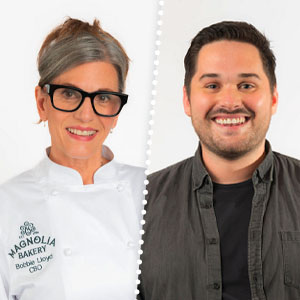
[00:00:39] Ray Latif: Hey folks, I'm Ray Latif and you're listening to the number one podcast for the food and beverage industry, Taste Radio. This episode features an interview with Bobbie Lloyd and Eddie Revis, the CEO and CMO respectively of iconic bake shop, Magnolia Bakery. If you've ever described Magnolia Bakery's Banana Pudding as a little slice of heaven, you're not alone. The indulgent dessert is a big reason why customers wait in long lines outside of the company's flagship bake shop in Manhattan. Although Magnolia wants to make the pudding more accessible, New York-based company is hampered by the capacity of its 10 U.S. retail locations and direct-to-consumer business. Its leaders had to get creative, so they made cookies. In March, Magnolia introduced its Banana Pudding Cookies, a line of soft-baked cookies made with real butter, bananas, and chocolate. Available in three flavors, Classic Vanilla with White Chocolate Chunk, Chocolate Chunk and Confetti with White Chocolate Chunk, the cookies are individually wrapped and sold in packs of four for $7.99 a box. They're available in retailers across the U.S., including Costco, The Fresh Market and Harris Teeter. In the following interview, I spoke with Magnolia CEO Bobbie Lloyd and CMO Eddie Revis about the decision to create a consumer brand and the patient and thoughtful approach behind its development. As part of the conversation, they discussed the process for maintaining the consistency and quality that Magnolia is known for, aligning forecasted demand with production and marketing resources, how Magnolia has transcended into a lifestyle brand, and their perspective on collaborations with other companies. Hey, folks, it's Ray with Taste Radio. Right now I'm sitting down with Bobbie Lloyd and Eddie Revis, the CEO and CMO, respectively, of Magnolia Bakery. How are you both?
[00:02:37] Eddie Revis: Great. Hi, Ray. Nice to see you.
[00:02:39] Ray Latif: Great to see you as well. Eddie, how you doing? Doing great. Second day of Fancy Foods. We are here at the 2023 Summer Fancy Food Show in New York City, bustling on this Monday morning. It was a little quieter on Sunday, but you guys said you had a good day yesterday on the first day of the show.
[00:02:51] Eddie Revis: It was packed yesterday.
[00:02:53] Ray Latif: Yeah. Very busy. Now, when people come to the booth, are they coming there because they know the brand or are they coming there directly for the cookies that you just launched?
[00:03:00] Eddie Revis: Sometimes you get that side look where people discover and see the logo and their eyes pop open like, oh my God, Magnolia Bakery's here. And then others are, ooh, what's that?
[00:03:10] Magnolia Bakery: Okay. I think our favorite experience has also been people coming to the booth saying they've seen the cookies on the floor or somebody told them to come check out the cookies. And they walk up with that wide eyed look and they say, I can't believe that these are real. I need a sample. And they take four.
[00:03:25] Ray Latif: Well, these cookies do look pretty amazing. You were so kind to bring some and put them on the table here. This one is the confetti variety made with White Chocolate Chunk. I have not had this yet, and if I have it, I'm probably going to not be able to continue this interview just because I'm so indulged and delighted by said cookie. So I'm going to hold off on that until a little bit later on. Bobbi, you've been with Magnolia Bakery for quite some time, since 2006, correct?
[00:03:48] Eddie Revis: Since 2006, yep.
[00:03:49] Ray Latif: There's been quite an evolution of the brand and the company, but it's been gradual and it feels like your growth has been patient and thoughtful in the way that you've grown as a company. Talk to us about the process of how Magnolia has essentially changed.
[00:04:04] Eddie Revis: Wow, that's a big one. We had a slow growth for many years on the retail, our actual bricks and mortar stores and our international presence. But in 2021, we decided, we were acquired by somebody as a new investor to come in and launch our CPG product. So it was a slow growth of let's build a team first. It was the most important thing, as well as rebranding. We needed to come up with a new logo that would work for CPG. And then we hired Eddie as our CMO, we hired a CFO. We really took about a year and a year and a half to build a new website and get the infrastructure built so that we could develop and launch the product properly.
[00:04:42] Ray Latif: How long was the idea of a packaged brand part of the strategy or part of the mindset of Magnolia?
[00:04:50] Eddie Revis: Oh boy, I probably started with the desire to do something back in 2010, maybe before that. But we didn't have the infrastructure. We needed to have a really solid team in place. And we were a small company. We were very scrappy for many years. So we needed to have that investment to get the backbone behind us.
[00:05:09] Ray Latif: I mean, you also had a lot on your plate. I mean, you had the bricks and mortar businesses. You started a direct-to-consumer line. When did direct-to-consumer start, by the way?
[00:05:18] Eddie Revis: We started that in 2011.
[00:05:19] Ray Latif: Okay, so you already had quite a bit on your plate.
[00:05:22] Eddie Revis: And international. We have international presence with over 30 stores internationally.
[00:05:26] Ray Latif: Wow. Yeah. Okay. Are they all company owned or are they franchised out?
[00:05:29] Eddie Revis: They are franchises.
[00:05:30] Ray Latif: Okay. So when it comes to the timing of the launch of the CPG brand or the CPG line, Eddie, clearly you have a huge hand in directing what it should look like and how it should be rolled out.
[00:05:45] Magnolia Bakery: The biggest learning and my favorite thing about it has been how intimate the process has been with the company. Like Bobby said, it's been around for 27, almost 30 years now. And being able to sit with Bobby and the team and watch products get cooked in the test kitchen, have that small table discussion is unlike any other company that I've worked at when you're developing a food product. And I think what we really wanted to do is make sure that it was true to the ethos and the DNA of the brand that's been around and the equity and the IP that's been built. And so that process was really new for me, but also really exciting because coming from bigger food or big food, it's very systematic and it's very much a supply chain of we did our part, now you do your part. And I think developing this, because we had a lot of ups and downs in the process of 18 months, working with co-manufacturers and co-packers and the process that we went through. But the best part was just how intimate and involved the whole team was in developing the packaging and developing the flavor profiles and developing the product. It was really, really a great experience that is going to be hard to replicate, I think.
[00:06:42] Ray Latif: You most recently came from Chobani. What lessons did you take from Chobani in being able to lay the groundwork for the CPG brand?
[00:06:49] Magnolia Bakery: I think going back to something that Bobby said was we took our time with this. And that was a big lesson was we didn't want to rush into, you know, we have a great product, let's get it to shelf as fast as we can. We wanted to make sure that the category is ready for us, that our brand was ready, that our formulation and our team was ready. And that's a really big learning, I think, not just from Treboni, but any small startup or emerging brand that's coming into grocery is If we got the right pieces in place, and we got the right relationships in place, and we got the right teams in place first, the launch just was the launch. And I think we all experienced it when we brought this to market In March. We all said, oh, we've been working on this for 18 months already. This doesn't feel new. This just feels like the next step in the journey. So that's probably the biggest lesson is just the amount of patience that we had and the amount of time and communication that the team had throughout the development. We are meeting twice a week. sometimes three times a week on this, on top of the retail business, on top of the international, on top of franchising, on top of opening two new stores over that time period. So it was a really exciting lesson to learn. But something that was important was the patience that we had.
[00:07:49] Ray Latif: You've been busy, but at least you have cookies, right? At least we have cookies. Bobby, I'm curious, though, I mean, when you launch the cookies or when you're thinking about creating a cookie line, a package cookie line, why not license the brand and have someone else do it?
[00:08:03] Eddie Revis: Ooh, control, control, control. So I am a baker. Besides the CEO hat, I'm a CBO. And so to me, it was incredibly important.
[00:08:10] Ray Latif: She's a baking officer. Yes.
[00:08:11] Eddie Revis: It was incredibly important to create a product that, as Eddie said, matched the ethos of our bricks and mortar stores. Baked from scratch feel, made with real butter, made with real chocolate. We wanted to own the process.
[00:08:22] Ray Latif: Okay. So having said that, you're still co-manufacturing or having your products made by someone else. When you were thinking about doing self-production versus co-man, what was that discussion like?
[00:08:32] Eddie Revis: The inability to produce the product ourselves is at a scale. We just can't. So we don't have the equipment or the ability to have a factory to build it ourselves. So finding someone that could do it and match the quality that we need, find somebody willing to take the product that I'm handing them that we built in our, literally in my kitchen, sits right outside my office, about 10 feet from my desk. So I created a product in-house, benchmark product, and then finding a company that would work with us to bring it to the best quality possible.
[00:09:02] Ray Latif: Well, that's kind of a scary proposition because Magnolia is known for its quality. You're known for your consistency. And so saying we're going to hand it off to somebody else to make the product, you have to have a ton of trust in that company. How do you develop trust with a co-man?
[00:09:16] Eddie Revis: Well, it's also knowing your guardrails, right? So I'm not going to accept an inferior product. So if somebody's doing an R&D product for us and testing the version that I made, we're going to control it and not go to the next step until we approve the exact flavor profile, the texture, making sure that it's ready to market.
[00:09:36] Ray Latif: You talked about scale and trying to find someone that can help you build the CPG line at scale. But how do you forecast demand for a product like this? How do you anticipate what could come in terms of consumer interest and retailer demand? And how do you plan for that?
[00:09:55] Eddie Revis: I think being a 27-year-old company with a combination of DTC and bricks and mortar stores, we've had a sense of what our consumer base really likes and how broad we are. We have a lot of data. We're able to look at data, and Eddie can add to this as well, that looking at what sells in other cookie brands, where does it sit on the shelf? What can we expect to have in the market to kind of form what our volume will be?
[00:10:18] Magnolia Bakery: We definitely took a lot of the experience that the company had at the home office level and brought it into the CPG development. And we also, as Bobby said, we were so intimately involved with the development of this cookie and the samples and every step along the way. It wasn't so much a handoff as it was a very collaborative process. I made Bobby get on a lot of flights. And we did a lot of trips to different places. But I think the forecasting and demand really helped. It came from us. We also brought our sales partnership on very early, well before the cookie was ready. And we were seeding samples with them and we were having early conversations with their team and doing early presentations so that we had a really good sense of what our strategy for the rollout and what our strategy for year one was going to look like. And it's been successful. And so we haven't been surprised yet. Dre, our head of supply chain, hasn't been shocked yet by anything that's happened. So I think we've done a pretty good job.
[00:11:06] Ray Latif: You know, surprises in your supply chain can be the worst kind of surprises.
[00:11:09] Magnolia Bakery: Especially when we came knocking with Costco.
[00:11:13] Ray Latif: What did the data tell you about the potential consumer for this line? What did you want to know before you started the process of creating this cookie?
[00:11:20] Magnolia Bakery: Eddie, why don't you take that one? I can take that one. I think the first piece of data that we took as a company was Bobby's intuition. That was sort of data point number one. And we kept that at the core of everything. Even when we developed surveys or we're doing quantitative analysis or we're doing focus groups, we sort of always kept that truth because with us, it's data informed, not data driven. And so as we were doing our quantitative surveys, we were doing very scrappy. We were working with online partners like a survey monkey to survey grocery shoppers nationwide. The data started to tell us that one, we have this really joyful indulger who's shopping the store, typically a mom or typically the head of household of a family. What she's looking for is something indulgent, something delicious. It's kind of one of those headwinds coming out of COVID that that's what they want more of. We saw an opportunity in the market and through our data that if we came in and we talked about everything that's great about the product, it's real butter, it's real banana. It's real chocolate. Those are new things for the cookie category that have sort of disappeared in a way to make room for the keto and the gluten-free and the sugar-free. And I think going back to what Bob always pushed us, she said, we are a bakery first. And so we would never put a sugar-free cookie on there. We would never take the butter out of the baking. And so decisions like that, the data helped reinforce those decisions and helped reinforce why we were doing those and really helped shape this joyful indulger who's shopping for something delicious. She wants a great cookie. We also did focus groups, where we put the product in front of consumers and had them do some sensory testing and had them do some packaging testing. And we used that data, too, not to tell us what to do, but to validate the decisions we were already making. And so all those studies and all those pieces were really helpful, and we did it incredibly scrappy. We aren't a big brand. We don't have a huge research team. We don't have tons of data. We don't have tons of budget to spend on it. But we were able to be really resourceful in how we asked the questions and did the analysis internally.
[00:13:03] Ray Latif: I have to be that jerk who asks, OK, well, this all sounds well and good, but I'm looking at your cookie now and it says naturally and artificially flavored. Now, for someone who's been in the food and beverage industry for a while, I always heard that artificial flavors are bad, but they can make things taste really, really good. Talk about that decision to go with both natural and artificial flavors and why it mattered to the end product.
[00:13:28] Magnolia Bakery: But for that one, we again stayed really true to the types of ingredients and pieces that consumers love and that they would find in their pantry at home. And so we wanted to create an accessible cookie, something that of course tasted good. But there are a few key ingredients in our product where it just made sense to go with the one that consumers would be familiar with and would really deliver on that indulgence that they want to see. But again, most of the prioritization for us came from that real butter, real banana, real sugar to give that texture, to give that quality, to give that taste. There's just a couple of elements in it that, again, it's what the home baker or what that someone would find in their pantry at home.
[00:13:59] Ray Latif: It definitely impacts your retail strategy as well, though. So you can't go into a Whole Foods with this product. You can't go into a Fresh Market or a Sprouts. So how do you think about retail, given the ingredients and given the cookie that you currently have? Well, we are in The Fresh market. You are in The Fresh market. We are in The Fresh market. The Fresh market allows artificial... Okay, interesting. They allow great products on shelf.
[00:14:21] Magnolia Bakery: I did not know that.
[00:14:23] Ray Latif: Listen to us.
[00:14:23] Magnolia Bakery: There you go. There you go. You're right. The panel does exclude us from some retailers. They weren't in our initial launch strategy. We came out saying we want a mainline cookie. We want to be in that cookie aisle. Again, we want to be accessible to the shopper who's got a cart full of groceries and headed home for the weekend with their family. We've also done a lot of sampling in these stores that we're in. Market District, Fresh Market, Harris Teeter. And the feedback we've gotten from consumers, too, is it's not that for a cookie, that's not the most important thing for them. They want the cookie to taste good. They want the cookie to be indulgent. They want the cookie to be like something they could find in a bakery. And so for us, we've also validated the worry that we might have had or that you're expressing about the artificial. And consumers are validated that it gets trumped by the quality of the cookie and who it's coming from.
[00:15:05] Ray Latif: The cookie aisle is pretty packed and there are definitely different tiers of quality in the cookie aisle. You have your Chips Ahoy and then you have your Magnolia Bakery. When you are sitting in that aisle, when you're looking at that opportunity, how do you stand out immediately on shelf? Is it just the name Magnolia Bakery that people have recognized at this point?
[00:15:26] Eddie Revis: There's that real butter right at the top, real banana. And the packaging is also different. And it's four individually packed cookies. I think that's very different. The size of the cookie is a two ounce. A lot of times you'll see that kind of cookie packed in multiples in one little sleeve. So this is a premium, as you said.
[00:15:43] Magnolia Bakery: It also helps us with the quality and helps us keep The Fresh. It's a soft baked cookie. We want to stay soft baked. We don't want it to dry out, but we are seeing convenience really rise to the top on this one. They can throw it into a lunch. We have back to routine, back to school coming up. We have a great campaign that's going to be around that. But the individually packed is really attracted both retailers and the shoppers for that convenience.
[00:16:04] Bobbie Lloyd: Vibrant Ingredients is the natural ingredient partner powering food and beverage innovation, delivering flavor, function, and protection through a science-backed portfolio. Vibrant delivers purpose-driven solutions that help brands create extraordinary experiences. Discover what's possible with Vibrant today. Visit vibrantingredients.com.
[00:16:31] Ray Latif: Do consumers immediately make that connection between the Magnolia Bakery and your product? Your cookies, that is.
[00:16:38] Eddie Revis: Some do because they know the brand and our reach is pretty strong. Besides in New York City, we have international travelers. New York City is the hub for everybody to come and visit. It's on the top 10 list of stores to visit, so people know our brand really well, plus our D2C. And then there are those that have never heard of it, but are interested, or they may have heard of it, but have never been to a store. And the logo is incredibly cute, so that attracts people to the brand.
[00:17:03] Ray Latif: Yeah, let's talk more about the brand because it feels like Magnolia Bakery has evolved into something beyond just a food brand. You are, in so many ways, a lifestyle brand that people recognize for its premium, indulgent quality. So when you are thinking about stewardship of Magnolia Bakery and all the heritage that it has, what are some of the things that you are really trying to avoid and what are some of the things that you really want to promote about that heritage?
[00:17:29] Eddie Revis: Well, the one thing that we're known for around the world is that we are scratch-baked bakeries. So when you think of our bricks and mortar stores, we bake from scratch using real ingredients. And so keeping that ethos into our brand and making sure it translates into the products that we make, that it's real butter, it's real bananas, that was incredibly important to how we grow.
[00:17:48] Magnolia Bakery: I think too, Bobby touched on it, but what will always be the bakery and that ethos of care to the product and care to the packaging and care for our retailers. Now, as we launch and scale, we take that same care that we see our bakers and our teams do every day in the bakery for our consumers and for the food. And so that's one thing that I know we're trying really hard not to change is we don't just want to be trendy. We just don't want to be the flash in the pan or the loudest brand showing up on shelf. We spend a lot of time taking the same, we could almost take the training manual that we have for our stores and say, we do the same thing with our retail partners now. We spend time getting to know their business. We spend time getting to know who they are. We understand the shelf, the category, where does our product fit? And so I think that's a, that's a really important factor of the success here is that we aren't trying to be trendy. We never will be trendy. We always lead the trend, you could say in that way. But I think that's a really critical part of what we're trying to continue to express as we expand into grocery.
[00:18:39] Eddie Revis: We've always maintained a very classic flavor profile in everything that we create. And speaking to the trend is, we avoid it like the plague. Don't be trendy. And that's why we're 27 years old and still very relevant. We're iconic.
[00:18:53] Ray Latif: Yeah. And there have been a lot of iconic restaurant brands that have introduced or launched a CPG line. Some have done it really well. Some have done it not so well. Do you take any cues from seeing all those other brands, those other companies and how they've rolled out a CPG line?
[00:19:10] Eddie Revis: Not so much. I don't know if Eddie wants to add to that.
[00:19:12] Magnolia Bakery: Yeah, not really. Bobby and I spend a lot of time talking about how we want to be and how we want our grocery to look. And I think it goes back to the team. I mean, we are trying to hire a world-class, we are hiring a world-class team. We've brought people on from Kind, from Amheiser-Busch, from PepsiCo. And so we're really trying to find the best and brightest to come join us and to help build out the grocery business. And that's so important and takes so much time. We try not to think too much about maybe what someone else has done.
[00:19:36] Eddie Revis: And our team takes great pride in our product and in the work that they do. So we huddle constantly every week, every few times a week, we're constantly huddling to talk about what direction to take, what should we not do. A lot of opportunity comes our way. We don't have to do all of it.
[00:19:54] Ray Latif: So speaking of opportunity, there are a lot of other brands that I'm sure want to be aligned with Magnolia Bakery. You have aligned with and partnered with a number of lifestyle brands. If I'm looking most recently with Monos, which is the luggage brand, Boy Smells on a new line of candles, in the past Tula Skincare and Kate Spade. What makes for a great partner? What makes for a sensical alignment with Magnolia Bakery?
[00:20:20] Eddie Revis: So I'll add one sentence and I'll let Eddie take it from there. I think it's companies that take great pride in what they do. So if they're an iconic brand, like Boy Smells, everybody loves Boy Smells. Their product is beautiful. They put a lot of thought into what they do. And so that company aligned with what our company does. That's really important.
[00:20:40] Magnolia Bakery: Sarah Gramling and I talk a lot about this. She's our VP of PR and Partnerships. And her approach is really around finding audiences that should know about our brand or might know about our brand and love it, but don't come to New York or Chicago, LA as frequently as they would like, and find ways to bring the best of our brand to them. So Tula Skincare was a great example of this, where we said, what if we did turn Banana Pudding into a body scrub? Would anybody want that? That sounds so crazy.
[00:21:08] Ray Latif: The way you said that, I was like, would I want that actually?
[00:21:11] Magnolia Bakery: Right? It's a really interesting proposition. And I remember when we presented it to Bobby, we said, are you sitting down? Okay, let's talk about this one. It might be a little crazy for us. I just used it on Saturday again. There we go. It's lovely. It's lovely. And it was so successful. So what we did was we were able to meet Tula's audience, who's this young, influential, emerging audience that should know about Magnolia Bakery. Maybe they do, maybe they don't. And we were able to partner with them and said, let's bring the iconic sensory experience of Banana Pudding to someone's shower. Let's sell it through all the altas in the country. Let's sell it out of all the altas in the country. We had point of sale displays built in all the stores. We were expanding our brand in new channels. And then I was joking with Sarah, I'm like, any media marketer would kill to have their brand sit in someone's shower for three months and have them look at the logo and smell the brand. And if that doesn't turn someone into coming into the bakery while they're in New York or placing an order online or grabbing the cookies, there's no way to actually connect it, but it's got to be there. And so for us, we look for those brands that have the audience that we're excited about, take great care in their product and can make something really interesting. And then just something that really breaks through and does it in a really creative way. And so the team does a great job and not only planning those partnerships, but also launching them with the teams that we work with.
[00:22:22] Ray Latif: I wonder if you could determine whether or not you're getting more sales in the morning when people are using the Banana Pudding bricks. And then they're just like, oh my gosh, yes, I, for some reason, I really want to make an order and place an order Although Magnolia Bakery. And it all happens at like, I don't know, 8.30 a.m. in the morning.
[00:22:40] Magnolia Bakery: We'll see now that the Boy Smells candle is burning in people's homes and apartments all day. We'll see if that evens out. But I mean, even when we come to shows like this, people come up to Bobby and I all the time and say, are you selling the candle here? Do you have the body wash? We're looking for the luggage. Really? Yeah.
[00:22:53] Ray Latif: Wow.
[00:22:53] Magnolia Bakery: We had a few people come by yesterday and said, I saw the candle.
[00:22:56] Ray Latif: Someone was asking for the luggage, really? Oh my gosh. Come on.
[00:22:59] Magnolia Bakery: We have team members wearing it here too. Oh, I see. Okay. Yeah. Fair enough. Yeah. And the luggage was so successful. They're bringing it back.
[00:23:05] Eddie Revis: And the color palette of the luggage is so lovely. I have the purple bag. It's just beautiful.
[00:23:10] Ray Latif: Yeah, I do want to talk about the packaging. I just do want to go back to the partnerships. Are you doing the outreach to talk to other brands about a partnership or are brands coming to you and saying, hey, we would love to work with Magnolia Bakery on a candle, on a set of luggage?
[00:23:26] Magnolia Bakery: We do both. We do both. I would say our most successful ones are our collaborative ones. They are somewhat reactive, somewhat proactive. It might be a brand where we meet them out and we just say, hey, this is really interesting. This is cool. It could be a brand that has reached out to us in the past and we said, maybe not right now. It's a little bit of both, but we do it all internally, which is great. We don't work with like a partnerships agency or anybody. We sit around the table.
[00:23:48] Although Magnolia: We have Sarah.
[00:23:49] Magnolia Bakery: We have Sarah. We have Bobby. We have the team. We have, you know, we even do, well, Sarah does a quarterly meeting with the general managers from the stores and says, who do you guys want to see Magnolia Bakery partner with? Who do you want to be around? So ideas in the company can come from anywhere. And so the partnerships one is really exciting because that that's where we get a lot of fun.
[00:24:04] Ray Latif: We have a lot of fun. Would you do partnerships with other food companies?
[00:24:08] Eddie Revis: We have. We have. Yeah. Yeah. Limited.
[00:24:11] Ray Latif: Limited. How do you determine that another food company is a good partner for Magnolia Bakery?
[00:24:15] Eddie Revis: It goes back to the care of the brand. So from every level of the product, the quality of the product, the packaging, how they're perceived in the market. little bit of everything. We're careful.
[00:24:26] Magnolia Bakery: We do a lot of local ones with the food where we re-imagine our iconic products into other people's menus or other people's assortments. And I think to Bobby's point, that's what makes it really successful because we know them. I mean, Bobby's very well known in the restaurant industry, hospitality industry in New York. And so when a partner comes around, we say, Bobby, do you like that?
[00:24:44] Eddie Revis: More regional. So it wouldn't be CPG necessarily, but more regional within our bakeries.
[00:24:48] Ray Latif: Yeah, Bobby, I can imagine those conversations. You know what, we need to stay far, far, far away from that person.
[00:24:54] Eddie Revis: That has happened many times. Oh, interesting. Somebody will send me samples of their product because they have an idea of what they think we should do. And that's when you go, what? Why would I want to do that? Doesn't work. Fried chicken skin in a Banana Pudding. Mm, not quite going down that road. But Banana Pudding with pancakes and fried chicken, a whole nother thing. So it's how it's used in the product or how our Banana Pudding is used in someone else's product. It doesn't work every way that someone else is conjuring up.
[00:25:30] Ray Latif: Yeah. It's not, you know, just because someone comes up with an idea on TikTok doesn't mean you have to do it.
[00:25:34] Eddie Revis: Exactly.
[00:25:34] Ray Latif: There you go. Too trendy. Too trendy.
[00:25:37] Eddie Revis: But a Banana Pudding beer? Wow.
[00:25:39] Ray Latif: That does sound amazing. How did I miss this?
[00:25:44] Eddie Revis: It was pretty cool.
[00:25:45] Ray Latif: I need to be paying more attention to what's going on in CPG. Which is, that was a joke. Anyway, no one laughed. So your packaging, let's talk about the rebrand. Because again, you know, when you're thinking about the stewardship of the brand, the heritage of the brand, everything that is associated with Magnolia Bakery, you want to protect the image. So the rebrand must have been a pretty intense process. Talk about what went into it and making sure that what people saw was representative of not just the future, but also the past for Magnolia Bakery.
[00:26:18] Eddie Revis: So Magnolia Bakery is a 27-year-old brand started out for the first 10 years with no logo. What? Back when it first opened in 1996, there essentially was no logo other than the name The Magnolia Bakery. That was it. So in 2007, we created, when we purchased from the original owner, we created a new logo, which was beautiful, meant for the time that it was in, but did not translate to e-commerce or to CPG packaging. So we knew we had to rework, but stay. And I was nervous because Eddie came on board and it was like, this is what we need to do. We got to redo this brand. And how do we stay? How do we keep our history? How do we keep our brand identity without going too far? So take it from there, Eddie, because he did a beautiful job.
[00:27:03] Magnolia Bakery: The process we built to do the... We don't say rebrand, we just say the evolution. It's because it doesn't feel like we changed so much. We just kind of pushed it a little further. I think one of the big steps was... There's a lot of people Although Magnolia Bakery that have worked there for almost 20 years. And so we spent time actually interviewing them and asking them for their thoughts and be having them part of the process as we went through it. And then, um, the, the overall evolution about what Bobby was saying is it has to work from zero feet, three feet, six feet, right. It has to work for a grocery self to a shopper. Walking towards the shelf to one that's kind of standing there looking at what's going on and one that actually picks up your product. We also do have a great DTC business, and so we needed a more flexible and dynamic logo and set so that we could work across emails and social. I always say that the last rebrand was beautiful, and the illustration that we had was amazing. It was done before the iPhone existed. The world's changed and consumers have changed and the content that they look at has changed. And so for us, it was just a simple evolution moving forward. But we really, we're really thrilled with where we ended up. It works great on packaging. It works great on building a branded house of Magnolia Bakery and where we want to go. But there's still cues to the old in the bakery, which is great. The original awnings are still up at our Columbus location and our Bleecker location. That will never change. That has the original topography, which we all love still on there. And there's little bits of the old and the new too. A little bit of the whimsy, some of the curls, all of those pieces are really important to us and we wanted to keep those true.
[00:28:26] Ray Latif: It feels like that. I mean, when I'm looking at the package, it feels fun and whimsical, and there are definitely cues to the past. And when I think about Magnolia Bakery, I think about a company that feels small, even though it's a little bit bigger than small. And how do you keep that sense of small, if I'm interpreting this right, how do you keep that sense of small while continuing to expand and become a significantly bigger company?
[00:28:52] Eddie Revis: I think the consumer thinks we are much larger than we are. We are a small company. We only have 10 locations in the U.S. and they're small stores. A very small footprint. So launching into CPG is that expansion of the brand concept. But in reality, it's just 10 stores. So we are small. We're not family owned, but we're privately owned. And so we work together like a family. Decisions are made as a group. We meet regularly to talk about pretty much everything and to how we continue to grow. Like I said earlier, opportunity is presented to us every single day. I turned down an awful lot of opportunity because it's just not right for us. The expansion is not right for us.
[00:29:31] Ray Latif: But it must be kind of a scary proposition to think that consumers are looking Although Magnolia as a much bigger company. You do want to feel small. You do want to feel like that scratch bakery that's always existed for 27 years. But then some of the things that you are doing are, you know, in the minds of consumers, making you look bigger. You just launched a TV spot, if I'm not mistaken. And, you know, is consumer perception something that you constantly look at in terms of how people perceive the size of Magnolia Bakery?
[00:30:00] Magnolia Bakery: For us, the most important thing is that we deliver on the experience that the consumer wants to have. whether that's at the shelf or whether it's in the bakery or whether it's shipping online. And that is something that will always be true to how we create for our consumer and what they want to experience. And I think that's where while consumers do think we're bigger than we are, which is not, it's a nice feeling to say, Oh, they think we're much bigger than we are. I think we remind them when they come to the bakery or when they open up a box of cookies that we're not that big. and that we still care about the details and we still care about those small intentions. And we have a consumer care team and some of the stories that we still get to hear about the lengths that we'll go to to make a wedding cake happen or a reshipment happen for a father's day or for someone's birthday. Those little moments always remind us internally too that while we were a big brand and a big name, we're still a small company that isn't necessarily family owned, but operates like a small, independent and really thriving, successful business.
[00:30:56] Ray Latif: You have a lot of moving parts with the company. You have your restaurants, you have your DTC business, now you have your CPG business. How do you decide where you should press the gas on one versus the other? Or is it all sort of, let's make, let's build everything in a sort of equitable way?
[00:31:11] Eddie Revis: I would say in the last few years, COVID sort of drove some of those decisions. We opened three stores in 2021 into early 2022. So at the time we were focused solely on, let's get those stores open, let's survive from COVID and let's start building the infrastructure for the CPG brand. We're focused on the CPG line mostly right now, as well as building our D2C business. But retail stores, adding more bricks and mortar stores will come in the future. But that takes a lot of energy. And so we really want to focus on this right now, the CPG brand.
[00:31:43] New York-based: Do you want more repeat buyers on Amazon? Well, this free resource in collaboration with Straight Up Growth will help your brand turn first-time buyers into long-term subscribers. Download Winning the Repeat Purchase Game on Amazon now at Taste Radio slash SUG. That's Taste Radio slash S-U-G to start building retention-driven growth for your brand on Amazon. Scaling a beverage brand into major retail comes down to operational readiness. From packaging lead times to co-manufacturing strategy, the details can make or break a launch. In a new ebook in collaboration with Octopi and Asahi Beer USA, industry leaders share what they've learned in helping brands scale. Download it now at Taste Radio slash octopi.
[00:32:33] Ray Latif: It seems like this does have the biggest opportunity given that, you know, opening a new restaurant, opening a new store takes a lot of time, a lot of effort. And this is something where let's say you want to extend the brand into a different flavor of cookies. It seems like you could do that pretty seamlessly. But how do you decide when the right time is to introduce a new flavor or to introduce a multi-pack or things like that? Again, these are all different things that you could do you have a lot of opportunity, but how do you determine the timing to expand the product line?
[00:33:07] Magnolia Bakery: We let our customers determine the timing with us. So we just launched in Costco in the Northeast, 96 clubs that required us to make a club pack pretty fast within five weeks, which is record-breaking from a grocery side. That sounds nearly impossible. And not only did we produce that pack, we produced the cookies flawlessly, distributed them, and they landed on the floor this week. at Costco's. So we... What's the pack size at Costco? It's an 18 count. 18? Mm-hmm. Right. Multi-pack. So it's the confetti and the classic in the pack. Find it at your local Costco if you're in the Northeast. We spent a lot of time getting ready for that. And I think that speaks to the team that we have. We have a team that we know what could be coming. And I think a lot of emerging brands, sometimes they fall into this and they just had a great product and they decided to package it and put it out there and they see a lot of success. When we launched this, the first conversation we had was, okay, let's start thinking about Costco pack, because it could be coming. And then Costco came knocking and we were ready. The next one we're working on is a singles pack, because we've already had great feedback from these shows of, hey, I love it, I don't want the four pack, I want an eight pack, and I want it to be in a singles perforated SRP ready packaging. So for us, I think it's one, Bobby has so many great recipes and ideas that flavor extensions, like the least of our worries. We have so many things, like every day we have a running list of ideas and things that we could turn the cookie into and what flavors are coming next. But for us, we're letting our customers and the demand drive the next decisions that we're making. Especially as we look at new channels. So single count outside of the carton is huge. Food service, college campuses, tech cafeterias. There's a lot of opportunity there where we can just maximize the existing product that we have and just find a new pack size or new format for it.
[00:34:44] Ray Latif: I spoke to an entrepreneur for Taste Radio, this is probably two years ago, and she said something that I thought was brilliant. She said, listen to your consumers. They're telling you what they want to see out of your brand. However, sometimes consumers can be wrong. Sometimes consumers can give you advice and insights that may not be in line with what you want to do and how you want to build your business. How do you know when to say, we're not going to listen to the consumer in this instance?
[00:35:11] Eddie Revis: Good question. I don't know yet. I'm learning.
[00:35:15] Magnolia Bakery: I think it's trusting intuition. Bobby said it earlier, but you don't build a 27 year old successful retail baker business that has staying power and continues to grow by only listening to consumers. You use a lot of your intuition and a lot of your gut. And I think for us, that's where the communication and the team and how we operate as a team. And as we grow is really important because I mean, in the office, when we run, we'll run into Bobby's office and say, Hey, look at this. Do you like it? And she could quickly say, No, not it yet. Okay, great. Let's go figure out another option. And I think for us, consumers love our brand and they have this idea of what it is. And it's our job to then just deliver on that and deliver and exceed on it. And I think we're hopefully doing a good job so far. We're seeing great success with the cookies. But yeah, we don't, I think we're still, everyone's still learning. We're all kind of still figuring out what consumers like and You know, we, we staff our own demos. We send our team to demos or say, you're going to, you might be a marketing manager. You might be a finance manager. You're going to go work a demo in the stores and meet consumers. And they even bring back new perspective and feedback where they say, Oh, this consumer said they love the, they love the flavor. They love the crunchy bits of the confetti. And we're like, Oh man, we got to keep that. We got to figure out how to make it the way that we want. So having lots of ears and eyes on the ground to really helps us understand what consumers might want or what they don't want, because we're putting people out there that don't have the experience or the feedback that they typically look at it through like that bias lens of CPG or grocery.
[00:36:31] Eddie Revis: And we're still in our infancy. So, you know, when we came out of the gate, we were afraid that the confetti cookie wasn't going to sell. that people weren't, you know, confetti was on a downturn. Who knew? Like somebody told us that. I don't remember who. The data told us that. The data told us that. So, but it's selling really well. So they actually do like it. The fact that Costco chose this along with the classic tells us that this is something that the consumer wants. The data was wrong.
[00:36:54] Ray Latif: There you go. Sometimes you can be wrong about someone you're bringing on to your team. You say, well, they have a ton of experience. They seem like a fit in the interviews that we've done. And you guys have talked about teams being so critical to the development of the company, to the development of the CPG line. When you are thinking about hiring and bringing someone on, Bobby and you in particular, how do you know if they're going to be a cultural fit?
[00:37:16] Eddie Revis: So we work very hard at creating a template for how we interview people. And it depends on the department that they're reporting to, the person they're reporting to. It's kind of the three by three. We want three really solid candidates to interview with at least three people within the company. And then each person has a different set of criteria to ask questions. I usually do sometimes first, sometimes last, depending on the role, the cultural fit. I want to make sure that someone's coming in and feels like they can fit and work hard and be part of our family, and that they find joy in working every day. I have been doing this a really long time. I come to work every day and I have fun. But it's hard work. So I want someone that comes in with that same mindset, that they love what they're doing, and that they're going to feel that they're a contributor. We also have great leaders on our team. Sarah's been with us a really long time. Eddie's just a couple years in, and he feels like he's been here a lifetime already.
[00:38:12] Ray Latif: Does sort of having an entrepreneurial mindset matter? You know, entrepreneurs are sometimes the best at thinking outside the box, but do they fit into the sort of organization or the structure that you've developed for the company?
[00:38:26] Eddie Revis: I think as leaders in our company in the C-suite for both Eddie and I, we've been very lucky. We've hired some really amazing people in the company. I'd like everyone to be entrepreneurial. I'd like them to present their ideas. I'd like them to take ownership of their ideas and to kind of work independently, but to also check in so that we develop together a really solid plan, but we make sure that we're constantly checking in on their performance, our performance, and the company performance. You want to add to that, Eddie?
[00:38:52] Magnolia Bakery: It's a great point. And there's two questions I always go back to. It's Bobby's question. I would call it the Bobby question. Like, are you going to have fun here? Because it's cupcakes and Banana Pudding and cakes. Like, come on. It's the best. It's the best job you could ask for. Yeah. And so that's always the question that that is always in the interviews of maybe not to the candidate, but we sit down and we do our reviews and we say, OK, does this person feel like they're going to have fun? Their version of fun. It doesn't have to be our version of fun, but are they going to have fun in their job every day? And then I think the other piece is we've been hiring a lot of new people into the company that don't look like typical retail or hospitality restaurant employees or sort of home office type employees. And what's been fun about that is we bring different perspectives into the interviews to say, you might only work on the bakery side, but we want you to meet the CPG person that we're looking to bring on for grocery to make sure that it feels complimentary to what you're going to do. And so that complimentary piece is also really important because we don't want to build a team of everyone that's the same. We want to build different perspectives. We want people that have different experiences. We want people that bring different ideas. All that's really important to the success of this because we want people to say, I don't know if I get that. And it's like, well, okay, cool. Tell us your perspective. Where is that coming from? What from your experience has led you there? And I think that's really been critical, not just in our CPG growth, but then the growth of all of our other channels as well.
[00:40:08] Ray Latif: Well, I got to think, you know, coming to the offices is great because you know, when someone goes to the office.
[00:40:13] Magnolia Bakery: Not for your waistline, but yes, it's great. Bobby is constantly testing and it's a lot of food.
[00:40:18] Ray Latif: Well, that's the great thing. You know, when I go to the office and someone's like, Oh, I brought cookies or I brought donuts. And like that happens what once a month in your office, it probably happens like three times a day. We ate cheesecakes at 9am last week. Incredible.
[00:40:31] Although Magnolia: and probably donuts that afternoon because I have another collaboration.
[00:40:35] Ray Latif: Okay. Anything you want to reveal? Not yet. Not yet. Okay. I tried. Bobby, Eddie, this has been so much fun. I feel like I want to apply for a job Although Magnolia, but I'm not going to do that because I have a good job at BevNET. We have a lot of fun too. And it's a lot of fun talking to people who love what they do, who are really excited about food in a beautiful way. You talk about indulgence and you talk about the pleasure of eating. Like, where did that go? Sometimes I think about our industry and it's just, you're eating stuff that doesn't taste good. And what Magnolia is all about is that flavor, is that being able to enjoy the food that you're eating and what you've done and what you've built reflects that in a really beautiful way. So thank you so much for sitting down with me today. Really appreciate the time. Good luck with The Fresh of the show. And let's please stay in touch.
[00:41:23] Eddie Revis: Thank you.
[00:41:24] Ray Latif: Thank you so much.
[00:41:25] Eddie Revis: Eat more cookies. I'm going to.
[00:41:30] Ray Latif: That brings us to the end of this episode of Taste Radio. Thank you so much for listening, and thanks to our guests, Bobbie Lloyd and Revis Revis. Taste Radio is a production of BevNET.com Incorporated. Our audio engineer for Taste Radio is Joe Cracci, our technical director is Joshua Pratt, and our video editor is Ryan Galang. Our social marketing manager is Amanda Smerlinski, and our designer is Amanda Huang. Just a reminder, if you like what you hear on Taste Radio, please share the podcast with friends and colleagues. And of course, we would love it if you could review us on the Apple Podcasts app or your listening platform of choice. Check us out on Instagram. Our handle is bevnettasteradio. As always, for questions, comments, ideas for future podcasts, please send us an email to ask at Taste Radio. On behalf of the entire Taste Radio team, thank you for listening, and we'll talk to you next time.