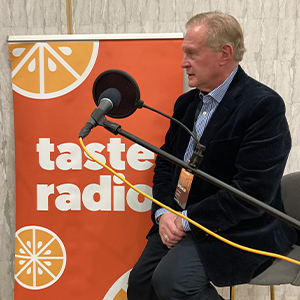
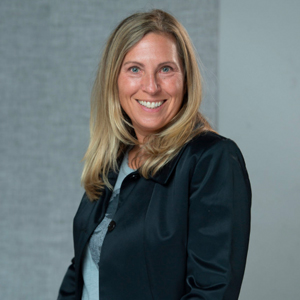
[00:00:10] Ray Latif: Hey folks, I'm Ray Latif and you're listening to the number one podcast for the food and beverage industry, Taste Radio. This episode features an interview with distinguished physician, professor, and New York Times bestselling author, Dr. Robert Lustig, along with the latest edition of The Maxi Minutes with investor Maxine Kozler. Just a reminder to our listeners, if you like what you hear on Taste Radio, please share the podcast with friends and colleagues. And of course, we would love it if you could review us on the Apple Podcasts app or your listening platform of choice. Sometimes you just need to tell it like it is. Dr. Robert Lustig has no problem with that approach, especially if it will save lives. A professor of pediatric endocrinology at the University of California, San Francisco, Dr. Lustig is a leading public health authority who has lectured and written extensively about how sugar and ultra-processed food have fueled a surge in chronic diseases. His work spans 40 years of clinical research focused on childhood obesity, diabetes, and other issues that lead to metabolic disease. The keynote speaker at Manna Tree's second annual Global Health Forum, Dr. Lustig pulled no punches when discussing how decades of overconsumption and bad food are root causes of chronic illness and an American health care system strained by a perpetually sick population. While the problems seem overwhelming, Dr. Lustig noted the role that innovative food and beverage companies can play in effecting change, a topic we discussed at length in the following interview. Hey folks, it's Ray with Taste Radio. Right now I'm in Vail, Colorado at Manna Tree's Global Health Forum. And sitting in front of me is Dr. Robert Lustig. My pleasure, Ray. You know, I was so enamored with your talk today and the panel that followed. I think a lot of people were really, really happy to hear from you. Your approach is direct, honest, straightforward in a way that I think might have surprised a few folks. But it's important, you know, it's important to be upfront and realistic about the challenges we face in our society as it relates to public health. I only speak truth.
[00:02:35] Robert Lustig: And, you know, I'm famous for it. And, you know, I've been called on the carpet enough times in my career for it, but that's just too bad.
[00:02:43] Ray Latif: It's fine though. I think, you know, it's better to be that way than to be really esoteric about a particular subject. So some friends of mine are facing some health issues. They're having some real gut health issues. And so I texted them one of your slides and it was a slide about the hateful or grateful eight. And it included, well, maybe you can explain exactly what that is.
[00:03:04] Robert Lustig: Well, the diseases that America and really the whole world are suffering from Type 2 diabetes, hypertension, dyslipidemia, cardiovascular disease, cancer, dementia, fatty liver disease, polycystic ovarian disease. These are actually the symptoms of disease. They are not the diseases themselves. They are the manifestations of the pathologies that are belying all of these metabolic perturbations that are basically landing us either in the hospital or six feet under. When you actually understand the subcellular mechanisms, you actually understand aging, you understand health. and you understand food, and you understand how food ultimately impacts health. So these eight subcellular pathologies, which in the talk I called the hateful or grateful eight, okay, obviously hateful if you don't do them right, grateful if you do. So if you do them right, you'll be 110 playing tennis. If you do them wrong, you'll be 40 with two stumps on a gurney with a dialysis, you know, waiting for your next stroke, you know, and everything in between. So if you understand what it is that you're trying to mitigate, you have a hell of a lot better chance of staying out of the doctor's office, out of the emergency room and out of the morgue.
[00:04:40] Ray Latif: Now this is the audience, the audience that we have here today. I feel like they understand where you're coming from and they get some of the, I guess, academia-leaning aspect of what you're talking about, if that's a fair way of describing it. But in general, if you're trying to get your point across to someone who is the average mainstream consumer out there, I feel like that discussion is a much tougher one to get across. And in fact, and this is what happened when I sent the text to my friends, one replied, and again, I hope I'm not offending you, what is that mumbo jumbo crap? When you're trying to disseminate this information, again, to an audience like ours, that makes a lot of sense. But for us to be able to share that information with others, and for entrepreneurs to share that information with their consumers, What's your advice for making that a easier conversation, a more consumable way of explaining it?
[00:05:40] Robert Lustig: Right. That's a very good question. Today, I used a car analogy. I basically said, you know, you're born with a sports car and the goal is to keep it from becoming a jalopy. and you know you have to do some upkeep in order to keep that and there are certain things that can fail and if you don't mitigate those problems you'll end up with the jalopy. So the eight subcellular pathologies are glycation, that's like carbon deposits on your intake manifold, oxidative stress, that's like rusting of both your body and your chassis, Mitochondrial dysfunction is like your transmission, you know, when you have defective transmission. Insulin resistance is like when you have a problem with your carburetor and you're not mixing your air and your gas together to explode it properly. Membrane instability is like an oil leak. Inflammation is like rotted fuel pipes, you know, that could actually catch fire. Methylation is like soot on your spark plugs and, you know, instead of having a V8, you have a V2. And finally, autophagy is like oil sludge. And I think people got that. Yeah, I think they did too. So that was a way of managing it. How do you do it, you know, to the general public? These are eight terms that no one's heard of before. Now why? The answer is because there's no ICD-11 code. Doctors don't bill for those. And also, there's no medicine for any of those. There's food, but there's no medicine. So, like, why would a doctor bring these things up to a patient when, number one, the patient's not going to understand it, and number two, the doctor wouldn't do anything about it anyway. So, yes, this is a problem, and it is my charge to basically explain to people. You know, the fact is, ultimately, we've got to educate the public, we've got to educate the consumer. You know, food industry educates the consumer every single day. Now usually what they're educating them with is, you know, misinformation or disinformation in an attempt to get them to buy their product. I'm trying to provide them with, you know, true information on how to get healthy. And I also don't have a vested interest. I mean, it's not like I'm taking money for this.
[00:08:03] Ray Latif: Well, you're not taking money for this, but I think it's in everyone's best interest to do as much dissemination of the education and the learnings that you shared today. And one of those learnings that I picked up on, and I think everyone really appreciated, was that you can't outrun, or maybe to use the analogy of your more doubt drive, a bad diet. And no matter how much you exercise, if your diet is bad, you're not going to get any healthier.
[00:08:33] Robert Lustig: Of those eight pathologies that I just mentioned, four are responsive to exercise. Four will get better with exercise. Four won't. In fact, one of them, oxidative stress, actually gets worse with exercise. So the bottom line is, while exercise is very good, and God knows I do it and everyone should do it and I'm totally for it, it's not a fail-safe against fixing your diet.
[00:09:04] Ray Latif: So that being said, when you're talking to folks about the way to eat better, and when you're advising food companies on ways to make food better for their consumers, where do they start? What is the number one place that you advise on starting?
[00:09:21] Robert Lustig: Right. So without question, the single worst thing in our diet is trans fats. but we know that and they're coming out of our diet. 2013 FDA said trans fats are gone. Okay. And appropriately, so only took 57 years. That's all. But they did appropriately say, we got to get trans fats out of the diet. Great. Okay, fine. What's next? Sugar. I think a lot of people know you're going to come with that. Well, because it's true. So it turns out sugar is two molecules, glucose and fructose. They are not the same. Glucose is the energy of life. Every cell on the planet burns glucose for energy. Glucose is so important that if you don't consume it, your body makes it. So, yes, you need a serum glucose level, but you do not have to eat glucose to have a serum glucose level. The Inuit, they don't have any carbohydrate. You know, they don't have any place to grow a carbohydrate. They got ice, they got whale blubber, okay? They still have a serum glucose level because the liver will take that whale blubber and turn it into glucose. That's how important it is. Now this other molecule in sugar, fructose, turns out there is not one biochemical reaction in the body that requires dietary fructose. It is completely vestigial to all animal life, and as it turns out, It inhibits not one, not two, but three separate enzymes involved in making your mitochondria work. Now, your mitochondria are the little energy-burning factories inside each of your cells. If your mitochondria don't work, you're sick. And if your mitochondria don't work everywhere, you're dead. So keeping your mitochondria fit and healthy is kind of like job one. Well, fructose inhibits mitochondrial function three ways from Sunday. There's no other way to say it. Fructose is a chronic dose-dependent mitochondrial toxin. It is a poison. we do have an innate capability to metabolize a little bit of it, in the same way we have an innate capacity to be able to metabolize a little bit of alcohol. And it turns out that fructose and alcohol metabolized in the mitochondria are exactly the same, and they do exactly the same things negatively. So basically, fructose is the alcohol of the child, and that is why children today get the diseases of alcohol without alcohol. Type 2 diabetes and fatty liver disease used to be the diseases of alcoholics. Now they're the diseases of five-year-olds. And it's because sugar and alcohol are metabolized the same way. Now, I can't state it any clearer than that.
[00:12:36] Ray Latif: That is a horrifying thought. And it's unfortunate that it's true. People might say, okay, well, who's to blame? Is it the schools? Is it the government? Is it the parents? Where do we start when it comes to fixing that problem? And what are the solutions, if there are any at this point? I mean, certainly not short term, but what are the solutions?
[00:12:59] Robert Lustig: Well, once upon a time, we used to have a food supply that was not inundated with sugar. We used to have sugar in five pound bags at the general store. And, you know, maybe people would put it in an apple pie once a week or once a month or something like that, and they would do it at home so they knew what they were doing. But in the 1940s, 50s, the food industry realized that when they added sugar to ultra-processed food, people bought more. And so they added more, and then people bought more. And so they added more, and it seemed like there was no limit to the amount that people wouldn't buy. And in fact, that's true, because that fructose molecule that I've been talking about, it's addictive. And once upon a time, Coca-Cola used to put several addictive substances into its brand. It had alcohol, it had cocaine, It had sugar and it had caffeine. In 1903, the precursor to the FDA basically told Coca-Cola that if they wanted to ship their concoction interstate, they had to lose the alcohol and they had to lose the cocaine.
[00:14:27] Ray Latif: Turned out, caffeine and sugar was good enough. I mean, everyone knows that kids shouldn't be drinking soda. I mean, I don't think many...
[00:14:35] Robert Lustig: I don't know that. Okay. I'm sorry, Ray. I don't know that. How do you mean? There are a whole lot of parents who do not understand that soda is your kid's worst enemy.
[00:14:47] Ray Latif: Okay.
[00:14:48] Robert Lustig: All right? They think that, number one, it must be on the shelf for a reason. Number two, God wouldn't have made it if it was bad for you. And number three, it's cheaper than bottled water.
[00:15:00] Ray Latif: So then going back to this question of where the burden belongs in terms of changing this dynamic of obese children and unhealthy children, is it, say, the government's responsibility to educate their citizens, educate parents as to healthy eating, healthy eating habits for their kids, healthy shopping habits?
[00:15:19] Robert Lustig: Well, that's a really good question. So who's supposed to do that? That would be the USDA, the U.S. Department of Agriculture. Well, yeah, except for one thing. They have a slightly different directive, which is sell food. So how do you both sell food and tell people what's healthy at the same time? So they're very conflicted, always have been. And the fact of the matter is they've done a really poor job of both. And so should the FDA be doing it? Or should there be a new branch of government? They're now talking about overhauling the FDA. Should there be a food czar? And that's actually one of the things I'd like to see put on the table. Right now there are 51 regulatory agencies that deal with food. And you know what? The food industry likes it that way. Because that way no one knows what the other hand is doing. If we had one agency that was in charge of the food supply to make sure it was safe, both from an environmental standpoint, a toxin standpoint, a bacterial standpoint, and also a chronic metabolic disease standpoint, and there was one person at the top who was in charge, you know, maybe we'd be able to get somewhere. But, you know, that's not what's on the table right now.
[00:16:47] Ray Latif: It seems like that would affect the most change is having that type of organization, having that type of leadership. But as we all know, government is very bureaucratic. It's difficult to make things happen in any kind of speedy way. And so that's where the private sector usually picks up.
[00:17:04] Robert Lustig: Well, yeah, but the private sector. is the one, you know, making money hand over fist. I mean, they're the kind of the, I won't say bad actors, but the fact is, you know, they don't really want things to change because this is their juggernaut, this is their gravy train.
[00:17:20] Ray Latif: What you're talking about is very much the conglomerates out there, the very large food companies. Yes, the CPGs. Yes.
[00:17:25] Robert Lustig: Absolutely. I mean, think of it this way. Prior to 1975, with the advent of high fructose corn syrup, the food industry had an annual profit margin of 1% per year. Well, the population grew at 1% per year. In other words, the food industry made more money by selling the same amount of food to more people. That's okay. Sure. After 1975, the annual profit margin of the food industry was 5% per year. but the population growth rate reduced down to 0.7% per year. So now the food industry is making money hand over fist by selling more food to fewer people. Now how do you do that? The fact of the matter is we've learned, and I put that word learned in big air quotes, okay, we've learned to consume more. And there's a reason, because the food industry has figured out how to actually override our own fullness and satiety mechanisms. And the primary driver of that is sugar. And the second primary driver of that is the lack of fiber in food. Those are the two things that have happened to our food supply in the last 50 years. The addition of sugar, the removal of fiber. The addition of sugar for palatability, the removal of fiber for shelf life. Real food is low sugar, high fiber. Processed food is high sugar, low fiber. But that's not what the food industry is selling. They're selling the processed food.
[00:19:11] Ray Latif: And again, when you talk about the food industry, you're very much talking about the large players out there.
[00:19:18] Robert Lustig: We are here at Manna Tree Partners Symposium today. And we have probably 60 to 70 players in the room who are trying to be part of the solution rather than part of the problem. We need food. It's not like we can do without food. We could probably do without tobacco. Tobacco should be wiped off the face of the earth. I'm sure Philip Morris wouldn't be too happy with that. There's no redeeming benefits to tobacco as far as I know. Exactly. It's completely vestigial and only causes harm. But we need food. The point is, we need food that supports, sustains, nourishes us that is not toxic. But that's not what we have today. So we need to rethink, we need to re-engineer entire food system to work for us instead of against us.
[00:20:15] Ray Latif: That's not going to happen anytime soon, but there can be small changes. There can be regional changes that do make an impact. And I think that that's where, and I bring up the private sector, I think that's where smaller and emerging companies are trying to do that on a really micro scale. And I think they are having some impact. The question is, about finance and scaling. It's extremely difficult and extremely expensive to start a food or beverage company and to get one to a revenue of $50 to $100 million is almost impossible without the right kind of funding. Now, Manna Tree provides that kind of funding. And they provide that kind of funding to a specific type of company with a specific vision and strategy. But at the end of the day, they're trying to make money as well. Exactly. For their partners.
[00:21:02] Robert Lustig: You need a North Star.
[00:21:04] SPEAKER_??: Right.
[00:21:04] Robert Lustig: You need a set of precepts that you can agree on. Now, the World Economic Forum has now published those precepts. And they're known as the metabolic matrix. And I helped them develop that. And it's nine words, three clauses, nine words. Here they go. One, protect the liver. Two, feed the gut. Three, support the brain. Any food or beverage, for that matter, that does all three is healthy, by definition. Any food or beverage that does none of those three is poison. And any food or beverage that does one or two of the three, but not all three, would be somewhere in the middle. What Manna Tree and what other funders and what other companies should be doing is reaching for that triumvirate. Protect the liver, feed the gut, support the brain. If they use that as their roadmap, they will end up doing good and in the process, they will do well too.
[00:22:16] Ray Latif: A lot of those companies that I just mentioned, the smaller companies are using things like functional ingredients or alternative sweeteners to achieve the kinds of nutrient density or nutritional value of their products. When it comes to functional ingredients, I think it's just, it's, it's tough for that end consumer to figure out why they're even consuming that ingredient.
[00:22:34] Robert Lustig: Yeah. And it's the wild west because we don't really know what those ingredients do yet.
[00:22:38] Ray Latif: Right.
[00:22:39] Robert Lustig: So it is kind of a real crapshoot.
[00:22:41] Ray Latif: So how do you consider things like, this always comes up, Ashwagandha is like Cleveland. When people talk about something they don't really understand, they'll talk about Cleveland. And I think Ashwagandha is one of those things that people have heard of, but they still don't know what it does.
[00:22:53] Robert Lustig: Yeah. So at the moment, these are all still data, not an evidence. We're learning a little bit. For instance, we're learning about this new natural sweetener that is very, very rare, but nonetheless part of an apple. It's called allulose. Allulose is not artificial. It is natural. About 0.1% of the carbohydrate in an apple is allulose, and there are ways to make it synthetically, and there are also ways to extract it, although not at scale. It turns out, at least the studies so far that have been done, suggest that allulose has beneficial effects on lipid profile. It actually raises your HDL, lowers your LDL, which would be like a good thing. And it doesn't have much of an effect on triglyceride, which would be a very good thing. So is allulose an answer? very possibly we need more data, but people are moving in that direction. And Saudi Arabia, by the way, cornered the allulose market with that in mind. That's interesting.
[00:24:03] Ray Latif: Well, I'm glad you brought up allulose because it is sort of the sweetener of the moment. I mean, we've had stevia and monk fruit, erythritol, all kinds of things like that in our foods for a long time. And typically, there's a lot of divisiveness about those sweeteners because of the taste. In some cases, because of what it does to your gut. And allulose is one of those things where, again, one of these crazy buddies of mine was like, I can't have allulose. Every time I consume it, I feel sick afterwards. And that's one specific case.
[00:24:36] Robert Lustig: And it's an N of one. And an N of one is never science. And so, you know, we need the data. And I'm not saying we don't. We need the data across the board. We need long term data, not short term data. We don't need one meal data. We need 10,000 meal data. You know, the point is that kind of research needs to be supported, but it needs to be supported by the NIH, not by the food industry.
[00:25:02] Ray Latif: What do you think about just reducing sugar to begin with? So at the childhood level, they're just not expecting a level of sweetness that, you know, they're used to or a lot of kids are used to and grow up with, you know, today.
[00:25:14] Robert Lustig: That's the holy grail. That's the brass ring. I mean, the point is the American Heart Association, you know, came out with its guidance in 2017 that said between ages zero and two, the recommended amount of added sugar for infants and toddlers is zero grams. Zero. That's right. Oh, that's not what's happening. And, you know, unfortunately that's, you know, the beverage industry and the breakfast cereal industry and the, you know, candy industry. They don't seem to be catching on to that. So we have a lot of work to do and we have a lot of education to do. You can't expect anything to change in society without education, but you also can't expect education alone to change anything in society. Education is necessary but not sufficient. Education softens the playing field so that you can actually then engage in some public health intervention that will work. We got to start with that. And that's what I'm doing. But we have to then work with, you know, government. We have to work with industry partners, you know, to get something on the books.
[00:26:32] Ray Latif: What if, you know, you just reach the companies that are producing these products? I mean, isn't it easier to ask them to reformulate their products so that they don't have certain ingredients in them or don't have so many ingredients in them? I mean, I think too, you know, if I were an investor, I would definitely want to invest in a better for you kids brand, whether it's food or beverage. Because I think that, for me, would feel like it's affecting the most or has the opportunity to affect the most change.
[00:26:57] Robert Lustig: Well, I hate to tell you, but that's been tried. Indra Nooyi of PepsiCo tried that in 2006, and she actually hired Derek Yakaway from the WHO specifically to help PepsiCo make healthier products and, you know, cut the sugar and, you know, develop a better for you line. You know, by 2011, PepsiCo had lost $349 million in one year and Wall Street was calling for Indra's head on a silver platter because she, quote, took her eye off the ball. And you haven't heard anything about better for you from PepsiCo ever since. And of course, Derek Yak went his own way and Andrew Nguye survived, but ultimately retired. And if you take a look at the other companies, Denise Morrison of Campbell's tried to get the salt down. She was gone. The guy from Danone. Emanuel Faber. Emanuel Faber tried to do the same. He was gone. So, you know, those Wall Street quarterly reports unfortunately carry a little too much weight. So we need private sector actors who are not beholden to Wall Street to lead the way. And I'm actually working with one offshore in the Middle East to do just that. We've worked with the Kuwaiti Danish Dairy Company to completely re-engineer their entire portfolio. 180 items and 18 of them, now 10%, are completely re-engineered and out on the market in the Middle East.
[00:28:28] Ray Latif: You talked a lot about fiber today and you talked about it just now. It feels like there's a big opportunity for entrepreneurs to introduce products that are fiber heavy or at least a fiber-centric kind of food or beverage company. I mean, is that accurate? I mean, do you think there's a big opportunity there?
[00:28:43] Robert Lustig: There is an opportunity. The problem thus far is that you need both soluble and insoluble fiber. soluble fibers like pectins or inulin like what holds jelly together, insoluble fibers like cellulose, the stringy stuff in celery or cardboard. Insoluble fiber is not miscible, you know, so it would just like precipitate out and, you know, destroy the texture of any processed food. So I'm actually the chief medical officer of a company that's working on a proprietary fiber that would solve that problem, that would actually recapitulate the effects of both soluble and insoluble fiber on processed food that could be added to the food and would expand in your intestine and allow for sequestration of glucose, fructose, sucrose, simple starches, basically turning apple juice back into apples in the intestine. So, technology may have some answers and some, you know, potential ways to deal with this, but it takes time.
[00:29:48] Ray Latif: And it takes great taste. For people to appreciate better-for-you products, those better-for-you products definitely have to taste great. And I think that's one thing that has been brought up a few times today, but not been, I think, hammered home as much as I think it might need to be. You can talk about great health day and night, but people are nine times out of 10 going to go toward the better tasting, what they want in terms of flavor.
[00:30:15] Robert Lustig: In fact, the studies show that if you say that something's healthier, people will actually not buy it because the immediate assumption is it won't taste good, even before they've even tried it. Okay. In addition, only 15% of the population even looks at a food label. So advertising, you know, the fact that something's healthier on a food label is kind of like death knell for it. So yes, you're absolutely right. This is part of the challenge of how do you market truth to people who don't care about the truth? That's a tough one. Well, great branding. Yeah, well, working on it.
[00:30:58] Ray Latif: Yeah. Well, I mean, I think that's the thing. If you can't communicate the, I don't know, the nutritional benefit of a product in a way that's going to attract a consumer, you can definitely do it through the label, through a flashy label, through, you know, great advertising, marketing. So perhaps, you know, this question of how do I feed people better food is really a marketing question. And it has been for a long time, right?
[00:31:25] Robert Lustig: Well, let's put it this way. The science has to come first. Okay. And we're not there yet.
[00:31:31] Ray Latif: Dr. Lustig, I am elated that I had the opportunity to meet you today. And I think every single person who spoke or asked a question, spoke on stage or asked a question to a panel mentioned your name at least once. So thank you so much for taking the time to sit down with me. I know how busy you are. Thank you very much for your book. I can't wait to read this, Metabolical, The Lure and the Lies of Processed Food, Nutrition and Modern Medicine. Very excited to read this. Thanks so much for having me, Ray. Appreciate it. All right, it's time for the latest installment of The Maxi Minutes with Maxine Kozler, the co-founder and managing director Los Angeles-based investment firm LDR Ventures. In this edition, Maxi spoke about how angel investors evaluate emerging brands that play in trendy categories, and also discussed the sustained lack of investment in female-owned CPG brands, the reasons behind it, and ways for the industry to collectively address the problem. Hey folks, it's Ray with Taste Radio. Right now I'm back on the mics with Maxine Kozler, the managing director or co-managing director of LDR Ventures. Maxie, great to see you.
[00:32:44] San Francisco: Hey Ray, great to see you too. I can't believe we're Minutes Season two.
[00:32:48] Ray Latif: I know, Minutes Season two, in a chilly season, not so much for you in LA. How is the weather in LA right now?
[00:32:56] San Francisco: It's pretty nice. We did have a cold stretch, but it's, I'm sorry, Ray, but it's really nice to be here for Expo West. So you'll, you'll get a taste of it.
[00:33:04] Ray Latif: I will be in LA for Expo West. Are you attending as well?
[00:33:07] San Francisco: I'm doing my best to get there for at least a day.
[00:33:09] Ray Latif: OK, cool. Well, again, I know we talked about this last time. It'd be great for some folks in our audience to meet you finally in person. I feel like they probably know you know your voice so well at this point. And of course, people are going there to find the hottest new trends, categories and products. And within that category is part of what I was talking about. You know, it feels like There's always something that stands out within food and beverages, the new hot thing. You know, and I wonder from an investor perspective, how you evaluate an emerging brand within an emerging category.
[00:33:52] San Francisco: This is an excellent question and this comes up all the time. So first you have the trend. So definitely last year, it really solidified as alcohol-free. So there were more cocktail and beverage types of just non-alcoholic kind of hard alcohol without alcohol spirits. And then definitely the alcohol-free wine I think was really, really big last year and came out some celeb brands, some non. And then what I'm really seeing now is the non-alcoholic aperitifs. are really coming out. So there's a couple of things I'm seeing from this is one, this is clearly a big trend. And I think it's big enough that we've had a couple different category groups coming out that it is a solid trend where people want offerings that are non-alcoholic in a variety of ways. So I think I'm feeling at this point, okay, it's coming around that there's gonna be a place for more non-alcoholic options. and more than just for dry January, I think people want those options for health. But now within it, how do you distinguish one from the other? How do you say one is clearly going to do better? And is everyone just going to get a little bit of the space? Is anyone going to be a clear winner? Is anyone going to truly, you know, you can look at back in the day like yerba mate or kombucha, You know, we definitely had some winners in those categories, you know, who have become just the staple items. And that's what I want to see. Who's going to be the staple of non-alcoholic? You know, do I see that happening? Do I see the consumer taking it? And a lot of what I look through and want to hear from founders is sell through. Are people coming back and back again to buy it? So return customers is a really big number I want to see. Without spending a ton of money or doing very little to just, you know, poke the consumer, are they just coming back, you know, time and time again, rebuying the product because they're just addicted to the product?
[00:36:05] Ray Latif: How much does first mover matter to you when you see a particular category and you see one brand within that space that is getting some of that traction, some of that sell through? Does that make a big difference to you? Are you willing to sort of wait and see or take a wait and see approach to how that category develops?
[00:36:23] San Francisco: You know, it's a tricky one, because if it's a really new category where the consumer needs education, it's tricky to be the first mover because you're going to carry the heavy load of the education piece. So sometimes it is that person who does the groundwork and the second one that comes in winds up, you know, with great marketing can really capitalize on it. And obviously a great product at the end of the day, if the product's not good and people don't like it, it's not going to work. But first mover does mean a lot. You know, I definitely take that seriously. But everything's got to line up. The product has to be phenomenal. The marketing and the way they're getting to the consumer to get early dedicated consumers. That's really what I want to see. That's like I said, returning customers. If I'm seeing that in a really strong way, even in one market, like a really strong market, That's going to mean a lot. I sign up for newsletters, a lot of newsletters. I want to see how you're talking to your customer. I want to see what information you're giving them, how you're trying to grab them. You know, especially I've taken less and less samples and I buy because that's a barometer. Am I willing to spend money on it? Is it big one? And it's always, I have like a 20 person testing group and I ask them, you know, I'll send them free stuff, but I say, okay, will you go back to the store now? Would you spend your money to buy it? And then once I talk to the founder, I have more and more specific information I'm looking for in their financials and in their P&Ls.
[00:37:53] Ray Latif: That's nice to hear that you're buying product from entrepreneurs. I mean, just the customer experience of ordering the product. Was that an easy process? Did it get shipped in time? Did it arrive in the kind of packaging that's reflective of a high quality premium product? I think all those things make a lot of sense if you're going to buy the product on your own. So you can tell a lot about that customer experience just via, I think, buying it yourself.
[00:38:17] San Francisco: I highly recommend that for every investor to please go and just buy it. At worst, take the 10%, 15% off your first purchase. Of course, use that kind of thing. But order it, buy it yourself, have the experience. And my advice to founders is have one of your parents go online or go to a store and buy it and have the experience and give you a review. It's amazing how people don't even buy their own product. to see like the issues around just buying their product.
[00:38:52] Ray Latif: Absolutely. We've been talking about this a lot on the podcast for unfortunately many years, the lack of venture capital, lack of funding that's going to women-led brands. And for a long time, I think the statistic was for the last 25 years, female-founded brands have received 2% of all venture funding. And again, that hasn't changed. That's been the same for the past 25 years. Just recently, I read on LinkedIn, multiple posts noted on LinkedIn, that that number has actually dropped to 1.9%, which is tragic and confusing and frustrating. It's all of the above. So, you know, what is going on here, Maxi? I mean, as someone who you know, does invest in female-led brands and does emphasize funding into women-led companies. What's going on here? What are the reasons behind this sustained lack of funding? And, you know, what are your thoughts on addressing it?
[00:39:56] San Francisco: It's a complicated question and like any problem I would look at, I have to look at the data around it. So just to put some perspective on it, especially if you're looking at venture capital as a whole, and this is partially my experience and this is partially just, you know, if you read the Crunchbase and PitchBook and you read all the data. If you're talking about venture capital in general, a huge percentage, I don't know what the exact number is, of venture capital money is going into tech deals. So right off the bat, now it's still a huge disparity there about female founders versus male founders getting money and the mixed teams always do much better. So we're looking for female male founder combinations and any version thereof do better and overall succeed more. So we're hoping for more and more of that, not just isolated all male and all female founders. So given that, tech's getting most of the money anyway. Now, when we go down into a topic you and I more specialize in, which is consumer brands, and then even further into food and beverage. A couple problems I see is we still have an inordinate amount of female founders going into consumer, especially food and beverage. So I feel like in one way, they're knocking each other out. There are so many and investors are getting so deluged with unbelievable amounts of business plans from female founders, especially first time. Again, this shouldn't mean that they should get less money than male founders. But I just think statistically speaking, there's so many women in the game now, it gets overwhelming. I still think there's an institutional issue around just men getting better mentorship, getting higher up different ladders, and then they're giving more money to men. So I still think a big piece of the puzzle is more women in venture, more women angel investors does help get more women founders some funding. I think the swing down though is we had this incredible surge in the last five, six years of really calling attention to the problem. More women getting investment money, more women coming in and investing. And now it's a few years later and a lot of these companies did not make it. They're either almost out of the game or they're already out of the game. And statistically speaking, this is normal. This is totally normal for venture capital. However, there was so much more for women that now they're statistically more of the people who are not making it.
[00:42:45] Ray Latif: When you mentioned mentorship earlier, are you talking about business training, sort of executive training, entrepreneurship training, the kind of things, the kind of experience and skill sets that you need, or at least, you know, in so many ways that I think any founder would benefit from if they are to, you know, build a scalable and sustainable business?
[00:43:07] San Francisco: Yeah, definitely. Not as much like around incubators and accelerators because they're doing a phenomenal job. They're doing a great job for a founder of a company, you know, going through like a three-month course. And, you know, I think most of them that I know, they're taking in, you know, a 50-50 split. of founders or even dedicated to female founders. I mean, more institutionally, like within private equity, within venture capital, in all levels of finance, is the decision maker to make that investment? Are there enough women in there or enough men in there that are seeing the value of a female founder or co-founder? And then on the packaged goods side, are there enough people in the big institutional packaged good companies that are elevating and rising who either can buy one of these consumer food and beverage product brands or might leave that company to create their own brand? There's still not enough women in these decision-making positions or having been trained so that they can leave a big company and start something and then get the funding they need because they've already been at those higher levels with the decision makers. I think we need to still pinpoint solutions. Like I get a lot of female founders come to us because we invest in female founders. And I know you don't want to waste your time, but a lot of male run firms say we would love to invest in a female founder. They don't pitch to us. And it's like, well, they don't pitch to you because you don't look like a welcoming firm to women. And they don't know that they need to rebrand themselves and they need to reach out and they need to do a lot of effort. But at the same time, I think women have to go more and more to these firms that aren't as friendly to female founders to just be the first couple that get on their radar. So they start looking and they give it a chance. Because the firms like us, where we really court female founders, we're inundated. We're overwhelmed. We need to get these women to the other people funding so they can start taking a chance and seeing incredible results.
[00:45:25] Ray Latif: That's such an interesting point that the investment community needs to be a little bit more aware of how they come across to women-led brands. That's really interesting. Well, Maxie, again, I feel like this is one of these conversations we could keep going for another half hour, but let's save some for subsequent episodes of The Maxi Minutes. Thank you so much, as always, for sitting down with me, and I look forward to seeing you at Expo West, hopefully.
[00:45:53] San Francisco: Hopefully.
[00:45:54] Ray Latif: Hopefully. Okay, great. Until then, thanks so much again, and we'll see you soon.
[00:46:00] San Francisco: Thanks, Ray. Great to see you.
[00:46:01] Ray Latif: You too. That brings us to the end of this episode of Taste Radio. Thank you so much for listening, and thanks to our guests, Dr. Robert Lustig and Maxine Kozler. Our audio engineer for Taste Radio is Joe Kratci, our technical director is Joshua Pratt, and our video editor is Ryan Galang. As always, for questions, comments, ideas for future podcasts, please send us an email to ask at Taste Radio. On behalf of the entire Taste Radio team, thank you for listening. We'll talk to you next time.