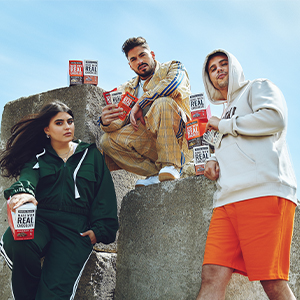
[00:00:10] Ray Latif: Hey everyone, I'm Ray Latif and you're listening to the number one podcast for the food and beverage industry, Taste Radio. This episode features an interview with Lezlie Karls Saltarelli, Nick Saltarelli and Karls Karls, the co-founders of Mid-Day Squares, a maker of hybrid chocolate and protein bars that is flipping the script on how to build, accelerate, and promote a consumer brand. Just a reminder to our listeners, if you like what you hear on Taste Radio, please share the podcast with friends and colleagues. Of course, we would love it if you could review us on the Apple Podcasts app or your listening platform of choice. Before we go any further, I'd encourage everyone who isn't driving to press pause on this episode and take a quick look at Mid-Day Squares's Instagram page. Done? Great. What did you see? I'm assuming most of you would point out the three millennial founders who look more like modern pop stars and streetwear models than they do the owners of a breakout food brand. What you may not see, and we'll get into this, is that while Lezlie Karls Saltarelli, Nick Saltarelli and Karls Karls are indeed moving to the beat of their own drum, every step is carefully planned and orchestrated amid a strategy that has Mid-Day Squares one of the hottest brands in CPG. Launched in 2018, the Montreal-based brand, which markets a three-skew line of refrigerated snack bars, described as, quote, everything a chocolate bar isn't and everything a protein bar wishes it was, is carried throughout Canada and is rapidly expanding distribution in the U.S. at retailers including Sprouts and Whole Foods. Backed by a total of $8 million in funding, including financing from investment firms Boulder Food Group and Selva Ventures, Mid-Day Squares expects to generate $10 million in revenue in 2021 and has a goal of reaching $100 million in sales within three years. The brand's fast growth and vision has already attracted the interest of The Hershey company, which reportedly made an offer to acquire Mid-Day Squares, an offer that was rebuffed by its founders. In the following conversation, I spoke at length with Leslie, Nick, and Jake about how Mid-Day Squares has achieved its rapid start and trajectory, including lessons from prior entrepreneurial endeavors, the keys to its unique and compelling social strategy, and why a commitment to clean ingredients and consistent communication with the brand's consumers have given it a solid foundation on which to build. They also explain why a business therapist has been vital to their development as co-founders and leaders, why vulnerability and love are the cornerstones of the brand, why they plan to keep the company independently owned. Hey, folks, it's Ray with Taste Radio. Right now, I'm honored to be speaking with Lezlie Karls Saltarelli, Nick Saltarelli and Karls Karls, the co-founders of Mid-Day Squares. Thank you so much for being with me today. Yep.
[00:03:04] Lezlie Karls Saltarelli: Thanks for having us, Ray. This is awesome. We're super pumped to be here.
[00:03:07] Jake Karls: I'm a fan of the show, so it's a fanboy moment for me. I wish to fire the engines up today.
[00:03:14] Nick Saltarelli: That's what's going to happen.
[00:03:17] Ray Latif: The feelings are all mutual here, because your brand is just a remarkable one. And hearing your voices after seeing you in so many social moments, this is like a weird IRL moment for me, but a really cool one. So as I mentioned, social is a huge part of what you guys do. And one of the things that I first encountered when learning about Mid-Day Squares, your Instagram content, I could look at that for days. It's pretty much the most entertaining content that I've seen. And I don't want to qualify it as seeing a food or beverage company do, but just any company do. It's really, really good. And then the one post that really stuck out to me recently was the one where you celebrated making 250,000 bars in a single month. Okay, first of all, I need viewers to describe this because I'm not going to do it justice. And whose idea was this? Leslie, was this your idea? Because you were pretty heavily featured in that post.
[00:04:14] Lezlie Karls Saltarelli: Yeah, so that was, it was definitely my idea. We, so that, I don't know if you saw the behind the scenes of that video.
[00:04:22] Ray Latif: No.
[00:04:23] Lezlie Karls Saltarelli: But I was in a garbage bag, okay, with nothing on underneath. Everything was sticking to me, it was a mess, okay. There was chocolate everywhere, but it was amazing to make. I mean, the finished product is beautiful. But the behind the scenes was super fun. I look like Frida Kahlo, if I'm pronouncing that right. But yeah, that video was great. Social media is a big thing for us at Mid-Day Squares. And storytelling, you know, is what we're really known for and telling the story of entrepreneurship. I appreciate you loving our content and making that statement because we do put a lot of effort into telling the story and putting out value added content that really makes people feel something deeply. That is our saying around here is whatever we're going to put out, let's make sure it makes people feel something deeply.
[00:05:11] Ray Latif: Yeah, well, it made me feel something for sure. And that's how far you guys are willing to go to produce really good content, really entertaining content. You know, Nick, you told me that we show everything to our audience. And then just to follow up on that, I saw a post that said transparency Mid-Day Squares's currency. And you talked a lot about why and the reasons behind why you show everything behind the scene. It's basically, you know, you're willing to show everything that goes on in the company in a way that I think It might throw some people off because a lot of times, I've been exposed on the podcast, people only want to tell you the good stuff and you guys show everything, the good, the bad, the ugly, et cetera. Why is transparency so important to you, Nick?
[00:05:54] Jake Karls: Because if you go back to what makes us love brands, we had to just ask ourselves the question. I remember when we got started, I asked myself why I feel certain brands. And it usually comes down to a connection that I would feel with the founder. That's the number one piece that we believe in. And so When you look at like celebrity of the world that I think we have such a new age celebrity It's not even about actors or singers anymore. It's really about content creators in general and that comes in all shapes and forms We become obsessed not in a bad way, but in in their lives. We want to feel what they're going through And so when we went to the grocery store and we walked the aisles and we're looking at like how are we going to drive a connection in a day and age where like we can't compete on much other than creativity, ingenuity, great product. But at the end of the day, the only thing that is defensive for us is to build a relationship with an audience that's so deep that when they buy Mid-Day Squares, they don't feel like they're just buying Mid-Day Squares. They feel like they're buying a product from the entrepreneur that they want to be part of their lives, their friend, someone that they aspire to be or not, that they've been on the journey with us, and that they're really buying from a friend, neighbor, any of that. And how do you do that? you know, when you look at like psychology, the best way to have meaningful relationships is this entirety of being truthfully who we are with people. And that means letting down the guard who we're trying to portray ourselves to be. And so, you know, Jake said it perfectly is if we're going to allow them to be on the journey, then we have to allow that everybody to feel what we go through. And the only way to let them feel what we go through is to show it in entirety. And unfortunately, that means the negative as well, too, sometimes. And that's really where we've based our entire content strategies around the curtain being lifted at all times. And that's where the reality television show component comes into.
[00:08:00] Lezlie Karls Saltarelli: It's relatability. Creating relatability is so important for the customers to feel connected to us because they can relate to Jake, Nick, and I. Like Nick said, we're not trying to be somebody else on social media. So the transparency is relatable. When Nick and I are having a fight as husband and wife, that's relatable. When Jake and I are having an argument, that's relatable, brother, sister, right? It's the relatability that I think people are so connected to. They don't know where they're buying a product from, that it's some company. you know, it's just another product on the shelf. They know exactly who they're buying the product from. And we are all very different characters. So they each cling on to different things about the MDS crew.
[00:08:42] Nick Saltarelli: Yeah. And to add where the all came from, I think it's super important. We missed it on it is it came from data. Actually, the data approach was Shark Tank was on a tear Shark Tank. The show is on an absolute tear in the in the later 2010s. And the reason why was they were making mass The mass attracted to entrepreneurship, even though it was very surface level, it was very attractive and fascinating for the consumer to watch entrepreneurs on their journey in quotations to getting somewhere, raising money, seeing the failure successes, but it really was to surface level. So when we started, I said to Leslie and Nick, I was like, guys, let's use that fascination and celebratization of entrepreneurs. And let's take advantage of that by showing the behind the scene, the glass door of the company, seeing everything that's been happening to allow them to feel the feelings. But at the same time, I said, we need to build our characters. We need to build the three characters up so that we can turn ourselves into more of a boy girl band, kind of like what the 90s like Spice Girls did, you know, NSYNC, Backstreet Boys, all these great bands. What the cool part about bands is, is that you can at least relate, like Leslie said, to one member. And that's super important, because if you can relate to one member, you have that emotional connection. And that emotional connection is hard to buy in today's world. You can't purchase it. You need to be able to actually connect. And connectivity is so hard. Physical, real connectivity is very difficult. And in a world where attention is obviously the key, or the transparency, or the key to success, That's one way to break the attention barrier that's a fatigue in the world currently. I think we've made it a priority and a mandate to continue this on forever as long as this business exists, because we create a tribe through it. Tribalism is the future, in my opinion, of CPG.
[00:10:33] Ray Latif: On the one hand, you have these rock star, boy-girl band personalities, these outward characters that you present to the public. But then internally, I wonder how it works from a business perspective. When you are managing a fast growing brand, how do you find balance?
[00:10:56] Nick Saltarelli: For me at least, I think we all talk about this differently. I'm an extroverted heart. I'm always up and about. I've been that guy my whole life where I energize the people, the crowd, the friend group. But I broke down during this two and a half year journey because I thought my switch always had to be on in terms of being that energizer bunny, that hype man that I like to call myself. And I finally caved, I think it was June, 2020. I literally just broke down to my lowest point because I realized that I can't be on all the time. You just can't. It's impossible. The body can't take it. And I completely hit rock bottom and had to recover. And my business therapist, well, we have a business therapist, all three of us, he helped me get back on my feet. And showing those vulnerabilities allow the consumer to see the real side of life. And the real side of life is what makes people, again, back to relatability. it relates, it's what's actually happening. And I think, you know, we as a whole, speaking for all of us, is we know that the vulnerability is the truth, and the truth needs to always come out. And that's authenticity in terms of buzzword, but from a real angle and not using it as a buzzword.
[00:12:06] Jake Karls: I want to speak for the introverts of the world, because that is what I am. I'm the type of person, when I go into a room full of people, My first instinct is I want to leave. I don't feel comfortable amongst a lot of people. I like being in the nature. I like being in the forest. I have no problem communicating. And once I break out and I'm enjoying it, the extrovert of me comes in. But I'm always fighting against my instinct. My instinct is I'm a lone wolf. Liz and I like to call each other lone wolves that found each other. And so what's been super liberating that I would have never thought is by showing everything truthfully, The exhaustion actually isn't there because the world is seeing the truth. And I don't have to live two lives. I think where the danger comes in is when you're portraying one thing and living another thing. It becomes exhausting because you're constantly going in and out of character. But when you're showing the crying, like you said, or the marriage therapy that my wife and I have gone through and during certain rocky parts of this journey, then I know the audience knows everything. I don't have to show up anywhere and pretend like my life doesn't have struggles. I don't have to show up and pretend like everything's rosy. People know, they actively know what's going on, and it's very liberating that. I find the more the liberation comes, the less I feel trapped. And so it's been counterintuitive for me, to be honest. I was very reserved before we got into the idea of showing everything. It was really Jake that pushed us to do so. And now that we've done it, it's actually very liberating.
[00:13:41] Lezlie Karls Saltarelli: I think for me, when it comes to the managing of media and running a company, that is very hard. To give you an example, Ray, our weeks are filled with, like you said, the tediousness of running this company, scaling, and dealing with being a manufacturer, a wholesaler. and a brand. And then on top of that, we've got this media component. So it's like multiple times a day we're pulled out of what we're doing. So there's a lot of context switching to have to go, you know, make a TikTok or do a video or maybe right after work, go to a recording studio or on the weekends do ads. We are the people in these videos, right? So on top of the normal workload and stress, we have to be able to context switch religiously and go from a state of business, potential stress or potential problem solving to, OK, show up for the camera now. It is very challenging keeping up with the content and still scaling this business right now. But from like an emotional standpoint, I agree with Nick. Once you are fully yourself on the camera, the crying, the highs, the lows, you don't even think about it. It's more the management of keeping up with content and good content and still running a business.
[00:14:59] Ray Latif: Who's your content producer? Do you have one or are all three of you involved in what you want to show? And I mean, what you want to show sounds like it's everything. So I guess who decides what gets posted and what doesn't?
[00:15:13] Lezlie Karls Saltarelli: Yeah, so the way the team works right now is we've got an in-house editor, we've got an in-house videographer, we have a showrunner, and then myself. So basically, we formulate ideas, we see what's on tap on people's calendars for the week. And then we have a big media meeting at the beginning of the week to identify okay what are the. So we have multiple different types of stories right we've got documentary type stories so long term things we can't show today like trade secrets, any lawsuits, any type of stuff that can't be shown to the public at the current moment, due to like said trade secrets. And then we've got daily news stories, so stuff that's happening on the daily, which is usually stuff that we'll see through people's calendars. And then we've got actual series storytelling, so stuff where you'll see like an IGTV type of stuff. And then we've got keeping up with staying relevant to pop culture, which is like TikToks and trendier things. And then we have, again, LinkedIn, where Jake will actually repurpose the content we make to speak to the industry. And then we have our podcast, which Nick and Kara showrunner work every two weeks to build out a show. So there's a lot of moving parts to the media and how we do it. It takes a village. And there's many different types of storytelling we have. But yes, that's our current team and how we process ideas. And once the team kind of produces the content, I'll go through and say, no, it's approved or not approved, or let's, you know, re-edit something, I believe that if it's not fuck yeah, then it's no. And if it doesn't make me feel something when I'm watching it, it's cut. That's how we run the media department.
[00:16:55] Nick Saltarelli: I think a lot of people mix us up at the time. They're like, are you a media company or are you a chocolate company? Or are you a chocolate manufacturer that creates media? It's actually that we're both. And that's what makes it so hot, in my opinion, is that it's so different that you don't see the food CPG world. And I think, Ray, you said at the beginning, you don't want to classify us as seeing anything from a food or beverage standpoint. It's an overall standpoint, because Leslie and the content team cross-pollinates so many different industries together. The boy-girl band approach comes from the musician industry, but then packaging, branding, storytelling comes from everything, not just the food and beverage. I think that's what makes it really special within this industry.
[00:17:33] Lezlie Karls Saltarelli: What's cool, Ray, and what you touched on in the beginning is you're right. And I'm not saying this to boast. I'm saying the content that Mid-Day Squares has put out, I generally watch as a viewer. And it's just good content. I think in a day and age where we're flooded with content, what's happened is people are trying to play the algorithm game. So if somebody is getting traction, an influencer is getting traction on this type of content, people want to replicate it. And so we're starting to live in a world where there's not good, fresh, new content. It's a lot of repetitive content. So I do feel Mid-Day Squares is a breath of fresh air of what you could find when it comes to social media.
[00:18:09] Ray Latif: Absolutely. I mean, I certainly feel that way in terms of the content overload that we see. And you're always looking for something that's different, that's entertaining, that's something that you want to come back to, to see something that's different and entertaining. I guess the question that some entrepreneurs listening might have is, well, if I invest a lot of resources, time and money into this content strategy, what am I getting out of it? What's my return on investment? Do you have a measurable way? Do you have a way to measure that kind of return?
[00:18:39] Jake Karls: There's two things that I really, I'm part of like a mastermind where I sit a lot with big DTC companies, brands that we all know, Flow Hydration. Anyway, we can go on on those stuff, but the point is I sit with a bunch of these people and we speak about this all the time. I think the biggest confusion is that everybody's looking for attribution, attribution, attribution. That's fine. In a world of where a click equates to revenue, but then there's this overarching idea of what tribalism means and value. What we did is we kind of took, we went on the New York Stock Exchange and the NASDAQ, and we took out all the companies that are in the food space, that are food manufacturers, and then we took out all the companies that we felt had tribalism built into their companies, And one of the main fascinations is that when you do the split, everybody that didn't have tribalism built in, how we define tribalism is, was the brand capable of hosting events that people would show up to in mass to be part of that brand's event? So Nike has a running club, Red Bull has, you know, so much of their activity, Lululemon Live Yoga. How much were the consumers willing to be part of the community that they put together versus just the brand, right? Because there's two different style brands. When we looked at the multiples at which the companies that traded that didn't have tribalism built into it, they all traded at about one to two times revenues. The second we went into tribalistic brands, it started at seven and went all the way up to 22 times revenues. So what's fascinating about that is that it's counterintuitive because it costs more upfront, but every dollar that you do in revenue while actually having tribalism built into your brand is worth three and a half up to 10 times more than the revenue that you would generate without that, based on if we look at the multiples in the public market. And we felt that. I mean, by putting out the content, our network between how we've ended up in celebrities' homes, investors' homes, the content has closed our series A and series B. We've never really had to put much energy into that piece because by definition, the audience has gotten so big that everybody knows somebody in the audience that's able to help us. And then on a final note, not just looking at the multiples is that there's also a huge ROI in solving problems. And we spoke about this in the pre-show, Ray, when we were just discussing. It was last summer, we had a coconut sugar problem, and there was a mass shortage of powdered coconut sugar on the market. We could not get it. The lead times were like three months. And basically, we were faced with an issue that we couldn't make our chocolate the way we wanted it to. We were calling up other chocolate manufacturers, and they're like, guys, we're booked. We can't, even if you wanted to, we can't get you in to help you, even if we want to help you. The moment came where we sat down at the table and we're like, Okay, we might have to not do production for like two months and then we were all it was like clockwork We all looked at each other and we're like, yo, let's get on the ground And so we went to the you know, we went on instagram. We posted a story to our audience being like guys We're in this together. We're transparent. We're in this together. So we're gonna ask you for your help. We got a coconut problem Here's the problem. Here's x y and z in 24 hours We had people sourcing for us and then this girl out of toronto calls Thanks. and is basically, hey, my dad's got a factory full of machinery that he buys, used, and repurposes and sells them. He's got this one machine that's capable of turning the coconut powder, sorry, coconut sugar into coconut powder. So at that time in the market, we were able to buy coconut sugar, the granular stuff, not the powdered. She's like, if you guys pay for shipping, we'll send it to you for free. Use the machine. When you're done with it, send it back. In 24 hours, this machine shows up at our warehouse, we use it, we convert our coconut sugar to powder, and boom, problem solved. That simply would not be possible without the audience. Therefore, we wouldn't have the audience without the content, and we wouldn't have the content without the team and investment made into that. And these are the things I show up on our board meetings to explain to our investor base of the importance of why the investment needs to be here today in these areas. So the ROI is maybe more tricky to calculate. It's not, we spend a dollar, we get $6 back, but the ROI is there. And I think our investor base, us, our team, have all come to understand how important the community that's been built around this content.
[00:23:36] Nick Saltarelli: Just to add in on the community, a big one for any food and beverage company out there is one of the biggest natural retailers in Canada, and they're actually, I think, the biggest in North America, actually. We got that account from our community. They opened the door for us to multiple retailers of sizes anywhere from 10 stores to 500. in terms of that, and just that's the truth behind creating the content. That's the return on investment, is those relationships end up going so far. Half our investors come from the community introducing us to them, or sending cold emails that end up coming back to us. I think it's an ecosystem. If you don't have the entire ecosystem, and I think you can't just say content, I think what's important is you have to have also a product that fits the market. Without that, the whole thing doesn't work. So you need the both sides pumping at the same time in growth like that.
[00:24:27] Ray Latif: This is blowing my mind. I mean you know we're definitely not talking about traditional metrics when we're talking about return on investment. But Nick is saying that our Series A and Series B was closed via our content or hearing that you know you're using your community as your industry network. I mean this is incredible.
[00:24:46] Mid-Day Squares: Guessing your margins? That's risky. Belay Financial gives CPG brands the clarity to scale smarter, faster, stronger. Get your free inventory ebook by texting TASTE to 55123 and start making data work for you. Vibrant Ingredients is the natural ingredient partner powering food and beverage innovation, delivering flavor, function, and protection through a science-backed portfolio. Vibrant delivers purpose-driven solutions that help brands create extraordinary experiences. Discover what's possible with Vibrant today. Visit vibrantingredients.com.
[00:25:33] Ray Latif: You both nailed it when you talked about the product. The product is so important. And let's back up a second and talk about where this idea for Mid-Day Squares came from. Leslie, I believe it was your idea for the brand, and you had been involved in entrepreneurship. You would have been an entrepreneur for many years prior to this. How did you land on a food business? Because I don't think you were in the food business prior to Mid-Day Squares.
[00:25:56] Lezlie Karls Saltarelli: Exactly. So I have been a foodie my entire life. I love food. I cook in the kitchen all the time. I actually at one point wanted to become a chef. I had gone down to the Cordon Bleu and before I invested in that, I actually went to go work in a couple of restaurants. I always had the love for food. I veered off into fashion at a point and then that company didn't work. But everyone always says oh Mid-Day Squares is so successful well that's 10 years in the making I've been an entrepreneur for 10 years of my life. I've swung and miss a million times, but I took all those learnings I really put them into the Mid-Day Squares you know even with my clothing line. I was always behind the scenes, and I didn't design a product for me. short and curvy. I designed a product for like a tall, thin model. I couldn't even wear my own clothes. Like, how does that make sense? Right. And then on top of that, I wasn't even on social media telling the story of when I'm, you know, schlepping, you know, 20 pound collections over my back going door to door in New York city, you know, that's the story that people want to see and be part of. And so I took all those learnings and brought them over to Mid-Day Squares. So did Jake and Nick. And when I was kind of on a down period of figuring out what was next, but I actually had made this product like a very simple version of what it is today while I was living with Nick and working on fashion, because Nick was always eating like crappy foods in the afternoon. So he was like a big you know, a kick out, oh Henry, like you name it kind of guy. And we lived with each other as roommates at this point. Like Nick and I were roomies. He invested in my clothing company. I was giving it one more shot. And so I said, let me make you something that's going to be better for you. I can't promise you that it's going to be just as good, but I can promise you it will be better. And I made him a version of the Mid-Day Squares and fast forward a couple of years later, I closed my company. I was kind of figuring out what was next. Nick sold his shares in his software company. He was figuring out what was next. And we knew we had worked well together because he invested in my clothing company. So, oh, and at this point, we were engaged and we were already dating. We moved in as friends and it only lasted a couple of months. And then we decided right before we got married and that we were going to commercialize this product that I made, Nick. And it was also based off of some data that Nick had come upon. And that's how it all really happened. So once I had the basis of the product, we knew we needed to commercialize it in a way that made sense for the market. And so we did a lot of market research. And I'll kind of let Nick get in from there of how we took it to market.
[00:28:39] Ray Latif: I also had that, you know, midday issue with, uh, you know, candy bars and whatnot and Reese's peanut butter cups. And, uh, man, you know, when I heard that Mid-Day Squares is like a Reese's peanut butter cup on steroids, I'm like, Oh my gosh, how did no one think about this ever before? This is incredible.
[00:28:57] Lezlie Karls Saltarelli: thing, right? Midday. No one gives love to midday.
[00:29:00] Jake Karls: Right. There was so much fascinating, David. What's really funny was how not obvious this whole thing was to Les and I at the time. We were actually working on an entirely different food business. We were trying to get into the oats business, the morning oats segment, because I still love hot water on just old school oats. but we couldn't find any interesting there. What was interesting was that this product that Les had made, people would call or be like, yo, could you get me some of those squares as if it was like a black market transaction. That always fascinated me. And then I got this report from someone super high up at a big CPG company that leads their M&A. And he was pushing me for probably four years to get into the business. I grew up in the food business. My dad was a wicked food entrepreneur before he passed away. He died when I was 10. So ultimately, you know, my family comes from a lot of food importing, food distribution, Italian immigrants. I'm a child of Italian immigrants. So it was always part of my core, but when I got into software, I really left that whole area. And so he was pushing me to get into, and I read this report that was super fascinating. It was really showing the impact and growth of the real chocolate industry. And then it was talking about the plant-based protein industry. The plant-based protein industry, I think, has been obvious for a while in the media. What was really interesting was that Real Chocolate report of how fast Real Chocolate was growing. And the definition of Real Chocolate is it can't use any non-cocoa derivative in its product. So it has to either have cocoa butter, cocoa, and sugar, or if anything else is in there, like palm kernel oil, any other fat that is not derived from cocoa, it cannot be considered the Real Chocolate. So I'm reading this report, and I'm like, OK, OK, OK. And the one main thing that was very similar in all of the brands that were exploding in the real chocolate was they had one characteristic that was the same. They all looked like a traditional chocolate bar. Rectangle, thick, when you bite into it, there's like a snap. It's got an incredible mouth experience. And when we looked at what was going on in the plant-based market, it looked like somebody had created a plant-based chocolate bar. but it wasn't true. When you went to go look at the chocolate that was being used in all the plant-based protein bars, it was these small little crappy millimeter chocolate and rovings, nothing against them. I'm just saying in terms of experience in the mouth, it was missing that like chocolate bar experience. It's not really tempered that it's, you know, it's, it's not real chocolate. I mean, the palm kernel oil basis is what allow it to be manufactured on mass. And it was like, this light bulb in my brain, like, oh my god, Les is already making a baby of these two categories. Like, this is the thing. And I pitched her that morning, literally, we were having eggs and I pitched her like, this is it. This is the thing we're doing. And she looked at me and she's like, yeah, I think that is it. And then we spent 2017 to 2018 developing what the market knows today as Mid-Day Squares, yeah. And yeah, leading up to launch, we needed a hype man. And that's where Jake came in. I saw Jake for two years. The rainmaker. The rainmaker. I saw him for two years doing magic with this clothing company called Chase and Hunter. And again, this goes back to Mid-Day Squares is 10 years in the making. Combined between us three, there's got to be, I don't know, like eight to 12 entrepreneurial swings in there of misses. And I see Jake with his clothing company that it really is nothing other than a movement of, like, college people getting pumped about this brand called Chase & Hunter. And the way it went from a small little idea that Jake was playing with to how he infiltrated, like, celebrities from Game of Thrones were wearing it, singers, rappers. He got flown out to an NFL training camp to do a pump-up speech. Like, I'm watching this on the sidelines, and I'm like, what the hell is going on here? And we need this, you know, and it took me three months. Jake, I'll let you tell that. It took me three months to convince Jake to join this company. Well, Ray, here's the thing.
[00:33:24] Nick Saltarelli: It's like, for me, I looked at them, I'm like, I love them as entrepreneurs, like my sister and my brother-in-law, but I was like, you know, like, Chocolate, protein, these are the most saturated spaces. I'm a workout buff. I used to eat all the protein bars. I used to get dizzy going to this store and looking at the massive wall or aisle full of them. I said to them, you know what, I'm not really down to be part of that. I love you guys, but you're going to have a hard time, a really hard time. Nick was telling me, we're going to sell $250,000 worth of in the first year. I'm thinking to him, I'm thinking in my head like, This guy's out of his mind, if you think that. I'm like, I love the product, but I'm like, you can't compete against these giants that own the space. They pay for the space. They dominate the grocery store. Anyways, after three months, I finally said yes, literally saying no every day. I finally caved and I just said to them, I said, guys, it's very simple. We got to take advantage of the hype that's on Shark Tank right now, like we discussed earlier about the hype of building community and celebritizing entrepreneurship. And let's just film everything.
[00:34:25] Jake Karls: Jake, tell the truth. I had to take him on a walk. I had to take him on a walk inside of a cemetery. What? Yes. The reason why we can get into why I like walking and running in cemeteries another time, but the most. No, no, it's actually a very beautiful thing. It's allowed my relationship with death to be beautiful. Jake's grandfather was the greatest salesman of all time. It's literally on his tombstone says the greatest salesman of all time. And we all, his name was up. We all grew to love him. I'm pumped that I got to meet him. And I'm like, I got to take Jake on a walk to see Bazook because he needs to see where he comes from. And this is what this company needs. And so I walk him to the grave. I'm just like, Matt, you're Bazook in the making. If you want to pay homage to this man, you need to come help us build this company. I thought it was a beautiful moment because that's when it all went down. From that day on, it was on. Nick, the truth is, is that was the pushing fact.
[00:35:25] Nick Saltarelli: That was the cherry on top. Previous to that, Ray, I don't know if you've ever been through this, I don't wish it upon anyone, but it was a life-changing moment in my life. I got canned. The word canned meaning I got dumped, I guess, is a way to put it, after a four-year-old. Yeah, fired from a relationship after four years out of nowhere. So I was kind of in this phase of my mind where I was just like, I don't know where I am. I don't know what I'm doing. But Nick and Leslie helped me find what I was really good at. The strength I had from my previous businesses and just who I am as an individual, I need to be surrounded by community and do community. And that moment was a triggering moment. I'll never forget it in my life because I found what I love. And that inflection point leads to, when you do what you love to do and you are true to yourself, like it comes back full circle to our conversation at the beginning, you thrive. You thrive. And I think that's the beauty of trial experimentation and also working with people not because they're family, but working because they are the right partners to work with like Leslie, Nick and I have all different skill set that don't touch upon each other at all. And that's a super important point is people always say, oh, your family business. Yes, we are a we are family, but we didn't go into business because we're family. We went into business because we complement each other's skill sets.
[00:36:42] Ray Latif: Yeah, for sure. Well, Jake, I wonder if, uh, how many times that Nick was asking you to join the company that you were like, you know, on the side telling Leslie, Hey, this guy is going to, you know, all your life savings are going to be gone. Watch out for this guy. I don't know if it's such a good idea, but you know, you, it turns out you had the right people. Clearly you had the right product. The name is so important. The name and the branding is so important. We already identified why it's Mid-Day Squares?
[00:37:13] Jake Karls: People, when we were doing testing, we were doing them in smaller serving sizes because we didn't want to use a full bar. What became very interesting, and this is where feedback from early consumers is so important, is that everybody loved that they were small squares because they would have them at different points in the day. And I was like, again, it was like brain explode. Oh my God. We give them two squares instead of one long bar. And at the end of the day, that really doubles down on the value that's driven in our pack. Like it's two squares and you get to eat them at two entirely different times. Should you choose or in one shot? And it really breaks down the idea that Mid-Day Squares is just different. It's the blue ocean strategy. When everybody's a rectangle, be Mid-Day Squares. And when everybody'Mid-Day Squares, be a circle.
[00:38:01] Lezlie Karls Saltarelli: first, you need something that attracts the customer's eye in the aisles of that, you know, where your product surrounded by 35,000 plus products, you know, then it's got to taste good once they open it. And then it's got to mean something in 2021, in my opinion, which is a tribalism for us. And I think that the whole idea of the square and having, you know, one and then another one whenever you want is, Like Nick said, it was early on what the customers wanted. Now we're even going to the point where hopefully in 2022 or 2023, we're going to have packaging that really allows you to eat one square at a time and save the other one without having to keep the open package. We just continue to listen to the customers. And I think that's the other beautiful thing about social media. is in 2021, and I think it's been like this for the last decade or so, we are able to have live data from our customers. We go on the ground, we ask them a question, they want to be able to eat two squares, but they want to be able to resell their package. So that's what we're working on now, right? So it's so amazing to have that connection.
[00:39:04] Nick Saltarelli: Yeah, and I think from the name, you got to bring back, Nick, I don't think you mentioned it, is you were inspired by five-hour energy, not necessarily the product, but you knew when you had five-hour energy, everyone knows what that is, you're getting your five hours of energy. Mid-Day Squares, we like this as an afternoon snack that's square formatted. In the brain, we wanted it to be easily processed. And I think that's a big thing too, because there's some companies that name the products that you can't even, it doesn't make sense in the brain. And there's a disconnect and that disconnect can hurt the experience tremendously for re-explanation of the product, for sharing the product, for telling someone about it. I'll never forget, I read a book that talked about, you want to make it as easy as possible for someone to explain to a friend, a family member at the dinner table, what they just had or what they just went through. Mid-Day Squares was easy.
[00:39:51] Lezlie Karls Saltarelli: You eat it midday and it'Mid-Day Squares. creating that trust with your customers and actually doing what you say you're going to do. So, you know, like when we say it's, you know, peanut butter, chocolate, peanut butter, we are delivering on that. When we say fudge, yeah, we're delivering on fudge. When we say almond crunch, we're delivering on almond crunch. I think it's important, even with our name, is that whatever you say you're doing, whatever's on that package needs to be true so the customer can trust the brand.
[00:40:17] Ray Latif: Absolutely. I want to ask about midday though, the midday part, because it is straightforward. It is very intuitive when you're supposed to eat this product or when it is maybe most impactful in your day and in terms of a snack. But it might seem to folks in the industry that it's limiting in terms of use education, daily, day part use. Have you seen that? I mean, have there been people who are like, okay, well, you know, I'd rather, you know, I don't understand this product, because it's like, I don't really snack in the middle of the day? Or is it something where, you know, your customers just look at it as okay, it's called midday, but I have it anytime of the day.
[00:40:58] Jake Karls: I want to drive home how important data is. I was getting ready. I was tired of entrepreneurship. I really was. Les convinced me into this journey, really convinced me into it. I was interviewing to go work for another company. It was a food company, a food delivery service, a really big one in Canada. I was fortunate enough to be in a executive meeting where they were presenting the data behind breakfast and afternoon. This was fascinating was that the afternoon market is nearly as big as the breakfast market. We're talking a delta of like 5%, 10%. It's really not that big of a split, but yet everybody is on that breakfast train like fast food, what's the next breakfast? how to make your breakfast easier in DTC, everybody was on that train. There was this afternoon segment that's massive. I remember early on, conversations with different investors, yes, we were scrutinized, like this name is limiting now. We have a trick in our back sleeve in the future for that. At the end of the day, it's like, let's get to 100 million of revenue in the afternoon segment, and we'll worry about what's next then. Let's just get to 100 first, because it's big enough to be able to do that. And then to answer the question to our consumers, yeah, our consumers, they don't care. They eat it whenever the hell they want. A lot of our guests have it in for breakfast. A lot of our guests have it in the afternoon and night. Night indulgence with their coffee. But yeah, I think we just want it to be a healthy nudge into that afternoon segment. But in no means, I think, are we trying to build a company around afternoon. I think we're just trying to build an epic company around snacking. And that usually happens in the afternoon.
[00:42:38] Ray Latif: Well, there's another epic company that I think of when I think of Mid-Day Squares, and that's Supreme, because your logo and their logo, I think, use the same font. Was that intentional?
[00:42:49] Jake Karls: Yeah. So I always go for the record. Les, I'll let you take it home, but it's not the same font. We actually went with Instagram's font. It's this lobster font that happens to also be similar to Supreme, but we did it for the Instagram reason of relatability. But yes, it is definitely there, and the inspiration is definitely there.
[00:43:07] Lezlie Karls Saltarelli: So I think when we started, when it was just Nick and I, before we brought Jake on, we wanted to, you know, have an idea of what this looked like. Again, it goes back to the whole relatability and the whole, you know, the market is used to seeing that font. They understand it, they love it. It's something that's been, you know, commercialized. So it's really easy on the eyes, which is cool. Right away, you kind of look at it and you're like, oh, that looks familiar, right? There's a familiarity around it. which created like right off the bat, like attraction, right? So there wasn't too much thought that went into designing the packs and the stuff at the time. Our main goal is let's get a product that looks good, that feels good, that speaks to us brand wise out into the world ASAP. I think you can spend a very long time on brand. Brand is so important, but if you spend so much time, and I know a lot of people that do this where they're, you know, waiting for the perfect website, the Perfect Bar, the perfect look, And that actually delays them from starting. And so for us, we went with what was familiar to us as well, what we liked visually. Nick, I, and Jake are super into fashion, we're super into pop culture. So that was what spoke to us. And we have some exciting things in the works. for a redesign, rebrand, which I'm super pumped about. I can't say when it's going to be released, but we're really starting to hone in on what Mid-Day Squares is. And so we have something really exciting that's launching in the second half of 2021.
[00:44:39] Ray Latif: Very cool. Very excited to see what that looks like.
[00:44:43] Mid-Day Squares: Do you want more repeat buyers on Amazon? Well, this free resource in collaboration with Straight Up Growth will help your brand turn first-time buyers into long-term subscribers. Download Winning the Repeat Purchase Game on Amazon now at Taste Radio slash SUG. That's Taste Radio slash S-U-G to start building retention-driven growth for your brand on Amazon. Scaling a beverage brand into major retail comes down to operational readiness. From packaging lead times to co-manufacturing strategy, the details can make or break a launch. In a new e-book in collaboration with Octopi and Asahi Beer USA, industry leaders share what they've learned in helping brands scale. Download it now at Taste Radio slash octopi.
[00:45:33] Ray Latif: One thing I didn't ask about, and this is a really important part of your business, is the fact that Mid-Day Squares is a refrigerated bar brand. This is something where, you know, in today's market, you're seeing a lot of refrigerated snacks. That segment is growing very quickly. When you launched, that wasn't necessarily the case, and particularly in Canada. I think I saw an Instagram post where you were the only snack bar in the refrigerated set next to like, you know, yogurt and Tropicana orange juice. So, you know, I wonder why you went down that road when It didn't seem like the easiest path.
[00:46:15] Nick Saltarelli: Canada has yet to place the refrigerated snacking set in their retailers. This can be dominated by its three monopolies that have most of the groceries game. So they don't know where to put the product. So what they do is they typically put it, like you said, next to Tropicana eggs or milk, which affects the whole experience of Mid-Day Squares because we are an impulse discovery item. And if you look at the US where you are, right, you know, there's been a set carved by an amazing company called Perfect Bar, Perfect Snacks. They've done a phenomenal, absolutely phenomenal job in pioneering what we're doing in Canada, actually. They did all that legwork and digging for the last 13 years, or maybe correct me if I'm wrong after, but maybe longer. And they built a gorgeous set that actually has a real destination for refrigerated snacking. Now, what's beautiful about the set is it's not saturated. It might be saturated with a lot of Me Too products that either copied Perfect Bar or similar like style products. But when now we're pitching to the buyers in the US, they're really enjoying this concept because they're like finally an innovation within the set from the last 13 years. Perfect Bar innovated with the first original bar. We innovate on functional chocolate, you know, meaning you take the chocolate bar, you take a protein bar, which Perfect Bar, a protein bar, you have another chocolate bar in the fridge. We made the baby. So we created that hybrid innovation, which allows for something refreshing within a set that's been continually growing. We give it a chance to grow even more now in Canada. We're fighting the fight, but the fight is very difficult. I've even tried with our team here, our sales team, to pitch produce section where the fruits and vegetables are, where they're cut up, because that's impulsivity. There's discovery, there's premium products, and they're just not willing to budge. Until we continue to actually tell the buyers to bring in more American brands, I don't think we're going to have that destination here in Canada, and we're super excited about our U.S. expansion for that reason of having that destination finally.
[00:48:07] Jake Karls: A woman who I really respect spent 15 years at Mars Company. She basically said, Nick, if you guys go and compete The Hershey's, Mandela's, Mars Company in what their expertise is, which is non-refrigerated, long shelf life, traditional chocolate sets, You're never going to beat them at that expertise. They've been doing it for nearly 100 years now. But what they don't understand is short shelf life, cold chain solutions. They don't understand refrigerated snacking, where it's going. The numbers indicate that it's really the future, because it allows for you to bring so much more creativity to the product lines moving forward that are coming out. And that is like, if you're going to go and be an upstart, It reminds me a lot of what they say in old school boxing. When you're going to try to grab the belt, you have to fight for the knockout. You cannot fight playing defense. And so if we're going to go for it, we might as well go for it completely. We might as well go after a category that's hard, that's different, that's new, that has all these challenges. Because if we do win, I mean, we have an expertise that our competitors with large amount of money just don't. They don't have it. It's not their expertise. It goes back to that blue ocean strategy. If you're going to sell vitamin water, don't go put it next to juices. Put it next to the water bottles.
[00:49:40] Lezlie Karls Saltarelli: The great thing too about the product is, and I don't know if I missed this at the beginning Jake is we don't have preservatives in our product. So the fridge is our preservative. And like Nick mentioned, that's where the world is going they want fresh foods better for you functional foods. And what can sit on a shelf for 12 months, people are moving away from. People want stuff that honestly expires. So yes, it is a little harder from a logistics supply chain distribution standpoint. Like Jake said, it's more open in the US. Canada, we're kind of breaking those barriers, but that's where the world is going. And so our preservative is the refrigerator.
[00:50:20] Jake Karls: One super important thing is everybody's been talking about this as if produce hasn't existed for the last 50 years. Mind-blowing. Produce does shorter time chain, harder, faster expiries, and razor-thin margins compared to our part of the industry. It's like, hello, this isn't new.
[00:50:41] Nick Saltarelli: It's just new for the category. we're having a hard time, you know, making the customer experience in Canadian mass retail. Right now, we did a survey talking about tribalism and stuff like that and be able to get real-life data. As I said earlier, we were able to get about 5,000 customers of ours that shop at the food drug mass level in Canada, and 70% can't find the product in the store when they go there. That's a huge huge opportunity costs, which as a from a company standpoint, we are now getting so creative on how do we drive that attention to that area using technology, using modern approaches. And the good thing about the US and what's exciting is you don't have to do that because people know where it is in Perfect Bar did the work for that. But I think We're going to start to see a huge future here in Canada where they're going to create the set. They're going to create refrigerated snacking because the consumer is who wants it badly. They want it badly. They just need to figure out how to use their supply chain properly.
[00:51:33] Jake Karls: Canada is almost as if we've been training, you know, there's that movement right now, go run with weights around your ankles. because then when you take off the weights, it's like easier. So Canada was like training with weights on the ankles. So now we're in, you know, we're in our U.S. expansion. It's like, this is incredible. What are you talking about? We're being welcomed with open arms.
[00:51:53] Ray Latif: Yeah, Nick, I can hear the exasperation in your voice, especially talking about produce. And I imagine people listening on our show are like, preach, preach. Don't these buyers understand the opportunity? You know, fresh is a big reason, a big reason why people buy certain products today. I wonder in the pecking order of why people buy your products, what the pecking order looks like. Is it fresh? Is it protein? Is it snackability? What is the most important reason that people buy your products? Is it brand? I guess, given that you do have such direct communication with your customers, I imagine that you do have a good sense of what that hierarchy looks like.
[00:52:34] Jake Karls: I'm going to say something that's going to blow people's mind away right now is that the number one keyword. So if you go and Google Mid-Day Squares review, I think we've got like about 1500 reviews that we mine data on all the time of what are the keywords people are using to describe the number one keyword that's used is the word actually. Mid-Day Squares actually works. It actually solves my cravings. It actually does what they, I believe that our counterparts in the industry, not startups more so, and I won't name names in the bigger end, but have set the bar so low in terms of their promise to consumers and not fulfilling that promise, that the fact that we have built an amazing tasting product that actually fulfills the promises we make is what's allowing this explosion to happen. And that's why I believe the word actually is the number one term you use in all of our reviews.
[00:53:30] Nick Saltarelli: Then to sell the product, not just that, is they go into the store, again, feeling that they're buying from humans, comes from brand, they feel like they're buying from the humans. We set ourselves apart from the 35,000 SKUs in the grocery store. Because if you look at a fridge, it's very mind boggling, your eyes go everywhere, there's so many colors, there's so many this, but if they feel like they're buying from that human, alongside the mind boggling that Nick just said of the actually doing what it says it does and does more, you win because you use both the product market fit that we discussed in the brand, and they end up creating that explosion in the consumer's mind.
[00:54:05] Jake Karls: In the product development that we did, people always ask, what did you take so long? Why did you take a year with McGill University to produce this product and work on it? We didn't go to McGill more so for the flavor and the amazingness of the taste. We went there for the function. And we wanted to put out a snack that would actually kill your hunger for up to four hours. And we're actually actively working on getting the official claim on that. And so what we spent all of our time with McGill University was concocting a recipe that balanced fats, fibers, and proteins. One of the number one things that's missed in the protein market is if you go look at proteins that exist in nature, whether it's in plants or meats, they always come with fibers and fats. What we do in post-processing is we strip the entirety of that and we just put out isolated proteins. So that's why if you have a protein shake in 45 minutes, usually your hunger is back. And so the idea for us in being functional chocolate is not protein. We're not trying to be a protein bar company, but protein is actively what we need part of our ingredient deck with fiber and fats to allow you to have a snack that holds you over to dinner. And that's what we spent a year with McGill University doing was figuring out and testing the perfect amount of ratios to get that done. And so Ray, your answer to your question is people buy our product because it tastes amazing, it does what we say it's going to do, and we deliver on our promise. Actually. Actually.
[00:55:38] Ray Latif: This has been such an amazing conversation because I think a lot of people in our industry have heard about Mid-Day Squares, and they've seen the LinkedIn posts, and they've seen the Instagram posts, they've seen the TikTok videos, and on the surface, the outside perception of you guys is that you're these three millennials on this wild ride. But clearly, everything you do has a purpose. Clearly, everything you do is part of a plan. And I wonder how much of that is from experience as former entrepreneurs in other businesses, or if there are certain influences, other entrepreneurs, other brands that have put you on this path of, hey, you know, we've got this outside extroverted character driven story. And then we've got, as we talked about at the top of the show, really hardcore business fundamentals that are driving growth.
[00:56:34] Jake Karls: One thing I do also want to say that we haven't touched about is we manufacture our product. We've built a manufacturing plant as well to go on to that. It's a mixture of all that, man. It's like, I know personally what's driven me in different areas. I think Les and Jay can speak about it. I've been trained in ops. After my dad died, there was this man, Rory Olson, who took me in, in his life, who was a revered finance M&A machine out of Montreal, took this company, Paysafe, which a lot of people in the market, he founded Paysafe, it was originally called Surefire, took that public. I spent 13 to basically 21 studying under him and learning the ropes of how to scale businesses, M&A, what finance means to that growth. I feel privileged. And then my brother gave me a shot at a software company that allowed me to have another crazy experience. So I'm privileged in the sense that I got to see a lot of shit. And I was able to bring those together with my teammates that have entirely different experiences and buy into this creativity of working on first principles. I think one thing you'll hear at Mid-Day Squares, and people probably get exhausted by what our team is saying, is reason up from first principles. The playbook that we're trying to play Mid-Day Squares doesn't exist. We're trying to create our own playbook. And that's where I think the magic happens. So that's my piece on why I think it's come together in a unique way.
[00:58:00] Nick Saltarelli: I think from, like you said, core values, first principle thinking is definitely something. I think the three of us have old school grit, commonality there. We could each stay in the pocket quite long, take the beatings. There's a lot of beatings, Ray, as you know. And then for me, I've personally grown through two things. Therapy, business therapy is one. So I've worked on communication with my business therapist every week. Shout out James Gavin, Dr. James Gavin. Always love giving him a shout out. He's the three of our business therapist. So Dr. James Gavin and then reading books. I read now 40 books in a year and a half. And those 40 books have given me opportunity to get in the mind of many different leaders from different industries around the world and understand their thinking process and what they've gone through and that relatability. that relatability that we talked about. I'm getting that relatability through that. And it gives me mass amounts of confidence. And I think that has allowed me to have, you know, I think Nick and I always discuss your mentors don't need to be physically there or on the phone with you or on FaceTime or Zoom. They could be through your readings or what you learn from certain things or watch. So you don't have to be physically connected to them. So I think that's made me personally grow and, you know, within the business and I think that pays a huge dividend to how I function within my part of the puzzle.
[00:59:18] Lezlie Karls Saltarelli: Jake, you really sold the words out of my mouth, which was business coach therapy has really allowed me to challenge myself on very, very hard subjects. Jake and Nick challenge me every day. And so I think the tripod pushing each other and having this thing that we all bring from different walks of life, our backgrounds and our life experiences and everything that's led us to Mid-Day Squares helps us make decisions. And like Nick said, first principle thinking is a big, big thing that we believe in here. And so we reason up from first principles when it comes to everything. Like Nick said, we manufacture most experts and people that were in the industry for 30 years plus told me I wasn't going to be able to build this plant for number one, the amount of money that we had budgeted. Number two, and the amount of time we had to do it. And three, almost impossible to make our product at scale without, like I said, years of R&D and a serious investment. And I built the plant in less than a year and a half for the budget that we budgeted for and I think I went over a little bit but I reasoned up from first principle thinking I was, and I know this is going to sound really extreme and I do say this here at Mid-Day Squares, but if man can walk on moon, we can figure out how to scale Mid-Day Squares. And so I think at the end of the day, if you keep that mindset and you question the status quo and you ask why a bunch of times, there is a bottom line and knowledge is amazing, but we're also receiving new information all the time. And so sometimes years of knowledge or people that have extreme expertise or whatever, or have been in industry for a very long time, doesn't mean they have the newest, most advanced, most relevant information. So I think reasoning up from first principles, finding the right mentors, and doing your research is really important.
[01:01:12] Jake Karls: If expertise was everything, then NASA would be SpaceX. I mean, that's just the truth of the situation.
[01:01:18] Lezlie Karls Saltarelli: I like that, Nick.
[01:01:20] Ray Latif: That's true. Oftentimes there are similarities, though, in successful companies and things you can look back upon and say, Okay, as you pointed out, Nick, you know, in terms of market multiples and tribalism, I mean, there's certain commonalities and patterns that you see among successful companies. There's also commonalities that you see in failed companies, you know, what people did wrong. And I think back to Leslie, which you were talking about in terms of 10 years to get to 10 years of being an entrepreneur and working essentially on failed businesses. to get to Mid-Day Squares. I think Nick told me that you tried to start a hotel when you were 19. Is that right?
[01:01:58] Lezlie Karls Saltarelli: I was actually 15. Yeah. Okay.
[01:02:02] Ray Latif: Definitely non-traditional. Definitely something that people would look at and say, okay, there's no 15 year old in history or possibly ever.
[01:02:09] Jake Karls: It wasn't a pipe dream, Ray. Like, she did it. She hired an architect. It wasn't like, oh, I want to go build a hotel. There was architectural plans. There was blueprints. It happened.
[01:02:19] Lezlie Karls Saltarelli: You know what it is, Ray? My entire life, people were telling me that I was crazy and that I was just a dreamer. And I hated that statement. I was a dreamer, but a dreamer that knew how to execute. You are a dreamer. I am a dreamer. But like Jake said, grit and execution is the beauty to bring any idea or dream to actually life. and cross pollination.
[01:02:42] Ray Latif: Absolutely. The interesting thing about a hotel and this is this is crazy that I don't mean to use the word crazy, but it's nuts to think about that you had these. Okay, crazy and nuts are the same thing. So I'll just call it what it is.
[01:02:53] Lezlie Karls Saltarelli: You don't judge on the words you say.
[01:02:56] Ray Latif: You're good here. I'm supposed to be better than that. But when you have architectural plans, when you already know what the hotel is going to look like, and from an architectural standpoint, that's amazing. Were you able to translate any of that, learn from that experience and say, okay, well, I know this, this is going to help me build a manufacturing plant, or was that a completely different experience? Were you able to draw upon these ideas that someone might have said, no, they're crazy, but hey, in the long run, they actually helped me.
[01:03:26] Lezlie Karls Saltarelli: In a way, everything I've done in my past has helped me, like I said, to get here. I started with the technicalities of building a hotel and what that would look like to literally sleeping in manufacturing plants in New York and Hong Kong when I was designing my clothing line. And even my father has been in manufacturing, my grandfather. So I've been around it my entire life and I just think, I don't know. It's this thing that kind of everything that I've done in my life in some crazy way has helped me with Mid-Day Squares. I don't think anything you do is ever a loss. I think if you're a sponge, you're something to take away from every situation.
[01:04:06] Jake Karls: There really is. And watching you, Les, navigate building our plant, it was pretty obvious that you understood fundamentally how manufacturing worked. I'd be able to get your hands dirty. It was so obvious when you're approaching, and that's where the first principles came from, is whether you're manufacturing clothing or food, the concepts are still the same. Exactly.
[01:04:27] Ray Latif: Manufacturing is a big dirty process. I've definitely been to food and beverage production facilities, and my goodness, the people who do it right live it. I mean, they are completely saturated in the business of manufacturing operations and production. It's not easy, but if you can do it, it's a pretty remarkable gift. Now, As you guys continue to scale, it seems like Mid-Day Squares has this opportunity to grow into something that not a lot of small businesses grow into, and that is a company that can stand on its own, that doesn't need to be acquired, that doesn't need that big strategic exit. In fact, I think I read an article recently where, I don't know if it was you or the author, referred to Mid-Day Squares as building the The Hershey. I'm building a modern day Hershey company. That being said, it seems like, given your success to this point, you could have sold the company. You could have exited. But why haven't you?
[01:05:31] Jake Karls: I will say that we have had a very serious offer on the company. I won't mention from who, but it was instantaneous. We all looked at each other and we're just like, no, this is not what we want to do. When we pitched our investors in both series A and B, we're very, very straightforward that a return on investment from this company will look at either a public offering or us bringing on either new investors to take out older investors or loading on debt to buy out our investors. The probability of us selling to a larger company was just something that we didn't want to build. In your life, I think you have this pivotal, I can only speak for me, is I've come to the realization that my goal in life is to be stimulated. and stimulated a state of flow and enjoyment. I don't want to do that until the day I'm no longer on this planet. When you're building something as big as The Hershey's and the Mandela's, there's a certain motivation that when that scope is always in front of you, that stimulation that you have in your brain is addictive. That's what the game is. That's what we're playing for is we're just Mid-Day Squares has this product line right now, and it's very, very obvious how we scale it to us. Not easy, but it's obvious. Why would we be distracted from anything else? That's how I really feel about that.
[01:06:54] Nick Saltarelli: I got to tell you, it's curiosity for me. Our peers in the space, there's some phenomenal brands that have created amazing products that have gone from small, medium to large corp and then swamped under the conglomerates have purchased them under their parent company. For me, Kind was the last one that almost made it to see how they would go afterwards, but then Mars purchased them for, I don't know, a couple billion dollars. 5 billion. 5 billion, wow. For me, I'm curious personally to see, can we go past that and see what it looks like to have a modern-day conglomerate with their flag right next The Hershey's? I'm not saying take down Hershey's, General Mills, none of those companies. They've done a great job. They've created legacy brands, phenomenal job. Shout out to them, their inspirations, but I want to put our flag right next to them at the top where we become the acquirer and we build that level of magnitude, but not in 100 years, I think we could do it in five to 10 years. As long as we stay true to what we've discussed this whole show, I think we have a fair chance of doing it and people will call us crazy, but that's what makes it fun.
[01:08:00] Jake Karls: I think we're all driven by the same hypothesis. What happens if you give three wackos like us the cash flows and revenues of a company The Hershey's? What happens? What happens if we have access to that? How crazy does it become?
[01:08:16] Ray Latif: Yeah, I mean, I'm curious. I want to know more. I wonder what your investors think of that.
[01:08:21] Jake Karls: Well, if you ever want, Ray, I know two of our investors that would go into the record to have that talk with me because there has been those moments where you guys are completely out of your minds.
[01:08:34] Ray Latif: Well, how do you find investors that realize that you guys are out of your minds, but in a good way and believe in you to take this company to the level that you want to take it to, you know, without worrying about a short term return on investment?
[01:08:50] Lezlie Karls Saltarelli: I feel Ray, at the end of the day, they believe in us as entrepreneurs. So as wacky and as crazy as we are behind all of the media, the content, the craziness, the wackiness, at the core, they believe in us and they just need to have a piece of the pie and they believe in what we're doing. So they're like, look, this is going to work huge or this is not going to work at all.
[01:09:12] Jake Karls: But more importantly, though, that is the truth, but we have three years of track records now. So you have to remember, in a Series A, investors came, and this manufacturing plant and revenue projections were a pipe dream. we then presented something. And when we present, we're thorough and serious, right? The craziness comes from the concepts, but the representation of what we want to do is very clear. Always we do it in less than 10 slides. And so you have a bunch of three crazy kids show up in your office and say, hey, we're manufacturing chocolate out of our condo. We're going to build a manufacturing plant that does 90,000 bars a day. And at the same time, we're going to grow revenues at these speeds. And you're like, OK. And you make that bet. And then a year goes by, and everything they told you they were going to do, they did, and more. And then a Series B comes along, and you're like, well, hey, now we're going to go do this. And by the way, we're going to grow revenues this way, and our gross margin is going to look like this in eight months. And this is the reason why, because we're going to renegotiate. A year and another year goes by, and guess what? People start to believe, because you're giving them all the reason to believe. And so I believe what Jake, Les, and I are the most proud of is that we have three years of track records now of promising and delivering.
[01:10:32] Ray Latif: Yeah, credibility. Credibility is huge. You know, investors I've spoken with love passion. They always say we're investing in the entrepreneur, we're investing in the person. And this might sound like a little bit of a strange question, but how does love come into the equation? I used to think a long time ago that love is just natural and that if you love something, you're just going to love it unconditionally. But then I started to learn that certain things that you love are learned. You learn to love, you learn to appreciate things, and you learn to embrace whatever it is that you love. So to make a long story short, how does love work for Mid-Day Squares? How does it work for you guys as a team?
[01:11:16] Nick Saltarelli: First of all, I'm a candy man at heart, and I never loved chocolate. I like to use the word love because I've learned to love that. That's simple. The more complex thing is that love to me is, at the end of the day, what drives this whole business. It literally drives a business. I don't look at love for necessarily trying a product. I've never tried two of our products because I'm deadly. I'm anaphylactic to nuts and peanuts, and I sell the product. with love. I sell this product every single day with love. And that's because I love, trust, and I enjoy coming here every single day, seeing the people I get to do it with, not just Leslie and Nick, but the 42 other people. That's love. Because at the end of the day, if you could go on the roller coaster and scream and go, That's love. Not if you go on the roller coaster and you're complaining to the person next to you, oh my God, this, that, I don't even want to be here. That would mean that we have no love. But love is it, I know it's gonna sound so cheesy, it's gonna sound so weird right now. Love is in the air here at Mid-Day Squares. and it's contagious, and we protect that culture of love so strong that our hiring process is so difficult. Because if we can't protect that, the love will fade. It could get pulled really, really quickly. If you have one hole in the balloon, boom, it empties out, the helium empties out like crazy. I think that love to me is all those things of making sure that the culture and environment is something fun.
[01:12:46] Lezlie Karls Saltarelli: I love that Jake and I agree love is in the air for sure. I'll go back to business coach therapy. I love what I do every single day right I do but it is fucking hard. And part of the work that we put in every week when we go into therapy is about enjoying the process. and not worry about any destination. And more than ever, I'm learning to live in the now more than the future, because what we're doing is so treacherous that you need to find that love of why you started every single day when you go to work. The love is why when you when it was in our condo with Jake, Nick and I, you know, with some of the women that started with me in the manufacturing, we were grinding and dancing to Jamaican music and making the bars, right? That was fun when we first started. Now it's a business with, you know, we have investments and we have payrolls and we're supporting people's families and we show up every day and people love our snacks. You gotta remember why you started and you gotta figure out how to live in the now and enjoy the everyday. And I think going to culture and the love is in the air and that there's no destination is stuff that we work on every single week in the therapy. And I think that that, has helped me so much in loving the process, even when it's really treacherous. I go to sleep at night and I still say I love what I do, even on the craziest days. Yeah, I think it's a lot of work and a lot of like working on yourself and working on the environment and having hard conversations. That's what keeps the love, really.
[01:14:22] Ray Latif: Well, I love that you have a business therapist and that you guys are, you know, expressing how important that is to your business. I think that's something that needs to be communicated to the rest of the industry, because I think sometimes people will say as entrepreneurs, you need to have thick skin. Okay. You need to have thick skin, but you also need to talk about how that thick skin is developed and to build your business. It's not just, it's not, it's not just the roll with the punches. It's, Let's try to avoid the punches from time to time. And I think you guys are talking about that and everything that we talked about in our conversation really expresses that in a beautiful way.
[01:14:59] Lezlie Karls Saltarelli: what would for me would be the most successful part of this journey. And like you were saying is how do you develop that thick skin is, is making sure by the end of it, we are still who we were when we started this thing. And that's the hard work that you got to put in every day, you know, to remain the soft, empathetic, good vibes, people that we are, no matter how hard the skin needs to be, you know,
[01:15:25] Ray Latif: That's a great point. And this has been such a great conversation. I've loved literally every second of it. I highly recommend to folks listening, if you haven't been to Mid-Day Squares website, Instagram page, check it out. And if you haven't Mid-Day Squares, you have a pretty awesome opportunity to do so now on your website. Nick, it's been updated recently, yes?
[01:15:46] Jake Karls: Yes, absolutely. It is basically we give a discount code to all first-time customers, so be sure to use it. Ray, I need to plug our podcast as well, too. If you love this podcast, you've got to go and listen to Mid-Day Squares's Uncensored. We distill every single thing that we're going through while building the business.
[01:16:05] Ray Latif: Hear, hear. Do people still say here, here? Here, here. All right. In any case, Leslie, Nick, Jake, just an honor to speak with you guys. We've got to meet in person in Montreal as we were talking about before we started recording. I will happily have you guys in Boston, would love to have you visit the office. I know a few good places around here too. We'll go on a culinary experience, a culinary experience of two cities. And during the day, if we need a snack, well, I assume we'll have plenty to chew on.
[01:16:39] Jake Karls: And I do want to say, man, we have what's most exciting about this relationship is I think we're going to get to know each other over a long career. So I'm excited for that.
[01:16:49] Ray Latif: I am very excited for that as well. And thank you once again for sharing your journey with us. And yeah, let's keep it going.
[01:16:58] Lezlie Karls Saltarelli: Thank you so much, Ray. Love you.
[01:17:00] Ray Latif: Thank you.
[01:17:01] Lezlie Karls Saltarelli: It was awesome. Have a good one.
[01:17:03] Ray Latif: You too. That brings us to the end of this episode. Thank you so much for listening, and thanks to our guests, Lezlie Karls Saltarelli, Nick Saltarelli and Karls Karls. As always, for questions, comments, ideas for future podcasts, please send us an email to ask at Taste Radio. On behalf of the entire Taste Radio team, thank you for listening, and we'll talk to you next time.