[00:00:10] Ray Latif: Hello, friends. I'm Ray Latif, and you're listening to the number one podcast for anyone building a business In Good or beverage, Taste Radio. This episode features an interview with comedian Trey Kennedy, who is the founder of upstart wine brand, Basic Cellars. Being basic has long been a theme of Trey Kennedy's popular standup routine and sketch comedy. He recently introduced the perfect pairing for his humor, Basic Cellars. An Instagram sensation with over 3 million followers, Trey debuted Basic Cellars in October. Created in partnership with premium wine producer In Good Taste, the brand is designed to appeal to modern consumers who love wine but are often put off by complicated and confusing verbiage. Basic Cellars sells two wines, a California Pinot Noir and an Italian White, that come in single-serve 187ml glass bottles. Marketed as quote, wine for people who don't take themselves too seriously, Basic Cellars is sold online in eight packs for $60. The brand is gradually making its way into brick and mortar stores, according to Trey, who recently joined us for an interview. As part of our conversation, Trey talks about how Basic Cellars mills his passion for comedy and wine, how the brand presents itself as an accessible and premium option, how its core audience aligns with that of his own, and how he attempts to authentically incorporate the brand into his social media content. Hey folks, it's Ray with Taste Radio right now. I'm honored to be sitting down with Trey Kennedy, the founder of Basic Cellars. Trey, great to see you.
[00:01:56] Trey Kennedy: Thanks for having me, man. Really excited to talk.
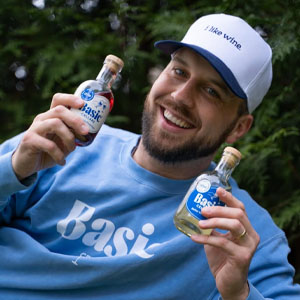
[00:01:58] Ray Latif: Yeah, for sure. You're looking the part. You got your Basic Cellars sweater on, looking that light blue.
[00:02:03] Trey Kennedy: And the hat, you know. And the hat, what does the hat say? I like wine, you got a little brain on the side. I'm gonna give these out one of these days, but yeah, I'm a walking billboard. I'm proud.
[00:02:14] Ray Latif: You know, you got to live the brand always be on brand because people are going to ask you about your sweater. They're going to ask about your hat and that's your opportunity to introduce them to your brand.
[00:02:25] Trey Kennedy: So absolutely.
[00:02:26] Ray Latif: So, you know, I am a big wine guy. I've been into wine for a long time and I'm always looking for interesting new options in this space, as I'm sure you are. I'm curious, though, about your interest in the wine business. I mean, have you been into wine for a while or is this something relatively new to you?
[00:02:46] Trey Kennedy: I have, you know, as a comedian touring around, you know, I work nights, right? And I love to have a drink before the show or especially after the show. And, you know, I'm into my thirties now. I'm a father of two under two. So alcohol is very important to me. I'll be the first to admit. I love a good drink and I love, I love how drinks kind of just bring people together and I love to share a drink with my wife or get together with friends. I've gone the classic path of early 20s, whatever ungodly stuff I was drinking, and then moved into a small IPA phase until I decided I don't want to drink 500-calorie milkshake Pop-Tart IPAs in my free time and really found wine, I don't know, a handful of years ago. which is a man, I love wine, it's great, it's perfect, it's like you don't need too much of it. There's so much variety that you get to play with what you like what you don't like. And I noticed a lot of my fan base to would they be coming to share in their boomerangs of them drinking their wine before the show or after the show and It just kind of felt very authentic that I was enjoying wine and my fans were. And so that's kind of how Basic Cellars, the initial idea even came about. But I'm your classic, like I love wine and I've made small attempts to be a wine guy and have just found it so overwhelming and so confusing and kind of like, you know what? I personally don't have the time to memorize what grapes come from where. I just want to go to a brand I know has good wine And wine to me is fun. I don't want to do the whole kind of like, you know, I remember one of the first times I went to like a fancy wine place. you know, they kind of present you the bottle and then they pour you a little bit. And I was just like, what do I do? I don't, what is it? I was like, oh, I was supposed to drink it. And I just like chugged it. I was like, now what? I'm like, you're supposed to sip it and like, let them know if it tastes okay. I was like, why, you know, all that kind of stuff that the wine drinkers know about, which is all well In Good. I'm like, you know, let's just make a wine. You just pop the bottle and drink from right from it or whatever you want to do. It's not meant to be taken too seriously, but it's still good, delicious wine.
[00:05:01] Ray Latif: I think your perspective is similar to a lot of folks that like wine but don't want to be overwhelmed by choice paralysis or having to be educated about all the different varietals, styles, regions where wine comes from. There have been, I think, attempts to create a more approachable, accessible wine brand in the past. I can think of a handful that still exist. How do you see Basic Cellars as different from those that existed in the past and currently exist on the market?
[00:05:30] Trey Kennedy: I think what I'm trying to do with basic is make wine fun, to put it simply. It's called basic because it's kind of a double entendre. It's basic wine. It's good. It's also playing into this kind of trend of being a basic bro or a basic girl. I kind of embrace this almost ironic, like, yeah, we're drinking our wine. We're so basic. And trying to make wine more approachable and truly fun, where I think I think there's a little bit of a fork in the road with wine where it's like, okay, it's fun, it's simple. And so it's kind of cheap and maybe it's not the best wine or it's like, it's supposed to be more approachable and simple, but it's still, it's still kind of wine. It still feels a little fancy uppity. So we're trying to just come at the market with like, though, this is really good quality wine. Once you try it, you're going to love it. But it's just meant to be fun and bring people together and be communal and unserious.
[00:06:32] Ray Latif: Yeah, I mean, I love the idea of creating a fun brand. I think there might be a bit of a hurdle when it comes to communication when you talk about something that's basic as being something that's premium, right? So how do you bridge that gap between the name and what you're trying to give to consumers and also make it clear that this is a better option, a more premium option than other products out there?
[00:07:00] Trey Kennedy: Definitely. And that's certainly the big hurdle we're tackling initially is, yeah, it's fun, it's basic. So your head just goes to, oh, it's cheap or whatever. So I think the packaging is a real game changer. That was important to me to not only be different from a brand perspective, but how is it delivered? How do you consume it? And so we have these single serves and it's not a can. It's like these beautiful single serve glass bottles with the cork. And we have a great partner within good tastes. They fulfill and get our, our liquid. And so I think that does a lot to where the branding we did, the packaging, it presents itself in a way that does seem a little more premium, and I think the payoff will be, oh, people get it, it's fun, I like the packaging, it's different, and they drink it, and they actually become fans for life, they want to keep getting it because the taste is undeniable.
[00:07:51] Ray Latif: Yeah, for sure. I think one way to make wine a bit more accessible is exactly what you're talking about, is giving people options when it comes to the size of the bottle. 187 milliliters is your size. That's one glass of wine. You could probably break it up into two glasses if you wanted to. Why was that so important to the foundation of what you're doing in the future of the company?
[00:08:13] Trey Kennedy: Yeah, again, just authentic to my personal experience. I wanted to potentially get in this world of wine because I think it made sense for what I truly love off camera and off stage and what I felt like my fans truly loved. And then what I was experiencing as a wine drinker too is And again, my fans I feel like are such an extension of me because I'm just presenting myself and I feel like we have a lot in common and the amount of wine I pour down the drain was like sickening to me because I'm a guy who I got a family, you know, I want to be frugal I want to, you know, not waste, but to me the bottle was so difficult because there's some nights, I wanted a glass there's some nights I wanted. three-fourths a bottle, but to perfectly hit, and I'm not the type of guy who has a drink every night. It's like, you know what, this Tuesday night, I need a half a bottle of wine, I just do. And then I'm the type of guy who, I don't want to drink every single night. Of course, I want some people, do you? Buy your basic drink at every night. But it's like, okay, I'm gonna have my next glass maybe on a Saturday afternoon. This wine's bad now. And so that was important to me for not only just being different and offering an alternative, but a real, real functionality to it of, hey, just grab a quick glass and you maybe you decide to open up another bottle of basic. So you want your second glass, but I've truly enjoyed having these in my house as I start to experience the single serving option. And I've just wasted a lot less wine, plain and simple.
[00:09:35] Ray Latif: Yeah, wasting wine is not a good thing.
[00:09:37] Trey Kennedy: In fact, it's a very, very bad thing. It's the worst. And the amount of times I've tried a bottle that's been out a few days and tried to trick myself, like, is that okay? You take your second sip, like, no, that's disgusting now. That's very sad. Down the drain it goes.
[00:09:51] Ray Latif: And what's worse is you just leave it there. Sometimes this happened to me a few days ago where I'm like, I'm gonna I'm gonna get to it. And then like three days later, you're like, I really want to even though it's bad. And then you just like, ah, I got a bottle right now.
[00:10:05] Trey Kennedy: That's maybe we had a bunch of family over and they brought over a bottle. And there's maybe three-fourths of a glass in it. It's just sitting there. It's been 10 days. I know the inevitable is coming. It is a shame. The amount of times, too, there's been like a few swigs left, and I just take it like a shot of vodka or something, because I'm like, I don't want to waste it. But gosh, it tastes so bad now. So yeah, I'm enjoying the single serving. Much less waste.
[00:10:31] Ray Latif: Well, I think you're onto something and I think your fans are onto something in that they are looking for options like Basic Cellars. And I say your fans because, and we've referenced this or you've referenced this a few times, they're looking for something that they can have. on a pretty regular basis, but not be committed to an entire bottle. And the fans in particular that you're talking about, I would think are women, if I'm not mistaken. I look at your Instagram videos and I just get the sense that you're speaking to millennial and Gen X aged women. Am I wrong?
[00:11:10] Trey Kennedy: You're not wrong. My real core audience over the years has been built through different viral videos. And there is a big chunk of that that is women. And because I've done this kind of basic girl character, frolicking through a pumpkin patch and all that, that's been viral for years. And I kind of play into everyday life. I've been married for almost five years now and do the daily humor of the ups and downs of marriage and now parenthood. And I've found that the women really have gravitated towards my content, thus my live shows. But what do women love to do? They love to drag their guys to things. So we've built my touring business because the guys come along. It was like a running joke, like, I don't know who this guy is. My wife, it made her happy to buy tickets. And then they see me do my thing. And they're like, oh, OK, we like this guy too. So there's definitely a strategy of serving that core audience and these women who Again, wine sometimes, which I don't agree with, tends to feel like a feminine drink. I'm also trying to tackle that a little bit. I'm a guy who's now – I bring wine to the tailgate instead of beer because I'd rather slowly have a couple of glasses of wine rather than pound these light beers that taste like water. Guys kind of side-eye you like, oh, dude brings the wine. I'm like, yeah, I like wine. What's wrong with wine? first serving that chorus of women who inevitably say, Hey, husband, boyfriend, share this wine with me. They become fans. And that's how we've tried to grow my other parts of my life and career. And that's what we hope to do with basic.
[00:12:51] Ray Latif: How much of your business, how much of the Basic Cellars business do you expect to be female consumers versus male consumers? Do you have a sense of that at this point? I know you're really new, but I mean, in your business strategy, I wonder if you've already kind of figured that out or tried to figure that out.
[00:13:05] Trey Kennedy: Shoot. We're not even two months old. So we've got orders, which is amazing. They keep coming every day. And. It seems pretty apparent that the women, like kind of our target audience, are the ones buying the wine, and women tend to buy in the relationship anyway. But there's no doubt that my core audience is this kind of millennial woman, you know, mom of two or mid-30s. It's just kind of the exact life I'm in, and unashamedly just saying, hey, this In Good, fun wine for the basic girl. Through that, we'll see that spread and hopefully trend into the guys as well. But playing to all the uses of it as well, how it's a fun, new, cute way to... Friendsgiving, the holidays, housewarming to a friend, wine is such a go-to for people. And we're trying to attack that as well, to have a fun, new, creative option of gifting and holidays, et cetera.
[00:14:07] Ray Latif: Trey, you do a really good job of authentically incorporating Basic Cellars into your videos, into your Instagram videos. I just feel like it's a really natural and easy way to introduce a brand to folks. You're not saying buy this. You're just kind of being like, this is part of my humor and it all works really cohesively. I wonder if that aspect of what you do translates to sales, as in, are people buying, using a link An Instagram or TikTok, Basic Cellars through that video?
[00:14:46] Trey Kennedy: Great question. And that was a question I had as well, but for like, I just posted a new video right before I hopped on this call and I checked, we had immediately a few orders. So super encouraging because Over the years, I've been able to make my living and continue this career by doing brand partnerships with brands that aren't mine. And you never really know how that works out and how your audience resonates with that. But I was very, very confident. in this product, in this company, you know, it's like, Oh, a celebrity wine. Who's what a genius. But I, I did feel like there was an opportunity, like there was this hole in the market that we could fill and that my audience, it wouldn't feel like this cash grab. It wouldn't feel like this salesman thing. It's, it's like, I'm getting a response of this makes perfect sense for this guy to have this under his umbrella of stuff he's doing. And that was very important to me. I didn't want to, I didn't want to come across you know, money hungry, and I'm certainly not. I think this is really fun. I'm proud to have founded it and to put it out to the people. And it's been very encouraging because I've launched stuff over the years that that's pretty clear people don't have an interest in. But very fortunately, as we make this content, I'm not having to force myself to come up with new ideas. It's just like a video I already would have made. I'll just hold the bottle in it and mention it for a split second. And it feels perfectly in line. It doesn't feel out of place.
[00:16:09] Ray Latif: Yeah, and it's not like you're saying I'm the founder by my wine. It's just I'm telling a funny story that happens to include wine and here's Basic Cellars as the wine that's part of my video. It doesn't feel forced at all, which is really hard to do. I think I see so many influencers. trying to do that and failing miserably. Oh, thanks. Yeah. Well, I mean, is there a secret? I mean, because there are founders listening to this right now who work with influencers and probably want to say, hey, you know, I want to work with you to make this feel like it's not an ad, to make it feel like it's good, fun content that people want to watch. Any pointers in that regard?
[00:16:50] Trey Kennedy: That's a big part of why I want to do this as well because I've been doing brand deals for a decade and you start to think like, all right, a lot of, I guess a lot of people believe I can do a good job of giving awareness to the product or selling their product. Maybe I should just do my own product that I'm passionate about. And so, you know, getting paid by a company to promote their products, great. And that's how I've built this career, but it's a lot more cited when you have ownership of it. So any advice I'd give, I would just, I think my easiest practical advice is just look to the influencers past brand deals versus the real content. Does it feel the same? There's a ton of influencers that they get paid to do a brand deal. And instead of, I've always taken that as, all right, this company's paying me real dollars. I'm very grateful for that. I want to fulfill my end of this deal and give them the results they're hoping for and beyond. But I also still have an audience that I want to care for and push them out content that doesn't make them roll their eyes or school pass. They're like, I still want to watch this. If you ever see my brand deals, the comments are flooded with like, this is the only guy I'll watch ads for. Like this is the one guy who makes ads fun. And so I've put a real effort on that. And I think some influencers you'll see regular video, regular video, they go all out. It's top notch. And then a brand deal, you could tell they kind of just put it together and they want to just get it over with. And so that's been a huge part of my strategy is finding a way to integrate that. I think I've been fortunate to work with great brands who every time I do a brand deal, I really fight for my creative. I don't necessarily just, you know, obey everything the brand tells me. I say, Hey, I've been doing this a while. I think we should do it this way or that way, just to make sure both the client and my audiences is happy.
[00:18:33] Ray Latif: Do they have to review the content? I mean, we're getting a little off topic. I'm sorry for that, but I mean, do they have to review the content before it goes out?
[00:18:40] Trey Kennedy: Yeah. Yeah. And we, I have a great team and management and assistant and my own team. They, we have this thing. It's a well-oiled machine. We have them kind of give us their vision. I go to the writing room script, send it over. We get the script nailed down a hundred percent. So we avoid any confusion when we deliver the actual content and then we go shoot, edit, deliver it. And they watch and say, looks good. And I post it.
[00:19:03] Ray Latif: I don't know if you're familiar with an entrepreneur named Kyle Cook. He is the founder of a brand called Loverboy. He's known for a show on Bravo, a popular one that I can't recall right now. But he's a pretty popular figure. Summer House, I think. Summer House, exactly. And Winter House, exactly. Well done. And so I talked to him about Loverboy and his focus on that brand and sort of using his celebrity and using his appearances on that show to help market the brand. He does it really well. And one of the things that was kind of surprising or really interesting was how much merch they sell and how big of a part of the business it was. How does merch factor into your current focus for Basic Cellars and potentially in the future as well?
[00:19:48] Trey Kennedy: Yeah, I mean Loverboy and they've done a really great job of merch because I think how I discovered Loverboy was some of the merch and I thought it was like just a cool clothing brand. And I dug deep like, oh, that's a beverage brand. They've done that really interestingly and I'm wearing the hat, I'm wearing the crew neck. We haven't sold these yet. We're getting a lot of DMs and people saying they like it. So we'll see. We got some ideas, but there's no doubt we want to find a good strategy with merch or any kind of other basic experiences to go beyond the wine. Because I think it's one thing to create a brand and a wine. people like the Taste Radio they think it's kind of fun they're proud to drink it they're proud to have it in their home but how do we even go beyond that to make basic not just a wine brand but a real standalone brand that you hear that word and people just go to the to the wine you know lover boy people That word can mean so many things, but when you hear that word, he's built the brand so well that now people think of one thing. And so I think that could be a big part of our strategy. We'll see. And people like the hats. I like wine hats. I'm proud to wear this around. I get a lot of compliments. So I guess there's just a lot of winos walking around, but hey, they're my friends.
[00:21:03] Ray Latif: Yeah. It's a really, it's a really great hat. And, and I like your sweater too. I mean, I, you know, it's funny cause I can't see the sellers part. I just see the basic part and yeah, there you go. And I almost feel like if, yeah, I almost feel like if you just left it at basic. It's kind of like what you're talking about, like creating an umbrella brand that could mean a lot of different things. Yes, it started out in wine, but you could be, I don't know, fashion brand, a lifestyle brand, potentially even, you know, a brand that includes other beverages. Have you thought about that? Have you thought about, you know, basic as potentially creating, I don't know, perhaps a beer and calling it basic beer so that you do have options for a variety of consumers?
[00:21:42] Trey Kennedy: Totally. We've thrown a million ideas at the wall and as we try to get this off the ground and get basic in more people's hands and focus on delivering this unique single serving size, we've got all sorts of ideas for down the road of maybe new SKUs or new packaging or is this a physical location at some point? I have tons of opinions on current brick and mortar stores and bars and this and that, could we shake that up one day? There's so many ideas floating around in our heads that this thing could become because we're very excited about the single serving bottle. And fortunately, I think my fans are too. We've seen sales, but I want to do what the people and the public want me to do and follow what works. So there's a million ideas.
[00:22:35] Ray Latif: How do you listen to consumers? Again, you're relatively new, but I'm sure there are people saying, hey, you should do this, or hey, you should do that. Hey, you should collaborate with this brand. Hey, you should sell this merch. How do you filter through all the noise?
[00:22:47] Trey Kennedy: Luckily, I have a decade of experience doing that. Really, being a comedian or a content creator is just day in and day out adjusting to feedback. I get on stage and try a joke. I really have no say in the matter. If they laugh, then that stays in the act. And if they don't, I gotta make it better. I gotta switch it up. And the same with the content. Okay, this type of video is working for me. Let's give them more of that and so on and so forth. So with the wine, it's been really fun to hear the good feedback. But my first 100 customers, I emailed a survey, you know, tell me all about it and got great feedback on the taste, the packaging, the price point, all that, then just continue to remain humble and just serve the people. And that's really what I want to do is provide a really fun experience. Again, I don't feel like I'm just asking for your money. It hopefully feels more like I'm desiring to provide you something that's of real value.
[00:23:45] Ray Latif: Trey, you mentioned the potential to go from direct-to-consumer, where Basic Cellars currently is, into retail stores. We have a few, maybe more than a few, retail buyers who listen to the show on a regular basis. Is there a dream retailer that you have? And I'm sure you're not going to get anyone mad if you say, oh, well, I want to get into Target, but the Whole Foods buyer is listening. But do you feel like there's an ideal place for Basic Cellars in retail?
[00:24:13] Trey Kennedy: Retail to me is huge and online is amazing. I think that'll always be part of the business, but. You know, it's obvious there's plenty of people who love wine, they love drinking alcohol, but they would never ever buy it online. They're like, hey, when it hits a store near me, I'll get it. And so that's a massive initiative for us. And we're hopeful we can do that. You know, Total Wine's a big dream. I don't think there's like a wine provider that's doing better across the country right now. And we're really, hoping for that of course any of a target when you think of my core audience target is like a total dream and uh it's like the the mean that's taken on its life form for target of you know your your wife goes to target she has lost for hours you know and that demographic that i'm kind of serving loves target so we and it's nice too i'm from oklahoma where you know they you couldn't even put wine in target until a few years ago so these a great team adapting to all these changes in laws and rules. And those are kind of the pie in the sky goals. So hopefully we can get in there sooner than later.
[00:25:22] Ray Latif: Yeah, well, I hope you do because I do think target and Basic Cellars seems like a natural fit, for sure. Are there any other, you know, brands? I mean, how do you how do you consider brand collaborations? I think, I'm just going to stand in my soapbox for a second sometimes. Sometimes I look at brands' Instagram accounts and it feels like the collaborations they do with other brands feel forced. They don't feel as natural as they may need to be. I think the through line might be, oh, we're both early stage brands, so we should obviously collaborate. And I think PR agencies and social media companies sometimes do that to the detriment of the brands. How do you determine which brands, if any, make sense as a collaborative partner for Basic Cellars?
[00:26:07] Trey Kennedy: Sure. Yeah, I think a lot of brands, I think that's why my team's excited. I'm excited. It's nice to come from a place of a professional content creator to create this content. Because I think a lot of brands, and I've worked with a lot, that say, hey, let's go shoot this video. And in my head, I'm like, this is going to get zero views. What's the point of this? And I think a lot of brands say, we just got to make and post content for the sake of making and posting content and it's it's kind of this weird new world social media because it it's free you just upload it but I don't really agree with that I think every piece of content needs to serve a purpose and I And so I've done with my personal accounts always, you know, even as back An Instagram stories, I never, I never understood people just kind of like, click, here's my lunch today. Like who, who wants to see that? What value is that providing? So I, I've tried to make it a goal for my content over the years that every, every time you see a post come up for me, it's adding value. Even if it's me promoting, you know, buy my tickets. I try to work that into a joke or anything at all. So you don't feel like you've wasted your time and. So we're trying to do with BASIC and that you speak to brands. I think, I don't know if you're talking about this as far as a brand, but really our first initiative would be other influencers that make sense, content creators, bloggers. And you have endless amount of these female blogger, lifestyle vloggy, Instagram influencer gals who are crushing it. They have really devoted fun audiences and we've sent a lot of them the wine and they're excited about it. and so that's kind of the first step is trying to gather maybe like an ambassador crew to come on we really provide them with value they provide us with value and it's it's just a easy no-brainer for both audiences where they're gonna be excited to promote and post about it and not just feel like it's a paycheck because they love the brand themselves and they know the audience will love it too.
[00:27:57] Ray Latif: As someone who is a social media expert, I think I can call you that. Thank you. Are there any platforms at this point that are up and coming that you're looking at as we have to be on this platform or ones that brands should consider if they haven't already considered posting content on?
[00:28:14] Trey Kennedy: Up and coming, not really. I think you got the big, what is it? Five. It's Twitter, Snapchat, Facebook, YouTube, Instagram, TikTok. It's the big six. And they all have such a different really cool audience taking part in each of those platforms. Snapchat is one I find less useful personally because they're dominating the teenage space and it's a whine, it's obviously doesn't make sense. An Instagram for me is my most valuable asset for my personal brands as well as An Instagram I think is king still, maybe YouTube as well, long form YouTube. An Instagram's really keen when it comes to, I think, building a community. And you feel like you have this hub where you can follow their photos, their videos, their stories, et cetera. An Instagram just has a culture of more quality content. I think TikTok or YouTube Shorts has created a world of quantity over quality a little bit, in their short form at least. And they're valuable. I have followings there. We're going to post there. An Instagram, and people always sleep on Facebook. Facebook is, oh, you're boomers on Facebook. Facebook's the biggest platform in the world. And I have a huge following there. I convert real sales there. So Facebook An Instagram are important to me and I feel like particularly serve my target audience too.
[00:29:37] Ray Latif: And it's still all about videos at this point. I mean, I think still images. There's almost no point. Seems to be the way of the Dodo at this point.
[00:29:44] Trey Kennedy: Unless it's a really entertaining image, video is king. There's no doubt about it. And even in videos, we're seeing a regression from, there was an era of really more polished produced content and now you're really seeing the social media world value this stripped down iPhone selfie style content. And there's just this desire to relate to the influencer or the brand. You just see it increasing where, you know, we feel like we're going back in time now where we're experiencing more with content that makes you feel like you're FaceTiming your friend versus a fully produced sketch.
[00:30:19] Ray Latif: I guess we're coming full circle here in that it may feel like it's more authentic if it isn't a polished, highly produced, expensive video. If it's something where people feel like, oh, they're talking to me, as you mentioned, it's not a company talking to me.
[00:30:36] Trey Kennedy: A hundred percent. We're seeing that a hundred percent because as the social media world and influencer world gets more and more saturated, I think people are just trying to find those, those more authentic voices they can relate to and feel like a friend just hanging out versus some really polished piece of content.
[00:30:52] Ray Latif: Dre, I can see why you're popular. I can see why people love to talk to you and love to go to your shows. You're very easy to talk to. You're really straightforward. There's nothing that you're trying to, I guess, get over on people. And I'm really excited to see where Basic Cellars goes from here because if they got you as the founder and they've got this really great idea and product, I mean, it sounds like you're already on third base, but I'm not, I don't want to,
[00:31:18] Trey Kennedy: I haven't got my hopes up for a single moment. I feel like that's how I built my career. I joke with my wife. I'm like, tomorrow's the day it all ends. Everyone unfollows me. And that's how I like to operate. So I'll keep making fun videos and try to promote the wine and hope people can get it, enjoy it, and just we'll see what happens. But thanks for the kind words. It's fun to get to really dive in and chop it up over the wine and the company. I'm usually goofing around. So this is really fun.
[00:31:46] Ray Latif: Yeah, we're recording this on a Wednesday morning, so maybe not the best time to be drinking wine. But the next time you're in Boston for a show or whatever, please let me know and love to share a glass with you.
[00:31:56] Trey Kennedy: 100%. I'm about to get back on the road for a few shows next year. I don't think there's any question we'll make it to Boston at some point. So we'll share a, not share a bottle, I'm gonna have my own, but we'll bring it to you.
[00:32:08] Ray Latif: We'll each have a bottle or two. All right, Trey, once again, thank you so much for joining me on Taste Radio today. It's been great.
[00:32:16] Trey Kennedy: Thanks, Ray. Awesome. Thanks for having me.
[00:32:21] Ray Latif: That brings us to the end of this episode of Taste Radio. Thank you so much for listening. Taste Radio is a production of BevNET.com Incorporated. Our audio engineer for Taste Radio is Joe Cracci. Our technical director is Joshua Pratt, and our video editor is Ryan Galang. Our social marketing manager is Amanda Smerlinski, and our designer is Amanda Huang. Just a reminder, if you like what you hear on Taste Radio, please share the podcast with friends and colleagues. And of course, we would love it if you could review us on the Apple Podcasts app or your listening platform of choice. Check us out An Instagram. Our handle is bevnettasteradio. As always, for questions, comments, ideas for future podcasts, please send us an email to ask at Taste Radio. On behalf of the entire Taste Radio team, thank you for listening, and we'll talk to you next time.
[00:33:11] Trey Kennedy: you