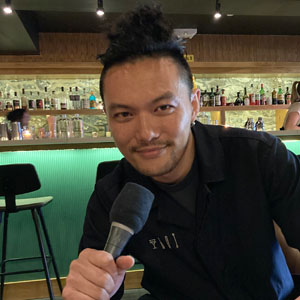
[00:00:10] Ray Latif: Hey folks, I'm Ray Latif and you're listening to the number one podcast for the food and beverage industry, Taste Radio. This episode features an interview with Jian Zhan, the co-founder of Double Chicken Please, a highly awarded New York City bar known for its innovative cocktail program in which food is represented in liquid form. get access to limited swag and exclusive content by becoming a Taste Radio VIP. It's easy for you to join that group of very important people. Just head to Taste Radio slash VIP and take one minute to sign up. Despite being just two and a half years old, it's not an overstatement to describe Double Chicken Please as an iconic bar. Located in New York City's Lower East Side, Double Chicken Please was named as the best bar in North America and the sixth best in the world in 2022 by The 50 Best, a respected awards program focused on global gastronomy and the international drink scene. A dual-concept bar, whereby the front room is represented as a fast-casual cafe serving chicken sandwiches and small bites, along with craft cocktails on tap, the back room at Double Chicken Please is a luxurious yet welcoming lounge where guests experience the bar's innovative menu, which is designed such that you drink your food and eat your drink. Recently closed for renovations, Double Chicken Please opened a pop-up in Boston that featured the bar's award-winning cocktails, including the Red Eye Gravy, a sweet and savory libation made with Teeling Irish whiskey, coffee butter, corn, walnut, wild mushroom, and microwaved coppa, and also the Japanese Cold Noodle, which is crafted with Bacardi Superior rum, pineapple, cucumber, coconut, lime, and sesame oil. I met with co-founder Jian Chan at the Boston pop-up, where he spoke about the inspiration for Double Chicken Please, his view of the bar as a design and performance studio, his belief that, quote, nothing tastes better than nostalgia, and the company's strategic partner with spirits giant Bacardi. Hey folks, it's Ray with Taste Radio right now. I am in the Brighton neighborhood of Boston at a bar called Birds of Paradise, which is now being taken over by the iconic DoubleChickenPlease. And I'm with the founder of DoubleChickenPlease, Jian Qian. How are you, Jian? I'm doing really well. Thank you, Ray. This is a pretty amazing pop-up you got going on here. You are about to open in about a little less than an hour. So I really appreciate you taking the time to be with me right now. No problem. Yeah. I called DoubleChickenPlease iconic, which is kind of interesting because you've only been open for two and a half years. But the accolades, I mean, the accolades have been coming in left and right. Recently ranked the number one bar in North America, the number six bar in the world. Why pop up here in Boston?
[00:03:13] GN Chan: Well, I mean, there's a couple of reasons. First of all, Will, Isaza and Ren, they're all like homies to me since like 2016. We all know each other for a while. And I always know they are doing something special, something really cool in Boston. But you know, during this couple of years, no matter it's work, no matter it's COVID, no matter it's everything, it just seems like it separates everybody apart. And finally now, also due to our construction, the whole bar is actually closed now, it's during construction. It's kind of ironic, like we just got all this award, all this recognition, but actually the bar is closed now. So we took the team, want to keep the momentum, want to do something new, want to encourage our team as well. Also really want to connect with the community in Boston. So we came up for a pop-up two days in a row with Birds of Paradise, which definitely means a lot to my heart. Happy to be here and happy to see everybody.
[00:04:12] Ray Latif: It's, as I mentioned, pretty amazing that you have created a bar that is so admired and so respected in the industry in only two and a half years. Let's talk about your background and your reason for starting a bar. How long have you been in the business and what inspired you to launch Double Chicken Please?
[00:04:30] GN Chan: Well, I've been in this industry probably roughly 12 years. 11, 12 years. I started in Taiwan. It was an incident. It was an incident to become a bartender. I don't drink alcohol. I'm from a really alcohol-free family. Never really into it. And I was a street magician since I was 13 years old. And then I studied design in college. So my original dream is to either become a designer or become a street magician. Then ended up I got scammed. Someone took all my money. I was broke for several months. I couldn't survive. So I went to a bar in Taiwan to ask for a job. And I was living in the bar for seven months in the attic and learning everything about bartending, which I have no idea about. But I just feel, oh, this is fun. This is basically design slash performing. which is to my biggest interest in the USA. This is actually fun, even I don't drink. So even alcohol part is very difficult for me to take, but flavor, but design, every element, even behind the bar, like a stage, that really sort of motivate me to keep doing it. I love it. And then one day there's a bartender from Hong Kong came to visit us in Taiwan. I wasn't sure what's next for me. So I asked her, where's the most difficult, challenging place for cocktail in the world? And she said, I think it's New York. That was 11 years ago. And I was like, all right, New York sounds the place to go. So a month later, I quit my job, I bought a ticket, and I just... landed in New York. And I would say I'm pretty lucky. I'm still there after 11 years, still loving it. Now running Double Chicken Please, which is a very difficult project since we started in the middle of COVID, lockdown, everything. It was very difficult, but I'm happy to say that the most difficult time, knock on wood, the most difficult time has already passed. Now is the time for us to really ride and grind, you know, every day, focus on what we're doing and then keep developing, keep being creative. And hopefully very soon we can all share this with all the people who are interested in this business and share with all the, you know, in the community. And we are the brand that we have lots of questions about a lot of stuff. No matter if it's the law, no matter if it's the the culture, no matter if it's a lot of cocktail nerdy stuff, we have lots of questions. And we just want to, through this platform, through this brand, to raise our hand, to ask questions, and then to have everybody to think about it, and hopefully we can all grow together. That's our goal.
[00:07:05] Ray Latif: You said a lot there, and I want to back up for one second and ask you about not drinking alcohol. Do you not drink alcohol still to this day? Yeah. You're the second bar owner, well, owner of a very influential bar that I've met who doesn't drink. The first being Jack McGarry from the Dead Rabbit. How hard is that though? I mean, are you able to taste the cocktails that you make or? Yeah.
[00:07:29] GN Chan: I mean, Jack came to DCP last time and he asked for a bucket just to like Spit it in a bucket and try everything. Yeah, I know Jack too. He's the people I look up to. I don't think it's a necessary thing to have good tolerance of alcohol in order to make drinks. It's almost like a chef, you don't need to have a big appetite, but you can still cook a good dish. Because it's all about flavors, all about the experience. So the only thing I would say though, I wish I could drink more. I wish my body could take more. Because I think... Being tipsy, being drunk is another kind of state of mind. It's really important for a lot of people to experience that, to enjoy the environment. But for me, it's really hard to relate in that part because that's not a state I can really get into. Before that, I already passed out. Before that, I already started puking. So I genuinely wish I could take more so I can relate more. All the drinkers who come to enjoy everything. How can we make the experience better, you know?
[00:08:36] Ray Latif: It's not just the alcohol or the cocktails that people come to your bar for. It's the experience. And I had the pleasure of visiting your bar in January of this year. And, you know, you walk through the fast, casual experience of... I guess it's a fast, casual kind of restaurant you have there where you're serving chicken sandwiches in the front. And in the back is where the bar is. And it's a... sultry, beautiful. It feels like the ultimate New York kind of bar. You know, what went into it and how did you think about what the customer would feel like I felt when they walked in?
[00:09:14] GN Chan: Yeah, Double Street Complete, I call it a design studio because that was supposed to be between me and my best friend from college. So that's why I named it Double Street Complete because of our nicknames. And then now we also still run in this place as a design studio. but we started with food and beverage. We started with hospitality. So we really try really hard to sort of like see this place and see the experience as a design, almost like an event design. From the minute you walk in, even before you walk in, what you see, what you hear, and then come in. Each different place have different music, even the restroom, the menu, everything. We try to... make you remember something, honestly. Just like we try to make you remember what you have enjoyed tonight and try to make you be able to relate with the space, with the concept, with the product we offer. But of course, this is really personal. So we try to design everything that is really approachable, really welcoming for everyone, no matter if it's the vibe, no matter if it's the language we use. No matter if it's the hospitality or the product we offer, we try to make it easy for every... Because New York is so diverse, so we want to make it so welcoming for every single one who comes into the door. We want to create a safe place for everybody to be themselves, but also remember something. When you come to DCP, when you finish... Our ultimate goal is when you finish all the experience, when you walk out, you say, What the heck was that? But that was cool. And I think that we achieved something we want to achieve.
[00:10:53] Ray Latif: Yeah, I think that's exactly the way I felt. And it is beautiful, but it's not intimidating in so many ways. Thank you. And I feel like that's true about your cocktails too. Your cocktails that I tried are complex, but I think very approachable. Talk about your cocktail strategy.
[00:11:09] GN Chan: Cocktail strategy, I think we have two different rooms. The frown cocktail on tap, which is more like fast casual. The thing we're trying to do at the frown is more like tweak on the drink seasonally based on a classic cocktail, something you can easily relate. Because in New York, most people know for like classic cocktail, we are the birthplace for a lot of classic cocktails. So people have this kind of knowledge and theme to older classic. So we all tweak on classic. We all play with seasoned ingredients for the front room. For the back room, we play a different way. We play with your memory. I always say, nothing tastes better than nostalgic. So as long as you drink something, you eat something, you say, oh, this tastes like something I had before. You will keep going back to think about it and you'll remember something. So the menu right this moment is based on all the different dishes. It's not just... It's not just a whimsical, but it's something we try really hard to, like, for people to relate themselves to our product. Oh, I had this dish before, so I probably know what it's going to taste like, but in a different format, in the liquid form. In a certain drink, we do reverse pairing, which is you are drinking your food and you are eating your drink together at the same time. So it's an experience. It's something that we think is really fun to share with everybody. And if you talk about technique of making drink, ingredients of making drink, honestly, we do a lot of research to say certain ingredients taste like something, but it's not exactly something. So those things can play with your mind. But most of the ingredients we use and the technique we use is really humble ingredients and technique. We try to keep it simple in a way, but still complex. But something approachable. All the flavor, all the ingredients, even the cost, everything. We want to keep the price as low as possible. So we are very strict about our cost, each drink, to make sure people can afford that. Now the pricing in New York is going a little bit cray-cray. So we try to keep it down as much as we can. Because I believe in a good product, It's not necessary to have to be pricey. The real happiness is you can afford it every single day. You go there to be happy, to drink something, to eat something, you can afford. If you can get a reservation, that is. Well, we decrease the reservation a lot. So we mostly walk in now.
[00:13:40] Ray Latif: Oh really?
[00:13:40] GN Chan: Even in the back? Even in the back. That's always what we want to do. But because COVID changed the whole game. So COVID make it like, you need a reservation for people to plan everything ahead. And now because certain times we have this kind of big group, eight people top. In New York City, it's hard to bring eight people walk in a place that I want to sit right away. So you need a reservation to accommodate that. So that's the main reason we have that. And then now we also encounter another problem, really difficult to solve, which is the bot. You know, people use BLT online to buy reservations.
[00:14:14] Ray Latif: Right.
[00:14:14] GN Chan: So it's something we cannot really figure out how to handle it. So we just keep decreasing our reservation and have more walk-in availability. Also, how about the flow?
[00:14:26] Ray Latif: Yeah, I know exactly what you're talking about, because I've been trying to get reservations to Noma for their last dinner that they're going to serve at their restaurant in Copenhagen. And as soon as you... log on to their website, it's almost everything's gone. It's nuts. And it's got to be the bots. Keeping costs down, keeping prices low. It helps if you have a strategic partner, and you do have a strategic partner, so to speak, in Bacardi. How influential are they in your cocktail program? I mean, what role do they play in your sort of cocktail strategy and overall business strategy?
[00:15:01] GN Chan: I would say Pocari for me is a dear friend. So I have a long history with Pocari. Since 2016, I competed in Pocari Legacy. That's when I just sort of started trying to fit in this... Not fit in, try to explore this community, basically. And then I was just lucky enough to join the competition. I met so many people. And through this platform, I met so many people around the world. So I'm grateful for that. And then there's been a really great and genuine friend, all the people who work in Bacardi treat me like a friend. So we are sharing information, we help out each other. And through these years, they give me a lot of support. Not just business-wise, it's more like almost like they would encourage me and say, you can do it, you know, you can make it. I know it's difficult, but they will also, as a friend, just think about, just help me to to think. And yeah, I just really appreciate that relationship. We work with all the Brad Avery brand is the same to us. But Bacardi has a very genuine relationship with us since years and years ago. So I really appreciate that and cherish that.
[00:16:12] Ray Latif: Are you able to work with their innovation team, being on the ground as a bar owner, being on the ground as a bartender, knowing what's happening, knowing what customers are asking for? Are you able to share that kind of information with them to help them design and create new spirits or new expressions of current brands that they own?
[00:16:32] GN Chan: I don't think we have ever worked with them specifically for this purpose. Every time I sit down with different brands, no matter if it's Bacardi or other brands, I always sit down with them. I always make sure the thing we want to do with them is beneficial for both sides. or even win-win-win, like the brand need to win, we need to win, also the customer, the audience need to win as well. So we always will make sure what they need and how can we make that happen for them as well to make sure the relationship is long-term, is sustainable, and is profitable for each side, basically.
[00:17:10] Ray Latif: I know Bacardi is looking hard at current trends in the alcohol beverage business, including things like non-alcoholic or low-alcohol options. What are you seeing in terms of trends related to non-alcoholic cocktails, non-alcoholic spirits? Are you seeing the kind of demand and interest that we're seeing from an industry point of view?
[00:17:32] GN Chan: I think these things are very regional. I think from what I understand, certain parts of the U.S. really have this kind of trend. Especially like New York, L.A. or San Francisco. This trend is more obvious. More people are asking for low ABV or non-alcohol substitutions. But certain states don't necessarily have so many people focused on that yet. There's nothing wrong with that, right? I think it's just the vibe and overall... the feeling of the city and the offering you can pick. I'm looking forward to it, you know, because low ABV drink or non-alcohol beverage can still be creative, can still be flavorful, can still be very memorable as well. And the thing is, without alcohol, Theoretically, you can take even more. You can drink more. You can eat more. You can enjoy more. You can be inspiring someone more. So it's still a good way to approach people. And you open another door for different audience to enjoy as well. So I'm looking forward to it.
[00:18:36] Ray Latif: Have you experienced or tried or tried to use any of these non-alcoholic spirit brands that have come out? I can think of a handful. There's a few of them on the market, a few of them that conglomerates or strategics are invested in. Have you tried to work with any of them at this point?
[00:18:50] GN Chan: We haven't really had a drink or events that's really focused on non-alcohol yet, but I can see the future will well. But right this moment, we haven't. We're still pretty new. We just started, so we take our time. But this bunch of different non-alcohol brands or non-alcohol spirits, I really like it. Honestly, it's a really good product. No matter if it's the product itself or the packaging or the branding or even the messaging through the product, I think it's great. I really like it, honestly. I really vibe with it. I think sooner or later we'll incorporate more non-alcoholic ingredients into the... Because it's all about flavors. It's not really about the alcohol. Alcohol is partially kind of a flavor as well, technically. So it's all about how you bind in all these flavors.
[00:19:37] Ray Latif: I think that's a good segue to my last question, which is about flavors. It feels like another trend that we've been seeing across food and beverage, not just in beverage alcohol, is the incorporation of global flavors, the introduction of global flavors into packaged food and beverages. Are you seeing the same thing? And what other trends are you seeing in beverage alcohol and cocktail culture?
[00:19:59] GN Chan: Global flavors, I think maybe since COVID, you know, it's sort of divide or sort of like stop the global transportation, the community a little bit. So now after COVID, I think People have this tendency to want to travel more, want to explore more, which is really good. I'm really looking forward to it because that gives us more chance to utilize something that's fun and new, but people are willing to try it. So I'm really excited about that. In terms of a new trend, I can't really say there's a specific trend that's going on, but I feel the whole community, as I know, as I feel, is people are really trying to push creativity and sustainability. And people try to really think outside the box and also focusing on branding more than before. Because we all know if COVID hit again, your day-to-day business have to stop. But branding can add in more value, can make you have more opportunity to approach different audience and different way to approach them. No matter it's through your merch, no matter it's through your campaign, no matter it's through other channels. But when branding is strong, I think you can also make people relate more and enjoy more. Also remember more about you. Also come back to you again and again. So I think nothing really related to flavor trend as I really noticed. But I think branding and marketing has become a bigger part of this industry.
[00:21:37] Ray Latif: My last, last, last question for sure. You have such influence now, Jian. You and Double Chicken Please. And people are looking to you for thought leadership. Is that something that adds pressure to your job? Is that something that you think about, you know, you're concerned about the fact that people are looking to you as a leader in the industry, even though you're only two and a half years in? I mean, is that something that affects how you think about the future of Double Chicken Please?
[00:22:06] GN Chan: I think I just want to be as grateful as possible. Because all this recognition, all these things. If you know me, it comes a long way. It's from 10 years ago. You hustle, hustle, hustle. But it's not for all this. We just love hospitality. We just love making people stay. We just love serving. We love creating. And we love the environment, the community. So I just want to keep growing with the community. And like I said before, we are a brand, we are a platform that we have a lot of questions. And I just really think we really need to do some changes to move the whole industry forward, especially in the US. especially in New York, which is the market I'm more familiar with. And I do think we can make it. I really do think, collectively, we can definitely make it. If it's just me, if it's just W3C, we won't make it. But all these changes, all these questions need everybody to gather together, discuss about it, do homework together, do some case study, and then we can all make changes together.
[00:23:08] Ray Latif: When you're talking about changes, are you talking about things like high prices and reservations and things like that? Or is it something beyond that? Well, that too, but that's something more actually easier to change.
[00:23:18] GN Chan: It's more about the system, about even immigration in this industry, and even about the law in the U.S. Like, how can we approach alcohol? Everything becomes so complicated. It shouldn't be like that. We shouldn't always have to worry about something. It's a modern standard, 21st century. Everything should be able to change, no matter it's technique, everything. Just a lot of things we need to discuss and we need to make a move. we can all improve. We can all have more resources to utilize, more techniques to play with.
[00:23:54] Ray Latif: GN, I asked you if we could speak for 15 minutes. We've been talking for a little over 25 right now. I really, really appreciate the time. I think if I speak for one more second, your team is going to kill me. But thank you so, so much for having me here. Thanks so much for a great conversation. I really, really appreciate it. Likewise. Thank you for having me. Thank you. That brings us to the end of this episode of Taste Radio. Thank you so much for listening, and thanks to our guest, Jian Chan. Taste Radio is a production of BevNET.com, Incorporated. Our audio engineer for Taste Radio is Joe Cracci. Our technical director is Joshua Pratt, and our video editor is Ryan Galang. Our social marketing manager is Amanda Smerlinski, and our designer is Amanda Huang. Just a reminder, if you like what you hear on Taste Radio, please share the podcast with friends and colleagues. And of course, we would love it if you could review us on the Apple Podcasts app or your listening platform of choice. Check us out on Instagram. Our handle is BevNetTasteRadio. As always, for questions, comments, ideas for future podcasts, please send us an email to AskAtTasteRadio.com. On behalf of the entire Taste Radio team, thank you for listening, and we'll talk to you next time.