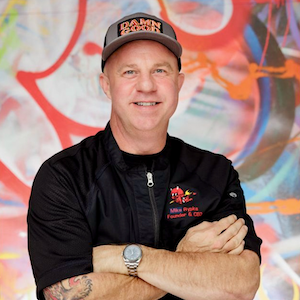
[00:00:10] Ray Latif: Hey folks, I'm Ray Latif and you're tuned into Taste Radio, the number one podcast for entrepreneurs, trailblazers and changemakers in the food and beverage industry. In this episode, we're joined by Mike Rypka, the founder of the wildly popular and rapidly expanding restaurant chain Torchy's Tacos. When Mike Rypka launched Torchy's Tacos out of a trailer in Austin, Texas, he wasn't thinking about private equity or market expansion. He just wanted to serve, quote, damn good tacos. Fast forward to today, and Torchy's has grown into a revered fast casual chain with national ambitions, fueled by strategic investment and a fiercely loyal customer base. But the real engine behind the brand's success isn't just craveable food. It's culture. Torchy's differentiates itself through scratch-made food and a willingness to take creative risks with its menu. Behind the scenes is a deeply human company culture built around second chances, internal growth, and genuine care for employees. In this episode, Mike opens up about the humble beginnings of the company, how word of mouth and grassroots marketing initially drove Torchy's success, and why, quote, clean, craveable food keeps the customers coming back. He also explains why it was critical to find an investment partner that provided not just capital, but deep operational and consumer insights, and how his personal struggles shaped a company culture rooted in redemption and opportunity. Hey, folks, it's Ray with Taste Radio. Right now, I am supremely honored to be sitting down with the one and only Mike Rypka, the founder of Torchy's Tacos. Mike, it's great to see you. Good to see you too, my man. Thanks a lot. Yeah, thank you so much for having us here. We're on the cusp, as it were, of our Taste Radio Austin Meetup, where about 100 plus professionals in the CPG community are going to come out here. Have some chips, have some drinks, have some tacos, mingle, talk, and hopefully get to meet you because you're a bit of a legend in these parts.
[00:02:22] Mike Rypka: OK. All right. I'll take that.
[00:02:25] Ray Latif: Well, I mean, you've come such a long way. I have. In a relatively short amount of time. Torchy's Tacos started in 2006. Yeah. Kind of on a wing and a prayer. And here you are now with well over 100 stores. How do you feel? Do you feel like you've gotten to the place that you always wanted to get to when you started this business?
[00:02:44] Mike Rypka: You know, it's funny, I started in a food truck, just me and a cook, 2006. My big dream back then was to just get to a brick and mortar restaurant. You know, I didn't imagine I'd have 100 plus restaurants at some point. So in terms of that, I've definitely exceeded all and above anything I could imagine from that standpoint. You know, it's funny, though, I think as an entrepreneur, you're always still on to the next thing. You know, I think that's one of the blessings and one of the curses about being an entrepreneur is you're sort of never satisfied, I guess, if you will. So there's always something else to be doing.
[00:03:22] Ray Latif: Well, when you first started out, what was the signal? What was the spark? What was the... moment that you realized that Tortues could be bigger than just the one restaurant that you originally envisioned?
[00:03:34] Mike Rypka: Probably around restaurant four to six, somewhere in there. It was actually right up the road from here at our Arbor Trails location. It was like our first We were next to a Whole Foods and a Costco and all the big boys. It was a real big lease, much more expensive than anything we'd ever paid before. And opening day, we had a line of about 75 people waiting to get in before we even opened at 7 a.m. at the time.
[00:04:05] Ray Latif: And so... Who buys tacos at 7 a.m.?
[00:04:07] Mike Rypka: Say what? I said, who buys tacos at 7 a.m.? Lots of people in Austin, Texas. They love our breakfast tacos here in Austin. All right. So yeah, that was a big turning point. I think I really realized like, holy cow, like this thing can be kind of on center stage. And then there were some moments, you know, our first location in Dallas did really well. Our first location in Houston did really well. And probably one of my more humbling moments was when we actually opened out a state in Denver. Our opening party, there was a blizzard. I think 24 inches of snow was falling in Denver. And we literally had two rows of lines wrapped around the building to get into our opening party. And I just remember feeling just completely humbled, like, holy cow, here we are in this other state. And we've got all these fans that have showed up that are so excited to see us here. And that was a real special moment for me, for sure.
[00:05:01] Ray Latif: And this was the time before social media is what it is today. I feel like the quote unquote influencers out there, the Twitterverse, even Facebook was out there, but it wasn't what it is today. No. So a lot of the interest, a lot of the excitement had to come from word of mouth.
[00:05:18] Mike Rypka: Yeah, most of it was word of mouth for sure, especially in those early days. I mean, Facebook, once that got up and running, helped a lot. I can remember Twitter was actually released here at South by Southwest in Austin. That was obviously a big deal when that came to fruition. And it's only just gotten bigger over the years. But back then, it was a lot of just word of mouth. I mean, I would spend, probably for our first 15 to 20 stores, I'd spend two to three weeks in a market. and literally hand out invite cards to say, hey, come check us out. Come to our grand opening. My name is Mike. I'm the owner. So there's a lot of face-to-face connecting with the community. And it didn't matter if you were a tire shop, a dentist office. I'd come by and say hi if you were near, kind of within two, three miles of our restaurant. So got lots of walking miles in those days.
[00:06:11] Ray Latif: Well, I was going to ask, what was it about the word of mouth? What specifically was being shared about your restaurants? that made people interested in coming there, certainly the food, but it feels like the personal connection that you brought to the table had a real impact.
[00:06:24] Mike Rypka: That for sure, definitely. We've always been about the food. We've got damn good in our logo, damn good tacos. And that came from our customers probably the first month we were open. That wasn't in our logo when we first opened day one. We added that a little later. And that really became our moniker in terms of having a real high standard when it comes to food and hospitality and just making sure that we're going above and beyond for folks.
[00:06:49] Ray Latif: Damn good. That could go either way.
[00:06:50] Mike Rypka: Yeah, exactly.
[00:06:52] Ray Latif: You getting any complaints?
[00:06:54] Mike Rypka: You know, we get our share of complaints from time to time, especially with this many restaurants. It's hard to be perfect every single time, but I'd say we bat 9.9 out of 10 most days, which is pretty impressive.
[00:07:06] Ray Latif: I would say that's very impressive for sure. You know, I'm really excited When Mike meet entrepreneurs who have a vision and then see that vision through. So when you think about the next stages of development, and typically this is a question I ask at the end of the interview, but right now, 130 plus restaurants, a brand name that is so beloved, a consumer base that is so loyal, how do you think about your personal future and that of your company?
[00:07:33] Mike Rypka: I just changed my role recently. I'm now the Chief Innovation Officer. We brought in a new CEO recently. His name's Paul Macaluso. He's a great guy. He's been with us now for a couple months. He's doing great stuff. He's a real strong marketing background, so we're kind of in a phase, especially being as big as we are, that, you know, marketing's definitely some help we needed in terms of expanding and growing. But I really see my role just moving forward as, you know, maintaining the Torchy's culture, very true and dear to my heart, making sure that we're continuing to provide opportunities for our people, which is a really big deal in our company. We've got tons of stories of just, you know, folks who've been cooks, cashiers, now running their own restaurants, some of them run in regions. We've got people in our purchasing department that came from that and kind of all of the above. And really just focused on innovation and food and really making sure that we stay true to who we are in terms of the food and the culture and the restaurants.
[00:08:33] Ray Latif: Taking a step back from the day-to-day can certainly be helpful for your mental health, I think, sometimes for your physical health as well. Has that been the biggest impact for you is just being able to rest a lot more than you had?
[00:08:45] Mike Rypka: Not really. I'm still very involved in the business day to day. You know, me and Paul are kind of at the hip working together, tackling things. But, you know, I still am involved in pretty much most meetings we have every day. So I'm still I'm still on the train, brother. I'm on the bus.
[00:09:03] Ray Latif: That's great to hear. I asked you earlier how often you come into your restaurants and you say pretty often. Obviously, you're here today for this interview and for our event tonight, but I'm sure you peeked in the back and made sure that everything was going the way it was. Well, I'm sure there've been some changes since day one of Tortilla Tacos, but the way that you want them, the way that you expect to see them be done.
[00:09:23] Mike Rypka: Yeah, yeah, I'm still very heavily involved in our menu, our restaurant design, the types of equipment we use, layouts of our kitchen, even the design of our restaurants. I'm involved in a lot of that, making sure that, again, we're serving those same damn good tacos that we did since day one. And even, I can even say today, and I don't think there's many restaurants that can say this, I'd say the quality of our food today is better than it was even when we started. So we've got better sourcing capabilities. When we started, we didn't have fresh homemade tortillas. Today, we have fresh homemade tortillas. So there's a lot of stuff that we continue to do to keep just innovating and making sure that we're staying with the times and staying with our customer.
[00:10:09] Ray Latif: Well, back in 2006, this is me talking, I feel like Torchy's was at the forefront of the premium, fast, casual taco chain. I don't even want to mention the big boys out there. They're not in the same, they don't play in the same sandbox. But when trends emerge and that of premium, fast, casual restaurants, tacos or otherwise, It's hard to stand out. What do you think made the difference between Torchy's Tacos and the other competing chains that were playing in your space?
[00:10:44] Mike Rypka: Well, I think one thing that really differentiates us from a lot of the sort of call it fast casual players out there is we have a full bar, a full service bar, which not many people have. That's a big deal, I think, for our customers. in the environment that we're able to create inside the four walls of the restaurant. That's a huge deal. Everything's made to order, made from scratch in all our restaurants. You know, it's a lot of passion and love that goes in our food. And so those two things definitely differentiate us a lot from who else is out there. And I mean, we were kind of, There wasn't really much like us when we started in terms of kind of that right in the middle, you know, not QSR, but not casual dining. We were kind of on the forefront of that.
[00:11:33] Ray Latif: I think consistency is the most important part of a business like yours. Someone walks in for the first time, they want to get the same experience or better the 12th, 20th time they come in. And I think about perhaps the biggest premium, I don't even know if you can call it a fast, casual change, but Starbucks, right? There's a lot in the news about how Starbucks has really slipped in terms of its quality, in terms of the experience that you get, that you expect it to get. from say 10, 15 years ago has changed quite a bit. McDonald's-ish is the term I hear a lot nowadays. And you're trying to recapture that and it's really hard. So when you're trying to maintain that consistency of experience, food, service, ambiance, what have you, how do you do it in a way that makes people feel like nothing has changed or things have at least changed for the better?
[00:12:24] Mike Rypka: You know, for us, we invest a ton in training. Training's super important. That's probably the biggest thing is making sure that your folks have the right tools to do the job they need. And it's in a format that they understand. You know, we have a lot of younger workers that work in restaurants. It's just kind of how that works. And so we have a lot of digital capabilities in our training materials to meet them where they're at. So a lot of things you can do on your iPhone or your iPad. It's real easy, real simple. A lot of digital videos, a lot of digital learning. So we've invested a lot in that to make sure that we're meeting our staff where they are. And the other thing is really building that culture and that pride around the food and the hospitality. So we have a winning formula at Torchy's. It's damn good food, damn good hospitality, damn good shifts. And if you can do those three things every day, you're winning. And so we try to keep things Simple, clear, and easy to understand, you know, so that when our team members are out working in the stores, they know what their purpose is and what they're driving for every day.
[00:13:30] Ray Latif: Where does affordability fit into this equation? I'm going to pick on Starbucks again. Yeah. Probably the last time I ordered a cup of coffee from Starbucks, it was like $3.75. And that's just a regular cup of coffee. It was, I don't know, two years ago, three years ago, it was maybe $2.25. I mean, why? What's changed so dramatically besides worse experience? So when you take into account how difficult it is, especially post-COVID with inflation, uncertain economic times, how do you consider affordability for your customers?
[00:14:04] Mike Rypka: You know, that's been, I think, a problem a lot of folks have been trying to figure out how to solve. I think there's a lot of things that go into that. I mean, wage rates have gone up. There's been a lot of pressure just from supply chain. Most recently, there's bird flu, which has affected eggs and affected chicken prices. So there's a lot of things that you're constantly sort of battling. So I think for us, we get a lot of help around pricing. We don't take pricing too often. which may hurt us or may not hurt us. I don't know. We've always been real careful in terms of how we take pricing. The other thing is we look at efficiencies within the restaurant to make sure like you know, hey, can we do this with the same amount of bodies we have today? I told you I'm very involved in the kitchen design. So we've constantly evolved that to make it easier on our staff, to make it more efficient inside the back. So how we lay out the equipment, the type of equipment we use to still produce the same product, but doing it in a more efficient manner. So doing that and then also having a lot of really good relationships with your suppliers and vendors to try and keep costs as manageable as possible. So that way you're not constantly just hitting customers over the head with another price increase. So it's a bit of a Rubik's Cube, if you will. Yeah. And I think it's that way for a lot of folks.
[00:15:26] Ray Latif: What's your best advice for having a good relationship with your suppliers?
[00:15:31] Mike Rypka: So we do a yearly conference that they come to. So we meet with them directly on that. We also have tons of communication back and forth throughout the year.
[00:15:40] Ray Latif: Do you have like a Torchy's live event?
[00:15:42] Mike Rypka: Yeah, yeah. Not live on Instagram.
[00:15:46] Ray Latif: Not live on Instagram, but you have essentially a trade show for Torchy's?
[00:15:51] Mike Rypka: Yeah. Well, not really a trade show. So it's for all our managing partners, so everyone who runs restaurants. It's mainly for them. It's also a big award celebration. But we invite all our vendors there. They help sponsor some of the event to help pay for it, which is nice. But we make sure that we invest time with them during that conference. There's a lot of time that they get to spend with our folks in the restaurants. So there's a real good understanding of what our needs are. They also get to hear, hey, this is what this next year is going to look like. This is where we're not growing. And so there's just a lot of communication back and forth. And I think that's probably The biggest key to any good relationship is you got to have great communication. So we communicate a lot with our vendors in terms of letting them know what we're doing, what we're not doing, and also getting them involved in some of the decision making when it makes sense. So that way they feel like they're part of the solution as much as we are.
[00:16:50] Ray Latif: I've asked that question of a lot of entrepreneurs and typically the answer is about communication and transparency. I wonder, devil's advocate here, if there's a time when maybe transparency isn't the right path, isn't the right decision. Maybe you have to be a little bit more vague in how you communicate with a supplier because what you're going to tell them isn't necessarily in your interest. Has that ever come up for you?
[00:17:13] Mike Rypka: Maybe if it's, hey, we know we might need to change to a different vendor. You know, that's obviously something you got to kind of watch what you say or not say around certain folks. But typically, being transparent, typically, I've always thought seems to work the best. We don't have a lot to hide, so there's not really anything there that I've ever been too worried about sharing or not sharing. I mean, obviously, there's certain details of the business that you're not going to share with certain people for whatever reason, but most things, it's usually better to get ahead of things. And even if, hey, maybe this relationship's coming to a close, like, You'd be surprised if you're up front with that with some folks that it can actually, you can break up a lot easier than you can if you hit them, you know, across the side of the head.
[00:18:02] Ray Latif: You know what I mean? Yeah, that's, I mean, that's great perspective. And I think something that is not often considered when you are breaking up with a supplier, even perhaps a team member. Yeah.
[00:18:12] Mike Rypka: Yeah.
[00:18:12] Ray Latif: Yeah. We talked about affordability. We talked about prices. And a lot of folks think that, well, if I get to a certain scale, economies of scale will benefit my customers such that I can reduce prices. Yeah. But that only happens if you get to a point where you are really big. And I know really big is a relative term, but you've been really deliberate in terms of how you've grown the Torchy's business. other quick service restaurants, fast casual restaurants, whatever you want to call them. I mean, some of them get into the thousands of locations pretty quickly and have, and some of them have worked really well. I think in some cases, quality has slipped pretty dramatically. Why has it been so important for you to be deliberate in how you've grown this business?
[00:18:54] Mike Rypka: Well, I think certain formats can make it easier to grow quicker than others, right? With us, there's a lot of culture around the food. We're making everything in-house in the restaurants. That involves a lot of training. You can't just hand that off and think that it's going to get done right. You've got to have training teams there. You've got to invest in the people. You've got to make sure that they know what they're doing. May I interrupt you there?
[00:19:19] Ray Latif: What's an example of a particularly difficult part of the training or one that requires a lot of education and a lot of practice?
[00:19:29] Mike Rypka: Yeah, well, just... You know, making sauces, correct, right? Like, if you're making a homemade sauce from scratch, they need to know, like, how to handle the ingredients when they come in the back door. Like, hey, are we getting the ripest tomatoes we need to get? Are we getting the right habanero peppers or whatever? How you handle those ingredients before they go into making the sauce, how they're cooked, how long they're cooked. what the consistency of the sauce needs to be, what the flavor of it needs to be. So there's more complexity involved in that versus like, hey, everything's getting made off site and you're opening a bag and throwing it in a steam pan, if you will.
[00:20:10] Ray Latif: I apologize because I thought that's what most restaurants do. The fact that you're using fresh tomatoes and fresh jalapenos and making literally the sauces from scratch, I hope people know that.
[00:20:21] Mike Rypka: Yeah, we've probably not done as good a job as we need to to tell that story. We've been, that's one of the things that Paul's actually been helping us is, you know, think through, like, how do we message that to the guests? How can we, you know, get that more out in the forefront? So I think it's definitely, I don't know that we always get the credit we probably deserve for that.
[00:20:41] Ray Latif: Yeah, I also think that if you're training people to do the right thing, to do the thing that you want to do your way, it sort of limits your ability to franchise, right? Because if you just hand over the reins, hand over the keys to somebody else and say, hey, take care of this brand name. But yeah, we have a book and so on and so forth. And this is how you run the restaurant. They still may cut corners. They still might. Is that why you haven't franchised?
[00:21:06] Mike Rypka: Yeah, we have not franchised. And it's been mainly because of that. Like I said, I think it really depends on the format. We have a bigger menu than some of our counterparts. I'll give a shout out to Chipotle. They've done well. I think it's probably because they haven't franchised. They've kept their culture, their food, and their restaurants. I think the people that do that and do that well can maintain a lot better systems and things. There's plenty of great franchise businesses out there, but it needs to be set up in a way that it's very easy to execute for just about anybody.
[00:21:44] Ray Latif: Yeah, well, shout out to Jimmy John's because my goodness, talk about a really well run company where every time you go to one of their restaurants, you're getting the same high quality service and quality of ingredients. Yeah, yeah. Yeah. And I mean, the proof is in the pudding. What do they sell for? A lot of money. It was well over a billion dollars. Yeah, there was a B at the end of that price tag for sure. Yes, there was. Well, speaking of money, you took private equity, Torchy's did in 2020. What was behind that decision and what's been the impact?
[00:22:14] Mike Rypka: So the main purpose for bringing on a partner like that was really to get a partner that could help us strategically grow. At that point in the business, you know, you sort of know what you know, right? And you don't know what you don't know. And we wanted to be set up for success in terms of like, hey, we had just opened that first store in Denver, we had a couple in Oklahoma, and then we were mainly based in Texas. So we're like, Where do we go next and why? What does that look like? Are there things we need to think about as we start to expand into other states and other parts of the country? And we really wanted a partner that could help us think through some of those things and try and at least avoid some mistakes. And we brought on a company called General Atlantic. They've been great, awesome partners, very helpful. They've got a great team that has lots of resources that you can go to for, you know, just help on just about anything you can think of, whether it's banking relationships or consumer research. So they've been a really good partner to us.
[00:23:17] Ray Latif: Yeah, General Atlantic, they invested in Athletic Brewing in 2024, really fast growing non-alcoholic beer brand. And certainly I can see some parallels between what they saw in terms of value and quality between Torchy's and Atlantic, General Atlantic that is. Along those same lines, I think it's really dependent on the consumer or consumer trends as to whether an investment can exist in the long term. If it's just a flash in the pan, a company like General Atlantic, an investment firm like that is not going to make that investment. No. But when it comes to what they saw in Torchy's for the long term, what was that? I mean, how did they analyze the potential for your brand?
[00:24:02] Mike Rypka: Well, I think what they saw is we've got, well, one, we had a very loyal following, which is a big deal. There's a lot of culture in our brand. They like to invest in brands that have good culture. And we had scale already. They don't typically invest in really small companies. They want companies with some scale. So we already had some scale. And I think they saw the potential for our brand really being a national brand, which is kind of where we're headed.
[00:24:35] Ray Latif: I'm going to say something really stupid here, but I'll say it anyway. Maybe we'll cut this. I love that show Breaking Bad, right?
[00:24:40] Mike Rypka: Yeah, I love that show.
[00:24:41] Ray Latif: Well, I was thinking Los Pueblos Hermanos, obviously very different business, but they had a big partner too, Magical Liquor Motive. Certainly very different kinds of businesses. Yes, it is. But yeah, I'm sure you get the Breaking Bad and Los Pueblos Hermanos comments all the time. Well, Gus Fring was really proud of Chief Innovation that he always brought. He said, you know, we are always coming out with new products that our customers love because we know our customers so well. And you clearly know your customers well. One, how do you get to know them as well as you do? And two, how do you Chief Innovation? How do you develop new products such that they are a good fit for your audience?
[00:25:23] Mike Rypka: So we do a lot of listening. We pay a lot of attention to our social channels. We have an internal survey that any one of our customers can fill out when they're in the stores, online, super easy. So we get lots of feedback. We've done focus groups over the years. General Atlantic's helped us with some of that consumer research. So we definitely stay tight to kind of who's out there and what they're thinking. We also look at some different culinary trend software that we have in-house that we look at to kind of see who's playing what and what's hot and what's not. We don't always make that determined in terms of how we innovate. A lot of our innovation really comes from inspiration, to be honest with you, which sometimes can take a little longer. But we've always, since day one, one of the big promises me and my original partner made was that, like, hey, if we're not coming from an inspired place, it's probably not authentic. And so we wait for those moments to kind of get that inspiration. And it could be as simple as, Hey, I watched some cooking show and watched them use an ingredient a certain way that like made me think of like, man, that would be really good in a taco. And I run in the kitchen and go get my mad scientist hat on and go have fun. And my culinary team does the same thing. We're constantly throwing ideas at each other. We have what we call our taco vault that's got dozens and dozens of tacos in there. You know, some come back, some don't. But we got lots to choose from from there that we do for our taco of the month. We look and do things that come from an inspired place and then also with the customer in mind in terms of like, hey, is this something we think that would resonate with our customers?
[00:27:15] Ray Latif: Is there an example of a new product that you've launched that you really thought, personally, this is going to be great for tort cheese and it really didn't work?
[00:27:23] Mike Rypka: We had a catfish taco that I thought, especially being in the South, would do really well. We definitely had some fans that loved it and some fans that just didn't like it. You know, looking back, I think maybe it's just, you know, catfish can be a little polarizing for some folks. It's one of those fish that you either kind of love or you hate. So sometimes finding that mix of like, hey, this is something innovative and fun enough, but it's also down the middle of the road that like enough people get it.
[00:27:55] Ray Latif: Yeah, I think it can be difficult to walk that line between something that is broadly appealing and something that is specific to your restaurant, something that is very different than what you might find at other restaurants. When you do walk that line, I would think most of the time you end up on what's going to appeal to most people. Am I right?
[00:28:12] Mike Rypka: Yeah, yeah, typically. And, you know, one of the things that really helps us and differentiates us as we do it. Like I said, we do a talk with a month. So we've got 12 chances every year to like do something fun, you know, and we internally know that like, hey, probably two out of these 12 may not hit where they might be great successes, but let's not not try it and get it out there and see. So if it falls a little flat, we kind of put that back in the taco vault and say, hey, let's come up with some new stuff. We usually try to introduce anywhere from two to four new tacos every year, so that there's always something new for people to look forward to. And then we've got kind of the rest is sort of like customer favorites. Like, oh man, it's June. I can't wait for the scallywag to come back. What's a scallywag? Scallywag is a coconut battered shrimp. It has a peach habanero jam. It's got some bacon, green chilies, really good taco. That sounds damn, damn, damn good.
[00:29:14] Ray Latif: That sounds damn good. Yeah, it's really good. Mike, you recently launched or wrote a book. Yes. It's called The Devil is in the Details. And in that book, you've talked about the development of Torchy's Tacos, but you've also talked about your own personal struggles as you've built this business. How have those experiences, if you care to talk about this, how have those experiences shaped your leadership style and your approach to the business?
[00:29:38] Mike Rypka: Yeah, so you know, look, I had not the easiest childhood growing up. I had a lot of issues with drug and alcohol abuse as a kid and a teenager and luckily was able to be given a second chance and get off all that stuff and kind of get my life back in order at a young age. And I think what it really taught me was that People deserve second chances. And one of the things When Mike started Torchy's that was really important to me was really giving people opportunities. And I'd worked for a long time in my career for Marriott and some other companies. And I just saw a lot of these cooks, cashiers, dishwashers just kind of get passed over and not really looked at as like, hey, this person might actually have potential to do something great. And let's take them and develop them. So I really wanted Torchies to have that be a big part of our culture. And today, like, I literally could die tomorrow, knock on wood, hopefully I don't, but I would have achieved way beyond my wildest dreams in terms of the types of opportunities we've been able to provide people. You know, it's been great to watch that, watch folks come in and, you know, their best chance they thought was like, maybe I can be a lead line cook, you know, and then today they're like running our whole training department, you know, like it's, it's awesome to watch and you're watching them buy their first house and get married and have kids and. Every month I sign anniversary cards for our folks that have 10 years or more. And there's never less than like 10 or 15 people on that list, which is pretty damn impressive.
[00:31:24] Ray Latif: It is. How do you encourage your team? How do you arm them with the confidence that they can go beyond their current standing in the company?
[00:31:36] Mike Rypka: It goes back to the training piece, right? Like making sure that there's tools there for them to learn. We've worked really hard to make sure that there's a transparent way in our training tools and kits that shows people like, hey, in your current position, this is something you could develop into. We do what we call bench calls quarterly, where we look at talent inside the restaurants and in our headquarters. talk about, hey, who's impressing us? Who's moved up in some of their training? Who wants to be moved up? And so we have a lot of internal discussions about that. And so there's a real open culture around that. And so people know, hey, this is some place I can actually come and grow.
[00:32:26] Ray Latif: Do you find that the best hires that you've made have come internally or are a lot of those folks coming from other organizations with differentiated experience from Fast Casual?
[00:32:37] Mike Rypka: I mean, it's very 50-50 to be honest with you. We've had obviously great success with promoting from within and a lot of those guys have done awesome. But you also can't deny that like, hey, there's some skill sets that you just may not have in your company at that time. don't tie your hands to not go look outside and try and find the best person for the job. So we've had great experiences with both.
[00:33:04] Ray Latif: Do you feel like the hires that you've made that have really panned out are from people that you align with on a personal level, or is it filling a need, filling a skill that you don't necessarily have or want to take on?
[00:33:17] Mike Rypka: I think it's a bit of both. Typically, when you're posting for a job, your top five applicants are probably going to have checked all the boxes in terms of experience, right? Like if you're looking for an FP&A person, they probably can do all the spreadsheets you could ever want and give you all the financial reporting you could want and understand it and everything else. But then it kind of comes down to is like, hey, can I work with this person every day? We don't do this as much today, but one of our old sayings early on was, hey, is this someone you could drive to El Paso and back in a car and not want to run out of the car when you're going?
[00:34:00] Ray Latif: And how many hours is it from Austin to El Paso?
[00:34:02] Mike Rypka: It's about eight, nine hours. So that's a 16-hour drive. So I think that's important, right? you want to be around, that you feel comfortable with, that, you know, makes sense. And so that, you know, that tends to be, you know, and obviously they got to check the boxes from an experience standpoint, but it's also about, hey, are they going to fit in with the culture? Do they fit well with everybody? You know, so we look at a lot of that.
[00:34:30] Ray Latif: There's certainly people who are very talented, who earn their money, but don't necessarily need to be the most passionate employer in the company, but that might be for specific businesses. How does that work for Torchy's?
[00:34:43] Mike Rypka: Definitely people who've had the most success at Torchy's are the ones who've been very passionate about the company, for sure. I think that does make a difference. And maybe they're not passionate day one, because maybe they don't quite get it. But then they get in to Torchy's, and they start working with us. And you can kind of see them change and form. And like, holy cow, like, you know, they're, we call it bleeding Diablo. They're all about what we're doing and bought into the culture that we're trying to create and everything else.
[00:35:13] Ray Latif: Going back to the Torchy's essence, the essence of Torchy's, damn good tacos, and what you're trying to do now in terms of enhancing your reputation as a restaurant, as a chain that uses high quality ingredients, that makes everything from scratch, forgive me for saying this, I feel like they could be incongruent. I feel like they could, counter each other in some cases, because Torchy's to me feels like a fun, lively, exciting place where you can get good fast food, tacos and a beer, what have you. And that your customers aren't necessarily thinking of Torchy's as the place that makes its ingredients from scratch, that has very high quality standards. They can taste it in their food, but they don't necessarily think it as they come into your location. Why is that such an important part of what you're doing right now to communicate that? And how much of an impact do you think that'll have on the long-term development of this brand, of this chain?
[00:36:13] Mike Rypka: Well, I think it really comes down to, you know, having clean, craveable food, right? Like, real food that's craveable, that has food and flavors that people just have a hard time getting other places. And I think that's what really helps separate us from a lot of folks. And if you can do that, and you can do that consistently, I think there's a good formula for winning there in terms of Continuing to get that word of mouth, continuing to get that repeat business, and continuing to build a customer base.
[00:36:46] Ray Latif: Isn't that funny? Clean, craveable food is really what most people want. And you end up with these really esoteric brands that are trying to find a really niche audience and end up finding that there's very few people that want that. All they want is easy to understand, clean ingredient, craveable food.
[00:37:07] Mike Rypka: Yeah. Yeah. I mean, they want stuff to taste good, you know? And I think, you know, at Torchies, we're really about We like to say we're devilish for your own good, right? It's about coming in, letting your hair down, having a damn good time, enjoying some great tacos, great tasting tacos, having a good margarita, enjoying yourself with friends or family or by yourself. And everybody's welcome. And it's the place that you don't have to try and be someone you're not.
[00:37:36] Ray Latif: I like the way you said that. It's not someplace you have to walk in here and feel like you need to change for the restaurant.
[00:37:42] Mike Rypka: No.
[00:37:43] Ray Latif: And there's plenty of restaurants out there like that.
[00:37:45] Mike Rypka: Yeah, for sure. And that was never my intention. It was really about having an approachable place that people could just come into. And I could remember early months of Torchies, you know, we're starting to get some guests and, you know, starting to get some momentum going. And this is at the trailer, you know, and there were there were some congressmen from downtown Austin and then there's a soccer mom with her kid. And then there's a bunch of dudes from a tattoo parlor sitting next to them, and then a couple Harley guys next to them, and a couple UT students on the other side. And so we've always just had, I think, this approachable, relatable brand of like, you know, just not pretentious, just a fun place to come and enjoy yourself.
[00:38:35] Ray Latif: Absolutely. And we've talked a lot about the things that have made Torchuse what it is today. And we talked about the private equity investments in 2020. But for your money, what do you think has had the biggest impact? What do you think, looking back, was the most momentous decision you made, good or bad, for the development of Torchuse?
[00:39:01] Mike Rypka: So one thing we did that was a big deal. So, you know, we took some chips off the table when GA came in and we really wanted to make sure that we shared that with our current team. So we took two days. We rented out a private room and up at the top of the Chase Bank downtown in their private club. And nobody knew what was going on. We picked about 50, 55 people, and we handed out over 4 million bucks over two days to those 50 folks. And that's probably one of the most special moments I can remember. And it was clear, all it was was a thank you. There was no strings attached. There was no, hey, if you get this check, we need you to stay on for another two years, blah, blah, blah. It was none of that. It was just a clear thank you to say, hey, you got us here. We really acknowledge that. And we wrote some big checks to some folks. We did it by sort of position and then tenure. And depending on your tenure, you got a kicker for that. And so I can remember one employee, his name's Beto, awesome guy, still works with us today. He is part of our training department, started with us as a cook at a trailer. And he got a pretty sizable check. And I can remember him crying and saying, I'm going to be able to help my sister and my mom. We were like, hold on a second, dude, you earned this money. That's great, you want to help them, but make sure you carve some out for yourself. But that's just, I mean, we have that team that we really care about our folks, and we have folks that care about their folks, if that makes sense.
[00:40:49] Ray Latif: Yeah. I think if there was a through line for our conversation, it's that, The people make torches, not the other way around.
[00:40:56] Mike Rypka: No. All day, every day, for sure.
[00:40:59] Ray Latif: Yeah. Mike, you've built something that is so remarkable and admirable. And it's my honor to be sitting down with you today. Thank you so much for taking the time. Thank you. Thanks for hosting us here. We really appreciate it. I know our audience is going to love this one. So thank you again.
[00:41:13] Mike Rypka: OK, awesome. Thanks a lot, my man. Appreciate it, brother. Thank you.
[00:41:20] Ray Latif: That brings us to the end of this episode of Taste Radio. Thank you so much for listening. Taste Radio is a production of BevNET.com, Incorporated. Our audio engineer for Taste Radio is Joe Cracci. Our technical director is Joshua Pratt, and our video editor is Ryan Galang. Our social marketing manager is Amanda Smerlinski, and our designer is Amanda Huang. Just a reminder, if you like what you hear on Taste Radio, please share the podcast with friends and colleagues. And of course, we would love it if you could review us on the Apple Podcasts app or your listening platform of choice. Check us out on Instagram. Our handle is bevnettasteradio. As always, for questions, comments, ideas for future podcasts, please send us an email to ask at Taste Radio.com. On behalf of the entire Taste Radio team, thank you for listening, and we'll talk to you next time. you