[00:00:10] Ray Latif: Hello, friends, and thanks for tuning in to Taste Radio, the number one podcast for anyone building a business in food or beverage. I'm Ray Latif, the editor and producer of Taste Radio, and with my co-host for this episode, John Craven, Jacqui Brugliera, and Mike Schneider. This episode features interviews with leaders from two fast-growing UK-based CPG companies, Jack Scott, the co-founder of flavored sparkling water brand Dash, and Kathryn Bricken, the founder of Doughlicious, a brand of frozen cookie dough and gelato bites. No, it takes me back to London. I know. Well, so great. The wonderful folks from Delicious sent us a bunch of their products. They're in the freezer. I know I've eaten some of it. Some of it or all of them?
[00:00:58] John Craven: Some of it. You ate a healthy amount of them? I had the mint chocolate.
[00:01:01] Jacqui Brugliera: I ate the cookie dough.
[00:01:03] John Craven: Chocolate chip and the chocolate chocolate.
[00:01:06] Ray Latif: Nice. Well, spoiler alert. Pretty good. Delicious is now available nationally at Target. Something that was revealed in London. something we're going to be talking about in the interview that you'll be listening to in a bit. Now, I just want to point out the fact that we're recording this on Tuesday, November 5th. I'm guessing that people realize that this is Election Day, Election Day here in the United States. We certainly don't know the results of the election. When this episode is published on Friday, hopefully we will hopefully be a safe and fair election. But I just wanted to point out that we don't know what's going on yet and hope for the best is Call It can say. Also, as everyone knows, our winter events are coming up faster, way faster than anyone realizes. Again, today's November 5th. Our Nosh Live event starts in one month, December 5th and 6th in Marina Del Rey. And I'm really excited for these events. I'm really excited for Nosh Live. Get back up on that stage as the host of the Nosh Pitch Slam. We have some fantastic brands that are in the finals. I mean, it would be worth going to the show just to hear from these six entrepreneurs. Well, to meet them. To meet them.
[00:02:18] John Craven: You'll definitely get to meet them.
[00:02:20] Ray Latif: And I love every single brand that's, that's part of this. You know, we've featured a bunch of them on the show, including Newish, the wonderful Sarah Nathan, who we've known for a long time.
[00:02:30] John Craven: We've got Dusra. We've got Chutney Punch. We've got Brune Kitchen, who are two wonderful founders. I mean, we've got Mochi And Harkin's Suites. And Harkin's Suites. I mean, oh my gosh. I am so glad that I don't have to be a judge for that pitch slam. Yes.
[00:02:46] Ray Latif: Oh, you're not being, you're not a judge? I'm not a judge of the pitch slam. No? He got fired.
[00:02:49] John Craven: You got fired?
[00:02:50] Ray Latif: Yeah. Didn't make the cut. We haven't picked out the judges just yet. I'm sure we're going to have that figured out pretty soon. So stay tuned for that, folks. I am going to be a judge of the New Beverly Showdown, though. You are? Yeah. I pick the judges, so. He installed himself.
[00:03:04] Jacqui Brugliera: He has control. Yes.
[00:03:08] Ray Latif: The pen of judgment, Ray. Come on. The pen of judgment indeed. We're also going to be revealing Nosh's best of 2024 at the event. Very exciting stuff. Nosh and BevNET are announcing best of awards. So hopefully one of your brands or favorite founders or favorite package designs will be recognized as part of those awards. But you gotta be there to find out. I guess you could watch it on livestream too, but it's not the same thing, right? Yeah, you gotta go.
[00:03:37] Jacqui Brugliera: I mean, that's where you're going to be networking. We have one-to-one meetings with retailers. You know, if you're just watching the live stream, you're not going to be sitting down with retailers.
[00:03:47] Ray Latif: Yeah. I mean, people love the live stream, but I don't know how many people after they're watching the live stream, like, oh man, I wish I were there. I wish I were there. I should have gone. It's really well produced. It's beautiful. Like our AV team does an incredible job, but they're like, how do I get past the screen and into the ballroom?
[00:04:07] John Craven: I mean, everybody else, the big thing that people say is regardless of the size of your business, you jumpstart your network and you solve problems at the event. I mean, you see business deals just happening. Like grab a person here, grab a person there, get an investor, get a, Get a supplier and then a deal happens. I it's it's crazy the things that happen at our events You know an in-person events are always a good recharge for you Get out from behind your computer screen or the daily grind, you know, just I don't know get talking to people get some new perspective I think that's always I don't know, the best part of putting on and going to live events is seeing that happen. You know, you never talk to someone who's like, man, I just wish I stayed home at my desk and scrolled some LinkedIn or TikTok or whatever, you know. These things are always great. Sometimes it's... You know, the outcome and the benefits might not be the things that you thought about going in. But again, that's the fun of getting out there in person and, you know. And the sponsors of the events are there. They're ready to answer the hardest questions, the ones that are keeping you up at night. If they don't know the answer, they know someone who does. So you're always going to get your questions answered. We also have some really great technical content at the show, too. So if you're stuck with your product for whatever reason, or you're just trying to get some information to take it to the next level, or even trying to produce a new SKU, whatever it is you're trying to do, we've got some really great technical presentation set up for you, too.
[00:05:32] Ray Latif: Can I say one thing about the sponsor yes, please these aren't just sponsors these are world-class service providers and Folks in the industry who have been doing the thing for decades they know what they're doing they understand their businesses They'll understand your business and what you need
[00:05:50] John Craven: Yeah, they've seen a few more rodeos than you have.
[00:05:51] Ray Latif: I just got an email yesterday from someone who was asking me, do you know any Co-Packers? Of course I know a Co-Packer, but you can meet a handful of Co-Packers, a bunch of Co-Packers at BevNET Live. You can meet a bunch of flavor companies, a bunch of package design companies, label design companies at Nosh Live and BevNET Live. These are people where you can have a conversation, get their business cards, have a conversation afterwards and make a decision on your own. Who's going to be the best fit for me?
[00:06:17] John Craven: Planning for the future is something that you can do at the show too. So it's not just for like new brands to come in and try to figure out how to get their product on the shelf or how to figure out who their partners are. Any size Brandt Gehrs a lot of value by coming to our events.
[00:06:32] Jacqui Brugliera: And you can be strategic about it too. I mean, we already have the published list of companies that are attending on all of our sites. You can take a look at that, see who you want to meet with, and then go into your networking portal and set up meetings ahead of time. So you're not going in just kind of willy nilly and you're, you have a plan and you know who you're going to meet.
[00:06:50] Ray Latif: And if you need any direction on that networking portal, just let us know. Obviously, Jackie's an expert on this. If you asked me, I'd probably be like, uh, here's Jackie's email. But you know what, one of us will be able to help you figure that out. And that's such a good point because you're going to go in there and you'd be like, oh, I don't know who to talk to. I don't know who to meet. If you have a plan, and it's pretty easy to have a plan, you know, you can have a lot of meetings and make your experience really efficient and plan it out the way you want to plan it out. Last thing I want to say about this is, you know, everyone's always very, very busy at these shows, but it's always great to see, you know, folks like John and Mike talking to attendees, making themselves available to anyone who wants to talk to them for a five minute conversation or what have you. It's never, they're never like, Oh, I'm sorry, I can't talk to you. I'm going to walk away. Be like, give me a sec. I'll come back. Or yes, let's talk for a second. And it's really valuable. I know people. You know, often want to talk to the team at BevNET and Nosh and we're accessible. We're available. We'll do what we can to have that short conversation with you. And of course, have a follow-up conversation after the show, but. I don't know if we've beaten a dead horse here, but you got to come. You got to come to the events. They're fantastic. They're fun. They're exciting. Good way to end the year. I would definitely say that.
[00:08:07] John Craven: Or kick in and basically look at how you're kicking off the next one too. Either you had an awesome year and this will help you do it again, or you didn't and this will help set you straight. For sure.
[00:08:17] Ray Latif: I didn't have, I typically take Like Air nootropic before these banter sessions and I didn't do it this time. And I wanted to because the fine folks from Apothecary, which is spelled A-P-O-T-H-E-K-A-R-Y, which is described as a leading consumer health and wellness brand dedicated to harnessing the power of plant medicine to make everyday healing second nature. They've recently partnered with Sprouts, they're now National Sprouts. They come, the products that is, these are tinctures that come in two fluid ounce Drop what do you call these droppers sure? Yeah, they're six varieties and the one I wanted to try was their Minecraft variety which is for a longevity and brain support Minecraft Minecraft they're not gonna suit for that or anything. I'm gonna Get launched into space after I drink this nice, so I can't really read. That's the only thing here, but it has a Ray, are you sure this one's not for you? This one's called your wildest greens. Instead of your wildest greens. No, I had the good health one, but I'm going to try this right now. Basically. These have great names. Never been bitter. Never been bitter.
[00:09:21] Jacqui Brugliera: Do you just drop them into your mouth or do you drop them into water?
[00:09:24] Ray Latif: I, you know, that's a good question, Jackie. I think you can, you can be pretty versatile with these, so. Wine down rose tinted glasses. So the wine down, you can drop it into some water or seltzer and I think it can be a alternative to, you know, an alcoholic beverage.
[00:09:38] John Craven: It says it's for relaxation support and rose tinted glasses is mood support. Right.
[00:09:43] Ray Latif: So, oh God, this could be a problem. Oh boy.
[00:09:46] Jacqui Brugliera: I'm curious how it tastes. From like my experience taking tinctures, they can be very bitter and not very... Well, this one's never been bitter. Tasty.
[00:09:55] Ray Latif: For digestive support. So the Minecraft one does have a healthy amount of blueberry in it here. Oh, yum. I got to be very careful here because I don't want to drop it on my... Let's see it, Ray. Hold on. No, don't do that. This is getting weird. Don't want to drop it on my... Laptop or my all right you promised you promised the listeners. Oh god. Okay here.
[00:10:11] John Craven: We go folks here. We go here.
[00:10:13] Ray Latif: He's going in Down the gully on a pro move I feel so much smarter Wicked smart now, okay, you can stop filming
[00:10:25] John Craven: Also, just FYI, the video game is called Minecraft, so... I know. Minecraft probably won't get you sued just to, you know, put a little positive on that for your dark commentary.
[00:10:37] Mike Schneider: We'll see.
[00:10:38] Ray Latif: We'll see. Just so you know.
[00:10:39] John Craven: Just so you know.
[00:10:42] Ray Latif: Well, thanks to the folks at Mapothecary. These are great products. I'm excited to try all of them. And, well... If it does turn out that this is one of my smarter episodes, clearly it's not.
[00:10:54] John Craven: You'll know why. We'll have a control at the beginning of the episode in the end. The beginning, clearly not.
[00:11:03] Ray Latif: We haven't done one of our buy or sell episodes in a while. I figured, you know, this would be a good time to do it because it's fun. It's exciting. Everyone's going to get their take, their say on a particular trend, product, idea. And the first buyer sale I want to start with has to do with a product I saw upstairs. And it was a product that looks Like Air can of spam.
[00:11:30] Jacqui Brugliera: Right? Yeah.
[00:11:32] Ray Latif: Now this looks like spam. It's packaged in the same tin. The picture on the front looks like spam, but it's not. It's from a brand called Unmeat. It's a meat-free, luncheon-style meat, or described as a luncheon-style meat. Now, On Meat makes a number of products. Another one that I have here, which is their chicken and Alfredo sauce. Chicken's being spelled C-H-I-C-K apostrophe N. This looks somewhat advertising as well, but the spam, the spam. Do you have the bag of tuna that's like called tuna flakes? No, I don't.
[00:12:11] John Craven: Jackie's got it. Oh, okay. Jackie, you gotta try that. Are you gonna open it on the show?
[00:12:17] Ray Latif: No, no, no. Hold on, hold on. We gotta do this by ourselves. I want to ask you guys. Okay. The world needs a plant-based spam. Buy or sell, Mike.
[00:12:31] John Craven: I mean, I'm gonna buy if it tastes like spam, because spam is one of the most delicious treats you can have.
[00:12:38] Ray Latif: Is it really?
[00:12:39] John Craven: I think vegans should be able to have spam too.
[00:12:42] Ray Latif: Okay.
[00:12:43] John Craven: I love spam so much.
[00:12:44] Ray Latif: Really?
[00:12:45] John Craven: You don't?
[00:12:45] Ray Latif: I've never, I don't think I've ever had spam.
[00:12:48] John Craven: Have you ever had a musubi? Have you ever had, it's Like Air... Yeah, I know what you're talking about, no.
[00:12:51] Ray Latif: Okay.
[00:12:52] John Craven: No. I mean, that is... You've probably had spam whether you... That is next level shit right there. Somewhere.
[00:12:58] Ray Latif: John, does the world need, the world needs a plant-based spam? Buy or sell?
[00:13:03] John Craven: Ray, as always, I'm going to answer your question by disregarding it and talking about something a little different.
[00:13:09] Ray Latif: It's been going on since the first time I ever hosted a New Beverage Showdown.
[00:13:14] John Craven: Everyone deflects my questions. Yes. I mean, I think, you know, look, I haven't tried this product. I'm not really sure that I want to try this product. So then it's a sell. And it's not because of what the product is. It's because of the package design.
[00:13:27] Mike Schneider: Oh, that's pretty neat. I'm sorry.
[00:13:28] John Craven: This is pretty neat. You know, look at a product like Hay Heyday Canning Company, okay? You sell things like tomato soup in a can, which is not exactly on the surface sexy, but they've done a phenomenal job of making the package look like something where you're like, wow, whatever's in that can is probably legit. And this is like the literal opposite. I'm sorry, but this is not good package design. It's visually like kind of unappealing. It looks almost Like Air wireframe. No, but I mean, it's also it's like, you know, the old like, you know, don't go to restaurants that have pictures of food outside. This is kind of like the same. It's kind of like the same thing. This is like what it is, like everything is just it's just rough. The food styling on they're not appealing. You don't like the plant based spam next to the plant based scrambled eggs.
[00:14:19] Jacqui Brugliera: We know this is a CPG product it's a CPG above on me pharmaceutical Don't watch in long company
[00:14:41] John Craven: I'm not trying to be an extreme hater, but this feels Like Air massively missed opportunity to take something that, as Mike said, there probably are people who would try this. A lot of people like spam. Some people don't want to eat meat. It's kind of a highly processed food to begin with. So it could translate, but just make the package better. I'm going to try it in spite of all of those things, which I already did with the tuna flakes. You can, you can check it out on my TikTok, which I don't put a lot of TikToks up, but yeah.
[00:15:10] Ray Latif: Well, let me let me ask this then before we get to Jackie If spam came out with a plant-based variety would you be tempted to eat that?
[00:15:19] John Craven: I think generally speaking you would look at that and your mind would sort of attach to the spam brand as Though the spam company who makes spam is trying to make something that they feel is up to the standard of their core product So yes, so the world that is precisely my point of the difference of just branding it could literally be the same product And that would be more appealing
[00:15:40] Ray Latif: Okay, well let's ask someone who doesn't eat meat. Jackie, again, I assume spam might have been part of your childhood at some point, and I don't know if you liked it or not, but as someone who doesn't eat meat, would you be tempted to try a plant-based spam? And more specifically, does the world need a plant-based spam? Someone who doesn't eat meat in the USA. Take that back, take that back. She'd probably eat spam in Hawaii.
[00:16:04] Jacqui Brugliera: Yes, I would do that.
[00:16:06] Ray Latif: I gotta phrase this as a buyer sell. Buyer sell, the world needs a plant-based spam.
[00:16:12] Jacqui Brugliera: I would buy it.
[00:16:13] Ray Latif: Okay.
[00:16:14] Jacqui Brugliera: I think there needs to be a plant-based alternative for anything that's loved. This gives me kind of like food service vibes. There's Like Air lot of like Asian restaurants that have plant-based options and I have seen plant-based musubi and this could be a really easy option for restaurants.
[00:16:33] John Craven: They might be using this.
[00:16:35] Jacqui Brugliera: Yeah, they might be. And that's why it gives me food service vibes because they didn't really, I don't know, it's very literal what's on the package. And it's not really Like Air brand that I would pick up off the shelf. But I do think that there's a need for plant based alternatives, even like the tuna style flakes. I mean, like tuna in a can already kind of looks like cat food. So why not make a plant based version? It's what it looks like when you pour it out. And I ate it. So, you know, I say yes, why not? And I mean, how much, what percentage of spam is actually meat anyways? It's overly processed, has a bunch of ingredients in it.
[00:17:20] Ray Latif: Okay. Okay. That's a good discussion there. I'll inject my opinion here. I think that, I'll buy that the world needs a plant-based spam, but I think I'll agree with all the points here that unfortunately, CPG on meat is not really enticing that audience to buy their product. I think maybe get one of our dear friends in the label design business to take a crack at this. Fred Hart, please, please help.
[00:17:49] John Craven: Oh my gosh. Yeah. All right, let's move on to another buyer sell. Someone's five-year-old kid. I mean, there's there's a lot of easy improvement that can be made to that.
[00:17:59] Ray Latif: Yeah. Now, sorry, I was, uh, I was doing some fall cleaning at home and I came across at least a dozen caps, CPG caps, CPG caps that brands had sent us hats. Yes.
[00:18:15] Jacqui Brugliera: I thought you meant like bottle caps.
[00:18:17] Ray Latif: No, no, no, no, no. I was like, what is going on right now? Baseball caps. Okay. I forgot to bring them in. They're in my car, but I'll bring them in later on. And I was thinking to myself, you know, as much as I love caps, I only wear, I've only worn like two branded caps over like the last three or four years. T-shirts on the other hand. You know, I wear on a pretty regular basis, mostly BevNET and Taste Radio ones. I was thinking to myself, should t-shirts be the absolute focus in terms of swag that a brand can send out? I think, I think it should be. So I'm going to, I'm going to buy on this. So the question is buy or sell t-shirts are the best brand swag. Jackie's saying no.
[00:19:01] Jacqui Brugliera: No, I'm selling on that. Everyone makes t-shirts. You go to a concert, you get t-shirts. You go to XMOS and you get a million t-shirts. Those end up just in my closet. I don't end up wearing it. Luckily, like maybe I'll wear it to go to bed, but unless it's something that is really cool and unique and is a really soft, comfy t-shirt. Taste Radio. Yeah, Taste Radio, plug there. I'm selling. I would want something different, something unique. You know, they put some thought into it. I feel like t-shirts sometimes you just put your logo on it and it's done.
[00:19:36] Ray Latif: Okay, so what's your favorite swag? What's the favorite swag you've ever gotten?
[00:19:41] Jacqui Brugliera: Belgian Boys always does great with their swag. I still have their Their purse. Yeah, I saw the purse with like the believe it was Like Air egg on it.
[00:19:51] Ray Latif: It was like French Yeah, those are pretty pretty yeah, they do a good job so so we got one Buy one sell where do you stand on this mom?
[00:20:02] John Craven: I'm selling ray I mean as Jackie said no one needs another t-shirt unless it's Like Air very very special t-shirt I mean the Like the Coco Mio t-shirts were pretty awesome back in the day. Those were just like super unique, so you couldn't unsee it. But I want something like Wynn Coffee Supplies, you know, those jackets that they made with the robusta bean. Amanda bought one. Flyby Jing does great swag. I think the other one I'd sell, not that you asked, is Tote Bags.
[00:20:31] Ray Latif: Okay, yeah But it depends if you're on a if you're at a trade show tote bags can be very helpful and I always stand somebody You have someone's tote bag, and I'm like yeah, yeah, I think at a trade show tote bags actually might be the best swag Yeah, I don't know John. Where do you stand on this?
[00:20:50] John Craven: I say, you know, Zig where others are zagging, you know, no more t-shirts. Give me something I don't have, Like Air don't know, branded toothbrush. Branded toothbrush? I don't think we've ever had one of those. I guess you'd see it every single time.
[00:21:04] Ray Latif: Damn straight, morning and night. That's right. Do you know what swag goes the fastest at BevNET Live? What swag goes the fastest? Hand sanitizer.
[00:21:12] John Craven: So fast. No, faster than that, the notebook. There's a little recycled notebook that we give away and it's gone like that.
[00:21:20] Ray Latif: Really?
[00:21:20] John Craven: Yeah. Okay. It's brilliant. I was taking notes on it last episode.
[00:21:24] Ray Latif: I remember seeing that. Yes. I was, I was, uh, what did the kids say? I was, uh. Skibbity. Skibbity on you.
[00:21:33] John Craven: Yes.
[00:21:35] Ray Latif: That's not what they say.
[00:21:35] John Craven: I was skibbity on you.
[00:21:40] Ray Latif: There's kids cringing left and right I want to do a slightly more serious fire so here I had mentioned this Minecraft product and I was thinking to myself remember when new tropics were kind of a hot Ingredient or it seemed like everyone was interested ingredient is it though sure it's just not in like Rando beverages why not
[00:22:08] John Craven: Well, I think it's proven itself as more of Like Air supplement type product. So there are like powder products. There are capsule products. I think that's kind of where it's ended up.
[00:22:22] Ray Latif: Okay. Well, here's a, here's a question I want to ask because this seems to happen every two or three years. Buy or sell nootropics, particularly in beverages. We'll have a resurgence in 2025. I buy.
[00:22:37] John Craven: We saw in London that people seem to care an awful lot about which nootropics they're getting or which mushrooms they're getting and the actual impact of it. And I think what we've done here is like, here's a cocktail of nootropics and adaptogens and make it pretty impossible to understand exactly what you're getting. I think what we'll see is more of a focus on specific nootropics or specific adaptogens. Not that you asked about adaptogens, but we put them together right now. You think no tropics, adaptogens, same thing. Not the same thing, but you know, you'll see like cocktails of them go together and then who knows what's happening. Like Air Like Air control. I like to know what I'm putting in my body and what it's supposed to do for me. And when you put too many of those in at once, you just, you can't tell.
[00:23:22] Ray Latif: So you like, you like single functionality in your beverages, not multifunctional.
[00:23:26] John Craven: At least if I'm trying something new, I want to know what that one thing is supposed to do for me. And if there's too many things in there, it's just kind of difficult to know. And as a consumer, the US mainstream consumer is easily confused. So they just, you know, they'll push away something like that. You're looking for, you know, the more things you put into your product, the more niche you end up being.
[00:23:47] Ray Latif: Oh, I like that. That's true. We should put that on a piece of paper or something. Okay. Yeah. Put that in your notebook, your wonky notebook. Write it down. Writing it down in my notes. Jackie is someone who loves functionality in her everyday beverages and foods. Do you see a resurgence for nootropics in beverages in particular?
[00:24:08] Jacqui Brugliera: Yes, I am buying on this. I agree with Mike. I think in the past there's been like the throw the kitchen sink approach where there's been a bunch of ingredients and beverages and it's been a bit confusing. People still don't even know, I think, what a nootropic is. but they know the function that they want. So I think as long as they're leading with the function and maybe backing it up with the research, that I think they'll succeed. But I think if they are really heavily being scientific and leading with nootropics, it might be a little bit confusing for consumers. Because even I had to do a quick Google to see what exactly are the nootropics that are typical.
[00:24:51] Ray Latif: If you're confusing Jackie, you're definitely confusing the mainstream consumer. Well, here, I just want to note here, I like the idea of leading with the function more than leading with the ingredient. And Four Sigmatic actually took this very approach when they did a rebrand of their products. And instead of saying we're mushroom coffee, mushroom coffee is less of a focus as much as it is the function. So on their coffee bags now, what's front and center is think. happy gut, balance. So these are things that are easily or at least more easily understood by consumers than the ingredient itself. So I like where you're going with this. John, I mean, as someone who's had their fair share of nootropic beverages, do you feel like there's a thirst for them? And if there is a thirst for them, you like that? That nootropics will have a resurgence in 2020. Nootropics in beverages will have a resurgence in 2025.
[00:25:43] John Craven: Uh, no clue about a resurgence, but I do think that brands that try to put nootropics or other functional ingredients in their products. you know, need to make sure that there's actually some efficacious amount of it in there. And I think also need to probably, you know, make sure they do a good job of telling the consumer like, you know, how long it's gonna take before you feel this, you know, the effect because I think very few of them are like, immediately effective, you know, and some of them I think require you to consume it for some longish period of time at a dose higher than what's in said product. So long-winded way of saying if you're going to do this and market it and get consumers excited about whatever the benefit of the ingredient is make sure you actually deliver, because otherwise that's just not going to work out well. A company that I've seen try to do that, and I don't know how successful they've been, but they're still around and people seem to Like Air as Magic Mind, where they have their little matcha shot that has like some kind of impact if you take it over time and they try to explain that to you. Now that said, they also have the, you know, the benefit of being really delicious too. So you're going to want to try it again and again, and maybe you will take it over the week that you're supposed to before you start to feel something.
[00:27:14] Ray Latif: Yeah. I like this though. Cause it's. What you're talking about is the actual versus perceived benefit. Caffeine, you're going to receive that benefit pretty quickly. You know what you're going to get. Whereas for nootropic, you're right. Maybe it's going to take some time or maybe the dosage is going to... Brain health, cognitive stuff.
[00:27:33] John Craven: Right. really never immediately effective, right? Right. No, you're just not, you don't just become a genius for five minutes.
[00:27:41] Ray Latif: I don't know. I feel pretty darn smart after taking my Magic Mind off.
[00:27:45] John Craven: You're always smart though. You don't give yourself enough credit.
[00:27:47] Ray Latif: Yay. Okay. Good stuff. All right. I think we have gone through all our buyer sales for this episode. I know, bummer, right? That was fun. That was fun. I love that. We should do that more often. We should do it more often. But we do have some great beverages and other snacks and foods here. Mike has some, some interesting products here.
[00:28:08] John Craven: You remember when we talked a few episodes back about Comeback Coffee? It's a brand that was... I think I was out of town on that one. Oh. Yeah. I don't remember that. I would have remembered Comeback Coffee. Well, Comeback Coffee is a coffee brand. They have an RTD and they also sent beans and there was just delicious Costa Rican blend that they sent to us. Okay. It might not be a blend, but the beans originated in Costa Rica. phenomenal product. Everyone was so into it. And I had a conversation with either Amy or Hayes McPherson. It's hard to tell sometimes when you're, when you're DMing with the, uh, the brand itself, which founder you're talking to, if you're even talking to a founder. Um, but anyway, this is a brand out of Memphis, Tennessee. They sent us these beans. They sent Costa Rican beans and they sent Colombian. And I just happened to open the Costa Rica first. Cause I, you know, been to Costa Rica, always loved Costa Rican coffee. And they gave me a little bit of a warning that the Columbia beans are different, okay? We opened them and the smell has permeated the entire office. It's like cutting up a durian. Like, have you ever cut up a durian? And everyone's like, when they walk in, everyone's like, what is that smell? Jeff asked me, were you cooking something this morning? Someone walked in and said, did somebody have some weed?
[00:29:29] Ray Latif: And just for context, For those who don't know, durian is considered the stinkiest fruit in the world.
[00:29:34] John Craven: It's a very polarizing flavor. You either love it or you hate it. And when you cut one open, you'll clear the room. So this stuff has that quality to the point where I open it. all the windows in the office. They told me it was going to be dank, and they told me it was going to be funky, and I made a shot with it, and it definitely pays off. So yeah, that's some pretty interesting product. If you get your hands on some, if you want something very, very different than most of the coffees that you're having, get your hands on this Comeback Colombian Coffee. It's insanely insane. There you go.
[00:30:10] Ray Latif: All right, John Craven out and got some products. Oh, good call. Ooh, Like Air. Like Air is fantastic.
[00:30:17] John Craven: Yeah, you know, since it's November, figured we should try this. It's Like Air's Thanksgiving dinner flavored popcorn.
[00:30:25] Ray Latif: Yes, Like Air is the maker of popcorn products that they describe as better than popcorn. They're kind of Like Air in-between corn puff and popcorn. They're sort of, they straddle that line and it's really, really good. Yeah, this is a Thanksgiving dinner flavored variety. Wow.
[00:30:41] Jacqui Brugliera: Does it taste like turkey or cranberry sauce or what's the flavors?
[00:30:45] John Craven: A little bit of stuffing. It tastes like gravy. Kind of like mashed potatoes, salty mashed potatoes.
[00:30:50] Jacqui Brugliera: I always wonder how they come up with these flavors. They just like put everything in a blender from a Thanksgiving dinner.
[00:30:56] Ray Latif: Yeah. You don't see too many of these types of flavors. Jones Soda makes a turkey flavored soda every year, but I haven't seen many Thanksgiving dinner flavored. So talk about innovative. This is, there you go. I like that.
[00:31:09] John Craven: I have to say this is, you know, most of the Thanksgiving dinner or any of these kind of, I guess, PR stunts usually I don't love, but this one's so good. I mean it translates pretty well to Like Air salty snack and the texture of it is almost like stuffing Really, it is.
[00:31:27] Ray Latif: Yeah.
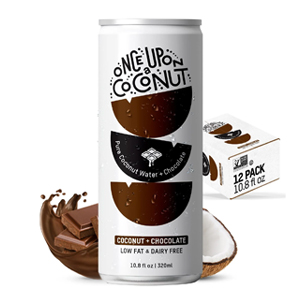
[00:31:27] John Craven: Yeah, you should try a ray. I'm going to as soon as I say your own bag You don't yeah, I know you know you know me did I miss this when it came out because Once Upon a coconut generously sends us product from time to time and We got chocolate coconut water outstanding I have always been a fan of chocolate and
[00:31:47] Ray Latif: flavored coconut water. And when I first started at BevNET, one of the favorite products in the office was Zico's chocolate. Remember that? I think they were the first to do it that I can recall. And that was, I think it was even before we did brand of the year, we had just had a product of the year category and that was the product of the year. It was tasty. It was very, very good. And then people started to think, oh, I don't need this much sugar. I don't need this many calories. But maybe, maybe, just maybe, coconut and chocolate are, you know, making a comeback. It has your least favorite sweetener in it though. Yeah. What is that? Sucralose.
[00:32:16] John Craven: Oh, darn it. Why'd they put sucralose in this?
[00:32:18] Ray Latif: I don't know.
[00:32:18] John Craven: I guess they did it to round off. There's plenty of sugar in it though. I don't know why they need the sucralose.
[00:32:24] Ray Latif: I think that's the thing. It's really tasty. If you want it to be sweet enough, you got to dial up the sweetness. Maybe. And you want to keep the sugar count down as much as possible. So there's 19 grams of total sugar in this 10.8 ounce can, 110 calories.
[00:32:38] John Craven: I am going to try this. I'd love to try it without the sucralose just for kicks, but it's really, it's a tasty product. I Like Air.
[00:32:44] Ray Latif: Yeah. I think I would also probably change this little image of the four chocolate squares melting in the center of the can there. Speaking of chocolate.
[00:32:53] John Craven: And London, which we talked about before. I just wanted to say congrats to the founders of Grounded Shakes you had Grounded? It's a protein shake and it's really great. It comes in Like Air... Oh yes, yes. I did see that at one of the events. Founders are Gabriel Bean and Bryn Farris and they launched, they're in the US now, they're launching in Whole Foods.
[00:33:14] Ray Latif: Nice. It's a pretty wide. Yeah. It's kind of Like Air milk carton. Yeah. Yeah. I remember the brand logo. It comes diagonally across the front of the package.
[00:33:23] John Craven: It might be a SIG pack, but it's a, it's a beautifully done pack. And I was drinking it like before a run and after there's enough that you can have a little before you go for a run and then, and then save some for later. I mean, it's, it's good. There's two flavors, chocolate and chocolate mint, and they're both phenomenal. Nice.
[00:33:41] Ray Latif: I see a bag next to Jackie. Okay, there you go.
[00:33:44] Jacqui Brugliera: I've been snacking over here, watching you all eat. I have Pipcorn's new fries. So we have a truffle variety, and then we also have fiery cheddar. And I've been munching on the truffle ones, and they're really, really tasty and very simple ingredients. So this is just cornmeal, sunflower oil, and then truffle salt.
[00:34:05] Ray Latif: Yes.
[00:34:06] Jacqui Brugliera: And they're baked, not fried.
[00:34:08] Ray Latif: Pipcorn a maker of heirloom snacks are best known for their heirloom popcorn Love that brand love what they're doing and truffle flavored Andy cap style fries sounds Like Air amazing how many calories for a serving I
[00:34:23] Jacqui Brugliera: Only 140, so not that bad. And there's five servings per bag, so I could eat this entire bag.
[00:34:29] John Craven: How many grams? How many grams?
[00:34:31] Jacqui Brugliera: Like 28 grams for a serving or 40? 28 grams. Yeah.
[00:34:36] John Craven: 28 grams. Not bad.
[00:34:37] Ray Latif: Not bad. I gotta tell you, Jackie, I have a ton of respect for you because for someone who works as much as you do, I would be snacking all the damn time and how you kind of control your urges. It's pretty amazing.
[00:34:52] Jacqui Brugliera: It's taken me 10 years to get here. Lots of practice. I didn't have as much control.
[00:34:58] Ray Latif: Okay, well, Like Air said, kudos to you. And actually kudos to the makers of Pipcorn. If you recall on Nosh recently, Opsnack Brands has aligned Pipcorn and Spudzy together under one roof. The story is on Nosh.com. You don't want to miss it. It's a really good story written by our colleague, Lukas Southard. But to read it, you got to be an insider. It's very easy to be an insider.
[00:35:30] John Craven: One of the co-hosts of the CPG Week podcast as well. So if you're looking for, you know, snackable information on CPG every week, check out CPG Week podcast.
[00:35:39] Ray Latif: There you go. And to become an insider, very easy. Go to Nosh.com or pevnet.com slash insider. I want to talk about one product because I'm actually interviewing the founders of this brand.
[00:35:50] John Craven: How did you get that?
[00:35:52] Ray Latif: Because I know how you got it. I'm a very lucky person. Yes. I'm going to be interviewing the founders of this brand in about 40 minutes. The brand I'm holding in my hand or the product I'm holding in my hand is from a brand called Better Sour, a maker of Better Sour you gummies. Gummies. Unbelievable candy. A fantastic brand that is founded or owned by Bella Hughes and Samira Nakoo. They have just in about 18 months created one of the most exciting brands in this space.
[00:36:25] John Craven: So exciting, so tasty. They're two of the kindest founders that we know. And I'll just, I'll never forget the first time I had a Better Sour at the Snack Shot event. Yes. And they handed me a bag and I just was talking to them about the product. And the next thing I know I'd eaten the whole bag.
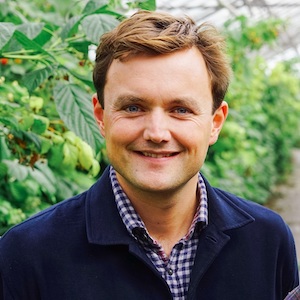
[00:36:42] Ray Latif: Well, Better Sour has partnered with Disney on a special edition Moana 2 product. So you have the characters of Moana 2 on this package and they have a, or this, this product is a passion fruit variety. This is the first time they're doing a single flavor variety and It all comes together in a really beautiful package. It feels like you definitely see the Better Sour logo. You see what you're getting in terms of the sour gummies. You see Moana and the, I believe that's her child. I don't know. I haven't seen the movie, but it's a really cool partnership. We're going to be talking all about it in about 40 minutes. And we're going to be featuring that interview in a future episode of Taste Radio. So if you want to learn more about brands and their interaction with big, big brands like Disney, tune in. Alright, it's time to get to our featured interviews for this episode. As I mentioned at the top of the show, Jack Scott and Catherine Brickin are founders of two fast-growing brands based in the United Kingdom. Jack is the co-founder of Dash, a brand of fruit-infused sparkling waters that contain no calories nor sweeteners. Catherine is the founder of Doughlicious, an innovative frozen dessert brand that markets frozen cookie dough and gelato bites. I sat down with both entrepreneurs during Taste Radio's meetup at the Lucky St. Bar in London for conversations about their respective growth strategies and international expansion, particularly that of the United States. My name is Ray Latif. I'm the editor and producer of BevNET's Taste Radio podcast, which is the number one podcast for anyone building a business in food or beverage. I know some of you are loyal listeners. We really appreciate it. For those of you who are not yet regular listeners of the show, head to Taste Radio.com. Apple Podcasts, Spotify, or any listening platform of choice. We actually just published an episode today featuring Peter Rahal, who is the founder of RxBar, a brand that's sold for $600 million. So if you want to sell your brand for $600 million, maybe you want to take a tip, piece of wisdom, insights from that guy. You also might want to take some tips and insights and wisdom from the gentleman right next to me. That's Jack Scott, who is the co-founder of a brand called Dash. Jack, great to see you.
[00:39:08] Jack Scott: Great to see you, Ray. And Taste Radio has definitely been a source of much knowledge of Alex and I over the years. So it's great to be here and thanks for inviting me.
[00:39:18] Ray Latif: Yeah, absolutely. I feel like Dash is a brand that's been on our radar for some time. Mike and John, John Craven, our founder and CEO, came out here in 2019, and I believe that's when they first met you. Pretty enamored with the product and brand, as you should be. I'm sure most folks here are familiar with the brand, but for those who are not, tell us all about it.
[00:39:39] Jack Scott: Yeah, so we started the brand seven and a half years ago now. It's a very simple product. It's water, bubbles, and wonky fruit. It has no sugar, sweetener, or calories. And it comes in a 330 mil sleek aluminum can, and we've got nine different flavors. We've just launched a big dash, which is a 500 mil product, but yeah, very, very simple. We started for two reasons. So I come from an arable farm in Shropshire, and Alex is also from farming backgrounds, and we saw that there was an issue with food waste at farm level. So all of the fruit that we use to infuse our waters, others have said no to. We also met at working at a larger soft drinks company and saw a gap in the market in the UK for a great tasting drink that didn't have any sugar or sweetener. So there's a couple of the reasons why we started it.
[00:40:32] Ray Latif: And just for context, where are you retail distribution-wise and please... Yeah.
[00:40:37] Jack Scott: project, you should be proud of what you're doing. Yeah, no, absolutely. So yeah, we started it in quite a traditional way. We focused heavily on beacon accounts in London, your Whole Foods, your Planet Organic, the trendiest coffee shops around town. We really wanted people to be first introduced to Dash, perhaps in a trendy coffee shop in Shoreditch rather than a meal deal. in Boots and we got people to talk about the product alongside that. So Instagram stories had just started and we were getting all of the right people to talk about our product online. Meanwhile building out that sort of premium distribution and fast forward seven and a half years where stocks in approximately 15,000 stores in the UK, all of the big supermarkets. We're very proud. We have a strong direct-to-consumer business, which is still about 30% of our business, and we'll sell approximately 45 to 50 million cans this year. So starting to get some good scale.
[00:41:37] Ray Latif: Incredible. Now, us crazy Americans from across the pond, as it were, we're like, well, can you get any bigger? You know, where else are you going to go from here? Because you're always going to get bigger. But, you know, one of the themes for our visit here in London is to talk to folks about making their way internationally, whether it's the U.S. or otherwise. And Dash is already sold in other countries. Talk about how you assess the opportunity to sell in places like France and Australia.
[00:42:02] Jack Scott: Yeah. So I think firstly, we're no experts and we've certainly had to kiss a few frogs along the way in terms of our... We'll talk about that momentarily. Yeah. But I think Alex and I have always thought that international expansion would be a valuable thing for us to do, to show that the brand can travel and work outside of your core market. The UK is our focus and where we put the majority of our time and a large percentage of sales. But we wanted to focus on some other key markets and show that the brand could work, because I think that's really valuable for the business going forward. So how would we look at a new market? So take Australia, where we do have an end-to-end supply chain and we have a team on the ground. That was for a number of reasons. So the climate, Sydney and Melbourne tends to be warmer during the summer, which works for our refreshing beverage. They're big into sustainability in Australia, so hence why we needed to make it locally. And then they're big into health. So, you know, those sort of key things, those macro trends were driving our decision. Like all things, relationships is really important. We have an investor who's the largest stakeholder in Remedy Kombucha, which is a very big soft drinks business. And that meant that we were able to have conversations with manufacturers and wholesalers very easily. So for those reasons, we thought Australia was a good idea. It's certainly not plain sailing. Our category is dominated by large Coke, Pepsi, Schweppes, all have seltzer type products in the market. So it's not straightforward. So that's sort of Australia. And then for us France is really interesting because it's the size of the markets really exciting. So it's a similar size market to the UK with a similar sort of demographic of people. And there's many fantastic retailers where we started to get into. We're very early days. Again it's about our Chairman has built successful UK brands in France, so again had a very good distributor who we were able to speak with, which has been fundamental for us getting off to a good start in France.
[00:44:20] Ray Latif: I feel Like Air's probably an easier, transition is the wrong word, but an easier time getting into European countries, other European countries, versus getting into the United States. But you did make your way into the United States for a cup of coffee, so to speak. In 2020, you were aligned, Dash, that is, with a company called Iris Nova, which had a pretty innovative business model and go-to-market strategy. Unfortunately, Iris Nova went underwater or was a defunct company after about a year. And so was your U.S. distribution, defunct that is. And I'm curious as to what you learned from that experience and why the U.S. market hasn't been a priority for you since.
[00:45:06] Jack Scott: Yeah, good question. So yeah, we definitely dipped our toe in the US market. And that was our intention from the start. I think what was attractive to us, it was a very mature seltzer category. So we might have a place within that mature market being a premium, unique story with the wonky fruit. So that's sort of perhaps why we wanted to dip our toe. And Iris Nova did a great job. We got into heroin. We got into Foxtrot, maybe 250 independents in New York, LA, Chicago. But then it was that sort of classic sort of thing where they took on far too many products as a wholesaler.
[00:45:43] Ray Latif: Iris Nova that is.
[00:45:44] Jack Scott: Yes. And sort of lost focus. We went in there thinking we would be one of six. But it turned out there was a lot more brands. So why has it not been a focus since? Because it's so established, our category, I think it would be extremely hard for us to make any waves without raising a lot more money or actually moving over to the US as a sort of founding team. So that becomes very risky as a small business because you're raising a load more money going into a market that it may not work. So that's sort of one of the main reasons. We have 12, perhaps, competitors in the US that are all turning over $100 million plus within our category. And the price point is very low. So from a margin perspective, you'd be taking a big, big risk. And it wouldn't be profitable, that's for sure. So you'd have to be raising lots of capital. So some of the sort of the reasons why perhaps we don't feel it's the right time for us yet, but I hope the brand will go there one day.
[00:46:55] Ray Latif: Well, it is a very mature category, and typically you do have to raise a ton of money to be successful in the United States in beverage. But, you know, raising money can sometimes lead to more problems than opportunities. What have you learned about raising money and where best to deploy that money?
[00:47:15] Jack Scott: Yeah, great question. We've now, you know, raised a significant amount of money. Our strategy with that is always bring on people that would add value. So James from BrewDog, the Sipsmith founders, Beeftown founder, we've always sort of thought if we're going to get people in who are going to invest our money, we would want them to be able to help us go through those levels of growth and have been there themselves, I think. That's an important thing that we got right. We didn't just sort of take any money. We wanted people who were going to be with us for the long run and understood that it's going to take time and money to get there.
[00:47:59] Ray Latif: I think sometimes investors do want to see you tackle other markets. They do want to see that big opportunity to tackle places like the United States. How do you talk to investors who are asking you about that international expansion and encouraging you to do so? And is it just a simple matter of saying, no, that's not what we're going to do right now? Or do you have to explain it to them or do you have to talk about a long term vision?
[00:48:23] Jack Scott: Definitely, and that is really helpful getting people on who know the industry and understand that the US, for instance, would be a risky move for us at our stage of business. But it's all around focus. So as a small team, we've still got a lot of work to do to make sure that we become a household brand that's loved in the UK. And that's sort of where our focus is at the moment. And that takes a lot of skill and hard work and money in itself. So it's just about sort of explaining the situation. And perhaps you go into countries where this subcategory doesn't exist, where the white space is for us as a brand to grow and be perhaps the category leader rather than coming 15th or 16th down the pecking order.
[00:49:08] Ray Latif: You never want to be 15th or 16th. You might as well be out of the market at that point. but you don't want to be dead. I'm going to bring this. This is going to sound Like Air weird transition, but it's, uh, it's something that Jack brought up in our pre-interview. Now you said this, I'm not sure if this is something that has been said throughout the industry, but, uh, you described the U S and I don't want to freak anyone out as being the graveyard of so many British brands. Don't freak out. I'm sure there's a valid reason why he said such a thing. Why did you say that Jack?
[00:49:40] Jack Scott: I think for all of the reasons that I've just mentioned, so the amount of capital that you would need in beverage to make it a success and get on the shelves and then ultimately get the consumers to pick it off shelf is going to be extremely expensive. And you think about all of that private equity and VC money in the beverage space in the US. plying into the market to get onto the shelf. So you just have to go over to Expo West, which we were over in March, and saw you guys to see that if you're going to take on that market, you've got to make sure that you've got a laser-tight strategy, something really unique, and in a category, perhaps, that is growing, and you're able to get a foothold in. But, you know, there are some success stories like Fevertree, which, you know, when I spoke with one of the Fevertree founders about their UIST expansion, he started in 2008 and he went and moved there himself for three months. and started seeding properly in the market in all of the right restaurants and bars and basically did what he did in the UK. And that's, you know, a good sort of 15 years ago. So they started off small and then sort of grew. So there are obviously ways of doing it. Fever Tree would be a good example of now having great success. And, you know, BrewDog would be another drinks company from the UK that are having some success. But I would say that there'll be many, many a brand that perhaps focusing on the U.S. has been the death of them.
[00:51:22] Ray Latif: And maybe it's just a simple matter of category. I mean, the sparkling water category, as you mentioned, is quite competitive and loaded with established brands and new brands that are trying to break into that space that are domestic and that already have a leg up because they're already there. Let's say you're in a different category. Would you think it would be a different story?
[00:51:46] Jack Scott: Yeah, I think so. As you said, Seltzer is made in the U.S. It's a category that was formed in the U.S. and we, you know, almost took that idea from the U.S. and brought it here. And hopefully we can go and play your own game at some point in the future. But other categories, I mean, I always think if you've got this sort of British heritage part, that goes somewhere in the U.S. So If you want to dial that up as part of your brand, then I'm sure that there's a space within the speciality channel, which is so big in the US for a great British, you know, crafted soft drink. I'm sure there would be space. So, you know, I'm interested to maybe hear what you think in terms of the drink space.
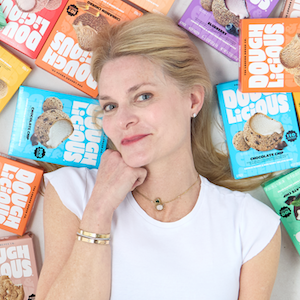
[00:52:35] Ray Latif: Well, it's interesting when you think about the opportunities that international brands have in the United States. And I think it is very category dependent. It also might be a matter of beverages are tough, but food's a little bit easier. I think that's Catherine's cue here. But Jack, I want to say thank you so, so much for being with us. I really appreciate it. Round of applause for this fine gentleman. Thank you. All right, I'm going to invite to the stage Kathryn Bricken. As I mentioned, she is the founder and CEO of Delicious. Jackie, could you hand me a, let's see if we have a, if you haven't seen this brand, it's all over Whole Foods here in the UK. Where else can you find it?
[00:53:22] Kathryn Bricken: It's in Tesco in the UK, Costco, Morrison's, Ocado, part of Buy Women Built, which is amazing. And we just got a lot of great press from being a woman founder, and Zapp and some other other Q-coms. Yeah.
[00:53:38] Ray Latif: So what is Doughlicious?
[00:53:39] Kathryn Bricken: So Doughlicious is a cookie dough platform. I started it because I'm a cookie dough addict, love cookies, couldn't get enough. And when I moved to the UK in 2008, I just started playing around with cookie dough snacks for my children's friends at school. And a friend of mine came to me and she's like, can you just make me a really good American style cookie? I'm like, yeah, that's so easy. So started it with making it a better-for-you product. So only oat flours, no refined sugars. At the time, it was all coconut sugars. And then in 2014, I said, OK, I'm going to take this a little further. So it's incorporated, but just, again, very small. 2017, I was like, all right, I'm putting this in the specialty fine food show. And it took off. I had incomings from Whole Foods, Planet Organic, and Apato. So decided to start my own baby factory where I did everything myself, like whipping the mixer up and dispatching, and then grew into another small factory. And now we have a factory in Acton that's about 22,000 square feet. And we've just become the cookie dough experts. And Dolicious is called Dolicious the London Doco, which when we launch into other countries, they love it. And they love British heritage. So it's very important that we keep that British heritage. And they were in dry ice. I see a lot of people like going. So if you let them sit for a moment, they will thaw out and they'll just become really creamy.
[00:55:08] Ray Latif: I saw Catherine being like, just hold on, just take a second.
[00:55:11] Kathryn Bricken: Let it thaw for five minutes. Dry ice is Like Air hold it in my hands because I'm so used to it, but it does crazy things.
[00:55:18] Ray Latif: Yeah. Well, I mean, that's a good question. Why frozen? I mean, if your friends wanted an American style cookie, you know, why is delicious a frozen brand?
[00:55:25] Kathryn Bricken: Frozen because moderation, shelf life, food waste. I didn't want food waste. So I thought that if I could do this and people could bake it on demand, that would be the best way for them to eat what they needed, not overeat, not throw it away. I think food waste is out of control in this country.
[00:55:44] Ray Latif: It's out of control everywhere in the world. And it's a particularly bad problem in the United States. Speaking of the United States, you know, you launched Delicious here in the UK about seven years ago. You made your first foray into the United States in, was it June of 2023?
[00:56:00] Kathryn Bricken: December.
[00:56:01] Ray Latif: December of 2023. And it was a few Whole Foods stores.
[00:56:04] Kathryn Bricken: Yes, well, so we launched, we were really lucky. The incoming CEO of Whole Foods came to the UK and he decided to visit two factories. One was a farm and one was our factory. So he came and saw the factory and said, I absolutely love it. We need it. I got a Call It weeks later and they started to fast track us. So we went into four regions in Whole Foods and then in April we launched nationwide. So now we're in all the Whole Foods and it's been really crazy, really hard, a lot of money, a lot of time. The problem is we manufacture everything here, so we container it over. And it gets there, it's beautiful, it's fantastic, but the problem is getting it across all of the US. So it lands in Philly and I don't think we ever realized how difficult it would be working with UNFI and moving product across the US.
[00:57:01] Ray Latif: So you could have said no to the Whole Foods CEO.
[00:57:05] Kathryn Bricken: I don't say no very easily. I'm a yes person. I'm always like, OK, yeah. And then I figure out how to do it. Like Air don't think I ever say no.
[00:57:14] Ray Latif: Well, as you mentioned, the logistics are tough. You had to raise a ton of money. Just managing a frozen operation on its own is pretty tedious. How did you take everything into account when you were making that decision?
[00:57:28] Kathryn Bricken: Well, I think being an American, I felt Like Air was in my blood to go across the pond and it was going to happen, whether it happened now, next year, two years from now. So I guess the saying is, you know, you just rip the Band-Aid off and you go for it. And I had to figure out how I was going to pay for it later. And we've had a great adventure. We launched in Target yesterday. Congratulations. It's huge.
[00:57:54] Ray Latif: Thank you. And not just Target, Target nationally in the United States.
[00:57:57] Kathryn Bricken: Yes, Target nationally. So we're in 500 stores and then we launch in just under 3,000 in February. So that's really, really cool. And then Independence and Fresh Direct, which is in the New York area. And Harris Teeter, which is North Carolina area. I don't know if anybody knows some of these other stores. So it's been a really, really fantastic adventure. And again, we're focusing with our gelato bites. So in the UK, we have our ready-to-bake cookie dough. And we just launched a line on train lines of baked cookies. But only in the US and in some other countries, we focus on just the cookie dough and gelato bites.
[00:58:36] Ray Latif: This might sound Like Air strange question, but did Whole Foods have a bit more confidence in you as a founder and being able to deliver because you already knew the American market and could probably get around relatively easily?
[00:58:49] Kathryn Bricken: No, I don't think so. I mean, I knew Whole Foods and I knew, but I'm from Miami, Florida, so I lived on that little part of the U.S. that sticks down there. No, I just think that it helped that there was nothing Like Air in the U.S. and they saw the snackability of it and they saw the growth in frozen snackable products. So we were just on the trend. We had won an innovation award with Mintel in 2022. And so they thought, you know, this is unique. This is something that people can grasp and eat and snack on all day. So there was a life to it.
[00:59:27] Ray Latif: When you were thinking about the national rollout at Whole Foods, was that something that was always in the back of your mind as we're going to prepare ourselves to be ready for a national rollout? Was it performance based or how did you have those conversations with the company?
[00:59:42] Kathryn Bricken: That was just the plan. We gave them exclusivity through June 30th, and it was part of the plan that we would go four months or four regions through April and then nationally.
[00:59:56] Ray Latif: I'm going to ask a question that Jack and I talked about a little bit earlier, which is category, related to category. I mean, obviously you're selling a food. It's a very different kind of food than, you know, what we've seen. As you mentioned, Whole Foods had never seen a product like yours. Do you think that the category mattered as much as your product and the brand and the fact that you're selling a novelty, a frozen novelty product and not something Like Air sparkling water per se?
[01:00:23] Kathryn Bricken: Probably, probably. I think that it was much more of a, the category wasn't as huge. Drinks are hard. I've seen a lot of drinks brands and I think it's, frozen's hard too, but I think a cookie dough wrapped around gelato is what made us definitely enter the category and create a new part of the category, the frozen snacking category.
[01:00:47] Ray Latif: Whole Foods and Target, a lot of people shop at both stores, but I feel like they're very different beasts in terms of how you're successful in each one. Merchandising is tough because there's just more products at a Target. Sometimes the category management isn't as good as it is at places like Whole Foods. How do you ensure that you get off to a really good start at Target such that you're ready for that very large rollout in February?
[01:01:12] Kathryn Bricken: So I think just creating a great promotional plan and that's what they want to see because the most important thing that they're looking for in the US is rotation. So we have to create that vibe and that rotation to make sure that we're going to stay on shelf. What we've seen is, I mean, we can create amazing socials. We can get the word out there by different media, but again, it's the customer. So creating those in-store banners, the discounts, that's what's going to drive the velocity.
[01:01:43] Ray Latif: It's kind of hard when you're operating here in London. Do you have a team already out there in the US?
[01:01:48] Kathryn Bricken: We have one person. I know that sounds kind of scary, but he's a multitasker and we're looking to A real multitasker.
[01:01:57] Ray Latif: Why is everyone laughing? I'm kind of curious. Do you not believe Catherine?
[01:02:01] Kathryn Bricken: Hey, it's the American way, right? Do it all. So the mothership is here and we have a lot of support and he couldn't do without the support of the team here. So we have a marketing and small sales team here. I mean, we're quite small, but we're scrappy. We are very scrappy.
[01:02:16] Ray Latif: What would you say is the most important part of getting your operations right in the US? I mean, you talked about the importance of social marketing and promotion, but you know, someone who's skilled in operations might not be the best marketer. Someone who's great at sales might not be the best back of the house person. So how do you get someone comfortable with being a jack of all trades?
[01:02:36] Kathryn Bricken: find somebody like our guy that's done it all. He's grown companies. He basically found small companies and helps them find manufacturing facilities to the right marketing people. So just, we're very lucky. I think that Delicious has had a lot of luck and it's been a lot of hard work. I'm about 80 years old now, but it's really hard.
[01:03:01] Ray Latif: If there's one or two things that you could talk about as the most challenging aspects of the United States market, such that, you know, folks here will understand where not to trip up, what would those things be?
[01:03:16] Kathryn Bricken: That's a good question. I think the hardest part is the logistics, Like Air said. And depending on who you go with, when you go direct, so I say that, but with Target, we haven't had any problems. Everything ends in store. You have to be involved. You can't expect things to happen. You have to just pay attention to everything, be really micromanaged. You know, none of us want to micromanage, but I think micromanaging is something that, it's just not, it's not going to happen by itself.
[01:03:45] Ray Latif: We're pretty much out of time, but I do want to talk about relationships with distributors. As you mentioned, UNFI, there's KEHI. These are humongous natural product distributors. I think there's a tendency to think that they are a part of your team. That may not necessarily be the case. And you have to manage them as well as you manage anything. How do you manage your distributors well in the United States?
[01:04:04] Kathryn Bricken: Well, we've probably done what we just, the only thing we knew how to do was hiring Whole Brain, which is a company in the U.S. that helps you facilitate all the pickups. They're a broker. Yeah, broker. What would you call them, Russell, in the U.S.? An agent. So they're an agent. So they help watch everything, make sure that everything's picked up. But again, they have to be managed. And as you know, managing people in a team is just a whole other level and takes a lot of time. But I think just being, again, micromanaging, making sure that everything's happening and following through because nobody's going to treat your business like you do. So the agents are great, but they're not your team. And it's too expensive for us to have a whole team. So we have the one guy.
[01:04:48] Ray Latif: I wish we could talk all night, but there's a lot more networking to happen tonight. And I'm so excited. There's so many people are here. I'm so excited that people brought their own products as well. I strongly suggest you try some delicious. There's also some Humanity. There's Feisty Soda. I can't read because my eyes are going. There's some Tenzing over there, but please come over to the table and try a few things if you're here. And definitely get in touch with Catherine and Jack on LinkedIn. You guys will be able to answer a couple of questions here and there in case somebody has a follow up. Yes. Absolutely. Fantastic. Catherine, thank you so much for joining us. Thanks so much for everyone coming out tonight. And I can't believe I forgot to mention, thank you so, so much to Lucky Saint. You know, the team has been so gracious and so wonderful in having us here. Thank you so much, Luke. And thank you again to your incredible team, who's been amazing throughout the day. Appreciate it. That brings us to the end of this episode of Taste Radio. Thank you so much for listening. Taste Radio is a production of BevNET.com, Incorporated. Our audio engineer for Taste Radio is Joe Cracci. Our technical director is Joshua Pratt, and our video editor is Ryan Galang. Our social marketing manager is Amanda Smerlinski, and our designer is Amanda Huang. Just a reminder, if you like what you hear on Taste Radio, please share the podcast with friends and colleagues. And of course, we would love it if you could review us on the Apple Podcasts app or your listening platform of choice. Check us out on Instagram. Our handle is bevnettasteradio. As always, for questions, comments, ideas for future podcasts, please send us an email to ask at Taste Radio.com. On behalf of the entire Taste Radio team, thank you for listening, and we'll talk to you next time.
[01:06:35] Mike Schneider: you