[00:00:10] Ray Latif: Hello, and thanks for tuning into Taste Radio, the number one podcast for anyone building a business in food and beverage. I'm Ray Latif, the editor and producer of Taste Radio, and with my co-host for this episode, John and Jacqui Brugliera, and Mike Schneider. In this episode, we chat about Poppy's big Super Bowl commercial, John and Jacqui's CPG adventures in San Diego, Loaded, Serial, and Coke's Tears Of Joy. We also feature an interview with Gotham Greens's co-founder and CEO, Viraj Puri, and Ross Iverson, a managing director with private equity firm Manna Tree, who discuss their relationship as mission-driven investor and entrepreneur. Well, we got together pretty early this morning, or at least Jackie did. There was some concern about a big, I was about to say big ass, but I won't say big ass, a big ass snowstorm here in the Boston area. Yeah. And it just has not come to pass. Wicked big nor'easter. Yeah. So we were going to record tomorrow and because the thing didn't happen today, we got Jackie out of bed around 4am, right?
[00:01:16] John Craven: You're close. I called in while I was on the road on the way over the office.
[00:01:20] Ray Latif: Oh man. There you go. Perfect. Well, you're not too, too tired because you didn't watch the Super Bowl, did you?
[00:01:24] John Craven: No, I did not. I just caught up on all the commercials on YouTube afterwards. I was hiking out in the desert instead.
[00:01:29] Ray Latif: Ah, good call. Do you typically watch the Super Bowl?
[00:01:32] John Craven: Uh, it depends on the teams. I just happened to be in Joshua Tree for the weekend. So I was like, you know, do I really want to rush back? Nah.
[00:01:39] Ray Latif: Okay.
[00:01:40] John Craven: Yeah.
[00:01:40] Ray Latif: Did you pack yourself a mushroom and peanut butter sandwich?
[00:01:43] John Craven: I haven't tried that yet. I did have some mushrooms while I was there, but they weren't in a sandwich.
[00:01:49] Ray Latif: How did I know that was the case? I wonder which kind. All right. So Super Bowl commercial, everyone's been talking about one particular ad, at least in the beverage industry, people have been talking about one particular ad that's Poppy's. Poppy's Super Bowl commercial titled The future of soda is now. It was a minute long commercial, talked about prebiotic soda and why it's a better for you option than what's typically out there. The fact that it's a lower calorie, lower sugar option than what's out there. Showed a lot of people who look like they're about, I don't know, 17 to 22. I felt like it was pretty effective, a little less slick, you know, than some of the other ads you might see in the Super Bowl. But people seem to like it, especially the so-called experts and critics of Super Bowl ads. John Craven, what do you think of the ad?
[00:02:41] Jacqui Brugliera: Well, Ray, Newsflash, we were not the target demo of that commercial. What does that have to do with anything? I don't know, just giving you your usual dig.
[00:02:49] Ray Latif: It didn't look as slick as I expected it to look. I hated it. It didn't have a single monkey. It didn't have a single celebrity. Who needs that crap? He's in full Roy Kent mode right now.
[00:03:06] John Craven: I think Gen Zers like that, though. They want authenticity and they don't care about celebrities as much.
[00:03:10] Jacqui Brugliera: Yeah, they don't like products jammed down in their throat. Yeah, but I you know look. I think that was a really well done commercial. I definitely was Pretty I don't know not skeptical But kind of curious to see what they would do with with the time that they bought since that is also like a lot of time that they bought but I think the whole tagline is you know the future of soda is now and Leaning into that was was super smart and talking about soda. No longer being like a four-letter word I mean, I think that I don't know, there were a couple things I was thinking as I, uh, after watching that, you know, first and foremost was that this seemed like a pretty darn good ad that if Coke and Pepsi were watching, who, I don't think, I mean, at least Coke didn't have a Super Bowl ad. I don't think there was a Pepsi one, was there? I believe there was a Pepsi one. Was there a Pepsi one? I could be wrong. Well, it wasn't that good. I don't remember it, but it seemed like a pretty good ad for Maybe the the M&A folks over a coke and Pepsi to be seeing that and going, huh? Maybe we should have this brand in our our portfolio over here. Here's why that ad was brilliant It was clearly for Gen Z But it had elements that appealed to other audiences as well. I mean the vintage vibe of it and That is always a winner with everyone. I mean, like, you see vintage and it's like, old, cool. And Poppy nailed that. So, it's a good add on many fronts.
[00:04:39] John Craven: And Gen Zers love thrifting, they love vintage. That's like the aesthetic that they're going for often and, like, how they're dressing now. So, I think it does speak to them. And it gave me, like, Stranger Things vibes. Yes, Stranger Things vibes. Which everyone loves.
[00:04:56] Jacqui Brugliera: Uh-huh. But yeah, I think it was interesting to see. I mean, certainly the first time I can remember a Super Bowl ad for soda that was not kind of showing people consuming sugary drinks in odd kind of use occasions, you know, like this felt a lot more authentic. And I think that's another thing that, you know, if we're talking about similar to the, it wasn't loaded with celebrities. It had, it had a lot more like authenticity to the whole thing. So I think they could have a followup though of like Vecna and Eleven, just garbage mouthing Poppy and it'd be a good sequel.
[00:05:33] Ray Latif: Yeah, well, the folks at Poppy put out a press release after the ad aired and they talked about its effectiveness. Now, you would expect that a Super Bowl ad is pretty effective in getting engagement and increasing impressions on social media, all of which they talked about in this press release. But what was interesting to me is, this is something you touched on, John. is whether the commercial was as much for Gen Zers and soda drinkers as it was for Coke and Pepsi executives. It felt like, hey, we're here, we're not going anywhere, and you should look into us as the next great billion dollar brand for your portfolio.
[00:06:12] Jacqui Brugliera: Well, look, I'm sure Coke and Pepsi are looking into them, so to speak, plenty. But yeah, I mean, I've posted a couple of times on Twitter and LinkedIn about, you know, my thoughts that Poppy and Olipop will likely be the target of acquisition this year. And, you know, I think this is something that, uh, I don't know, just makes me feel even stronger about that.
[00:06:35] Ray Latif: Well, your tweet from January 11th. On Twitter. Of course it was on Twitter because it's a tweet. Your tweet on X.
[00:06:43] Jacqui Brugliera: It's on X. On X on January 11th. Formerly known as Twitter. The dumpster fire, formerly known as Twitter.
[00:06:48] Ray Latif: You said, I've said openly that I think Poppy and or Olipop interesting though that you led with Poppy, will be acquired for greater than $1 billion in the near future. 2024, 2025, both are at a size where they risk becoming a really expensive acquisition if they continue to grow on their own. Now, I asked you before we hopped in the mics, John, where they are, Poppy and Olipop, that is, in Tears Of current revenue. And I can't imagine either of them are over $300 million at this point.
[00:07:20] Jacqui Brugliera: Well, look, I don't think the exact number matters. The point is more that... A billion dollars is a billion dollars. Well, yes, but I'm saying that Coke and Pepsi need to acquire brands that have a path to a billion dollars. And I think both of those brands regardless of, you know, whatever their actual sales are, are brands that Coke and Pepsi will look at and very much believe that there is a path to those being a billion dollar or more brands. They are both soda. That's what Coke and Pepsi are really good at selling, right? And these brands also sit kind of squarely in the middle of like the full calorie stuff and the zero calorie stuff. And I think what we saw yesterday for Poppy, which to be fair, I think benefits Olipop and everyone else who's in that category with the brand that's targeting that younger audience. You know, it's good for everybody. It is like, I think a little bit of the rising tide floats the boat and makes that whole category seem legit. I mean, you see what Shark Tank does. So think about what one Super Bowl ad is going to do for a brand everyone's watching. So that's going to be highly effective for them now. inject the marketing might of Coke or Pepsi into a poppy and you're playing now.
[00:08:33] Ray Latif: That has been the playbook. Yeah. I mean, that has been the playbook for entrepreneurial brands and strategic companies, you know, get to a certain revenue, get a certain amount of consumer awareness and loyalty in. sell and hope the thing works.
[00:08:47] Jacqui Brugliera: It's definitely been a playbook for startups for a long time. You see it in tech as well. Sure. But I look, I think, again, these products are different than typical. I don't know if you look at like Coke buying body armor or something like that. these seem like products that if there's going to be a generational shift in carbonated soft drink consumption, like these are pretty good bets that the big guys could run with. And I think that's very different than like, you know, maybe Body Armor was still this kind of quasi defensive move against Gatorade or whatnot. But I think this stuff has really broad, wide potential in, you know, ways that other brands that were out there as targets for acquisition, like kind of just simply don't have.
[00:09:33] Ray Latif: Now, as a longtime observer, a pundit, if you will. Sure. You said if there is a generational shift, if there is a generational shift to happen in carbonated soft drinks, do you think one is happening? One is coming?
[00:09:44] Jacqui Brugliera: It seems like it. I think it probably hasn't happened to date because there hasn't been a product for people to shift to outside of, like, just simply shifting off it or to things like energy drinks or whatnot. But this seems like... And again, I mean, they said it so perfectly in that ad. It's like, soda's no longer a four-letter word. Like, that's exactly what they're doing here, right? Yeah, they're trying to re-educate. And they're paying it off. I've got a can of poppy in my hand right now. 20 calories, four grams of sugar, great taste, also some gut health benefits. How can you lose?
[00:10:17] Ray Latif: Well, I mean, I guess we'll find out. I will give a huge kudos and shout out to Allison and Stephen Ellsworth, the co-founders of Poppy, to think they were on our stage at BevNET Live not too long ago.
[00:10:32] Jacqui Brugliera: Eight years ago.
[00:10:33] Ray Latif: Eight years ago, presenting their brand.
[00:10:35] Jacqui Brugliera: That's beyonds and beverages.
[00:10:37] Ray Latif: Presenting their brand, Mother Beverage, which has since evolved and become Poppy. But congratulations to them.
[00:10:42] Jacqui Brugliera: Yeah.
[00:10:43] Ray Latif: Great, great folks. Amazing, amazing stuff.
[00:10:45] Jacqui Brugliera: It was fun to see them on Instagram at the at the Big Game and watching their ad and just being able to sort of Stand themselves, you know, it was it was cool. Do you get free tickets?
[00:10:58] Ray Latif: Like a private jet maybe I don't know no, they're they're YouTube the the ad on YouTube is a minute long But I believe the ad that we saw during the Super Bowl was 30 seconds. Yeah Now everyone was watching for Taylor Swift, but we're watching for Allison Houseworth Now Arizona the well-known tea company that is a multi-billion dollar brand already They put out a cheeky tweet on X on February 11th, which was believed the same day the super wasn't it? Yes, the same day this new rule and they said Arizona has been able to keep prices low because in 30 years we never thought that spending a ton of money on commercials was worth it and If the product is good, then it will sell. But yeah, go ahead and spend $7 million on 30 seconds.
[00:11:46] Jacqui Brugliera: I mean, that's the high funk foods playbook there. And it works for some companies, you know, you ever see a Sriracha ad.
[00:11:53] Ray Latif: Yeah. I mean, but obviously, you know, Arizona is a very well-established and well-known brand.
[00:11:57] John Craven: Right.
[00:11:57] Ray Latif: And you know, I get that keeping their prices low or keeping them at that 99 cent best value, best buy means keeping expenses, marketing expenses low if they can. So. Kind of makes sense. But yeah, they got a bunch of likes on that. They got a lot of people appreciating their strategy there. They're opportunistic and it seems to have worked for them, at least on Twitter. Can we please, though, can we please get the executives, if you're listening, Arizona executives, please, please consider an ingredient that will improve your customers' cognitive health. Because we've got one. We know one. It's called Cognizant. Cognizant is a presenting sponsor for this episode of Taste Radio. It's a clinically tested nootropic ingredient that delivers a patented form of acetylcholine to supply your brain and those of your consumers. with the energy it needs to stay sharp. Learn more at Cognizant.com. That's C-O-G-N-I-Z-I-N.com. I have with me right now a beverage that contains Cognizant. This is a beverage called Safety Shot.
[00:13:00] Mike Schneider: Oh, I'm spilling. You need that Cognizant.
[00:13:03] Ray Latif: I need some of that Cognizant.
[00:13:05] Jacqui Brugliera: My balance is way off. I don't know if it improves hand-eye coordination.
[00:13:10] Ray Latif: No, it doesn't, but it is supposed to improve. It is supposed to improve your hangover recovery or reduce or remove hangovers. Safety Shot is a maker of beverages that reduce blood alcohol content. Is that why you've had sex this morning? I didn't. I barely drank during the Super Bowl. It says that you can feel better fast, never lose a day. And the flavor that this is, is citrus splash. Let's all have some. Let's all have some. I mean, we won't know the functionality. I guess we can't really talk about the functionality of this product, but yeah, here, Mike, you can have some. We're drinking out of these like old man mugs. This is how old men drink out of, drink liquor actually.
[00:13:49] John Craven: I feel like you have a fridge in your office of just all beverages that contain cognizant.
[00:13:53] Ray Latif: Yes, we do. Speaking of interesting brands, interesting new and emerging brands like Safety Shot, John and Jacqui, I mentioned that you had a bunch of CPG adventures in San Diego, visited events put on by UNFI, Startup CPG, Naturally San Diego. Based on your Instagram posts, it looked like you saw a lot of really cool products out there.
[00:14:16] John Craven: Yeah, there were a lot of great founders that were in town for UNFI and the other meetups going on around the event. We were able to talk to them, you know, have some time to chat. It wasn't the craziness of Expo West. So I think everyone's, you know, preparing for Expo West. So it was really nice to hit the scene before it gets crazy. Yeah. I mean, we saw like Becca from Fishwife, Maria from Cien Chiles, Robert from Moosky, Randall from Sozu. There was just a bunch of brands.
[00:14:48] Jacqui Brugliera: I saw you piling up with the UN team. I was jealous.
[00:14:51] John Craven: Yes. Yes. Lots of people.
[00:14:53] Jacqui Brugliera: I got a few WYAs in my DMs.
[00:15:00] SPEAKER_??: Nice.
[00:15:00] Jacqui Brugliera: Yeah, no, and I think, you know, we saw a bunch of, you know, just new founders, too. I mean, there's certainly people who are just getting started. I mean, I guess despite whatever people say about the capital fundraising environment, definitely didn't seem like a shortage of entrepreneurs who are just getting started. I mean, I think, you know, the San Diego community always has a lot of activity in it. So it was, uh, I don't know, great for me to get out there and go to those couple of events and yeah, good warmup for, for Expo West only a few weeks away.
[00:15:35] Ray Latif: Yeah. Seems like investors that are in that early stage seed angel space or angel and seed space are more inclined. more optimistic about this year and investing in emerging brands that they had, I would say, last year, for sure. So I hope that's a good sign for 2024 and beyond.
[00:15:54] Jacqui Brugliera: One of the things that excites me about the food and beverage industry is that entrepreneurship finds a way. You know, when there's a lot of capital out there, people think this is a good time for me to start my business because others are starting businesses or When there isn't a lot of capital out there, well, this is a good time for me to start my business because maybe there'll be less competition or there's always some justification for starting your business. And what matters is that it's the right time for you to start the business. You just sounded like Gary Vee. Was I that excited?
[00:16:19] Ray Latif: I didn't even say fuck once. Well, you said entrepreneurship finds a way. If you had dropped a couple F-bombs in there, you'd be right on target there. Expo West is upon us. That's what, three weeks away, four weeks at this point? Four weeks at least. Four weeks, yeah. As I mentioned a couple episodes back, The Taste Radio crew will be there. The BevNET Nosh crew will be out there. And I'm really hoping that we get to see a bunch of folks that are part of our VIP, the Taste Radio VIP program. Now, if you're not a Taste Radio VIP, we highly encourage you to become part of that community. Go to Taste Radio slash VIP. We'll talk to you about opportunities to be part of the podcast, upcoming meetups on events and how to engage with your hosts and tips on how to get your product on the show. Sign up for free. Sign Taste Radio.com slash VIP. All right. Do you want to talk about Tears Of Joy or Loaded Cereal first? I think I've got Tears Of we don't try this.
[00:17:24] Jacqui Brugliera: I've got tears, too. OK. Coca-Cola tears.
[00:17:27] Ray Latif: We'll try to start on a positive note, because I don't know about this Tears Of Joy. It seems like there's been some positive response about it.
[00:17:32] Jacqui Brugliera: Drops of Joy. Oh, I thought we were talking about my favorite beverage, Manchester United Tears Of, for crying out loud. I mean, frankly, the production value of Mike's fake manu tears can is about as good as this Coke Tears, which This is better if you if you notice this look at that thing that looks like it is some of the beverage that drips I Think it's a texture like label of some sort, but they legit have some sort of weird glue thing That's supposed to look like it's here running down the
[00:18:03] Ray Latif: Let's give some context here. So, Coca-Cola is introducing two new products this month, including Happy Tears Zero Sugar, a Coca-Cola Creations flavor that will be available only on TikTok. I assume you didn't buy this on TikTok, John.
[00:18:18] Jacqui Brugliera: I assume you did.
[00:18:19] Ray Latif: You know what I mean? TikTok, what is it? TikTok Shop? Is that what it's called? TikTok Shop. TikTok Stores? I don't remember. Yeah, so... I don't buy stuff on there, no. For folks who are not watching the video or not gonna see this, we'll include this in the show notes, but a picture of it that is. I'll read from Onana Vlad, who's the Senior Director of Global Strategy at the Coca-Cola Company. Coca-Cola Happy Tears Zero Sugar is our newest creation that embraces the power of kindness. It is also the first ever to be sold in a hype kit exclusively available on TikTok.
[00:18:51] Jacqui Brugliera: I have Tears Of confusion. It tastes like Coke. Yeah.
[00:18:56] John Craven: It's supposed to be salty. What is this?
[00:18:59] Jacqui Brugliera: It's not as good as this.
[00:19:05] John Craven: Looks like an arts and crafts project, honestly.
[00:19:08] Jacqui Brugliera: It does. It doesn't look like... I mean, what's really impossible about Coke is it's pretty much impossible to describe the taste of Coke without using Coke as a point of reference.
[00:19:20] Ray Latif: The can though, it's almost weird. It doesn't look like a Coca-Cola product. I asked John if he actually made that. Yeah, he accused me of making this.
[00:19:27] Jacqui Brugliera: Right. You guys, I made it just like I made the Manchester United.
[00:19:30] John Craven: It looks like he just... Like stuck some stickers on it.
[00:19:33] Ray Latif: Exactly. It looks like the word tears looks like he was stuck on with a sticker. The word drops of joy, the same. And then it has like this odd like drop coming down the center of the can.
[00:19:44] Jacqui Brugliera: It looks like someone had an extra sticker, so they stuck it on the back. Look, turn it around.
[00:19:47] Ray Latif: Yeah, there's another sticker on the back, too.
[00:19:49] Jacqui Brugliera: They stuck it right under the coat.
[00:19:50] John Craven: I wonder if this was an intern project. You know, they were on TikTok.
[00:19:54] Jacqui Brugliera: I'm pretty surprised that they allowed someone to put a sticker across Coca-Cola, too. I mean, that's pretty weird.
[00:20:01] Ray Latif: Yeah. It also comes in a slim can like other Coca-Cola Creations products. Yeah, this clearly is not for us. I'm not a huge fan of the Zero Sugar products. I love Coca-Cola, like full calorie, full sugar Coca-Cola, like once in a while. This product, for a number of reasons, isn't for me, but guess what? I'm also not on TikTok.
[00:20:20] Jacqui Brugliera: I feel like they watched the last 10 New Beverage Showdowns and then just did everything we told beverage companies not to do. Oh, geez. I don't know all this stuff. Okay. You can do stuff like this when you have the you know the money that coke has they can they can do an experiment like this they can put it out just as a you know a special PR release on tik-tok and See what happens. Yeah, I mean from that we're talking about it here. We are yeah This is clearly not a product that they're like the hopes and dreams of this or like I'm gonna sell this in Walmart So I think is a something different Sure. Are we going to see that a month from now or two months from now? Or is it a super limited release? I think that what they've done to the package is probably, to me, the most memorable part about it. So the rest of it, I think this is, if you like Coke Zero, you'll like this. If you don't, probably won't. I don't understand what the flavor difference is supposed to be. It's very subtle. Yeah. It is super subtle. Again, I don't know if there is a flavor difference. There is something super subtle happening there. And Jackie, it is,
[00:21:23] Ray Latif: Slightly salty. It is a limited edition product. Again, it's available exclusively on TikTok and it comes in this, it looks like a metal case. It's like, what do they call it?
[00:21:33] Jacqui Brugliera: Yeah, what else do you get with it?
[00:21:34] Ray Latif: They call it a hype case. I mean, people are talking about it here on TikTok, mission accomplished. Yeah. Meanwhile, Coke did add its first new permanent product, permanent offering to its portfolio, Coca-Cola Spiced, which I believe we've tasted on the show.
[00:21:47] Jacqui Brugliera: We have.
[00:21:48] Ray Latif: It has raspberry notes and warm spiced flavors, comes in its full calorie and zero sugar.
[00:21:54] Jacqui Brugliera: I think I like that one better than Tears. definitely was more differentiated.
[00:22:00] Ray Latif: So speaking of big food and beverage conglomerates, General Mills recently introduced a new line of cereals called Loaded. And it comes in three varieties based on their well-known cereal brands, including Cocoa Puffs, Cinnamon Toast, Crunch, and Trix. Each piece of cereal is filled with a vanilla cream filling.
[00:22:24] Jacqui Brugliera: This isn't the first time that we've seen this format. We've seen it before with a chocolate inside, and I don't remember if it was a Nutella cereal or something, and I'm blanking on it, but this isn't the first time they've put this kind of product out. Tasted it before.
[00:22:38] Ray Latif: Now, we probably wouldn't be talking about this on Taste Radio, but I asked the folks at General Mills to send me some samples, and we have some here, obviously, in the studio. And I'm thinking about this product, and I'm imagining seeing it on the shelf, and I'm imagining kids looking at it and saying, hey, mom, hey, dad, can I, you know, have this? And, you know, the mom and dad puts it in their shopping cart. I think about the General Mills executives who came up with this stuff. And I got to put you on the spot. I mean, like, do you want kids to be eating this stuff? Story time with Ray. But I mean, really, like, I get that you want to sell a lot of product. I get that you want to create products that make a lot of money for the company and you have a responsibility to your shareholders and so on and so forth. But this is like, we talk about better for you all the time. And this is the exact opposite of that. That's a snacking cereal. It's just the exact opposite of better for you.
[00:23:31] Jacqui Brugliera: It's an indulgence product. For sure.
[00:23:33] Ray Latif: Yeah. But even an indulgence product, like, you know, who's going to be eating this stuff. It's not adults. The kids are going to be eating this stuff.
[00:23:39] John Craven: There's always going to be, you know, a sugary cereal and they're always going to be trying to level up. I mean, think about the cereals that we used to eat. I used to eat like Rice Krispie Treat cereal and Cocoa Puffs, which, you know, those aren't great either.
[00:23:53] Ray Latif: Yeah, but this is like a vanilla cream filling inside your morning cereal, inside pieces of your morning cereal like that. I see Cap'n Crunch. That's outrageous. That would literally tear your mouth apart. I guess maybe I'm, maybe I'm just like going a little overboard because you're right. There's a lot of unhealthy cereal out there. There has been for a long time.
[00:24:13] Jacqui Brugliera: You're down what's called a rabbit hole, right?
[00:24:14] Ray Latif: Yeah. But I just, I just, I feel like this is something that's like, if you're going to make a commitment, General Mills, I'm going to put this out there. If you're going to make a commitment to creating better for you products for Americans, for American children, Then don't put out products like loaded.
[00:24:33] Jacqui Brugliera: How about a better snacking product just to move on from that? Yes, please. Yes. I've got these Onyx Coffee collab with terroir chocolate chocolate-covered Espresso beans anyone? Yes, please. There you go. They're pretty tasty. I already had like 15 palate cleanser These are quite tasty had some before the show And also, real quick, I have these protein cookies from Sweet Nutrition. It's a Canadian company. They make a bunch of different flavors. They're basically like these soft-baked cookies that have, let's see, eight grams of protein per three cookies. It's confusing. They're pretty tasty. I'm confused, though, because on the front of the pack, I thought It says 16 grams of protein. So I thought I was going to get 16 grams in either a cookie or a serving. And so it's tag confusing. That might just be some labeling stuff here. Don't know. But anyway, these are quite tasty. Definitely recommend. Nice. Yeah, they're quite tasty.
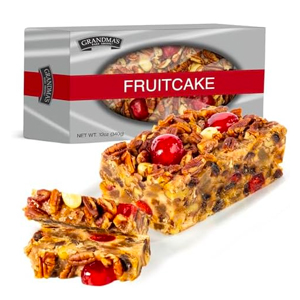
[00:25:36] Ray Latif: All right, we're going to test out John's theory that adding chocolate to everything makes food taste better. After that loaded cereal conversation. After I got in my soapbox about loaded cereal. These are milk chocolate covered fruitcake squares from a brand called Grandma's Bake Shop. Now, I love this. I am a fruitcake fiend. I love fruitcake. And the idea that there are small bites that are covered in chocolate is great. Now, I've already had one of these. These are amazing. Do you want one, Mike? Sure, I'll try. There you go. John, you can have one as well.
[00:26:10] Jacqui Brugliera: I'm going to do a little quick label reading for Grandma's Famous Fruitcake.
[00:26:15] Ray Latif: Yes, they have legit fruitcake as well, which they sent me some. They also sent me a pecan cake that was incredible. This pecan cake was just... I haven't had pecans in a while for some reason. I guess you have them seasonally, like pecan pie and so on and so forth. But I had this the other day. It was amazing. This Fruitcake Liver'm saving for a special occasion, though. This is delightful. And based on what I ate... Holy shit, that's good fruitcake. Based on what I ate with fruitcake, I assume this is going to be... Phenomenal if you have to eat fruitcake.
[00:26:42] Jacqui Brugliera: This is the one to eat exactly yeah, I mean this just proves the theory again It does did you eat some I don't bite good. I mean it's a Thousand times more tolerable than fruitcake This fruitcake it is, but it also the chocolates saying you forget about that
[00:26:57] Ray Latif: Okay, these products are new from Country Archer. Oh god. They launched a new line a Country Archer Country Archer is a maker of beef jerky and beef sticks They launched a new line of ancestral Beef sticks now ancestral means that they're made with grass-fed beef beef liver and beef heart You came up with this idea a while ago. Didn't you John that was AI? I was an AI.
[00:27:21] Jacqui Brugliera: Endangered species. Beef jerky. Endangered species jerky. Beef jerky, not a personal fan. And if you cover it in chocolate, still probably would not.
[00:27:31] Ray Latif: That has my kryptonite in it.
[00:27:32] John Craven: Yeah, I don't think it would work.
[00:27:33] Ray Latif: I don't know. I feel like this is something that people are probably asking for in the, what, the ultra paleo community or... Is that a thing? The ancestral community, right? Isn't that a thing? Yeah, the ancestral community. The ancestral community. So they come in two flavors, original and spicy. They're available nationwide. And as described by Country Archer, they deliver essential nutrients such as iron, zinc, and vitamins A and B12, crucial for immune function, cognitive health, how about that, and red blood cell production. Great. Yes. $1.99 per 24-ounce stick. Nom nom.
[00:28:08] John Craven: Have you tried it? Does it have a strong organ taste?
[00:28:11] Ray Latif: I guess that's my kryptonite identity, which is liver.
[00:28:14] Jacqui Brugliera: That's a good question.
[00:28:14] Ray Latif: I'm going in, Jackie.
[00:28:15] John Craven: Yeah, it would make me nervous.
[00:28:17] Ray Latif: Micah's going to do the original. I'll do the spicy one. I'm going to do the nothing.
[00:28:23] John Craven: Because liver is definitely polarizing.
[00:28:25] Jacqui Brugliera: Chomping on a meat stick. Uh-oh. Oh, no. It definitely has liver aftertaste. I don't think so. Wash it down with some Coke Tears.
[00:28:36] John Craven: No, I guess if you get like a Slim Jim who knows what you're gonna. I'm right.
[00:28:40] Ray Latif: Yeah, that's a good point What you're eating in a Slim Jim, it's good. That's good. I'm eating a spicy one So maybe the spicy covers actually no there is a hint of liver flavor the liver flavors in there But yeah, there is a hint. It's a hint.
[00:28:53] Jacqui Brugliera: Yeah, I'm gonna be okay, though Chicken liver that's my real weakness I'm gonna wash it down with some mochi. Have we talked we haven't talked about mochi yet. Have we I? It's a new sparkling water with 15% real juice. This one is the white peach and yuzu flavor. There's also Asian pear and miso. There's a couple other flavors as well. This is founded by... The founder's name is Alton Butte. Thank you for sending Moshi. It's really good. I've been drinking quite a bit of this. 20 calories. It's really nice.
[00:29:25] John Craven: Nice. And I am not drinking this yet. I'm going to take a sip of it, but it is Aura Collagen tea. Collagen? Yeah, collagen, Aura Collagen from bovine, not marine. So I won't be drinking the whole thing. But it's interesting. I saw this in Whole Foods. They had, you know, a huge footprint in the fridge and it is launched by GTs, but there's no GTs branding on it, just on the top and then a little mention on the back. So they're really trying to kind of showcase this as something new and fresh. They have the packaging, which is super, super simple and just collagen front and center with the 15 grams of protein peptides and two grams of sugar.
[00:30:09] Jacqui Brugliera: We talked to GT about this a couple of years ago as a possible innovation. So it's interesting that it's coming out now. How is it?
[00:30:20] John Craven: It's pretty good. Yeah. It tastes kind of like a, like a protein water-esque. Okay. But yeah, I mean, collagen's hot. People are, you know, they want to glow. They want to help their hair and skin. So I think people will be interested to try it.
[00:30:36] Jacqui Brugliera: I've been drinking pretty tasty, like it's going out of style. Can you tell?
[00:30:45] Ray Latif: All right, let's get to our featured interview for this episode. That's with Ross Iverson, a managing partner with Manna Tree, which is a global investment firm that describes itself as, quote, committed to improving human health through nutrition, and Viraj Puri, the co-founder and CEO of indoor farming pioneer Gotham Greens. Manna Tree led Gotham Greens's $87 million Series D round, which was announced in 2020, and also participated in the company's $330 million Series E round, completed in 2022. In this conversation, which follows up one we featured with Raj in an episode published earlier this week, the entrepreneur and investor shared insights into a relationship in which both are aligned on mission, purpose, and profit. Hey folks, it's Ray with Taste Radio. Right now I'm on the mics with Viraj Puri of Gotham Greens and Ross Iverson of Manna Tree. Ross, great to see you. Good to see you again. Welcome back to Vail. Thank you so much. Viraj, great to see you as well. You too, Ray. I feel like we have this good dynamic of meeting in New York and meeting in Vail. Hopefully we can meet in New York again soon. Are you still based in the city?
[00:31:53] Super Bowl: I am, but I like meeting in Vail better. Do I just dress better out there, or what is it about? Or is it just beautiful snow, mountains, clean air? It's great to be out here. It is, it is. Always a pleasure to see you, regardless of city. Thank you very much. And you ski, don't you? I dabble, probably snowboarding a little bit better than skiing these days. But yeah, I really enjoy being on the snow and in the mountains.
[00:32:18] Ray Latif: Do you get to visit any accounts? Is it the Safeway over here? Do you get to, you know?
[00:32:22] Super Bowl: Definitely do some recon. The city market here is doing very well with the Gotham Greens products.
[00:32:26] Ray Latif: Okay.
[00:32:26] Super Bowl: What do they carry there? They carry our entire line of leafy greens, herbs like basil, as well as our salad dressings, pestos, dips, pretty much the entire line. Ross, did you have a hand in that?
[00:32:37] Tears Of: Yeah, I think the manager team probably buys out half that inventory every week. So, you know, those velocities might be on us. Thank you guys.
[00:32:45] Ray Latif: Well done. Well done. Well, Viraj, I think this is the third time I'm speaking with you. Ross, this might be the third as well. And for today's conversation, I really want to focus on this idea of being a mission-focused investment firm, a mission-focused company, and how you work together, how you're both aligned on achieving those certain goals that you have for social and environmental impact. while also maintaining the importance and the focus of being a profitable and a well-run company. Faraj, when you and I first met in 2020 at your Gowanus facility in Brooklyn, we talked about sort of the potential for greenhouse grown leafy greens. And at the time for me, it seemed like a great idea. I just didn't know how scalable it was, but it definitely seems like there's been a ton of demand and a ton of growth in your business. Can you kind of give us a, just a broad overview of where Gotham Greens is and sort of where the category is as a whole?
[00:33:51] Super Bowl: Yes, when we started Gotham Greens back in 2011, the overall North American, well specifically the American and the Canadian leafy greens market, about 99% of that, 99.9% of that was being served by open field growers situated in California and Arizona. And over the course of 12 Tears Of being in business at Gotham Greens, that percentage has gone from 0.1% to about 3.5% today. So very, very steady growth, impressive growth, in my opinion, for a category that didn't really exist a decade ago. And we're talking about a total addressable market of about $15 billion annually in the U.S. and Canada. So I've been very pleased with the level of growth that we've seen. And I think in the face of increasing climate-related issues, labor issues, water scarcity, coupled with the high cost of transportation and logistics, that are facing those incumbent open field growers in California and Arizona, I suspect the indoor farming sector will continue to grow and can easily surpass 20% of the total leafy greens market in Tears Of supply in the next five to 10 years.
[00:35:08] Ray Latif: The business you're in is a good one. It's good for the environment. It's good for social benefit in that you're using a lot less water, certainly in places where water use needs to be reduced across the board. But is your focus as a company, as a founder, as much about reaching that total addressable market or at least getting to a percentage of that total addressable market as much as it is building your brand, building your business?
[00:35:32] Super Bowl: I think it's both, honestly, and I don't think they're mutually exclusive.
[00:35:36] Ray Latif: It's so funny, because Jesse Merrill from Good Culture said the exact same thing.
[00:35:41] Super Bowl: See, there's a theme here with mission-driven founders. I mean, Gotham Greens was founded with the mission to transform agriculture and how and where it can be practiced. And that's exactly what we're doing 12 years later. Our mission remains the same, our scale is much larger, our impact is much larger, but that just underscores that we were onto a really, really good idea. It's been really exciting to see the growth over the years and have these strong investors behind us. What's really great about our business is the water savings, the emission savings, the food waste savings, land savings are all just inherent in our business model. So the mission sort of all those boxes get checked And we can really focus on growing the brand, improving our unit economics, and ultimately driving good returns for our investors. And we don't have to spend a whole lot of time focusing on quote-unquote impact, because that's already in our DNA. So we don't have to sort of have impact related meetings because everything that we do is making that impact as we scale. So in many ways, we can really focus on building market share, building the brand and scaling the company. And by virtue of that, we're making more and more impact. each year. Like this year, 2023, Gotham Greens saved over 300 million gallons of water, right? I mean, that's enough to fill thousands and thousands of Olympic-sized swimming pools. Whole Foods Market named Gotham Greens as one of the leading trends in Tears Of water conservation. And just to give the listeners a little bit of context, a typical head of lettuce grown in the field in California can take up to 30 gallons of water to grow a single head of lettuce. And in a Gotham Greens greenhouse, using our recirculating irrigation techniques, we can grow that same head of lettuce using about two gallons of water. So really, really staggering water savings. So now we're up to growing 100 million heads of lettuce a year, so that water savings potential continues to just get amplified.
[00:37:37] Ray Latif: You could amplify it even further by potentially putting the brand in the hands of a multinational global company that can distribute your brands and grow your produce at a much larger scale. And I'm going to turn to you, Ross, and say, okay, well, based on that, and I'm making a big assumption here, but based on that, how do you think about the long-term potential of an investment like Gotham Greens and whether or not, say, your partners, your limited partners are thinking, hey, we can just get out now and do really well on our returns versus think about, again, the long-term social and environmental benefit that a company like Gotham Greens is doing.
[00:38:18] Tears Of: Yeah, I think with what Viraj said about the long-term growth rates, I always tell people if I had the right investment vehicle, this is one of those investments you would hold for 20 years because of those macro tailwinds that you're having there. So as the investment manager, we're always managing, you know, where you invested, how long you hold it. But the great thing is we've been approached by a number of groups that have wanted to become part of this story. And, you know, when you hear the word mega trend or, you know, 10 year long tailwinds in a sector, people are looking at an entry point. I think maybe one of the things that has been a headwind for the sector really in the last year has been just the competitive set. So the one thing we talk about when we looked at underwriting Gotham Greens and you guys talk a lot about at board meetings is like, There's an inherent piece of growing something to get the yields and the water consumption data that Faraj just said, is you can't just put up greenhouses. And I think this multinational acquisition target, they would have to be really good at that part of it. So I think there's a dynamic of technology here that has to be right before somebody could come in and run it at massive scale. And I think that's what we're doing right now by backing the continued growth of the business.
[00:39:26] Ray Latif: So you don't want to hand the keys over to someone who doesn't necessarily know how to drive, is what you're saying?
[00:39:30] Tears Of: Yeah, and there's also been a lot of cars that have been half built that, you know, are not driving anymore.
[00:39:34] Ray Latif: But there are a lot more competitors than there were four years ago in your space. And I see a lot more brands that are greenhouse growing leafy greens in my local supermarkets than I ever expected to see. So when you're running and trying to run as fast as you can while keeping an eye on your mission, You got to keep an eye on your competitors, too, right, Fraj?
[00:39:54] Super Bowl: Absolutely. A competition makes you stronger, makes you better, makes you more innovative, makes you work harder. And I do think that this segment is large enough that there is ample room for multiple winners. As we look at other produce commodities, we have you know, dozens of multi-billion dollar brands. Take tomatoes, for example. There's at least five billion dollar plus companies that have branded tomatoes, that grow and sell branded tomatoes in supermarkets. The same goes for other commodities. So Ross alluded to this, but there has been a little bit of a shakeout and there's been some attrition from other indoor farming companies over the last five years or so. And Five, six strong companies have emerged from that, a little bit stronger, that have a longer track record, have really strong plant scientists on their team, and really understand the growing part of this. Indoor farming is tricky. It is really a combination of horticultural and engineering techniques to optimize crop production. Plants are not widgets, as I like to say, so you can have an enormous amount of capital and build a very state-of-the-art facility, but if you don't know how to run it, then it's gonna be very, very challenging to maintain customers and have good unit economics. So I do think that while there is a decent amount of competition, I think there's room for it in the market.
[00:41:09] Ray Latif: There are much larger competitors in traditional grown lettuce and leafy greens. And Russ, you and I, before we hopped in the mics, were chatting briefly about this and how much government has a role and an influence on the future of this business. How do you take that into account as an investor?
[00:41:24] Tears Of: Yeah, I mean, when we underwrite any investment, we'll look at, you know, could there be any type of input risk, trade risk when we have companies that are importing into the country? And again, it's, you know, the Farm Bill will dictate a lot of this. We've seen, obviously, subsidies affect pricing with inflation recently being a big issue. That's one of the only ways that, you know, big food can fight back sometimes is using that pricing tool. I think on something like this, again, what we're looking at is why do consumers gravitate towards a Gotham Greens? Every time I go to New York and see my investors, they're like, oh, I've got Gotham Greens in my fridge. And it always comes down to taste. Like they're like, this is the freshest, best tasting, whether it's the lettuce or the pesto. And I think what you look at is as long as you have a little bit of that elasticity on the price standpoint, you can overcome potential headwinds. I do think though that we like the indoor space because, you know, would it be likely that you'll have water taxes in the next 20 years? in places that will drive up the cost of outdoor farming, I would bet on that. But those are bigger macro things that when we look at investment, it really comes down to the consumer brand for more mandatory focuses. And, you know, Gotham Greens have just built a tremendous brand. And I think you've seen that evolution of the brand. And the fact that you've added on salad dressings and pestos and dips makes you as a consumer feel like you're not only doing well by serving your family kind of environmentally friendly items, but also just the freshest kind of plant forward products.
[00:42:52] Ray Latif: They're fresh, they're planned for, they're delicious. And I think a lot of that has to do with the technology that Gotham Greens has invested in and uses to grow the produce that they have. This might be a strange question to ask, but if you really wanted to have a dynamic transformational impact, could you share that technology with others, Viraj?
[00:43:15] Super Bowl: Yes, we've certainly considered licensing some of our proprietary know-how and intellectual property to other growers. And there have been examples of that in the indoor farming sector in other commodities, such as tomatoes and strawberries and peppers and cucumbers. So that is something certainly that we have considered and will continue to consider and have a network of potentially growing partners, not just in the United States, but potentially in other countries. That being said, that's not our short-term focus, but as the sector continues to scale and Gotham Greens continues to accumulate a lot of know-how, particularly growing in very diverse climates. The company today has greenhouses in nine U.S. states from coast to coast. including in the south of Texas and Georgia. And those are very unique climates in Tears Of heat and humidity. So we've assembled quite the data set for best practices to grow in these diverse climates, which I think will serve us well and other partner growers well potentially in the future.
[00:44:16] Ray Latif: How do you think about that opportunity to license the technology that Gotham Greens has created, Ross? And does it concern you, I guess, as an investor that the competitive advantage that they have could be diluted by licensing that technology?
[00:44:32] Tears Of: I don't think so. I mean, I think we've got a pretty good board of investors. I mean, blue chip investors backing this business. I can just imagine a board conversation around something like this. I think the company has been very strategic every step of the way. You know, I think a lot of it just is how do you balance the capital intensity of the greenhouses with where the market is ready to absorb that product. And at the same point, you look at international groups that I know you've talked to in the past and if you can arm them with the technology and they can provide the unit economics and the capital for the CapEx, that could be a really win-win. If you think about our grocery environment here in the US is pretty insular. If you're going to win with your branding, that doesn't necessarily mean you're going to win in France or you're going to win in Singapore. The ability to earn revenue or profits out of those countries really is only from the potential on a licensing basis.
[00:45:28] Ray Latif: Well, you brought up profit, so I'll continue that line of thinking. Profitability is one of the hottest, buzziest words in our industry. And I can't imagine that Gotham Greens is near profitability at this point. Maybe I'm wrong, but I mean, what does that process look like? What does that path look like for you?
[00:45:45] Super Bowl: Profitability has been incredibly important to us from day one. And I think we're really proud that each of our greenhouses...
[00:45:51] Ray Latif: I got to pause you there because everybody says that, but how do you define a path to and a strategy to be profitable?
[00:45:58] Super Bowl: Every single one of our greenhouses that have been open for more than a couple of months are profitable. And we're very proud of that. So those are the unit economics to run our greenhouses. And we wouldn't have raised this much capital, I think, if we weren't that profitable. And so we've really focused on our four wall economics from day one. So each greenhouse, all the costs to run that greenhouse essentially are paid for by the produce that that greenhouse sells. And that's been incredibly important to us. And as we continue to scale, then the business will continue to deliver good returns for our investors.
[00:46:31] Ray Latif: What matters to you more at this point, Ross, is that a brand like Gotham Greens has become an anchor for the greenhouse, leafy greens category, or that they are chasing profitability and thinking about the fundamentals of good businesses. And you can't say both.
[00:46:49] Tears Of: You talk about greenhouses and, you know, very transformative. The technology, when you go on these things, it will blow your mind.
[00:46:56] Ray Latif: Oh, I've seen it. It's pretty amazing. Although Raj wouldn't tell me as much as I want to know about the AI component, but that's for another time.
[00:47:04] Tears Of: Maybe we can use that for evaluation as the AI is definitely great. they're going through the same corporate growth that any other company in the CPG world would go through. You know, they're the stair steps on the corporate level where you're not going to see, obviously, profitability in the first 20 million in revenue. And then you're going to reinvest in, you know, sales and marketing and infrastructure to get to 50. And a lot of these businesses, once you hit 70 million in revenue, start to hit that corporate even a positive mark. And at that point, then you've got the team to drive growth to 150 to 250 million in Tree and Gotham Greens is following that same trajectory as most other CPG companies. So that's how we look at it. If they were having to spend a lot more at the corporate level and losing money at the corporate level in order to do something to offset their industry, that wouldn't be appealing to us. But they're tracking really, really well to industry metrics. So that makes us comfortable.
[00:47:57] Ray Latif: Sounds like you're doing pretty well for us.
[00:47:58] Super Bowl: It's hard work, but look, we have good investors, strategic investors, we have a great team and it's a complicated business to run. It's one part CPG, it's one part farming, it's one part real estate development, it's one part finance, you know, the real estate component of acquiring real estate and developing these greenhouses in the most capital efficient manner. But that complexity is also our competitive advantage and the moat that we've created and that we know how to scale this business.
[00:48:26] Tears Of: Yeah, and then maybe to jump in on that from our standpoint is you also, you know, every business gets lucky a little bit too. And you launched in a time when interest rates were low, you know, many of these facilities were built pre-COVID from construction inflation and all of that. So to have 13 facilities up and going in today's market would be really hard to replicate. From scratch, it would be really hard for a competitor to go out and raise new capital at the interest rate levels, at the construction cost levels. So the fact that we've got really a corporate economics to scale right now to do incremental greenhouses is to be in a really good position. You know, there's a moat created around Gotham because of that, that is really attractive.
[00:49:08] Ray Latif: Well, you know, it's for me as someone who is an industry observer or journalist and seeing how the company has developed, you know, through all kinds of challenges over the past four years, it's been pretty amazing. And I feel like this theme of let's do good, but do it really well from a business standpoint, from a fundamental standpoint, is inherent to any great brand. And so, you know, I appreciate this conversation and I know our audience does as well. So thank you so much, Faraj. Thank you so much, Ross, and look forward to doing this again in a few years.
[00:49:44] Super Bowl: Sounds like a plan. Okay.
[00:49:50] Ray Latif: That brings us to the end of this episode of Taste Radio. Thank you so much for listening. Taste Radio is a production of BevNET.com, Incorporated. Our audio engineer for Taste Radio is Joe Cracci. Our technical director is Joshua Pratt, and our video editor is Ryan Galang. Our social marketing manager is Amanda Smerlinski, and our designer is Amanda Huang. Just a reminder, if you like what you hear on Taste Radio, please share the podcast with friends and colleagues. And of course, we would love it if you could review us on the Apple Podcasts app or your listening platform of choice. Check us out on Instagram. Our handle is bevnettasteradio. As always, for questions, comments, ideas for future podcasts, please send us an email to ask at Taste Radio. On behalf of the entire Taste Radio team, thank you for listening, and we'll talk to you next time.
[00:50:40] Mike Schneider: you