[00:00:10] Ray Latif: Hello, friends, and thanks for tuning in to Taste Radio, the number one podcast for The Good and beverage industry. I'm Ray Latif, the editor and producer of Taste Radio, and with my co-host for this episode, Jacqui Brugliera and Mike Schneider. In this episode, we feature the latest installment of The Goat Pen With Carlton Fowler, the co-founder and managing partner of Goat Rodeo Capital, in which we discuss current topics about the investment landscape for growth stage food and beverage companies. Missing John Craven, even though he is in San Diego, I'm assuming he's at the beach. Jackie, is that where he is these days?
[00:00:47] Jacqui Brugliera: Yeah, he's chilling in La Jolla, but yeah, he's been exploring San Diego. I got to show him a little bit of Mexico last week. What? Wow. What do you mean?
[00:00:58] Mike Schneider: Wait, what do you mean you showed him a little bit of Mexico? What are you like a Sherpa or something?
[00:01:02] Jacqui Brugliera: Yeah, I am a tour guide now. But we drove down to Valle de Guadalupe, which is about two hours south of San Diego. It's right outside of Ensenada, and it's the wine region of Baja. So very close. We just went for a half day, really, and hit a winery, went to dinner. But it's really cool. It's kind of like a little micro climate, Mediterranean climate. A lot of wineries that are popping up there, a lot of new chefs that are doing some cool things. So yeah, we had some great wine at Casa Maggiore and then went to Lunario, which is a restaurant ran by a 30-year-old woman that's doing some cool things. Everything's farm to table from the winery that the restaurant's on. And yeah, it was a cool exploration.
[00:01:51] Mike Schneider: Now I want to hear about dinner.
[00:01:54] Ray Latif: I had no idea there were wineries in Baja. I did know there were wineries in San Diego, actually, and my dear friend Adam Hertel, who works with Rudy's Bakery, took me out to a few wineries, when was that, about four years ago, and they're out in like the mountains or the hills of San Diego. And the wine was good. I mean, you know, nothing like remarkable, but it was good and it was kind of shocking. And I wonder, it sounds like the wine was pretty fantastic though in Baja. Is that accurate?
[00:02:26] Jacqui Brugliera: Yeah, so I think you probably went to Temecula, which is a region north of San Diego. And yeah, I often opt for Valle. It's cheaper, the wine's better, in my personal opinion. And Just Ice feel like a lot of the winemakers are very young and there's no rules. So you're able to taste some really great, tasty wines. Yeah, everything's quality.
[00:02:51] Mike Schneider: I want some of this chaos wine. Chaos wine. We need to try it.
[00:02:57] Jacqui Brugliera: Yeah, it's really good. Lots of European varietals, so wines that you would recognize. And The Good also, it's cool. It's like a Mediterranean-Mexican fusion at a lot of the restaurants.
[00:03:07] Mike Schneider: Wait, when you say no rules, what are you going to get, like a Rioja Barolo or something? What's going on over there? I need more data.
[00:03:16] Jacqui Brugliera: Well, I would say that there are some rules obviously with wine, but a lot of them are also really focused on biodynamic and organic wines. So they're really focused on the farming. A lot of them are farmers first, winemakers second. So they'll have animals on the farm, bees on the farm, they'll grow all their vegetables there. So it's really cool to just see what they're doing there and focusing on the quality and farming rather than Just Ice mass production.
[00:03:44] SPEAKER_??: Hmm.
[00:03:44] Ray Latif: Very interesting.
[00:03:45] Jacqui Brugliera: Yeah.
[00:03:46] Ray Latif: You know, it's such a different world out there because I think people have this idea of what Mexico is going to be like. And it's clearly a different kind of experience that you've had than what the, I guess, stereotype is about visiting Mexico.
[00:04:03] Jacqui Brugliera: Yeah, I would say the media portrays Mexico in a certain light and Whenever I go to Mexico, I meet the loveliest people. I have an amazing time. I've been to Valle a handful of times. And yeah, it's just always a great experience. I always feel safe. So I recommend it.
[00:04:23] Ray Latif: I still have yet to get out there. I've been to Mexico, but I still have yet to get out to Tijuana or Baja. And from everything I've heard, it makes me want to immediately take a trip as soon as I can. I guess, you know, maybe later this year. You have a tour guide now. I do have a tour guide. And maybe some of that's rubbed off on John Craven, so he can lead a tour as well.
[00:04:42] Mike Schneider: And the Mexico Board of Tourism thanks you both.
[00:04:47] Ray Latif: Mike, I'm surprised you haven't mentioned my hat yet. You get a new one, right? I did get a new manu hat. No, you know what? I got this about six years ago and I haven't worn it in a while.
[00:04:57] Mike Schneider: It does look very vintage, but yet new.
[00:04:59] Ray Latif: I've been trying to break it in for like literally the past six years. I still even have the sticker, you know, like that was, that's a thing. Why did you choose now? What do you have to be proud of? Oh for crying out loud. Yeah, I have to be proud of the fact that we we got a trophy last year And you didn't even though you know you're all the League Cups only a trophy if you win it Mike's all decked out in his our arsenal stuff right every day All right every day, and then you they're now doing their u.s. Tour.
[00:05:24] Jacqui Brugliera: I believe and I'm gonna see them in San Diego There you go
[00:05:28] Mike Schneider: They're playing Arsenal Jackie. It's not the man you tour. No in San Diego. I think they're playing wreck some oh, they're playing wreck some that's Yeah, where it's a SoFi Stadium.
[00:05:38] Ray Latif: I think it's in New Jersey. Yeah, okay. No. No it's not in LA They're playing now Arsenal, New Jersey. I believe or Washington DC somewhere on the East Coast.
[00:05:45] Mike Schneider: Yeah, we going I don't know what's wrong with us. I don't know it's gonna matter What's wrong with us, I don't know well here is he paying attention to new signings like Declan Rice
[00:05:57] Ray Latif: Did I think we talked about this Jackie when you go to this game? You've got to find Ryan Reynolds because of course he's gonna be there He lives 100% in Southern, California. So yeah, make sure to bring a microphone and a zoom recorder Stalking it should be easy Jackie because no one's gonna be looking for Ryan Reynolds at a Wrexham match.
[00:06:18] SPEAKER_??: Oh
[00:06:18] Jacqui Brugliera: No, as soon as he walks in the stadium, everyone's going to be like standing ovation, staring at him.
[00:06:24] Ray Latif: Well, if not Ryan Reynolds, then the other co-owner of Rex. Rob. Rob. I don't know how to pronounce his last name.
[00:06:32] Jacqui Brugliera: John McKenna. He's from Always Sunny in Philadelphia.
[00:06:34] Ray Latif: McElhinney. McElhinney. Yes. Rob McElhinney, a.k.a. from Always Sunny. Mac. You guys don't watch Always Sunny. I don't watch Always Sunny in a while. All right, fair enough. You know, before we go any further, I would love to thank our presenting sponsor for this episode. That's Tetra Pak. Tetra Pak is the pioneering packaging solutions company that provides safe, innovative, and environmentally sound products that each day meet the needs of hundreds of millions of people around the world. You can learn more at tetrapak.com. One of the most respected entrepreneurial brands out there, Vitacoco, has been using Tetra Pak for quite some time, been very successful with it.
[00:07:18] Mike Schneider: Oh, I've crushed many Tetra Paks Vita Coco.
[00:07:20] Ray Latif: Yeah. Yeah. I mean, I feel like that's such a ubiquitous package for The Goat this point where, you know, you go into a store and it's almost like synonymous with Tetra Pak in so many ways, at least for beverages.
[00:07:31] SPEAKER_??: Yeah.
[00:07:31] Ray Latif: Vita Coco27;s chief rival in the coconut water category is Zico. Zico has used Tetra Pak Carlton Fowler some time, I think since their inception, really. And, you know, I was pretty bummed out when Zico or when the Coca-Cola company said that they were going to discontinue Zico. And then it was eventually brought back to life by Power Plant Partners, which is led by Mark Rampolla, who also happens to be the founder of Zico. Now, that got me to thinking about other brands that have been discontinued and hopefully one day resurrected. And, you know, I'm hoping that a brand like Coolhaus, a brand of plant-based ice cream, will one day come back to life. Currently, it seems like it's on the road to be discontinued. Yes, given the news that we saw last week.
[00:08:22] Mike Schneider: Oh my gosh, you just found my kryptonite. I need to have a positive affirmation from Coolhaus.
[00:08:28] Ray Latif: Well, maybe you can buy the company or at least buy the brand. As reported on Notch last week, Perfect Day, which is the owner Can Coolhaus and a few other consumer brands, has laid off 15% of its workforce. and is exiting its consumer-facing business, The Urgent Company, to focus on its B2B ingredient sales and also its precision fermentation business. This was really surprising news because The Urgent Company, the umbrella company owned by Perfect Day, which houses all of these consumer brands, will apparently discontinue Modern Kitchen, which makes cream cheese, Brave Robot, which makes ice cream, California Performance Company, which makes whey protein, and, of course, Coolhaus. Really shocking actually and I think this was one of the bigger stories reported on this summer. You know cool house Kind of made a name for itself as that challenger brand in the ice cream space and the ice cream novelty space they started out in that repurposed mail truck a US mail truck before The Goat into retail and Britain brick-and-mortar and you know led by women led brand and you know and Kind of sad to see it go.
[00:09:36] Mike Schneider: It's very sad. And I wonder if it had something to do with the rebrand. I think, and I was making a joke about the affirmation because that was actually a brand before the rebrand. I feel like it sort of lost its identity with the newer brand.
[00:09:49] Jacqui Brugliera: Yeah. And I, I feel Lemon Perfect day was, you know, they're specializing in an ingredient and they're trying to use these brands to, you know, utilize that ingredient. And it just seemed like it might've been not cost effective for them to run that business and try to do both things. And it's just unfortunate because a lot of those brands were really strong and people know them and people are buying them. But business is business.
[00:10:19] Mike Schneider: It's super unfortunate because like, that's one of the best tasting ice cream.
[00:10:23] Jacqui Brugliera: Yeah.
[00:10:24] Mike Schneider: Like I've ever tasted.
[00:10:26] Jacqui Brugliera: I'm gonna miss their ice cream sandwiches. They're crazy cool flavors.
[00:10:31] Ray Latif: But it could come back in the same way that Zico came back. I mean, sometimes when companies discontinue or offload brands for one reason or another, they're picked up by other companies, private equity firms or otherwise. So there is hope, you know, it'd be a big loss for I think a lot of folks, especially those looking for great tasting non-dairy ice cream. It also made me think of other brands out there that have been discontinued or just, you know, closed up shop. And I'm certainly missing them, been missing them for a while. Honestly, you know, think about a brand like Ugly Drinks, you know, we've been talking about Ugly Drinks for, I don't know how long. And unfortunately, you know, an upstart sparkling water brand, we've seen a couple do pretty well. Unfortunately, Ugly Drinks was just one of those that... Talk about a hard business. Yeah, couldn't, couldn't keep up.
[00:11:19] Mike Schneider: I mean, they had a great brand and great flavors, and they had this idea of bringing out classic flavors like Dr. Ugly, which was essentially Dr. Pepper, and Orange Cream, and things of that nature, and it wasn't enough.
[00:11:34] Ray Latif: Yeah, I mean, talk about another Coca-Cola-owned brand, Honest Tea. Coke made the announcement that they were going to discontinue Honest Tea. They are keeping Honest Kids, but they made it clear that they were not selling the IP. which is why Seth Goldman brought together the team, brought the band back together, so to speak, and launched a organic tea brand, launched an organic tea brand called Just Ice Tea, which seems to be doing pretty well and filling in that gap that Honest Tea left. But of course, you know.
[00:12:04] Mike Schneider: Watch Coke buy it.
[00:12:06] Ray Latif: But yeah, how about this another bound to another coca-line brand Dirty Lemon Dirty Lemon which started out as a digital native brand you could order from the company via Instagram that was their shortest stick for a bit and made these detoxifying beverages My favorite one was their CBD that was pretty short-lived actually that preceded Coke's investment in the company. I think Coke was not so big on... Formulated by Adam Loris. Formulated by Adam Loris. But I think Coke wasn't so big on this idea of marketing a CBD brand, at least at this point, at that point.
[00:12:47] Mike Schneider: It was supposed to be a vehicle for something else, because remember, it was the Iris Nova company. It was supposed to be a software that helped brands go direct to consumer. Speaking of technology that doesn't exist anymore.
[00:13:02] Ray Latif: And I think that's the thing, you know, whether it's just technology that was ahead of its time and didn't really jive with whatever the brand was trying to do. Maybe the liquid didn't really make sense at the time. I mean, you think about a brand like Ibex. Now, very few people remember Ibex, I-B-E-X.
[00:13:19] Mike Schneider: Oh yeah, Ibex.
[00:13:20] Ray Latif: Yes. It's like a yogurt. A brand of drinkable yogurts. Drinking yogurt, yeah. Drinkable yogurts launched by our dear friend, Branded Partridge. Yummy. Now Ibex, I think, came out in about 2013, I want to say, way ahead of its time. Just didn't make sense for the market during its couple of years in the market. The branding was off too. Well, it was a little bit off.
[00:13:39] Mike Schneider: It was, well, it was super, it looked super premium. It was like, I think it was in a black bottle.
[00:13:44] Ray Latif: It was in a black bottle. Yeah. Black label. Yeah. But, you know, fast forward to 2023 and you see drinkable yogurts all over the place.
[00:13:52] Jacqui Brugliera: I think in general, there's Just Ice diversification of products. People are more willing to try things. In the past, people were, you know, a little more skeptical of new formats and ways to consume maybe drinkable yogurt. Yeah, I think it's just interesting to see the trends and which products are ahead of the trend. A lot of these products that we're talking about are coming back because there's still a spot for them. It just needs a little tweaking or a different ownership.
[00:14:21] Ray Latif: And then there's just entire categories, I think, that just don't exist anymore. At least they're, you know, were top of mind for, I guess, us, you know, on our little bubble, on our little beverage bubble. And, you know, I haven't really seen many brands in a particular category. I'm just thinking about Switchel. There was this, you know, sort of children of kombucha kind of timeline where you started to see things like drinking vinegars and switchel. And, you know, now we're actually seeing a real runway for these kombucha adjacent beverages in probiotic sodas, right? Just things that offer gut health and offer the functional benefit that kombucha offered Just Ice a much more palatable way.
[00:15:01] Mike Schneider: I'm holding one right now. Enjoy prebiotic apple cider vinegar. It's one of those, you know, sort of sodas.
[00:15:09] Ray Latif: Oh, apple cider vinegar. Look at that. Yeah.
[00:15:12] Mike Schneider: Apple cider vinegar. Ray, look how prescient you are.
[00:15:18] Ray Latif: I was going to bring this up in terms of sort of subcategories or segments of categories that didn't quite take. And that includes citrus-infused coffee, which, you know, Rise Cold Brew did that, La Colombe created some shandy products. There were other brands that were entirely focused on citrus-infused coffees.
[00:15:44] Mike Schneider: This is one of those where I think a little market research might tell a story about whether you should do it or not.
[00:15:50] Ray Latif: Well, there's a brand out there called Door County Coffee. Yep, there it is. And they are based in Sturgeon Bay, Wisconsin. And they recently sent us some of their cold brew shanties, cold brew coffee shanties that is, which is a coffee and lemonade. And there are two varieties. One is a lemon, one is a blueberry. I posted the blueberry on Instagram last week. Blueberry? Blueberry. Blueberry? It's not Burberry, Ray.
[00:16:19] Mike Schneider: It's not a fashion brand. It's a blueberry. I'm trying to- Blueberry. Blueberry. Okay. I'm just kidding. I like blueberry better.
[00:16:28] Ray Latif: Blueberry. I'm going to try to say blueberry going forward. Blueberry. Blueberry. It's a Massachusetts thing. It's a blueberry, Jackie. Blueberry. Blueberry. I posted the blueberry variety on Instagram last week and it got- Blueberry. Some varied opinions on whether people would be interested in drinking this or not scared.
[00:16:46] Mike Schneider: Let's go for it. I have not open this It's been in the fridge for a few days, and I'm Just Ice okay. I got to get to I have to try it Here's how sweet it is.
[00:16:56] Ray Latif: It's gonna be sweet Jackie.
[00:16:58] Jacqui Brugliera: Well 18 grams sugar no I didn't say any great.
[00:17:00] Ray Latif: Oh, you didn't say okay, but it does have five grams, okay?
[00:17:03] Mike Schneider: It smells like blueberry.
[00:17:07] Ray Latif: Yeah, it smells like a blueberry Jackie The ingredients are cold brewed coffee. So it delivers. Organic lemon concentrate, natural lemon extract, blueberry concentrate, sugar, salt, stevia, monk fruit, and citric acid. And stevia and citric acid.
[00:17:24] Mike Schneider: Blueberry is the squid in Super Mario Brothers, right?
[00:17:28] SPEAKER_??: I don't know.
[00:17:29] Ray Latif: Now stevia typically works well with citrus. I think about a brand like Buy or Lemon Perfect. Not in my coffee, though. No, I think this is pretty good, actually. I'm enjoying this. Hold on.
[00:17:40] Jacqui Brugliera: But like, I guess what is the use occasion for that? Are you drinking that every morning? Is it like a late afternoon pick me up? Like when are people drinking citrus coffee?
[00:17:51] Ray Latif: That's a very good question. What is the use occasion for citrus infused coffee? I feel like it's a beverage looking for a use occasion. No, I think this is a refreshing afternoon beverage, a refreshing afternoon pick-me-up. I think that's exactly what they're going for here. It comes in a smaller can too. This is not a huge can of coffee. This is a 7.5 ounce can. So you could probably drink this whole thing.
[00:18:16] Mike Schneider: This is a super duper acquired taste though.
[00:18:20] Ray Latif: I think so. When are you going to drink this? Like I said, it's a refreshing afternoon pick-me-up. A refreshing afternoon pick-me-up.
[00:18:27] Jacqui Brugliera: I guess if you're having a latte in the morning and you want something different in the afternoon, it's kind of like a play on an energy drink because you're drinking something flavored for an energy drink. You have the caffeine.
[00:18:38] Ray Latif: But are you going to drink a latte of this? I would 100% drink this over an energy drink. 100%. Just to close the loop on this, Mike. No, you wouldn't be asking for a Door County coffee and vodka. You know when you're out clubbing so probably the plan though. This is not this is not the use of a plan no Okay, you have something in your hand.
[00:18:59] Mike Schneider: What is that all right? So you have an Energy Gels I I have an energy energy caffeine free It's called char gel which I think it's a play on charge and gel not Char as in like it's burnt to a crisp because it's not crispy This stuff is, it's a goo. And so Jackie and I were talking about this before the show. This one's 180 calorie. It's big for a goo. Isn't it at 6.35 ounces?
[00:19:27] Jacqui Brugliera: Usually gel is like for a runner that needs like a quick hit of energy and it's like in a little like skinny packet or something like that. You know what this is for?
[00:19:37] Mike Schneider: Halftime. This is for halftime. I crush this at halftime. It tastes really good. I was scared to try this because it's so big and I thought it had caffeine and I was like, what's the, it's just carbohydrates and vitamins. Yeah, what's the energy? That's it. Carbs and vitamins. I'm going for it. Here we go.
[00:19:53] Ray Latif: It's so weird though. There are times you need lots of gel.
[00:19:57] Mike Schneider: I don't know And that's like a lot of gel to like It's like a You know it's like chia consistency. It's it's like somewhere between chia and bubble tea when you okay when you drink the bubbles, and I think The flavor is outstanding. This one's white grape and it tastes so good.
[00:20:23] Ray Latif: How about some raw food Bliss Balls with your Jill, Mike? This is a brand called Raw or Raw Bliss Balls by Emma. I'm not sure exactly what the brand name is, but that's what it says on the front. Never artificial raw food snacks. Get those in my belly. These Bliss Balls are made from dried fruit, nuts, and seeds. This is their very berry variety. It's made with dates, shredded unsweet coconut, almonds, raisins, cashews, tart cherries, goji berries, chia seeds, freeze-dried raspberries. I feel like this is a package. a brand and a product that you will 100% see in bodegas across Manhattan and New York City.
[00:21:03] Mike Schneider: Pop-up grocers, perhaps?
[00:21:04] Ray Latif: You will see them in pop-up grocers. You will see them in Erewhon. I just wonder how scalable a product like this is. Will you start to see this, you know, at Sprout stores in Middle America? Will you see this? I mean, if you can get $70 a package, that's pretty good. This is not $70 a package. But I mean, I love these types of products. I love these types of products. I just wonder about whether it can actually develop into a good sized brand.
[00:21:36] Jacqui Brugliera: I think it's kind of like what we're talking about with Switchell. I feel like it's one of those things that you can make at home in a way, like Energy Gels. And we've seen Energy Gels in the past where they're teaching you how to make them and they're giving you the ingredients. And Creation Nation won our Nosh Pitch Slam in the past, and they also create a line of protein balls.
[00:21:59] Mike Schneider: Yeah, I mean, they basically give you the ingredients to do so, don't they? I mean, that's the deal. Creation Nation. Yeah.
[00:22:07] Ray Latif: Well, yeah, I mean, there's certainly a convenience factor in being able to Just Ice this up, say, at the airport or, you know, you didn't eat breakfast or you need just a quick snack and you didn't have lunch. So, I mean, I think that's where this comes into play. But I think you're right. You know, this definitely has to be something where the consumer can see the value, the value of convenience over the value of making it at home.
[00:22:29] Mike Schneider: Creation Nation moved beyond balls into bars, too. So you can make protein bars, you can make energy bars, you can make Energy Gels. They call their balls bites now.
[00:22:39] Ray Latif: I think I would prefer bites over balls, anyway.
[00:22:43] Mike Schneider: Funny joke every time, though.
[00:22:46] Ray Latif: Okay, here we go. I also have some Healthy Truth. This is a brand called Healthy Truth. They make organic living superfoods. This one has a really interesting flavor, the one I'm holding in my hand. These are sprouted pizza almonds. So these are almonds that taste like... pizza, and they call them a healthy alternative to artificial pizza flavored snacks.
[00:23:10] Mike Schneider: Sprouted almonds are so good. We already know, you know, we had last show, we talked about Daily Crunch and the new dill variety, so I can't wait to try these.
[00:23:18] Jacqui Brugliera: Yeah, this could replace my pizza goldfish obsession.
[00:23:21] Ray Latif: Or your pizza combos.
[00:23:23] Mike Schneider: That doesn't go away, Jackie. Yes. Yeah.
[00:23:27] Jacqui Brugliera: Yeah, so I have Hay Heyday Canning, which was on Elevator Talk recently, go check out their episode. And Hay Heyday Canning is a line of canned chickpeas, beans, but they're in a sauce, so it's pretty much like a ready to eat meal. But I love what they're doing with the packaging. I haven't seen a whole lot of products that are canned and they're really trying to cut down on plastic. And it's kind of genius. You know, you have the chickpeas in this can, they have really tasty flavors. This one's coconut curry and you just kind of heat it and eat it. And it's really convenient. And I love the packaging. It's like kind of retro, retro packaging.
[00:24:07] Mike Schneider: Jackie's a great marketer.
[00:24:08] Ray Latif: Yeah, yeah, it's interesting because you know we have talked about a Dozen Cousins and feos a few times on this show both market ready-to-eat beans essentially that are made with Ethnic or global flavors and hey Heyday Canning is doing something similar except they are in cans and yeah love their branding is just phenomenal. It's that I forget what they called its Functional nostalgia is I think what they called it or just described as their aesthetic yeah Yeah.
[00:24:39] Jacqui Brugliera: And I think more people are looking for very convenient plant-based meals and beans and chickpeas are really like a go-to source of protein and nutrition for especially vegetarians. So I think this is an awesome product. And I also have, this is Barnacle Foods. It is a kelp Hot Sauce. Yes. I have more things from the sea because I love anything for the ocean, but I found this in my local wine shop. So whenever I go, I get like a spread of tin seafood and they suggested that I try this on it. It was actually delicious.
[00:25:22] Mike Schneider: So this has sauce on tin seafood. That's the next level. I never thought of that.
[00:25:26] Jacqui Brugliera: I know, on a piece of bread. It's just overwhelmingly delicious. Except for chili crisp. I put chili crisp on everything. Yes. Well, you can get the smoked salmon with chili crisp. So there you go. Unbelievable. But this is really, really cool. They have regenerative ocean farms in Alaska, and they are infusing their peri-peri sauce with kelp. So functional, nutritious. kelp in this, and it's also very, very tasty. You get like that umami because you got that ocean, ocean flavor.
[00:25:58] Ray Latif: Yeah, I met those folks at the Seafood Expo North America earlier this year, and just the flavor that you get from those products is mind-blowingly good. It is shockingly good.
[00:26:09] Jacqui Brugliera: Yeah, I've been putting on everything. I can't get enough. This is like my second bottle in a couple days, so.
[00:26:14] Mike Schneider: Some people put Franks on everything, but Jackie.
[00:26:18] Ray Latif: Mike, you are old school. I put kelp. Mike, you are so old school with Franks. There's so many other Hot Sauce out there, and you go back, you're a Tabasco and Franks guy, aren't you?
[00:26:25] Mike Schneider: I like Hank's better than Frank's.
[00:26:26] Ray Latif: Hank's.
[00:26:27] Mike Schneider: There's so many sauces that I like better than Frank's. This Just Ice, Life's Nuts, phenomenal.
[00:26:32] Ray Latif: Okay, Life's Nuts, the... Pizza flavor. The pizza flavor specifically. I believe the brand is called Healthy Truth, and this line is called Life's Nuts. These are their sprouted pizza almonds, just to be 100% clear.
[00:26:44] Mike Schneider: I mean, the hero is Life's Nuts, I can see from here.
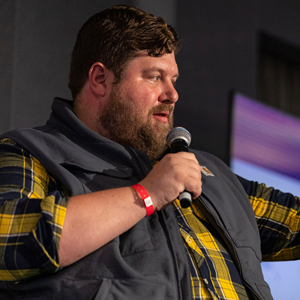
[00:26:47] Ray Latif: It is. Alright, it's time to get to our featured interview for this episode as we once again welcome Carlton Fowler back to the show. A managing partner with San Francisco-based investment firm Goat Rodeo Capital, Carlton oversees a portfolio that includes stakes in several fast-growing food and beverage brands, including Lemon Perfect, The Good Crisp, Hoplark, Beatbox Beverages, and Nectar Hard Seltzer. This conversation is the second installment of our regular series with Carlton, which includes his strategy for identifying and investing in outlier brands, how and why investors can get it wrong, and his advice on what to leave out of a pitch deck. Hey folks, it's Ray with Taste Radio. Right now I'm back on the mics with Carlton Fowler for another edition of The Goat Pen.
[00:27:45] Can Coolhaus: Carlton, great to see you. Good to see you too, Ray. That name's going to crack me up every time. Oh, that's a great name.
[00:27:51] Ray Latif: You know, you are a partner The Goat Rodeo Capital, so I think it's appropriate.
[00:27:55] The Goat: Yeah, yeah.
[00:27:56] Can Coolhaus: It is a zoo over here, so.
[00:27:59] The Goat: Yeah, haven't seen you in a bit. How are things going? They'The Good. They're very busy, which I feel like I'm always saying, but we're hopefully kind of coming to the end of a number of deals that we're in. And I've missed you and everyone else at Fancy and at Kahee and in a lot of the conferences that have been going on. We really hope to remedy that in the second half of the year, and you'll see our shining faces meant for radio or podcast and not television, but see our rather identifiable silhouettes walking around the halls.
[00:28:32] Ray Latif: Maybe we should Just Ice out to San Francisco. I haven't been out to the Bay Area in some time, and I know that's where you're based, so I'm due for a visit for sure.
[00:28:40] The Goat: We'd love to have you. We love it when anything CPG comes out here. This might be breaking news, hopefully he doesn't mind me saying it, Kiva of Selva is gonna move from San Francisco to LA, so he'll definitely be missed. It's a big hit to the San Francisco CPG ecosystem, because he's one of the greats, and now that's all that's left will be VMG and Amberstone and us.
[00:29:02] Ray Latif: It is maybe unfortunate when a member of the investment community moves out of a particular region, but LA is a pretty hot market for food and beverage and CPG in general.
[00:29:13] The Goat: Yeah, it's great market. He'll be able to spend a lot more time in Erewhon, I'm sure. And they have a really interesting beauty practice that I think probably is, you know, LA is a much bigger hub for that. But regardless, we'll miss him because I just very much enjoy Kiva as a person.
[00:29:28] Ray Latif: Yeah, well, you know, you could, if you're interested, move out to New York. I mean, New York is a pretty hot market for, well, everything. New York is where the Summer Fancy Food Show was based, and it's also where Magnolia Bakery is based. And we've had some good banter on Twitter with our founder, John Craven, about their new line of packaged cookies. This is their foray into CPG. You're a fan.
[00:29:54] The Goat: I am and I kind of, you know, had the unique opportunity. So Cameron from WeStock mentioned them to me, and I wasn't like fully read in on like just how cult like the OG Magnolia Bakery is, but my grandmother is Southern and she has multiple published cookbooks and like banana pudding is one of her things like she is. And we're talking like Paula Deen style cooking, like lots of butter, lots of cream cheese, Just Ice your typical Southern way of making things. So I'm just a huge banana pudding guy. And to this day, I haven't tasted the OG, so I was able to sample their packaged cookie without any context, or if you might put it, any preconceived notions of how good it could be. Now, I've got some pudding on the way after this cookie, because I loved them. I thought from a packaged cookie standpoint, They were phenomenal. I thought the moisture was on point. I thought the flavor was overwhelmingly delicious. You know, I thought the crumb was great. Like there's things like last crumb and some of these other cookie brands like I get it. It's a big business, but like I think these are good cookies as far as cookies that are individually wrapped in packages go. So I'm psyched to try the big bucket of pudding they're going to send me.
[00:31:05] Ray Latif: Yeah, Magnolia is very well known for their banana pudding, and I understand that you're qualifying the cookies because you haven't had them from the bakery. But I love that you did rank the product attributes, and there were a couple 10 out of 10s, I think, in there.
[00:31:20] The Goat: The flavor was just spot on, man. Funny fact, the flavor that we all consider as fake banana flavor, like the flavor in Jell-O banana pudding, or the flavor in Jell-O or banana Laffy Taffy, that kind of stuff, Actually is the way that bananas used to taste like if you like if you went back like an entire species of bananas That was you know, very prevalent in Central and South America was just completely wiped out by a fungus The bananas you're eating are not the bananas that like jello banana pudding flavor is modeled on Everybody refers to it as like fake banana flavor. It's not fake. It's what bananas used to fucking taste like And they just were, they were sweeter. They were way higher in flavor, lower in starch and delicious.
[00:32:04] Can Coolhaus: So I think Magnolia Bakery is onto something. I love that we're talking about this. You're blowing my mind over here, Carlton. It's crazy.
[00:32:09] The Goat: Look it up. It's not like a banana conspiracy. Like this happened. It's a disease not that dissimilar from Phylloxera, which like can wipe out entire vineyards.
[00:32:20] Ray Latif: You know, I wonder if Go-Brodo Capital had been around when Magnolia Bakery was launched, I believe in 1996. I wonder if you guys would have ever invested in that bakery, because they do have a cult following, and people wait in long, long lines, especially at the location in New York City. One might call Magnolia Bakery an outlier, given that it is a very special and unique kind of establishment and brand. And I know outliers are something that you have been, I wouldn't say focused on, but very interested in when it comes to investing.
[00:32:56] The Goat: Yeah, I mean obsessed might be one way to describe it.
[00:32:59] Ray Latif: Okay, obsessed.
[00:33:00] The Goat: We've gotten to know each other well enough now that like obsessed is not like an abnormal thing for my personality. I seem to have my own personal obsession about being obsessed with people who are obsessed with product success. We care a lot about it. I'll tell you a really funny story. So we recently led a round for Nectar Hard Seltzer. And I, by the way, I absolutely think that they fit in this kind of like outlier category.
[00:33:24] Can Coolhaus: And we can kind of dive into that a little bit. But yeah, and just for context to tell our audience what Nectar Hard Seltzer is all about.
[00:33:30] The Goat: Asian-inspired flavors within a hard seltzer. They do have a proprietary brew method, but that's as much marketing as it is part of the true method. What attracted me to them is the founding team, I think is very unique. I would characterize one of them as like a marketing savant. And I don't use that term lightly. He has a level of empathy, both on an individual level and a mass psychology level that you come across. Very infrequently. I don't care if he was marketing adult diapers, I probably would have invested. And then you have another founder who I think is extremely gifted from a process standpoint and a management standpoint. And importantly to me, the two founders, I think very much recognize the lanes that they, that they are very good and respect each other for, for the qualities they bring. And they have a very equal partnership, but. what it does, and we can kind of get into it after the story, it turns into some things that I believe are outliers. But the reason I'm using that phrase is we actually invited the Nectar founders out to meet with one of our largest LPs, and he'll remain nameless on this, but basically this guy's one of the most renowned public market investors of all time. And he's also tremendously active in the private markets. But more importantly, this guy is just cool. I don't know any other way to describe it, like cool in the way that icons are cool, cool in the way that Steve McQueen is cool. He dominates the room, but not in a necessarily abrasive way. Knows everybody. anything you can tell him he'll have some angle on the story but like it never comes across as like name dropping because again he's cool like you know if if he wasn't cool it would come across as oh i know everyone but it just comes across as this guy's the coolest person in this room so let's all just sit in rapt attention for what he has to say so We're in the room and one of the founders at Nectar talks about having read Outliers recently and the impact that it had on his philosophy and how he was trying to build Nectar.
[00:35:34] Can Coolhaus: And the book you're talking about is written by Malcolm Gladwell.
[00:35:37] The Goat: And of course, this investor who still remains nameless, It says, I completely get what you're trying to say. I completely understand the way you're building your business. By the way, I know Malcolm Gladwell and blah, blah, blah, blah, blah. Essentially, Malcolm Gladwell doesn't think his own shit stinks and is not the greatest person in the world. But it was Just Ice a perfect, of course this guy knows Malcolm Gladwell. But he also, if you were talking about Martha Stewart, he probably had dinner with her last week. And again, he's one of the coolest guys I know. But it was perfect because someone who's basically made an entire extremely successful living on immediately been able to grasp what is unique about a company, whether it's a public market stock or a private market stock, kind of grasps the same thing that we do about Nectar, which is, of course, the early stage. So not everything can be polished and ready to go. And if everything was working, You know, this would be a different stage company, but they do one or two things just phenomenally well. For them, it happens to manifest in a customer acquisition machine via their, their marketing programs that are actually a profit center instead of a cost center. They don't pay for marketing. Marketing pays them and acquires customers. It's something you, you very rarely come across. And when, and normally when you come across it, it's because it's a Kardashian. or, you know, a Paulson or a Mr. Beast. And in all those situations, you certainly do not own as a function of the corporation around the product, any piece of said engine that is actually lowering the customer acquisition costs. You're just hoping that incentive structures keep them interested. In this case, the incentive structures are perfectly aligned because the media piece, which is the marketing engine, is part of said corporation. They're one and the same. And that's really kind of what I talk about From an outlier standpoint, like, are their margins perfect? No, they're early stage, but they can get there. You know, is their distribution perfect? No, but it's early stage and we can help them get there. And, and where they are, their velocities are two or three X. What I see any other product on their competing thing, but what they do have is like actual true uniqueness on a customer acquisition engine. And more and more, that's what we're trying to define ourselves at Goat Rodeo is how do we find true. outliers, if you want to use the Malcolm Gladwell phrase, but just true uniqueness at an early stage and invest in it over time as that uniqueness hopefully matures into a successful company.
[00:38:09] Ray Latif: I'll play devil's advocate here. Yes, they do some things phenomenally well, but it seems like a risky investment given that they have a relatively short track record. They don't have a lot of time on the market. But I mean, how does that factor into your decision to go big on this brand early on?
[00:38:28] The Goat: Well, I mean, seed investing is inherently risky, right? Like you could turn that question on its head and say, well, what about just waiting until everything else is proven, including the thing that you think is an outlier? And I would argue just defined growth investing. You wait until many things are working in the company, and then you hope that a combination of relationships and your ability to value and potentially affect exits get you into good companies. We tend to like to go earlier and continue to invest over time, right? So if you're going to be a very active in a seed round, I would argue that in CPG specifically, because of the way that returns typically accrue to even winners, you better be prepared to invest in the A and the B if the success continues. It's a similar thing to Lemon Perfect, right? We invest in the seed. and the A, and the A extension, and the AB bridge, and the B, and we'll continue to do whatever else comes along the path. So if you find them early, you need to continue to, you know, I would not just invest pro rata, I would argue you continue to need to heavy up as additional proof points get proven along a path that you kind of predetermined, like, you know, I want to see certain velocities continue. I want to see distribution continue. I want to see, you know, the marketing costs continue to be sub any other type of competitive organization because of the unique skill they have in digital marketing. If all those things continue, of course it's worthy of a continued investment.
[00:40:01] Ray Latif: It seems like you're defining outliers in a sort of holistic way. You're talking about the founder, you're talking about some aspects of the company, whether it's branding or sales metrics, but would you ever invest in one specific part of a business that you would describe as an outlier? For example, the entrepreneur themselves?
[00:40:22] The Goat: I mean, yes. But I think that is probably a lot more a function of, of relationships and track record. Like we're, we're just about to do a fairly large, at least for us first check into a company, but it's been an entrepreneur that I've known for a decade and he has three exits. Wow. And this one is going to be in, you know, most of we'll just say there is no Walmart or target. or Costco or Long's or CVS. And I think even, I'm pretty comfortable saying Olive Kroger that doesn't have a product this person's created. So in that case, I would argue that that gentleman's entire life is an outlier, right? Like if we're trying to fit the entire thing into an overall framework. But I think for us, pre-seed is very tough. I think all the way, buy seed, We think we can start to identify if there's something truly unique about a company. And by the way, unique doesn't always turn into value. There are seed companies that we have not followed on it, but ideally that thing continues and you can follow on bigger.
[00:41:34] Ray Latif: Last time we spoke, we talked a bit about celebrities and creators or creator-led brands and what impact they have on a brand's potential. And it's interesting talking about outliers, because I think you could talk about celebrities in that way and define them in that way. But it feels like there's so much out there that is attached to a particular celebrity that they don't really move the needle as much as maybe they had in the past. So I guess how would you assess and how would you evaluate a celebrity's potential in being able to be that significant difference, be that difference maker in an early stage brand?
[00:42:18] The Goat: Well, I don't mean to dehumanize them, But it is very effective to think of a celebrity essentially as a customer acquisition cost discount machine, right? And if we're going to make the assumption that like, okay, all marketing is awareness and then trial and then hopefully repeat and then hopefully evangelism. Well, the celebrity's got a built-in advantage on awareness that you hope on some level converts to trial. And then the assumption has to be that the product is good enough to drive repeat. And again, I think that celebrities can help on repeat and evangelism. But for the most part, think of them as a giant discounting mechanism on awareness. You get the awareness, provided the incentives are well aligned, right? And I think that's kind of always the worry. that what you're really investing in is a company that has a permanently discounted customer acquisition cost, or at least you hope that it does. You know, celebrities can get bored. We just saw Mr. Beast walk away from Mr. Beast Burger, right? And a lot of people are making a lot of hay on that. Like, you know, there are some reasons that I think that's a tremendously hard business for a single celebrity to act as the influencer for, but we don't need to get into that. It can go wrong. If your enduring customer acquisition discount mechanism outlier is not reliant on a celebrity, that's better. It's better because now the thing that's making your company unique is intrinsic to the company itself that you can invest in. So I don't really have a problem one way or the other about celebrities and it doesn't excite me. you know, one way or the other, unless I can, in digging through it, say, okay, here's why I believe in this particular case, this celebrity is particularly motivated, these infrastructures are right, and they're going to still be here going strong in seven years. But all things equal. If company A has a customer acquisition cost 50% lower than its peer set and has no celebrity, and company B has a customer acquisition cost 50% below than its peer set and has a celebrity, I'll pick them without a celebrity all the time. It's just that rarely happens.
[00:44:28] Ray Latif: Well, and there has to be some sort of authentic connection between the audience that the brand or the celebrity is associated with and their products. I'm gonna call out a name here, and I probably shouldn't, but you know, Betty Buzz, which is a company that was founded by Blake Lively, started out with cocktail mixers, and now they just got into RTD cocktails, and it's interesting because Blake Lively is known for not drinking. She doesn't drink alcohol. And so when they announced these RTD cocktails, there was some backlash from her community and her fans about why she was doing this. It felt very inauthentic to them. So in that case, it feels like the interest you're driving for your brand is not necessarily the interest you were looking for.
[00:45:14] The Goat: I agree. I think that in this particular case, Betty Buzz is gonna be Just Ice, because there is a need for cocktail mixers, and I think she sideswipes that particular issue by saying, hey, you can drink these by yourselves. I do, because I don't drink. But she likes to host, and she likes to make drinks for folks, et cetera. So, yes, I mean, that's kind of why I say all things being equal, I'd like a number of, you know, things intrinsic to the branded company to be the discounting mechanism and customer acquisition cost rather than a celebrity. Celebrity just happens to be one of the most classic and simplest ways to do it. Simple does not mean easy. Simple does not mean without issues. It just means for the most part, You know, some level of awareness will jump if you apply a celebrity to a brand, whether or not everything else goes right is a future state and can be discounted by each individual cap or allocator. But I don't think anybody's going to argue with the statement, taking someone with a lot of awareness and adding them to the product will have some kind of bump on set products awareness.
[00:46:20] Ray Latif: Yeah, I mean, there's a lot of things that have to go right for any CPG brand to make it. And we often hear about brands that didn't make it for one reason or another, The Goat something wrong. And investors, though, we don't necessarily often hear from investors about what The Goat wrong and why. And earlier you had mentioned, you know, sometimes we get things wrong, as in Goat Rodeo capital. What do you learn from things that went wrong? What do you learn from your experience in something that just didn't work out?
[00:46:48] The Goat: Well, I think that, I mean, first of all, you have to approach this from a place of humility, right? Like, because so much of the time you're attempting to focus on what goes right because no one invests in something thinking, gosh, I wish I wouldn't have done that. Like everything you invest in, you think is going to go right. But it doesn't. And, you know, if you'Rise Brewing brutally Honest Tea introspective, I think a lot of the places where we've made mistakes is kind of directly related to this outlier thing. You know, when my partner James and I. are in violent agreement and violent agreement quickly.
[00:47:29] Can Coolhaus: As in you get in a fistfight about how excited you are about something?
[00:47:34] The Goat: Violent disagreements happen that sometimes lead to physical altercations. But violent agreement in this case, typically is a lot of vigorous head nodding and like a lot of like, right, right, right. Right. I'm not crazy. You see this too, right? Those are the ones that have that have gone on to at least on paper do well. If there's any situation where James and I are talking, I'm talking him into it, or he's talking me into it. And it's almost always comes as a function of, well, we love the founder, but we're unsure about like X, Y, and Z. And then because James and I are from industry, a lot of times it'll be, well, here's the couple things wrong with this, but like, you know, if we were, if we were running it, this is the three things we'd do to fix it. As if that's some kind of like, you know, prescription from heaven, A, probably those things are wrong. And B, you know, when are we going to find time to go be free executives for the company? Like, especially as Goat Rodeo grows and, and we, you know, we, we try and be as helpful as we possibly can, but, you know, managing the overall infrastructure becomes more and more taxing our time. So the thing that I've come to is, let's just say, assuming that James and I together are somewhat better than a monkey throwing darts at a board. And that's a large assumption. Let's just pretend we're going to hold that assumption true, that James and I are some percentage better than a monkey throwing darts at a board. What I've found upon a lot of postmortems is if James and I both completely agree that it's absolutely obvious that there are very special things about this company at an early stage and that it has the potential to grow into cool things, that does not mean it's not, it's still not obvious to like 90% of the population. And we need to just stick to doing those things because if there's a long period of talking ourselves into it, those are the ones that have a much higher index of not being as successful. Now, even within that set though, there are exceptions that prove the rule. There are ones, there are companies in our portfolio that, you know, a year and a half ago, if you would have asked me if I thought there was a snowball's chance in hell, they would be successful, I would have probably said no. And all of a sudden they're on an absolute tear. So even within that, all kinds of crazy things happen. That's the beauty of venture capitals specifically. It's a lot more like fantasy football, like especially if fantasy football didn't have a waiver wire, like you draft your team, And your team is your team and you don't know if like, you know, after multiple seasons or multiple games of underperformance, all of a sudden it's going to click and a player is going to take off. The beauty of it is you can't really, you can do as much research as you can, you can pick, but then you're pretty much in it until an outcome occurs. You can't cut your losses in places. You can not add to it, but you can't cut your losses. And I think that's actually a feature and not a bug.
[00:50:27] Ray Latif: What might you see in, say, a pitch deck that would indicate that a brand has some significant potential to be that outlier without having maybe seen or tasted the brand or met the entrepreneur? Because a lot of times I'm sure you get sent a lot of stuff and you're like, eh, you know, what is it about this deck that's special? What is in here that makes me actually want to pick up the phone and call this person?
[00:50:52] The Goat: It's funny that you mentioned that and it's why pitch decks are both incredibly useful as a sifting mechanism, but ultimately not that useful in as far as the eventual decision to invest. If the only thing that I can see in a pitch deck that will get me excited in an earlier stage is abnormal velocities. And here's the thing is like, there isn't a single investor that you can interview that wouldn't also be excited by abnormal velocities. Right. And I've, I've found very quickly that if I'm reading something, I'm gonna go, Ooh, that's so on trend. Like, Oh, I think brain health is going to be a thing. Therefore, I'm definitely going to dig deep into this pre-seed, pre-revenue brain health company. Because the thing that excites me the least is the inevitable two slides that bug me the most. advisor slides, and the here's how we're different from our competitor slides that has all green check marks for the company that's there, and then like some combination of red Xs and green check marks for other things, followed closely by the quadrant, completely subjective quadrant of where a brand sits via competitors. If I could just eliminate those three slides from all decks, I'd probably save myself an hour to two hours a week, mostly in rants. The time suck isn't so much reading the slide as much as it is the ranting about said slide. but I think that on a quick numbers basis. The thing that you can do that'll instigate the most questions in my head is, here are velocities, even if it's in a small geography, and they are double the category, or 50% higher than the category. Because then I have to start to ask the question of why. Is it something that's regional that can't be recreated? Is it something that's specific to a certain channel, usually natural specialty for dealing with food and beverage? And then you have to start to make some suppositions if it can move into more conventional channels like mass and grocery and convenience. But like, that's one of the few things in a deck without talking to anybody or anything about the company, like, I'm like, wow, because something must be driving that. And it's, you know, it's, it's either complete. differentiation within the category, or it's a very, you know, repeatable customer acquisition strategy that hopefully is like, it's one of, it's one of five things, sometimes many of those five things. And if you're going to, you know, then dig in and identify what those are and convince yourself that they're enduring and scalable, then you have something.
[00:53:14] Ray Latif: I thought when you were going to say it was or it is complete, I thought you were going to say it is possibly complete BS. And the entrepreneur just didn't know how to calculate their numbers correctly. And well, that happens sometimes.
[00:53:27] The Goat: Yeah. And, you know, never ascribe to maliciousness, which you can just ascribe to incompetence or indifference is my caveat to that. A lot of people said the former. Indifference is also a really good way to get numbers wrong.
[00:53:40] Ray Latif: Yeah. I'm curious about advisors. Why don't you like advisor pages? I mean, if I saw your name in a deck as an advisor for a company, I'd be like, Oh, okay. This makes a lot of sense. And yeah.
[00:53:49] The Goat: It's Just Ice, people collect them like they're Pokemon trader cards. I'm way more likely to stop and be like, hey, you've only got one advisor on your page and you spent time explaining to me what they help on. Like, oh, okay, like, I want to talk to them. But when you're like, yeah, you're the ex-CEO of Whole Foods as an advisor and also like, You know, Ari Emanuel at WME is an advisor. I'm like, what? Like, no, this person lets you put them on their deck for 2%. To me, that's evidence of you not being a good negotiator. Not that you have this wide and far ranging network.
[00:54:25] Ray Latif: This is good stuff, Carlson. This is very helpful, valuable. I'm sure the people who are listening to our audience. One other quick question. You know, I'm sure you talk to a lot of early stage entrepreneurs. In fact, I know you do. And obviously you're not investing in every brand that you come across. I wanna get a sense of whether or not you feel comfortable sort of just being friendly with entrepreneurs and maybe them picking your brain, whether it's on LinkedIn or Twitter or a quick phone call.
[00:54:52] The Goat: Yeah. I do. It is difficult to set up the natural, and by the way, the system, you know, system-wide design of the desperation for capital from friendship, you know, within this space. Like, for example, I don't know if he would agree, but I consider Paul Vogue a friend.
[00:55:13] Can Coolhaus: Paul Vogue, the founder and CEO, or co-founder and CEO of Ouroboros.
[00:55:16] The Goat: I think he is one of the coolest, nicest, most genuine, interesting people in CPG. Would I go to dinner with him? In a heartbeat. Ultimately, we couldn't get there from an investment into Ouroboros, and I'm very comfortable saying that had absolutely nothing to do with Paul Volck. It had to do with the category. But I imagine that from his perspective, the affectionate nature of our talks were very confusing because I liked him and I'm not going to pretend like I don't like someone on the phone. And I think people can genuinely think that that's on the path to investment when that's frankly the underlying goal that instigated all of our interactions. Paul, if you're listening and you want to hang out, I know you live in San Francisco, man, let's hang out. We were just on a podcast together. But like, like if the founder is able to separate the nature of my job and his job, and then just sit down and talk about the business and ask for advice, like, of course. And in fact, I think, you know, Paul called me recently and actually asked me some advice on something. And I think he was genuine in his desire for advice. And it wasn't like a coded and hidden call asking for investment. Who knows? Only he can answer that. But I'm very open to that because I am both in awe of and adore founders in general. and some within that even more than others. And we're not necessarily invested in all the ones that I think are the best.
[00:56:40] Can Coolhaus: And I'm happy to hang with them. There you go.
[00:56:43] Ray Latif: Carlton, just always a pleasure speaking with you. And, you know, this flew by, and I feel like we could speak for another two hours, but you are a busy person. And we'll do another edition of The Goat Pen soon, I'm sure. Sounds great. That brings us to the end of this episode of Taste Radio. Thank you so much for listening. Taste Radio is a production of BevNET.com, Incorporated. Our audio engineer for Taste Radio is Joe Cracci. Our technical director is Joshua Pratt, and our video editor is Ryan Galang. Our social marketing manager is Amanda Smerlinski, and our designer is Amanda Huang. Just a reminder, if you like what you hear on Taste Radio, please share the podcast with friends and colleagues. And of course, we would love it if you could review us on the Apple Podcasts app or your listening platform of choice. Check us out on Instagram. Our handle is BevNetTasteRadio. As always, for questions, comments, ideas for future podcasts, please send us an email to ask at Taste Radio.com. On behalf of the entire Taste Radio team, thank you for listening, and we'll talk to you next time.
[00:57:50] Carlton Fowler: you