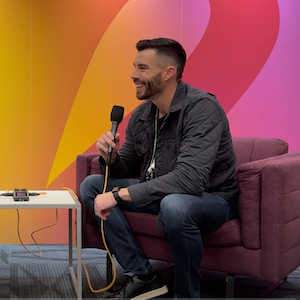
[00:00:10] Ray Latif: Hello, friends. I'm Ray Latif, and you're listening to the number one podcast for anyone building a business in food or beverage, Taste Radio. In this episode, we sit down When Kevin McCray, the co-founder of Groundbreaking Consumer Brands, Kevin's Natural Foods, and Wild Fox Foods. When Kevin McCray sold his namesake brand to Mars, Inc. for a staggering $800 million, it wasn't just a milestone. It was the culmination of a business philosophy built on three simple words, humble and hungry. Now, with the launch of Wild Fox Foods, those same principles form the core of his new, better-for-you consumer brand. Kevin's entrepreneurial journey began in 2012 with Chef's Menu, a meal kit company that laid the foundation for what would later become Kevin's Natural Foods, a pioneering brand offering clean, convenient, and nutritious refrigerated and frozen meals. Fast forward to today, and Kevin's Natural Foods is a household name, stocked in over 20,000 retail locations across Target, Whole Foods, CVS, Publix, Walmart, and more. In 2023, Mars acquired the brand, keeping it as a standalone business within its food and nutrition unit. But Kevin wasn't done. Last month, he made a bold return to CPG with Wild Fox Foods, a brand that reimagines trail mixes, roasted nuts, and clean protein bars, offering consumers better-for-you alternatives without sacrificing flavor. In this episode, Kevin shares his playbook for building Wild Fox Foods on the tenants responsible for the success of Kevin's Natural Foods. He breaks down what it takes to solve real consumer problems, the power of efficient, low-cost consumer research, and why founders should focus on building a strong brand before seeking funding. He also reveals how preparation, persistence, and openness to feedback are critical for any CPG entrepreneur looking to disrupt the market. Hey, folks, it's Ray with Taste Radio. Right now, I am honored to be sitting down When Kevin McCray, who is the founder of Kevin's Natural Foods and Wild Fox. How are you? Hey, I'm good. Thanks for having me. Yeah, we had a bit of a circuitous way of getting here to this interview. And I don't mean that in terms of planning. I mean, in terms of getting into this room where we are here at Expo West. The press room was not open, but it was supposed to be. And so I thank you for your patience.
[00:02:37] Natural Foods: No, it was great. It actually gave us time to visit a little bit, get to know each other better.
[00:02:40] Ray Latif: That was good. For sure. For sure. You're back in the business, so to speak. You started out When Kevin's Natural Foods, which was called something else, but we'll get to that in a sec. Yep. And you're here representing and talking about and exhibiting your newest brand, Wild Fox. Yes. What is Wild Fox?
[00:02:55] Natural Foods: So Wild Fox is a snacking, Better Few snacking company. We're making trail mix and roasted nuts, all roasted in avocado oil and a line of protein bars, clean protein bars with high protein, low sugar. Back in the game, working on the same mission we fell in love with When Kevin's, but now focused on snacks. For us, it was crazy to realize that about a quarter of the calories that people consume come from snacking, what they're eating in between meals. Coming out of Kevin's, when we fell in love with this idea of really making a difference out there in the world and empowering people to eat healthy. And we felt like we kind of, we made an impact on that meal space. And then we passed the baton to somebody that's going to carry that forward, a company that's going to carry that forward. So for us, it became, all right, how else could we continue to service that same mission? And that led to Wild Fox. Where did the name Wild Fox come from? I'm curious. It was a process. We were trying to figure out what the best name was going to be. It's a really congested category. So we wanted to stand out. And we liked the idea of having, like Kevin's had a face. It had an icon. We wanted the same thing for Wild Fox, but we didn't want it to be a person. So we landed on the idea of a fox, because foxes are smart. They make good decisions. And we thought that that would be really interesting for making a smart eating decision or snacking decision. And then the word wild came up and we liked Wild Fox a couple reasons. One, we liked that kind of foraging, natural connotation of wild, but we also want to have a lot of fun with this brand. And we liked the idea of having like a wild personality. So it just kind of came together through a brainstorming process. And we worked with a, with a firm as well that helped us with the ideation stage and kind of helped us navigate to this name as well. Flock, by the way, who was great. I'd recommend them for sure.
[00:04:40] Ray Latif: Any names that were on the cutting room floor?
[00:04:42] Natural Foods: You know, the one that sticks out to us, it was a fun name, but not the right fit for us. It was Dancing Squirrel.
[00:04:49] Ray Latif: Okay.
[00:04:50] Natural Foods: But you could see how that could help us get to a Wild Fox. The through line was an animal. Yeah, yeah, yeah. Squirrel, nuts, and dancing, fun. But, you know, the characteristic, that's the funny thing about creating a brand name. And it's not like a straight line to get to it. It took us forever to get But Kevin's originally, but one thing leads to another. The idea of the animal icon, something to represent, and then the idea of fun with dancing ended up translating better for us with Wild.
[00:05:19] Ray Latif: I'm going to ask the question that I'm sure everyone wants me to ask. You sold Kevin's two years ago to Mars for $800 million. Why are you back in this business?
[00:05:30] Natural Foods: So Kevin's was a labor of love from the get-go for all of us, all three of the founders. And then the employees who were owners as well, who came to work for the brand. It's a little cliche, but we fell in love with that mission. And the problem we were working to solve, we became very close to the problem. And we felt like- And what is the mission? What was the problem? So the way we would articulate it is that we were empowering people to eat healthy without sacrificing flavor. And it seems really easy to say that or kind of common. But When Kevin's, what we found is it was really uncommon to find a food product that was convenient, healthy, and flavorful. There was a lot of products that were healthy and convenient that didn't taste good. Or they were convenient, tasted good, but weren't healthy. But to kind of align all three of those attributes, it was tricky. So we talked to thousands of consumers over the course of Kevin's. And so we felt like we had a good grasp of what the challenges were to eating healthy day to day. And after we moved on from Kevin's, we still felt like, you know, even though meals had a lot more options and that brand was continuing to expand and thrive and solve that problem, you know, for lunch and dinner and maybe breakfast one day, who knows? We felt like in between meals, when we talked to people, it was just as big of a struggle to figure out what I'm gonna eat when I'm sitting at my desk at 10 o'clock or I'm on a walk or I'm hiking or whatever it is, as it was, what am I gonna cook for dinner when four o'clock rolls around?
[00:06:56] Ray Latif: The problem seems pretty clear, and it has been for a long time, which is that there is a compromise often when it comes to eating better-for-you foods. The longest time there was that joke that, yeah, it's not supposed to taste good because it's better for you. I hope that's gone by the wayside. I hope that folks realize that taste has to be most important first and foremost. But When Kevin's, You started out doing something different. It was a meal kit company when you began and you eventually transitioned into a brand, a consumer brand. Talk about that transition and why you felt like it was important to fulfill the mission that you set out for yourself. Yeah, for sure.
[00:07:33] Natural Foods: So, you know, the idea of healthy food tasting good quickly, that was the catalyst for even the meal kit company working at retail. selling it through retail. We always thought from the get-go, we thought retail, supermarkets, club stores were the best partners to get this done. We always felt like the online delivery meal kit, especially with fresh food, was going to be a major logistics challenge. So we opted early on, even before Kevin's, to partner with retailers. It took us about four years of tinkering before we figured out what solution was going to have the right shelf life, what the best nutrition claims were going to be, what the format was going to be. Is it going to be just the protein and sauce? Are we going to include vegetables? Are the vegetables going to be raw? Are they going to be cooked? We tinkered with all of that stuff, but ultimately it came down to where did the customer need more help and where could we sell it? Okay, so we started with the chicken HMR entree, right? The sous vide protein paired with the sauce. that was center of the plate, but it ended up being almost like a cornerstone of the meal, and the consumer would plan their meal around that. And we used that as an in with the consumer, because it had a very established space in the store, where the Hormel entrees and the Jack Daniel's barbecue chicken were sold, kind of in that space, and everybody thought we were nuts going there.
[00:08:46] Ray Latif: The problem that you're referring to.
[00:08:47] Natural Foods: Yeah, exactly, exactly. But we went there, and it was actually kind of good, because that category was already known for convenience, but it wasn't known for health. So that was almost like our gateway in with the consumer, these HMR entrees. Then once we were in the trust of the consumer, we were able to incorporate more aspects from the earlier meal kit ideas. We eventually ended up sous vide-ing vegetables and making stir fry meal kits and then expanding the line into things like soups and pasta entrees and really having a lot of fun with it and getting after it. And then the thing I'd add, and kind of going back to your original question, I got sidetracked because I got so focused on the problem and the way we identified it When Kevin's.
[00:09:25] Ray Latif: You're passionate about it, which I can tell. I can feel it through this conversation. I'm sure our listeners can feel it through the audio. You're like leaning forward and leaning forward. Whenever I'm talking to someone and they get closer and closer to me, I can tell they're so passionate about what they're working on. So please continue. Yeah, for sure.
[00:09:40] Natural Foods: And that was it. That was actually just it. Why are we back? So fell in love with the mission, but then as a consumer, you're still going to the grocery store and you're still living your life, even though you had an exit beforehand. So here you are with some momentum coming out of the industry and some experience that you have that you could utilize. And then you're going to the grocery store and you can't help but look at categories, right? And one category that I'm a big shopper in, but I was frustrated with, is nuts. I would eat a lot of raw nuts. Reluctantly, they don't taste great. They're kind of woody, but they're healthy. If you want to buy a roasted nut in the supermarket today, you cannot find a true oil roasted nut that isn't deep fried in canola oil or peanut oil, some type of common seed oil. So as a consumer, I would go and I'd be like, man, roasted nuts taste so much better, but they're all, I don't like the process that is being used for the majority of them. And I don't like the seed oils that they're roasting these nuts in. So those conversations with a founding team from Kevin's ended up leading us back into the Wild Fox side of things, even though, you know, we didn't have to do it, but the consumer needed it and there's an opportunity there. So once you've been in that position, it's kind of hard to ignore it once you see it.
[00:10:59] Ray Latif: Yeah. Yeah. Going back But Kevin's and getting buy-in from the consumer, before you get buy-in from the consumer, typically you have to get buy-in from the retail merchant, from the buyer themselves. There were existing products similar But Kevin's, at least in form, but not in terms of ingredients and quality of ingredients. Was that the key factor for buyers? Was it, hey, there is something better that we can add to our set? Or was it something else about the brand, about your approach?
[00:11:27] Natural Foods: So I'll tell you the key factor for buyers, but real quick, based on what you said, you know, we would actually do, we'd go get buy-in from the consumer. Then we'd go get buy-in from the retailers, and then we'd get buy-in from the consumer again. So what I mean by that is, before we ever talked to a retailer, it was focus groups, focus groups, focus groups, consumers, making sure that consumers love it. But then before the consumer buys it, we had to go to the retailer and get them sold on it. What sold the retailers, the health claims differentiated the product, but what sold the retailers in the benefit of being in that category is when we'd cook the food for them. That was the selling point. Oh, it's huge. And it's harder when you're not in the fresh categories, you know, to get the food in their mouths. It's very common though, especially with, uh, retailers that take a lot of effort with their editing philosophy of what products they put on the shelf. So like Costco was our first customer. There's nothing going on the shelf without them doing a thorough vetting process, eating everything they're doing. So that was great for us because we were able to cook for them and then the food spoke for itself. And we were handling all the manufacturing so we could talk the talk in terms of other things retailers care about behind the scenes, service levels and quality and consistency. And then we had the health claim. So it was a combo of everything, but what put it over the edge It was the eating of the food.
[00:12:42] Ray Latif: Yeah, going to Costco and saying, hey, this is gonna be our first major retailer is not necessarily the path, the approach that a lot of folks take. Why was Costco the right retailer to start with?
[00:12:53] Natural Foods: Well, the unique thing When Kevin's is we did have that period beforehand with the other brand, Chef's Menu, where We already had a relationship with Costco. And we already had production capabilities and a reputation of being able to service the business. So that part was unique. But for us, Costco was just, and continues to be for Kevin's, just a great fit. You know, they have so much trust with their members. And for startups, it's helpful when you don't have a big marketing budget. when the retailer has earned a level of trust with their shoppers, it almost gives you credibility, like you're the company that you keep type of saying. So it was a perfect way for us to start. But it was a lot of work. I mean, we had accountants in the factory, helping prep the chicken in those early days just to keep up with the orders. It was a heavy lift for sure.
[00:13:44] Ray Latif: What lessons, what data sets can you draw from being in Costco that you can apply to mainstream and conventional retailers and Natural Foods as well?
[00:13:55] Natural Foods: The main thing is the member that's shopping at Costco is typically cross shopping into other retailers as well. So as long as the value equation works for everybody and the pricing structure works, the likelihood of you picking up retail shoppers if it's working at Costco is really high. So if it works there, it should work in retail if your pricing model is right. So that's the main takeaway. Make sure your prices, but you have to test that beforehand. So, you know, know what you're going to charge at each of these outlets and talk to the consumer before you go stand up a factory or commit your co-packer to filling all these orders and make sure that the consumers are going to want to buy it at both of these prices. The other thing that was really important to us that I don't think gets highlighted enough for young companies is service levels. So our company did not short an order. They did not, through the entire pandemic, we shipped what we committed to shipping. And when you're trying to build a story or a narrative to sell your product into retailers, If you're interrupting the flow of your goods into the store, it's hard to get the data to show the true story. You're always having to give caveats. Well, it would have been this if we had fulfilled those orders. We would have had these velocities, but we were at out of stocks or something. Service levels and embracing manufacturing, or at least if you're not doing your own manufacturing, embracing production planning and setting expectations in terms of timing, really important to the story. Do you own your own manufacturing for Wild Fox? You know, what we did with Wild Fox is we ended up partnering with a company down in Newman, outside of Modesto, where we're at, and bringing them in as partners in the business. They have some equipment, we'll be purchasing some equipment, we'll be controlling all of the roasting process for the nuts. And then we are co-packing certain elements. So like protein bars, we don't have experience in that space. So we have a great co-manufacturing U-bar down here in Southern California that we're going to be working with on the protein bars. So I get to practice what I'm preaching with a lot of the scenario planning with those guys.
[00:15:52] Ray Latif: Yeah. How do you determine success right now? You're really early on. You've experienced success. You know what it takes to win. But how do you measure that? when it's a completely different category and essentially a very different business than what you were?
[00:16:10] Natural Foods: Yeah, success is a staging process for us. So obviously we have our eyes on the prize for long-term success. That would be Wild Fox as a household name. The Velocities are in the top third of the set, where distribution is expanding at rapid rate. All of the things that you would look for in a successful brand. Ultimately, if that's happening, then we're helping people eat healthy and we're servicing the mission that we talked about earlier. That's long term. Short term, there's a bunch of little successes we look for. So like at this show, for example, this is our first opportunity. We've done a lot of focus groups, but it's the first opportunity to serve thousands of people the product. So especially buyers and brokers and distributors and other manufacturers. I mean, these are people that know products. And you could see, so success for us is how is the product going over? You know, is our buyers responding to the claims we have on the bars? Do they like the eating experience? Because the bars have this very unique eating experience. Are they responding well to that? And not just like what they're telling you. Are they grabbing a lot of samples?
[00:17:11] Ray Latif: Are they eating it?
[00:17:12] Natural Foods: You can see their eyes light up when they're excited about it. So little successes. So we saw that. And now we know, OK, we're going to go and we're going to bring on the retailers we would like to partner with, folks that we know are going to be good partners. We're going to get it in. It'd be great to have, you know, five different markets and two or three different retail formats. Then that next success is going to be okay. How does the product move off the shelves with traditional B2B marketing support like promo plans and stuff? But there's, you know, branded marketing support is tough until you're dense, until you're in 20,000 doors. So when it's on the shelf and the consumer goes to the shelf, Are they going, hey, that's interesting, I'm gonna give that a shot, and our velocity's keeping up. That'll be another metric for success. Then after that's happening, all the success metrics will be related to consumer experience feedback and how fast distribution is growing.
[00:18:01] Ray Latif: I mean, I think that's brilliant planning. It almost sounds like you're working backwards. Here's our ultimate goal, how do we get there from day one? I don't know if you can answer this question, but it would be helpful if you did have an answer to share with our audience. In general terms, how much do you think you need, money-wise, how much do you think you need to successfully start a business and have it run well for the first year?
[00:18:28] Natural Foods: You know, that is a really hard one to answer. Let me try this and see if this is useful. There's a way to do this for most categories that is not, I wouldn't say like affordable, but is reasonable, right? And so when you look at that kind of stage gating process we were talking about in terms of creating success, like for example, research, talking to consumers, a lot of folks really want to formalize that. We've never formalized it. I mean, even in the later years of Kevin's, we would host focus groups, and it's not like we were paying a moderator and we were going to a research firm that had two-way glass, nothing against that, but we didn't have the money to do that, especially in the early days. We would go recruit folks at the supermarket. We'd be out there, and we'd have gift cards, and we'd say, hey, we got this new brand, would you like to come and talk to us about it? Dinner's on us, and you'll have a gift when you leave, and we'd bring them, and they'd fill out surveys so we had an idea of the demographics and psychographics and all that, and then we'd just run our own research. It was very inexpensive and very affordable. So if you think about the checklist here, you gotta know if the consumer's gonna like the product. You got R&D benchtop samples, doable, you can get that done, usually for not a lot of upfront costs. The consumer research, not a lot of upfront costs. The co-packer, you can line up for not a lot of upfront costs. Go get the retailer commitments. Once you know the consumer's good, you may have to invest some money in packaging design and branding and things like that, but that's not crazy crazy. expenses, you know what I mean? Then you go get your retailer commitments, they'll give you a forecast so you know what the orders are coming in, and then you plan your co-packing against the commitments you have, and it starts getting expensive if your unit economics are off. So if you're getting into a space where your margin's gonna be so low that the money you're making from the retailer is already sunk costs, and now you just need to fund your operation, But at that point, what do you have? You have consumer buy-off. You have yourself a brand. You have retailer commitments. So going to get funding at that point when you need it just to kind of keep the lights on and your SG&A and all that stuff, it's doable. You see what I'm saying? So it's just going to vary so much for each business what it costs to get started. But it can be done without a big upfront expense.
[00:20:38] Ray Latif: The last two and a half minutes of this conversation were probably the most valuable, or some of the most valuable, I think, that we've had on Taste Radio. That was really impressive, Kevin. Thank you so much, because I think that's really, really helpful information for any early stage founder. I think about where you are right now, and I think about the through line and everything that we've talked about. And it's clear that preparation and being able to do the work before you actually get started, so to speak, is so important. And you have done a lot of work with customers or potential customers, trying to figure out why they would buy this product, what's resonating with them, getting them to understand. It's definitely not throwing things at a dartboard. And I think there's a lot of dartboards in this business. It's ironic too, because if you go to any business school, business planning, creating a strategy, doing the legwork before you actually launch is part of the process. But why do you think it's not done as often as it needs to be? Why do you think people don't do that legwork ahead of time?
[00:21:42] Natural Foods: So two things I'd say on that. The first thing is one of the catalysts for why we do it is because we really want to solve a consumer problem, an unmet need. And our general philosophy is that the world doesn't need another food company unless it is solving a problem. So going into it, we're almost looking to like kill our own ideas. You know, if this has already been done or if this is not an unmet need, we don't even want to waste our time. And that was even that way When Kevin's. So that mindset is really important like you don't want to fall in love with your idea too early. But the second thing is I didn't come up with the idea to do the focus groups. The person that brought me into food manufacturing and founded Kevin's with me and so his name is Dan and his daughter Kelsey and myself were the founders. He started doing that and he taught me and we adopted that philosophy. So I basically what I'm saying is I had someone show me how powerful they are. And if you don't have someone show you how powerful they are or you've never been to a focus group that is done informally as opposed to going to one you're gonna have to pay. a research company to do, it's just not on your radar. So now, hopefully with this conversation, it's on some people's radar. Just get folks together, be as professional as you can, take good notes, try to be unbiased, say all the right things on the front end. When we would start a focus group, no matter how informal, we would encourage people to call our baby ugly. We would just make it really comfortable. We would serve wine a lot of the time for dinner and parents get people talking about it. The point is, you want to make people comfortable giving you feedback, and you want to encourage it and reward that. But that's valuable. The mindset's valuable. And then focus groups aren't the only way to do it. There's so many of these survey companies now. And you could pay relatively low amounts to get immediate feedback from consumers quick. So there's a lot of ways to do it. But like I said before, I just think it's not on everybody's radar when they're going to start a company, how to tackle that. They want the feedback. They know it'll be valuable, but how do they do it?
[00:23:39] Ray Latif: There's a word that's often used in this industry, especially when it comes to successful founders, which is luck. How much did luck play into this person's success? Do you believe in luck?
[00:23:48] Natural Foods: Yes, I do for sure. So I'll speak for myself personally. Luck played a huge role in people. Okay, so first starting with my business partners But Kevin's, I mean, he was, you know, Dan was my mentor and had all this experience and brought all of this operational know-how. Just meeting him was very lucky. All right. When we met, we all put in 12-hour days and we all worked at the problem. It's luck and work, but most of the luck is about people. I don't feel like it was lucky that we stumbled on an insight, but I do feel like it was lucky that we stumbled on our first sales manager. He just was good. If we didn't find him, You know, me and Jesse would be all over the country, you know, and finding, you know, the gentleman that called on Costco for us, Aaron, he started pushing carts out of Costco, worked at Costco as a kid and worked his way up. I mean, we just, and I can name a hundred other people that, so the luck is in who you meet. And the reason folks like that were drawn to the business was because of the work ethic, because of the fact that the insight was strong and the products were good. So it is a marriage of the two though.
[00:24:59] Ray Latif: I think it's also a buy-in into your vision, into the founders' vision, and getting people to get excited and passionate about what they're about to do if they're going to join the company. I come across a lot of founders who are charismatic and exciting and brilliant, and I think, Kevin, you, I can say this very confidently, I feel like I believe in you. Just throughout this conversation, there's something about you and your presence and your personality that's very like, I trust this guy. I don't know what it is. I appreciate it. We've only known each other for an hour, but I think that plays a big role. And I think founders who can get their team to trust them and trust that they're doing the right thing and doing the right thing for them is big.
[00:25:43] Natural Foods: We had a motto at the company, humble and hungry. And we really tried hard to live that and focus on it and celebrate it every day. I recently was talking to my son's and daughter's school and we were talking about the business and trying to find takeaways that would work for elementary school kids. And one of the things that I thought was powerful was that I was not the best at anything But Kevin's. There's someone in every single department that could do whatever they were doing better than me. There was people that were more persuasive than me in sales, marketing people that were more creative, definitely production people that knew line design better. You know, our chef could obviously outcook me. And it wasn't about being the best or the brightest or the most charismatic. It was about being humble. and hungry. They knew that we, as the founders, believed in what we were doing. And they knew that there's nothing we wouldn't do work-wise to pull it off. Humble and hungry. And then that became infectious, you know. And there was an ownership component because the people were, everybody who worked for the company had shares in the company. So they felt vested in that mission together. And that was really important to the story. Outstanding.
[00:26:59] Ray Latif: Kevin, I am so happy we had this opportunity to sit down. We're going a little bit longer than we should have, but I couldn't stop asking questions, which usually means I'm really enjoying this conversation. I know our audience will as well. Thank you so much for the time. Good luck with Wild Fox. I'm excited to see where the Brandt Gehrs from here. Yeah. Thanks, Ray. Appreciate it. Thank you. That brings us to the end of this episode of Taste Radio. Thank you so much for listening. Taste Radio is a production of BevNET.com, Incorporated. Our audio engineer for Taste Radio is Joe Cracci. Our technical director is Joshua Pratt, and our video editor is Ryan Galang. Our social marketing manager is Amanda Smerlinski, and our designer is Amanda Huang. Just a reminder, if you like what you hear on Taste Radio, please share the podcast with friends and colleagues. And, of course, we would love it if you could review us on the Apple Podcasts app or your listening platform of choice. Check us out on Instagram. Our handle is BevNetTasteRadio. As always, for questions, comments, ideas for future podcasts, please send us an email to ask at Taste Radio.com. On behalf of the entire Taste Radio team, thank you for listening, and we'll talk to you next time.
[00:28:10] Natural Foods: you