[00:00:10] Ray Latif: Hello, and thanks for tuning in to Taste Radio, the number one podcast for the food and beverage industry. I'm Ray Latif, the editor and producer of Taste Radio, and I'm with my BevNET and Nosh colleagues, Jacqui Brugliera and Mike Schneider. In this episode, we're joined by BevNET Managing Editor Martín Caballero, who reports on beverage innovation news and trends observed at the recently held 2021 NAXX Trade Show. We also feature interviews with two entrepreneurs representing emerging brands, Cori Sue Morris, the founder and CEO of super premium nut butter brand Retreat Foods and Susan Palmer, the founder and CEO of Little Red Kitchen Bake Shop, a maker of small batch baked goods. Just a reminder, if you like what you hear on Taste Radio, please share the podcast with friends and colleagues. And of course, we would Love It if you could review us on the Apple Podcasts app or your listening platform of choice. Jackie, great to have you back on the show. We missed you last week. Thank you. But, you know, it's it's never like an exceptional show when it doesn't have Jackie on the show. It was a great show, great episode. It wasn't exceptional.
[00:01:17] Trade Show: I don't know. I listened to that. That was pretty exceptional. Oh, thanks, Jackie.
[00:01:23] Ray Latif: I've gotten a lot of people emailing me, Instagramming me, LinkedIning me, if that's a word, DMing me on LinkedIn and Instagram, that's what I'm trying to say here, about my Negroni rant from the last episode. That was awesome. I think I went a little over the top there.
[00:01:44] Mike Schneider: But you're known to do that from time to time.
[00:01:47] Ray Latif: You're allowed. I am allowed to do that. I think we've been ranting about some weird products. Like in earlier episodes of the show this year, there've been some strange products, some strange collaborations that have been coming out. Yeah. Jackie's currently burping terpenes over there.
[00:02:05] Trade Show: More to come on that later.
[00:02:06] Ray Latif: Yes. We'll explain exactly why. But getting back to collaborations, PepsiCo recently announced a new product in which they are pairing their classic Pepsi Cola with Cracker Jack. And they're calling this a Cracker Jack flavored cola in celebration of what else? America's pastime, baseball season, October baseball season.
[00:02:31] Mike Schneider: Yeah, super innovative. This makes a lot less sense to me than the Skittle C4 that I'm sure Marty and Brad will talk to you about. That looked pretty awesome.
[00:02:40] Ray Latif: That's a fair statement because I think people love candy-flavored energy drinks. You know, we've seen that work. Bang, I think, most notably, has made that work. These really sweet and candy-forward flavors. They've made a certainly more than a living doing that. But Cracker Jack flavored Pepsi, I just don't know if I have any interest in trying this product.
[00:03:03] Mike Schneider: It's a cola, right? So cola can have a caramel flavor to it. I think it'll work. A little salt probably wouldn't hurt either. It's going to taste fine.
[00:03:12] Ray Latif: You bring up caramel and that's what they Talking About. It's a nostalgic blend of caramel, popcorn, and peanut flavors with a refreshing taste of Pepsi.
[00:03:21] Trade Show: Refreshing?
[00:03:21] Mike Schneider: I didn't like the peanuts in Cracker Jack as a kid. I put those aside. I was mad whenever I'd get a peanut. I just wanted the popcorn.
[00:03:29] Trade Show: I Love It peanuts.
[00:03:31] Mike Schneider: What about the toy inside? Weren't you excited about that? Yeah. Sometimes you get a magnifying glass. You can set bugs on fire and stuff with it.
[00:03:40] Trade Show: The prizes were never cool enough for me.
[00:03:42] Ray Latif: So the one the prize on this apparently is every can is going to have an original peel off temporary tattoo. So every can is going to have a tattoo on it. But really, who does want a temporary tattoo? Anyway, folks from PepsiCo who are listening right now, I apologize for the rant. I apologize for hating on your product. Another rant. Yes. End of the day, it's all subjective. This product isn't for me. I'm sure other listeners will be like, I'm going to buy cases of this stuff.
[00:04:10] Mike Schneider: There's a board meeting happening at PepsiCo right now and someone's like, did you hear Ray Latif's rant on Taste Radio? And they're like, who?
[00:04:18] Ray Latif: Well, I think we've mentioned the word Pepsi or PepsiCo more times than we have in any other episode ever. So, success.
[00:04:28] Mike Schneider: No PR is bad, PRA. They've done it again.
[00:04:30] Ray Latif: Nice work, PepsiCo. Yes.
[00:04:33] Trade Show: That was the goal. Mission accomplished.
[00:04:39] Ray Latif: Well, mission accomplished in that we are going to have live events back in Santa Monica this December.
[00:04:48] Mike Schneider: We have great talks on stage about, you know, innovation and lessons learned. And then, you know, you go into the crowd and you get to meet all the people that can help you take your business to the next level. Jackie and I like to say that, you know, we hope that a business finds their next milestone at our events. Maybe two, you know, it's a really great opportunity to meet suppliers, service providers, investors, find your next partner.
[00:05:09] Trade Show: And it's great for product discovery. There's a lot of emerging brands that are there networking, showcasing their new products, also established brands showing off their newest innovations and Speaking of new products at all of our events, we have a variety of pitch competitions for early stage brands. So we have four different contests going on in December. So a lot of opportunities for brands across all different categories. So at Brewbound Live on November 30th and December 1st, we have Brewbound Pitch Slam. So that covers any, you know, beer and beyond brands. that are looking to get up on stage and pitch. We have the Nosh Pitch Slam, which is Better For You packaged food brands, which is on December 2nd and 3rd. We also have our BevNET New Beverage Showdown, which is at BevNET Live on December 6th and 7th. We had our inaugural BevNET cocktail showdown over the summer and it was virtual and we Love It. So we're bringing it back and it's going to be in person the day before BevNET Live on the BevNET Live stage on Sunday, December 5th. So if you are a RTD cocktail brand and you weren't able to participate in our summer contest, this is your chance and you're going to be able to do it in person in Santa Monica.
[00:06:31] Ray Latif: So basically, if you're listening and have a product, you should be able to apply to any one of these competitions.
[00:06:37] Trade Show: We have something for you.
[00:06:39] Mike Schneider: And you have, you know, under a million dollars in investment. You've been around for, what is it, two years or under, Jackie? You're in.
[00:06:47] Ray Latif: Indeed, we're now accepting applications for all four competitions. Head to BevNET for the New Beverage Showdown and Cocktail Showdown, Nosh for the Pitch Slam, the Nosh Pitch Slam, that is, and Brewbound for the Brewbound Pitch Slam. All the information you need is there. If you have any questions, just reach out to our sales team, sales at BevNET.com, or just send us a note to ask at Taste Radio. We'll have the answers for you as well.
[00:07:10] Mike Schneider: Ray, also of note, still have some sponsorship opportunities as well. So if you're a supplier, service provider, investor, PR company who's looking to, you know, put your name on the contest, we'd love for you to do that. Absolutely.
[00:07:25] Ray Latif: So, you know, every time we're in California, this is well documented, Mike seeks out cannabis products. And when we're in L.A., I have a feeling that we're going to be or worse. I have a feeling we're going to be consuming a lot of CBD. The reason I say that is because California Governor Gavin Newsom recently signed Assembly Bill 45 into law yesterday. Why is that important? Well, as reported on BevNET and Nosh, It creates a regulatory framework. Up until now, I think there was a lot of confusion among producers, retailers, distributors, investors, maybe, about what products could be legally sold, what CBD infused products could legally be sold in the state. And now it's all of them. Awesome.
[00:08:12] Trade Show: Yeah, we've definitely seen certain products taken off shelves while other products remain in certain stores. I think this is just kind of the green light across the board where we're going to see it in more mass retail and be able to have easier access to CBD products.
[00:08:28] Mike Schneider: So the days of trying to find loopholes like hemp extract and things like that that used to work in the early days of CBD are gone now? That's what's going on in California? Everything'Sow Good to go?
[00:08:39] Ray Latif: You hear the excitement in Mike's voice. Did you hear this, listeners? Can't wait. You probably already booked your plane ticket for next week, didn't you?
[00:08:47] Mike Schneider: I am going to go out to LA ahead of the event. So maybe I'll just, you know, be checking it out, checking it out in advance, right? And I don't know, can you dab CBD? I mean, maybe do some CBD dabbing while I'm out there. I got to figure out how to nuke myself.
[00:09:01] Ray Latif: Here's a sponsorship opportunity, folks. We could have a swimming pool full of CBD at the Lowe's sponsored by... No, we cannot have that. Why can't we have that? It's legal now. Yeah, I think for some folks, that'd be kind of fun. I think for others, not so much.
[00:09:20] Mike Schneider: We're going to have Ray join the product team, Jackie. Look, he's coming up with some brilliant ideas on the fly, on the podcast. He's already sold it.
[00:09:29] Ray Latif: We could brand the diving board too. No. Charlotte's Web Diving Board. For the full story, check out BevNET and Nosh. We have great reporting from our team about exactly how it happened, what it means, and what's coming for CBD later this year and into the future. Psyched. Indeed. Jackie, you were sipping on something that was similar. Was it CBD infused?
[00:09:56] Trade Show: It's terpene infused. That's what it says, terp infused. It's diesel carbonated water. As soon as you pop it open, you can definitely smell the terpene.
[00:10:10] Ray Latif: What do terpene smell like?
[00:10:11] Trade Show: Smells like cannabis.
[00:10:14] Ray Latif: How would you know, Jackie?
[00:10:16] Trade Show: I dabble.
[00:10:18] Mike Schneider: There's different kinds of terpenes though. You've got like, sometimes terpenes can smell soapy because, you know, lavender is terpene and lemon, there's lemony terpene. So, but Jackie's has a special one.
[00:10:31] Trade Show: Grassy terpenes. It's abacus diesel. So it's interesting because it's a strain of the hemp flower. So the abacus diesel, I guess, has like the highest percentage of terpenes. So that's why it's very fragrant and flavorful. And that's why I was burping terpenes earlier.
[00:10:52] Ray Latif: Gotcha. Diesel, Diesel Water. Any reason they call it diesel? When I think of diesel, I think of fuel Riot Energy. You should think of weed when you think of diesel. That's why. Yeah. Yeah. Whoops. Yeah. Okay. Sorry. I'm not in that world. Landis, Landis, where is Landis when we need him?
[00:11:07] Mike Schneider: Where's Landis when you need him? I mean, if you like botanical waters or things like that, it's kind of, it's kind of closer to a pedal or a hop water than it is to like, I don't know, weed. Yeah. Pretty good.
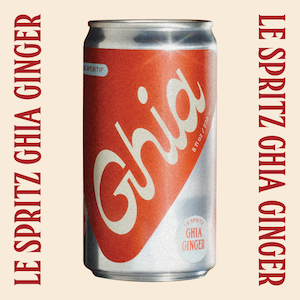
[00:11:21] Ray Latif: Well, This is not a water. Yeah, the can I'm holding in my hand, that's what Mike's responding to. So Ghia, I think that's how you pronounce it, G-H-I-A, which makes non-alcoholic aperitifs, recently launched a new ginger infused or ginger flavored product. No question. This is one of the best tasting beverages I've had in 2021. And it is just incredibly good. Like I know there's a day part use for this kind of product. Again, it's an aperitif, but in terms of just like an everyday beverage, I would drink this day and night. It's so tasty.
[00:11:58] Mike Schneider: They're definitely pushing the use occasion for cocktails on that. This is one of the beverages, non-alcoholic beverages that we've tasted that is really close to a cocktail without alcohol. I would put that in the same category as like Bay Buzz is another one that's pretty similar in flavor to Ghia. They're really challenging in terms of the texture and the flavor. I'm with you, Ray. I would drink that at any time of day and it's scary. It's like, oh, I want a cocktail at 9 a.m.? Sure, why not? I'll have a Ghia.
[00:12:33] Ray Latif: They definitely position it as a cocktail hour kind of beverage. One of the call-outs on the can is crack it open, turn on the music, taste the bite, enjoy the night. I would enjoy the morning, afternoon, and night.
[00:12:45] Mike Schneider: Yeah, seriously. Hey, Guy, if you send more to the office, which is 65 Chapel Street, Newton, Mass, 02458. I'll try one at halftime during my next soccer game.
[00:12:58] Ray Latif: Okay. Push those use occasions. Folks, if you haven't had a chance to try Ghea, I highly recommend you do it. It's just a remarkable brand, remarkable product. You know what else is a remarkable brand is Ithaca Hummus. Ithaca Hummus makes some of the tastiest hummus out there. I mean, there's a lot of really great tasting hummus brands. Ithaca is right out there with all of them. They're known for their non-heat processing, which is HPP, which helps retain the flavor of Ithaca Hummus. Again, a really tasty product. They just launched this new everything bagel variety. It seems like every show we do, there's a new everything bagel. Ithaca Hummus got their Everything Bagel flavor for their hummus. Very tasty. You know what's actually interesting? I think I mentioned another Everything Bagel hummus, and that was cedars. And they're very different flavors. You would think they're pretty similar, but Ithaca's, there's a sour note in there. I mean, and a really good one in that. I think it's from the lemon. They always use fresh lemon juice in all their hummus. So that was a little different than the cedars. Both are great, but I'm really happy that Ithaca was able to send me some of theirs as well.
[00:14:05] Mike Schneider: Some of you may know, I enjoy coffee now and then. And we've had Super Coffee, Sow Good coffees come in. Our friends at Later Days now have a cold brew that has oat milk in it. And they also have one that has adaptogens. This is the one without, this is called Little Oat. The one that has mushrooms, Jackie.
[00:14:24] Trade Show: Fungi.
[00:14:25] Mike Schneider: Fungi, you gotta get your hands on that one if you haven't already. I had a conversation with these guys about their little characters on the can. And I think they're cute, but I think that, you know, a sugar call out or something that, you know, says this has, you know, that has oat milk in it with the adaptogen coffee would be a little bit more effective than these guys. But I do think they're cute.
[00:14:45] Trade Show: They're so cute.
[00:14:46] Ray Latif: Is the logo in the center, is that their mascot? It's an oat? It's a little oat guy? Is that what that is? This is an oat guy. And they have several mascots.
[00:14:53] Mike Schneider: They have a mushroom guy, too. Okay. Oh, I see. Fun guy. And the nitro one with the little nitro, the little dynamite stick or whatever it is. But these are tasty. The formulation is really good. Another coffee that came in is a dash, another adaptogen coffee. We're seeing some adaptogen coffees coming in. Another tasty one is coming to the office. And of course, you know, I just got to mention my favorite coffee, which is M300 Java monster.
[00:15:23] Trade Show: Whoa.
[00:15:24] Mike Schneider: We've been getting a lot of just intense energy drink coming in, which I've been tasting them. It's not my normal beverage, but this one came in and it ended up on my desk because it's like, hey, it's a new coffee. You got to try it.
[00:15:42] Ray Latif: Java Monster triple shot.
[00:15:44] Mike Schneider: Java Monster 300, which means that it has 300 milligrams of caffeine. I thought that this product, which is called Alani Nu Witch's Brew, 200 milligrams of caffeine and really potent was potent, and then this Java monster comes along and expects me to nuke myself with caffeine. Talking About jitters. Yeah. I'm going to try this on the show here. Okay.
[00:16:12] Trade Show: Here we go.
[00:16:15] Mike Schneider: Oh yeah. It's really, really, really, really creamy and so sweet. It's like ridiculously sweet. 32 grams of sugar. How many grams of sugar? Too much sugar. 32 grams.
[00:16:27] Ray Latif: Oh, 32 grams. Okay.
[00:16:29] Mike Schneider: Per serving, which it says is one can, so 24 grams of added sugar. Also shout out to SoulFix Elixirs who have a few new flavors of kombucha that they sent. This is the Ginger Hibiscus. It's like a purist's kombucha. It's not very sweet. It's nice and just tart and funky and delicious. I love SoulFix. Thanks for sending it.
[00:16:55] Ray Latif: Chef-inspired kombucha. Right on.
[00:16:57] Mike Schneider: Chef-inspired. It's yummy.
[00:17:00] Trade Show: another product that came into the office. It's actually a line of products called Sow Good. I got that too. Yeah. It's interesting. The whole premise is that everything's freeze dried to limit food waste, which I like that premise and they have interesting formats. So this is actually a freeze dried smoothie So all you do is you pour this into a blender with ice and then you blend it up and you can pour it back in. There's like a spot for your straw and then you can drink it. So an interesting idea. And then they have granola and then freeze dried, just very simple, like fruits and vegetables to keep it very clean. And then again, to keep them shelf stable and to limit food waste.
[00:17:43] Mike Schneider: So Jackie, for the feeble minded, Like me. How does this eliminate food waste? Because you're getting, you can freeze it for later or this would have gone spoiled and then they freeze dry? Or Hate's the deal there?
[00:17:56] Trade Show: Well, like I know, for example, my roommate would buy a bunch of bananas and only one and the rest will go bad. So if you get freeze dried bananas, they never go bad. So in that case, I could understand the food waste piece of it.
[00:18:13] Ray Latif: Now in my hands, in my right hand and left hand, I have two brands, both of which begin with an M and end with an SH. One is Mush. That's a brand of ready-to-eat oatmeal, overnight oatmeal. And Mush recently launched a new pumpkin pie variety just in time for pumpkin season. Pretty awesome stuff. Mush sent a bunch of samples to the office too, right? And they disappeared like that. You probably were the looter. I was not the looter. They sent this to me directly. All right. Direct to consumer. DTR. Direct to Ray.
[00:18:51] SPEAKER_??: DTR.
[00:18:52] Ray Latif: These are really, really delicious. As far as overnight oats go, sometimes the flavors are hit or miss. Pumpkin pie is an absolute hit in terms of flavor, particularly for this product, Mush. Well done. The chocolate is next level. Yes. And LS, as they say. The other brand that begins with an M and ends with an SH is called Mosh. And mosh is known as the brain brand it was launched by maria shriver and her son patrick schwarzenegger who if you have all ever watched one of our episodes of Elevator Talk probably familiar with patrick. They're launching a whole range of products and debuted with these new nutrition bars. These are made with vitamins B12 and D3, Lion's Mane, ashwagandha, omega-3s. They describe this as brain fuel and it's really tasty stuff. Right now it's direct to consumer. They actually sold out of their entire inventory, I think within six days. So the next batch of products is coming in November. Look out for it. And look out for our interview with Patrick Schwarzenegger coming to Taste Radio in November as well. We're Talking About lot about why he launched his brand with his mom, as well as his role as an investor and advisor in many fast-growing brands, including Super Coffee or Kidoo Life. Really great stuff. Really compelling interview. You don't want to miss it.
[00:20:14] Mike Schneider: That's an interesting branding, Ray, MOSH, calling it MOSH, because last time I was in a MOSH bit, I got my brain scrambled. It was a nine-inch nail show, stage diving, got kicked in the head, saved Trent Reznor's life. It was a good time.
[00:20:28] Ray Latif: Well, the reason it's called MOSH, spoiler alert, if we discuss this in the interview with Patrick, is it stands for Maria always her middle name i forget exactly what it is oh and her last name is shriver health maria oh shriver health mosh so that's why it's called that it's not because she was a fan of the sex pistols or something like that oh i see what you did there mosh okay yeah all right mosh that's one of my brainwaves again it was scrambled yeah It explains a lot, right? Yeah. Well, occasionally the show floor knacks can resemble a mosh pit depending on who's in line for the fried chicken. And I definitely want to ask Marty about that. So let's get to that conversation. All right, I am now sitting down with Martín Caballero, who's our Managing Editor for BevNET. Marty, how are you? I'm doing great, Ray. Good to be here. Good to see you back from Chicago, back from NACS 2021. How are you feeling?
[00:21:28] Martín Caballero: I feel great. Yeah, it was a good show. Always nice to visit Chicago. Great town. And yeah, productive couple of days. There's definitely a lot to see, you know, coming just a couple of weeks after Natural Products Expo East. So yeah. Back in the Trade Show swing of things. You seem energized. You seem like you've got, you know, there's a connection there. There's tons Riot Energy drinks, I guess people know. But yeah, you know, feeling good. It's nice to get out of town Foods and Little bit. Yeah, I imagine.
[00:21:53] Ray Latif: So, you know, we Talking About the vibe and attendance of Expo East a couple weeks back, I wonder, what NACS was like in terms of the show floor, the general sense that people wanted to be at these Trade Show, the energy, non-caffeinated that is at the show.
[00:22:13] Martín Caballero: Yeah, I mean, it was interesting. I think everyone is still getting back into the swing of things of in-person Trade Show. There's clearly, I think, a lot of caution involved. You know, there's certainly the safety protocols were were there in place. But yeah, definitely got the vibe that people were energized and were sort of happy to be there. I think really, you know, these Trade Show just really perform a pretty essential, some may argue, but I think it's pretty essential function in the sort of natural flow of how products are discovered, how they get on shelf, how buyers are introducing those to consumers. So yeah, I think it was a good show. And really, I think the more that organizers get practice and how to put on these shows safely, That's a great thing and hopefully this portends well for the future.
[00:22:56] Ray Latif: Absolutely. Now you penned a couple great stories for BevNET, your notebook, so to speak. As you mentioned, energy was a big focus for Naxx as it always is. Now, while the big boys are doing their thing and their innovation strategies are really focused on more caffeine, more flavors that are geared toward younger consumers, it seems like there's still an opportunity for smaller players, for emerging brands to get a piece of that action. What do you see as that opportunity for early stage brands, for these new entrepreneurs getting into the space?
[00:23:31] Martín Caballero: Well, right, I think like, as you said, there's a lot of big brands in this category. And it is outside of the natural space, clearly different kinds of ingredients, different kinds of positionings. And I think in some ways that actually helps some of these smaller natural newcomers stand out on shelf and just really showcase what makes them different. I mentioned Ethan's the shop brand from Colorado, I think probably some of our listeners are familiar with them.
[00:23:55] Ray Latif: Yep, we had Ethan on the podcast last year, Maker, he's launched with Apple cider vinegar shots, have since expanded into different kinds Riot Energy shots as well.
[00:24:04] Martín Caballero: Exactly, exactly. And, you know, we talked a little bit about the new partnership that he has with CBS and on the shelf there, they're going to be placed alongside 5-Hour Energy. You know, clearly the defining leader of that category and really what all these natural upstarts are really trying to crack that market and really find a place for themselves. So, I mean, it is interesting. I think it's also interesting play for him specifically. They're sold in two packs, so a little bit of different sort of value play. But I think it really across the board, it really gives these brands an opportunity to to just show how they do things differently. I'm thinking of a brand like Riot Energy as well, who are at the show Shaka Tea, you know, doing different things with their formats and shots as well. And then, you know, there is also something to be said for the trickle down effect, for lack of a better word, when some of the other players get involved. I mean, I think ZOA has been one of the brands that people have a lot of eyes on in the energy space because of its affiliation with Dwayne Johnson and Molson Coors backing it and stuff like that. And I think, you know, that is a natural energy play that sort of, you know, that helps open the door from a retailer perspective to sort of what else is out there. There's sort of an acknowledgement that these ingredients are having an impact in the space. So yeah, I think by simply having their strong point of view and really established identity, they can stand out and really showcase what makes them different. Absolutely.
[00:25:26] Ray Latif: In terms of the strategics, Pepsi is an interesting company in that they appear to be making even bigger moves Riot Energy with their acquisition of Rockstar, with their affiliation with Bang, with their own Natural Products. What do you see is happening with them in terms of how they're Talking About navigating energy going forward with so many different options at their fingertips?
[00:25:53] Martín Caballero: Yeah, I mean, it is really interesting. And that was definitely a big focus at the Pepsi booth this year is really the way that they're approaching energy. We know it's the biggest category and convenience. So there's a lot of opportunity there, but it's really kind of a canvas for them to explore different things and sort of deploy the different brands that they have. We were Talking About, you know, natural energy a minute ago, and their new product, which is going to be launching next year through Starbucks is called Baya. And that's a natural energy line. And that sort of falls under their four principles, which they had at the booth there. And that one falls under positive, you know, it's sort of the association with not only positive energy, but the ingredients used, it's all natural ingredients, natural forms of caffeine, leaning into that positioning. And then contrast that with Mellow, and that was the Rockstar product with hemp seed oil. So sort of positioned as Bang Energy product, but that has that sort of relaxation element or anti anxiety element as well. So it's really kind of like this, as I said, it's this canvas for them to sort of explore these different functionalities within the pretext Riot Energy. So certainly it's a big thing this year. And it's interesting to see how they're deploying those brands that you mentioned, I think rockstar is also going to be having a frozen dispensed product as well. So it's sort of a broad brush to paint with.
[00:27:11] Ray Latif: No naked at the Pepsi booth this year, though.
[00:27:15] Martín Caballero: No, no naked. I mean, I think we all know that the juice category has certainly been slimmed down, especially with the strategics recently. And I think we were Talking About little bit earlier about sort of where the strategic stand in terms of the health and wellness positioning that we've heard so much about in recent years. I wouldn't say it's going away. You know, NACS is clearly for the convenience market. So that's why we're seeing the heavy emphasis Riot Energy and CSDs and that kind of thing. But there is sort of, you know, if we're looking at Coke, for an example, I think they have trimmed down their portfolio. And it's really about sort of where are they going to be directing efforts that are going to yield what they see as a strong return. So we're going to see an extension of the SmartWater Plus line, which is that sort of functional ingredients added line that they introduced last year. AHA, the zero calorie sparkling line, which is growing fast and sort of that really, you know, natural alternative to CSDs is also going to be integrated into their fountain program as well as getting a new flavor in their sort of caffeinated set of those drinks. And then Minute Maid, now that they're pulling back from Anwala and some of the juice aspects, they're really consolidating under Minute Maid, which is going to be a kind of a, you know, full sugar shelf stable line. But that's sort of where their energy is going. So, yeah, I mean, I think it's more incremental moves and we'll see what kind of things play well on that C-Store channel. But yeah, I think it's a sort of maybe not as prominent as maybe in a past year.
[00:28:40] Ray Latif: For sure, and Coke has always waved that banner of, we want billion-dollar brands, we want brands that can scale. And it seems like, you know, with Smart Water, they're just building on what already is a billion-dollar brand. Minute Maid, the same. And unfortunately, some of the Coke-affiliated brands, Coke-owned brands that we saw in past NACS events, Odwalla, Zico, Tsuja, these have fallen by the wayside. Coke has divested from all of those brands or sold them. I wonder if there's any real interest. As you mentioned, it's incremental. But I guess the one thing I saw from your reporting that stood out to me in terms of better for you was the Aguas Frescas line underneath the Minute Maid banner. And one could argue, is Aguas Frescas really that much better for you? But it seemed like it was a step in that direction of we're still keeping an eye on consumer trends and products that are going to resonate with different audiences, whether they be a mainstream opportunity or otherwise.
[00:29:39] Martín Caballero: Absolutely. I mean, I think that Coke, Pepsi, all the strategics would tell you that they're very focused on where the consumer is leaning and certainly, you know, an analytical driven sort of model Or Hate. I think the interesting thing with Agua Fresca that you brought up is that Coke has an existing Aguas Frescas line, Barrilitos, which is only in fountain kind of service. So I thought it was interesting that that sort of the leverage that maybe consumer awareness is from that brand was not brought into the RTD product. But yeah, it's interesting to see how they're sort of dipping their toes in that brand and sort of how Minute Maid will sort of allow them to do that. The one thing that I would maybe argue with is that while it may be it is unfortunate in some ways that for some of the brands involved or for, you know, that there's maybe less money out on the table. you know, maybe it proved that simply Coke, Pepsi, and some of these guys were not really that, this wasn't their strong suit necessarily. Investing in some of these smaller brands and starting figuring out how to build them into billion dollar brands and get into that next level. Certainly we've seen, I guess there's probably mixed reviews on that and then sort of different ideas of whether or not they were successful or not. But as they step back from that, I think there's, you know, great opportunities for other people who want to invest. And again, maybe this is sort of, clarifying what they should be staying in and staying out of.
[00:30:57] Ray Latif: For sure. It's a tangent to this conversation, but not everything needs to be a billion-dollar brand, and not everything will scale to be a billion-dollar brand. For Coca-Cola Co Coca-Cola, Maybe that's the focus, maybe that's the goal, but you can still have great brands that don't do a billion dollars annually. Absolutely.
[00:31:17] Martín Caballero: And I would say Coca-Cola Co probably not a good place for those brands.
[00:31:24] Ray Latif: Well, what about Vitacoco? They're throwing a lot of things against the wall and trying to see what sticks. I mean, it was actually really strange. I guess I mean that in the only way I can mean it, to see Vitacoco launch a coconut juice product. Given that coconut water Is juice.
[00:31:41] Martín Caballero: Yeah, a little bit of a maybe splitting hairs there. I mean, certainly you're right. It technically is juice from the coconut. I think that product is notable because it is has added sugar and it's really about that can format. So I think the way they were they were sort of positioning in it is sort of a product that can play against the Goya canned coconut waters, you know, a little bit more of a value item to play. So kind of just another box to tick, maybe for their, you know, we saw a couple weeks ago, we saw the coconut milks that are going to be coming out next year and stuff like that. But then also interesting to see and have a first taste of power lift, which we reported on a couple months ago. But yeah, that's going to Vita Coco's new product, which is a protein infused water, 10 grams of whey protein infused. So yeah, I mean, certainly interesting to see them do different plays and more power to them. Love It. Well, Marty, I kind of wish I went to NACs. Everyone was Talking About you, Ray. Were they? Yes, it's true. Everyone was asking, where's Ray? Where's the rest of the team? So.
[00:32:44] Ray Latif: Did they say my name first and then say the rest of the team? Because that's the most important part of it. I could tell when they said the rest of the team, they really meant just Ray. Okay. Well, for folks who attended next and missed me at the show, I'm sorry you missed me. Hopefully we'll see you at BevNET Live, Nosh Live, Rebound Live in Santa Monica in December. Until then, Marty, great sitting down with you. Yeah, thanks for having me. Glad to have you back. Made it. All right. Talk to you soon. Cool. All right, now it's time to get to our two interviews featured in this episode, beginning with Cori Sue Morris, the founder and CEO of Retreat Foods, an upstart brand of adaptogenic nut butters. I sat down with Cori Sue at Natural Products Expo East 2021 for a conversation about Retreat's backstory and positioning, why she's targeting goop enthusiasts, and how she mapped out social and pricing strategies for the brand. Hey folks, Ray with Taste Radio back here at Expo East 2021 in Philadelphia. And sitting with me now is Cori Sue Morris, who is the founder of Retreat Foods.
[00:33:50] Taste Radio: Hey, thanks for having me.
[00:33:51] Ray Latif: Thanks so much for joining us. You've got some of your foods right here with you. I am looking at a jar of what appears to be butter. In fact, it is. It's Superfood Almond Butter, and you've got other kinds of nut butters as well. I am getting way ahead of myself here because I should be asking you, what is Retreat Foods all about? Please tell us.
[00:34:12] Taste Radio: That's right, there are four flavors of Retreat Foods. And what you're looking at is almond butter, but it's actually adaptogenic almond butter. So the premise of Retreat Foods is food is medicine, which is obviously a hot trend right now, functional ingredients. And the whole premise is putting a functional dose of adaptogens into every serving of our spreads. So superfood spreads that help you find balance, focus, calm, or boost your immunity should you need it.
[00:34:39] Ray Latif: Very cool. And they look like, forgive me for saying this if it's not the case, really super premium, like ultra premium butters.
[00:34:46] Taste Radio: Yeah, you know, good food ain't cheap, as they say. So we have a functional dose of all natural adaptogens, which are herbs that help your body adapt to external stressors. We are very much a premium product. Everything in the supply chain is ethical, natural, we're free of processed additives. And I really wanted the experience to match the price point. But more importantly, the whole premise of Retreat Foods the concept of, you know, nourishment and self-care. And we wanted consumers to really feel like they were taking a retreat, doing something nice for themselves when they opened a jar.
[00:35:20] Ray Latif: One of the reasons that I described it the way I did is because when I'm looking at it, it almost looks like you took a cue from the cosmetics world or the fashion world in terms of your branding. It's this gold label or this copper label or this, it just, it just, it has a feel of like goopish, if that's a word?
[00:35:39] Taste Radio: I don't hate that comparison. It was funny. I was meeting with a buyer yesterday and he said, this kind of looks like my wife's makeup. Yes, in fact, that was the intent. So again, back to that premium feel, something that you do for yourself, the way, you know, when you put on makeup, you're doing something that makes you feel good. So that was very much the intent.
[00:35:58] Ray Latif: So I assume that the target consumer for Retreat Foods is the female consumer who has perhaps more disposable income than other folks might.
[00:36:09] Taste Radio: I come from a marketing background, right? So our target customer is very much the sort of stressed out affluent urban millennial, but adaptogens fortunately are beneficial to all age groups. They can help kids. There are early stage studies that Alzheimer's and different inflammatory diseases can be helped with adaptogens. And so I like to say, we'll start with the women in the household and expand multigenerational to kids, grandparents. There are even now adaptogenic dog treats to help stressed out pups. So hypothetically, your pup could also have, your posh pup could have some almond butter.
[00:36:42] Ray Latif: That's pretty interesting. I wouldn't know how to approach that type of an interview, so I'm glad you don't market those types of products. What you do market is a very specific function associated with each flavor. So balance is associated with your almond butter, calm with your hazelnut butter, and focus with your sunflower butter. I wonder why you chose to take that approach versus having different functions yet with the same base butter.
[00:37:11] Taste Radio: Yeah, absolutely. I worked with a female herbalist and a female recipe developer, Sarah Massoni, to really put together the flavors. And so, and I wanted diversity for our customer, but the way they're, you know, premise, we have something to take you from day to night. So if you all day almond tastes exactly like almond butter, but it has a functional dose of just general wellness herbs that help with inflammation, immunity. And then the calm, of course, at the end of the evening is meant to be a healthy version of Nutella with hazelnut cacao nutmeg, which promotes sleep as well as ashwagandha, which helps relieve stress and anxiety.
[00:37:45] Ray Latif: You have a really good grasp of what you do. It feels like you're the kind of founder who just understands what they're selling. How did you get into this business? Is your background in food? I mean, I think you mentioned your background is in marketing, but did you have any experience within the food industry?
[00:38:02] Taste Radio: So not directly, indirectly, I actually started, scaled and sold a blog about food targeted to millennial women called Bitches Who Brunch. And I spent 10 years interviewing chefs and reviewing restaurants before everybody was a blogger, I like to say. And then I ran a marketing agency supporting small brands that were often food and beverage. But this was my first foray into an Natural Products. And it was definitely a doozy during COVID.
[00:38:28] Ray Latif: Yeah, when did you launch Retreat?
[00:38:29] Taste Radio: Yesterday.
[00:38:31] Ray Latif: Yesterday. Okay, well, I feel really special now.
[00:38:33] Taste Radio: Thank you for having me. I've been working on the idea for a long time. But obviously, there were a lot of challenges and hurdles during COVID with supply chain and manufacturing. So it's been an emotional roller coaster.
[00:38:45] Ray Latif: How are you introducing this product to the trade and consumers? We're talking right now. So that's one part of the trade. But here at Expo East, I mean, how are you trying to build awareness for Retreat?
[00:38:54] Taste Radio: So right now I'm just here as a as a walking the show. I really am going to focus on DTC. So I'm not I'm in about a dozen regional retailers in the Washington DC area, but they're largely boutiques and upmarket health and wellness. So back to starting with that target customer, I'm going to go pretty hard in direct to consumer because that's what I know and focusing on places where the health conscious customer goes for leisure, right? A high-end acupuncture studio, a gym, things like that. Fortunately, the product is shelf-stable. And then eventually, as we build brand awareness online, we'll go to natural independent grocery is the hope regionally.
[00:39:30] Ray Latif: How do you build a brand D2C?
[00:39:35] Taste Radio: It depends on the year, right? There's always a different channel, whether it's media influencers. Now I'm fortunate we can do pop-up events occasionally, which is great. I've been doing gym pop-ups with like-minded brands like SoulCycle and SolidCore. Right now the trick is health and wellness micro-influencers who authentically love your brand and want to share your story.
[00:39:57] Ray Latif: How do you find those micro-influencers?
[00:39:59] Taste Radio: a lot of searching. Fortunately, I have an amazing social media manager that helps me out with that. List building, reaching out to influencers directly, sharing your story of your brand and really showing that you know what they Talking About and what they love. So we searched for a lot of influencers who practice yoga, who practice mindfulness, who maybe have gluten intolerances or vegan. Fortunately, our product is paleo, vegan, gluten-free, mission-driven. We have an ethical supply chain and obviously we're women-led and everyone that has touched the product is a woman or someone from a diverse background or both. So it was really important to me to build a brand based on values. And fortunately, that's what customers I think are looking for these days.
[00:40:41] Ray Latif: Yeah, I would say that is definitely the case. I mean, I think influencers and micro-influencers can help bolster that story. But the platform also has a big role. When you Talking About social, are you Talking About specifically Instagram and Facebook or where are you trying to attract attention for a retreat?
[00:41:00] Taste Radio: Right now we're on Instagram and Facebook. TikTok is really working well for a lot of brands right now. They just launched a Shopify TikTok collaboration, which I think is great. So people can shop directly from that. So we'll be launching TikTok in the coming weeks.
[00:41:14] Ray Latif: What is your video content going to look like? Is it going to feature you? Are you going to be involved?
[00:41:18] Taste Radio: I don't know. I think I'm too tired Or Hate. to get the micro influencers and other people to really share their how they use the product, how the product makes them feel, concepts of taking a retreat, what that really means to them. But yes, I'd imagine I'll have to get on there eventually and learn how to TikTok.
[00:41:38] Ray Latif: Yeah, for sure.
[00:41:39] Taste Radio: Late to the party.
[00:41:40] Ray Latif: Have you learned about pricing strategy yet? I mean, that's kind of a strange question. But I guess, what is your price point right now? And you know, how have consumers responded to it?
[00:41:48] Taste Radio: So, it's funny, I am going a little bit counter to the norm, right? My understanding of the CPG industry being fairly new here is that it's all about, you know, margins and getting it as low as possible and that there's, you know, distributors, everybody takes a cut, basically. So, with going G2C, I am starting at a $20 price point per jar. Okay, and really targeting that premium consumer because I want to exhaust the amount of people who know what quality is shop based on their values and understand that a all natural, no additive adaptogenic brand costs money. And also these people are buying supplements that are 50 $60 for a powder. So I'm not trying to compete with a supplement with retreat. I'm trying to offer an opportunity for people to who love adaptogens to incorporate them into their day and another point through food that tastes really good. I mean, these taste amazing. You can't stop eating them, which is great.
[00:42:42] Ray Latif: Well, I need to dig into one of these at some point because you're really making me hungry. But in the meantime, Cori Sue, this has been so great. Such a great introduction to your brand. I really appreciate the time. And for folks looking for Retreat, what's the website?
[00:42:55] Taste Radio: It's Retreat Foods and Little'Retreat Foods on Instagram.
[00:42:58] Ray Latif: Easy enough. Cori Sue, once again, thanks so much for being with me today and good luck with the rest of the show.
[00:43:02] Taste Radio: Thank you so much.
[00:43:03] Ray Latif: All right. Our second interview features Susan Palmer, the founder and CEO of Little Red Kitchen Bake Shop, a Brooklyn-based company that makes small batch artisan cookies and sweet treats that are baked with mostly organic, fair trade, and non-GMO ingredients. Launched in 2014, Little Red Kitchen Bake gradually expanded availability of its products beyond e-commerce and into stores in Metro New York. The company recently aligned with rapid delivery service Gorillaz and is now breaking into the freezer aisle of grocery stores with a line of mouthwatering cookie pies. Our conversation chronicles Susan's experience as an entrepreneur, her commitment to high quality ingredients, the challenges of wholesaling fresh products, and how she's positioning the brand for distribution in major retail chains. Hey folks, it's Ray with Taste Radio. I am in downtown Philadelphia for Expo East 2021, and sitting right in front of me is Susan Palmer, who's the founder and CEO of Little Red Kitchen Bake Shop. Susan, how are you?
[00:44:05] Jacqui Brugliera: I'm good.
[00:44:05] Ray Latif: How are you? I'm doing great. I screwed up the first time I tried to do this. I don't know even why I'm saying that, actually, because we could have just left that in the first take. But I called your shop a house. Little Red Kitchen Bake house is what I said, but it's actually a shop.
[00:44:19] Jacqui Brugliera: It is a shop, even though we don't have a physical retail store, which tends to confuse people because of the name. But that's all right. People get our name mixed up all the time. I'm used to it. Is that a good thing or a bad thing? I think it's a bad thing because that means we don't have enough brand recognition yet.
[00:44:38] Ray Latif: Well, you know, it's just the last word. It's not, you know, they get the Little Red kitchen part. That is true. So maybe just maybe just shorten it a Little Red kitchen.
[00:44:47] Jacqui Brugliera: I know. Maybe. It is a very long name.
[00:44:51] Ray Latif: Yeah. Yeah. So okay, obviously, you make baked goods. Yes. What is so special about your baked goods?
[00:44:57] Jacqui Brugliera: So our baked goods, even though we've been around for seven years, and we are a rapidly growing company, we still make everything by hand. Our only equipment is our mixer and our oven. Everything else is by hand. So we weigh and roll our cookies. We package and we label by hand. It is a lot of work. That's not the only thing that makes it special. We use almost all organic ingredients. There are no artificial flavors, colors, or preservatives. So I like to say it makes our cookies wholesome and delicious. They are cookies. It is a dessert. I'm not going to sugar coat it. It's full of sugar.
[00:45:36] Ray Latif: Hey, you know, a cookie should taste sweet, right?
[00:45:39] Jacqui Brugliera: That is correct.
[00:45:40] Ray Latif: If a cookie doesn't taste sweet, it's not really a cookie.
[00:45:42] Jacqui Brugliera: That's right.
[00:45:43] Ray Latif: Yeah, it's like it's like a biscuit. In England, that's what they call cookies, right?
[00:45:48] Jacqui Brugliera: That's correct.
[00:45:48] Ray Latif: But a biscuit here might not be sweet. No, it's not. Or less sweet than a cookie.
[00:45:52] Jacqui Brugliera: It's less sweet, yeah. But for me, and the reason why I created it is the ingredients are really important. That's what makes a delicious cookie. We don't want, I personally don't want cookies that are full of junk, full of ingredients that I can't pronounce. I want a cookie when I buy it to taste fresh, to taste home-baked.
[00:46:13] Ray Latif: Now you started out just as an e-commerce brand, correct? Yes. When did you think about starting to wholesale?
[00:46:20] Jacqui Brugliera: So we started Talking About wholesale in 2016 when we rebranded and redid our labeling. That's when we bought our barcodes and redid the labels and everything for the purpose of wholesaling. Didn't really start focusing more, I think like 2017 is when we started focusing, 2018 really sort of ramped up with it. mostly because the cookie space is so competitive and being such a young brand, our e-commerce sales weren't exactly where I wanted. We didn't just rapidly rise out of the gate like I wanted. And it was just another way to grow and to get brand awareness. And I often say, unless it's something really sketchy and creepy, I will usually sell my cookies.
[00:47:06] Ray Latif: Wait a minute, unless it's something sketchy or creepy, what's an example of something sketchy or creepy?
[00:47:12] Jacqui Brugliera: I can't think of something off the top of my head. But you know, I often get like the export emails and things like that, that you can tell it's, you know, a scam. Situations like that.
[00:47:25] Ray Latif: You're Talking About the opportunity to sell your cookies.
[00:47:27] Jacqui Brugliera: Yes.
[00:47:27] Ray Latif: If there's an opportunity to sell your cookies to a wholesaler, to sell it at the retail level, you will do it?
[00:47:33] Jacqui Brugliera: I will do it.
[00:47:34] Ray Latif: Unless it's a creepy exporter. Exactly.
[00:47:36] Jacqui Brugliera: Okay, fair enough.
[00:47:37] Ray Latif: Yeah. I've seen one too many of those. I can imagine you've seen a million or two many of those. Yes. Yeah. Yeah. Well, to that point, it's hard to get your product into stores even if you want to. I mean, as well as e-commerce might be going for you, it's hard to talk to retailers. How have your conversations gone? I mean, how is that process of wholesaling your product, getting into retail gone for you? What's been your process?
[00:48:03] Jacqui Brugliera: It's very hard. It's a very small team with us. I do everything in terms of sales and marketing. And then I have my small team of two bakers. So we are sort of basically the epitome of a small business here because we're really doing everything. And retailers, when they sample it, they Love It. But then it comes to the shelf life and because there are no preservatives, they tend to pull back a little bit because they're a little bit fearful that it's not going to sell fast enough. We perform best in the small, the gourmet stores because they do sell fast enough. We purposely keep our case sizes small for a fast turnaround. Our cookies freeze beautifully. I often tell our stores, freeze them, freeze them immediately. They will stay soft and chewy, and then you slack them out as needed to sell, and they'll retain the same texture. And that helps with the shelf life.
[00:49:00] Ray Latif: that does require the retailer to provide freezer space for your items, freezer warehouse space. Yes, it does. Which is an added cost for them. Yes. So have you been able to take a different path toward Talking About retailers about it? Because one of your retailers, I guess you could call it retailer of late, has been Gorillaz, which is a company delivery service that will deliver your goods in less than 10 minutes.
[00:49:23] Jacqui Brugliera: Is that what it is in New York City? That is correct.
[00:49:25] Ray Latif: That's a pretty amazing thing. Now, I guess you don't really have to worry about freezing anything for gorillas, but at the same time, I'm sure they don't want to keep any inventory on their shelves in their warehouses.
[00:49:35] Jacqui Brugliera: No, they're fantastic to work with. We just did our first order with them and they're very supportive. They're very on board with everything. Our first order, we have a lot of flavors. They are doing every single flavor in every location, storefront, if you want to call it that, warehouse that they have to test it out, see what moves the fastest, and then reorders will come from the most popular flavors from there.
[00:50:00] Ray Latif: What made Gorillaz interested in your brand?
[00:50:04] Jacqui Brugliera: They never really told me, but it was a fairly quick process. I learned about them on Instagram. I sent them a message asking for the buyer's contact, which they responded, I think either that day or next day. I emailed the buyer a pitch, and then he called me that day. It was really interesting.
[00:50:25] Ray Latif: Had he ever tried your products before?
[00:50:27] Jacqui Brugliera: No, this was the first time.
[00:50:29] Ray Latif: So, I mean, did he know that you were a known brand within the New York City area?
[00:50:35] Jacqui Brugliera: No, he wasn't familiar with me. He just really liked my pitch, liked everything that I said, and asked to come and do a site visit. And he came to our kitchen, did a site visit. He had a couple of other buyers that were visiting from gorillas from outside cities. And we essentially started moving on it from there.
[00:50:54] Ray Latif: I assume the pitch you gave is similar to the pitch that you just gave us. Yes. Okay. Yeah. That's a question we get a lot from entrepreneurs is, you know, how do the best entrepreneurs, how do the best founders pitch their brand to the retailers they want to get into? And I think, you know, steady and honest and passionate seems to be the way to go. That seems to be the path that has led to the most success. Although I think some retailers would want to know what kind of customer base you already have, how many people have already sort of bought into your idea or this concept. So how do you incorporate customer feedback into that pitch? How do you talk to people about your existing customer base?
[00:51:38] Jacqui Brugliera: So our customer base, I mean, I always like to say it's all ages because they're cookies, but generally Our product is a Little Red expensive. The cookies, they come in packs of two. They retail for $5 for a pack of two. We're looking for consumer conscious. They're reading the back of the ingredient package. They're cautious of what's going into their bodies. because you're buying a pack of cookies for $5, two cookies for $5. It's also the impulsive buys. They do best at the front of the store where you're checking out. And we do a bright, colorful packaging. It's red, it's teal, there are polka dots and stripes on there. So it's very eye-catching. And it's sort of like, I'm going to grab this pack of cookies to have with my lunch. And that really does well.
[00:52:24] Ray Latif: As you mentioned, you have a small operation. I assume you want to get bigger, but it takes a lot to get bigger. So how do you think about scaling the brand from here?
[00:52:33] Jacqui Brugliera: So it's interesting that you bring that up. We actually do have a frozen product. So our cookie pies, which are eight-inch cookies in a pie tin, they are a frozen ready-to-bake product. Same deal, clean ingredients, no artificial flavors, colors, preservatives. But it's unbaked, and it goes from the freezer to the oven without any defrosting. So it is a very easy, fresh-baked dessert that the consumer can make at home. And because it's vacuum sealed, it's a very minimal packaging, so you can keep them stocked in your freezer without taking up space.
[00:53:11] Ray Latif: So now all you need is a really good label. Because when you're in that freezer aisle, it's hard to see some of the products unless they do have really good packaging.
[00:53:21] Jacqui Brugliera: Yes, yes. So we have our labels. We have the same branding. We have a round front label and then the back label with the instructions. We did actually win two Sophie Awards for two of the cookie pies last year. So we won the silver and the bronze and the baked goods, bakery dessert categories for the Monster and the Elvis cookie pie.
[00:53:41] Ray Latif: Wow, congratulations.
[00:53:42] Jacqui Brugliera: Thank you. Thank you.
[00:53:43] Ray Latif: So is that the product that's going to take you to the next level?
[00:53:46] Jacqui Brugliera: Yeah, yes, that's what I'm looking to scale because they are easy to make. We're not baking them, which means we just need more freezer space as we grow in order to they have to freeze completely in order for us to vacuum seal them because otherwise the dough just squeezes out when we vacuum seal it. But it's a product that's much easier for us to grow and to scale with. But there has to be a lot more consumer education because there is no product on the market. We are the only...
[00:54:15] Ray Latif: I was gonna say it sounds pretty groundbreaking.
[00:54:17] Jacqui Brugliera: Yeah. We're the only brand that makes product like this. And it is expensive. It is the price of essentially a grocery store birthday cake. So retail is about $25.
[00:54:30] Ray Latif: That is expensive. Yes. Okay, all that being said, if there's a retailer who's listening to our podcast right now, and you're trying to sell this to them, what's your pitch? I hear what you're doing. I like what you're doing. But the retailer is like, well, I'm giving up some freezer space for your product. Why should I do that?
[00:54:50] Jacqui Brugliera: We are looking at it as not only a queen ingredient frozen dessert that consumers can bake at home, it serves eight. And so it's an alternative to a pie, to a cake. to the customer to really end up presenting it on their own. Because they can pop it out of the metal pie tin once it's baked, and they can dress it up with whipped cream, with ice cream. They can make a sundae out of it. They can add fruit to it. And so it's no fuss. It's no mess. There's little commitment on the consumer's part to it. And it's fun. It's a cookie pie. It's a giant cookie.
[00:55:31] Ray Latif: Hey, you sold me. Yeah. Okay. So at $25, there's probably a limited number of retailers that would be able to take your product in. What is your dream retailer? Sprouts. Sprouts? Yeah. Okay. Yeah. When I think about Sprouts, I do think there are a lot of parallels between what they do and what you're selling.
[00:55:50] Jacqui Brugliera: Yeah.
[00:55:51] Ray Latif: I do hope you do get into Sprouts one day because they are a retailer that does seem to be looking for more innovative on-trend items. But at the same time, they also want to stock products like yours that just taste great, but don't have any of the, I was about to say crap, but I'm not going to say crap. Junk. Junk. Yeah. Okay. Junk. I said crap twice, now three times. Susan, it's been so enlightening speaking with you. Like I've said in past podcasts, one of the hallmarks of a great brand is the fact that you have a founder who actually knows how to run a small business. And I think a lot of folks that get into this industry think about scaling from the get-go, but don't really understand the fundamentals of running that business. And you seem to have that down pat, which is awesome. And I think you probably have a long runway for success, and I'm really rooting for you.
[00:56:40] Jacqui Brugliera: Thank you so much. I really appreciate that. It's been a slow, steady growth, and I like that because I feel like I can handle that.
[00:56:47] Ray Latif: Yeah. Well, if you can handle that, you can handle more. Susan, thank you so much again for speaking with me today. Thank you. All right. That brings us to the end of this episode. Thank you so much for listening, and thanks to our guests Martín Caballero, Cori Sue Morris, and Susan Palmer. As always, for questions, comments, ideas for future podcasts, please send us an email to askatasteradio.com. On behalf of the entire Taste Radio team, thank you for listening, and we'll talk to you next time.