[00:00:00] SPEAKER_??: you
[00:00:08] John Craven: This episode of Taste Radio is presented by BevNET Events. Join us this November 29th and 30th for Nosh Live, a natural food industry conference gathering A-list speakers from top brands, investors, retailers, and more to navigate the food industry, discover what's next, and find your vital partnership. Beverage pros, you know we have you covered. BevNET Live takes place on December 3rd and 4th to talk about innovation, trends, and challenges in the beverage space while encouraging partnership through extraordinary networking opportunities. The events are at the Lowe's Santa Monica Beach Hotel for the 10th time. To learn more, visit www.bevnetlive.com and noshlive.com. We hope to see you there. And now, Taste Radio.
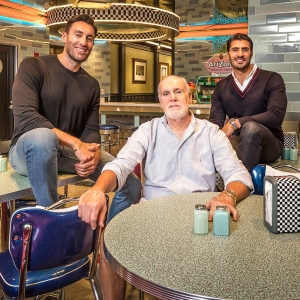
[00:01:01] Ray Latif: Hey everyone, I'm BevNET Managing Editor Ray Latif, and you're listening to the Top Podcast of the food and beverage industry, Taste Radio. This is episode 139, which features an interview with legendary beverage entrepreneur Don Vultaggio, the co-founder and chairman of Arizona Beverage Company. Tune in on Friday, November 30th for episode 10 of Taste Radio Insider, which features an interview with Arnold Ventura, the CEO of innovative beanship brand Beanfields. Just a reminder to our listeners, if you like what you hear on Taste Radio, please share the podcast with friends and colleagues. And of course, we'd love it if you could rate us on iTunes. The first thing you'll notice about Don Vultaggio's office is that it's immense. We're talking the size of your average apartment big, and outfitted with old-school furnishings crafted from wood, marble, and leather. The second thing you'll notice is the kitchen to the left of the entrance, conveniently staffed by a private chef. Don kindly offered me something to eat, perhaps next time. Yes, it is the office of a billionaire and one of the richest people in the world, yet despite the grandeur and amenities, it would be easy to envision Don just as comfortable in the office of a beverage warehouse in some gritty neighborhood of Brooklyn. He came from that world, whose inhabitants are bonded by blood, sweat, and tears. Flanked by his two sons, Wesley and Spencer, he tells me that hard work and consistency have been critical to his success and that of his company, Arizona. Don is a man who paid his dues and has been richly rewarded for it. In the following interview, we revisit his steps to success, from his early days as a beer distributor, to the development and stunning rise of Arizona, and why he called the tea brand a quote, accident. He also discussed how the company has maintained its iconic 99 cent pricing model for 26 years, why he views Arizona as quote, one big incubator, the importance of over delivering on promises, and why running a business means handling all kinds of problems, even if it means mopping up blood. All right, it's Ray from Taste Radio, and I am in the office of the one and only, the legendary Don Vultaggio, the chairman and co-founder of Arizona Beverages. I'm also here joined by the other co-owners of Arizona Beverages. That would be his sons, Wesley and Spencer Vultaggio. Gentlemen, thank you so much for having me. Thanks for coming. Outstanding. So you guys have, or Don, you have, oh, I don't know, about 600 or so different bottles and cans of products behind you and surrounded. Are these all your products? Are all these Arizona products?
[00:03:42] Don Vultaggio: Most of them are, but some of them are our salespeople pick up from the trade and they bring them in for me to see.
[00:03:49] Ray Latif: The one thing I really noticed was this bottle of Centrum vitamin water. Is that a real thing?
[00:03:55] Don Vultaggio: We never did it, but we were working with the Centrum folks years ago.
[00:03:58] Ray Latif: Is it something that was post-vitamin water? Is that what it was?
[00:04:02] Don Vultaggio: It was at the time when vitamin fortified drinks were becoming popular and we thought using an authentic vitamin name would be helpful.
[00:04:10] Ray Latif: So before there even was an Arizona brand, you got your start in the beverage business selling beer. Tell us about that.
[00:04:18] Don Vultaggio: Right out of high school, I went to work for a brewery that had been in business for over 100 years. And about a year and a half after I arrived there, they filed bankruptcy and closed. And I realized quickly why they went out of business. They didn't have enough tonnage on their truck to be profitable. Because the time in those days was a brewery sold what they made. There was no such thing as multi-brand distributors. And that was my idea, to have multi-brands on one truck. So a small mom-and-pop shop could buy two of this and one of that and mix it up, and it would fit within their ability to pay. Where the breweries had minimums, and if they weren't getting credit from the brewery, they'd have to pay COD, and it was difficult. So that was the business model. There was a need, I believe, for small shops to have multiple brands delivered by one truck. And I was the model. And then what I did was I went to the mom and pop stores that usually existed in areas where large chain stores didn't exist. And I found a customer there who needed that kind of service.
[00:05:25] Ray Latif: So, you started in the beer business, you had been pretty successful in it selling beer, and then you saw an opportunity for tea. And when you decided to launch a tea brand, it was in 1992, how much of the business plan was already in place? I mean, how much of what you were doing was trial and error, see if this works versus, hey, we have this idea that can be a great brand that is Arizona.
[00:05:53] Don Vultaggio: It was an accident. I had been in beer for 20 years at that point, and I saw Snapple come to the market. I saw Snapple suffer and struggle for years, and then I saw them successful with a wide-mouthed glass bottle with a good-tasting tea in it. And I was in the market, and I saw in February when this one had dawned on me. It should have dawned on me before, but it dawned on me in February of 1991. I saw this Snapple truck delivering a lot of Snapple in the middle of the wintertime. And I said, I'm going into tea business. I didn't know what I was going to call it. I didn't know what it was going to taste like. But I said, I'm going into tea business. And because I saw a success when I thought tea didn't sell in anything other than summertime, that was the motivation. And then from there, we created a can, and a name, and a look, and a style. that launched it. Did I think I was going to be an international brand in 1992 when we launched it? No. I was building a brand, I thought, for my own distribution in New York, where I had contact with thousands of retailers on a regular basis. Not me, but my team. And I thought we can put iced tea in those stores, because they all sold drinks. and we can help offset some of the costs of doing business with a non-alcoholic entry into the marketplace. And then that summer, it just took off, to our surprise. But at the same time, I had introduced only a few months prior to that a brand called Crazy Horse Malt Liquor. So I had these two lightning bolts of success after 20 years of struggling. And it all happened in 1992.
[00:07:37] Ray Latif: and the common thread between Arizona and Crazy Horse was the size. I mean, you were selling large quantities of liquid. The 23.5 ounce can, which is now the iconic package for Arizona, where did that come from?
[00:07:51] Don Vultaggio: In my career as a multi-brand distributor, I sold a brand called Schlitz Malt Liquor. And Schlitz had a thing called Tall Boy, and it was a 24 ounce can of beer. And I delivered that over the years. The only brand I recall ever in that can was Schlitz. And then I was thinking about how to compete with Snapple. And originally, I thought I have to be in a glass, wide-mouthed bottle like Snapple. 16-ounce was what they were doing. And then I realized, they said, well, if I have a package just like them, why would somebody buy me versus Snapple? Again, I was just focused on New York. And then I was in a 7-Eleven one morning, stopping for coffee, and they had a Gatorade in a big can, which I had never seen before. And it was, at that point, it was new. And I asked the shopkeeper, and I asked him about it, and I said, how's it doing? He said, pretty good. And I said, that's the package. I said 50% larger than a 16-ounce bottle, priced like Snapple. That was the concept. Shortly after, well, months later, we came out with the big can. That was the marketing strategy of value, great looking, great tasting, and a can that had a lot of imagery on the cooler. And that summer, we sold just about all we could make. And I realized that the can, to me, was the reason. Because it wasn't an advertisement, it wasn't radio, television, it was none of that. It was just that can and a cooler that stood out among the rest. And in those days they had Nestea and they had, of course, Snapple and they had Lipton and others. Mystic had already been out. But that can stood out among them. Bright colors were important. The name was great. The product was great. It still is great. And the model was built on something very simple. Make it look good, make it taste good, and price it fair. And over the years, we've stuck to that.
[00:09:44] Ray Latif: Wesley and Spencer, you must have served as somewhat of a focus group, you and your friends. I remember, I think I saw a photo of you, Spencer, when you were, looked like you were about 10 years old, and it was you and your friends, and you looked so happy holding that can of Arizona tea. I mean, how much did you guys provide a knowledge base or information for new flavors for ideas that could resonate with folks your age?
[00:10:10] Wesley Spencer: Yeah. I think at the time I was probably seven years old, not 10.
[00:10:14] Ray Latif: So you know what photo I'm talking about?
[00:10:15] Wesley Spencer: Yeah, I do know what photo. But I was eight in 1992, so it was probably before that. And I remember trying the, very clearly actually, the lemon and raspberry teas at the time. And just as we do it today, my dad brought home many samples and we tried them and we chose our favorite flavors. So I think we're instrumental in probably choosing what our taste palettes were at the time. And that flavor has remained the same since then.
[00:10:41] Ray Latif: Don, I mean, did you have a target consumer at the time for your teas?
[00:10:45] Don Vultaggio: I tried to keep it nice and simple. I said, anybody who's thirsty, right? Because when you start saying, well, this is for that group, you sometimes miss the mark. So, you know, what I found in marketing was you never know who your customer is going to be. So put it out there, let people choose. I mean, clearly, a big can in those days appealed to certain people and it didn't appeal to others. But I used to say, like, when we came out with green tea with pink flowers on it, they said, ah, the guy's never going to drink it. I said, well, just listen, it'd be great if we just have the women buying it then, right? You never know. Today it's our best-selling flavor. You try, you put it out, see what happens. If it doesn't work, you fix it. Entrepreneurial companies don't get hung up in market studies and focus groups, and they want to be so certain. There is no certainty. You try with always a view of where the exit is, meaning if it doesn't work, it's not going to cripple you, it's not going to bankrupt you, that kind of thing. But we did that then, we do that today. You try, you put it out there, you do the best you can with a package, a product.
[00:11:49] Ray Latif: price point, and you see what happens. I believe in the tech world, or at least in corporate speak, the term or the phrase is test and learn. And what were some of the things that didn't work early on? I mean, what were some of the learning lessons early in Arizona's development?
[00:12:07] Don Vultaggio: The good news is we haven't had a lot of failures, right? Meaning when we came out with a gallon, people said, that won't sell. And I said, well, a gallon will appeal to somebody who likes our product and wants to serve it to their family at a dinner table. It was a radical idea in 1996 or 97 when we introduced it. Well, it's been that long. Yeah, because it's been around a long time. It took a while to get going for buyers to accept it and consumers to realize what the heck it is all about. I remember we brought it to one of the major local retailer, and the buyer said, that's a crazy, stupid idea. It'll never sell. And my sales guy who was presenting it came back. He was despondent. I said, well, that's good news. He said, what's good about it? I said, well, that guy's never been right. And he laughed. Facts are, he was wrong. I mean, it's one of our better sellers. It gives people an affordable way to, you know, feed a family at a dinner table. When people in the tea business, when we first started, Snapper was in a 16-ounce glass bottle. It had some 12-ounce, but pretty much that's it. Nobody had multi-serve. And I said, it's needed. And what the market said to me was, no, it's not. New-age beverages don't sell in large packages. I said, isn't that silly? Because if you like Coca-Cola, you wouldn't buy a six-and-a-half-ounce bottle and take home 100 of them for the family. You're going to buy a two-liter or a 12-pack, that kind of thing.
[00:13:34] Ray Latif: I don't know. People do that these days. It's called portion control.
[00:13:36] Don Vultaggio: Yeah, I know. You know, if you have a group of a party, you're going to have a big bottle on the table. what we proved was new age beverages are as desired from a size point of view as a Coca-Cola or Pepsi-Cola. You know, if you're having a party, you want a lot of it. If you're buying a single in a pizzeria, you're going to buy a single bottle.
[00:13:58] Ray Latif: Affordability has been such a critical part of the Arizona brand itself. The 99 cent can really change the game in terms of how affordable tea was and continues to be. It's been 26 years. How the heck do you keep a 99 cent price point in all that time? The answer is I don't know.
[00:14:19] Don Vultaggio: Because if you look at things like gasoline and look at labor costs and if you look at like tolls and bridges, they've all jumped by hundreds of percent. When we started making tea in 1992, we were producing in a factory in Cincinnati, Ohio. It was an old brewery. and they were running that can at a little over 100 a minute. Today, in our plant in New Jersey, we run it at 1,500 a minute. on two fillers, so we were able to speed up the line. We cut the aluminum down because we thin-walled the can. Over the years, we've probably knocked out 50% of the aluminum weight in the can. We haven't touched the beverage at all because, like I said, that's what people are buying. But whatever we can do, like, you know, in our office here in Woodbury, we have a cross dock in the basement. We built this building around the need to have distribution in this marketplace without having additional cost of warehousing at all. We deliver everything at night from our central location So when the traffic is less the trucks can make more trips back and forth so we've done all the things behind the scenes to give the consumer the value and we take pride in that because I know working people appreciate what we've been doing and And the reason why we succeed and continue to succeed is they appreciate it without cutting what I feel is the most important thing, the flavor, the product, the ingredients. And if you can put those two combinations together, you can be successful in America. And we've proven it every day. What you're talking about is efficiency. Efficiency. Efficiency that some people take for granted. I don't, right? I know that if somebody looks at it on a shelf and sees the right price, they buy. They don't know how it got there. Did it get there in a 53-foot trailer that has been now lightweighted so you get another pallet on every load, which is what the industry has done? They don't know that the truck was delivered at night so it wasn't stuck on the George Washington Bridge for two and a half hours. Those kind of things, the consumers don't know and don't care. So that's what businessmen have to do, because there's only one thing you can control, not weather, not market conditions. You can control your costs. So that's what we've done as a company.
[00:16:31] Ray Latif: Sometimes you can control the price, but even when you have that 99 cent tag on the can, folks might charge a little bit more for it. And what's been your response to retailers that are trying to charge, say, a buck and a half for a can that says 99 cents?
[00:16:45] Don Vultaggio: We suggest retailers, it's up to retailers. And clearly, if you're in a situation where you have high costs, high rent, you're in a seasonal area where you only have a few months to make a profit, we get it. And that's why we have other offerings. You know, as a marketer, what we need to do is have something for everybody, whether it's a flavor or a package or a pricing strategy. You know, we have accounts that need to have a higher price point, and there are packages within our line that can accommodate that. So we give them options. And, hey, you know, the guy who thinks he is a marketer thinks he's a dictator is kidding himself, right? What we do is have close to 500 SKUs we manufacture worldwide. And there's something for everybody in that line of items. And I understand retail because I was a retailer. And I know how difficult it is to be a retailer. And I understand how important giving customers a value to come back to their store is. But the combination of all those things have to work for everybody. So, you know, we as a company have built a business around satisfying retailers so that they want to sell our product. And in some cases, the big can't doesn't work for them. And we get it.
[00:17:59] Ray Latif: One of the other things that keeps or seems to have kept the price consistent and kept costs down was your lack of a marketing department, your lack of marketing per se. Have you ever had, did you have a CMO before Spencer?
[00:18:13] Wesley Spencer: Well, I think at the time they used the word marketing differently. Okay. Marketing in terms of sales. So now we look at things from a more non-traditional marketing perspective, like social media and more guerrilla type marketing campaigns. So your budget is still pretty low. Our budget is very low, but we did, we did do a pop-up though. It was very successful that we invested more money than we generally do. But besides for that, it's relatively low.
[00:18:42] Ray Latif: Yeah. I'm looking at Wesley's hat and it's the great, great by 99 cent hat that you guys have really plugged and promoted quite a bit.
[00:18:50] Wesley Spencer: Your pop-up had a lot to do with the concept was great by 99.
[00:18:53] Ray Latif: great by 99. So hopefully it won't be one Oh nine. You know, you got to keep costs down for another 10 years before that becomes relevant. What's that? Oh, okay. 109, no, it doesn't. No, 399, you know what I'm saying? 399, there you go. There you go. Whenever you raise the price, people want to buy more. Isn't that right?
[00:19:12] Don Vultaggio: Yeah, well, I don't know, but we struggle every year to hold that price point because we know people, especially people who are working people really count on that.
[00:19:21] Wesley Spencer: And we try to do it as long as we can. And I believe our brand is synonymous with the 99 cents right now. So as long as we can maintain that price, we'll be there.
[00:19:30] Ray Latif: Yeah. So the brand known for great taste, known for great value. Today's consumers, or a lot of them anyway, are looking beyond just the taste and value. They're looking for healthier, better for you products. How much of that shift is factoring into your innovation strategy and ways to expand your portfolio?
[00:19:54] Wesley Spencer: I think very much so. We just released a sparkling water that's zero calories.
[00:19:58] Ray Latif: I have it in front of me.
[00:19:59] Wesley Spencer: As well as taking a look at all of our existing products and seeing if we could reduce the sugar without sacrificing the quality and the taste of the product. So through some new innovations in sweeteners, we've been able to do that. Some are easier than others, but we're forward thinking and we're addressing that.
[00:20:20] Ray Latif: Does it change how you market or sell the product if it says reduced sugar? Would people automatically think that maybe the taste has changed, maybe it's not the same Arizona?
[00:20:28] Wesley Spencer: I don't think we would want to go that route, but we would like to be health-driven. So I think some of our new product offerings could be lower sugar. I mean, Arnold Palmer states light on the product, so that hasn't been a deterrent for younger people to consume our product. But for existing products, I think we would not like to mention it.
[00:20:49] Managing Editor: but we would like to be conscientious of it.
[00:21:09] Ray Latif: The sparkling water product is great. I have in my hand the lemon-lime variety. This is a flavored sparkling water plus minerals, no calories, no sweeteners, and no sodium. Don, you actually sold a flavored sparkling water product back in the day. I believe it was called Spence and Wesley. Now, did the brand come before the sons or did the sons come before the brand?
[00:21:26] Don Vultaggio: The brand came after the boys were born. The name was motivated by the kids' names. But that was a sugared product in those days. Did you foresee this wave of demand for flavored sparkling water? You know, New York was always a seltzer market. And seltzer was, back in the day, they'd have home deliveries of seltzer men who would bring siphon bottles to the homes. So I grew up with that. And now it's emerged into a kind of real trendy product. But it existed in New York for the last, shoot, 100 years. But like everything else, what you see is things are always changing. And what was not all that important 10 years ago now is very important. So as that, we adapt to it. And I told people, I said, I've never invented anything. I've just done it better. Our carbonated mineral water tastes better than the competition. I think so. And I think our consumers have told us so. And our packaging is better. And our style is better. And we're going to participate in that category like we've done with teas and other things over the years. We believe there's a future there.
[00:22:35] Ray Latif: How much of your intuition do you rely on when it comes to making these kinds of decisions about expanding your portfolio or making a move into, say, other markets internationally? I know, Wesley Spencer, you just came back from Germany, and you're looking to go international. I mean, how much of your intuition plays into the business planning versus the kind of focus groups that you seem to have eschewed over the years?
[00:22:58] Don Vultaggio: Intuition is built on experience and knowledge of the industry. And right out of high school, I ended up in the industry and that was close to 50 years ago. So I've seen a lot of trends. I've seen a lot of things happen. I've seen things that were flash in the pans, right? And some things that stick. And as a marketer, if you're not using your knowledge and your gut, that's all you got, right? Focus groups help. I think, people who use them, is help kind of like confirm what you're thinking is right, right? You know, you're going to ask people, what do you think I should do? And I'll tell you, it's what I think I should do, and what do you think of it? We have close to 250 people in this office, and it's one big marketing group and focus group, because everybody here sees products as they're coming, as they're being developed. And I ask people, what do you think? And over the years, a lot of them have been very good at it because I've asked them that question hundreds and hundreds of times. And what you then end up with is what I'll call a more focused group than a group that are in a mall or a supermarket and, you know, sitting there with a mic in their hand. So, you know, every marketer, I think, I don't know, but us, we ask people what they think. And when you're done, You hope that what you put together is going to be right. And if it's right, you go with it. And if it's not, you kind of change it. But there's a lot of gut that goes into it with the knowledge that you've gained over a lifetime and looking at what's going on in the marketplace as well.
[00:24:35] Ray Latif: Now, it's been trendy to see beverage companies and food companies launch incubation units. And, you know, in the past, basically the incubation unit was testing in a few different regions or, you know, introducing a new flavor in a couple of different stores. Now it's, let's incubate this idea as a sort of separate entity. Has Arizona ever considered, have you guys ever considered launching an incubation unit?
[00:25:01] Don Vultaggio: We're just one big incubator right here. OK. You know, just like with our candy snacks, we had it in the pop-up store. That was the first test. Succeeded there. Then we produced it. And we put it in 5,000 accounts within a couple of weeks in our own market here. and it's sold and now we're in the candy business. So there's a route to market. We just do it a lot faster because we're able to, you know, because we don't have to go to a board and ask them for permission or go to a bank and say, what do you think, which is important. And number two is then we're actually able to put it into stores in a place like New York and there's no better marketing or test market than in Manhattan and in the boroughs where you have Lots of people from all over the world. So you get a good insight of what can happen nationally, I think, when you test in a place like New York versus going to a small town, you know.
[00:25:56] Ray Latif: What's the turnaround time for a new idea here?
[00:25:59] Don Vultaggio: It could be weeks. In the Beverage side, where, you know, our factories are set up to develop a label, sometimes we've had it out in less than 30 days. You come up with an idea, go to print, fill the can, and bring it to the marketplace. It sounds like a crazy, incredibly fast way to get to market, but when you have your oil teed up and ready to go, it doesn't take much to print the can or print the label and put it in an existing bottle and develop the flavor and go to market.
[00:26:30] Ray Latif: Spencer Wesley, your dad, Don, was talking about these fruit snacks that I have in front of me, which are really delicious. And they worked well with the pop-up shop. What else did you learn from launching the shop?
[00:26:44] Long Island: I mean on just like culturally, sort of our cultural relevance is what we found is stronger than ever. So we've realized that the demand for our merch, our swag, whatever you want to call it, is high, you know. So I think there's a potential to kind of figure out ways to expand on that and do some cool collaborations and see where we could take it. But I think the sky's the limit based on the excitement and the lines that we got in a rainy week in May. So we were able to amass huge excitement, huge lines, people waiting overnight just for a chance to experience what we were doing. So it was enlightening, I would say.
[00:27:23] Ray Latif: Don, I look at your sons and it's kind of throwing me off because over the past few days, I've been looking at pictures of you and you look, your sons just look just like you a few years ago. And you're trying to make them, I mean, your co-owners right now, your sons and they are the future of the business. What are you trying to impart upon them so that they'll be successful going forward? What's the most important thing that you've learned in your career that you can teach them?
[00:27:48] Don Vultaggio: Work hard and be consistent, right? And consistency is hard to do because it means you've got to be disciplined in a direction. And you can't give up because there are things that were successful today that we had to dig deep for. And a business is more than just a business for us. It's a business for our employees, and it's their livelihood, and it's their career, and it's important to their family. So you can't take those things lightly either. And some guys, you know, I mean, over the years, some businessmen in this industry have built a brand to sell. Our business is built to sell drinks, not to sell the business. And we're going to continue doing that. And hopefully we can do that into many generations and be a company that has one driving force that we come to work every day. We want to be successful at what we do. We want to do best that we can do. We want to do it better than our competition. And if you do that, you can succeed in this world of shocks that exist. It's not easy to be in business. It's not easy to exist. It's not easy to succeed in any business.
[00:28:59] Ray Latif: You mentioned consistency. There's a lot of things that you could strive to be consistent in. What's most important though? Is it work ethic? Is it personality? Is it product itself? I mean, when you talk about consistency, what rises to the top?
[00:29:15] Don Vultaggio: If you use that as the model, then anything you do will have a plan in place and then stick with it, right? Because oftentimes people give up before they're able to enjoy the benefit of what, well, the fruits of their labor, right? We have the good fortune of not having to go to somebody and ask them the question like, what do you think? Will you fund it? Will you help us do it? Because when I first started Arizona, I went to my bank at the time and they said it was a dopey idea. I've reminded them of that many, many, many times since. You're still with them. Yeah, I still am. I'm a loyal guy. Those are the kind of things that entrepreneurs face every day. And if they're going to their families or friends to help fund their business, it's hard. It's hard to convince somebody of your dream. And then when you got it, and if you're, like I call it, teed up, and then you drop the ball or you lose sight of what the whole mission was, then it's all for nothing. So, it's hard. People say it's hard to watch your weight and what you eat and exercise, all those things. It's hard to be a good person. It's hard, right? It's easy to stray. I tell people my consistency is that in high school I have the same size waist that I have today, right? That's very consistent, right? Because you get on a scale and that helps you be consistent, right? Because it tells you when you're off. In business, your numbers tell you, your consumers tell you why they're not buying your product, all that kind of thing. So you've got to listen and you've got to stay with it and be consistent in that approach. There's no book written about how to be successful in business. There's a lot of books, but it's trial, it's error, and it's hard work, and it's not for everybody. But it's for us, and that's why we're successful. Somebody asked me one day, how big is your marketing department? And I said, it's big. And he said, well, how big? And this was 15 years ago. I said, it's six foot eight. The boys weren't here yet. He said, six foot eight? He said, that's you. I said, yeah, that's me. And then I asked him how big his marketing department was, and it was hundreds. I said, well, what do they do? And he told me, I don't know what they do since I've been here. Unfortunately, there's good solid ideas are stifled in these companies Whether it's an incubator or otherwise because you know, you know the deal big companies if the idea is good The boss takes the credit and if it's bad, you get the axe, you know So the incentive to take risk is not there and that's I think was one of the dilemmas large companies not intentionally do but that's what happens, you know, I
[00:31:51] Ray Latif: You said that you're a loyal guy when talking about your bank. And I was watching this video on YouTube. It was called Arizona Beverage Company tribute video for Don Vultaggio. And it was celebrating an award you won a couple of years ago. And it featured employees, suppliers, your sons, your wife. And one word that kept coming up was loyalty. Does that old school sense of loyalty still exist in food and beverage beyond Arizona? Because it sounds like You're a person that doesn't give up on folks.
[00:32:24] Don Vultaggio: It's hard to be loyal, right? And it requires loyalty back, too. Somebody asked me once, what kind of business are you in? I said, I'm in a relationship business. Because if you build good relationships with people who are in the business of supplying you things, whether it's products or packaging, whatever, and if you get into a jam, they're there for you, to help you out. So my trucking company I've worked with for over 40 years. My flavor house, I went to high school with him. There's a woman who does our graphic design. I've worked with her for over 30 years. So we have, you know, I have a consistent relationship with guys and gals who are very helpful when you have a problem. Every day there's an issue, right? And if you have people around you who can help you deal with them, that's what makes success. It takes work to maintain relationships, like having a good friend, you know? It's hard. Sometimes he's a jerk or she's a jerk. Sometimes they say something wrong. But good friends are worth salvaging. And then at the end, you say, I'm better off with that friend than without him. So same thing in business. We have lots of employees who've been with us decades. Some of them never worked anyplace else but here. It's the kind of thing that good companies are built on good solid people, good products, right? Good marketing plans, good ideas, right? But people are the first part. And those relationships are not just with employees, they're with suppliers, and then with customers too. Now customers, there's a lot of turmoil, and I can't tell you how many buyers there's been with major retailers over the last 10 years. It's constantly changing. So it's very difficult to build relationships there, but when you can, you should, because it's important.
[00:34:07] Ray Latif: So you've built these relationships up. I mean, these relationships are going to change over time. And when your sons, you know, take over the day to day operations of the company, what's most important when it comes to building those relationships and maintaining them?
[00:34:18] Don Vultaggio: Being fair and being honest, you know, when I started with Jack Nicklaus, and we did the first product, he said to me, Don, he said, you over delivered based on what you told me. And I said, well, that's the model. If you shoot too far and the expectations of the person you're doing business with are beyond what's possible or beyond what he's capable of, sometimes then you're disappointed. So I always underestimate and then try to do better than that. Because I always found it's easier to give a guy a reorder for something, whether it's a container or a package, than saying, hey, by the way, cut what I estimated in half. It's refreshing or it's a nice phone call when you say, by the way, give me more than I thought I needed, than I estimated on. Again, every situation's different and each situation requires fairness and honesty, right? And if you screw it up, call a guy up or a gal up and say, I screwed up, this is what happened. Transparency, right? Because some people run from it, I don't. I run towards it, right? If there's a problem, that's when I really jump into play. You know, one time we, back in Brooklyn, there was a, unfortunately it was a robbery. I heard there were a few of those. Yeah, we had a bunch. But this situation was a courier who was leaving our shop, was shot as he exited the building. quite hold up, guys. And there was blood and there was, you know, it was an issue. Fortunately, nobody died, but people were seriously wounded. And when everything calmed down, I said, get the mops out. Let's get this cleaned up. Get the blood off the floor. I said, most people, when they see blood, you know, they don't handle it very well. I said, I'm like a guy who's, I seize blood, I go into action because that's a problem, right? But most people are not that. And you know, in life, when you have a problem, I've always said, deal with it, right? Don't run from it, don't hide from it, don't make excuses for it. And it's a good model to follow.
[00:36:18] Ray Latif: You've had a very Long Island successful career. You've accomplished so much. What's the one thing or maybe there's two things that you're most proud of in building Arizona? We're going to keep that long sigh in this recording.
[00:36:37] Don Vultaggio: I'm most proud of my two sons because they're involved in a company and they have the same kind of passion that I've tried to build in this company. They have the desire to make this company greater than it's ever been. I'm proud of the brand we built, which wasn't built on a scam. It was built on real, basic American values. High quality, fair pricing, great packaging. A friend of mine, a man I work for, and he was a good man, he said he was, during his career, he was selling fruitcake. And he said, Don, I went to Sellers By and every time I cut, there was fruit and nuts. And it was like, wow, I just cut in the right spot, right? And, you know, life's like that, right? If you're selling fruitcake, you want to have fruit and nuts in it, right? Because a lot of times, you know, what the label says is not what's in the package, right? Not that anybody's trying to deceive anybody, but putting high quality into products is something that's very difficult to do. It's costly, it means a lot of effort, and a lot of times you buy something and you're disappointed. Oftentimes. And we hope that when our consumers buy our product and put their hard-earned dollars on the table, they get what they expected. And we fight every day to do that.
[00:38:01] Ray Latif: Well, fruitcake is certainly an applicable food for this season. And I can't thank you enough for taking the time to be with me. Wesley and Spencer, it's been really great speaking with you. Congratulations on all your success and that success going forward as well.
[00:38:19] Long Island: Thanks. Thank you.
[00:38:20] SPEAKER_??: Yeah.
[00:38:23] Ray Latif: That brings us to the end of episode 139. Thank you for listening, and thanks to our guests, Don, Spencer, and Wesley Vultaggio. You can catch both Taste Radio and Taste Radio Insider on Taste Radio.com, iTunes, Stitcher, Google Play, SoundCloud, and Spotify. As always, for questions, comments, ideas for future podcasts, please send an email to ask at Taste Radio.com. On behalf of the entire Taste Radio team, thanks for listening, and we'll talk to you next time.