[00:00:05] Ad Read: This week's episode is brought to you by Oracle NetSuite. For more than 20 years, Oracle NetSuite has helped organizations grow, scale, and adapt to change. Used by 16,000 customers in 203 countries and dependent territories, NetSuite is a global leader of cloud-based applications. NetSuite's Cloud ERP for the food and beverage industry can help you with inventory, order management, e-commerce, financials, and CRM. With many customers throughout the industry, NetSuite has experience supporting businesses like yours. For more information on how NetSuite can bring your food and beverage brand to the next level, visit netsuite.com slash taste. And now, Taste Radio.
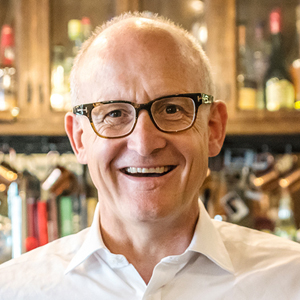
[00:00:55] Ray Latif: Hey everyone, I'm Ray Latif and you're listening to the Top Podcast for the food and beverage industry, Taste Radio. This is episode 151, which features an interview with Charles Gibb, the CEO Fever-Tree North America, who chronicled his nearly three decades in the spirits business and why consumers are craving an elevated drink experience. Tune in on Friday, March 1st for episode 23 of our Taste Radio Insider podcast, which includes an interview with Ryan Luendin, a partner with influential CPG law firm, the Giannuzzi Group. Just a reminder to our listeners, if you like what you hear, please share the podcast with friends and colleagues. And of course, we'd love it if you could rate both Taste Radio and Taste Radio Insider on iTunes. Charles Gibb describes himself as, quote, globally mobile. And based on his resume, that's an apt description. Although he's lived and worked in New York for over a decade, his career in the spirits industry has included senior leadership positions based in cities across Europe and in Australia. The experience has helped frame his perspective in his current role as the CEO Fever-Tree North America, a U.S.-based subsidiary of the premium mixer brand. Charles led the creation of the American Outpost, which launched last year and has rapidly paid dividends for Fever-Tree, with U.S. sales growing by 21% year-over-year, according to the company. In the following interview, I spoke with Charles about his work in the spirits business leading up to Fever-Tree, including a high-profile role as the President and CEO of Belvedere Vodka. He also discussed how his time in the British Army shaped his leadership style, and why it taught him about the importance of communication and humor. He also spoke about the evolution of the global market for spirits and mixers, and why he believes that Fever-Tree can be a brand for all consumers. Hey folks, it's Ray with Taste Radio. I'm in Dumbo, that's a neighborhood in Brooklyn, and I'm at the offices Fever-Tree North America, and sitting in front of me is the CEO, Charles Gibb. Charles, thank you so much for having me here.
[00:02:55] Charles Gibb: Thank you for coming. Really appreciate it.
[00:02:57] Ray Latif: Of course, of course. So, I heard you're moving. Yeah, I came to Brooklyn. My hotel's in Manhattan. If I had waited a couple weeks,
[00:03:04] Charles Gibb: Yeah, we're just in the process of moving. We've had a fantastic experience here in Dumbo, in Brooklyn, but we're camping inside somebody else's office at the moment, which I think is what you do when you're starting a company from scratch. It's been very convenient for us for many reasons, but now we need our own front door, we need our own space. Yeah, so we're moving to near the Nomad, Broadway, and got live in 10 days time. So very exciting times growing up as a company.
[00:03:32] Ray Latif: Indeed. Nomad, that's a good area.
[00:03:34] Charles Gibb: Very good area. We've managed to find a very cool penthouse office that's got a massive roof deck, where apparently they filmed part of Superman there, which adds a little extra twist to it, gives you a real New York feel.
[00:03:51] Ray Latif: So I really did screw up. I should have come a couple of weeks later. Correct, correct. You could have been on the set. Exactly. You said that you're starting a company from scratch, launched Fever-Tree North America here in New York. When was that again?
[00:04:04] Charles Gibb: So we launched the company on June the 1st last year. The brand obviously has been here for 10 years plus in the U.S. market and really is part of an evolution of any brand. You need to look at, I came on board with Fever-Tree North August 2017 and really started looking at what were the opportunities to grow the business in North America and obviously specifically focused on the U.S. And the agent had done a great job up to a certain point. But an agent can only carry a brand so far. And we want to control our marketing. We want to control our distribution, our sales. And we want to be able to really touch and feel the brand on a daily basis and be able to grow it in the right way for the longer term. So it came time to part company. I spent January to June last year recruiting a team and bringing a whole team on board. We had a launch conference in May, and we opened our doors for business on the 1st of June. So we're, what, seven, eight months old as a company. I'm loving it.
[00:05:01] Ray Latif: Indeed, you've been in the business of spirits and, well, adjacent businesses to spirits for some time. Before we get to that, I heard that you were once a captain in the British Army.
[00:05:12] Charles Gibb: Correct. I served my country from the age of about 19 till I was 20, nearly 26. I had a fantastic time, spent a lot of time in Germany, Northern Ireland. and then did some fun little adventures in places like Switzerland, Norway, and other parts. My only active service obviously was in Northern Ireland at that time. Bizarrely, I left the army and nine months later, Saddam invaded Kuwait. Although the rest of my battalion went, I didn't actually take part in either of the Gulf Wars.
[00:05:47] Ray Latif: I guess that could go either way. Did you feel any regret or were you pleased about that?
[00:05:51] Charles Gibb: I think both. You know, when you train to do something, you want to test yourself, you want to push yourself. And, you know, training to go to Northern Ireland and then not going would have been a huge disappointment. I think training for six years for the advent of a conflict and then never getting to test yourself out in a conflict. Yes, it's a little bit, you know, it's certainly a source of niggle between my friends and I for, you know, humorous, you know, sort of jibing that I get occasionally when we go out for a beer or a drink.
[00:06:24] Ray Latif: Indeed. What are some of the lessons from being in the service that you've taken with you in your career in the private sector?
[00:06:31] Charles Gibb: I think the first and the most important one was the aspect of leadership. And people often mistake military leadership for that thing where you tell somebody, you give orders and people, you know, conduct your orders. Well, if you're asking somebody to run around a corner and be shot at, They better know why they're going around that corner. They better know what's supporting them. They better know all the things that can happen. And they better know what support is available to them if things go badly wrong, i.e. they may get injured. And so how are we going to get you out of there? They better know where their other team members are going to be, where the rest of the support units are going to be stationed. So military leadership is very much more complex than people often give it, and certainly the movies maybe give it credit for. And I think that's the first thing is learning how to motivate, inspire people to higher levels of achievement and to do things that they don't necessarily want to do or didn't know that they wanted to do. I think that's one thing one took from the army. I think the other thing I took from that was planning. An army without a plan isn't an army, it's just a rabble. a business without a plan is directionless and lacks focus. So actually the ability to plan and plan in detail I think is something I also took from my time there. And I think the other thing I took is that there's nothing more serious in my life that I've done than being in the army. And yet some of the greatest humor I came across was in the army. And I think at times, you know, we've got to make sure we stay light and lighten up and enjoy ourselves and make sure we're having fun, make sure there's a lot of positive energy and humor in life. Because if you're not smiling, you know, even when things are really bad, what I do today, I help people's drinks taste better. If I can't smile doing that, then I really shouldn't be here at all.
[00:08:23] Ray Latif: Indeed. Certainly one of the things that some people do when things are going really bad is have a drink. You know, from time to time I think it's totally fine, right? So how did you get into the spirits business?
[00:08:36] Charles Gibb: I went and did a management training program, essentially a graduate internship or whatever, actually at a tobacco company for a short period. And because I really wanted to get into the world of consumer goods. When I say consumer goods, for me, it's consumer goods that I could relate to and touch and feel. Cigarettes, clearly after a while, wasn't really where I wanted to be. So quickly found myself at a spirits business, Bacardi. I always think of my alcohol career as matured in the way that I've matured. So I started off at Bacardi doing Bacardi Breezers and Bacardi and Coke in nightclubs at Newcastle and around Europe. I then graduated and went and worked at Diageo. I always say I joined United Distillers and I left Diageo, having worked for three or four different companies, but never really changed jobs in the meantime. Then of course, most recently, I was at Mert Hennessy before Fever-Tree. I think one of the other things that's driven my career was the ability to, I've always said I'm globally mobile. What it meant for me was that when I joined Diageo, the first thing they said to me was, you were in the army? Yes. Good. You could go to Poland then. Army Poland, well, you know, you'll be used to that sort of thing. It's like, are you going to make me live in a tent and dig a trench? So, you know, I went off to Poland in the early 90s and just after the Berlin Wall had come down, just after the whole, you know, the reunification of Germany, as Poland was starting to open up and we set up a company there. And one of the themes of my career has been setting up companies. I helped create United Distillers Polska that today is Diageo Polska. I went from there to Australia with Diageo. I then joined Merck Hennessey at the start and the inception of Merck Hennessey Australia. And so I set up and started the company there as the head of sales for the whole of the Australian market. When I joined Belvedere, I treated that very much as a startup. And then coming to Fever-Tree, here we are starting a business in the US and in North America, and I love startups. I think the army in many ways trained me quite well for the kind of ambiguity, the slight chaos of a startup and bringing order to that chaos over a period of time and the ability to confront issues as they arise. So yeah, so it's been an interesting journey.
[00:10:57] Ray Latif: Globally mobile. I like that phrase. I'd like to be globally mobile. What has living all over the world taught you about the things you want personally and the things you want in business?
[00:11:07] Charles Gibb: I've had a great life because I've been able to live all these diverse experiences. You know, living in Poland in the early 90s, it wasn't easy. You know, there were queues at the bread store. There weren't any supermarkets. You bought what was in the store. You never wrote a shopping list.
[00:11:22] Ray Latif: So, Tiago sent you out there and you still had to wait in line for bread? Yeah, absolutely. They couldn't send you food?
[00:11:29] Charles Gibb: Well, bizarrely, I used to actually fill my suitcase full of food every time I came back to the UK because I could get fresh vegetables and cuts of meat that I could actually recognize versus it just being sort of half an animal that had just been hacked and I thought it was beef. So, it was fairly fun during those periods. You know, living in Australia was totally different. I think what it's brought to me, I mean, whether I've lived in Australia or Poland, now living in the US as I have for the last nine years, it's the sense of adventure. I love travel. I love adventure. My heart is always in Scotland. My heart is always home. But I love exploring new places. I also love exploring new cultures and, you know, I think you can visit a country and you can learn a lot whilst visiting a country, but when you really live in a country, you really understand what drives the people, what motivates people, what differences there are. Some of my best friends are Polish. some of my best friends are Australian. I've got great friends here in America. Obviously, I've kept my base of friends in the UK and having worked for a French company, I've got loads of French friends who are in Asia or in Europe or wherever today. One picks up friendships, but beyond friendships, you really understand, you have a deeper understanding for culture, I think for adventure, and for life in general, and you appreciate You know, when you lived in Poland, you appreciated things very differently to the way that you appreciate them here. And likewise in Australia. And Australia is a beautiful place. There's very little hardship in Australia. And then you come and live in New York winter and you see hardship here. You see hardship in Poland. You saw a lot of hardship in Poland, particularly when you got outside of Warsaw. So I think you appreciate the kind of cultural diversity, the differences, and you get newfound respect for people and the way they live their lives.
[00:13:22] Fever-Tree North: Mm-hmm.
[00:13:24] Ray Latif: Scottish.
[00:13:25] Charles Gibb: Yeah.
[00:13:26] Ray Latif: I was on your Instagram account the other day and I saw you were flying the flag of Arsenal. How did you become an Arsenal fan? No, I should let our listeners know, Arsenal is a team in the English Premier League. It's a soccer team in the English Premier League. Loyal listeners of the podcast will know that I'm a day-hard Manchester United fan, so that's why I'm giving you a hard time.
[00:13:47] Charles Gibb: Well, the bizarre thing is I have no idea how I ended up at the Emirates. But I have to blame my nine-year-old son who was exercising his right of choosing his own team to support. And suddenly one day he decided he was going to be a gunner. which is a colloquial name for the Arsenal. And he has been a passionate fan of Arsenal from the days of Alexis Sanchez to Aubameyang today, and I know more of the Arsenal players than anybody else. And I love seeing the smile on his face when they win, but it certainly wasn't indoctrination on my part, that was for sure.
[00:14:25] Ray Latif: Fair enough. Okay, we'll leave it at that.
[00:14:31] Ad Read: Why feel good when you can feel oh so good? Makers of ridiculously good superfoods, Oh So Good, just opened its first cafe in West Hollywood. Try their bone broth soups and bone broth waffles to see what all the rage is about. And let me tell you, they really are oh so good. Visit ohsogoodbones.com to learn more.
[00:14:52] Ray Latif: Prior to coming to Fever-Tree, you were with Belvedere, which you mentioned. You were the chief executive officer of Belvedere. I read that one of the biggest changes you made coming on was moving the headquarters from London to New York City. Why was that so important to the development of the brand?
[00:15:10] Charles Gibb: It's a great question. I think I took over Belvedere Vodka it was a brand that was it was a very small brand. It was very much still in its infancy. Its largest market was the U.S. and we had a very high percentage of our business was done in the U.S. But the U.S. market was also the biggest challenge because it's the most complex market in the world. And I suppose here's my military upbringing or whatever. But rather than running away from a problem, I kind of ran towards it to see, right, well, I need to go and work out the U.S. I need to understand how the U.S. operates. And why did I want to do that? Because so many cultural movements start here nowadays in the U.S. The cocktail world in those days in particular and a lot of the thought leadership around drinks was coming out of the U.S. probably secondarily London, and then thirdly, the rest of the world. So if you really want to understand what consumers drink and how they drink, then you better come to the US market, particularly in vodka. Thirdly, we were spending obviously more money in the US than anywhere else. And I felt that I have a strong European background. I had strong connections in Europe. I felt that I could actually run the business globally from the US, but then find myself, and I knew I'd find myself in Europe on a regular basis because I always used to describe myself as a Scotsman running a Polish vodka, so I had a Polish distillery, working for a French company whose boss was in Paris, married to an Australian, so I have connections back there, and living in New York. So that makes me pretty global pretty quickly. And I knew I could keep pace with whatever the growth was going to happen outside the U.S., but I really wanted to be embedded inside the U.S. business and be close to the U.S. business, be close to the U.S. consumer, be close to U.S. bartenders, be close to the cocktail scene, etc., etc., etc. So that's why we moved it here.
[00:17:08] Ray Latif: The U.S. market, very complex market for any CPG company, any CPG brand. Marketing, when it comes to the vodka category, seems to be, at a glance, a huge driver of the growth of any brand in the space. Do you see it that way?
[00:17:26] Charles Gibb: There's no doubt marketing plays a big role, and particularly, obviously, if you're marketing a luxury brand. And Belvedere is the world's original luxury vodka, quickly copied, but was the world's original luxury vodka. I think the first thing was always making sure that we had the right product inside the bottle, that the liquid itself tasted delicious, so that we weren't just selling a beautiful bottle and a stunning image, we were actually making sure that the product really stood up to it. To this day, all my team know that I'm a diehard Belvedere drinker because I prefer the taste of the liquid and I know that it will never disappoint me. So I think that was the first thing, was always making sure and put a big focus on investment in Poland to make sure that we knew who our farmers were and that we could start telling the story about our farmers, the farmers who grow the rye that goes into Belvedere. The fact that we use no additives, the fact that we had our own water supply, getting those stories out there was really important. And then on the other side of it was the brand marketing and how could we be a modern relevant brand. you know, we were a smaller brand in the category, so we didn't have the ability to do massive advertising campaigns. So how could we be smart in the way that we marketed the brand through events, through PR, through innovation, particularly packaging innovation, all those things played a key role. And, you know, partnerships such as we did with Red, I was always still am very proud to say that we helped 42,000 HIV-positive mothers give birth to healthy babies. Now, what Red also did for us was allow us to do amazing events with phenomenal celebrities from Usher to Mary J. Blige to Lady Gaga, etc., all of whom became, in their own way, advocates, supporters of the brand. I love the work that we did reducing our carbon emissions in Poland and being able to talk about us caring and giving back in the community. Equally, things that took the brand really to the next level were things like the Bond partnership, which obviously was- James Bond. James Bond, yes. We partnered with Bond for the Spectre movie. And what that gave us was this iconic drink, the martini, but James Bond's martini, not just any old martini, one of the world's leading taste makers. His martini and being able to talk about that on a global scale obviously elevated the image of the brand and at the same time as that really drove creativity. and innovation inside the business. And we produced the most phenomenal array of bottles that were kind of collector's pieces and collector's items as a result of that partnership. So I think it's a combination of things. It's the product marketing and then it's the brand marketing that really made the difference there.
[00:20:17] Ray Latif: You talked about telling the brand story about the farmers in Poland, about what goes into the bottle. For a luxury product, how much of that matters to that end consumer
[00:20:29] Charles Gibb: I think it's really important. I ran Belvidere globally for nine years. And I kind of almost look at that period divided into three, not equal parts. But when I started, it was the era of bling, just bling, bling, bling, you know, nightclub, flashing light, big party, extravaganza. And it was really kind of in a pre-global financial crisis or right at the beginning of that. Then you had this vodka era, particularly in the US, didn't really happen in the rest of the world. But this vodka era of almost irresponsible marketing, where vodka producers were out there producing marshmallow vodka, gummy bear vodka, bubblegum vodka, and all the rest of it. And they took a lot of the character out of the category. And then as business people, the world has matured, that flavored vodka business is dead. And we never got into it. I would never go into it because I thought it was irresponsible marketing. Then you have this third area where really the consumer is questioning everything that goes into your bottle. They want to know the backstory. They want to know why they're paying $30 for a bottle of Belvedere. Why am I paying $30 for this thing? What is the story? What makes it different? And so being able to be interrogated at that level, then on top of that, they want to know, well, okay, we understand that you make money, but also what do you do to give back? How are you nice people? You know, what do you do for the environment? I used to use this analogy of if your neighbor doesn't recycle, they're a bit of a prat.
[00:22:07] Ray Latif: Yeah, for our American audience. What is it, Pratt?
[00:22:11] Charles Gibb: Not the sort of person you want to be living next to, you know, but that's just a bit selfish. Sure. So if your neighbor doesn't recycle, well, that's just not cool in this day and age. That's just dumb. So as a brand, what were we doing? You know, we reduced our carbon emissions by over 40% per case. How did we do that? We switched the whole distillery from oil to gas. It was one of the biggest things that we did. We looked at the weight of glass that we were using and said, well, could we use a little bit less glass to cause a little bit less impact on the environment? We switched from cork to a cap. Oh, that meant we were using less cork. Cork comes from trees. So we looked at every single aspect of our production. to say, what are the things that we can do to reduce our carbon emissions? Well, that's the way a business can be responsible. And obviously, the REDD program meant that we were giving back to communities around the world. Liquid, absolutely. If we can't show people the source of the grains that we're using, the rye in Belvedere's case, then that's not cool if you want to charge people a super premium price. And in the way that when you see a brilliantly made handbag, you know it's been made with the finest leathers, you know it's been stitched beautifully, quite often hand-stitched, you go, wow, okay, that's worth paying more money for. Same applies in spirits.
[00:23:37] Ray Latif: Now in front of us, we've got a line of four Fever-Tree products. And just looking at these bottles, they're so beautiful and so elegant. And I can see how someone who is coming from an elegant luxury brand like Belvedere Vodka be interested in coming to work with Fever-Tree. But how did you come to Fever-Tree? What made you decide to make the leap here?
[00:24:01] Charles Gibb: Well, first I probably had my wife to thank. We were very early adopters of Fever-Tree when I was back in London and before I took over at Belvedere. And the reason being is that I met one of the founders, Tim, at a cocktail party in London. And we were buying Fever-Tree because we knew it made our gin and tonic taste better. So my wife went, oh my God, the guy from Fever-Tree is at this cocktail party. And there he was, this chap over in the corner. You know what he looked like? No, I didn't know what he looked like. But my wife had heard through a friend that this guy from Fever-Tree was there. And Fever-Tree was, I mean, we're talking 2007 probably, maybe six.
[00:24:43] Ray Latif: I wasn't sure if you were internet stalking him or something. You were like, I hope we're going to see this guy. I know what he looks like.
[00:24:48] Charles Gibb: No, no, no. And very quickly, you know, I became friends of the brand. And when I took over Belvedere, you know, I said, guys, we're a spirits brand. We're a luxury spirits brand. And when we have an event, our drinks better taste good. Our drinks better taste the best. And if we're using, you know, highly processed, zero real ingredients, poor quality mixers, Belvedere will taste dreadful. And so we are only, as a brand, and I mandated it globally, in every market where Fever-Tree was present, that we would only work with them at our events and our activations because I wanted people to have a great drinking experience. And the Mediterranean tonic, which actually we don't have here at the moment, but I'll show it to you, was actually made with Belvedere in mind. Belvedere Vodka the benchmark vodka that they used for that because Tim and I became friends through business, as it were. It wasn't as formal and as big as the partnerships today, but we did lots of things like joint packaging, joint event activation, etc. When Tim came to me, whenever it was, mid-2017, early 2017 or whatever, and said, Charles, we'd love you to think about coming on board, I already knew the brand, and I'm a big fan of the brand, and I'm a fervent believer in great tasting drinks. and I've had too many bad drinking experiences around the world. And most of those have come from poor quality mixers being added to my delicious vodka or gin or rum or whiskey or tequila or whatever it happens to be, because people cost cut. And, you know, those horrible soda guns that you get in so many places, you know, they're mixing syrup and water at the same time to create something horrible.
[00:26:38] Ray Latif: I wish our audience could see Charles's face and how angry and frustrated he is right now saying what he just said.
[00:26:45] Charles Gibb: But you know, what upsets me a lot, well lots of things upset me, but what really upsets me is when you think of this beautiful spirit that's been crafted, sometimes aged for 10-12 years, it's been put in an oak barrel, it's been, you know, meticulously blended, it's been bottled with the best water that they could possibly find, And then it finds itself nearly to your lips as a consumer. And then the last thing that happens to it is somebody injects it with a whole load of high fructose corn syrup and garbage. And they've just destroyed somebody's work over the last decade in a nanosecond. That upsets me. Fever-Tree North great joy of Fever-Tree is that the brand was always set up on this wonderful promise that if three quarters of your drink is the mixer, let's make sure the mixer is as good as the spirit. Let's make sure the mixer respects the spirit. And every one of the products created by Fever-Tree is designed to be mixed. and they're designed to be mixed with different types of spirits from obviously gin and vodka, to rums, to whiskeys, to bourbons, to tequilas, cognacs. I've just come from meeting with a big spirits company and they're going, wow, we could use your spiced orange ginger ale with our Saint-Germain. That would be delicious. Oh, yes. Well, have you tried the aromatic with Saint-Germain? That's gorgeous. Oh, Lillet Blanc with, oh, yes. So everybody's looking for great ways to make simple drinks.
[00:28:21] New York: The industry is listening to Taste Radio. Advertising with BevNET gives you control over the message coming through our platform. Visit mediakit.BevNET.com to learn more.
[00:28:34] Ray Latif: So it feels like it was that natural transition from saying, I am a consumer of the brand. I know the brand well from having worked with Belvedere.
[00:28:42] Charles Gibb: You know, for me, the excitement here was also the entrepreneurial nature, the chance to do another startup. You know, I've already done, this is my fourth startup in the way that I look at it. And there's nothing more exciting than trying to tackle, you know, a huge opportunity in the greatest market in the world, which is the US market. And it's a very different challenge to the challenge that Fever-Tree has in the UK, for obvious reasons.
[00:29:09] Ray Latif: The U.S. market, a great market for the spirits business, it's evolving quite a bit. And we're seeing a lot more consumers get into premium or super premium spirits. A lot of brown spirits like whiskey have come to the forefront, seeing a huge boom in that category. How does Fever-Tree have to evolve to address the changing demand, the changing winds in the industry? Because, you know, most of the line was designed for gin and vodka, right?
[00:29:42] Charles Gibb: Well, the first products absolutely were. The first product being the tonic water. I should probably just tell you the story behind the name of the brand because that's quite fun. So tonic water is made, the fundamental agreement is quinine. You guys call it quinine. So I'll call it quinine. But the fundamental ingredient is quinine. Quinine comes from the bark of the Chinchona tree. real quinine, I said it wrong, I'm sorry, but comes from the bark of the Chinchona tree and extracting that, extracting the essence from that, mixing that with obviously water and carbonating it is what gives you a delicious tonic water. The best quinine in the world comes from the Democratic Republic of Congo and the locals there refer to the Chinchona tree, the bark of which creates quinine, as the fever tree, because again the medicinal benefit of quinine is that it helps prevent and cure malaria. In the early days, when the Brits drank gin and tonics, when they were exploring these various countries, they would have their daily dose of gin. And to that daily dose of gin, they would add a little bit of the Chinchona bark and some sugar and water to make it taste halfway decent. And hence the gin and tonic was born as a medicinal remedy or as a prevention against malaria. And hence the brand name Fever-Tree relates directly back to the original product of the tonic water. So it's a fun story.
[00:31:22] Ray Latif: It is. I mean, I'm assuming you have that on the website, but I've never really looked at the website to read that brand story.
[00:31:28] Charles Gibb: It's a beautiful story. It really is. It's rooted in authenticity. It's rooted in the ingredient hunting story of Evertrees. So much in the brand name that just comes out of that one story. So yes, we started in tonic and we have a wide range of tonics now. We've got an elderflower tonic. We've got a Mediterranean tonic, which has got lemon, thyme and rosemary in it. We've got an aromatic tonic where we use a little bit of Angostura bark and pimento berries in that one. We've got a lemon tonic, which essentially is bitter lemon, and we've just recently launched a citrus tonic in partnership with Patron Tequila to do a Patronin tonic. That's got obviously the quinine, but it's also then got Mexican limes and oranges and tangerines in the product as well. This summer we're going to be bringing out, we bought it out last year, but this summer we're going to bring out a cucumber tonic, which we think is going to be very exciting and very interesting. And so absolutely, we have a range of tonics. So loads of people, so the mule ginger beer based drink actually can mix with a lot of spirits in the US market. I talked about the spiced orange going beautifully with cognac. Well, US is a huge cognac market and got a massive number of cognac consumers. But also this goes beautifully with bourbon, with rye, along with the smoky. So absolutely, we evolved the portfolio to suit the market and to suit the way consumers drink in the market. The other trend I really see is kind of low ABV. The advent of, I think, low ABV and reduced sugar cocktails. Those are two things that are very prevalent on many cocktail lists around the country now. So for us being able to work with, you know, vermouths, So from Regal Rogue to Martini and Rossi through to, you know, Aperol, Lillet Blanc, Saint Germain, I've already mentioned. But being able to create simple, long drinks with those type of brands is fantastic. And again, low ABV really suits summer, outdoor. I'm looking for a refreshing drink. I'm looking for a long, refreshing drink. but I want to stay in control, particularly during, obviously with daytime consumption. So we see that as a really big opportunity. And then you go one step further and you think about brands like Seedlip, which is non-alcoholic spirits, where a brand like Seedlip, again, mixes beautifully with our tonic water, but also as a mule with our ginger ale or ginger beer.
[00:33:57] Ray Latif: Now, everything you're saying I'm hearing, but how do you educate consumers about what you're doing and what you're offering? How do you get them to trial? Is it through on-premises? Is it through the bars and restaurants like it's traditionally done? Or is there a path that's been more effective?
[00:34:15] Charles Gibb: I think the first and the most important people for us to talk to are the bartenders. And as a result, we do a lot of activation at any bartender gathering, whether that's something as huge as Tales of the Cocktail, whether that's Brooklyn Bar Convent, whether that's Portland Cocktail Week or a number of the cocktail weeks going on around the country. They're the real gatekeepers, because when they endorse the brand, we know they're going to use it. And we know that we provide them with something that's going to enhance the quality of what they're offering to their customers. And of course, they're looking for that because they care about ingredients. They select their spirits based on the ingredient. And so many really, you know, so many great bartenders I talk to, you know, look and they go, yeah, well, we used to have the gun, but we've got rid of the soda gun because we care about the drinks. great, you and I can be friends now, you know, which is great news. So I think that's one way. I think the second way is, and we've been working a lot on these, what we call the fever tree wheels, and the fever tree wheel basically takes, you're looking at the ginger wheel now, but it essentially looks like a pizza with different slices, and each slice represents a different part of the product mix. So you've got the spiced orange ginger ale on there, you've got the ginger beer, you've got the smoky. And then what there is is a series of simple drink recommendations that firstly we can talk to bartenders about, secondly we can start talking to consumers about. So again, when we're activating in front of the consumer, it's things like Pebble Beach Food and Wine, Aspen Food and Wine, we're down in South Beach at the moment, Taste of Chicago, etc., etc., etc., Nantucket Food and Wine. So whether it's a big food and wine festival or a smaller, more localized one, the ability to get out there and start tasting people on the way that these different gingers can be used and then we have exactly the same thing for tonic. It's just got more slices of pizza on it and again shows you different ways to use tonic water because tonic water can be pigeonholed as being gin or vodka but actually tonic water can work really well across a range of drinks and particularly when you start thinking about flavored tonic water.
[00:36:32] Ray Latif: I have a sense of who your consumer is. You know, you mentioned the Aspen Food Festival, the Nantucket Wine Festival. These are places where certainly you'll get some influencers to talk about what you're doing. Can Fever-Tree ever be a brand for all consumers?
[00:36:47] Charles Gibb: 100%. I mean, the runway for Fever-Tree North US is huge because so many people at the moment are not yet aware of the brand. We have a a massive opportunity to change the way people drink in the U.S. And people care. You only have to look at the rise of juice bars. You only have to look, you know, I want to go and get my own fresh juice every morning. I need it freshly pressed, squeezed, whatever it happens to be. You look at the number of bottled juices that there are out there. You look at the evolution of that, and then you think how far behind the mixer category is. And yet when we're drinking mixers, we tend to be drinking them with our spirits, and the spirits are beautifully crafted. You know, a simple statistic is that the mixer category in the US is less than 10% of the total mixer market, whereas in spirits, it's 40 plus percent of the spirits category. So premium mixers, and people love to treat themselves, you know. no matter what spirit you drink, you can enhance the quality of it by putting a better mixer with it. Because if three quarters of your drink is the mixer, you should care about that at least as much as you care about the spirit. There's no point having delicious spirit and destroying it. think about the mixer as much as the spirit. And then people will stop picking up poorly made mixers, highly processed mixers.
[00:38:22] Ray Latif: Charles Gibb really sincerely appreciate the time that you've offered me. I've kept you here a while. I'd stay here as long as I could. Who wouldn't want to with wonderful mixers? And I assume you have some nice spirits to mix it with back there as well. But I've got to invite you to our office in Boston. We just expanded. We have a bar in our office. We just expanded our bar to include a little bit more cocktails, or at least cocktail preparations.
[00:38:47] Charles Gibb: I hope you've got decent mixers in your bar.
[00:38:50] Ray Latif: Hey, it's a fair question. So once again, I invite you and I invite you to bring as much beer as you like.
[00:38:56] Charles Gibb: Don't you worry. Consider it done. We'll make sure because, you know, again, if three quarters of your drink is the mixer.
[00:39:04] Ray Latif: Indeed. Charles, thank you so much again.
[00:39:06] Charles Gibb: Likewise. Thank you very much. Really appreciated it. Cheers.
[00:39:11] Ray Latif: That brings us to the end of episode 151. Thank you for listening and thanks to our guest, Charles Gibb. You can catch both Taste Radio and Taste Radio Insider on Taste Radio.com, iTunes, Stitcher, Google Play, SoundCloud, and Spotify. As always, for questions, comments, ideas for future podcasts, please send us an email to askattasteradio.com. On behalf of the entire Taste Radio team, thank you for listening, and we'll talk to you next time.