[00:00:05] Ad Read: This week's episode is brought to you by Zoom Essence. Did you know that powder flavors can lose up to 30% of their aroma from the intense heat involved in the drying process? An aroma is flavor. Essential oils evaporate due to heat. This is especially damaging to natural ingredients. Don't mess with Mother Nature. There's no excuse for an apple not to taste like an apple. At Zoom Essence, we employ physics instead of heat, so essential oils aren't lost. The natural flavor you put in comes through in every nibble. Find out more at zoomessence.com. And now, Taste Radio.
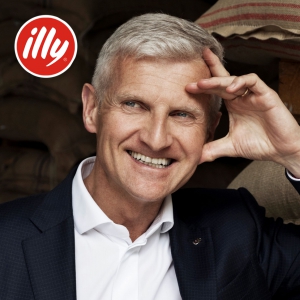
[00:00:55] Ray Latif: Hey folks, thanks for tuning into the number one podcast for the food and beverage industry, Taste Radio. I'm Ray Latif and you're listening to episode 165, which features an interview with Andrea Illy, the chairman of Illy Cafe and one of the world's most influential figures in the business of coffee. Tune in on Friday, June 7th for episode 37 of our Taste Radio Insider podcast, when we discuss the keys to social marketing success in an interview with Laura and Steve Jacobson, the co-founders of Tea Riot, a fast-growing brand of energy teas. Just a reminder to our listeners, if you like what you hear on Taste Radio, please share the podcast with friends and colleagues. And of course, we'd love it if you could review us on iTunes or your listening platform of choice. It's the first name in espresso and not coincidentally the last name of our interview guest. Illy has for decades been one of the world's most respected coffee companies, dating back to its launch in 1933 when founder Francisco Illy created the modern espresso machine. Renowned for its singular signature blend of coffee, commitment to quality standards, and ethical responsibility, Illy is led by chairman Andrea Illy, the third generation leader of a company that has been family-owned since day one. With revenues that topped $540 million in 2018, Illy is also one of the largest independent coffee companies in the world. And as you'll hear in my interview with Andrea, he intends to keep it that way. As part of a wide-ranging conversation, we spoke about his role and how it has evolved over the years, what he defines as quote good coffee, and the impact of consolidation and climate change on the coffee industry. Andrea also explained why Illy has long been an advocate of direct trade with coffee farmers, how overproduction is putting many suppliers at risk, and why he believes coffee should be treated with the same reverence as wine. Hey folks, it's Ray with Taste Radio. I'm in New York City, and sitting in front of me is the chairman of Ili Cafe. That's Andrea Illy. Perfect. Thank you so much. We were just talking about how to pronounce Illy, and I appreciate you saying that. That was perfect. Thank you very much. And thank you so much for being with me. It's my pleasure. How often do you come to the States? How often are you in New York City?
[00:03:13] Andrea Illy: Every, at least every quarter. Minimum every quarter. Minimum every quarter. Yes. But last year was eight times, so.
[00:03:21] Ray Latif: You must have liked coming to the city.
[00:03:23] Andrea Illy: Oh, yes. We have our Illy Cafe North America here since nearly 40 years. And then my daughter is living here. She graduated at NYU and now she's working. We have an apartment. We have enough reasons to come often. Good food here too. Good food, yes. You paused there because I'm sure the food in Italy, though, can't compare. You ask to an Italian whether the food is good. Yes, it's good. But this is not what I miss from Italy, you know?
[00:03:59] Ray Latif: For sure, for sure. So Illy Café, a legendary company in the coffee business. What is Illy Café, in your words? How would you describe the company?
[00:04:10] Andrea Illy: The company was born upon a dream of my grandfather. who was the founder, Francesco, and the dream was to offer the greatest coffee to the world. So it's still a family business, 100% family business, entirely committed to the greatest coffee in the world. And it's 86 years old, committed to innovate for the sake of improving the quality, committed to be at the highest possible ethical standards, sharing, you know, the adventure with our partners, the growers from nine selected countries. And besides being the quality leader in the world, we are the most global coffee brand, because of course, being so narrowly focused on the super high quality, with less than 1% of the coffee grown means trying to expand this niche globally. So it's a kind of a unique position and we are so serious about uniqueness that we limit our product offer to one, the famous Illy Unique Blend. So we are the only roaster in the world, to my knowledge, with only one blend. Of course, it is then deployed in many different formats for as many relevant consumption occasions, but still it's only the Illy blend.
[00:05:51] Ray Latif: And you specialize in espresso.
[00:05:52] Andrea Illy: We are the forerunner of espresso because If the focus is high quality, then we need to be quintessential and espresso is the quintessence of coffee because it's only extract the best aromas with the right temperature and also by extracting a lot thanks to the pressure because the aromas are into the oils of coffee which you can only extract thanks to pressure. So espresso being the quintessence, My grandfather started focusing into that technology, revolutionizing it because espresso was already existing, but with no pressure. So he added high pressure to the espresso preparation. which allowed to lower the temperature for a smoother, more flavored coffee. It allowed to extract more aroma and to get this creamy, wonderful elixir that we all know in the world today. Did he create the first espresso machine?
[00:07:02] Ray Latif: Yes.
[00:07:02] Andrea Illy: Did I read that correctly? The first pressure espresso machine, the Iletta machine in 1935 with a patent, yes. And you still own the patent? The patent did expire because typically the patents are less than 20 years. But then after the World War II, he had to stop producing the machines, but many machine manufacturers in Italy took over the technology, the patent, and his formula became a standard. But there are, as a forerunner, for an espresso forerunner, Illy had the opportunity to develop many other Espresso-specific technologies. The second most important after the machine is the packaging. Pressurization. Because you extract so much aroma thanks to Espresso, then you must make sure that you have only the best aroma in the package.
[00:08:08] Ray Latif: And you're talking about the can.
[00:08:09] Andrea Illy: I'm talking about the pressurized can, which is under pressure in a gas. which not only preserves the fragrance until the moment you brew your cup, but also it makes this aroma to literally, let's say, season, mature like a precious wine because they interact among each other. So this has a kind of a quality improvement, quality enhancement over time, like I said, like aging a wine. And the third most important radical innovation at Illy has been the very, very first pre-portioned coffee, the single dose pre-portioned coffee. Espresso is such a difficult way to brew coffee because the barista needs to be a talent. He needs to take care of more than 10 different variables. and he needs to be a champion. The solution has been to fix these variables in a system which would allow any non-professional barista to prepare a good espresso coffee everywhere.
[00:09:30] Ray Latif: One could tell that you're very passionate about coffee. Have you always been passionate about coffee? Of course. When you first decided to join the company, what was your role and how has that role changed? I mentioned that you're the chairman of the company. You were the CEO for 22 years. But how did you learn about the business?
[00:09:47] Andrea Illy: I think I was two years old when I tasted the first coffee sip. My mother used to be kind of the engineer of coffee. She used to have a 45 minutes preparation ritual every day in the kitchen to try to brew the perfect espresso at home. She would take 45 minutes to make one espresso? More or less, because the pods were not existing yet. So she had to perfectly grind, perfectly measure with her scale, you know, counting beans one by one and then pressing and then it was not perfect. Let's try again. Boom, boom, boom. And it was smelling. It was funny to see her, you know, and so this was really an imprinting for me. And so, and my father was a scientist, so he was kind of, he was not only a scientist, but he was a storyteller. So he made me to really believe in my childhood that coffee and Ili were the most important thing on the planet. So how could I decide not to join the company with such an imprinting?
[00:10:59] Taste Radio: I don't know. That's a good question.
[00:11:00] Andrea Illy: So I decided to study chemistry like my father did to follow into his footsteps. So I joined the company. In 1990, at the beginning as a technician at the quality assurance, quality control at that time was quality control department. And then I had the opportunity to revolutionize the quality department from quality control to quality assurance, having studied total quality in Japan. And then four years later, after having taken over all the let's say production as well and all the technical department. I've been named CEO of the company and I continue since then until 2016.
[00:11:49] Ray Latif: I was going to ask you how you define quote unquote good coffee. And what I'm hearing is that consistency seems to be very important, but consistency is difficult. You can't always control how it's prepared. How do you put systems in place to make sure that the cup of coffee that a consumer is getting is very similar or at least or even exactly the same as they got or they're expecting to get?
[00:12:14] Andrea Illy: So the three most important attributes, quality attributes, at least for us, are, first of all, the richness of the aromas. Can be said in a more technical word, complexity. How many aromas do we eventually have? So coffee has the fortune to be, together with wine, the richest product in terms of aroma profile. And of course, it's like an orchestra, right? If you make this musical metaphor, the more instruments you put into the orchestra and the more musicians, the more powerful it is. So richness in terms of, let's say, extension, how many different aromas and how powerful they are, okay? This is the first attribute. The second attribute is elegance, which more technical we could say balance, okay? You want to balance acidity with bitterness, you want to balance fresh aromas like fruits or flowery together with more, let's say, fatty aromas like dry fruits or chocolate or coffee and so on. This elegance is kind of harmony between this aromatic profile. And last, and taste profile as well, which are two different aspects, the Taste Radio the aroma. And last but not least, the third most important attribute is the one you mentioned, which is consistency. So we can get the highest possible level of richness, elegance, and consistency by blending. And this is why Illy is a blend. is a rich blend because it has nine pure origins and each of these origins is like a note in an orchestra, you know, like a different instrument. And it's really contributing also to the very strong recognition of the Illy taste.
[00:14:22] Taste Radio: We'll be right back with Andrea Illy after a word from our sponsor. Welcome to a Taste Matters bite from Zoom Essence. We are creating flavor combinations in everything tasty, including sports beverages, CBD-infused products, functional foods, and even snacks. The secret is our low-temp drying technology that creates the world's only liquid quality powder. Find out more at zoomessence.com.
[00:14:47] Ray Latif: When you're sourcing from nine specific origins, it seems like there's another consistency issue there too, because things can change from where you're sourcing. What are some of the challenges in maintaining this quality of the Illy blend? Correct.
[00:15:04] Andrea Illy: So the very first challenge has been in the past and still is to get consistency from our partners, coffee growers. We started sourcing directly in 1991 for the sake of sourcing the best possible quality and we discovered that the very first problem was this kind of erratic result from growers because sometimes they got extremely high quality and maybe in the year after they weren't able to get it. and they didn't know why. So we understood that we needed to objectivize knowledge and then kind of transfer this knowledge back to them so that they can learn how to elevate their agronomical practices and being consistent in the highest possible sustainable quality. So this is why we founded the University of Coffee 20 years ago. And now we had over 265,000 participants to this University of Coffee programs, not only growers, also professionals of the hospitality and even connoisseurs, but still a substantial, let's say, effort to transfer knowledge.
[00:16:23] Ray Latif: And there are different satellites for the university?
[00:16:25] Andrea Illy: Yes, there are 28 places in the world. and it is divided in three departments, one for coffee growers, one for the hospitality and one for connoisseurs. The second challenge is basically the climate impact, which is becoming more erratic due to climate change. So climate change is definitely impacting coffee agriculture and sometimes it's difficult for growers to get the quality because simply some climatic crises jeopardize either the flowering season or the maturing season or the crop season. Of course, we can do something to try to, let's say, limit the damage, but it's not always possible. So the strategy here is to have replacement. If you have a problem in one area of production, then have one or more backup areas of production with the same quality profile of this very ingredient. This is why, yes, we have nine main origins, but we source from 20 different countries for as many as 50 different production regions, because many countries have more than one production region, you see.
[00:17:54] Ray Latif: We talked about climate change as being one of the challenges that the coffee industry is facing. One could say that consolidation in the industry is affecting how consumers perceive quality, perceive sustainability, all the things that you're talking about. What's your perspective on all the consolidation that's happening with companies like Nestle and JAB buying up so many different brands and companies?
[00:18:18] Andrea Illy: Well, of course, those investments made huge investments made to consolidate the industry will need to be paid back in some way. And the only way to pay back is to increase the efficiency. So these companies will need to be more and more efficient in order to increase their profitability and their cash flow. Will this impact also on the price paid for coffee to growers? This is, I don't know. I don't know, but for sure there will be, let's say, growth in terms of the volume produced, which might, could eventually lead us into a new commoditization phase, paradoxically. Because Coffs came out of the crisis 20 years ago by decommoditizing. And now with this industry consolidation with two leading players reaching nearly 50% of the coffee volume, we might risk to fall again into the commoditization trap. It's not said that this will happen, because both the leading groups have brand portfolio. So they will probably fill this portfolio in a pyramid from premium to mainstream to entry level. maybe the situation will remain the same. So it's difficult to say whether this consolidation will be positive or detrimental for the market. There is a consolidation also on the growing side, because now the two larger, although there are nearly 70 countries producing coffee, the two largest, biggest coffee producing countries account for more than 50% of the volume. This, I think, is even more risky because only these two countries can produce profitably at low price level. And they literally put out of market the other countries. And of course, if you limit the Geographical, let's say, differentiation, you also will kind of level off, limit the quality differentiation, which is the driver for margins. If you make a comparison with wine, you know, you have hundreds of different cultivars, hundreds of different terroir in wine, and it's literally impossible to find two bottles of wine which are the same. Whereas in coffee, you have only three varieties, only 33 cultivars in Arabica coffee. And even geographically, if you have such a dominant presence of Brazil and Vietnam, Vietnam not being, for the moment, a significant Arabica production. So it limits the biggest, let's say, part of the Arabica coffee production to Brazil. Brazil is divided in several production areas, but the state of Minas Gerais is the big player. So will we eventually have maybe two-thirds of the Arabica coffee grown in Minas Gerais in Brazil? This is another risk of commoditization, but don't ask me if it's going to happen now, because I frankly don't know.
[00:22:00] Ray Latif: you have a lot to consider as the chairman. I'm sure you had a lot to consider as the CEO and market forces and delivering the best quality product to consumers at all times. And sometimes that means working with the larger players that I was talking about, some of these global players. You did a joint venture deal with Coca-Cola a number of years back to launch a ready to drink product. You have a joint venture agreement with JAB for compatible capsules. Illy is 100% family owned. So, you know, what's your strategy for working with some of these big companies? How do you get them to deliver the value that you're, unlock the kind of value that you want to see in a partnership?
[00:22:44] Andrea Illy: Well, we are extremely narrowly focused on our quality leadership led by Italian Espresso in this unique blend. So this is what we do. and we don't seek to kind of enter in some of our colleagues' turf, like many of them try to do, let's say, entering our turf. But with that, we stay focused, okay? We are what we are, and we will be what we are also decades from now. With that, the collaboration, this is why I like to describe our colleagues in the industry as colleagues, is because we work so well at pre-competitive level. And the work at pre-competitive level is in order to make the coffee industry better. In the last 25 years, to explain what I mean with making the coffee, industry better. In the last 25 years, coffee has been able to dramatically improve its positiveness, thanks to the three virtues of coffee, pleasure, health, and sustainability. Pleasure is a much better quality around now, and coffee became an experiential product, not only thanks to better quality, but origins, single estates, blends, single cultivars like Geisha for instance, new examples, better preparation technology, better places of consumption, more discovery, so it's becoming literally an experiential product. Health is now clear that coffee makes you live better and longer. There are many epidemiological studies confirming that coffee is about longevity, and longevity, as you know, is a kind of an indicator of the overall health. So is there a better product in terms of healthiness to our diet? And the reason why coffee is so good for health is because it's preventative against majority of the non-communicable diseases. There are 25,000 studies, scientific studies, confirming that cough is preventative against many cardiovascular diseases. It has been recently reclassified. 3A from 2B used to be from the IRC, which is the Agency for Research on Cancer from the World Health Organization, which is the first time they reclassify in a better place a product. So reclassification means that it's better for your health. Yeah, it's much better than before. And people perceive it. Now you have majority of coffee consumer knowing that coffee is good for health. And last but not least, sustainability. There is still a lot to do, but we are definitely in much, much, much, much better place compared to where we used to be maybe two, three decades ago. So these three virtues of coffee have been built, you know, literally with a co-petitive approach with our colleagues. competition for what is the specific, let's say, strategies and competitive advantage of each and every of our colleagues, but cooperation for whatever is pre-competitive as far as coffee and health, as far as developing sustainable coffee value chains, like with international cooperation to transfer knowledge to producing countries so that they can improve their economical practices and make better and more sustainable coffee and so on. And many others, many other collaborations like promoting, like developing standards, et cetera, et cetera.
[00:26:54] Ray Latif: I didn't mention one company that is pretty well known, and that's Starbucks. Starbucks has had a huge impact on the way consumers experience coffee. You mentioned the experiential feeling when you drink coffee or you go to a cafe. Has Starbucks been good for the coffee industry in your opinion?
[00:27:13] Andrea Illy: Of course. Everybody has been good. The best way to really transform a market from one place to another place is to reach critical mass. And nobody can have enough critical mass in the marketplace. And the only way to do it is the competition. So if there is an alignment in what the competition does, let's say the sector evolution, This is what creates the critical mass that eventually changed the market. So the company you mentioned did a very good job here in the United States in two things, providing proximity, to consumers, to access to decent coffee, and also educating the consumers. So this has given a good contribution. We did some other jobs in the industry. So each and every of us gave a positive contribution to this market transformation.
[00:28:16] Taste Radio: We'll be back with more from Andrea Illy after this quick break. Zoom Essence invented the first low-temperature drying technology to make the world's best-tasting powder flavors. Heat is the enemy. Cool is the answer. Find out more at zoomessence.com and get your brand Zoomin' today.
[00:28:35] Ray Latif: What about the impact that new players are having on the coffee industry? I know it's still a very, very tiny percentage of the overall coffee market, but you see small entrepreneurial brands getting into the market all the time. They each have their own different niche and their approach to coffee. How has that impacted the way consumers perceive coffee?
[00:28:58] Andrea Illy: It's very good to have variety. Differentiation is the only alternative to commoditization. the more players, the more fragmented the industry will be, the less commoditized it will be. Nowadays, we have a kind of a polarization of the market. On the one side, you have the commodity. On the other side, you have, let's say, the differentiation. But eventually, there will always be a pyramid. But this differentiation, It's very useful for the consumer engagement, discovering more things and having a kind of an exploratory approach towards coffee like they do, for instance, in beer with the micro breweries. They want to taste all kinds of different beers or like they do in wine and several other products that we enjoy in our lives. So coffee is becoming like that and this is only positive for the industry.
[00:30:02] Ray Latif: One of the ways a lot of these brands are positioning their products is as an energy drink. In some ways, I think that was how the Coca-Cola partnership, the Illy Cafe at Ready to Drink, a lot of people perceived it to be sort of an alternative to a Red Bull, things like that. How is that positioning for coffee as an energy drink impacted the industry as a whole?
[00:30:25] Andrea Illy: Energy drink is not necessarily, let's say, the most sophisticated strategy for coffee because you can get caffeine in plenty of other ways. So if you're just seeking for energy, I think that the real value of coffee is the Taste Radio the coffee experience. And caffeine is part of it because the arousal that coffee triggers is due, first of all, of the sensorial pleasure that you get through the dopamine that puts you in good mood and makes you positive and creative. and dynamic in your life, and then you have this kind of neurophysiological effect of caffeine. But the second without the first doesn't work in the same way. So I think that using coffee as an energy drink is a simple kind of, you know, using a Ferrari to go shopping. You know, this is, please, come on.
[00:31:34] Ray Latif: You and I are both drinking this product, Aria, which is a new innovation from Illy. You can describe it better than I can, but certainly I wasn't drinking this for energy. It's just a byproduct of a beautiful product, a beautiful liquid, as you were saying. But what is Aria? What is this innovation all about?
[00:31:53] Andrea Illy: It's our system for cold brew. which is designed with a consumable, so a liquid, let's say, box with a cold brewed coffee ready to drink. And then it's processed through a fountain, which allows us to dose the amount of air we want to add for the foam on the coffee. You can go from zero foam to very foamy like a Guinness. And this is, the best and most versatile and convenient system in the market now. It's the latest innovation from ILI and we are very proud But we are very proud, particularly on the taste that we are getting with this product.
[00:32:40] Ray Latif: It's pretty amazing because there is no nitrogen. There's no, there's, it's just pulling air from the atmosphere, from whatever room you're in. And then you can adjust how much, as you mentioned, foam, and I was blown away by how much foam you got without the addition of nitrogen.
[00:32:56] Andrea Illy: Exactly. And it does interfere with the taste. This comes from our espresso competence, because the hyper-espresso capsule, which is a system we developed 20 years ago, also adds a cream to the espresso by injecting air from the atmosphere. And so the same inspiration has been applied this cold brew which is amazing.
[00:33:30] Ray Latif: You've compared coffee to wine a number of times. You also compared it to an orchestra, which I thought was really beautiful as well. But with wine, I'd read that you or Ili is considering selling coffee at similar prices to wine in that you're experiencing a very rare or special liquid that should be priced accordingly.
[00:33:59] Andrea Illy: Yes, my comment is that price of coffee is priced too low in order to be able to pay the right price to growers. And I don't see why it should be priced a quarter or less compared to a glass of wine in a restaurant. or even half than a beer. So it depends on the market. But for instance, in Italy, a price of coffee is half as a soft drink. So why shouldn't be, because it's so precious, coffee be priced more premium so that we can transfer the value we get from the consumer to growers so that we can nurture this virtuous cycle between, you know, the well-being for those who drinking and the development for those who produce it.
[00:34:54] Ray Latif: whose role would it be to educate the end consumer about what you're talking about? Because for them to, as you mentioned, pay that price point, they have to know why.
[00:35:02] Andrea Illy: Their palate will tell you why, because if they've really, the overall perception, which is the sensorial perception, but also the mental perception that you perceive you are drinking something really unique, you know, so this is what drives eventually the consumer engagement and eventually, you know, business development.
[00:35:28] Ray Latif: So I mentioned that Ili Cafe is 100% family owned, and that's been a very important part of your business strategy. Do you ever envision a scenario where that may change, where you may sell some equity in the company?
[00:35:43] Andrea Illy: Well, we don't need any finance. This is good news. Second is we want to be kind of the guardian of the long term consistency of our brand and the transfer of knowledge from one generation to the next. So that means that if one day we would consider opening the equity to some little minority investors, it would be for the sake of professionalizing even more our business and because a 100% family is maybe not professional enough because it's still kind of family-owned, it can be kind of a self-referential, no? Maybe having a partner could be one day an opportunity to, but this, we are not there yet. And the other is with one day, we would be in the condition to grow more than 15% or more than double digit and requiring more capital for accelerating growth. This could be, why not, the possibility to open the equity, but we are not there.
[00:37:04] Ray Latif: The current CEO is not part of your family. You mentioned your daughter. Does she have any ambitions to get into the family business the same way you did? Of course.
[00:37:15] Andrea Illy: Every representative of the fourth generation has an ambition to be part of the business, but we have different jobs. You can be shareholder only, you can be director, so part of the board, which is very important, and you can be manager, right? Or you can even be a professional. So you can have at least four different professional engagement in a company, in a group of company like our family ones. And on top of this, we are diversifying our business at Grupo level. So at our family holding level, we are investing in cocoa. We are investing in tea. We are investing in wine. We are investing in a fruits based product. We are investing in gelato. This is why we want to offer to the next generation a broad set of professional opportunities. and protect the main business, Illy Café, and be professionalized. World-class organization.
[00:38:21] Ray Latif: Andrea, this has been a true honor for me to hear about your company. I have a feeling our listeners are really going to enjoy hearing your perspective on the development of the coffee industry and hearing about how you've been able to maintain the standards that have been so important and inherent to the company for so long. So thank you so much for taking the time to be with me and good luck with everything going forward with Ely.
[00:38:45] Andrea Illy: Thank you so much. Thank you. And I hope to have a similar conversation a few years down the road and see what did happen in the meantime. I would love that. Thank you.
[00:38:56] Ray Latif: Ciao. Ciao. That brings us to the end of episode 165. Thank you for listening, and thanks to our guest, Andrea Illy. You can catch both Taste Radio and Taste Radio Insider on Taste Radio, iTunes, Stitcher, Google Play, SoundCloud, and Spotify. As always, for questions, comments, ideas for future podcasts, please send us an email to askatasteradio.com. On behalf of the entire Taste Radio team, thank you for listening, and we'll talk to you next time.