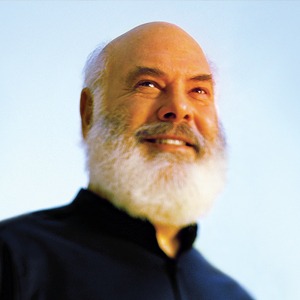
[00:00:10] Ray Latif: Hello and thanks for tuning in to the Top Podcast for True Food and beverage industry, Taste Radio. I'm Ray Latif and you're listening to Episode 178, which features an interview with Dr. Andrew Weil, the renowned physician, bestselling author, and pioneer in the field of integrative medicine. Tune in on Friday, September 6th for episode 50 of our Taste Radio Insider Podcast when we're joined by Steve Hughes, the founder and former CEO of natural food platform, Boulder Brands. Just a reminder, if you like what you hear on Taste Radio, please share the podcast with friends and colleagues. And of course, we'd love it if you could review us on the Apple Podcasts app or your listening platform of choice. When you have an opportunity to sit down with one of the most influential and well-known doctors in America, how do you decide upon what to discuss? What questions to ask? If the doctor is Andrew Weil, you might start with his experience as a practitioner and advocate of integrative medicine. Or perhaps you could chat about the notion of food as medicine, the growing interest in personalized nutrition, along with his thoughts on anecdotal versus clinical evidence. What about surging consumer demand for CBD and cannabis? Perhaps he could also pick his brain on psychedelics. There's also his passion for matcha and what compelled him to launch a matcha brand, his perspective on brand endorsements, and his criteria for investing in food and beverage companies, such as healthy restaurant chain True Food Kitchen. Well, lucky us, we covered it all and even more in this wide ranging interview. Hey folks, it's Ray with Taste Radio. I'm going to call with Dr. Andrew Weil. Dr. Weil, thank you so much for taking the time to be with me. I'm very happy to be here. Terrific. Where are you calling from today?
[00:01:55] Steve Hughes: I'm on Cortez Island, British Columbia, where I spend the summers.
[00:01:58] Ray Latif: British Columbia is where you spend the summers. Where do you spend your time in the winter? Tucson, Arizona. Wow. So very dry. And I assume British Columbia is a little... It's just the complete opposite.
[00:02:09] Steve Hughes: It's all wet and green. And, uh, but you know, by October here, the days start getting very short and wet and the desert starts looking very nice.
[00:02:18] Ray Latif: I can imagine it does. Where are you originally from?
[00:02:21] Steve Hughes: I grew up in Philadelphia. How long did you live there? I lived there till I was 17, then I was in Boston for eight years, then I went to San Francisco and really never went back east. And my car broke down in Tucson in 1973 and it took a long time to get fixed. The desert was in full bloom and I never left.
[00:02:39] Ray Latif: Interesting. And that had an effect on you that sort of changed your trajectory in terms of your career too, or was it just a nice place to live?
[00:02:47] Steve Hughes: No, I had been wandering around. I spent a number of years in South America studying medicinal plants and healing, and it was very unsettled. Tucson turned out to be a very good place for me to be. I had a connection with the College of Medicine at the University of Arizona, and that's been one of my major career paths.
[00:03:09] Ray Latif: I do want to talk about that a bit, your training as a medical doctor. I think there's some misconceptions about your background and your training. You did complete your medical degree.
[00:03:19] Steve Hughes: I did. I studied botany as an undergraduate, and then I got my medical degree, did an internship, licensed in Arizona and several other states. I founded and directed a center of excellence at the University of Arizona, which has just been renamed the Andrew Weil Center for Integrative Medicine.
[00:03:36] Ray Latif: Congratulations on that and a wonderful honor. Integrative medicine. I think it's interesting when I had always heard the name Dr. Andrew Weil, I'd always thought, oh, alternative medicine. I assume that's what you did. I think that's what a lot of people think you do, but what you do is integrative medicine. What is that and what is it not?
[00:03:54] Steve Hughes: Well, the short answer is it's the intelligent combination of conventional medicine and other techniques, but it's really much more than that. I think it's the way of the future. It's a system that focuses on health promotion and prevention through great attention to lifestyle, really looks at the whole person, not just the physical body, places great emphasis on the practitioner-patient relationship, and makes use of all methods of treatment as long as they are not going to do harm and show reasonable evidence of efficacy.
[00:04:24] Ray Latif: What is a reasonable evidence of efficacy? Because that's really important to our industry, in particular in food and beverage.
[00:04:28] Steve Hughes: Well, here's the rule that I follow and teach. The greater the potential of a treatment or intervention to cause harm, the stricter the standards of evidence it should be held to for efficacy. if we followed that rule in conventional medicine, we would have saved ourselves a lot of trouble. And as an example, I often teach patients simple breathing techniques, and I found them to be extremely effective for managing a number of serious health conditions. There's not much research on breathing because people don't take it seriously, but I'm not concerned about that because the potential of these breathing exercises to do harm is very small or negligible and there is a great deal of experiential evidence of their usefulness.
[00:05:10] Ray Latif: Well, there's experiential evidence and then there's clinical evidence, which is important for folks to make claims on labels, clinical evidence that is. Anecdotal evidence, you can kind of get yourself in some trouble if you are a food and beverage producer and make certain statements about the efficacy of your product. That being said, you know, how do you toe that line? How do you walk the line so that you're not getting yourself in trouble, given that some of this stuff does require a good amount of hard evidence?
[00:05:40] Steve Hughes: Well, if I'm going to recommend a product or put my name on a product, I first want to assure myself that there's nothing there that can cause harm. So I have a great network of people out there, a lot of students that I've trained who can go through the medical literature to look up ingredients and to see what there is there. And then in terms of making claims for benefits, again, I think that if there's little potential for harm, I think you don't have to demand very hard a great deal of evidence to support claims. By the way, the word anecdotal is tossed around very casually. It literally means unpublished in Greek. It doesn't mean shoddy or not to be believed. So once something is published, it's no longer anecdotal.
[00:06:27] Ray Latif: Let's talk a bit about alternative medicine. Again, you know, your practice is focused on and your career is focused on integrative medicine, but alternative medicine has taken a big step forward in terms of mainstream acceptance.
[00:06:39] Steve Hughes: Sure. First of all, I think alternative medicine is a very mixed bag. It includes ideas and practices that are sensible and worth exploring and others that are silly and some that are harmful. And so I think the challenge of integrative medicine is to select from all that and take what's useful and good. My strongest training is in the area of botany and medicinal plants, so I recommend them very frequently. Also, I've been a student of mind-body interaction, so I recommend mind-body therapies a lot. In integrative medicine, we place a great deal of emphasis on nutrition. I think it would be a big mistake to call nutritional medicine alternative. It's foundational to good health and to good medicine, and it's been treated very slightly in conventional medical education. So in integrative medicine, we're trying to round out the education of practitioners to correct those deficiencies and also to make them aware of the strengths and weaknesses of major alternative medical systems like traditional Chinese medicine, Ayurvedic medicine, osteopathic manipulative therapy, to know when and when not to use them, if you do decide to use them, how to find a competent practitioner and so forth.
[00:07:47] Ray Latif: I recall a conversation that you had, I think it was a video interview, and you had said that, quote, good medicine should start with the body's ability to heal itself. So if the body heals itself, why would you need the introduction of, why would you need the introduction of a therapy? Exactly.
[00:08:04] Steve Hughes: Well, I think that often healing is stalled or blocked, and when I work with a patient, always at the back of my mind, I'm thinking, why is healing not happening here? What can I do from outside that might spur that process? Can I identify and remove obstacles to it? Can I supply missing energy or missing materials? I'll give you an example of what I mean. If you have a patient who's critically ill with bacterial pneumonia, You put them in the hospital, give them intravenous antibiotics and 48 hours later they're out of danger. It's very easy to think that the antibiotics caused that result, but I think the better way to interpret that is that what antibiotics do in that circumstance is knock populations of germs down to a level where the immune system can take over and finish the job. So that's to me a model of the relationship between treatment and healing. Healing comes from within. There's a body has many mechanisms for maintaining librium, for correcting problems, and I think the job of the practitioner is to stimulate that process or remove obstacles to it.
[00:09:07] Ray Latif: There's also the perceived effect of treatment, right? Absolutely. And we've seen a lot of perceived effect or perceived function of a pretty hot ingredient today, that's CBD. You know, where do you stand on something like that when it's so trendy?
[00:09:24] Steve Hughes: I think the only solid evidence we have for the benefits of CBD are for the treatment of drug-resistant seizures in children. All the other claims that are made for it, I don't see great evidence for. I think it is relatively harmless if there's not other stuff in with the products, but I don't know how to evaluate a lot of the claims made for it. Also, in general, I think reactions to cannabis are very individual. And, you know, for example, it may help some people fall asleep. It keeps other people awake. So I think you need to experiment. And I just don't know what to tell people about CBD because it's on every street corner and who knows what's in a lot of this stuff.
[00:10:07] Ray Latif: Indeed. That being said, you know, where do you see CBD in terms of its future place in True Food system? Because once again, I mean, it is everywhere and everyone's pumping it into, I mean, anything from muffins to water, to coffee, to anything.
[00:10:22] Steve Hughes: Well, let me say something about cannabis in general. I think it is a very useful plant, and we have been very unwise in our relationships with it. We've let a multi-billion dollar industry in hemp textiles slip away to China, a multi-million dollar industry in edible hemp products go to Canada. We've really ignored its potential in medicine. I think we're going to see much more research on it documenting medicinal effects. I would love to see good cannabis products in forms that physicians would feel comfortable using. For example, in the UK, there's a product called Sativex, which is a whole cannabis extract. that's administered in meter doses as an oral spray that looks like a medical preparation that doctors would be comfortable using. You know, doctors are not going to feel comfortable telling people to smoke things or to take these, you know, unknown products that are coming from dispensaries.
[00:11:17] Ray Latif: We'll be right back with Dr. Andrew Weil after this quick break.
[00:11:22] Boulder Brands: What makes Rye's Nitro Cold Brew Coffee great? Some would say the organic ingredients. Some would say the variety of great tasting flavors. Others might say the sound it makes when they open it makes them smile.
[00:11:38] Ray Latif: Do you use CBD on a regular basis? Do you use cannabis products on a regular basis?
[00:11:41] Steve Hughes: I do not. I have really not found any effects of it in me that I've been able to verify or find useful.
[00:11:49] Ray Latif: You have had experience with cannabis and psychedelics documented from way back when you were in Boston. You know, what did you find as the benefit for cannabis and for psychedelics? I mean, it's certainly top of mind today in terms of both.
[00:12:04] Steve Hughes: I think there's many potential benefits, everything from appetite stimulation in people that have chronic disease, pain relief, potentiation of opioid effects so you can use lower doses of opioids in people with chronic pain. There's a potential that cannabis can actually retard the development of dementia. It may prevent and possibly treat certain kinds of cancer. I think all these are very interesting potentials that we'd like to document medically. The great advantage of cannabis is that it's extremely safe. It is as non-toxic as any substance can be. You can't kill people with it, and you can't say that for almost all the drugs that we use in medicine.
[00:12:46] Ray Latif: You can't kill people with it, but there has been irresponsible use of cannabis in the past and continues to be some irresponsible use of it. So, you know, how do you advocate cannabis as a functional ingredient while, you know, the general perception is that it's not?
[00:13:03] Steve Hughes: Well, we're in a strange transition period right now. I think our society is moving toward total acceptance of cannabis, but it's going to be a bumpy road. And there's a lot of people who are scared of it. There are a lot of questions that have to be answered, like, what do you do about it? people who drive under the influence, how do you regulate its use for kids whose brains may not be fully developed. I mean there's a lot of things that we're gonna have to come to terms to but I think in general the societal acceptance of this plant and the ways that it can be used is a good thing.
[00:13:36] Ray Latif: It's interesting, you keep using the word plant to describe cannabis and the nomenclature feels like it has to go in that direction for it to be generally accepted. To continue to use words like weed don't seem to really help the potential for general mainstream acceptance. True. In terms of psychedelics, we've seen some some movement on that front too, in particular, in some cities, the another word mushroom, as opposed to psilocybin or things like that, have been approved by city councils for general sale and use, which is a huge step forward, I think, where do you stand on psychedelics?
[00:14:14] Steve Hughes: I think it's a huge step forward. I think it's a very good thing. First of all, there's a lot of research on MDMA and the treatment of PTSD. I think that's going to be legalized soon for therapeutic use. There is interesting research on psilocybin as a treatment for drug-resistant depression. for obsessive-compulsive disorder. There's documentation of its potential to raise spiritual awareness in people. So a lot of good press coming, including on microdosing, which is a new phenomenon as something that can increase creativity and enhance imagination and mood. So I think we'll see a lot of movement there. And again, these substances are quite safe from the physical point of view. I think there's tremendous potential, not only for psychiatric disorders, but I think also in physical conditions like autoimmune diseases, for example. So I welcome that. I think that this is a growing trend. It's long overdue.
[00:15:11] Ray Latif: The interesting thing is how do you infuse it into the mainstream and how do you do it in a way? Does it need to be prescribed or can it be something where you could buy it potentially over the counter or from a dispensary is the question. Would you ever, I mean, could you ever imagine where we do have psychedelics that you could buy at, say, a CVS?
[00:15:30] Steve Hughes: Well, here's what I'd say. You know, I said that these drugs are very safe on a physical level. Their main dangers are psychological, bad trips, and those are results of interactions of the drug, the dose, and set in setting, that is, the person's expectations and the environment in which the drugs are taken. And I think in traditional societies where the natural sources of psychedelics are used, the people who manage these experiences are shamans, people who've been trained through personal experience in these substances to manage the effects of them. And I think we need a new class of professionals here. I don't think it should be doctors or psychiatrists necessarily, unless they have special training in this area. But I would hope that we begin to see more and more people around who are trained in psychedelic therapy and are able to introduce people to them in safe ways, rather than just having them be sold over the counter.
[00:16:25] Ray Latif: So you'd never want to see a vitamin water that's infused with psilocybin. Probably not a good idea. Okay. You know, there was a time when caffeine was considered a dangerous ingredient. Yeah, yeah, absolutely. Yeah.
[00:16:37] Steve Hughes: Have you never had a cup of coffee I heard? No, I have, but I've never been a coffee drinker. My parents, when I was growing up, drank very strong black coffee without cream or sugar. And I thought it was horrible and I never developed a taste for it.
[00:16:50] Ray Latif: You have developed a taste for matcha, however.
[00:16:52] Steve Hughes: I have indeed. I've developed a taste for good tea in general, but Matcha Kari particular. This is the powdered form of green tea that traditionally is used in the tea ceremony in Japan, but now has become wildly popular in this country. I have a long history with it. I first discovered it when I was 17 years old. I went as an exchange student to Japan. in 1959 and lived with Japanese families. And on the second night that I was there, this was outside of Tokyo, I had no language in common with my host family, but the mother took me next door to her neighbor who was a practitioner of tea ceremony, and they made me matcha. And two things about this just struck me. The first was the color, brilliant green color of the powder and of the beverage. And then the bamboo whisk, which is a miracle of Japanese craftsmanship carved from a single piece of bamboo. So I was fascinated. I brought matcha back with me to the States. Nobody had ever heard of it. And then over the years, I began traveling to Japan and whenever I did, I'd bring matcha back and I'd introduce people to it. This was in the 1970s, 1980s. For a time, I partnered with a Japanese tea company and made matcha available on my website, drwild.com, but this was like long before there was any popularity here and it was very slow to sell. And then I have just been amazed to watch interest in that develop here. But I've also been very disappointed that a great deal of the matcha that people have tried, in North America is inferior. Matcha Kari so finely powdered that it oxidizes very quickly. And when it does, it loses its brilliant green color, it loses its wonderful flavor, it becomes bitter. And many people have only tried inferior matcha and really have never had the good stuff and don't know the pleasures that await them.
[00:18:43] Ray Latif: So if I'm hearing correctly, you're not a fan of bottled or ready to drink matcha products?
[00:18:48] Steve Hughes: Well, I haven't seen any that meet my standards. I like making matcha myself either as a hot or cold drink I don't sweeten it but you know, I've looked at the ways that people use it. I'm happy to have people use it Anyway, I have not seen any ready-to-drink products that I think look or taste great But that doesn't mean that we couldn't develop them.
[00:19:07] Ray Latif: So your company is matcha curry and the website is matcha.com and
[00:19:12] Steve Hughes: Yes, we got the URL matcha.com, which was, I think, a great coup. And my business partner, Andre Fasciola, and I made contact with a very good matcha producer outside of Kyoto in a town called Uji, which is the center of the highest quality tea production in Japan, and we get matcha straight from that source. We have several kinds available. I think it's some of the best matcha that you can get, and we sell paraphernalia, and there's a lot of educational material there about how to prepare it.
[00:19:45] Ray Latif: Paraphernalia, huh?
[00:19:47] Steve Hughes: Well, you need a bowl, you need a whisk, you need a scoop. You can also use an electric whisk, you know, but we sell, yes, paraphernalia.
[00:19:55] Ray Latif: Well, the ceremony aspect of Matcha Kari a big part of it, as you were mentioning. At the same time, the ceremony aspect isn't for a lot of folks, I think.
[00:20:05] Steve Hughes: Well, you know, even in Japan today, matcha has really escaped the tea ceremony. The tea ceremony is really an old-fashioned thing, and most Japanese drinkers of matcha just drink it because they like the beverage and not in a ceremonial fashion. However, I think that, you know, there are people that tell me they love the ritual of making coffee. And I think there is a ritual of making Matcha Kari well, which can be either with an electric whisk or a traditional whisk or however you want to do it. But I think there's something about having a ritual of preparing a beverage, a morning beverage, a stimulant beverage, that's very satisfying. It doesn't have to be, you know, any sort of fancy ceremony.
[00:20:43] Ray Latif: Certainly in South America, Mate in the same way. Yep, same way. When was Machikari launched? When was the website launched?
[00:20:51] Steve Hughes: Three years ago. And we really went into high gear about two years ago. And I think we're still just at the beginning of the wave of popularity of Matcha Kari this part of the world. So I think we got in on it in a good time. And we would really like to introduce a lot more people to it in any ways. I'm working with some chefs to develop recipes using Matcha Kari cooking, not just in sweet desserts, but in other ways as well. We really want to educate people about the different grades of matcha, why Matcha Kari expensive, why a lot of the matcha that's sold is inferior. I think there's a lot that people need to understand about it. By the way, one of the reasons I like matcha, aside from its beauty and flavor, is that the stimulant effect of it is very different from that of coffee or mate. And a reason for that is that high quality matcha has a lot of an amino acid called L-theanine, which is sometimes sold as a supplement. It has a calming effect. And I think the combination of that with the caffeine in matcha produces a unique state of alert relaxation or calm alertness people say which is very different from the jangling stimulation of coffee and mate and other caffeine beverages Do you as the founder have to have your hands?
[00:22:08] Ray Latif: steeped so to speak in matcha and how do you promote it best as Not only the founder but in some ways the face of the brand. I
[00:22:17] Steve Hughes: Well, first of all, you know, Matcha Kari a big part of my life. I drink it every day. I love turning other people on to it. I love coming up with new ways of preparing it. I am constantly learning facts about it that I didn't know. Just the whole history of Matcha Kari fascinating. By the way, you know what, I also find it interesting how different it is from the the history and cultural associations of coffee. Coffee, when it was first introduced to Europe, I think this was probably in the 1600s, it quickly became associated with political radicalism, with argumentative groups in coffee houses in England and other countries, loud, boisterous arguments. Matcha, the cultural associations there are with Zen Buddhism, especially. and with the samurai class in Japan. So it's got, you know, a very different set of associations that have to do more with meditation and focus and appreciation of beauty.
[00:23:15] Ray Latif: An interesting trend that we're seeing in food and beverage is the notion of personalized nutrition and also the idea of food as medicine. I literally just saw an article this morning that said a majority of consumers, majority of American consumers are using food as medicine.
[00:23:32] Steve Hughes: Hippocrates was the first person who said, let food be your medicine and medicine be your food. That was in the fifth century BC. And in integrative medicine, one of the things that we teach is to use dietary adjustment as a primary therapeutic strategy. And I have often seen dietary adjustment alone correct many serious chronic medical conditions before any medication is given or so forth. You asked about personalized nutrition. One of the things that's on the horizon is the whole field of nutrigenomics, of understanding how an individual's genes interact with what they eat. And that may enable us to make much better recommendations to people, you know, to know who will do better on a low-fat diet, who will do better on a low-carb diet, for example. So I think that's coming. But I strongly believe that learning basic nutrition and choosing foods wisely is a major component of optimum health. And I would say the first rule of good nutrition is to try to avoid refined processed and manufactured foods. It's all that stuff there today, which I think is causing us a lot of trouble. It's been said that our great grandparents wouldn't recognize what most people eat today as food.
[00:24:44] Ray Latif: I don't even recognize some of the stuff we eat today as food. I want to go back to what you mentioned about genetic testing. And I've always had issues with genetic testing for any particular reason, just because of the ethical concerns and the dangers of it slipping into the wrong hands. I mean, maybe it's just me and the whole... No, I have the same concerns.
[00:25:02] Steve Hughes: And not only that, I think there's a great potential to turn up information either that is wrong and causes a great deal of anxiety, or you get information about something that you can't do anything about that just causes a great deal of anxiety. So I think you want to be careful about how much of that information you let into your life and how you use it. Have you ever done a DNA test? I haven't. And, you know, I'd be interested in doing doing one for just ancestry stuff. I'm not so sure that I want to do one for, you know, to find out if I have a propensity to Alzheimer's disease.
[00:25:35] Ray Latif: Hmm. Why not?
[00:25:37] Steve Hughes: Because what would you do about it?
[00:25:38] Ray Latif: Well, aren't there ways to treat Alzheimer's disease in integrated medicine?
[00:25:42] Steve Hughes: No. In a word, no. There are, I think, strategies that can help prevent, but how effective they are, we don't know.
[00:25:50] Ray Latif: Hmm. It's interesting you say that because, you know, you could go on the internet right now, Google alternative treatments to Alzheimer's disease, and I'm sure you'd find a very, very long list. No doubt. Which is one of, again, one of these things I think is a misconception about what you do and what the efficacy of alternative medicine is in some cases. That being said, you know, there's a lot of danger in making claims and unvalidated claims when it comes to selling functional ingredients or selling products infused with functional ingredients. How do you advise the responsible marketing? Again, I know in the past you said, well, if it doesn't cause harm or if there's low risk of harm, that's one thing. But given that you have an opportunity and you have a megaphone in some ways, do you go after some of these people that are selling a quote-unquote snake oil?
[00:26:37] Steve Hughes: I don't think that's my job, although in private, for instance, you know, I actively teach at the University of Arizona, and we have physicians, classes of physicians who come in for fellowship training, you know, very intensive training over two years, and we train about 160 people a year, so when I lecture to them, I certainly will call out questionable products and I want them to be informed about that. But I don't see that as being my public job unless there's something really egregious out there and then on my website drwild.com I might put a question answer up there about it.
[00:27:12] Ray Latif: There's another term out there that we've seen quite a bit in food and beverage and that's biohacking. The Bulletproof brand was probably at the forefront of the term. I think they might have, I don't want to say invented the term, but it's definitely a lot of people know it from Bulletproof. What's your stance on this term or this idea of biohacking?
[00:27:32] Steve Hughes: Well, I just started to hear it, you know, maybe a year ago, and I've talked with a number of leading biohackers. And I must say, some of what they do strikes me as silly. You know, some is reasonable. But, you know, I see some people doing some very extreme things that, to me, seem unwise and that I wouldn't do myself. taking substances, either natural products or drugs that I think are potentially dangerous, using dietary strategies that I don't think are very wise, such as leaving out whole macronutrients. Anyway, it's an interesting phenomenon. I think it embraces ideas and practices that are probably worth trying and others that I think are foolish.
[00:28:12] Ray Latif: Do you ever embrace any dietary practices like a biohacking? I don't know, biohacking isn't necessarily a diet per se, but we've seen a lot of things out there like keto, like Whole30, etc. Where do you stand on some of these more trendy, more recent forms of diet?
[00:28:28] Steve Hughes: I'm all for people experimenting and see what agrees with them. I think that the data on intermittent fasting is very interesting. I think the sensible forms of the paleo diet are very reasonable, but I think extreme forms in which people avoid all beans and grains and just eat a great deal of meat, that does not seem wise to me.
[00:28:51] Ray Latif: And this is just based on your own particular training and education. Exactly. Yeah. That being said, going back to anecdotal evidence, if someone has had a good experience with a paleo diet, doesn't that say a lot about its effectiveness?
[00:29:06] Steve Hughes: Yes, but again, you know, we're individuals, we're biochemically unique, we're metabolically unique, and just because someone has a good result with something doesn't mean that everyone else will. So, as I say, it's worth trying, worth experimenting to see what agrees with you. I also said that some forms of the paleo, you know, the first rule of the paleo diet is to avoid refined processed food, that's very sensible. I think that the extreme paleo folks really don't distinguish between truly whole grains, where you can actually see a grain or a large piece of a grain, and pulverized grains, that is flour, products made with flour. I think products made with flour have great impact on blood sugar and should be minimized, but I think whole grains can be perfectly good foods in moderations, and I think a lot of the paleo people don't understand that.
[00:29:57] Ray Latif: We'll be back in a moment with more from Dr. Andrew Weil after this short break.
[00:30:02] Boulder Brands: Who can name this tune?
[00:30:07] Andrew Weil: Give up. It's a new hit single called Uncanny by Rise Nitro Cold Brew. Pretty catchy, eh?
[00:30:18] Ray Latif: So from what I'm hearing, you are an advocate of eating meat and dairy?
[00:30:24] Steve Hughes: Personally, I am pesco vegetarian, I eat fish and vegetables, and I've eaten that way for a very long time. So I haven't eaten any meat or poultry since about, I don't know, 1973, something like that. And that diet agrees with me very much. I don't think everyone should eat that way. But I think that Many people in our society eat way too much meat and it would be very useful to reduce the percentage of animal products in the diet in favor of plant-based products.
[00:30:54] Ray Latif: So are you in favor of more brands like an Impossible Foods or Beyond Meat coming to market? And given that we're seeing them in places like KFC and Burger King and places like that, do you think that's a good thing for our society?
[00:31:06] Steve Hughes: Well, I think it's good to have a variety of meat alternatives, of plant-based meat alternatives out there. I've recently been making my own tempeh, which I think is a wonderful food. I'm concerned about some of the ingredients in some of these meat substitute products, which don't meet my standards, and also the taste of some of them don't appeal to me, but I'm glad to see that there's interest in this and people experimenting with them.
[00:31:33] Ray Latif: We have yet to see plant-based fish, but I know some brands are working on those right now, but perhaps when you bite into one of those... I mean, I think that's the clear indication of whether or not it's going to work or not, what it tastes like, and whether or not the texture is similar to that or very, very similar to that of the flesh of an animal or a fish. That being said, let's say a Beyond Meat came to you and said, Hey, Dr. Weil, you know, would love your endorsement of Boulder Brands, it would go a long way in terms of promoting what we do not only to your particular audience, but to mainstream consumers in general. How Boulder Brands approach you when it comes to when it comes to a promotion or an endorsement?
[00:32:14] Steve Hughes: I'm very open to looking at products. They really have to meet my tough standards. First of all, they have to be, you know, I have to be okay with all of the ingredients, with the manufacturing process, the ethics of the company. I do partner with brands and I do endorse things, but I'm very selective in what I put my name or likeness on.
[00:32:35] Ray Latif: Do the brands or products have to be organic, non-GMO? Is there a specific formulation that you're looking for?
[00:32:42] Steve Hughes: Well, I'm a strong proponent of organic agriculture and organic foods, and I try to avoid GMO products in my own life. And I think certainly we should be informed whether something we're buying is GMO or not. So yes, that would be part of my standard. But there are some areas, even with just looking at organic produce, I advise people to go by the Environmental Working Group's Dirty Dozen list and Clean 15 list. If you've got something that's on the dirty dozen list like strawberries or green beans, I would say either you eat organic versions or you don't eat them. On the other stand, if it's on the clean 15 list like avocados, there's no point in spending the extra money for organic versions when the conventional ones are fine.
[00:33:28] Ray Latif: There was something interesting you just said about you try to eat non-GMO when you can, and there are some times when there isn't non-GMO available. Is that something where if, let's say you go to a restaurant, you don't necessarily know if a product or an ingredient is non-GMO or organic, do you do what you preach is just not eat it?
[00:33:45] Steve Hughes: Well, first of all, we have an organic standard in this country. And if a product is USDA organic certified, it can't be GMO. So that's a good guideline. A lot of the spices that are on the market are maybe GMO. And that doesn't bother me that much because the amounts I'm eating are are minimal. I think the main concerns about genetic modification are unintended downstream consequences of these changes. You know, for example, if we put an antifreeze protein from flounder, something that keeps the fish from freezing stiff as boards in icy water, and we put that in strawberries, it could be a good thing. We'd have more strawberries. We can grow them at higher latitudes and more times of the year, more strawberries for everybody. But what might be the consequences of humans eating that flounder protein on a scale that they never did before? We don't know. And this is my concern. We don't know. And we better hope that the people making these changes are trying to think through the possible consequences. And the chances are they're not. They're just looking at profit.
[00:34:51] Ray Latif: So, Dr. Weill, we talked about your perspective on promoting or endorsing brands. How do you decide whether to invest in a brand?
[00:35:00] Steve Hughes: Well, I haven't invested in very many brands. I invested in True Food Kitchen. I invested in Machikari. But I'm very careful with my investments. And generally, I have not invested in companies making food or beverage products. True Food Kitchen is one of those investments, though. Yes.
[00:35:19] Ray Latif: What is that? And how does it fit into your perspective on health and wellness?
[00:35:25] Steve Hughes: Well, I had really wanted to see if it was possible to create a restaurant that would serve healthy food that was really delicious because the challenge that I face in my work in the areas of nutrition is that people seem to think that eating healthy means giving up everything you like. And I know I'm a good home cook, people really like True Food that I make, and I don't parade it as being healthy. It's just delicious food that looks great, tastes great, and it happens to conform to good nutritional guidelines. And I was very eager to see if that could be done in a restaurant. I knew nothing about the restaurant business, however, so I was never tempted to do that until I met a very successful restaurateur in Arizona, and I suggested this idea to him. He was very skeptical, but he was willing to give it a try. And using my anti-inflammatory diet, we created a menu, opened the first restaurant in Phoenix about 11 years ago now. And as I say, we now have 30 of them, and it's been a very, very successful concept. There's something for everyone. There's something for everyone there, which is I think one, you know, their meat eaters can find something there, vegetarians, vegans, keto diets, paleo diets, gluten-free people. But above all, True Food is just really good. It looks great, tastes great.
[00:36:42] Ray Latif: What are some of the ingredients or what are some of the components of an anti-inflammatory diet?
[00:36:46] Steve Hughes: First of all, it's exclusion of refined processed and manufactured foods. It's using good fats such as olive oil, avocado oil, using good carbs that is restricting use of flour and sugar, using whole grains in moderation, some high-quality dairy products, cheese and yogurt. minimizing use of animal foods, emphasizing fish and vegetable sources of protein, including legumes and soy foods, a great variety of produce, and because we spend less on meat, we can spend more on very good quality vegetables. Anyway, it's delicious food and if you want to look up my anti-inflammatory diet, just go to my website and plug that in and there's a pyramid and guidelines for it.
[00:37:35] Ray Latif: Well, from what you're saying, it sounds like there should be a True Food kitchen in every public school in America.
[00:37:40] Steve Hughes: That's the goal. Is it really? First of all, I'd love to see everyone have access to this kind of food. It's not complicated. It's just really good food that's true and whole. And getting good food into schools is, I think, would be a major priority. Another one is hospitals. True Food served in most hospitals is scandalous. Yeah, I've seen the apple juice and ice cream.
[00:38:05] Ray Latif: Although access has a lot to do with affordability too, right?
[00:38:09] Steve Hughes: So, I mean, are you actively trying to keep prices down or is it something... We are, and you know, but this gets into like a really thorny political area because You know, our government subsidizes commodity crops and makes ingredients like high fructose corn syrup and refined soybean oil very cheap, which is why they're universal in processed foods. We do not subsidize fruits and vegetables, which makes them out of the reach of many people in our society. So that's got to change.
[00:38:41] Ray Latif: I can't believe that. I guess I'm just so behind on the eight ball here.
[00:38:45] Steve Hughes: Most people don't know that. Every five years, the farm bill is up for renewal, and these priorities are set, and the opposition to it is overwhelmed by True Food industry. Why is there opposition? The opposition should be coming from people who are health-minded from the medical profession, but it just goes on year after year that we can't break the subsidies to crops like corn and soy, and we don't subsidize the things. We've made the unhealthiest foods cheapest and most available.
[00:39:21] Ray Latif: Well, Dr. Weil, it sounds like you might need to sit in front of a few congressmen or senators and talk to them about this.
[00:39:27] Steve Hughes: I've done a little of that.
[00:39:28] Ray Latif: Yeah? And what's been the reaction?
[00:39:31] Steve Hughes: As you can imagine, there are some people that are receptive, but they're still in the minority. And the problem is that the vested interests still have great control over legislators.
[00:39:41] Ray Latif: You know, I've followed your work for some time, and I think it's just amazing to have this opportunity to talk to you. And it's been an honor. So thank you so much for taking the time, Dr. Weil. And good luck going forward with Machikari. And please stay in touch.
[00:39:56] Steve Hughes: Pleasure to talk to you.
[00:39:58] Ray Latif: All right. That brings us to the end of episode 178. Thank you so much for listening and thanks to our guest, Dr. Andrew Weil. You can catch both Taste Radio and Taste Radio Insider on the Apple Podcasts app, Stitcher, Google Play, SoundCloud, and Spotify. As always, for questions, comments, ideas for future podcasts, please send us an email to ask at Taste Radio. On behalf of the entire Taste Radio team, thank you for listening, and we'll talk to you next time.
[00:40:39] True Food: Hello, I am Melissa Traverse here for the Taste Radio podcast, talking about some of the biggest tension points that CPG brands and founders face when they're scaling a brand, and those are financial accounting and inventory management. I am joined by Matt Lynn, inventory accounting guru from Belay Solutions, and he is going to shed some light on all of this that is going to help everybody out quite a bit. Matt, thank you so much for joining us today.
[00:41:09] Taste Radio: Thank you for having us, Melissa. It's great to be out here at Expo West and it's great to sit down and be able to chat this because it's kind of a passion project of ours, working mainly with CPG brands and hoping to help them scale.
[00:41:21] True Food: It's been such a pleasure chatting with you and the team and learning all about what you do over there at Belay Solutions. Can you tell us a little bit about yourself and what your role is and the kinds of solutions that Belay gives to CPG brands and founders?
[00:41:37] Taste Radio: Yeah, absolutely. My role with Belay, I'm actually our inventory accounting manager. I run our inventory department. So we work with CPG brands, taking them from spreadsheets, putting them on inventory management systems, and really helping connect their tech stack between their sales, online marketplaces to that inventory management system, even down to their financial systems like QuickBooks. Belay overall is kind of an outsourced accounting firm. And with that, we're helping teams. We have different levels with bookkeeping, controller level work, even high level into CFO type items. So we really help those brands in any way that they need financially. And then I just have a subset of a department where we're really just laser focused on inventory.
[00:42:19] True Food: It's certainly a complex topic and there are plenty of places to go wrong. Let's start by going right and start super simple. Can you tell us what some of the biggest red flags are that would help a founder understand or, you know, the person running a brand understand that it really is time to get some help with some of these areas?
[00:42:40] Taste Radio: Yeah, absolutely. I think some of the early red flags is just everything is chaos. So when they're looking in their financial software, maybe they don't really have an accounting background, and they're kind of just piecing it together and doing their best. And what they'll see is that reconciliations take forever, if they even happen. They have a lot of transactions that don't get coded, or they just put them into placeholders to just get rid of it so it's not an eyesore. they'll notice they have revenue but no cash or they notice that they have a good amount of cash but their blind spot is really seeing the vendor invoices that are sitting there just needing to be paid and so they just lack that clarity that's going to really be around the corner.
[00:43:17] True Food: You know, you were talking about one of the red flags that comes up that I think makes so much sense. When somebody asks you what your numbers are and you can't come up with the right number, that's a big problem because that's something that you really should be able to share with decision makers who you're ideally looking to do business with. What should you be able to call up at a moment's notice?
[00:43:42] Taste Radio: really at any time, you should be able to know an accurate margin. It's amazing how many founders we end up talking to that they can tell you their revenue numbers, they can tell you their selling price, and then the minute you start talking about cost or their cost of goods sold, they just get a deer in headlights look. So really it's very hard to tell, am I even making money? or if you don't know your entire landed cost. Maybe you know what the freight cost is, the duties separately, but you're not really getting that as part of your unit cost. So it's really hard to tell. Am I even making money or am I losing money from the very beginning?
[00:44:15] True Food: And do you recommend that founders are able to call up a margin by channel?
[00:44:19] Taste Radio: Absolutely. And depending on the number of products and channels, you kind of want to know what are your best sellers, which ones are making the most and which ones maybe you're not making as much. But especially if you're branching out and you're doing D to C with B to B, absolutely want to know that.
[00:44:36] True Food: Gotcha. You mentioned that when things feel really chaotic, that's probably a red flag. I would say that it probably almost always feels chaotic if you're running a CBD brand. And I know this may be hard to quantify, but is there a revenue number? Is there a number of doors number that would help a brand understand whether or not it makes sense to bring on a partner like Belay? Understanding that so many brands are bootstrapped or they might be tight for cash. What is that friction point?
[00:45:09] Taste Radio: a little bit different for everybody depending on where you're at in your process and sometimes just your level of understanding of financial aspects. You know, when you're first starting and you really cash conscious and don't want to spend that much money, you may keep it on yourself. But as you're growing, as you're getting to those six-figure revenue numbers, and especially as you're approaching seven, you want to make sure you've got good financials. Because as you scale to that point, most likely you're going to be looking to raise capital. And investors, the first thing they're going to look at is your books. And are they clean? And do they show a clear picture of your business?
[00:45:39] True Food: You know, another area that folks might look to to organize some of the chaos are their systems. So many folks stick with Excel spreadsheets for a good amount of time. How do you know that you need to outsource some of your accounting to an organization like Belay Solutions versus maybe signing on to a Synth7 or NetSuite or something like that?
[00:46:02] Taste Radio: Well, that's actually something we really help with when it comes to that cost question. That's something that trips people up. And sometimes if you just have a turnkey business, you buy and sell a finished good, you can maintain with spreadsheets. And we've had clients with million dollar revenue that can do that. But we see so many brands nowadays are using contract manufacturers. and they're just sourcing certain parts of their product. So when you start talking costs, they have no idea exactly what their unit cost is. So that's where we come in and we kind of understand, we'll speak with the customers and the clients and get their needs. And then if we think they're ready for a system, then we'll help put them on that system so they can get some of that clarity. And it's not something we force on anybody. There are plenty of times where founders come to us and we'll tell them bluntly, you're not ready for it right now, but we'll let you know when we think you are.
[00:46:48] True Food: That sounds like excellent advice. What should a founder or somebody running a brand look for in an outsourced accounting partner? Are there certain checklist items that they should make sure that their partner be able to execute or be able to help them understand?
[00:47:05] Taste Radio: Absolutely. I think one of the keys, there's, there's a lot of outsourced accounting firms out there. Some focus on service-based SaaS companies, but if you're a CPG founder, you really want to make sure that your accounting firm has CPG experience. I would ask them, you know, what kind of brands have they worked with? And even beyond that industry specific, because there's so many subsets of CPG. And that's something that I think is great about what we do with Belay is that we kind of run the gamut. It's kind of like the insurance commercial. We know a thing or two because we've seen a thing or two across a broad spectrum.
[00:47:35] True Food: Probably getting references is always helpful, right? Absolutely. All right. So this all sounds great. I think we have a really good understanding of would it make sense to hire an outsourced partner? You know, what some of the things you should be looking for are. What does offloading this kind of work mean for the brand? What can this do for lightening the load of a founder or lightening the load of a brand operator? Like, how does that help them in their everyday business?
[00:48:04] Taste Radio: It just tries to really help quiet the chaos. So what we're looking to do is just take some of the weight off that founder's shoulder, let them focus on building the brand, building the business, getting that exposure. If you don't have sales, you really don't have anything. So we want them to be able to focus on that while we take care of your back end office work. And we can just present that to you on a monthly basis, you can help make decisions, you can take that to investors. And really, you can just focus on growing your business.
[00:48:29] True Food: I feel like I felt founders and the folks who are running brands collectively sigh. Breath of relief just hearing that. How can people learn more about Belay Solutions?
[00:48:40] Taste Radio: So people can text TASTE to 55123 for their free inventory guide to get started.
[00:48:46] True Food: Matlin, inventory accounting guru at Belay Solutions. Thank you so much for joining me here at Expo West. It's been such a pleasure to chat with you and learn about what you all do over there to help founders and brands with their financial accounting and inventory management. For everybody else out there, thank you for listening to the Taste Radio podcast. I am Melissa Traverse and we'll see you next time.