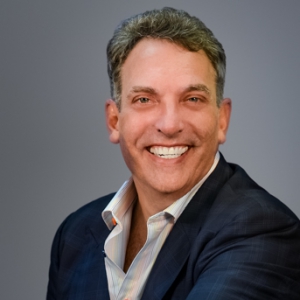
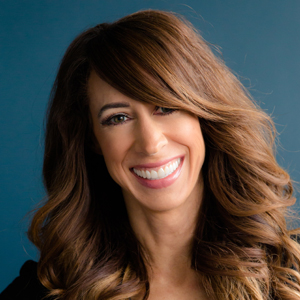
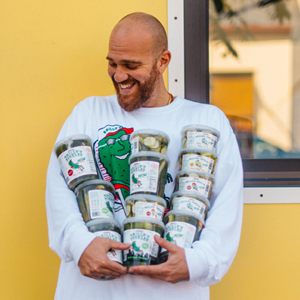
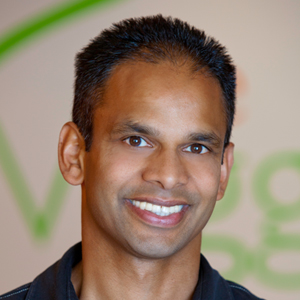
[00:00:10] Ray Latif: Hey, everyone, I'm Ray Latif, and you're listening to the Top Podcast for the food and beverage industry Taste Radio. This is episode 194, which highlights interviews with a few of the leaders, innovators and entrepreneurs who joined us on the podcast during the second half of 2019, including The Beverage whisperer Ken Sadowsky, Whole30 founder and CEO Melissa Hartwig, Grillo's Pickles founder and CEO Travis Grillo, Veggie Grill co-founder TK Pillan, Dogfish Head Brewery founder Sam Calagione and Bev founder and CEO Alix Peabody. Just a reminder to our listeners, if you like what you hear on Taste Radio, please share the podcast with friends and colleagues. And of course, we'd love it if you could review us on the Apple Podcasts app or your listening platform of choice. Let's kick off the show with the man affectionately known as The Beverage whisperer, that's Ken Sadowsky, who we featured in episode 174. A long-time investor and advisor to many high-profile and category-leading brands, including Vitamin Water, Vita Coco, Vi, Hint and Califia Farms, Ken is one of the industry's best-known and most respected insiders. In the following clip, Ken explains how he assesses opportunities to align with and invest in early-stage brands, how he advises entrepreneurs on packaging and design, while he warns that indecisiveness can lead to big mistakes. How many pitches would you say you get a year? Not quite 200. Because there's like 252 business days in a year, and I used to say it was like a vitamin, I would get one a day. And there are that many product launches, but I don't... I probably see a significant number of those, but I would say it's probably around 100. And how many do you actually invest in or agree to advise? Oh, well, one example, like coming out of Expo West this past year, I was either dizzy or not focused enough, but I didn't see anything compelling. I mean, and usually that's, you know, when I, I'm sort of prepared to be writing checks in April and May and June as follow up for, you know, the March Super Bowl of products. and I just didn't see anything compelling. I think it's getting too blurry. That entire show is getting hard to handle. The show is getting blurry, or is the industry getting blurry? Well, I think the show is representative of the industry, so I think the answer is both. I think an interesting question for our listening audience is, what is it that compels you to go from that, I'm here to give you some advice on what I think you should do with your product, to, we really need to spend some time together and talk about working together, you know, me investing in your product. What compels you to get there? I think it's a little bit of art versus a lot of people that are in my shoes in this industry have much more of a scientific approach. And I think what's benefited me is both my network and my sense of, you know, it doesn't always fit into a square hole, you know, I'm not looking for a square peg going into a square hole, I'm looking for something that's moldable. And so it starts with just my opinion about whether the product is on trend, and then it's the person. And by the end of the evaluation period, it has much more to do with the person than the product. Do you have a way that you like to be pitched? The answer is, I guess, not overtly. I mean, I can't, I don't like inbounds that are too aggressive. But what I would also say is, having been at the desk of a distributor where I was the buyer, and then I would go out into the trade and see things in the trade, whether they were part of Atlas Distributing's portfolio or not, that were working. And so as soon as I left Atlas, and I started doing what I do for VerlInvest, and on my own, the inbounds were coming in my first few inbounds that I thought were reasonable products, but they were wanting me to move with a higher speed or alacrity than I was used to doing. I remember saying, you guys are screwing up my chronology. Like normally I find something working in the trade and then go after them. So the inbounds was a whole new thing to me and it's been, you know, time consuming. So I think that's the best way I can answer that question. I'm sure you've been asked this question a thousand times, but I'll ask it anyway. Coconut water, you know, if somebody said coconut water in 2004, as many articles as, you know, you could have read about the potential for this category, the potential for The Beverage, it was still a very, very unlikely beverage category, at least The Beverage category that it's developed into today. What was your advice to the entrepreneurs in the business particularly microcarbon and vitacoco, in terms of communication and education to consumers. Well, the first one was the easiest one. When he came in to see me, the original pack had rehydrant on it as like one of its benefits. Is that a word?
[00:05:29] The Beverage: Rehydrant?
[00:05:29] Ray Latif: No, that's exactly what I said to him. I'm going to sit on this side of the room. Let's try getting this, you know, label in some sort of grammar compliance. Yeah, use words people know. Step one. But look, he's a super sharp guy and nobody's perfect. And they were really proud of themselves for kind of trying to create a new word. But I don't think the population of America was ready for that. We talk to brands about this stuff all the time. Like you're using a word that someone doesn't know you should look for.
[00:06:06] Ken Sadowsky: a brand that's like you, has someone created this category already, and can you be part of it, or should you go and try to create a brand new one, because it costs a lot to do that.
[00:06:16] Ray Latif: Yeah, and I think that's a great point, and then from a more tenable perspective of the same thing, I talk to people all the time and they show me their product, or they show me the deck and what the product's going to look like, and I say, this is great, but what is it going to look like in a store? I mean, what's the price point? What is it going to look like in its peer set? And if you're going to be the major standout from a price perspective, you better be the best looking product on that shelf. And it's just so visceral, the game in the beginning. And then what's added to that component of things is Instagram. I mean, if it's not Instagrammable, it's like, you know, forget about it. Having been an investor in brands for going on over two decades, from Vitamin Water through to Fortone Results Day, there must have been some times where you might have regretted investing in a brand. And it's not necessarily, I don't want you to call out any particular brand that you've invested in, but what are some of those times where you've said, you know what, I really didn't evaluate this the way I should have, or the founder isn't someone that I've vetted thoroughly enough. Oh, I've been there. I've been there on multiple occasions. One of them was a tiny company that had this great functional ingredient. But what I learned from that CEO about what not to do. was not to bring in a top-heavy group of people, top-heavy meaning salary, high-salary people with monies that had been raised, and then really not have a business but just be swinging for the fences. I mean, the guy really did have, the company had this great functional ingredient, but there was no team built and there was no business built, even though It appeared to have real, you know, homework had been done, real science supported a lot of this stuff, but there was just no, the online business was misrepresented. In the tech world, we call it vaporware. Yeah. Aside from spending too much money, what are some of the ways that you've seen brands fall down, fall on their faces when they didn't have to, to just, you know, made a really big mistake? I guess I've seen indecisiveness be a bigger factor with some failures than one would think because, you know, it's almost easier to make a wrong move and then adjust right away. than it is to just continue to have this innovation pipeline for both the existing product line and then future extensions of the product line, and then no decision got made. I guess the easiest way I can put it is when a small company starts thinking like a big company, that's really bad. Next up is Melissa Hartwig, the co-founder and CEO of popular 30-day lifestyle program Whole30. Since its launch in 2009, Whole30 has become a cultural phenomenon that has attracted millions of followers, many of whom adhere to its paleocentric guidelines even after they complete the program. In this clip, pulled from our interview with Melissa in episode 184, she explains why most of her work time is spent direct messaging with members of the Whole30 community, the importance of accessibility, and how she's learned that, quote, you can't let perfect be the enemy of good. The reach you have on social media is incredible. I searched for the hashtag Whole30 on Instagram recently and it showed over 4.2 million posts with a tag. There's a half a million with the hashtag Whole30approved. and millions combined for offshoots like Whole30 Meals, Journeys, etc. So with all that interest and excitement for Whole30, I mean, how do you harness all that? How do you gather all that information and use it to your benefit and the benefit of your community? So I think the most important thing is that I stay personally very closely connected to the community. Probably the most amount of time I spend in a day is in my Instagram DMs and responding to comments. This is where I hear people's stories. This is where I read between the lines with some of the things they're still struggling with. It's where I hear their great ideas, you know, I make a joke that like every good idea I've ever had about the program comes from the community, except I'm dead serious. Every book I've ever written, you know, the newest book Whole 30 Friends and Family came out of watching my community do the program and seeing that there were still some pain points and wanting to solve them. You know, I stay really closely connected. I'm very involved in people's stories and testimonials. I want to hear them. I'm talking to them all the time. I'm offering advice all the time. And I think that makes it easy to kind of figure out where to take the program next, because all I'm doing is listening to what my community needs and then trying to give it to them. I'm curious about how many DMs you get a day. Oh, it's like hundreds, hundreds, hundreds, hundreds, sometimes thousands. And you respond to all of them? No, you know, I can't do all of them. I do have very healthy boundaries around my time on social media and my time working and my time with family. But I do as many as I can. I try to touch every comment. I try to respond to as many DMs as possible. And it's funny, because when I meet people in person, almost universally, what they'll say is, you responded to one of my DMs. And I'm like, yeah, I do that. I try to respond to as many as possible. You know, we just talked about convenience as being a key component of how people with resources think about or make food choices. But at the same time, have any folks called out a potential disconnect between processed foods and frozen foods with the Whole30 program, given that fresh is always going to be better? Yeah, you know, some people have and I would actually say that I used to be far more dogmatic about it and far more of a purist in the early days of Whole30. It was like, look, you can bring your hard-boiled eggs and roasted sweet potato to the gym and that's your post-workout meal or you can plan your own meal to bring on an airplane. And in the early days of Whole30, this was out of necessity because there was no nut pods, there was no Whole30 delivered, there were no Epic bars, like we didn't have the convenience foods. But what I've realized along the way is that you can't let perfect be the enemy of good. So, you know, we're not recommending some of the really crappy ingredient like bottom-of-the-barrel products, but if you're talking about 100% grass-fed Applegate hot dog, and that helps you get dinner on the table and stick to your Whole30 commitment, a little bit easier, then I'm all for it. You know, our Whole30 approved great value meals in Walmart are helping college students do the Whole30 on a serious budget without access to a health food store. So sometimes people will say, you know, but that's processed or shouldn't you be cooking yourself at home? And my answer is always, look, if you have the capacity and the time to cook every meal for yourself from scratch from home, I'm so proud of you and you should do that. But I also don't want to leave people out of the program who travel for work, who have very busy schedules, who have serious budgetary constraints, who don't have access to health food stores, who want to complete the whole 30 and get all the benefits the program has to offer, and has to work some convenience foods into their diet to do that. Like, if the 100% grass-fed hot dog is the worst thing in your diet, you are doing just fine. I mean, do you see a point where the Whole30 program will have to evolve in terms of what foods are acceptable and what foods should end up? I mean, it sounds like you're already having, you know, some internal debates about some brands and some products, but I mean, how does Whole30 evolve and should it? You know, it should evolve if the research evolves. If we understand more about some of these foods that we eliminate or some of the foods that we say are a healthy choice now, if new science comes out, new research comes out, we have a new understanding of these foods, then yes, of course, the program should evolve. You don't want to be so dogmatic that you're just like clinging to rules that no longer make sense or no longer serve the community. But one of the things that I'm really cautious about is changing the program due to popular demand. So lots of people were really happy that plantain chips were part of the Whole30, but in watching and observing the way people were using them and the results that they were getting, You know, we just had to say, this is not what you need. So sometimes what people want and what they need are two different things. Another good example are dried fruit and nut bars. You know, Lara bars, RX bars. RX bars used to be part of the Whole30 approved partner family, but we watched how people used them. And because they were officially Whole30 approved, people were eating them like candy. And it was mindless consumption and it was only feeding their sugar cravings. And so between that and the direction of flavors that that company decided to go with their bars, we just had a really honest conversation and said, like, we're going to pull you out of the program. You know, your bars will still be compliant, but we've now got this big educational campaign around how and where and when to include them in a way that I think serves most people for their Whole30. Did that negatively affect your business in doing so? I mean, it's, I mean, RxBar is a massive brand with a huge following. I mean, how did that impact what you're doing? Yeah, we were actually one that was one of the very few affiliates we had, meaning if someone bought an RX bar using our code back in the day, we made money. That was our biggest affiliate revenue generator. And yes, yanking them from the program had an impact on our bottom line. But, you know, I'm not going to say it was we didn't have to think about it like it was definitely this is going to hurt a little bit, but it was in the best interest of the community. And I had a very good relationship with the founders. We had a few conversations. They completely understood I still have a great relationship with the company today, and we still, you know, stay in communication. But like, ultimately, the way I've thought about growing the business is always putting the community first. I don't do anything unless it's in the highest good of the community. And it does mean passing up on some pretty lucrative offers and probably some big sponsorships and, you know, maybe some things that would be really good in terms of like publicity. But if it's not serving the community, ultimately, it's not serving our long term goal. Over the past couple of weeks, there's been a lot of buzz about an interview you did with People Magazine, and you shared quite a bit about your past. Is it challenging to open up? Is it challenging for you to be vulnerable with your community? I mean, yeah, it is. Yes, I had like three days where I wanted to just like crawl under my covers after that People article came out, because that was a lot. I've been very open about my drug addiction since day one, because what I realized was that in the early days of Whole30, before I kind of came out about my experience with drugs and being, you know, in recovery, I would have people who would say, okay, but you have no idea what it's like to feel out of control with food. You've never had a problem with food or an eating disorder. You've never been overweight. So you have no idea what my experience is. And my answer was like, yes, of course I do, because I spent five years as a drug addict and drugs and food are not really that different from a psychological perspective. So I've been very open about my past and my addiction and my recovery, but What I've come to realize over the last maybe five or six years, really specifically since my divorce, which was also kind of public because he was also my co-founder and business partner, is that, you know, if I'm showing up as this like perfect whole 30 Melissa version of me where I'm always eating perfectly and my meals are always balanced and I'm always exercising and I'm always really groomed and polished and well-spoken, I'm relatable to exactly zero people. Like nobody lives like that. And so what I realized was that if I wanted to stop feeling like an imposter in my own life, if I wanted to truly connect with my community, if I wanted them to feel empowered to like open up and share with me and then share with each other, which only enriches the community, I had to go first. So it's not always easy to get out there and share some of the things I've shared so openly. It's not always easy, but it's the right thing for my integrity. It's the right thing for my own personal growth. And it's helped me make really genuine, authentic connections with my community, which is the best part of my job.
[00:18:57] Melissa Hartwig: Guessing your margins? That's risky. Belay Financial gives CPG brands the clarity to scale smarter, faster, stronger. Get your free inventory ebook by texting TASTE to 55123 and start making data work for you.
[00:19:17] Travis Grillo: Tune in at the end of this episode for an exclusive interview with Matt Lin of Belay Solutions. He sits down with Melissa Traverse to break down the biggest inventory and accounting mistakes CPG founders often make. You'll learn how to bring clarity to your numbers so you can scale with confidence.
[00:19:35] Ray Latif: Let's continue with Travis Grillo, the founder and CEO of premium pickle brand, Grillo's. From humble beginnings selling pickles out of a cart in Boston Common, Travis has since built Grillo's into a nationally distributed brand, carried its several major chains, and one that generates tens of millions of dollars in sales annually. In a clip from our wide ranging interview, which we featured in episode 175, Travis speaks about why he's positioned Grillo's as a lifestyle brand, how he considers new hires an investment, why he's just as likely to take advice from a homeless person as he would from a billionaire. There's a real distinctiveness about you. Someone could pick you out of a crowd pretty easily. That sucks. I like to be the ghost.
[00:20:24] The Beverage: Thanks, Ray.
[00:20:25] Ray Latif: The Grillo ghost. But it feels like, I mean, that has helped build the brand in so many ways. Like when you're doing a sampling, when you're doing a demo at a Whole Foods, they want to see you, right? I mean, like you're the, in so many ways, the public persona of the brand. You are Grillos. I would agree to an extent to the point now and for the last few years that I'm proud to say that the brand that you see with me has now resonated with everybody that buys a jar. And through our social media and through the emails and everything we get, people are proud to own Grillo's. They're proud to be part of Grillo's. It's actually becoming more of a lifestyle brand. And you're going to see that in the future with things we're doing with other companies, with our clothing and things like that. Correct. I'm great at branding, you know, I appreciate that and I think that that's part of my background because I was going to work for Nike, remember, and I was going to be a designer and I know how PLM works and I was going to be a project line manager so like I understand trends and I understand that. Grillo's, when you dissect it, it has a lot of my DNA, but I was able to get that into a jar, which now can be in your fridge and you can have part of that DNA every time you eat it. And we embrace that. So branding wise, I love to see my jar on shelf and it's completely different than everyone else. And that's me, right? You just said it. So it's the jar that I created that is differentiated from everybody else. And when you see it on shelf, at Walmart, if you see it at shelf at Target, you see it on shelf at Whole Foods, Kroger's, Publix, Costco, I could go on and on where they are. It's a national brand. It's distinct. I think that's where I've changed kind of the game, right? The pickle world, the landscape of it. It's like you put your own personality on a brand and let it fly. And if it's positive and it's spread like love, people are going to embrace it. So I think that's what I've done. Do you see Grillo's as remaining a food brand or do you see it as a brand that can go beyond just pickles? Yeah, a brand that's definitely can go beyond pickles. I mean, I see this brand, you know, getting into all different styles of foods and dressings, drinks. You know, Grillo's has a platform of, you know, we had a store in Cambridge that had 20 different pickle products. You had a storefront. Yeah, a brick and mortar that was going to be one month and stayed open for two years. How many people told you you were crazy for having a storefront, a pickle storefront? You want to talk about how many people told me I was crazy? We can start from the beginning. We can redo this whole interview. Yeah, the same people that thought I was crazy are the same people now that are calling me for my product. So it's funny. And, you know, me being an artist and growing up that way, I get a kick out of it that we had a pickle store that actually thrived on the street. You could retire, right? One guy can have a pickle store in America and be pretty darn good, right? That wasn't my vision though. I wanted my pickles to be everywhere in the nation. Why? Because I believe that Americans in this country need to have good products available to them and why can't I continue to like grow, grow, grow a company? and brand, brand, brand a pickle that's good for you where I'm not putting out anything, I'm not putting out something that's bad for you. So I feel good about selling as much as I can. Why keep it small? So that's my model and that's my art is like continue to grow a brand into all different categories and to give Travis Grillo, you know, you could drop the pickles, it's just grillos. That's a really amazing way of looking at it is that like, I'm selling something that I can stand behind 100% that I eat all the time. That is not going to do any bad to people. That's a great way of living. Mellow, mellow, all positive, that's what I mean. See what I'm saying? There's a science to this, but there isn't, right? If you live a positive and in peace and try to just move that forward, it's great. I don't think I could ever sell anything that I couldn't stand behind. I wouldn't go to bed at night. I'm not about money like that. I chase money because it's fun. I don't chase it because I want all this stuff. More stuff is more problems. So for me, the pickles, have just created this brand that I like actually smile and I'm like, I'm happy about this brand. Like this brand has brought people, it makes people laugh, it makes people happy. You love the brand. You're an absolute lover of your brand, as you should be. When you hire folks for the company, do they have to love the brand as much? Yeah, it's funny because if you ask some of my biggest guys in the management team and stuff, if you say, hey, how was it with interviewing with Travis? It would probably be like, well, he showed up in whatever, shorts and a basketball shirt, or he showed up in just casual clothes, and we met at a Whole Foods, and we walked around. That's what I want to do with my employees is bring them into like the store, right? Because now we're in a level playing ground. We're not in a fancy friggin office. I don't, you know, I've seen them all. You know, that's not what I need. I want you to come to the store and we're both consumers at this point, right? We're both customers and we're both equals. Let's talk. walk around the store, get the feedback on what they've done, look at shelving, look at products that they've created. Because a lot of the people that work for me now have launched brands or worked in brands. So this team, I wanted every teammate to really feel me out. And also, I want to feel them out and just make sure that they're culturally ready to work with a guy like myself and a team that is constantly moving. We make a fresh product, so nothing's stored, nothing's warehoused, the product's made to order. So all this stuff is important because you've got an employee that used to just work a chip brand or something maybe that maybe has a long shelf life or this or that, and they're not ready for the challenge to like every day have a problem. Because every day there's usually something that's going to pop up in a fresh brand, right? Not bad things, but just things that you got to be on top of. Have you ever taken outside investment? I know you talked about people calling you all the time. We took our first Series A investment from Breakaway, a local Boston group that, you know, they believed in what I was doing. Personally, at the time, I was nervous. I was scared. I didn't want to take money on. I didn't, you know, know exactly what would have happened. After you take it, because you hear all the stories, I'm sure the listeners are like, maybe somebody's like about to take money, right? So you got to really think about who the people are. And I think the guys that I, I know the guys that I invested with, we spent time together and just discussing, it was all about the brand. They were very, Brand, brand, brand. Products obviously the best. It's the best pickle I've ever had. But the brand and the people you've hired and you're going to catapult. So having that money there helped me bring on new hires, higher level people to help me grow into the bigger grocery stores you see us in today. And a lot of money went into that, trade spend, marketing, things like that. And just building a great team, a lot of that money went into. It was just hiring the right people at the right time to grow to where we are today. When you had those meetings with the investors from Breakaway, were you wearing the same outfit? Were you walking them through Whole Foods? Yeah, no, no. We met. They definitely got to see me first and talk and got to hear what I had to say, how I do my business. I just kept it real. Like I didn't fake anything. I didn't like put up a big graft and talk about, I mean, we have all that, which is great, but it wasn't like my main focus was like to prove to them, you know. You didn't have the hockey stick in the back being like, Grillo's is here today. And in two years, it'll be here.
[00:28:44] The Beverage: Yeah.
[00:28:44] Ray Latif: I mean, you got to see that stuff. And that's obviously there. They wouldn't be talking to me or they wouldn't have invested. But I think that what was great was that they saw the brand as having these legs for the future. And when someone's willing to put in money, you know, off a company that we started on the street from a pickle cart, it was just kind of like, this is awesome. You know, I look, I kind of changed the way I was thinking about it. You know, you got to take advice from people, but you don't take all of it. you kind of circulate that advice. If I took advice from a homeless person that I've had, you know, a three-hour conversation with ten years ago or even nine years ago or whenever, even yesterday when I talk to people, I'm just saying like I do that and then I have a conversation with somebody who's worth a billion dollars, right? Sometimes I take the advice from the guy who was homeless or sometimes I take the advice from the guy that you know is down on his luck rather than the guy that is super successful because there's a lot to say about how you move in a business and how you perceive your branding. So you have to get a little bit from everybody. You can't be shallow and you know you got to be humble. We'll keep it going with TK Pillen, the chairman and co-founder of fast casual restaurant chain Veggie Grill and co-founder of investment firm Powerplant Ventures. Thirteen years since opening his first location, Veggie Grill now has 37 stores and is planning to operate 50 stores by next year. In the following clip from our interview with TK in episode 188, he discussed the common theme in all of his businesses, why it's critical for co-founders to have a clear understanding of roles and complementary skill sets, why he describes growth plans as a double-edged sword, and what it means to be a good investor.
[00:30:37] Ken Sadowsky: I focused all my effort around the brand and how do we bring this brand to market in a way that's going to get past the vegan vegetarian stereotype and how do we present the food and present the environment and how do we make sure we have an overall operating and growth structure and plan in place. Let my partner Ray White who is the co-founder on the food side handle the menu. Kevin handled the real estate and the finance side of it. We brought on John Anderson as our director of operations to run the front end of the restaurant. So we had the right team, which is also a common theme that I'm more honed in on now than ever. You know, as an investor, it's all about the team and making sure you get the right team in place.
[00:31:20] Veggie Grill: It seems like you all had clear understanding of what your roles were, too, and what each of you were going to focus on.
[00:31:26] Ken Sadowsky: Yep. So that's, I think, the other kind of, if you go big picture, kind of framework of building a successful company is you got to have the passion, you got to align around vision and values, and then you have to have complementary skill sets. and know who's going to play what roles and making sure you are self-aware enough to understand what roles you're going to play well and what roles you need other people to help you with and having the wherewithal to put those pieces together.
[00:31:54] Veggie Grill: So fast forwarding a little bit, now you have 36 locations. How did you get from two to 36? What did that, and geographically far more diverse all over the country, how did that scale up?
[00:32:07] Ray Latif: What did it look like?
[00:32:08] Ken Sadowsky: Yeah. So that's another, I think, commonality around both CPG and restaurants is your growth plan is a double edged sword. You got to be very, careful. You want to go quickly, but you don't want to go too fast and hit the wall. So we, I think we're smart enough to know that in those early days, we had to be very careful about additional locations. In the natural foods world, that's new distribution channels. But for us, it's opening another location, costs you a million bucks to open a new restaurant. You got to make sure you're in a lot of restaurant chains, end up hitting that wall quickly when they try and go from two to seven, because their first two, they pick good locations. The next five, the locations aren't as good. They haven't scaled their operations well enough. They're not delivering a consistent experience. So we were very methodical for those early days. So between 2000, from 2006 to 2011, we opened six more. So about one a year. So entering mid 2011, we had seven. And then we kind of felt like we had enough of a base. And, you know, it's kind of that deep and narrow strategy that we talk about a power plant where we were pretty deep in L.A. and Orange County. And we had really honed our operations and our brand and learned a lot of lessons. So we had what we thought was a real solid foundation here in L.A. and Orange County. And we knew we wanted to step on the gas. And we were smart enough, I think, to know that taking a restaurant concept to other markets was something we hadn't done before and probably could have figured out. But given how quickly we wanted to go, we decided to bring on other people who had done it before. And so we specifically went out and searched for a CEO who knew how to take restaurants from a regional to a national basis. And we found a great gentleman named Greg Dollarhide who had his accomplished restaurant background and he was very interested in what we were doing, saw it as the future and so he came on in 2011 as our CEO and he scaled us very quickly over the next several years from that 7 to about 28.
[00:34:23] Veggie Grill: One thing that keeps coming up is investing the time up front, whether that's getting to know a partner to make sure they're the right fit for you or testing a name, testing a concept. What does that look like for you and why do you think that's so important?
[00:34:40] Ken Sadowsky: So I've been in this entrepreneurial world for quite some time now since I started my e-commerce development company in the mid-90s and I did read Built to Last back when I was running that company with my partner and really got fascinated by the purpose, vision, values, framework that these companies that had lasted the test of time had in common. And brought that to my partner at that company and brought it to him at a time where we was right after the bubble had burst and we basically needed to cut our company in half. And having to go through that, well, what do we really stand for from a purpose standpoint? And then what are our values and what's our vision? And that stuff really helped us get through that downturn. And we had to make some cuts, but we cut it in a way that really allowed us to thrive and have a future. And so I took that same framework before we ever started Veggie Grill. And when I first started working with Kevin and Ray, we sat down in a room and said, okay, what's the purpose here? What are we trying to achieve? We're trying to, you know, make plant-based food fun, friendly, and familiar, right? That's our purpose. What's our vision? Bring it to consumers across the country and make it convenient. what are our values, what's going to, you know, we're going to always stand for these things. And that really served us well. And then Powerplant, my partners and I did the same thing. And, you know, one of the things we have at Powerplant is our overall playbook for companies. And the first thing we have in there is alignment is 1% and then execution is 99%, but without that 1% alignment, the 99% can't happen. If you're not aligned as a team and an organization around what you're trying to achieve, if you don't have that foundation, it's just you're always going to have challenges. I think as an entrepreneur, you know, that's one of the reasons I became an entrepreneur is I wanted to make sure I was at 100% belief in what I was doing. And so I think I've become a purpose-driven entrepreneur and conscious capitalist. And so it's not the only way to do it. You know, some people focus more on the economics, but for me, I've always, since I made that leap from tech to food, it's always been purpose-driven.
[00:37:04] Veggie Grill: You mentioned power plant. I would love to talk about that a little bit. So can you talk about how the firm came to be and what your thesis is around investing?
[00:37:13] Ken Sadowsky: Sure. So it was another one of those, I'd say preparation, you know, opportunity meets preparation. We were able to raise enough money, $42 million, from Zico investors, Vegigo investors, some of our own capital. And our networks did service very well, and our operational background did service well. So we were able to, in that first fund, invest in great companies, including Beyond Meat, and Rebel, and Ripple, and Beanfields. and add enough value that the first fund has been doing very well and had gave us the wherewithal to raise our second fund. And now we actually are experienced fund managers and have learned what it takes to not only be good operators, but really be good investors and advisors and supporters of the brands we invest in. You know, it's kind of one of those things where you're usually not going to get what you want unless you define where you want to go, right? And so we defined in the early days where we wanted to go, who we needed to get, what type of person we needed to get there, and that's how the four of us have all come together.
[00:38:19] Travis Grillo: You said by the second fund, you guys have figured out how to be good investors.
[00:38:23] Ray Latif: What does it mean to be a good investor?
[00:38:26] Ken Sadowsky: Great question. Yeah. Uh, it means we're not operators, right? I think, you know, as a operator, you kind of have this view that you can, uh, take the positive of anything. And, uh, whereas, uh, as an investor, you've got to help your founders and teams become better, not by you doing stuff, but by helping them see where their holes are and help them come up with ways to fill it. And usually that means adding to their team or thinking about addressing their brand or thinking a little bit differently about their distribution strategy. But if these companies are going to scale, they need to be able to do it themselves. And we need to give them the right guidance and support and be kind of the mirrors that can help them show them where they need to improve and give them some guidance. But then it's up to them to do it.
[00:39:18] Ray Latif: How hard is it as somebody who started companies to sit back and say, okay, I know how I do it. I know exactly how I'd go about it, but I'm going to sit back and I'm going to tell you how I think it should be done.
[00:39:29] Travis Grillo: And then I'm going to let you try to do it and I'm going to help you do it.
[00:39:32] Ken Sadowsky: Yeah. So that exactly was the process that in the early part of fund one, it was, Hey, I'll come in there and help you do this. And, but, um, that's not the right way to do it as an investor. You know, the right way to do it is to really make sure. we're investing in companies and teams we think have the ability to learn and adapt and grow.
[00:39:52] Travis Grillo: I think that's a great point.
[00:39:53] Ken Sadowsky: Yeah. And then, yeah, so that's something we've certainly learned, too, that we need to invest in people. We're investing in people. And and those people need to, one, have a vision that we can align with and they can align with us because we're going to become partners. And then to have the self-awareness and ability to to understand where their strengths and weaknesses are, have the ability to learn and adapt, and then it's our job to help them do that. The thing I've really learned is these are partnerships as well, but partnerships in a different way, where we're the partner to help them achieve their vision and goals, but it's their job to achieve it. It's our job to help them.
[00:40:33] Travis Grillo: Do you want more repeat buyers on Amazon? Well, this free resource in collaboration with Straight Up Growth will help your brand turn first-time buyers into long-term subscribers. Download Winning the Repeat Purchase Game on Amazon now at Taste Radio.com slash SUG. That's Taste Radio.com slash S-U-G to start building retention-driven growth for your brand on Amazon. Scaling The Beverage brand into major retail comes down to operational readiness. From packaging lead times to co-manufacturing strategy, the details can make or break a launch. In a new ebook in collaboration with Octopi and Asahi Beer USA, industry leaders share what they've learned in helping brands scale. Download it now at Taste Radio.com slash octopi. Do you need to scale your team faster without compromising on talent? Join Oceans for a live webinar on April 20th and learn how leading companies are hiring top global professionals who are ready to grow with your business. Register for the webinar now at Taste Radio.com slash oceans. That's Taste Radio.com slash oceans.
[00:41:44] Ray Latif: Next, we have some words of wisdom from Sam Calagione, the founder of iconic craft beer brand, Dogfish Head. We spoke with Sam in episode 189, and in the following clip, he reflects on his experience building Dogfish Head, which in May merged with Samuel Adams' maker, The Boston Beer Company, in a deal valued at $300 million. He discusses why goodness is a pillar of Dogfish Head's business philosophy, why he refers to employees as co-workers, and why he urges entrepreneurs to figure out how small their businesses can possibly be. You're an author, you've authored several books, and in one of your books, most recent books, Off-Centered Leadership, there's this idea, this central idea of goodness associated with Dogfish Head. I'll just read a quote. In business, I believe there's good karma that comes with focusing on collaboration instead of competition, both within the organization and externally in the marketplace.
[00:42:37] The Beverage: Yeah, so I mentioned the first written page of the business plan had that, our sort of raison d'etre to be the first commercial where we committed to making the majority of our beers with culinary ingredients. But ahead of that, the sort of preface to the business plan was an Emerson quote that's short, so I'll say it. It's, who so would be a man must be a nonconformist. He who would gather immortal palms must not be hindered by the name goodness, but must explore if it be goodness for himself. And I just love that concept because it's saying, don't follow the status quo. And if you do something well differentiated and exciting and good, other people will recognize it as good and celebrate it and emulate it and join you on your journey. So we've kind of always applied that philosophy to what we're trying to do. Of course, that much verbiage doesn't fit on a six pack. So we condensed the concept down to off-centered ales for off-centered people, which essentially says a similar thing. It's saying what we're about and whom we're doing it for. And I think the goodness thing comes alive at Dogfish every day. For example, I've never once said anybody works for me or referred to anyone as an employee of mine. You know, it feels gross. So we've always recognized we're each co-workers you know, respect is blind to an org chart. You know, we treat every single person at our company with great respect and we ask for input on how we're doing on our journey from every single co-worker.
[00:44:08] Ray Latif: You know, that's a really wonderful way of putting it in terms of how you think about your employees as co-workers. At the end of the day, though, you're the boss. Is it tough being a boss? Was it tough for you to learn how to be a leader in the organization, to learn how to be the leader of a fast-growing brewery? I mean, what were some of the things that you had to adapt to pretty quickly so that you could lead in an effective way?
[00:44:33] The Beverage: Yeah, I mean, I'd say it's still it's always hard to be a leader. And I'd say I still have way more to learn than I have to teach about being a leader. And I do learn from my fellow leaders every day. But I think, you know, what makes a business leader successful when you think of it, if you're defining success as a business, as growing a company to have you know, multiple locations and hundreds of people like we've been lucky to have grow with Dogfish Head I think one of the skills you most need as a leader is humility, like recognizing almost any entrepreneur, regardless of the The industry you start in, when you start small, by virtue of definition of a mom and pop startup or whatever, you have to wear a lot of hats because you can't afford to hire a lot of people. So even if you suck at finance or HR, you wear those hats. And I think Mariah and I's ability to grow Dogfish beyond one location or a few dozen people in one building, stems a lot from having great humility and knowing which hats fit us well and which ones we needed to quickly take off and find people who would fit well that had sort of complementary superpowers to ours. We weren't great at finance, we weren't great at HR. Having that humility to know what you're good at and then quickly figuring out how you can afford to excite other leaders with the skills that you don't have to join you on your journey, I think is one of the biggest factors in growing a company from you know, being in one location with a few dozen people to something that could go coast to coast.
[00:46:14] Ray Latif: You talked about sort of the stagnation that's been happening in beer right now. You know, in the 90s, there was a period of stagnation for beer as well. And one of the things that you said was that you wish you'd been more capitalized. Your father-in-law said cash is king, but having some money in the bank as well is very helpful. You know, for entrepreneurs listening, I mean, you know, how do you think about being a well-capitalized brand and company?
[00:46:39] The Beverage: Yeah, I'd advise any entrepreneurs learning the hard way from what I learned that instead of writing a business plan to figure out how big you can be, write a business plan from how small can I possibly be and still have a viable, sustainable business model. And it's mostly on the financial metrics, you know, to not go too much into bank debt, to not rely on a business model where you're bank obligations every month are strangling your opportunity for creativity. And I think a large part of that comes from making sure you've got enough dry powder when you open that you can sustain the business without the revenue for, it depends on the industries, but I'd say for at least half a year where you don't need the revenue coming back in to fund whatever the product line or marketing or staffing costs are and using that dry capital as a for buoyancy to make smoothness in the bumpiness that's inevitable in any startup.
[00:47:47] Ray Latif: Last but certainly not least, we have Alik's Peabody, the founder of Bev, a wellness-focused canned wine brand that aims to change the narrative around how women are projected and perceived by the alcohol industry and redefine traditional ways of doing business in a space long dominated by men. In this clip pulled from episode 191, Leaks explains why despite very challenging times, she never thought to quit, how she made inroads to tech investors, and how she attempts to redefine quote, old school ways of doing business. You know, I was reading about you and one of the things that stood out was that at one point, you know, in the early stages of your business, you only had $12 in your bank account.
[00:48:32] Veggie Grill: And then a short time later... Yeah, that was a dark time. That was not a great moment for me personally.
[00:48:40] Ray Latif: I can't imagine it would be. I mean, even if you're not building a business, you only have 12 bucks in your pocket. That's a tough place to be in. But, you know, just a short time later, you raised $7 million to fund the brand and to fund your company.
[00:48:52] Veggie Grill: Yeah. I mean, it was really hard. I had no idea where to start at the beginning. And I, you know, dead broke is a kind term because I was also just insanely in debt. at that point as well, because I'd spent so much money just not only building the company itself, but just basic living expenses while you're making no income and you're trying to build this product, and it is a very, very expensive industry. You think about $7 million and I'm Red Bull or any of these larger companies, they probably spend that in an hour, you know what I mean? Or in one event, one day, and I'm trying to build an entire business off it. It was wild, but basically, I realized that I was going to need funding to play against other industry players who have organizations so big and just so established, I guess is the word I'm looking for. that I went out and I started looking at how to raise capital. And the first thing that I did was I took all of the products that I'd made, and I went to a bunch of parties that I knew basically angel investors were going to be going to, that I was thinking about asking if they'd be interested in investing. At this point, it's myself, my cat Harold, I had our first round of product and a deck that I'd had my cousin mock up. And I went, I would flood those parties with Bev, girls would be drinking it like crazy because they loved it, they loved the brand, they loved, you know, the juice, everything. And then a couple days later, I would ask for somebody to introduce us. And so I did this for a while just to kind of get myself in front of people. And, you know, I'd have investors be like, that's crazy, that brand's everywhere. And I'm like, that's wild. It was just a lot of hustle. And then eventually, you know, when we got to the stage where I was like, I really need some institutional capital if I want to get this thing off the ground, you know, that's when I started fundraising like a normal entrepreneur would, particularly in sort of the Silicon Valley area. And it was also difficult because A, most of them have never invested in this type of brand before, particularly alcohol, wine, and spirits. It's just not something that most of them can invest in. A lot of them have what's called a vice clause where they can't invest in tobacco, cannabis, alcohol, sex toys, that kind of thing. And so that that was pretty tough. I mean, it was tough to find people for whom it was even a possibility. But you know, I got there just a lot of a lot of convincing, I suppose.
[00:51:24] Ray Latif: What do you feel like the key part of your pitch was when you started telling the story about Bev? Did you lead with wine and then go into the vision? Or did you go lead with the vision and then go to the wine?
[00:51:36] Veggie Grill: Yeah, I for sure led with the vision. I mean, I barely even touched on the wine. You know, my pitch deck, the first page was, and I recommend that people do this, my first page was simply screenshots from my iPhone that I'd taken. that said, I think the first Google search was alcohol ads, and the second Google search was alcohol ads for women. And if you look at those, and that was just the first page of my deck and before anything else. And if you look at what their search results are for those two searches, it's very, very clear immediately that this is an industry that has not done right by women. all you have to do is Google it, or beer ads, or anything of that nature. There's truly, truly nothing, or wasn't at the time, anything that's speaking to women and not at them. And that was something that was very clear. So I started with that, and I basically was like, are we serious? Is this really the best that we can do? And kind of went into what my mission was, why I thought it mattered, and how I expected to get there, which was the wine. And then at the end of the day, You know, some of my very first angel investors don't drink at all. So they never even tried it, which is kind of crazy, but it's a pervasive industry issue.
[00:52:59] Ray Latif: Regarding the old school aspects of The Beverage industry that you were referring to, I can imagine that a phrase like made by chicks might elicit some insecurities among some of those old school folks. How do you deal with folks who feel threatened by the emergence of a brand like yours and a female run company at that?
[00:53:22] Veggie Grill: Oh my gosh, I love that you asked that question. That is a heavy duty question and it's something that I deal with every single day and I love that you asked that. First of all, I think, you know, using the word chicks in and of itself is a little disarming, right? Saying, you know, made by women tends to have a little bit, carry a little bit more of what you're talking about. You know, my team is bright and bubbly and we really embody the brand that we're trying to build. And I think, you know, being a woman in business, I think Sarah Blakely says this, the best part and the worst part are the same, it's that you're underestimated, right? And I think that's been very true throughout the process of building Bev, where, you know, we kind of go in and it's like, oh, this is a cute little project you're working on and made by chicks, haha, that's fun. And then once people realize that, you know, we're a very serious business with a very serious mission, it's kind of too late, they're already bought in, they're already excited. And in large part, that's due to the way that we talk about our brand, the way that we talk about our mission in a way that's so inviting and approachable. And so I think that's kind of how we how we've gotten around some of what you're talking about, because it's very real, you know, and I think especially in a time in the type of time we're in right now, where there's just a lot of questions around, you know, how do we behave in these situations? How do men behave? How do women behave? You know, how do we interact with one another? I think it's important to have some levity and, you know, especially in an industry that's built around fun.
[00:54:53] Ray Latif: That brings us to the end of episode 194. Thank you so much for listening and thanks for our guests, Ken Sadowsky, Melissa Hartwig, Travis Grillo, TK Pillan, Sam Calagione, and Alix Peabody. Tune in next week for episode 195, when we're joined by Josh Zedd, the founder and CEO of Alfred Coffee & Tea and Caledad Beer. As always, for questions, comments, ideas for future podcasts, please send us an email to ask at Taste Radio.com. On behalf of the entire Taste Radio team, thank you for listening, and we'll talk to you next time. Hello, I am Melissa Traverse here for the Taste Radio podcast, talking about some of the biggest tension points that CPG brands and founders face when they're scaling a brand, and those are financial accounting and inventory management. I am joined by Matt Lynn, inventory accounting guru from Belay Solutions, and he is going to shed some light on all of this that is going to help everybody out quite a bit. Matt, thank you so much for joining us today. Thank you for having us, Melissa. It's great to be out here at Expo West and it's great to sit down and be able to chat this because it's kind of a passion project of ours, working mainly with CPG brands and hoping to help them scale. It's been such a pleasure chatting with you and the team and learning all about what you do over there at Belay Solutions. Can you tell us a little bit about yourself and what your role is and the kinds of solutions that Belay gives to CPG brands and founders? Yeah, absolutely. My role with Belay, I'm actually our inventory accounting manager. I run our inventory department, so we work with CPG brands, taking them from spreadsheets, putting them on inventory management systems, and really helping connect their tech stack between their sales online marketplaces to that inventory management system, even down to their financial systems like QuickBooks. Belay overall is kind of an outsourced accounting firm. And with that, we're helping teams. We have different levels with bookkeeping, controller level work, even high level into CFO type items. So we really help those brands in any way that they need financially. And then I just have a subset of a department where we're really just laser focused on inventory. It's certainly a complex topic and there are plenty of places to go wrong. Let's start by going right and start super simple. Can you tell us what some of the biggest red flags are that would help a founder understand or, you know, the person running a brand understand that it really is time to get some help with some of these areas? Yeah, absolutely. I think some of the early red flags is just everything is chaos. So when they're looking in their financial software, maybe they don't really have an accounting background and they're kind of just piecing it together and doing their best. And what they'll see is that reconciliations take forever if they even happen. They have a lot of transactions that don't get coded or they just put them into placeholders to just get rid of it so it's not an eyesore. they'll notice they have revenue but no cash or they notice that they have a good amount of cash but their blind spot is really seeing the vendor invoices that are sitting there just needing to be paid and so they just lack that clarity that's going to really be around the corner. You know, you were talking about one of the red flags that comes up that I think makes so much sense. When somebody asks you what your numbers are and you can't come up with the right number, that's a big problem because that's something that you really should be able to share with decision makers who, you know, you're ideally looking to do business with. What should you be able to call up at a moment's notice? Really, at any time, you should be able to know an accurate margin. It's amazing how many founders we end up talking to that they can tell you their revenue numbers, they can tell you their selling price, and then the minute you start talking about cost or their cost of goods sold, they just get a deer in headlights look. So really, it's very hard to tell, am I even making money? or if you don't know your entire landed cost. Maybe you know what the freight cost is, the duties separately, but you're not really getting that as part of your unit cost. So it's really hard to tell. Am I even making money or am I losing money from the very beginning? And do you recommend that founders are able to call up a margin by channel? Absolutely. And depending on the number of products and channels, you kind of want to know what are your best sellers, which ones are making the most and which ones maybe you're not making as much. But especially if you're branching out and you're doing D to C with B to B, absolutely want to know that. Gotcha. You mentioned that when things feel really chaotic, that's probably a red flag. I would say that it probably almost always feels chaotic if you're running a CVG brand. And I know this may be hard to quantify, but is there a revenue number? Is there a number of doors number that would help a brand understand whether or not it makes sense to bring on a partner like Belay? Understanding that so many brands are bootstrapped or they might be tight for cash. What is that friction point? 3 3 3 3 3 But as you're growing, as you're getting into those six-figure revenue numbers, and especially as you're approaching seven, you want to make sure you've got good financials. Because as you scale to that point, most likely you're going to be looking to raise capital. And investors, the first thing they're going to look at is your books. And are they clean? And do they show a clear picture of your business? You know, another area that folks might look to to organize some of the chaos are their systems. So many folks stick with Excel spreadsheets for a good amount of time. How do you know that you need to outsource some of your accounting to an organization like Belay Solutions versus maybe signing on to a Synth7 or NetSuite or something like that? Well, that's actually something we really help with when it comes to that cost question. That's something that trips people up. And sometimes if you just have a turnkey business, you buy and sell a finished good, you can maintain with spreadsheets. And we've had clients with million dollar revenue that can do that. But we see so many brands nowadays are using contract manufacturers. and they're just sourcing certain parts of their product. So when you start talking costs, they have no idea exactly what their unit cost is. So that's where we come in and we kind of understand, we'll speak with the customers and the clients and get their needs. And then if we think they're ready for a system, then we'll help put them on that system so they can get some of that clarity. And it's not something we force on anybody. There are plenty of times where founders come to us and we'll tell them bluntly, you're not ready for it right now, but we'll let you know when we think you are. That sounds like excellent advice. What should a founder or somebody running a brand look for in an outsourced accounting partner? Are there certain checklist items that they should make sure that their partner be able to execute or be able to help them understand? Absolutely. I think one of the keys, there's, there's a lot of outsourced accounting firms out there. Some focus on service-based SaaS companies, but if you're a CPG founder, you really want to make sure that your accounting firm has CPG experience. I would ask them, you know, what kind of brands have they worked with? And even beyond that industry specific, because there's so many subsets of CPG. And that's something that I think is great about what we do with Belay is that we kind of run the gamut. It's kind of like the insurance commercial. We know a thing or two because we've seen a thing or two across a broad spectrum. Probably getting references is always helpful, right? Absolutely. All right. So this all sounds great. I think we have a really good understanding of would it make sense to hire an outsourced partner? You know, what some of the things you should be looking for are. What does offloading this kind of work mean for the brand? What can this do for lightening the load of a founder or lightening the load of a brand operator? Like, how does that help them in their everyday business? It just tries to really help quiet the chaos. So what we're looking to do is just take some of the weight off that founder's shoulder. Let them focus on building the brand, building the business, getting that exposure. If you don't have sales, you really don't have anything. So we want them to be able to focus on that while we take care of your back-end office work. And we can just present that to you on a monthly basis. You can help make decisions. You can take that to investors. And really, you can just focus on growing your business. I feel like I felt founders and the folks who are running brands collectively sigh a breath of relief just hearing that. How can people learn more about Belay Solutions? So people can text TASTE to 55123 for their free inventory guide to get started. Matt Lynn, inventory accounting guru at Belay Solutions. Thank you so much for joining me here at Expo West. It's been such a pleasure to chat with you and learn about what you all do over there to help founders and brands with their financial accounting and inventory management. For everybody else out there, thank you for listening to the Taste Radio podcast. I am Melissa Traverse and we'll see you next time.