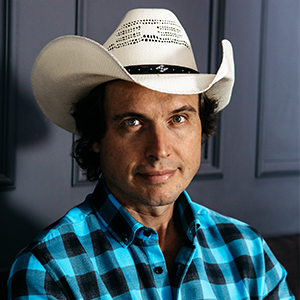
[00:00:10] Ray Latif: Hello, and thanks for tuning into Taste Radio, the number one podcast for the food and beverage industry. I'm editor and producer Ray Latif, and you're listening to episode 205, which features an interview with urban farmer, restaurateur, and philanthropist Kimbal Musk. Just a reminder, if you like what you hear on Taste Radio, please share the podcast with friends and colleagues. And of course, we'd love it if you could review us on the Apple Podcasts app or your listening platform of choice. There's an inherent connection between the last name Musk and Tesla. And while Kimbal Musk is a founding board member of the electric car company, his focus is firmly on the future of food. Kimbal is the Co-Founder Chairman of three companies, The Kitchen Restaurant Group, Big Green and Square Roots, each designed to achieve his overarching mission of real food for everyone. Kimball's ambitious strategy to rethink how food is created and consumed includes urban farming, food literacy projects for children, and a restaurant chain focused on accessible, healthy meals and snacks. In the following interview, I spoke with Kimball about the roots of his mission and how each of his ventures is contributing to the advancement of our food system. Hey folks, it's Ray with Taste Radio. I'm going to call right now with Kimbal Musk. Kimball, how are you? I'm really good. Thank you for having me. Thank you so much for being with me. Where are you calling in from today? I'm calling in from beautiful Boulder, Colorado. Very nice. Very nice. Boulder is very beautiful. There's a lot that I wanted to get into in our conversation, but I want to start with your cowboy hat, because in every photo that I've seen of you, well, nearly every photo that I've seen of you, you're wearing a white cowboy hat. When did that tradition begin?
[00:01:52] Kimbal Musk: That started in 2014. It was a funny reason. I work with farmers all over the country and being, frankly, an ignorant foreigner, I grew up in South Africa where there isn't really a hat culture. People wore cowboy hats, but not in a way that was really common. And so I'd be on these farms and I'd ask people if I could borrow their hat because it's so freakishly hot out there, especially where we were working. We were working in Tennessee and in Texas and Arkansas. And so they would lend me their hat. And then after about three to six months of visiting the farms and doing it, one of the farmers had a gentle but a very firm intervention with me that it's actually not OK to borrow people's hats. And I was like, what do you mean? It was like, people's hat is like their pet. You just don't do that. And it was a wonderful lesson in the culture of wearing a cowboy hat. And so they took me to a cowboy hat store in Austin, Texas called Allen's Boots. And it took about two or three hours to choose the right hat. And you can imagine there's just thousands and thousands of different kinds of hats. It was important to me that it was a farmer hat. It wasn't a fancy hat. And the hat that I wear is a farmhand hat. Because at the time, I also assumed it would just get lost or thrown away. And I never lost them. They stayed with me. And since 2014, I've had five hats. They're all the same make, and they all come from Allen's Boots in Texas. And it's a resisterol, which is a very straightforward, simple farmer's hat. I just, I love the look of it. And I kind of enjoyed that. And I enjoyed that part of it. And then as I, as I would wear it, people would say, you know, well, what's up with the hat? And then after a while, if I showed up somewhere without the hat, they would be like, well, what, are we not good enough for the hat? It became this, it kind of became part of my identity. Slowly but surely, and I think by 2016, I was wearing it regularly, and it served me well. It's quite funny now, when I don't have a hat on, I realize how useful hats are. They block the sun from you, they keep you warm in a cold environment. They're actually a utilitarian thing. and really miss it when I don't have it, when I'm not wearing it.
[00:04:15] Ray Latif: I can totally relate. I, uh, I wear a blue button down Oxford's shirt most days and jeans. And I also wear a baseball cap every day. It used to be that I wear my Manchester United cap, uh, wherever I'd go. And that got kind of beat up. So I wear a different one, but everyone who sees me sees me in a baseball cap and blue shirt. And when I'm not wearing one, they're like, who is this guy? I don't know who you are.
[00:04:36] Kimbal Musk: Exactly. Well, it's funny as my profile gets bigger, I also know I can take the hat off and no one will recognize me.
[00:04:43] Ray Latif: That's nice sometimes, isn't it? It is amazing. Yeah. It's also, you know, wearing a hat makes your, I guess, hairstyle more predictable in the morning. And predictability definitely something that I think a lot of people are seeking out these days. Definitely easier said than done. You know, as the owner of a restaurant chain, and you own the restaurant chain, you're the founder Next Door American Eatery. Can you tell us a bit about the concept?
[00:05:09] Kimbal Musk: Yeah, sure. So, I'll start with The Kitchen. Our restaurant, The Kitchen, opened in Boulder, Colorado in 2004. And our goal there was an upscale neighborhood restaurant that worked with local farmers. And it was wonderful. Back in those days, it wasn't even such a thing as farm to table. And we really helped define the category together with some wonderful other restaurants. and bring the entire industry to care more about their sourcing, care where the food comes from, care who grows it, care if it's grown locally. As we've grown our Restaurant Group, we've really learned the power of good farmers out there and supporting them and finding them and really going out of our way to visit with them and get to know them. That comes back to the cowboy hat. That restaurant we opened, and I I loved it. We have three of them, one in Chicago, one in Denver, one in Boulder now. Beautiful restaurants. The challenge that I wanted was I wanted a restaurant that was... I'm sorry, I should probably back up a little. I broke my neck in the middle of all of this. So I had a very serious accident that kind of changed the perspective of my life. 2010, I went down a ski hill on an inner tube, tube flipped, landed on my head, broke my neck, and I was paralyzed for three days. really the most extraordinarily challenging, but also probably the best thing that ever happened to me. I was in the hospital and Hugo, my co-founder, I was speaking with him. I said, we have to create a restaurant that is more joyful, more about connecting with everyone. And The Kitchen is a beautiful restaurant. I'm very proud of it. It's one of the greatest, most beautiful things I've ever built. But Next Door American Eatery is about fun. It's about joy. It's about making it accessible to a larger group of people, bringing the price down, having more shared plates so that you can come in and just have a drink and a snack. Or you could go in and have a dinner with 20 people. Next Door is this kind of every man's joyful restaurant.
[00:07:17] Ray Latif: How are you managing the communication of what you guys are doing amid this horrible virus while walking that fine line of promoting what you do?
[00:07:30] Kimbal Musk: Yeah, I think it comes back to authenticity. We're very grateful to be a very busy Restaurant Group, so we don't really view it as promotional to tell people that we're using gloves. We actually look at it possibly the other way around, that it stokes the fear. We're worried about that, but it's still the right thing to do to let them know that we are incredibly diligent around health and safety at a time like this.
[00:08:01] Ray Latif: Indeed. Let's back up a sec and talk about your background in the food business. On your Twitter profile, you spell out your personal mission pretty clearly. It's, quote, dedicating my life to real food for everyone. How do you define, quote unquote, real food?
[00:08:20] Kimbal Musk: Yeah, I mean, first of all, it is a term that is used by the industry wonderfully. And I do have my own definition of it, because everyone does need it. It was coined by Michael Pollan. And the concept of real food, from his perspective, just to give him his view, is that if your grandmother could recognize it, then it's real food, and mostly plants as well. And I think that real food Inspiration certainly inspired me to determine what does real food really mean for us? What does it mean at The Kitchen? What does it mean Next Door American Eatery? What does it mean at Square Roots? And what does it mean at Big Green, our non-profit? Square Roots is our urban farming company. And where it came down to me is really this word trust. So what I want people to embrace is when they eat food Next Door, or they eat food at The Kitchen, or they buy some greens from Square Roots or they work in our school gardens or learning gardens with Big Green. They trust the food to nourish their body. They trust the food to nourish the farmer. And they trust the food to nourish the planet. And those three things together are what make real food so powerful for me.
[00:09:40] Ray Latif: You know, that's a great description. And, you know, even though Michael Pollan spelled it out pretty clearly, I think there are people who would say, you know, real food is something else. There's not really a one size fits all approach to that definition. You know, some people might say vegan food is the most real or others might say it's, you know, a paleo diet is really the truest representation of what we should be eating. But is there a common thread that we can use to communicate what better for you and healthy food is?
[00:10:08] Kimbal Musk: If you want to do a paleo diet and you trust what you're putting in your body, I think you're in pretty good shape. If you do a vegan diet, but you eat French fries all day long from McDonald's, that ain't real food.
[00:10:22] Ray Latif: Yeah, I would agree. But there are plenty of people who still eat McDonald's on a regular basis. So I guess what are some of the most effective ways that you've seen to generate awareness and educate about healthy eating, about this quote unquote real food, or the idea of real food?
[00:10:37] Kimbal Musk: Yeah, I mean, again, I love the focus on trust. I love the idea that we can all work together as long as there's trust. And trust, of course, means you have to have transparency to get trust, to really feel like you can trust something. The nourishing nature of it is now more and more important. If you create products without nutrition in them, then you're going to get taken down in the social media. I mean, it's a very real thing that people want to know what they're eating, especially the more educated consumer. And that kind of is the leading indicator for everyone else. The other thing is with transparency, you have to also be very open about what you're including in your product. If you include things in your product that are shortcuts, your customer will find out. And if you use artificial ingredients or ingredients that are inappropriate in today's world where people are demanding real food, you can't get away with that. That is a truism today that people especially your early adopters, demand transparency. And through transparency, they get trust. They also demand great taste. You're totally right. It's got to taste good. Let's not kid around here that we're going to, you know, I often call veganism, you know, it's an exercise in deprivation. And there are some people who will do that. But if we can make the food taste good, then being a vegan is going to be wonderful and people will be shouting on the hilltop about how delicious it is. I'm not vegan, I'm not vegetarian, but I have a lot of my community who are and what we do in our restaurants at Next Door American Eatery in particular is we make the most delicious vegan and vegetarian food available in the community. And the key word is delicious. And then the meat eaters might Try it. They might try that roasted veggie bowl because, you know, I trust Next Door to make a dish that is delicious. They wouldn't put it on the menu unless it was delicious. Let me try it. I feel like I want to be a little healthier today. And that's cool, but we're not from a preachy perspective, but from the perspective of this is going to taste great.
[00:12:49] Elon Musk: Guessing your margins? That's risky. Belay Financial gives CPG brands the clarity to scale smarter, faster, stronger. Get your free inventory ebook by texting TASTE to 55123 and start making data work for you.
[00:13:09] The Kitchen: Tune in at the end of this episode for an exclusive interview with Matt Lynn of Belay Solutions. He sits down with Melissa Traverse to break down the biggest inventory and accounting mistakes CPG founders often make. You'll learn how to bring clarity to your numbers so you can scale with confidence.
[00:13:27] Ray Latif: So from what I'm hearing is you would be a regular consumer of plant-based meat and potentially a vegan if the taste was there and if the texture was there. Is that right?
[00:13:39] Kimbal Musk: I actually am a consumer of the alternative meats, not just the ones that are on the market, like Impossible Foods Beyond. I've followed those companies for many years, and we serve the Impossible Burger at Next Door American Eatery, and we take great pride in how we cook that Impossible Burger to make sure it is absolutely delicious. People think that it's a straightforward thing to just cook a burger. Burgers are one of the hardest things to do well, and Impossible Burger, we really had to dig in. Hugo, my co-founder, spent months working on how do you cook that patty to give the right amount of crisp on the outside, to the right amount of caramelization, so that it re-honors the product, and it also makes the burger delicious. That's the kind of work we do. In addition, I work with folks like Memphis Meats, which is cell-based meat, and that's so exciting. And I work with them in their labs on the detailed flavor profile of Memphis Meats. I'm a very small investor in that company, but it's not really about my investment. It's about being helpful because I want them to make that food taste great. And then we can see a world where we really are caring about the animals in our community, and we are still getting an absolutely delicious meal that we can share with our friends.
[00:14:58] Ray Latif: Yeah, I'm not a big quinoa eater myself, but I bet if it tasted really good, if someone could make it taste really, really good, I'd probably eat it on a regular basis. I mean, is it really about creating a perception of quinoa as being a tasty ingredient and then letting people know that it's also healthy for you or starting with health and telling them, you know, eventually we can make it taste good?
[00:15:22] Kimbal Musk: No, I think it's really starting with taste. Most of our guests who order our veggie bowl, I'd be surprised if most of them know what quinoa is, and it's okay. They trust us that the food is going to taste good. It actually is one of our top sellers, but I don't think it's because... I mentioned the word quinoa because it is one of the main ingredients of the salad, but we just call it a roasted veggie bowl. If people ask the server, they'll find out there's quinoa in it, but it's really about taste. It's about a very simple description, and you trust us that the food is nourishing, and you trust us that it's tasty. And if you want to find out more about it, we'll tell you that there's some tahini in it, there's quinoa, and then half the quinoa is fried, so it's got a crispiness to it. Half the quinoa is boiled, so you can get the soft and the crunchy texture in one. Those are the things that make it absolutely delicious.
[00:16:16] Ray Latif: Now there's a group of folks for whom taste is not just the most important factor, it's probably the only factor, and those are children. And you have done a bunch of work with children, with your nonprofit, Big Green, and that you should refer to earlier in our conversation. But still, I guess, you know, getting them to eat quinoa and tahini might be a little bit of a stretch. But, you know, let me just ask, I mean, you know, what's the what's the ultimate goal with Big Green?
[00:16:43] Kimbal Musk: Big Green is a nonprofit that I started after I had my accident in hospital. It was a mission to connect kids to real food. Kids, of course, can enjoy quinoa, they could enjoy squash, more advanced vegetables out there, but the truth is most of our kids don't even know what a tomato is. They couldn't identify one if you put it in front of them. And what I wanted to do with Big Green and Square team has done a wonderful job of, is to take this concept of school gardens, which has been done so well at a smaller scale. Alice Waters, for example, wonderful inspiration for me, doing edible schoolyards across the country. What I saw when I was in hospital was a need for us to create something that was more durable, a place that was easier to teach in, easier to maintain. These outdoor classrooms are meant to make it easy for teachers to teach. So while we might train them on teaching science in the garden or teaching history or math or English, we want them to look outside and say, it's a beautiful day, kids. Let's go outside and read a book together in the learning garden. And so we created these beautiful learning gardens that are scalable versions of traditional school gardens. And the largest school garden non-profit at the time was building two school gardens a year. And when we implemented the learning garden, in our first year, we built 50. And now we build 100 to 150 a year. and we were up to 700 across the country. And it truly is remarkable what the team has done at Big Green to connect with so many kids. We teach 350,000 kids on a daily basis today through our learning gardens across the country.
[00:18:36] Ray Latif: So what would you say is the end goal? What would you say is the ultimate goal for Big Green? Is it really just, you know, exposure to plants and how they grow, or is there a bigger, opportunity to teach kids about healthy eating and where your food comes from is just as important as what it tastes like?
[00:18:56] Kimbal Musk: Yeah, it's definitely about the broader picture of connecting kids to how food is grown, what real food is. If you look after the growing of your food, your garden thrives. If you don't look after it, your garden dies. That's not just a food lesson, that's a life lesson. That's a lesson that we should all have as adults when we think about our planet. and how how much we need to look after our planet so that we can enjoy it and be part of it for the future for our kids and for our grandkids. And so with Big Green getting kids outside getting them into the garden getting them growing food. The number one thing they learn is what a tomato is, what lettuce is, what are the different herbs, what are the different flavors. And you'll see kids dig in on anything they've grown in the garden, even raw kale, they'll eat it. They'll eat a carrot with the dirt still on it. They're so excited about it. But as part of that, they also learn wonderful life lessons about looking after the earth and looking after the world and connecting to the earth through their food.
[00:20:04] Ray Latif: Now, was Plant a Seed Day born out of Big Green or is that something that is in addition to what you're doing with your organization?
[00:20:13] Kimbal Musk: Yeah, no, it was born out of Big Green. Actually, it was a cool concept. We were approached by a guy named Patrick Drake, founder of HelloFresh, which is a food delivery company, home cooking kits. And Patrick asked us if we would. He's a wonderful charismatic founder. And he asked us if we at Big Green would be open to working with them to distribute seeds to all of their their audience around the United States and Europe. and to plant a seed and grow their own food and kind of get connected to their food, a much more scalable version than what we do at the schools, do it through their delivery system because they reach at the time 250,000 families a week. And so really, really cool. Anyway, so we started to do it and we agreed this was a great idea and we started to work on it. And then we decided, well, let's make it a day like where we can get other companies to participate And so we launched our first day last spring. Weirdly, HelloFresh actually ended up not participating. We hope at some point that they will come on. But Patrick continues to work with us. He left HelloFresh and does this as his way of giving back. But we've now made, in 2019, we got 1.2 million vegetable seeds planted. We got 250,000 people pledging to plant. This was our first year. We really hit a nerve. Now this year, 2020, is our second year. We have so many people, so many celebrities and influencers getting on board to challenge each other to plant a seed. It's super cool. This podcast is being recorded a couple of days before Plant a Seed Day. And it'll actually be live on the day after, two days before Planet Seed Day, but during this challenge. And so I really hope that while you guys are listening to this, you know all about this because it's been shared by so many celebrities out there.
[00:22:18] Ray Latif: Is it plantaseedday.com? Is that how more people can find out about it? Plantaseedday.org. .org, got it. Now, from planting one seed to planting a lot of seeds, you mentioned Square Roots, which is your indoor urban farming company. Tell me a little bit about the genesis of that company, because we're starting to see more companies like that pop up. You know, how'd you decide to get into that business?
[00:22:43] Kimbal Musk: Yeah, you know, the restaurant world, you know, at The Kitchen and Next Door, you can't use entirely local because it simply just doesn't work. If you're in Colorado and you need basil in the winter, you know, that's tough. You just have to go get it from California or Mexico, or unfortunately we ship it in from places as far away as China. And it's, it's really gets my goat that we're doing that. And so I started to work with Tobias Peggs, who became my co-founder at Square Roots to empower young farmers to grow locally And we're getting insights into this new way of growing indoors using LED lights that are much more efficient than the old systems, but very much so, most importantly, we're able to make it tasty. Indoor farming until a few years ago was really defined by it not tasting good, because the lighting systems in the old days were really just enough light to make that tomato round and red, but not give it any flavor. And the new technology has now makes it taste better than anything that could be grown in the soil locally. And I say that with respect to local farmers. And frankly, we probably have to give in that, you know, in the month of June in upstate New York, okay, that's the one time where local farmers grow a better basil product than Square Roots. But the rest of the year, we really do make a tastier, better tasting product. We also empower young farmers. It's a program that brings on young farmers for one year, about 18 to 25 year olds. These are folks with either this is their first job or they're looking to change careers to get into food. And they can only do it for one year. And then during that year, we set them up with their next job or their next opportunity. And we've had an extraordinary success rate there. We focus, of course, on getting them opportunities in the food space. And we've graduated 43 farmers now in our brief existence. We've been around three and a half years. And about 80% of them are placed into the food world, whether it's CPG or whether it's farming, whether it's indoor farming or outdoor farming. Some of them go into the restaurant business, but they leave Square Roots with an absolute love of the taste of real food.
[00:25:01] Ray Latif: How many facilities do you operate with Square Roots?
[00:25:05] Kimbal Musk: We operate two facilities right now. We have one in Brooklyn, and we have one in Michigan. And the Michigan one, it serves Chicago and Detroit, as well, of course, the state of Michigan. And Brooklyn serves the New York City area.
[00:25:19] Ray Latif: Your model for these facilities is pretty interesting, too. You're using repurposed shipping containers. Where did that idea come from?
[00:25:27] Kimbal Musk: The idea has actually been used by a few folks in the industry for a few years now. I looked at it and thought initially, this is just a really good business in a box. So if you want to empower a young farmer, we can grow enough basil in a shipping container or enough mint in a shipping container to support the salary of a farmer. And I thought, well, that's pretty straightforward. If our goal is to empower the next generation of farmers, this is an easy way to do it. Whereas if you did soil or you did large plant factories, it's just very unwieldy and who does what and so forth. So this is it was kind of that initial thinking that got me excited about it. What we've discovered over time though is the true power of the shipping container is the ability to control climate. And this was an innovation discovered by one of our one of our farmers in our first year. And his name is Josh And he's a young guy, but his future, he's become an engineer in the food world. And he said, I want to map the climate of Genoa, Italy in the month of June. That's the best time of the year. And Genoa is the place where the best basil is grown. It's where basil comes from. And then he started to do more work on it. And he was able to go back about 40 years in climate data and found out through talking to people in the local community in Genoa chefs and so forth, that in 1997, that was the best year for basil, in June of 1997. And so he went back and he mapped that climate. What time did the sun come up? What time did the sun set? What was the humidity like? Which days did it rain? What was the carbon dioxide levels? What was the oxygen levels? And he was able to recreate Genovese basil from 1997 in the shipping container. And it was this extraordinary aha moment for me, because now we come back to taste. Wow, using these controlled environments, we can really tweak the Taste Radio flavor of the food we're making. So we can even take that basil that we grew a few years ago, and we can say, you know what? What we need is a little bit more oils in this basil, or we need the texture of the leaf to be a little softer, or we want the density of the leaf to be a little higher. And what we've even learned is we can actually say we want to have less stalk in the basil. Amazing things you can do when you have controlled environments like a shipping container. To give you an idea of how powerful that is, if you're putting energy into the basil plant as it is normally, about 50% of that energy goes into growing the stalk. And that stalk is wasted, so you have food waste there. But it also costs a lot of money to generate that energy, and we also need to think about sustainability, so we need to use less energy. With our new light recipes, we're able to get 85% leaf and 15%, 1.5% stalk, which is extraordinary, without any genetically modified anything, using organic seeds, using zero pesticides. The shipping containers have become this extraordinarily wonderful way to make the food taste better than anything you can imagine. And consistently great because we're really doing it the same way every grow season.
[00:28:48] Ray Latif: That sounds incredible. And I feel like it would be amazing to be able to leverage that kind of, I'll use the word technology, to support traditional farming methods.
[00:28:59] Kimbal Musk: Yeah absolutely. What we're doing in Square Roots is is really plant science. So we have a controlled environment where one should be container and we have an experiment environment shipping container right next to it. And so we can tweak the light. We can tweak nutrients. We can treat the heat the oxygen levels the climate. And then we learn so much. And so if someone would then do a work in soil, for example, and we have a graduate who now works at Stone Barns with Dan Barber at Stone Barns in upstate New York, which is sort of the mecca of beautiful soil-based farming. He's able to take those learnings and apply it to the outdoors. Whereas if you don't have the indoor approach, you only really get to innovate once a year. And it's kind of hard to remember what you did last June. And so with an actual scientific approach to growing food, you can now start applying that to soil and it'll make the food we grow in soil that much better.
[00:29:57] Ray Latif: So right now you're growing a few different herbs. You mentioned basil, you're also growing mint and chives, but I'm sure what a lot of people would want to see is whether or not you could grow fruits and vegetables in a scalable and sustainable way. Do you see that as a possibility?
[00:30:14] Kimbal Musk: You bet. I mean, we see almost every vegetable out there as we're able to grow it indoors. There are some things that are not practical to grow indoors. If we use corn as an example, the last thing we need is more corn, so thank goodness we don't need indoor farming to solve this. But that is something that requires an enormous amount of energy. It's a very large plant. It just doesn't make sense to grow indoors. But pretty much anything else can be grown indoors and can really thrive. It's really about matching it to where it's being grown. So if we grow in the Northeast, close to New York State or in Michigan, in the Midwest, we're going to do great over up in Canada. We're going to do great because virtually anything grown in that area really struggles because of the climate. It's a pretty cold weather climate. But if we're down in the southwest or we're down in Mexico, then you've got to think, well, what makes more sense for us to grow locally? And basil is a great example. Mint is a great example to grow indoors because it's very energy efficient and it's absolutely delicious and consistently delicious. That you can grow anywhere. But if you're going to grow large heirloom tomatoes, you may want to do indoor using the sun as well, a blend of indoor and outdoor. We're at the dawn of plant science around growing food indoors. There's so many ways to do it to really focus on Taste Radio nutrition and sustainability so that it's good for the planet and good for people as well.
[00:31:50] The Kitchen: Do you want more repeat buyers on Amazon? Well, this free resource in collaboration with Straight Up Growth will help your brand turn first-time buyers into long-term subscribers. Download Winning the Repeat Purchase Game on Amazon now at Taste Radio slash SUG. That's Taste Radio slash S-U-G to start building retention-driven growth for your brand on Amazon. Scaling a beverage brand into major retail comes down to operational readiness. From packaging lead times to co-manufacturing strategy, the details can make or break a launch. In a new e-book in collaboration with Octopi and Asahi Beer USA, industry leaders share what they've learned in helping brands scale. Download it now at Taste Radio slash octopi. Do you need to scale your team faster without compromising on talent? Join Oceans for a live webinar on April 20th and learn how leading companies are hiring top global professionals who are ready to grow with your business. Register for the webinar now at Taste Radio slash oceans. That's Taste Radio slash oceans.
[00:33:01] Ray Latif: Now, last month I spoke with the co-founder and CEO of Gotham Greens, which also operates a network of urban farms. And I asked him this question, and I'd be interested to hear your answer. Do you see Square Roots, do you see the potential for Square Roots to be an anchor for a hyper-local, self-sufficient ecosystem? where food ingredients are grown and sold within a two-mile radius? I mean, is that really even a realistic notion?
[00:33:32] Kimbal Musk: I actually think that is absolutely what we can do. There's a term that, we've got to come up with a sexier way of saying this, but it's a term that I really resonate with, which is this concept of on-site agriculture. And what that means is really about not shipping food. The food is grown locally within a few miles of your home. Anything can be grown within a few miles of your home. It's just a matter of the technology today which one is. I love to use the Tesla Roadster analogy. The Tesla Roadster was a was a high performance electric motor in a sports car that was very small. But if you put that high-performance electric motor in the wrong car, it would not make sense. You have to really match the technology with the product. Right now, the technology works beautifully, better than anything I've ever experienced, to grow leafy greens like basil and mint, the kind of things where you really care about the flavor, where the oils in the mint, whether you use it as a garnish or you mash it for a margarita, You really want those oils and nothing beats the plant science to make sure that that's the best tasting mint ever. And you don't have to ship it. And so if you don't ship it, you've got many, many more days of life on your shelf. The average amount of days it takes to get onto a grocery store shelf is 11 days. So 11 days is, of course, you've lost flavor in that process. So if you're in New York State, New York City, you've got basil that's been shipped 11 days, maybe even longer than that. And so it can only sit on the grocery store shelf for a couple of days before it expires. You have to get it home and you have to use it quickly before it's food waste. If you grow it locally, you've got 11 more days, at least 11 more days to use it. That's not just reducing shipping costs, which is, of course, all the carbon dioxide and the damage to our environment, as well as just the roads itself, so many things that are difficult about the shipping system. You've got food safety issues when you ship food. All of the challenges of shipping food goes away when you do on-site agriculture. When you do on-site, you have, as a consumer, It's better for the environment, but you also get 11 more days. If you get 11 more days, that means that you don't have as much food waste. Probably you have no food waste because you have that much time to use the product. Then it also tastes better. It's this extraordinary benefit that tells me that we're going to grow every possible thing that works with the technology locally within a couple of miles of wherever we live, because we can and because it's better.
[00:36:16] Ray Latif: You touched on a much discussed topic in food and beverage, and that's food waste. At the end of the day, I mean, it seems like a very overwhelming issue. What do you see as the keys to solving it?
[00:36:31] Kimbal Musk: Well, I do think it's a tragedy that we waste so much food in America. We have people starving in our low-income communities, not We're not talking about Africa or other places. We literally have people starving in Tennessee or in New York State or in Colorado. It is a tragedy that we waste food the way we do. It's a symptom of the industrial food system. If you have to get on that truck, you're in Mexico or you're in Thailand, you've got to get it into a shipping container that'll cross the entire Pacific Ocean. You're going to pick it whenever that shipping container shows up, regardless of whether it's a good idea. That could result in food waste just because the food doesn't taste good. Or you might put it in the shipping container many days after it was supposed to be put into that container. And so it's already a wasted product. It doesn't survive the trip. And so we have so much food waste that is a result of just shipping itself. And then we have food waste as it relates to climate change, because we have farmers who are used to growing tomatoes, and they're used to a workforce being needed in October to harvest the tomatoes. And all of a sudden the farmers are getting these crazy hailstorms that never used to exist. And you need to get workers on that farm. You know it's like it's a state of emergency to get those get those farmers available to pick your tomatoes. But the truth is But the farmers are not able to get them there most of the time. And so when the hail hits those tomatoes, those tomatoes are wasted. And there's a lot of wonderful efforts to try and save those tomatoes, to use them for tomato soups or otherwise. But frankly, if you go to those farms, and I've visited them after those hailstorms, it's absolute destruction. There's nothing to save. And so I come back to indoor farming or on-site agriculture, growing food that can be delivered to your local community without having to use the industrial food shipping system. That's really the answer. And Square Roots is on the forefront. It's super exciting. We love Gotham Greens. We think their product is great. We need more players out there working on this problem. And there is an infinite amount of demand. It is so extraordinary. When we grow our products, basil or mint or chives in Brooklyn, we simply cannot grow enough. It's just extraordinary how much the demand is. And that's because people want food that will last longer, that doesn't have the same amount of food waste, it tastes better. It's more sustainable. It empowers a young farmer. It's grown locally. They can actually go visit the farm. These are all things that on site agriculture that growing locally makes such a difference to our to our future.
[00:39:14] Ray Latif: It's going to take a long, long time though for urban farming to make any kind of significant impact on what people eat on a daily basis. What's it going to take for urban farming to have that impact that you're talking about? And so that we are eating produce that is grown locally.
[00:39:32] Kimbal Musk: Well, I think that we're much closer to it than people appreciate, but that doesn't mean that it's going to be sold today. You know, being part of Tesla, Tesla is now a 16 year old company. And we're only now delivering a car that most people can use and drive. And that takes a long time. And many people think that it was an overnight success. It really, really was a long slog to make that company reach a large community. I think it's going to be a lot faster with indoor farming, growing food locally, delicious real food. And I know that because if you go to the country of Netherlands, That whole country is dominated by indoor farming. And I think that they're learning how to leverage the modern day technology to make the quality of what they grow better. But the actual indoor farming has been around for 100 years. And the Netherlands is the second largest exporter of fruits and vegetables. The only country that beats the Netherlands is the United States of America. And the Netherlands is a postage stamp of a country. So it's absolutely within our grasp to grow locally and grow indoor farm, using indoor farming to grow onsite and in our communities within a few miles of where we consume it. It's simply a matter of where does it make economic sense? Where can we make sure that food tastes better than what's out there? What is the technology so that we can match the right basil seed or the mint seed or the tomato seed to today's technology? without doing any genetic modification, because what I've seen is we simply don't need that. And GMO has got a terrible reputation. There are some examples of good GMO, but it's got such a bad reputation that that's simply not allowed in the playbook anymore. But we are able to do wonderful things with organic seeds to make the product absolutely delicious and nutritious.
[00:41:31] Ray Latif: You've touched on Tesla a few different times. You're on the board of Tesla and of SpaceX. Can you chat a little bit about your involvement with the two companies? It sounds like you were there at the beginning 16 years ago with Tesla.
[00:41:44] Kimbal Musk: Yeah, both SpaceX and Tesla, I'm founding board members with my brother of both companies. And it's been a wonderful ride. What I love about Tesla and SpaceX is, and this is where it sort of overlaps with what I do in food, is it's about creating a future we all want to believe in. It's about creating a planet we all want to live on. It's about in Tesla's case it's it's about moving to an alternative energy future that makes us a happier planet happier people with SpaceX. It's about pushing the envelope of our civilization so that we we take that joy to other planets. I mean it really is extraordinary. with our restaurants and with Square Roots and with Big Green, it's about what do we need to do with our food and our food system to really believe we're going to have a happier future. And that's how they all tie together.
[00:42:39] Ray Latif: Well, these are all very ambitious companies that you're involved with and they sound like, well, you know, and most people are most familiar with Tesla, you know, but they sound like these moonshot ideas. Kimball, you know, this has been an extraordinary conversation and kudos to you for all the work you're doing on behalf of the advancement of the food industry. And I really appreciate our conversation today. Thanks so much and hope to catch up in person and meet you in person one day.
[00:43:07] Kimbal Musk: We, I would love to do that. I'm sure we will. And thank you so much for having me.
[00:43:11] Ray Latif: All right. That brings us to the end of episode 205. Thank you for listening. And thanks for our guest, Kimbal Musk. You can catch both Taste Radio and Taste Radio Insider on Taste Radio, the Apple podcasts app, Stitcher, Google podcasts, and Spotify. As always, for questions, comments, ideas for future podcasts, please send us an email to ask at Taste Radio. On behalf of the entire Taste Radio team, thank you for listening, and we'll talk to you next time.
[00:43:54] Restaurant Group: Hello, I am Melissa Traverse here for the Taste Radio podcast, talking about some of the biggest tension points that CPG brands and founders face when they're scaling a brand, and those are financial accounting and inventory management. I am joined by Matt Lynn, inventory accounting guru from Belay Solutions, and he is going to shed some light on all of this that is going to help everybody out quite a bit. Matt, thank you so much for joining us today.
[00:44:25] Big Green: Thank you for having us, Melissa. It's great to be out here at Expo West and it's great to sit down and be able to chat this because it's kind of a passion project of ours, working mainly with CPG brands and hoping to help them scale.
[00:44:36] Restaurant Group: It's been such a pleasure chatting with you and the team and learning all about what you do over there at Belay Solutions. Can you tell us a little bit about yourself and what your role is and the kinds of solutions that Belay gives to CPG brands and founders?
[00:44:52] Big Green: Yeah, absolutely. My role with Belay, I'm actually our inventory accounting manager. I run our inventory department, so we work with CPG brands, taking them from spreadsheets, putting them on inventory management systems, and really helping connect their tech stack between their sales online marketplaces to that inventory management system, even down to their financial systems like QuickBooks. Belay overall is kind of an outsourced accounting firm. And with that, we're helping teams. We have different levels with bookkeeping, controller level work, even high level into CFO type items. So we really help those brands in any way that they need financially. And then I just have a subset of a department where we're really just laser focused on inventory.
[00:45:35] Restaurant Group: It's certainly a complex topic and there are plenty of places to go wrong. Let's start by going right and start super simple. Can you tell us what some of the biggest red flags are that would help a founder understand or, you know, the person running a brand understand that it really is time to get some help with some of these areas?
[00:45:55] Big Green: Yeah, absolutely. I think some of the early red flags is just everything is chaos. So when they're looking in their financial software, maybe they don't really have an accounting background and they're kind of just piecing it together and doing their best. And what they'll see is that reconciliations take forever, if they even happen. They have a lot of transactions that don't get coded or they just put them into placeholders to just get rid of it so it's not an eyesore. They'll notice they have revenue but no cash or they notice that they have a good amount of cash but their blind spot is really seeing the vendor invoices that are sitting there just needing to be paid. And so they just lack that clarity that's going to really be around the corner.
[00:46:32] Restaurant Group: You know, you were talking about one of the red flags that comes up that I think makes so much sense. When somebody asks you what your numbers are and you can't come up with the right number, that's a big problem because that's something that you really should be able to share with decision makers who you're ideally looking to do business with. What should you be able to call up at a moment's notice?
[00:46:57] Big Green: Really, at any time, you should be able to know an accurate margin. It's amazing how many founders we end up talking to that they can tell you their revenue numbers, they can tell you their selling price, and then the minute you start talking about cost or their cost of goods sold, they just get a deer in headlights look. So really, it's very hard to tell, am I even making money? or if you don't know your entire landed cost. Maybe you know what the freight cost is, the duties separately, but you're not really getting that as part of your unit cost. So it's really hard to tell. Am I even making money or am I losing money from the very beginning?
[00:47:30] Restaurant Group: And do you recommend that founders are able to call up a margin by channel?
[00:47:35] Big Green: Absolutely. And depending on the number of products and channels, you kind of want to know what are your best sellers, which ones are making the most and which ones maybe you're not making as much. But especially if you're branching out and you're doing D to C with B to B, absolutely want to know that.
[00:47:51] Restaurant Group: Gotcha. You mentioned that when things feel really chaotic, that's probably a red flag. I would say that it probably almost always feels chaotic if you're running a CVG brand. And I know this may be hard to quantify, but is there a revenue number? Is there a number of doors number that would help a brand understand whether or not it makes sense to bring on a partner like Belay? Understanding that so many brands are bootstrapped or they might be tight for cash. What is that friction point?
[00:48:21] Big Green: 3 3 3 3 3 But as you're growing, as you're getting to those six-figure revenue numbers, and especially as you're approaching seven, you want to make sure you've got good financials. Because as you scale to that point, most likely you're going to be looking to raise capital. And investors, the first thing they're going to look at is your books. And are they clean? And do they show a clear picture of your business?
[00:48:54] Restaurant Group: You know, another area that folks might look to to organize some of the chaos are their systems. So many folks stick with Excel spreadsheets for a good amount of time. How do you know that you need to outsource some of your accounting to an organization like Belay Solutions versus maybe signing on to a Synth7 or NetSuite or something like that?
[00:49:17] Big Green: Well, that's actually something we really help with when it comes to that cost question. That's something that trips people up. And sometimes if you just have a turnkey business, you buy and sell a finished good, you can maintain with spreadsheets. And we've had clients with million dollar revenue that can do that. But we see so many brands nowadays are using contract manufacturers. and they're just sourcing certain parts of their product. So when you start talking cost, they have no idea exactly what their unit cost is. So that's where we come in and we kind of understand, we'll speak with the customers and the clients and get their needs. And then if we think they're ready for a system, then we'll help put them on that system so they can get some of that clarity. And it's not something we force on anybody. There are plenty of times where founders come to us and we'll tell them bluntly, you're not ready for it right now, but we'll let you know when we think you are.
[00:50:03] Restaurant Group: That sounds like excellent advice. What should a founder or somebody running a brand look for in an outsourced accounting partner? Are there certain checklist items that they should make sure that their partner be able to execute or be able to help them understand?
[00:50:20] Big Green: Absolutely. I think one of the keys there's, there's a lot of outsourced accounting firms out there. Some focus on service-based SaaS companies, but if you're a CPG founder, you really want to make sure that your accounting firm has CPG experience. I would ask them, you know, what kind of brands have they worked with? And even Beyond Meat industry specific, because there's so many subsets of CPG. And that's something that I think is great about what we do with Belay is that we kind of run the gamut. It's kind of like the insurance commercial. We know a thing or two because we've seen a thing or two across a broad spectrum.
[00:50:50] Restaurant Group: Probably getting references is always helpful, right? Absolutely. All right. So this all sounds great. I think we have a really good understanding of would it make sense to hire an outsourced partner? You know, what some of the things you should be looking for are. What does offloading this kind of work mean for the brand? What can this do for lightening the load of a founder or lightening the load of a brand operator? Like, how does that help them in their everyday business?
[00:51:19] Big Green: It just tries to really help quiet the chaos. So what we're looking to do is just take some of the weight off that founder's shoulder. Let them focus on building the brand, building the business, getting that exposure. If you don't have sales, you really don't have anything. So we want them to be able to focus on that while we take care of your back-end office work. And we can just present that to you on a monthly basis. You can help make decisions. You can take that to investors. And really, you can just focus on growing your business.
[00:51:45] Restaurant Group: I feel like I felt founders and the folks who are running brands collectively sigh. Breath of relief just hearing that. How can people learn more about Belay Solutions?
[00:51:56] Big Green: So people can text TASTE to 55123 for their free inventory guide to get started.
[00:52:01] Restaurant Group: Matt Lynn, inventory accounting guru at Belay Solutions. Thank you so much for joining me here at Expo West. It's been such a pleasure to chat with you and learn about what you all do over there to help founders and brands with their financial accounting and inventory management. For everybody else out there, thank you for listening to the Taste Radio podcast. I am Melissa Traverse and we'll see you next time.