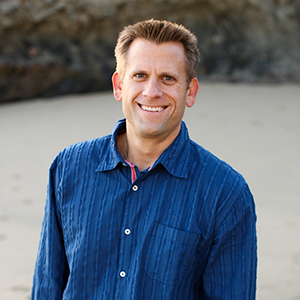
[00:00:10] Ray Latif: Hello, and thanks for tuning in to Taste Radio, the number one podcast for the food and beverage industry. I'm editor and producer Ray Latif, and you're listening to episode 206, which features an interview with John Brenkus, The Emmy award-winning creator and host of ESPN Sport Science, who is also the recently named Chief Brand officer of Kill Cliff, a maker of clean energy drinks. Just a reminder, if you like what you hear on Taste Radio, please share the podcast with friends and colleagues. And of course, we'd love it if you could review us on the Apple Podcasts app or your listening platform of choice. If you've ever seen an episode of SportsCenter, chances are that John Brenkus is a familiar face. The host and producer of Sport Science, which examines exceptional athletic performance through the lens of data and scientific research, Brenkus is a self-proclaimed science and math geek and the author of The New York Times bestselling book, The Perfection Point. Last month he was announced as the Chief Brand Officer Kill Cliff, a role that the company stated will build upon the science in his products and elevate Chief Brand among athletes and consumers. In an interview with BevNET Managing Editor Martín Caballero, Brenkus spoke about the origins of his work. why after dozens of offers to partner with other drink brands, he chose to align with Kill Cliff, how he evaluates functional ingredients, particularly CBD, navigating potential pitfalls in consumer education, and addressing gaps in sports nutrition.
[00:01:44] Martín Caballero: Hey, John, it is great to have you on the Taste Radio podcast. Thank you so much for joining us today. Really appreciate it. Listen, I appreciate you having me on. Great. Well, you know, you, most people will know you obviously from the Sport Science series, and we can get into that a little bit down The New, but you know, you've done a great job in sort of combining those two fields of study, those two categories. But for you personally, was there one that sort of led to the other in terms of were you interested in science and then sports sort of came out of that or which sort of came first and did they sort of play a role in each other?
[00:02:19] John Brenkus: Yeah. So I was born and raised in the Washington DC area. And I grew up a very active kid playing football, basketball, baseball. I mean, I was very blessed to have the Washington Redskins and three super bowls and the Baltimore Orioles to win a world series. And you know, the Washington bullets to win the NBA championship. So DC was really sports town in USA when I was growing up. So I had an extreme love of sports from a very early age. And honestly, I have always been a science and math geek. I've always been fortunate enough to have great teachers and to really sort of thrive in that sort of learning environment. So I took those passions and created a production company that essentially had two different divisions. One was a sport division, so we were doing sports programming for the Washington Bullets, then they became the Washington Wizards, the Washington Capitals, The New York Rangers, the Rams, the Coyotes, tons of teams across the country, and developed a true expertise in sport television. At the same time, because I lived in the D.C. area, the Discovery Channel was launching and they had a channel called the Science Channel. So we did a lot Sport Science programming. We did a show called Science Live, The Young Scientist Challenge, a lot Sport Science. We put those two things together in a show called XMA, Extreme Martial Arts. starred Tom Cruise, looked at the biomechanics of martial arts, was tied in with The Last Samurai, did very well with Discovery, and then National Geographic came along and said, hey, do that XMA show, but science it up. So we made a show called Fight Science. that's where we brought in the world's greatest martial artists to punch and kick the crap out of a crash test dummy to see which dial generated the most amount of force that was so successful box sports came along and said we want to do fight science but for all sports and we created Sport Science went on to do two seasons on Fox sports won The Emmy there then went over to ESPN did 1800 episodes for ESPN won another The Emmy and really developed a true expertise in both the field of sport and science. And, you know, when we started, the phrase Sport Science wasn't even part of the lexicon. So, you know, I think that we were very fortunate to be in the right place in the right time to make a dent in the sports world.
[00:04:30] Martín Caballero: And since that time, you know, how have you seen, I guess, both professional and amateur athletes sort of develop their understanding of Sport Science and some of the finer details of nutrition and conditioning and other things that, uh, you know, you guys discussed and explored in the show.
[00:04:47] John Brenkus: Yeah, I mean, one of the most common aspects and questions I get is, when you're studying amateur athletes and professional athletes, what's the difference between good and great? Where does that separation occur? And honestly, diet, nutrition, habits, really are what defines the path that someone's going to be on. If you have the appropriate habits of constantly wanting to get better, of pushing yourself to the limit, then you really need to fuel your body with the right stuff. So what you eat and drink is very important. And certainly what I see And what I've seen in the world's greatest athletes is that they become very disciplined and obsessed in a good way with the fuel that they're putting in the body because that does directly affect performance.
[00:05:34] Martín Caballero: Speaking of those types of products, you recently joined as the Chief Brand Officer at Kill Cliff. You know, in your own life, John, having an up-close view to Sport Science, you know, what kind of sports drinks or sports athletic beverages sort of come into your own life on a personal level over the years?
[00:05:52] John Brenkus: Yeah, when I say that I've been approached by everyone, I mean, literally, I've been approached by everyone and the beverage food, tech equipment, field. I mean, I've seen one of everything. And to date, I had never partnered up with a drink company, because I really couldn't get behind the product itself. I've been very careful to make sure that I align myself with products that reflect my values and my knowledge. And, you know, when the opportunity came along to be involved with Kill Cliff, I just really jumped at the opportunity because it is such an incredible product. It is the ultimate clean energy drink. It's the anti-Red Bull, the anti-monster. You know, the popular category of energy drinks really is doing a lot of damage to our youth. It's so loaded with sugar and synthetic caffeine and artificial ingredients that it's just not good for our kids. Kill Cliff has this perfect formulation, no sugar, nothing fake, nothing artificial. It really stands for what I believe in. And I feel very blessed to be involved with a product that I can stand behind wholeheartedly.
[00:07:06] Martín Caballero: And, you know, in that role as Chief Brand officer, you bring a lot of, you know, a range of different experience when it comes to both sports and science and also just show business and communication. So how do you sort of view your role as the Chief Brand officer at Kill Cliff?
[00:07:20] John Brenkus: You know, really, I like to preach the truth of what I know to be true. And through Sport Science, we did 1800 episodes just with ESPN alone and no one in the scientific community ever objected to the science that we put forward because we were that careful to make sure that everything was correct. being involved with Kill Cliff I need to make sure that the audience knows this drink is a healthy clean energy drink and I've been very fortunate that audiences have responded to what I've said in terms of being able to endorse products because look I just want to speak what I know to be true and I know that this drink really is a game changer it truly is and what's interesting is it has such a unique name you know it feels like it's almost like a code name Kill Cliff the story that was made by navy seals and you know to me it feels like It's like I've even heard rumors that maybe this perfect formulation was created in some back room by the government somewhere a long time ago because it just seems like it's that great of a product. I feel really blessed to be involved with a product that has an amazing reach and a super cool name and something that I really believe in.
[00:08:36] Martín Caballero: You know, that's a trend that we've been seeing in the industry, sort of moving towards clean label, all natural ingredients. But really, I'm interested in knowing, you know, why is natural always better when it comes to these ingredients? You know, how should we be thinking about natural versus artificial ingredients when it comes to specifically athletic performance and conditioning?
[00:08:55] John Brenkus: When you think about things that you're putting in your body, you really want to ask yourself, how much energy do you have to expend to digest it and ingest it? The amount of energy that you're expending is directly correlated to the performance that you're able to do. So whether or not you're an average Joe or an amateur athlete or an elite athlete, just think to yourself, if you ate something that was really heavy and just sat in your stomach, it takes your body a lot to break it down and to process it. Same goes for drinks. If you're drinking, you know, like a Red Bull that's just chock full of sugar, that's very difficult to process. And when it does process, it's not producing what you need to perform. And if you have a lot of synthetic artificial ingredients, that's just stuff that's going straight to your kidneys and is difficult to filter. It's just harder to process. So when you're dealing in the more than natural realm, like Kill Cliff is, what's interesting is it's like this perfect combination, this perfect drink where, look, there's only 10 to 15 calories per can of Kill Cliff because it's so natural that it's not loaded with things that are going to be difficult to process. So the purity of the product, It's almost like a product that's the only nutrition required. It's like, this is all you really need to drink and to keep going and to function at a very, very high level. Guessing your margins? That's risky. Belay Financial gives CPG brands the clarity to scale smarter, faster, stronger. Get your free inventory ebook by texting TASTE to 55123 and start making data work for you.
[00:10:37] and producer: Tune in at the end of this episode for an exclusive interview with Matt Lynn of Belay Solutions. He sits down with Melissa Traverse to break down the biggest inventory and accounting mistakes CPG founders often make. You'll learn how to bring clarity to your numbers so you can scale with confidence.
[00:10:54] Martín Caballero: How do you reconcile Kill Cliff27;s scientific approach in creating the drinks with reaching consumers who may be uninformed or misinformed about some of the benefits, or maybe the chemistry and the scientific aspect is just not very high on their priorities when they're picking stuff off the shelf?
[00:11:13] John Brenkus: Yeah I mean you think about it. By and large consumers are not particularly educated when making a decision. It's a snap decision that's made just by looking at products that are available. And frequently people are buying just based on habit. you know what we really need to message what we are messaging is the value of having clean energy. We are a clean energy drink. And I think that when you look at competing products that are in the market it just falls into habit. I don't think any consumer any educated consumer would actually sit down and say well let me compare the ingredients that are in Red Bull or Monster. You Let me compare the ingredients that are in Kill Cliff and somehow choose red boar monster. Like no one who is actually educated would make that choice. The energy drink sector is a really interesting one. Obviously, it's been dominated by Red Bull and Monster and Rockstar was just acquired. A lot of those drinks have such a high level of sugar and caffeine. I feel like the claims of saying that, oh, it's an energy drink. Sure, I guess it's giving you energy, but there's a lot of baggage that goes along with that level of caffeine and sugar. So I think that's sort of the claims that they're making. I don't know how scientifically accurate it could possibly be. And I don't even know if they're claiming that they're scientifically accurate. I think that they're sort of implying, you know, that this is good energy for you.
[00:12:32] Martín Caballero: Well, that brings up an interesting point as well, because that's something that I think you guys did very well on the television show is sort of myth busting and sort of digging into questions and finding real answers based on evidence. So, I mean, for yourself and for Kill Cliff, is it a good or an effective idea for brands in this space to sort of call each other out for scientific claims?
[00:12:53] John Brenkus: You know, I think that energy drinks for a long time, you know, just by the mere fact that they're, they're calling themselves an energy drink implies that they are giving you Monster Energy. In reality, does sugar give you Monster Energy? Yeah, but there are a lot of downsides, especially when you have as much sugar as you do in a lot of the popular energy drinks. So a lot of people, when they think about what something like Red Bull and Monster is composed of, a lot of people in a figurative way would be like, oh my gosh, it's a toxic drink. Obviously not literally toxic, but it's something that isn't the best thing to put into your body. with those high levels of sugar and caffeine, there have been a lot of problems. You just search it yourself on the internet, search up energy drink health problems, and you'll certainly see what I'm talking about.
[00:13:38] Martín Caballero: But again, is it a good idea in terms of communication strategy to sort of call out the what may be false claims or something on a different brand? Is that effective?
[00:13:49] John Brenkus: yeah, there are a lot of sort of fanciful ideas that are out there on products. And I think that it is important to, you know, be incredibly accurate. I mean, I'm certainly not going to say Kill Cliff is going to make you a better athlete. I mean, obviously how good of an athlete you are depends on your work ethic and workout regimen. What I can say is having natural ingredients versus artificial ingredients are certainly easier to process. I mean, that's just pure common sense. So I do think that it is important to sort of take the messaging that's out there in the market and just line up with what you know to be true. A lot of times the explanation is right in front of your face and incredibly obvious. People just really need to sort of stop and think about it.
[00:14:28] Martín Caballero: So you have a product that you're proud to stand behind. But as you mentioned, it seems like the consumer education, there's a little bit of a gap there. So how do you sort of bring your experience in the communications business and sort of craft an effective messaging for this kind of product and this kind of audience?
[00:14:43] John Brenkus: You know, that's what we're doing is really creating compelling campaigns that can educate and entertain at the same time. You know, our slogan now of Own It is really being proud of the product that we are. We are really proud of being a natural product that has nothing fake, nothing artificial, no sugar. And that idea of like, who is the ideal consumer for Kill Cliff? That consumer is somebody who can own their life and make a decision. You know, making better decisions matters. That does matter. So really our ideal customer is somebody who really wants to own their decision. It isn't just going along making a decision based on habit, but they're willing to take the time to educate themselves and to really make a better choice.
[00:15:24] Martín Caballero: I want to talk a little bit about CBD because that's an area that Kill Cliff has really embraced and certainly one of the most interesting and talked about areas, in particular when it comes to sports and recovery. Based on your experience and what you've seen, why do you think that CBD has become so popular so quickly as a means of recovery for both pro and amateur athletes?
[00:15:44] John Brenkus: You know, CBD is one of these fields. It's a really new area that a lot of people are sort of dipping their toe in. You know, we're really fortunate and we're the most widely distributed CBD beverage in the country. I feel very, very strongly that CBD has a really bright future. The real scientific studies that have been done on it, especially on children, have shown that it helps seizures, it can help epilepsy, it helps all kinds of conditions that previously people were looking for synthetic medical alternatives. sort of the natural quality of CBD and the incorporation of them into products like our drink, I think it's going to be a massive plus for the market. The science that is out there, by no means do I want to make any kind of claim of, you know, CBD is this magical potion that's a cure-all, like a lot of people think, but I can tell you that The FDA has looked at it very closely. If they felt that there was something negative going on with it, they would pull it off the market immediately. I think it goes the opposite direction. There are more and more products every day that have CBD incorporated into it. What we're finding certainly is, first of all, our CBD beverage is a fantastic tasting beverage. Second of all, it's the most widely distributed and best-selling CBD beverage in the country. Third of all, people are very interested in this market. I see nothing but upside to this, whether or not it's managing stress or anxiety. By no means will I make a claim that this is absolutely going to cure it. At the same time, I'm certainly seeing a pattern among our customers that it seems to point in The Perfection that this is something that does help those kinds of things.
[00:17:23] Martín Caballero: Now, you mentioned a couple of different areas in which CBD has, you know, some purported benefits, but specifically with sports, what type of athlete or person should consider maybe integrating CBD into their routine, sports recovery, athletic performance? What's the kind of profile of a person that this would be something they could benefit from?
[00:17:43] John Brenkus: I feel very comfortable representing that CBD is a fantastic, especially our CBD beverage, is a fantastic beverage for you to start incorporating into your life in terms of the things that we believe CBD is helping, like inflammation and recovery and helping in sleep. Again, by no means will I make a claim that that is 100% true, but I certainly see in myself, I'm using the product and it certainly is helping my sleep and it certainly is helping my inflammation. I think that the right person is a person who is certainly open-minded enough to know that this is not a dangerous substance. We know that. It's not dangerous. It's something that's obviously approved by the FDA. And the ideal person is somebody who's looking to perhaps find something they haven't discovered yet that could be a natural solution. People will take Advil all day long without even thinking about it, which obviously synthetic ibuprofen is something that a lot of people take and is perfectly fine. But CBD could be a natural solution that and producer the same kind of result. Now, again, I don't want to make some sort of outlandish claim, and I'm very careful on making sure that the messaging that we're doing is a hundred percent accurate. I think that it's something of give it a try. I mean, first of all, the beverage is the incredible tasting. Second of all, it's the leading CBD beverage in the country. So see if it, you know, once you adopt it, if it works for you and you feel like it really is producing results, you know, if you're open-minded enough to try it, I think that's sort of the ideal athlete.
[00:19:17] Martín Caballero: We've seen several, particularly some retired athletes, step forward and really come out in favor of CBD, using it themselves. Are athletes sort of ahead of professional leagues in terms of the awareness, education, and acceptance of CBD as a tool for sports recovery?
[00:19:33] John Brenkus: You know, it's going to be interesting to see how the CBD market plays out. I think you're going to see it adopted very widely this calendar year. It's interesting how it usually takes quite a long time for something to become mainstream and widely accepted. I think that you're going to see CBD becoming mainstream and more accepted and incorporated into more and more products, certainly in 2020 and throughout 2021. There's going to be a real shift. I do not see there being some sort of lockdown or extreme restrictions placed on it. It's just the science that's coming out on it is certainly tilting more and more into the favor of CBD being widely incorporated. There are not a lot of studies out there I've seen that have produced any kind of negative results. So I think once the science, when all studies are coming out and continue to back it up, you're going to see certainly wide adoption.
[00:20:27] Martín Caballero: And how can we expand and grow overall research around CBD? For example, at Kill Cliff, are you guys doing internal research or anything like that? Or are you sort of looking at external studies?
[00:20:39] John Brenkus: Yeah, we're doing both. We're doing both our internal research. You know, we believe that we have the right amount of natural green caffeine to, you know, open capillaries to allow CBD to work as effectively as possible. We believe that we've found that balance. But, you know, like everyone, you know, we're going to continue to perfect all formulas and get as much data as possible, but I also am looking to sort of the outside science of the community as we start getting more and more information on it. You know, I'm very in touch with the scientific community and the sports community, and there's so many major sports that are allowing CBD. You know, CBD is not a banned substance in many sports. So, you know, just by the mere fact that the leagues are, you know, allowing players to use CBD is a great sign. It's not a PED. It's not being classified as something that they're testing for on a drug report. And by leagues adopting that, that's a very good sign because they're doing their own studies. So everyone is really racing down the studying CBD path as quickly as possible, but as effectively as possible. So we need to rely on our own internal data, but we also are looking outside to make sure we keep up with what everybody else is doing.
[00:21:48] and producer: Do you want more repeat buyers on Amazon? Well, this free resource in collaboration with Straight Up Growth will help your brand turn first-time buyers into long-term subscribers. Download Winning the Repeat Purchase Game on Amazon now at Taste Radio.com slash SUG. That's Taste Radio.com slash S-U-G to start building retention-driven growth for your brand on Amazon. Scaling a beverage brand into major retail comes down to operational readiness. From packaging lead times to co-manufacturing strategy, the details can make or break a launch. In a new ebook in collaboration with Octopi and Asahi Beer USA, industry leaders share what they've learned in helping brands scale. Download it now at Taste Radio.com slash octopi. Do you need to scale your team faster without compromising on talent? Join Oceans for a live webinar on April 20th and learn how leading companies are hiring top global professionals who are ready to grow with your business. Register for the webinar now at Taste Radio.com slash oceans. That's Taste Radio.com slash oceans.
[00:22:59] Martín Caballero: You know, in keeping up with those ingredients, what other innovations and other areas are you guys looking to explore at Kill Cliff that really fit with your brand? What are some of the major, I guess, questions or problems within sports nutrition that you guys are looking to solve?
[00:23:13] John Brenkus: You know, I think that what you're going to see in the future are a wider adoption of CBD and, you know, greater variety of CBD options from us. I think that's something that everybody can look forward to. I also think that, you know, you're going to see continued innovation just in flavor design and just in formulation. You know, we are constantly trying to push the envelope of balancing the best taste with the best ingredients. And I think also you're just going to see, you know, messaging that's a lot clearer. that leans into our DNA as the ultimate clean energy drink. I think that what you can see is sort of innovation in marketing and messaging and really getting that message out because this does feel like a great opportunity in our country especially to make sure that people know it is very important what you're putting into your body. Keeping a strong, healthy immune system, part of that is just eating well and drinking well and putting the right things into your body. So I think that what you're going to see is messaging that's far more clear and a really diverse array of products.
[00:24:18] Martín Caballero: I wanted to throw a couple of things at you real quick because we see a lot of things coming across our desk, a lot of different trends obviously related to health and wellness in beverage. So I just wanted to maybe get your quick opinion on a couple of things that we're seeing in the industry. The first being rapid hydration. This is sort of the rise of companies such as Hydrant, Liquid IV, SOS that offer rapid hydration mixes in a powder format that is sort of purported to hydrate you faster than water and sort of deal with both sports performance, but also just an everyday making sure that people stay hydrated and having that as a preventive measure. Is this something that is different from what we've seen previously with electrolyte drinks like Gatorade, or is this a new category?
[00:25:02] John Brenkus: Look, you know, the idea of rapidly hydrating and saying, you know, this is absorbed faster than water. And look, all of these sort of claims, the truth is hydration is The Emmy on timing. when you're drinking is a lot more important than the amount that you're drinking at that time. You need to make sure in order to stay hydrated that you're consuming liquid at the right time. A lot of people think that there's just some magic elixir out there that's going to absorb faster into your body, but the truth is that you want to have as few things in the way that your liver and your kidneys are dealing with when you're processing. The fewer things that are in the way, the better your body is going to be. The formulation is just making sure that there aren't too many ingredients and things that you have to process. Through the idea of rapid hydration and putting a stopwatch to it, I would say in terms of our product category, I'm not sure how scientifically sound it is or how particularly scientifically relevant it is as to how fast something is being absorbed. As long as you don't have a lot of artificial ingredients in it, it's going to be absorbed pretty darn fast in your body anyway.
[00:26:09] Martín Caballero: Second would be MCT oil. This is not something particularly new. We've seen it in coffee in particular, but in other beverages as well. That's another one that has really been highlighted for short-term energy, athletic performance. What's your take on that?
[00:26:25] John Brenkus: A lot of the claims that are being made without specifically towards the oil sector in the drink market. I definitely don't want to support or refute something that I'm not super scientifically educated on. Whether or not that claim is correct or not, I'm going to let the science bear itself out because I definitely don't want to represent something one way or the other.
[00:26:53] Martín Caballero: And finally, this is an area that you mentioned when we were talking about CBD is sleep. And so not a particular ingredient, but just sort of the importance of sleep. We've seen that sort of rise to prominence, particularly with professional athletes and sort of, you know, establishing a healthy sleep routine. How valuable is that in terms of sports performance? And is this something that you think maybe has been overlooked up until now?
[00:27:16] John Brenkus: It's incredible how important sleep is. And with Sport Science, I actually have done quite a few segments on the importance of sleep. What's interesting is there is a 60 Minutes report that was on years ago on two sets of mice. One, they denied food, and one, they denied sleep. And both sets of mice died in the exact same time. It gives you an idea of how in the animal kingdom, how important sleep is. It's as important as food. So sleep is incredibly important, and I've gone very deep into the science of sleep. When you do not have the proper amount of sleep that you need, your reaction time goes down, your decision-making is less clear, your cognitive functions are not as sharp. You know, and you can even look up on YouTube on Sport Science sleep. I put myself through a sleep deprivation test and it is incredible. And if you were to like, just go back and think about the worst days of your life or thing where you made a mistake or something happened. If you think about, well, how much sleep did I get? Was I sleep deprived or not? It's a massive problem. It really is. So getting good sleep is critically important, not only to athletes, but just for everyday people. One of the things that's important about getting sleep is getting into a rhythm and allowing yourself to own your light and to believe that you're doing the best that you can. When you put your head on that pillow, when you're able to say, I made the best choices possible today, and I feel great about my actions, I feel great about what I put into my body, that allows your mind to be calm. Does CBD help you to sleep? It certainly helps me to sleep, and I don't want to make you know, any sort of outlandish claims of like, this absolutely helps you sleep better. There are a lot of CBD sleep products out there. It certainly does help me sleep better. But the idea, even more importantly than even attributing sleep to CBD, even more importantly is knowing throughout the day that you're putting the right things in your body.
[00:29:20] Martín Caballero: Well, that's a feeling that I only hope I could have when I fall asleep every night, that I made the right decisions and that I'm doing the right thing. So, certainly good advice, I feel.
[00:29:29] John Brenkus: Yeah, totally. I mean, what's interesting is that at that five o'clock, you ate a bunch of cotton candy. There's obviously this physical effect of this massive artificial sugar rush, but there's also then the guilt when I lie down in bed, I'd be like, oh my God, what did I do? become obsessed with, you know, thinking about that was not a particularly good decision to make. So it's the, it's the idea of getting into that rhythm of educating yourself and making sure that you're fueling your body with what you need.
[00:29:58] Martín Caballero: Well, that's great advice and great place to wrap it up, John. I really appreciate you coming on and speaking with us on Taste Radio and hoping to have you here again soon. And best of luck with Kill Cliff. We'll be keeping an eye on all developments over there.
[00:30:10] John Brenkus: Awesome. Yeah. Make sure everyone goes to Kill Cliff, K-I-L-L-C-L-I-F-F.com and follow me at John Brenkus, J-O-H-N-B-R-E-N-K-U-S underscore on Twitter. Really appreciate all your support.
[00:30:22] Ray Latif: Thanks so much, John. Have a great weekend. That brings us to the end of episode 206. Thank you so much for listening, and thanks to our guest, John Brenkus. You can catch both Taste Radio and Taste Radio Insider on Taste Radio.com, the Apple Podcasts app, Stitcher, Google Podcasts, or Spotify. As always, for questions, comments, ideas for future podcasts, please send us an email to askatasteradio.com. On behalf of the entire Taste Radio team, thank you for listening, and we'll talk to you next time.
[00:31:05] The Emmy: Hello, I am Melissa Traverse here for the Taste Radio podcast, talking about some of the biggest tension points that CPG brands and founders face when they're scaling a brand, and those are financial accounting and inventory management. I am joined by Matt Lynn, inventory accounting guru from Belay Solutions, and he is going to shed some light on all of this that is going to help everybody out quite a bit. Matt, thank you so much for joining us today.
[00:31:35] Sport Science: Thank you for having us, Melissa. It's great to be out here at Expo West and it's great to sit down and be able to chat this because it's kind of a passion project of ours, working mainly with CPG brands and hoping to help them scale.
[00:31:46] The Emmy: It's been such a pleasure chatting with you and the team and learning all about what you do over there at Belay Solutions. Can you tell us a little bit about yourself and what your role is and the kinds of solutions that Belay gives to CPG brands and founders?
[00:32:02] Sport Science: Yeah, absolutely. My role with Belay, I'm actually our inventory accounting manager. I run our inventory department, so we work with CPG brands, taking them from spreadsheets, putting them on inventory management systems, and really helping connect their tech stack between their sales online marketplaces to that inventory management system, even down to their financial systems like QuickBooks. Belay overall is kind of an outsourced accounting firm. And with that, we're helping teams. We have different levels with bookkeeping, controller level work, even high level into CFO type items. So we really help those brands in any way that they need financially. And then I just have a subset of a department where we're really just laser focused on inventory.
[00:32:45] The Emmy: It's certainly a complex topic and there are plenty of places to go wrong. Let's start by going right and start super simple. Can you tell us what some of the biggest red flags are that would help a founder understand or, you know, the person running a brand understand that it really is time to get some help with some of these areas?
[00:33:06] Sport Science: Yeah, absolutely. I think some of the early red flags is just everything is chaos. So when they're looking in their financial software, maybe they don't really have an accounting background and they're kind of just piecing it together and doing their best. And what they'll see is that reconciliations take forever, if they even happen. They have a lot of transactions that don't get coded or they just put them into placeholders to just get rid of it so it's not an eyesore. they'll notice they have revenue but no cash or they notice that they have a good amount of cash but their blind spot is really seeing the vendor invoices that are sitting there just needing to be paid and so they just lack that clarity that's going to really be around the corner.
[00:33:43] The Emmy: You know, you were talking about one of the red flags that comes up that I think makes so much sense. When somebody asks you what your numbers are and you can't come up with the right number, that's a big problem because that's something that you really should be able to share with decision makers who you're ideally looking to do business with. What should you be able to call up at a moment's notice?
[00:34:07] Sport Science: Really, at any time, you should be able to know an accurate margin. It's amazing how many founders we end up talking to that they can tell you their revenue numbers, they can tell you their selling price, and then the minute you start talking about cost or their cost of goods sold, they just get a deer-in-headlights look. So really, it's very hard to tell, am I even making money? or if you don't know your entire landed cost. Maybe you know what the freight cost is, the duties separately, but you're not really getting that as part of your unit cost. So it's really hard to tell. Am I even making money or am I losing money from the very beginning?
[00:34:40] The Emmy: And do you recommend that founders are able to call up a margin by channel?
[00:34:45] Sport Science: Absolutely. And depending on the number of products and channels, you kind of want to know what are your best sellers, which ones are making the most and which ones maybe you're not making as much. But especially if you're branching out and you're doing D to C with B to B, absolutely want to know that.
[00:35:01] The Emmy: Gotcha. You mentioned that when things feel really chaotic, that's probably a red flag. I would say that it probably almost always feels chaotic if you're running a CBD brand. And I know this may be hard to quantify, but is there a revenue number? Is there a number of doors number that would help a brand understand whether or not it makes sense to bring on a partner like Belay? Understanding that so many brands are bootstrapped or they might be tight for cash. What is that friction point?
[00:35:32] Sport Science: 3 3 3 3 3 But as you're growing, as you're getting to those six-figure revenue numbers, and especially as you're approaching seven, you want to make sure you've got good financials. Because as you scale to that point, most likely you're going to be looking to raise capital. And investors, the first thing they're going to look at is your books. And are they clean? And do they show a clear picture of your business?
[00:36:05] The Emmy: You know, another area that folks might look to to organize some of the chaos are their systems. So many folks stick with Excel spreadsheets for a good amount of time. How do you know that you need to outsource some of your accounting to an organization like Belay Solutions versus maybe signing on to a Synth7 or a NetSuite or something like that?
[00:36:27] Sport Science: Well, that's actually something we really help with. When it comes to that cost question, that's something that trips people up. And sometimes if you just have a turnkey business, you buy and sell a finished good, you can maintain with spreadsheets. And we've had clients with million dollar revenue that can do that. But we see so many brands nowadays are using contract manufacturers. and they're just sourcing certain parts of their product. So when you start talking cost, they have no idea exactly what their unit cost is. So that's where we come in and we kind of understand, we'll speak with the customers and the clients and get their needs. And then if we think they're ready for a system, then we'll help put them on that system so they can get some of that clarity. And it's not something we force on anybody. There are plenty of times where founders come to us and we'll tell them bluntly, you're not ready for it right now, but we'll let you know when we think you are.
[00:37:13] The Emmy: That sounds like excellent advice. What should a founder or somebody running a brand look for in an outsourced accounting partner? Are there certain checklist items that they should make sure that their partner be able to execute or be able to help them understand?
[00:37:30] Sport Science: Absolutely. I think one of the keys, there's, there's a lot of outsourced accounting firms out there. Some focus on service-based SaaS companies, but if you're a CPG founder, you really want to make sure that your accounting firm has CPG experience. I would ask them, you know, what kind of brands have they worked with? And even beyond that industry specific, because there's so many subsets of CPG. And that's something that I think is great about what we do with Belay is that we kind of run the gamut. It's kind of like the insurance commercial. We know a thing or two because we've seen a thing or two across a broad spectrum.
[00:38:00] The Emmy: Probably getting references is always helpful, right? Absolutely. All right. So this all sounds great. I think we have a really good understanding of would it make sense to hire an outsource partner? You know, what some of the things you should be looking for are. What does offloading this kind of work mean for Chief Brand? What can this do for lightening the load of a founder or lightening the load of a brand operator? Like, how does that help them in their everyday business?
[00:38:29] Sport Science: It just tries to really help quiet the chaos. So what we're looking to do is just take some of the weight off that founder's shoulder, let them focus on building Chief Brand, building the business, getting that exposure. If you don't have sales, you really don't have anything. So we want them to be able to focus on that while we take care of your back end office work. And we can just present that to you on a monthly basis, you can help make decisions, you can take that to investors. And really, you can just focus on growing your business.
[00:38:55] The Emmy: I feel like I felt founders and the folks who are running brands collectively sigh. A breath of relief just hearing that. How can people learn more about Belay Solutions?
[00:39:06] Sport Science: So people can text TASTE to 55123 for their free inventory guide to get started.
[00:39:11] The Emmy: Matt Lynn, inventory accounting guru at Belay Solutions. Thank you so much for joining me here at Expo West. It's been such a pleasure to chat with you and learn about what you all do over there to help founders and brands with their financial accounting and inventory management. For everybody else out there, thank you for listening to the Taste Radio podcast. I am Melissa Traverse and we'll see you next time.