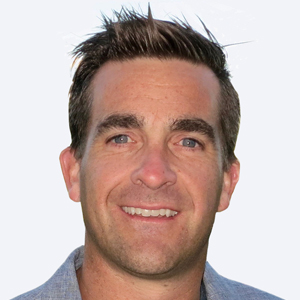
[00:00:10] Ray Latif: Hello, and thanks for tuning in to Taste Radio, the number one podcast for the food and beverage industry. I'm editor and producer Ray Latif, and you're listening to episode 213, which features an interview with Carl Goyette, the CEO of pioneering Organic Energy drink brand Guru. Just a reminder, if you like what you hear on Taste Radio, please share the podcast with friends and colleagues. And of course, we'd love it if you could review us on the Apple Podcasts app, or your listening platform of choice. Search the BevNET database for natural or Organic Energy drinks, and unfortunately, you'll find dozens of brands that are no longer in business. Despite sustained consumer interest in better-for-you energy, few companies in the space have been able to achieve meaningful scale. A notable exception, however, is Guru, which launched in 1999 and markets a first-of-its-kind Organic Energy drink. Based in Montreal, Guru is the third best-selling energy brand in Canada, according to the company, and has established a consistent presence in natural retailers in the U.S., along with a growing business in convenience stores. So how has Guru succeeded where so many others have failed? In the following interview, I spoke with Guru CEO Carl Goyette about how a disciplined business strategy has paved the way for consistent growth, why the company says no to a lot of opportunities, why he believes that having both experience in a corporate environment and a thirst for entrepreneurship have been key to his ability to manage and grow the brand. Hey folks, it's Ray with Taste Radio. I'm on a call right now with Carl Goyette, the CEO of Guru Organic Energy. Carl, how are you?
[00:01:50] Carl Goyette: Very good. Thank you. Thanks for having me.
[00:01:52] Ray Latif: Thank you so much for being with me. Where are you calling in from today?
[00:01:55] Carl Goyette: Calling from actually from my home office in Montreal, Canada.
[00:01:59] Ray Latif: Ah, nice. I've been to Montreal a few times. Beautiful city. How long have you been there?
[00:02:05] Carl Goyette: Oh, I pretty much grew up in Montreal pretty much all my life. Grew up in the eastern townships, in the remote areas in the countryside on an apple orchard, but then I eventually moved to Montreal for university. So I've been here pretty much all my life.
[00:02:21] Ray Latif: You grew up on an apple orchard? Was that ever in the cards for you to be an apple farmer?
[00:02:28] Carl Goyette: Well, it came close. It came close. But I guess my dad just sold the apple orchard. He retired last week, actually. So this is big news in the family. But Guru is keeping me quite busy right now. And there's so much room to grow that I decided to focus on that.
[00:02:48] Ray Latif: Yeah, I can imagine that selling the family business is a big step. But did you work in the family business? Or were you always focused on the corporate life?
[00:03:00] Carl Goyette: No, absolutely. I did work as a kid. I worked in the family business and I come from a family of entrepreneurs. My brother is an entrepreneur as well. And again, when we were kids, we were working on the farm and on the apple orchard. Started selling apples next to the road, in front of the lawn. learned the basic tricks of retail when I was at a very young age.
[00:03:27] Ray Latif: I mean, sell a bushel of apples and you can sell anything, right?
[00:03:30] Carl Goyette: That's it. Even then, like two for five, two for five for the baskets, one for three dollars was, you know, some similarities to the energy drink industry.
[00:03:39] Ray Latif: For sure, for sure. As I mentioned, you're the CEO of Guru. You've paid your dues. You've held a number of roles at Guru and other companies working your way up to your current position. And I'd love to hear what advice you have for other folks that are starting at the bottom of the ladder or in middle management about what it takes to get where you are now.
[00:03:59] Carl Goyette: Yeah, I've been thinking about this a lot. It's hard to say. For me, it's going to sound a little bit cliche, but you really have to find something that you love. I've been very lucky. Because for me, even growing up as a kid, as we talked about, I grew up in a family of entrepreneurs, but for me, it was clear I was going to go in business and I was going to be in sales and in marketing. So I never had those dilemmas of what I was going to do. So I went to school, studied, went to university and business school. So right when I finished, I knew that I was, you know, finished school and I was going to be an entrepreneur or a professional in business. So the first thing, like again, the reason why I say this is if you find something to love, or something that you love, you're going to be passionate, right? And you're going to have a lot of drive. And sometimes I see people that it's not so clear if they really love or enjoy what they're doing. And sometimes after a while, they lack the drive and they can't sustain the energy that you need to succeed. So that's really the first one that came to mind. Eventually, when you start going up the ladder, I think soft skills become really, really important. I think emotional, working your emotional intelligence is fundamental. You can't do this alone, right? You have to surround yourself with a team of people you trust and that are so engaged, as engaged as you are. So for me, values of authenticity, integrity, keeping a positive attitude have certainly been part of what's been driving my success.
[00:05:45] Ray Latif: Outstanding.
[00:05:46] Carl Goyette: Yeah. Last thing I'd say is probably keeping a healthy, you know, again, a little bit cliche, but healthy and balanced lifestyle. For me, you know, the best ideas, they don't necessarily come when I'm working. They might come when I'm biking, when I'm running, when I'm outside in nature. So having, you know, spending some time with the family is also fundamental for me to keep performing.
[00:06:10] Ray Latif: I've always been interested in Guru as a brand. It was one of the first, if not the first, natural Organic Energy drink brand on the market. And oftentimes we hear that first to market is a pretty significant advantage for a brand. Looking back, how much of an advantage has it been to be the first or one of the first Organic Energy drink brands? And would Guru's position be significantly different had the brand launched, say, in 2009 instead of 1999?
[00:06:42] Carl Goyette: There's no debate. There's no debate. This will always be a tremendous advantage. There's no doubt. It gives us the platform to be credible, to be the authentic brand. It's such a powerful statement to be able to say we were the world's first natural energy drink since 1999. Especially if you're in a mission to clean up this industry. to be able to make statements like this, to talk to consumers, to tell the story to consumers, to have a 20-year platform of learnings to educate your strategy. There's no debate that this is a fantastic part of our brand and our story. Would it be different if we had launched in 2009? I think the brand was way ahead of its time. There's no doubt in 1999. Consumers didn't care that much about better for you energy. They didn't even know what energy drinks were, right? Keep in mind, Guru launched in Canada before Red Bull came to Canada. So it was very, very early in the days. The other part outside of this story, the other good part of being first to market is the solid base of consumers that we've built along the years, right? They are the consumers buying our Brad Avery day. And these consumers are generating cash flow that we can reinvest in growing the business. And that's probably why we've been so successful without having to do successive investment rounds and raising cash, spending that cash. This business has been profitable and cash flow positive for many years because of this solid base of very loyal consumers. So I think these are the two big points, the authenticity in the story and the solid base of loyal consumers are the two big ones that are tremendous advantage for us.
[00:08:45] Ray Latif: What was the original positioning of the brand and how has it evolved over the years?
[00:08:51] Carl Goyette: You have to almost like to answer this question, you have to go back to, I almost need to tell you the story on how the brand was created and what's the brand DNA and to see how it evolved. Yeah. So the story on how this was created, right, is that Joe, my partner and our founder was was running nightclubs in Montreal. And he was running one of the most legendary after hours in North America, which was called the Sona. And back in the, at the end of the 90s, there was a big trend in after hours and in nightclubs, which was called the smart drinks. People were drinking, do you remember smart drinks? That big trend in the 90s, or maybe you're too young?
[00:09:33] Ray Latif: Do you mean, do you mean like nootropic drinks?
[00:09:36] Carl Goyette: Yeah, well they were kind of nootropics, a mix of energy drinks, but they were homemade, right? So they were called Justin's Smart Drinks Bars in the bars, right? And they had a bunch of blenders and they were blending botanicals to keep people hydrated and energized for long hours in the clubs, right? There was also oxygen bars back then. If you remember, people were sitting at the bars with oxygen tubes in their nose. In the days of coronavirus, I'm not sure these would be too popular, but these were the big trends back then. And Joe was seeing this in his nightclubs. They were seeing this popular, but it was like, it was a pain to be blending botanicals and coconut water and a bunch of stuff in blenders. So they were looking for ready to drink, a ready to drink version of of the smart drinks. At the same time, there's no debate. Red Bull was starting in Europe. It was getting, it was starting to be popular. And so they said, you know what, why don't we make a natural version of Organic Energy drink or a natural version of our smart drinks to people, to keep people energized and partying all night long, right? So this goes back to the DNA of the brand, right? They picked the name back then, Guru was the brand name and Guru is a powerful name, right? It has a powerful meaning. For us, it's a source of inspiration. It's a force that helps you move forward. So they had this brand name and they had this history, right? The brand was launched in the club. So at first it was a lot more urban, upbeat. It was all about the hip nightlife and the creatives and the cool kids in the urban areas that were attending, that were going into Joe's nightclubs. So that's how it started. The positioning was a lot more about energy. So it was more, hey, this is Organic Energy drink, and by the way, it's a natural brand. So over the years, I think that got somewhat balanced a lot more, especially since 2014, where we really started to repositioning the brand as the better for you, healthy alternative, to legacy energy drinks. So there was big brands. Now the industry is big and it's ready for disruption. A few big brands dominate the market. So with we kind of move the positioning from urban hip nightlife creative to more of a natural and adventurous enjoy the outdoors reconnect with nature. build the authentic story about around their first natural energy drink. So it's the same brand DNA. What I'm trying to say is the same brand DNA that has evolved over time as the consumers have evolved. The consumers are not like nightlife. It's not as big as it used to be at the end of the night in the 90s. Instagram has given Instagram and Facebook social media platforms have given a beautiful platform for brands to express lifestyle. And it's much easier done in the outdoors and in people that are connecting with nature than trying to portray lifestyle of urban consumers. So there's an evolution, obviously, but it's the same DNA centered around the Guru brand.
[00:12:58] Ray Latif: We've seen that positioning of a better for you, healthy alternative to mainstream energy drinks from a number of brands, hundreds actually. And of those hundreds, most have failed. It's interesting that Guru is one of the ones that has not only survived, but succeeded on that, using that platform, using that positioning. You know, what do you think that Guru has done right? that others haven't been able to figure out. What's that code that you've been able to crack and how have you been able to establish your position as the leading brand in this better for you, healthy segment?
[00:13:36] Carl Goyette: This is a hard one, right? But back to positioning for sure. The brand positioning itself is a mainstream brand. This is Organic Energy drink, right? It feels like Organic Energy drink. It works like Organic Energy drink. It tastes like Organic Energy drink. It just happens to be organic and plant-based, right? I think that's certainly one of the big parts of our success. Being the first one, as we talked about earlier, is clearly another part of our success. And I guess we've been pretty good at avoiding the typical mistakes that many other brands have done, right? Maybe because of our long history. Maybe because of our disciplined strategic planning process and maybe because we've been very methodical about how we grow this brand. But for example we've we've avoided typical spray what we call spray and pray distribution to go and everywhere and hope for the best. Right. We don't do that. Like if we live somewhere we want to support the brand and want to grow the brand. So distribution is only like often said distribution is only half the story. If you're going to list somewhere you have to work the brand. You have to work the consumers. The second thing we did is decided not to launch too many skills. We and fill the pipeline. Instead, we work on growing the velocity of our brand. We have been very disciplined in not raising cash and starting to burn cash. We've been building this business solidly and profitably over the last 15 years, 20 years. And we've maintained our margins. So I guess this is probably, from an execution point of view, we've done well. This has resulted in organic growth and a very sustainable growth that we've seen over the years. Built a solid base of very loyal consumers.
[00:15:35] Ray Latif: Having a loyal base of consumers is very, very important for so many different reasons. I'm wondering what your consumers see in Guru that they don't see in other brands. In other words, why are they shopping Guru? What aspects of the brand are they most drawn to? And how did you figure out how to highlight those in your marketing and advertising?
[00:15:56] Carl Goyette: This is a fine line between, I guess, mainstream taste is fundamental, right? Like the energy drink consumers, they want Organic Energy drink, right? I've said that before. They want a brand that feels like Organic Energy drink and they want a taste that tastes like Organic Energy drink. So that's one, but that's after trial, right? Because once they try it, consumers of Guru typically become very loyal and we have many insights to support that. The reason they pick it up on the shelf, right, is in the absence of us doing field marketing, I guess has to do with the branding itself. It needs to stand out on the shelf and it needs to be clearly saying what it is, right? This is Organic Energy drink first and it's a better for you energy drink. So it says Organic Energy loud and clear. We're still adapting that and as consumers evolve, we're just launching right now what we're calling a rebranding. subtle adjustments that are making a big difference for us in the way our can stands out on the shelf.
[00:16:59] Ray Latif: When you think about your competitors, are you looking at the quote unquote big brands or are they the brands that are most aligned with you guys in terms of their formulation?
[00:17:09] Carl Goyette: Oh, there's no doubt where our competitors are the big brands. As I said earlier, Guru is mainstream energy for for the next generation of energy consumers. We're on a mission to clean up that industry. We're a mission-driven, challenger brand. And the other brands that are in Better for You Organic Energy, honestly, are on the same mission as we are. So actually, when we see other brands succeed, we're actually happy for them. Some other brands have done some very good stuff. There's a lot of room to grow for Organic Energy for You Energy right now. As you know, This is a 14, 15 billion dollar industry in North America and it's still growing and it's dominated by two big brands. There's lots of room for disruption and we think we can lead that journey, but we're not going to be the only brand in the Organic Energy for you energy drink. We've been leading this and other brands can succeed. So we're really after the big brands.
[00:18:13] Ray Latif: One of the things we often talk about in the podcast is reason for being, point of differentiation. What makes your product or brand so much different, so much better than what's currently on the market? And is the point of difference defensible? As in, Will it stop a big player from coming in and doing the exact same that you're doing more efficiently and frankly better? You mentioned the big brands, and there are a couple of them that I can think of that have launched organic SKUs. And I'll put you on the spot. What is it that you're doing that can keep them at bay? Because they do have more resources. They do have better distribution. They do have deeper pockets.
[00:18:59] Carl Goyette: Well, it's going back to your earlier question. Winning in the energy drink industry is not only about the product. It's about the brand. And that's why it's fundamental to build the brand as you are building the business. You need to build a solid base of consumers that are not only loyal to your ingredients list and product taste, They're also loving what you do. They love your mission. They love what you stand for. And that's why they buy you. And again, that's probably why we've been so disciplined in our approach. We've built a solid, solid brand here in Canada. And as you know, right, the Canadian story is a fundamental, fantastic success story for us. We're playing right up there with the big guys. We're the number three brand with 14 percent market share. We're bigger than Rockstar, which has now 10 percent market share. And we're growing at 70 percent when the industry is growing at 5, 6, 7, 8 percent. So we know we can play out there with the big guys, against the big guys in the big mainstream energy drink industry.
[00:20:14] Ray Latif: You've talked about that in the past, you know, Guru is successful in Canada, as you mentioned, it's outperforming Rockstar in the country. And you've talked about trying to replicate Guru's playbook here in the United States. But how many similarities really exist between the two markets? Can you effectively use that same playbook south of the border?
[00:20:37] Carl Goyette: The dynamics are very much the same from both markets. So that's kind of the first part of the question. Now, in terms of playbook, in terms of replicating a Canadian success in the US, we're taking the small steps, right? We started, as you know, a few years ago in the Bay Area and trying to replicate what we've done in Quebec. And so far, it's, again, starting to really feel the same way. On a much smaller scale, we're seeing our brand registering in the top seven, top eight brands. We're seeing stores where we get 2%, 3%, 5% market share. I mean, in convenience stores, right? Natural Channel and Conventional Grocery, Muyulo is there to support the growth, but we did a test in the Bay Area to really replicate what we've been seeing in Quebec, and it feels right, right? It gives us reassurance that we can replicate this. Obviously, we're doing this at our own pace with the opportunities that we can afford to attack. So the question right now is, okay, now we have this playbook, we know it works, we know consumers love us in the US as well, it's not only a Canadian story, it's not a local brand. How much faster can we go? What's the right partner to help us? Is it a funding round with private equity? Do we need a strategic partnership? This is what we're exploring right now. We're deep into planning and discussions around that space to see where we're going to go next if we want to be faster in our mission to clean up the industry.
[00:22:16] Ray Latif: Oftentimes when brands want to grow, they are investing dollars in brand building and marketing activities. And compared to some energy brands, it feels like Guru has maintained a pretty low profile and marketing spend. And it feels like that's part of that discipline strategy that you were talking about earlier in our conversation. But is that strategy sustainable? I mean, how do you know when it's the right time to press the gas and spend the money on promotion and ad spend?
[00:22:47] Carl Goyette: It goes back to the previous question. Obviously, we can be faster. Obviously, we can do more. that I keep saying I always say this like when we do our strategic planning the toughest part for us is to decide what we're not going to do. There's so many opportunities in this market. The market is so big. And we've been very disciplined in deciding what we're not going to do every year and what we're going to execute flawlessly. And we focus on the things that we say we're going to do. And unfortunately, we say no to a lot of things. And we don't invest in a lot of things. And it's difficult to do that. That has proven to your question, is it sustainable? It is. We've had a lot of success. We've tripled the size of the business in the last five years. We still have maintained our awesome gross margins. So for now, it is sustainable and growing the business. The question is, how much faster can we go? We don't want to go into the big cash burning mistakes that we talked about earlier on, right? We want to keep being, staying true to who we are, right? How we've maintained, how we've grown this brand, but we have big ambitions. And in order to realize those big ambitions, we'll need to be faster. And this is exactly the theme of our 2020 strategic planning.
[00:24:06] Ray Latif: Carl, you said the company needs to be bolder and faster, but you've already succeeded in many ways. You already have a very successful business in Canada. You're growing here in the United States. What's to say that you really need to grow any bigger than you already are?
[00:24:20] Carl Goyette: Ah, it's only because of, well, it's our big, bold ambitions and to align with our mission, right? This success in Canada, where we're number three brand, not number three in natural, but number three total brand, with 15% share of the whole energy drink industry in Quebec, gives us the confidence that this industry needs a massive cleanup. There's a need for a brand that is very differentiated, that is different from the legacy brands. in the industry. Consumers are more ready than ever before. We're seeing the industry segmenting right now. We've seen a lot of activity around performance energy. There is now a need for Organic Energy and better for you energy. And we want to be that brand. We want to be that brand. And that's part of the drive for this. Again, it goes back to the mission of the brand.
[00:25:22] Ray Latif: As I mentioned at the top of our conversation, you have been with Guru for a number of years and you became CEO two years ago?
[00:25:33] Carl Goyette: Yeah, roughly. Yeah, a year ago. A year ago. Started a transition. There was a smooth transition with the founder, right? So this happened all very naturally. We all aligned towards this. Joe became the chairman and I became CEO. So this was a very smooth, all agreed transition.
[00:25:52] Ray Latif: How do you stay aligned with the founder of the company? How do you stay aligned on that mission? I mean, you were the CEO, you're responsible for the day-to-day and executing on that strategy that you have laid out for the brand on a year-to-year basis. How do you work with someone who might have a different opinion, who happens to be the founder and chairman of the company?
[00:26:14] Carl Goyette: Well, we talk every day. Joe is my partner in this business. We're three majority shareholders. The three of us own the vast majority of the shares. We have employees that have a portion of the shares and a little bit of friends and family. But overall, the cap table is just the three of us in the majority. We have board meetings where one of the founders is also on the board, Eric, but he's more of a silent partner. And Joe is my partner every day. We manage this business together. So it's worked out very well. Obviously, we have our own debates and that's healthy debates, I find. Joe will have He will add his view and certainly a lot of history plays a big part in the culture of the business. And I bring back more of the sales and marketing background and lead the strategic planning aspect. And I'm the one talking to the customers and investors. You know, when Joe made that transition, he was very mature in the process, recognized that he, you know, over years, over the years, he recognized that he needed to surround himself with a team of professionals, and I'm one of many. We brought a CFO, we have Luc, our brewmaster, we brought in some new VPs of sales along the way. So Joe was mature enough to surround himself with professionals to grow this business and understand his own limitations and where his strengths were and where he would focus. So right now, for us, Joe remains very much of an entrepreneur, and I'm an entrepreneur at heart. which means we sometimes have our debates. But I also grew up in a large corporation. So I know what it is to. manage stakeholders and making sure that you get buy-in from your team members and you align on a strategy and then you move on to execute the strategy. So, there's probably a personal aspect that works and there's a process aspect that works. We have a clear strategic planning process, we have an SNOP process to run the business and we have our regular board meetings to align on decisions. It works well for us.
[00:28:31] Ray Latif: Do you feel like you're better positioned as an entrepreneur because you grew up, so to speak, in corporate business, in a corporate business structure? What I'm asking is, you know, some people have never worked in a corporation. Some people loathe the idea of working in a corporation, but it sounds like it gave you the framework and the foundation to understand what business requires on a tactical level.
[00:28:55] Carl Goyette: Oh, there's no doubt. It's a mix. Being an entrepreneur at heart was probably my biggest strength in the corporate world. It was also my biggest weakness from a politics point of view and playing the corporate games. I was pretty bad at this. But I was driving results. I was driving success. I was making things happen like an entrepreneur. So that was driving success. But I'm a lot more comfortable in a smaller business like Google. where our actions are a lot more tangible. But working in a corporate world gave me, I keep saying this is the best business school I could have ever had. It's working with the best agencies in the world and the best consultants in the world and smart people around you. You grow, you grow significantly, you learn business. And then when it's time to do it for your own, then obviously you're much better prepared. This is for me the best of both worlds now.
[00:29:54] Ray Latif: Well, it sounds like you're in a pretty great spot. And, you know, Carl, every time I talk to you, you have a smile on your face and you seem to have a very positive view of the industry and your brand. And it's one of the reasons I wanted to talk to you because I think, you know, Guru's on the right track and it sounds like you have a lot to do with that. So thank you so much for taking the time to be with me today. Good luck with everything going forward and please stay in touch.
[00:30:18] Carl Goyette: Thank you so much.
[00:30:23] Ray Latif: That brings us to the end of episode 213. Thank you so much for listening, and thanks to our guest Carl Goyette. You can catch both Taste Radio and Taste Radio Insider on Taste Radio, the Apple Podcasts app, Stitcher, Google Podcasts, and Spotify. As always, for questions, comments, ideas for future podcasts, please send us an email to ask at Taste Radio. On behalf of the entire Taste Radio team, thank you for listening, and we'll talk to you next time.