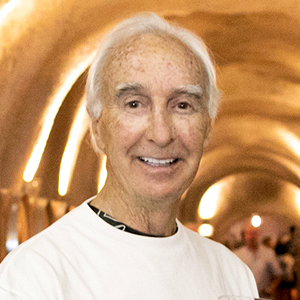
[00:00:10] Ray Latif: Hello again, and thanks for tuning in to Taste Radio, the number one podcast for the food and beverage industry. I'm editor, producer, and host Ray Latif, and you're listening to episode 216, which features an interview with Justin Baldwin, the founder of acclaimed wine brand, Justin. Just a reminder, if you like what you hear on Taste Radio, please share the podcast with friends and colleagues. And of course, we'd love it if you could review us on the Apple Podcasts app or your listening platform of choice. It may sound odd that the creator of one of the most lauded wineries in the world once fired himself as its winemaker. But Justin Baldwin, despite being the founder of the eponymous Justin Wines, will be the first to tell you that success isn't about ego. Launched in 1981, the Paso Robles-based winery has evolved from a plot in the sticks into a global, highly awarded brand known for its commitment to high-quality, food-friendly, and accessible wines. A former investment banker, Baldwin built the business literally from the ground up, and has worn nearly every hat in the company, from tractor driver to salesman, and CEO to brand ambassador. Of course, he had help along the way, and credits that help, along with a healthy dose of planning and discipline, as a major reason for Justin's growth. In the following interview, Baldwin chronicles the development of his winery and spoke about the importance of leveraging one's skill set and admitting weaknesses, mitigating risk through financial discipline, and how entrepreneurs can best position their companies for success in good times and bad. Hey folks, it's Ray with Taste Radio. I'm going to call right now with Justin Baldwin, the founder of Justin Wines. Justin, how are you?
[00:01:49] Justin Baldwin: I'm great, Ray, and how are you?
[00:01:51] Ray Latif: I'm doing pretty fantastic. You are currently located in one of my favorite cities. Is that right? Portland, Oregon?
[00:01:58] Justin Baldwin: I am. A little bit further away than Portland, Maine. For Chamber of Commerce, we have a cloudy, overcast day in Portland. How unusual.
[00:02:09] Ray Latif: You know, I've only visited the city once, and it was about a year ago. But man, I fell in love with it. It's such a nice place.
[00:02:17] Justin Baldwin: Well, for somebody like you with an interest in avocation, for that matter, as well, in food and wine, you're being paradised here. The range and options are amazing. The energy is off the chart and the level of innovation, particularly of cuisine, is pretty cool. It's a great vibe.
[00:02:35] Ray Latif: Yeah, it really was love or, I guess, eat at first sight, eat and drink at first sight. How long have you lived in the area?
[00:02:43] Justin Baldwin: I've only lived in the Portland area for about three years. I'm a California native, grew up in the San Francisco Bay Area, and migrated in the 70s to the southern part of the state, Los Angeles and that area, and divide my time between homes here in the Portland area and Palm Desert, California. So we've got the best of both worlds, depending upon the weather and time of the year.
[00:03:08] Ray Latif: I've actually seen some of the inside of your house. I believe it's your house in California for a site or for a magazine that was focused on your collection of abstract art. And I read that you're an avid collector of abstract art, which sounds pretty amazing. When did you develop a passion for art and was acquiring a collection a long-term goal or dream of yours?
[00:03:28] Justin Baldwin: You know, I've always had an interest in art. I started out prior to the wine world and the banking world of numbers and finance and things of that sort. And everything was very orderly and had a sort of determinate outcome. And the art side of the world was much softer, more forgiving, allowed for more expression of oneself. And so I've been drawn to that. That's coupled with a real interest I've had forever in history. And when you combine art and history, of course, it's hard to escape. And then wine sneaks in there. very conveniently and raises its head. And so they all sort of come together in a nice little combination, I suppose.
[00:04:12] Ray Latif: Well, it sounds like you know what you like and you know what you want and have for a long time. I'm curious as to how you set goals for yourself and how you have throughout your life and career. And what factors do you take into account? Do you set specific metrics for achievement?
[00:04:27] Justin Baldwin: Well, metrics are very important. And I've been a disciplined planner, if you will, my whole life. find that if you can't have a measurable outcome, it's hard to know whether you achieve whatever that objective might be. So having some adherence to strict metrics that measure progress and eventual outcome are extremely important to me. However, I would be misleading you and your audience to say that everything I did had a measure to it and a way about it. Oftentimes, I've just taken a flyer, if you will, and let the chips fall where they fall. But if you really tie me down, I'm most comfortable knowing, at least having some idea about the outcome and the direction that I'm headed.
[00:05:17] Ray Latif: It's hard to know the direction you're headed when you enter the wine industry. It's definitely rolling the dice from what I understand. You made that leap from investment banking, as you mentioned, to wine. What really motivated that shift in career?
[00:05:31] Justin Baldwin: Well, I'm often asked that question. And the answer that I give people is a desire to get out of the banking business. That had a lot to do with the motivating factor, I suppose. I've been in banking for a long time and in finance, and I saw a combination of mergers, increasing regulation in the industry. Frankly, a lot of the fun and the freedom that I had when I first started out in the banking world was starting to diminish. I decided that that really didn't have the same appeal that it had when I first got into it. And so I'd had this sort of hobby all along, this interest in wine, and I thought, geez, I'm young enough. It'd be kind of interesting to give this just a try and see how it goes. Never, I have to be honest, thinking that I tell people that I would violate the number one rule of winemaking, which is don't quit your day job. So I did violate that rule, I suppose. starting in 1981 when I first bought the land that I planted out and would become and remains at Justin Minard's Winery in Paso Robles, California.
[00:06:43] Ray Latif: Paso Robles is a revered appellation today. It wasn't back in the early 1980s. How did you identify the area as fertile ground for a new winery?
[00:06:52] Justin Baldwin: Well, Paso Robles does today enjoy a worldwide reputation and deservedly so. Go back to the late 70s and early 1980s when I went there, which was in 1981 when I planted the vineyards. I went strictly for a couple of reasons that may not show up on everybody's radar, I suppose, as the motivating factors. First and foremost, were the viticultural reasons, the limestone soil, the elevation, enough water to get started, but not enough that I would go crazy and diminish the concentration of flavors and colors by over-irrigating. There was a personal note to it in that I grew up, as I mentioned, in the Northern California, in the San Francisco Bay Area. And in those days, in the early 80s, I was living in Southern California. This was halfway between parents and friends and family in the North. The same in Southern California. There was a marketing consideration. Los Angeles and the whole Southern California market was and remains only three hours away and was woefully underserved vis-a-vis what Napa and Sonoma were bringing to the San Francisco Bay Area, but five or so times the size in terms of population, so proximity to the market. There was a Aesthetic reason it's absolutely and remains a very beautiful part of the state of California a very attractive area, but Few other people have come to those conclusions because there were literally about a half a dozen wineries and Paso Robles when I went there Today were three four hundred or so wineries and growing and continuing to grow of course the whole country has seen an incredible expansion in what's happened in the wine world nationwide. You know, in the early 1980s, there were less than 200 wineries in all of North America. Today, there's over 14,000 wineries just in North America. And the rest of the world is beating a path to the United States to sell its product because unlike the United States, which about five years ago became the number one consuming wine nation on the planet, The rest of the world is observing decreases in consumption, but no decrease, of course, in production. They're growing just as many grapes, making just as much wine, but they're drinking less. So it's all coming here. And so what I'm trying to say, forgive my rambling, is that it's a very crowded field. There's a lot of people here, not just in Paso Robles, but all of North America, and for that matter, all the world, fighting for the market here in the United States.
[00:09:33] Justin Wines: guessing your margins, that's risky. Belay Financial gives CPG brands the clarity to scale smarter, faster, stronger. Get your free inventory ebook by texting TASTE to 55123 and start making data work for you.
[00:09:53] Paso Robles: Tune in at the end of this episode for an exclusive interview with Matt Lin of Belay Solutions. He sits down with Melissa Traverse to break down the biggest inventory and accounting mistakes CPG founders often make. You'll learn how to bring clarity to your numbers so you can scale with confidence.
[00:10:11] Ray Latif: Going back to your reasoning for opening a winery in Paso Robles, all the reasons you gave sound legitimate and intelligent and well thought out. There's still a lot of risks, you know, and at the time, I'm sure it was a pretty risky investment to open a winery in a place where few existed. How do you mitigate those risks? How did you mitigate those risks?
[00:10:33] Justin Baldwin: Well, thanks for giving me credit to think that I could mitigate them. Mitigate is a good word, I suppose. I certainly couldn't eliminate them because At the end of the day, and if you look at my tax return, you'll see that I'm classified as a farmer. Winemaking is farming. Farming, of course, is you're relying on nature and what cards you're given every year from Mother Nature. You have a limited amount of leeway in how you can manipulate or hedge against some of those calamities that face you, but not a lot. You can take the lemons and make lemonade out of it. by instead of worrying about changes from vintage to vintage, you celebrate those changes. And you elevate whatever that particular quality is that you received from nature in that year to distinguish that vintage from the next vintage. So the first answer I would give you to that is that you don't try to sweep it under the rug because you're going to get caught every time you do that, but rather you, as I say, celebrate those differences. There's a number of ways that you can protect against, let's say, financial difficulties. In Europe, they rely on price changes. When you have a particularly small vintage but an exceedingly good vintage, and the two of those go hand in hand, I can explain, you can raise your prices. Conversely, at the other end of that spectrum, when things don't go that well, they'll reduce prices. We don't do that in the United States. In fact, if anything, you see these stair-step increases in prices year after year after year. Then it gets down to a quantity issue, and perhaps I'm giving you more detail than you'd like to hear, but you can manage those quantities by when you do your crop estimates and your yield estimates and your production calculations, you don't assume that you're going to have every square centimeter of that vineyard is going to produce grapes and that they're going to produce grapes that yields per ton or per acre that are at the high end of that curve. It's no different than when I was in the banking world and we made investment return assumptions. You might be okay with a 5% return, but go to the state of Illinois and talk to the people running the pension fund there who assume 7%. You'll see how just a couple of percentage makes a huge difference. and unfunded liabilities or lack of grapes to make your wine. So I guess I'm saying you need to be conservative in your estimates of what you're going to get out of the vineyard and plan accordingly and set your expenditures accordingly or else you might be in for a very rude awakening because you cannot control nature. And lastly, I would say we have since the very first and continue to be that way, we focus on quality. If quality means less in quantity, that's okay. The last place we want to compromise anywhere is on the quality side. If you can have a consistent quality product that accentuates the good parts of the vintages and not get over exuberant in what you think those yields are going to be, you'll be okay.
[00:13:57] Ray Latif: Clearly you were able to bring some of your expertise and experience and skillset from the investment banking world into the new winery. How much of that experience, how much of that know-how impacted Justin Wines on? Was it as impactful? Was it more impactful than you would have thought?
[00:14:15] Justin Baldwin: You know, it was kind of surprising. That's a good question. I mentioned that my tax return says farmer on it. The wine world again wine is made in the vineyard not in the winery And our winemakers would agree with that if you don't have good product to start with I don't care how good you are at manipulating You're not going to have a good wine at the end of the day I'm going back in the early days for me in the early 1980s, which was early days for the wine industry in general in california you had two classes of vineyard owners. One were agrarians, farming families who had been, in my area, dry farming because they don't have much water. They were growing walnuts and almonds and safflower and barley and things of that sort. They didn't understand the financial aspects that I brought to the table from my banking days. And when you could sit down with them and show them on paper how long it took to get a return on their investment, they were much more interested in listening to you and eventually switching over from those, whatever it was, safflower, for example, and planting some merlot or whatever it was that they would go work with that. It also helped a lot with the financial side of it with my bankers and being able to not just say, oh, we're going to make great wine, trust me, but to empirically set forth the plans, the budgets, the performance that they could relate to, and that they were more comfortable in turn in financing what I was doing. That was unique. There were people, I mentioned there were two classes, there were the farmers, and on the other side of that were mostly in those days, investors. In those days, The IRS allowed you to accelerate the depreciation of the vineyard plantings, and the vineyard management, and the ongoing costs, et cetera. That's long since no longer is available. But those people didn't care about quality. They were more interested in quantity, racking up the cost, et cetera, that went into it. It was interesting. At Paso Robles, you know, when I went there in 1981, The number one vineyard owner in the county was Merv Griffin. Remember Merv Griffin?
[00:16:39] Ray Latif: Sure, sure. Made famous to my generation by Seinfeld. Yeah.
[00:16:45] Justin Baldwin: He and Wayne Rogers and some other Hollywood people had hundreds and hundreds of acres of wine grapes for tax reasons. And so I sort of fit in the middle of that. I had and continue to have a passion for wine and all that goes with it. brought some financial disciplines, was able to communicate that with my bankers, and most importantly, allowed me to show more empirically to the growers what was necessary to get everything off the ground and get it going.
[00:17:17] Ray Latif: Early on, there were a lot of positives to what you could bring to a winery. Again, you know, you weren't, as far as I know, very experienced in the ins and outs of running a winery and running the day-to-day business of running a winery. So I'm curious about your earliest missteps, you know, in hindsight, and this is always 2020 kind of thing, you know, what could have been avoided? What do you wish you had done differently early on?
[00:17:46] Justin Baldwin: Wow. We don't have enough time to... I often get that answer. First, I will have to agree with you that no, I did not have a lot of experience making wine. In fact, I had zero experience making wine. I had lots of experience drinking wine. I had lots of experience reading about wine. I had lots of experience visiting wineries around the world. In my banking career, I lived and worked in England. India, all over Asia, Singapore, Hong Kong, Kuala Lumpur, all around the world. So I had, from the end user's perspective, a lot of experience, I suppose. I hired some consultants that I work with, and I consult a lot of books that I had read. But I think if I had to do it all over again, I would have dialed my ego back and thought, how hard could this be? and brought in a real winemaker from the very get-go. That would have made a big difference. I did do that in the vineyard side of things, and I wanted to make sure, as you heard me mention several times already, that the raw material, the grapes that come from our vineyards, were of the highest quality they could possibly be. And lastly, if it existed, I would have taken lessons in tractor driving, because even though I thought, well, I don't know how many millions of miles I put on a car. I mean, how hard can it be to drive a tractor with these big tires? Well, the number of end posts that I wiped out and plants that I mowed down and other missteps that I took could have been averted. Those are a few.
[00:19:28] Ray Latif: Well, it sounds like you knew quite a bit or you've learned quite a bit on the job. And, you know, wine is a manufacturing business. In most cases, if you own a winery, you're in the manufacturing business as much as you are in sales and marketing. It's a little different for a lot of consumer packaged good brands where you have somebody else make your product for you. In your case, you know, do you feel like you had to become an expert in every aspect of your business to do it effectively?
[00:19:56] Justin Baldwin: Well, experts, a good word. I think I felt that I would like to be, but I was, there was some humility in me, at least enough to recognize that I couldn't be an expert in everything that I was doing. And so I thought, well, what I need to be an expert in is in knowing what I'm not an expert in and in identifying and bringing on board those people with that expertise and being able to manage those people. And that is really what I did at the end of the day. I mean, I fired myself as a winemaker. It took me 10 years to get to that point, but I fired myself as a winemaker and a number of other missteps along the way that I thought I could make wine, sell wine, keep the books, drive the tractor, you know, et cetera, et cetera. And it's like almost in any business, your biggest strength, and that certainly is true today, is the people that work for us, with us. and the disciplines and expertise that they have. That's how I approach the expert side of it. Personally, I would be, I don't know if expert is the word, I don't know if I give myself that credit, but what interests me the most is interacting with people who drink the wine. So the sales and marketing end of it has always been my highest level of comfort and I guess therefore expertise. I tell people, I often do these wine dinners around the world. I mean, from Asia to Africa to Europe, wherever, I've done these wine dinners. And I tell people that we, the people in the restaurant are sitting here at our tables. I might be standing, but we're enjoying the meal. And back in the kitchen is the chef. And I try to explain to people the difference between a chef and a winemaker. And this goes back to your question, I think. And that is that A chef can go back in his or her kitchen, and let's say they're going to learn how to make an omelet, and they have, let's say they have five dozen eggs, and they crack open two eggs and they try the omelet. That doesn't work. They crack open two more eggs and they try it, and they go on and on and on until finally they perfect the omelet. Well, a winemaker in his or her career may have 25 or 30 opportunities in their entire life to make wine. You can't say, well, I don't like these grapes. Give me some more grapes. It doesn't work. Or I'm going to do this on my whatever month, choose the month where they have more time and they feel better. They want to do it. It doesn't work that way. And so you don't have the luxury of learning on the job because you don't get a lot of do-overs. You just don't. Couple that with the fact that these vines take up to five years before they even produce a quantity and quality of grapes to actually make wine. And you have to be a patient person and plan pretty far in advance where your expertise lies and doesn't lie, and step aside as early as possible. Let the true experts come into that or else you wouldn't be, as we've been fortunate, 40 years in the business.
[00:23:13] Ray Latif: I'm glad you brought up the chef in the kitchen and restaurants because one of the hallmarks of Justin, the brand, is that it's wine meant to be paired with food. I believe this is something that's been consistent since you launched the winery. There's a strong education component to what you're doing. You have to teach people how to drink your wine with food. And that sounds like a pretty significant task and one that would require a lot of effort and resources. You know, how did you go about teaching consumers about how to consume wine with food, your wine with food?
[00:23:54] Justin Baldwin: Well, you're absolutely correct in that my objective in starting out with all this was to make wine that added to the enjoyment of food, complimented, enhanced dining pleasure, however you want to style it. That came about because my interest, frankly, in wine was secondary to my interest in food. Growing up in the San Francisco Bay Area in the 1960s and 70s was an interesting time because there were restaurants starting to catch the fever that nowhere near, of course, that we have today. And I initially, especially my banking days, I spent a lot of time at the fancier restaurants, like the big restaurant in those days was called Ernie's. in San Francisco, way predate Chile. So you won't remember that. But look it up. Okay. That type of cuisine always turned out better with wine. And so I gravitated over to the wine side. And I and I thought, gosh, you know, sometime I'm just going to try my hand, even if it's in my basement, just try to make make wine. And this is really interesting to me, the history and all that goes in into it. So that was the objective is to sort of pay that back to make wines that added to dining pleasure. And to do that, there are certain styles of wine that accomplish that easier than others. It's pretty easy to understand wines that have a little bit higher acidity, that are not overalcoholic, not overly extracted and these big fruit bomb style of a wine. It'd be much more of a compliment to whatever food pairing it is that you make with that wine. Just because you do that doesn't mean that people will understand that unless they actually try it. And they don't necessarily try it unless you have to hold their hand, but you want to create the environment in which they do that. And that's where these wine dinners entered into. I've been doing wine dinners and similar type events where we're trying to do food pairings with Some of the best chefs in the world, from Tom Keller, from French Laundry, to you're in the Boston area, trying to think of who would be the best example of... Barbara Lynch. Oh yeah, I've done a lot with Barbara Lynch.
[00:26:12] Ray Latif: Lydia Shire.
[00:26:13] Justin Baldwin: Lydia, yeah, and Barbara. Barbara's been to the winery, she's been a guest chef. She's been a big supporter for many, many years. So working with chefs like that who get the wine and food combination is important. And so I start off with them and letting them know how important it is to me and letting them know that what we don't do is violate that and chase scores or reviews, which are easy to do because wine style is just like clothing or other things, come and go. But we've never done that. We've had a consistent style, this food-friendly style of wine from the very beginning. Sometimes the wine press overlooks you because you don't make the big fruit bomb with 16.5% alcohol or something, but that's okay. We're making a wine that is consistent. And if the gatekeepers, the Barbara Lynch is a very good example of that, get that, and their wine people get that, You're on their list. They'll lend their name and come to your winery and work with you. That translates the opportunities where I'm able to get in front of and our team and staff are able to get in front of the general public at these wine dinners. I do 100 of those a year. We're one of the few wineries of the 14,000 wineries in North America. We're one of a handful that have a full-time master sommelier on staff, a gentleman that we hired 12 years or so ago, a guy named Joe Spellman. who is from Chicago. I met him 25 years ago at the Ambassador West. He went on to be Charlie Trotter's wine guy for 10 years or so. We put our money where our mouth is. We're making food-friendly style wines. We're making sure that the gatekeepers of the world, the chefs, whether they're Barbara in Boston or Roy Yamaguchi in Honolulu or Tom Keller in Napa, wherever it might be, they get that. And then through our wine club dinners, who are just general dinners we do across the country, and at the winery. We're one of the few wineries that have a full-time chef and staff on board. Had that for years. We're very, very proud of that. So that's how we got the word out. And that's, I think, continues to be what they associate just the wine with. fine cuisine. But it doesn't have to be fine. It could be a cheeseburger and a glass of Justin Cab.
[00:28:43] Ray Latif: That sounds pretty darn good right about now. I need to go make that for dinner, actually. You sold me without even trying, Justin. You're really good at this.
[00:28:53] Paso Robles: Do you want more repeat buyers on Amazon? Well, this free resource in collaboration with Straight Up Growth will help your brand turn first-time buyers into long-term subscribers. Download Winning the Repeat Purchase Game on Amazon now at Taste Radio slash SUG. That's Taste Radio slash S-U-G to start building retention-driven growth for your brand on Amazon. Scaling a beverage brand into major retail comes down to operational readiness. From packaging lead times to co-manufacturing strategy, the details can make or break a launch. In a new e-book in collaboration with Octopi and Asahi Beer USA, industry leaders share what they've learned in helping brands scale. Download it now at Taste Radio slash octopi. Do you need to scale your team faster without compromising on talent? Join Oceans for a live webinar on April 20th and learn how leading companies are hiring top global professionals who are ready to grow with your business. Register for the webinar now at Taste Radio slash oceans. That's Taste Radio slash oceans.
[00:30:04] Ray Latif: One of the other cornerstones of Justin Wines is the fact that you guys sell premium, very high quality wine at accessible prices. Now, that's amazing for the end consumer, but that strategy only works if the margins make sense, right? And I'm curious, given that quality is such an important aspect of what you do, as you mentioned at the top of our conversation, how do you achieve those margins while maintaining that high quality and standards that you're known for?
[00:30:34] Justin Baldwin: Again, quality is number one. It always has been and always will be. And we have an advantage on the price side of things. And that is the raw, raw material. And that's the dirt on which our vineyards are planted. They're in Paso Robles, California. And I quick to point out, when I had the opportunity to do the waitstaff trainings at Daniela in New York, or Giraffe in Santa Monica, or I was taught English in Boston. There's another guy that we've done a lot of stuff with taught English. those type people, that an acre of land in Paso Robles cost about $0.05 on the dollar for the same acre of land in Bordeaux, and $0.25 on the dollar for what the same acre would go for Napa or Sonoma. Couple that with the fact that a lot of these vendors go back now 40 years, and what I paid for the land way back then, we don't have to build into our pricing a high margin just to pay the mortgage. It's a significant difference. If you're the latest face on Highway 29 in Napa, you're paying $250,000, $300,000 an acre for raw, unimproved land, or you're in Bordeaux, and if you can even find an acre of land for a million dollars, you should buy it, by the way, if you can find it. Contrast that with Paso Robles, where it's $25,000, $50,000 an acre. You've got a big leg up before you go any further. One of your first questions on our chat here was, what would I have done differently? Well, what I would not have done differently is to have gone to Napa or Sonoma, because I did factor that into the raw costs of land and the impact that would have on the business model that I had in my mind. That's since, of course, played out tremendously since then. We've always tried to make wine that people can enjoy and will enjoy. And what I mean by that is too often, Wineries make these, what would I call, trophy style of wine, where you pay $250, $500 a bottle, whatever it is, and you put it on the shelf, and on your 50th anniversary, you drink it. Otherwise, you don't want to go near it. I've got bottles in my cellar here. I keep thinking, well, I've got to wait for the best occasion. Hope I'm still here for that best occasion. So we cut our margins to the point that we don't have to raise prices. Prices don't have to be that high that people can enjoy the wine. And we make our basic costs low enough that we can keep those prices reasonable. One other thing that we've done, and that is with our Cabernet Sauvignon, which is the majority of our production is 100% Cabernet Sauvignon. That's why Justin Cabernet Sauvignon enjoys position as the number one selling Cabernet Sauvignon nationwide across the whole United States, over $20 a bottle. In the mid-20s or so, you can normally find the Cabernet. One of the ways we're able to do that is the barrels that we use in which to age the wine, Cabernet are exclusively American oak barrels. There's some, in the logic, some winemaking reasons for that, but there's financial reasons as well, that American oak barrels are about 20 cents on the dollar what a French oak barrel would cost. We use a lot of French oak, but the Cabernet, to keep that price as low as we possibly can, those barrels help us achieve that objective.
[00:34:09] Ray Latif: So what I'm hearing is start thinking about your costs early, early on, way ahead of before you even sell your first bottle and think about what it's going to cost to make that bottle and the margins you're going to make from the first day through to perhaps your 20th, 25th year.
[00:34:28] Justin Baldwin: Absolutely. You have, and this goes back to the planning and how the banking helped me. Uh, you put a plan together and you stick to that plan. You start veering off the plan, you know, just chasing scores or trends or whatever. You're, you'll be less likely to succeed. We'll put it that way. I don't want to disabuse you or any of your listeners to thinking that there's no romance or artistic side of this that it's just all strictly business, but there has to be that discipline or else you can get off base pretty easily.
[00:35:04] Ray Latif: No, I think that's excellent advice. You know, in the food and beverage industry today, a lot of folks will start a company based on a passion or a love for a particular ingredient or product and forget about financial discipline and the reality of running a company and being business savvy and focused on just turning a profit. I mean, that's why most people are in business at the end of the day, right? To make money?
[00:35:30] Justin Baldwin: At least not to go out of business.
[00:35:33] Ray Latif: Yes, breaking even is not the worst thing in the world, I guess, especially if you're doing something you truly, truly love. True. Very true. Yeah. You know, you mentioned you're not chasing scores, but in the wine industry, you know, scores are really important. Consumers look at those scores, you know, restaurants look at those scores. And, you know, prior to our conversation today, you mentioned to me that the wine industry is similar to the film industry and that you're only as good as your last movie or your last bottle of wine. So if you're not making lines for scores or to achieve high scores, how do you still factor that into your business strategy, into your planning?
[00:36:10] Justin Baldwin: The scores are important. I don't want to suggest that they're not. That importance is definitely waning, however. A lot of that has to do with millennials who are not embracing the 100-point wine score. The great names that really initiated and perpetuate that today, Robert Parker, probably the best-known arbiter of the 100-point system, Jim Laube at The Wine Spectator, Jim Suckling, those people. are still doing it, and their scores are revered, and they do help. But I found, and I think most of my compatriots in the wine world will find that, you're not in this alone, and you need partners to be successful. The biggest partnership I can think of is our distributors that we work with across the country, along with our own salespeople. But our distributors are our partners. They're the ones who, through good and bad times, continue to show your line to the various outlets across the country, whether they're retailers, or restauranteurs, et cetera. So you have to treat them right. You have to cultivate that relationship and treat it as it should be, revere it as it should be in a way in which those people look to you as partners and not just, oh, when they need us, they'll be here when their scores are bad. But when the scores are good, they don't have time for us. So one of the ways you do that is you're consistent in the way in which you distribute your wine. So if I make, hypothetically, 100 cases of wine, and I get a Wine Spectator 98-point score on my wine, well, I could sell all 100 cases of that wine from my taster room. But if, historically, it's been 50 cases in the taster room and 50 cases to the distributor, I'm going to continue to give that distributor the 50 cases, even though I could sell it out of my taster room and sell at a higher point. A lot of wineries make that mistake and they alienate themselves from the distribution process. And it doesn't stop just with the distributor. I can take you to, I'm trying to think of a retailer, is Cappy's still, you know Cappy's?
[00:38:30] Ray Latif: Sure, yeah, Cappy's is still in the area, yep.
[00:38:32] Justin Baldwin: Yeah, you go into Cappy's and you say, okay, I didn't do well on this last round of scores in this wine, I want you to take 20 cases of this wine. They're going to laugh at me unless I say, remember when I got the 100 point score, I gave you 20 cases of wine. They're going to be my partner. The same with the restaurant. The restaurant, they're not stupid. They're not going to take the bad scores, but they're going to even things out over the course of time, depending upon what scores you do and do not receive. That doesn't mean the scores are not helpful and they're not a good point of reference, I can't overestimate the partnership that we've developed with restaurateurs, retailers, distributors. And last but not least, our wine club. Justin Wines has one of the largest wine clubs, direct-to-consumer clubs in the United States. And I've cultivated those people year in and year out. And the last thing I want to do is let them down with bad quality. But, boy, if we have a great score, they know that they're going to have access to that wine. It's not all just going to be sent off to a fancy restaurant someplace. That's my answer.
[00:39:44] Ray Latif: Well, it sounds like you were so personally involved in so many of these relationships. And as much as you might have had a strong team of salespeople and folks managing your distribution and production, it seems like you were as much the face of the brand as anything, getting involved with closing deals, shaking hands, meeting the right people, getting in front of the right folks as well. How much of an impact do you think that had and has continued to have on the success of the brand?
[00:40:14] Justin Baldwin: Well, in all modesty, I think it's a huge impact on it. If you couple that with the fact that the name, the name on the bottle is my name. You are the Justin. That's another story why I am the Justin. But passion is contagious. And my job was to, you know, I can talk about the wine and get into specific gravity and yeast culture. I can all the nitty gritty winemaking things you want to get into. But the distributors and the restauranteurs and the other in-between people who we have to rely on to tell our story because we're this little Justin Wines at the end of a dead-end road in Paso Robles, if they can see that the ownership is committed, is involved, not just sitting up in some ivory tower some way and writing checks or being distant for whatever reason, and that you are on the ground with them and you are every bit as much depending upon the outcome of what they do, they'll get behind you. And that's been my mantra. And frankly, that's what I enjoy doing the most. And so, yeah, again, modestly, having me be involved like that has been very helpful and I have no plans to stop doing so.
[00:41:33] Ray Latif: Well, I hope not because I love seeing you on Instagram Live these days talking about your wine. It's a lot of fun to see you out there and interacting with the public. It seems a lot of people watch that and a lot of people are commenting in every session. So kudos on what you're doing today. You know, when you get a bad score on a bottle of wine, it's one thing. When the entire country or in our current situation, the entire world is facing an economic recession, that's another thing. And I wanna go back to 2008 because the wine industry, the restaurant industry and other hospitality, other parts of the hospitality world were hit pretty hard by the US recession. How did you get through it? What was your guiding light? And what were the key factors in keeping Justin healthy and solvent?
[00:42:25] Justin Baldwin: That's a really good question. And the parallels to what's going on in the world today are interesting. But they're both, frankly, held to account for the same outcome. And that is, in good times, people like to celebrate and they'll have a glass of wine. And unfortunately, at the other end of that spectrum, in bad times, people like to commiserate and have a glass of wine. When 2008 hit, especially coming from the financial industry, I thought, oh my goodness, this is not going to be pretty. This is not going to have a good outcome. And I would be misleading you to say that that was the case, because it turned out that we didn't skip a beat, that we enjoyed the same support In fact, we even increased production during that period of time. And we're, as we are today, in a sold-out position where the wine is just listed on allocation, just, you know, hopefully you can get some. And I don't say that smugly. I don't want to come across in that manner. But we have partnerships that I mentioned earlier that we developed. And people knew that in good and bad times, we were there. to help each other out and they helped us out and we've never forgotten that and we won't forget that. So then as now, are things easy? No, but given the breakout of our business and the distribution channels that we use, we're gonna be okay.
[00:43:59] Ray Latif: Do you feel like the financial discipline that you brought to the industry back in 1981 really paid dividends in 2008?
[00:44:07] Justin Baldwin: I think it was more a matter of years before that, being planful in the distribution weightings that we wanted to take with the various channels of distribution, restaurants, retailers, on-premise, off-premise market, our direct-to-consumer end of our business. And again, stuck to that plan. Even though in some years, we would say, goodness, we could double our income if we sold over here instead of over there because we're selling at retail or close to retail, not having to wholesale the wine, et cetera. That planning that we did years prior to that and sticking to that got us through the 08 financial downturn and is arguing well for how we're doing right now.
[00:44:54] Ray Latif: I bet you opened up a nice bottle of champagne back in 2010 when you sold Justin. The company was purchased by the owners of Fiji Water in a pretty remarkable sale, I think, two years after the recession. It's pretty amazing that anyone wanted anything to do with the wine business, but you guys found, it seems like, a pretty great partner in the wonderful company. I'm curious as to how many acquisition offers you had over the years and why the wonderful company was the right partner.
[00:45:27] Justin Baldwin: Well, no, I haven't kept track of how many, but I can tell you there were multiple inquiries, offers over the five years, five, six years preceding the actual sale of Justin to the wonderful company. All those offers were from others in the wine industry, the names of which you would most likely and your listeners would be familiar. And those instances, I really didn't feel comfortable moving ahead because I wasn't excited about what their plans were. And that was to basically really ramp up production to some incredible astronomical amount, trade off the name that I and all those on the Justin team had painstakingly developed for the 30 years prior to that, and the reputation that we had garnered with our distributors and our friends in the industry. I knew what they would do because I've seen that model happen and play out before over and over again in the industry so I didn't want to pursue that and then along came the wonderful company and specifically the division of the company that feeds your water division and the people in that group showed me something kind of interesting and that was a a Partnership that was sort of waiting to happen and what I meant by mean by that is that here we were selling to the same Customer base the same whether they're restaurant tours or retail stores we use the same distributors and Many many answers are across the country and we had a sales team that was nationwide doing all this that coupled with the fact that The company and its other endeavors, whether they're growing nuts or lemons or pomegranates or grapefruits or other ag products, made them one of the largest agricultural companies in California. And as you heard me say a number of times in this talk here, wine is made in the vineyard, not in the winery. And so it was very important to me that we had a partner who Understood agriculture they knew what had where the emphasis needed to be and they had the expertise and skill set to do that but then when you add to that that they had a very well-trained sales team and That we use the same distribution channels in the same the same customer base It was a no-brainer to see that this was going to benefit And add to everything that we've been trying to build for the three decades up to to that point that I was also intrigued by the fact that they wanted me to stay on, and they knew that what we'd had in place would allow them to continue on for some time and to eventually grow the business, but continue to keep that focus on quality. All those factors came at one time, and we came to an agreement, and you're right. We've been nothing but positive outcomes since then. They've done everything that we said we would do and then some. I couldn't be happier with the decision and the people with whom I've grown to count as my fellow associates, and hopefully they feel the same way. Too much of my previous life was in the mergers and acquisitions field, and so I know how that movie ends, and I didn't want to have it end. So, no, it wasn't difficult for me to do it. I did get what I was looking for. But equally importantly, the brand got what it was looking for and continues to enjoy what it received. So I feel good about it and still do.
[00:49:20] Ray Latif: I bet your customers do as well because the brand has grown quite a bit since then and still maintain the integrity and quality that it's been known for. It's interesting because wasn't Justin Wines, wasn't Justin the brand named the hot brand of the year by a recent trade publication?
[00:49:39] Justin Baldwin: Yeah, I was supposed to be last month in Las Vegas to pick up, this is our third year in a row of the Market Watch, which is part of the trade end of the Wine Spectator Magazine, a publication called Market Watch, which is like the trade bible of the wine industry. And yeah, for the last three years, Justin has been named the hot wine brand of the year. And when I think it only took, what, 37 years for that first to happen, I'll take it either way, but yes, it's a very nice accolade after that many years to be considered hot. Now, if I could just figure out a way for me to be that way personally.
[00:50:21] Ray Latif: I'd say you're doing pretty well for yourself, Justin. Once again, seeing you on Instagram Live is a lot of fun and you don't seem to be slowing down one bit, which is so great to see. You know, I'd be remiss because a lot of our listeners are probably wine drinkers and I'm sure they'd want to get at least one recommendation from you in terms of a wine and food pairing. So, you know, what is your favorite Justin Baldwin and food pairing?
[00:50:47] Justin Baldwin: Well, I don't think you've got the In-N-Out burgers have come yet to the East Coast, but if they do go for the double double and a glass of Justin Cab and you'll be in heaven.
[00:50:57] Ray Latif: Oh my goodness. That sounds incredible. All right. Well, perhaps when I'm on the West Coast in LA, uh, that'll be my next meal.
[00:51:05] SPEAKER_??: Okay.
[00:51:06] Ray Latif: All right. Enjoy the rest of the day. And thank you so much again for everything.
[00:51:10] Justin Baldwin: My pleasure. Thank you.
[00:51:15] Ray Latif: That brings us to the end of episode 216. Thank you for listening, and thanks to our guest, Justin Baldwin. You can catch both Taste Radio and Taste Radio Insider on Taste Radio, the Apple Podcasts app, Stitcher, Google Podcasts, and Spotify. As always, for questions, comments, ideas for future podcasts, please send us an email to ask at Taste Radio. On behalf of the entire Taste Radio team, thank you for listening, and we'll talk to you next time.
[00:51:53] Taste Radio: Hello, I am Melissa Traverse here for the Taste Radio podcast, talking about some of the biggest tension points that CPG brands and founders face when they're scaling a brand, and those are financial accounting and inventory management. I am joined by Matt Lynn, inventory accounting guru from Belay Solutions, and he is going to shed some light on all of this that is going to help everybody out quite a bit. Matt, thank you so much for joining us today.
[00:52:23] Justin Wines: Thank you for having us, Melissa. It's great to be out here at Expo West and it's great to sit down and be able to chat this because it's kind of a passion project of ours, working mainly with CPG brands and hoping to help them scale.
[00:52:34] Taste Radio: It's been such a pleasure chatting with you and the team and learning all about what you do over there at Belay Solutions. Can you tell us a little bit about yourself and what your role is and the kinds of solutions that Belay gives to CPG brands and founders?
[00:52:50] Justin Wines: Yeah, absolutely. My role with Belay, I'm actually our inventory accounting manager. I run our inventory department, so we work with CPG brands, taking them from spreadsheets, putting them on inventory management systems, and really helping connect their tech stack between their sales online marketplaces to that inventory management system, even down to their financial systems like QuickBooks. Belay overall is kind of an outsourced accounting firm. And with that, we're helping teams. We have different levels with bookkeeping, controller level work, even high level into CFO type items. So we really help those brands in any way that they need financially. And then I just have a subset of a department where we're really just laser focused on inventory.
[00:53:33] Taste Radio: It's certainly a complex topic and there are plenty of places to go wrong. Let's start by going right and start super simple. Can you tell us what some of the biggest red flags are that would help a founder understand or, you know, the person running a brand understand that it really is time to get some help with some of these areas?
[00:53:54] Justin Wines: Yeah, absolutely. I think some of the early red flags is just everything is chaos. So when they're looking in their financial software, maybe they don't really have an accounting background, and they're kind of just piecing it together and doing their best. And what they'll see is that reconciliations take forever, if they even happen. They have a lot of transactions that don't get coded, or they just put them into placeholders to just get rid of it so it's not an eyesore. they'll notice they have revenue but no cash or they notice that they have a good amount of cash but their blind spot is really seeing the vendor invoices that are sitting there just needing to be paid and so they just lack that clarity that's going to really be around the corner.
[00:54:31] Taste Radio: You know, you were talking about one of the red flags that comes up that I think makes so much sense. When somebody asks you what your numbers are and you can't come up with the right number, that's a big problem because that's something that you really should be able to share with decision makers who, you know, you're ideally looking to do business with. What should you be able to call up at a moment's notice?
[00:54:55] Justin Wines: really at any time, you should be able to know an accurate margin. It's amazing how many founders we end up talking to that they can tell you their revenue numbers, they can tell you their selling price, and then the minute you start talking about cost or their cost of goods sold, they just get a deer in headlights look. So really it's very hard to tell, am I even making money? Or if you don't know your entire landed cost. Maybe you know what the freight cost is, the duties separately, but you're not really getting that as part of your unit cost. So it's really hard to tell. Am I even making money or am I losing money from the very beginning?
[00:55:28] Taste Radio: And do you recommend that founders are able to call up a margin by channel?
[00:55:33] Justin Wines: Absolutely. And depending on the number of products and channels, you kind of want to know what are your best sellers, which ones are making the most and which ones maybe you're not making as much. But especially if you're branching out and you're doing D to C with B to B, absolutely want to know that.
[00:55:50] Taste Radio: Gotcha. You mentioned that when things feel really chaotic, that's probably a red flag. I would say that it probably almost always feels chaotic if you're running a CVG brand. And I know this may be hard to quantify, but is there a revenue number? Is there a number of doors number that would help a brand understand whether or not it makes sense to bring on a partner like Belait? Understanding that so many brands are bootstrapped or they might be tight for cash. What is that friction point?
[00:56:20] Justin Wines: 3 3 3 3 3 But as you're growing, as you're getting to those six-figure revenue numbers, and especially as you're approaching seven, you want to make sure you've got good financials. Because as you scale to that point, most likely you're going to be looking to raise capital. And investors, the first thing they're going to look at is your books. And are they clean? And do they show a clear picture of your business?
[00:56:53] Taste Radio: You know, another area that folks might look to to organize some of the chaos are their systems. So many folks stick with Excel spreadsheets for a good amount of time. How do you know that you need to outsource some of your accounting to an organization like Belay Solutions versus maybe signing on to a Synth7 or a NetSuite or something like that?
[00:57:15] Justin Wines: Well, that's actually something we really help with when it comes to that cost question. That's something that trips people up. And sometimes if you just have a turnkey business, you buy and sell a finished good, you can maintain with spreadsheets. And we've had clients with million dollar revenue that can do that. But we see so many brands nowadays are using contract manufacturers. and they're just sourcing certain parts of their product. So when you start talking costs, they have no idea exactly what their unit cost is. So that's where we come in and we kind of understand, we'll speak with the customers and the clients and get their needs. And then if we think they're ready for a system, then we'll help put them on that system so they can get some of that clarity. And it's not something we force on anybody. There are plenty of times where founders come to us and we'll tell them bluntly, you're not ready for it right now, but we'll let you know when we think you are.
[00:58:01] Taste Radio: That sounds like excellent advice. What should a founder or somebody running a brand look for in an outsourced accounting partner? Are there certain checklist items that they should make sure that their partner be able to execute or be able to help them understand?
[00:58:18] Justin Wines: Absolutely. I think one of the keys, there's, there's a lot of outsourced accounting firms out there. Some focus on service-based SaaS companies, but if you're a CPG founder, you really want to make sure that your accounting firm has CPG experience. I would ask them, you know, what kind of brands have they worked with and even beyond that industry specific, because there's so many subsets of CPG. And that's something that I think is great about what we do with Belay is that we kind of run the gamut. It's kind of like the insurance commercial. We know a thing or two because we've seen a thing or two across a broad spectrum.
[00:58:48] Taste Radio: Probably getting references is always helpful, right? Absolutely. All right. So this all sounds great. I think we have a really good understanding of would it make sense to hire an outsourced partner? You know, what some of the things you should be looking for are. What does offloading this kind of work mean for the brand? What can this do for lightening the load of a founder or lightening the load of a brand operator? Like, how does that help them in their everyday business?
[00:59:17] Justin Wines: It just tries to really help quiet the chaos. So what we're looking to do is just take some of the weight off that founder's shoulder. Let them focus on building the brand, building the business, getting that exposure. If you don't have sales, you really don't have anything. So we want them to be able to focus on that while we take care of your back-end office work. And we can just present that to you on a monthly basis. You can help make decisions. You can take that to investors. And really, you can just focus on growing your business.
[00:59:43] Taste Radio: I feel like I felt founders and the folks who are running brands collectively sigh a breath of relief just hearing that. How can people learn more about Belay Solutions?
[00:59:54] Justin Wines: So people can text TASTE to 55123 for their free inventory guide to get started.
[00:59:59] Taste Radio: Matt Lynn, inventory accounting guru at Belay Solutions. Thank you so much for joining me here at Expo West. It's been such a pleasure to chat with you and learn about what you all do over there to help founders and brands with their financial accounting and inventory management. For everybody else out there, thank you for listening to the Taste Radio podcast. I am Melissa Traverse and we'll see you next time.