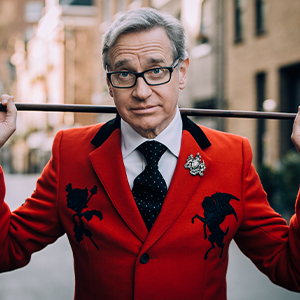
[00:00:10] Ray Latif: Hey, everyone, I'm Ray Latif, and you're listening to the Top Podcast for the food and beverage industry, Taste Radio. This is episode 229, which features an interview with Hollywood writer, director, and producer, Paul Feig, who has added spirits entrepreneur to his resume as the creator of Artingstall's Gin. Just a reminder to our listeners, if you like what you hear on Taste Radio, please share the podcast with friends and colleagues. And of course, we'd love it if you could review us on the Apple Podcasts app or your listening platform of choice. Paul Feig has a thing about martinis. He's particular about what goes into the cocktail, which in many ways is a reflection of his persona. Sophisticated, classy, and enjoyable. It's a primary reason that Paul, an award-winning director and producer behind comedy blockbusters Bridesmaids, The Heat, and Spy, was motivated to launch his own gin brand, Artingstalls. Introduced earlier this year, Artingstall's was years in the making and a project that Paul has been intimately involved with, from the spirit itself to the gin's custom decanter and label. Now, as he noted in the following interview, comes the hard part. Within our wide-ranging conversation, I spoke with Paul about how he developed a passion for cocktail culture, how he balances running a gin brand with his current film and television work, and his role in marketing and communication initiatives. He also spoke about the similarities between pitching a concept to movie studios and that of his brand to retailers and distributors, and other parallels between filmmaking and entrepreneurship. Hey folks, it's Ray with Taste Radio. I'm on a call right now with Paul Feig, the well-known Hollywood director and producer and the creator of Artingstall's Gin. Paul, how are you?
[00:01:53] Dick Clark: I'm good, Ray. How are you today?
[00:01:55] Ray Latif: I'm doing fantastic. Even more fantastic as I'm speaking with you. Thank you so much again for taking the time to do this.
[00:02:00] Dick Clark: My pleasure. It's a thrill.
[00:02:03] Ray Latif: So I'm a game show geek, and I loved, loved reading that you were once a contestant on the $10,000 Pyramid, which was a popular game show in the 80s that was hosted by Dick Clark.
[00:02:15] Dick Clark: Yes, and actually, just to show you what an overachiever I am, I was actually on the $25,000 Pyramid. Oh. They upped the stakes a while into the show, because it was always my favorite show as a kid. So I knew it like the back of my hand and finally got to be on it and actually won some cash.
[00:02:33] Ray Latif: Yeah, then it eventually became the hundred thousand dollar pyramid didn't it?
[00:02:36] Dick Clark: Yes, exactly. I just kept going up but Right now they could be a million dollars for all we know So did the $25,000 pyramid did you win any money?
[00:02:45] Ray Latif: Did you win the 25,000?
[00:02:46] Dick Clark: Oh, yes, I did my friend. I actually won $29,000 again as an overachiever that I am it is actually the whole one of the reasons I was able to start my comedy career was because of that show because I was out of fresh out of college been like a year out of college and I don't know, I would see these ads in the paper for game show contestants, so I tried to get on all of them, but couldn't get on any, and then I went in for that one. And again, like I said, when I was a kid, that was my favorite show. I would always invent a reason to be sick so I could stay home from school and watch it. So I went in, I did really well in the audition and got on, and I made it for four days. Five days is the longest you could stay on, so I made it to four, but in that time I won like a couple of $2,000 prizes and The Heat the end I won the $25,000 and was able to quit my job at the time and become a stand-up comedian full-time.
[00:03:41] Ray Latif: Amazing. Amazing. Now, who was your celebrity partner on the show? Because someone's asking you or giving you the clues to, for you to, you know, get the question.
[00:03:49] Dick Clark: Yeah, well, it was, there was two, there was, um, Bill Cullen, who was an old game show host. And then Lois Nettleton, who was an actress, uh, who was in a lot of TV movies at that time. And she was the one that actually won me the money. So, um, ironically, years and years and years later, when I was auditioning people for, for this project I was doing, Lois came in and I got to tell her how thankful I was to her. It was very sweet.
[00:04:14] Ray Latif: That's amazing. I always wanted to be on that show, Press Your Luck. I know there's a revamp out there right now, but the one with Peter Tamarkin. I wanted to be Peter Tamarkin growing up. That guy was my hero.
[00:04:24] Dick Clark: He was very cool. I mean, honestly, that was one of my dreams was to be like a game show host. Honestly, I think if somebody would offer me to host a game show now, I would probably do it just because I think it's like really fun. Like whenever we do game night at our house or whatever, I was like, you know, asking the questions, if you will, because I don't know, there's just something kind of fun about that.
[00:04:44] Ray Latif: Yeah, and you love when people win. I mean, that was my big thing. When Peter Tamar could be like 5000 and a spin, I'd be like, Oh my gosh, would it be incredible to yell that?
[00:04:53] Dick Clark: Well, that's I actually I'm not that I've ever been asked, but I've always thought if somebody asked me to be a like the celebrity on celebrity, low rent celebrity, for me, on a game show that I don't know if I would do it because like, you lose people money, like, you know, you're having fun and joking around. And these people like need this money. I remember when I was on there, man, I needed that money badly. And it was like, if they had, you know, screwed up or give me bad clues, you would be like, Alright, well, thanks for nothing. So I don't need that kind of responsibility.
[00:05:24] Ray Latif: Now, you're the second Hollywood director that I've interviewed for Taste Radio, who's launched their own Spirits brand. Uh-oh. Any guess on the first? Ratner?
[00:05:35] Dick Clark: No, I didn't know he had one, actually. He's got a, he had a bourbon, I don't know, I'm not sure, but no, who else is in the game? Steven Soderbergh. Oh, that's right. He, it's like a cachaça. No, wait, no, no, it's a, wait, what is it? It's a kind of brandy.
[00:05:50] Ray Latif: Yeah, it's a kind of brandy. It's called Singani 63. And it's this spirit that's distilled from grapes that are indigenous, specific to the Andes Mountains of Bolivia.
[00:06:01] Dick Clark: Right. No, that's why I, cause I'd heard that and I thought he was doing a Pisco. So, um, that's cool.
[00:06:07] Ray Latif: Yeah, yeah. So obviously, I gotta ask, you know, what really led you down this path? Because on your website for art installs, you say there's a quote that says, I never met a djinn I didn't like, but I never met one that I truly loved until I made my own.
[00:06:22] Dick Clark: That's exactly it. My quest in this world has been 25 plus years. I I'm a lover of cocktail culture. When I was a kid, all I wanted to do was be an adult. I hated being a kid and it was all kind of exemplified by when I was like five or six years old, my parents went to Las Vegas and they took me and they were going to go see a Muhammad Ali fight. And so they walked me through the casino to the nursery. But as I was walking through the casino, the outer edge of the casino, because back then they wouldn't let kids walk through a casino. I remember just looking and going like, you know, this is in the 60s. And it was like people were in gowns and tuxedos and suits and ties and everything was fancy. And they're drinking cocktails and smoking and stuff. And I just remember as a kid going like, ah, that looks like so much fun. I want to be them. And then my parents, you know, put me in the nursery. And I'm looking out this glass window at that scene in front of me with, and I'm stuck in this room with all these other dumb kids. I'm just like, God is my witness. I will be an adult one day and I will have cocktails and dress up. And I avoided the smoking part. But, um, you know, so that kind of led me on a quest once I got, you know, of drinking age to really dive into cocktail culture. I always just liked the glamor of it, the look, you know, I started wearing suit and tie way back when and, In getting into cocktail culture, to me, the martini just exemplified everything to do with grown-up cocktail life. I still think it's one of the most beautiful glasses, just the shape of it is cool. It's a very adult shape because you can't just walk around without paying attention to it. Like it's easy to slosh over the sides. So I think there's something you have to be more composed when you're having a martini, you know, but in my research of all things, martinis and cocktails, you know, quickly discovered that a, a martini is gin. A vodka martini is a martini made with vodka. But if you just say a martini, it should be gin. I very kind of kindly said that to bartenders, you know, go like, can I have a martini? They're like, oh, gin or vodka? It's like, I just asked you for a martini. You should know, because I'm a jerk, basically. But I also didn't love gin back then because I like, I think a lot of people had like the bad experience with gin as a kid, not even drinking it, but just going down to like my neighbor's parents' basement bar and we'd sneak the bottles out. And remember just like kind of opening the gin and taking a whiff and you're like, Oh God, it smells like Pine Sol or something. You know, it smells like cleaning agent. So you kind of get this thing in your head like, Oh, I don't like, I don't like gin. but, you know, going like, I need to like real martinis. I, um, you know, kind of taught myself to like gin and quickly really liked it. But, you know, it was that, you know, back then it was all the Beefeater Gin the kind of super juniper forward old timey gin. And then as my travels around the world, you know, cause my wife and I travel a lot for work and for, for vacations. And The Heat, started discovering other gins that weren't that big pine, you know, forest forward thing. You know, you would find these ones that were more almost savory, you know, like in gins that are made with like tarragon and oregano and that kind of thing. And then finding Hendrick's gin in Scotland when it was first being made and going like, wow, this is nice and doesn't have that edge and the Knoxley and Sacred Gin goes on and on, but you find out how many there were. And so I just became obsessed 10 plus years ago with the idea of like, if I can make my own gin, I know exactly how to make it in a way that I think could pull in people that think they don't like gin, but could still make gin lovers really like it. And so that was, that became my quest to do it. Then the next part was just like, how do you do it? You know, and I had approached through my agents who have a lot of ties, you know, these big agencies have ties to, to, you know, other businesses outside of showbiz for branding and marketing and all that kind of thing. and said to them, can you get me my own gin brand? And they're like, that's impossible because all these companies, either you have to be super famous or a big musician or actor or whatever, or you just have to buy your own still and do it yourself. I'm like, well, I can't do that because I don't know how to do it. But I just kind of said, just stay on it. And at the same time, I also wanted to do like a clothing line. And they said that was impossible. But then all of a sudden I was able to get a clothing line at J crew for charity. And so once that happened, it was like, come on, this can be done if we think out of the box. And then about three years ago, I got very impatient and called them up and said like, what is going on with this gin? Why can't it happen? And they're like, we were actually just about to write you because we found somebody who, who wants to do it with you. It was Minhas Distillery and Brewery, which is a company out of Calgary, family-owned, run by Manjeet and Ravinder Minhas, who are brother and sister. They grew their business when they were teenagers. They started this business to brew affordable beer. and turned it into like the seventh biggest brewer and distributor of beer in North America. But they were also doing spirits at the same time, but more kind of in the well spirits world. I think they make the rum for Trader Joe's, and they have a lot of just sort of not known brand things for wells. And they had just around the time that I, you know, my people contacted them, they were kind of wanting to get into the premium spirit world. And so when they saw the lifestyle that I represent, and you know, that I am serious, it's not just like somebody looking to put their name on something, they really wanted to partner with me. And it's just been this invaluable, wonderful partnership. And you know, we built it, we built this gym from the ground up.
[00:12:30] Paul Feig: Guessing your margins? That's risky. Belay Financial gives CPG brands the clarity to scale smarter, faster, stronger. Get your free inventory ebook by texting TASTE to 55123 and start making data work for you. Vibrant Ingredients is the natural ingredient partner powering food and beverage innovation, delivering flavor, function, and protection through a science-backed portfolio. Vibrant delivers purpose-driven solutions that help brands create extraordinary experiences. Discover what's possible with Vibrant today. Visit VibrantIngredients.com.
[00:13:17] Ray Latif: Well, I mean, you should be serious about entrepreneurship. And a very successful entrepreneur once told me that entrepreneurship is not a hobby. Yeah. And so I imagine, though, that you're quite busy with current projects and planning future ones, pandemic notwithstanding. So, you know, where and how does developing and launching a gin brand fit into your life?
[00:13:39] Dick Clark: Well, it's it's taken a very much a front seat as much as my my movies and TV shows are because, you know, it is a, for lack of a better term, it's another thing to entertain people with, you know what I mean? Because, you know, I mean, I'm in the job of sort of making people feel better, you know, through comedy or through, you know, whatever movies and TV shows we do. And that to me is what gin and cocktails are all about. It's, you know, obviously you don't use it as a medicinal, you know, to solve your problems, but it's like, it's a treat at the end of the day. It should be, you know, for a good hard day's work. And so I just equate them all together, really. And, you know, the nice thing about when you're developing a gin or any kind of spirit in this world, you know, it takes time. So, you know, we do the, you know, the first consultation where I sat down with them and all their, you know, distillers and then the guys that figure out how to do the botanicals and all that, you know, just kind of go like, here's what I want it to be. I want it to be a little bit of this. I want to be a little bit of that. We don't want this. I don't want that. Here's brands that are close to what I like, but take, you know, the idea of that from that one brand and take the idea of this from the other brand of this taste profile and this taste profile, you know, then they go off and they will, they distill eight versions of what I was talking about. And so that's sort of the most kind of experimental step. you know, so they go away and it takes, you know, it takes a little while, it takes a month or two. And then, you know, you come back and there's eight and you go like, okay, no, not this one. No, not this one. This one's half good. You know, this one has, I like this one element, this, what is that? Oh, that's, you know, lemongrass or whatever it is. And then, then you go, okay, so it should be a combo of these three. Then they go away and they do it again. You get another eight that are much, much closer together. And you just do that, you know, several times. And, you know, that's where you really zero in on your profile and your recipe. So, you know, but that took a lot of time to kind of get to that point. And then, you know, whatever also micro consultations you're doing in the middle of that, you know, and then once we were set with that, then it was the same thing with developing the bottle, developing the label. So, in a way, it's almost like what I do when I'm putting together a movie, you know, I mean, it's when you were in prep, you know, we're developing the script, we're getting that right. And then, then you go into production, you know, and at the same time, you're figuring out your marketing as you go along. And it's very creative, you know, because I'm not the guy who's who's standing next to the still putting the botanicals into the baskets. But they, like when I direct, you know, I'm not the guy who runs the camera. I don't go and set up the lights, but I have a team of experts who then, you know, I say, I want it to look like this. I want it to feel like this. They go off and they do the, you know, the micro, micro technical work. And then I go, yes or no, or let's change this. Let's make it this. So, you know, it all fits. It all kind of makes sense. And I'm just absolutely passionate about this. It's hard to get across that you're not just somebody that put their name on something. But The Heat thing I got going for me is my name doesn't really mean that much. So it's not like, oh my god, I can't believe we got Paul Feig to promote this. It's like, no, nobody knows who I am in that world, really. I mean, people don't even really know what a director does, to be honest. Have you ever met Steve Carell?" I was like, yeah, I think I've met him because I directed the show. So, you know, so it all kind of fits.
[00:17:21] Ray Latif: Yeah. Well, you know, it might not be called Paul Feig Gin, but I have a feeling that you had a hand in naming the gin. Where did the name come from?
[00:17:28] Dick Clark: It's my mother's maiden name. My mom's side of the family is British and I really wanted to create a gin that was a London dry, but also I wanted it to feel like it had been around for 150 years. And so, you know, it's funny, everybody assumed I was going to call it Feigs. And I said, that's the worst name for a product ever. First of all, nobody can pronounce my name. It's like, literally, if they see it written down, they say everything except how my name is pronounced. It's vague, vague, boop. I mean, you can't believe how four letters can, can befuddle people so much. So I was like, what's worse than people going, can I have that far, right? So, you know, so it's like, okay, let's not do that. But also I was really hung up on like, what kind of rolls off the tongue that you still kind of go like, what's that? But then it's easy to say once you know it. And so I was doing all these rehearsals of different names that I was thinking of, like, bartender, you know, in Artie Stoll's, Artie Stoll's Martini, I thought, oh, Martini, that kind of kind of comes out nicely. So, um, so yeah, so that was I knew pretty early on, I wanted to do that, you know, and The Heat all kind of matched up with the bottle, and the label design and every You know, we really wanted it to be a bottle that you want to have on your bar that feels old-fashioned, but is also very beautiful. And it was Ravinder Minhas, actually, you know, we were kind of, what should it be? He was like, what about like a decanter? I was like, oh, that's brilliant, let's kind of, you know, can we do it? Because is that going to be too cost prohibitive? He's like, No, you know, if we design it, right, they actually have a glass company, they, you know, they I think they either their own or they work with, he said, Look, it's all about just getting the mold, right, you know, getting the structure, the superstructure of the bottle, right, so it doesn't, you know, fall apart or break and shipping. And then, you know, once you design it, they make the mold and they can do it. So, you know, it's a very expensive-looking bottle, I have to say. And, you know, the price point, right now, it's a little high because we don't have full-on distribution, so places are kind of overcharging for it a bit. But, you know, we're going to have a nationwide distributor very soon, and that'll be able to bring the price point right into the low to mid-40s. You know, which is pretty good. You know, it's still a premium price for a gin. It's more expensive than some, but it's not expensive as like a Monkey 47 or, you know, when you get those higher end ones and you get this gorgeous bottle out of it too.
[00:19:45] Ray Latif: It's a super premium gin. Yeah. And it's a gin for folks like yourself. I mean, you know, you discussed this, you've always embraced this refined persona talking about, you know, wearing a suit and tie. In fact, in every video or photo I've seen of you, you're wearing, it seems, a tailored suit and tie. So how is your personality reflected in the brand? And is it really important or was it really important for your personality to be reflected in the label and the bottle?
[00:20:14] Dick Clark: Yeah, very much so. I want my whole life to kind of represent the fun of being an adult of being a responsible adult who cares about other people and cares about the world but also is still in works hard but still has fun like a work hard play hard kind of kind of vibe but I want everything to have a fun edge to And so, you know, the bottle's very old-fashioned in kind of its look of the label and even of the bottle design, but it also, there's a little bit of kind of a wink and a nod in it of being fun. Like on the back, there's, you know, a picture of a Scotty in a bowler hat, because I've got Scotty's, and I wrote this really stupid poem that I put on the back. So, you know, and for, you know, as we move forward, you know, I want to make the marketing of this very fun, but also, you know, not so silly that we're kind of making fun of cocktail culture, but going like, look, this is the fun you can have as a responsible adult when you have a cocktail. And, you know, this is the lifestyle that you could have fun enjoying, you know, and I don't ever want it to be like a, Oh, you know, you have to be rich to do this. You know, it's the same thing I do with suiting, you know, even when I did the, uh, the J crew thing, so many people kind of like, Oh, I can't dress up cause it's expensive. a public, or H&M, or any of these places, and get a suit for a couple of hundred bucks, and if you get even the tailor at your dry cleaner or whatever to bring it in and sort of make it get the tailoring right on it, then you look like a million bucks, and you didn't spend all this money. And so there's so much kind of what I call tyranny of the casual that goes on these days, just in sort of the way everybody dresses, you know, cause it's all this, like, you have to be comfortable over me, over everything, a comfort uber alles. And just the idea that like, no, you know, You should be comfortable, but you don't have to be so comfortable that you look terrible like, you know, why not? Why not represent yourself, you know correctly like an adult but also show the fun, you know I mean, you know, like you say I'm always in a suit and tie every day But I kind of try to pop really fun colors and do whatever sprezzatura I can do to it to make it, you know, make people realize look I'm not you know, he's not like some lawyer who's what I walking around or some conservative senator walking around, you know, all dour. Like, you know, the funniest moments behind comedy to me have been by men in suits, you know, or women all dressed up really nice, who are then acting crazy. That's fun for me. You know, I grew up on watching Monty Python, where the funniest sketches when they're dressed like very sober English gentlemen and businessmen being outrageously silly. You know, so that's kind of the whole thing I want to bring to this, which is like, it's just, it's fun to be an adult and it's fun to enjoy grownup things.
[00:23:16] Ray Latif: I have a feeling you and I would get along because that's exactly the way I look at things. Yeah, totally. Yeah. So let's talk a bit about the marketing. You know, there are mixed opinions about spirit brands with celebrity ties. And you, you know, called yourself not really a well known celebrity. I think there are plenty of people who probably know who you are. So that being said, you know, how involved are you in the marketing and promotion of art installs?
[00:23:39] Dick Clark: 100% it's really it's it's I'm so involved that that, you know, I'm driving the train a lot of the time because you know, we all want to get it out there. But again, I want my personality to come through. And it's just this is my project. I mean, this is mine. This is not something I put my name on, you know, or bought into this is something I built from the ground up with the good folks at Minhas. So, yeah, I mean, every decision goes through myself and the team of, you know, Ravinder and Manjeet and myself. We're really, you know, the ones driving this ship. You know, we haven't even gotten any much marketing out at all yet. I did a photo shoot with the amazing Tim Palin, who used to run marketing at Lionsgate. But when he did that, he also was the photographer who took all their pictures and materials for the posters. So he's really brilliant. And he very kindly said, Hey, I'd be happy to take some pictures for you. And we got these gorgeous pictures that we're just trying to figure out the best way to use and get out there. Again, we're just finalizing all of our distribution. So the minute we're available, like everywhere, which will be very, very soon, then we're going to go to the next phase of really pushing it out marketing wise. But it'll be a fun campaign. Look, you know, you got like Ryan Reynolds, he does a really fun campaign that's a little more irreverent. I think that's great. I don't want to compete with Ryan at all. And also our brands are a little bit different. And so I want mine to be fun, but like kind of, you know, still fun, serious cocktails.
[00:25:14] Ray Latif: Well, if your brand could be as successful as Aviation Gin, then I'm sure you'd be quite happy with that. Yeah. So are you enlisting some of your actor friends and folks you worked with to help promote the brand?
[00:25:29] Dick Clark: Um, I haven't yet. I mean, Melissa McCarthy very, very kindly did a little video for me, but it was, it was in support of a, an event I did, uh, the other week, which was a bridesmaids watch along that was to raise money for this great charity called family promise. Uh, and also to just be a fun thing for everybody who had to cancel a wedding during the pandemic. You know, by the same time, I was promoting the gin on that too. So Melissa Traverse kindly promoted the event and promoted my gin. But that was just, you know, that was an Instagram story video. It's really dicey about asking people to help you promote because that is a business thing. It's, you know, it's one thing, you know, if you're raising money for charity, then I have no problem calling people up and asking them for help. But if it's like, hey, help me sell my gin, you know, that's something they make money to do, you know, get endorsement deals. So I'm hesitant to pull that trigger. But, you know, never say never. And if I did, I would make sure that, you know, the people were obviously compensated for it. But it's an interesting world. What I love about all this and why it's such a nice antidote to what I do with movies and TV, is everything in our world with that is about opening weekend, or the night, the premier night, and it's all about building, building, building, building, and then here it is, and oh my God, how did we do? Did we win the weekend? What place did we come in? And then it all kind of, then it's a little bit of support after it, but it's all built to that big thing, and then it's out there, and then it eventually goes to DVD and cable and all that stuff. You know, but what I love about this is there is no kind of, and here it is promotion. It's, you know, getting it out. It's a slow rollout. And then it's just supporting the product over the course of years, you know, to try to grow the brand. So I really like that because it's, I don't have to deal with that mania of like, we gotta, you know, we're building to this one date. So that's been really lovely because then, you know, you go, oh, we can, you know, let's try this. And then if that doesn't work, we can change it up and try this, you know, way of kind of getting the word out there about it. At the end of the day, the thing that's going to make it work is the quality of the gin. And we've already won several awards. We got Best Gin and Double Gold at the Worldwide Spirits Wholesalers Association last year, which was huge. And that was our first outing. And then we've just got a gold medal from the Bartenders Association or whatever, Bartenders Awards, I think it was. and Tasting Panel gave us a 94, and the SIP Awards, we won gold. I wouldn't even want to do this if we had a crappy product. It's like trying to promote a junkie movie, where back in the old days, before the internet, you could put out all these great trailers for a crappy movie, and then it would take a few weeks for people to realize that it was a bad movie. But now today, you put a bad movie out, within seconds, the internet tells everybody, and then nobody goes to see it. So, you know, I feel the same way about this, like I want to put out a quality product that I would want to drink. It's the Oxley Gin I drink now. I've gone through so many bottles of my own gin that I'm driving them crazy. We need a few more cases.
[00:28:47] behind comedy: Do you want more repeat buyers on Amazon? Well, this free resource in collaboration with Straight Up Growth will help your brand turn first-time buyers into long-term subscribers. Download Winning the Repeat Purchase Game on Amazon now at Taste Radio slash SUG. That's Taste Radio slash S-U-G to start building retention-driven growth for your brand on Amazon. Scaling a beverage brand into major retail comes down to operational readiness. From packaging lead times to co-manufacturing strategy, the details can make or break a launch. In a new ebook in collaboration with Octopi and Asahi Beer USA, industry leaders share what they've learned in helping brands scale. Download it now at Taste Radio slash octopi. Do you need to scale your team faster without compromising on talent? Join Oceans for a live webinar on April 20th and learn how leading companies are hiring top global professionals who are ready to grow with your business. Register for the webinar now at Taste Radio slash oceans. That's Taste Radio slash oceans.
[00:29:58] Ray Latif: I assume that, you know, when you're selling the brand, your name gets you in the door, your experience as a well-known producer and director of Hollywood films, and the liquid certainly would keep you in the room. But what else keeps you in the room? And can you compare the experience to pitching an idea like Artingstalls to that of a film or movie concept?
[00:30:22] Dick Clark: Well, yeah, I mean, you know, the first thing to say is that it actually doesn't get you in the room a lot of times because, you know, what's happening now is so many, so many people in showbiz are putting out or putting their names onto liquor brands or their own product that there's a bit of like eye rolling, I'm sure that goes on of like, Oh, guess who's got a, you know, whatever spirit it is. So, you know, I've had times where we haven't even been able to get a meeting with, you know, the people in charge or whatever, you know, or, or, you know, I went to, we went to this one liquor store by my house that I go to all the time. And our local distributor was going to go there. I was like, I'll go along, like, I'll just go along and say hi, we get there and oh, yeah, well, he's up on the roof. fixing that there's something wrong with the air conditioning. So you guys wait and I was still there for half an hour and they came and goes like he said go home because he's like, Oh boy, well, this is sobering. So you know, so it has to be the product has to be good. And to your question of like, how's it similar? It's similar that way. I mean, there's a lot of places like we have an idea sometimes you can't even pitch to like the top people like they're they don't want to take the time because everybody's pitching every thing all the time. So they'll you'll go in with somebody lower down, who will at least vet the idea, The Heat they think there's something there, then they'll go to the person say, Okay, now you should talk to these people, you know, and so it's a lot of that. But it's really about just trying to get your distribution. And I can get a meeting more if people like the idea of the gin, and they also like my movies, you know, right. So it's like, Oh, we're fans of Bridesmaid. Okay, cool. You know, so it helps in that way, definitely, as opposed to if I was just, you know, a guy off the street, or somebody just kind of starting my own distillery, you know, and I will use everything it takes to get in the door to prove ourselves. But again, it is like, pitching a movie, whatever, you know, just because you're in the room pitching, the idea has to be great in it because they have to spend a ton of money to make it. So, you know, you can get a lot of courtesy meetings of people like, oh, OK, let's just do it because we like them or we like their work, but we're not going to buy it if it doesn't blow us away and we don't think we can make a ton of money off of it. So, you know, I'm always looking to get rid of meaningless meetings, because life is too short. Especially back pre pandemic, when you had to drive everywhere, I have to say, you know, one of the only kind of positive things to come out of this terrible, terrible situation is it's now that, you know, we've kind of weaned every single time we meet, you know, which in LA means they can eat up hours and hours of your day driving across town to sit in a room and then have them reject your idea, you know, or give you a courtesy meeting. And I was like, okay, I gotta drive back through traffic and all that. So that's a long winded answer to your question.
[00:33:14] Ray Latif: No, no, totally. And certainly being in LA, yeah, it could take you an hour to go 10 miles or maybe two hours to go 10 miles. Yeah, exactly. But sometimes those in-person meetings help. I think, you know, when you're meeting at a bar, for example, you know, having a drink with the bartender or the buyer, I'm sure it goes a little bit of a longer way than, you know, having a Zoom meeting.
[00:33:35] Dick Clark: Totally, totally. No, I mean, that's honestly my favorite kind of meeting anyways, like a drinks meeting, just because, you know, I like to do that with actors because then I get to see who they really are, you know, we're just kind of in a cool setting because I don't really, you know, I'm less about kind of auditioning them, especially if they have any kind of name versus like, who is this person? What are they really like? Cause then I can go like, Oh, I want to show this side of them or I want to surprise the world with the side of The Heat they never saw that I just saw and I think is really funny or cool or, you know, lovely.
[00:34:05] Ray Latif: Yeah, there's a certain authenticity to meeting someone in person and having a drink. And I mean, and I guess that leads to another point, which is that, you know, your experience as a gin and cocktail aficionado, I'm sure plays a role in selling the brand because it is authentic, because it is real. Yeah. But how much of that happens? I guess how much of the story that you're trying to sell happens personally to, say, a bar director or distributor?
[00:34:31] Dick Clark: Um, you mean as far as their contact with me? Yes. Yeah, I mean, it's, I will meet with anybody, literally, like I'm always saying to the, you know, to the gang who's out promoting, you know, like trying to get into stores and restaurants and all that. I say like, please put me in touch with anybody. I love talking about gin so much that it's, I look forward to it. The less stuff I have to deal with in my everyday showbiz world, which is fun, but you know, frustrating sometimes. Yeah. So I will honestly talk to anybody. You know, I, um, been doing a lot of Instagram lives with various people. One of the stores we're in in Glendale is called Remedy Liquor, which is one of my favorite liquor stores because they're on my drizzly route. They always seem to have everything I ever need. I talked to him when they first took it in, put it in there. I'm just like, thank you so much for doing that. Anything I can do? He said at one point, he said, yeah, maybe we we do an Instagram live thing sometimes, I said, please put me on it. And so we did it. It was just, you know, I think only like 30 people watch the live stream, but it was he and I kind of making a cocktail and talking about gin. And it was super fun, you know, and then, you know, then we've done a few kind of influencer drink sessions with with people who write about liquor and have sites about it and all that and so I did like a couple of like live cocktail zooms where you know got to meet everybody over zoom and show them how to make a few drinks and talk about the gin and and just have a good time you know and again it's you know I'm not a big kind of like sales sales sales sales I like to just kind of have fun and talk about it and field questions people have about it but then again just kind of go like look at look how good this drink is with this and hey let's talk about cocktails and cocktail lifestyle, you know, cause I want people to know that this is not some just side project for me or something that, you know, you know, your agents go like, Hey, this company wants you to put your name on this. You know, this, this is The Heat opposite of that. This is something I pursued so hard and did so much research on, but I've been learning like crazy. I mean, I didn't really understand, distillation of gin. I took a lot of tours to a whiskey company, you know, like distilleries when I was in Scotland, because I'm a big whiskey fan too, single malt fan. But you know, I didn't really have any idea, the nuts and bolts of gin. So when I was up, up in, it was actually in Monroe, Wisconsin, which is actually where we're distilled. So we're American distilled, even though it's a Canadian company, and saw how they do it and learned about the basket learned about, you know, how many times they put it through, run it through the still and, you know, but the botanicals and all that, that was that's the most fascination to me, because obviously, that's what makes our gin, the gin.
[00:37:21] Ray Latif: For sure. You know, you hinted at this, being a Hollywood director or producer can be pretty frustrating. And I've spoken with a lot more food and beverage entrepreneurs than directors and producers. But those entrepreneurs also talk about their businesses being really frustrating sometimes. Oh, yeah. So, I mean, can you compare the two? I mean, are there any parallels in terms of, you know, the frustration of getting your gin off the ground and getting it in stores to producing a movie?
[00:37:50] Dick Clark: Yeah, I mean, it's exactly the same, you know, because first you're just dealing with the internal problems of production and just Getting the thing right, you know, I mean, it's they don't frame movies. It's all about like getting the script, right? We go through millions of rewrites and tons of notes. Everybody got notes this year's, you know So so that's the equivalent of getting the getting the recipe, right? And you know just hitting that balance that is so hard to hit I mean, there's very few great movies in the world because whereas it's just a hard thing to get everything in sync. And booze, that's probably the same way. There's a lot of good booze, but there's not that many where you go like, oh my God, that's like the gold standard. So it is, it's that level of just micromanaging everything. But then once you've got the product and you've gotten all that stuff right, in my career, I was an actor for a long time. I did, I was a regular on all these TV shows that would always get canceled after the first season. One of those guys. But then I finally got on a show called Sabrina the Teenage Witch, which was going to be a hit. And so I was finally on a hit show. And so I took all my money that I made that year, because I knew I was going back the next year and could make more and put it all into this really low budget feature film that I wrote and directed and Sacred Gin and shot and everything. And once I had that, it was like, I did it, I did it. And I remember I had a little premiere for it with all these people from showbiz, and everybody really liked it. And some guy in the business came up and said, well, congratulations, now the hard part starts. And I remember in the moment going like, eh, screw you. I almost felt like such a negative thing to say. And then quickly realized he was 100% right. Because it was almost like making the movie was almost the easy part compared to trying to get the movie out there. And I couldn't get it out there anywhere. wanted to buy it. I couldn't get it at any film festivals, you know, and you're standing there with this thing going, but people really like this. I've seen people really like this. And that's, you know, that's exactly what this is with, you know, with a gin or anything that you're trying to sell, you've got the thing, and you know, it's good. And you put all this hard work into it. And then you realize there's a million of these out there, you know, with movies, there's, you know, when I did that, you know, I think that film, when I submitted it at Sundance, like 1500 independent features had gotten submitted to The Heat year. And you're like, Oh, God, I thought I was the only person doing this. And it turns out everybody's doing it. You know, and same with booze, you know, especially now. And I think the minute that George Clooney's, you know, Casamigos made all that money, all these celebrities suddenly went like, wait a minute, I got to get into that game too. You know, and I'm not saying that they aren't committed to what they're doing. But at the same time, you're kind of standing there going like, wait a minute, I was this was really something I wanted to do, you know, and now everybody else is kind of piling on. And you don't know who's kind of sincere and who's not, and who's got the good product and who doesn't, and who's just put their name on something, and do they quality control it. You know, so you're dealing with a lot. And then, again, my name is not nearly as sexy as, you know, whatever giant rock star, musician, actor, you know, celebrity is out there. They're gonna get the, you know, the door opening before I do. So again, you just got to go back to the quality and just connecting and getting out there and working and pounding the pavement, talking to people and giving out free products so that people can try it and fall in love with it. You know, and The Heat thing has been everybody that tries this really flips out over it. And my favorite thing is, You know, people, oh, I don't like gin. It's like, I know. Can I just pour you a glass? Just try it. Just taste it. And to a person, they're always like, oh, I really like that. Because they're all expecting, again, an old bottle of Beefeater Gin be poured for them.
[00:41:34] Ray Latif: Well, I mean, you mentioned this, like George Clooney, it seems like when Casamigos sold for a billion dollars, that really generated a lot of interest among movie stars and rock stars to get involved in some sort of spirits brand. You know, we saw this with Sammy Hagar with Cabo Wabo. Yeah. And you mentioned Ryan Reynolds with Aviation Gin. Your passion for art installs and passion for a really good gin is what got this project off the ground. But what's the ultimate goal here? Like, what are you really trying to do with your brand?
[00:42:07] Dick Clark: I just want it to be everywhere, honestly. It's interesting. It's kind of like when you do a movie. too. I mean, obviously, look, you hope you'll make money off of something. But that's never been what drives me. To me, it's always been about what do I love that I kind of want to share with the world, and that I would just feel really cool and proud if I walked into every bar and it was up on the bar. I'm like, that's mine. You know, like, there's something I really love about that. And also, the weird kind of rehabilitation of gin, just because it's something I'm so passionate about. When I'm passionate about something, I want other people to really like it. You know, I was that same way with suiting, like people, I don't want to wear suits or I can't do that. It's like, no, it's, it's, you'll love it. You'll look great. I'm telling you, like, do it. I want people to kind of have that experience, the positive experience that I've had with things that I am passionate about. when I make movies, it's really my goal, the my reward, I should say, at the end of the day is like, I know, I'm going to have like a nice martini with dinner. And there's something that just kind of grounds me from that I think, again, it goes back to that adult lifestyle, you know, it's not like, Oh, we're gonna go and get, you know, just gonna drink until we pass out. It's like, No, we're gonna go have a nice, normal size martini, like a four ounce martini, not a big 10 ounce, you know, 10 ounces, like you get it all these bars now, which is my I can go in a whole soapbox about that. But you know, but it's just like, look, we're this in moderation, this adult treat that you can have. And, you know, this is something that if done right, and responsibly, that can make people happy. And, you know, and that's really, you know, what I want to do. And then there's just, and to try to bring back this cocktail culture, here's the thing, it doesn't even, obviously I'm selling gin, which is alcoholic, but I would be so happy if just like the idea of cocktail parties came back, you know, people dressing up and meeting in people's houses. They don't even have to drink, you know, you can have great non-alcoholic drinks there, but it's just that whole grown-up of interaction that comes from adults getting together. And there's great thing about a cocktail party is it just says this is for adults. This is for grownups. You can't bring your kids to this. You know hopefully you won't be standing around talking about what you know TV shows your kids watch or what you know. Cartoons they enjoy, you know, which I've heard adult conversation being in Vegas once and hearing this table of adults who are clearly a bunch of parents who are out on the town having this big conversation about the merits of Kim possible some cartoon I'm just like, oh my god, you guys you're out for the evening. You're having drinks. Don't talk about cartoons. What's wrong with you? Although god bless what they had a good time do it. But um, you know, so it's just my quest to try to and or give an alternative to this, this whole tyranny of kind of endless youth that seems to have grabbed at least people in my generation. You know, I'm in my late fifties now and a lot of guys my age are walking around in shorts and t-shirts and you know, baseball caps and they won't put on a tie and they won't dress up and when they go out to dinner they have one good shirt that they kind of, oh good polo and they put on and you're like, dude, you're an adult, you know, like, dress up like enjoy it, but don't make it like it's torture. Like, Oh my god, I gotta put on a tie. It's like, look forward to it. Like you look great. Your wife will love that you're in it, you know, or your spouse will love that you're looking nice. And you go into a place and you will raise the bar of the place, because you're not the guy in the nice restaurant wearing the Tweety Bird t-shirt, you know, and, you know, with his hat on backwards, you're actually adding to the, the picture of the world. You know, years ago, I wrote an article for Esquire, about responsible tourism, I called it. And it's basically the idea of like, you know, you go on vacation to some beautiful place that you you wanted to go your whole life and you've seen it in movies, you know, like we, my wife and I love Capri in Italy. And you get there and it's this gorgeous town and it's got all this history of like kind of, you know, jet setters and all this stuff. And you get there and it's all, the people are walking around with like ski poles and Teva sandals and shorts and you're just like, well now you're bad extras in this beautiful movie that I was, thought I was going to enter, you know? And, but I'm walking around, you know, like a seersucker suit or nice vacation wear. And so I'm going like, if I walk into your photos, your photos, you know, it, it, it'll look like it's part of that movie. But if you're in my photos now, it just looks like, you know, a tour bus just disgorged itself, you know, and now I'm stuck with you guys. And in my, in my wonderful movie that I'm trying to be on vacation and transport myself out of my life for a week. You know, so it's all kind of, it's all shades of that. And to me, like a beautiful gin and great cocktails in beautiful glasses out of beautiful bottles in a beautiful setting. That's just like what adult life can be.
[00:47:17] Ray Latif: I think you said it as well as anyone could have said it. And I think that's really coming across in the gin, which is embrace sophistication, embrace maturity.
[00:47:27] Dick Clark: Here, here, exactly. But, but fun, the fun version of that just, you know, once you're mature and you're an adult, it doesn't mean you can't have tons of laughs, do outrageous things and, you know, just be a fun person. And it was not, you know, you don't have to be like some old conservative person, you know, like you can have all the fun you want, you know, just do it responsibly. Don't hurt anybody and have a good time.
[00:47:48] Ray Latif: Well said. Well, Paul, this has been so great speaking with you. I really, really appreciate the time. My pleasure. And I really hope that when the pandemic is past us, that I can catch up with you at a cocktail party. I would love that. And share a martini with you, certainly made with Arning Stahl's gin. Nothing will make me happier, my friend. Paul, thanks so much again, and good luck with the brand. Let's stay in touch. Thanks, Ray. I appreciate it. Cheers. Cheers. That brings us to the end of episode 229. Thank you so much for listening, and thanks to our guest, Paul Feig. As always, for questions, comments, ideas for future podcasts, please send us an email to ask at Taste Radio. On behalf of the entire Taste Radio team, thank you for listening, and we'll talk to you next time.