[00:00:02] Ad Read: This week's episode of Taste Radio is brought to you by Sovereign Flavors. Sovereign Flavors boasts an innovative team of flavor experts who have created over 10,000 beverages. Sovereign Flavors is the leader in building premium products customized to your needs. With thousands of flavors in their library, Sovereign Flavors offers an extensive selection of organic and non-GMO flavors. Sovereign Flavors wants to invite you to visit their on-site tasting lab for one-on-one development services. Whether you're looking to create a vitamin-enhanced water, energy drink, or flavored spirit, their team will cultivate your ideas so you can bring a high-quality, imaginative product to market. To learn more about Sovereign Flavors and their capabilities, Sovereign Flavors.com. That's Sovereign Flavors with an S, dot com. Now, Taste Radio. Thanks for listening to BevNET's Taste Radio. I'm Ray Latif, and with me are John Craven, Mike Schneider, and Jon Landis. We're recording at BevNET headquarters in Watertown, Mass. We're actually recording in John Craven's office. The conference room is occupied. This is episode 83, which features an interview with Adnan Durrani. He's the founder and CEO of Saffron Road. We also speak with Neel Premkumar, who's the founder and CEO of Dyla Brands. And in this week's edition of Elevator Talk, we chatted up with BJ McCaslin, who's the co-founder of Minute Mixology. Also known as Baby Jesus. Also known as Baby Jesus by his own words. That's what he calls himself. Guys, we're just weeks, just a few short weeks away from the live conferences. BevNET Live, Nosh Live, Brewbound Session. And I'm looking forward to meeting a bunch of the early stage brands and entrepreneurs that are going to be attending the events. I'm really psyched for that. I just am going along for the vacation in Santa Monica. But I mean, you know, we meet so many cool folks at these events, but we don't get to meet all of them. So I encourage you, if you do see one of us, please track us down. We'd love to meet you. And it's really cool. I mean, we talked about this yesterday. We meet founders and CEOs who were, before they're successful, I mean, like, think about a Janie Hoffman from Mamma Chia. I mean, John, you met her in 2010.
[00:02:13] John Craven: Yeah, I think it was 2010. But yeah, you know, it's interesting just thinking back to, you know, someone who came to our event before they even, you know, launched. And, you know, like Ray said, it's hard for us as we're doing the event to kind of know what everyone is doing. You know, the new people that we don't know and love to talk to these people. And, you know, I remember Janie had a sample bottle of her product.
[00:02:35] Ad Read: And here it is, whatever, a bunch of years later and a very successful brand. There you go. So I also recall meeting Justin, Dina and Vanessa from HealthAid for the first time. And that was a few years ago during the New Beverage Showdown, which they eventually won. And HealthAid picked up a ton of exposure by winning the showdown. It was really their onstage pitch that a lot of us refer to, Jon Landis included, as one of the best ever. And I just wanted to note that the application deadline for New Beverage Showdown and the Project Nosh Pitch Slam is today. Today, yeah. And to your point, Ray, everyone who's there is energetic and ambitious. Yes, this is true. you know, they got up on stage and really, they were a well oiled machine when they got up on that stage. They knew exactly every, they had a time down to the second. So that's what I really respected about that. Yeah. And the, you know, the applications are up today. If you haven't been in contact with me and you know, you're thinking of submitting one, like call me right now while you're listening to this, Jon Landis is standing by or email Jon Landis at betnet.com. But the thing is, the Showdown is, and the Pitch Slam, they're great opportunities. They're a platform that we have to give exposure to brands. But to how you started this, our whole team is at this event, and we're doing live stream lounge interviews, and Elevator Talk, and podcast interviews, and collecting information for future stories. You know, there's tons of opportunities for brands to interact with us. The New Beverage Showdown is only really one of them. But obviously, you know, we're interested in getting as great a field as possible. So.
[00:04:14] John Craven: And obviously, we're only one of the reasons or groups of people you should be talking to there.
[00:04:18] Ad Read: Exactly. Yeah. I mean, there's, I mean, if you don't know by now, yeah, it's the whole industry is there. I like to refer to the people at Pevnet Live as the ecosystem of support. A lot of the supplier companies that help you develop new products, the service providers who help you design them or with your operations or regulatory needs, and then obviously all the people with the money. That's who everyone wants to meet. For sure. I mean, if you're not up on stage, I mean, you mentioned this, if you're not up on stage, you're still gonna meet folks. Yeah, you're in the mix. And what I would say is curate your elevator pitch. You may take those 30 seconds, those 30 seconds that you talk to someone may really help elevate your business. And so if you have a well-crafted pitch, you can make the difference even at an early stage. Yeah, you don't have to be as polished as HealthAid, but set the bar there. I mean, those guys did a phenomenal job of just, the entrepreneurs that we meet, they have this idea, they have this feeling, and you're trying to get it out there. And there's so many ways to do that. And this is one of those where you're going to get some feedback. For sure. I'll give you some feedback. Mike, are you going to give some feedback too? Oh, yeah. I'm going to be very judgmental. Yes. Mike will be a judge for the semi-final round of the New Beverage Showdown. So excited to see you up on stage giving your critique of some of these brands as well. I can't wait. That's one of the most fun things there is to do. Definitely. Obviously, another reason that folks come to these events is to see the onstage speakers, and we've got a great lineup at Nosh Live, including Adnan Durrani, who's the founder and CEO of Saffron Road, which is a brand of frozen foods and healthy snacks that are Halal certified and sold nationally. You've probably seen the brands Chickpea Snacks and Frozen Entrees at Whole Foods or Kroger or Safeway. Durrani is a former Wall Street banker and a serial entrepreneur. He's also the president of Condor Ventures, which is a venture capital firm that invests in natural food companies. So he recently sat down with Jeffrey Klineman and spoke about his career in the food and beverage business, including his immersion into natural foods and being mentored by Stonyfield Farm co-founder Gary Hirshberg. He also talked about how he identified a huge growth opportunity for ethnic foods among millennial consumers. I'm Jeffrey Klineman, the editor-in-chief of BevNET and Project Nosh, and I'm here interviewing Adnan Durrani, the founder of Saffron Road and American Halal for Taste Radio. Adnan, you were an engineer, you were on Wall Street, and then all of a sudden you start a water company. How does that happen?
[00:06:52] Adnan Durrani: Yeah, that's quite bizarre, isn't it? Like I said, I'd like to tell people I have a checkered past because I came from the dark side, you know. Water? No, Wall Street. So, I mean, I was on Wall Street during the go-go 80s, the real crash that occurred way back then. And I was at Lehman Brothers for a while, EF Hutton, you know, before that. So, yeah, a lot of the famous history behind those companies. And when the crash, when the first crash occurred back in 1987, saw that I really had kind of an epiphany where I felt you know, I was kind of at the bottom of my life and Lost a lot of money on Wall Street and saw a lot of malfeasance on Wall Street as well even back then of course It's much worse now, but even back then and decided I really needed to change my life And that's where I decided I was gonna go into I thought it was so be colic, you know I was gonna go into the water industry and there's no saying how do you make a million dollars in the water business and
[00:07:46] Ad Read: Start with $10 million.
[00:07:47] Adnan Durrani: There you go. You're an experienced food entrepreneur. Yeah, exactly. Yeah, and I didn't know that at the time. Of course, I was rather naive and thought it's so simple. Just put water in a bottle and you'll become very wealthy. And I didn't realize all the struggles that we had to go through. So my wife and I did found Vermont Pure Spring Water back in 1990. And I had formed a company about a year and a half, two years before that, called Condor Ventures. This was way before venture capital really even existed. And it was a direct investment fund. And I decided at that time, with a number of the limited partners I had when I worked on Wall Street, that I formed a fund that was investing just in natural and organic food companies. And Vermont Pure was our first investment.
[00:08:27] Ad Read: So, I just want to see, junk bonds pushed you to try and eliminate junk food?
[00:08:35] Adnan Durrani: Oh, I never heard it put that way, but that's very eloquent. Yes.
[00:08:39] Ad Read: See, that's why I'm the writer. But I'm just wondering, what was the moment that, yes, there was the crash in 87, but what steered you toward natural food?
[00:08:52] Adnan Durrani: OK, that's a very good point. When I had Condor Ventures, and even before when I was at Lehman Brothers, I'd done some work on a couple of beverage companies. Matter of fact, at Condor, we were one of the original investors in Snapple way, way, way back then. It was a very, very small company. It was less than 10 million in sales when we got involved. And I saw the whole growth of that company and a couple of other beverage companies. And so I got very attracted to the food and beverage category. And I started to see some dynamic shifts in Europe in the food industry towards organic and natural. And I just had a feeling it was kind of based somewhat on some research I'd done on Europe, that those trends were going to come to US. So I felt that we were at the beginning of what I thought was going to be a very nice trend. I was hoping would be something sustainable in US, which was a shift into the natural organic category. I had no idea it would become as big as it became, but I just had an instinct that that was a category that I wanted to be part of.
[00:09:49] Ad Read: Now, was there any part of your life before that that had indicated that you might want to be involved in this kind of business? I mean, I don't want to reach back to your childhood and ask what your childhood was like. But I'm always interested in the kind of move that this first professionalization of the natural foods business
[00:10:16] Adnan Durrani: What drew you to it? Yeah, that's a very good question. And I haven't reflected enough on that recently. But if I would reflect on it, what I'd say is that when I saw the kinds of corruption and the kind of greed that existed on Wall Street, which I am not proud to say I was an endemic part of, When I kind of went through that phase of that epiphany I just mentioned, I said, you know, I really want to make a clean break and do something a lot healthier. And I bought a home in Vermont, and my wife and I were going up there, you know, every week. And I saw, you know, I really connected a lot with nature. And I thought, OK, here's an opportunity where I looked at a number of brands and what they were doing, that you have an opportunity to participate in something very healthy, and at the same time, it's something very connected to the Earth, and something connected to humanity, to better humanity. and also something where, as you're building it, you get to see the consumer response to it in store. So I thought that whole dynamic of getting involved in a healthier lifestyle, also in producing healthier products, as well as having social good, was something very powerful. It was around that time that I met Gary Hirshberg, actually, at Stonyfield Farm we kind of connected at a couple of the trade shows. I went to Natural Expo West back in 1989, I think. And it was just, at that time, it was a very small show, not like today. There were very few booths there. But Gary and I got to spend some time together. And he introduced me to a bunch of entrepreneurs and an organization almost 30 years ago called Social Venture Network. It was just starting out at that in those days. I think it was our second or third conference. And these entrepreneurs had a radical idea of how to do business, which I really connected with. It was interesting that I came from a very conservative background. They were obviously, I used to joke with them and say they were social capitalists because they were socialists who became entrepreneurs. But they taught me a new way of thinking about business, you know, about the triple bottom line, which I'd never heard of before. And when I connected with that, I thought, you know, the food and beverage industry or the food and beverage sector is probably one of the few sectors of business in America where you can actually demonstrate social impact.
[00:12:23] Ad Read: Now, can you, for our listeners, explain very quickly what you mean by triple bottom line?
[00:12:29] Adnan Durrani: Sure. So in the words of Milton Friedman, who's an alumni of the university I went to, We'd often hear the phrase, the singular goal of a company is to make profit for its shareholders. That's Milton Friedman's mantra, right? And when we look at the SNL crisis and everything that happened, I'd love to ask him, God bless his soul, how does he think about that now? Because that just didn't work. I mean, that was the whole problem with trickle-down economics. What triple bottom line espouses is that Your responsibility is not just linearly to shareholders, it's to all stakeholders. So stakeholders include several different parties. So obviously you have a responsibility to make a reasonable and just profit for your shareholders. And reasonable and just is also important. But also you have a responsibility to your employees. And in our opinion, you also have a responsibility to society. So those were the three things, you know, kind of goalposts that I would put up as triple bottom line. So for example, Are we giving our employees living wages, not just minimum wages? Are we assuring, like in Stonyfield's case, that the farmers are getting full living wages? And are they getting the right price for their dairy and their crops that they should be getting to live a living wage? Similarly, are we taking care of the environment and the earth? Are we being just in our relationship with society? To me, those are all things that really connected in terms of what I was trying to do.
[00:13:48] Ad Read: Do you think that these early companies created the expectation among consumers, one that's now fairly widespread and sort of a generational aspect that you're relying on? with regard to millennials. Do you think you guys sort of created that expectation among consumers?
[00:14:08] Adnan Durrani: I think some of that, yes. I think we're very fortunate that we're walking on the shoulders of giants and many people before me even who laid that groundwork. Gary Hirshberg being one of them is a great mentor and a wonderful entrepreneur that really set the gold standard for social entrepreneurship. But I think the other problem we have now too is that You know, your millennial and your younger consumers, because they're getting fatigued by all of the messaging around social responsibility, they're much more skeptical. Matter of fact, I would even say some millennial consumers today especially those very devoted to the natural food sector, might, if you promote your social responsibility too much, they might grow even more skeptical. They might even be less appealing to your brand. So I think that's where you have to be very mindful about how are you doing it. You don't want to wear it on your sleeve so strongly that it overpowers the rest of the brand message. And like I tell a lot of social entrepreneurs, your brand has to perform on every other merit before social responsibility really becomes the leading factor. Because if you don't have the right quality or the right taste, and you're just socially responsible, in my opinion, you're going to struggle. So I think that it's an important trait. I think it's an irrelevant trait. But I think you have to be very mindful about how you position it.
[00:15:20] Ad Read: Let's talk about how you met and became involved with Stonyfield. You were an investor and an advisor for a long time. What was the process there?
[00:15:32] Adnan Durrani: When I first showed up at the first food show, I was wearing a suit, you know, coming from Wall Street. And Gary used to call me The Suit. Double-breasted? Yeah, in those days, double-breasted. That's right. The fashion has changed a bit, so now I'm aging myself. But, you know, so it was really kind of interesting. Everyone else was in Birkenstocks or torn jeans, and there I was. And so it was a culture clash almost initially. But then when Gary started talking to me about this movement of social responsibility, and what these entrepreneurs were doing. And I spoke to others there, everyone from Elliot Hoffman at Just Desserts to Ben Cohen to even Eileen. I realized the values that they were talking about was, while they weren't prevalent in our society or community, there were things that I could really stand behind. That's how the relationship between Gary and I kind of developed, was through that common value system of social responsibility that we really identified with. We came from totally different backgrounds, but we really identified with that mission. And at the time, Gary was looking to scale his brand. It was still very small, Stonyfield, back in 1991, 92. And obviously, there was a number of investors interested in doing a partnership with him. I think the reason our investors in our group was one that Gary decided to work with was because we were very long term orientated. Most of our investors were from Europe. They weren't looking for a quick return. They weren't VCs. They were long-term players who really loved to build socially responsible enterprises. And so we connected on that level. And then he saw that I had a big background in beverages and food. I'd been involved in a number of successful companies on Wall Street that were beverages or food companies. I had an affinity. I had a knowledge about the food business. and an ability to scale it. So I got involved in advising the board and helping them structure. The first financing that we did, that Condor Ventures did in our investor group, was the largest round that Stonyfield Farm ever done. So I got involved there. Our group became a principal shareholder, advisor to the board. I learned a lot from Gary. I learned a lot about guerrilla marketing, which I think we also learned from Ben Cohen. And we also learned a lot about how we could really have an impact. In other words, to me, it was really amazing to see how a brand like Stonyfield Farm small brand that Gary used to joke that Dannon's marketing budget was 10 times our sales, and how are we going to compete? We're obviously not the lowest cost producer. So it was really through edgy marketing. It was through guerrilla marketing. And that's something I didn't know a lot about. And it was really interesting to see how if you're true to your values and you have an impact on improving humanity or an impact on doing something significant for the value system around sustainable agriculture, how you could grow a community around that. And that's where we disrupted the yogurt space at that time.
[00:18:20] Ad Read: So tell us about Saffron Road, why you started it, and what the opportunity was that you identified in starting it.
[00:18:30] Adnan Durrani: Sure. Thanks for bringing that up. Like I mentioned earlier, this was kind of my fourth foray into a food venture as an operator or principal. And so basically, I saw that, you know, Halal foods were taking off like crazy in Europe, just like the way I saw water or yogurt or organic snacks. About 15 years ago, I started to see a tremendous growth there and I thought, wow, that's amazing. And I mean, it literally went in Europe from in the EEC 15, 12 years ago, it went from like zero to somewhere around 20 billion in sales in a period of 10 years. And that wasn't really due to migration. of Muslims into European countries. Of course, there was a lot of migration, but not 20,000%. What it was is you had 30 years of pent-up demand where, you know, American Muslims, which are very, I mean, European Muslims had nowhere else to go to buy products that met their dietary needs. They were going to abattoirs or smaller shops. Then all of a sudden, Sandsbury and Tesco opened up huge halal aisles the way they'd done kosher before, and it became a booming industry in Europe. So about what year is this that was back in? 2009 yeah around 2008 2009 and so when I started to look at that I said, this is really interesting So I said, let me study the demographic in America So when I looked at the American demographic and you know The number of Muslims in US is not exactly known but it's somewhere around anywhere from 5 million to 8 million I mean Obama said it was 7 million in his Cairo speech, and there's a million in Canada, so perhaps it's eight million. I would think he would know with the FBI, CIA, INS, and Homeland Security informing him. I'm sure he knows the number. So I usually say anywhere from six to eight million, and it's growing at the fastest rate of any other demographic group. But here's a couple statistics that I found in research that's publicly available that I thought was just, for me, a wow. One was that one out of five American Muslim households has a PhD or MD in it. And the second most educated woman in America, according to Gallup, is the American Muslim woman after the American Jewish woman. So those are things you wouldn't just think off the bat. The other thing is unlike Europe, where Europe, you know, the average European Muslim or French Muslim, for example, is 40% less income, 70% less education. Here, the average American Muslim is 70% more educated than the average American. So I thought, wow, here's an affluent demographic. If you think about your doctors, your engineers, your Silicon Valley types, your professors, your intellectuals, that was the migrant group that came to America, not Europe. So it's opposite of Europe and it's you know, six million seven million strong 150 billion and buying power according to Ogilvy per year 30 billion in food buying power a year and so here is a Demographic that strong with zero availability. So you have Enormous demand and zero supply. So for me, it's a marketers dream, you know And I thought wow, there's a niche that nobody's even conquered So it was kind of that research and business part that attracted me and the part that the spark that went off was You know right after 9-eleven where I saw sort of our you know Islam hijacked and in a very bad way depicted and as a result I saw our whole community and disenfranchised, like they'd never been disenfranchised before. So I thought as a social model, wouldn't it be interesting that if I launched a halal food company that spoke to ecumenical values of pluralism, that celebrated American values of inclusion, that kind of brought together different cultures. And so I started thinking about that, and we were working with a branding agency to come up with a brand name. And we thought of the Silk Road and that was taken. It's actually, I think, a drug company or something. Then I thought about, well, Saffron Road is the spice that was used on the Silk Road. And that really stuck with me. And we ended up going to the PTO office and found out that was available. So the concept was that, you know, the Saffron Road is the road, sort of like the Silk Road was from Italy to Asia. It was the gateway to open up different cultures, to share different faiths, to share different values, but all around celebrating the commonality of humanity. and also the cultural diversity of humanity. And what better way to do that as a gateway than food? So that was kind of the utopian concept behind the name Saffron Road.
[00:22:37] Ad Read: The business opportunity was one that you described in an interview that I saw recently where you were talking about the kosher market as a point of comparison to halal. What was the root of that idea? Is it that often you had Muslims shopping kosher?
[00:23:03] Adnan Durrani: Yes, that's a very good point. I grew up eating a lot of kosher when I was a kid because we couldn't always get halal. And in our faith, as my parents explained it to us and others, we accept kosher. So we would often grow up eating the kosher products. There was definitely a bit of that, that we saw that there was... I'd seen some statistics out of some of the Jewish trade press that 30% of kosher sales were Muslims. So I thought, yeah, that resonates with me, because we were eating kosher growing up. So I said, well, what if Muslims had actual halal products to buy, you know? So there's a segment there of the kosher business. I mean, just the meat part of it, the protein part of it, $6 billion a year. If $2 billion a year is being bought by Muslims, if we got even 10% of that, to me, that would be a huge win. So I mean our concept is off road just like it from our pure or stony fuel or delicious brands is never to grab 70% market share of a sector is to grab three to five percent of the premium market share of that sector, so We were really after higher aspirational values around halal.
[00:24:01] Ad Read: Where's that premium idea derived from?
[00:24:04] SPEAKER_??: I
[00:24:04] Adnan Durrani: You know, it's really my experience in just about every brand I've built in not necessarily building something that provides the lowest cost with the highest volume or quantity for a consumer. I take great pride in doing something really exceptional or stellar. And even if that's at a higher price point and it's a premium, it may not appeal to everyone, but appeals to a certain value system. And I know that that value system is obviously a bit more costly. So we may actually make a lot less margin than even a Nestle or Lean Cuisine, but I can feel very proud of the product that we put out is meant for a certain demographic and consumer. And that's the consumer that we've always been aligned with. And today it's the millennial consumer, but generally it's been the natural organic consumer.
[00:24:48] Ad Read: And fortunately, that millennial consumer is also more open to different types of world cuisine at this point.
[00:24:54] Adnan Durrani: Exactly. And to draw the parallel to, for example, the kosher, the Hebrew national, that was kind of the value system that we were looking at and aspiring to. But that wasn't really what our model was built around. It was from day one built around millennials. And so when we first started the company, I remember a lot of food investors back in 2009, 2010 telling me, Wait a minute. You're gonna base your model on Millennials. That's kind of foolish Don't you think because first of all America is an aging population? So wake up Secondly, it's a baby boomer population and the baby boomers are very brand loyal and guess what? They have income Millennials do not and Millennials are brand shifters and my response to them back in 2009 was that may all be true But that's looking through the rearview mirror We're looking forward. And when you look forward, what you'll see, in our opinion back then, was that even back then, millennials spent a bigger percentage of their lower income on natural organic products. And you think they're not brand loyal, but they're actually very brand loyal. You're just not talking to them in the right space. Yeah, you don't have the brand. Right. Not only that, but you can't talk to them on TV. You've got to talk to them on social media. And if you go out to social media, and they're very viral and extremely brand loyal, because when they check out a brand, and they go behind the curtain, and they see it's bulletproof, and it's a real deal, they're very brand loyal. And so we just felt that. And we also felt that there was a younger, rising millennial coming into the workforce. And as the two income families grew, they're going to spend a bigger percentage of their income on natural foods. Now, fast forward to today, as of last year, we got fortunate, the millennial demographic is not only the largest in the country, 83 million strong, growing at the fastest, Goldman Sachs says it's the wealthiest in terms of buying power of any generation we've ever seen. And we are now seeing that demographic shift in consumer products towards millennials.
[00:26:41] Ad Read: How are you reaching millennials in terms of social media? And how much do you stress the halal notion through these influencer accounts?
[00:26:53] Adnan Durrani: Just like our model wasn't 100%, it was based primarily on millennials. And similarly, our model was not based completely on the halal market. That was where we started. It was always clear to us that's not where we would end up. Just like today, I mean, Hebrew National, probably only 10 or 20% of their consumers are Jewish, right? So we always knew that- Well, all the good ones are. Right, exactly. We always knew that as we scaled, that was not our model. And sure enough, today, anecdotally, we believe probably 85% of sophomore consumers are not even Halal or American Muslims. They're basically natural food consumers attracted to our values around Halal. We're very transparent about our Halal values. We stamp Halal four times around the box, so it's clearly opt-in. But the key there being that the values that we're espousing to around natural foods is really our leading edge. There are times like around the holidays, like around in Ramadan, where we get much more overt about the halal positioning because we're drawing people in for the holidays and our sales at Whole Foods surged 300% during Ramadan because of that. But more importantly is as we scale the brand, the values that we're aspiring to, the inclusive values we're aspiring to is something that appeals, they're ubiquitous, they appeal to a majority of Americans.
[00:28:03] Ad Read: Did you wrestle with the sort of Muslim pride versus inclusiveness equation early on? Or how did you settle out? between this sort of political, religious issue and the fact that you were just trying to build a food company that appealed to a certain group of people.
[00:28:29] Adnan Durrani: Yeah, I guess I never really looked at it that way. What I saw, you know, being in New York, and you see the halal carts everywhere, and, you know, the famous halal guys which are now being expanded out. I mean, we remember those from years ago on 56th Street. And, you know, 99% of the people in that line are not Muslim. So, I never looked at it as a religious thing. And I'm not a religious authority. We always looked at it from a business point of view, as well as from a culinary point of view, that if we're going to introduce world cuisines, halal is the gateway. It's an entryway for people to get interested. And that's what we kind of felt. But we felt also our values around halal was really what was going to draw people in. So we always try to be inclusive and not push anybody away. That's why we don't have any discussion of religion on the package. It's really more about this is our journey. These are our values. If you identify with these values and you want to join the journey, come on to the Saffron Road. Because there's some tasty food. Exactly. It's the number one thing. Exactly. The number one thing is the taste. If it's not a wow, we won't put it out. We just won't launch it. And then in addition to the taste is the clean label, you know, whether we're gluten free, whether we're antibiotic free. And, you know, we don't use antibiotics ever. We're the first. Entree frozen entree in the world that was non-gmo verified and we're still a leader in the non-gmo movement So it's all those clean label values which to us are halal anyway But we're really interested in in the cross-section of halal and natural food consumers, and it's a pretty big issue You know market out there. I mean if you and you know and while halal is incremental to us Globally and and in us2 is growing at an astounding rate I mean for the first time ever AC Nielsen started following the law category last year. They're predicting this year It's gonna grow 12% That's a bigger growth rate than even organic foods. So retailers are starting to wake up and realize holy Jesus This is a niche that's growing it faster than even organic and we're not we don't even have any presence in our stores for it
[00:30:24] Ad Read: Anyone looking at Saffron Road's history would see there was a moment where politics sort of enveloped the brand. Times being what they are, do you feel any need to step into the fray rather than have it envelop you. I mean, is there any temptation that way to say we need to be more political as a company?
[00:30:55] Adnan Durrani: By the way, the incident you're talking about is back in 2010, 2011, when I went on CNN and cleared the air and our sales soared 600% right after that and thousands of consumers who didn't know it ran came in and became huge supporters and fans of the brand, most of whom were not even Muslim. So I learned from the Ben Cohen School of Media that when there's controversy, you know, like jiu-jitsu, you use that weight of the media to your support to flip things to the other side. And we did that. Our whole team did that brilliantly the last few years. We constantly get such great press. I don't, you know, I generally have in the office and I have for three decades somewhat of a, you know, politics free zone in a way, because I don't want any team members or employees to feel any kind of pressure for their views or any other employees or team members views in the office. I think it should always be a neutral environment. But we are living in a time now and I'm not just talking about this issue Because we this is really not an issue for us the whole Islamophobia thing. It's not we have such a broader appeal to mainstream consumers that we have and so many people we have from the Vatican from the Pope to rabbis to various chaplains who support us that when people really look behind the veil we get tremendous support from those communities and that kind of I deflects any other feelings there are. So we haven't for years experienced any of that. The bigger issue for me is the political environment we're in now. So for example, when Trump did his DACA ban and all the other stuff he was doing, for the first time ever, I took a political stand and put out a public letter against Trump's immigration policy, especially involving DACA. So there are times where now I feel compelled, occasionally, not often, but occasionally I'll step into an issue that I would have never before. And I do think that Businesses are amazing things. I mean, unlike churches, you know, unlike government institutions, they give you a podium where you can have a voice and you can actually change policy. You can actually influence political action committees. You can actually influence what congressmen do or don't do or what legislators do, which often, you know, churches can't do and often government bodies can't do. So we have a responsibility as business leaders, in my opinion, to stand up and not be silent when there are issues that we feel strongly about. In the current environment, there are times where I feel strongly about an issue, and if I see things like that in the future, I don't think I'll hesitate to take my objective or informed position on those issues.
[00:33:18] Ad Read: Well, best of luck on the journey. Thank you, Adnan.
[00:33:20] Adnan Durrani: Thank you, Jeff. Appreciate the interview.
[00:33:24] Ad Read: Okay, and now we're joined by Jeffrey Klineman, who's the Editor-in-Chief of BevNET. Thanks so much for joining us, and thanks so much for a great interview with Adnan. Adnan's a real pleasure to go visit, and it's going to be a real pleasure to have him visit us at Nosh Live. One of the things that I'm really excited about is that he brings a ton of range of knowledge to the table. And so while we might have talked about his background as an entrepreneur here, He's going to be providing some real hands-on advice about how entrepreneurs can protect their mission through the financial side of their companies, along with a bunch of tips and tricks for helping to grow a business. He knows a lot about that financial side, you know, stemming from his experience on Wall Street and then, you know, getting into investment as a venture capitalist. I thought it was pretty great to hear him talk about how his belief system really evolved from being a banker to getting into natural food space, you know, walking into Natural Products Expo West in a suit and seeing all these folks in, you know, t-shirts and Birkenstocks. And, you know, he really had to, you know, change his mindset, change his line of thinking to really understand this business. Yeah, I think that it's it's funny for a lot of time of the time that he was working with with Stonyfield Farm, they called him The Suit. And I think it's something that he that he really wore with pride. You know, you mentioned, I think earlier on that he was mentored by Gary Hirshberg. On the flip side, he's mentored generations of entrepreneurs, both as a board member and investor, and also as a member of the Social Venture Network, which is a sort of pre-slow food kind of group that's really helped both invest in and give good advice to natural product companies. It was also really interesting to hear him talk about focusing on millennials as the target demographic for Saffron Road and how it's really helped the brand in its life cycle. Yeah, it's interesting. The millennial group is still shopping, and they're shopping in stores, and yeah, their tastes have changed a lot, and it's time that frozen food and snack food reflected that. One of the sort of cohort companies he talks about is Evol, which also brings forward an international taste profile. to the frozen food segment. It's a long way from the old lean cuisine, oriental beef with carrots, which I used to eat before watching wrestling on TBS down in Atlanta. There's a notion also that you got to eat, even if you're sort of an underemployed millennial. And a lot of these folks have these kind of international high-end taste buds, but maybe not the wallet for it. And being able to pull something out of the freezer that kind of satisfies that need is something that's really helping the brand grow. I'll say that every trade show I go to that they're at, I go to their booth for lunch because they have really nice serving sizes for samples with the rice underneath and you get like two or three of those cups and that's basically a meal. You actually time meals at trade shows? I tend to think of them as one long extended eating period. Yeah, but sometimes you just need something more of substance than the snacks that you get at each booth. I just want to make a vaping joke here, but I don't know where to go.
[00:37:17] John Craven: I can read between the lines here, though.
[00:37:19] Ad Read: I can't believe it's not a steak sandwich. You're trying to say that you're an underemployed millennial and you're trying to talk to John Craven about this. Why? Not the time for this. No. I just ignore that part.
[00:37:28] SPEAKER_??: It's all good.
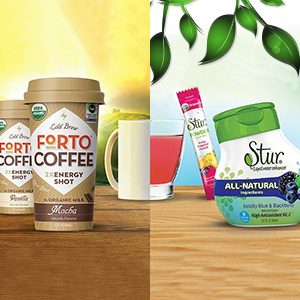
[00:37:29] Ad Read: You know, I got a sense, listening to this interview, that Adnan is a strong leader, that he understands who he is and how to lead. And it certainly seems like that presence and that ability helped them get through that PR dilemma, where it was sort of this fake news about Whole Foods pulling the brand off shelf. Adnan is extremely cagey and also gives a sense of having really carefully thought out moral leadership ideas. And when you combine those things, you get someone who's able to turn what could be a PR crisis into a real PR opportunity. What I found even more interesting, though, is that he recognizes that we're in a time where, for some food companies, the issue isn't, well, am I going to get enveloped by waves of negative PR that are coming at me and react to them? We're in a more proactive time, I think, for a lot of food companies. And one of the things that I found fascinating during the interview was this sort of turn that he's made, that he's more willing to step into issues rather than wait for them to come to him. And I think we're starting to see that across the entrepreneurial base. Definitely. Well, great stuff, Jeff. I'm really looking forward to meeting Adnan at Nosh Live. For those of you attending or those who are thinking about attending, you should meet this guy too. I feel like it'd be great for you and your company. He is kind of larger than life, but at the same time, super approachable. The times that I've talked to him at trade shows, he's very, very charismatic and welcoming. And you almost wouldn't even believe that he's the CEO. But then when he talks to you, it's like, no, this guy's definitely a CEO. He's a very enjoyable cat to meet. And we're privileged to have him. We're privileged to have John Foraker. We're privileged to have Neil Grimmer kind of lead off the show. So we look forward to seeing everyone. Fantastic. So last month at NACS 2017, BebNet staff reporter Brad Avery and I met up with Neel Premkumar, who is the founder and CEO of Dyla Brands. Dyla is the maker of Forto Coffee, which is a fast-growing brand of organic coffee-based energy shots, and Sturr, which is a brand of all-natural drink mixes. In our conversation, we chatted about his foray into entrepreneurship, his process for identifying white space in marketable innovation in saturated categories, and how e-commerce established a critical conduit between the company and its consumers. All right, we're here at NACS 2017 in Chicago, and we're joined by Neel Premkumar, who's the founder and CEO of Dyla Brands, the maker of Forto Coffee Shots, and Stir drink mixes. Neil, thanks so much for being with us. Thanks for having me. So you've had a pretty amazing run as a beverage entrepreneur. Your booth is currently staffed by about 20 employees. And when we saw you at this event last year, it was a little smaller than that. Yeah. You've grown pretty quickly and we wanted to kind of talk to you about how you got into this business, your journey along the way and what's in store for you and for the brand. Let's start from the top. I mean, how'd you get into beverages?
[00:40:48] The Suit: I've been in packaged goods and consumer marketing for the last 17 years, my whole career in the space. I started in sales and then business development. I was a brand manager on the Advil business 14 years ago. I went back and got my MBA and I started a marketing agency working with packaged goods companies, so like Unilever and General Mills. And so I ended up getting out of the aged business, selling my stake in it and joining Nestle. And so I was working with, on the beverage side, the mix side, the Ironman series. I used to do internal entrepreneurship for the nutrition division at Nestle. and then ran consumer marketing for Power Bar. So I've been in the space for a long time, some beverages and a lot of food too. But about five plus years ago, my wife and I were pregnant with our twins. We've got five-year-old twin girls, and she used to get really dehydrated, wasn't drinking enough water. So to help her drink more water, we started mixing in natural fruit extracts and stevia. She's 38. The moment she got pregnant, she was like, I don't want anything artificial in my body. And I remember thinking like, what are you talking about? We've been eating all kinds of stuff our whole lives. We commercialized Stirr first, and I just thought it was a big opportunity. It was around the time that Mio had launched, and I just thought what they had done was brilliant. We did something very similar except with Stirr, it's a natural and organic product. I thought it would be a much bigger opportunity over time. If you look at how bottled water is based on one end price and on the other end, sourcing purity of ingredients, whether it's from a mountain or a spring or Iceland or Fiji. I thought if you look at the water additive market, there was no second dimension. And products like Kool-Aid and Crystal Light didn't have that element of pure ingredients. So my theory was, hey, if you're going to buy Fiji and you're going to add something to that water, wouldn't you want to add something with simple pure ingredients? So STIR's whole premise is around loving water naturally. It's made of five ingredients.
[00:42:33] Ad Read: And you've since expanded the company with the introduction of Forto about three years ago. Forto, a coffee shot, an energy shot, made with coffee. It's two ounces. Tell us about what you saw in terms of white space and an ability to disrupt a pretty established category.
[00:42:51] The Suit: Yeah, that was, again, it was a personal thing. I had had toddlers, you know, I was on the road four days a week building our Sterr brand, and I was drinking energy shots and drinks constantly. I was drinking a lot of coffee day and night, and it just struck me why someone couldn't have a portable shot they could consume in kind of that same benefit as how I saw 5-Hour over a kind of a larger energy drink. And so pretty quickly I figured out that when you brew coffee, to have it taste great the same as it does the day you brew it as 12 months later, it's actually fairly difficult. Especially at like two ounces. It's actually really hard to get it to taste correct. And so I think when I launched the initial product, it was actually launched with the military. This is a good example of learning. We launched Forto with U.S. military. I was actually in a meeting at DECA and we were sharing the commissaries, the U.S. military commissaries on all the bases in the country. And we were sharing the product. The DOD was coming out with a report on how energy drinks and shots can have unhealthy ingredients and they were concerned about those ingredients. And so we shared with them this concept of a coffee shot. And the colonel at the time just jumped all over. He was like, this is great. I love this idea. And so unusual for the military, he was like, I know this is not distribution, I would like to pioneer it with you. So we said, great, let's do it together. So we launched it out right. And the initial product we had was a black coffee shot, which was really bitter. And we put sugar in to try to cut the bitterness. And as it turns out, military service men and women and their families tend to drink black coffee overwhelmingly. Whereas most of America tends to prefer cream or milk. Is there a reason for that? You know, I'm not sure if it is. Athletes, for example, tend to skew more with black coffee. I just think it has a function of how they're using the product on a... functional energy basis. And so we jumped right into it with a product that wasn't ideal, right, for the mass market, but great for this specific population. And I think after we launched it, we got a lot of feedback that it was, it gave you energy, it really boosted you, and it was organic and natural, and that's great, but it wasn't the best tasting product.
[00:45:04] Ad Read: One of the other amazing things, though, maybe a saving grace for the brand was the really innovative packaging. I mean, you've got a shot. I've got this in my hand here. It looks like a to-go coffee cup, except it's a mini version of it. It's two ounces. It's cute. Yeah, it's cute. I remember seeing this at Knack's a couple of years ago and people were clamoring over it. They're saying, wow, this looks really, really cool. The problem, as you noted, was that the formulation wasn't there. Yeah. Tell us about some of the steps you needed to take and how long it took to really get it to where you felt like you could appeal to a broad audience.
[00:45:36] The Suit: Yeah. And, you know, honestly, I think it's still, it's always a work in progress. I think every quarter, every six months, it gets better and better and better. The version we've got, we launched with The Hershey's brand at this next show. It's a phenomenal product. And this is going into north of 20,000 stores this month. We're thrilled about it, but it's just been an evolution, I think, through the steps. I think the first big change stepwise for us was adding milk, right? And figuring out how to make it shelf-stable with milk, especially in this packaging. We developed a really unique package that we have IP protection around both trade dress and a patent and being able to add milk and have it be shelf stable and go through the testing rigors required to do it took us a long time.
[00:46:17] John Craven: I'm curious going back to how you talked about first starting with the military and then taking this product to a mass market and when you're going to the mass market you're talking about a category with shots that's largely dominated by a single brand.
[00:46:29] Wall Street: Yes.
[00:46:30] John Craven: So how do you, you know, how did you position yourself when you're jumping from, okay, I got this private contract with the US military, I'm good, but now I got to really expand my appeal.
[00:46:43] The Suit: I think what we found with the military was that the product concept made a lot of sense to a lot of people, right? Just like myself, there's a large group of consumers, actually, in my opinion, the majority, of consumers who are drinking coffee to get their energy, right? Energy shots are really only consumed by about 7% of households in the U.S., whereas coffee is consumed by 83% of households. And so there's a much wider market of people who are just drinking a cup of coffee at home or at the office or out at a cafe who are using that to kind of get a boost through the day. And so I think the product market fit always made sense to us. The challenge was how do we deliver the kind of coffee that people are consuming, right? And, you know, in very few cases were they consuming a black, sweetened black coffee. And so we really had to align ourselves with understanding how people consumed their coffee. And I think to your point earlier about this category, it's a very challenging category. I think Five Hour has done a tremendous job building a business in the category, but their product also appeals to a finite group of people. And there's a lot of consumers who are looking for something better and wouldn't consider a shot because of the ingredients in it. And so I think we thought there would be a much bigger market if we could develop a healthy, organic coffee
[00:47:56] Ad Read: shot. It's always a journey for beverage entrepreneurs. And oftentimes, you know, even folks with experience like yours, marketing, branding, work with Nestle and some of these other CPG conglomerates, you can feel like you're alone. And you really need to surround yourself with good people to make it. How did you identify folks that are aligned with your values and aligned with your vision?
[00:48:17] The Suit: Yeah, I think that's probably the most important thing an entrepreneur has to do in this space. There's never been a company that was built to any sort of revenue, whether it's 10 million, much less 100 million, without a team. And so, I actually think it requires complete, brutal honesty with yourself about where your skills are, what you're good at, what your aptitude is, and where you need help. And so for us, the best part about this company is the team is amazing. We have, I honestly believe, the best team in this industry. And it seems like we've kind of jumped and overtaken a market, whereas in reality, we've been building this for the last five years. The fellow who runs our supply chain operations finance was someone I'd worked with at Nestle. I trust him implicitly, and he most effectively managed Gerber's $1.8 billion supply chain. And he's a rocket star. We brought him on. It's an area that I wasn't strong at, and he's brilliant at. You know, our sales team are absolute killers. They literally can convince people to try something in a category that nobody has really taken a risk on for years. And so I think for me, it was identifying a few people that offered something and had skills that I didn't and could support me and I'd work well with. And then culturally, that kind of fit, right? I looked at our business from the beginning like a Facebook type of fail fast, try and break it and move on, right? I didn't have the perfect product to begin with. So for me, it was an iteration and a constant process of how do we get better. From the beginning, we built our online sales. Online is probably going to be 25-30 percent of our sales. And we built it so that we have a direct connection with consumers and we understand exactly what works. So we'll launch a flavor, get feedback on it. Within two and a half months, have it from concept, Today, if we came up with something, we'd launch it by end of December. We would literally have it in market by January. And if it didn't work, we'd kill it by March. And so for us, there's an iterative process of the items that we have, many of which haven't worked, and some are just taking off.
[00:50:09] Ad Read: E-commerce, I mean, certainly an exploding channel, platform, whatever you want to call it. And a lot of entrepreneurs have talked about e-commerce as an important part of their business. It's hard to establish yourself in that channel without you know, the big names like in Amazon or Jet.com. It sounds like you guys have really been able to carve out a way to, like you said, have that kind of direct communication with your consumers and learn from them.
[00:50:34] The Suit: How did you do that? Since the beginning, only until the last year or two, I literally emailed and talked to every single consumer. Everybody who bought the product, I'd ask them why they bought it. It's amazing how much you can, how few people actually do this and how much you can actually learn from the people buying the product. What their experience was, whether it was good or bad. A lot of people have great things to say about a product, and when you create a product, you're a baby, and so you only want to hear the good things. But a lot of people have tough things to say, right? They partied with their dear earned money to buy something, and if they didn't love it, that's actually more valuable feedback than when it was incredibly positive. I listened, right? Even with the tough medicine, we listened quite a bit. How are you able to get their contact information?
[00:51:14] Ad Read: How are you able to communicate with them by email?
[00:51:17] The Suit: Every product that goes out has inserts and asking people to write us directly and give us feedback and tell us what they think of the product. Via the Amazon Fulfillment? Via the Amazon Fulfillment, as well as, initially, we had our own for several years. And just over time, we've built a database of 100,000 plus people that have bought the product, like it, are buying it regularly. So there's a velocity and a consumption. And we figured out patterns of why they're using it, when they're using it. For example, the time of day. what occasion or usage you need it fits in their life and why. And I think, honestly, just listening and learning, it guides you on kind of where the opportunity is in the market. For a brand like Forto, we are mostly an afternoon, you know, pick-me-up product. So we're fulfilling an opportunity for someone who really needs a boost of energy in the afternoon. We actually compete with 5-hour for shelf space, but really not for consumption, right? Most of the consumption is actually someone going to a Starbucks cafe or an office and actually taking this instead as an on-the-go option.
[00:52:11] John Craven: Yes. So, you're just launching The Hershey's product and it's a very sweet, fuller body chocolate flavor than your mocha. So, where did the inspiration to do something fuller and sweeter like that come from? Was it your interactions with your consumers? And how did you The Hershey's to partner with you?
[00:52:34] The Suit: Yeah, it absolutely came from the consumers. So the number one request that we have gotten over the last couple of years is actually, not everybody drinks a double shot of coffee, right? So at 200 milligrams of caffeine, it's not commonly consumed, you know, you're not getting a double espresso very often. And so the number one request we got was, could you guys launch a single shot in this same format, but having, say, closer to 100 milligrams of caffeine, as if I were grabbing a cup of coffee to go? And so that's what fueled the idea of, you know, should we launch something that kind of has a broader appeal to how people really consume their afternoon coffee? A chocolate flavor and the mocha flavoring itself was kind of the broadest appeal space. But in order for us to really build this category, one of the things we noticed is that we're bringing in a very young consumer to the market. So about 80% of our consumption is under the age of 35. five hour SKUs older. Most of our volume's coming Forto Coffee drinkers in the afternoon, which is a different market than five hour. So because of that, we're an incremental purchase for the retailer. And so we started looking at, well, how do we, if we're gonna broaden the market, if their sales are going into a more aggressive kind of, you know, at this point, they're more than 60% of their sales are in the extra strength market. For us to grow the category, we actually need to go the opposite way. and bring in folks with a single shot, with 100 milligrams. And so our idea was, how do we open this up and democratize the shot category and bring more people into it? And so that was where the idea for Hershey's came about, was we considered, hey, should we do our own chocolate latte shot? And I really believe that partnering with another brand that is known for quality and openness and great taste in that chocolate flavor would have really helped communicate that this is a broader category and more people should consider buying it.
[00:54:20] John Craven: Yeah.
[00:54:20] The Suit: And how did you open the doors The Hershey's? We reached out to them cold. I sent notes and reached out to them and- Emails and calls? And emails and calls. And we eventually got a hold of some of the folks there and they were intrigued in the idea but weren't initially sold on, do we want to be in coffee? And so, it took some time for us to share the product and really where our vision for the category was and how big an opportunity this would be. And eventually, they really jumped on it and they agreed with us and thought it would be a great idea. Yeah, so never underestimate the power of the cold call. No, absolutely. We were saying this earlier. We, as a team, probably do more cold calling than most of the businesses I know. Most of the retailers we've gotten into have been through a cold call relationship and proving that we would work.
[00:55:04] Ad Read: And I want to touch on one last thing. You know, you mentioned the Facebook model of failing fast. Do you continue to follow that or do you have to be a little bit more disciplined in how you approach, especially now that you've got investors like JB on board?
[00:55:17] The Suit: No, I think failing fast makes total sense. I think, you know, the one challenge is working with bigger retailers as we've continued to scale and now we're going to places that we've gotten into like Target or parts of 7-Eleven. Like those accounts, it's not easy to just try something with them and have it not work, right? Or Kroger or any of these accounts. And I think for us, failing fast is now kind of translated to how do we learn online? And then once it's proven, how do we take that and explode it at a retail?
[00:55:45] Ad Read: And I didn't ask about this, but what does JEB do for the company? How is their involvement? How is Beyond Investment, how are they helping you grow?
[00:55:53] The Suit: They've been terrific. They're an operating company of a handful of different businesses like Pete's and Keurig, and both the Pete's and the Keurig teams have been tremendous. They've really helped us improve the quality of the coffee and improve the taste of the product, which was, for us, the key. We're selling a beverage. We need this thing to be, besides functionally terrific, taste terrific. So that's the primary reason. I think their knowledge and experience in the space and understanding how consumers consume coffee, when they do, why they do, why it's cafe versus packaged and prepared in the morning versus consumed on the go. It's just, it's a world of information for us that we now know more about our consumer than even the online testing we've been doing for years. It's exploded how much we understand where the market's going and how we can be part of it.
[00:56:40] Ad Read: Very cool stuff. I'm very excited to see where Dyla Brands and Forto and Stergo from here. Sounds like you've got something really great on your hands and congrats now and hopefully even a bigger congrats later on.
[00:56:54] The Suit: Thanks, man. I appreciate it. Thank you. Absolutely. Thank you. Thank you.
[00:57:00] Ad Read: So when Forto Coffee first came out, raise your hand. I know the audience won't be able to see it, but who likes the formulation? No, I didn't like it. See, you didn't listen to the whole question. Okay, but when Forto first came out, I was in love with the brand immediately. But yeah, it was hard to drink. And Neil admitted as much in the interview. He said this was not a good liquid. And he learned from it. He grew from it. And he said he continues to tweak the formulation of Forto because he knows he wants it to be better. And I think that's such a smart thing to do and it's such a smart entrepreneurial play, which is you can't just sit still and expect that people are going to always love your product. You have to make it the best you possibly can to reach that broad audience. And that's why Kenny S and I were so bullish on it a few years ago when we first saw it at NAXX, because we recognized, you know, this is an incredibly awesome concept and value proposition to the consumer. Yeah, the formulation is bitter. So, like, they'll figure that out. You know, you tweak those things. And what they had was a really unique individual offering. And just looking at it at surface value, I immediately was, you know, smitten by it. And, you know, the formulation comes along. It's a cool brand. Yeah, it really is. They just need to get the liquid right. We also have a trend here in the past a few episodes of Kara Golden from Hint, we've got John Coogan from Soylent, and now we've got Forto here talking about direct to consumer and this real want to get as close to the consumer as possible. Yeah, Neil talked a lot about how direct consumer and e-commerce was such an important part of the start of the business. Folks would email him and he would directly respond to them and get not only their feedback, but a sense that he cared about them. And I think that was something that he didn't necessarily say, but if I email the founder of a company or the CEO of a company, I got a direct response back from them. I'd be like, hey, look, this guy actually understands that I'm a customer that he needs to keep and that he needs to pay attention to. And that's a thing you have to do while you can, because when you're at a certain scale, it's going to be a thing that's possible for you to do, to answer those emails, to talk to consumers directly. But at some point, you know, that just becomes unscalable. And when you're as a CEO, you have so much to do beyond the email. And I think, you know, you're going to be able to continue to do some of that, but you're just not going to be able to answer every single email. So, you know, you've got to go into it and take the opportunity while you can. Well, I got to give props to my boy. Kyle Pollack is a brand manager over there and is like Neil's right-hand guy and really steps up and takes over a lot of, you know, the stuff that it's not the top level decision-making stuff, but it's just as important like responding to emails, customers, deaf decision-making beats. Yeah. Yeah. I mean, and they've done some cool stuff to really support their e-commerce business, like sponsoring that Porsche car that they have in the drone racing league. They got a sponsorship that aired on ESPN. And you know, when you have a solid e-commerce business, you can do things like that because people anywhere in the country can buy your product. Drone Racing League, you say? I can definitely see John Craven in that. He's going to be like, he's going to be like a luchador. He's going to have the mask. He's not a fan. Watch that for about 30 seconds. Don't get it.
[01:00:22] John Craven: It makes me dizzy.
[01:00:24] Ad Read: But I mean, to your point, Landon, it's like, I don't think that just naturally came to them. Neil talked a lot about how Forto and the folks at Dyla cold call a lot, and that's how they got the partnership The Hershey's.
[01:00:35] John Craven: Well, I mean, all this stuff aside, it's really interesting looking at the shot space that basically has had one player that has dominated in five hour. And there've been so many different approaches, you know, to go after that. And I think this is definitely one of the more interesting ones that is out there and it's timely. It's a good, you know, twist on coffee. Yeah, I mean, I think there's certainly opportunity for, you know, direct consumer or some of these marketing things. But you know, what I thought was, you know, most interesting is just, you know, you've got a guy who comes from, you know, he said, he's a brand manager for Advil. I mean, obviously, they understand like, you know, that sort of point of purchase, like at the register, right? And that's probably a massive opportunity for Forto at the end of the day, and probably the thing that they're ultimately going to focus on.
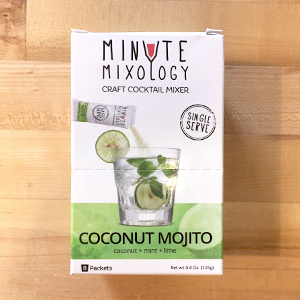
[01:01:28] Ad Read: Yeah. It remains to be seen how big the brand can be. But when I started seeing it at the local car wash, I was like, Hey, this is a, this, this maybe has some legs. There you go. I saw it at a couple remote pit stops on the highways up in like new England and new Hampshire and stuff like that. Yeah. When you get into those nooks and crannies, you know, you're doing pretty well. Nooks and crannies. Looks and crannies. All right. What are you, a cracker barrel for lunch? Pre-diet. Pre-diet ventures. Yeah. From one coffee entrepreneur to another. So BJ McCaslin is a beverage entrepreneur who's probably best known as the co-founder of Coco Cafe, which is an espresso and coconut water blend that was acquired Vita Coco in 2012, three months after their appearance in the New Beverage Showdown. His latest project is Minute Mixology, which is a brand of all-natural, single-serve cocktail mixers. We caught up with BJ and his co-founder, Jason Trawick, in Los Angeles and connected for this thrilling edition of Elevator Talk.
[01:02:33] Wall Street: It's time for Elevator Talk, where we put a founder in an elevator with their dream investor. Let's hear what happens.
[01:02:41] Ad Read: What's your name and what's your company's mission? Baby Jesus McCaslin. I'm Jason Trawick. And we're out to make the most convenient instant cocktails for people on the go with some full flavor and a good flow. Tell me about the product. What's your defensible position? Our offensive position is that we have a stick pack that has all natural ingredients that are dehydrated so we can put them in a granular form.
[01:03:04] The Suit: And then we make it in a single serve, and it's low sugar, 14 grams of sugar per serving, which typically our competitors are anywhere above 30 to 40 to 50. And we can be put in your purse, pocket, or any other department that, you know, you can go with, you can have at a hotel, you can have at a beach pool.
[01:03:20] Ad Read: So the target audience, tell me a little bit about what do you see as the market opportunity here? Well, I think it's a wide range from, as everyone uses this term a lot these days, from millennials to the woman in her 60s, the man. It's basically, I've learned, it's everyone. It's people that just want to be able to have the luxury of traveling and have instant craft cocktails in their pockets. Okay, so what stage of growth is the company in right now? So we're just rolling out our first line, which is the Spiced Old Fashioned, the Margarita, the Coconut Mojito, and the Mule. We just closed a round of funding. We have some good distribution that we've lined up, as well as retailers that are coming on with this last Q4 of 17 and spring of 18. And you have it right here, nice packaging. Love it. What's been the biggest surprise since you launched?
[01:04:11] The Suit: I think the fact from us is we pivoted from actually importing and distributing, selling a spirit. And then for us to pivot over into the cocktail mix lane, we traditionally used liquor distributors for our DSD with the spirit.
[01:04:25] Ad Read: Now we have to use more grocery. and we're still being put back into the liquor space. So we have to kind of jump over that hurdle. It's a twofold piece, which makes it a little bit more difficult to navigate the landscape of distribution per se. What do you see as the next level and what do you need from a partner or an investor to get there? Definitely expanding their distribution, creating awareness. That's why we brought Jason on. JT is our guy, you know, from Hollywood here and he has the connections. That's, you know, what we have to do in this world to create mass awareness. We have so many tools. and mediums to introduce people to new products, but how do you engage them? And, you know, Jason obviously has a lot of marketing research from great schools, as well as his track record speaks for itself. So that's what we need. While we're in the back of the stores at 6, 7 a.m. with our best friends at the receiving dock, you know, Jason will be, you know, having these cocktails at 6 or 7 a.m. from the night before. All right, well, one last question. Why should I invest in you? Our executive team's track record speaks for itself. Jason's highly successful as an agent and talent. And for us, coming from Coco Cafe, we've been through the distribution and the marketing of a brand and seen it from coming straight off the beach to a large level. And being in the liquor space, there's so much opportunity and there's so many more occasions where people are drinking this type of cocktail, beverage, whatever. For us, we think there's an opportunity. Yeah, I believe that today, the society we live in is instant gratification. And if you parlay that into cocktails, everybody wants a cocktail on the go. It's now. It's Instagram. There's all these snapshots. Everything's instant, instant, instant. And this is exactly what this product is. It tastes great. And it's an instant cocktail. So it goes with what everyone is gearing towards right now. It's just instant gratification. All right. Thanks, guys. We'll be in touch. Thank you. BJ's a pretty chill dude. Definition of chill dude. I mean, anybody who calls himself baby Jesus with a straight face is- And can kind of pull it off. Certified. Yeah. He's a chill dude, but he's obviously really serious about his business. We met up with him and we told him we're going to do this, you know, do the Elevator Talk. And he was like, I'm on it. He's all dialed in. He had, I mean, he's the kind of guy we were talking about before who really knows his business and his value proposition and has the vision. So he was ready to step right into the elevator. Awesome, awesome. I have yet to try the product, but I'm really excited to. We've got all kinds of booze on John Craven's desk, so, you know, we can do that some more. Yeah, I gotta get going. All right. Thank you so much for listening, listeners. And thank you so much to our sponsor, Sovereign Flavors, the leader in building premium food and beverage products that are customized to your needs. Also, thanks to our guests Adnan Durrani, Jeffrey Klineman, Neel Premkumar, Brad Avery, and BJ Mccaslin and Jason Trawick. For questions, comments, ideas for future podcasts, please email us at ask at Taste Radio, ask at Taste Radio. On behalf of John Craven, Mike Schneider, and John the Hot Jon Landis, I'm Ray Latif. We'll talk to you next time.