[00:00:02] Ad Read: This week's episode of Taste Radio is sponsored by Project Nosh. The natural, organic, sustainable, and healthy foods community reads Project Nosh for product, innovation, and investment news. Project Nosh hosts the Nosh Live Conference twice a year in New York City and Los Angeles to gather the community to discuss moving the industry forward while finding partners to make it happen. To know what's happening in the industry, for advertising and lead generation opportunities, and to subscribe to the free daily newsletter, check out the recently redesigned projectnosh.com. And now, Taste Radio. Good morning, good afternoon, good evening. Thanks for listening to BevNET's Taste Radio. I'm Ray Latif. With me are John Craven, Mike Schneider, and Jon Landis. We're here at BevNET headquarters in Watertown, Mass. And this week's episode features interviews with Sharelle Klaus, who's the founder and CEO of Dry Soda. Russell Barnett, the CMO of MIMO. Max Baumann and BJ McCaslin, who are the co-founders of Bear Squeeze. And in this week's edition of Elevator Talk, we meet with Tugger Balcom, who's the founder of Sports Juice. Guys, I mentioned this before we got on the mics. I'm feeling like we need the matcha machine back. Remember the matcha machine from a couple jumps back? The matcha machine? Yeah. Matcha, matcha machine. I think we need that back. We need Randy Matcha Man Savage in there. Exactly. We need Randy Matcha Man Savage. Oh, yeah. Give me a matcha. Yeah, snap into a matcha. Would he snap into a matcha?
[00:01:29] SPEAKER_??: I don't think so.
[00:01:31] Ad Read: Well done. Well done, Mike. That machine did spew much all over the place. It was a little weird. It was a little weird, but like, I think we need a couple more, you know, takes with the macho machine. We've got an idea for you. Yes. It's the new Halloween. Get up. It's the macho machine.
[00:01:46] Carol Ortenberg: Watch a man.
[00:01:47] Ad Read: Watch a man. Right. Much is kind of a lifestyle thing. We've heard Brad Pitt talk about how he loves much as good for his energy, good for his, his chi, his immunity, his everything. You said you'd kiss him, right? No, I never said that. I was going to say, you know a lot about Brad Pitt, right? I didn't know he liked matcha. It was a sixth grade thing. Let's just leave it at that. We'll talk about it another time. That's for a later episode. All I wanted to talk about is how much lifestyle and the four brands, the four companies that I mentioned that are going to be in this podcast. are all, all have a lifestyle component to them. They all engage with consumers beyond their core focus or their core function. And I wanted to pull you guys, the food New Beverage wizards of the food New Beverage journalism industry, as to what makes for an effective lifestyle brand. I mean, right off the bat, you have to be living it yourself as an owner, founder, and a team. And everybody on your team needs to exude the lifestyle that you're trying to present to consumers. And that also means that the product really needs to be very on message. You know, you can't roll out with, like, an energy drink for, like, a really, like, high-end luxury Beverly Hills lifestyle. It just doesn't – they don't connect, really. So, like Russ Weiner from Rockstar has to live the Rockstar life, right? Basically. Yeah. Okay. I like this. I like this. You don't see the matcha man driving around in a Lamborghini or hit through Beverly Hills. I don't, I don't think that works for his chi. Now the matcha man would be like totally chill driving, like a smart car or something like that. Something that's good for the environment. And that, you know, represents the chi of matcha. Well, one thing I think is pretty interesting about some of the stuff that people try to do with lifestyle products is they often have like identified, you know, and similar to what Landis is saying, but they've identified an audience. and then they try to connect their product to it without it being clear that that audience actually needs their product or any product, right? So, you know, we see this a lot with products that are trying to appeal to, let's say, like yogis or whatever it might be. And, you know, do they need a yogi cold brew coffee to make up an example that I don't think exists? Probably not, I don't know, but, you know, it seems like there's, Jon Landis' point, like people who are not in these sort of lifestyles that are, you know, trying to force products upon them. It's a two-pronged approach here. First, as Craven said, find that audience first. Find the audience that likes your product. Then, perhaps, take some time to listen to them. And it's not a matter of going up to them and being like, hey, what's your lifestyle? What do you want to do? You know, because they don't always know. You have to almost be a third party, spy on them with like, you know, Craven's drone or something like that. But that's what social media allows you to do. I think it's important too that like, you know, we see a lot of lifestyle brands out there nowadays because I think we see a lot of people who are connecting with food New Beverage on a different level and want to bring that to the other like-minded folks that live the way that they do. But that doesn't mean that you need to create a lifestyle brand to succeed. You know, you need to create something that tastes good and is priced competitively. to succeed. That's really what you need. The lifestyle goes above and beyond that to engage consumers in more of an experiential way. What's that formula for brand? Great brand plus bad product equals hot mess? I feel like a lot of times people are saying their product is a lifestyle product has essentially like a way to cover up for a deficiency in their product. This is so focused on some bizarro extreme kite surfing people that we just don't understand. So when we say it doesn't taste good or look good, they're like, it's a lifestyle product. And the other thing is that I think that most brands that become real lifestyle products, you know, you could look at things like Red Bull as an obvious one. You know, they didn't set out to become a lifestyle product. It kind of just happened because they had the right, you know, product at the right time. So they came up with the product first. The product was great. It resonated with that audience and they stepped it up from there. Exactly. Definitely. Speaking of lifestyle, let's talk a little bit about Sharelle Klaus. As I mentioned, she's the founder and CEO of Dry Soda, which is a Seattle-based maker of premium sparkling drinks distributed nationally. During an interview recorded from the Taste Radio studio at Bevinet Live Winter 2017, Sherelle talked about her early vision for the brand, how she persevered through her dozen years in New Beverage business, and the advice that entrepreneurs need to hear if they want to be successful. All right, we're in sunny Santa Monica Watrous the Lowe's Santa Monica Beach Hotel. At BevNET Live Winter 2017, we're in the Taste Radio studio joined by Sharelle Klaus, the founder and CEO of Dry Soda. Sherelle, thanks so much for being with us. Thank you.
[00:06:40] Sharelle Klaus: Glad to be here.
[00:06:41] Ad Read: So Dry Soda, a Seattle-based maker of premium sparkling drinks distributed nationally. You've been in this space for quite some time. Give us a little background on how you started the company.
[00:06:50] Sharelle Klaus: Sure. So I started the company 12 years ago now, which I think New Beverage years is like 102. At least.
[00:06:58] Ad Read: You just added zero in between each one. Yeah. Oh my goodness.
[00:07:01] Sharelle Klaus: And I started it, really I started my kitchen with the whole concept of, as most of these beverage entrepreneurs talk about, trying to solve a problem. And for me, that was really wanting to be able to create a more elevated and premium experience with carbonated soft drinks because I'm a foodie and I love pairing wine and food. But well, as we just discussed, I have four children and I kept getting pregnant and couldn't drink. And so that was really like, it was like, I got so tired of missing out on the sort of the elegance of being able to drink. And so I wanted to create something that would actually pair with food as well. So really just change the way that people think about carbonated soft drinks, because I thought you could do some really cool flavors. And within doing that, then we knew it was going to be much less sweet, because as we call it, sugar with a purpose. So we took all these different flavors, and our first four were lavender, which was one you've got here right now, kumquat, rhubarb, and lemongrass.
[00:07:50] Ad Read: Those all sound horrible, by the way.
[00:07:53] Sharelle Klaus: Well, you know, it's funny because- I love rhubarb, man. Yeah, rhubarb is a good one. And it was just, these are all ones that we thought really would pair well with food. So that was really the start. It was started in Seattle and it was just me all by my lonesome doing this with four little kids under the age of seven and just pounding the pavement, like you said, and just running, you know, going to the grocery stores and selling them store by store.
[00:08:13] Ad Read: Shreya, you talk about being a foodie. How important is it to have a foodie palate in New Beverage industry?
[00:08:19] Sharelle Klaus: Well, so really what dry is trying to do is create really good tasting flavors. And no offense, but a lot of products that are out there taste like sugar. So if they're going to be sugar sweetened, they have so much sugar in it that that's all you're tasting. Or if it's artificially sweetened or naturally, you know, without sugar. you're going to get some that just don't taste as good. So for us, we are so focused on doing really, really good flavors. And then we have to be really careful about the recipes. And so I do think having a good palate is really key. Most of my team members have really good palates. So when we do our tastings, there's always lots of opinions on that. And I work with chefs as well.
[00:08:54] Ad Read: And in my hand, I'm holding this beautiful bottle of dry sparkling lavender. As you mentioned, it's tagged as floral, balanced, and delicate. And it's weird, normally when we're doing these interviews, we don't have the product of the person that we're talking about and talking with. And I wanna try this here. So Mike, you wanna taste? Duh. All right, there you go.
[00:09:13] Sharelle Klaus: I know I would've brought you some champagne.
[00:09:15] Ad Read: Have I ever said no?
[00:09:16] SPEAKER_??: Champagne.
[00:09:16] Ad Read: Yeah, we're drinking out of these Lowe's cups right here. Cherelles, you want some of your own product? You've probably tasted plenty of this.
[00:09:21] Taste Radio: I have tasted it. Don't drink alone, right?
[00:09:22] Ad Read: This is actually one of my favorite flavors. It's pretty amazing.
[00:09:25] Taste Radio: Cheers, everyone.
[00:09:26] Ad Read: Here we go.
[00:09:26] Taste Radio: Cheers with our paper cups.
[00:09:27] Ad Read: I love when we do this. It's actually really, really good. So much lavender, I like. You mentioned pounding the pavement. A lot of entrepreneurs early on are doing that. They're looking for retailers to pick up their products. Like a lot of folks, you had the door slam in your face a lot of times. How do you persevere?
[00:09:46] Sharelle Klaus: Well, I think the key for me, personally, was I absolutely had a vision of what was going to happen. And I could see that. I could see that there was going to be a new category New Beverage. It was so crystal clear to me what I was trying to get done. And I think being very, very focused on that goal and being very clear about that goal right from the start, and it helps you with everything, investors, everybody. And so it never occurred to me to stop. And really, at the beginning, there was no door slammed in our face. As a matter of fact, every door was opening. But then after that, I mean, it's not so much door slammed in your face as in buyers who are just so not interested in what you're talking about. So you just have to convince them of what you're trying to do and why you're differentiated and why you're so passionate about it. Because I think that when it comes down to it, it's that crystal clear vision of what you're trying to get done.
[00:10:32] Ad Read: And how do you convince them?
[00:10:35] Sharelle Klaus: Well, you've got to be relentless. It's really about, again, it's knowing what you're doing, knowing who that consumer is and what hole you're really fixing. And so for us, it wasn't that difficult to get on the shelf because there wasn't anything else like us out there. They understood that better for you was gaining traction. Culinary was growing significantly 12 years ago, right? Chefs were becoming rock stars. I mean, Whole Foods was growing like crazy. People were spending more money and expecting more. So here we had a product that really was uniquely flavored and there just wasn't anything else on the shelf.
[00:11:07] Ad Read: So I'm hearing simplicity, conviction, and you got to get them to try it. So you have a differentiation there.
[00:11:13] Sharelle Klaus: And that's one of the challenges for Dry from the very beginning was, you know, there's a pretty big barrier to spend $5.99 or $6.99 on a four pack of lavender soda if you have no idea what a lavender soda, right? That's a very unique and different kind of flavor proposition. And 12 years ago, there weren't flavors like cucumber and lavender and juniper and things like that. What we have... First mover. Yeah, yeah, for sure. And so that was kind of the trick for us is how do we get people to taste it and try it? Because once they did, the conversion rates were high and the velocities that we had were awesome.
[00:11:43] Ad Read: We see this all the time where you have someone with a very unique value proposition and a unique product that they don't have a competitor to help make the market. But you did have a premium beverage set in Seattle. There was a great embrace of premium coffee, premium beer. How much did Seattle help in the development of your brand?
[00:12:01] Sharelle Klaus: Well, I think it was so exciting for us to be able to be in Seattle because this concept when we went to the buyers, they got it. They got the craft brew, got their start. The CEO and founder of Red Hook was on my board from the beginning. I mean, I brought him in like within six months, I believe. And then just seeing what coffee had done. I mean, it's just in the DNA of people in Seattle and especially the buyers. I didn't get the door slammed in my face in Seattle. It was once we kind of went out of Seattle that things got a little bit more challenging. But in Seattle, it was completely embraced and our consumers also, if you think about all the consumers, that's why our pull and our velocities were so good in Seattle. It was because they are used to seeing new categories emerge and they want to be kind of the first to be out there trying it.
[00:12:42] Ad Read: So you're doing really well in Seattle. You think, hey, this is going to be a great brand. before you got on the mics, you told me that you were pretty convinced that Dry was going to be a hundred million dollar brand within this first five years. So tell us about a couple of the learning lessons from those early years.
[00:12:56] Sharelle Klaus: We just smoked right past that one. It was awesome. Yeah. So there's a lot. I came from the high-tech world. I knew nothing about CPG New Beverage. So I made a lot of mistakes. I mean, one of them obviously was our forecasting was a slightly bit off. I assumed everybody would work sort of on my timeline too, but as everyone is now, you learn is that there's resets and there's a rhythm to how all of this works. So, I mean, having to learn that, like I was just thinking about this. One of the things somebody told me is you need to make, some manager at QFC told me you need to make racks. So I went out and I had these massive racks made. They're so huge. And I brought it back to him and I was so proud of it. He's like, what the, do you want me to do with that? And I'm like, I want you to fill it with giants, stick it here. And I would, so I went around and so, and I did, I was able to sell those racks in. So I used to say that sometimes it's nice to not know what you don't know because you just ask for stuff and then you get it. But of course, we've never had such big racks since then. We've made one by one. But I am still very proud we got those racks in. You learn a lot of lessons in this industry and I feel so much smarter now than I did 12 years ago and I'm sure in 12 years I'll be far smarter than I am now, hopefully.
[00:14:04] Ad Read: And surrounding yourself with the right people is critical as well, advisors and investors.
[00:14:08] Sharelle Klaus: Absolutely.
[00:14:09] Ad Read: How do you get them aligned with your vision?
[00:14:11] Sharelle Klaus: Again, I think if you know exactly what you're trying to do for us, I'm like, I want to create a new category of soda because there has been no innovation in soda CSDs for like the last hundred years. That's pretty easy to understand. It's not complicated. And so it's, and with conviction and passion, and then going out and testing that and seeing that it works. So, I mean, for us, right, we went into Seattle, it worked right away. We got into restaurants and then we went right into QFC, then Met Market. And so it's really easy once you have those successes. But you, yes, you do want to make sure everybody understands what you're doing. And so my early angel investors have continued to invest in the last 12 years of this company. It's because that vision hasn't changed. I mean, it's still what we're trying to get done.
[00:14:53] Ad Read: You don't spend a dozen years in New Beverage industry as an entrepreneur unless you're scrappy.
[00:14:58] Sharelle Klaus: Yes.
[00:14:59] Ad Read: Especially during the economic downturn, we talked about in 2008, you laid off 90% of your sales staff. How the heck did you weather that storm and stay on shelf?
[00:15:08] Sharelle Klaus: You know, it's so funny. That was the most difficult period of my life, for sure. I mean, we went from about to bring in a significant chunk of money to the investor saying, no, I'll give you like, he gave me, I think, one fifth of what they were supposed to bring in. So it was, I mean, having to go and literally we, we got, we went from a staff of 18 down to a staff of five. But I learned so much in that experience about how to be even scrappier because, I mean, really like every dollar that Dry spends to this day has to be like $3, right? And at that moment, it was like every dollar has to be like $10. And one of my dark moments was we thought Starbucks was going to kind of save us, but some stuff happened within Starbucks and our kind of champion got moved out to go run Seattle's Best Coffee. So we knew that, you know, we probably weren't going to get to go nationwide as we had been told we were going to. So I was walking down the street, tears in my eyes and I realized to myself, I can't even go to the doctor to ask him for like, you know, sleeping pills or something to like anxiety because my doctor had become an investor in dry. I know, right? And the only reason I would ever go see my doctor was from stress-related stuff and then one day he's like, sure, I really want to invest in dry. And I'm like, what? I'm like, okay, but it was so there's there's lonely moments for sure. And that was, that was a challenging time. But I would want to go through that again, because I learned so much about what staying even more laser focused.
[00:16:31] Ad Read: Was there a time when you just thought, you know, this isn't going to work, I need to shut down? And if there was, how'd you get past it?
[00:16:37] Sharelle Klaus: You know, I never did think that. I think I have such a clear vision of where this company is going, and I can just see it. So I mean, it was lonely. It was hard. You just keep moving forward. And I think the biggest lesson I've learned as an entrepreneur is if you're going to be successful, you just keep moving forward no matter what. Because 2008 wasn't the only hard year. There have been 1,000 really difficult moments that I have thought to myself, Oh, now how do I get out of this mess or what, you know, what is the next step? And it's like, you know what, you just keep going and the next step will appear, but you got to keep going.
[00:17:13] Ad Read: If there was a point at which someone could have given you advice on how to continue to keep going forward, but more efficiently and effectively, you know, what advice would you wish you had? I guess the question is, what's the best advice you never got?
[00:17:28] Sharelle Klaus: I wish that someone, there's two big mistakes that we made at the beginning. And one was, and I think it is a natural mistake that most entrepreneurs make, is we tried to get too big too fast. So we were definitely going to go region by region, geography by geography, and we started in Seattle. But then I got the call from Whole Foods in LA that says we absolutely have to have this. And so then we go and open up distribution in LA. And then we opened up San Francisco and then we opened up Vegas. So we did all of that in a year and Texas. And that was too much too soon. And so we spent a lot of money doing all of that. And so that was I wish that somebody would have said to me, you need to slow back and just really focus on like one or two markets. So that's that's one piece. And I think the other one that I wish I would have done. It spent more time on my early hires. We had an amazing chief marketing officer. So I think as most people know, the Seattle, I mean, our brand is really beautiful and I think we're really strong. So we have an amazing brand and that's because of her, but I didn't have strong sales lead. So I was out there selling and I didn't know what a TPR was. So really having me out there selling was probably not, I mean, I'm passionate and I can sell you the product, but, you know, being able to execute on some of that, I, I didn't know what I was doing. So I wish that I would have spent a bit more time bringing in a strong head of sales. That's kind of specific, but.
[00:18:44] Ad Read: So how do you know it's time to go into a new market? We have so many brands that listen to the show that are trying to figure that out for themselves and a lesson there would be really valuable for them.
[00:18:54] Sharelle Klaus: Well, I think that you need to have goals of what kind of velocity. So what amount of distribution do you want to have within a region? And I would argue that truly owning one region is the way to go. So I would always counsel people to make sure that have a plan of what kind of distribution do you want to see? How many different channels do you want to be in within a region? And then what kind of velocities do you feel like you need to see? Because, I mean, we've been really blessed in that we've done tests with Kroger and now we're nationwide with Kroger. We started with Tess with Target, now we're nationwide with Target. Same with CVS. So starting small is not a bad thing. And I know sometimes as entrepreneurs, we just want the big POs. We just want to get out there and do it. But having some discipline and patience and making sure you know what, have those performance metrics down at the beginning and don't deviate from them unless there's a really compelling reason to do that. Because that's what happens, right? Somebody calls and says, oh, we want to bring you in here. entrepreneurs are just, we love to say yes to opportunity and saying no is important. And I did say a really difficult no and it was to Target. Like six months in, Target came to us and wanted to put us in Nationwide. And I was like, nobody even knows who we are. I'm like, this will not, this won't succeed. And it's interesting, the brand that did go in ended up failing like two years later. But it did take me a very long time to get back into Target, I'm not going to lie. Because saying no to Target's not necessarily always a good idea, but it was the right decision. So hey, yay for me, there was one right decision I made.
[00:20:24] Ad Read: Well, it's interesting because it seems like Target had seen the opportunity for Kraft Soda way back in the day, and Kraft Soda is still a growth segment within overall CSD. Can you take us through that space and, you know, how you're trying to stay ahead of the game and stay in a leadership position?
[00:20:40] Sharelle Klaus: Yeah, so I think for us, it is what we've been trying to spend a lot of time and understanding is usage and occasion and what does our consumer want? Because I think the biggest change in the last 12 years has been the amount of beverages that are out there and the amount of, I mean, there's just so many different kinds of drinks to have now that can do every from A to Z, right? For us, it's about truly learning what our consumers want and how they're using the product. And it's not just our consumer, but then this consumer within Kraft. That's a big change that we've done in the last few years is starting to look at that as the category as a whole. And that's why we're now doing our line extension of the Dry Zero Sugar. because we recognize there is another consumer. It's not that we don't believe it's our current dry sparkling consumer, but there's another consumer that truly wants zero sugar and they want natural. And that's why ours is organic. And, you know, we really are trying to meet those need states for the consumer. So I think that's kind of the best use of our time and resources is truly understanding what they want within that, within that category.
[00:21:40] Ad Read: Do you see your zero sugar line as being a scale driver going forward with the continued backlash to sugary beverages?
[00:21:46] Sharelle Klaus: Yes, for sure. I think zero sugar. I mean, we've worked really hard. I mean, this has been in process for a few years because I didn't want to do it if it couldn't taste good, because that's what dry is all about. It's when consumers come to it, they know they're going to get a really good tasting beverage. And so we've done a lot of formulation and work on making sure that this product is the best tasting product we can put out there that doesn't have sugar in it. Because at the end of the day, we do feel like sugar does taste good. I mean, as long as you have a little bit of it. So it's like, how do you balance that?
[00:22:16] Ad Read: You touched on this a little bit earlier and I want to talk a little bit about company culture. How does company culture play into the development of your brand and your company overall?
[00:22:24] Sharelle Klaus: I think company culture is really critical because as we just had our all-team strategic planning a few weeks ago, as I've told the team, it's about what we're trying to do is really difficult and so we all have to be able to be moving towards that same goal. So for us, we have a very open, transparent culture. I mean, we have open office floor plans. I am very honest with our team about what the challenges are, what's going right, what's not going right, and the ability to be risky and courageous, which I've really tried to work. Because at the beginning, when I first started, I was a terrible CEO because I thought we should never make mistakes. I didn't think I could make a mistake, so then my team thought they couldn't make mistakes. And that's not a way to be an innovative company, because Dry thinks of ourselves as definitely very innovative. So this culture has really turned into this very cohesive. So cohesive is probably the way I would most describe it. I mean, my executive team, we are so tight. We all make decisions together. We're in a room together a lot. And I don't know how else to do this because we are, New Beverage business is really hard. And so everyone has to be on that same path and you're on the same goals. So I'm trying to be extremely clear with my team. What is our goal? What's our goal for this year? What's our goal for this quarter? How is that all measure up?
[00:23:39] Ad Read: So it makes a lot of sense that you, and you also mentioned New Beverage business is really tough. I don't know if it's a dirty secret, but it's certainly underneath the surface that female entrepreneurs have had challenging times in this industry. What's it been like for you?
[00:23:55] Sharelle Klaus: Well, I think that I don't necessarily see myself as a female, so I am sometimes shocked with the responses I get. But it is, there's been, obviously I got called relentless bitch from the beginning by some distributors. One distributor told me, we're going to bring you on, but we don't want you coming into the offices because you ask so many questions and you demand so much. And I said, well, I'm still coming into the offices. That's going to keep happening. But I think it's, Do you think you're more demanding? No, I don't think I'm more demanding. I don't think I'm more demanding at all. I think that, I mean, I have an expectation and it has to get done. It just has to get done. New Beverage, I mean, you've got to get that product on the shelf. It has to be executed correctly. And I do demand a lot from everybody. I mean, you just have to. I think that sometimes that's less attractive in a female, I'm sure. And it's, you know, it's why- It's not the game to be attractive. It's to make money. Yeah, but it is really funny that I wasn't just called a relentless bitch by one person, but by like three. But like I said, you know, it's like if I don't do it, how's it going to get done? And I'm going to hold you guys to some tough stuff because you would want me to do that. Like at the end of the day, if we're all going to be successful, you're going to want me to be passionate and moving forward. And then, you know, I've also tried to utilize it. I mean, some of our first investors was a group called Golden Seeds, which does invest in women-led companies. And also my first ability to get my first investors was because I was the president of a group called Forum for Women Entrepreneurs, and they were able to help me meet investors. So I've worked really hard with other females to be able to really create kind of our own networks, and that seems to be working well. But you do have to be relentless, bitch, if you're going to do the coverage business.
[00:25:36] Ad Read: What specific advice would you have wanted to hear when you got into the business? And I think specific advice for female entrepreneurs.
[00:25:43] Sharelle Klaus: I think the number one thing is do not be afraid to look stupid. I think that sometimes as women that we feel like we have to know all the answers because we're coming in at a disadvantage. And to just know that what you're doing is incredibly courageous and to just be vulnerable about that and don't be embarrassed by that. You have to develop a really thick skin in this business because you do get doors slammed on your faces. You get people telling you, like, you're wasting my time. And it was very different from the high tech world, that's for sure, from what I came from. But just be who you are and understand that you're going to get a lot back at you, but don't take it personally and just keep moving forward.
[00:26:20] Ad Read: You mentioned you have four kids. Can you be super mom and super entrepreneur at the same time?
[00:26:25] SPEAKER_??: Of course.
[00:26:27] Sharelle Klaus: Yes, I have it all. You know what's funny is there is challenges with that. But I think that what I've done is I have just tried to include my children as much as possible. They go on lots of business trips with me. This is a part of their lives. And they've been able to get a lot of advantages of it too. But for sure, I have missed out on some time with my kids. And there are times when dry is number one. And I know as a woman, I'm not supposed to say that, but that has absolutely happened too many times to my kids to not be honest about that. But it's also about just being able to integrate the two together. And then my main specific thing is, is that, you know, you've got to outsource as much as possible. Because when I'm at home, like people say, well, do you have any hobbies? And I'm like, well, if I can travel, I'll do that. Like, but it is like, I don't have hobbies because it's like when I'm home, I'm home with my kids. and they're getting 100% of my attention. So I'm really proud of my daughters. I have daughters that are NYU and University of Oregon right now, and I feel like they can do anything. And I'm so happy that my sons, for them, it doesn't dawn on them that you couldn't just start a company and run it and still be able to be home. But I think my sons sometimes like that I can't get to school conferences because they don't want the teachers talking to me.
[00:27:36] Ad Read: Well, that makes a lot of sense. I remember being a teenager and never wanted to see the parents in school. Cheryl, this has been fantastic. I really, really love talking to you. I really appreciate the time. This has been great. And I really look forward to staying in touch and seeing how that you and the brand grow.
[00:27:50] Sharelle Klaus: Thank you so much. I really appreciate it. Always fun to chat.
[00:27:52] Ad Read: Thank you. Bye. One thing I thought was really interesting that Sherelle was talking about was her impetus for starting the brand with a foodie palette, wanting to have a non-alcoholic, elevated beverage experience when she was pregnant with one of her four kids. And she did a lot of wine pairing and things like that, so she wanted to bring something to the table that could elevate that experience with a non-alcoholic beverage, which some people try to do right off the bat with their brand, and she just kind of brought a better-for-you, better-tasting carbonated soft drink to the table, and it became that. The amazing thing about what you just said is we've heard that pitch a lot. We've heard that pitch many, many times, and we've been like, don't do what you're doing. Just don't even try to do this idea. It's just not going to work. And Shirelle talked a lot about being relentless. Yeah, well, I think, you know, she's someone who, when she started out, you know, there were certainly plenty of naysayers on the idea, right? If you wanted to sell the most, you know, carbonated soft drinks today, you know, you should probably just make a standard flavor that people understand.
[00:29:01] Carol Ortenberg: It was certainly like a long-term approach that now, a decade later, tastes in the world have evolved and what the consumer is looking for has evolved. So, I think it's neat to hear her talk about all these things and how she just kept pushing forward.
[00:29:16] Ad Read: And, you know, I think that's often the case with people who are thinking about, you know, longer-term ideas versus, you know, how to make a buck today. From one form of indulgence to another, let's talk a little bit about MIMO, which is a fast-growing brand of mochi ice cream. We spoke with Russell Barnett, who's the CMO of MIMO at BevNET Live Winter 2017. Carol Ortenberg, who's the editor of Project Nosh, sat down with Russell and discussed the rapid emergence of the brand, its impact in the frozen dessert aisle. And Russell also talked about lessons learned from his two decades as a marketing exec, which included roles with Mike's Hard Lemonade, Popchips, and Covita.
[00:29:57] Taste Radio: Hi all, Carol here. We are at BevNET Live, and I'm chatting with Russell Barnett, who is the CMO at Maimo Mochi Ice Cream. Russell, thanks so much for being with us today.
[00:30:09] Russell Barnett: Hey, Carol. Thanks for having me.
[00:30:11] Taste Radio: So let's start by covering what is mochi ice cream? What are you working on right now?
[00:30:16] Russell Barnett: So Maimo mochi ice cream is mochi ice cream, just that. But mochi ice cream is ice cream center wrapped around mochi dough. Mochi dough is sweet rice dough. So it's rice, flour, sugar, water, dough wrapped around premium ice cream, handheld portion control, 110 calories, naturally a good snack.
[00:30:37] Taste Radio: Now this is something that's been popular in Asia for a very long time, right? Yeah.
[00:30:41] Russell Barnett: So mochi has actually been around for about a millennia. So a thousand years.
[00:30:46] Taste Radio: A little bit older than us.
[00:30:47] Russell Barnett: A little bit older than us, but the millennials love it. So it's interesting, interesting contrast. Mochi ice cream was brought here to the U.S. in 1993, actually invented locally here in Los Angeles by a Asian-American family, but it really wasn't doing much. It was really sold in specialty markets and some Trader Joe's and things like that, but really hadn't been ready for the mass for a whole host of reasons. And most of those revolved around flavors and names, but didn't revolve around this idea of keeping the weird. And the weird is this great idea of chewy dough wrapping around delicious premium ice cream.
[00:31:27] Taste Radio: I've tried MIMO, I think it's delicious. I think it's one of those foods you have to eat yourself to like fully understand it.
[00:31:34] Russell Barnett: It's all about the second bite. Cause the first bite is, man, this is really fucking weird. Oh, sorry, excuse my French. This is really weird. The second bite is really this great, where have you been all my life? And oh my God, I've got to have more. Because it's such a textural sensation. People aren't used to chewing their ice cream. And that's a weird thing for people. But weird is kind of good and quirky is kind of amazing. And so for us keeping weird and quirky and then building on that presents this really great opportunity for an experiential moment.
[00:32:10] Taste Radio: Okay, so you're the marketing guy.
[00:32:11] Russell Barnett: I am.
[00:32:12] Taste Radio: How do you get consumers to eat this weird quirky food and not spit it out after the first bite?
[00:32:18] Russell Barnett: Ah, you know, our whole job is to sort of get people to engage in tasty conversations while this weird wackiness is happening. So we do nothing different than any other beverage or food item would do. We have a series of field teams. We put them in the right place. We put them in front of the right folks. We really create that moment of aha. We also do something at retail, which a lot of other people don't do. And we have these mochi bars. And mochi bars are these freezers that are installed outside of traditional freezer aisle. It's actually the perimeter of the store in the bakery section. So it's prepared food, grab and go. And inside those bars, there's 10 flavors. It's this color extravaganza. It's this Instagramable moment. And what that allows people to do is for $1.50 or $2 a ball, try it themselves. And it's low cost. And for us, it's self-funding sampling opportunity for the retailers. It's this incredibly profitable center X, the traditional freezer aisle.
[00:33:23] Taste Radio: How do you convince retailers, though, to give you that floor space? I mean, they're not small coolers.
[00:33:28] Russell Barnett: Nope.
[00:33:29] Taste Radio: I'm sure the first couple, when you brought this to them, they were like, uh-huh, that's nice.
[00:33:33] Russell Barnett: Honestly, we'd love to take credit for this, but a lot of this is really happy accident. And I think, you know, as a smart marketer and as a smart company, and any company who's really in the innovation spaces, the ability to identify when a happy accident occurs and then pounce on it. And so we've been really, really fortunate. We had a retailer who said, hey, this would be a really interesting idea if you guys could do this. And the light bulb went off, we made it happen, and now our job is to really use this as a marketing tool to compliment the six-pack business we do in the freezer aisle.
[00:34:10] Taste Radio: What about an emerging brand who maybe, you know, you guys are private equity backed. What about an emerging brand that maybe is kind of being scrappy, maybe has some friends and family? How do they go about creating these experiential moments and also convincing retailers when they don't have that long-term experience with retailers?
[00:34:31] Russell Barnett: Well, I think, you know, it's like any up and coming brand. It is a little bit of luck. It's also about getting the right people who have those relationships and connections that allow that conversation to occur. It's also starting at a really small level. You don't have to run into your Safeway or your Kroger or your Wegmans and the like. This can really, really start in the specialty space. It can really, really start in the natural channel as well. And it's not necessarily a chain in our case. Folks like Molly Stones, a nine chain store out of the Bay Area, great, great innovators and saw something and said, we'd like to try it. And it was low cost. It was not high dollar marketing spend for us. In fact, I believe they even bought the freezer. We provided the wrap and the experience around it. So it was finding that right relationship where you could truly form a partnership and experiment together.
[00:35:30] Taste Radio: Right now, we're seeing a lot of attention towards the pint business, whether it's Wacky Flavors or the Halo Tops of the world that are low-fat, high-protein. And I feel like maybe the novelty business, we're not getting as much love right now, but what's going on in that category? And is it benefiting from this drive in traffic to the frozen dessert set?
[00:35:53] Russell Barnett: Well, I'll give you a little sort of story of what's happening. The frozen novelty category is, first of all, where we're placed, because that's the only place retailers can figure out how to measure us and where our buying sort of habit goes in. But mochi ice cream is a little different in that it's a snack that happens to be in the frozen aisle. And it's a snack because, again, it's Delwin ice cream. It's handheld portion control and you chew it. And the idea of chewing your ice cream takes you away from this dessert moment or this specialty moment or this guilt moment and into this snacking moment. So it's people who love to snack anywhere from 10 a.m. till 2 a.m. and everything in between. The only difference is proximity to a freezer.
[00:36:37] Taste Radio: I mean, it seems tricky though, right? Like the consumer approaches this set of frozen novelties. Everything else is a dessert really. You have to totally change their mindset.
[00:36:48] Russell Barnett: I don't have to do anything. They've already done it. I'm not telling them what to do. They figured this out. I know what to do when I put a handheld thing in my hand. I know what to do with it. I take three, four bites. I like it.
[00:36:59] Taste Radio: Cool. I feel good. It's different than an ice cream sandwich.
[00:37:02] Russell Barnett: I'm not licking. No, it's not an ice cream sandwich. That's a bar. I got to unwrap. I got to do. There's so much other stuff that comes with all of that. You've taken all that behavioral stuff that they're so used to, you've stripped it down. Pop one in your hand, three, four bites, wipe your fingers, take the flower, deflower yourself, we love to say. It's terrible, I know, we love that stuff. And you're off, you're done. You haven't had time to overthink it. You haven't let guilt come in. You haven't let calorie count come in. You haven't let any of the barriers that challenge your thinking as to why you shouldn't be doing something. Rather, they've taken that opportunity to take a moment for themselves and it's transactional and done.
[00:37:52] Taste Radio: I want to change gears a little and talk about you. So you've worked at a variety of really cutting-edge, building-a-category brands, whether it's Gardein or Popchips or, you know, even Mike's Hard Lemonade. With all these companies and these emerging brands, you've really embraced the idea of creating experiences for the consumer. What role does that play when you're building out an emerging brand?
[00:38:21] Russell Barnett: Experience is the only thing you're going to remember. You're not going to remember an ad. Maybe you remember one second of one 30-second ad if you're really, really good and get really, really lucky. But the experience is so important because you've got so many things working for you. You've got the environment that you put something in. You've got the friends that you can't control but may be there. You do have the ability to provide joy and smiles through the interaction and the conversation that you have with people. And if you can put a great tasting product in their hand while this is all happening, it's just that that's the moment. And that's the moment people remember.
[00:39:03] Taste Radio: What about emerging brands that like can't afford a you? How do I, as like a young founder who's just getting started, you know, I don't know what I'm doing. There's so many things calling for my attention. Yeah, I might be passionate, but I gotta worry about distribution and sales. And this can sometimes be easy, it seems like, to let marketing slide. Or creating these big experiences in marketing.
[00:39:27] Russell Barnett: Yeah, but they're not big experiences. They're small experiences. They're one-to-one. I'm still a believer, and we have resources that we can tap into, not big resources, but we have resources. I'm still a believer in smaller and intimate is much better than large. And so emerging brands wrestle with, oh dude, how do I do Coachella? I mean, screw that. Don't worry about Coachella. Doesn't matter. How do you affect change with 25 people in a room? Because those 25 people are going to be much more engaged, and much more passionate, and much more likely to share, and much more likely to talk, and remind, and remember, and be your advocates than 25,000 people who expect you to feed or produce or create something for them because they're privileged because they spent 350 bucks. I'm not interested in that. That's not the moment. And that's not the moment that people should be looking for. So think about smaller and intimate, more hands-on and high touch. And if it doesn't fall into the high touch moment, walk away, especially early stage.
[00:40:40] Taste Radio: Does this mean I should say yes to every offer that comes my way when I'm a small brand, like every small event? How do I know when to say no?
[00:40:47] Russell Barnett: So here's the deal, say no most of the time. What do you say yes to? I'm a big believer in a lot of no's to get to yes. So be really, really thoughtful about where you wanna be. Be really, really thoughtful about who your lifestyle, what your lifestyle pillars are. Be really thoughtful and you don't have to be right. There's no right. Marketing's never right. We have varying degrees of wrong. It's really, really true. It's opinion, it's creativity. I got tools to measure, but ultimately this is about how do you feel? So that's what I hold people up to. If you have a belief, if you have a mission in creating a brand and you think you know who you're going after and you think you know what's right or more right, then stick to it because opportunity is going to come knocking at your door because people think they smell money.
[00:41:39] Taste Radio: Going a slightly different route and talking about hard experiences, I do want to touch upon the fact, you know, something that I think makes you a better marketer is that you started a business. I did. You tried out this crazy world of being a founder. It's terrible. Can you talk us through that experience a little bit?
[00:41:56] Russell Barnett: Yeah. Well, what I found out is I'm really good at making people's good ideas really relevant. What I'm not really good at is sort of taking my own ideas and blowing them out. I'm a little too close to them sometimes. But yeah, we started a company a while back called Arctic Island. And Arctic Island was frozen ice pops that had alcohol in them. And we brought it to market. We sold a bunch of them. We made some money back. And then we ultimately failed miserably for a whole host of reasons. But ultimately, you know, it was a bad time for money to shake loose. But more importantly, what it was, was we actually believed we could change some distribution models. And the reality is we couldn't do that. And I think we hung around a little too long trying to do that. And it was a very humbling experience. I mean, you really, really. you earn your stripes when you lose a lot. And, you know, you have to figure out how you're going to sort of rebuild yourself. And you hear a lot of mentors and a lot of folks say, you know, the best thing they did was fail. And it's a great experience to fail 10 years after the fact, and you've been able to rebuild. But during those times, man, you find out who you are real quick.
[00:43:16] Taste Radio: How can an entrepreneur figure out and become self-aware like you of where their strengths lie?
[00:43:23] Russell Barnett: A lot of it comes with where they're failing. I think an entrepreneur most likely has a good sense of the business anyway, and they probably have a part of the business that they gravitate towards, and there's a part of that business that they just fear to touch. or they don't want to touch or they don't spend enough attention in that area. And I think that's the moment where entrepreneurs need to figure out where that space is and allow other people to kind of come in to aid and not do everything, but really take some of that pressure off them to allow them to focus on the part of the business that they're really exceptional at. And it may be product development. It may be that they got a great product, but they know how to take it to market. It may be that they're exceptional operators, but they really have no sense of how to connect themselves with a consumer or from a sales perspective or whatever that may be. So I think that that's probably the best way to think about it is just finding what you don't like and getting out of the way.
[00:44:24] Taste Radio: That seems like an easy strategy.
[00:44:25] Russell Barnett: It's not that easy because it's really hard to get up in the morning and say, man, I really am not good at something. That's tough.
[00:44:32] Taste Radio: Well, thank you for allowing us to focus on you and your journey today. It's been so enlightening and really appreciate you having you on the podcast.
[00:44:41] Russell Barnett: Thank you for having me. This was fun.
[00:44:44] Ad Read: We are now joined by the aforementioned Carol Ortenberg. Carol, thanks for joining us. Thanks so much for having me. I got to jump in really quick. Thanks to Russell for saying that marketing is never right. We only have varying degrees of wrong. So now I can always say to Mike, how wrong have you been today? So wrong.
[00:45:04] Taste Radio: So many degrees.
[00:45:05] Ad Read: So wrong. It's right. Well, I've been varying degrees of wrong. That's what I'm just going to tell you right back. Throw it right back in your face. Do you agree with that? I mean, it's definitely not an exact science, and that's his point. There's a lot of art that goes into marketing, but, you know, I mean, we're doomed. doing some things right. Yeah, absolutely. And some things are off. That was a really nice way of saying it. It's not an exact science. Russell is straight up like this is all BS, but I'm working my way through it as best as I can. Yeah, I don't, I don't, I don't agree with that part. I don't think marketing is total bullshit. I think that, you know, there's a lot of things that we, that we do that we know we'll get a certain kind of reaction. We know what certain open rates are. We know what certain We know how to get awareness, we know how to get leads, we know how to do things like that, but we don't know exactly what message is going to evoke the best response every time.
[00:45:53] Taste Radio: I think his point, though, is that without a great product, marketing doesn't matter, right? So if MIMO tasted terrible and like consumers were not apt to repurchase it, you know, all the marketing in the world can't really fix a bad product in the long term.
[00:46:10] Ad Read: Deja vu. Right? Isn't it? Hey, how about that from like, what was it, 20 minutes ago we talked about that? You know, in a great product, sometimes it's a little weird, sometimes it's a little quirky. And Russell talked about MIMO being both. And by being weird and quirky, it gives MIMO an opportunity for an experiential moment with consumers. But what experiential moment are we intending to feel here?
[00:46:33] Taste Radio: I mean, I think it's like, what am I eating right now? And like, not what am I eating with some products? You're like, what am I eating? I don't think I like this. But like, what am I eating? This is just something totally new and different that I've never experienced before. And they just announced this week, actually, that they're launching pints with bits of mochi in them to continue that weird and quirky experience in an adjacent category.
[00:46:58] Ad Read: Landis, what was your weird and kooky moment? I saw you just like wolfing those things down at Nosh Live. I had about a third as many as Kennedy, our creative director, had. I'll answer your question though, you know, what is that experience all about? Bring someone who's never had mochi for up to one of those fridges and introduce them to it and encourage them to try it and see the look on their face. I've brought friends into Whole Foods and bought mochi and nobody knew what the heck it was and people went like, like crazy and everyone's laughing and like, this is amazing. So that's the experience. And I think that really one of the things that stood out to me was removing the barriers for the consumer to say no. That's something that we talk about with entrepreneurs all the time. You know, you want to give the quickest path to purchase without any exits. Getting to yes, that's definitely a marketing thing. Exactly. Indeed. All right. Great stuff. Carol, thank you so much for joining us. And thanks for a great interview.
[00:47:53] Taste Radio: Thank you.
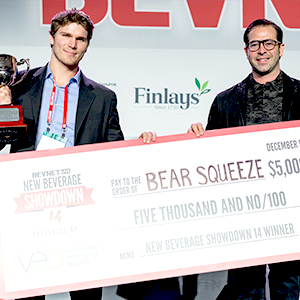
[00:47:54] Ad Read: There's a theme with all these interviews that we record and that we're talking about right now, and that's that they were all recorded at BevNET Live and Nosh Live, and big props to our sponsor of the Taste Radio Studio, that's Owen. Couldn't have done it without Owen, and I really appreciate their assistance, their help, and all their support. Only what you need. Another brand looking to create a lifestyle. Plant-based, baby. Plant-based. We talk about the Owen guys as some pretty chill dudes. Another couple of chill dudes are the guys from Bear Squeeze. That's Max Baumann and BJ McCaslin. Not only are they the co-founders of the brand, they are the winners of New Beverage Showdown 14. Bear Squeeze markets a line of ketogenic meal shakes, and Max and BJ had some great presentations at BevNET Live and the New Beverage Showdown, and they claim the crown of New Beverage Showdown winner and won $10,000 in cash and prizes. Mike and I sat down with the pair and chat it up, but their win and the brand. All right. I'm, I'm Mike Schneider here with Ray Latif and Max Baumann and BJ baby Jesus McCaslin from Bear Squeeze the winners of New Beverage showdown 14 gentlemen. Yes, sir. Thanks so much for being on Taste Radio. Thanks for having us. Thanks for having us. Congratulations on a big win. Feels great. Feels really, really good. I just had a long dinner last night with a lot of people with a little bit too much wine, but I might have to have one glass or two glass with BJ over here. Well, Ray looks so sharp. He presented us with that nice trophy. It's a good feeling, man. Yeah, I think you should have at least one glass of champagne. It's like winning the FA Cup.
[00:49:25] Russell Barnett: One glass of champagne. You've earned it. You've earned it.
[00:49:27] Ad Read: Should we drink out of the cup or no? We're not allowed to take that.
[00:49:30] Carol Ortenberg: Absolutely.
[00:49:30] Ad Read: You've got to drink out of the cup. You can, but we might repo the cup, just saying. Yeah. You know, BJ, this is a... This is a second win for you, isn't it? Two times. It's better the second time, I'll tell you that. The first time was great, I'm nervous. And they always say, like I told you earlier, when you don't know what you're doing, it's a little bit easier. And so now that we've been in the biz, it's just nice to have this feeling. Yeah, BJ was the co-founder of Coco Cafe, which won New Beverage Showdown too. Then I got acquired very quickly by Vita Cocoa, which was love. Tell us a little bit about the experience. What's it like to be in the New Beverage Showdown? And what would you tell somebody who is trying to prepare for New Beverage Showdown New York? I would say the hardest part is getting all the different areas of your message very cohesive in two minutes. So what I do is I get note cards and just go old school and just literally start annoying my girlfriend and saying, hey, will you listen to me? Will you listen to me? But it works. Because she doesn't usually like to do that. No. She never listens. I mean, she's great. She's our number one fan. She's the best. Nice. Where'd you come up with the name Bear Squeeze? I don't think that came out. So here's the full transparent story. We were originally going to start a high protein squeeze pack to compete with protein bars on the shelf. And I'm so glad, like a lot of businesses, you find out a concept doesn't work and then you pivot early enough. So we were probably about $20,000 into research. We couldn't get Bear Squeeze pack with low sugar to taste good. And that's why most of them on the market, they're high sugar. BJ and I got into a room together once we failed with Bear Squeeze pack for the second time, and we said, what do we really want to create? We want an e-commerce friendly product so we can keep overhead low, and we want a high margin product, and we want to do something that's absolutely the healthiest thing that we could think of, which is keto, paleo, and vegan. So ultimately what we did was a meal shake, but we did a powder in a bottle concept rather than a ready to drink to make it e-commerce friendly. Because BJ is the king of powders. Yeah, I am. Powder man. And being nimble is the key as well. I mean, once we saw that our form, our lines had to deviate, you know, we were, we were open to doing something else. A lot of guys would just shy away and be like, nah, man, that didn't work, you know, wish each other well. But Max and I are really good friends aside from being business partners. So we just kept charging forward and figured out what's going to make sense and how we can get to market with the best product that we have in our mind. How'd you build your team? I mean, it was an impressive team. We saw all the faces up on that one slide. You got Joe from First Beverage. You got Adam from Chew. I mean, you guys on your own writer, you know, heavy hitters in this business. He's hungry. I mean, I've never met somebody who's more hungry. I mean, the guy works eight days a week, Sunday, Monday, a different day. He's always calling, always texting. He's dialed in. So he's networking. He's up at 4 a.m. boxing. He goes to work. He works out again at lunch. He goes home and then he goes to networking things every day. He has his girlfriend take him to networking events for their dates. I mean, it's crazy. All they do is like that so much Maxie romantic you yeah, but I mean this is that scalable. Can you keep doing that? Oh, it's very scalable. Yeah So I'm actually taking her to Tahiti, so that's gonna be a pretty fun thing got some big surprises for her so totally We'll see. Should we run this after or before you go to Tahiti? You can run it where you want to run it. I mean, ultimately, I'll just tell her not to listen to taste your radio for a little bit. Nice. Hustling is the essence of entrepreneurship, right? I mean, we had New Beverage school event way back in the day and Tom First, who was one of the creators of Nantucket Nectars, You know, he was with First Beverage Group, now he's with another private equity firm. He got up there and he said, entrepreneurship is not a hobby. And I feel like that's really the truth. That's the best truth I've ever heard about this business. You can't take a day off. You can't take an hour off. You can't take a minute off if you want to be really, really successful. You can check Tom's email. I think we have 50 into him about this. He's got samples at his door and he's got about 50 emails. So you're exactly right. Like, we're pleasantly persistent. We're pushers. You have to be a pusher. Does he make you do time sheets? I mean, it's intense. I think just the biggest advice I could give overall is invest in people and coming to events like this is actually, I mean, not to plug BevNET too much, but it's been one of the most crucial businesses. I mean, I met, I was on a two-year panel with Coca-Cola, with Just Chill. Everyone who I met was from BevNET. And literally, it wouldn't happen without people throwing events, bringing like-minded entrepreneurs together that are all just trying to solve problems for better-for-you products. Well, we're lucky to be in New Beverage business and have a backbone like BevNET. I mean, BevNET's made me as a person in my career. Before, I was selling watches on the beach here in Venice Beach, and the bums were mad because I would get it from Asia. I didn't make it homemade. Without BevNET, I mean, I'd be in a totally different scenario in my life. That's incredible to hear, and thank you very much for saying that. It means everything to us, so thank you. We're lucky to be entrepreneurs with an industry like y'all. I mean, when I wake up, BevNET. If I'm bored, BevNET. You know, I live for updates. Wow. Very cool. You want to go to sleep, Ray Latif, BevNET? Sleep with Ray Latif? A little nighttime sleep? Go to sleep with Latif? Smooth sounds? Yeah, the smooth sounds of Ray Latif. That's going to sell two copies. That's catchy. That's real catchy. The competition was outstanding for this edition of the Newberridge Showdown. You guys went up against some really hungry, passionate entrepreneurs in their own right. And, you know, what is it like, you know, seeing and hearing these other folks that are getting up there on stage for two minutes, for five minutes, you know, and spilling their guts about what they're trying to do in this business? The competition was really stiff this year. And personally, when I saw Mixwell come back with a video strategy, I thought that was one of our things we really invested in, was just having a video that really captured that emotional connection to the brand. And when I saw them come out with two, I got a little nervous. And then at the end, I saw Mixwell on a billboard, and I don't know if that was Photoshopped or if that was real. But I started saying like, wow, these guys seem pretty polished. I mean, they had their little pitch to it. Pants, the red pants.
[00:55:31] Carol Ortenberg: Yeah.
[00:55:32] Ad Read: I mean, they had the comedy, they had, you know, a very clean, modern brand that made me a little bit nervous. I mean, it is what it, the name is what it is. Mixwell. I mean that. Yeah, there was a lot. And some of these other companies that we competed against today are they're further along in their evolution and growth in their specific project. So that made me nervous that we don't have this data sell through yet. But the content we've created, the kind of foundation for the e-commerce and the Kickstarter piece, that gave me a lot of encouragement. And I reflected to when I beat Runa T, right? Those guys crushed now. So that again to me was like, man, it's gonna be a flashback and then I lose this time. So I was nervous. I was sweating. Yeah, that was a big one too in 2011 with Runa.
[00:56:14] Carol Ortenberg: You guys are smart guys. They went to Brown.
[00:56:16] Ad Read: I went to junior college. Shout out Tyler Gage for his new book. Yeah, indeed. Dan McCombie. Those guys are great. And I totally agree with you, Max. When I saw that video from Mixwell, I straight up got goosebumps. That was a great, great video. Yeah. And LA is our backyard too. So we're like, dang, they're going to beat us in our backyard because they're repping our city. It's like, shoot, what should we have done there? Well, what you did is win. Congratulations again. You're the winners of New Beverage Showdown 14. No one can ever take that away from you. Now your next challenge is to make it to $10 million. I don't doubt you guys can get there. All starts with the Kickstarter, January 9th, baby. All right.
[00:56:51] Carol Ortenberg: Good luck.
[00:56:51] Ad Read: Beverage wizard. All right. Max, BJ, thanks so much for being on Taste Radio. Thanks, guys. Thanks, guys. Appreciate it. As mentioned, this is the second time that BJ has won the New Beverage Showdown, pretty amazing stuff. Way back in the day, in 2011, he won New Beverage Showdown II as one of the co-founders of Coco Cafe, great brand as well. I remember drinking way too much Coco Cafe. I love that stuff. And it's weird though. I mean, what a difference six years makes Coco Cafe probably as hot and on trend a product as there was back then. And you know, not so much now, which is pretty interesting, but Bear Squeeze being a meal replacement ketogenic product, you know, e-commerce focused all on trend, all pushing the right buttons. So, you know, kudos to those guys for knowing how to position a product to, to get, to get it out there and to win this competition. Obviously this is not their first time around the block here. So, and you know, it showed in max with just chill as well. Right. And you know, it showed in both the product and you know, the packaging, the branding and their presentation. So definitely. So I talked to all these brands who get selected and then dozens more who apply and won't even pitch. But it's very difficult for me to try to have a premonition of who will win this thing, especially in the case of Bear Squeeze. I think that these pre-launch brands in this competition historically have had a lot of difficulty winning over the judges. So they definitely had an uphill battle to win this competition. came out guns blazing. I think the one other thing I would just point out is that there are always brands in these competitions that are pitching like a host of different things, you know, be a different flavors, whatever. And, you know, Bear Squeeze was pretty much just about one thing.
[00:58:42] Carol Ortenberg: And even though, you know, as you pointed out, it's like pre-launch it is something that was executed well. So they had one thing, they focused on it, they did it well. And I think that's something that a lot of entrepreneurs sometimes forget when they're launching and get caught up in like they need a bunch of SKUs and they got to appeal to a lot of people and sometimes it doesn't work out that way.
[00:59:04] Ad Read: Yeah, this is one that started off with a strong product and then they built a strong presentation around it. The experience on stage and off was really great and the judges thought they did a good job with the market analysis and the audience analysis. You being one of those judges, Mike. Some of those judges may have thought that, me being one of those judges. Yeah, I got super judgmental, I mean. Indeed. Well, congratulations again to Bear Squeeze, to Max and BJ. Great work. Another brand on the New Beverage Showdown that obviously didn't ultimately win, but had a good presentation and a good performance was Sports Juice. I love this guy. I love this product. Yeah. Tugger Balcom is the founder of Sports Juice. It's a brand of organic cold-pressed juices that are designed for athletes. And we caught up with Tugger a few weeks back when he joined us for this edition of Elevator Talk.
[00:59:58] Max Baumann: It's time for Elevator Talk, where we put a founder in an elevator with their dream investor. Let's hear what happens. What is your company's mission?
[01:00:07] Carol Ortenberg: To set out and develop better products for the performance space.
[01:00:11] Max Baumann: What is your product and how is it different?
[01:00:13] Carol Ortenberg: Our product is Sports Juice, and we originally set out to create a product that could increase the breath hold of big wave surfers in the water. We knew that these guys, who oftentimes are sponsored by the big energy drink companies, don't drink that product in the water. From a big wave perspective, I think the stimulants and some of the synthetics in those products increase your heart rate, which ultimately shortens your breath hold. 50 feet underwater, that's life or death. And so I think we hit a touch point with these guys in trying to develop a product around their specific needs. I think we found something that worked and since then we've been exploring it with other athletes and how it affects performance in and out of the water and are pretty pleased with the results.
[01:01:02] Max Baumann: Who is your target audience and how do you quantify the market opportunity?
[01:01:05] Carol Ortenberg: I'd say our target audience at the moment is all your Red Bull, Monster and Rockstar drinkers. And we come from the action sports space, so I think we'll stick to our core for a while and branch out from there as we see the opportunity.
[01:01:21] Max Baumann: What stage of growth is your company in?
[01:01:23] Carol Ortenberg: Testing pre-launch.
[01:01:25] Max Baumann: What has been the biggest surprise since starting your company?
[01:01:27] Carol Ortenberg: That so many people outside of the surfing world are interested in this product.
[01:01:32] Max Baumann: What do you need from a partner or an investor to go next level?
[01:01:35] Carol Ortenberg: I'd say right now, being so early stage, guidance and experience is really helpful.
[01:01:40] Max Baumann: Why should I invest in you?
[01:01:41] Carol Ortenberg: I think we've got a great story and a really great group of guys that are behind this. And I think that's really unique and interesting in New Beverage space. And with that authenticity, I think we can build one hell of a brand and really confident with the product that we've got to back it up.
[01:02:02] Ad Read: One of the things that I love about Sports Juice is what we just talked about. They're focused on one audience, big wave surfers, but that message translates to any athlete. If an athlete hears, oh my God, big wave surfers need this for breathing, it helps their circulation and their hydration. These are, you know, well-oiled athletes who could basically die during their activity. It makes other athletes want to try this product. It doesn't have to change the message, which is really strong. It's sort of like when Grant Hill, you know, drank Sprite and he could dunk and then the kid in the commercial was like, Grant Hill drinks Sprite. Dude, that's exactly what I meant. How did you know? Are we like mind melding? Dating yourself so bad there, by the way. Yeah. Okay. Grant Hill. Sure. Also though, Tugger is dealing with some of the challenges with, you know, coming out of the gate as a lifestyle brand because all of those surfers are very environmentally conscious and they don't want his product in a plastic bottle. He's got to figure out how to deliver cold-pressed juice in an aluminum can now, which is going to be quite a challenge for him, but I think he's finding room to work with here.
[01:03:08] Carol Ortenberg: He's a chill dude. He's up for this challenge. Yeah, I think he's up for it.
[01:03:10] Ad Read: I think he can do it. I'm glad you came full circle with that lifestyle mention. Holding that in. Well done. That's my lifestyle. And well done to our guests, Sharelle Klaus, Russell Barnett, Carol Ortenberg, Max Baumann, B.J. McCaslin, and Tugger Balcom. For questions, comments, ideas for future podcasts, please email us at askattasteradio.com. We'd love to hear from you. Keep sending those emails to us. On behalf of John, John and Mike, I'm Ray Latif. We'll talk to you next time.