[00:00:02] Ad Read: This week's episode of Taste Radio is sponsored by The Good Crisp Company. They're the first gluten-free non-GMO canister chip made with no artificial flavors or MSG. We had Pringles as kids, and now you can have that canister chip experience without the nasties in the guild? Is that what this is all about? That's exactly what this is all about, Mike. Go to thegoodcrispcompany.com to find a natural retailer where you can pick up your own. And visit The Good Crisp Company at booth 8222 at Natural Products Expo West. this March in Anaheim to try them for yourself. I'll be there. I will too. Definitely.
[00:00:36] Urban Remedy: Looking forward to seeing you guys there too. And now, Taste Radio.
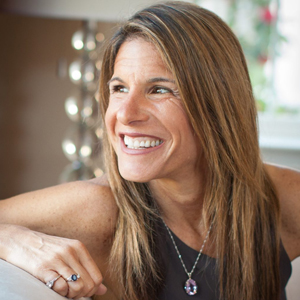
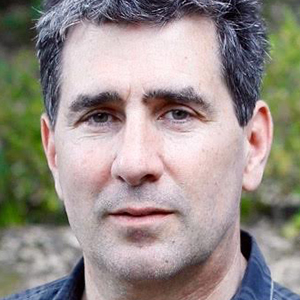
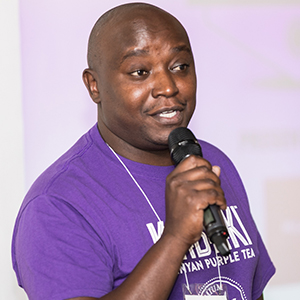
[00:00:47] Ad Read: Hey, thanks for listening to BevNET's Taste Radio. I'm Ray Latif. With me are John Craven, Mike Schneider, Jon Landis, and Carol Ortenburg. We're recording from the Taste Radio studio in Watertown, Mass. And in this week's episode, Sherlo Locklin, the co-founder of Plum Organic and current CEO of Rebel, talks the highs and lows of her remarkable career and approach to leadership in the challenging food New Beverage space. We also speak with Paul Coletta, the CEO of food and juice company Urban Remedy, which recently added $17 million in new funding. And in the latest edition of Elevator Talk, we hear from Martin Kabaki, the founder of innovative tea brand Kabaki Purple Tea. Just a reminder to our listeners, for questions, comments, ideas for future podcasts, please send an email to ask at Taste Radio. Easy enough, right? Easy. Yes. We know what else is easy. Reviewing Taste Radio. Please, please, please do us a solid. Review us on iTunes. It'll improve our search rankings on the app and help other folks to find this lovely podcast. And it is lovely, isn't it? Quite. Thanks, Landis. We're also out there on Android Play, SoundCloud, Stitcher. If those are reviewable, review us there too.
[00:01:57] Urban Remedy: Taste Radio. We'll take it all.
[00:01:59] Ad Read: On iTunes, it's a pretty simple process. It takes about two to four minutes. Launch Apple's podcast on your iPhone or iPad. Search for Taste Radio. Tap write a review at the bottom of the page. Leave a rating and comments. Hopefully there are five. Hit send. You are done.
[00:02:15] Taste Radio: Mike, what about Tinder?
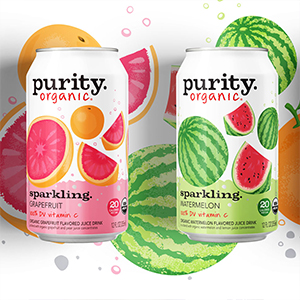
[00:02:16] Ad Read: Can they review us on Tinder? Tinda. Awkward. No comment. Crickets. So Much sparkling water coming into the office. So Much to swipe left about. In this category, there's La Croix and then there's everyone else. In the office, we've seen a bunch of samples come into the office, big players like Nestle Waters, but we also seen a ton of regional brands and upstarts looking to make their mark in fizzy water. In front of me, I'm looking at a can of Purity Organic sparkling water, which is what they call it a sparkling grapefruit, this particular variety. It's an organic grapefruit flavored juice drink is what they call it. But John Craven, this is pretty much a sparkling water, right? Yes. The interesting thing about this is I don't know why they don't position it straight up as a fizzy water. This is a category that's kind of struggling from a positioning perspective. We've seen it in other brands too. You've got Wave Soda in front of you, but if you look at the back of that, is that Wave Soda?
[00:03:15] Urban Remedy: It's, I mean, I drink this as a sparkling water. I mean, it's all just positioning and packaging and branding, right? I mean, that's it at the end of the day. I mean, technically this right here, you could call this, this is a triple IPA. I mean, it's sparkling water. I don't know.
[00:03:34] Ad Read: Well, this was a lovely person from Cape May Brewing Company sent this to us. They listen. to Taste Radio, their fans, and they said, hey, we want to send you some of our snag and drop, which, as John mentioned, is their triple India pale ale. What's the ABV on that? 10%. Oh, thanks for trying to kill us.
[00:03:49] Urban Remedy: So not sparkling water.
[00:03:51] Ad Read: Not sparkling water. Alcoholic sparkling water. It's best served or best paired with cheese, fish, and cake. So perhaps at lunch, we can crack this open? We eat all those at Friday lunch, of course. I mean, I think it's who you're trying to cater to. Are you trying to take Virtue Sparkling water consumer? Are you trying to take some share from the soda consumer? Where are you hedging your bets? Also, there is a difference. I mean, sparkling water, seltzer is zero calorie beverage. And if we had 20 calorie products that had, you know, a little bit of sweetness calling themselves a seltzer Virtue Sparkling water, we would probably have a problem with that too. So, I mean, you know, it's a different product. It's albeit slightly different, but there is a method to the madness, I suppose, as to why they're not going all in on sparkling water. My question with this, is are they more powerful if they band together and come up with, you know, make a category to go after the sodas of the world and, you know, become thought of in that use occasion instead of soda, or is it better for them to just go out there and be themselves and differentiate themselves from each other? I think, are they stronger together is the question.
[00:04:59] Urban Remedy: Well, I mean, that's already happened. There's already a massive sparkling water category. I mean, that clearly is where the majority of the brands are going. I mean, at this point, it's saturated and you have plenty of brands that are or excuse me, have newcomer brands that are trying to figure out some little way to twist. So they're trying to differentiate themselves in an already giant category. Exactly. So I think, you know, this, what's this product called? Wave Soda that basically is pretty similar Virtue Sparkling water in other forms.
[00:05:29] Taste Radio: 15 calories.
[00:05:30] Urban Remedy: I think if I remember correctly, the kind of key differentiator here is that they've added caffeine. Right. You know, I mean, whether or not that's going to work, who knows.
[00:05:42] Ad Read: Works in the office. People drink a ton of that.
[00:05:43] Urban Remedy: People drink that. I mean, this other one, I've got the Virtue Sparkling Energy Water, which is from the UK. I mean, that's essentially similar to Wave, but without any sweetness to it.
[00:05:54] Ad Read: I feel like that's more of a functional beverage, Virtue is, in the same way that this can that I'm holding, Focus is. You know, it's a, it calls itself a sparkling water that's infused with caffeine and L-theanine, bonus. But I don't know that I would position this as a sparkling water. I don't think, you know, sparkling water to me has a refreshment aspect that I can't necessarily see with this.
[00:06:13] Urban Remedy: I mean, look, we've got one here, you know, Poland Spring in a can, which has been around for forever. This is probably like the least sexy. I mean, it's a staple. It's a big brand. You know, you got to give credit to this, though, that This kind of is what the category is. I mean, sparkling flavored water is something that like has kind of been around for a long time. And you know, you have all these brands that. I've tried to make it into something that's, you know, cool, hip soda alternative, but then there's just, you know, seltzer.
[00:06:41] Ad Read: It's almost like just slightly above commodity, like polar and things like that, where they're, the branding isn't super, super strong, but there's definitely a connection that the consumers have with the brand.
[00:06:54] Urban Remedy: Those are commodity. And I mean, you know, still a lot of volume in bottled water. It comes from private label. I mean, it's a staple.
[00:07:01] Ad Read: What's clear is that sparkling water continues to be a really big opportunity for New Beverage industry. And we recently saw Pepsi get into the business with Bubly, of which Martín Caballero, our assistant editor, wrote about. He also wrote about what's going on with Nestle Waters and their foray or their continued foray Virtue Sparkling water. Check out those stories on BevNET.com. That's interesting play, too, because they just have regional brands that they have. They have to manage, what, is it like six or seven different brands around the country? Sure. And it's basically the same exact product in all of them. My favorite's Arrowhead. Yeah. All right. Let's talk about Sheryl O'Loughlin. So throughout her 25-year career as an entrepreneur and executive, Sheryl has been known as a passionate leader with a deep commitment to social responsibility. She led Clif Bar as its CEO for nearly 10 years, spearheading growth from $100 million to $200 million in revenue, and later co-founded and helmed organic baby food company Plum Organic, which reached $100 million in sales before being sold in 2013. Cheryl's currently the CEO of elixir brand Rebel. In a wide-ranging interview recorded at her home in Santa Rosa, California, she spoke with me about the trials and tribulations of leading fast-growing companies, why she believes that successful relationships are built on empathy and compassion, and her take on supporting equality in the workplace. All right, I'm in Santa Rosa, California at the home of Cheryl O'Loughlin, who's the CEO and president of Rebel. Cheryl, thanks So Much for having me.
[00:08:32] Sprouts Ad: Oh, I'm so happy to be with you, Ray. I've just loved our phone calls.
[00:08:36] Ad Read: Yeah, it's been fun talking to you, and I'm looking forward to this interview, have been for some time. Very cool. When I flew into the Bay Area this morning, along with the flight, I was watching a movie, and the movie was about the famous tennis match between Billie Jean King and Bobby Riggs, the so-called battle of the sexes. Yeah, and it was a momentous event, and it was highlighted by Billie Jean King. She was a passionate advocate for gender equality, for equal pay for women. The match took place in 1973, and as a woman entrepreneur and someone who's outspoken about civil and equal rights, I wanted to get your perspective on what steps we as a society need to take to achieve the vision that Billie Jean King and so many others have been fighting for for the last 45 years.
[00:09:23] Sprouts Ad: Interesting. I'm reading right now a biography on Gloria Steinem, so it's just so funny that you're even asking this question right now. And I have a couple thoughts on it. And one, I want to talk about women as women, and the other thought is on people, just us as people. And I think in terms of women, we have to have equality in terms of women being in the right roles along with men. It just makes sense from a standpoint of even culturally to having diverse opinions together. And if you look at the companies, and this is proven through data, that actually perform more profitably and have a greater return many times, more times than not, it's at least having a woman on the executive team, if not a woman running the company. And that's data. And it seems like we just don't look at the data and say, This is the way it needs to be. It needs to be for the health of our businesses. If you're only going to look at numbers, know that at the bottom line, it's going to make for a better business. And so it just, it makes sense. And I'm not just talking about women along with men. I'm talking about people of color. I'm talking about different points of views, people of different views on gender. It makes a difference to the profitableness of a business. So I love it that we're starting to see slowly more leaders come into their roles, but we have So Much further to go. I mean, women founders are what, still only about 7% of startups. And women still do not have the amount of funding that men do, not even close. So we have got to create change there. On the second part, though, there's one thing about gender, quote unquote, and who's in what role from a way that we look or the way that we believe we are perspective. But there's also the perspective of what does the traditional feminine values, what do they bring into a business? And what do the more traditionally masculine values bring into the business? And I talk a lot about this at Rebel. It's really the yin and the yang, the balance of both. traditional feminine values that people talk about are compassion and empathy and being collaborative and honestly knowing where you are in your body as a person and what rights you have to be able to say who you are, whether you be a woman or a man. And then you think about the more traditionally masculine qualities of leading and taking command of a room, being able to Use power in a way that's productive. Those are the positives. What we need to think about is, how do we take out the things that are not working in business anymore and combine the best of both? And I'm not just talking about having men or women or non-binary part of a conversation, but it's also about living it within each of us, because we all have that. And a big part that I celebrate at Revel is that I feel like the people in the company do have that balance and that's why it's a really special experience for me to be there and to actually experience that. So that was a really long-winded answer to your question.
[00:13:03] Ad Read: No, it was a great answer and I feel like there's a couple of questions that came out of it for me. One, you mentioned we need to remove some of the things in business that aren't working. What are some of those things?
[00:13:16] Sprouts Ad: The times that we don't listen to each other, the times that we don't have empathy for one another, the times that we become autocrats. and don't listen to what other people have to say and bring from a collaborative perspective. I would say also, one of the things that I was really challenged with for a long time in being a leader, and I still watch out for, is that I had a tendency to go to the opposite way from being a command and control. I went so far as to be more so consensus oriented that decisions weren't getting made. I was waiting for everyone to agree. And that, to me, having experienced that, is also not the role of a leader. A role of the leader, in my mind, needs to listen with empathy and compassion to understand But then taking all of that into account, be firm in making a decision, moving ahead, but telling everyone that, hey, here's the decision that I made based on everything that I heard. Here's why. And let's go forward into the market. And if we learn it's not the right way to go, we adapt. and we evolved, and then we'd go through the same thing again. So it's really a matter of us, you know, thinking about the market as, or even our companies, as a constant experimentation to see what works and what doesn't work, versus thinking about it as the decision is made and we're done.
[00:14:50] Ad Read: One thing that has never worked, never will work, is workplace harassment. It's been top of mind. It's been in the news for some time now. We've seen high-profile cases in government, Hollywood, tech, restaurants, CPG. What's your take on how business has addressed harassment in the workplace, and are you optimistic that things are changing for the better?
[00:15:08] Sprouts Ad: Yeah, I want to also take that answer in two parts, the first one being more big picture, and the second one actually more as it relates to rebel. So in terms of the big picture, wow, I am in awe in seeing what is happening out in the market right now in terms of women finally saying, this is not right. We're not being treated not only as equals, we're not being treated as people, as human beings. It just is so sad that had been going on for so long. And we just talked about command and control and someone being in power over someone else. And that had been what was happening. And finally, women are standing up and saying no more. This has got to change. And also highlighting something that we probably thought was gone long ago, and it's not. So finally, we're starting to see change. To me, that is a beautiful thing that has to happen in terms of really being able to push the whole movement of equality forward.
[00:16:17] Ad Read: You know, you've been involved in entrepreneurship in The Good New Beverage business for some time. You're a former CEO of Clif Bar, co-founder and lead Plum Organic, all before taking the role as CEO and president of Rebel. It takes a team to be successful in this business. How do you align yourself with the right people, from investors to C-level folks to interns? What do you look for in terms of their values?
[00:16:42] Sprouts Ad: We live and breathe with each other. As a company, we're together So Much. And to have that alignment as to how we are as human beings, to me is the most important thing we can have. We can have all the smarts, but if we're just passing each other like ships in the night in terms of how we believe people, humans, should be treated, the whole thing falls apart. We're all human beings at the end of the day.
[00:17:09] Ad Read: It sounds like you're talking about family. Do you have to be family with the folks that you work with?
[00:17:15] Sprouts Ad: Well, you know, that's actually a very, very good question. And it's funny, because I've gone back and forth on even using the word family with the company. And we talk about it more as a tribe. And the reason why I say that is because we have no less love in terms of how close you see yourselves as family, but at the same time, as leaders throughout the organization, we also need to be able to be sure that we're not blinded, and that we're being very, to the extent possible, objective about what's working and what's not working, and we're helping people to grow, and that we have the confidence in ourselves to be able to help our people to grow. And, you know, hopefully it rarely happens, but sometimes it doesn't work. And to me, if you're family, there is never a split. You're family forever. But there are times where it's just not working with someone. And both that person as well as the company would be better off in the long run if they took the growth that they had developed at Rebel to another place where they feel like they can add even more value. So I think the challenge when you use the word family is that you need to be able to take that step back and have the perspective on what is good for the company. It affects other people and that's what we need to understand. It ripples throughout the company. It's just not between you and that one teammate. So just being more objective is something we have to think about as leaders.
[00:18:51] Ad Read: Being more objective and you've written quite a bit about vulnerability. You can be quite vulnerable with your family. It's a little bit more difficult in an office setting, in a business setting, but you've talked about it as a key component of your approach to leadership and personal awareness. Can you share with our listeners why being vulnerable has had a positive impact on your career?
[00:19:11] Sprouts Ad: Yeah, to me, it's really important. I mean, I wrote my book to be able to share with people a new way of thinking about entrepreneurship, because a lot of times as entrepreneurs, what happens is that we think, and it's true with people that are around us, whether it be potential investors, potential teammates, potential suppliers, we've got to sell all the time how great things are going, the company's doing awesome, the future is perfect. But you know what, at the end of the day, that's not the real deal. It's going to be hard. It's going to hurt. And many entrepreneurs are suffering through things like drug abuse and divorce and even suicide because they're afraid to say what's real. And I wrote my book, you know, having spent time running the Center for Entrepreneurial Studies over at the Stanford Graduate School of Business. and realizing that no one talked about the hard stuff. And all these people are suffering where we could be holding hands together and saying, how can we help each other? So to me, the role of vulnerability is to make sure that, again, we're helping each other as human beings through the things that are happening as a company. And if I, as a leader, am not willing to say something is really hard, People won't believe me. It's hard to get people to follow someone who says everything is perfect because people don't believe you. So let me just give you a quick example. When I was at Clif Bar long ago, I had a teammate in my, I was running marketing at the time, a teammate in my marketing department, and I was going on, waxing poetic about how perfect things were, and it was, really pretty obvious that we were going through a hard time as a company, growing pains. And this woman, Kate, finally looked at me and said, Cheryl, this is bullshit. If you think everything is that perfect right now, I don't believe you're even seeing what's happening in the company. And it just knocked me on my ass. And I was like, wow, she is absolutely right. And I've changed my whole stance since that to say, I'm not going to go around and say, no, I don't know what I'm doing all day long, even though sometimes I might feel that way. But it is to say that I share openly what I know people can know from even looking at my body language, that, hey, guys, we're going through a hard time. And then sometimes, I'm not even sure of the exact approach to do next. So I need your help. I need your thoughts. I need your input. So I can process all of that and seeing all sides of an issue, because you help me see all the sides, to take us forward. So to put on this veneer that nothing is wrong ever and that we're perfect and everything is perfect, I think comes to a detriment to a company.
[00:22:04] Ad Read: You've mentioned being mindful, though, about picking your spots, when to be vulnerable in front of whom to be vulnerable. Can you expand on that?
[00:22:13] Sprouts Ad: Yeah, I think there's so many different levels and it really depends on, you know, what the level of vulnerability that you're feeling at the time. So, in other words, when I'm with a prospective investor, I mean, I'm not gonna go and share, you know, my life is falling apart right now. I'm really pissed off at my husband at this moment, and I feel like I'm going to scream at the top of my lungs. Obviously, that's not gonna work.
[00:22:43] Ad Read: Not really, because he's upstairs.
[00:22:44] Sprouts Ad: Yeah, true, he's upstairs. Oh, sorry, Patrick. No, he's a pretty special guy. I'm pretty lucky on that front. So that's a very hypothetical example. So, you know, there's those obvious things that you don't do. At the same time, to me, it's really blurring in terms of where to be vulnerable and how to be vulnerable. Let me give you an example. As I was finishing writing this book, it was last year, and I was publishing it, and I was still fairly new with this board. I just had brought on two institutional investors, and we had never had institutional investors before. And it just happened to be coinciding with around the time that my book was getting published. I said to my husband, Patrick, I'm like, shit, what do I do? I have these new investors coming into the company. And here, quite frankly, in this book, I'm telling people how I had developed anorexia because of a bunch of issues that was going on with the family business. And everything felt so out of control at the time. And I said, what are they going to think? Are they going to end up thinking that I'm not going to be able to lead Crisp Company going forward? So I went to each and every one of my four board members, and I said, hey, I want to tell you what's happening. This book's coming out. Here's what I'm going to talk about. I'm going to be really, really vulnerable there. How does that sit with you? Are you OK? And I was amazed that every single solitary one of them was not like, eh, I'm not sure. They weren't like, yeah, that's OK. I think we'll get through it. They said, you know what? You sharing that story is going to make us that much stronger as a company because it's going to set a standard of how we hold hands together and we go forward. And they were. beyond supportive of that, and it's taken it way a step further where Dwayne, one of my board members and my lead investor for my last round, he and I talk every week, not because I have to, because I want to. And one of the practices that we are in right now is to share each other a vulnerability. And I told him the other day, I said, you know, Dwayne, it's so great that things are going so well, but I wake up some mornings and I feel scared. Because I'm like, oh my god, what's going to happen when things turn? Because they're going to take some inevitable bump in the road. And what's going to happen then? And how do we get through that together? And he didn't look at me and say, oh gosh, that's really worrying me. And he didn't even almost, what he did is he went into himself and he said, let me share with you, Cheryl, what I'm afraid about. I started a brand new fund. I don't know, when I'm giving you advice, is it really even helping you? And so it just opens up this dialogue together that allows you to come out and be that much stronger. And I don't know if he'd even addressed your question directly in front of where are the places where you don't do that, But I think it's just knowing what the appropriate level of depth is to get into it and with whom. So with my people, I'm going to share if I had a shitty day, but I'm going to tell them the next day we're going to get up and we're going to go for it and we're going to figure it out. Am I going to tell them for a year that I'm falling apart? Well, you know, then I need to take a look at myself and say, you know, it's time that I'm not part of this anymore. So I really think it's just really understanding where you are in the relationship with people and how you're best supporting them in their roles.
[00:26:23] Ad Read: You touched on this a little bit earlier. Mental health is often an uncomfortable subject in the workplace, in businesses. How do you create a safe environment for discussion on mental health? How do you encourage discussion on mental health?
[00:26:40] Sprouts Ad: Yeah, it's vitally important, especially in a startup and then a fast growing company as it is so easy for people to burn out and It's really easy for mental health issues to come out in an explosive environment like they did really for me with my anorexia in terms of being in a personally explosive situation, a very intense journey, or I'd call it more adventure in terms of starting a company from scratch. And parts of my personality that in good ways drive me to be persistent and go forward and just want to go for it all the time. And there's a dark side of that stuff. And that's what we're just starting to come to grips with as to what the light side is of certain traits of entrepreneurs and what the dark side is. And if we don't talk about that stuff, the dark side is going to come out. So again, that plays a role with vulnerability. If I can be vulnerable and share where I may be afraid, or where I might need a break, or where it just is becoming a little too intense and we all need to take a breath, walk out of the building and come back in, all of that supports people to be able to say, I'm having a hard time too. That's what I think is so important about vulnerability is when we're in this kind of microcosm where things are so intense, if we're not talking about it, people are gonna fizzle out and all of a sudden we're gonna be standing there and we're all alone. And that's what we don't want. So to keep it going forward, to keep it sustainable is you gotta keep it real.
[00:28:29] Ad Read: One thing that seems to drive a lot of people nuts, myself included, is finding balance between work and personal life. You've encouraged setting boundaries, setting ground rules for separation of business and family and personal life. I think I read that you've encouraged no Friday meetings and no emails during the weekends, is that right?
[00:28:47] Sprouts Ad: Yes.
[00:28:48] Ad Read: On the flip side, I just read a quote from Hamdi Ulukaya, who spoke with a group of new entrepreneurs and said, never turn your phone off. What's your take on being 24-7 in this business, and what do you think of that advice?
[00:29:00] Sprouts Ad: I don't agree with it. I've been there. I experienced it. It's one thing about going up here in terms of years is you've lived through most of this stuff. So, man, I think it is the worst thing. You know, we sit there. It's just so ironic. Even as adults, we watch our kids and tell them to get off their mobile devices. And here, we think we have to do the same thing. So important, right? To me, if you're working that much, you're working 24-7, you will not last. You will burn out. And it goes right back to what we were talking about on the light side and the dark side. And what we have to have as human beings for mental health is we have to be able to have a break. It cleanses our mind. It helps us to free ourselves up to be able to be creative, and available to people, and that's what we need to understand. We're working with other people, and if we're grinding all the time, we're gonna come back, we're gonna take it out on them, because you can only take So Much, and we're gonna explode. And the other thing that we do is we set this standard that is not human, and then, again, it has the ripple effect on the rest of our companies, and then that goes back to, again, And people not having the health to be able to continue on the journey. So I think it's bullshit. I think you've got to turn off that phone to set the standard with the people around you, as well as the people that you're working with. As leaders, it is our obligation to turn off the freaking phone in order to make sure we're setting the right standard. And you know what? The business is that much better because we're going to be that much more productive and thoughtful. I'll tell you one other thing that I've been doing is on my calendar, I block off chunks of time. And sometimes I've even sat there at certain moments and been like, oh my god, I'm not going a million miles an hour. I'm doing something wrong. And I've had to stop myself and say, you know what? I'm going to be able to think more clearly. I'm going to be able to be more focused if I can give myself this breathing room. And I'll tell you, it is worse because I've never felt in my whole career even so clear when I'm moving forward and making decisions. But it's because I've given myself space that I never gave myself before.
[00:31:26] Ad Read: Turning your phone off and giving yourself some space sounds like it's also a good idea for your family and loved ones. You know, as an entrepreneur, how do you best prepare your family and your loved ones for this journey that you know is going to be intense, you know is going to be challenging? Well, because everyone tells you it is going to be.
[00:31:45] Sprouts Ad: What I've learned now is that it's so important to have these very open discussions, not just with your significant other, but if you have kids with your children as well, to say, this is going to be intense. We all need to understand that. But at the same time, we need to be communicating about it. And I need to also have the empathy for what you're going through. Because a lot of times, entrepreneurs will think, no one's going to get it. I need to just go heads down. all by myself and get this to happen. If I talk to my significant other about it, the, you know, they just don't understand and they'll just get mad and we'll get in a fight. Well, that is the worst thing you can do because you know, you're separating yourself from them. You're in this together and they're going through their own feelings too. So if you're shutting yourself off, they're not able to express themselves either and quite frankly, feeling that you're not having mutual respect in the relationship, and that's how so many relationships fall apart because of it. And in hindsight, and now I'm lucky enough to have had the experience that I experienced, so I have I believe more confidence in myself as a leader of a startup and then a growing company. But where the expectation I set now is actually, I'm going to be with you guys. And I'm going to be there fully in my head, engaged in the conversation and what we're doing together and the activity together. Not that I completely separate work, because I think work and the passion that I feel at work contributes to the passion I feel at home and vice versa. But at the same time, we've set together that, hey, guys, you've got to tell me. If I'm getting too intense and you're starting to see me fade away into startup land, pull me back. I need to know, and I promise that I will listen. So I think those conversations are critical. And you have to be open. But you also have to pay attention to the people who love you when they say, it's time to stop. It's time to turn off the computer. It's time to just take some time with your significant other, like mine, for example, and hold hands. That's essential. And it's going to be essential to your performance at business. I know it. I've experienced it.
[00:34:06] Ad Read: before you can even take those steps, a lot of times you have to prove out your concepts. You have to pressure test that concept. How do you best do that before you get started?
[00:34:17] Sprouts Ad: Spent a lot of time on that topic at Stanford. And there's a, I don't know if you're familiar with Steve Blank. A lot of people in the tech world obsess over his concepts and more and more people in the CBG world are are knowing his concepts. And what Steve Blank did so brilliantly was really summed up actually in this quote that I love that he did. He said, a startup is not a company. A startup is an experiment waiting to find a sustainable, valuable business model. And what that means is that we are in constant experimentation in the market, not just in our head and focus groups, in the market saying, hey, I've got this idea. And by the way, before I even get to the market, I've interviewed tons of potential customers, tons of competitors, tons of suppliers, so that I understand what's possible in the market. I've laid out a business model that I think could work. But then I'm doing small experiments in the market to test every possible part of that business model to be able to understand whether it works or doesn't work. And I keep pivoting and evolving and changing and adapting until I find one that over time looks like it's working. And once you can find that, Then you start scaling it, and you bring forward more resources in order to support that. And if people are interested, just look up Steve Blank's website. And there's also a book. I can't remember the exact title, but it's about your business. It's a one-page business model with nine parts to it. And it's a very thoughtful way of thinking on one page what your whole entire business model looks like. And it's very helpful to develop it. I think people need to understand, and a lot of times if people are coming from a purely engineering point of view, is yes, it's about the product, but it's also what the whole business model is in terms of how you go to market, in terms of how do you get supply in order to build that product, in terms of what partners are you aligning yourself with. All of those are important because what ultimately as CEOs we need to do is find a co-company model that is again, valuable and scalable, not just a product concept.
[00:36:42] Ad Read: At the same time, all the preparation, all the research, all the legwork you can do beforehand, you might still fail. And the failure rate in food New Beverage is extremely high. In your experience, what are the biggest factors for failure and how do you mitigate risk of failure?
[00:37:00] Sprouts Ad: Yeah, well, and I've experienced both success and quote, unquote, failure. Part of it is that I think we need to redefine what failure is. I think what people need to fully realize, and I don't think my husband and I at first, when we started a family business, really came to grips with is that a lot of companies don't make it. And for us to define that the success is it has to make millions and millions of dollars to me, is the wrong way to go into even starting a company. Because to me, it's this incredible learning that you've had this chance to experience that so many people are afraid to try. And to me, it's like, shit, yeah, I was able to do this on this grand adventure. in my life and look at the things I'm going to be able to share whatever I decide to do next, whether it be another startup, working for a corporation, or whatever it may be. It's just like, I don't run a marathon because I think I'm going to win. I run a marathon because it's a great adventure. And just the ability to be able to go through it is an amazing experience. So just save that philosophically. In terms of things. to avoid, I think you actually said it really well, which is this idea of risk mitigation. And a lot of people say, oh, entrepreneurs are risk takers. And you know what? Actually, that's not entirely true. A really good entrepreneur mitigates risk all along the way. So for example, we just talked about in terms of market experimentation, you don't have to go big from the beginning. Go small. Try it. See what's working. When it's not working, fix it. And I think one of the things, to go back to your point about vision that happens, is entrepreneurs get confused between vision and marketplace strategy and execution. So you can have a vision, and your vision, it might evolve sometimes. And that's a good thing. We've got to take our egos out of this whole equation here and say, hey, my vision is evolving as I learn. And really importantly, it's how we execute that vision in the market that we have to be very open to learning. So consumers are going to tell us what their reaction is. Customers are going to tell us what their reaction is. We don't need to change it every time someone has an opinion. doesn't make sense. People have opinions. But when you find the thread of truth through all those, that's when you need to stop and say, whoa, wait a minute. The way I'm going about this is not working. I need to adapt, or I need to pivot and try another way. Also, to be able to set up what you think are the parameters of what you can handle in terms of your values and in terms of what your ability to be able to even financially deal with things is. I'll give you an example of what I mean by that. As a family, when we started this family business called Blue Sky, We had decided, you know, my company, Plum, was venture funded, and so we said, we're gonna make this a nice family business, and so we're gonna be able to have full control over it. Well, all of our finances, everything was mixed up in this venture. And what we didn't do, and someone actually advised us, said, you know, only put like 10% of your wealth behind a company, because if you go any further than that, it's really hard to come back. And Crisp Company failed so fast your head would spin, and it took everything with it. We almost went bankrupt. We had to immediately leave our house, and we moved into this, just really crappy apartment that had, you know, there was her gunshots from the outside. It was really, really just like mind-bendingly hard. But at the same time, we took So Much risk. We couldn't do, we had two kids. So I actually called one of the, Adam Lowry, one of the founders of Method Sprouts Ad I said, Adam, how did you do this? How did you guys start Crisp Company and go through the ups and downs that you went through and survived through it from your own money? And he said, Cheryl, we were two young guys. We were dirtbags sleeping on a floor with sleeping bags. And he said, you have a company. You have a family. You have people you're taking care of. We didn't have those responsibilities. And I just sat there, and I shook my head. Yeah, of course. We just put So Much on the line. We couldn't risk that much. So Adam could take that risk. We couldn't in our family situation. So it's all that kind of risk mitigation that's essential as a person and for your company.
[00:41:52] Ad Read: That's certainly great advice. And I think about it all the time. It's like, especially, you know, when you have a family and you have children, you're like, how do I not screw this up?
[00:42:00] Sprouts Ad: No.
[00:42:01] Ad Read: Yeah. But you did say something kind of interesting about success. You said success to me isn't necessarily making millions of dollars. So what is success? What defines success for you?
[00:42:11] Sprouts Ad: Gosh, as I'm getting older, I gotta be honest with you, the most success I've ever had happened two days ago with my 17-year-old son. This is what I call success. So he's a junior, and he's getting ready for college. And every day, I feel like I'm like, I'm the parent coming in. Wah, wah, wah. You're not doing enough homework. You've got to get your list of colleges that you want to go to listed. And he has this girlfriend. You're spending So Much time with your girlfriend. You're not focused on your work. And every day, he's just pissed off at me about something. I'm being such a jerk. So then he knocks on my bedroom two nights ago and said, he looked and he had tears in his eyes and he's like, mom, I need to talk to you. And I was like, oh my God, what happened? You know, something happened with his girlfriend. I'm like, ah, what can I do? What am I going to say that's not going to piss him off? And he said, I just wanted to come here and thank you for everything you've done for me. Thanks for pushing me. And I just can't tell you So Much I appreciate you being my mom. And I, I was stunned. My husband was sitting there too, and I'm like, I couldn't even move. I was like a statue. I'm like, okay, I don't want this moment ever to end. And so that to me, that said it all to me.
[00:43:32] Ad Read: Cheryl, I really, really appreciate the time. Again, you know, you're someone I've wanted to talk to for quite some time, and I know you're extremely busy and taking the time out of your day. taking the time at your home to have me here means a lot. So thank you So Much. And I know our listeners are gonna get a ton out of this. So get your phone ready to, get that phone, get ready to turn off your phone is what I'm trying to say.
[00:43:54] Sprouts Ad: Well, Ray, I can't tell you So Much I appreciate it. This has been a ton of fun and I've been enjoying getting to know you very much.
[00:44:01] Ad Read: Myself included. Thank you So Much.
[00:44:02] Sprouts Ad: Thank you. Bye now.
[00:44:06] Ad Read: Ray, I think it's great that the first part of this interview talked about the struggles that The Good industry and other industries are facing in diversity. A lot of what Cheryl talked about in this entire interview are tough things to talk about, but by discussing them, we only will be stronger as an industry and be able to address them and continue to improve how we face and discuss some of these topics. They're important topics for sure. And I think Cheryl made a great point in that It's been proven that equality is better for everyone and a focus on compassionate and thoughtful ways that we can advocate for everyone has benefited the workplace and has benefited every industry. And I mean, to Cheryl's point too, I mean, women are 50% of the population. Why would you ignore half of the opportunity? There's a lot of intelligence and knowledge and ability and skill that half of our population has to offer. I mean, to me, it's a no brainer. That's just my two cents, I guess.
[00:45:11] Sprouts Ad: Wise words from John Linus.
[00:45:12] Ad Read: Thanks, Linus. As I mentioned, you know, Cheryl talked about empathy and compassion. And at the same time, she talked about being firm and making a decision and moving ahead. And that's really what a leader is. And, you know, I think I see a lot of that, not to pat you on the back, John Craven, I feel like we get a lot of different opinions and a lot of different thoughts and a lot of different emotions sometimes when we talk as an organization. At the end of the day, it's really up to you to kind of drive forward the company and make those decisions that you feel are going to best represent BevNET. Well, thanks, Ray.
[00:45:43] Urban Remedy: But I mean, that's difficult, isn't it? For sure. I mean, I think a lot of what you were saying about the journey of an entrepreneur you know, certainly can relate to. I mean, it's I think something that people who haven't been in those shoes don't fully understand the ups and downs and things that are scary and hard that probably just seem like, you know, things that employees might take for granted because they never have to think about. I think it's also, you know, you just have a different responsibility since you've got all these people that you're ultimately responsible for, so.
[00:46:16] Ad Read: I don't envy your position sometimes. Thanks, Ray. But I mean, I do, I think, and everyone in this room often thinks about work a lot. And I think they think about work on the weekend, in the evenings, early in the morning. You know, Cheryl made a great point that you can't be 24-7 in this business. It's tough. You've got to make time for yourself, make time for your family. It actually benefits, in her case, she said it benefits her decisions and her decision-making ability. by having that time to herself, by having that space away from work.
[00:46:45] Urban Remedy: Yeah, I mean, that's obviously, you know, as she pointed out, much harder in this day and age. You know, The Good days were, you know, you left your computer that had your email on it, like, behind at the office, and then you went home.
[00:46:56] Ad Read: Or your typewriter behind at the office.
[00:46:58] Urban Remedy: Well, I'm not that old, but thanks.
[00:47:02] Sprouts Ad: Thanks, Carol. Chisel, stone.
[00:47:04] Urban Remedy: No, I think it's, you know, it's interesting. I listen to that, and, you know, I think my own personal opinion on it is that There are so many different approaches to that stuff out there, and you just have to figure out what works for you. And I'm not someone who shuts off on the weekend, but I have my own way to manage my workload and not go crazy. And I think there are definitely different approaches, but the key takeaway with it is you have to think about that stuff. You can't just always be on no matter what. I mean, I think we've had a couple of Trevor from Secret Scrolls talked about this a lot as well, you know, missing out on family stuff. And, you know, that stuff's important. So I think it's great to, again, hear another person talking about that. Exactly. Her point is that, you know, you've got to, you've got to have some kind of clarity in your thinking. And if you're constantly on, on, on, and you're all the time, it's not going to come. Well, I think, I think what's hard as an entrepreneur is that you, you know, you start out kind of with that approach. I think the reality of it is that there are twists and turns that you just can't predict that you have to deal with. I mean, an obvious one is like, I don't know, if you have employees, an HR thing, what are you going to do? Be like, sorry, shut off for the day. There are things that you just have to deal with. And I think you just have to be careful that you don't turn that into the norm as a result. And that's definitely a hard time.
[00:48:27] Ad Read: Cheryl made a really interesting point about her company using constant experimentation to see what works and what doesn't versus thinking about things as a decision that we've made and we're done. John Craven, we strive, I guess everybody strives for some sort of predictability, some sort of consistency in what we do, but that's kind of dangerous, right?
[00:48:46] Urban Remedy: Yeah, I mean, I like to point to that classic Bill Murray movie of Groundhog Day, where you're in this nightmare of every day being the same. And I just point that out as something that, to me, always is just an easy way to remember that you just always have to be pushing forward and innovating and not afraid of change. You should be much more afraid of ending up in a position of predictability, because frankly, A, it's boring, and B, that means that your competitor, who's out there hustling and working hard, is at some point going to make your life miserable. So I think you just have to be thinking about it as, what's the next level? And I think you do want, again, predictability and all that stuff in terms of that work-life balance. But you've got to be careful where it creeps into.
[00:49:40] Ad Read: I think to circle it back around to where we started with this conversation, bringing in that diversity of thought in your company will encourage you to have different thoughts and point of view in your company about how you should approach everything from product development to work-life balance, and that will only benefit you as a leader.
[00:49:59] Urban Remedy: Definitely. I mean, I think, you know, if you build a company of people that are a clone of yourself or, you know, in a literal or figurative way, like...
[00:50:09] Paul Coletta: Lab grown me.
[00:50:09] Urban Remedy: I mean, you're certainly not doing yourself any service, so...
[00:50:15] Ad Read: So it's 2018, what a difference three years makes. John Craven and I first met Paul Coletta in 2015, just a few months after he was named CEO of food and juice company, Urban Remedy. At the time, the company was primarily focused on direct-to-consumer sales, leveraging its small brick-and-mortar presence to drive sales and build awareness for its e-commerce platform. Urban Remedy has since pivoted to an omni-channel strategy that embraces retail placement and natural grocery just So Much as it does online sales. John and I sat down with Paul at the 2018 Winter Fancy Food Show and discussed the company's pivot and the reasoning behind it.
[00:50:51] Urban Remedy: All right, so we're here at the 2018 Winter Fancy Food Show in San Francisco, and Ray and I are joined by Paul Coletta, who is the CEO of Urban Remedy. Paul, thanks for joining us. Thanks for having me.
[00:51:03] Ad Read: Congratulations on the big raise.
[00:51:05] Urban Remedy: Thank you. So we interviewed you not long after you started the job at Urban Remedy. I think it was actually when we were out here for the Fancy Food Show in 2015 and you graciously did an interview with us and we talked about kind of the things that you wanted to do with Urban Remedy. So figured it'd be, you know, perfect timing on the heels of this new investment from 301 Inc. to maybe take a look back and talk about some of those pivots and how they worked out. I think the first and I think at the time, most interesting thing that you talked about was a pivot from juice to food. I think even the headline of the article said something about food being the bigger opportunity. So how's that worked out? That seems like something that is reality, right?
[00:51:49] General Mills: Yeah, I'd say so far so good. Yeah, that was an interesting time. primarily as an online juice company. And I remember at the time our discussion was I was concerned that it was going to be very difficult for cold-pressed juice companies to have a point of difference. They were popping up everywhere. And I saw the bigger opportunity as food, and specifically clean, fresh food. And, you know, guess what? Most of the ingredients you need to do that are already in the kitchen. And so it was a very efficient way to leverage an asset we already had into a business. And a business model, I think, has so far done a very good job of taking us to where we are. The other big pivot was from online to Omnichannel, which was something that I think was probably the bigger move and probably more responsible for where we are today than the shift from juice to food.
[00:52:50] Urban Remedy: In the case of Urban Remedy, can you give a little more detail on what omni-channel means?
[00:52:54] General Mills: Yeah. So omni-channel means we're in more than one channel and specifically where In the retail business, we have today 13 company-owned retail storefronts. These are brick and mortar stores on average about 600 square feet. You actually, we all met in our Union Street store three, four years ago and did that interview. Those are doing very well. We're doing over $1,000 a square foot on average in those stores. And they're 100% grab and go. There's no made-to-order component in those stores at all, so you can staff them with one person. You know, think of them a little more like a fresh grocery store than a restaurant. And very inexpensive build-outs. You know, we can get one of those open in four to six weeks. Then number two and our fastest growing business are our fresh kiosks. These are freestanding coolers that are branded Urban Remedy with somewhere between 20 to 30 of our best selling products from our retail stores. Our retail stores on average have about 100 SKUs and our fresh kiosks are usually the best selling 20 or 25. And then lastly, we still have our online business. And the online business is national. It's next day. And it's primarily food, curated food kits or meals. So, you know, for example, our newest offering is the keto kit. It's three days of curated nutrition shipped anywhere in the U.S. next day cold chain.
[00:54:23] Ad Read: It seems like So Much a reversal as it was a pivot in terms of going all in with retail and e-commerce being just a part of your business. In that interview we did three years ago, you had said that the storefronts were more 3D billboards for driving trial and online acquisition. How did you decide to make that pivot or reversal and why?
[00:54:45] General Mills: Yeah, I still believe that our retail stores are a bit of a community billboard, so to Speak Of you want to get to know the brand, you come into one of our stores, you have a more engaging, deep conversation with one of our crew. And it's really the synergy between those and what's going on with our fresh food kiosks in that same community. But what has evolved, though, is that we really have figured out how to get retail and wholesale kiosks working together. And I'll give you a little more on that. So the crew inside a retail store, for example, the one we were in on Union Street in the marina in San Francisco, that crew is not only taking care of that store, they're also servicing three or four Whole Foods kiosks in a 10-mile radius, five-mile radius of that store. and we're not necessarily needing then to deliver product every day to every kiosk and every Whole Foods. We're delivering it to a store, that store is delivering it to the kiosks, and they're keeping those kiosks full and merchandised on an ongoing basis. That's the synergy between retail and wholesale, and that has created a lot of efficiency in a category where it's really hard to make money. Fresh food, three-day shelf life, super tough. And I think it's part of cracking the code on fresh is how these pieces are working together.
[00:56:11] Ad Read: And maximizing the resources that you have in terms of operations and in ingredients.
[00:56:17] General Mills: Yeah.
[00:56:18] Ad Read: Spoilage continues to be an issue, right?
[00:56:20] General Mills: I mean... Always a challenge. I would say my number one priority as a fresh food company is food safety. My number one challenge is waste. Always will be. We're doing good. We can do better. We've probably seen our food waste as a percent of sales drop in half from when you and I last talked. But we got a ways to go. And that's people, that's systems, that's unique business models like our Omni-Channel Hub and Spoke. the synergy of all those things coming together to continue to get food waste down, but I don't ever see it going away. I think it's always a challenge and it's what, you know, makes it so difficult for big food to crack. It has to be, I think, I've not seen a better way to sort of crack the code on fresh than omni-channel hub and spoke. I don't think you can build a centralized facility and manage it from one location. I think you have to have these little hubs and spokes.
[00:57:16] Urban Remedy: Well, when we spoke a couple years back, I think one of the other kind of predictions that you made that is somewhat in line with what you're talking about now was, I think you were talking about how you thought Amazon would kind of change this landscape and If I remember correctly, it was about, you know, Amazon would eventually figure out how to deliver things like lettuce and whatnot.
[00:57:37] Ad Read: Teach people how to buy.
[00:57:38] Urban Remedy: Teach people how to buy lettuce. So, what do you think of that statement now?
[00:57:46] General Mills: Well, I... Long pause. It's happened faster and bigger than I think I even thought it was going to back then. I think I remember the statement I said three or four years ago. I think Amazon is going to teach every consumer how to buy a head of lettuce online. I think that was the prediction. Look, you know, in the age of Amazon, I think they're all about making fresh food easy and convenient. And I think it's going to be really interesting to see where they take it, you know, post the Whole Foods acquisition. And I don't know. It's exciting for me. It's in a lot of ways what we're trying to do. We're trying to make fresh, clean food more convenient for the consumer. And we have some new technology that we're playing around with, specifically our automated kiosks that I think are sort of headed in the same direction.
[00:58:41] Ad Read: Trends come and go, raw, cleanses. These were big hot button trends three years ago. What are you doing right now to identify top trends for the next three years?
[00:58:52] General Mills: Well, we're here at the show. I'm not just in the cheese pavilion trying all the cheese and chocolate. I'm shooting pictures of things and sending them to the team to consider. Nika Pasquale, our founder, is the most talented food culinary genius that I've ever worked with. And she does 100% of our innovation. at Urban Remedy, and I really defer to her on all the product decisions. She's really done an amazing job of you know, just being kind of out in the front in terms of nutrient-dense fresh meals and snacks. And so I know she's going to be at the show tomorrow. She's got her sort of eyes and ears to the ground to see where sort of the consumer's heading. But, you know, we don't do a lot of things I've done in other companies like traditional trend research. We don't have sensory panels. It really still is, you know, a very small team sort of feeling their way through it.
[00:59:56] Urban Remedy: So, let's talk about juice for a second here, since, you know, that's still a part of the Urban Remedy business. I went and saw one of the Whole Foods kiosks. It had plenty of, you know, juice in there, shots, all that stuff. You know, what's your kind of current outlook on the juice space? You know, it seems like, again, when we talked a couple of years back, like, there was this total gold rush, people kind of chasing that, which has largely gone away. So, you know, what's your take on it all?
[01:00:23] General Mills: I think it's a great business. It's a piece of our business. It's not the biggest piece now. We are skewed much more to food today than juice. It's still an important part of our business. You know, unfortunately, I think it's hard to have a strong point of difference. And I honestly think it's a category that continues to be a place where people play a lot of games. You know, you think you're drinking one thing, and at the end of the day, it's apple, pear, or grape juice disguised to be whatever's on the front of the bottle. It's sort of unfortunate. I think there's still a lot of games being played in the juice industry, which we've resisted. We have, I think, a very high-integrity product. We don't play those filler juice games, but I see a lot of that, unfortunately, in the juice category.
[01:01:13] Urban Remedy: You've been at a variety of high-profile companies, Pinkberry, Jamba Juice, Palm Wonderful, and that's just The Good New Beverage stuff, and I'm probably forgetting some there. And I'm kind of curious, you know, what your sort of experience has been, you know, with the industry that we're in now and Urban Remedy, like, compared with those things, which were, you know, the trendy kind of things of the moment in the past and no longer are. You know, what's Urban Remedy been like for you? And again, what's your kind of outlook on just this whole food New Beverage, natural, healthy, raw space?
[01:01:49] General Mills: Yeah, look, the common denominator in all those businesses that I've been involved in in the past has really been about health and wellness. With very few exceptions, that's been sort of the common denominator, the thing that sort of strings together my experiences building food companies. and the fact that they were premium brands and we were trying to create a little more of a lifestyle approach. And, you know, Urban Remedy is very different in that it's, you know, it sort of draws on all those experiences. It's a little bit of retail, which I've done in my past, a little bit of packaged goods, which I've done in my past, and e-commerce, which is sort of new for me. So I feel like every one of those experiences for me was sort of preparing me for what were they're doing at Urban Remedy. Look, the consumer is constantly evolving. They're constantly looking for better for you and more convenient. And what I'm trying to do with Urban Remedy is sort of go where the puck's headed. I'm trying to go to where I think she's going. She wants clean, fresh, and convenient. That's the intersection that I'm aiming Urban Remedy at. And in some cases, I think we're sort of a little ahead of the curve. and that's made some of what we've tried to do a little challenging, but I'm confident she's headed that direction, and I want to be there as a company. We want to superserve that need state. So that's really the bottom line.
[01:03:19] Ad Read: Where is that poke heading regionally in this country?
[01:03:22] General Mills: Well, right now, as you know, we're a Bay Area only company other than our online business, which is national, but we will announce a second market. in the next three months. And, you know, what we said, I think back when I met with you guys many years ago is we weren't going to go outside of the Bay Area until we could get the Bay Area profitable. We achieved that in the fourth quarter of last year. I know that's not sexy, but profitability is not sexy. That's not sexy. I don't think that's the message we want to have on this podcast. But, uh, no, I mean, look, you know, back, uh, trying to raise money when everybody was about food tech and we were, just trying to do fresh, clean food. I think the winds are changing, but that wasn't sexy, hasn't been for a while. So now that we've proved out the model so far in one market, we're going to take it to another market here and we'll announce it in about three months. We'll probably stick with the second market for another year or two before we take it to a third market. But in the next three years, we are a Western regional brand.
[01:04:27] Urban Remedy: You mentioned automated kiosks as part of what you guys are doing. Can you tell us a little bit more about that?
[01:04:33] General Mills: Yeah, so you know today we have our fresh freestanding kiosks and about 30 Whole Foods. Far south is La Jolla, as far north is Napa. We've just started launching the evolution of those kiosks, which are fully automated. These are RFID-enabled smart fridges. that have a digital interface, allow you to choose what you want, swipe your card, open the refrigerator, take anything out, close it. It re-scans the fridge, the kiosk, and charges you for what's missing. We just launched five in five Bay Area hospitals about two weeks ago. We launched in one college university. We're looking at airports. We're looking at corporate offices. But I really see this as a driver for Urban Remedy going forward. It's about, again, anytime, anywhere access to fresh food. You know, it's so far so good. Airports are a big area that I want to go after. Hospitals, for us, if there's anywhere in the world, you should be able to find nutrient-dense, fresh, healing food. It's a hospital. And unfortunately, it's the last place. you find good food. You find heavily processed, anything but nutrient-dense food. So we really went after that first because it really is the manifestation of our mission, which is food is healing. And so stay tuned for that. I hope next time we get together, I can tell you about what I'm calling sort of the red box of fresh. You know, how do we make fresh food accessible to everyone?
[01:06:14] Urban Remedy: All right, well, Paul, this has been awesome to sit down with you again. Hopefully, we'll get to do this again before another three years goes by. Yeah, thank you. And, you know, best of luck with the new investment expansion, et cetera.
[01:06:25] Ad Read: Yeah. Can you send a kiosk to Boston so we can have one in our office? I'll get on that.
[01:06:30] Urban Remedy: He's working on it. All right, perfect. You heard it here. All right, thanks again, Paul. All right, thanks, guys.
[01:06:33] Ad Read: Thank you. Juice Gold Rush is pretty much what it was in 2015, right, John Craven?
[01:06:40] Urban Remedy: Yeah, I mean, it's pretty funny to think back to those days where I think almost every week there was someone getting in the cold press juice game and it was perceived as this thing, and I suppose we talked about it this way, as though it would, you know, just go on to kind of really level off these legacy juice brands, which obviously we know that it hasn't exactly done that.
[01:07:03] Ad Read: Paul took a sort of different tack back in 2015 in that he saw food as the bigger opportunity, you know, which was a very different tack than a lot of these juice companies took. And, you know, people thought he was kind of crazy or at least didn't have the right strategy when it came to that business. Turns out he was right.
[01:07:22] Urban Remedy: Yeah. I mean, I think the criticism of it, you know, not that anyone here would think that juice is bigger than food, but just that it was more complicated than being focused on a singular thing. And, you know, I think it was kind of interesting at the time when we were talking about that, you know, just watching people go into his store where he said he was more about food, but most people were buying juice. And, you know, now in 2018, we've seen, you know, certainly a lot of juice brands that have either shuttered or are struggling with branching out from just being a company that sells juice. You know, it might even be like embedded in their name, but Urban Remedy as a brand is capable of doing a lot and obviously is spreading their footprint.
[01:08:03] Ad Read: And they've evolved too. I mean, when we first went there to their store in San Francisco, they were a raw food and juice company. They've since evolved. Right, Carol? I think it still ties true to their roots in that it's a holistic look at health. So that can mean juice as well as food. It's about creating this complete plan for your health. And when I talked to Paul, when he had just taken funding, he also talked about things like mental health or counseling or different ways that you could embrace health beyond just then what you eat. That approach in evolving different aspects of health mimics their omni-channel approach in retail, in that they have their own stores, they're online, and then they have these really cool little kiosks in Whole Foods markets. It's a complicated playbook, though. It's one that I'm going to keep my eye on, because you've got CPG, you've got retail, and you've got direct-to-consumer all playing together, and he's got experience in two of the three. I just want him to send a kiosk to HQ like I asked him. We'll see if he actually does that. And just as a reminder, if you have products, please send them to us. We look at them, we take pictures of them, we eat them, we drink them. Talk about it.
[01:09:16] Urban Remedy: I mean, you've been chugging this triple IPA the whole time. I know.
[01:09:19] Ad Read: You can see how many takes it took me to get that first. This is 10% alcohol.
[01:09:23] Urban Remedy: It's not good that the microphone cable reaches all the way down to the floor, right?
[01:09:27] Ad Read: Well, thanks to Ryan though, because he's a great supporter of Brewbound and has been to our events. Ryan of Cape May. Yeah, Ryan of Cape May. So, thanks for listening and supporting us and sending us some beer. And thank you to everyone who sends us samples. Martin Kabaki, please send us samples of your Kenyan Purple Tea. We liked it at DevNet Live. We'd like it even more here at DevNet HQ. We spoke with Martin about the launch and development How Kabaki, which was a finalist in New Beverage Showdown 14 in this edition of Elevator Talk.
[01:10:01] Paul Coletta: It's time for our Elevator Talk, where we put a founder in an elevator with their dream investor. Let's hear what happens. What is your company's mission?
[01:10:10] Taste Radio: Our mission is to be the largest and most recognized supplier of Kenyan Purple Tea, not just in the US, but eventually around the globe.
[01:10:20] Paul Coletta: What is your product and how is it different?
[01:10:21] Taste Radio: Our product is Kabaki, Kenyan Purple Tea. It's different because of the color. It has a different color than any other tea. Most people know about green tea, yellow tea, white tea, any other color apart from purple. This is the very first time there is a Purple Tea coming into the market. Because it is grown in such high elevation in Kenya, the leaves turn purple in the attempt of trying to protect themselves from the UV rays of the sun. In the process, they create this particular compound that is called endocyanin. So that means that this tea has very, very high polyphenols, very, very high antioxidants than any other tea.
[01:10:58] Paul Coletta: Who is your target audience and how do you quantify the market opportunity?
[01:11:02] Taste Radio: Millennials is a big target for us. Young people today are looking for clean labels. They're looking for products that go back to help the people where the product is sourced from. For example, in our case, 10% of our revenues are going back to help with bringing access to basic healthcare or medical services to the people in the village because it's very, very desperate back home.
[01:11:25] Paul Coletta: What stage of growth is your company in?
[01:11:26] Taste Radio: We just got our seed capital. We are a proven concept. We've sold a little bit and we have a seed investor who has believed in our dream, our mission and our vision. We are looking for more investors because we're going to be expanding our business based on all the interest that we're getting from different supermarkets. So we are very, very new. We launched our second biggest show at BevNET. We're going to be doing Expo West in March. We're going to have two booths. We're going to be talking about bubble tea and everything. And we really want to get some traction then.
[01:12:01] Paul Coletta: What do you need from a partner or an investor to go next level?
[01:12:04] Taste Radio: So we need the kind of a partner who sees the potential in our product, the need for us to expand the business, the need for us to get into all these special supermarkets. And the amount of money we are looking for is about $50 million to get Crisp Company to the next level. We are going into an established category, which is tea, but we are bringing a new segment within the tea category, which is the Purple Tea. Nobody has ever had this before. This is the very first time we're having a puppeteer to the market. And I think people are going to be very, very interested because of the color and the health benefits. Why should I invest in you? The team, the team that we have on board, myself, I'm from Kenya. I'm the founder of the company. This is my dream. This is my baby. I put this together from scratch. I'm working with a big brand strategy company from New York. Their name is G.R.A. and they are phenomenal. They are the phenomenal brand marketing company. I'm working with Vera Adamovich. She's the GM of the company. We really make a good team and I think we, we're going to go very far.
[01:13:16] Urban Remedy: Jon Landis, Martin Kabaki was a guy you said, you have to meet at BevNET Live.
[01:13:21] Ad Read: And oh my God, one of the best guys ever. Anybody listening to this podcast, if you see him at a trade show, go say hi. He's got the biggest smile. He is the happiest person. He is so nice.
[01:13:33] Urban Remedy: Lives his product big heart.
[01:13:34] Ad Read: Lives his product. He lives his brand. He is like, 100% all in on this thing. But super focused on you when you're having a conversation with him. Absolutely. He just wants to know all about you. He's not talking about his tea. He wants to know you.
[01:13:48] Urban Remedy: Yeah.
[01:13:48] Ad Read: He's a great guy. I remember my first phone call with him, and I had just a smile on my face the whole time I'm on the phone with the guy, because you could just tell he's smiling when he's talking to you. So he's super excited and just a genuinely nice person, and we wish him all the success in the world. In this office, we call Martin a CFD. Figure that out for yourself. All right, that brings us to the end of episode 97. Thank you So Much to our sponsor, The Good Crisp Company, which is the first gluten-free, non-GMO canister chip made with no artificial flavors or MSG. Thanks So Much to our guests, Cheryl O'Loughlin, Paul Coletta, and Martin Kabaki. Please send an email to Ask at Taste Radio if you have questions, comments, ideas for future podcasts. On behalf of John, John, Mike, and Carol, I'm Ray. We'll talk to you next time.