[00:00:00] SPEAKER_??: you
[00:00:10] Brad Beckerman: Last week, we told you how the Chobani Incubator is looking for entrepreneurs who want to democratize better-for-you food and beverages, and it may have left some of you asking, what are they looking for? Landis, tell them.
[00:00:20] Jon Landis: Yeah, they want candidates who are passionate founders, making products that fall in line with Chobani's DNA. Delicious, nutritious, natural, and affordable.
[00:00:28] Brad Beckerman: I mean, that's basically every Taste Radio listener.
[00:00:31] Jon Landis: No kidding. So you're out there listening, head on over to ChobaniIncubator.com to learn more and to apply.
[00:00:37] Brad Beckerman: Applications are open until January 31st, so don't procrastinate. And good luck to everyone who applies. And now, Taste Radio.
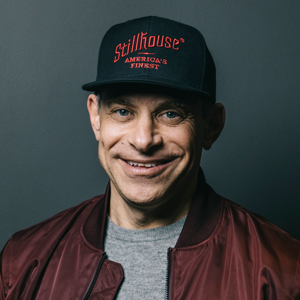
[00:00:55] Ray Latif: Hey everyone, I'm Ray Latif and you're listening to the Top Podcast for the food and beverage industry. That's Taste Radio. This is episode 145, which features an interview with Brad Beckerman, the founder and CEO of Stillhouse Spirits Company, the maker of Stillhouse Whiskey, a fast-growing brand known for its distinctive steel can packaging. Tune in on Friday, January 18th for episode 17 of Taste Radio Insider, which features coverage from the recently held 2019 Winter Fancy Food Show, and an interview with Stephen Renicleve, the Global Sector Strategist for Beverages at Rabobank. Just a reminder to our listeners, if you like what you hear on Taste Radio, please share the podcast with friends and colleagues. And of course, we'd love it if you could rate both Taste Radio and Taste Radio Insider on iTunes. At a glance, you might mistake Stillhouse Whiskey for a classic can of motor oil. The brand's cherry red steel can has turned more than a few heads for its resemblance to the package, and it's been a disruptive force on shelf. In the three years since Stillhouse introduced the can, the brand has picked up distribution across the U.S. and continues to expand its presence at major retail chains. Its path to success, however, was not as rosy as one might suspect. In an interview with founder and CEO Brad Beckerman, we discussed the origins of Stillhouse and the early challenges that almost doomed the brand. Brad, who helped build and worked alongside his father, David Beckerman, the creative sportswear brand starter, also discussed his background as an entrepreneur, how he sought to disrupt traditional norms for the spirits industry, and how he got multi-platinum rapper G-Eazy, to become an investing partner and co-creative director for Stillhouse. All right, everyone, it's Ray from Taste Radio, and I'm in West Hollywood at the offices of Stillhouse Spirits Co. I'm with the founder and CEO, Brad Beckerman. Brad, thanks so much for being with me.
[00:02:42] Brad Beckerman: Thanks for having me, Ray.
[00:02:43] Ray Latif: Of course, and thank you for inviting me into this pretty awesome office. We're in the back of the office.
[00:02:50] Brad Beckerman: In our speakeasy.
[00:02:50] Ray Latif: In your speakeasy, and it literally I mean, it looks like one. You got dark wood all over the place. Along the walls, you got a dark wood bar. You got the red leather chairs, the stools. Yeah, I'd spend a lot of time in here if I worked here.
[00:03:05] Brad Beckerman: Yeah, well, you know what? It's interesting, because you referred to it, which some people do initially, as the Stiles offices. You know, we didn't want to just create or have an office. Everybody at Stillhouse, myself included, spends more time with each other than we do with our own families. And we wanted to have a space and a place that was conducive of the lifestyle that we evoke. Have a place that is part of the energy and the vibe and the lifestyle that Stillhouse Whiskey all about. And so one of the reasons, and I appreciate you coming out here, is I wanted you to get a feel and a vibe that This isn't just like a brand that is a marketing thing. This is true from the ground up, a build of a vibe and a lifestyle that we all feel and care about. So coming here and showing you the speakeasy was to make sure that you really got a sense of it way beyond just what a package looks like or even what the spirit tastes like.
[00:04:04] Ray Latif: Yeah, I tried to get you out to Santa Monica and you're like, right, you got to come out to West Hollywood. You got to see the office. It's a pretty cool office, you know, and I'm glad I did.
[00:04:12] Brad Beckerman: Thank you. Thank you.
[00:04:14] Ray Latif: Before you were in the spirits business, you were involved in apparel. And from back in the day, your dad started a pretty famous apparel company. What was that?
[00:04:23] Brad Beckerman: My dad is an entrepreneur and was an innovator. He was visionary. My father, who created Starter Sportswear, which is still one of the biggest global sports brands in the world, he had a vision to get people that already have an emotional connection with their teams to have the ability to buy into that lifestyle. And it was part of kind of my upbringing. and understanding of what that is. And I've tried over the years to take that experience of being in the sports world and apply that thinking. to other areas and businesses that I've been involved with or have created. So Still House is no different. The mindset and the lens is very similar. It's what are the things that are important to people that they connect with, and most importantly, stay with? You know, it's one thing to get a consumer to buy something once. Great. Almost anybody could do that. How do you get them to come back? How do you get them to share their surprise of how great something is with their friends and on social media and all these other things? So it's evolved since the starter days, but starter was a great proving ground for me.
[00:05:37] Ray Latif: What were you doing with the company? Like, what was your role with starter when you first started working for the company?
[00:05:42] Brad Beckerman: Well, when I first started working for the company, I started in outside sales.
[00:05:46] Ray Latif: So your dad didn't give you like a CMO spot like right off the bat?
[00:05:50] Brad Beckerman: No, no, no. On the contrary, God bless my father. There was always something behind his thoughts and I could tell you, and I'm sure he'll hear this interview, but I didn't necessarily understand all of the reasons why he wanted me to go through a process. But what I can say to you is, Hindsight 2020, without question, it helped me on so many levels because it's not just about designing a product and producing a product and selling a product and marketing a product. It's how do you get and build that consistency, that awareness? You know, so when I started, I graduated from the University of Florida, and I was down in Florida. I had a marketing background and was working for the Marriott Corporation, believe it or not. And it just wasn't for me. I was literally a front desk manager, and it wasn't my...
[00:06:46] Ray Latif: I can't see that, actually.
[00:06:47] Brad Beckerman: That sounds a little strange looking at it now. It was one of those things as a young guy out of college that I wanted to do my own thing, and I was able to. And at the time, my dad had You know, a fairly well-known brand. We had seven different major licenses from the NFL, NBA, NCAA, NHL, Major League Baseball. And I mean, besides having a lot of friends, I was always the popular guy that, my God, starter, starter, starter. And it was really this thing that became much bigger than anybody, including my father, had ever expected because it was almost not even cult, but culture. I mean, the kids and the fans, you had two different dynamics, right? You had the true fan. the fan of the, if you're a Yankees fan or a Dodgers fan or whatever it is, and then you had the lifestylists, and you had these kids that were coming up, urban, hip-hop, out west, you had the grunge look, and they were all wearing hockey jerseys, baseball jerseys, satin jackets and hats, and it was incredible to watch the connection that from fans to stylistic people had to these teams and the logos and the colors. And half these kids that were rocking these hockey jerseys, they didn't know who the Hartford Whalers were or the Atlanta Flames or whatever, but they loved the colors and the logos and it became a look and a feeling. So Starter had two really different things going on. Actually three, right? You had authenticity, wear what the pros wear. So you had the teams actually wearing the jackets and the shirts and all of the jerseys and stuff. Then you had the enthusiasts, you had the fans that were diehards that bought the season tickets, right? And then you had the connoisseurs that were maybe casual fans, or they like to watch a Sunday game. And so when you think about what I'm saying, it's very similar to how we've approached even Stillhouse Spirits's like people say, what's your demographic? What do you mean, what's my demographic? What's the age group? Well, obviously in spirits it has to be 21 and older, right? LDA. But that's not how we approach things here because that's what everyone else does. We're approaching things with people that have a certain sensibility, aesthetic, vibe, attitude. edginess, and don't need to follow, but lead. And that's what Stillhouse Whiskey. And those are the things I took from starter. And then after starter, I went on to create a company called Trunk Limited, which I end up selling to Live Nation. And Live Nation today still owns it. And you may know Live Nation being the largest concert promoter in the world. But I took my experience from starter and I applied it to the music and entertainment world. Meaning, if you're a fan or were a fan of, where are you from? Boston. Perfect. Red Sox fan? Sure. Celtics fan? Of course. Pats? Not so much. Oh, good. Sorry, fat Pats fans out there.
[00:10:04] Ray Latif: Did you just say fat Pats fans?
[00:10:07] Brad Beckerman: Yeah, well, no, it wasn't. That was Freudian. I'm sorry. I'm not a Pats fan. Don't worry. And it's funny. I could actually say that today, just on a sidebar. Back in the day when I was working for my dad, he would literally force me to root for the teams that would sell the most merchandise. Oh, man. So, I never got to really grow up a fan of one team. So, like, if the White Sox were in the series with, you know, the Yankees or whoever, we were going for the Yankees.
[00:10:38] Ray Latif: That's amazing.
[00:10:39] Brad Beckerman: And so, but the Pats, anyway. Things have changed a little bit is what you're saying. Yes, things have definitely changed. But to that point, If you're a sports fan of North American sports teams, whether it be football, baseball, basketball, whatever, you say it, you know what it is. You leave the outside of the US and you say football, people think soccer. And the thing about starters, we built this global sports brand. over $700 million in sales. Annually. Annually. But that was predominantly in the U.S. I mean, we had international distribution, but 80% of our sales was done here in the U.S. And the reason I mention that is that what I did with Trunk Limited is I created the music and entertainment version of Starter, where we created authentic reproductions of both vintage and modern rock shirts, whether it was from bands that didn't exist or weren't even alive, or whether it was, you know, Aerosmith, Rolling Stones, Beatles. And at that time, this is going back 2003, you couldn't buy it. If the band wasn't on tour, Where are you going to buy it? And that just seems so ridiculous to me because- It does now for sure, yeah. Music is global. When you say Rolling Stones, Beatles, Justin Bieber, whoever, everybody around the world knows these brands. But everyone may or may not have known the Philadelphia Eagles or Boston Celtics or whatever. And so I apply that kind of mindset where if you're a Bruce Springsteen fan and you go to a Bruce Springsteen concert, I don't have to convince you you're a fan. You're already a diehard, you just spent 200 bucks on a ticket. I know if I give you a nice quality piece of merchandise and not crap, not something that is generic and stiff. you're going to be like, oh yeah, that's cool. And you're going to buy it. And that's what we did. So from 2003 to 2007, I built Trunk Up. We were very fortunate. We were selling limited edition high end prints on really high quality custom shirts that weren't just the standard off the shelf. Each one was numbered. We would typically only make 500 of a run. And then that was it, and we got this crazy cult following. I mean, every celebrity, covers of magazines. One of our first ones we got, I remember, was Enrique Iglesias. He was a Yes fan, and we had a Yes baseball shirt, and he performed on, it was one of the late night talk shows, I'm blanking on that. It was unbelievable. The next day, the phone's ringing off the hook, like, where can we get that? Where can we get that? And that, again, goes to the exposure. See, a lot of people look at celebrities as endorsees. I don't see it that way, because that's sponsorship. That's endorsement. That's paid. Not very believable. Some people. But for those that know, it's like, yeah, well, that company wrote a check and paid them to do that. And that's why the The partnership, which we'll talk about with G-Eazy, is so uniquely different. But through that time, we were very fortunate. We built a trunk up. Live Nation at the time didn't have a merchandise division. And they acquired us to come in and to build that out. And about a year later, as an entrepreneur, I exited the company and took a little time off. All of a sudden, I'm in the spirits business. And I can't tell you that I ever had the thought, the vision, or the desire to be in the spirits business. So I want to be clear on that.
[00:14:31] Ray Latif: Stillhouse Whiskey gone through a few different iterations, a couple pivots in terms of how it's positioned and how it's marketed. Stillhouse Whiskey initially packaged in a glass bottle. Yes. And this was well before the company really found its footing for sure now it's packaged in this steel can steel can reminiscent of an old oil can yeah so again when you launch the company very different approach to the business
[00:15:01] Brad Beckerman: It's interesting, you know, I'm so focused as to where we are today and where we're going, you know, sometimes I forget our humble beginnings. Then you mentioned the word pivot. It's true, you know, being an entrepreneur, whether you're in the food and beverage business or the clothing business or entertainment business, great entrepreneurs have instincts, right? I check three things, my head, my heart, my gut. If those three things are aligned, I trust it, I'm good. it's when your head or your heart goes, oh, I don't, you gotta check that gut. And even though you might emotionally be connected to something where you're like, your head goes, oh my God, I love that, I love that, you gotta check that gut again. Is that something that can really be applied? And so as an entrepreneur, I've learned to trust that gut. But it has taken several iterations over the last nine years. You've needed some probiotics to clean out that gut, maybe. Yes, whatever. Yeah, no question. And as my wife likes to remind me, you know, everybody's going to see Still House and G-Easy and all this stuff. And they think you're just like this overnight success, you know, nine years later. Right. And we're by far, we're not even where we intend to be.
[00:16:15] Ray Latif: And it was also called Moonshine at the time. You didn't call it White Whiskey.
[00:16:18] Brad Beckerman: Yeah, the brand. See, that's the thing, and I can show you if you want an original bottle. It was... Moonshine was the fanciful name or the brand, because we were able to get a trademark, and today we still own Moonshine and Moonshine.com. But as you'll hear and as we discuss through kind of the evolution of this company and this brand, we kind of took a left. Really the idea was moonshine was gonna be the brand name, if you will, but it was clear whiskey, which was what the juice was, and the idea was to have the first clear mixable whiskey. And what a lot of people don't know, the thing that catapulted Patron, as an example, was the silver. And when they first started out at the very beginning, once it started catching on, they were making on Yeho, and they had run out of the, on Yeho, and the distributor said, what do you got? And they said, well, all we got is silver because it wasn't, you know, age or whatnot. And Yeho being parallel aged tequila. Correct. Correct. And when they shipped the silver, It went crazy because of mixability. They can make all these premium margaritas and cocktails. But I share that with you because it was kind of the same thought. Well, that tequila, Patron clearly was the brand that kicked off that whole premiumization of tequila at the beginning anyway. And yeah, so he thought, wow, if you could become like the Patron of whiskey, meaning you create this clear whiskey, mixable, and people that
[00:17:54] Jon Landis: want a little bit more character in their cocktail.
[00:18:12] Ray Latif: So what was the story you were trying to tell with Moonshine? It sounds like it was a historical story and it sounds like it may have worked for some time before consumers started to tune out a bit.
[00:18:24] Brad Beckerman: Yeah, so the main thing besides the mixability, we were trying to position ourselves as a premium mixable clear whiskey initially with Moonshine being the call. We were the first ones that came out. This is in 2010. And within six months, there were, oh my goodness, a dozen of these mason jar brands of quote unquote moonshine. But what people don't understand or didn't understand, consumers I'm talking, is that moonshine isn't recognized by the TTB as a category. It's a fanciful name. So whoever came out with the moonshine, if you looked on their side label and their statement of composition, it would say gray neutral spirits. Well, that's vodka. That's not moonshine, real moonshine back in the day and the nod and why. we called the company still house and moonshine is, is that moonshine were made in these still houses under the light of the moon. And when it was dark, cause it was illicit and it was whiskey, corn, whiskey, not vodka. So these companies that came out with a Mason jar, which was a novelty and smart of them at the time, You had the wide rim mouth of the Mesa jar, so it really didn't work for on-premise at all, because you couldn't get a correct pour. And it tasted like crap. It was just like artificially flavored vodka in a jar that said moonshine. So you're right, it became a very overcrowded space, like overnight, literally. To their credit, they were doing hundreds of thousands of cases in less than a few years. And at the time, we were only doing a few thousand cases, right? So it becomes this overcrowded market. You believe, though, at least I did, as an entrepreneur, there's still a there there, but now you have to kind of reinvent yourself.
[00:20:28] Ray Latif: And that starts with the package, which you... Start with the package. You've done a pretty dramatic... Uh, reinvention of what a spirits package looks like. Yeah. Take us through that process.
[00:20:42] Brad Beckerman: When the glass jug of moonshine became just a novelty, we had to make a change. I had to make a change or I would have been out of business. If we didn't change, we'd be out of business today.
[00:20:56] Ray Latif: One might argue, though, that the can itself is sort of a novelty kind of package.
[00:21:02] Brad Beckerman: Yes, they might argue that, but I'm going to explain why it's not. Okay. First of all, when we designed this oblong shape, and I'm describing it because obviously we're not on camera here, but this unique shape, although reminiscent of a classic oil can... I keep using the word old. You used the right word, classic. Classic, for sure, because it's iconic-looking, right? A couple of things. We wanted to make sure that we made it in 100% stainless steel. Why? Let me explain. If you made this in any other type of metal and it wasn't specially coated, it would change the color and the flavor of the whiskey. It would turn it green. Stainless steel is and has been used in the spirits industries for over a hundred years. Why? This is how and where they store the whiskey, right? After it's aged, meaning before it's bottled. You don't bottle right from a barrel. They have to filter it, get all the sediment out, and then they put it in giant stainless steel vats or tanks. Stainless steel, because stainless steel is non-porous. It doesn't, you know, have any residue of flavor or color impediment or anything like that. And the thought process was you have these stainless steel vats or tanks or places that these big spirit companies would store their spirits before they bottle it. And we thought, what if we made a stainless steel vessel that was unbreakable? And what we learned is our Brandt Gehrs where glass can't. Was that important to consumers at the time though? No, see, that's the thing. And that's where I go back to how traditionalists in this business want to look at data, data, data. But what they weren't looking at were the voids in the market. What about all these people that are going to tailgating, going outdoor camping and fishing and backpacking and music festivals? You can't take glass there. It's not because we're the smartest people in the world. We execute. And I think that's why we've been able to make such a very quick impact and why we have the kind of distribution we have is that. Retailers and consumers alike are looking for innovation. They're looking for ways to have those occasions enjoyed differently. So you could take still house with you hiking, camping, snowboarding, backpack. you know, tailgating music festivals, and you're not going to bring a glass bottle of anything. I mean, people might, but there's a high percentage that it's going to break, and most people don't want to take something that's going to break. It's probably one of the biggest reasons why, when you look at the beer business, that most of the beer sold is in cans, not glass. You have higher breakage, higher consumer costs, Cans are lighter than glass. They're stronger than glass. So you have all these things. And in our particular package, our standard 9-liter case of 12, 750s, that footprint is almost half the size of a glass footprint of the same 9-liter basis. So when you think about a retailer, they're actually going to get more value per square foot on our package and our brand than other brands just by the area that we take up.
[00:24:38] Ray Latif: Certainly a lot of efficiencies, it sounds like, from a business perspective with using this steel can.
[00:24:45] Brad Beckerman: The biggest shift and pivot we did that has at least so far worked out is we had to abandon the past and head into the future. And the glass was both figuratively and literally the past.
[00:25:02] Ray Latif: And dropping the word moonshine off the package as well. Yeah.
[00:25:06] Brad Beckerman: Moonshine was Again, never supposed to be marketed as moonshine, the illicit, bad tasting. The original thought, candidly, was imagine 100 years ago if you could own the word whiskey or vodka. But you know what? We learned it didn't translate. But what I did know was there was still an opportunity to get people who wanted flavored whiskey. And you got to remember something, even when it was called Moonshine, it was whiskey inside. It was the real deal. And I think that was the thing that kept me going is that people would try our whiskeys and be like, they would get confused. They'd be like, well, why does it say Moonshine? And we just got to a point right before we launched this new package, it was like, I want to take the confusion away. You know what I mean? Like, yeah, it was confusing. The word the term moonshine just confused everybody.
[00:26:01] Ray Latif: So step one was moving out of the bottle and into the can. Yep. Step two was getting away from the word moonshine. Yes. And focusing on whiskey. Step three, aggressive sampling. Yes. Step four. is pressing the gas on that lifestyle component of what Stillhouse Whiskey all about. And that does include your relationship with G-Eazy, a well-known rapper who is based out of Oakland. Listeners of this show may not know or may not be very familiar with him. Tell us about him. What was his interest in Stillhouse and what was your relationship? How did your relationship turn into a partnership?
[00:26:40] Brad Beckerman: At the time, I wasn't aware who G-Eazy was. And I grew up on hip hop and urban music. But this dude, Gerald G, G-Eazy, was this real up and comer that was about to hit it hard. And you gotta understand, when I met him, he was under a million followers. He had come off a smash album with Me, Myself and I, which is a platinum hit. And what ended up happening is I met him by, candidly, by fluke. And when I tell you this story, it's crazy. Because of my background in the music business and knowing all these various people, we had done a party. We hosted a party for this manager named Sal, who's the weekend's manager at his house. And he had all these music celebrities and executives there and great sampling opportunity to get these tastemakers to try it. And I'm at the party and I run into an old friend of mine from the music business named G. Roberson. And G is like, he's iconic in the music business. He founded Kanye West and Lil Wayne and Nicki Minaj and all these amazing artists in the urban world. And he's like, yo, man, what are you doing here? And I said, you know, I'm in the spirits business now. And he's like, the spirits business? What are you talking about? And I go, you want to come check it out? He goes, yeah. We walk over to the Stillhouse Bar, and we got it all dialed in, VIP, the whole deal. And he says, listen, I just want to let you know, I'm not really a big drinker. And I go, all good, but can you just sip it? Can you taste it? Couple of days later, he hits me up, he goes, I got it. And I go, all right, what is it? And he goes, G-Eazy. He fancies himself and sees his whole energy like Johnny Cash. Well, that just really registered to me. Now you're thinking, wait a second, hip hop guy, rapper, Johnny Cash, where does this all play in? So we end up having dinner. the following week, and he goes, he comes to dinner, I'll never forget it, dressed all in black, handsome dude, slick back hair, walks in and we just start shooting the shit, immediately connect, we connect on Johnny Cash, we connect on Whiskey, we connect on being an outlier. You gotta remember something, he's one of the biggest rappers in the world right now, and he's white, so he's an outlier, we're an outlier. So he's got an unbreakable spirit, still has an unbreakable spirit. There was all of this energy. And I meet this guy and YSL loves him wearing their stuff and he's 6'4", 6'5", like a model off of a Milan runway. But badass and an attitude, but not a bad attitude, a cool attitude and he's got swag. And I didn't know what to expect. It was just, it was awesome. His energy was awesome. And from that point on, we spent more time together. And what I said to Gerald, you know, G, I said, look, I'm not looking for a celebrity endorsement. I'm not looking for you to tweet something or post something a certain amount of times. If you want in, you got to be a partner. You got to be a stakeholder. And what that means is you got to invest. You actually got to write a check. And a lot of people think, like, that was a crazy move. Like, why would you ask a celebrity to write a check? All these celebrities, typically, they want to get paid. Their managers want to get paid. The agents want to get paid. And my thing is this. Anybody could write you a check. We didn't have that kind of money. I want you to have enough skin in the game. that you'll be pissed and upset if you lose it. I want you to really have something in this that means something to you." And it wasn't even a thought. He immediately said to me, done, not a problem. And we didn't negotiate how much. I trusted, and it ended up being a significant investment, that the amount of money that he said was going to be good enough for me. And we've had that rapport since day one. And he's my co-creative director. He resonates what this brand is all about. He helped me design the package for our black bourbon, which is in a matte black can and clearly the matte being a nod back to Johnny Cash and badass and irreverent. And I could not have asked for a better partner. There is nothing that we've either needed or asked him to do that he would not do if he could if he was physically around. Easily a dozen in-store appearances at retail. I'll give you an example Binny's in Chicago We did a in-store with him this past spring 700 people were waiting in line in the morning at 730 in the morning and he didn't show up until almost 12th waiting in line in a blizzard snowing out in Chicago and Binny's never saw anything like this even with Diddy or We sold 65 cases in two and a half hours, 65 cases. And he signed every single can and took pictures with every single person and fan that waited in line and didn't complain. I mean, you could see the videos. It's unbelievable. And this is who this guy has been. This is a guy that just gets it. Yeah.
[00:32:17] Ray Latif: It sounds like. This is a truly authentic relationship. I mean, you've used the word a few different times, authenticity, and it's one of those words that gets a little overused in this day and age. But to my point earlier, G-Eazy doesn't necessarily seem like the, I guess, obvious partner for Stillhouse.
[00:32:39] Brad Beckerman: What everybody's always interested in is what you said. Why a white rapper? Well, again, you got to look at who the white rapper is. It's not just because he's a white rapper. It's because what he evokes as who he is, his attitude, his unbreakable spirit. I mean, again, I couldn't have created, honestly, anyone better than who that dude is and what he represents to Stillhouse. And he's my partner. I mean, he's my true partner. He and I have become, candidly, like brothers. Although he is several years younger than me, he would call me his big bro. Without question, I'm one of his closest friends in his life at this point, besides his family and a few others that he grew up with. We're confidants in each other. We trust each other. He's got my back. I have his. And most importantly, he lives and breathes Stillhouse. I mean, if you go on his Instagram and his social media, and these aren't just, like, marketing posts. These are, like, In real time, we went on tour with him. We did, I don't know, 30, 40 dates. We wrapped a tour bus. We, on a studio, he had a mobile studio on the road. We did crazy activations that weren't just like a bar, but like an experience. And that's the thing with us. We're not just like doing Me Too shit. It's not like, okay, anybody can put up a bar with some attractive person serving it. That's not what this is about. This is about true lifestyle, true in that moment of, hell yeah, man, this is my brand. Still House is my brand, and that's really at the end of the day what we're trying to do. We wanna connect with our fans through a way that other people just haven't thought of, and it's directly through the brand.
[00:34:27] Ray Latif: It's such an amazing story, and the brand has gone through such an interesting evolution, and I'm so glad that I had the opportunity to come out here and meet you, Brad, and experience it in real time and in person. Really appreciate the time. Thanks so much again. Hope to hear many more great stories about Stillhouse in the future. Thank you. That brings us to the end of episode 145. Thank you for listening, and thanks to our guest, Brad Beckerman. You can catch both Taste Radio and Taste Radio Insider on Taste Radio.com, iTunes, Stitcher, Google Play, SoundCloud, and Spotify. Once again, for questions, comments, ideas for future podcasts, please send us an email to askatasteradio.com. On behalf of the entire Taste Radio team, thank you for listening, and we'll talk to you next time.