[00:00:00] Julie Smolyansky: All right, folks, we've told you who the Chobani Incubator is looking for.
[00:00:15] Eastern Europe: Passionate entrepreneurs who are making delicious, affordable, better-for-you food and beverages. And we've discussed what they have to offer. Equity-free investment, a three-month curated program, access to all sorts of resources. And we've told you the effect. Average 250% growth in distribution and 150% increase in quarterly revenue. So the only question is, do you have what it takes?
[00:00:37] Julie Smolyansky: Head to ChobaniIncubator.com to get started.
[00:00:40] Eastern Europe: There are only a couple of days left. The application deadline is January 31st. Do not wait any longer. Apply now and good luck. And now, Taste Radio.
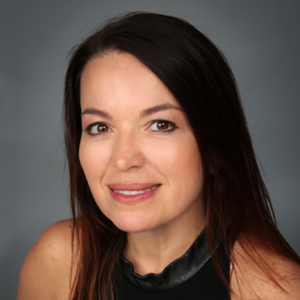
[00:01:01] Ray Latif: Hey everyone, I'm Ray Latif, and you're listening to the Top Podcast for the food and beverage industry, Taste Radio. This is episode 147, which features an interview with Julie Smolyansky, the CEO of Kiefer Pioneer Lifeway, who, since taking the reins of her family's business at age 27, has built a brand that brings in over $100 million in annual sales. Tune in on Friday, February 1st for episode 19 of Taste Radio Insider, which features interviews with Patrick Tanous, the co-founder and CEO of functional tea company Tiesta Tea, and Robert Jacoby, the founder and CEO of Better For You soup brand Boo. Just a reminder to our listeners, if you like what you hear on Taste Radio, please share the podcast with friends and colleagues. And of course, we'd love it if you could rate us on iTunes. There is some disagreement about the correct pronunciation of the fermented milk drink spelled K-E-F-I-R. Yet, whether you pronounce it kefir or kefir, there's no question about how you say the name of the leading brand in the category, that's Lifeway. Founded in the late 1970s by the Smolyansky family, Lifeway paved a path for kefir, long a popular beverage in Eastern Europe, here in the US. Julie Smolyansky is the CEO of the Chicago-based company, and has been at the helm since the untimely death of her father in 2002. Over the past 17 years, Julie has led the publicly traded company to a nearly tenfold growth in sales, and a significant expansion of Lifeway's product offerings, which include a variety of kefir drinks, yogurts, kids foods, and frozen desserts. In the following interview, recorded via Weblink, Julie spoke about her family's path to the U.S. and the development of Lifeway, which started out of a basement and now operates a major manufacturing business. She also discussed taking on the role of CEO at a relatively young age, how she deals with criticism, the company's innovation strategy, why Lifeway releases some new products as quote, a marketing expense. All right, folks, it's Ray with Taste Radio, and I'm on the mics with Julie Smolyansky, the CEO of Lifeway. Julie, thank you so much for being with me on Taste Radio.
[00:03:07] Soviet Union: Thanks for having me.
[00:03:09] Ray Latif: How are things in Chicago? I'm actually in a room right now in a corner of our office, and it is frigid in here. It's not as cold as it is outside, but it's pretty darn cold in here.
[00:03:19] Soviet Union: Yeah, we're getting some weather here. It's both rain and snow and gray. But you know, it's what makes Chicago resilient and strong and we have such a strong sense of community when we get through these kind of harder days.
[00:03:36] Ray Latif: I feel the same solidarity in Boston, even though we're about, what is it, 1,500 miles away or something like that? Yes.
[00:03:41] Soviet Union: Right. Yeah, it builds character.
[00:03:44] Ray Latif: You were in much warmer climates not too long ago. You were in the British Virgin Islands at Richard Branson's Necker Island.
[00:03:50] Soviet Union: I was. That was so exciting. I had this incredible opportunity to get invited and head down over there and learn from him and share the story of Lifeway Foods, which I'm sure I'll share lots of similar stories that I got to share with Richard and his team, but yeah, it was incredibly surreal and magical and iconic and he was just absolutely such a great host and such an inspiration to see and learn from this entrepreneurial man who sees no limits in life at all and just keeps dreaming big and bigger and is so generous with his life. So it was absolutely inspirational to be there and learn and share the story of Lifeway.
[00:04:41] Ray Latif: That sounds pretty amazing. We'll have to get him on the podcast at some point. Hopefully you can make an intro.
[00:04:46] Soviet Union: Absolutely. I mean, we'll definitely talk about like, what are we going to be drinking when we're up in space? I mean, hopefully it's kefir. I mean, my goal is to take it up to the next frontier since, you know, it's survived for 2000 years and has all this folklore. I feel like the next frontier is kefir in space.
[00:05:03] Ray Latif: I like where you're going with this. Richard Branson, a really inspiring entrepreneur. Your dad, a really inspiring entrepreneur. He's the founder of LifeWay. And he and your family came to the U.S. in the 70s, right? Right. Prior to the launch of LifeWay. Yeah. You were refugees after leaving the Soviet Union. You were granted asylum here. Today's current political climate must bring up some feelings.
[00:05:29] Soviet Union: Yes, of course. You know, we wouldn't be here, I wouldn't be here if it wasn't for our policies and this, you know, belief that when you seek asylum that America is here to open its arms and, you know, bring me your tired, bring me your weak and your poor. For us, we defected late one night from the Soviet Union. My parents told nobody. I was a one-year-old infant. I mean, they had decided when I was born, the day I was born, to make a plan and leave the Soviet Union. I mean, they were starving. There was bread lines. There was never just always scarcity, lack of freedom. You know, my dad actually, when he got a Beatles and Led Zeppelin record that was a black market, like underground black market, because he could have, I think when he realized, when he listened to these records, he thought, I could go to jail for even possession of these records, because they were contraband. And that, I think, really bothered him as a 20-something-year-old man, and same with my mother. And he read the Constitution and decided that America would be the place that he wants to raise his children. And he had done everything he could. They both planned. And like I said, late one night, they got on a train, defected with one suitcase, And we lived in exile for three months in Italy, and they tried a lot of interesting food, and their eyes were just blown away by life outside of the Iron Curtain. And then we landed at O'Hare with $116 three months after leaving the Soviet Union. I think then they sort of realized, I think my mom really realized that while there was so much food in the United States, it was completely different than her Slavic type food that she was used to. And she decided that there's going to be this like exodus of Soviet immigrants leaving the country and settling in the United States, that there would be delis that popped up. So she opened up the first deli in Chicago. Wow. What year was that? That was in 78. Two years after settling, they scraped together whatever money they could save and they opened up the first Russian deli. Then she became an importer and distributor of Eastern Europe food. She'd buy containers from various Slavic European countries and import them here into the States. She was cutting multi-international deals just in her mid to late 20s. She grew up, She learned English watching General Hospital. So this is how the story of my parents and their journey and how insightful they were and resourceful and this kind of keen sense of business that they picked up on or market or sort of niche within a market. And so when we were in Rome, for example, when we lived in Rome for the three months, it was the first time she tried Nutella. When she came to Chicago and opened up the deli and all these Russians were coming into her store, they all went through the same journey to get to America. Everyone passed through Italy and waited for their papers in Italy, and they all tried Nutella. But there was no Nutella yet in the United States, so she recognized this. imported the very first cases of Nutella into the United States and then distributed them to the other delis in Brighton Beach and LA and the other markets that there were immigrants settling.
[00:09:19] Ray Latif: Well, God bless your mother because Nutella. Where would we be without Nutella in this country?
[00:09:26] Soviet Union: I know. It would be a disaster. So yeah, I mean, we kind of always had this like start within food. And I think that one thing that immigrants bring to our country is this really interesting palette of unique foods and dynamic and, you know, various foods that are staples in our various countries of origins. And there's so many things that we haven't even tried yet that, you know, these flavors that exist in regions and lands that we don't even know about. And I find it fascinating that we can blend these various flavors and the benefits. Every culture has the kind of superfoods that they believe can contribute to health or wellness or whatever. And so I find that absolutely fascinating.
[00:10:15] Ray Latif: And your dad thought that kefir was a superfood that Americans lacked here in this country.
[00:10:21] Soviet Union: Absolutely.
[00:10:22] Ray Latif: Yeah. And how did that become the flagship offering? How did that become the basis of, well, what is now Lifeway?
[00:10:31] Soviet Union: Yeah. Well, so as my mom and her distribution business continued to grow, so we're like 10 years into our life in the United States and they go to Seattle. for one of the trade shows, and they're in Germany, and they buy three bottles of kefir in one of the supermarkets because it's a staple and was a staple throughout Eastern Europe. In the Soviet Union, a typical lunch was a quart of kefir and a loaf of bread. It was very scarce. and humble. But now we know this magical effervescent formula has got all these medicinal benefits and preventative and health and wellness. So it's kind of one thing that kind of kept this population healthy, as healthy as they could be. So they're in Germany. They buy the kefir. My dad is like, America has everything, but it doesn't have kefir. And my mom says, oh, I mean, he didn't even stay alive to see the iPhone. So man, he missed out on some cool innovations. But my mom says to him, well, you're an engineer, why don't you design the plant and the machinery and make the product make kefir and I'll sell it in my distribution network. And it was six months later, they incorporated the business and he starts making the formula in our basement and delivering it after his a 9-to-5 job, and it takes off. First, it was just for this Russian market, this growing Russian community that was bubbling in Chicago and New York and various urban, suburban areas. And then the health community started to take off. So we saw Whole Foods and Wild Oats and all these co-ops and all these natural food stores just blowing up. And it really started to really blow up towards the late 80s, early 90s, and even all the way through today. I mean, the space has evolved so much. But then when that natural and organic health community started to understand and recognize and read about the benefits of kefir and probiotics, that's when we really took off and as health and wellness and organic kind of went from just these niche small mom and pop stores to big business and as the mass market stores started to build in like store within a store concepts and started to go from this dusty part of the grocery store to the primary moneymaker for for grocery And so we kind of grew with that with that tidal wave and we were one of the first early pioneering brands in the natural food space and at Whole Foods and whatnot. So I think we're really, really proud of the conversation that we've been able to lead and especially on probiotics and I mean, we were the first company to write probiotics on our products. I remember my dad saying, never talk about bacteria with food because Americans don't understand it. You have to only talk about the calcium and protein. They don't want to hear about bacteria. And we really embraced it because we realized that we did not have the advertising budget that the big food companies had. We could not stand on lifestyle alone, that we had to take the risk and talk about bacteria and talk about good bugs and educate the marketplace on the benefits of probiotics. And so we took that risk and I think it did pay off. And that's what the Of course, today the probiotic industry is one of the hottest industries. It's the biggest trend and we're even within the micro trend talking about gut health being the number one health and wellness trend happening all around the world globally. We're very proud that we were able to make that connection between food and health and wellness and the fact that what you eat impacts your health and wellness.
[00:14:27] Ray Latif: Now, so we did skip over a key part here of this discussion, which is for the benefit of our listeners at home who may not be familiar with kefir or kafir, can you describe exactly what it is? And can you give us the correct pronunciation? Because that's also, that's also been one of those sticking points for the category.
[00:14:50] Soviet Union: Yes, yes. So there's so many ways to say it. In Russian, we say kefir. So we rolled the R, but some people say kefir and some people say kefir, and both are proper. And it's sort of like, you know, which part of the country are you from and which dialect you're using, but both are okay. You know, we say kefir or kefir, but actually we're, you know, talking about Lifeway Foods the category leader. And so I think eventually it should be, Hey, have you had a Lifeway today?
[00:15:22] Ray Latif: Nice. And how do you produce kefir or kefir? I'm going to call it kefir just for the remainder of this conversation. But how does one produce kefir?
[00:15:33] Soviet Union: So we have the original cultures that my parents smuggled in actually from the Soviet Union. So we have the original strain that we have replicated over time, and then we inoculate the milk, we ferment milk. So kefir is defined as these group of cultures. Different cultures exist, so whether you're making yogurt or buttermilk or sour cream or kefir, there's different kinds of cultures that are used. When there's non-dairy versions of it, then it's a non-dairy version of a probiotic beverage, but it's not kefir. And so it's important to preserve the definition and the standard of identity in this category, especially dairy is a very protected category. It's like when you buy ice cream, there's certain composition within the ice cream, you'd have to have a certain level of, you know, milk fat, water, all the various composition points to have a certain level of type of nutrition. And when you're buying that product, you know what you're getting. And especially with kefir, given the 100 years of medical research that's been done around it, this is a point that we're trying to make that by changing the definition of what it is after 2,000 years would also invalidate 100 years of research around it. But so, you know, this idea is that there is a ton of research now that's emerging around the benefits of these cultures and the fact that when you actually ferment in a dairy source, that these cultures stay alive and offer the most amount of function to get through the entire digestive process. Like we see with supplements, for example, if it's just a probiotic supplement, it doesn't make its way through the entire digestive process, mostly because the stomach is so acid. So we want the cultures to survive that acid process and the entire digestive process. And Dr. Goldberg and Dr. Romero, these two scientists, have done a lot of research on our product. tested fecal matter after subjects who used kefir and those who used supplements or other types of probiotics and found that only the kefir survived the entire process of digestion. That's really important.
[00:17:43] Ray Latif: That is definitely the first time we've had the phrase fecal matter on Taste Radio. Thank you, Julie.
[00:17:50] Soviet Union: For heard it here first.
[00:17:51] Ray Latif: For heard it here first. Great stuff.
[00:17:55] Soviet Union: It's like I'm a doctor. I mean, listen, it's the thing. It's like, I mean, everybody poops and no one wants to talk about it. But we pride ourselves in talking about poop.
[00:18:06] Ray Latif: Now, that has been brought up on the show before the folks from blueprint, the co founders of blueprint shoes did bring that up once before. So you're not the first to bring that up.
[00:18:16] Julie Smolyansky: We will be hosting BevNET Live for the 21st time in New York City this summer on Wednesday and Thursday, June 12th and 13th. It's never too early to invest in your knowledge and network in the beverage industry. Early registration is now available. Head to BevNetLive.com for tickets and to learn more.
[00:18:35] Ray Latif: These are the things you have to talk about when you're a CEO. You can't be afraid to explain what you're about and why you're important, your brand that is.
[00:18:43] Soviet Union: I mean, everyone wants to have a BM. I think that's kind of a common talk. You know, I don't know some, some families, at least in my family.
[00:18:52] Ray Latif: Sure, sure.
[00:18:54] Soviet Union: Yeah, but no, I mean, think about it, like how cranky if, you know, if you're off like people, it impacts our whole day if we're not feeling well. And now we're learning that the gut is the whole epicenter of the whole diet, you know, the whole wellness. It's the primary brain, we used to think that the brain was in your head, it's actually in the gut. We've discovered a second brain and most of actually our decisions are coming from there. So when you have an unhealthy gut, that does impact a lot of other decisions and things that are happening within your whole body. So, you know, we are just discovering what the microbiome and what bacteria is doing to our bodies. And I think it's just beautiful that our ancestors 2,000 years ago intuitively knew that when they drank kefir, because this product originated in the Caucus Mountains like over 2,000 years ago. Marco Polo wrote about it as about in the Bible, Genghis Khan, Cleopatra bathes in it. I mean, it's got a long history and folklore around it. And so when people drank it, they said they felt better. They experienced a sense of well-being. And they called it the champagne of dairy and a gift from the gods. And now science is backing up what our ancestors intuitively knew. And I think it goes back to like this intuition, right? And the gut knows.
[00:20:20] Ray Latif: Let's talk about your role in the company. Prior to you taking the reins as CEO, what were you doing with Lifeway?
[00:20:28] Soviet Union: Well, before this position, when my father was alive, I was director of sales and marketing and I worked about five years with him side by side. So I studied advertising and its impact on dieting behavior, which I actually now think I didn't really fall too far away from where my passion lies. I've always kind of been interested in how we can encourage people to make different types of food choices, either good or bad. I have always really been interested in health and wellness, even just personally for myself. I've always been really athletic and curious. And then, of course, I grew up in the 80s and 90s during Jane Fonda. buns of steel era, so certainly grew up in diet culture and I found it to be really fascinating and I mostly now am interested in how we can use foods to fuel all of our goals versus feel shamed about it the way that many, you know, marketers in the 80s and 90s did kind of talk about food and what we're eating or not eating.
[00:21:40] Ray Latif: Clearly, you're passionate about the company, the brand, the product itself. Were you as passionate for the role of CEO when it came to you? How do you prepare for that role? I mean, it seems like it happened so suddenly.
[00:21:57] Soviet Union: Yeah, it did. So yeah, my dad had a sudden heart attack in the middle of a sunny summer morning and both myself and my brother who was like four years younger got thrown into, you know, these roles. Listen, you're never ready for anything and you don't have experience until you have experience. I was naturally a leader in my life. I had led a lot of, you know, various projects. I guess I had a lot of confidence. And my father really groomed us for a leadership role. We'd grown up in the family business. We grew up watching both of our parents build businesses. It was, you know, the dinner table conversation. And frankly, all the conversation in our lives was around our parents' businesses and their entrepreneurial experiences. And we grew up in our businesses. I mean, our playgrounds were my parents' warehouses and their plants. And we spent most of our spring breaks and summer breaks working in their businesses and helping them. So it felt very intuitive to just do the work that needed to be done. And I absolutely would not let all that my parents had worked for to go to waste. And it felt healing to work and do his work, you know, it felt really special to be sitting at his desk and kind of fulfilling some of his dreams and to take it even farther than he ever expected. I don't think he ever expected Lifeway Foods be what it has become.
[00:23:32] Ray Latif: There was some motivation that you got. I had read an article where a friend of your father's, after it was determined that you would be taking over as CEO, had said that, quote, there's no way that a 27-year-old girl can run this company. That's it. It's done. And that lit a fire under you, it sounds like.
[00:23:55] Soviet Union: Absolutely, yeah. I mean, you know, when I heard that comment, it just angered me so much. First of all, because it was both my youth and my gender were both under attack. But then I remember, listen, my parents came to the United States with no English, no money, no friends, and an infant toddler. So If they were able to, with all those challenges and adversities, come to the United States not knowing what they were in for, now me educated, my brother and I educated in the United States with resources, with a network, with folks who want to help us, and a well-greased You know, Operation Lifeway was a $12 million business at the time. You know, there's no reason why we shouldn't be able to do this. And I was executing on the strategy that my father and I had developed and tweaking it along the way and, you know, doing the things that needed to be done to grow the category and the product line and the brand. And, you know, it worked.
[00:25:00] Ray Latif: Now, where's Lifeway in terms of annual sales? You said 12 million when you took over.
[00:25:04] Soviet Union: Yeah, so we're about 100 million today.
[00:25:07] Ray Latif: In addition to all the challenges of running a manufacturing business, Lifeway Foods a publicly traded company. Right. And there's a lot of challenges to that aspect of what you do, particularly from financial analysts. I've seen some pretty venomous things said about you personally. How do you deal with that criticism and how do you sort of balance The demands of running, again, a publicly traded company with the day-to-day operations.
[00:25:35] Soviet Union: Yeah, well, I mean, I think it always goes back to values and what we stand for. And the fact that, well, I mean, we're here to provide the best product to as many people and improve the quality of their lives and their health. And we are especially sensitive to the most vulnerable people in our society, which is young kids, women of color, people of color, communities that are disadvantaged and under-resourced.
[00:26:06] Ray Latif: The thing is, it doesn't sound like that, what you're saying, and as honorable and wonderful as it does sound, and as much as I might agree with it, financial analysts might say that has nothing to do with business.
[00:26:17] Soviet Union: Well, I would disagree because if you read, I think, last year's letter that Larry Fink from BlackRock wrote to investors and Today, millennials demand and buy from companies that have a social impact piece to their business. And for Lifeway, that's part of our DNA. It's built into our DNA. Millennials are demanding and looking to corporations to take a stance on some issues that they feel that there is no leadership on. And so it's really important for us, for example, to lead on being carbon neutral or putting green energy back on the power grid. We were one of the first private organization to do that type of work. I'm very proud of that, for example, or, you know, the kind of packaging that we're using, you know, we have implemented various like biodegradable packaging. So we know that, you know, millennials want to see reduction in plastic. So this is not just for doing good. There is a financial purpose to it because today that is sort of the starting line. It's a given today that companies will have social impact built into their into their business or you really don't have anything anymore today. There's no purpose to business if you're not there to improve people's lives in some way and have that social impact. And people want to, haters want to hate. Unless you've done it, like don't, you know, I feel like you really, unless you've built a hundred million dollar business, I feel like, you know, you kind of can't necessarily be throwing shade.
[00:27:58] Ray Latif: Obviously, businesses have short-term goals and long-term goals. So when you are thinking about innovating, for example, how do you plan out for next year versus five years from now? How do you strategize for the future?
[00:28:13] Soviet Union: Again, you can't please everyone. We're obviously making decisions that we back into based on particular data, research, market research, market demand, consumer demand, retailers. We work very closely with our retail partners to innovate what they're asking for. So it's done through some sort of strategy. Not every product is a winner, but I would say that every product has a reason for existing or existing for the moment. And maybe it's just to hold space on a shelf and keep that name out, or maybe it's more of a You know, some products are launched as a marketing expense, like gotta stay relevant, gotta show that we're doing innovations, but they don't all stick. Or maybe they don't work for one particular reason, but when you go back and find out the reason and study why they aren't doing well, you can tweak. And I think ProBugs is a perfect example. When we launched ProBugs in 2007,
[00:29:16] Ray Latif: Which is your kid's product?
[00:29:17] Soviet Union: Yeah, our kid's product. We were the first to bring the pouched concept to the United States. We launched it at the recession, at the height of the recession, when, you know, things were so dismal. And we took this risk and said, well, we think that people will maybe not go on vacation. an extra time, but they will get their kids the highest quality of products that they could because for your kids, you would do anything. You'd want the best quality for your children. And that's exactly what happened, but that only happened in one market. It only really took off at Whole Foods in the beginning. Whole Foods couldn't keep it in stock, but yet Mass Market couldn't sell it to save their lives. There was some discrepancy and we had to understand why, and I understood why. So we started to unlock that. And then the other part of it was when we first launched ProBugs, we had the carrier. So it was a four-pack. The carrier was not properly I don't know how to say it. It was just not properly designed. And since, again, we're the first to trailblaze this pouched format, we didn't know how to pull together this four-pack. We wanted to sell it as a four-pack. And the first carrier package was a failure. It was falling all over the shelf. But we were the first, we created this. But when we realized why it wasn't selling and the fact that it was just a mess on the shelf, we were able to go in and tweak that and change that package. We knew the product itself was amazing, that once kids had it in their hands, they loved it. Parents loved it. And it was just this carrier. So just understanding why something isn't working, if you still believe in the product, but you have to figure out that why and then go in and tweak it. And so sometimes that's what happens. But you know, we love all of our babies. We want them all to win. We expect them all to win.
[00:31:13] Ray Latif: Even the ones that are launched as marketing expenses?
[00:31:15] Soviet Union: I mean, even those, we think that they will all win. But if they don't, we still can go back and say, well, but look at all of this other, you know, look at all the other great things that happened because of this product line. So, you know, then we can swap out, take that space and maybe swap it out for some other SKU that is going to be better or, you know, for whatever reason.
[00:31:38] Ray Latif: So Julie, this has been so great. I really appreciate you taking the time. I just want to ask you about your future with the company. I mean, I read somewhere that you'd said that you could have sold your shares in the company and done something else. And certainly that's an option for you. Why have you not done that? I mean, why do you continue to stick to the grind of the day-to-day operations, the grind of being a CEO?
[00:32:02] Soviet Union: Well, I feel an incredible sense of gratitude that I am able to fulfill my life purpose, which has always been to improve the lives of people, to see the most vulnerable, the people who are in the greatest need. And like, I just love the idea of feeding people. I think there's no greater thing than to feed somebody or to help feed them. to heal people. I mean, this is one of the greatest experiences that I could ever imagine having and fulfilling. It's my greatest life purpose. And listen, I mean, never say never. And at some point, I think the business does get too big and it becomes more a matter of like, you know, okay, if the vision is to bring Lifeway Foods as many people as possible, then we might need greater resources to be able to do that. You know, yes, are there things that I want to do that are not just Lifeway related? For sure. You know, I don't know when that could be in two decades, it could be in one decade, could be next year. I don't I mean, I just wrote a book. I published my first book, The Kiefer Cookbook, in March. I really enjoyed that. I really enjoyed sharing the stories about our company, my parents' entrepreneurial journey growing up. It reads like a memoir almost, and the recipes all have an interesting story around them. Some of the recipes have a secret Spotify playlist. But I wanted to share how versatile Kiefer is. But in that writing process, I really enjoyed that. And I feel like that was just book one. And there's so much more that I want to say about my life, my experiences, that I think could be inspirational and hopefully empowering to other folks that read it and cathartic for myself.
[00:33:59] Ray Latif: This has been an outstanding interview. Julie, thank you so much again for taking the time to be with me. Good luck going forward with Lifeway. I will probably see you at Expo West and excited to see and taste some of the products that you'll be showcasing.
[00:34:14] Soviet Union: Yes, I can't wait for you to be there.
[00:34:16] Ray Latif: Fantastic. Thank you so much again for being on Taste Radio.
[00:34:20] Soviet Union: Yeah, absolutely. Thank you.
[00:34:24] Ray Latif: That brings us to the end of episode 147. Thank you for listening, and thanks to our guest, Julie Smolyansky. You can catch both Taste Radio and Taste Radio Insider on Taste Radio.com, iTunes, Stitcher, Google Play, SoundCloud, and Spotify. As always, for questions, comments, ideas for future podcasts, please send us an email to ask at Taste Radio.com. On behalf of the entire Taste Radio team, thank you for listening, and we'll talk to you next time.