[00:00:10] Ray Latif: Hey folks, thanks for tuning in to Taste Radio, the number one podcast for the food and beverage industry. I'm Ray Latif, the editor and producer of the podcast, and I'm with my BevNET and Notch colleagues, John Craven, Mike Schneider, and Jacqui Brugliera. In this episode, we're joined by the founders of upstart hard coffee brand, Bomani Cold Buzz, to discuss how preparation, planning, and purpose help the company get off to a hot start. Just a reminder, if you like what you hear on Taste Radio, please share the podcast with friends and colleagues. And of course, we'd love it if you could review us on the Apple Podcasts app or your listening platform of choice. Folks, I'm drenched. I'm drenched with sweat because I just did the intro about 10 times and screwed it up about 10 times. You're not going to hear any of it or see any of it because we cut all that stuff out. God bless our editor, Joe Crecci, who makes me look good, but I don't know how they're going to make me look good.
[00:01:02] Bomani Cold: If you want, we're going to make an NFT of that. We're going to actually make an NFT copy of that, of all those mess ups, Ray, and then someone can buy it for like, you know, 20 grand.
[00:01:12] Ray Latif: You know what, if someone buys that for 20 grand, wow.
[00:01:14] Bomani Cold: I bet there's someone out there. It's a great use of a new technology, NFT.
[00:01:18] Ray Latif: I think we should, I'm going to talk to Joe about this later. Well, someone who probably wants to, like, hurt me for the rest of my life, who wants to, like, just play it on replay, like, make a 10-hour copy of it. You ever see those things on YouTube where, like, it's just, like, one little clip that, like, runs for 10 hours straight? That's probably what they'll do if they buy this NFT. But anyway, we'll get into NFTs later.
[00:01:37] Bomani Cold: Yeah, well, the idea is that somebody who doesn't like you or loves you will have this, this copy and be the only one who owns it. It's gonna be incredible.
[00:01:46] Ray Latif: Yeah, well... No bad for that person. I can think of a few people that might like to create a painful experience for me.
[00:01:56] Bomani Cold: Oh, I know. That's why it's going to be auctioned off. It's going to be incredible. This is happening.
[00:02:01] Ray Latif: Mike's talking about NFTs. NFTs are often discussed on Clubhouse. We've talked about Clubhouse quite a bit on the podcast. Just a reminder to folks that we are on Clubhouse. We're hosting a room every Thursday at 430 p.m. Eastern Time. We've been featuring some really interesting guests of late, including the founders of Truff. Nick Ejlouni and Nick Guillen, as well as the founders of Blueprint Juice and Earth and Star Mushroom Lattes. That's Erika Huss and Zoe Sakoudis. Really good conversations with these founders, getting deep into brand creation, innovation, business strategy, and getting some awesome Q&A from the folks in the audience. If you want to join us, Please do so. Just join the Clubhouse group, BevNET Taste Radio. You'll get information on every room that we do, including who will be featured in each room.
[00:02:56] Bomani Cold: If you're having trouble finding the Clubhouse or you have suggestions for what we should do in Clubhouse, or obviously always on Taste Radio, just email us askattasteradio.com.
[00:03:05] Ray Latif: We haven't yet had a conversation on Clubhouse about this big deal that just happened last week, and that Essentia, The premium alkaline water brand was acquired by Nestle. It's a pretty remarkable exit for the company, which was founded in 1998 by Washington-based entrepreneur Ken Uptain. The brand is distributed to nearly 90,000 retailers in the United States. It's currently the top-selling bottled water in the natural channel with $192 million in sales in 2020. Essentia brought this term premium hydration into industry vernacular. It was BevNET's brand of the year in 2019. We awarded it for its ability to build a brand slowly and deliberately while nevertheless creating a massive impact on the business. just a remarkable brand through and through. People often refer to Essentia as a 20-year overnight success. Obviously, that's an oxymoron, but it was built carefully, it was built thoughtfully. John Craven, I'm interested to hear your perspective on the brand and How To was able to rise head and shoulders above its competition. Essentially, what made Essentia special?
[00:04:18] Bomani Cold: Yeah, I mean, it's like, I think, like you said, the 20 year overnight success. I mean, it was a brand that was out there for a long time and, you know, it had different branding and packaging. And I think, you know, we eventually got to this point where consumers were caring about, you know, electrolyte or pH balanced water, pH enhanced. And, you know, they stepped on the gas and, you know, built up a really strong team. And, you know, I think it just execute, execute, execute, and super happy for those guys, you know, know a lot of people over there and I think, yeah, they all deserve it. So congrats to Sensha.
[00:04:59] Ray Latif: Yeah, we featured an interview with Ken Uptain in a past Taste Radio episode. Really humble guy, sort of one of those people that's just understated in every way and, you know, has helmed this company for such a long time. You know, they have a CEO that's been running the company for a year or so now, but between him and Neil Kimberly, who has really taken the lead in terms of strategy for Essentia, you know, kudos to what they've done, kudos to what they've built. For much more coverage about the deal, check out BevNET.com. Our managing editor Martín Caballero took the lead on that story, but I'm sure there's going to be quite more to be discussed about this major, major deal in the beverage industry. Now, I mentioned that Essentia is in 90,000 plus retailers, a feat that I'm sure a lot of folks listening would love to accomplish, but one chain at a time, one store at a time. And one of the best ways to meet folks in the retail industry is to join us for our Speed Dating events. The next one just happens to be connecting retailers with entrepreneurs. Jackie, can you talk about when this is happening and how folks can apply?
[00:06:12] On March: Yeah, so we have retail Speed Dating on April 15th, and Speed Dating is a one-on-one virtual networking experience connecting brands with experts. So for this event, we'll be connecting emerging brands, growing brands with top CPG retailers. So right now we have Amazon Marketplace, Rite Aid, National Co-op Grocers, Cambridge Naturals, and AEG Presents signed on with more retailers to be announced. So if you want to sign up and you want to participate, you want to talk to these retailers and have multiple meetings, you can sign up on BevNET.com and Nosh.com. If you look at like our upcoming calendar, you'll see the event listed there. We also have another Speed Dating opportunity at our supercharge event, which is On March 16th On March 17th. So that's for sales and operations. We will be having a new version of Speed Dating where it's going to be one-on-one roundtable networking. So you sign up for the event, you sign up for Speed Dating, and we will throw you into the mix to have a variety of one-on-one virtual meetings with fellow attendees and the experts to dive a little bit deeper into the topic of conversation, sales and operations, and to have your questions answered. So some great opportunities for brands to talk to experts and talk to retailers in the next couple of weeks.
[00:07:33] Bomani Cold: And we still have room for retailers to participate, Jackie. How would retailers get in touch with us?
[00:07:38] On March: Retailers, you can also use the form online. So if you are interested in participating, again, go to BevNET.com and Nosh.com and find the upcoming event. Fill out the form and we'll be in touch and get you involved. We definitely want to include as many retailers as possible and maximize the opportunities for brands.
[00:07:58] Ray Latif: And if you have trouble finding those forms on BevNET or Nosh, just email us at askatasteradio.com. We will hook you up with the info. I love that Rite Aid is part of the Speed Dating event coming up. Feels like a retailer that a lot of folks would want to get into. And you're going to get the details on How To do so. And you're going to get the connections. You're going to get the face-to-face meeting with buyers from Rite Aid and Amazon and National Co-op Grocers and Cambridge Nationals.
[00:08:24] Bomani Cold: Yeah, we've had a few repeat performers on the retail side. They seem pretty happy with the product so far. And we're always looking for new participants on the retail and the brand side. And of course, you can always send us your feedback because we want to know How To make all this stuff bigger and better.
[00:08:41] Ray Latif: Indeed. In fundraising news of late, also reported on BevNET, Nitro Beverage Company, the maker of Nitro coffee beverages and soon to be lattes as well, announced the completion of a $1.5 million seed round led by Verso Capital. Also, the co-founders of functional drink brand Cloudwater announced that they closed on a $2.7 million seed round, whose investors include vitamin water vets Bruce Nirenberg and Carol Dollard. Again, you can read about both on BevNET.com. Interestingly, both Nitro Beverage company Cloud Water participated in our new beverage showdown competition, Nitro in the summer of 2018 Cloud Water in the summer of 2019. It's really encouraging to see this news. And I wonder how encouraging it is for other brands that are looking to do fundraisers in 2021.
[00:09:39] Bomani Cold: I bet it's really encouraging, Ray. I mean, I know Cloud Water big aspirations with their new immunity line. So they've recently put out a line extension that takes the CBD out of Cloud Water gives you the great taste with some different functions. So that's pretty exciting for them.
[00:09:56] On March: I think it's interesting to see how things are evolving after 2020. Some brands had to pivot, they've had to modify how they're promoting their products, own the D2C space, launch new products. For example, like Mike said, the immunity line Cloud Water. And I think now is a time where some brands are ready to step on the gas and investment is one way to do that.
[00:10:20] Bomani Cold: Yeah. And it seems like so far, you know, the investment is, is kind of only bouncing back stronger. I mean, we've seen a lot of, you know, deals, both acquisitions and investments, you know, already in the first quarter, 2021. And we're, you know, it's not like we're out of the woods yet here. So I think those are really encouraging signs. And, you know, I think for all the brands that did pivot and make it through and, you know, do all this stuff, Jackie was saying, you know, this, hopefully she'll, uh, should be a rewarding period. I also think it's going to be an interesting period because we're starting to move, if we're indeed moving out of the pandemic, and I think we are, we're moving into hybrid world. So there are so many new options for brands who have built up these D to C capabilities, and now they're going to have to decide with their discrete resources where to focus their time. Because with retail coming, people going back to retail, which I think they've been going, you know, going back and it becoming more important to, you know, have the in-store experience and that sort of thing. It's going to be interesting to see how the world just changes. Cause I don't know if we're going to go back to where we were before. I think it's going to be a new world with new opportunity.
[00:11:29] On March: Yeah. I think just DTC in the digital space has opened the door to new brands, new emerging brands, new opportunities. And I think that's only a great sign for up and coming beverage brands.
[00:11:42] Total Wine: Guessing your margins? That's risky. Belay Financial gives CPG brands the clarity to scale smarter, faster, stronger. Get your free inventory ebook by texting TASTE to 55123 and start making data work for you. Vibrant Ingredients is the natural ingredient partner powering food and beverage innovation, delivering flavor, function, and protection through a science-backed portfolio. Vibrant delivers purpose-driven solutions that help brands create extraordinary experiences. Discover what's possible with Vibrant today. Visit vibrantingredients.com.
[00:12:29] Ray Latif: Mike, you mentioned cloud I happen to have a can ri tried this yet. This is t mint and basil variety. I live. We're going, we're This Cloud Water excellent. As soon as you open it up, you get this grapefruit aroma. Sometimes the grapefruit flavor can overwhelm your palate, but this is great. I love the fact that it's got vitamin D and zinc. Again, this does not contain CBD, and CBD was their primary functional ingredient at the outset. Only 20 calories, five grams of sugar per 12-ounce can. I would definitely buy this. This is a great product.
[00:13:10] Bomani Cold: I think it's a great-looking product, and I think that the label is great, just like the CBD product. I think what they're going to run into is some confusion for people who are expecting CBD and looking at this and going, oh, no CBD. So I might have had some more variation in the package. I think what's most important, as you know, it's Cloud Water you like Cloudwater. But I don't know. I think there's going to be a bit of confusion here with immunity versus CBD functionality on this product. That said, I agree with you, Ray. It tastes really great.
[00:13:42] Ray Latif: Yeah.
[00:13:42] Bomani Cold: Yeah. I think the brand is young enough that they can make that change. You know, it's not like, I mean, it'd be a good position to be in if it were, you know, in every single store across America, but obviously it's, they're just starting out. So I think, you know, trying to get it right, you know, it makes sense. This also opens them up to a lot more opportunity, because CBD is still highly regulated. It's still one of those things that it's not a predictable outcome when you pitch a retailer that's going to go on a shelf in a spot that you want it to go in. It's still very wild, wild west. So I think this is a smart move for that reason as well.
[00:14:18] Ray Latif: Indeed. Have you guys had a chance to try this product? Snow Days. It's a new line of grain-free pizza bites. Mike, what are you shaking your head for?
[00:14:29] Bomani Cold: Because once again, Ray has an awesome product that we have never heard of. What's your deal?
[00:14:37] On March: I saw that on Nosh and I want to try it.
[00:14:41] Bomani Cold: So what is that, Ray? You got Snow Days.
[00:14:43] Ray Latif: So Snow Days, again, it's a line of grain-free pizza bites. As Jackie mentioned, we wrote about it on Nosh. It is founded by the founder of Hugh Kitchen, Jason Karp, who sold his company to Mondelēz in January of last year. He's back in the game, so to speak, with Snow Days.
[00:15:02] Bomani Cold: Ray, why is it called Snow Days? Is it because you can take a day off? Is it because Snow Days are awesome? What the hell? Why is it called Snow Days? That's intriguing me. I'm like, ah!
[00:15:11] Ray Latif: So it says on the back, Snow Days is all about the feeling you get when nature does you a solid. That's awesome. We take the junk food you used to love and make it okay to eat again using these ingredients. This is really, really good. So I'd say the only downside is that they kind of explode when you, they don't explode, but they leak a little bit of the tomato sauce when you do cook them. Yum. But it's fantastic. I don't know, like I'm not a huge pizza bite guy, but I am now because this product is fantastic.
[00:15:40] Bomani Cold: I'd say the only downside is that they haven't made it to 65 Chapel Street, Newton, Massachusetts.
[00:15:46] Ray Latif: 0-2-4-5-8. Yes, sure enough. Well, Mike, I mean, I'm sure you have something on your desk right now. I mean, like, what are products that you've been sipping on or munching on?
[00:15:55] Bomani Cold: You know, the other day on Clubhouse, we talked to the founder of New Gem Foods during one of our sessions and sent me their plant-based wraps, which I haven't gotten a chance to try yet, sushi wraps and regular wraps. So this one is a pineapple habanero sushi wrap, which I'm excited to try. I've not really tried my hands at sushi before, so it's going to be more like one of those hand rolls that, you know, they just kind of whip together. It's deconstructed. I'm sure that's what... Burrito? Yeah, burrito. Oh my God, I want Sushi Rito. I missed those in San Francisco. And then there's this all natural wrap that's made out of fruits and vegetables that I'm pretty excited to try and chat more with the founders about. Nice. So it's made of apple and kale.
[00:16:43] Ray Latif: We were chatting with the founder on Clubhouse about his packaging and tried to offer some advice in terms of what he could include in an upcoming iteration of his label design. That's just something that we can offer any advice or guidance anytime. If you want some feedback on your packaging or a new iteration that you're preparing to launch, or if you're trying to go through a few different versions or deciding on a few different versions that your agency has presented to you and you want some perspective, Let us know. Just send us an email to askatasteradio.com. We'll happily look at it. I would say that I have a keen eye, but the experts really are the ones I'm looking at right now, John, Jackie, and Mike. They definitely could give you some good feedback. Jackie, what's on your plate of late, literally?
[00:17:33] On March: So I haven't been able to try it yet, but I was reading on Nosh about this new brand called planet forward, and they're launching with a product called moonshot. And their goal is to really pioneer a new category called climate friendly, which I thought was really interesting. Like obviously not something that you've been hearing. You've been hearing about sustainability, you know, regenerative practices, but you haven't heard climate friendly. So I'm really curious to just see if that takes off, if they are going to be able to Spearhead that. I mean, I think it's a great idea. I think it's just, there's a lot of education because people are going to be questioning what does that actually mean? But I thought it was really interesting that they're starting with just a cracker, keeping it really simple so that, you know, there's a lot of things around it as far as branding and education. So to keep it simple as far as the product goes and then build awareness from there. So I thought that was really cool.
[00:18:25] Bomani Cold: We have seen terms like sustainable business. We've also seen one that's more climate friendly, I'd say is regenerative business. And I wonder how close this is to that. It'd be interesting to kind of dive into that a bit more.
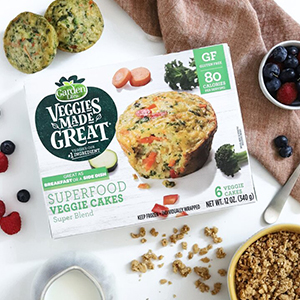
[00:18:37] Ray Latif: If I can talk about one of their frozen brands, that would be Veggies Made Great. These are a maker of these bite-sized sort of muffin-like products that the primary ingredient is, as you might guess, vegetables. They're gluten-free, only contain about 90 or so calories per muffin or per bite. You know when you go to the grocery store and you get those little like blueberry muffins from like the bakeries aisle and they're really tasty but you know they're so bad for you because they're full of sugar and fat and junk and all these other things like that? They're muffins.
[00:19:16] Bomani Cold: I love this image. You know, when you go to the store and you get those muffins and I'm like, no, I actually don't. You know, with your, I don't know, menu or arsenal or whatever team you like add on. racing to the bakery, like just shoving people out of the way to get this little plastic box of muffins. And then you're just walking around shopping. I know I'm not the only one. No, it's you and the peapod and the instacart crew. Just you're shoving those people around to get to the muffins.
[00:19:45] On March: I'm a huge muffin fan too. If you ever had Costco or BJ muffins, they're like four times the size of a muffin.
[00:19:51] Bomani Cold: So I'm kidding. Obviously we love muffins. Like there's great, there's some great, better for your muffins brands out there. Susie's for instance, extraordinary muffin brand. I love those. I like the bad for you tasty muffins, just saying.
[00:20:03] Ray Latif: But I never encountered this brand before. I mean, this is a banana chocolate chip muffin that they sent. This one has 120 calories per serving, but still, the first ingredient, can you guess what the first ingredient in this product is? Veggies? Yeah, is it a vegetable? Zucchini. Zucchini is the first, yeah. Zucchini muffin. Oh, that makes sense, like zucchini bread. Yummy. Yeah, but it's a banana chocolate chip muffin.
[00:20:26] Bomani Cold: So zucchini muffins with banana chocolate chip. That's a thing man. Those are delicious.
[00:20:31] Ray Latif: Yeah, my mom used to make this Well, I've not been exposed to this yet. So I'm very happy that I have been so anyway Yeah, you'll like those right when once you get a chance to let us know how that how that goes Yeah, all right. All right. I'll bring some stuff over the office when I can yeah, and definitely where that arsenal I was talking about All right, it's time to get to our featured interview for this episode. That's with Sam Madani, Amin Anjedani and Kai Drewry, the co-founders of Bomani Cold Buzz. Described by the company as an alcohol-infused cold brew coffee, Bomani launched just prior to the outset of the pandemic On March 2020. Despite a challenging environment for startup consumer brands, Bomani persevered in the following months, landing distribution at over 1,000 retail stores, including those of Total Wine, Stater Bros, Whole Foods and Gelson's. The company also built a dynamic e-commerce business and pulled in a $3.5 million round of capital in December. In the following interview, I spoke with the founders about how they got off to a fast start, including why aggressive cold calling was critical to finding the right suppliers and service providers, their thoughtful approach to surveys and focus groups, and how they convinced investors and advisors to believe in their vision. Hey folks, it's Ray with Taste Radio. Right now I'm on a call with the co-founders of Bomani Cold Buzz, Sam Madani, Amin Anjedani and Kai Drewry. And I am very happy that I got through that without completely screwing up everyone's name. Gentlemen, how are you?
[00:22:13] Bomani Cold: Doing well, Ray. Thank you so much for having us.
[00:22:16] Ray Latif: Thank you so much for joining me today. And I know I did screw up one last name. It's Anjadani, not Anjandani. I nailed it at one point. One of those times, I nailed it. The other three times, I didn't. So are you all based in New York? Because that's where you all met, right?
[00:22:36] Bomani Cold: Yeah, so we actually came up with the idea and started Bomani in New York City, but we're originally born and bred in California, and we're back on the West Coast now.
[00:22:44] Ray Latif: Yeah, so it's interesting when I first talked to you, Sam, the idea that three young Turks in the investment banking world of New York City came together to create this beverage brand was pretty interesting to me because a lot of times you'll hear about investment bankers wanting to take an equity stake in a food Nitro Beverage brand. You guys made the transition and said, you know what, we're gonna create our own path. And Sam, I know your mom was a big inspiration behind this idea, this concept, she herself being an entrepreneur. But tell our audience, tell our folks listening at home a little bit about the genesis of Beaumont and why you guys thought this would be a great idea.
[00:23:30] Bomani Cold: Yeah, thank you so much for the opportunity to kind of tell our story. So our story starts with three guys, like I mentioned, who are born and raised in California, who are living in New York City, working high intensity finance jobs. Kai and myself are both in investment banking and Amino is working over at BlackRock. and it was in working these like 80 hour weeks, you know, New York finances coming home on a Friday night, changing out of our suits and ties. Actually, in my job, I did have to wear a tie. I mean, it was barely dressed up in the first place, but he was still in the apartment after work. We'd be changing out of our clothes, getting ready for a night out, making espresso and then making a drink out of it. And looking around, seeing that all of our friends are either doing the same thing or doing something very similar. And it came to a point where we said there has to be a better option than what exists today. There has to be a better option than going to get an energy drink, mixing that with vodka, filling your body with synthetic caffeine and all those sugars and all those carbs. And to call it what it is, you end up hungover for two days if that's the path you go down. the other option was to g martini or another cold you're obviously getting the first issue there is You're asking a lot of a to a bar and get that. No don't like making those d heavy lift and you still and everything. So our wh infused cold brew coffee it was healthier, tastier said if we can do that re tastier, more convenient We started asking our friends and our family and it wasn't even like a, oh yeah, we'd get interested. It was like a no brainer. Wow, that's absolutely the type of product I want. 110 calories, zero sugars, zero carbs. It means family. You grew up in coffee shops. You led the development of Belmonte. And we're really proud to say that having launched only two weeks before Shelter-in-Place, having our very first scan February 28th of 2020, We've successfully expanded into almost 1,000 retail doors. We're in major retailers like Whole Foods, Total Wine, Gelson, Stater Bros, and more. We innovated our own direct-to-consumer website, which is obviously really rare in the alcohol space, to make it as convenient as possible for consumers to go grab their Beaumont. We raised our seed funding round of over $3.5 million, and we put together an advisory board that we could not be more thankful for. Through all of that, we're able to donate 5.7% of our net proceeds, which reflects Bomani's 5.7% ABV, to the Bartender's Emergency Assistance Program to help our friends and colleagues who are working at the bars and didn't have an opportunity to earn their wages. And most importantly, our team is growing, our businesses are growing, and we're really thankful that we can bring a little bit of joy to everyone's lives amidst these uncertain and kind of crazy times.
[00:26:16] Ray Latif: You guys, it seems like you have done nothing in 10 months. I mean, it's, you know, just... I mean, as far as entrepreneurship goes, you guys should be ashamed of yourselves. No, in all seriousness, just amazing. And certainly one of the reasons I want to talk to you guys is about the growth that you've seen over the past 10 months. Let's back up a little bit. I mean, Sam said your family worked in coffee shops. You helped build the foundation for what is Bomani Cold Buzz. We've seen other hard coffee products on the market. What made Bomani Cold different? What was your point of differentiation?
[00:26:51] Total Wine: Yeah, great question. So to address my background a little bit, my mom and dad owned numerous coffee shops in the San Francisco Bay Area for most of my childhood, basically until I was about 13, 14 years old. We always joke, like, I am the creative of the group, and there's a reason for that. It's because I was learning my fractions when I was pulling espresso, and I never really paid attention to the fractions. I just paid attention to the espresso. So the actual vision for the product itself, to Sam's point initially, was we wanted something better. And we define better as healthier, tastier and more convenient. And when we looked at the alcohol market in general, if you look at RTDs, there's a bifurcation happening. On one side, you have the traditional kind of flavor forward, high sugar, like lots of carbs, calories that do have a time and place and consumers definitely do lean towards those products. But we wanted to align ourselves more with what was trending in the hard seltzer space. Low carbs, limited calories, no sugar, don't sacrifice on flavor, but then also add the effect of that caffeine. So everything about the product was very intentional. The 5.7% ABV, the caffeine content, which is about as much as a half a cup of coffee per can, 110 calories, no carbs, no sugar, gluten-free, dairy-free, vegan, kosher, and on GMO. Everything had a reason and a purpose. And it was, we wanted to be very proud of what we were drinking, what we were making, and we wanted it to be transparent, clean, and ideal for kind of our target consumer, who at the time we were developing this was us. So with the drink itself, We went very premium with the actual ingredients, right? We only use a hundred percent ethically sourced Arabica bean, cold brew coffee from Southern Mexico, Nicaragua, and Peru. And we actually blend it with the same type of alcohol that goes into the hard seltzers like White Claw and Truly. So that's sugar brew based. And the story behind that's a pretty good one too. We were actually all together for the 4th of July in the summer of 2018. And we went to a local Raley's in Northern, it was in Nevada, in Lake Tahoe. And there was a mountain, of White Claw in that store. It was like a display that was built to be like Mount Everest. I've never seen anything like it. And we were like, well, let's try this out. And when we realized how incredible that drink was at the time, 2018, it was still on the earlier end of the curve there. We were like, whatever the base alcohol is in this will pair perfectly with cold brew coffee to allow the coffee flavor to shine without giving you that bite from the alcohol. So that was some of the process that we went through to kind of develop the product.
[00:29:28] Ray Latif: Formulating a product is one thing, having a strong business plan or at least a foundation from which you're going to launch that formulation, launch this product is equally important. Kai, did you guys have a business plan when you started out or was it something where you just sort of built your vision along the way?
[00:29:47] Bomani Cold: Yeah, no, we absolutely had a business plan. We actually have a day referred to as presentation day. Sam actually came to Amin and I. Sam was really the one that sort of fleshed out the idea at the start. Me and Sam were actually in an Uber one day when he was talking about potentially pursuing alcohol-infused cold brew coffee. And I was like, well, do it. And he was like, really? I'm like, yeah, if you're going to do something, me and Amin are completely here. Be serious about this. Come to us. What is this going to look like? We're 100% here. We had presentation day. Me and Amin were actually sitting on the couch, violently hung over. It was quite a scene. But Sam came to us and presented out a business plan and almost to the T of what was going to happen for the first year. It's pretty crazy. All the different levers, all the different opportunities that we saw. It was really well fleshed out. And that's when really we knew there was an opportunity, but seeing it down on paper, We knew what we could get accomplished and from right there, then what we really did, we compiled a list of questions about 20 to 30 questions that we. thought would be really important to flesh out and about 20 to 30 successful people in our networks and compiled those questions and asked each one of them and looked for patterns and different things because obviously we had a background in finance. We like to think that we're relatively smart people, but we had never started a beverage product, especially in the alcohol space. But we knew that successful people had similar characteristics and traits, and we looked for those. And regardless if they started a beverage product or worked in insurance or worked in finance, there's a lot of similar tactics that you use to be successful. And we compiled all those, and that's really where everything started to get fleshed out from. And we really took the time to prepare. We obviously come from this type of background. We really like to be over-prepared, think through every scenario and different things like that. Obviously, with what 2020 threw at us, I don't think any of those business plans or anything that we fleshed out at the start are remotely similar. But we took the time to prepare for all the different outcomes. So when COVID hit, when all the different stuff that was thrown our way, we were able to pivot and make changes quickly because we took the time to prepare.
[00:31:59] Ray Latif: That's brilliant. The idea of writing down about 20 questions and having, you know, 20 experts or 20 of folks that you believe in and trust to review those questions and give you answers. I haven't heard that before, and I think it's a brilliant start to a business plan. What were some of the key takeaways from that sort of question answer, those surveys?
[00:32:21] Bomani Cold: Yeah, Sam, I'll let you take this one. I was going to say, the one that stood out to me for sure, and it stood out to all of us, which has continued to impact the way we run the business today, every single person mentioned the impact of people, how critically important talent was in your team. Not just a smart person, but someone who's smart, whose values fit with your team, whose talents are complementary to your talents. Every one of the successful people we spoke with mentioned people. So I think that was the biggest takeaway for us. On top of that, like you mentioned at the very beginning, Ray, my mom was critically important launch of Bomani, definitely from obviously the funding side, she's our original investor, but more importantly from the advice side, she's been a successful entrepreneur. She's able to provide us with so much of the advice related to starting a company, pivoting a company, adapting to culture changes, which we had to do seemingly on a daily basis in 2020. And so many of those factors, some of those principles of building a business that can adapt, building a unit economics model that can scale, all of those things were really common patterns we saw from the successful people. And therefore, when we were building the principles, the vision, mission, and values of Bomani, those all integrated nicely into our course. Yeah, the one other one I would add is how you would react to adversity. And that usually a no is the best thing that will ever happen to you. And we've experienced that a lot along the ways. A no is only a no if you take it that way. It doesn't mean you're failing in any way. It often leads to another door opening, like forces you to critically evaluate and usually come out better because of an initial turndown or rejection. And it's usually for the better of the business and personal growth and everything along the way. So it's really how you react to those.
[00:34:01] Stater Bros: Do you want more repeat buyers on Amazon? Well, this free resource in collaboration with Straight Up Growth will help your brand turn first-time buyers into long-term subscribers. Download Winning the Repeat Purchase Game on Amazon now at Taste Radio slash SUG. That's Taste Radio slash S-U-G to start building retention-driven growth for your brand on Amazon. Scaling a beverage brand into major retail comes down to operational readiness. From packaging lead times to co-manufacturing strategy, the details can make or break a launch. In a new e-book in collaboration with Octopi and Asahi Beer USA, industry leaders share what they've learned in helping brands scale. Download it now at Taste Radio slash octopi.
[00:34:50] Ray Latif: Advice is only as good as the network that you've created, the people that you ask the questions of. So How To you build that network? How did you guys put this team together, this team of advisors in place, and to know that these would be the people to give you the right answers? Because I think I don't know if it was you, Sam, when I was talking to you before, I read this in an article, it said, we cold called and networked aggressively to find the top flavorists, chemists, and supply chain experts in the world. You guys, I'm sure, are not the Nitro Beverage entrepreneurs to do that, but how were you effective? How were you successful in doing so?
[00:35:29] Bomani Cold: This was not an easy process from the ground up. It was far from being an easy process. There were lots of people who immediately told us you don't have the right manufacturing partners. Your team has no experience. You guys don't have enough money. All of those things that were in their mind very valid reasons to just brush us off and not even have the initial conversation. And all of that like bubbled up into an experience we had when we went to go meet with some breweries. I want I want to mean to tell that story.
[00:35:53] Total Wine: Yeah. So before I jump into that story really quickly to speak to the cold calls, there's one day that sticks out in my mind or, you know, like vividly than many of the first days that we had. I had just come back from the West Coast and I had an extra day off before I went back into the office at BlackRock because we were kind of starting Bomani as we were still working at our normal day jobs before leaving. And I was pretty frustrated with the lack of progress that we were making when it came to finding a manufacturing partner at the same time. And this is what I'll jump into next. We were looking at small breweries because we thought that the small breweries would be most willing to innovate with us and scale over time. We thought we had a great idea. We could start small with a small brewery, innovate and grow. So before I jump into that, on this day that I got back, I made 29 calls throughout the day. and they were all cold. I didn't know a single one of these people, but I just went on LinkedIn. I kind of used my network and I was like, who are people that I know who are either Nitro Beverage directly or have some sort of affiliation to it? And my goal that day was to source five gallons of sugar brew so that we could get it delivered to our apartment and mix it with cold brew coffee. Not realizing that sugar brew is first of all, in 2018, almost impossible to get your hands on. And the minimum quantities that you need to actually get were in the thousands, right? So as a matter of fact, one of the people I spoke to, I won't name them, was one of the founders of what is now one of the largest hard seltzer companies in the game. And I called her and she, I actually think she thought I was an insane person. She was like, I'm sorry, you need what from me now? And I was like, I don't know if I'm asking the wrong thing right now, but I just need five gallons of sugar brew. And she's like, good luck Amanda Huang up. Most of the time people didn't answer, but The last call of the day, I'll never forget it was a connection that really did open the door for us to really get the ball rolling on all things operations. So can sourcing, uh, you know, legal, and that was. To me, a really good example of how important it is to just keep going, you know, to couple Kai's point and Sam's point together. I got 28 no's that day. Some of them harsher than others. And on the 29th call, I got a call back, you know, an hour later that led into what was a really awesome period of growth for our company at the early stages. So then to dive into how frustrating it was from the liquid perspective, like I said, we really did think that the little guys were going to be the ones that were most willing to innovate with us, but we couldn't have been more wrong. So we had visited tons of breweries in the tri-state area. And on one of these days, Sam and I, it was like a misty New York morning, we hopped on a ferry, took a two-hour ferry ride out to Rockaway, met with this brewery, the head brewer there, really interesting guy. He held us on the hook for about four hours as we tried to explain to him how important it was for his brewery to innovate and bring sugar brew on board and start preparing, you know, the process to make Bomani. And he effectively laughed us out of the brewery. I mean, like we were, we were just so dejected and I'll never forget, you know, on the way back, Sam is working on the model. And I was, I think there was fire coming out of my ears. I was so angry and upset, but it was a really great learning lesson. Cause we pivoted our attention towards the big players. Cause we, we basically said, look, if the small guys are this unwilling to work with us, maybe we do have a shot with the big guys where originally we thought, you know, we're too small. We're not going to get their attention turns out. The reason they're so big is because they are committed to innovation. That's how they get to that point. And even at this stage, they're grander. They don't need to take new clients. They do because they recognize that if they're on the front end in the infant stages of categories that can be as big as hard coffee or hard seltzer, they're always going to be ahead of the curve. And they've been amazing partners. So I'm really proud to say that we set up a supply chain that can scale up to the tens of millions of cases. having not sold a single case at that time. And it's really amazing to work with partners like that, because the wealth of information that they pass on to us is, it's incredible.
[00:40:03] Ray Latif: You know, while you were setting up this supply chain infrastructure, were you learning about what people thought about the product? And if so, you know, what were some of the key takeaways? I mean, what did you hear from folks about Balmany?
[00:40:21] Total Wine: So, We actually agreed that we would leave our day jobs and commit full time to Bomani when we were fully convinced that the liquid was in a place that could sell, right? That this dream was actually possible in reality. So the fifth iteration of the liquid, I believe, we tasted it and we were like, this isn't it, but it's close enough. And we've proven to ourselves that with slight tweaks and iterations, we can get there. So we all committed ourselves full-time in 2019 to this thing. We went through about, I'm not exaggerating, 20 or 30 iterations before realizing, you know what? This can be even better. So we started traveling the world, sourcing ingredients. And there was this one day in particular where we were literally sitting at our flavor company's labs. We were in the final stages and they would bring out these little sample cards that had like only like four or five slots for you to taste, thinking like at the fifth iteration, you're going to be good. Pretty sure we went through about 10 of those cards that day because I refused to just leave, not being convinced that it was as perfect as it possibly could be. Some of the feedback, and I mean, these guys wanted to kill me. You know, they were ready to just choke me out at the table. And I think the flavor company was ready too. They thought I was insane. But I'm very happy that we did that because to this day, every time I drink Bomani, you know, I'm my own worst critic. I think we're all our own worst critics, but I still am very happy with the drink that we kind of created and we've won awards to back that up. You know, in those initial feedbacks and taste tests, I think the most important thing was that we encouraged everybody that tasted Bomani, right? Close friends, extended friends, strangers that we were focus grouping. Be as critical as is humanly possible. Give us the serious, serious feedback that'll get this drink to where we want it to be. Because, and I think this is advice that Shireen actually gave us, Sam's mom, that I was really happy to receive. She said, look, this is your idea. It's your vision. This is your company, but you're making this product for the consumer, not for yourself. Right. I drink my coffee, like diesel fuel out of an oil drum. Right. It's, it's just the most intense coffee ever. And there's like complexities and acidities. Kai prefers his coffee on the other end of the spectrum with like a little bit of cream, potentially, you know, some, some sugar or something. Right. Like that's when we needed to find that middle ground and we weren't going to find it if we just committed to what I wanted. So, you know, long way to answer your question, but I think We really took people's feedback very seriously. We didn't let it offend us by any means. We worked very hard to iterate over and over and over again to the point where we felt like we had something that would impress every time somebody tried it. And then proof in the pudding, we won the World Beverage Innovation Award for Best RTD of 2020 against competitors like Pepsi, AB InBev. And then we also won the Progressive Grocers Editor's Pick for Best Drink. You know, more than the awards too, just like the consumer feedback has been so positive. The thing that really gets me the most excited is the fact that consumers are realizing how versatile and customizable Balmany is, that's what gets me stoked. When somebody comes and says, man, I love this, but the best way to have it is over ice with coconut milk. And I'm like, that's great. I love that you love it that way because I like mine just over ice and Sam likes his just out of the can. So that's been really rewarding.
[00:43:51] Ray Latif: When you're getting this feedback from friends, family, strangers, people in focus groups, How To you know which feedback to incorporate into the next iteration and which feedback to say, okay, this is not worth an additional investment into tweaking the product or the packaging or the name?
[00:44:12] Total Wine: I think it's mostly built off of trend and like data. Like we want, I mean, we're kind of data junkies and I'm like the least of the group. I'm the most qualitative. But it truly does have to come down to if an overwhelming number of the people say, for example, we want absolutely no sugar, then they're going to get absolutely no sugar, right? But if one person comes out and says, man, why does this just taste like coffee? Why doesn't this taste like dessert? We're not going to go, okay, let's pivot. Everyone drop what you're doing. We're going to start putting tons of cream, sugar, and added flavors into this drink because one individual said that they wanted it. Even if that individual was very important to us, We are committed to just making sure that we've done our research and we've actually got the right number of people coming in saying, this is how we need to adjust.
[00:44:57] Ray Latif: I want to go back to this notion of, you know, use occasion, because I go to your Instagram page and it's this interesting and pretty intelligent balance between party culture and a mature consumer or mature consumption of Bomani. How To you walk that line? How To you find that balance? Especially because you guys seem to sort of live that lifestyle of, we're going to go out and have a good time, yet we're also grounded and more mature than the bro, why don't you put 15 grams of like, uh, yeah.
[00:45:35] Total Wine: It's a great point. I mean, look, we want to give off that premium vibe. I think that work hard, play hard attitude of people that are in their twenties and thirties is something that's very real. And our goal is always because Bomani is such a unique product, right? part of this is all education. So oftentimes consumers are like, Oh, it's just another coffee beer. And I'm like, no, it's not. And they're like, Oh, you know, it's, it's gotta be, uh, you know, whiskey based. And I'm like, no, it's not. And so I think what we're trying to do with our, with our social channels, with our marketing is to show people what Lomani is, How To enjoy it, when to enjoy it and where to get it. Right. We focus on those four things within the framework of, to your point, Ray, kind of that elevated drinking experience, that more mature drinking experience, because that's really what it is, right? It's not, you're not intended to have a bunch of Bomanis at any given time. couple bow monies switch over to your next drink for the rest of the night, right? It's intended to electrify those moments and really kick off any drinking experience. I don't know if you're familiar with that, like common, you know, like the, but first coffee kind of meme that went wild. Sure. So we always say, but first bow money, right? You're out on the links and you're about to kick off your, your tea time at 5pm after work, start with a bow money. You're about to pregame with your friends, start with a bow money brunch, kick it off with a bow money. And so That's really what we're trying to get across in a lot of our messaging.
[00:46:57] Ray Latif: Does that turn off some retailers though? Because if you say, well, you know, a consumer is going to drink maybe one or two of these a night versus saying we're going to have, you know, three or four hard seltzers or light beers or, you know, ready to drink cocktails or something like that. I mean, is that been a bit of a roadblock in that this is not the type of product Nitro Beverage that you will drink more than a couple of and in a given setting?
[00:47:21] Bomani Cold: So it's actually been the exact opposite with retailers. One of the really great reasons is because, as Sam mentioned earlier, Bomani is a complementary product. It's not a replacement. So when a consumer is going into the store, right, and they're probably going to be picking up a hard seltzer, they're deciding between like a White Claw or Trulia or High Noon. So one of those three. But then it's and Bomani. So it's actually complementary and actually allowing that retailer to sell incremental value. because they're starting off the bow money and then switching to their other drinks. So they actually see it as a way of increasing their sales. So they love it. It's increasing that cart value and getting more product into the basket for the consumer.
[00:47:59] Ray Latif: Let's talk about direct-to-consumer. I don't know too many alcoholic beverage brands that are successful with direct-to-consumer. Frankly, it's pretty hard for any beverage brand, period, to be successful with direct-to-consumer. When you were looking at this opportunity, what were the key pillars of this approach? What were the things that were sort of non-negotiable in figuring out How To make this successful?
[00:48:23] Bomani Cold: First of all, we had some very strong motivation to make sure that this platform worked well because we recognized what the consumer wanted. But whatever the customer wants is something that the Belmonte team will figure out. The main reason that we pursued DTC was because we saw that's how customers are buying. It was not an easy project. We had to kiss a lot of frogs before we were able to find the developers who could integrate all the different third-party platforms that we needed, all the proper legal and logistical hurdles that we had to clear to get DTC going, but the overall idea of DTC just being like, look, If you want Balmain delivered to your door in 32 states, we can do that for you. And being able to say that sitting here today makes me feel like we did our part in investing in a customer. And it has certainly paid off because not only does it open markets where we aren't on traditional retail shelves yet, but it actually lifts traditional retail shelves. Because say, for example, we're launching Retailer X in LA On March. Well, we can tell Retailer X in the zip codes where your retailers are located, we are seeing DTC sales, meaning we're creating demand for Belmonte before it's even on your shelf. By the time that customer, that same customer, goes on their next shopping trip, guess what they're going to put in their car when they're in their alcohol section? And now all of a sudden, the retailers and our distribution partners all see the upside.
[00:49:42] Ray Latif: Sounds like you're alluding to something there, Sam, but we'll wait for the story on BevNET to break. You're right. As I mentioned at the top of our conversation, it's just, it's remarkable to see what you guys have built. A thousand stores, A-list advisory team, and a $3.5 million seed round. Was your growth intentionally accelerated or is this just something that, you know, a situation where simply things were running faster than you anticipated?
[00:50:13] Bomani Cold: That's a great question. And thank you for the compliments there. First things first we have our customer base to thank for all the success today. We have those people who not only bought the money and took a risk on a new product but shared the product they love text that their friends posted on Instagram whatever they did to share the word about money. We owe so much of this success to that customer base. Without them we are not. So we're super thankful for that. It's a mixture of both of those things, of being very intentional. Our team is very intentional learners. We always say we're like sponges to information. When we're listening to our advisors or when we're reading Bethnetware, we're trying to absorb more information than we're trying to put out there because we recognize that we can better ourselves every day if we continue to learn. So by continuing to learn, by keeping our ear to the customers, by staying close to our business and to the trends in the market, we were able to get pretty ahead of, okay, next quarter, we're going to scale this much. This quarter, we're going to need to make sure that these couple of costs are variable because this right here in this section of the income statement is where the uncertainty is. Let's make sure that we renegotiate these contracts to be variable. We're willing to take that risk on our upside if we do end up paying more than we would have paid at a fixed cost. But on the downside, it's worth that for the protection that we need in this section. I think it's that mixture of both. Stay on top of what the consumers are saying, what they're doing, what they're telling you. staying on top of what what's happening in the market in general with new products retail developments distribution developments whatever the NASA are making On March. I'm not kidding. But at the end of the day just being being very intentionally building a company that can adapt and scale.
[00:51:45] Ray Latif: This is a common theme. What does the customer want? What does the customer want? Are we listening to the customer well enough? What are the ways that you are pulling in this information, that you're deriving the feedback that you want, that you need for Bomani Cold continue to scale and grow?
[00:52:01] Bomani Cold: Yeah, we have a couple of different ways. So, I mean, obviously, we intentionally carve out time to check our emails. If anyone fills out the contact form on the website, we always do get those emails. If you DM our Instagram accounts, we get those emails. Our friends will tell us that their friends' friends texted them some feedback on Bomani. Like, recently, this past weekend, I made a Bomani peanut butter whiskey raspberry liqueur drink called the PB&J Mani, and it was fantastic. It was the friend of a friend of a friend who came up with that cocktail. I think if you put it out there that you want to hear feedback, people will feel that much more empowered to give it to you.
[00:52:38] Ray Latif: Well, I'm empowered and I feel really strongly about having one of those cocktails that you just mentioned, Sam. I don't normally drink too much during the week, but I'll make an exception in this case. This has been just such a fantastic conversation. You guys are just so energetic, fun, lively, determined, and you can see everything kind of coming together in this really beautiful way. Speaking of which, I mean, are you guys still as tight and close or closer than you have been, you know, given that you're all co-founders now? I mean, what are some of the things that you guys had to learn about each other to work more effectively together?
[00:53:15] Bomani Cold: 100% that's and that's such an important piece of our culture. You know, at the very beginning of Beaumont, when we spoke with my mom about starting company with our friends, she suggested we actually reach out to a business psychologist who is by training. He's a trauma therapist and we meet with him once every other month. And at some points you guys will vouch for this. It's World War Three. We get everything out. We get everything out. But at the end of the day, it feels kind of like a cold shower where you get everything out. You feel much healthier. At the end of the day, I know that these guys, as far as I'm concerned, are my family. They are my brothers. And when you know that everything is coming from a place of love, you feel more empowered and feel healthier. You feel more mentally prepared to take on all of the hurdles that the market brings your way.
[00:53:55] Total Wine: Yeah. One thing to add to that, I mean, and it's part of American business culture. Like there's this very like idyllic image of the young startup founder or the co-founder, right? You see things like Forbes 30 under 30. It's very intended to be like, wow, you know, this is so amazing. This is so what they're doing is all great. And you really see a lot of the good. Right. But what you're not what people don't see is like that day to day hand to hand combat, the grind of like, you know, 15 calls a day on top of getting all of your work done and like getting those no's and the rejection and like looking inward and having to understand how you're going to balance all your life's relationships. And so relying on Sam and Kai and then honestly, the rest of our team. you know, has become even a greater focus of mine personally. And I know for these guys as well, because I think without them, I don't think I ever could have done this on my own. I don't think these guys could have ever done it on their own. You know, a moment of personal introspection where I kind of realized a lot of this was because of COVID, right? A lot of like the in-market work is limited. So when we launched the state of Colorado, literally I got in my car with Dustin, one of our, you know, uh, other partners and we drove, 1700 miles to Denver in separate cars. And that's a lot of alone time. And I kind of had that moment to like reflect on what we've done in the last year and recognize a lot of Ray, what you brought up, which is like my relationship with these guys is even stronger than it ever was. And I'm very thankful for that.
[00:55:23] Bomani Cold: Yeah, just echoing what they said. And we take time every week for like personal check-ins, non-Bomani related. It's really important because like you said, this started as a friendship and that's what everything grew out of. So it's important to remember that that does come first as well and to keep that strong. So take time away from Bomani. During non-COVID time, we really try and escape, do activities and stuff that has nothing work-related, just to keep strengthening that friendship between the three of us and everyone on the team as well in that culture.
[00:55:51] Ray Latif: You know, I really want to sit down and have a baloney with you guys in person in the near future, because you all seem like good people, great entrepreneurs. And I feel like I could talk to you guys for another hour or two and learn just as much as we've learned in the past hour. So we should do this again soon, hopefully again in person. Sam, Amin, Kai, it's been really wonderful speaking with you all. Good luck with everything going forward. And please stay in touch.
[00:56:19] Bomani Cold: Thank you so much, Ray. This was a great time.
[00:56:21] Ray Latif: Thank you so much, Ray.
[00:56:23] Bomani Cold: Thank you, Ray.
[00:56:24] Ray Latif: Thank you. That brings us to the end of this episode of Taste Radio. Thank you so much for listening, and thanks to our guests, Sam Madani, Amin Anjedani and Kai Drewry. Please subscribe to Taste Radio on the Apple Podcasts app, Spotify, Stitcher, or Google Podcasts. As always, for questions, comments, ideas for future podcasts, please send us an email to ask at Taste Radio. On behalf of the entire Taste Radio team, thank you for listening, and we'll talk to you next time.