[00:00:05] Ad Read: In Episode of Taste Radio Insider is brought to you by BevNET Events.
[00:00:10] Eugene Kang: Our winter conferences will be here before you know it. Join us at the Lowe's Santa Monica Beach Hotel the last week of November for a two-day Brewbound live conference, followed immediately by Nosh Live on Thursday and Friday. The next Monday and Tuesday, December 3rd and 4th, the return of BevNET Live.
[00:00:29] Ad Read: BevNET events are designed for founders, owners, CEOs, and decision-makers of breweries and food and beverage brands to immerse themselves in two days of industry strategy and learning. We pace the events to allow time for the important discussions. The content sets the stage for networking opportunities with investors, suppliers, service providers, and other experienced, connected industry experts.
[00:00:52] Eugene Kang: Visit brewboundlive.com, noshlive.com, and bevnetlive.com for details on each individual event. We hope to see you there.
[00:01:02] Ad Read: And now, Taste Radio Insider.
[00:01:12] Ray Latif: Hey everyone, thanks for listening to the very In Episode of Taste Radio Insider. I'm Ray Latif, and with me are my BevNET colleagues, John Craven, Jon Landis, and Mike Schneider. We're recording from our Taste Radio studio in Watertown, Mass. And in this first edition of Insider, we're joined by Eugene Kang, the co-founder and CEO of fast-growing jerky brand Country Archer, who explains how perseverance and thinking outside the box have paid huge dividends for the brand. We also sit down with BevNET Assistant Editor Marty Caballero, who offers up an Expo East recap of trends and innovation in notable beverage categories, including RTD Coffee and Alt Dairy, as viewed at the annual trade show. Just a reminder to our listeners, if you like what you hear on Taste Radio, please share the podcast with friends and colleagues. And of course, we'd love it if you'd rate us on iTunes. Mike Schneider, this is, as I mentioned, the inaugural episode of Taste Radio Insider. Why do we have two shows now? We need more Taste Radio, Ray, clearly. Everybody needs more Taste Radio. I agree, Jon Landis.
[00:02:14] Ad Read: You know, we were constantly trying to optimize the Taste Radio show, and we wanted to bring more Taste Radio to people, so a second show made a lot of sense to us.
[00:02:22] Ray Latif: Yeah, totally. I mean, insider is going to be differentiated in that we're still going to have interviews with movers and shakers in the industry. And we'll still have some of that great content that we've been producing in-house with our team here at BevNET and Nosh. We'll still have Carol Ortenburg and Jeffrey Klineman and Marty Caballero contributing and really focusing on that. innovation, trends, news in the industry. So Insider is very much an industry focused podcast. And what we're hoping to do with the flagship show is to really dig deeper and dive deeper into those stories about how entrepreneurs, these pioneers of the food and beverage industry have created their brands, how they've really established these innovative, amazing businesses.
[00:03:05] Ad Read: Yeah, we found that when we get really deep into the story that maybe a piece that we've been skipping is, you know, getting into the psyche of the, of the entrepreneur as they were making a decision or finding out what was going on in their lives at the time. And this is going to allow us that extra space to be able to explore deeper.
[00:03:21] Ray Latif: Yeah. Longer format interviews and our flagship podcast makes it a little bit more digestible, I would say, to use a word that Jon Landis likes to use for the two different podcasts that we have.
[00:03:30] Eugene Kang: An insider gives us an opportunity to let our hair down. You know what I'm saying? Jon Landis said as he let his hair down. I think it's going to be a little bit easier for people to listen to 30 minute podcasts. I mean, it fits into your day and your schedule, maybe twice a week instead of once a week for over an hour. It's pretty big commitment. So digestible. I like that word. Yeah.
[00:03:55] Ray Latif: Yeah, we're gonna get you on a couple different commutes. Maybe we'll get you in the morning with the flagship show and maybe in the evening with Taste Radio Insider.
[00:04:01] Ad Read: Initially you're going to find Taste Radio Insider in your Taste Radio feed, but then we plan to split it out into two separate podcasts.
[00:04:07] Ray Latif: So yeah, after four episodes, we'll post both Taste Radio and Taste Radio Insider on the same feed. But after that fourth episode, you'll see Insider in its own home. Please subscribe. Please subscribe. What about rate it? Rate it too, yes. Please rate it on iTunes and anywhere else you can rate it. Would be very happy if you would. And would love feedback on Taste Radio Insider. So if you have any questions or comments about what we're doing, some ideas for future podcasts, as always, send us an email to ask at Taste Radio.
[00:04:37] Eugene Kang: Does this mean that we can call our audience and fans insiders?
[00:04:41] Ray Latif: If you're listening to Taste Street or you're an insider, you've got to be part of that community, yes.
[00:04:45] Eugene Kang: Yeah, you're an insider, so I think that's a pretty cool label to give yourself.
[00:04:49] Ray Latif: Mike Schneider, you've got to come up with some snazzy t-shirts that just say, I'm an insider. I'm an insider. Yeah.
[00:04:54] Ad Read: We'll get right on that right here.
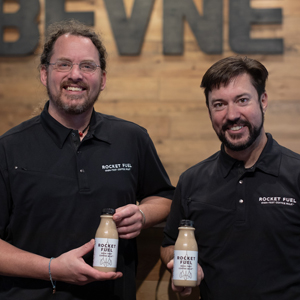
[00:04:57] Ray Latif: Right on. So, some folks who have been listening to the podcast have taken heed to our calls to please come to the office and visit us here in Watertown, Mass. 44 Pleasant Street, Suite 100. And we've had a lot of people come to the office over the past week. The first brand that came in, at least since we've been doing these recordings, is Rocket Fuel. Rocket Fuel is a brand of Coffee Milk. Coffee Milk is kind of this throwback beverage. This company makes theirs with dark roast coffee, caramelized sugar, milk, and cream. The guys who run the company are Carson Lynch and James Black, and they since did a rebrand over the past year it looks much much better than the initial package that they had. The thing that really stands out for me is you have this beautiful indulgent beverage that's really nice to Taste Radio then you turn the bottle around and you see that there are 304.43 milligrams of caffeine per bottle.
[00:06:02] Ad Read: That thing's like a big red ray that you were drinking in the garbage mouth every day before the show.
[00:06:08] Ray Latif: I don't want to use the term garbage mouth anywhere near Rocket Fuel because it's certainly not that. It's good stuff. This is for people who like a little coffee with their sugar.
[00:06:16] Country Archer: This thing just straight up needs a warning on the front. Yeah. You know, interesting concept. It looks a little too much like it's for kids, which makes me a little nervous. I don't honestly know who drinks Coffee Milk or if that's really a thing aside from, you know, something that's kind of randomly in your milk case.
[00:06:37] Ad Read: There is a rocket ship and it says high test.
[00:06:39] Eugene Kang: Yeah.
[00:06:40] Ad Read: I don't think those words high test are quite high or testy enough. I mean, like when you turn this thing around, you have to do a double take blink when you see the amount of sugar that's in one serving.
[00:06:50] Ray Latif: Yeah, there's definitely a lot of sugar in this, just 51 grams per 14.8 ounce bottle. The caffeine thing, though, I think is the thing that will get lost in the mix. It's like the Joe Cola model here, right? All the sugar, twice the caffeine? Totally. I urge them to move that caffeine count to the front of the bottle just so people would know what they'd be getting into. We'll see what happens.
[00:07:10] Eugene Kang: I also think it's interesting because most of these Coffee Milk that I've seen come from the South. Um, that's where they like their really sweet, really light coffees. And this, this is out of Maine, but it's kind of, you know, not like right in downtown Portland. It's a little back country Maine, uh, where they're at. So pretty cool. Just kind of seeing what's happening outside the major Metro areas. Totally.
[00:07:36] Ray Latif: So we also had a visit from Chris Kanick, who is the creator of Smart Cups. They make eco-friendly bioplastic cups with beverage ingredients 3D printed right into the cup. How is this possible, Jon Landis?
[00:07:49] Eugene Kang: I don't know, man. They've been working on it for eight years to get it to this point. So to me, I think it's just a really cool concept because you're out at the park and you pour some water in your cup and you have lemonade. It's kind of Star Trek-y. I'm definitely encouraging them to make an Earl Grey tea so I can do the tea, Earl Grey, hot. And it just appears.
[00:08:17] Ray Latif: I mean, I think that would be a dream for Chris and his team. For right now, it's interesting. The beverage of choice that they've created is an Energy Drink. So basically you have this small, it looks like a little solo cup, and inside the cup are these little dots. And you pour water, these dots, blend into the water and you have this Energy Drink.
[00:08:38] Eugene Kang: And the purpose of the Energy Drink was to really say, look at the kitchen sink that we can put into two grams of powder that's printed inside this cup and look at all of the opportunity there to put things like that in there. But they can really do anything.
[00:08:54] Country Archer: I feel like, you know, looking at this type of thing over, you know, the long run, there are challenges of you know, developing new technology for beverages that are very different from figuring out the proper like commercial application for it. And generally speaking, the person or team that's creating the technology isn't the one that ultimately figures out like how to market it. So, you know, I think it's neat that they're, you know, getting their toe in the water or foot in the water or whatever with, you know, this cup and, you know, hopefully they figure out kind of where to take that technology or, you know, license it, sell it, whatever.
[00:09:28] Ad Read: It's certainly pretty neat. Right. They certainly have, they have a few different paths they can go down their own intellectual property on this.
[00:09:34] Eugene Kang: And they're Smart Cups. So I, you know, I'm very much looking forward to seeing what develops.
[00:09:39] Ray Latif: They should be Smart Cups. It's in their brand.
[00:09:41] Eugene Kang: Smart Cups.
[00:09:42] Ray Latif: There you go. So from a non-traditional Energy Drink to a more traditional Energy Drink that launched by a company called Brood. The brand name is spelled B-R-W-D. Ran out of vowels. Yeah. We had a visit from the founder of the company, Christine, who came through with samples of this Energy Drink, which are made with naturally sourced ingredients. Interesting brands brewed for an Energy Drink. That's a new one. I haven't heard that before. Think beer immediately, right? I do. I do. And, you know, the thing with Energy Drink, though, I mean, we see so many new brands come to market, natural or otherwise. It's such an uphill battle. I mean, what motivates folks to really think that they can take on You know, the big guys who own so much of that space.
[00:10:26] Ad Read: They do audience analysis and they see people still want Energy Drink. So there's a there's a huge space to be in. That's the key here. You know, it's not a new category that you have to build. This is a highly established category. Well, that's pretty much it.
[00:10:38] Country Archer: I mean, I don't even know if it's audience analysis as much as just looking at the dollars in the category, unfortunately. You know, it's a category that just any product that enters it has so much baggage that they need to overcome, starting with, you know, the general perception that, you know, it's not a healthy product. And, you know, I don't know how many thousands of Energy Drink we've, you know, seen in the category in its day. But at this point, there are certainly, you know, hundreds that have tried to do it with a healthy product. And generally speaking, like a healthy Energy Drink is cold brew coffee or something that's not an Energy Drink. So I think it's going to be a real challenge. I also saw that and thought it was Chameleon Cold-Brew coffee, to be honest.
[00:11:21] Eugene Kang: And juice concentrates. I mean, it's got a relatively short ingredient list for an Energy Drink without a lot of preservatives. The malted barley extract is really the point for this. It's still pretty niche, but we are seeing lots of reports and growth in non-alcoholic beer as a recovery type of a beverage. German athletes have been drinking it. Famously, the Olympics was sending truckloads of non-alcoholic beer to the Olympic Village for all their runners. So this is trying to tap into that, but making it more of a approachable... Energy Drink.
[00:11:58] Country Archer: For it being a new idea, it just needs to be simplified and clarified as to, you know, what it is and what it's trying to be. Because even Landis, what you said, like, that didn't seem like what they were going for to me. So if that's what it is, then they should probably say so.
[00:12:15] Ray Latif: Well, we can always count on tinned seafood as being a simple concept that people will understand, right? Yes. Greg Adler, a friend of Jon Landis's, a colleague of the industry, shall we say. The guy who married Jon Landis. Really? I didn't know that. He married me. He did. That's really cool.
[00:12:31] Eugene Kang: Yeah, he was the officiant at our wedding. What did you give him for doing that? A coffee mug.
[00:12:39] Ray Latif: Eternal friendship. Is it the one that we have in the cabinet that says, go to hell on the front? No.
[00:12:45] Country Archer: So side story about this guy, you know, I'm up at Landis' wedding with my wife and we're sitting there and, you know, Greg kind of, he's pretty nervous about this whole thing. He's about to, you know, marry his buddy and he's checking the mic and he's like, Hey, what's up Craven? Just like to everyone there. And my wife kind of looks at me and is like, what the hell was that? Who's that guy? I'm like, oh, that's Greg, you know, just all around chill dude. Yeah, cool.
[00:13:11] Ray Latif: He's even chiller because he used to sell chocolate and then pickles and now he's back selling chocolate. Yeah, he works for a company called a priori distribution. And he came in the other day and brought in some Jose Gourmet. Yes, John Lennon is what's Jose Gourmet?
[00:13:24] Eugene Kang: Well, it's not to be confused with the tinned seafood line from acclaimed chef Jose Andreas. That is a different tinned seafood line. This is a company out of Portugal. They're cooking seafood in tins and, you know, with olive oil and tomato sauce. They got calamari and sardines and mackerel. We had some roe. We had all sorts of good stuff. really delicious. I mean, Greg is selling it and he's getting calls all over the place. They picked up this line and it seems like there was a big demand in this country for this product and it's just kind of selling itself right now.
[00:13:59] Ad Read: One word, decadent.
[00:14:01] Eugene Kang: Yeah.
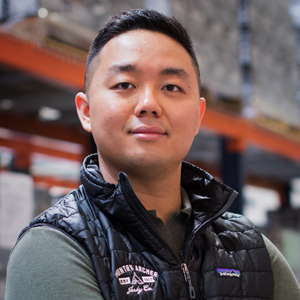
[00:14:02] Ray Latif: Decadent indeed. And it's interesting because we talked about another brand called Freche a couple of jumps ago and this whole notion of tinned seafood as being a growing food concept is really interesting and something that we're continuing to follow on Nosh. All right, let's get to our interview with Eugene Kang, who, as I mentioned, is the co-founder and CEO of Country Archer, a maker of clean label meat snacks, including its flagship jerky line. According to the company, Country Archer is the fastest growing jerky brand in the natural channel. And last week, Nosh broke the news that the company added $10 million in new funding from its primary investor Monogram Capital. But things weren't always so hunky-dory for Eugene Kang the brand. In fact, they were downright discouraging. Not too long ago, Country Archer faced rejection in the very retail channel in which it's now the leading brand. But tenacity, innovation, and a little bit of luck go a long way. In the following interview recorded at Expo East 2018, Mike Schneider spoke with Eugene about the brand's development and how it stayed competitive amid the craze for Krave Jerky. and the incredible story behind Country Archer's partnership with Hoi Fong Sriracha and how it became a game changer for the company.
[00:15:21] Ad Read: This is Mike Schneider for Taste Radio here at Expo East with Eugene Kang, the CEO and co-founder of Country Archer Beef Jerky. Thanks for having me here, Mike. I'm so excited that you're here. Eugene, let's talk a little bit about you first. What's your background in food and beverage?
[00:15:38] Country Archer: So very new to the food and beverage scene prior to Country Archer. Really just came from a small family background of retail. So my family owns a chain of convenience stores in Southern California. So my exposure to food and beverage was really just working in retail from that perspective.
[00:15:54] Ad Read: So you had some retail experience. You have a retail background. Your family's in retail? My family's in retail, yeah.
[00:15:59] Country Archer: But I mean, when I say retail background, I mean, right, like, I mean, it's relative, like, stocking the shelves as a young kid isn't, like, crazy.
[00:16:06] Ad Read: I think that counts.
[00:16:07] Country Archer: Oh, it does count?
[00:16:07] Ad Read: I think so.
[00:16:08] Country Archer: Oh, it counts and it counts.
[00:16:09] Ad Read: Okay, so you had this experience with your family, being in retail. What was it about entrepreneurship that called you? And then let's talk a little bit about why, why Jerky?
[00:16:19] Country Archer: Yeah, yeah, so entrepreneurship is, I mean, from that perspective, it just runs in your blood, right? My family, my parents are immigrants, they moved here, they gotta put food on the table, and it's like, they don't speak a lick of English, so the first thing they're gonna do is they're gonna go buy convenience stores, because it's an easier business to run. So I think entrepreneurship, it just runs in the blood from that perspective, but why be jerky? I mean, it's convenience stores, right? Like, that's what you consume when you're working at a convenience store, is be jerky, so.
[00:16:48] Ad Read: All right, so you had a lot of experience with beef jerky. You were eating it. You were stocking it on the shelves. You were selling it to people. So you can see what the frequency of it is. You have an advantage there. You have an advantage that you taste all the products. You probably get people coming in to pitch you to put their products on the shelves. Talk to me a little bit about the genesis of Country Archer from that perspective.
[00:17:10] Country Archer: Yeah, 100%. You know, where my family's stores were located, too, strategically, were typically on the freeway, going to destinations. And what I was witnessing, even at an early age, was people were going, you know, they're taking their RVs or boats and are going out to the lake, or they're going up to the Grand Canyon, and they were buying, like, pounds of jerky. And it just made me realize that this is a true road trip snack. And the genesis of Country Archer really started from that, which was my partner and I was on a road trip up to the Grand Canyon, and we stopped by this little shack, almost. And they were selling the jerky by the pound, fresh, nitrate-preservative-free. And you just take one bite of this thing and we're like, okay, where's this coming from and how'd this come to be? Because we're so used to the conventional packaged product at convenience stores. We tracked down the owner, and sure enough, he had a great story. I mean, he was, like, pushing 80. He's an Italian gentleman. He's a butcher by trade. He's, like, hand-slicing and hand-marinating in his, like, 2,000-square-foot kitchen. And ultimately, my partner and I was like, this is ahead of its time. Given that my family had C-store background, initially, the genesis of Country Archer was we went to the Italian gentleman, whose name's Charlie, and said, listen, we want to buy jerky from you, and we want to carry it in our stores. Okay, sure enough, you know, that's it. That's his business model. He liked co-packing it. We did not know at the time that we were going to carry the brand, Country Archer, because that was his brand, but it wasn't out there. He was just so busy private labeling for anyone. I mean, it could have been, like, my roadside stand jerky on the way to Grand Canyon, and that's who he was making it for.
[00:18:53] Ad Read: So he's Country Archer, white labeling for Mike's roadside stand. Pretty much. Okay, got it.
[00:18:58] Country Archer: Or, you know, Eugene's jerky on the side of a freeway going to Vegas. Gotcha. But he was definitely optimizing for that particular niche. Right. And that's all he wanted to do. And I think he just didn't have the bandwidth or the resources to truly scale a brand. And that wasn't in his interest, right? I mean, the guy was like 80 years old. He was clearly well past retirement. He was doing this as a passion at this point. And there was no need to build a brand. The kids were not interested in the business. So my partner and I, we essentially brought it into our parents' convenience, my parents' convenience stores at the time, specifically. And we started scaling it, we started selling the brand, and it started selling really well. And you brought it in as Country Archer? Yeah, that's right. And it was like this, I mean, he didn't really have a brand. Ultimately, I saw the consumer's reaction. I, myself, was eating it, like, at least three times a day. So I said, okay, clearly this thing's got legs. This category's heading toward an artisanal route here. We know who's the conventional player, because we were stocking it in the convenience stores, my family stores. And you, yourself, being a jerky kind of sir at this point. I like to think so. Yeah, absolutely. So we go to the Gentleman one day in 2011. We said, listen, I think we're doing ourselves a disservice here by not taking your brand and scaling it. So let's buy you out. And let's buy the rights to your manufacturing capabilities, your processing capabilities. And I don't want to truly scale this thing for you. We really launched the brand in 2013. So here I am, this young guy, thinking, oh, I'm going to take this world by storm, like Jack Links is the only player. And just right around that time, there started to be some players in the space. Yeah, more notably Crave. Crave, yeah. And they just came out guns blazing. And I have this theory when you think of a good idea, typically you're not the only one that thinks of it, right? I mean, ideas are super cheap. It's all about execution. We took probably a little bit longer as far as the brand execution, just because A, I didn't have a background in CPG. I didn't have like a board of investors or anyone that really truly helped me like see this conceptually. I had this like grandio idea, but I just didn't know how to like truly execute. So it took us longer. Crave came out and they just did a phenomenal job of trailblazing the category and really ultimately kind of changing or chipping away at the old like mindset of these buyers that jerky does not deserve a set in your store.
[00:21:34] Ad Read: Yeah, what is this category that Crave created for the people who don't know? I mean, they're like, oh, Jack Link's Crave. What's the difference?
[00:21:41] Country Archer: Well, Crave created this dynamic that jerky isn't just for Bubba, right? There was this concept for the longest time that, like, I know it. Like, I came from a C-store background. Like, my family, you know. You know a lot of Bubbas. I know a lot of Bubbas. Bubbas came in on a frequent basis. You know, they're used to buying, like, those acrylic casings and, like, taking the jerky out, and you put it in, like, your brown paper bag, and, like, you get your beer, and then you're, like, out the door. Well, like at its core, Jerky is protein straight from the source, right? Like there's no additives. There's like nothing that's going to create like an extra amount of protein. And so you've got these great shifts at the time happening in 2013. You've got phenomenal brands like Crave entering the space, truly trailblazing it. You've got portable protein on the rise. You've got natural foods even getting higher. Snacking is starting to really trend. So you've got all this collaborative, holistic approach. And here I was thinking like, you know, I was seeing the craft beer as like an analogy. Like we wanted to be the Sam Adams of jerky because we wanted to own our own facility. We wanted to learn how to make it. We bought a company that had this rich heritage, but we just didn't know how to essentially market it and brand it. And so you thought that was going to be the key. Yeah, right. But then comes this like upstart company crave just like, you know, cashing checks and snapping necks. Right. And we're thinking, oh, my God, how do we compete with this? But we always felt like, okay, like, let's stick to the heritage side of the brand. Let's not try to, like, pivot and come up with a cool contemporary name. Country Archer is his heritage name. We need to highlight that. That's why we bought this. There was a romance behind this story, so let's just kind of stick with it. And we came out with what we felt like were the original flavors, like the C-store traditional jerky flavors. It's, like, original.
[00:23:40] Ad Read: Sounds like you're doing everything right.
[00:23:41] Country Archer: You're running the playbook. Right. But we wanted to go natural. So we wanted to really stick to the supernatural scene. What we didn't anticipate is when we went to market. So I'm like, so we got the package ready. Like we got the flavors lined up. So when you say all natural, you're grass fed.
[00:23:59] Ad Read: You're the only grass fed player at the time. There's probably like maybe one other player, but not many at the time. OK, no. So you think this is going to be your big differentiator?
[00:24:08] Country Archer: You're going to be able to get into the space? Yeah, I think at the time, grass fed was, keep in mind the context is that grass fed wasn't as a hot of a category. I do believe like categories evolve over time, right? Like what was hot for the category four years ago isn't necessarily what's resonating now.
[00:24:24] Ad Read: Wait, you mean charcoal water is not going to be hot forever? Oh no.
[00:24:27] Country Archer: Probably not, probably not. But that's not to take away what they did because that was phenomenal what they did because ultimately they shed light to the buyers and the category managers across the country that this is a category that needs some innovation. What we didn't anticipate was there was still going to be some friction, right? So you go into the store, I'm at my first buyer's meeting, I remember too, it was like tail end of 2013, going in 2014. And it was like for like a quarter one reset. Going in like around November, Cost Plus World Market, right? Fly to Oakland, had the bags ready, I'm ready to pitch the story.
[00:25:06] Ad Read: You're fired up, you've got the product, and you're expecting them to order how much?
[00:25:10] Country Archer: Dude, I went up there thinking they were going to give me a PO on the spot. Right, on the spot. And I quickly find out, too, like, again, I don't have a food background, so I realize that that's not how it works. But being the naive guy that I was at the time, I said, OK, let's do it. So you go up, and I meet with the buyer, put the bags on the table, and we start talking. We don't have data, by the way, so it's literally just pulling on heartstrings.
[00:25:34] Ad Read: But what about your convenience background? So you have a little bit of an idea, right?
[00:25:38] Country Archer: So that's funny.
[00:25:39] Ad Read: You can do better than lick your finger and put it up to the sky.
[00:25:41] Country Archer: Well, and so here I am thinking, I don't want to be an unknown factor. Sure. And I'm pitching the story about the brand and like what we're trying to do. And the buyer looks at me and goes, where can I find this? And I go, so I try to make it seem bigger than it is, you know, fake it till you make it. I was like, oh, we're in like all these shell gas stations in SoCal. And I'm like trying to, you know, like hype it up. And she looks at me and she's like, oh, well, we don't want any C-store brands in our stores. And I was like, oh. It was like, can you pull the dagger out of my heart already? That just really hurts. It was that anecdote plus the fact that she said that the flavors were too old school. We like Cray because it's wine pairing. It's drawing female consumers. It's super unique to the category. It's incremental. I don't know if this is incremental.
[00:26:34] Ad Read: Sorry. All right, so your dream right now is basically flushing down the toilet. Everything that you thought was gonna happen has gone into the upside down. You know, you're in Stranger Things territory. What do you do? Cry and drink a lot. Crying's okay, by the way. It's okay to cry. No crying in baseball, but in food and beverage, definitely a lot of crying.
[00:26:51] Country Archer: I think it was probably that meeting plus the long, what felt like a long flight home that I really had to understand that, okay, if we're going to truly get into the, like, I almost felt like there was like a, like another barrier into this, this food and bev world, which is getting it into the consumer's hand, you know, and at the time, like DTC wasn't as like mature as it is now, right? Like, you just don't realize the power of DTC at the time. You really do think from the lens of like, again, my background is brick and mortar.
[00:27:25] Ad Read: DTC is pretty, relatively new.
[00:27:27] Country Archer: Yeah, with the rise of Amazon. And my background is brick and mortar, so my theory all the time was from the genesis was like, we need to get into brick and mortar. I just felt like, okay, this is clearly an obstacle. The obstacle is getting on shelf. The second obstacle is making sure that the consumers pick it up. But clearly there's a first obstacle here and I need to solve for that.
[00:27:46] Ad Read: So even though earth is shattered, you're not ready to put up your tombstone yet. No, heck no. There's no way that's happening.
[00:27:54] Country Archer: So long plane ride home, I'm thinking to myself like, okay, how do I truly intrigue the buyer's interest at this point? And it was 2014, and you're seeing ads everywhere about Hoi Fong Sriracha, the famous rooster bottle hot sauce that everyone loves. I'm sitting here thinking, okay, there's all these Sriracha knockoffs, but to be legitimate, I think you need the Hoi Fong rooster bottle. So devastated, walking away from that buyer meeting, you know, post four months later trying to just game plan out how we do this thing. I think it just dawned on me, like, I need to partner with Hoi Fong Sriracha. So constantly calling them, sending out email, cold emails. I finally get a response back. And I just said, can I just get an audience? And I pulled the heart strings. I said, listen, I'm an Asian-American guy. I own a little jerky factory. I really think that, you know, partnering together could really be beneficial for both of us. I don't know how I sold that, but I said that it was beneficial for both of us because, you know, you guys could be playing in a category. You could be exposing your...
[00:29:00] Ad Read: What's this partnership going to look like? I'm really excited about this.
[00:29:04] Country Archer: Sorry. So fast forward it to, ultimately they said, okay, we want to be able to approve the recipe. That's our one caveat and prerequisite. And by the way, you have to use our sauce. Obviously. Makes sense.
[00:29:18] Ad Read: Yeah.
[00:29:19] Country Archer: Well, I asked, I said, I'm thinking like this is gonna be a big royalty structure. No royalty structure. And I'm happy to disclose that. Like no royalty structure. It was like, no, we don't need a royalty. It's fine. We're not that greedy. We just want you to use our sauce. And I was like, done and done. So they're doing this basically for marketing and for R&D. 100%. But the caveat that they have to approve everything, right? Like they want to make sure that the sauce and the product is a representative of what their brand represents.
[00:29:48] Ad Read: It doesn't seem like a bad thing to have Sriracha approving of the use of Sriracha. That's correct. So I bought their... I'm smiling like ear to ear.
[00:30:00] Country Archer: This is great. I buy their sauces. I go to work. We create a marinade. We send it to them after several batches, they go, okay, this is good. So obviously they approved. We went quickly to work on the artwork, which is incorporating the bottle on the package. And it was cool. Like if you'd look at the first iteration, like all of our flavors were like just a text on the front of the bag. We actually like had our illustrator draw out the name of the flavor as if you were using like the sauce with the bottle and you're like drawing out the name. and it made it look really legitimate. So we go to work, we finish our work, we package it, and now I feel like I've got the ammo.
[00:30:42] Ad Read: Do you have finished product before you start shopping this around, or are you having like preliminary conversations with buyers? Nope, finished product. Oh.
[00:30:49] Country Archer: I went all in.
[00:30:50] Ad Read: I was like, I'm all in. No embargo, no nothing. Wow. Yeah.
[00:30:52] Country Archer: Well, look, I mean, I was confident enough that the sauce was really hot that year, and I felt like, OK, this is my way in. If I don't break in this way, like, I need to go back to the drawing board, so let's just go all in. And it paid off. We went to those same retailers that denied us. And it was like, oh, you got Sriracha. Ooh, this is interesting. You know, Sprouts, Cost Plus World Market, Kroger. Those were the three big retailers that was like, we want a Sriracha.
[00:31:20] Ad Read: Now to be fair, these retailers didn't dislike you. They just didn't feel like you had the it factor. Correct. And Sriracha was the it factor. Correct.
[00:31:28] Country Archer: Sriracha was my Trojan horse. It helped me penetrate that first barrier that we talked about earlier, which is, how do I get on shelf? And we made sure that when we pitched to retailers, it wasn't a one-for-one, like it wasn't, hey, we just want sriracha, that's it. It was like, no, no, no, like, don't treat me like this one-off, like, flavor of the month, like, my brand won't survive with sriracha. We have a little leverage here. Please bring an original, please bring in teriyaki. You know, as they agreed, they brought on the three or four SKUs. Sriracha obviously just, you know, rose to the top of the category. Like, it sprouts Cosmos World Market. However, as you know, trends and consumer trends change over time. And sriracha wasn't always going to be the it factor moving forward. But what we quickly found out was our original, our grass-fed original, our grass-fed teriyaki rose to the top. And we now actually had a data story. We actually had a velocity story that now I could share to other retailers and say, listen, this is why we deserve a spot in your set. You know, it is incremental, and here's why. And I have to say, I mean, that was that sort of pivot. It was that sort of creative thinking, you know, how do we enter that first barrier and then go after that second barrier, which is the consumer.
[00:32:48] Ad Read: So Country Archer gets into the market as the sriracha jerky grass-fed guys. But what is it now? As consumers look at Country Archer, what is Country Archer now? The heritage artisanal meat snack company.
[00:33:02] Country Archer: That's ultimately what we really wanted to talk about from the genesis was this is a heritage brand. It's always been a heritage brand, right? Like the guy was hand slicing it, hand making it for roadside stands. That's core of where Jerky came from. That's like where my roots were. That is the core at the end of the day is that we are a artisanal heritage brand, a heritage meat snack brand.
[00:33:24] Ad Read: And how is the audience different from Bubba or is it Bubba? Did you get Bubba and then additional audience? Who's the audience?
[00:33:32] Country Archer: I think the audience is that new consumers, that consumer that was like, and I kind of call them like the closet jerky eaters, right? Like they were buying the old jerky brands. They just weren't publicly like flashing around like, oh, look at this, look at the jerky, the brand that I bought. Like, no, they were like eating it. They're not wearing Jack Link's t-shirts. No, it's like, it's like, it's like Mike having like this big old bag of jerky that he bought at a truck stop and like, it's empty. So his wife like enters his like car and it's like, What are you doing eating this? And you're like, oh, I like it.
[00:34:04] Ad Read: I love jerky. I love this stuff.
[00:34:06] Country Archer: Now what we did is we just essentially allowed those consumers to come out and say like, oh yeah, I buy that brand all the time at Whole Foods. It's an original flavor. It's what it reminds me of when I was a kid eating jerky, when I was buying it at a roadside stand or going to the gas station on a road trip with my family. Like that's sort of the consumer we're really trying to draw in. I mean, jerky's been in an existing category for many, many years. We're not trying to reinvent the wheel. All we're doing is allowing consumers to come out freely and say, you know, I'm a jerky consumer.
[00:34:39] Ad Read: Eugene, this has been a fascinating story of entrepreneurship, perseverance, growth, and sriracha. Thanks so much for being on Taste Radio. Thanks, Mike. Appreciate it.
[00:34:51] Ray Latif: All right, while I doubt we'll see a sriracha-infused beverage anytime soon, we do want to talk about some hot news coming out of Expo East 2018. As mentioned at the top of the show, BevNET Assistant Editor Marty Caballero is on hand to talk beverage-related trends and innovation from the annual trade show. Marty, how are you?
[00:35:10] Marty Caballero: Glad to be here, Ray.
[00:35:12] Ray Latif: Now there was a lot to cover at Expo East, a lot of different categories. What were some of the categories that you saw the most buzz for and why?
[00:35:21] Marty Caballero: Yeah, so I think at this event we see a continuation of some of the trends and some of the hot categories that we've seen from previous trade shows and over the course of the past six months in the year. Certainly sparkling beverages in general were definitely one to watch at this year's show. We saw a lot of sparkling teas in particular, which I thought was pretty interesting. You know, it's another way to add sort of dimension to teas, add a sort of a different mouthfeel without adding any sugar. And that certainly seems like one that brands are really embracing and exploring whether it's going more on the sparkling water side or on more of the tea side. So whichever is sort of placed in the forefront kind of changes, but that was certainly a big one. Cold brew coffee always continues to expand. We're seeing a lot of interesting sort of brands that are developing at a similar pace and sort of looking for where that next innovation is going to be. And then plant-based, as always, certainly a lot of development there. Every time we come to the next trade show, there seems to be another new ingredient that's being used in plant-based milk or other plant-based products. So that whole category is really taking off. And as continues to be low sugar, low calories, clean ingredient labels are sort of across the board things to watch for.
[00:36:34] Ray Latif: So going back to sparkling tea, interesting sort of a crossover category between tea and sparkling water. What are some of the brands at Expo East that you saw taking that path and what made them stand out?
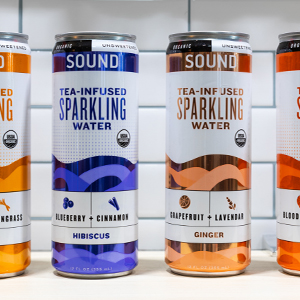
[00:36:48] Marty Caballero: So yeah, I think brands are taking sort of a different approach, as I mentioned, whether they want to go tea forward or sort of play in the more familiar sparkling water space that consumers are probably used to already. So Sound Sparkling Tea, obviously sparkling tea is sort of their flagship product, but they have a new tea infused sparkling water line, which was a sort of an interesting combination there. Chameleon Cold-Brew Tea, they have a new sparkling line as well, going sort of functional forward on that one. Zest, Sparkling Tea, that's another RTD line that was present at the show. So a lot of activity around there. Really interesting to see where these brands go with that because I think there's a lot of runway in the category and certainly that's, you know, a lot of room to play with.
[00:37:29] Ray Latif: Sure. Teavana, the Starbucks-owned brand, they launched a sparkling tea line earlier this year that they're testing in a few markets. They're going national with that as well.
[00:37:37] Marty Caballero: Yeah. If you haven't seen that one yet, that probably will be coming out to more markets in the beginning of next year. So check on that for that one.
[00:37:44] Ray Latif: Definitely adds another dimension to what you're drinking, if you are drinking a tea. What are ways that coffee brands are looking to add new dimensions to their products and to their brands?
[00:37:55] Marty Caballero: Well, it's kind of similar to tea where really innovation is really driving a lot of exciting new stuff. So I think the relationship with plant-based milks has definitely been one that coffee brands have benefited from. The next award winner for Best New Organic Beverages at Expo East was the Rye's Oat Milk Lattes that breeders at BevNET are probably familiar with from our past coverage.
[00:38:17] Ray Latif: And the next award is the Expo East Award for some of the best new beverages seen at the show.
[00:38:23] Marty Caballero: Yes, exactly. Those are awards handed out by the organizers. So yeah, Cold Brew really expanding a lot with plant-based and just a lot of brands that are sort of growing together in this space and really pushing each other for new innovations. It's really cool to watch.
[00:38:37] Ray Latif: Yeah, it seems like there was also a few brands that were getting into that latte space, that foams, frothy latte space. It was pioneered by La Colombe. You mentioned Rise with their line of, they have dairy and non-dairy lattes. And then Chameleon came out with their own latte line as well. Tell us a little about that.
[00:38:59] Marty Caballero: Yeah, definitely. It's kind of that same concept, a little bit like a nitro, but this one is presented as more of like a frothed milk, but same kind of concept. You shake the can a little bit, you know, open it up and, and sort of that, that air creates a different mouthfeel and it's sort of more complex, you know, drinking experience. I just think that the fact that we're seeing multiple brands do this is sort of indicative to me that they're really open to exploring new things that are going to drive consumers and really draw interest to the category. There's really not that much of a resistance towards doing things like nitro or froth, sparkling. Brands seem really open to try new things and consumers are open to trying them. So it's a good time to be a coffee drinker.
[00:39:43] Ray Latif: In terms of plant-based milks, plant-based smoothies, definitely a lot of new products, definitely a lot of buzz from the show in that particular space. What were some of the brands that turned heads at the trade show?
[00:39:56] Marty Caballero: Well, I think Koya was one. They had a new fruit infusions line. That brand, of course, launched in Whole Foods. But I think what's interesting about this line is it's a clear and intentional move towards the conventional consumer. They're trying to give consumers some sort of landmarks that they're familiar with in terms of flavors, fruit being, you know, one of them that obviously consumers are going to be familiar with, and sort of use that as a way to introduce them into the category. Another plant-based smoothie line remedy is sort of bringing in consumers with by sort of emphasizing the the colors of their products. Bright blue for the Blue Spirulina line, nice rich green for the Matcha line. They have another one that is Dragon Fruit that is going to be launching in time for Breast Cancer Awareness Month that is going to be pink. So obviously playing in with that. So I think just across the board, there's just been a big move towards taking plant-based out of the natural space where it's been really successful and bringing it in front of more consumers and really showing them that, you know, not only is this a one-for-one dairy replacement that you may use in a certain time of day, this is a broad category with a lot of different use occasions, a lot of subtlety and a lot of room to explore what all these different sources can do and how they can play.
[00:41:13] Ray Latif: One thing that was kind of notable for me is that it didn't seem like folks were talking as much about gut health beverages or gut health related beverages, which was kind of surprising. And maybe it's just because they're everywhere. So nobody really has to talk a lot about it because it is already been talked about, but you know, on Humm Kombucha front, for example, didn't really hear a lot of buzz about what was going on in the show. I mean, I could be wrong. What was your take?
[00:41:36] Marty Caballero: No, I kind of agree. Certainly in the past couple years, probiotics, gut health and kombucha certainly have been, I feel like, bigger parts of Expo East. So kombucha was certainly well represented there, but there sort of seemed to be more of a, you know, incremental or more modest changes going on there. Obviously, flavor profiles, there's a lot to play with. You know, hum had an interesting lower sugar line, again, kombucha, not really a high sugar drink to begin with, but certainly every gram counts. And that's what they say anyway. Yeah. Right. But certainly indicative of them paying attention to consumers, you know, wanting lower calorie, lower sugar drinks. So yeah, it's, I wouldn't maybe read too much into it. We'll have to see if this is a trend that continues, but yeah, it was a little bit less on the gut health side this time around, I think.
[00:42:24] Ray Latif: Yeah, it seems like they're looking more to that mainstream consumer, a lower sugar variety. In the case of Brew Doctor, which revamped their labels, definitely something that's going to stand out on shelf in a mainstream market.
[00:42:36] Marty Caballero: It may be another indication that some brands are breaking away from the rest of the pack. And, you know, maybe the category, which was obviously very saturated and very busy, maybe is sort of the herd is thinning out a little bit. We'll see, I guess, in the future what happens.
[00:42:52] Ray Latif: Marty, great stuff as always. Continue to read Marty's articles and watch videos that he's featured in from Expo East 2018 on BevNET.com.
[00:43:05] Marty Caballero: Yeah, it was a lot of fun this year and I just want to say a quick shout out and thanks to everyone who stopped and talked to us and we look forward to seeing you out there next year or I guess at maybe Expo East next or whenever we'll be out there next.
[00:43:16] Ray Latif: So thank you. Indeed. Thank you again. That brings us to the end of our In Episode of Taste Radio Insider. Thank you so much for listening, and thanks to our guest, Eugene Kang. Tune in next week for episode 131 of our flagship Taste Radio podcast, when we're joined by Shane Emmett, founder and CEO of plant-based superfood company, Health Warrior. Once again, for questions, comments, ideas for future podcasts, please send us an email to ask at Taste Radio. On behalf of the entire Taste Radio team, thanks for listening and we'll talk to you next time.