[00:00:05] Ad Read: This week's episode of Taste Radio is sponsored by BevNET Industry Job Boards. BevNET, Brewbound, and Project Nosh are visited by beverage, beer, and food professionals every single day to stay in the know as to what's going on. A lot of what's going on is hiring, and our job boards are filled with activity.
[00:00:21] Jon Landis: With over 300 active job listings every month and growing, it's a place for emerging and large companies alike to find qualified applicants. Our audience of industry professionals are combing the listings in search of their next move.
[00:00:33] Ad Read: Don't waste your time weeding through unqualified resumes. Cast the right net and receive applicants that know the food and beverage business. Our job boards reach thousands of qualified industry professionals every month. Post your opening on BevNET, Brewbound, or Project Notch to let the industry know. you're in search for your next great hire.
[00:00:51] Jon Landis: To post a beverage job, visit BevNET.com slash jobs. For a food job, projectnosh.com slash jobs. And for beer, Brewbound.com slash jobs.
[00:01:00] Ad Read: And now, Taste Radio.
[00:01:07] Ray Latif: Welcome to another edition of Taste Radio Insider. I'm Ray Latif, and with me are my BevNET colleagues, John Craven, Mike Schneider, and Jon Landis. This is episode 10 of Taste Radio Insider, and we are recording from the Taste Radio studio inside the Lowe's Santa Monica Beach Hotel amid Nosh Live Winter 2018. In this episode, we feature an interview with Arnold Ventura, the CEO of beanship brand Beanfields, who discusses lessons learned during a career that spans from B-school to beverage entrepreneur to food executive. Just a reminder to our listeners, if you like what you hear on Taste Radio, please share the podcast with friends and colleagues. And of course, we'd love it if you could rate us on iTunes.
[00:01:46] Jon Landis: if you're not well liked, you could share with your enemies to just share, just share.
[00:01:51] Ray Latif: Exactly. Just share. Well done, Jon Landis. You know, I actually, I feel pretty good. This is, we just wrapped up day one of Nosh Live Winter, 2018. And usually we are just absolutely exhausted after everything that goes on during this event. And we did have a pretty jam packed day, but I feel great. Yeah.
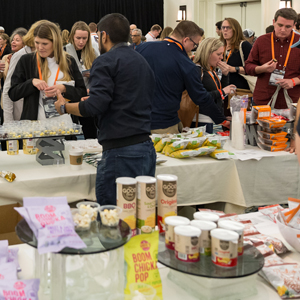
[00:02:09] Jon Landis: I do too. I felt, I felt really great. I mean, we just finished up the Sampling Experience and Expo and it was great to, to meet all the founders. I met, you know, Courtney Lee from primal. I met, we met with the finder of a better bites and I got to see some, um, some collaboration of founders, a spudsy and Asha pop. We're getting together to talk about packaging and all kinds of good stuff. It was, it was awesome.
[00:02:30] Ray Latif: Yeah, I mean, the Sampling Experience and Expo was something we did for the first time at Nosh Live Summer 2018. And somehow it got bigger. And I don't know how many brands were represented, but it all went really smoothly. And I really got to Experience and Expo to founders and try products I never would have thought I had time for but something about the experience was easy and it was easy to navigate.
[00:02:52] Jon Landis: Did you try the fruit leather ketchup?
[00:02:54] Ray Latif: No, but I have, I have somewhere slice of sauce. We did interview her, uh, the founder, Emily Williams on the live stream studio at Nosh Live 2018. Look for that on YouTube later on.
[00:03:06] Jon Landis: She's going to do an Elevator Talk as well. Oh, right on.
[00:03:08] Ray Latif: Wow.
[00:03:08] Jon Landis: Well done, Emily. Good hustle.
[00:03:10] Ray Latif: Yeah. John Craven, how are you feeling? A little tired. Yeah. He's got a Negroni. It's not like you have another day of Nosh Live, then Cannabis Forum, then three days of WebNet Live after this.
[00:03:20] John Craven: Yeah, well, that's that's true, I guess. Self-inflicted, you know, I guess I sort of chose for us to do all this.
[00:03:30] Ray Latif: So I'm not going to complain about it. It's all good. It's all good. Well done. Now, yesterday, we wrapped up Brewbound Live, which is our beer conference two-day event. First time that was a two-day event. Really great insight into the changing dynamics of the beer industry, the opportunities and the challenges facing craft breweries. Shout out to the winner of the Brewbound Live Pitch Slam. That's Willie's Super Brew. It's a product that's a mix between a hard cider and a spiked seltzer. Congrats to Nico Enriquez and his team. They're based in our backyard of Boston. For a lot more insights, a lot more conversation, a lot more discussion about Brewbound Live Winter 2018, head to the Brewbound podcast, which you can find on Brewbound.com.
[00:04:05] Ad Read: I sat in with those guys. It was a lot of fun.
[00:04:07] Ray Latif: a Landis doing the crossover. I like it.
[00:04:11] Ad Read: Well done. If I can say one thing about brew bound, it was about a lot more than just beer. And that is what all you need to know and go check out all the coverage on brew bound. Cause there's a lot of really interesting stuff. If you like Taste Radio, you're going to dig it.
[00:04:24] Jon Landis: I love the beer at brew bound and I met Sean Lawson. That was like a dream come true.
[00:04:29] John Craven: Sean Lawson's such a chill dude.
[00:04:31] Ray Latif: It's like meeting the Tony Hawk of brewing. Sean Lawson, the founder of Lawson's Finest Liquids. That's right. Oh my gosh. Great brand. A Brewbound 2018 rising star. Such a nice guy. Yeah. So when it comes to Nosh Live, you know, I thought our main stage content was pretty fantastic. I was running a lot of the live stream studio during the event, and I asked a lot of the folks who were participating, you know, what they got out of this conference and some of the great insights they got. And to a person, they talked about the networking opportunities. And I know we've talked about this on the podcast before, but there are very few conferences like this where you have that immediate access to the investors and distributors and retailers. And I thought that was so evident throughout the conference today.
[00:05:15] Ad Read: It was during the sampling expo. I had to kind of still corral some of the entrepreneurs to get away from their products and still go out and mingle. But they did a good job eventually. They did a really good job. It's a hard thing for them to understand. These brand owners are conditioned to sell, sell, sell, sell. And so, you know, we want them to mingle and their product is being there.
[00:05:36] Ray Latif: And their product is the backdrop. It's a balance, you know? Well, you don't want to leave your baby behind. And I think, you know, the pinata team did a great job of like, working those booze. But with the founders, it's almost like, you know, they want, they want to know exactly what's happening. They want to be able to, you know, sell and promote their product the way they're used to doing it. And it's hard to let go sometimes.
[00:05:57] Jon Landis: Landis held their hands and said, it's okay.
[00:05:59] Ad Read: I did. I literally went up to someone and said, I know this is your baby, but you just need to fly away. You need to just like move away and go see what else is out there.
[00:06:08] John Craven: It's also nice to meet a bunch of Taste Radio listeners in there. Yeah, yeah, yeah. Lots of them.
[00:06:14] Jon Landis: You guys are out at my panel today. I gave out Taste Radio shirts to people ask questions.
[00:06:18] Ray Latif: Ah, nicely done, Mike. That's why you're the CMO.
[00:06:21] Jon Landis: Yeah. So I had the marketing swag.
[00:06:23] Ray Latif: Exactly.
[00:06:23] Ad Read: Giving out swag. Way to go. There were a number of people who were like, it's great to put a face to the voice because I hear you all the time. And I'm like, come on, I'm just a guy.
[00:06:32] Ray Latif: I mean, well, that's like, I mean, this is a good point. This is a good opportunity to tell a taste for your listeners. Reach out anytime you want. Ask a Taste Radio.com. Who knows? Maybe I'll get a free t-shirt out of it.
[00:06:43] Jon Landis: Yeah. Maybe you will.
[00:06:44] Ray Latif: Yeah. Maybe at least a sticker, right?
[00:06:45] Jon Landis: Oh yeah.
[00:06:46] Ray Latif: Absolutely. John Craven may send you a bottle of whiskey. Don't push your luck crickets over here.
[00:06:53] Ad Read: Seriously, though, we are super accessible and very, very happy to chat with anybody who's listening and in the industry. So please reach out.
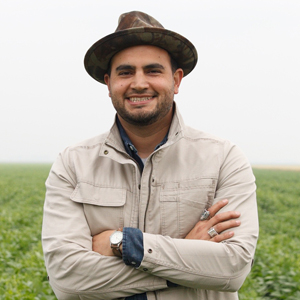
[00:07:02] Ray Latif: Definitely. Now, we're recording this about an hour prior to the Nosh Live after party, which means that it's time to let loose a little bit. But before we let loose, we got to get to this interview, a fantastic interview with Arnold Ventura, who, as I mentioned, is the CEO of Los Angeles-based snack company Beanfields. A well-respected CPG executive and entrepreneur, Ventura led the business development and e-commerce divisions at Califia Farms prior to joining Beanfields and previously worked at PepsiCo as part of its emerging brands unit. A Stanford MBA, he cut his teeth in food and beverage as the founder of bottled aguas frescas brand, Coba, Sampling Experience that laid the foundation for his career. And in an interview with John Craven and Mike Schneider, Ventura explores the development of his professional life amid the rapidly evolving food and beverage industries and how lessons gleaned from each role have molded his perspective on business and his leadership style.
[00:08:04] John Craven: Alright, so we are here in Culver City. Mike and I are at the offices of Beanfields and we are joined by Arnold Ventura, who is the CEO. Thanks for joining us. Yeah, thank you guys. So I've known you for a pretty long time now. I think when I first met you, you were starting your own beverage company fresh out of graduate school. Stanford, right? Yep. You know, you had your own beverage company. You went on from that to Pepsi, Naked and Emerging Brands, and then to Califia Farms. Now you're here CEO of a snack brand. So, you know, I thought it'd be interesting to talk to you about just that journey and the lessons from it. You know, we hear a lot of entrepreneurs that want to go to a bigger company to kind of cut their teeth and you you kind of did a little bit of everything and not in that particular order. So yeah, you know, curious what it's like to be back at the helm of a snack brand here.
[00:08:58] July Ventura: Well, it's great. It's been super exciting. It actually feels like it's catching me at the right time. You know, I think part of like my my personal long term vision for myself was to just kind of strengthen my operating Experience and Expo know, those are the folks that believe like in pattern recognition. It was like, OK, how many different situations can I drop in on? and try to evaluate the situation, try to figure out where it goes. And so to some extent, all of the gigs, so to speak, that I've pursued, I've kind of been with this kind of pursuit in mind, like just really trying to strengthen my overall operating experience and background and trying to just look at all the different case scenarios that could possibly be out there. And so now as I, you know, think about Beanfields and where I'm at today, I'm seeing a little bit of that. It's kind of like, oh, I think I've seen how this story unfolds. And here are the next two or three things that I want to work on a kind of as a hedge or what I think could come down the pike. So all with purpose, and I'm happy to kind of go through different reasons why those steps happened or even at a high level. But I mean, you tell me wherever you want to take it.
[00:10:04] Jon Landis: A lot of entrepreneurs ask us, should I go into a big company to get big company experience before I start my own thing? And as somebody who's done that, as somebody who's done both things, who's started their own company and done the big company thing or the bigger company thing, well, you've done the big company and the bigger company thing. Would you recommend that to somebody who has an idea, who is passionate about that idea and wants to start their company? Or would you say just to start the company thing?
[00:10:32] July Ventura: Yeah, so I think one way to look at it is, for example, when I was graduating from Stanford, As we were approaching graduation, there was, you know, certainly Stanford's known for the entrepreneur programs there and people coming out and starting businesses. And there were so many of my classmates that all had really good ideas in mind. And given where the economy was and everything at the time, and because, you know, they had phenomenal talents, they were able to secure some job offer from the McKenzie, the Goldman Sachs of the world. And sure enough, those are the folks that had the offers and they would defer them until Jan 1 or whatever it might be. They would allow themselves a good four to five months to try to focus on building an idea. But the problem is that when you have that plan B, when you have that backdoor, when the going gets tough, you will take it. Safety nets there, you'll jump. Exactly. So whereas with COBA back in the day, we had to will it to succeed. And there's a professor there at Stanford, Andy Ratcliffe, who teaches a VC class and He was like, no backdoor, no plan B. That has to be in there. So I just kind of stuck with me. And I said, no matter what, we will find a way to get to the next development that allows us to continue forward. And keep in mind, when I graduated from B school and moved back to LA, this was October of 2008. This was capitulation in the market. My daughter was born and had to start paying the mortgage back on the house again. And I don't have a line of sight for my seed capital. So it was like the worst kind of situation.
[00:11:58] Arnold Ventura: Perfect storm. Exactly.
[00:12:00] July Ventura: Yeah, exactly. Perfect storm. Now, if I had a plan B, I certainly would have taken it. So I think that's super powerful. And so the other thing, too, the way I looked at it is that in starting one's own company, it was kind of like an extension of my, my MBA curriculum. It was a chance to take an extra semester at my own stakes and at the same, you know, cost more or less of what a semester tuition might cost. And so I had a chance to sit there and what I didn't want is to be old one day, sitting on the porch and say, have regrets. Could have, would have, should have.
[00:12:30] Jon Landis: What would you have missed out on if you took the plan B, if you took this, if you, you know, jumped into the safety net, if it had been there?
[00:12:35] July Ventura: Well, let's see the different hats that I wore at my company were everything from, you know, breakthrough formulation when people said we couldn't do what we did with just a handful of ingredients. So clean. So the formulation aspect, the accounting aspect, taking our company from cash based to accrual accounting to, you know, being lead salesperson, the janitorial piece I was already familiar with growing up with a mom that cleaned houses for a living. So there's just so many different hats. You know, when you run lean and you run a company parsimoniously, you're really having to be in so many different positions all at the same time. So it was like every day was a different case study. So for me, it was my MBA program, but on steroids. And I was directly applying everything that I was learning. And I was doing my best job to kind of navigate what I could with what was happening. And there were certain competitive dynamics that ultimately I think resulted in why it wasn't the fairytale ending. Those are things we couldn't control. But everything that we could control, I think we did pretty well in terms of execution.
[00:13:30] John Craven: So as you moved on to Pepsi and later Calafia, you know, I'm curious as you're back in a more, I guess, an earlier stage kind of entrepreneurial environment and you're the CEO, you know, what kind of lessons were there just as an entrepreneur that you took away from being at these bigger companies? I mean, I'm assuming it had something that has helped you maybe better run bean fields today than if you didn't go down that path.
[00:13:56] July Ventura: Yeah, I think in many ways it's kind of getting more swings of the bat in different situations and ultimately resulting in confidence. I can sit here today, make decisions on the fly, on a daily basis, and it comes from a strength and just kind of pattern recognition because we've looked at so many different things. If I had to think about what I looked at at each situation, They were different. It hasn't been a replay of everything. Yet what I'm doing today here at Beanfields is super familiar, if that makes sense. So, you know, Jerome Etivier from NEB had actually is the one that brought me in. I was a good friend, the CFO there at the time, and there was no bones about it. It was a turnaround situation. For phenomenal brands that were doing well in the conventional channel of trade, but the brands that we managed were ultimately Naked Juice, Izzy, Sparkling, and O&E Coconut Water. These were brands that had since kind of lost their way in the natural channel. Well, that's where my company was actually doing quite well. So it was kind of bringing in the insight. And there I started to form this kind of concept of like, oh, there's waves. And if you think about how a brand is built, and I still, maybe I'm old school, but I still think that whether it's food or beverage, in our world, in the CPG world, it's a romance industry. And you win a consumer one bag at a time, one bottle at a time. And the way that happens from an execution standpoint, you have to think like concentric circles. So it starts with that small, like mom and pop co-op. And actually in today's day and age, and given like my most recent assignment prior to coming to Beanfields in a digital age, I'd say ground zero right now is online. And that's where you start your business. And then ultimately you go to the small local co-op. It could be the Erewhon that maybe you guys saw earlier today. You get buy-in there. Who's shopping Erewhon? Well, that's Whole Foods, right? So then you get Whole Foods. Well, who's shopping Whole Foods? It's the Kroger's, the Safeways of the World. And then soon before you get out to Target, you get out to Costco, Mass Club, Drug. And so that's how brands are built. But then ultimately, as you scale your brand and you gain traction and relevance in those later channels of trade, what are you doing to keep you know, ground zero interesting and relevant. And so that's where I was coming into PepsiCo where it's like, ah, okay, so we need to do something different to make it like new again. And that's when we launched Fairtrade, the first like one liter Fairtrade coconut water for naked. And that was like the beginning of something. And then we did some stuff on Izzy and then we did the O&E rebranding. So that was kind of like the beginning of that thought. And I think that's what I walked away from PepsiCo with. It's like, ah, that was really interesting. So the other piece is that, so that while there was like this, you know, relevance question for these brands of the natural channel at PepsiCo, you know, call it like week two or three, Indra, our CEO comes out and says she releases her top five big bets for the future. And number one on her list was digital online. And every BU had to staff for it. So it's like, well, you're the newly minted MBA, like you could figure this out as good as anybody else. Go for it. So all of a sudden it was like, you know, job expansion or scope expansion right after I got there. And it was a phenomenal opportunity. So when I look back. What the big company offers is training, exposure, safety in the way of being able to have a seat at the table, right? So ultimately that led me to be on our founding global e-commerce steering committee. But the reason I was able to hold my seat and hold my weight there is because my BU trusted in me. And the way that I got their trust and respect is because I had already done all these other things prior with my own company. And so when I was asked to speak on a vertical, I could go pretty far deep because I had run that aspect of it myself. So it's like, oh, okay, this is a person that's only been in the industry a minute, but certainly knows the business. So yes, he can stand on, you know, by himself out in New York, whatever it might be. So that was the beginning of kind of like my exposure to the digital age as it exists for us for CPG. And I think the question we were trying to answer there initially was, is this indeed incremental business or is it cannibalistic? And we quickly got to a yes, and that led to a number of things. That was NEB in a nutshell.
[00:18:01] John Craven: Well, I think when you were at NEB, that was probably the point in time where the food and beverage industries, well, certainly the beverage industry was asking, is digital going to be a thing for these industries where we're so used to, you know, buying these things in brick and mortar? And obviously that's something that we all kind of know the answer to that at this point, right? And, you know, it's something that played a part of your role at Calafia on that particular end with digital, you know, how has that impacted how you've approached bean fields? And maybe you can talk a little bit about just what you're doing here with that.
[00:18:39] July Ventura: Yeah, it's a, it's a really good question. So not long after I arrived at Calafia that you know, would focus mainly on our natural channel business, which was the majority of our revenue at the time. But after that was kind of in a good place and we got some great people on board, like Dan Mader, our head of sales. You know, Greg's next assignment was really to look at digital and establish a capability on a brand that had zero online capability at the time. So like our site wasn't even shoppable. And talk about the things that are like the antithesis of like bestselling virtues for a CPG brand online. We had a brand that was highly perishable, heavy, breakable. all the things that you don't want and making it challenging. So ultimately set up a supply chain that allowed us to get to everybody's doorstep. 99% of zip codes are two days or less. It wasn't easy and it took a lot of work, but ultimately in that process and through the kind of formative time that I spent at PepsiCo and kind of understanding the online space, you know, it's funny when I was at Pep, we called these like, these were unlock attributes, holy grail attributes. And fast forwarding to today, they're table stakes. And that's, you know, to be lightweight, shelf stable, ship friendly, and premium priced relative to your E cost of goods sold. So when I think about like bean fields, it was like one of the first things, I think the first thing I did was go to the website, order a box, and I went in and I got it, I inspected it, took a bunch of pictures, looked at it, and saw tons of upside. so much, you know, value to create. So when I think about what we're trying to do here and I think about our plan, you know, we're at the end of October in 2018. So looking to next year, what we're anticipating, you know, large contributions in the way of incremental growth, e-commerce is like right there. It's either number two or number three for us. Where's subscription lie? Subscription for our business on D2C, it's a big component of it. So yeah, you know, I think that's, I've looked at everything from, you know, Catalina coupons to you name it. And it's the stickiest loyalty metric that I have seen. And you can look at it on Amazon and what it does. You know, there's folks that try to build a big SNS. I call it SNS. It's Amazon kind of acronym. But they try to build a big SNS business to let that be like a lever for them upon exit. And so they have this LTV value based on their subscription. It's not what we're here for. At the end of the day, like, we just want people that that want good chips. And it maybe is hard for them to find it if they want on a regular basis. It's like it goes in line with being omnipresent. However people want it, wherever they want it, you have to make it available.
[00:21:16] Jon Landis: So CEO of Pepsi is talking about digital, and that was what year? This was 2013. Okay, so saying we have to focus on digital in 2013 versus saying we need to focus on digital in 2018 is very different. You know, in technology terms, five years is forever.
[00:21:36] July Ventura: I'm laughing because once you've been in the digital world, They don't call it digital. It's not called digital. They don't call it e-commerce. They just call it commerce. Right. So it's funny. I'd be at Califia. And I'd sit down and Greg and I would like riff on the vision for the business and I'd be like, yo, it's crazy. Came back, these guys, they don't even talk about like E, it's like, they just call it commerce. Like the rest of us are like lucky to kind of exist in their world. And so with that, we were just trying to figure out, okay, knowing that, knowing the challenges that we have on the business, knowing that we have a business that's growing super fast and it's important for us to have a capability and and a presence, how do we establish that? And so I think PEP and Calafia are different from a life cycle stage, right? So you have the strategic incumbent in PEP that's like full on like budget for days and you kind of like buy your way at the table in many ways. Caliphia, like the ultimate challenger brand that is like the hero, the darling that just how do you get it out there in the masses and yet also has its challenges in terms of like its product market fit for the platform. And so with that was like an investment and it was thankfully Greg had a phenomenal vision. It was something that we were aligned to where this is gonna take a multi-year investment. I think the reason why it was comfortable for me and certainly for Greg too is that it's like, it was a business within a business, right? So you think about our entrepreneurs in our industry today, it's no different. Like you're basically showing that here's the plan, here's how we're gonna grow. We require investment today. It's gonna lose some money and here's the pathway to profitability and this is what it means. So like when we think about what does it mean to be a digital business today, Well, that's everything from like the whole life cycle of creating one. What's your content department look like? marketing as a function, as a vertical, changes. And can you produce enough content for the appetite that exists in the online world today? So then there's the content aspect of it. Okay, then where is it going to get database? So there's the whole PIM-DAM structure of it. Okay, great. So you got it centralized. You're out of like Google Docs and everybody's hard drive. Okay, so now how are you going to push it to the market so that you always have like the most up-to-date version of yourself online? Great, you found a publishing mechanism. Now how are you going to go back and audit that? to make sure that there isn't either discrepancies in content or that there's discrepancies in your promotional price or whatever it might be. So it's this whole kind of like virtuous cycle. And so it means a lot in today's day and age. Now, is Beanfields ready to address that today? No. But every brand has to start somewhere. And so, you know, Calafia had to start somewhere. Pep had to start somewhere. So it's still early days for us. What I'm really bullish about is our ability to take our SKUs and optimize them for the platforms that exist. and in a way that avoids cross-channel conflict, so that you could find a unique assortment on Walmart, unique assortment to box that works for their platform. And that's totally different than what works on Amazon. And by the way, that's totally different than what works for Whole Foods in-store.
[00:24:41] Jon Landis: What do you mean by that? The different packages, different products work better on different platforms?
[00:24:46] July Ventura: Yes, and also quantity, price points. Once you're in an online system and you start to see all the data that's available to you. So many variables. Right. So all of a sudden you can see, okay, how much interaction do you get on the navigation pane? So, okay, how much work do I work with the online retailer to really build a whole new subcategory like alt milk into their navigation pane? Search, you know, optimizing keywords for search on Amazon is entirely different than optimizing for Google or Bing. You can use the same and play them back for each other. You're not going to be optimal, but it's a place to start. The other piece is like also what works. It's like variety packs, straight packs, the number of the assortment. And then also in certain platforms know their consumers so well. And if you just listen, they'll tell you that like at X dollars, we see diminishing returns. So then all of a sudden you have to solve for that. Okay, my product comes out at, $24, but they're telling me they see a cliff at $12. Do I have the capability and the resources in-house to create a pack that goes out at $12 that's still profitable for me?
[00:25:54] Jon Landis: So in 2013, you were, you were worried about how are we going to, you know, fulfill digital orders. And now it's all about regression. It's all about setting up experiments and, and, you know, testing for variables to optimize. What tips would you give to companies who are new at this, who are new at the whole, you know, user experience game, the whole e-commerce game?
[00:26:16] John Craven: Yeah. And I guess like, where do you start? Right. I mean, it seems like, out of even the stuff that you said, selling on Amazon or building out your own platform, you know, if you were starting just from scratch today, like sure, where would you go?
[00:26:31] July Ventura: Well, I think the guidance doesn't change in terms of the hallmark kind of soundbites that you hear, like fail fast, fail cheap, fail forward. That applies like in multiples for online. And you can start anywhere you want. You can start with shoot, you know, I started Kobo on a credit card. I could do that today by just going to Amazon, Amazon marketing services throwing down my credit card. And okay, let me just put $100 to work around some keywords. Let me see what that does. Let me change some content and see how that the barrier to entry is so low. And the key thing is that it's great if you have access to capital. So I've been on both ends, right? I've been on the end where absolute access to high dollar amounts of capital. And then I've also been that little entrepreneur at my house when you found me like 10 years ago, where it's like, I'm looking at articles that you're releasing about entrepreneurs, some of whom I've worked with that have been able to get like huge, you know, tranches of capital. I'm just sitting there with like, jealous, like, oh, I wish if I had that I could do this. So but the reality is like in today's day and age, you everything's possible.
[00:27:37] Jon Landis: So you're doing these experiments on small scales, controlling for a few variables across different channels. You mentioned the difference between Amazon keywords and Google and Bing keywords. How do you know when you can really start throwing cash at it in that little scale?
[00:27:55] July Ventura: Yeah, it's a great question. And I love that analogy. I always say that. Once we just got to create a spark and once we get the spark, let's just douse gasoline on it. Exactly. So you'll know it when you see it. You'll absolutely know it when you see it because it just sticks out. And we did this at Califia. We worked on different assortments. I see it here in our business at Beanfields. You get excited because it's like it just it's so much multiples more successful than anywhere else that when it happens, you're just like, oh, shoot. We just unlocked something special. It's entirely different. You just have to be watching. And then, you know, like any good person behind the company, you have to be forming the hypothesis too. So it's not just reacting, but it's like, okay, hypothesis test. Did it happen? No. So it's all like a form of hacking, so to speak. Scientifically.
[00:28:45] John Craven: Well, I guess one final question on this sort of subject, you know, you've talked a lot about, you know, testing and then throwing, you know, gasoline on a spark and also low barriers to entry. Yeah. You know, how quickly is that world changing? And more specifically, you know, since the barriers are low, I assume even with Beanfields, you probably have, you know, at any point in time, a new competitor or existing one that changes something that might make one of your tests not work anymore. Like, you know, how complicated is this to get to a point where things are like really consistently working?
[00:29:23] July Ventura: I think we're way past the time where like anything that was new breakthrough could just automatically get on the shelf absent of any real like pressure testing. You know, it wasn't too hard back in the day to create something, a new micro niche space and all of a sudden be on a regional Whole Foods shelf somewhere. Now there really has to be some real meat behind it. for it to be legit. And so I think about like Beanfields, I think about the innovation that I'm planning now that I've been planning since I got here. I'm super excited about that. I actually think that's like a phenomenal opportunity, but I'm excited about it because it's strong and it's differentiated. And I think at the end of the day, you know, there's so many people, so many constituents that you have to get bought along the brand in the process before you even get to the consumer. And a good friend, Dayton Miller, former CEO of Function Drinks, he told me this way back in the day when I was first starting. But it's just so true. You've got to sell the co-packer on why to take a risk on you. And then from there, you've got to sell certainly the person in the back of the store. When you sell the person in the back of the store, you've got to sell the person merging the shelf. You've got to sell the cashier that likes your product, keeps it on the register, so that when a person passes by, they ask about it. There's just so many points along the way. And ultimately, when you're sitting across the buyer in today's day and age, they want full transparency. They want to know that there's indeed a reason for being and you have to have strong insights and you have to have a point of differentiation. If you have those two things in lockstep, then you're absolutely on your way to having the potential to be on the shelf. So when I think about our innovation here at Beanfields for 2019, it's like, oh, that's exciting. Like, we'll show it to you in time, but yeah.
[00:31:03] John Craven: All right. Well, Arnold, we could sit here and talk to you for hours about all these things. It's always a pleasure to get to do one of these interviews with you and appreciate you taking the time with us.
[00:31:13] July Ventura: Yeah, no, thank you guys for stopping by. Hope you enjoy the rest of your visit here in LA. Thanks. Thanks. Yeah.
[00:31:21] Ray Latif: All right, folks, that brings us to the end of episode 10 of Taste Radio Insider. Thank you so much for listening, and thanks for our guest, Arnold Ventura. Tune in next week for episode 140 of the flagship Taste Radio podcast, when we're joined by Adam Lowry, the co-founder of Ripple Foods and Method. Please subscribe to Taste Radio Insider on iTunes, Spotify, Stitcher, SoundCloud, and Google Play. As always, for questions, comments, ideas for future podcasts, please send us an email to askatasteradio.com. On behalf of the entire Taste Radio team, thank you for listening and we'll talk to you next time.