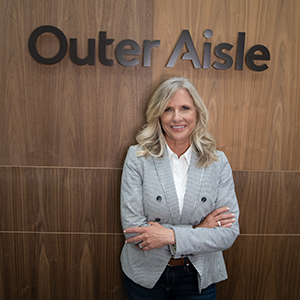
[00:00:04] Ray Latif: Hello, and thanks for tuning in to episode 100 of Taste Radio Insider. I'm Ray Latif, the editor and producer of Taste Radio, and I'm with my BevNET and Nosh colleagues, John Craven, Mike Schneider, and Martín Caballero. In this episode, we're joined by Jeanne David, the founder and CEO of Outer Aisle, a pioneering brand of cauliflower-based sandwich thins and pizza crusts. It was recently pegged as the second fastest-growing food The Beverage company in America by Inc. Magazine on its Inc. 5000 list. Just a reminder, if you like what you hear on Taste Radio, please share the podcast with friends and colleagues. Of course, we'd love it if you could review us on the Apple Podcasts app For Your listening platform of choice. The Century Mark, episode 100 for Taste Radio Insider. It's a fun number. It's a nice round number, I'd say. I wish I had 100 Suja shots. I only have one.
[00:00:54] Jeanne David: Where'd you get Suja shots from? Did they come into the office? Into the office. I got a vitamin C right in front of me. Nice. Along with some of the new sparkling cold-pressed juices.
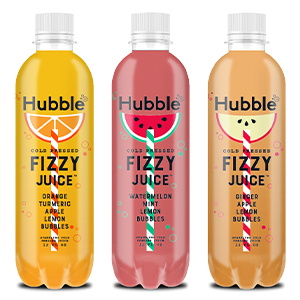
[00:01:04] Ray Latif: You know, I read about that, Marty, and your great story about the company, about the brand. And I had to wonder about a brand called Hubbell, which we saw launch, what was that, two or three years ago, and has been doing sparkling cold-breath juice for a while now.
[00:01:21] Jeanne David: Yeah, they were in the The Beverage Showdown, I believe, a couple years ago, and definitely looks like other people are catching on as well.
[00:01:29] Ray Latif: Yeah, yeah. Interesting that they're going after that soda drinker. It seems like it's positioned as a better-for-you carbonated beverage, I guess. I mean, even though, if all things being equal, these products still do have a lot of sugar.
[00:01:43] Jeanne David: Sure, yeah. I think you're right about it going after that kind of consumer, the carbonated soft drink consumer. Like everything with Suja, their core offering is this high-quality cold-pressed juice. So if you're going to have your sugar and if you're going to integrate that into your repertoire of drinks that you have, I guess this is a more natural and kind of a high-quality way to experience that.
[00:02:06] Ray Latif: Totally. Well, we've seen Suja get into a bunch of different beverage categories beyond juice, you know, juice shots, kombucha, they had drinking vinegars at one point. We've never seen them get into the coffee business or haven't seen them get into coffee just yet. But if they were to launch one this week, it might have been timely considering that National Coffee Day was on September 29th. Mike, was this one For Your favorite days of the year? Similarly to how every week is Negroni Week for John Craven, every day is National Coffee Day for me, Ray. That's like when my wife gets mad at me because I forget our anniversary or something. And I'm like, every day is an anniversary. Every day is a great day to celebrate our marriage, you know?
[00:02:50] Jeanne David: I mean, I didn't really do anything to celebrate, Ray. I guess I should have taken the day off. Probably. How about Monday, National Drink Beer Day? Was that Monday of this past week? It's what it says on the internet. It's got to be true.
[00:03:10] Ray Latif: Also, people have been wondering what happened For Your daily coffee posts there, Mike. You usually start the day off with some success and fail stories on Instagram about how your latte went.
[00:03:21] Jeanne David: Just a lot of failure that I haven't felt like posting recently right now. We just transitioned back to the new office and getting everything set up has taken a while. I've been really focused on dialing in shots and trying to make the shots. you know, perfect and stuff like that more than the latte art of late, I guess.
[00:03:42] Ray Latif: So maybe I'll get back to it. Well, it's not like you've been busy with anything else. I mean, it's not like you've been busy helping to, you know, put on a very important event focused on the direct-to-consumer channel. I mean, you've been, had nothing to do with that, right?
[00:03:56] Jeanne David: At the Supercharged ESC event, Ray, I mean, it was a really fun and informative event, starting off with some great expert speakers and then, you know, breaking down into round tables where we got to see the faces of the people that we've missed for so long, you know, to see the founders of food and beverage brands interacting with the experts and just getting to see a few faces was really, really refreshing.
[00:04:20] Ray Latif: For sure, I mean, the interactivity was great. The networking I thought was just really special for a virtual event and something that we'll be continuing to do in more events as we get into the fall. Kudos to our editorial team for the content. It was very highly informative, really well curated. Every panel and presentation of the show will be available for viewing on the video pages of BevNET and Nosh. However, you must be a subscriber to gain access And even if you're just looking to watch content from this one event, an annual subscription is worth every penny. But of course, you get so much more with your subscription. That includes access to watch our Category Closeup series. Marty, you've been heading up content for that video program. Can you tell us a bit about the focus and what's coming next?
[00:05:09] Jeanne David: Yeah for sure. For Your first session I should say For Your first DevNet focus session there was another one from Nosh but we focused on the ready to drink coffee segment. Personally you know one that I'm a big fan of and certainly interested in. And we had a really great discussion with our with our panel of experts getting some different perspectives from around the industry. And then follow that up with the product showcase where we got a chance to talk with the actual brands that are really on the ground doing the work to build the category. So that was a lot of fun. And this week or this month I should say we are going to be doing our second which is going to be focusing on sparkling water. I just confirmed the panelists for that event. So you're going to be hearing that pretty soon. But we have a really great another really great panel. You're going to be hearing from them in the next couple of weeks. Sparkling water, no shortage of things to talk about there, movement on the top of the market and independence as well. Should be a lot to dig into and I'm looking forward to it.
[00:06:10] Ray Latif: As am I. Sparkling water, as hot a category as there is. John Craven, I wonder, know, the evolution of this category is something that has happened so quickly. Are there any comparisons to, you know, the development of sparkling water and how fast it's grown based For Your experience in the industry?
[00:06:30] Jeanne David: Yeah, I mean, I think it's, you know, it's a category that's been around a long, long time. And I think, you know, it's only in the past 10 years, really, where you know, it really became sort of a less about being water and more about being sparkling and sort of just chipping away at carbonated soft drinks or helping chip away at that. And, you know, I think more recently, it's sort of pivoted into this, you know, a couple different directions, be it, you know, sort of this better For Your, kind of herbal fruit flavored, kind of wholesome products, as well as, you know, we're seeing a ton that are CBD sparkling water. So it's also had this kind of, you know, move into functional and all of those things, you know, aside from the CBD have been out there a long time. I think it's just finally gotten to the point where the consumer understands as well. Uh, it's widely available and it's kind of, it's golden era right now.
[00:07:28] Ray Latif: We've seen a bunch of sparkling water brands, CBD, functional and otherwise, as part of our Elevator Talk series. And we've got a new episode of Elevator Talk coming up on October 7th. It's being co-hosted by The Beverage whisperer himself, Ken Sadowski. That's one that you cannot miss. We're going to be talking to five different beverage brands, and he's going to be offering some advice, feedback, and some thoughts about their business strategies and new products. If you're not familiar with Ken Stoutski and you're in The Beverage industry, you better get familiar with him. One way to do that is to listen to episode 174 of Taste Radio, which is titled The Beverage Whisperer Reflects, Advises, and Predicts. It's a can't-miss episode. Also can't miss is the latest issue of BevNET Magazine, which is out in stands. It's really not out in stands, it's out in mailboxes. You got to go to our website and become a subscriber of BevNET Magazine. Anyway, it's the September and October 2020 edition, which includes features on juice, kids beverages, import beer and plant-based water. Also included is our 2020 Natural Snack Guide, which highlights some of the most innovative and disruptive new snack products on the market. It's a required resource for industry buyers and distributors.
[00:08:41] Outer Aisle: Guessing your margins? That's risky. Belay Financial gives CPG brands the clarity to scale smarter, faster, stronger. Get your free inventory ebook by texting TASTE to 55123 and start making data work For Your. Vibrant Ingredients is the natural ingredient partner powering food and beverage innovation, delivering flavor, function, and protection through a science-backed portfolio. Vibrant delivers purpose-driven solutions that help brands create extraordinary experiences. Discover what's possible with Vibrant today. Visit vibrantingredients.com.
[00:09:28] Ray Latif: Marty, you penned the feature on kids' beverages. I've covered that category in the past. It's so interesting. There's so many, I don't know, seems like barriers to success for kids' beverages. That is the hardest one. Yeah, what's happening in that space?
[00:09:45] Jeanne David: Yeah, absolutely. Well, I mean, I think that's definitely the kind of different strategies and different approaches that brands have taken in the space is something that we've covered for some time here at BevNET in terms of We've seen expansions into water in particular. That was kind of the focus for my feature last year. But in this one it's kind of interesting because the brands you know it's not necessarily about you know different SKUs and things like that and flavors. That's that's always important. But in this year I think it was more about sort of how do these brands fit into the role of families and kids in this current context of the pandemic. You know one of the things that Capri Sun did was shift into putting water into their pouches and distributing that to schools. And we highlighted Juicy Juice which is another one that sort of did a program to sort of highlight teachers and reward them. So I think, you know, within the context, it's a little bit more about sort of how do these brands play a role, you know, in this time of particular high stress where kids are half in school and half learning virtual and the sort of normal patterns that kids beverages usually fit in have been disrupted. So it's about sort of being flexible and finding out, you know, how brands can support their consumers and families during this time.
[00:11:03] Ray Latif: Yes, stress is out there for sure. I'm sure kids that are not getting their Capri Sun, I saw a picture of a Capri Sun package that was just water. I'm all in favor of more water for kids and more package water for kids. I have a feeling though that kids that get that pouch and are expecting Capri Sun are not going to be very happy.
[00:11:23] Jeanne David: It's funny you bring that up. That's something that I think the company recognizes well. They had a little joke on the package. It looks different from the outside, but it has a big thing that says, we're sorry, it's not juice and a big kind of like water droplet logo on the front there. So yeah, I think you're not alone in feeling that way. There's just a very small window of time that a kid is a kid and could drink your beverage. And then, you know, it stops appealing to them for whatever reason. And then they don't become parents for quite a long time to the point where they could advocate For Your know, said beverage for their own kids. So it's, it's challenging, right?
[00:11:59] Ray Latif: It is. It's got to be a fun, tasty drink because you're only a kid for a short amount of time, as you mentioned, but you're an adult forever. It seems like anyway. Oh my God. Perhaps that's one of the reasons the hard seltzer category is just doing as well as it has. I honestly was pretty Bearish On hard seltzer. You sure were. In the last episode in particular, right? In particular, we were talking about Coke discussing plans for Tapo Chico's hard seltzer and Molson Coors getting into the non-alcoholic beverage industry, and it was announced this week. Before we do that, right, the Tapo Chico, I talked about last week the implementation of the packaging.
[00:12:37] Jeanne David: I think they got it right. I mean, it's really, really It's definitely Topo Chico on brand, but they darkened, they put a dark background behind it. It's in a nice slim can. I mean, I think they nailed the hard seltzer packaging.
[00:12:51] Ray Latif: Yeah, it looks pretty great. And I guess Molson Coors agrees. Marty, you kept a close eye on this one. What's happening there?
[00:12:59] Jeanne David: Yeah, well, I have to give a shout out and credit to Justin Kendall from Brewbound has been really covering this story as well as, you know, the, I guess, hard sparkling water segment as a whole on Brewbound. But yeah, definitely really interesting to see what that development, what comes from it. You know, it's just like another pretty impressive step, I think, for Molson Coors as they really just expand their offerings and move into other areas with a lot of ambition and a lot of intent. also a shift to premium within their portfolio. It really seems like they're going after that end of the spectrum. So yeah it'll be interesting to see where this goes. I think launching into hard seltzer with a brand like Topo Chico which has clearly a lot of brand equity within the regular sparkling space. is something that would be interesting to watch. You know some of the brand leaders that we've seen in the hard seltzer category are kind of new brands or sort of unique brands with their own identities. We have seen some others sort of make that jump and we anticipate Monster probably to be the next one to do that as well. But it will be interesting to see, you know, one coming into that category with as much sort of visibility and brand recognition as Topo Chico. And I think that will help sort of achieve the goal here, which seems to be speed to market and really sort of having an efficient, smooth entrance into that in order to, you know, take advantage of this really still exploding category.
[00:14:24] Ray Latif: Haven't we seen this story before, John Craven with Energy? In what sense? I mean, it seems like everyone, everyone wants to get a piece of this category.
[00:14:33] Jeanne David: It's certainly similar to energy drinks or other, you know, kind of bigger beverage trends where every company does want to get a piece of the action or at least dip their toe in the water and see if they can carve out a niche in the category. So I think, you know, hard seltzer for sure. I mean, that's been going on for a while. Molson Coors Coke and Topo Chico just being the latest one, you know, but I think pretty much like every kind of mainstream beer bread has a hard seltzer offering at this point.
[00:15:05] Ray Latif: So I don't know, maybe it's maybe it's beyond the energy craze at this point. It seems like it might be. Once again, I think there is going to be a reckoning. Yeah, this is just my opinion. But I think there's just gonna be some consumers who are like, look, it's not that hard to make a hard seltzer. And it's just, it's a flavored alcoholic beverage, not too dissimilar from like a Zima, right? I mean, in Zima had its day and now it doesn't, now it's gone. So I don't know, that's just me.
[00:15:33] Jeanne David: I would say just to just follow up on that, I mean, it is true that there's, I think there's probably a, maybe there's not a ton of diversification yet in this particular category. But if you look at sparkling water, like we were talking about a minute ago, private label is still kind of the brand leader in that segment right now. So I think it kind of proves that maybe As long as the product meets a certain level of quality, I think people are okay with the fact that maybe there's a little bit less craft or speciality to it. I just ordered you some Zima off the dark web. It'll be here tomorrow. I appreciate that.
[00:16:11] Ray Latif: I really do.
[00:16:11] Jeanne David: It's coming in from offshore somewhere. I'm not sure where.
[00:16:15] Ray Latif: Well, again, you know, it goes to show what I know and, you know, take whatever I say with a grain of salt, listeners, because back in episode 177 of Taste Radio, I spoke with Dave Berwick, who's the CEO of Boston Beer Company, maker of Samuel Adams. And I asked him, you know, do you think truly their hard seltzer can ever become a bigger brand than Samuel Adams? And he said, absolutely. And at the time, this was in August of last year, I was like, really? And yeah, it certainly seems to be on its way. So again, what do I know? All right, it's time to get to our interview with Jeanne David, who, as I mentioned at the top of the show, is the founder and CEO of Outer Aisle. Launched in 2013, Outer Aisle has emerged as one of the leading brands in the burgeoning segment of cauliflower-based bread substitutes. According to Inc. Magazine, the brand, which markets grain and gluten-free sandwich thins and pizza crusts, generated $11 million in 2019 revenue and achieved a three-year growth rate of more than 5,000%. led by an overarching mission to revolutionize the bread industry, Jeanne, who's also the founder of a Better For Your cookie dough company, spoke about what motivated her to get back into the food industry after swearing she would never do so, why she is a proponent of, quote, fact-based selling, how a commitment to using only whole food, nutrient-dense ingredients has helped differentiate Outer Aisle from its competitors, and discussed the cost-benefit analysis of building a production facility. Hey folks, it's Ray with Taste Radio. I'm going to call right now is Jeanne David, the founder and CEO of Outer Aisle. Jaune, how are you?
[00:17:53] Get Ready: Great. Thanks so much for having me on the show. I'm looking forward to chatting this morning.
[00:17:59] Ray Latif: Me too, me too. When we last spoke, you said that you were originally from New Orleans, but you're based in Santa Barbara now, is that right? Yep. I don't know why I'm bringing this up, probably because I spent too much time in the 80s watching TV, but wasn't there a soap opera named Santa Barbara? Did you ever watch that show?
[00:18:16] Get Ready: I think there was, yeah. And no, I was definitely not watching Santa Barbara in the 80s. I was raising babies.
[00:18:24] Ray Latif: There you go, didn't have time to watch the shows. I think it was one of those prime time soap operas. So younger listeners right now probably have no idea what I'm talking about, but trust me, it was an interesting show. Yeah. So also, when we last spoke, I mispronounced your name, and I'm sure that drives you nuts, For Your may be used to that. because it's spelled J-E-A-N-N-E, which I pronounce as Jean, but it's pronounced Jean.
[00:18:52] Get Ready: Right. It's the French pronunciation. So I'm a French girl from New Orleans. My grandmother was pure French. My mom was bilingual and a lot of French in New Orleans, obviously. So yeah, my name was Jean-Olivier Foley.
[00:19:06] Ray Latif: And you also have a pleasant nickname that I read about when you go order coffee. Fifi.
[00:19:13] Get Ready: Yes, I can't believe wherever that popped up. It's, yeah, it's one of my favorite things to do in life because it just is so fun and silly and lightens it up. Because yeah, people, especially at a coffee shop, you know, you go, they ask For Your name and you say Jean and they say, how do you spell that? And then you go into spelling it, and they don't get it, and then they pass it to the next guy, and that guy picks it up and says, Jeannie, Janine, you know, and on it goes. So I just, when I got to California, New Orleans, obviously, people know that name. It's known. And so when I got to California, nobody could pronounce it or pronounced it properly because of the French. And so I decided, yeah, I'd just be Fifi, because I knew there was no Californian woman named Fifi. That was for sure.
[00:20:01] Ray Latif: No, I don't think so. None that I've met anyway.
[00:20:06] Get Ready: So Why Would just have fun with it and we could write a little booklet on it because it's been really fun. PHI, PHI, PHE, PHE, all kind of fancy ways to be Fifi.
[00:20:20] Ray Latif: I have it spelled as F-I-F-I.
[00:20:21] Get Ready: Yeah, that's how I spell it. Just straight up like the dog. F-I-F-I.
[00:20:26] Ray Latif: All right. Uh, you mentioned that, uh, you were raising a family in the 1980s. When your kids were young, that's when you came up with the idea For Your first food brand. Yep. Uh, Better For Your Cookie Dough Company. Yep. Why get into that business? And it's interesting because, you know, we're seeing all kinds of natural, organic, vegan cookie dough companies come to market, especially over the past couple of years. What was your inspiration behind launching that brand?
[00:20:54] Get Ready: So back then launching that brand was quite like it was today for the brand. I was very passionate about health as a young mom and all the other moms around me thought of homemade cookies as Pillsbury dough, you know, in a roll. And I was horrified at the fact that that's what had become our homemade cookies because it had so many chemicals in it, you know, at the time. And so I came up with a homemade All natural cookie dough for the grocery store shelf in resellable tubs, everything that Pillsbury wasn't doing. So chocolate chip with pecans, chocolate chunk, peanut butter chocolate chunk. It was kind of during the Mrs. Fields era. So that was the trend then. And I was a young mom baking cookies for my kids. So that's kind of what was surrounding me at that time and the inspiration for it.
[00:21:50] Ray Latif: What was the name of the company?
[00:21:52] Get Ready: The Berry Best, B-E-A-R-Y Best. Again, it was another thing that was going on in the 80s, the teddy bears and the bow. And yeah, it was a big black and white teddy bear with a red bow around its neck was our logo.
[00:22:06] Ray Latif: Did you have your own production facility or were you outsourcing production?
[00:22:09] Get Ready: I had my own production facility. I mean, it was not my own. I had a space in a production facility where I ran our cookie dough weekly.
[00:22:19] Ray Latif: Why not outsource the production? I mean, that's, it seems like it's just an added, I'll call it a headache because other people have called it headaches.
[00:22:28] Get Ready: Right, right. I would say at that time, it was more that there was nothing around. I was in Baton Rouge, Louisiana at the time, and there were really no I was actually in a production facility and just ramping up to get to the point where I could outsource it to them. They needed a certain guarantee on weekly production, so that's kind of where we were.
[00:22:52] Ray Latif: So what happened as a brand?
[00:22:54] Get Ready: I started private labeling for a local dairy, which was great. It was cookies and milk is how they were branding it. And they, they were delivering to all the grocery stores in the region and had the dairy case. You know, they were delivering to the dairy case, obviously, and they had a huge home delivery business. So I began private labeling for that dairy and that's where the brand went.
[00:23:19] Ray Latif: So I read a quote of yours recently talking about that company and you said, quote, I swore I'd never do that again, end quote. However, you clearly have. So what, what scars did that company leave with you such that you decided I never want any part of this business again?
[00:23:38] Get Ready: For one, I was in my 20s. I was young, clearly. I had in my later 20s, I had very small children. It probably wore me out because I just didn't have the bandwidth I needed to, to fully give. to the company at that time. And there's just so many unknowns with launching a brand. And you don't know that when you first go in to launch a brand. And that's actually pretty good because if you knew what it involved, you would say, oh no, this is crazy. And so that was the reason I said what I said. Because I know all too well the work that has to go in and you know, is it gonna succeed? Is the consumer gonna gonna pick it up?
[00:24:27] Ray Latif: Given your experience and passion for food, I'm wondering why you didn't want to stay in the industry. I mean not necessarily running your own company, but you moved on to a completely different industry. You became an executive with the Arthritis Foundation.
[00:24:40] Get Ready: Right. And that was more my personal life and what was going on at the time. I just was at a place in my life where I couldn't take the risk of being an entrepreneur. I really just needed to have a steady job and a stable job and to provide for me and my kids and what I was doing during that five years of being a single mom.
[00:25:03] Ray Latif: Well, you stayed on with the Arthritis Foundation for many years. Yeah. When did you decide to make that career change? And can you talk about why you had an inkling that entrepreneurship would be better the second time around?
[00:25:20] Get Ready: For one, at the time with the Arthritis Foundation, I was brought on as part of a turnaround team in the whole Southern California region. And so it was very entrepreneurial what I was doing. The beautiful thing, I felt like I was an entrepreneur and had a job, both of those things. And so it really gave me some very good skills that I could use then again. And it merged a lot of my skills. So it was we were involved in taking every office across Southern California to profitability. Whereas the region had a model where the region had been supporting each branch. So working with our CEO and owning my own region and turning that business around and basically seeing it as a business and not just a nonprofit. So it was a very, really powerful experience. I own my own P&L, I got to understand all that and that came in handy when I did leave to do that. And there were just some changes in the organization going on and what I had been brought on to do, I had accomplished and I felt very good about that. So it was a time in my life where I was really looking at the next 15 years of my career trying to figure out What was going to be the next 15 years of my career? Why Would that look like? And really, what were the gifts and talents that I possessed that I wanted to really hone in on to more of a, what can I bring to the world? I want my legacy to be something contributory and, you know, strong. And so what is that? And that's really kind of what put me on the path to founding Adora.
[00:27:07] Ray Latif: It's interesting that you kind of mapped it out in terms of years. You said, you know, what am I going to do for the next 15 years of my life? How did that planning come into effect? I mean, is that something you had done previously saying, okay, I want to think about sort of the stages and steps of my life in terms of decades or years? I mean,
[00:27:29] Get Ready: No, actually, I had not been that introspective previously. I was a young mom, and early on I loved being a mom. That was kind of my number one thing, and spent the years raising my kids. They were finally in college and in their own career path, so I felt like that chapter that had closed in the way of my hands-on involvement, obviously. And so it was time for me to really look at, aside from that, who am I? What am I good at? What can I do? And the reason I looked at it as 15 years was I was 50 at the time, and I just gauged it to 65. And I said, what do I want to do for the next 15 years? So just more retirement age. or classic retirement age per se. So yeah, that's how I looked at it.
[00:28:18] Ray Latif: Do you still look at it as in that way? I mean, do you still look at it as, okay, maybe I can retire at 65 if Outer Aisle becomes the success that I expect it to be?
[00:28:25] Get Ready: Yeah, definitely. If not, when? I mean, I don't look at it so finite anymore because I really realized that, I mean, retirement for me is, I love being engaged in business concepts, so I can't honestly see myself just retiring fully. I love the engagement. So whether or not I'm just involved in philanthropy and boards and that sort of thing, and that I give my time after Outer Aisle, I just, yeah, I don't see it so finite.
[00:28:58] Ray Latif: Well, it seems like things were a little bit more nebulous when you did make the decision to choose another career. When we spoke last, you talked about meeting with a professional recruiter. who had said, Why Would you do if you could do anything? And that threw you for a loop.
[00:29:17] Get Ready: Yeah. It was actually, what was so surprising to me is how, how awful, like how scary that question was to me. I looked at him and I was like, if I could do anything in the world, like Why Would that be? And I had just never been, frankly, afforded the privilege of thinking about that, let's just say. I was in survival mode. And so it was really paralyzing. And so I really had to think about that. And that kind of sent me on that year of probably just trying to figure out what were my best skills and talents and what using them would be in this world, you know? And Why Would that look like? So yeah, that's kind of where I was at the time. Really wanting to make an impact and use the gifts and talents that I was created with to bring to the world.
[00:30:14] Ray Latif: And that led you to create Outer Aisle.
[00:30:17] Get Ready: Yes, yes.
[00:30:20] Ray Latif: Now, again, going back to swearing off entrepreneurship forever. Yes. You know, a great idea is a start. Yes. It's one step, one very small step. Commercializing that idea is a whole nother thing. So when you had this idea For Your Aisle, you know, where'd you start? You know, and how much For Your background, having launched a food brand and leaning For Your experience at the Arthritis Foundation played into this decision?
[00:30:50] Get Ready: Yeah, it was interesting. It really came from merging a few things, or a few things converging. For one, my husband and I had done a doctor-directed diet and taken out all processed carbs and sugar out of our diet. and we're committed to this lifestyle because the impact it had on our body so i was doing that during that year and then cauliflower pizza crust began to be seen on pinterest so that kind of came out and i was really interested in that and intrigued by that because I was at the time trying to get more vegetables into my diet on a daily basis, just more plants, more vegetables. And I just thought, wow, if I could get cauliflower pizza crust, but get it in bread form, And if I could eat a turkey sandwich and it actually counted as two servings of vegetables and turkey, you know, with no bread at all, that would be like, that would be life altering for me. And I just thought, wow, what a world it would be if this is the way it, you know, we could go and how impactful that one thing could be in people's diets. And so that's kind of how it all began and started. And so the concept within a week of that, I could hardly sleep at night for the thoughts continuing to come. The product line, I had five different products by the end of the week in the product line. And within a week, yeah, that's, I literally like couldn't turn it off. And our youngest son, who was a personal trainer and living in Santa Barbara at the time was like, come on, let's bring This Hot market. I was like, no, no. And I would, you know, do the la la la hand over my ears thing when he'd tell me that I was like, no, no, no. And then after a week, I just stopped. I stopped fighting it. and decided to say, okay, well, I'm open to this. Let's look at it. You know, let's put, I used to call it one toe in the water, two toes in, you know, this week I had four toes and by the end of the six months I had five toes in and beginning to get into the second foot, you know, so just toes in the water, concepting, you know, penciling out expenses and cost of goods and how that would all work and would it really pencil out? So, yeah.
[00:33:19] Ray Latif: Well, from one toe in the water to being neck deep or deeper?
[00:33:24] Get Ready: Yes, we're fully immersed. Full immersion.
[00:33:29] Ray Latif: So when Outer Aisle launched in 2013, the brand was well ahead of a lot of relevant trends today. Paleo, plant-based, gluten-free, grain-free. That was back in 2013. That was seven years ago. So early on, you know, how did you convince investors? How did you convince retail buyers that there was or would be consumer demand For Your products?
[00:33:51] Get Ready: It's interesting, because of the deep diving we did after our own personal journey, we really believed it was the trend that would be coming because of the health issues that were facing our country, and so mostly diabetic and diabetes. What was interesting is we first launched into a little cafe while we did R&D. In that cafe, they were serving our cauliflower pizza crust because they were doing a totally gluten-free concept, which was pretty radical seven years ago, right? and so the forager from whole foods found our product that way so we had a great opportunity early on we weren't even ready for market yet but we worked hand in hand with that forager to then package our product and bring it to market and so yeah so we didn't have to convince her much she found our product and came to us as far as investors we had a product launch early on like i totally forgot about this we did a kickstarter crowd fundraising that failed. It was one of the early ones, you know, and so we had a product launch and at that time, our first two investors invested $150,000 and today they're some of the happiest guys around. They just, they're amazing. They continue to invest in the company and we really thank them for their early adoption and early belief in us.
[00:35:26] Ray Latif: Lesson for entrepreneurs that have launched a crowdfunding campaign and failed. It's not the end of the world. Right. You can make your way out of it. Yes. So it's called Outer Aisle, and I have a feeling where the name came from, but I'm not going to guess. I'll just let you explain. What are you trying to get across with the brand name?
[00:35:48] Get Ready: You know, seven years ago, the Outer Aisle concept was just really kind of coming to consciousness. We had to explain it often in our early existence, but the Outer Aisle concept is if you're eating healthy, eat the Outer Aisle of the grocery store, not the center of the store. Even, you know, at that time, grocers were even talking about you know or not at that time but years ahead grocers were talking about removing the center aisles you know so the concept was fresh food and if you eat fresh food and eat that way you're eating healthy basically just an easy concept for people to grab.
[00:36:30] Ray Latif: It's an easy concept for people to grab. It's not so easy to get that shelf space. That is prime space in the store and there's not a lot of it. So how'd you get it? I mean, how did you avoid that center store where most bread products are sold?
[00:36:46] Get Ready: Well, it was interesting. We, we really early on with our forager, we wanted to be in the refrigerated set. We did not want to be in frozen. We, there were many reasons why, but because of the concept of Outer Aisle was one of them. And so we worked with her, we were able to have a refrigerated shelf life. We worked hard on that. And we just believed that it was the trend. And we began seeing that with Whole Foods. So Whole Foods was our first customer in grocery. And we watched them then in the next two years build out this whole refrigerated bread set. So it was, like I said, it was the beginning. We were beginning to see some of these trends or believed that they were the trends to come. And so gluten-free bread was kind of the big thing. Low carb was not a thing yet. Keto was not a thing yet. Paleo was not a thing yet. But we really believed that the trend would get even stronger. And if they were building this set for gluten-free, we were one step ahead of that.
[00:37:56] Ray Latif: That shelf space was there, yes, and it was growing. But was it difficult to get a foothold, to become an anchor brand in that set? Because while you were building your brand, there were other brands that were coming to market with similar positioning.
[00:38:11] Get Ready: Right. I would say I don't feel like we ever had to fight for shelf space. I think what we did early on was we really made sure the product was moving off the shelf. And when you have velocities and sell through, grocers want you on their shelf when you can show them what you're bringing in. So early on that whole first year. So we got into four Whole Foods stores at that time. That was kind of the model. as a local product and for the next year i spent every single weekend doing demos myself at one of those four stores usually both days on the weekend that allowed me as the founder of the company to interact with customers to get feedback also to interact with the grocery stores and understand how All of that works, which is really key to this day. You know, it gave me big insights into how the grocery side works, as well as the pull with the customers.
[00:39:16] Ray Latif: So, John, one of the things that really stuck out to me is that you had mentioned that you have to use fact-based selling when you're meeting with retail buyers. What does that mean?
[00:39:26] Get Ready: Well fact based selling is really what we're doing what our brand is doing in the competitors shelves and to give them an understanding without necessarily mentioning names. So we always go in with a strong trend. in, you know, we present them with what our niche is and what the category is doing. And it's interesting because this category has shifted so much over the years. You know, when we were first in, we were able to get into like a gluten free set, but really what, what the trend is, is the gluten free low carb set for us. It's a, the gluten free was more of a better For Your brand. And we like to call our category actually a good For Your brand. So it's kind of a, the next level of not are we just gluten free, but we're actually nutrient dense and made with fresh cauliflower. So helping them understand our difference, but where we fit in the category and then supplying them with the data to back that. So we always are collecting our data, our sales data from Whole Foods, our sales data from Spins. We actually have that subscription and get our selling. That's how we present it.
[00:40:46] For Your: We always present with facts. Scaling The Beverage brand into major retail comes down to operational readiness. From packaging lead times to co-manufacturing strategy, the details can make or break a launch. In a new e-book in collaboration with Octopi and Asahi Beer USA, industry leaders share what they've learned in helping brands scale. Download it now at Taste Radio slash octopi. Do you need to scale your team faster without compromising on talent? Join Oceans for a live webinar on April 20th and learn how leading companies are hiring top global professionals who are ready to grow with your business. Register for the webinar now at Taste Radio slash oceans. That's Taste Radio slash oceans.
[00:42:00] Ray Latif: The Spins data that you receive, I'm guessing that a bunch of our listeners can't afford that at this point. Is there another way that you were able to acquire sales data early on that helped you to understand where your business was and how you could explain it to retailers?
[00:42:15] Get Ready: Yeah, I would say early on we didn't have Spins data, so you're right. And I would say the guys at Spins are really good at giving you some introductory help for startup brands or smaller brands, so we kind of did that for a little bit. But back For Your question, we had access to our UNFI report, so between UNFI and then as a vendor in Whole Foods, you also have access to that portal. So we kept track. Whole Foods, again, was our anchor account, so we had good access to our velocities at shelf, and Why Would pull weekly reports and look at a store. If it had zero, we'd call them up on the phone and say, hey, can you reorder? We're seeing zeros. That, to us, means that there's no product on the shelf. I was very hands-on in the beginning with our sell-through and making sure that we were managing those stores and getting the sell-through we needed.
[00:43:14] Ray Latif: It helps if you have a great product. It really helps if you have a great package. This has been a common theme talking about This Hot Taste Radio, which is that consumers really don't have a lot of time, don't spend a lot of time looking at products. And if they see a package they like, they might pick it up and try it once. But it's hard to even get to that point. So, you know, you've gone through several iterations of the Outer Aisle label. How did you determine what callouts resonate with consumers? Because things have changed since 2013 in terms of what people are looking for. And what are some examples of things that worked and some examples of things that didn't?
[00:43:49] Get Ready: Well, as new trends come in, I mean, gluten-free was an important call out early on, right? Because in 2013 and 2014, 2015, I would say gluten-free was a big, big call out. So early on, that was our call out, but we knew we always wanted to get more to low-glycemic. That's still something that is our ultimate goal, that consumers understand what low-glycemic means. We're kind of not there yet, but The low-carb, obviously, keto really defined the market for us. And when keto came in, that was key. So we were able to begin calling out the carb attributes. The calories have always been important for the general public. I mean, those Weight Watchers people, people that are looking for calories. So, yeah, kind of always being, I would say, two steps ahead of where the trend is and really understanding where you fit in the market. Where you fit in the market is really key, always having that as your north star, but then slotting in as those trends come in is kind of what you have to be able to do.
[00:45:05] Ray Latif: That's really interesting that you say you want to be two steps ahead of the trend For Your packaging. I feel like that lends itself to a more niche opportunity. Why not chase the mainstream opportunity from the get-go?
[00:45:21] Get Ready: Early on, I believe we were ahead of the trend. We didn't want to be mainstream in what was going on. So I guess that's really kind of the way we always thought about it. I think now, when thinking about packaging, you know, when you go through a packaging change or a packaging rebrand, like we did a full rebrand last March, it really takes a year ahead of that. So you have to start, you really, it takes two years. I mean, by the time you're concepting and beginning to talk about it, and then you put it in place, you have the budget to do it, it's a big undertaking. So, Maybe it's not two years ahead, but it's a year ahead of where things are. I mean, for us, we believe low glycemic and low carb will be the major trend that will always kind of be an overarching trend. You know, all the different food trends will come and go underneath that umbrella. We believe that's here to stay because of the bigger epidemic out there.
[00:46:21] Ray Latif: I will say though that certainly the biggest call out on packages For Your sandwich thins and crusts and wraps is Plant Power. Plant Power is even bigger than the brand name.
[00:46:33] Get Ready: Yeah, I actually believe that's a huge trend to stay to because plants are low glycemic naturally and so if you're eating plants as opposed to a crust with filler flowers in it, you're going to be low glycemic always if you're eating plants. So for us, plants will always be the base of our products. Fresh plants will always be the base of our products. We will never have filler flowers in them. And that's definitely our DNA and who we are. So both of those things are big. I believe nutrient-dense is the next wave. The good-for-you brands that are emerging is the nutrient-dense part, because the filler flowers and those things that are in a lot of the cauliflower crust are not doing the work that plants do in your body, fresh plants do in your body, by keeping your blood sugar level and giving them nutrients. So if you eat our product, you definitely feel satiated. and satisfied for two to four hours, not the carb high and the empty carb calories that two hours later have you blood sugar dropped and then you hungry again. So yeah, plants are definitely the base of the diet.
[00:47:57] Ray Latif: How do you communicate nutrient density in an efficient way? I mean, I think that you have listed For Your website four simple ingredients. You have cauliflower, fresh cauliflower, cage-free eggs, aged Parmesan, and pure nutritional yeast. If I were looking at that, just those ingredients, I'd say, okay, I see some nutrient density there, but how do you really communicate that this is not only delicious, but good For Your and better For Your than competing brands?
[00:48:22] Get Ready: You know, I guess that's that whole trend again, you know, plants being the base of our diet and nutrient dense is one of the trends going on. I mean, when you're looking for clean label, let's say the fresh and simple clean label that just has, for me, it's more like looking at a product and seeing that it's made out of whole food ingredients. And that also means clean label, you know, that it doesn't have anything else in it. I mean, you can eat cauliflower on its own, you can eat eggs on its own, you can eat Parmesan cheese on its own. on their own, they're good food For Your. And Parmesan cheese is fermented. That's why we chose that. It's actually healthier For Your gut.
[00:49:11] Ray Latif: So in terms of marketing, you know, the first thing I noticed about Outer Aisle was that you're not shy about showing meat. or hearty sandwiches in your marketing. You had earlier talked about a turkey sandwich that you could eat with a bread substitute. Have you found that that's the best way to reach and educate mainstream consumers who want that juicy hamburger? Or as I saw For Your website or in your Instagram, a BLT with mayo and a soft egg. And does that alienate your vegan or vegetarian consumers?
[00:49:44] Get Ready: Well, our product to us is really mainstream. We were shocked when we launched how many of our consumers, you know, while we're California and there's so many healthy products, but online we had such a concentration of customers in the middle of the country. And those customers are really, they're struggling with their weight. They're struggling with obesity. They're struggling with diabetes. We get so many emails from diabetics, I can eat a sandwich and not have to take an insulin shot. For us, those were the big market that we really wanted to make a difference because we felt like we could really impact those lives. While vegan, we're not vegan because we have eggs and dairy in our product, and there's plenty of great vegan products out there. Vegetarian, that's a great group and we fit there. So yeah, we're really more of the mass market that we wanna hit because we feel like we can impact the health of our country in this way. And that's where we're going.
[00:50:51] Ray Latif: Well, using one For Your products for a sandwich sounds a lot better than using what had previously been that low carb sandwich, which is just a lettuce wrap, using lettuce to eat a hamburger. I never understood that. I never liked that. It just looks really weird.
[00:51:07] Get Ready: Yeah and it's cold and wet you know usually it just yeah that's the other thing about eating for us you know eating is so psychological and like when we took bread out of our diet we just missed the feeling of picking up something in our hands and eating it like a sandwich. It's very interesting how impactful that is on our brains. And so the thought of having a turkey sandwich or having a hamburger, I mean, we carry the products with us everywhere we go. I mean, we've got five days ambient shelf life. So I always have a pack of them in my purse and we go wherever we want to eat. We just toss the bread and use our products instead. And we're not shy about it. And it's a great way to live. We can go to the local Mesa Burger is our local hamburger place here that Cat Cora opened and they just, you know, they have a grilled chicken sandwich. I love that. It's got avocado and grilled chicken and just pop off the bun and put our sandwich thins on and we can eat wherever we want with the sandwich thins, which has really been awesome for us and convenient. And making the lifestyle sustainable, which was key.
[00:52:20] Ray Latif: Well, I think there's an obvious question to follow, which is how much of an opportunity is food service For Your Aisle? Because instead of tossing that bun, why not just have one For Your sandwich thins as an option?
[00:52:33] Get Ready: Yeah. My husband came up with a saying early on that he loves and he says toss the bread, use cauliflower instead. So we always joke about that slogan with our marketing director who has not formally made that into a campaign. But we love that. But food service is awesome. The really crazy thing is during COVID, which is when all the restaurants really, you know, were shrinking and pulling in and food service was really declining and struggling. We brought on our two first food service accounts and they came to us. So Rusty's Pizza locally, they have 14 locations and some amazing local family pizza, and they started selling our cauliflower crust, and it's been a huge hit. So we love it. We now order Rusty's Pizza. We were certainly not doing that before, and we get it delivered to our door at least once a week, if not twice. So that's been huge. And then we have Burger Lounge coming on. And that's out of L.A. And they're going to use our sandwich thins in their lineup. They're doing a it's a better For Your grass fed burger place. They're doing some new innovative stuff. So very interesting that both of those it's it's never been. Let's just say our growth has been focused on really opening the grocery channel and we've been trying to keep up with the demand there. But food service will be a focus in the future.
[00:54:03] Ray Latif: I like that motto, toss the bread, use cauliflower instead. And it sounds like it's definitely taken from this overarching mission that you had mentioned when we spoke last about revolutionizing the bread industry. Yeah. That is a gigantic mission. That is a gigantic, almost overwhelming thought.
[00:54:27] Get Ready: It is. But I really do believe that the power to transform your health is held in taking sugar out For Your diet and taking bread out For Your diet. If you do those two things, it's transformative For Your health. People don't often think of bread as sugar, but it's metabolized in your body as sugar and through the digestion process. So helping people understand that is a great concept. And that's what we were really focused on early on.
[00:55:01] Ray Latif: That's what you were focused on early on. Is that still the big mission? Is that still the focus? Yeah.
[00:55:07] Get Ready: Yeah, because we eat bread so much. Bread is used several different occasions a day, whereas, you know, we weren't eating pizza. Well, pizza's nice. It's, you know, it's definitely not one of our daily staples. Bread, on the other hand, allows you to, you know, to have a various diet. if you can put something on that bread, like avocado toast or love in the afternoon, do an almond butter, you know, I toast a sandwich then put almond butter on it. All of those things we were not doing at all because we had no sort of bread that we were using at the time. So the fact that we're actually having a serving of vegetables in each piece of our bread, no bread at all is, yeah, it's revolutionary.
[00:55:54] Ray Latif: So then Why Would you see as your direct competitors? We talked about, you know, trying to win shelf space from brands that are similarly positioned. But when you're talking about trying to get people off bread, get people to start eating more vegetables as bread substitutes, who are you competing against? Is it other cauliflower based brands? Is it Wonder Bread?
[00:56:16] Get Ready: Yeah, I think the mainstream bread, you know, that's full of grains and carbs For Your bread. And yeah, that's really the big competition out there, helping people with the concept of of the whole bread and the role it plays in our diets and how simple that is. So yeah, I would say For Your sandwich thins, that would be the big competitor. The big competition is the bigger overarching bread category. Even the gluten-free, better-for-you breads that are doing better, but they're still not good For Your.
[00:56:56] Ray Latif: They say a rising tide lifts all boats. You're part of a cohort of cauliflower-based products in which you've described some of the brands as not so much better For Your as they might advertise themselves to be. It seems like a fine line between wanting to, and I know you're not doing this specifically, you're not doing this publicly, criticize your competition while trying to build the category. So how do you do it?
[00:57:25] Get Ready: Yeah, we really don't like to bash the competition. We really just point out the differences just to more help our grocery buyers understand our customers and what our customers are looking for because we see them buying our product. We know what they're buying and we know why they're buying our product. So our customers would not buy a product with all the filler flowers in it that had 78 grams of carbs per crust. I mean, the trend we're in definitely and the educated consumers that are buying our product are looking for what we're selling and the demand is high.
[00:58:07] Ray Latif: Yeah, I'm reminded of the kombucha category when I think about your business and that kombucha can be made in so many different ways. I mean, they say there's only one real way to make it, but it seems like every brand has a different kind of approach. And there is some sniping going back and forth, but it doesn't seem like it's gotten to that point yet with your business, with your category.
[00:58:27] Get Ready: Yeah, no, we really stay away from that and want to always be good neighbors and collegial. We really just continue to talk about what our niche is. Really good for an anti-inflammatory diet, low carb, paleo, keto. Those kind of consumers are the ones that are looking For Your product.
[00:58:53] Ray Latif: I'd like to go full circle here and talk about your production facility today with Outer Aisle. As we mentioned at the beginning of our conversation, running your own manufacturing is a difficult thing to do. It's difficult while you are running sales and marketing. Why do you have your own facility?
[00:59:12] Get Ready: Early on, we made the decision to go into manufacturing because The co-manufacturers we were approaching, while big, huge manufacturers, they were all using dried flowers in their facility. They were not bringing in fresh cauliflower like we wanted our product. They're like, wow, if we can dry the cauliflower and use dried flower, and we were just like, no, that's not the product we want to create. We were just committed to the integrity of our product and the quality of our product early on. We knew Why Would not compromise that. It was a tall task to take on manufacturing, but it's kind of interesting. And the other reason is we've got trade secrets around what we do, and so that way Why Would be able to protect our trade secrets as well and keep our manufacturing in-house. you know, while it's been challenging because of our velocity, we've actually outgrown our production facilities sooner than anticipated, and that pushes things. But we're seeing an interesting trend out there. I think you saw a lot of co-manufacturing early on in this industry because it would allow entrepreneurs to quickly get into business and not, you know, not the time it takes to be a manufacturer, right? But And we also, I believe, have over the last couple of years seen a fallout from that where co-manufacturers blossomed and lots of proliferation of products out there. But yet then the downside of that being that, like, Listeria recalls within a co-man or an issue with the command that you don't control certain things For Your manufacturing so we just hired our sales guy came over to us and he had been with the brand that had several recalls and go bankrupt and his first question is do you manufacture yourself and we said yeah i'm never going to another brand that doesn't manufacture their own products. So it's kind of interesting to see that kind of go back to the move back to manufacturing a little bit. There's definitely some pluses in that.
[01:01:34] Ray Latif: That is interesting. Um, are you pulling your hair out like you had with the cookie dough company or is it a little bit better than it was?
[01:01:40] Get Ready: Oh, it's definitely better than it was because we have people in place that are, you know, really, we have a great team in place. Our ops team is amazing and they make that so stress free for me. And I do other things in the company and don't early on, I was in production. I mean, I was always in production from the early stages of this company. So, They pulled me out of production because they knew they needed to have me out of production. So like you can't be in production. This business will never grow. You've got to be out of here. And so, yeah, I was a fiend for quality and control back then on on what was going out. So morphing the recipe, making sure we were doing it properly early on. And now we're where we are. And manufacturing's, you know, a great piece of what we do.
[01:02:33] Ray Latif: little church and state, but sometimes the church and state do overlap. I guess, how do you make sure that manufacturing and sales and marketing all work hand in hand?
[01:02:44] Get Ready: It's a balancing act, definitely. It takes good communication. Our sales and ops team really, you know, they are lockstep. in what's going on. I mean, our growth this year has us at a place right now, we've got some big stuff coming in. And so I looked at sales and I'm like, okay, y'all's job is done for the year. Now you need to join the ops team and feel their pain. So we're all a very cohesive team that really comes together and supports each department in what that means. We're bringing on some new equipment, integrating that equipment and any hiccups that go with that, that the demand changes. So, you know, our sales team is doing a good job of, of being in lockstep with our ops team and letting them know the very close eight week projection at all times and how that's going to look. And yeah, so communication, communication, communication.
[01:03:47] Ray Latif: How much of that has to do with your leadership versus, say, just the buy-in of teams to work together to achieve a meaningful result?
[01:03:59] Get Ready: I would say it's very important as a leader to lead by example and to demand cohesiveness within your teams, but to also lead that way. To always be encouraging them to talk to each other and to support each other. We're going into a 2020 strategic planning session tomorrow. Opening will be all about our executive team and how we support each other and how important it is as we grow to be lockstep that we're always arm and arm and you always support your executives. And if they send an email that there's other people involved and you have to push back on what they're saying, pick up the phone, don't do that in front of other people. Just helping create a cohesive environment For Your teams, having bold conversations, being willing to have those transparent conversations and being able to say, look, ops is struggling right now. You know, sales, you need to understand this is what's going on. And so, yeah, I do think it's a lot about the leadership and our executive team. definitely operates in that way as well. So finding those people that like that sort of environment and will work in that environment. Definitely no silos allowed.
[01:05:23] Ray Latif: So, John, open lines of communication, clearly important with your team. It's just as important with your investors. And as you mentioned, you know, you did a significant fundraise last year, the proceeds of which you used to build your production facility. Correct. I read something interesting in which you talked about how you had turned down three different venture capital firms that were interested in aligning with you, and instead went with another investor that you felt more comfortable with. So could you talk about why you turned down those opportunities, and what made this investor the right partner for the future of Adderale?
[01:06:04] Get Ready: Yeah, I will say, you know, venture capital is really great. It's a bit tricky if you don't really understand the small print. And for a lot of entrepreneurs, they're kind of enamored that a venture capital firm wants to partner with them and the allurement of the funds and, you know, getting funds is really great, but the devil is in the details, as I'll say. So when we really got the terms back, That's when the rubber hit the road for us, really just some onerous terms that we had decided early on to make sure, you know, we had made a decision early on to make sure that we never took a deal because we were desperate. And while we really needed the funding because we were building a new facility, it was critical, but we never wanted to be desperate and take a deal. So the first deal I'll say, which is really important to understand, is they had four tranches of money, which sounds really great and, you know, like, oh, you'll never have to raise another dollar. Here if this is we think you know five million isn't enough. So we've got two more tranches behind there you know just in case and That's all well and good But each time you're diluting your company and you're diluting your interest in your own company and they become majority interest so We have a lot of issues with that And that was probably the sticking point on that deal because we had to take the money from them. We could not go to any other VC. We could not go outside of them to get the next money we needed. So if we wanted to expand into, you know, a third facility per se, they wanted to be the only funder, sole funder. And so you quickly understand that you'll begin losing majority interest. So that was the first deal. The second deal, we were ready to be at closing and they just decided that their valuation was actually post-money valuation as opposed to pre-money valuation. And that's a big deal, obviously, a big discrepancy on the value of the company. And that was absolutely not what had been on the table. So last minute trying to change the terms, and we just knew that we couldn't do that. Not necessarily that it wasn't what we signed up, but just the ethics behind it. So and the third deal was a debt equity deal, which was really great. But at the end of it, our pipeline started a big portion of our pipeline got pushed out and one major customer into the beginning of the year, you know, Q1 of 2020 and that then made them not able to underwrite the deal because they had with giving us debt and their SBIC and you know the deal would no longer qualify because of the debt component because they have really strenuous underwriting in that. So I hope that helps. I really think like I said the devil is in the details and It's hard unless you really have a sophisticated, I mean, we had very sophisticated attorneys representing us and thank goodness. And my husband is an attorney as well, which really lends itself nicely to that.
[01:09:41] Ray Latif: So what made the details right for the investor that you ended up going with?
[01:09:46] Get Ready: Well, we ended up going with just a person, a private individual, and we were able to just write very simple terms. So that's what we felt served the company the best.
[01:10:00] Ray Latif: And was this a person that you knew?
[01:10:02] Get Ready: No, it was someone that we were introduced to through our network.
[01:10:07] Ray Latif: John, I've really enjoyed speaking with you. Just an amazing story and quite a fantastic brand that you've created. Congratulations on everything you've done to this point. And please, let's see if we can do this again in a couple of years and see where you're at, because I have a feeling it's going to be another great conversation.
[01:10:24] Get Ready: Thanks so much, Ray. I really appreciate you having us on. It's been a pleasure to join you and always enjoy the conversation.
[01:10:34] Ray Latif: That brings us to the end of episode 100 of Taste Radio Insider. Thank you so much for listening, and thanks to our guest, Jeanne David. Please subscribe to Taste Radio on the Apple Podcasts app, Spotify, Stitcher, or Google Podcasts. As always, for questions, comments, ideas for future podcasts, please send us an email to ask at Taste Radio. On behalf of the entire Taste Radio team, thank you for listening, and we'll talk to you next time.
[01:11:02] SPEAKER_??: you