[00:00:04] Ray Latif: Hello, and thanks for tuning in to episode 101 of Taste Radio Insider. I'm Ray Latif, the editor and producer of Taste Radio, and with my BevNET and Notch colleagues, John Craven, Mike Schneider, and Jacqui Brugliera. In this episode, we're joined by Carlton Fowler, the managing partner at Goat Rodeo Capital Management, a venture capital fund focused on early-stage opportunities in the non-alcohol, beverage alcohol, and cannabis drink space. Just a reminder, if you like what you hear on Taste Radio, please share the podcast with friends and colleagues. And of course, we'd love it if you could review us on the Apple Podcasts app or your listening platform of choice. Jacqui Brugliera is on the show. If I had a bell, I'd ring it, but I don't have a bell. Maybe we can dub one in.
[00:00:45] Carlton Fowler: Hello, hello. I'm excited to be here.
[00:00:48] Ray Latif: We're excited to have you. Jackie, for those of you who don't know, is the Senior Marketing Specialist for BevNET, Notch, Taste Radio, all of the above, and the producer of Elevator Talk. So for anyone who has been listening or watching our Elevator Talk series, Jackie is the brains behind it.
[00:01:06] Goat Rodeo: Right, you should have gone Apollo Creed and just gone ding, ding.
[00:01:12] Ray Latif: Nice. I mean, I'm so happy to have you on the show, Jackie. You know, it's funny, though, the last time the four of us were together, jeez, that was a momentous time in the history of Netflix.
[00:01:24] Carlton Fowler: Yeah, we were heading up to Sonoma in advance of Fancy Food Show, and we had some unfortunate incidents happen at In-N-Out.
[00:01:34] Goat Rodeo: Yeah, I forgot about that, jeez. She went right for In-N-Out, Ray. Right before the first episode. Oh, wow.
[00:01:42] Ray Latif: This was in January of 2019. And we were headed out to a beautiful, beautiful weekend in Sonoma. And everyone was starving coming from the airport. And we're like, Oh, yeah, we'll just stop by in and out. And it was an in and out, I guess, I don't know, probably 10 miles outside of San Francisco. And Brilliant me, I left my backpack in the back seat, but it was on the floor, so I thought no one could see it. I think everyone knows where this is going. We are munching on our burgers, we come out, we're like, did someone leave the window? Oh my God, the window was smashed, my bag was gone, all my podcast gear was gone, and I was devastated.
[00:02:27] Carlton Fowler: Yeah, that was a long ride up north. I remember having a trash bag taped to my window and it was just like a loud helicopter sound for, I don't know, was it an hour long ride up north? It was the longest ride of my life.
[00:02:40] Ray Latif: Yeah, that was... Oh, my gosh. That was something. I felt so bad because I... Well, first of all, it was my fault. There's no question about it. It was my fault. But, you know, to add insult to injury, it was like, you know, my stuff got stolen, but then I subjected everyone else to this, like, terrible, terrible car ride up north where, again, it was a trash bag where the window was supposed to be.
[00:03:03] Goat Rodeo: You also subjected yourself to infinite material for us, you know? It was worth it in the end.
[00:03:08] Carlton Fowler: Yeah, we didn't stop talking about it all weekend, so...
[00:03:12] Goat Rodeo: True enough, true enough. In the end, it was a great story, right? I mean, unfortunate, but a good story.
[00:03:18] Ray Latif: Yeah. Well, I will include a picture of that day in the show notes. It's got Mike and John with their thumbs up, big S-H-I-T, eating grins on their faces. And Jackie just kind of smiling as well. And I am nowhere to be found in that photo.
[00:03:39] Goat Rodeo: Still in the backseat.
[00:03:42] Ray Latif: Yes. Okay. Well, fast forward to October 2020, and Jackie, the marketing team is working on, oh, about 24,000 things right now. And it's all really exciting. Not as exciting, perhaps, as getting your stuff stolen, your Windows smashed and all that stuff, but it's pretty exciting.
[00:04:01] Goat Rodeo: Ray, I would take that right now. 2020 has just been a disaster class. I would take that day.
[00:04:08] Ray Latif: Okay, fair enough. I rewind to that. But back to the exciting things that are happening with BevNET and Nosh. Jackie, what are you working on right now?
[00:04:16] Carlton Fowler: Yeah, so this week we actually had a bunch of announcements. So we're having investors Speed Dating return for another round, which we're super excited about. It's a great virtual platform to have investors and brands connect in this new virtual world that we all live in. So that's going to take place on Thursday, October 29th. We're taking applications for both investors and brands and the application deadline is October 19th to participate. We also have both of our competitions returning. So, we have New Beverage Showdown 20 and Nosh's Pitch Slam 9. So, those are also going to return to a virtual stage across two days. Applications are now open and the deadline for those are going to be November 5th. And then we also have just some additional content coming up. So we have CBD Day Today and Tomorrow presented by Source Technologies, which is next week. So if you're a brand looking to infuse your beverage or you already have a CBD beverage, it's a great opportunity to kind of dive a little bit deeper with an industry supplier and service provider that knows the ropes. And then we also have category close-ups coming up for both sparkling water and ice cream, which is another great opportunity for brands in those categories to kind of talk about what they see in the marketplace and how they're doing things differently.
[00:05:32] Goat Rodeo: We are moving fast and furious. Yeah. And going back to the contest for a second, for both New Beverage Showdown and Pitch Slam, it's a good time to reach out to, you know, if you want to get out ahead of it, reach out to Jon Landis, reach out to Andrew Brayton, jlandis at BevNET.com, abrayton at BevNET.com. And you can talk to them about how the contests are going to go down.
[00:05:52] Ray Latif: We have seen with Elevator Talk, some really innovative and disruptive concepts come to market. And I have a feeling we're going to see a few of those in our competitions as well. If you are interested in participating, once again, Jackie, how do you do so?
[00:06:06] Carlton Fowler: You go to BevNET.com or Nosh.com and you'll find the links on our websites. And like Mike said, you can reach out to our brand team as well, jlandis at BevNET.com and abrayton at BevNET.com.
[00:06:20] Ray Latif: Fantastic. Turning to some news of the week, some big news in New Beverage industry, Zico, the coconut water brand that had long been in the top two of that category, is going to be discontinued by the Coca-Cola company, which owns the brand at the end of the year. This is such a bummer. I grew up in this industry with Zco. Mark Rampolla, the founder, has been a great friend to BevNET and the industry as a whole, in many ways a mentor to me, and to see his brand being discontinued kind of sucks. John Craven, you've been following this category and Zco as a brand for a long, long time. What's your perspective?
[00:07:03] Goat Rodeo: Yeah, I totally agree that it sucks. I think it must be an interesting situation for Mark Rampolla, as well as his wife, who started the company with him, to see their baby on the chopping block. Obviously, he's moved on to maybe bigger and better things, but I'm sure something that you poured a good chunk of your life into, it's got to be a major bummer. Same for those who are on the Zico team. in the early days when it was still independent, but the numbers don't lie there in that it's a brand that was in peril. I think Coke obviously didn't get the traction with it that they wanted to. I don't know. I guess it's hard to say whether it's the right or wrong decision, not being inside Coca-Cola, but I think it's a bummer either way. it will probably present an opportunity for some other entrepreneur out there, be it a Vita Coco another upstart. But yeah, bummer.
[00:08:12] Ray Latif: For sure. I mean, Coke obviously has its reasons. You can read the story on BevNET about why Coke decided to discontinue Zico. Brad Avery, our staff reporter, wrote a great story with some context from folks that have invested in Zico, as well as Mike Curban, who is the founder and CEO Vitacoco. It's interesting to contrast that news with that of Molson Coors, which is this is the third straight week we're talking about the beer company, which made another big move in non-ALC this past week, signing a deal to distribute La Colombe's ready to drink coffee products. in the drug and convenience store channels with plans to transition all their distribution to all channels, smokes and cores over time. Interesting to see one major beverage company trying to shed innovative and disruptive brands, albeit ones that are underperforming and another really doubling down on it.
[00:09:06] Capital Management: Guessing your margins? That's risky. Belay Financial gives CPG brands the clarity to scale smarter, faster, stronger. Get your free inventory ebook by texting TASTE to 55123 and start making data work for you. Vibrant Ingredients is the natural ingredient partner powering food New Beverage innovation, delivering flavor, function, and protection through a science-backed portfolio. Vibrant delivers purpose-driven solutions that help brands create extraordinary experiences. Discover what's possible with Vibrant today. Visit VibrantIngredients.com.
[00:09:53] Ray Latif: Shifting gears to the food industry, I love Nosh's monthly roundup of new products. They have a great gallery every month, at the end of every month, showcasing some of the new things that are coming to market. For the September 2020 edition, we saw a ton of plant-based things. It was like plant-based everything. But what really caught my eye was this Chicago Sauce. You guys see this?
[00:10:18] Carlton Fowler: Yeah, I want to try it.
[00:10:21] Ray Latif: It looks amazing. I don't know why it looks amazing to me. I mean, it seems, I don't want to call it basic, but it seems pretty basic in that it's mustard and relish. But I guess the way it was presented in that photo with the hot dog and the chips, my mouth is watering. It looks amazing. You know what it is? It's the seven toppings. This is how it's described. The seven toppings of a classic Chicago hot dog united together under one lid. So what are the seven classic toppings of a Chicago hot dog?
[00:10:50] Carlton Fowler: I mean, definitely relish, right?
[00:10:52] Goat Rodeo: Onions, pickles, sauerkraut, probably. I don't think there's kraut. I think it's like chopped onions and, I don't know, pickles. I don't know. Someone from Chicago will just call us a bunch of knuckleheads, but I don't know. I'm sort of more whatever I grew up in New York. So hot dog was just a conduit for you know, sauerkraut and mustard Really?
[00:11:18] Ray Latif: Oh, yeah Sauerkraut in New York. I really I didn't know that. I thought Nathan's was just like mustard straight mustard No, you can get sauerkraut at Nathan's.
[00:11:27] Goat Rodeo: I mean, it's the classic like, you know street cart hot dog vendor of like the 1980s, you know fermented it keeps for a while just throw it on there it tastes amazing still fermenting out in the street in open air perfect weather new york summer disgustingly hot fermenting everything the smells are just like flowing in
[00:11:52] Ray Latif: That explains everything, actually. They don't use relish because relish needs to be refrigerated. But sauerkraut, you can leave the jar in a hot sidewalk any day of the week and it's still going to be fine.
[00:12:04] Carlton Fowler: I'm game. I want to try it. I love all sauces. So if you combine them all, I'm game.
[00:12:09] Goat Rodeo: Oh my gosh, Jackie, we're going to do that if we ever get to see each other again.
[00:12:14] Ray Latif: And there's a blender available. That's happening. Well, this brings up an interesting point because we get a lot of new products coming into our office at our headquarters in Newton. But Jackie, you're based in San Diego, out of our San Diego office. Now, say someone wants to send you some Chicago Sauce to try, how do they do it?
[00:12:32] Carlton Fowler: Yes, please. My address is 2645 Financial Court, Suite D, in San Diego, California, 92117.
[00:12:44] Ray Latif: Now, this is absolutely our office address, not your home address, unless you live in a financial court.
[00:12:51] Goat Rodeo: I mean, while you're messing around with packaging and going to the trouble, you might as well send some to 65 Chapel Street, Newton, Mass, 02458 as well, right? I mean, while you're at it.
[00:13:02] Ray Latif: Yes. Note that we love receiving new products and we do our best to chat about them on the gram as it were, as well as take photos for our sites on BevNET and Nosh.
[00:13:15] Goat Rodeo: Sometimes we talk about them on the podcast like right now. Some pretty interesting stuff has come into Newton. We have an embarrassment of riches of a new protein bar called Bare Bells, which I would say garbage mouthing every day. Fat Snacks has a really nice new package refresh, and we've been enjoying some Fat Snacks in the office. Speaking of Nash Snacks, Super Salad Bar. There's a new bar called Super Salad Bar, which is like a salad in a bar. I'm not sure what to make of it. It's like cinnamon flavored, and it's got kale and raisins and dates, sunflower seeds, banana, coconut oil, pink salt. It's pretty interesting. We also were graced with the presence of a new Steve Aoki strawberry cheesecake flavored liquid IV, which you know I love powdered electrolytes, so I stole a couple of those from Marty. To finish things up for me, I also got to try some new hydrant pink grapefruit flavor, which has no sugar added. It's perfect because it's got a nice, bitter, tangy grapefruit flavor that makes you just want to drink a lot of water.
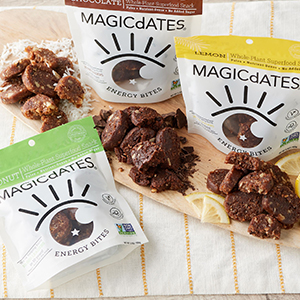
[00:14:29] Ray Latif: Well, I'm going to give a shout out to the folks behind Magic Dates. It's a brand of energy bites that are made with dates, walnuts, and coconut. They're not quite the round energy balls that you see. They're a little bit flatter than that, but they are some pretty tasty treats. Nutrient density is such an important part of any new brand today, and Magic Dates seems to have that in spades. Now, Jackie, when people aren't sending products to the San Diego office, where are you shopping these days? I'm assuming you're shopping for natural organic products.
[00:15:03] Carlton Fowler: Oh, for sure. Yeah. No, I love all natural organic products. I've been doing my own foraging lately, and I've actually been going to- Really? Yeah.
[00:15:15] Goat Rodeo: Is Nate teaching you? Is our photographer Nate teaching you how to forage?
[00:15:19] Carlton Fowler: No, he hasn't taught me how to forage. But I've been going to a non-conventional retailer lately called the Grocery Outlet. And it's kind of like a bargain market. They sell surplus, overstock products, something that maybe went through a package revamp, and they have extras of the old packaging. It's kind of like a treasure hunt every time I go. And they have a lot of great natural and organic products in there. It definitely rotates every time I go in, which adds to the surprise. And they've had an initiative recently to really up their game on what they call the Nosh category. So for them, it stands for Natural Organic Specialty in Health. And all of the products are up to 60% off. So you're seeing natural organic products like Vega, you're seeing Amy's, and then you're also seeing some new products that are coming into categories that are trying to really generate trial with consumers. Maybe you reach people outside of the natural channel. So some of the brands that I saw from my recent haul, which was a couple of days ago, was Good Karma Foods, Meatless Farm, Pizza OG has a new vegan gluten-free pizza with Beyond Meat on it, which was delicious. The Little Northern Bakehouse with gluten-free bread. Like I said, Amy's Kitchen, they have these new plant-based Hot Pockets, which I had last night and they were on point. Kavita, Chosen Foods, Elmhurst, all of these great brands that I found in there. It speaks to the fact that these brands are trying to compete on price and generate trial and to also make their products more accessible to the mainstream consumer, which I think is a challenge for a lot of these better-for-you natural products, is how do you produce a high-quality product but also reach the masses to enact change as far as consumers' diets. So it was really interesting. Got a lot of great products. My cabinets are stocked full of products. So I'll be good for the next week or so before my next grocery run.
[00:17:19] Goat Rodeo: Jackie, it also sounds like you really got a chance to explore in the grocery store. At first, at the beginning of the pandemic, I was just trying to lightning round, get in, get out. I've recently started to slow down a bit and look for new products again and maybe take an Instagram or two. I guess I'd just be curious to know if other people are doing that or people are still trying to rush through the store and grab everything they can.
[00:17:46] Carlton Fowler: Yeah, I mean, in my experience, especially in that store, I think everyone's going in with the same mindset of kind of, you know, looking perusing, you don't know what you're going to find every time. So you're not going in for specific products. So every aisle I went down, it was kind of with the same people socially distanced, of course, and kind of just combing, seeing what looks cool, and throwing it in our in our basket.
[00:18:11] Ray Latif: Cool. Nice. Yeah. I've been using Amazon Prime pretty much exclusively of late. I have been using Instacart for a while, but frankly, I feel like Amazon Prime has a leg up because you're not paying additional fees beyond, I think, just a tip that you would give the driver, and you're getting pretty high-quality stuff from Chosen Foods, obviously. But yeah, I don't know. I don't know when I'm going to get back in a grocery store. It's going to take a bit.
[00:18:38] Goat Rodeo: I think this is going to be one of those things where even when pandemic subsides, I think you'll have people asking like, why do I need to go? It's going to be pretty interesting to see how the lasting impact that this has on retail and it certainly won't be the same. John Craven hasn't been to a grocery store since like 1981. No, I've been trying to not go to the grocery store for a long time just because it's more convenient to get things like Instacart or Amazon or whatever. But I've been a few times during this. It's an interesting experience.
[00:19:27] Ray Latif: Interesting is a good word for it. The one place that I really wish I could go, but I still haven't gone is Trader Joe's, but the Trader Joe's in my town is like one of the most busy Trader Joe's in the nation. I mean, that place is packed all the time and they have a line out the door because they can only let a certain number of people in. And so like down the street, it's like, you know, probably 20 people deep on any given day at any given time, everyone's six feet apart. So I don't need all that.
[00:19:52] Carlton Fowler: Yeah, that's like San Diego too. Every trader does you go to. You can't go without a super long line. So definitely a popular spot.
[00:20:00] Goat Rodeo: I don't know, good old Newton, Massachusetts, not really having big lines there.
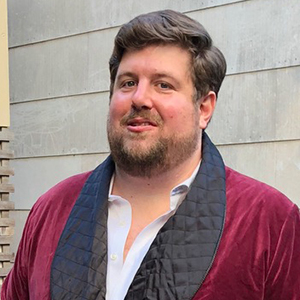
[00:20:05] Ray Latif: Well, I'll have to make a trip out the next time I get to the office, which should be soon. All right, it's time to get to our featured interview for this episode. That's with Carlton Fowler, the managing partner of venture capital firm, Goat Rodeo Capital. Primarily focused on early-stage investments in the alcohol beverage space, Goat Rodeo also holds equity stakes in non-alcoholic and cannabis brands. Since its inception in May 2019, the firm has made investments in eight companies, including ready-to-mix cocktail maker Drinksmith, canned wine brand Archer Roose and Sourced Craft Cocktails, a craft cocktail delivery service. Goat Rodeo is also invested in cannabis ingredients supplier Virtosa, cold-pressed lemon water brand Lemon Perfect. The common thread among these brands? They represent concepts that have a unique consumer proposition or go-to-market strategy, according to Carlton. In the following interview, he breaks down the key elements of Goat Rodeo's investment philosophy, which is rooted in his and partner James Pelligrini's operational experience in the alcoholic beverage industry, how to identify new products with a runway for success, why he's bearish on alcohol-free beverage alternatives, and how he evaluates the opportunity for cannabis drinks. Hey folks, it's Ray with Taste Radio. I'm gonna call right now with Carlton Fowler, who is a managing partner with Goat Rodeo Capital. Carlton, how are you? I'm great, Ray. Thanks for having me on. Thank you so much for being with me today. I appreciate it. So I do a lot of research on guests before we start recording. And one of the things that I normally do is go to LinkedIn to check out their career history. And before you can even look, at some of the things that you've done with your work life, you have a photo that just has to be zoomed in on. It's the best LinkedIn photo I've ever seen, for sure. You're wearing a red velvet robe and have a bottle of Miller High Life in your hand, which is amazing. Is that a pretty accurate representation of you?
[00:22:04] Miller High: Yeah, I like to think so. I take my role in investing in helping companies pretty seriously, but I try not to take myself too seriously. And yes, I do think that Miller High Life is the champagne of beers.
[00:22:17] Ray Latif: Interesting. I, no, no hatred toward Miller High Life, but every single time, every single time I get a wicked headache from the High Life. So I don't know, is it maybe just, I need to drink more of it?
[00:22:31] Miller High: Yeah, you gotta, you gotta push right through, gotta push right through. And you know, it's, it's funny because, you know, we, we end up with so many samples of nice stuff on our shelves just as a function of the industry that we're in that sometimes you just really want to go back to the basics and something that's, you know, high carbonation tastes great. And if you drink enough of them, no headache.
[00:22:48] Ray Latif: There you go. Well, it is an industry standard for sure. Also on your LinkedIn profile, you have an interesting quote there that says, constantly searching for the intersection of the interesting and the obvious. What does that mean?
[00:23:02] Miller High: Yeah, that's just a reminder for myself. I tend to be quite enthusiastic, and I'll get really caught up sometimes in extremely complex ideas and potential investments. And the places that I, and I think many others, as you look back at success, you want that 20-20 hindsight to be, oh, well, that was obvious. How could no one have done that one before? So, you know, it's a reminder to me to say, hey, yeah, ideas can get more complex as you execute them, but the very basis of it has to be incredibly interesting and also just in hindsight, incredibly obvious. And those are the ones that become the most successful.
[00:23:40] Ray Latif: And we'll talk about some of the brands that you're invested in and how they sort of fit into that intersection or reach that intersection in a moment. I want to talk a bit about your career history prior to Goat Rodeo Capital. You are a venture capitalist now, but you've had a lot of different jobs. Let's start with your work at Gallo, the well-known wine conglomerate. What did you do there? And how have you drawn from that experience to support your current role?
[00:24:07] Miller High: Yeah, I feel myself incredibly fortunate to have come out of the Gallo culture. I actually joined them directly out of business school working in the Spirits business unit directly for Ernest Gallo. Now, obviously not The Original Ernest Gallo, but he's now the CEO and at the time he was the general manager of the Spirits business unit. It was a really wonderful place to learn, Ray. I couldn't have asked for a better education in this business. As you alluded to, Gallo is easily the largest winery in the world. They're a private company, but they are massive. If they were public, they would have quite a big market cap. They felt that they had the right to win in spirits. They have very large fixed-cost investments in sales and distribution management, a great marketing team. And my role from the very beginning was to help them win in spirits. And I worked on teams that were developing a lot of their new brands and their innovation. And I can tell you, it was, like I said, an absolute amazing place to learn from one of the smartest people, in my opinion, in the business. And the real reason it was unique was The questions that Ernest would ask wasn't so much, what are the new brands that we're going to launch? The question he would constantly ask is, what makes new brands successful, full stop? And when we unpack that, we'll be able to do it really well for ourselves. So it was like a post-doctoral fellowship on what makes brands successful. And as we went through that, I think we did make Gallo more successful at launching spirit brands. But what really consistently attracted me was, hey, we're doing this for a very specific set of tools. And those are the tools that Gallup already possesses. But as I project this further, this can get even Lemon Perfect. There are even better ways to go to market. So not only did the time at Gallup kind of prepare me to understand what makes Newbrand successful, it also kind of planted that seed in my head of, hey, I have to take this one step further and do this without the corporate net, because I think we can take this one or two steps down the road and find some even more interesting ways to go to market. And that's really what led to the venture capital firm.
[00:26:12] Ray Latif: What makes Newbrand successful? So do you have an answer for that?
[00:26:16] Miller High: Well, wonderfully, many different things make new brands successful, and that's why I think I chose to move into the investor world rather than take a single brand to market, because I think on the one hand, better information makes new brands successful. You have to realize that within the three-tiered system, where there are suppliers like Gallo, there are distributors like Southern Wine and Spirits, and there are retailers, which are either bars or liquor stores, you have really, really imperfect information. And you essentially have a regime that I would characterize as having aged quite a bit and is starting to show some of that age.
[00:26:54] Ray Latif: And to be clear, the three-tier system is specific to the alcoholic beverage industry.
[00:26:58] Miller High: It is specific to the alcohol beverage industry, although what I will say is a lot of cannabis regulation has been copied from that. And I suppose we can get into that later as far as why some of my experience in AlkBev kind of moves over to cannabis. But as you learn how kind of incestuous and to some degree insidious the system is, you start to realize that if you can get better information, For example, in terms of going direct to consumer and giving a lot of digital information and understanding of that consumer, you can go to market much better and much more efficiently. And that's obviously one of the tenets for a lot of Goat Rodeo brands that we support and invest in is the ability to get perfect information as an example of what makes brands better.
[00:27:41] Ray Latif: You're also involved with a firm called Specific Gravity. Small S, capital P-A-C-I-F-I-C, Gravity. What is that firm all about?
[00:27:53] Miller High: Yeah. So right when I first left Gallo I kind of had an inkling of OK I want I want to get involved in supporting these brands that I that I'm seeing out there. The first step was actually opening up a consulting firm and specific gravity went through a couple of different iterations. This is its current iteration now. We're a very small, very specifically focused brand development agency. We have a lot of really wonderful clients among the major suppliers. I can't say enough good about them and how much fun it is to work with them. We tend to get brought in on very specific new-to-world projects because that's our only world. You wouldn't hire specific gravity to build a new car or a new computer program. We only work New Beverage alcohol products. We're very small, we're very focused. And what it does is it helps us, it really helps us keep a finger on the pulse of BevAlc. It keeps me in front of and interacting with a lot of the best thinkers in the major suppliers, which in turn helps the venture capital arm. I view them as kind of complementary companies. Specific Gravity makes Goat Rodeo better, and Goat Rodeo makes Specific Gravity better.
[00:29:04] Ray Latif: Let's get to Goat Rodeo. I chuckle at the name because I'm not 100% sure what it means. What does Goat Rodeo Capital mean?
[00:29:12] Miller High: I mean, this all goes back to, you asked me if me wearing a smoking jacket and drinking a highlife is representative of me. It is, and so is the name of the firm. Again, I just couldn't imagine a situation where I called it like execution capital or something that kind of didn't really mean anything. I wanted to retain my sense of humor. But also, I think this will resonate to a lot of the entrepreneurs that listen to this. All early stage companies, and frankly, sometimes even late stage companies, behind the veneer of something that looks like it's succeeding and moving forward, it's chaos. And that's okay. And you have to be comfortable with that. And I think a lot of times, Our job as investors and advisors is to help these companies focus on the one or two very special things about the company that can scale and then just do your best to hurt the goats. You know the chaos behind the scenes and that's that's a lot of what we end up doing and trying to help with.
[00:30:06] Ray Latif: Is there such a thing as a Goat Rodeo? I didn't look it up.
[00:30:09] Miller High: I honestly don't know. The words just sounded great. I think it might actually be a term kind of for chaos in certain parts of what we'll call the more rodeo and livestock oriented West. But for me, almost on a monopoetically, it sounded great. And then everything kind of built from there.
[00:30:27] Ray Latif: Well, I assume nobody's riding a goat in a Goat Rodeo. And even if you were, those kinds of animals probably don't buck as much as bulls do. So yeah, it seems like you're taking a little bit of a, I guess, cautious approach to capital. Are you, I mean, talk about your investment philosophy. You know, what stage and size do you make investments in companies?
[00:30:48] Miller High: Yeah. I mean, fund one, which we're currently just about finished deploying. We tend to go towards the early stage. I think overall, when you're as focused as we are on just a couple industries, you have to become stage agnostic over time. But for our first one, we really wanted to focus on companies where we could not only provide capital, but do a lot of heavy lifting as well. My partner and I, we have a tremendous amount of contacts in the industry. And quite frankly, we've done so many things wrong. that we can help other companies not make the same mistakes we can. So we like to think that we offer both capital and operator-based advice. And that operator-based advice, I think, tends to be most effective in the early stages. So that's why fund one has been focused on seed stage.
[00:31:33] Archer Roose: Do you want more repeat buyers on Amazon? Well, this free resource in collaboration with Straight Up Growth will help your brand turn first-time buyers into long-term subscribers. Download Winning the Repeat Purchase Game on Amazon now at Taste Radio slash SUG. That's Taste Radio slash S-U-G to start building retention-driven growth for your brand on Amazon. Scaling New Beverage brand into major retail comes down to operational readiness. From packaging lead times to co-manufacturing strategy, the details can make or break a launch. In a new ebook in collaboration with Octopi and Asahi Beer USA, industry leaders share what they've learned in helping brands scale. Download it now at Taste Radio slash octopi. Do you need to scale your team faster without compromising on talent? Join Oceans for a live webinar on April 20th and learn how leading companies are hiring top global professionals who are ready to grow with your business. Register for the webinar now at Taste Radio slash oceans. That's Taste Radio slash oceans.
[00:32:45] Ray Latif: You guys are both new to venture capital, you and your partner. And it was interesting when we spoke last time, you had said, I was too old to join a VC fund, so I launched my own. I wonder what that's like, because, you know, just getting into the financing of early stage companies sounds like a pretty risky thing to do, especially if you've had no experience in that arena. And what really motivated you to do so?
[00:33:09] Miller High: The true motivation just kind of came from me being born of a system, beverage alcohol, that I think has so much room for improvement. And so coming as an operator and specifically from the role that I had in the corporate world of understanding how these things could be better, how they could go to market more efficiently, I felt from that standpoint, I was pretty well suited to this. As far as all the other aspects of how do you start up and run a fund, I'll be patently honest with you, and this is something that I share with probably a lot of the entrepreneurs that listen to this, I'm terrified all the time. Everything's a learning curve, just like it is for an entrepreneur of a new drinks company, but luckily Google exists, and more importantly than Google, really well-trained partners like attorneys and and advisors and consultants exist. And we created this first fund and I can see why you hear so consistently that there is returns to scale within the investing world because fund two is gonna be easier, fund three is gonna be easier from an administrative standpoint and putting it together. And I'm glad I've gone through this process because it actually frankly just gives me a lot more empathy for what my founders are going through because I'm kind of simultaneously starting up my own startup alongside them when we make investments. definitely comes from a standpoint of people have trust with their capital. And it's your job to make sure that you're respecting that.
[00:34:30] Ray Latif: And when you are deploying that capital, you have some very specific ways of identifying brands that could be successful or at least could fit into your portfolio. You mentioned three specific things the last time we spoke. Can you talk about those?
[00:34:45] Miller High: Yeah, of course. I'll go back for your listeners, again, realizing that the bulk of our fund goes towards beverage alcohol. The way that three-tiered system works is, again, there are suppliers. Suppliers can be as big as Gallo and Diageo or as small as some of the companies that we fund. Then you have distributors. Distributors, by law, are the ones that get the product from the supplier to the retailers. The retailers can either be bars or liquor stores. And within beverage alcohol, you tend to see a very large consolidation in that middle tier. And the outcome of that is that the system can seem almost antagonistic towards new startups. And when we look at that system, we say, hey, this is probably something that needs to change. So let's go about unpacking it and figuring out what are the three things that matter and will make a change. And the first one, almost counterintuitively in a world that is quite branded, is that we look very hard at whether or not there's a piece of actual IP. And by IP, I mean true patents. are absent at a very novel go-to-market that allows them to skip the on-premise. And I don't want to use too much technical terms here. The on-premise really is just a fancy term for bars. And if you think about it, bars and New Beverage alcohol system, they exist as like trial and awareness vehicles. A lot of times that's where people learn about new brands, try brands for the first time and consider becoming loyal to them. And what we said is, OK, everybody knows this. Everybody uses the exact same methods to go to market on premise. They either pay quite a bit for ambassadors or they do very big incentives for their distributors or they just outright pay to play. And we wanted to set our entire fund up to say, OK, how do you succeed without that? And that's kind of the second part. How can you scale without winning on premise? And then the third one is we wanted to focus on high velocity and high margin products. And that really kind of moved us away from the craft space. Yes, craft spirits and craft wine as a whole are growing, but it's very difficult to figure out which one of those is going to be a winner and actually give returns that make venture capital appropriate. So when you put all those three things together, look for IP, look for novel go-to-markets, obviously, that usually involve direct-to-consumer, try and scale with that one on-premise, and look for high velocity and high margin, you actually couldn't have set up a Lemon Perfect strategy for how alcohol looks in the COVID world. And we've been very, very pleased with how our investments have performed throughout this world, because the actual impact of COVID, which is a complete and total shutdown of the on-premise, is exactly how we viewed the world going to be changing over the next five to 10 years. It's just happening faster.
[00:37:22] Ray Latif: When you talked about high velocity and high margin, when we spoke last, you mentioned a brand called Drinksmith that you're involved in, D-R-N-X-M-Y-T-H, which is a great brand. Can you talk a bit about that? And then also, I'm interested, you know, what's more important to you, high velocity or high margin?
[00:37:41] Miller High: Gosh, that'd be like picking between two of your children. And I'll tell you why, in tandem, they are so important. And I'll actually use Drinksmith as an example. Of course, as I've alluded to, we're very prone towards direct-to-consumer. We love this ability to go direct-to-consumer because you can bypass a lot of the distribution issues and you get a lot richer data that way. Drinksmith is a really, really wonderful company. It's one that we're extremely high on. They've essentially found a patented way to make truly, truly fresh mixology bar-quality cocktails in a package that you twist, shake, and most important, this package can be overnighted so people can have cocktails that are as good as the best bar in the world, only they can have them at home almost on demand. And the really nice part about that is unless there's something wrong with the consumer, they're probably not buying more than a couple bottles of spirits a month. You really shouldn't. I'm here to say you shouldn't be buying multiple bottles of gin, multiple bottles of vodka a month. So that by definition makes most spirit products kind of low velocity. When it's a cocktail, you can buy and enjoy a couple cocktails multiple times a week. And so Drinksmith by definition can become high velocity and then also high margin because people are used to paying a fair price for a very good cocktail. And when you combine those two things together, you actually can then afford to build your own D2C apparatus. and own it from the ground up, whereas if you're a brand new vodka or a brand new gin or a brand new whiskey, you probably can't afford because you don't have the velocity and the sales to really focus on truly building a DVC organization. So, that's why we look at those two things together, because if it's high velocity, low margin array, then you're selling a lot, but you're trying to make it up on volume, and that's just not going to be possible with the regulations and the marketing costs that happen in the BevElk world.
[00:39:35] Ray Latif: Gee, you know, Carlton, it sounds like you have quite the experience in working with alcoholic beverages. Obviously, you know, we talked about your background as an operator. How has your experience really translated into this funding role and how has it made you, I guess, a better investor than we'll call it your competition?
[00:39:56] Miller High: Sure. You know, I think a lot of it is just how much time we spend thinking about the actual ecosystem. This notion of high velocity and high margins, scaling without living on the on-premise, etc. This is really an outgrowth of spending time inside the system, almost as like a spy, figuring out what's not working, and then leaving to go invest in companies that you think can change that kind of overall system. So, I think, number one, it helps us identify who is truly novel, who is truly innovative, and who has the chance to potentially change the system for the better. The second is, it's really just relationships. I don't care what industry you're in, relationships tend to matter, and New Beverage alcohol, I think they matter more than most. So we can open doors in distribution, we can open doors in retail, and we can even open doors and make very early introductions to potential acquirers that I think that most people who invest in this space might not be able to do from day one. And as a function of that, I think we tend to be viewed as more than capital, and that's reflected in the valuations that we get. People are really happy to have us on board because, yeah, of course we're providing growth capital, but we're also able to materially help them with any problems they have.
[00:41:09] Ray Latif: I talk to so many entrepreneurs every year who say that they have a really novel concept, that they have a really differentiated brand or product that's going to change the game for beverage food New Beverage alcohol. There's a lot of those folks out there and, you know, some of them do have really disruptive concepts. When you're talking about something that's really novel, and aside from the three aspects that you're looking for in a brand to invest in, how do you define innovation as it relates to that word novel?
[00:41:43] Miller High: Sure. Well, I mean, I say this partly in jest, but if you're truly novel, you tend to be able to get a patent. So that's one excellent signal that you're truly novel. But Beyond Meat, I think what I look for most is incrementality. So I'll give you an example. Right now, hard seltzers are all the rage. And frankly, it's just not that difficult to get a mobile canner to pull up. There are not many barriers to entry to coming out with a new hard seltzer. And you'll constantly get people say, well, this is why mine's going to succeed. This is why mine's going to succeed. Well, no, you're not providing any incrementality. The first hard seltzer was truly novel. because it hit on all of the aspects that people actually want. They want sessionability, they want lightness, they want great taste. And that's why the first entrance in the market grew so fast. So I tend to look for things that you don't have to replace something else on the shelf with in order to be successful. And that's typically your very first signal towards it being novel. If it's just another vodka packaged better, or to use a food New Beverage, just another granola bar packaged better, probably it's not truly innovative. If you have to take something else off the shelf to put it up, not so innovative. If you have to create a whole new shelf space for a category as a function of that product, now you're looking at something that would really peak my attention.
[00:43:07] Ray Latif: When you are talking to entrepreneurs for the first time, you know, the entrepreneur himself or herself is a really important part of the company itself. What are you looking for specifically in that entrepreneur?
[00:43:19] Miller High: I think, and this will probably be an answer, Frank, that you've heard a lot. It's this notion of grit, and for lack of a better term, stick-to-itiveness. Going back to your prior question of novel, in my experience, a lot of times, if you're doing something that's truly different in the category, you've had quite a few people tell you, well, that's not going to work because it's not like X, Y, and Z, or that's not going to work because there's nothing else like it in category. So the entrepreneurs that are willing to kind of really push this idea uphill for as long as it takes until they find someone who understands their vision and wants to support their vision tend to have a level of grit that will overcome any other problem that shows up. because especially at the seed stage almost universally whatever's in this deck and due diligence data room that they're presenting to you will not be the final iteration of this product and what hopefully ends up being successful. So without that underlying tenacity and grit they're never going to get over the myriad road bumps that you know are between point A and point B. So I think that's what I tend to look for the most.
[00:44:26] Ray Latif: Now you have investments New Beverage companies, beverage alcohol companies, cannabis companies. Let's talk about each category. First of all, I mean, do you have a specific fraction of your portfolio that's dedicated to each?
[00:44:40] Miller High: You know, it's not a mandated fraction. Definitely the majority of it is New Beverage alcohol, because that's our number one background. But because of our understanding, you know, first of regular environments, you know, branded products within regular environments, and second, how a distribution system works and the actual chain of events that first has to incentivize a customer to move, and in my world, a customer is a distributor or a retailer, and then incentivize a consumer to patronize that customer, consumer being the final consumer of the product. We felt really comfortable expanding out both into cannabis and into traditional beverage. Specifically to answer your question, no, but the bulk is New Beverage alcohol and fund one. That could change as we expand or potentially split the funds out in the future. But the reason that we feel comfortable investing in those things is really the mental heuristic that we've built up that helps understand those categories as well.
[00:45:40] Ray Latif: I'm curious as to why you're involved in non-alcoholic beverages. Well, I mean, from what I can tell, from what I can see in your portfolio, it's only one brand at this point, which is Lemon Perfect. I guess, how does a non-alcoholic beverage work in a portfolio that seems to be primarily focused on the alcohol side of things?
[00:46:00] Miller High: Yeah, number one was it was just an incredible product. We couldn't say no to how good the product was and how good the team was. But when you go Beyond Meat, I think probably quite a few listeners don't realize that beverage alcohol distribution has built a lot of the biggest traditional beverage brands. Body Armor wouldn't have gotten where it was without Miller Coors Distributors. Red Bull wouldn't have gotten where it was without Southern Wine and Spears Distributors. So our understanding of that business, as well as our just understanding of how distribution versus retail works in general, allowed us to really analyze Women Perfect, I think, from a different standpoint than a lot of investors would, and frankly, also be helpful. There are introductions to regional distributors that maybe primarily are handling beer these days who have room in their trucks and who are eager to distribute someone like a Women Perfect. So it really ticked our two boxes of, do you understand it? And can you hopefully separate the winners from the losers? And moreover, can you help? Because if we're just offering capital, then we're really no different than the other fund.
[00:47:07] Ray Latif: One of the more interesting trends that we've seen in New Beverage industry of late has been the rise of non-alcoholic, that being alternatives to beer or wine or spirits that contain no alcohol. Seedlip is an example of something like that. I'm curious as to your thoughts for the potential of that category. And as far as I can tell, you don't have any products in your portfolio that fit into that space.
[00:47:34] Miller High: The first answer to that question is we do support health and wellness trends. I love seeing something like a Seedlip succeed because even though we're invested New Beverage alcohol, we want people to drink responsibly and be healthy. Beyond Meat, from as far as valuating it as investment potential, I think you need to be really keen on understanding the ecosystem that made something like a Seedlip successful. So, you have to take a step back and say, for whom am I solving a problem? And on the consumer side, you can solve a non-alcoholic problem many ways. You can ask for a soda water, you can have the existing non-alcoholic beers, you can have a soft drink. But if you take it a step back and say, what is the problem for the on-premise account? What is the problem for the retail account? Then you'll figure out that CDLIP actually solved the problem for that. Seedlip allowed them to have a section on their menu and charge the normal going rate for cocktails for a mocktail. So it doesn't surprise me that it was successful, especially as it was a first mover in that space. What it's done though is spawn a lot of copycats. I don't necessarily see a lot of them being nearly as successful because Seedlip was very unique. It was extremely high margin because it was charging spirit prices for something that didn't have spirits in it and therefore wasn't taxed like spirits, etc. And the market has a pretty funny way of shaking out copycat competitors and normalizing margins. So if we are going to invest in that space, it's going to take something that again is really, really unique and solves the problem. So you probably would see us look for something that solves the problem in a D to C manner. Perhaps in a single-serve manner who there's there's a company that we're actually looking at called spirity That may solve this problem for consumers because I think seed lips already solved the problem for the on-premise and therefore I don't want to follow on and just invest in the copycat there. Does that make sense?
[00:49:30] Ray Latif: It does I guess it also helps if you're a consumer of those beverages I mean have you had a lot of experience trying these products and I guess do they really? fit the bill in terms of being a true alternative to the real thing? And I call it the quote-unquote real thing?
[00:49:48] Miller High: Yes and no. I've tried a couple that I just don't understand what the hype is about. And I'm sure that's subjective. But on some level, you know, my palate is probably trained more than the average person's just simply as a function of how many products I've tried. But there are some out there that are doing some really interesting things with distilling tea etc. that that might break through. But here again I think it's another opportunity to look for actual disruption. I'll use a company that I think that is probably pretty familiar with. It's a company called Hoplark. And they've made a hopped tea that is, I would say, probably widely mainly consumed for its traditional beverage aspects. But within that, I think it is the best tasting and most unique non-ALK product I've ever seen. And consumers have voted with their dollars and made it that way without that ever being their intention. And that's what I think you'll end up seeing as being a real breakthrough in this category, is that things that weren't designed to only handle one occasion, which is other people around me are drinking, I don't want to drink, therefore I'll use this thing to hide, won't win. Products that are just remarkable and good and happen to fit that occasion, like Hublark, will win. The other place that I think you might see become really interesting here is cannabis beverage. As the stigma around cannabis continues to drop, and as at some point we approach a federal end to federal prohibition, I think that the average consumer who still wants some kind of psychoactive effect, but doesn't want necessarily the detriments that come with ethanol consumption, you might see them flock en masse to cannabis beverage. And that's one of the reasons that we're invested there as well.
[00:51:29] Ray Latif: Well, it's interesting you mentioned Hoplark, Hop Tea. BevNET is quite familiar with the brand. They actually won our New Beverage Showdown competition, the 16th edition at our BevNET Live conference in the winter of 2018. And it's also interesting that you mentioned cannabis beverages because there's a brand called Can, C-A-N-N, that took the top prize at our competition, our 17th edition of the competition, which happened in June of 2019. The thing with Cannes though, that was pretty interesting is that it contained THC. It wasn't just a straight CBD beverage, which for our conference, for our industry was pretty eyeopening, especially because there's so much uncertainty going on in the regulatory environment. Now, I know you mentioned that we will start to see things change, but I guess, how do you invest in a product like Cannes or a THC New Beverage when it can't be sold in traditional outlets at this time?
[00:52:27] Miller High: Yeah, it's difficult to kind of map a heuristic over. I think part of it, interestingly enough, is having a really good understanding of, you know, within a regulated environment, what tactics actually work. And we're particularly suited to understand that. Like, if you go back 20, 30 years, you know, all the things that seem totally normal now, you know, people brain ambassadors in bars and passing out alcohol, you know, people trying to do a lot of tastings, etc. Those are all programs that eventually will work and be ported directly over from the BevAlc playbook to cannabis. But for us, even within that, especially when you looked at the way some of the valuations were in late 2019 and even into 2020, We said, okay, we believe in cannabis beverage. We believe that for cannabis to be as big as everyone's talked about it being, it's going to have to be on the backs of these incremental users. It will not be on the base consumer just smoking more. And this incremental user will be interested in things New Beverage. It's a really great way to take a dose. So how do we bet on cannabis beverage as a whole instead of on any individual brand of cannabis beverage? And that really kind of led us to our current view of the cannabis, specifically beverage world, which is we focus on picks and shovels. Who's making the best emulsification that, you know, if you want to make a great cannabis beverage, you have to go to company X to buy. We happen to think that company X is Virtosa. They're competitors, but that's how we're focused on this space. We want to bet on names that when cannabis beverage wins, they win, not when any individual brand wins.
[00:54:04] Ray Latif: All right, well, once again, Carlton, thank you so much for taking the time. Please stay in touch, and can't wait to see how Fun2 shapes up. And please let us know as soon as you're making those investments, because we'd love to report on them.
[00:54:18] Miller High: Awesome. Thanks, Ray. I appreciate it.
[00:54:22] Ray Latif: That brings us to the end of episode 101 of Taste Radio Insider. Thank you so much for listening, and thanks to our guest, Carlton Fowler. Please subscribe to Taste Radio on the Apple Podcasts app, Spotify, Stitcher, or Google Podcasts. As always, for questions, comments, ideas for future podcasts, please send us an email to ask at Taste Radio. On behalf of the entire Taste Radio team, thank you for listening, and we'll talk to you next time.