[00:00:04] Ray Latif: Hello, and thanks for tuning in to episode 104 of Taste Radio Insider. I'm Ray Latif, the editor and producer of Taste Radio, and I'm with my BevNET and Nosh colleagues, John Craven, Mike Schneider, and Jacqui Brugliera. In this episode, we're joined by Filipp Chebotarev, the co-founder of Cambridge SPG, a venture capital firm that invests in emerging and innovative consumer concepts. Just a reminder, if you like what you hear on Taste Radio, please share the podcast with friends and colleagues. Of course, we'd love it if you could review us on the Apple Podcasts app or your listening platform of choice. How's everyone doing today? I'm ready to get this party started, Ray. Yeah, let's do it. Yeah, fabulous. Yes, Jack, you were recording a little bit later than normal, so you're getting a little bit more of your own morning. How did your morning routine begin?
[00:00:47] Filipp Chebotarev: Usually I go out of bed and maybe go for a walk. There's a couple of really great coffee shops in my neighborhood. I live in Little Italy in San Diego. So yeah, if I'm feeling up for it, go for a walk, grab a coffee, walk by the waterfront, and then come back and get to work.
[00:01:03] Ray Latif: That sounds really nice. Jackie gets up at 3.30 AM, right? I mean, she keeps East Coast time.
[00:01:07] Filipp Chebotarev: I don't sleep.
[00:01:09] Ray Latif: I should take more walks in the morning. It's a little bit tougher though because it's cooler here. So if I if I take a walk, it's 7 AM. It's it might be 40 degrees outside. I'm not. I'm not a cold weather person despite living in the Northeast my entire life. I don't know what's going on, but I just haven't made that move.
[00:01:26] Filipp Chebotarev: Yeah, here it's a little bit easier with The New weather, so I'm lucky.
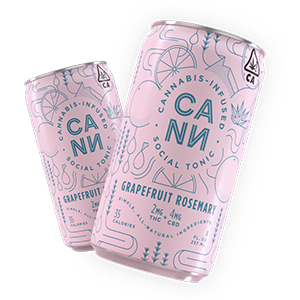
[00:01:29] Ray Latif: Nicely done. Well, as loyal listeners know, I'm not a regular cannabis user. In fact, I'm not a cannabis user almost at all. I've never ingested THC, as far as I know anyway, but I'm thinking more and more that cannabis could play a role in my life. I'm sure that people can guess why. In that way, it makes me just like Gwenyth Paltrow, right? Because Gwenyth Paltrow, the famous actress and the creator of Goop, that lifestyle brand that she owns, recently invested In Cann, which is C-A-N-N, a brand of ready-to-drink social tonics. Folks might be familiar with Cann because they won The New Beverage Showdown 17 a couple of years ago. Their core line of products contains 2 mg of THC and 4 mg of CBD per 8-ounce can. They already raised $5 million in seed funding in January. This latest tranche of money includes, as I mentioned, Gwenyth Paltrow's investment. I think that's a pretty big endorsement for a still emerging brand.
[00:02:37] Filipp Chebotarev: Definitely. It seems like
[00:02:39] Ray Latif: there are a lot Fish People with big names getting into cannabis. And I think, you know, seeing an endorsement like that from someone who also operates, as you said, a lifestyle brand company, that is a pretty meaningful endorsement of cannabis as a product type that can go mainstream. And, you know, obviously it's a big endorsement of can, which has one of the more mainstream oriented kind of consumable ingestible products right now in that space. I can't recall, in terms of your feedback, yours and Mike's, John, the mainstream potential for a THC beverage was something that was a topic of consideration. It was a concern, I think, for some of the judges, but does this mainstream, does Gwenyth Paltrow's investment mainstream this opportunity for Canna Curious products? I don't know if it does that much. Obviously, there's a big other hurdle of just where you can sell these products. They have to be sold at licensed outlets. Also, right now, it's only in one state. It's far from mainstream, I think, in terms of, I don't know, thinking back to the days of traveling and walking into a retailer in California, like a MedMen, It certainly seems like one of the more mainstream looking products that you'll find in those places. But I think all of this stuff is definitely far from true mainstream as we use the word mainstream to describe other CPG products. But I do think this is a big step forward for it. We often talk about investors wanting to invest Fish People who are living the brand. And these founders are the can of curious. So that's pretty interesting as well. For sure. But I think, you know, Gwyneth mentioned, and I know her by her first name. We, you know, I know we know each other that well, so I can call her Gwyneth. Yeah, from when you had wine together last week, you know, Zoom meeting.
[00:04:40] Filipp Chebotarev: I want to Get An that level.
[00:04:41] Ray Latif: There you go. I'll introduce you. I'll get our people and her people together so we can make that happen.
[00:04:47] Filipp Chebotarev: Yeah, work on that.
[00:04:48] Ray Latif: Jackie wants in the book club, right? Let her in. No, but, but Gwen's described cannabis as a hero ingredient of the future. And also that can has the potential to be an appealing alternative to alcoholic products. And I saw it's a sort of interesting intersection of Canada, curious and silver curious, and you know, how those two kind of fit together again, you know, not necessarily something that I would have consumed in the past, but given that chill and relaxation seems to be a trend that continues to evolve in our industry. I have to start trying these products, right, Jackie?
[00:05:25] Filipp Chebotarev: I mean, I would recommend you try them. Um, yeah, I think a big thing too, is just like, we're starting to see some like CBD products and, you know, more mainstream retail, but as far as like THC products, you can find them in dispensaries, but there's not really a great place for them there as well. Like they're used to selling certain products, but beverages or What Canns trying to do is something, you know, more innovative where it's like microdosing, which is like their main thing is trying to get people to drink multiple of them. Whereas people are usually going to a dispensary, buying one beverage and you know, that's, that's what they're looking for. So I think looking at like the retail perspective is also going to be interesting to see it go mainstream. Whereas right now it's still kind of in the beginning stages.
[00:06:06] Ray Latif: Hey, Ray, noob tip from a noob. I would start with one. Start with one can, one can of can. Yeah. Yes, it's not an inside joke anymore, because everyone knows that you entered the matrix last year. And I don't know, what do they call it? I would take that over 2020 though, Ray. I would take the matrix like every week, once a week over what's going on this year. What's the official term of what happened to you? Was it a freak out? The official term is that I was tripping balls. Oh boy.
[00:06:43] Filipp Chebotarev: And that was after one?
[00:06:45] Ray Latif: After three gummies at the Rose Cafe that was supposed to have six milligrams of THC and John Craven was hoping that it would fall into the fire so that his Instagram account could go viral. He was basically like, if you imagine Cookie Monster, but with like edibles. That was Mike. Terrible, terrible what they did to you. You could just stick with CBD beverages, as I know you love, Mike. We got a new one this week from Proposition Cocktail Company. The founder and CEO is John Korkutis. Thank you so much for sending these, John. The New Bitter Apertif product, which is made with hibiscus, blood orange, gentian, I don't know what gentian is, grapefruit peel, rosemary, sage, and of course, 15 milligrams of hemp extract, also known as, or also described as CBD. Now, when he was telling me about that, Ray, he said that's kind of his answer to the Negroni. So I think it's sitting on my doorstep right now. So I'll have to bring that in tomorrow for John Craven to be the judge of that. I'm waiting for some. And gentian is what's providing the bitter flavor in that probably. There you go. You know, we first met John at a DevNet Live event, I think it was a year and a half ago. And it's interesting, because we're coming up on our next edition of DevNet Live, as well as Nosh Live. Jackie, just a slew of amazing conferences coming up next month. Can you talk about when, where and how?
[00:08:15] Filipp Chebotarev: So in December, We Have a slew of events going on on all of our sites, including BevNET, Nosh, and Brewbound. Starting on BevNET, We Have Beverage School on December 7th, followed by BevNET Live on December 8th and 9th. All of our events are available for subscribers for free. So you can attend all of these events. So that's what We Have going on for BevNET. For Brewbound, We Have the Brewbound Pitch Slam for breweries and beyond. So we're opening it up to a wide range of products and entrepreneurs. There is no fee, no subscription required for that competition. And that's on December 8th and 10th. And then we also have BrewBunLive on December 14th and 15th. So that is our two-day conference for the beer industry and beyond. For Nosh, we then have Nosh Bootcamp on December 14th and NoshLive on December 15th and 16th. All of this information is all on our sites. I know that's a lot to kind of ramble off, but all of it is included for our subscribers. You can attend any and all of these events on all of our sites as a subscriber. So you can check out that information, read more about the events, pretty much bringing our conferences to the virtual world, as well as our educational resources. So something to tune into, register, put them on your calendars and block that time off.
[00:09:40] Ray Latif: I think I have a new motto for our subscriber platform, which is mad value, bro. Because if you can attend all those events for the cost of $375 subscription, that's insane. So especially if you're a new early stage or emerging brand, I mean, the value you get just from the beverage school content, just from the Nosh bootcamp content is just exceptional. I mean, We Have some of the top folks in the industry offering you guidance on how you can avoid mistakes and rapidly scale your brand in a way that is going to make you a winner in this industry.
[00:10:17] Filipp Chebotarev: Yeah. And on top of that, like our events are going to also include networking components, additional content and education. So beyond just, you know, tuning into presentations and hearing advice from leading experts, you'll also be able to meet some of these experts and have one-on-one conversations.
[00:10:34] Ray Latif: That's just one month of the subscription, Ray. We Have other events throughout the year that are also included in said subscription, like we just had our Supercharged D2C event. I mean, there's a lot of value packed into a year subscription, bro. A ton of value. Mad value, bro. Mad value. That's what it is. Now, we've had plenty Fish People We Have attended our BevNET, Nosh Live, Brewbound Live events, We Have been recognized as winners of a particular best of year. I mean, I think this is something that's familiar to our listeners that BevNET, Nosh and Brewbound produce awards every year. and recognizing the best in a particular industry for that particular year. So as we talked about in the last episode, we're accepting nominations for BevNET Live's Best of 2020, Nosh Live's Best of 2020, and then in January, Brewbound's Best of 2020. The best way to apply and nominate a person of the year, brand of the year, new product, rising star, marketing campaign, best design packaging, is to go to BevNET.com, Nosh.com, or Brewbound, and fill out a nomination. It's as easy as that. The deadline for submissions is November 20th. So if you're going to do that, Get An it soon. Go to BevNET.com or Nosh.com. It's all over the site. Submit your brand. Yes, indeed.
[00:11:59] Once Upon: Guessing your margins? That's risky. Belay Financial gives CPG brands the clarity to scale smarter, faster, stronger. Get your free inventory ebook by texting TASTE to 55123 and start making data work for you. Vibrant Ingredients is the natural ingredient partner powering food and beverage innovation, delivering flavor, function, and protection through a science-backed portfolio. Vibrant delivers purpose-driven solutions that help brands create extraordinary experiences. Discover what's possible with Vibrant today. Visit VibrantIngredients.com.
[00:12:46] Ray Latif: Now, John Craven, you were sipping on something earlier. What was that? Oh, it was probably Week 1. Actually, look at that. Did you see that? I saw you sipping on one thing, but then you looked across your desk and it looked like there were about 10 different things there.
[00:13:01] Filipp Chebotarev: One of 10.
[00:13:02] Filipp Chebotarev: Just got a lot of stuff on my desk right now, but yeah, I was trying this Better Booch here that
[00:13:09] Ray Latif: Just showed up at our office. Ginger spice that were pretty tasty. Very cool. How many beverages would you say you have on your desk at any given time? Right now it's maybe about eight. Eight. And they're all different brands. Slow day. Yeah. I mean, I got a bunch of random things here. Made my own juice in our good nature juicer that We Have downstairs in our office.
[00:13:32] Filipp Chebotarev: Just took some spritzes out of the fridge since I think that's supposed to be a little warmer today. Got myself a Amaro Angelino Spritz.
[00:13:45] Ray Latif: Those are good. Which is quite tasty. And then a Don Ciccio Ambrosia Spritz. All the goodies. This one's 12%. It packs a punch. I try to only have like, you know, three of these at a time. Just kidding. But no, it's... I was in the office the other day. No, those are hidden from you, Ray. They're definitely hidden from Mike, but continue to be impressed with the quality of all these different ready to drink cocktail products out there. I did not see those in the office. Definitely did not see those in the cooler. Otherwise, I would have hoarded all of them because that is good stuff for sure. He inherited Landis' fridge with the ocular scan technology, so you're not getting in there even if you see it in the refrigerator. Fine, fine. Well, then you guys aren't going to Get An of my Skinny Dipped peanuts. These are brand new on the market. I got samples, uh, prelaunch. These are incredible new brand extension of peanuts. Uh, I showed this to our camera, but I didn't explain to our listeners that this is the peanut butter and jelly variety, which is insane. Uh, I think that's the best word I can use to describe them. They are insane. There's also a milk chocolates variety as well. I guess I haven't tried yet. So, uh, How about a trade? I'll trade you for some of the spritzes for some of the peanuts. John Craven, what do you say?
[00:15:05] Vive Organic: I don't know. I think I might keep the spritzes.
[00:15:09] SPEAKER_??: Fine.
[00:15:10] Ray Latif: Fine. Nothing against Skinny Dipped. Those are super tasty for sure. They are super tasty. And if you had an opportunity to hear our interview with the co-founder and CEO Breezy Griffith, good for you. If you didn't check out episode 96 of Taste Radio Insider, it's a doozy. It talks about how Breezy snuck into Google, the offices of Google and Microsoft and how her brand went national at Target. Good stuff for sure. Mike, what is that pink bottle in front of you? Ray, I'll tell you what I really want to talk about, which is the ginger spice kombucha. Just kidding. This pink bottle here is, Ray, it's called Wet Hydration. Wet Hydration, W-E-T. My favorite kind Wet Hydration, Wet Hydration. It's basically electrolyte product with zero calories. This one is dragon fruit, yerba, and hibiscus flavored. That sounds pretty good. I'm going in. I haven't had this one yet. All right. You got to get that cap closer to the microphone so they can hear it and snap. Not very snappy on the cap. Well, there's a lot of flavor in there, right? Well, you did say Dragon Fruit, Yerba, and what was the last thing? hibiscus. I said yerba. Yerba is actually The New of a brand. It's yerba mate. That's one of the ingredients. I would say that the flavor that I'm tasting is monk fruit. Yes, monk fruit. A little bit of monk fruit packs a big amount of sweetness for sure. Well, sure it does. For the most part. Yeah. Jackie, anything new in your world in the food and beverage sample landscape?
[00:16:42] Filipp Chebotarev: Yeah, so we've been pretty slow on the samples in the San Diego office, but I'm still trying to, you know, comb the web and check out the local stores. So I had a Whole Foods delivery the other day and made a bunch of vegan comfort foods with some of my favorite brands. So like, for example, made a buffalo chicken dip. So using a No Violife Foods, chicken, and then using a new primals, buffalo sauce. And then I also use bio life's cheese. So it was really tasty, really gooey, satisfied my comfort food craving. So utilizing a bunch of different brands and kind of making my own recipes out of them is what I've been doing lately.
[00:17:25] Ray Latif: Very nice. He's with the Z is always good too, right? Yeah. I apologize for samples being slow in the San Diego office. We should start like a new campaign. Hashtag samples for Jackie.
[00:17:39] Filipp Chebotarev: I will take them.
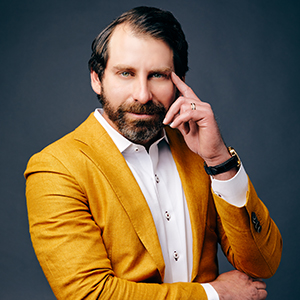
[00:17:40] Ray Latif: There you go. I just want to note that this is the first episode where you've ever said breezy, cheesy, and doozy on the same episode. We said doozy? Oh, yeah. Hey, you said there was some episode was a doozy. Oh, you went back to like 1930. I did. And talked about that episode. Yeah. Oh, I must have been. Well, I guess I was just talking about the Taste Radio episode, Taste Radio Insider episode 96 with Breezy Griffith. Breezy, doozy and cheesy. There you go. That is what you were talking about. Yes. Alright, it's time to get to our featured interview for this episode. That's with Filipp Chebotarev, the co-founder of Cambridge SPG. Since launching in 2016, the California-based venture capital firm has been a highly active investor in the food and beverage industries and holds stakes in several fast-growing and disruptive brands, including Once Upon a Farm, Vive Organic, Foodstirs, Owls Brew, Fish People and Tosi. Within our expansive conversation, I spoke with Filipp Chebotarev the firm's investment philosophy, what he learned from developing an unsuccessful food brand, and what role his background in distressed real estate has on funding upstart companies. He also discussed effective strategies for initiating and cultivating relationships with investors, why he'll review a 70-page pitch deck under the right circumstances, and general rules that predict success in food and beverage. Hey folks, it's Ray with Taste Radio. I'm going to call right now with Filipp Chebotarev, who is a co-founder and partner with Cambridge SPG. Philippe, how are you? I'm doing very well. Thank you, Ray. Thanks so much for being with me today. I know you're a very busy man. You're busy, but grounded. For someone who is on a plane, it seems like every week or every two weeks, what's it been like to be grounded for the last eight months?
[00:19:26] Filipp Chebotarev: It's been a grounding experience, if I don't say so. It's been a welcomed change. And Zoom, of course, has enabled meeting with our portfolio companies that are all across the country. It's given us time, right? So COVID has created a lot of new situations, special situations that require a lot of attention. So being at home has been positive for that, really being able to focus. We've closed a lot of deals this year, despite everything. Our portfolio companies are performing exceptionally well, but of course miss the trade shows, the conventions, all the fabulous BevNET and Project Nosh events. which are the highlight of the industry, and look forward to getting back out into those and hitting it hard in 2021, we hope.
[00:20:12] Ray Latif: I hope so as well. We would be prepping to head out to Santa Monica right now. But as you mentioned, it's going to take a little bit of time before we get back there. Hopefully 2021 is that year that it's going to happen. But in the meantime, I'd love to talk about what you guys are doing and what some of the things you have been doing over the past year. As you mentioned, you've made some investments. And the last time we spoke, you had talked about an investment that you made in a fast casual chain that is really growing quickly to the point where you described chicken as The New orange.
[00:20:52] Filipp Chebotarev: Well, before we talk about Starboard Chicken, which is the deal, I'd like to also point out that this year I've been able to grow a very thick and lush beard, as you can tell, which is definitely on the list of accomplishments for 2020. But yes, Starbird Chicken is a fast-growing, fast-casual chicken chain. And I say that chicken is The New orange. If orange is The New black, then chicken is The New orange. I mean, chicken has had tremendous growth with popular concepts like Chick-fil-A, Popeyes, Cane's, and others. What we liked about Starbird Chicken, besides their incredible numbers, unit economics, and cash on cash, is that the menu is very high quality menus. So the customer can really travel the wide spectrum from super healthy to ultra indulgent, to very adventurous, meaning from adventurous, I mean, it could be, you know, Korean barbecue style chicken, very unique, very unlike something you could Get An a Chick-fil-A or a Popeyes. So very wide spectrum, but still very concise and clear menu. And of course the food just tastes incredible. This isn't just a regular restaurant chain. So Starboard also has digital brands on Uber Eats, on Postmates, on Grubhub. Those digital brands are enabled by Cloud Kitchens, which really are a very capital efficient way to service a very large portion of a major metropolitan area like San Francisco, where the company started.
[00:22:33] Ray Latif: Yeah, as I mentioned, I remember visiting a starboard chicken at SFO and was really impressed by it. And that was in January, right around the time of the Winter Fancy Food Show 2020. So congratulations on that investment. Is that your first investment in a fast, casual restaurant chain? It is. It is. So that's a pretty big deal given that your portfolio is pretty significantly stacked with packaged food and beverage brands among other consumer brands as well. Talk a bit about the companies in your portfolio and how it's broken up in terms of brand and category and industry.
[00:23:10] Filipp Chebotarev: Sure. Currently we're invested in 27 CPG brands and across food, beverage, personal care and beauty. And, you know, I would say We Have these two buckets that we really like to invest in. One of those buckets, maybe the main bucket is, you know, companies that are 20 to a hundred million dollars in net revenue. So established business, lots of data, data that you can review, really understand, extrapolate. those deals, right, because they're more established, typically the valuation matches, right? You're paying for the enterprise value that has already been created because you believe there's a lot more growth ahead, but also a large and meaningful part of our portfolio, although it's becoming smaller and smaller as the early stage companies have become very well-known larger companies now, but when we first invested in them, they were tiny, are very early stage investments in creative food, beverage, and other consumer concepts. Whether it's something like a complete new category, like Once Upon a Farm, right? Fresh Baby did not exist until Once Upon a Farm came in and created that category and is now the number one baby food brand in all of Whole Foods nationwide.
[00:24:29] Ray Latif: Now a few years ago prior to launching Cambridge SPG do you ever think you would be invested in a chicken chain or a hydrogen water brand or a refrigerated baby food brand because your primary business had been investing in distressed real estate.
[00:24:44] Filipp Chebotarev: Correct. So to answer that question fairly, I probably didn't think that I would have an investment in a hydrogen water. I probably didn't think that I would have an investment in a baby food company, but one of my personal goals has been to be called the chicken king of Newport beach. So the chicken deal kind of makes sense. Um, yeah, so 2010 through 2016, that was our business. We bought distressed real estate. very quickly. So over a five-year period, we acquired 44 distressed real estate deals in California and in Nevada, raised $350 million of equity, all deal by deal. So it's just a lot of work. I've been able to add tremendous value to those deals. I've sold 42 of the 44 to date. you know, lots of work, lots of acquisitions, then followed by lots of exits. And then as the upside, right, as distressed real estate recovered, there was no such thing as distressed real estate. We started looking to get into transactions with more upside potential. always had a personal passion for clean label food and beverage. Anything health and wellness related just aligns so well with our personal values and what we believe in for ourselves as well as for our community. And it was something that just made a lot of sense. Also, I went to UCI. The UCI has a school of business there. It's the Paul Merage School of Business. Of course, Paul Mirage made all of his money selling Hot Pockets to Nestle for 2.6 billion. So we thought, if you do it right, there could be a good exit in there. So a lot of arrows were pointing us in that direction, both qualitatively, quantitatively. And we made our first investment in 2016 in Foodsters, followed by Once Upon a Farm, followed by Owl's Brew, followed by Wild Friends, Purveyor of Oak, Cora, Life Aid Beverage Company, Vive Organic. And it's been an incredible journey. And we're just kind of getting started, you know, with 27 portfolio companies, we feel like we now really, really understand the sector very well. I would be lying to you if I said that in 2016, we didn't understand it that well at all. But now we do. And so it's a good platform to really launch The New stage of growth for Cambridge SPG.
[00:26:59] Ray Latif: Prior to investing in consumer food or beverage brands, you created a food brand. And it seemed like that was your foray into this industry, but ultimately it didn't work out. Talk a bit about that brand and what you learned from its creation.
[00:27:15] Filipp Chebotarev: Yes. So not a lot Fish People know this actually, but Polina, Polina is my sister. She's my co-founder at Cambridge SPG. So when we were buying distressed real estate, we had a food concept, a snack concept called Slim's Organics, Slim's with a Z, and it was an egg white based pop. And it was kind of double baked like a biscotti. It was this little kind of like circle-y pop. Each serving had 100 calories, 20 grams of protein, 90% of the ingredients was egg whites. And We got it, so it took us two years to... We created the brand, the branding, the collateral. We spent about $150,000 of our own money going through R&D and testing and trial, and it didn't taste well. Then it started tasting really good, but it couldn't scale. Ultimately, we got it to a point where it tasted incredible. It was exactly what we wanted. in a R&D kitchen, then when we went to try to scale it, found out that commercial bakeries could not make the product that way, it was too delicate. If you baked it on very high heat for a short period of time, it would just explode. If you did low heat for a long period of time, it would not rise. And then also in that two years that we were working on this, the cost of egg whites doubled in price. So threw off our cogs. We're like, I don't know if we could sell a bag of these things for 10 bucks. So we ultimately decided to scrap the project. I remember the day very clearly, actually, Paulina and I looked at each other and we're like 150,000 deep into this thing. And we're like, you know what? let's just call it a day. I mean, we were, we were so busy with real estate. We were so busy looking at deals. It's not like we had nothing to do. You know, this was a passion. It was a passion project, but we, we called it quits, but it gave us that first understanding of like, right. What it really a respect for what founders go through, creating a product, creating a brand. And I don't think we would have had that perspective had we not gone through that and just, I mean, we, we failed so miserably spending the money and just time so much time flying across the country. And, but it gives us a lot of respect for what, you know, founders of these companies have gone through just to get it to the point where they're selling it. Right. A lot of investors go, well, a million dollars of revenue is, you know, small call us when you're at 10 calls from your 20. And a lot Fish People don't, Keep that in front of mind, just how much work it takes to get to the product where you could set the first product, forget the million dollars in revenue, just to get it into the market. So lots of respect and admiration for those We Have done it.
[00:30:03] Ray Latif: You wouldn't be the first to have burned $150,000 and failed miserably, but it gives you, as you mentioned, a point of reference for what it takes to be successful, or at least what it takes to Get An product off the ground. Now, you mentioned that when you invested in Foodstirs, you were still pretty green, even having gone through the process of brand development. Talk a bit about that investment. Why was that the right first investment for you guys? And how has your investment philosophy evolved since then?
[00:30:32] Filipp Chebotarev: So we got introduced to the deal and the pitch was come down to Santa Monica Watrous meet this company that has this organic junk-free bake mix competing in a $5 billion category. And by the way, Buffy the Vampire Slayer, Sarah Michelle Gellar is one of the co-founders, so you can meet Buffy. And so we looked at what we were doing that week. We had several closings going on, everything. And we thought, let's go down to Santa Monica, beautiful place, meet Sarah, Michelle Geller and look at this deal. And if what's the worst that could happen, if we Get An picture with Buffy, the vampire slayer and makes a cool social media post. And we, uh, we got there. And they were in this tiny incubator room at Mucker Capital. And one of the rooms, no air conditioning. They're all around their laptops. They're working. At that time, it was less than a million dollar e-commerce business only. And they had purchase orders for like 26 Gelson stores and 34 Whole Foods in Northeast. And they wanted to make a push into retail. And we fell in love with the founders and the team and the story. Greg Fleischman, who's one of the kind of top, top, well-connected folks here in the industry was involved. He's now the CEO of the company. We invested, we led the Series A and then other investors came in and over The New few years, the brand just accelerated and took off and went into over 10,000 stores. has since expanded their offering Intro To, into ready to eat, and just has so much growth ahead of it still. So it's been a phenomenal investment. It wasn't all an uphill rise. There was, of course, a lot of challenges along the way and still a lot of work to do, but that's true in every single deal. I mean, since 2010, I think back in every single real estate deal, every single consumer deal, every single deal period, and it's a problem every single day, all the time. And I kind of joke, right? Every day, there's a problem until you sell the business for 100 million bucks, right? It's like, business is about overcoming problems. And so it was a great deal that has propelled us into this world of consumer product investing.
[00:33:02] Fish People: Do you want more repeat buyers on Amazon? Well, this free resource in collaboration with Straight Up Growth will help your brand turn first-time buyers into long-term subscribers. Download Winning the Repeat Purchase Game on Amazon now at Taste Radio slash SUG. That's Taste Radio slash S-U-G to start building retention-driven growth for your brand on Amazon. Scaling a beverage brand into major retail comes down to operational readiness. From packaging lead times to co-manufacturing strategy, the details can make or break a launch. In a new e-book in collaboration with Octopi and Asahi Beer USA, industry leaders share what they've learned in helping brands scale. Download it now at Taste Radio slash octopi. Do you need to scale your team faster without compromising on talent? Join Oceans for a live webinar on April 20th and learn how leading companies are hiring top global professionals who are ready to grow with your business. Register for the webinar now at Taste Radio slash oceans. That's Taste Radio slash oceans.
[00:34:12] Ray Latif: One of the things that you'd mentioned in a prior call was that for you to invest in a company, the dots have to align. The dots have to align for a deal to come together. What goes into that evaluation?
[00:34:29] Filipp Chebotarev: I think it starts with just high level. You Get An deal, you're looking at a deck. First is who it comes from. If it comes in cold, if it comes from somebody who you don't really know, you don't pay attention to it as much. I think that's the case for most people, right? You pay more attention that something that comes from a trusted source or somebody that you have a relationship with, it starts there. Then the concept, the product, the value proposition is, has to click. It has to be something unique. It has to be offering something special to the consumer. And what we like are businesses or products that have a daily routine component to it. that can just take up a sliver of your time each day, like Vive Organic, an example of this. It's a daily routine wellness shot platform, and Vive customers take a Vive shot in the morning, sometimes they take it at night as part of their nightly wellness routine, or they use the Electrohydrate to hydrate after a workout. There's these times during the day where Vive products fit in And then it comes down to the business itself, right? Are we talking about 10% margins or 70% margins? Are we talking about velocity on shelf relative to other products in that category? Then most importantly, once you get past that, and you like it, and you think, OK, this is something very interesting, it's not just positioned very well in the market, but it's also a good business, The key is the people. You have to, A, you have to like the people, you have to trust the people, you have to be able to connect with the people on a personal level and believe that they have what it takes to overcome the impending challenges, which you know are inevitable in building a business. And then if you get to that point where you believe, okay, this person is going to walk through, you know, hell and back to make sure that things succeed when things are tough, because they, you know, they will be tough. That's The New that you can absolutely be certain of in any deal and building a small business into a large business, you're going to have obstacles and you're going to have challenges. And it takes a lot of work to overcome those. Then it comes down to making the deal. A deal can be great at a $10 million valuation, but that same company, that same deal, can be an awful deal at a $100 million valuation. We Have limited partners, We Have investors, whether they're high net worth individuals or big corporate, well-known corporate investors that give us capital to invest, and they trust us to secure a deal that is going to be very attractive from a return standpoint, but also enable this clean, better for you lifestyle that we want to promote and support. So the deal has to be structured in a way where the capital enables the founder to grow the business very quickly, but it also has to be attractive for the investor in order to make a return.
[00:37:32] Ray Latif: You said something interesting earlier about how you look for a trusted source to introduce you to a particular brand or entrepreneur. Some of the cold calling is something that you're not as, I guess, interested in, but I'm sure there's a lot of folks listening right now that would want to Get An touch with you. And I'm sure this has happened in the past where someone said, Hey, Philippe, you know, I think our brand is something that you might be interested in investing in. So what are some of the best ways, what are some of the most effective ways for an earlier mid-stage entrepreneur to initiate and develop a conversation or a relationship with you and your company?
[00:38:11] Filipp Chebotarev: I think that if a brand is reaching out to an investor, whether it's us or somebody else, right, and they don't know them and it's a cold call, try to eliminate that pitch from that first outreach. Maybe reach out and say, hey, we launched, we're about to get into a big account here and just wanted to connect with you, see what you think, wanted to get your advice on should we do A or B, can you take five minutes? Like a quick little intro. Most people say, okay, I'll take five minutes, I've gone through this before, I just want to help you out. And then you start building the relationship. And on that call, you're demonstrating what your business is, why you got into the store, you're building a relationship. And that's how it goes. And then later when you actually do need $5 million because your business is about to take off, now you're not cold calling. You're calling your friend who's helped you, who's mentored you, who you've built a rapport with and saying, look, this is where I'm at. This is what I want to do. And it just comes off more natural. And there's nothing wrong with cold calling or cold emailing. The problem is there's just so many that come in, right? Emails and LinkedIn messages. And it's just not possible for a small boutique venture firm, which most, you know, venture firms and private equity firms in the space are, you know, most are boutique. There's not, you know, a hundred staff people that are answering phones. I mean, it's, you know, a few partners, few analysts that have to manage a portfolio and have to look at new deals and you just can't answer them all. So the warmer, the more relationship you can build before you need to raise cash, the better it's going to come out.
[00:39:51] Ray Latif: So if I wanted to send you a LinkedIn message and said, Hey, Philippe, I have The New brand, uh, sparkling water, and it's got this great functional components and we're in 300 wall Walmart stores at this point. And I think We Have an opportunity to get into a thousand. Do you have five minutes to talk with me versus saying, Hey, we're looking to raise $5 million. Is that kind of what you're talking about in terms of introducing your brand versus asking for money right up front?
[00:40:18] Filipp Chebotarev: I would say in that scenario, A better way to do it is just say, hi, this is who I am. Do you have five minutes? I'd like to introduce myself because we're navigating the challenges of growing within Walmart. I was hoping you could help. There's something small where you're asking for a very small commitment. from someone because look, I know I don't have that many LinkedIn followers. It's like, you know, a couple thousand or whatever, but the inbox is inundated with just LinkedIn messages. I can't possibly read them all. And a lot of them, because so many of them are spam, it just trains you to look at it and go probably like right out of for every 10 messages, nine are spam. So you're not really looking forward to reviewing all of the messages. So at some point you just get kind of burnt out on the LinkedIn messages. or just the cold emails or just an investment bank that you've never met before, you've never heard of sending you a deal with an NDA. And it's just, it's too many of that, right? The closer you can make it, the more personable, find a creative way to connect with those folks in the industry, right? The investors in the industry and not just firms, but also contract manufacturers and retailers, and just try to find that way to be in that network, the better it is, right?
[00:41:39] Ray Latif: And so you would prefer, given that your inbox, your LinkedIn inbox is spammed and you're getting a lot of cold emails, going back to your original statement of, you know, you prefer an introduction from a trusted source. So if someone knew Greg Fleischman, for example, and said, Hey, Greg thought I should speak with you about my particular brand, that to you seems like a more actionable opportunity.
[00:42:03] Filipp Chebotarev: Is that what I'm hearing? Absolutely. Because Because I work so closely with Greg, and Greg is my friend, I trust his opinion and judgment. He's so involved in the industry. Because he's asking me to talk to the brand, I will talk to the brand just out of the professional admiration and respect I have for him. Him or John Foraker said, hey, take a look at this brand. And I feel like it's not just the fact that they're involved in the industry and if they think it's a good idea, it requires further review, but it's also somebody that you work with, you talk to, you feel more obligated to help them out because they've helped you out. They've looked at things for you. And even though they may say, you know, something about the brand and doesn't really sound that interesting initially, but you'll take the call. And then on that call, you may become very excited and interested.
[00:42:56] Ray Latif: I can imagine that you're also interested in ingredient formulation trends that are bubbling up in the food and beverage industry. You know, we see a new bleeding edge trend or maybe 10 every six months. How do you think about trends, ingredient formulation or otherwise in your investment strategy?
[00:43:19] Filipp Chebotarev: We try to look at it a little bit of a broader view. So we try to avoid investing in companies that focus on a single ingredient or a single dietary trend, right? Because that ingredient, like let's say soy is a good example, right? the hottest ingredients in sliced bread up until it was the least hot ingredient and just the whole thing crashed. But it was The New ingredient. So if you had a company that focused only with that one ingredient, whether it's soy or acai or whatever that one ingredient is, it's just too risky to put all of your eggs in one basket. Same with the dietary trend, right? Paleo may be the hottest thing. Keto may be the hottest thing right now. And then later, let's say a study comes out that says, well, keto maybe isn't as good as we thought. All of a sudden your whole thing falls apart. So we try to look at it from a broader standpoint of wellness and how that all functions within that category. So versus just one ingredient or one dietary trend to try to de-risk some of that exposure. But we love geeking out on the ingredients.
[00:44:31] Ray Latif: But when you think about things like Ashwagandha or some of the functional ingredients that you may see potentially in a new brand extension or product extension in, say, a Vive Organic, are you advising your partners? Are you talking to Wyatt Taubman, who's the co-founder and CEO of Vive? Are you saying, look, I like this idea, but be careful about this being a passing trend?
[00:45:01] Filipp Chebotarev: So I talk to Wyatt actually all the time. He may be annoyed of how often I contact him at this point, but Wyatt and I, we're very close. We talk all the time. And sometimes I do call him and say, okay, I Get An idea. Let me pitch you on this skew. I'm thinking spirulina, hemp, unicorn, you know, a dash of blueberry. What do you think? He goes, Phil, that's never going to work. The cogs will get fired. Don't call me. I'm like, okay, okay, okay. But sometimes he calls and he goes, oh, what do you think of this combination? Or we're working on so-and-so and you're connected to this, maybe you can connect the dots. So we do have that working relationship. But Wyatt and the Vive team are really at the forefront of innovation in the functional beverage wellness shot category. Those guys, I mean, definitely have them on a show because if they could talk about some of the things that are working on for future innovation, it is very good. And I don't know if they're willing to share that right now, but they are just next level. That company is, it's very, very exciting what they're doing there.
[00:46:13] Ray Latif: It is for sure an impressive brand and the foundation that they created for that success. The potential to create a brand that has the opportunity for broad distribution and appeal is probably the most amazing thing about Vive. Because if you thought about juice shots, functional juice shots, Four years ago, you might have thought, oh, well, this has a small opportunity on a shelf at a Whole Foods. And now you see Vive Organic Shots nationally at CVS. And to do that takes a lot of planning and testing and learning. And I think Wyatt and his team have done an amazing job, certainly with your guidance, Felipe, to do the things that they've done to this point.
[00:46:59] Filipp Chebotarev: I wouldn't take credit for what they've done. I mean, they're, I'll tell you this story. I met Wyatt in January of 2018 at a coffee shop in Venice and he rolled up and we met and I used, so I used the product before, like, so I worked out at Equinox at the time. I would finish my workout. They would sell the Vive shots there. And I would drink a Vive shot every morning after my workout, cause it helps reduce inflammation. So when I heard about Vive and there's an opportunity to invest, I thought, of course, I drink the product every day. Of course, I'll meet with them. But I'm at this coffee shop and I said, well, you guys are trying to raise a little bit of capital here. We invest in stuff. Just tell me a little bit about the opportunity and why it's like, no, I have to walk you through this 70 page deck. And he pulls out the laptop in this coffee shop and I'm like, really, you're going to make me look at 70 pages? And he goes, after the 70 pages, you'll understand what we want to do. And I looked, you know, we sat there, we went through the whole deck. And I mean, at that point, I was sold. I was like, of course, I'm going to invest in this company. Because even early on at that time, the business at that time, it was like 70,000 a month in sales. It's had over 50X revenue growth since then. I mean, insane. But even at that early stage, like what Wyatt and the Vive team were putting together was not just chasing The New account or chasing The New flavor, right? The strategy was very well thought out even before, you know, the execution happened. And I think that's why they've been so successful is they're not shooting from the hip. They really had the vision and have been executing on that vision. So, you know, kudos to them. Very impressive team and company.
[00:48:57] Ray Latif: Now, I've heard some investors say that if they see a 70 page deck or a really long business plan, they're a little turned off. Part of it is because it's really difficult to plan years in advance to think about really, really long term business strategies. I mean, it's a give and take. You want an entrepreneur to be thinking about you know, how this brand is going to grow and eventually exit. But at the same time, you know, if they're still only a year or two in, you know, how do they have the right information to do so? So when you're thinking about investing in companies, are you using the Vive experience as an example? Are you saying like, look, These guys aren't as buttoned up as vibe because they don't have a 70 page deck because they haven't been thinking about that vision and how they're going to execute upon it. Are you using that experience as the blueprint for additional investments?
[00:49:48] Filipp Chebotarev: So every deal, every company, every situation is unique. And I don't think there is a blueprint, right? You try to look for things that have been successful in prior deals and see if some of those factors are present there. But you have to really evaluate every company and every deal as a standalone brand new thing. But I'll tell you what Wyatt did that was smart is he didn't send me a 70-page deck. We met in person and he forced me to endure the 70-page deck, which to tell you the truth, initially I did not want to do. I thought this is ridiculous. ton of emails coming in, texts, phone calls, this, that. I have to sit and focus in today's world. Are you kidding me? But I'm so glad that I did because he walked me through it. We had this interactive discussion about it and it didn't take that long, right? He didn't like lecture me on it. He just, he went through it very quickly and flowed very well. And he connected the dots for me. He just, he connected the dots for me of where they are, what's next, what they want to do and why they want to do it. And he did a very good job and we invested. And then of course, it's been, you know, Vive has been tremendously successful in bringing in, you know, other top investors like PowerPlant Ventures, Monogram and others. So what he's doing is working, it's connecting, it's resonating with the investment community and consumers as well as retailers.
[00:51:13] Ray Latif: Going full circle, you had been investing in distressed properties, I think you said for almost 10 years. You've been investing in consumer brands for going on four years. What parallels, if any, exist between the two types of investments?
[00:51:31] Filipp Chebotarev: Business is business. And there's actually a lot of parallels and commonalities between investing, buying, let's say, a piece of real estate, let's say an apartment complex, or growing a consumer products brand within, let's say, grocery or retail. And so, for example, let's say you buy this apartment building and it has 100 units. And you know that you have to lease out 100 apartment units. And you know what you can lease them out for relative to what the rate is in that market. So you'll know what your net operating income is going to be at the end once you're done leasing them. You can project out your rent increases about 3% per year. And you know what your multiple is going to be when you go to sell it or refinance it. Your cap rates, depending on what that area, that zip code comps are, right? So you have the credit worthiness of your tenants, you have your zip code, you know that if apartment complexes are selling at five cap in that area, that's 20 times net operating income. If it's 10 cap, that's 10 times net operating income, probably a less desirable area. And so you know what your right enterprise value is gonna be. And with a food and beverage product, let's say, right? You'll say you're in a hundred stores, And you know what your velocity on shelf is, you know what your margins are, you know what your contribution margin is, you know what your expenses are going to be once you're there, right? And so if you're in 100 natural stores and you know what your numbers are, you can kind of extrapolate that to The New 100 stores, as long as they're comparable stores, right? And then once you're in 200, you can extrapolate it to 500. So it's like, it's like leasing apartments, right? You're just, you're getting more doors and you're supporting those doors and you're trying to increase all the different KPIs that contribute to enterprise value creation. The only difference is if you have a hundred apartment units, you can never lease out 120 apartment units, right? 20 units aren't just going to appear for you, but In consumer products, right, in beverage, I mean, there's no cap on that growth, right? There's tens of thousands of grocery stores, natural and conventional, hundreds of thousands of convenience store and gas station, C stores and liquor stores. You have airports, you have airplanes, you have food service accounts that support office pantries and you could sell in coffee shops, in gyms. I mean, there's just so many points of distribution potentially for a brand and It doesn't happen overnight. You're not going to snap your fingers and be in 100,000 locations. But you don't want that anyway, because it's very challenging to support. And so you have a lot of room to grow and to build. But there's some commonalities. And then your multiple on exit is going to be determined on your margins, your rate of growth year over year, your positioning within the category you're competing in. and then other comparable sales within that category. So let's say you're a beverage or you're a bar brand, or you look at comps of bar brands of beverages, whether they're publicly traded or private M&A transactions that have went down, and you look at their rate of growth, and are you selling at a 5 cap at 20 times net operating income or EBITDA, or are you selling it 10 times EBITDA? Maybe you're selling it at multiple top line sales and not EBITDA for whatever reason. So, you know, if you could start pinpointing what that enterprise value creating activity is going to yield at the end of the day.
[00:55:04] Ray Latif: Well, Felipe, this has been such a great conversation. I really appreciate you taking the time. And it's so great to see you, even though it's just via Zoom. Hopefully, we'll get to see you in person in The New future and maybe even see you with that beard. I hope you don't shave it off post-COVID.
[00:55:21] Filipp Chebotarev: You got to keep that going. There's probably 0% chance of me shaving it off. So it's grown on me.
[00:55:30] Ray Latif: Nicely done. Nicely done. Well, like I said, hopefully we'll be able to see each other really soon. In the meantime, thank you so much for your time today, and please stay in touch.
[00:55:40] Filipp Chebotarev: Thank you, Ray, for having me. It's always a pleasure, and see you in person very soon, I hope. Indeed.
[00:55:49] Ray Latif: That brings us to the end of episode 104 of Taste Radio Insider. Thank you so much for listening, and thanks to our guest, Filipp Chebotarev. Please subscribe to Taste Radio on the Apple Podcasts app, Spotify, Stitcher, or Google Podcasts. As always, for questions, comments, ideas for future podcasts, please send us an email to ask at Taste Radio. On behalf of the entire Taste Radio team, thank you for listening, and we'll talk to you next time.