[00:00:04] Ray Latif: Hello, and thanks for tuning in to episode 105 of Taste Radio Insider. I'm Ray Latif, the editor and producer of Taste Radio, and I'm joined by my BevNET and Nosh colleagues, John Craven, Mike Schneider, and Jacqui Brugliera. In this episode, we're joined by Stu Aaron and Martin Janousek, the founders of Bespoken Spirits, who discuss how their innovative technology and bold vision are accelerating the next generation of spirits brands and the evolution of an industry. Just a reminder, if you like what you hear on Taste Radio, please share the podcast with friends and colleagues. And of course, we'd love it if you could review us on the Apple Podcasts app or your listening platform of choice. I saw something really interesting on Instagram yesterday, and it reminded me of being on an airplane, even though I haven't been on an airplane in a while.
[00:00:48] John Craven: It's an airplane.
[00:00:49] Ray Latif: It was an airplane, right? It was on BevNET Craven on Instagram, at BevNET Craven, and it was a hand pouring three nips into one glass. It definitely... Like, you know when you walk on a plane and you see that one guy in first class who's already, like, you know, crushing, like, nips? That's kind of what it... It reminded me of that. John, what were you doing?
[00:01:11] Mike Schneider: I was making this thing called a, I guess you pronounce it a Togroni. I don't even know. You can look it up on Instagram. There's an account just for it, but it's basically taking a bottle or little nips of Campari gin and vermouth, which of course I have in my collection at home. and then you tape them together. So it's like one unit and you pour it into the glass and you have a tegroni. You tape them together?
[00:01:38] Jacqui Brugliera: Like a bouquet of nips.
[00:01:39] Mike Schneider: Yeah, I don't know why. I mean, although I learned a couple of things. You need nips that are the same height, otherwise you get liquid. Like my first attempt, it was bad. Disaster? But yeah, that's what you do.
[00:01:51] Ray Latif: John Craven's been so stressed out from the pandemic that he forgot how to make a negroni. I had to send him a kit.
[00:01:58] Mike Schneider: No, that's not what it's about, Mike.
[00:02:00] Ray Latif: Come on now. This is not an agroni, it's a tegroni. I mean, yeah, but it's the same damn thing. So I don't know. It has its own Instagram handle though. It's at tegroni, T-O-G, I don't even know how to spell it, but anyway. T-O-G-R-O-N-I. Yeah.
[00:02:18] Jacqui Brugliera: Is it named that because it's to go? I was assuming so. OK, Jackie, you should be a marketer, right? Oh my goodness.
[00:02:27] Mike Schneider: But I mean, it's not really to go. You need a glass and some ice. Like if you were just going to take these three nips and like dump them in your mouth, you just chug it. And I feel like that would be to go. I don't know.
[00:02:41] Ray Latif: Yeah, that's the guy in first class. They should just call it a first class groaning or whatever it is or that that dude groaning, you know, you mean the guy in first class that just drinks the nip right from the nip doesn't care about the glass and the ice. Correct. When I was a kid, I didn't know that booze came in bigger bottles because my dad just had the nips from all the plane flights. Oh boy. OK, only in Ohio. Before we open a real can of worms here, I want to know. Don't open the Mike's dad can of worms, Ray, please. Please don't go down that MAGA path. Before we open the next nip, I guess, Jackie, we mentioned your Instagram handle a few episodes back, and you have since updated your Instagram handle to...
[00:03:26] Jacqui Brugliera: Eat with Kwee. So it's eat dot with dot Kwee. One of my nicknames is Ja Kwee, because I have a Q in my name, or Ja Kwee Kwee. So I went with Eat with Kwee. I post a bunch of food, a bunch of products. So I thought that was more in line with my recent content.
[00:03:48] Ray Latif: What are you doing, Mike? Crushing this juice that John Craven made. What is that? It's green. I can see the ginger on the bottom. You didn't shake it up properly.
[00:03:57] Mike Schneider: One Mike doesn't know is I I just collected a bunch of weeds outside the building and I put in the juicer.
[00:04:04] Ray Latif: I just put the lotion in the basket, so I was having a hard time getting the top off in the first place here. But it'So Good to have the world's top juicer in the office to combine with the bottom 1,000 barista. Oh, jeez. We'll get to that joke in a second. But I want to note, John Craven, your approach sounds very Nordic in nature. It's a sort of hunter-gatherer. What's local? I'll use it in my juice. I'll use it in my cuisine. So I like it. Well done. You and Rene Redzepi, you're like here.
[00:04:33] Mike Schneider: The truth is, this has literally nothing local in it. It's got pineapple, it's got ginger, it's got kale, apple.
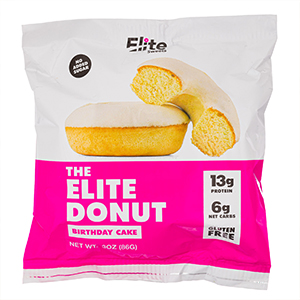
[00:04:40] Ray Latif: The apples, maybe they could be somewhat local, I have no idea. Some of the apples could be local, for sure. But if they're organic, probably not. Yeah, probably not. Better, Ray? Yeah, that's better. Well done. You could learn a thing or two from our semi-finalists and finalists in New Beverage Showdown 20 who know how to formulate a drink without it, the ingredients going down to the bottom. There you go. There's one right there. Sensation, Ray. That's what I'm drinking. Yeah, that's a great product. Speaking of the New Beverage Showdown, speaking of New Beverage Showdown 20 and Pitch Slam 9, that's Nauseous Pitch Slam 9. Those competitions were both held earlier this week. Congratulations to Elite Sweets and Kite, the winners of the Pitch Slam and New Beverage Showdown, respectively. Elite Sweets is a brand of better-for-you, protein-packed and keto-friendly doughnuts, founded by Amin Bahari. Amin beat out 11 other brands to win the competition, which featured some really interesting concepts, including Kindroot, which is a brand of functional lozenges, Everripe, a maker of superfood smoothie kits made from freeze-dried fruits, and Smooth Pops, which is reimagining the old school freezer pop with products made from whole fruit and no preservatives. All great stuff. I'm so sad that we haven't gotten our hands on those Smooth Pops yet. I crushed Otter Pops and Flavo Ice as a kid. I can't wait to try those Smooth Pops. I would drink those things before they got frozen. I mean, I think the amazing thing, and this is the thing that the judges talked about, is how have these not come to market sooner? I mean, it's a no-brainer, right? Making a better-for-you freezer or frozen pop, one made with healthy ingredients instead of like red dyes and yellow dyes and all the other artificial preservatives that they normally put into these things. I thought it was a really good concept and a great presentation. As I mentioned, Amin Bahari, the founder and CEO of Elite Sweets, was the winner of the competition. The judges were really taken by his story of overcoming childhood obesity and really committing himself to healthier lifestyles for himself and for others. And then, you know, we had a lot of the judges, especially in the semifinal round, rave about the flavor of the donuts, you know, even though they've gotten a ton of protein, they're really keto friendly. Those donuts, I mean, those are really good donuts. We've had a lot of keto products come through here that needed a lot of work. They have the texture and the flavor and the consistency that you want in a donut. For the keto crew that's seeking that kind of donut replacement, they have it now. Yeah and this is a point that Aaron Cabry who's our staff reporter for Nosh brought up about more and more products coming to market that are indulgent but have a functional component to it or just you know a new take on an indulgent product a legacy indulgent product and you know what better indulgent product than donuts to upgrade with a functional component to a you know a better for you donut. Meanwhile, the New Beverage Showdown, as I mentioned, Kite was the winner. Kite is a brand of organic, sparkling botanicals made with adaptogenic herbs and was founded by Claudia Marion and Michelle Termani. They have three SKUs with on-trend functional attributes, including Rise, Unwind, and Align. Kite won the competition, which also included Taika, a brand of, quote, perfectly calibrated coffee infused with adaptogens, a kids' probiotic drink brand called Kaley's Culture, and Ginsation, as Mike was just holding up, a brand of ginger-centric drinks that support gut health. Mike, John, you were both judges in the showdown, as always. really fun competition. And you know I thought the feedback was really really helpful to a lot of these brands because you know typically we're seeing some pretty early stage concepts. And in terms of packaging and go to market strategy I thought the judging was spot on. I thought you guys did a really nice job.
[00:08:35] Mike Schneider: Thanks Ray and great job hosting as usual.
[00:08:38] Ray Latif: I appreciate that. You know in terms of things that really stood out for the judges as to why kite was the winner. Mike you want So You want to talk a bit about you know some of the things that you really liked about that brand And Why it stood out. It's an intriguing brand for starters. It's sort of an unconventional package, and you know, I had some things to say about it. I thought that the kite on the front looks like a schematic, like a blueprint. I even think it looks a little bit like the flux capacitor. I'm hoping they can just fast forward past 2020 here. But anyway, I mean, So it's an intriguing package and it has a lot going on. And Why you drink it, it's a nice sparkling, good flavor, layered sort of experience that I could drink all day. I like it. Yeah, and John, you know, I think there was some feedback from the judges about how this product should be positioned in a particular category. It's called Adaptogenic Sparkling botanicals, but does it fit better? Say is it in a tea set in a sparkling water set and a functional beverage set? I think it's tough. I mean, it's tough to figure out when you have an innovative brand like this where to put it.
[00:09:46] Mike Schneider: Yeah, for sure. I mean, I think right now it says sparkling tea on the can, kind of on the side running vertically and. Yeah, I mean, I think the positioning of these different products, you know, that was definitely part of the conversation we had during judging. And I think, you know, there was a general sort of concern for anyone that was going to get in the crosshairs of like the big sparkling water brands. And, you know, I think with kite, they're basically a sparkling herbal tea. And I think, you know, the flavor was really good. The packaging looks pretty close. It's just, you know, maybe taking kind of similar to what Mike was saying, you know, like one step further towards that even. And, you know, I think probably positioning more clearly as sparkling tea and trying to get closer to that set of products And Why from the sparkling water category. But yeah, I mean, there were some, I think all six of our finalists, you know, we had a really good batch, great presentations, you know, some, some solid energy from the entrepreneurs, which is, uh, I don't know. I mean, it's sort of amazing to me just almost a year into this pandemic and People still have energy and optimism and passion for their brand. It's just great to see that. So yeah, really great job to all the finalists.
[00:11:04] Ray Latif: Absolutely. Ray, you know what the most popular question is when I have meetings with brands after the fact? What's it like to work with Ray Latif every day? I sincerely wonder what your answer is, but I tell him it's a dream come true, Ray. Yeah, one shining moment. Did you just play that song, One Shining Moment?
[00:11:49] Martin Janousek: Vibrant Ingredients is the natural ingredient partner powering food New Beverage innovation, delivering flavor, function, and protection through a science-backed portfolio. Vibrant delivers purpose-driven solutions that help brands create extraordinary experiences. Discover what's possible with Vibrant today. Visit VibrantIngredients.com
[00:12:17] Ray Latif: You know it's always great to see upstart brands and early stage brands that need a little bit of work at the beginning really find traction and build a successful business. And I feel like that's the case with a brand called So Good So You which is founded by Rita Katona and Eric Hall. It's a Minneapolis based company that makes cold press juice shots that are infused probiotics. As timely as those are, the brand has attracted a new funding round or attracted funding in a new round of $14.5 million, which really speaks to the demand and the interest for these immunity-boosting juice shots, especially amid the COVID-19 pandemic. But I think you have to build a really good foundation for your business, first and foremost, beyond saying, OK, well, there's a lot of demand. People are just going to give us money to build our business. I think they build their business in a really intelligent and thoughtful way to get to this position. So congrats again to Rita and Eric. Mike you're recording from the aforementioned BevNET headquarters in Newton where you also recorded some really great content for a new series that's a collaboration between BevNET and Nosh and the folks at Mondelēz. Yeah, we built a new series called Building the Brand presented by Snack Futures, which is Mondelez's incubator arm. They're building brands in-house there, And Why're also looking at bringing in brands for an incubator cohort next year. In the series, we break down three brands, Dirt Kitchen, Kapow, and Ruckus & Co., and we look at things like the audience, defining the audience, figuring out the value proposition, how should we brand this thing? And we even get into like, of all the products that we can make, what are the right ones to make? Yeah, I thought a really interesting part in all the episodes was when you were talking about how to work with influencers and how to engage influencers that are going to put your brand in the right light and also attract interest, the right kind of interest among their followers. And I think some of the things were more surprising than you would have expected. And I would encourage our audience to go and watch these episodes because you might be surprised by how brands find these influencers, work with them, and the ones that are really effective versus the ones that are less effective. I think it's interesting for brands to go in and have a look at how they built their brands and juxtapose that with how a brand is built within an incubator. I think there are some great actionable insights for any entrepreneur in this series. And there's a roundtable event after the series. So You know, Jackie and I were sitting around trying to figure out like, how do we, how do we promote this thing? Binge the series, watch the event, you know, binge the series, attend the event, you know, it's kind of like, it's kind of cool, because we, we've got a bit of like a BevFlix motif going on around here right now, where we're, you know, creating all this great content, and we've got events to follow up. So this is another one of those in the series. Yeah, Jackie, going back to this notion of working with influencers or how brands work with influencers, I'm curious, So You follow quote unquote influencers on Instagram or, you know, more of a fitness focused person when it comes to, you know, who you pay attention to or lifestyle? Is it a little bit of both?
[00:15:36] Jacqui Brugliera: Yeah, so I definitely follow a wide range of influencers and I think that term is kind of holds a lot of different types of accounts these days, because you have micro influencers, you have people that have just a really strong influence over a small community. And then you have people that have just like a really wide reach. And I definitely find myself following ones that are more authentic, maybe more in the San Diego area that are really interested in the things I'm interested in. So that's like travel, being outdoors, outdoors photography, food. So I'm definitely looking at like, based on my interests, I'm following these accounts and then seeing what products that they're using align with my lifestyle. I'm less focused on, you know, the big names and how many followers they have and their reach. And I'm definitely more interested in, say, looking up hashtags and seeing who's making a vegan recipe or traveling to Yosemite. So those are definitely what I look at as a millennial. And I think from my social circle, I've seen that trend more and more where people are going more towards, say, a friend in the group that just has really good taste. So that's my experience with influencers.
[00:16:47] Ray Latif: Sounds like a lot of her friends have been asking her to, you know, make some more content. They've got nothing to do, or they don't have, you know, she's the friend with good taste.
[00:16:57] Jacqui Brugliera: Yeah.
[00:16:57] Ray Latif: So the one thing we haven't discussed is where you can watch this great content that BevNET, Anosh, and Mondelez have created.
[00:17:04] Jacqui Brugliera: Yeah, so if you go to Nosh.com, the first episode was released last week, another episode's released this week, and then we have our third episode next week. All of those episodes covering e-commerce, the art and science of building a novel food brand, and then building an in-between brand, those are available for free, so anyone can view those And Why can be found on Nosh.com. And then we do have an event to kind of wrap everything up and to meet those experts that you watch in the series. And that event is on December 1st, so Tuesday, December 1st, starting at 1 p.m. It's a series of roundtables, interactive roundtables, where subscribers, so it is a subscriber-only event, can come in, ask questions of the experts, and have just some face-to-face with the people that they saw during the series. So You'll be able to meet with the investment arm of Snack Futures, which includes Mel Gaceta and Bridget Wolfe. So they'll be also hosting a roundtable on December 1st.
[00:18:05] Ray Latif: Outstanding. Well I imagine a lot of these topics and some of the networking that people crave will also happen at the upcoming Betnet Live and Nosh Live events which are happening next month in December. Really excited for those. As I mentioned really a lot of on trend content that we'll be discussing at the events networking opportunities of plenty.
[00:18:26] Jacqui Brugliera: So BevNET Live will be taking place on December 7th through December 9th. That will New Beverage school on the first day for beverage startups, so educational resources for those getting started. And then on December 8th and 9th, we will have a host of presentations, roundtables, speed dating networking with designers, and then additional speed dating opportunities. We also have Nosh Live on December 14th, 15th, and 16th. Again, on 14th, the first day, we'll have boot camp for food startups. And then on the 15th and 16th, we'll also have additional main stage presentations focused on the natural food industry, as well as roundtables and additional speed dating opportunities.
[00:19:11] Ray Latif: We're trying our best to make this as close to the real world as possible. As Ray was saying before, we're going to try to get as much face time with the experts So You can to be able to troubleshoot your beverages or talk about marketing. Certainly, there's going to be a lot of opportunity to get feedback on your brand and your package design. So can't wait to see you at BevNET Live and Nosh Live. It's really incredible. Just everything that Jackie was mentioning and that, Mike, you were just mentioning as well. I don't know. I'm going to sound like one of those infomercial guys. I'm not trying to, but this is incredible that you can get all this. You can attend all these events for like $375. It's insane. It's like, it really is.
[00:19:49] Jacqui Brugliera: I don't know why I'm... You sound like an infomercial, but I agree.
[00:19:56] Ray Latif: I'm not selling steak knives and I'm not selling like, you know, a food dehydrator or anything else like that, but come on. Right, you just said it and forget it. I said it and forget it. All right. If you're not currently a subscriber, just do it today. You'll be happy you did. Trust me. Well obviously one of the great things about attending live events in-person events So You get to sample a lot of things. But there's the beauty of the U.S. Postal Service UPS FedEx etc. that can ship samples So You and ship samples to our office. I recently got shipped these new Boston first class crispy wafers that are infused with the taste of Bailey's. in my belly. I'm a big fa be surprised that you ca in the mix. It'So Good st I'm not sure because I ate them with like a fifth of scotch. And so I'm not sure if it was the scotch or the Baileys that did it for me. It's hard to tell when Ray's tipsy. He's always very, you know, he's always very even. You can tell I'm dating myself because I called it a fifth of scotch. Nobody calls a 750 milliliter bottle of scotch a fifth of scotch anymore. That's like something from like the 1960s. That's like Dean Martin going into a hotel room and being like, uh, send a fifth of scotch up to my room. sent to me recently was t folks make these amazing treats. This one is the c One of the founders is Da in a recent episode of el you so much dan. So You c not open yet, but just lo I mean, come on, tell me
[00:21:41] Jacqui Brugliera: And I found a new product on Amazon. So I've been combing for sauces because I've been trying to make like tasty meals that are super quick to eat and make. So I found Hlth Punk. I don't know if you can see this, but it's a line of like plant-based sauces and it comes in like a... I'm ordering that right now. Almost like a paint tube or like a toothpaste tube.
[00:22:03] Bespoken Spirits: Love it.
[00:22:04] Jacqui Brugliera: But this one's a UFO sauce. It's like their secret sauce. It's definitely tastes more like, you know, like a steak sauce or something like that. But they also have an oat-based vegan-ase that I'm going to order next. Ooh, nice. And Why also have super greens in it, too. So interesting, interesting product.
[00:22:22] Ray Latif: Jackie, if you're looking for super quick, I know because you and I are burning the candle at both ends right now, a Dozen Cousins and cauliflower rice. Done.
[00:22:30] Jacqui Brugliera: Oh, OK. I'm on it.
[00:22:31] Ray Latif: I'm ordering that.
[00:22:32] Jacqui Brugliera: That sounds amazing.
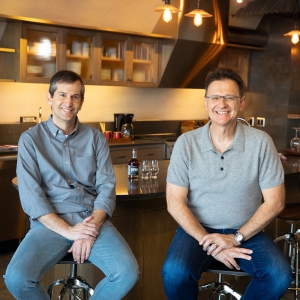
[00:22:34] Ray Latif: Incredible. That sounds really, really good. Actually, I think I have a packet of Dozen Cousins in my pantry. I'm going to probably do that right now. One last quick note here. Free to be the maker of sunflower butter, mini cups and cups, this stuff. You know, if you are a nut-free household So You're just trying to avoid gluten, dairy, et cetera, I don't even know how they make these things, but they are just insane. I am a Reese's fiend, Reese's Peanut Butter Cup fiend. But you know, like, that peanut butter is just too creamy to be real, right? So You got to look for something that's a little bit more natural, a little bit more better for you. And I'm really happy that this game is my life, free-to-be'So Good stuff. So thank you very much to the folks who sent that to me. I've been making my own peanut butter cups at home, Ray. She sent us some uglies from Julie's. Amanda Sainz. Yeah, Amanda Sainz, right. Amanda, don't call me insane. She sent me some uglies from Julie's and I made some peanut butter cups with those. I mean, that's next level. So delicious. A little Justin's, a little chocolate, a little Julie's on the bottom. Just like layer it. So Good. That does sound next level, unlike that beat jersey that you're wearing right now. It looks like someone just like, you know, started carving into your chest there. What happened? Are you bleeding? It looks like blood spattered. It's Danny Ceballos's blood through a Real Madrid kit because he just, he bleeds Arsenal. Yeah. Okay. What's going on there? 2% to 3% of our audience is going to know what you're talking about. So on that note. Those are the ones I was going for right there. I was targeting. I think everyone's going to know what I'm talking about when I say this. Happy Thanksgiving to everyone listening. Thank you so much for listening and sticking with us throughout the year. We hope you have a safe, healthy, and happy holiday. And we'll see you on the flip side. We are grateful for you. Thankful for you. All right, it's time to get to our featured interview for this episode. As I mentioned at the top of the show, Stu Aaron and Martin Janousek are the co-founders of Bespoken Spirits, which claims that it can precisely tailor spirits to a desired aroma, taste, and color. Using proprietary technology, Bespoken's production process can be completed in a matter of days, as opposed to traditional distilling and aging methods, which typically take years. The company's business model includes B2B services, in which it works with small and mid-sized producers to craft new spirits in an accelerated timeframe, and also a line of branded products that launched In October. At the time, Bespoken also announced a $2.6 million seed funding round, led by noted Silicon Valley investor T.J. Rogers and baseball icon Derek Jeter, who praised the company's disruptive vision and focus on sustainability. But what does the spirits industry think of all this? There is, as might be expected, some skepticism out there. And as part of our conversation, Stu and Martin discussed the inspiration behind Bespoken, how they're communicating the benefits of the brand and business to industry stakeholders and gatekeepers. They also explain why they prepared for years before launching the company, how they validated their process and products, And Why they described Bespoken as an enabler of change rather than change itself. Hey folks, it's Ray with Taste Radio. I'm gonna call right now with Stu Aaron and Martin Janousek, the co-founders of Bespoken Spirits. Gentlemen, how are you? Fine, thank you. Doing great, thanks. Great to see you and great to hear from you. Thanks so much for taking the time to speak with me today. So oftentimes I'm speaking with entrepreneurs in the food New Beverage industry, And Why don't have backgrounds in food New Beverage. They're coming from law or advertising or some other sort of service industry. And that's the case with you guys, except you were both the first folks that I've interviewed that come from the energy industry. Prior to launching Bespoken, you both had pretty successful careers in that business. So I'd love to hear about how your background in sustainable energy applies to your current business Bespoken Spirits.
[00:26:54] Bespoken Spirits: Yeah, so Martin and I first met each other about 15 years ago when we worked together at another sustainably oriented company, a fuel cell startup called Bloom Energy. And at Bloom Energy, Martin ran the deep technology development and I ran the business and marketing functions. And you'll see we have relatively the same responsibilities here at Bespoken. But by that background, you can see that Martin is actually a material scientist by training. and he's a foodie New Beverage guy by passion. While I'm admittedly neither of those things, I'm a business guy and I've got more of the everyman's palate. But our background, our different skills and our different palates actually make us very nicely complementary in approaching this market. And there's lots of parallels between, you know, the energy space and the food New Beverage space, at least in terms of what we're trying to do, which is to disrupt an industry in a positive way by leveraging new technology and applying that technology to address challenges that the industry faces and shifting demographics and trends that the industry faces as well.
[00:27:55] Mike Schneider: And Martin? So for me, it was about four and a half years ago that I decided that I didn't want to be another VP of technology for another 3D printing company. And I kind of started looking into different industries. And the motivation to actually work in the spirits industry came from Wine and Spirits Club, where a certain frustration came after maybe about running this club for about a year and the lack of alternatives. Right. And or when we wanted to select a really, really nice bottle that we had to pay a lot of money for this bottle or in case of wine, we had to put it down and wait for another 10 years. Right. And this triggered on my side, the idea to kind of look into how could the science and technology and my experience and process engineering from the past 25 years could be applied for spirits. Then this is how we started the company.
[00:28:55] Ray Latif: So on the one hand, a passion for spirits, but more accessible spirits, and on the other, a passion for sustainability, which the intersection of each led to this idea of accelerated aging. And it sounds like something that could be very useful in the industry, but I think it's one of those things where there might be some skepticism associated with it as well. So let's start for folks who aren't familiar with accelerated aging, rapid aging. What is it And Why is it a benefit to the spirits business?
[00:29:30] Mike Schneider: So I have to say, when we started the company, the idea was not about just accelerating the maturation of spirit. The idea was really that with today's science and technology, We should be able to control the taste, aroma and color of spirits. And based on the learnings that I had seen from the wine, the spirit industry, where every barrel ended up differently. And I didn't understand this. So the motivation came from being able to control the process. rather than have mother nature take care and control the outcome of the maturation process. And Why it comes to accelerated maturation, maybe it's worth first talking about what happens during maturation in general. People typically talk about four phases that happen or four chemical reactions or four important processes that happen during maturation. The first one is the extraction from the wood. The second is oxidation. The third one is esterification. And then you have evaporation. And Why we did is we looked at every single of these processes or the reactions that are happening in these different types of reactions. And then we applied science and technology to look at what are the reactants, where do they come from, and how do we control them. Maybe an example is the oxidation, because people talk a lot about the extraction, but oxidation is super, super critical for the spirits. And in the bowel, how does that happen? It happens slowly, because oxygen has to diffuse through the bowel. It depends how old actually the bowel is, because it also overlaps. with the evaporation. If you take a 20-year-old spirit and 80% of your spirit is gone, you have more air inside of the vessel. It's very slow at the beginning because the access of the oxygen into the bowel is not given because it's full of liquid. In our case, what we do is we look at the reactions, what are the oxidation reactions, and then we control the oxygen that we give to the spirit. Because the spirit has a certain appetite for oxygen, we control that from the very beginning. And because we do that, we can accelerate it, but we can also control how much oxidation we want to do. And I think that is very, very important for what we are doing. is that by understanding what are the reactions, how can we control them, we are able to customise, in this case, the oxidation of the spirit, which then has an impact on the final flavour of the spirit.
[00:32:12] Bespoken Spirits: And as Martin said, it's really the tailoring more so than the acceleration that was what got us started. And it's actually where our name comes from, Bespoken, you know, being the Bespoke Tailoring. And the acceleration is just a very valuable byproduct of the process, but it's really how So You design and execute and precisely engineer a spirit for aroma, color, and taste that really sets us apart from anybody who's tried to do acceleration in the past.
[00:32:37] Ray Latif: Accelerated aging, rapid aging isn't new. We've seen other brands come to market with a certain technique in terms of how to get that barrel aged look, feel, flavor in a relatively short amount of time. So when we're talking about the difference between Bespoken and companies prior to Bespoken, companies that were doing rapid aging prior to Bespoken, what is it that you're bringing to the market that's different? Why are you guys special in a way that is lacking in other companies that have tried to do this?
[00:33:12] Bespoken Spirits: there's really two main things that set us apart. The first is, as I just mentioned, it's this focus on tailoring first and speed second, as opposed to just looking at speed. And Why that means is we don't just look at a spirit and say, how do we move it from point A to point B on a timeline quickly? We look at a spirit that's at point A, and we say, how do we get it to point B, C, D, E, F, G, alpha, beta, whatever the customer wants? And then we also happen to be able to do that quickly, but it's that ability to take that spirit in a wide range of directions or in multiple directions so that one source spirit can be many spirits. You know, when it goes to market, that's really, really sets us apart. That's number one. The second thing is that our process is actually on the spectrum of, of, you know, new technologies in the spirit industry is actually extremely traditionalist. we only use the traditional elements of wood, toast, and char in our process. No additives, no chemicals, no flavorings. We've just reimagined the process for using that toast, wood, and char to leverage modern material science and data analytics to be more precise. So we're not making synthetic whiskey. We're a very traditional process. We've just created a lot more levers and a lot more precision in how that process is implemented.
[00:34:30] Ray Latif: So then, who is this for? Because as I mentioned at the top of our conversation, I'm guessing that there's some skepticism among the spirits community about the need for this type of technology, the need for these types of products. But I could be wrong. When you were thinking of this initial idea, when the inspiration came So You, did you see an opportunity, a bigger opportunity among end consumers or the spirits industry itself?
[00:34:58] Bespoken Spirits: The short answer is yes. We saw an opportunity in both areas. We originally conceived of the business with the idea of using our technology and our services to help the industry, which meant selling our services to the existing distillers, rectifiers, retailers that wanted tools to be able to make better product faster, to introduce new products, to be more sustainable. to improve their financials, and to better keep up with the changing demands of the modern consumer. But in helping those customers keep up with the preferences of the modern consumer, we felt it was also valuable to create our own branded product to use as a validation tool. And that product has actually done quite well in competitions. In our first six months of eligibility, we've taken home 22 medals in six competitions. in multiple categories against well-known brands and much older products. And that's allowed us to kind of validate that we can make premium quality products, that we have a repeatable process, and that we have a designable process. And that's what both the end customer wants as well as what our B2B customers want in letting us help them solve their problems.
[00:36:15] Ray Latif: So You mentioned a phrase there, an interesting phrase that I want to explore a bit, which is modern consumer. And this is this is a product and a brand for the modern consumer. How So You define that modern consumer And Why they're looking for in terms of innovation within the spirits industry?
[00:36:34] Bespoken Spirits: Yeah, that's a great question, Ray. And we're seeing a shift in who that modern consumer is. And we've seen this happening over the last decade or so where the mainstream, the majority of the market for spirits these days has shifted from what was a baby boomer centric consumer to what is more of a millennial Gen X, Gen Z centric consumer. And this modern consumer has different expectations and preferences than that prior generations consumer. This modern consumer tends to be more tech savvy. more environmentally conscious. They're looking for authenticity and purpose in their products. They're looking for value. They're looking for variety. They're far less beholden to a particular brand than they are to new experiences and again things like sustainability and other causes like that.
[00:37:24] Ray Latif: So then how So You address traditionalists? How So You address the baby boomers who grew up on, and I've always known, the traditional way of crafting spirits? What are some of the things that they are saying about your products at this point? Are they looking at it as, okay, this is a product for the Gen Xers, for the millennials, and not necessarily for me?
[00:37:50] Bespoken Spirits: Well, the first thing is it's a massive market, so we don't have to boil the ocean or go after all segments right off the bat. Like any disruption, it takes time to get used to and different people adapt to those disruptions at different rates. Just look at electric vehicles or plant-based meats or diet sodas even. All of those things have different adoption curves. I would argue that you know a lot of the knock on this technology is it's not as romantic. It's not So You know as steeped in tradition as the age old antiquated model. And I would argue that actually our approach adds more romance and art and creativity to the process. because we have a lot more levers that we bring to the customer's disposal that lets them be much more precise and be spoken in creating custom spirits with the aroma, color, and taste profiles that they want. They can do all different kinds of things. They can try them quickly and learn from them to see what they like And Why they don't like. And Why can come up with novel and unique products as a result. So what we're doing really creates the new wave of craft and romance, it's just leveraging technology in the mix. And the analogy I would use to maybe compare it to is kind of today's computer-aided animation versus the old hand-drawn animation. Computer-aided animation is still art, but it's so much more powerful, so much more versatile, and so much more economical than the hand-drawn method. And the industry evolved in that direction. And we think something similar is happening and will continue to happen in the spirit space with technology like ours.
[00:39:24] Ray Latif: Yeah, that's an interesting point. I don't know how many people are yearning for the old days of the Simpsons, like the late 80s, when you had the lousy cartoon drawings. I'm being kind of a jerk here, but it's true. I mean, it looks a lot better than it did, for sure. This brand, this company has been in planning for four years. And that's a good amount of time. That's a lot of time, actually, to spend preparing to launch So let's start with going from concept to business plan. Talk us through that process.
[00:39:56] Bespoken Spirits: Yeah, and I'll let Martin talk to the technology and that piece of the puzzle. But from a business perspective, when you have something that's groundbreaking and disruptive and dependent on new technology like we have, it makes for a great story. And people love a great story. And Why you tell somebody a great new technology story, you get an initial reaction of wow, you know, drool maybe runs down the cheek from excitement. But then the next question is, why should we believe you? And this is something that I think Martin and I have learned over and over again as seasoned entrepreneurs, and especially looking at, you know, the case where we first met at Bloom Energy, where we were trying to disrupt an industry and take a technology that had been steeped in promises for decades and had historically not delivered. We realized that our story would be a lot more powerful with proof points than it would be with just the promise of the technology. So four years ago we decided the time to launch the company at least publicly from a press perspective wasn't four years ago. it was today, or a few weeks ago, after we had delivered the proof points, after we had validated the technology, after we had scaled our operations, after we had delivered value to customers in multiple segments, after we had secured funding, And Why we were ready to open the kimono with a positive story and proof points to be able to take on more customers. And that was the strategy behind waiting carefully and launching the company just a few weeks ago.
[00:41:20] John Craven: So You want more repeat buyers on Amazon? Well, this free resource in collaboration with Straight Up Growth will help your brand turn first-time buyers into long-term subscribers. Download Winning the Repeat Purchase Game on Amazon now at Taste Radio slash SUG. That's Taste Radio slash S-U-G to start building retention-driven growth for your brand on Amazon. Scaling New Beverage brand into major retail comes down to operational readiness. From packaging lead times to co-manufacturing strategy, the details can make or break a launch. In a new ebook in collaboration with Octopi and Asahi Beer USA, industry leaders share what they've learned in helping brands scale. Download it now at Taste Radio slash octopi. So You need to scale your team faster without compromising on talent? Join Oceans for a live webinar on April 20th and learn how leading companies are hiring top global professionals who are ready to grow with your business. Register for the webinar now at Taste Radio slash oceans. That's Taste Radio slash oceans.
[00:42:31] Ray Latif: The technology, this is the key to Bespoke and this is the key to the company. Validating that technology is really, really important. Martin, when you are crafting that initial technology and saying, okay, this is going to be the differentiating factor between us and potentially any other brand on the market, you can go a lot of different directions in terms of how you validate it. Take us through those steps. Take us through that process.
[00:42:58] Mike Schneider: Yeah, so when we started, the first thing that we wanted to show is, right, if we use modern process engineering and science, if we could produce a spirit that people would not be able to differentiate from a traditionally matured spirit and spirit in the barrel. So that was kind of the first milestone. And I was literally working out of my garage for the first, oh my God, I wanted to say for this phase garage probably for a year and a half. To be able to get to this first step, we had to do a couple of things. It was understand the raw materials and the variations that are coming from the raw materials. And this is one of the reasons why we decided to take a barrel apart. And Why we do in our process is we start with wood that is the size of a 25,000th of a barrel. And the reason is not because extraction is faster. That's again a side product. But for us, the motivation was we need to be able to control this natural product. And this is a big variation that comes in traditional aging. It comes from the variation of the wood. So we decided to go to something really, really tiny. and be able to control the physical and the chemical properties of the wood. Maybe I shouldn't call it control, but to understand what the piece of wood actually represents from its properties.
[00:44:29] Ray Latif: Are you talking about a mini barrel or what does the wood look like? How is it used in conjunction with the spirit?
[00:44:36] Mike Schneider: We call it microstaves. It's a small stick of wood that is highly characterized before we actually use it. And we actually have to sort out about, early on, we had to sort out about 50% of the wood that we were using. And now we're working with the suppliers to be able to get better quality of wood for our process, because we want to be able to control this. And so this was one of the very first steps. And unfortunately, this took much, much longer than I was hoping. But as a material scientist, I kind of knew that people always underestimate their raw materials, and we wanted to make sure that we don't do the same here. The spirit typically comes from our customer, but we do all the wood treatments right in-house, again, to be able to control what exactly is happening to the wood, and because that's the other starting material for the final spirit.
[00:45:30] Ray Latif: What So You mean by people typically underestimate their raw materials? Is that specific to Spirits or is that generally true?
[00:45:40] Mike Schneider: Every single company that I worked in for the past 25 years, we always underestimated the importance of the raw materials, the variation that comes through, whether it's from different suppliers. or whether it is what it actually does for your specific process. In my last 25 years, this was part of my responsibility, was to be responsible for the raw materials that we used in our fuel cells or whether we sent something to Mars. It was always about being really able to control what goes in because a lot of time understanding the wood, controlling the properties, controlling the processes. It's like you ask somebody what kind of barrel you want, right? People will ask you, So You want medium toast? So You want a light toast or So You want a heavy toast? But that is not precise, because everybody who makes a barrel has a different way of toasting, different times, different temperature, different atmosphere, etc. That's super crucial for our process. But back to your original question. It took us about six months. garage and about 500 experiments of 500 different spirits to make till we had what we called like a baseline process when we made a bourbon style whiskey that blind tasters and these were people I went to wine stores and spirit stores right I asked them whether they would be willing to taste five samples for me And typically three of them were commercial products and two of them were our spirit. And this is how we started. And once people weren't able to differentiate anymore, we kind of knew that we found something that if we put in even much more effort than what we have put in so far, we might be able to create something really, really good.
[00:47:32] Ray Latif: I'd love to hear about the people who tasted these products. A lot of times entrepreneurs in our industry will say, oh, my friends and family tried this product. They really liked it. And we went to market with this formulation and, you know, So You might expect. formulation definitely needed to be tweaked before it was actually quote-unquote market ready. How did you identify the people that could validate this to the point where you knew that the industry would embrace your brand or product, or maybe not embrace it, but at least accept the quality that you're bringing to market?
[00:48:10] Mike Schneider: Yeah, it was probably a two-step process, right? The first one was to select industry experts, right? And some of our tasters are sommeliers, right? Others have written books about whiskey. Others are mixologists, right? Others work in the spirit business, right? In retail. And once we So Good tasting feedback from these people, we felt like that we had something that we then could submit to competitions. And this was sort of the second step, where it's, I have to say, all of our tastings are blind, before and after, even we don't tell people afterwards what sample was what. because we don't want them to develop an in-house palate by knowing what they actually tasted. So the second phase was submitting it to competitions. And Stuart already mentioned earlier what success we had in blind tastings at competition. And as everybody knows who has done blind tastings, whether that's wine, spirits, no matter what it is, unless it's blind, it's not a real tasting.
[00:49:13] Ray Latif: I'm wondering if in those initial few months that you looked at the business as more of a hobby, as more of a potential business than an actual one, because again, going back to my original note about the length of time that it took to actually bring this concept to the industry, I'm assuming that you're doing something else for money. You have some sort of other means of income because you're not making any money at this point with Bespoken.
[00:49:43] Bespoken Spirits: I would say we, we believed in the business from day one. It was really more a matter of, you know, could we get the technology to a point where, again, it was not just make good stuff, but it was repeatable and it was designable. But when we looked at the business from day one, you know, as an entrepreneur and investor, it had all the markings of what you look for a massive market. I mean, spirits are a half a trillion dollar a year market. a market that was ripe for disruption when you look at trend lines like climate change and the need for sustainability and the shifting demographic and the pandemic, which creates financial strain on the industry. When you look at the opportunity to disrupt this market with technology that was differentiated and defensible, And then when you look at it having a mission, in this case, sustainability, which evokes the passion to work on a project as opposed to just the, you know, it's a neat business idea perspective. So with those four attributes, we knew we had something here. It was really just a matter of, could we make it work? And that's where, you know, Martin's tinkering, you know, really, really came to fruition.
[00:50:44] Mike Schneider: Either way, my wife was not very happy. and I kept telling her, no, I'm going to keep making whiskey in the garage. And I have to admit, first I thought it's going to take us two months. Then I told her, give me another two months to prove that it works. Because I didn't really know how long it's going to take that we'll be successful, but I knew that we're going to be successful from a technology point of view. And the reason is that if there's anything I learned in the past 25 years in working in high tech industry, it's all about the learning cycle. And in this case, after working on this for a month or two, being able to produce something that kind of looked like, kind of smelled like, wasn't probably perfect yet from a structure, or maybe even from the aroma point of view. But to make something within a couple of days that kind of was close to something that takes five years, 10 years, you name it, whatever spirit you're looking at. I was sure if we have a learning cycle with our technology that is not just 10 times, but 100 times or 500 times faster than what the current industry is doing, we will be successful. Because with these short learning cycles, you can actually learn and create knowledge And it's really, really hard to learn and improve when you're learning cycles, even if it's just a year, right? We're talking about five or ten years, right? It's almost impossible to learn. You're really driven by experience, from experience from other people or generations.
[00:52:23] Bespoken Spirits: And we see it in the industry where the large distilleries typically don't invent or develop their own new products. They focus on their core products and doing the same thing over and over again. They let somebody else bear the burden of trying something new. And if they're successful then the big companies come in and acquire them. because the time and cost associated with waiting years and investing all that money before you know if something'So Good, it's just too cost prohibitive to have a lot of innovation within the larger companies. And that's something that we help unlock for these companies by being able to produce many different varieties and experiment and get results very quickly.
[00:53:01] Ray Latif: So having acquired all these learnings and the experience in the years prior to going to market, I'm sure there were times when you thought, okay, maybe we can introduce this to the industry now prior to when you actually did. If you can talk to me about the timing of when you were ready to go to market, the feeling that it was the right time. to launch the brand. I'd love to hear about what those steps were like, how that sort of thinking came to a head, came to the actual introduction of your brand.
[00:53:34] Bespoken Spirits: It was, again, it was about the fact that we had reached a point where we had validation that the technology worked, that customers liked it and saw benefit from it. We had scaled our capacity where we were able to work with a lot more customers than we had previously been able to. And it was time to think about filling that capacity that we had now created. And so the decision to then tell the world about the story was a natural decision to make at that point where we had the validation and now we had the capacity for the first time.
[00:54:05] Ray Latif: You make telling the story sound easy. Telling the story is, I'm sure, a really important part of what you guys are doing. What are the key points that you're trying to get across about Bespoken from a B2B perspective and then from a B2C perspective?
[00:54:22] Bespoken Spirits: You know one of the biggest things is that it's disruptive but it's disruptive in a positive way. A lot of people think the term disruption means you're trying to take down an industry and and scorch the earth and overhaul everything. And we view this as being disruptive in a positive way and that it helps the industry. Again, our core business is being a behind-the-scenes provider of technology and services to the players to help them be more sustainable, to help them better adapt to the changing customer demographics and preferences, to be able to introduce new products more quickly and more economically, and to have overall better economics by not sitting on inventory and capital for years on end, not knowing if that investment is going to going to pay a dividend. So I think that ability to disrupt in a positive way is a very important message that we want to make sure gets out to the industry.
[00:55:13] Ray Latif: And to consumers, again, going back to this notion of educating consumers about the sustainable aspects of the brands, the fact that it is customizable, what messages are resonating with consumers at this point? I know it's only been a short amount of time, but what are you hearing from consumers that's positive about the brand? What are some of the things that are things that you've heard need improvement or at least need improvement from a communication standpoint?
[00:55:40] Bespoken Spirits: Yeah, as we said before, this modern consumer is looking for variety, they're looking for value, And Why're looking for sustainability. And those are the three headlines of what we help provide to them. We give them the opportunity to try lots of different things. We give them the opportunity to customize. We give them a technology that's a lot more sustainable. And we give them an economic benefit, especially to the extent that our customer chooses to pass that along to their customer.
[00:56:11] Ray Latif: I read a review of Bespoken from an industry publication. It's a quasi B2B, B2C publication that was not so great. It was skeptical, but I think it was less skeptical and more just sort of dismissive of technology replacing traditional means of crafting a spirit. While I'm sure that could be disheartening So You, I would think that a natural reaction would be to reply and say, let's try to convince this person that this is going to be a good thing, that this is a good thing, this is the future of the industry, or at least a future technology that will benefit the industry and the end consumer. Talk about that process of convincing that person.
[00:56:55] Bespoken Spirits: Yeah, I mean, again, we take we take every every piece of feedback seriously and it helps influence what we what we do going forward. And taste is in the eye of the beholder. And, you know, no two people really have the same feedback on things. So You know, we're always evolving and we're you know, part of our value again is that we can create different things for different people. If one person doesn't like this bottle because it's too dry or too fruity or too harsh, the next bottle that we can create for them or for, you know, their demographic can be exactly what they like. And that's the value and the power of Bespoke. And you try one of our bottles, it's just one example of the 17 billion combinations of products that we can create. So You mission is not really to convince the people who don't want to be convinced. It's to tap into the people who are already convinced that they want something different, better, or those people that are willing to be convinced. We'll continue to deliver great product and to work with our customers to help them deliver great product and to help communicate the technology and the approach And Why, again, it's beneficial to everybody. And we'll let the blind tastings really tell the story. And as Martin said earlier, whenever we've done blind tastings, that's where we've just blown people away.
[00:58:12] Ray Latif: Are there more people on the industry side than the consumer side talking about, you know, the people that are willing to be convinced? Are there more people within the spirits industry, the conglomerates that are looking for ways to reduce their costs to be more sustainable? Is it an easier conversation with those folks is what I'm asking.
[00:58:32] Bespoken Spirits: It's actually a pretty easy conversation with almost everybody. The amount of skepticism we run into is really a fraction of the, a small fraction of the conversations that we have. I mean, we see people that really latch onto the benefits of the technology right away. I mean, I can't tell you how many times we've talked to, as an example, a craft distiller who says, I made a great five-year-old whiskey. and my customers loved it. It sold like hotcakes. I'm so proud of it. But darn it, I wish I had made 10 times as much of it five years ago. Now I'm stuck with, I didn't make enough of it, I'm sold out of it, and I gotta wait five more years before I can bring that whiskey back to market. Can you help? And we can, we can take their younger, you know, new make, and we can make it taste like that five-year whiskey. And we can do it in days so that they can continue to provide that product that their customers have come to love and, you know, not have a gap of several years in getting there. And it'So You know, when we do things like that, that we really, you know, get excited because we're helping the industry. We're helping the little guys survive, especially in tough times like the pandemic. And we're giving their consumers what they want, which is more of a product that they like.
[00:59:37] Ray Latif: And Martin, what are some of the factors that you're seeing right now that are advantageous for Bespoken in terms of its ability to support this evolving industry?
[00:59:50] Mike Schneider: I was overwhelmed by the interest that we actually got globally after we launched the company. And kind of thinking about it a little bit, it perfectly makes sense, right? If you would have asked me 20 years ago, and I have to admit I lived in Europe, so no offense to the bourbon people, right? So You want to have a whiskey? I would have assumed somebody is offering me a scotch whiskey. I didn't even know that there's something else out there. And I think this has changed a lot over the past 10, maybe 15 years. I think it was about 10 years ago when I had my first Japanese whiskey. And I said to somebody, what, Japanese whiskey? Are you kidding me? They're making whiskey? No way. And only a couple of years later, we have these whiskeys winning competitions. traditions, whether from Taiwan, whether from India, whether from Japan. And there are a lot of countries, a lot of people in other countries that don't have the history and didn't think about putting down barrels 10, 15 years ago. It depends on sort of in what climate they live. So there's a huge interest from those other countries to kind of be able to do maturation of spirits. We haven't talked about it, but our technology can be applied for grain spirits, so all the whiskeys. It can be applied for rum, for brandies, the agave-based spirits, the entire palette. What we are seeing is, or what I'm personally hoping, is to enable people who've just not been able to show their creativity in matured spirits because they didn't live at the right place, or because they haven't thought about this many, many years ago, right, to give them the possibility to also make matured spirits.
[01:01:35] Ray Latif: Well, that brings up an interesting point because when people think about whiskey, and maybe this is my perception of it, I think a lot of times they're thinking about the sort of process of making whiskey, the barrel aging, the story behind crafting a spirit. And that story is so important to the product itself. It's storytelling in a way that a consumer can do within a dinner party or among friends. When you are doing the customization that you're doing with Bespoken Spirits feels less like it's a story about a distillery, and correct me if I'm wrong, and a story more about technology. Is that the case? If so, How are you enhancing the story? How are you supporting this notion of crafted spirits versus one of spirits that are derived from a technological breakthrough?
[01:02:38] Mike Schneider: It's interesting because when you look at the entire process of making, let's stay with whiskeys, you look at the fermentation process, you look at the distillation process, Nobody, I shouldn't say nobody, I heard of, I believe it's a Scottish, it might be an Irish or Scottish distillery that actually still uses coal to fire their stilts. But other than them, nobody does fermentation like it used to be done 200 years ago. Nobody does distillation like it was done 200 years ago. Even if they have the story, in all these areas, we're using different techniques, we're using different equipment, we use different ways of doing it, but not in maturation. And this was sort of the entire idea, to extend this use of engineering, science and technology, also to the maturation part. I don't think that a gin, for instance, has less of a story than a whiskey. I might be wrong, but that's of course my personal view.
[01:03:44] Ray Latif: Yeah, I mean, I think that's a valid point. You know, some gins probably have a much more nuanced story than some whiskeys, even though you might think otherwise. I mean, I think the other part of this that is notable, and this sort of kind of comes full circle, is convincing folks that, you know, the process is Potentially antiquated and that which you're offering And Why the future of the industry looks a lot more like what you're doing, but change is difficult. Change is hard to accept. Sometimes is what you're representing. Truly change. Are you are you expressing? the mission in a way that says change, you know, loudly and clearly, or are you saying, you know, we are just the next evolution? And I guess you could say change and evolution are, you know, in some ways interchangeable, but are you saying that this is just a next part of the process?
[01:04:40] Mike Schneider: I think Stu said it earlier, right? We really see ourselves as an enabler to support the existing industry as well as also new players. Especially for new players, it's really, really hard to get into the matured spirits industry. So we really see the technology as an enabler. to help this industry, to help people to bring in more products, to have multiple SKUs, not to be limited when they start a distillery, not to be limited to vodkas and gins, but also to be able to offer their first own whiskey, where today what they traditionally do is they go to one of the big guys and buy some whiskey from the big guys and then they re-bottle it, sometimes they might throw it in the barrel, But we're giving the opportunity now to use their own spirit, mature their own spirit in a different way that some people might consider non-traditional. But I think our work starts, and I think we mentioned it earlier too, we are putting a lot of effort in the step that people typically await. And that's why we believe this is a good contribution to the industry, a valuable contribution.
[01:05:51] Ray Latif: This has been such a great conversation. It's been so interesting to learn about Bespoken and how you guys are tackling disruption within an ever-evolving industry. Stu, Martin, thank you so much for taking the time to be with me today. Good luck going forward. And let's chat again in a couple of years. I'd love to hear about where the company is in 2022.
[01:06:09] Mike Schneider: Thanks a lot, Wayne, and appreciate it having us on. It's been an honor talking So You. Thank you.
[01:06:19] Ray Latif: That brings us to the end of episode 105 of Taste Radio Insiders. Thank you so much for listening, and thanks to our guests, Stu Aaron and Martin Janousek. Please subscribe to Taste Radio on the Apple Podcasts app, Spotify, Stitcher, or Google Podcasts. As always, for questions, comments, ideas for future podcasts, please send us an email to ask at Taste Radio. On behalf of the entire Taste Radio team, thank you for listening, and we'll talk So You next time.
[01:06:48] SPEAKER_??: you