[00:00:04] Ray Latif: Hey folks, thanks for tuning into episode 106 For Taste Radio Insider. I'm Ray Latif, the editor and producer For Taste Radio, and I'm with my BevNET and Nosh colleagues, Mike Schneider, Jacqui Brugliera, And Brad Avery. In this episode, we're joined by Justin Fenchel, Aimy Steadman and Brad Schultz, who are the co-founders of Future Proof, a collection of millennial founders and established industry veterans who are developing innovative beverage brands for the next generation of drinkers. Just a reminder, if you like what you hear For Taste Radio, please share the podcast with friends and colleagues. And of course, we'd love it if you could review us on the Apple Podcasts app or your listening platform of choice. Huge warning here that Brad has had a lot of La Colombe. Courtesy of La Solo Coffee, these ideas is more wound up than we've ever seen Brad before. This is going to be an interesting episode For Taste Radio, so strap in. For folks who are not watching the video, Brad literally was, his camera was as jittery as he is. His camera was literally just shaking right now, which I don't know how you did that. Like you can slam the table, but that usually just results in a couple little jerks here and there. Your camera was jittery. I was actually chatting with Brad before we got on the mics and we were talking about the importance of dressing up for Zoom. This was around 9 a.m. recording at 11 a.m. Eastern Time. He said I got to change my shirt because we're doing video. I said I know the feeling because I Every time I get on the camera, I've got to change from my tattered blue shirt into my nicely coiffed and ironed blue shirt. And it's just the way of the world now. Like, you got your work from home attire, and then you get your Zoom attire.
[00:01:45] Justin Fenchel: Yeah, I feel like it's trying to go back to, like, pre-COVID, what you would maybe do before a meeting or prep for the day. It's trying to, like, create a sense of normalcy. I do it. You know, I put on a jacket. That's my thing.
[00:02:00] Ray Latif: I'm in work mode. Like for me right now, I'm wearing this sweater and I've got these acoustic guitars in the background and I'm ready to like go beat up Bob Dylan at a 1963 Greenwich Village Cafe. Brad, did you say that you were thinking about going to beat up Bob Dylan? Is that what you just said? I couldn't tell if that was... Yeah. I'll Fight Bob Dylan. Wow, man, this is like the best banter ever. This is the first time we've heard about, I think it's the first time in my life I've heard about someone who Wants To Fight Bob Dylan. Incredible, well done. Look out, kid. Well, you know, if we could ever get Bob Dylan For Taste Radio, that would be kind of interesting. Brad, you'd have to host that interview. He has a whiskey brand, we should get him. He has a whiskey brand. We should. Heaven's Door, that's right. Yeah. Yeah. Yeah. That's a good call, right? We're expecting Bob Dylan next episode. Okay. Yeah. Only if Brad agrees to host that interview. I would absolutely do that. Just say the word. Brad is a celebrity whisperer. I mean, Will Smith, Katy Perry, Brad is the one who will handle it. Yeah, this is true. Well, interestingly enough, we will be interviewing a celebrity next week. Big news. Taste Radio is introducing a live version of the show as part of BevNET Live Winter 2020. We'll be presenting an interview with Jake Steinfeld, the fitness icon, actor, and entrepreneur a globally recognized authority in fitness and personal development. Jake recently extended his Body by Jake platform to beverages with the launch of Don't Quit, a new line of meal replacement drinks co-developed by Dr. Pepper And Brad incubator LA Libations. I'm really excited to have Jake. We'll be presenting that episode live On Wednesday, December 9th at 5 p.m. Eastern Time, I'll be speaking with Jake about his background as an innovator and an entrepreneur, how he identifies synergies and alignment with consumer brands, the process by which he evaluated the meal replacement drink space, and the partnership with KDP and LLIbations, how it evolved from concept to market-ready brand. It's going to be really, really exciting. We're going to be inviting viewers to send in questions to Jake, which we will read on the air. On the air is kind of an old term. It's a dated term. We'll be reading as part of the live recording. So really excited once again, Wednesday, December 9th with Jake Steinfeld at 5 p.m. Eastern time. Don't miss it. If you have questions now, you can send them to askatasteradio.com. I'll be checking email while I'm in the jungles of South America. Not for Brad. No.
[00:04:40] Aimy Steadman: Not for Brad.
[00:04:42] Ray Latif: For Jake. Yes. But if you have questions for Brad, feel free to send them there as well. Yeah. I think we'll accept questions for both. Yes. More questions about Brad is what I'm expecting. Taste Radio Live will be one part of an amazing agenda we have for BevNET Live Winter 2020, which will kick off on December 7th with Beverage School, which is an introductory seminar covering the nuts and bolts of launching a beverage brand, and will continue on December 8th and 9th with interviews, panel discussions, and presentations from leading voices and experts in our industry. We announced some of those leading voices this past week. Jackie, I was really excited to see this news. What can attendees expect from the agenda?
[00:05:26] Justin Fenchel: So we have three days of content networking and top speakers from the industry. To name a few, we have Karen Golden from Hint, Ken Sadowski, The Beverage Whisperer, and Pete Marino from Molson Coors. So we have them coming to speak, and we have a variety of conversations happening, discussions, and then we also have some networking opportunities as well, including Speed Dating. We have retail Speed Dating and designer Speed Dating taking place at WebNet Live on day two and day three. Those are some great opportunities to have one-on-one meetings with experts in the industry, to have initial conversations, and then create connections for future partnership.
[00:06:10] Ray Latif: Very cool. I Wants To flesh out Speed Dating a little bit more but I Wants To go back to Brad for a second because I know you've been covering Molson Coors quite a bit and its foray into non-alcoholic beverages. Marino is leading that effort. What can we expect to hear from him in terms of how that company is expanding its portfolio and really looking at Wants To I guess build beyond beer. Well I think the most interesting thing is the Speed Dating which they've done it and the Speed Dating which they've been bringing in brands and creating new brands with their partnership with L.A. Libations. I think when they said they were going to be getting beyond beer I sort of had the mindset that OK over the next couple of years we'll be seeing some things but no it has been snap, snap, snap. And I'm really looking forward to hearing how he explains that process because they've brought in, I can't even off the top of my head think of them all, Zen Water, they've brought in recently with a Lance Collins project. They've created a bundle of new brands through LA Libations that were created just for this partnership, including Huzzah. I love Huzzah. Adam Louris. Yeah, that stuff's like a probiotic soda. Seltzer, I think, is what they're using. Yeah, they're calling it a seltzer. I think it's similar to an Olipop or a Culture Pop sort of beverage, really tasty stuff. And we saw them sort of make some slow moves a little while back when they acquired, Clearly Kombucha. And that sort of almost feels like prehistory now to what's happening because of the Speed Dating which they've moved this year to really diversify their product portfolio. I think, you know, I imagine he'll be talking about that. And I'm, you know, really interested to know, like, get some more insight into how they did it, how they thought about it, because I've talked to them. But, you know, obviously, there's, you know, still plenty, I'm not sure about just what those meetings are like, or how it's playing out in the market at the moment. Hearing Pete talk about how Molson Coors aligns with entrepreneurial brands will be really interesting as will be Kara Golden's discussion about how she built her entrepreneurial brand Hint and again how Ken Sadowski supports those brands as an investor and an advisor. He's an investor advisor with Hint, Vitacoco, Solo Coffee. He was with Vitamin Water back in the day. So really excited for this lineup in addition to all the other panels and presentations that we have. at BevNET Live Winter 2020. Check out the full agenda at BevNET.com. Once again, Taste Radio Live, all the content that you'll be seeing at BevNET Live Winter 2020 is only available to subscribers of BevNET and Nosh. If you're not a subscriber, do it now. It shouldn't take very long. Go to the upper right-hand corner of the site, hit subscribe. It should take you about three minutes. As part of BevNET Live, as part of your subscription, you will have access to Speed Dating. And this is a really exciting development in our Speed Dating platform. We're introducing one that focuses on designers, connecting entrepreneurs to designers, and one that's connecting retail buyers to entrepreneurs as well, which is amazing. The designer event is happening on Tuesday, December 8th. The retail event is happening on December 9th. So I'm sure there are folks listening who are saying, OK, is this for me? You know, what am I going to get out of this if I participate in Speed Dating? Is it just an introduction or is it more than that? It depends on what you make of it, Ray. I mean, it's a quick meeting, so you Wants To go in prepared and go in with one or two of the questions that are keeping you up at night. For designer Speed Dating, for instance, it's really easy to get a lot of advice in eight minutes or nine minutes on your package design, because these are experts who have done this before. They're going to take a look at your package. They know the category that you're in, so they're going to be able to give you some really pointed tips. And you're going to get opinions from multiple designers. So you're going to have these meetings, bang, bang, bang, back to back. And you're going to have a chance to kind of take that away and process it. And maybe you'll meet your next partner, or at least you're going to get some advice on how you can go forward. On the retail side, it's similar. You're going to have an introductory conversation. You're going to get a chance to get some feedback from somebody who could potentially buy your product or help you get to shelf or distribute your product. That's really important in this game. The retailers who are going to see your product have done this before with many different companies. It's difficult to get in front of a retailer these days, and we're setting up a chance For Taste to happen. And what are some of the retailers that will be participating, Jackie?
[00:10:42] Justin Fenchel: Participating retailers include Amazon, Albertsons, Foxtrot, Costco, and Presence Marketing. So we have a host of retailers that people Wants To meet with on day three of WebNet Live and Nosh Live.
[00:10:57] Ray Latif: That's really exciting. I mean, if I were an entrepreneur, I definitely Wants To be a part of this. And again, it's pretty easy to do so. If you're a subscriber to WebNet and Nosh, you get access to Speed Dating and access to these meetings with the leading retailers of our industry. So sign up today. Brad in addition to working on everything that live related as well as the magazine and everything else you guys do which is which is pretty amazing. You're also covering the industry on a day to day basis. And lately I've been seeing beverage companies picking up investment a range of different beverage companies picking up investment despite you know an uncertain economy. Are there some Common Threads that you're seeing in the deals that we've reported on recently. I mean it's hard to say. It does jump around but I suppose one potential Common Threads and it's not universal but it is frequent is health and wellness. I mean that's really a big thing.
[00:11:48] Brad Schultz: So you look at say earlier in November health and wellness shot brand so good. So you raised fourteen point five million dollars in a round that you know They're a high-growth brand, and actually, speaking of our event, they will be participating on a growth brands panel that I'll be conducting on December 8th.
[00:12:10] Ray Latif: They raise a significant amount of money, in part because consumers are seeking out products with immunity qualities or other just general health and wellness benefits. You look at some of these other brands that are raising money.
[00:12:23] Brad Schultz: Cherubundi closed a $15 million series round that you know, again, that the brand is focused on, you know, health and recovery.
[00:12:32] Ray Latif: Yeah. Cherry, cherry juice is, uh, is still going strong in terms of its functional benefits to the end consumer. Exactly. $15 million. It's nothing to sneeze at. even in a kind of you know an otter category that we don't typically cover. But you know a company like Kate Farms raised fifty one million dollars and they make medical grade meal replacement formula and they do have a consumer level product. But that is something that is in high demand right now obviously with hospitals. So I think it's you know building around health is definitely attracting investment dollars. You know despite the uncertain economy people have a you know, something that they want right now, which is, you know, to feel healthy and protected. Right. If somebody offered me $15 million and I sneezed at it, would I not be allowed to have it? Because I have seasonal allergies. I have to be careful. Just make sure it's seasonal allergies and not something else. Yeah. So, you know, Brad, it's interesting that you mentioned wellness because one of the other brands that you reported on that recently raised some money on a Series A round is And Brad called Unity Wellness. Yes, which is a CBD infused beverage. And I think that was, you know, their approach is kind of interesting because a lot of times with CBD brands, we hear about, okay, the functional benefit is chill or relaxation or something of that effect. In this case, wellness is part of the brand name. Yeah, I think that's a great move for the CBD space is to sort of build out around the overall benefits. Because CBD is obviously a banner ingredient in this drink. It's got 30 milligrams of hemp extract, which is among the highest in the category in beverage. But they've also got ashwagandha in there, and they've got rhodiola rosea. So they've got other functional benefits on top of it all that kind of give it an overall package. But yeah, you know, I mean, no tropics is another big trend we're seeing. I haven't noticed much investment news necessarily in the space.
[00:14:21] Brad Schultz: So I might be forgetting a couple of items throughout the year, but we are seeing a lot of innovation there.
[00:14:27] Ray Latif: The conversations that I've been having have all been around, you know, education and, you know, saying you can throw adaptogen, you can throw nootropic on your package, but the chance that somebody is going to know exactly, you know, which adaptogens you put in and what the function is going to be and maybe focusing more on the feeling in a functional beverage and the thing that it's going to do for you because people want a beverage that's going to make you better than you were before you drank the beverage in a functional sense. And I think nootropics is just kind of a good word that, you know, once you get consumers to understand it, because you got all these different types of ingredients, like, you know, alpha GBC and all this stuff. And I think brands are still sort of listing out those and explaining what they do on the packaging, which can eat up a lot of label space, but is important to let consumers know just exactly what it is. Because I think there's also some skepticism there. I think some people might see this and be like, this sounds like some weird chemical. I don't know. And you got to kind of help explain to people what it is so that they know. Yeah. This is why the beverage industry is so hard and why, you know, you talk to a bunch of people who are doing similar things to what you're doing and see if you can find like, you know, common cues in terms of the language when you're putting things out there so that when you're educating, you're educating, you know, giving the same message. Some of the same message needs to be out there for the consumer. Otherwise, they're just not going to know what all this stuff can do for you. It's a really interesting space, Brad. Right, right. Exactly. I think you can get consumers to understand eutropics. It's a little bit harder to get them to understand alpha-GPC, GABA, DMAE, all these other specific things. But that's why it needs a banner word.
[00:16:04] Future Proof: Guessing your margins? That's risky. Belay Financial gives CPG brands the clarity to scale smarter, faster, stronger. Get your free inventory ebook by texting TASTE to 55123 and start making data work for you. Vibrant Ingredients is the natural ingredient partner powering food and beverage innovation, delivering flavor, function, and protection through a science-backed portfolio. Vibrant delivers purpose-driven solutions that help brands create extraordinary experiences. Discover what's possible with Vibrant today. Visit VibrantIngredients.com.
[00:16:50] Ray Latif: Well I And Brad I think a Common Threads in a way to sort of communicate what these brands are offering is convenience because if you can get all the functional benefits and nutrients that these brands are advertising in a product that you're consuming every day i.e. a beverage or food. it seems like a pretty convenient way to do so. I think this is something we're seeing across the food and beverage industry is just convenience as a way to fit into your everyday life. That's certainly something I'm seeing with And Brad called High Side, which is And Brad of bagged coffee that you see Hint Water, really good stuff. I mean, I don't have to make a whole pot Solo Coffee to do so, to get this great cup Solo Coffee. The founder is Zach France, who connected with me on LinkedIn. It's called High Side because the coffee beans are grown at a high altitude. Because, you know, Ray, you distinctly noted a couple episodes ago that you do not consume THC. So I was wondering what you had there. Not knowingly. I've never knowingly consumed THC. But again, I mean, I think this kind of offering is something that consumers are looking for, just an easy way to get a high quality product and the benefits of that product in a really easy format. So good job, Zach, and thanks for tuning into Taste Radio. I know you're a big fan and really appreciate it and really appreciate you sending the samples. I've got Solo Coffee right in front of me as well that we got from the UK. I don't know if you're going to be able to see this brand, but it's, it's called, it's called the Star Wars brand. It's called solo. It's called solo. And it is a, and I'm not sure if you're going to be able to tell what it is, but they're calling this coffee concentrate and it is a espresso strength, cold brew coffee. I haven't actually gotten to try it yet. It just arrived. So I'm really excited about trying this. It looks nice, clean, old packaging. I'm excited to try it myself.
[00:18:44] Justin Fenchel: Yeah, if you had a drink it before this, you probably would have been And Brad's level.
[00:18:50] Ray Latif: Yeah, I gotta get on my level. It does say espresso strength cold brew coffee and that is, yeah, that looks like the high test. You talk about just something that's going to pop on the shelf. It's going to be this. In fact, this thing will pop from space and you can. You can tell that this Solo Coffee concentrate.
[00:19:08] Brad Schultz: I do think the Steeped Coffee, though, is an interesting trend that's emerging. There is a company called Golden Ratio that does a similar kind of bag. You steep it and it's, you know, it promotes that it's less acidic than black coffee and tastes closer to tea. But, you know, I would like to try that stuff, too.
[00:19:26] Ray Latif: I think it's an interesting take on instant coffee that, you know, we haven't really seen. That Solo Coffee tea crossover, I mean, Don't get me started on that. Speaking of wound up, you Wants To wind me up fast as well. Yeah, it's a coffee that tastes like a tea that that's. There are coffee drinkers and there are tea drinkers.
[00:19:43] Justin Fenchel: Yeah, I feel like that does work in the space where it's more focused on function like Mushroom Superfood Company. They launched Om Mushrooms coffee blend, so I think people are drinking that for a different occasion or not for their morning. You know coffee, but more maybe like an afternoon boost.
[00:20:02] Ray Latif: Yeah, I totally get the Four Sigmatic play as well. You know, their mushroom coffee, it's, they're not really trying to replace coffee. It's just a different experience. You know, it's like, and I get all the, you know, the benefits and the adaptogens and the education that's happening there. And, you know, hats off to those guys as well. I just think like a coffee tea is, that one's one of those we've seen a few times where I'm like, Yeah. And there's been moves to kind of make like a coffee drinks from like unroasted green coffee beans and things like that to kind of have a bit more of that tea flavor. And I think there is probably a consumer for it, but I don't know. I feel like you're right, Mike. I think it's all about positioning. I wouldn't position something as this is tea for the coffee drinker, coffee for the tea drinker. You know, it's like that, that's just, yeah, that's a boat to confusion town. I like a bowl cup of black coffee. I like the flavor notes Solo Coffee. That's, that's my thing. Brad is a French press master. Well, Moving right along to turmeric, another really hot ingredient with a functional component that everyone seems to want, which is recovery and just general wellness. We got some Golden Tiger that came into the office. Golden Tiger makes these turmeric lemonades, which I had post Thanksgiving. It really does help you recover and revitalize. For me, it was sort of an instant boost. after all the eating and consumption of other products that we did over the weekend. So, really nice to pick me up. Thanks so much to Ajay Dhawan. I hope I pronounced your name correctly, Ajay. They have an interesting differentiator for them, which is that they heat the turmeric to activate the turmeric, because according to a study from the University of Oklahoma, that's the way that turmeric is activated, and apparently other beverages aren't doing it correctly. So he likes to talk about that study a lot. I've read the study, and I'm not sure if that's the key, but it seems to be a good differentiator for those guys. Well, I mean, it just tastes really good, too. I mean, I think I drank this non-refrigerated and, you know, there are some products that you cannot drink non-refrigerated. They're just they're not great, especially ones with functional ingredients. This, on the other hand, I was fine. I mean, I could open it right now and I'd love it. So once again, great job, Golden Tiger. Brad And Brad should also pop into the office because we've got some new Minor Figures as well the matcha lattes are here and there's all they've also sent us some of their other skis as well so you guys should definitely pop in and grab a couple of those. I also, I drained this but we've we've seen. a zero-proof sort of botanical soda replacements that are low sugar come in. One of them is a company called Batera that's just kicking off that. The liquid is extraordinary. I'm really enjoying this. Very cool. Are you going to send a care package to Jackie or Jackie? You actually have some stuff. He's got stuff. She does not need a care package. Jackie's doing fine out there.
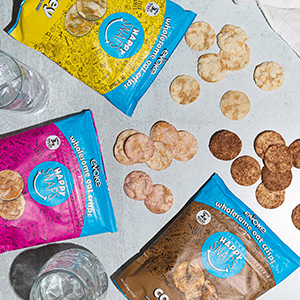
[00:22:57] Justin Fenchel: I had two brands send me some samples this week, which was really nice of them. Happy Snaps is one of the brands that sent me some snacks. So they're snackable oat crisps, which I found really interesting because they're a little bit sweet. They almost taste like buried kicks, which I was surprised. Those are great, but they also put that you can put them in a bowl kind of like cereal and eat them with milk, or you can use them to dip them. So there's like a couple different like ways that you can consume the product, which I thought was clever.
[00:23:25] Ray Latif: Jackie back in the day when we could go to events, I definitely visited their booth more than once and looted.
[00:23:33] Justin Fenchel: As you can see, I've already gotten into them, so. And then another product that I got in the mail was Silverback Beverage Company. Oh yeah. So they have carbonated teas and they source all their ingredients from Rwanda. So it was really interesting to learn about their story and a great tasting carbonated tea product as well. And the founder of Silverback is Sarah Delaney. And I remember speaking to her for Elevator Talk and hearing about her story. And now I was able to try her product. And if anyone's interested in participating in Elevator Talk, check it out on BevNET.com. And you can apply for a future show.
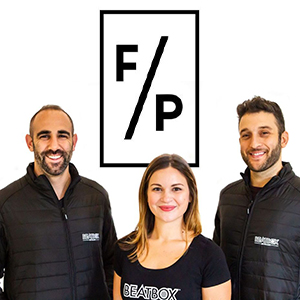
[00:24:10] Ray Latif: Definitely. Apply at BevNET.com slash Elevator Talk. We're going to be producing a bunch of new episodes in the coming weeks. Would love to have you take part. And real quick, before we wrap up, I'd just like to apologize to Mr. Bob Dylan. That was parody, non-actionable. And I'm a great admirer, and I would like to try Door Whiskey. Did you just speak with your lawyer or something, like, you know, just 10 minutes ago? Is this what happened? I really don't understand these millennials. But you know who does understand millennials? The founders of Future Proof. As I mentioned at the top of the show those co-founders are Justin Fenchel Aimy Steadman and Brad Schultz. The trio launched Future Proof's flagship brand Beatbox Beverages which markets wine based cocktails that the company promotes as quote party punch in 2011. The brand debuted in a five-liter bag-in-box package that resembled a boombox, a.k.a. a portable stereo system, and was aimed at millennial consumers seeking alternatives to boxed wine and malt beverages. Unabashed in its embrace of party culture, Beatbox, which is available in flavors such as Blue Razzberry and Tropical Punch, found a receptive audience among college students and at music festivals, which in turn helped the brand land a national distribution partner and a major retailer early into its development. In 2014, Beatbox hit the jackpot on reality TV show Shark Tank, picking up a million-dollar investment from Mark Cuban, whose funding supported new retail and distribution growth. Fenchel, Steadman and Schultz have since built a thriving business, supported by the launch of a 500ml product, which has become the fastest growing single-serve wine product in the U.S., according to data from Nielsen. Of course, it wasn't all wins for Beatbox, and the co-founders encountered more than a few stumbles and challenges over the past decade. We unpacked the whole story in the following interview, which explores the co-founder's inspiration for the brand, why naivete, scrappiness, and business school connections were critical to the early development of the brand. They also explain why overpreparing was key to winning over Mark Cuban, how the convergence of lifestyle and liquid play into the brand's trade and consumer marketing strategies, why the company is branching into hard seltzer and canned wine, and the reason that Future Proof is bullish on crowdfunding. Hey folks, it's Ray with Taste Radio. I'm gonna call right now with Aimy Steadman, Justin Fenchel, And Brad Schultz, the co-founders of Future Proof. Amy, Justin, Brad, how are you? Don't all speak at once.
[00:26:44] Aimy Steadman: Great, thanks for having us.
[00:26:46] Ray Latif: Good to be with you, Ray. Thank you all for joining me today. Amy, are you calling in from Hawaii? Is this correct?
[00:26:53] Aimy Steadman: I am. I have been dodging COVID successfully, thank God, doing a little family visiting out here in Hawaii. So, hauling in from a different time zone, but normally in Austin, Texas.
[00:27:05] Ray Latif: Okay. Justin, Brad, are you both based in Austin as well? Yeah, we're in Austin, Texas. I've got a little bit of a tree going. It's not quite a Hawaiian palm tree, but I'm kind of senior. I don't have a whole lot going. Yeah, yeah, Justin, you know you don't have a lot going on behind you. It's just a blank wall, but I'm sure you could. You could paint a picture of a palm tree if you Wants To. Well, I'll just pretend we're in Hawaii. There you go. There you go. Well, once again, thank you all so much for joining me. I know you guys are quite busy, despite being in different locales. Future Proof, such a fast-growing company. Beatbox Beverages, your flagship brand, growing like crazy this year. Certainly one of the reasons I Wants To talk to you for this episode For Taste Radio Insider. But let's start from the beginning. So Justin And Brad and Amy, you're all based in Austin, Texas. Is that where you all met? It actually goes back, Brad and I have known each other since we were 13 years old. We grew up in Los Angeles, so just a few years ago. And I met Amy when I moved to Austin for the business school at UT at McCombs School of Business, so hook of horns. There you go, the horns. For folks who are not watching the video, but only listening to the audio here, Amy and Justin flashed the horns, which I guess you have to do any time you mention UT. I think you can go to school there. Yeah. You know, going from business school to brand or business school to entrepreneurship, we've seen it before. Is that kind of what happened with you guys? Did you go into the corporate world or did you just leap right into your own business? I actually graduated from undergrad and worked in finance for five years out in Los Angeles. And then one day just decided I didn't Wants To stare at red and green lights on a screen all day, waking up at four, three in the morning. And just, it wasn't for me for the rest of my life. And so that's when I moved to Austin for grad school. And during that transition, Brad and I had just kind of had this conversation about, a party version of box wine. And what we were seeing in the box wine space that was showing up at all of these millennial gatherings, whether it was a kickball game or a tailgate or a house party, river floats for sure here in Austin. And so when I moved to Austin, Brad was out visiting and we kind of were thinking about what it would be. And we just woke up and said, you know what, I'm going to kind of take this on as a class project and met a couple other folks from the business school, two guys, Dan, Jason, and then Amy. and the group of us really just decided to go for it. We leveraged the business school and all of the resources there to help flush out the idea, but the basis of the idea was just before moving to Austin, actually. Did you see any other wines that sort of fit the bill or, you know, I think if I'm thinking about the time of Beatbox's launch, you know, that was the time of flavored malt beverages really coming into their own, but was yours the first or did you see that opportunity, that white space for a sort of party wine that wasn't available or just did you see any concepts that just really hadn't got off the ground? Yeah, I mean, we like to describe there was these those three mega trends that we saw. One was box wine, as I said, showing up everywhere. The second is what you just alluded to this explosion of the flavored malt beverage space, like companies like Mike's Hard Lemonade, Four Loko, right back in 2010, 2011, Smirnoff Ice. Those were very, very popular with the millennial segment. And then what we really fell in love with was these music festivals, these mega events with hundreds of thousands of people. I think in one year I'd gone to Bonnaroo, Coachella, and Electric Daisy Carnival all in the same year, and all of us on the founding team were obsessed with music. And so we Wants To capture that moment of being in the field with your closest friends, you know, not a care in the world except for what show you're going to see next or what drink you're going to grab at the bar, How do you capture that while taking into account the eco-friendly nature, the portability of the box wine package, but all the fun of the flavors of the F&B space? So that was really the white space. No one had ever done that before of putting a party punch type beverage in the box wine format. It's kind of funny because there was, if you ever go to a festival or a big party, tailgate that weekend, everybody knows that experience of showing up and there's just some kind of punch there. And it's usually a concoction of vodka. You don't Wants To too sugary, too sweet. It's just right in the sweet spot. And so we really just took that to heart. And it was something that we were always having at these parties as pre-games. It's just this ambiguous punch. In fact, the first flavor of beatbox actually didn't even have a flavor name. It was just called beatbox. It was just like, what flavor is punch? Beatbox is a great name for a flavor, I think, regardless of whether or not it also shares the name with the brand. Multiple co-founders, Justin, you talked about a convergence of music festivals, flavored malt beverages, and boxed wine. When I think about co-founders, oftentimes I think about different people bringing different things to the table in terms of their skills or experience. In terms of music, Amy, I know you had previously been a DJ. How did you tap into that scene to kind of understand how Beatbox could fit into this burgeoning space, this really exciting space of music festivals?
[00:32:36] Aimy Steadman: Yeah, so at the time of us all kind of getting together to start Beatbox Beverages, I was actually a radio DJ. I had an electronic music specialty show called Disco Jorts on student radio here in Austin. Disco Jorts? So, you know, jorts or jean shorts, very popular in Austin. Yeah. So, it's when you put on your jean shorts and dance around to electronic music. So, that was the name of my show. And was really interested in supporting music. My boyfriend at the time was also a DJ and very involved in the music industry. And I was really interested in just, you know, maybe getting in the music industry. And when we would go to these concerts, and these big festivals, we just kind of like look around and you see that the alcohol beverage companies are actually the ones that are helping put those artists on stage and pay for those artists to get paid for touring and things like that too. So it was like, hey, if you could start a company where your job had to be to go support artists and up and coming artists at music festivals, like what would you do? I mean, it's been the best job in the world to live up that with no musical skills myself. It's all about making mixes, both with alcohol and with my DJing, so.
[00:33:50] Ray Latif: OK, so background in music. Justin, Brad, do you have any background in the alcoholic beverage industry? Because I assume that if you didn't, it was probably a pretty tough crash course into what it took to get And Brad off the ground. Yeah, we had none other than obviously being consumers of different alcohol beverages. But one thing that we all had in common was we were the ones, we loved bringing people together, hosting the pre-party, hosting the after-party, hosting the get-togethers. So we loved that idea of just like the community coming together and fostering these really cool, unique experiences. You know, it was learning as we go. Google was our friend, right? Calling up different wineries out here in Fredericksburg and just picking their brain, finding a TTB law firm, not even knowing what the TTB was, right? Trying to discover how you can even get something to market. We leveraged a lot of the lean startup model and tried to apply that to the alcohol beverage space. So it was emptying out fronzia bags, going on these like crowdsourcing websites where we could get different logo concepts, different packaging concepts and we would put stickers on cardboard boxes and fill up these bags and take these makeshift things to parties to see what people thought. And you really have to get real-time consumer feedback before you decide to go all in on an idea and people outside of your core network of friends and family to actually trying to give you money for something. And we were at these like a pool party and you'd have people at the pool coming out trying to give us $20 bills for these makeshift boxes, wondering where they could buy it in town. And everywhere that we talked about this, people were just like, that's genius. And so it gave us a lot of confidence to just figure it out. I mean, from pivoting from different alcohol bases we were going to use to originally planning to outsource manufacturing and then discovering that the TABC didn't let you do that without a distributor. And we didn't even know what a distributor was. So then we had to make it ourselves as a winery in Austin so we could drive it around to eventually getting a distributor and outsourcing manufacturing. I mean, Every step of the way was just learning, throwing yourself in the fire and figuring it out as you go. But we never gave up. That's for sure. And I think the thing that actually helped us a little bit is how naive we were to the industry and all the challenges. But the thing that we did have going for us you know, was that our North Star was really, hey, this is a product for ourselves and for our friends. So it wasn't a leap to make a batch of beatbox on the weekend and take it to exactly where we were going. And I know a lot of us have this, you know, they talk about work-life balance and, you know, when you're in a startup, especially an alcohol startup with three, three founders, five founders, small team, this is your life. And so it wasn't a stretch to be able to, uh, to go promote the product once it was made. And it just really helped to be designing a product that was designed exactly for us and our friends. I'd like to quote Tito. We were fortunate enough to sit down for lunch with him back like seven years ago. And we were the founder of Tito's Vodka you're talking about. Tito beverage. Unbelievable name. right out of here in Austin. And he said to us, he's like, you know what, if you guys had any previous alcohol experience, there's no way in hell you would have started this thing. So I think, you know, for, and as other entrepreneurs have come to us with ideas and different concepts, the scars that we've got and what we've learned over the last, you know, eight plus years, it's really a, it's a tough industry to make it. So it takes a lot of effort and a lot of luck and a lot of just grinding it out. Well, naivete and luck are, you know, both things that I've heard about. I've heard entrepreneurs mentioned when they're talking about growing their businesses or at least getting off the ground. But certainly scrappiness is really important. Justin, I Wants To go back to a comment that you made or a statement that you made earlier talking about a lean startup approach and this idea of sort of getting help where you can. Is your current logo, was that crowdsourced? And what does that mean to crowdsource logo and package designs and things like that? Are you paying folks to do these things or is it sort of after the fact? Okay, well, I guess explain it to me because I'm not too familiar with that concept. Yeah. So our logo is a slight derivation of what the original logo was from crowdsourcing, but the same kind of format in the lettering, just it doesn't have a boombox around it. That was through designcrowd.com, where you can put out a prize for whoever you choose. You say, alright, we're going to put $500 for our first choice, $250 for our second choice, and 50 bucks for the third choice. you know, you can guarantee that you'll pay the money to these people. And we had like several hundred submissions of logos. The guy that won it, he was from Toronto, Canada. It was really powerful. And this was back in 2011, 2012. And yeah, for just a few hundred bucks, we had like 50 different logo concepts that we really kind of liked. only went with one. But it's a great way, you know, you could pay someone $10,000 to develop a logo for you. And you might like it, you might not. But this was a really kind of affordable way to get off the ground. I mean, we self-funded it, the whole thing, from getting products to develop, design, legal, produce in our little warehouse for a total of $55,000. If you talk to anybody that's ever tried to start an alcohol company to come into it and say, I need 55 grand to start this thing and get it off the ground, they would say, you're absolutely nuts. Then of course, we needed to raise money once we got some traction, but it was a great way for us to start. Yeah, $55,000 may sound like a lot of money to some people, but it's the tip of the iceberg in terms of what you're going to need to spend to build a beverage company or not to mention an alcoholic beverage company. Okay, so you have And Brad, you have a logo, that's all you really need, right? I mean, distributors, these people, they're just sort of a side project for later on, when you're just starting to roll. No, in all seriousness, the other scrappy part of this In Funding your first distributor, which we talked about this prior to us getting on the mics, and I thought this was a really interesting story. Going back to my question, which I had about business school, And for me, I Wants To an undergraduate business school. For loyal listeners of the show, you'll know which one it was, but I feel like I really didn't get a lot from it. Again, this is undergrad, this is not your MBA. So I asked you guys, I said, did you really feel like your business education contributed to the success that you're having with Beatbox and Future Proof? And you said yes, and one of the reasons why was this amazing story about your first distributor. Amy, can you talk a little bit about how that happened?
[00:40:39] Aimy Steadman: Yeah, absolutely. So in business school, we Wants To obviously McCombs Business School, one of the top 10 entrepreneurship-based business school MBA programs in the country. So they have a lot of programs that are geared towards entrepreneurs that are starting their business there. I actually met Justin at Entrepreneur Society. So that's their club for getting entrepreneurial students together. And we ended up starting a company together, right? the community part being really important there, but we actually, you know, did all of these different programs from the business plan competition to the, you know, marketing class group projects, all that kind of stuff, to where the head of the entrepreneurship department was like, hey, would you mind doing a little presentation on behalf of our department to show all of the big university donors of the Chancellor's Council what we've been up to here at the business school. And so Justin and myself went up there and did a presentation on Beatbox just to highlight the school program. And in the audience that day ended up being Alan Dreeben, one of the owners of Republic National Distribution Company, which is obviously one of the biggest wine and spirits distributors in the whole country. And after our presentation, he came up to us and was like, hey, you know, I think I can help you guys. And we're like, who are you? And he ended up taking us under his wing and really advocating for us within the RNDC system, getting us up and rolling. And RNDC was the, you know, the first distribution group that took us on, which enabled us to, you know, just really get to retail and start our story there. So super grateful For Taste experience and being able to meet people like that through a community like Business School.
[00:42:15] Ray Latif: To sync up the timeline, we had developed the product over the course of two years in business school from 2011 to 2013. We then self-distributed it for nine months, from March 2013 all the way to January 14. And during the time, there was points where we would go from the warehouse to classes, and then back to the warehouse, going to stores for a few months there. And then once we presented it to the Chancellor's Council, then we had this clear path to get to this distributor, which we signed on in January 2014. So just to kind of bring home the time we're in right now when we have this opportunity with RNDC.
[00:42:53] Aimy Steadman: And RNDC introduced us to HEB in 2014, which is our first big chain program and still a really important chain to us. And that took us into our Shark Tank filming and that momentum that really gave our Shark Tank experience, I think, the direction that it went.
[00:43:12] Brad Schultz: Do you want more repeat buyers on Amazon? Well, this free resource in collaboration with Straight Up Growth will help your brand turn first-time buyers into long-term subscribers. Download Winning the Repeat Purchase Game on Amazon now at Taste Radio slash SUG. That's Taste Radio slash S-U-G to start building retention-driven growth for your brand on Amazon. Scaling a beverage brand into major retail comes down to operational readiness. From packaging lead times to co-manufacturing strategy, the details can make or break a launch. In a new e-book in collaboration with Octopi and Asahi Beer USA, industry leaders share what they've learned in helping brands scale. Download it now at Taste Radio slash octopi.
[00:44:02] Ray Latif: Well, before we get to the Shark Tank story, and it is an amazing story, so I'm really looking forward to chatting about it. I Wants To talk about this relationship with RNDC, your first distributor, because it's one thing to get an introduction to someone. It's another thing to convince them that you belong as a long-term partner, that you should be a long-term partner with them. your package, your brand was definitely unorthodox. This was not something that could easily fit onto, well, it might easily fit into a truck, but where do you put it on shelf? How do you merchandise it? Things like that. So how did you initially sort of teach your distribution and retail partners about the best way to market, merchandise and sell beatbox spread? I mean, that was such a learning process. And, you know, working with the distributor is what an undertaking. And, you know, they're now learning the business more. They have people specifically dedicated to just working with the wholesaler and the distributors, and people, you know, dedicated to working on other parts of the business. just an undertaking. And I you know you think just because on a map a distributor covers your territory you think oh I'm good to go. I can get into all these accounts. That's not how it works. You know these guys they carry thousands and thousands and thousands of products and thousands of more are getting ready to launch next month. So it's constantly a game of getting what we call share of mind in that house is if you represent 1 percent of their sales how do you get 2% of their share of mind? You win in that case. So for us, we started very, just like everything, very naively. We would show up into these meetings with our beatbox tank tops and our visor hats, our backwards trucker hats, and just literally, almost like as the consumers, right? And just One thing that still was just, as soon as we walked in the door, they understood what we were about. And they said, OK, this is different, right? These guys are carrying $100 bottles of wine. They're selling Tito's. They're selling all the high-end stuff in the Wine and Spirits Network. And they see us walking. And we stick out like a sore thumb. But there was always this curiosity to what we were doing, what we were about. We would get a lot of attention. And so I'll never forget, you know, so that one of the ways we used to end every kind of kickoff sales meeting was we get on stage, grab the beatbox and just chug it and slap the bag right in front of always get a round of applause. And we didn't know a lot about pricing strategies And Brad all the network alignments that go in, but we sure knew how our consumers took to the product. And I think they certainly learned that in those meetings. Was that a good thing though? You know, not to be flipping about it, I imagine that there are some people who wouldn't take to that, wouldn't take to that approach, who would say, okay, these guys are not serious. As much as I would appreciate seeing someone chug a bag of wine, I can certainly see there's, I've been around enough people in the beverage industry to know some of these old, crusty guys are not going to be fans of that approach. So how did you refine it to tailor, I guess, the approach to different people for different reasons. I think we had to learn this over a period of years. We came in, again, naive, thinking the wholesaler will get it everywhere. And we were really, really good at consumer marketing. But then you learn, it takes you time to realize you have two big consumers before the end consumer, the wholesaler and the retailer. I think we came into it and thinking that if we just continue to get consumers excited about it, then the distribution will come. And that's just not the way it works. And we came in and we never really even hired a sales team, even a year, almost a year after we went on Shark Tank and got some serious funding. we still came at it with this grassroots, scrappy, lean startup approach. And if we could go back, I think we would have come at it from a different angle. Because yeah, I think that there was a lot of excitement, a lot of curiosity, but there was the fact that they didn't really take this brand seriously because we weren't like all the other brands that were walking through their doors, putting together large-scale programming and quantity discounts and all the things that go into making a product get to retail. It was just something we had to learn. We did not come into it right away with that approach of getting the wholesaler fully motivated.
[00:48:34] Aimy Steadman: And as a founder I would just say like you know we had the idea to innovate in this very old school industry to create something that wasn't there yet something that we wanted. And frankly as a young consumer I was 23 when we started beatbox. I walked down the traditional beer and wine aisle and didn't see anything that I really wanted. you know, the closest thing at that time was a lime marita or something like that. And so, you know, the products that we were making back then were brand new. And so when you're doing that, you know, from a consumer perspective, it's very needed. And the alcohol industry is so old school that it really needs this innovation from entrepreneurs and from consumers demanding For Taste innovation. all these systems to change because you've got to go through the old school distributors that you're referring to. You've got to go through the old school retail buyers that are saying, you're a wine based product, but you taste more like a malt beverage. But because you're wine, we can't put you in that section, or whatever it is. You really have to deal with that reality of what is retail industry before you can actually get that innovation to your consumers, right? high level, just kind of summary of it all. I feel like the past seven years have really us just refining what that looks like. And from the point where we actually had to change our whole distribution network from wine and spirits to the beer network, just so we could be in those fridges with the malt beverages and things like that. and just to create that data and that profit margin for all those partners to get them excited beyond the excitement that you're referring to. Like how do we get those old crusty guys motivated? Nielsen data and higher margin than anything else in their portfolio. So we had to figure that out too.
[00:50:13] Ray Latif: Well, I'm sure a lot of those guys saw Beatbox and immediately thought of the biggest name in flavored malt beverages at the time, 4Loko. And 4Loko had, shall we say, a divisive kind of feel to it. On the one hand, it was a fun, exciting brand. disrupting an old industry and the old way of thinking about what an alcoholic beverage could be. On the other hand, the controversies are well-documented about abusing alcohol, et cetera. So I guess, how do you separate the bad from the good when you are associated with And Brad like that? And being associated with a very successful brand is normally a good thing, but in the case of For Loco, it could go either way. Yeah, I don't know that you'd consider us like a direct comparison. We are a higher ALC. I think for us, the product itself, the original product, and even the one we have today, the 500 ml, the original product was a five liter bag and box. It was 34 servings. It was resealable. It was meant to be shared with large groups of people. It wasn't a single serve, 24 ounce can that when you crack open, you pretty much have to finish all at once. So we've always felt that the resealable nature, the community feel, our product was always meant for groups and parties and that kind of environment. I think that a lot of people have been trying to figure out who we're mostly like. Franzia, for sure, right? With the big box, people would always say, oh, it's like Franzia, but it's a party drink. They say, are you a boxed wine? Are you a flavored malt beverage? But for us, we like to think of ourselves as just a category of our own. We are the only wine-based party punch in a cardboard container currently. Right. I'm sure more will come eventually. But right now we're the only ones. We like to say we're the leaders in the party punch segment. We're also the only players currently. But you know I don't know that you can really directly compare us to any one brand because what we saw in all of those different products that we made into our own. That's how I kind of see it.
[00:52:17] Aimy Steadman: And you see in a non out as well right like is all these plant based milks are they should they be in this section or that section and you know I think just as innovation happens. We're just going to have to realize that with so many things on this planet that you can make drinks and food out of. We've just got to kind of think about a little bit differently at retail. And that's what we kind of continue to push people, you know, as we look at this RTD segment, it's like, okay, we've got seltzers, we've got, you know, flavored cocktails with spirits, we've got things like beatbox that are wine based cocktails. And so, you know, the consumer is just looking for cocktails, they don't really know exactly what that base is. And so I think we have to create a retail environment that really reflects what consumers are looking for, not how the ingredients are based, I guess.
[00:53:04] Ray Latif: And at the time, I remember, marketing for wine was all about where the grapes grow from, what liquid is this, what points, rating points is your wine, and it'd always be ironic filling out the ratings for the beat boxes. You don't want all the wine supplier forms that you go into new stores. But from day one we always marketed this as just the experience of drinking it, of being out with your friends, of the shared community aspect. And the liquid inside was always just, you know, means to an end.
[00:53:39] Aimy Steadman: I'll just say one more thing about scrappiness that you mentioned earlier. So being between categories, we do use that to our advantage. So we asked for being cold in the flavored section next to the malt beverages and seltzers. That's our number one choice. But because we're a wine, we can be displayed warm. We can be displayed in the wine section. You can put us right next to it in a display. So as a young brand, it's all about trying to find a place for yourself. And because we're in multiple categories, we just use that to our advantage and tried to get anywhere we could.
[00:54:13] Ray Latif: When you're looking back, I'm sure you're like, OK, yeah, we made a lot of mistakes, but there had to be some things going right for for you guys to number one, get on Shark Tank and then number two, come away with an investment. Yeah and I think it's important to think about the general framework for how we approached growing the business form the minute we kind of made our first box off the line. If we had a crowdsourced logo and we Wants To raise money we would be laughed out of the room or they'd say OK you know I'll I'll take 90 percent of your business for you know. $50,000. We had a list of all these checkboxes that if we could get to those hurdles, that really de-risks it from an investor perspective. Investors will give you a better valuation, they'll be more excited if they know that you've eliminated some of the risks of just starting an alcohol business. So for us, that meant, okay, well, let's get the legal permits, let's get the product to shelves, let's show it could sell, let's get a distributor that had national scale, let's outsource manufacturing so that if we were to get scale, you know, we could fill it, all of those boxes, we said, can we survive on our In Funding through us and family and friends, whatever we could get, to get to those points before we Wants To raise money. And if we could do that, then we would be in a really good position to get a very good deal because we've de-risked a lot of the first parts of starting. So that was kind of the framework for how we thought about it. And as we came into 2014, we were really there. We had validated the concept. We had a big national distributor that picked us up. We had just outsourced manufacturing, and we had just gotten H-E-B to commit to a Memorial Day program. That's all really powerful stuff that takes brands a long time to get. So then we said, OK, now we need to raise money to really grow this thing. And we've tapped out all of our own internal resources. And we started to look around town in Austin and talk to the CPG communities and different investors and anyone that would listen. And then we also applied for Shark Tank at the same time, you know, not really thinking it was a real possibility, but of course, you know, we're doing tastings in stores and people come up to us and say, hey, you should go on Shark Tank as if you just pop on down to Sony Picture Studio. But we apply, you know, we would do everything. We tweeted at the Sharks. We, you know, went on LinkedIn and tried to find anybody that we knew in our network that was connected to a producer. We saw they were coming to Austin looking for University of Texas companies, and we waited in line for a couple hours to present to them there. And lo and behold, of the 80,000 companies that applied, we were one of 800 that made it to phase two, as they call it, where you made the first cut. You're not for sure going to LA, but you go through the process. And at that point we were really kind of in a tough spot because we needed to raise money but we couldn't take money thinking that, hey, there's a once in a lifetime chance that we're gonna go on TV and try and raise money there. And you just got a new distributor and we talked about all the issues trying to manage that, trying to manage an outsource manufacturer. I remember thinking like, oh, we finally have someone to make it for us. Things will be so much easier now. But that's not true. You have to then manage the people that are making it and make sure they're doing it how they're supposed to. And we would stay up, you know, you'd work during the day and you'd watch all the episodes at night. You'd read all the books of the sharks. You would just prepare, prepare, prepare. We had our professors pretend to be Shark Tank ask us questions. I mean, it was nonstop preparation. And amazingly, in, I think it was in May, we got the final word in May, 2014, that we were going to be one of 150 companies that they would fly to Los Angeles. And that was a whole other experience. You know, Brad always loves telling the story of what it's like kind of behind the scenes on Shark Tank, but it was a process for sure. Well, Brad, I'm curious, you know, some of the behind the scenes stuff on Shark Tank is, I can imagine, I can only imagine certain parts of that, but when you are really getting to present, is it the same? I mean, did you have the same kind of experiences when you had been talking to other folks about, you know, getting involved in aligning with Beatbox, or is it a totally different experience because it was on TV? I guess what I'm asking is, how much preparation did you feel like you already had you know given that you had been identifying in the lining with distributors and retailers and the general I guess consumer base that you guys developed as compared to the Sharks. Yeah. I mean to answer your first question it's unlike any other fundraising dynamic you could have. I mean just just the dynamics of being in a room with five investors competing for it before an investment flips a little bit of that dynamic right. There's five of them. There's only one company. So we as Justin said we really over prepared I'd say hundreds of hours of just watching old clips reading the Sharks books. I mean I remember reading Mark's book where he talked about in college ripping the labels of his freshman at and learning how to pronounce the word Frejene, the champagne still can't do it. But just so we could have those hooks into our pitch about, you know, things that might entice them. And so, you know, we would set up our laptops and film ourselves responding to questions because it's one thing to know the answer in an email or to be able to say in a meeting, but it's another to be able to answer it while looking somewhat normal and being in that type of pressure. I think the fact that we just overprepared, we went in there with that confidence behind us, I think, and it allowed us to at least be somewhat of ourselves. I mean, we like to say that we blacked out in there completely and don't really know what happened, had to watch the tape, but we just, we kept it, we showed them who we were. And the craziest part about it is that it's edited down to that nice little eight minute segment that you see on ABC every week. We were in there for an hour and a half. So they got into it and they were grilling us left and right. And we came out on top and the show was awesome For Taste. But I credit just the work and how prepared we were heading into that. Do you continue to over-prepare when you are going to other meetings these days? Has that been a key for you guys into winning new retail accounts and potentially now winning new investment? I think that's something that we as In Funding team have done exceptionally well, because whether it's fundraising or new sales opportunities, you have to know how to sell and you have to know, you know, anticipate what the pushback will be, anticipate what the questions will be. And I mean, the three of us have spent hours on calls leading up to big investor pitches or big sales meetings. And now we have a wonderful team that is doing a lot of the sales calls. But when we were just getting going, it was just us. It was nonstop preparing, preparing, preparing. So you have to, whether it's Shark Tank or anything, I think a lot of times people get a little bit of either overconfident or thinking, I know my stuff or I don't have to worry. I know my company. But put yourselves in the other person's shoes. Understand what they're going to ask. Understand what motivates them. And that'll get you to a lot of places. Because you can just pick little spots where you'll say something that you know is going to really resonate, or you've already anticipated that question, and you already know the answer. So you just can say it with confidence. That's just huge. And I think we've done a great job of that over the years. And not just with investors. When we talked last you said that knowing your consumer and really really knowing your consumer well has been critical to your ability to scale this brand. So how did you go about knowing your guy. We've talked about this. You guys have talked about this a little bit in our conversation today. You really understand what your consumer wants and how to attract their attention. But what's the process of doing so. I mean are you initiating focus groups. Are you you know hiring marketing firms. You know what kind of data are you sourcing to get all this information to feel really really confident that you've nailed your target consumer. Well, I think one, you talk about brand authenticity, right? And that is the most important thing for us is that everything we do feels authentic to the consumer, which is easy because we built this for us. We were the consumers. So, you know, when we were starting off, you know, in our twenties, everything we did was authentic to that core consumer that we understood that experience of going to a music festival. We understood that experience of getting together with your closest friends and we could, you know, recreate that through our marketing. And now everything we do is listening to our fans, listening to our consumers. I mean, we've got a Facebook family group with over 500 of our passionate fans that will put stuff out there of, hey, what do you think about this new flavor concept to what do you think about this new merch idea? You know, as a nice little focus group, we listen to our wholesalers and things that they're seeing. We leverage social media. We were the first alcohol company ever to put a Snapchat QR code on our packaging back before anyone even really was talking about what Snapchat was. So there's all sorts of ways that we have to keep our ear to the ground and to remain authentic because consumers, millennial and Gen Z consumers are exceptionally smart. a lot smarter than I think a lot of big brands give them credit for. And they'll... These big brands will try and slap a new label on something or pay some influencer a lot of money to make a couple posts. And consumers just sniff that right out. So it has to feel real. It has to be authentic. And those are the brands that will have longevity. There's going to be a lot of brands that come and go. There's been a ton that have come and gone since we started. But the ones that will have longevity are the ones that can maintain that authentic brand experience through and through. And we found every single way to do that.
[01:03:59] Aimy Steadman: There's a great quote from Shark Tank where Mark Cuban says, you don't sell wine, you sell fun. And you can hear me in the background, so he gets it. We're a lifestyle brand. We're authentic lifestyle brand with friends that came together because they love music and having parties together and created a company to be able to do that rather than just creating And Brad to try and capture some target demographic and create an incremental audience for a larger portfolio or however else brands get made.
[01:04:29] Ray Latif: Is Mark still involved? Is he still involved in a day-to-day basis? When you have a huge name like his involved in your company, how much of that is a benefit to your sales strategy and your future investment strategy? And just getting people to look at you in a different light, say, wow, Mark Cuban's involved in this. But I guess, how much can you really lean on his name, especially considering that it's been a few years since you were on Shark Tank? No matter what company, eventually, it has to stand on its own two feet. Not just because it went on Shark Tank or because Mark Cuban's name is on it. It has to stand on its own two feet. And Mark would always tell us that. Sales cures all. You got to keep growing sales. I'm here to support, but I'm not the end-all be-all. And you have to be able to stand on your own. He was very involved from the minute we did the show to even just a couple years after going to Indiana to sign 500 boxes at a liquor store, you know, where he Wants To school in Bloomington, to meetings where we would sit down with him for two hours. He'd come to Austin and did a South by Southwest event with us. And we would update him every week, very, very involved. Now his brother, Jeff Cuban, has been instrumental. His brother's on our board of directors. His brother runs all of Mark's entertainment properties. So, you know, they sold them now, but he ran Axis TV and Landmark Theaters and Magnolia Pictures. And so Jeff has come in and has done an amazing job helping us get meetings and being there as that support structure as part of kind of the Mark Cuban companies, despite the fact that we don't really deal with Mark that much anymore directly. But we've used the MavSuite several times to bring buyers. It's a lot of fun, and it's really cool, and it certainly helped us raise money going forward, right? To have Mark invest a million dollars into our business as we Wants To fundraising, we raised over $10 million since Shark Tank. Having Mark's name attached to us has definitely helped with that as well. Well it also seems like beer wholesalers especially nowadays are more inclined to expand their portfolio of products to incorporate more than just beer. And you know we're seeing that with non-alcoholic beverages. We're seeing that with you know cannabis beverages etc. Was that helpful to you is just seeing that beer wholesalers had seen this opportunity to diversify their holdings or their portfolio.
[01:06:48] Aimy Steadman: Yeah, there's certainly a need just because beer year over year is declining, you know, traditional beer. And so they're, they're looking for opportunities. And that's really, you know, part of the reason why we transitioned from beatbox into Future Proof is because we Wants To be a platform for innovation in this industry because it needs innovation. And so that was really the big switch there.
[01:07:11] Ray Latif: Now Amy you mentioned Future Proof which is now the parent company of beatbox or the umbrella company for beatbox and some new brands that you're bringing to market. Let's talk about some of those new brands and what you see as an opportunity to innovate in a way that you did with Beatbox in categories like canned wine, which you're involved with. And at the same time that you see these opportunities, do you worry that you're sort of taking your eye off the ball for And Brad that's growing as fast as Beatbox is right now?
[01:07:43] Aimy Steadman: Yeah, so the fast-growing categories that we're entering with our pilot brands are Alternative Packaging Wine, as you mentioned, with Corkless, and Hard Seltzers with Brizzy. So definitely with a small team, we are very much focused on beatbox. Both Brizzy and Corkless are in pilot mode. As we've talked about over the past hour, figuring out beatbox, where to put it in the store, how to market it, you know what magic words to say to very quickly explain it to a consumer things like that. So that's what we're working on now with Brizzy and corkless and just a few stores and then looking at bringing out innovation in general because. You know as we mentioned earlier I just think this industry is so in need of innovation and because you know of the three tier structure and the way that buyers work and the way that wine and spirits is kind of in one set of distribution and beer is in another. We've kind of tweaked our business models with calculus and breezy to really align well with the three tiers. Brizzy is a craft cocktail based hard seltzer. So it's looking at a spirits occasion, but it's being delivered on a beer truck. So it's providing incremental opportunities for beer distributors. The same thing with alternative packaging wine, you know, a lot of the can wines and other wines that are coming out, those traditional type wines are still being distributed by wine distributors, even though they're in cans and packaging, that's more familiar to beer distributors. And so We have a very environmentally focused approach, as we know, any kind of alternative packaging for wine is better than glass and corks. And so with corkless, you know, we're bringing that innovation and that spirit to, you know, activate on a beer wholesaler network. That is the innovation that we're rolling out there. And just to mention what we mentioned earlier with our distribution change, I mean, we're young entrepreneurs and we love this industry. And so it's all about just creating that platform for innovation for the rest of my life as an entrepreneur, right? And keeping those relationships positive so that we can come out with awesome brands in the future. But right now, as you said, beatbox is rolling and that's definitely the focus for the team.
[01:09:53] Ray Latif: Well Amy if I were an investor you'd have wet my palate because what you're saying makes a lot of sense to me especially with the opportunities to disrupt and invade and the passion that you have for it which is really really important. But Recently, you were looking for investment via a crowdsourced campaign, which was really interesting to me. For a company that's been around for eight plus years, crowdsourcing seems like something that a startup might do, not necessarily something that a company that's been around the block, so to speak, would do. Why launch a crowdfunding campaign? Crowdfunding was something that we Wants To do for a long time, ever since we first heard of these crowdfunding for equity platforms that were popping up. The reality was, though, that the regulations were incredibly challenging. You know, with alcohol companies, you know, you had to register. In some states, every single person's name would have to be registered on the state, you know, to get your permits. And it was just very convoluted, and the alcohol laws had not caught up with the crowdfunding. But recently, that's changed, and the way it's set up now allows for alcohol companies to be able to raise on those platforms and not make them so complicated. Because of our brand that was so millennial Gen Z forward, social media driven, the Shark Tank impact, we were on ridiculousness. Rob Dyrdek is an investor, and we have a lot of famous DJs and hip hop artists and photographers that are actually investors in the brand. And so bringing it to our consumers was something we've Wants To do for a long time. As we headed into the back half of this year, we felt what better way than to get our consumers who are already engaged with us now on social media to actually be partners with us as we expand this portfolio of brands for the next five years. And crowdfunding was a great way to do it. And it's been amazing to watch. We've launched the campaign, I think, 45 days ago, and we're up to over $800,000 raised from about 600 unique investors. that one, the cash helps us make, produce larger inventory runs. I mean, we haven't even talked about the sales that we're doing with beatbox, but we're doubling, you know, month over month. Oftentimes it's just been insane. So larger inventory runs, making some big strategic hires. It helps us to run the business as we race towards being profitable, um, which fortunately we were profitable in August. We were profitable October, August was the first profitable month in company history. So it helps us fund the growth. But secondarily it offers these consumers. I mean what a marketing thing for us as well to have them be able to be activated and say hey you know on this portal send a sell sheet. Take this to public. We Wants To bring this to this retailer or bring this to the store. Hey you want beatbox in your local 7-11. Take this piece of paper with you. They're going to be bringing beatbox everywhere they go. And you can't recreate that I don't think in any other platform it's going to be like the best brand ambassador program that has ever existed. So we're super excited about that as well as you know needing the funds to help accelerate the growth and keep the pedal down.
[01:13:02] Aimy Steadman: Crowdfunding is so interesting, right? Like it's really brand new. They just voted to expand the maximum capacity that you could do with one campaign to $5 million. So, I mean, that's a really brand new opportunity for startups or companies like ours that are scaling to get brand ambassadors like what Justin's saying. And every employee at Beatbox has equity. We wanna be a next generation alcohol beverage company, and that means bringing our community involved. with the financial success of the company too. So by opening this up, you don't have to be a millionaire accredited investor to enjoy the high growth Future Proof is experiencing as a startup through this platform. And that's brand new, just legal, you know, in our country just recently. So it's pretty exciting just from a high level to be able to be one of the first kind of bigger companies that are on that platform and using it to grow the company in a democratic kind of way with their customers.
[01:14:00] Ray Latif: I think you'll see a lot more companies using it. It's like to equate it to when E-Trade came out in 1998 and people realized they could trade stocks online on their computer for the first time. And that was an eye-opening experience for a lot of people that it wasn't just reserved for the big banks or the private equity firms. And so the same thing I think is going to happen here is democratizing that it's not just for venture capital firms or private equity firms or ultra high net worth individuals. that the everyday person can, for just a few hundred bucks, own a piece of companies that are changing the way that entrepreneurship and innovation is done in America, not just Future Proof. You can check out any of the companies that are on these platforms. There's a lot of them. And I think it's really, really cool. And I think you're going to see a lot more about it. $5 million, those are some pretty big rounds that people could do all via crowdfunding. So I think you're going to see a lot more of it. We like to be at the forefront of it. Yeah, highly recommend it for entrepreneurs to that are just starting out. I mean, what more validation do you need if you're on the other side of retail buyer looking to make a decision when you see that 5,000 people have put their own money in this? And so it's it's really great validation from a from a consumer brand. And she's so excited to just, as Justin said, to be able to blast these people a message. I mean, our whole brand is built on this community marketing and word of mouth and so excited to put them put them to work. Well, it is absolutely amazing. Justin, I think the numbers you mentioned were $800,000 from 600 people, which is remarkable.
[01:15:33] Blue Razzberry: Yeah.
[01:15:35] Ray Latif: That is stunning, and it's just an amazing number on both sides. That being said, it's probably easier or maybe not easier, but there are probably some more advantages to aligning with a strategic that can write you a $5 million check and have that be a single investor that you work with. What kind of strategic interests have you guys attracted to this point? Because I assume with the growth that you're seeing in 2020, and as we mentioned, the amount of interest that the beer industry has in alternative alcoholic beverages, I assume that you're seeing a lot of people knock or hearing a lot of people knocking on your door and calling your phones. Yeah, I mean, I think we're limited to what we can really disclose in this capacity. But certainly, we've had large brands, a number of them that have reached out and expressed interest in what we've got going on. And I think, you know, for us, our duty is to our investors and to our shareholders and to make the best decision that's going to, you know, take us to where we have said from day one, we Wants To be the Red Bull of the alcohol industry. You know, beatbox is a global brand. It's not just in one region or one city or for one demographic. This needs to be all over the world. You know, I like to say from the beaches in Brazil to the warehouse parties in England, like this needs to be everywhere and people get it. So if there's a group out there that we feel would be the right partner for us that it could accelerate that opportunity, you know, we'd be crazy not to explore it. But right now, you know, we are building this business for to be sustainable on its own, without any, you know, needs for significant outsider strategic capital. And we're just going as fast as we can. And if something comes around, we're, we'll of course entertain it. Well, ambition is really important, especially from the entrepreneurs that I've spoken with in the past. The ones who really, really Wants To are usually the ones who are most successful. And it sounds like you guys are quite ambitious. And it's showing in the places that we're seeing beatbox being sold and certainly the sales that we're seeing right now as well. Congratulations on everything that you guys have accomplished to this point. I see an amazing future Future Proof and the three of you personally. I hope we can stay in touch in the future and continue to follow the progress that you guys have made. Thank you so much again for speaking with me today and good luck with everything going forward.
[01:18:06] Aimy Steadman: Thank you.
[01:18:07] Ray Latif: Thanks. All right. It's great. Thank you. All right. That brings us to the end of episode 106 For Taste Radio Insider. Thank you so much for listening, and thanks to our guests, Justin Fenchel, Aimy Steadman and Brad Schultz. Please subscribe For Taste Radio on the Apple Podcasts app, Spotify, Stitcher, or Google Podcasts. As always, for questions, comments, ideas for future podcasts, please send us an email to ask at Taste Radio. On behalf of the entire Taste Radio team, thank you for listening, and we'll talk to you next time.
[01:18:44] Blue Razzberry: you